by Adaptify Support | Jun 1, 2026 | Power Grid Articles
What Powers Your Plug? A Plain-English Guide to the Low Voltage Grid
The low voltage grid is the final stage of the electrical power system — the part that delivers electricity directly to your home, office, or factory at a safe, usable voltage.
Quick answer:
| Question |
Answer |
| What is a low voltage grid? |
The segment of the power grid that operates below 1 kV, delivering electricity to end users |
| What voltages does it use? |
100–127 V or 220–240 V AC, at 50 or 60 Hz depending on region |
| Where does it start? |
At the distribution transformer, which steps down medium voltage (5–35 kV) |
| Where does it end? |
At your electricity meter |
| Who uses it? |
Homes, businesses, industrial facilities, public lighting |
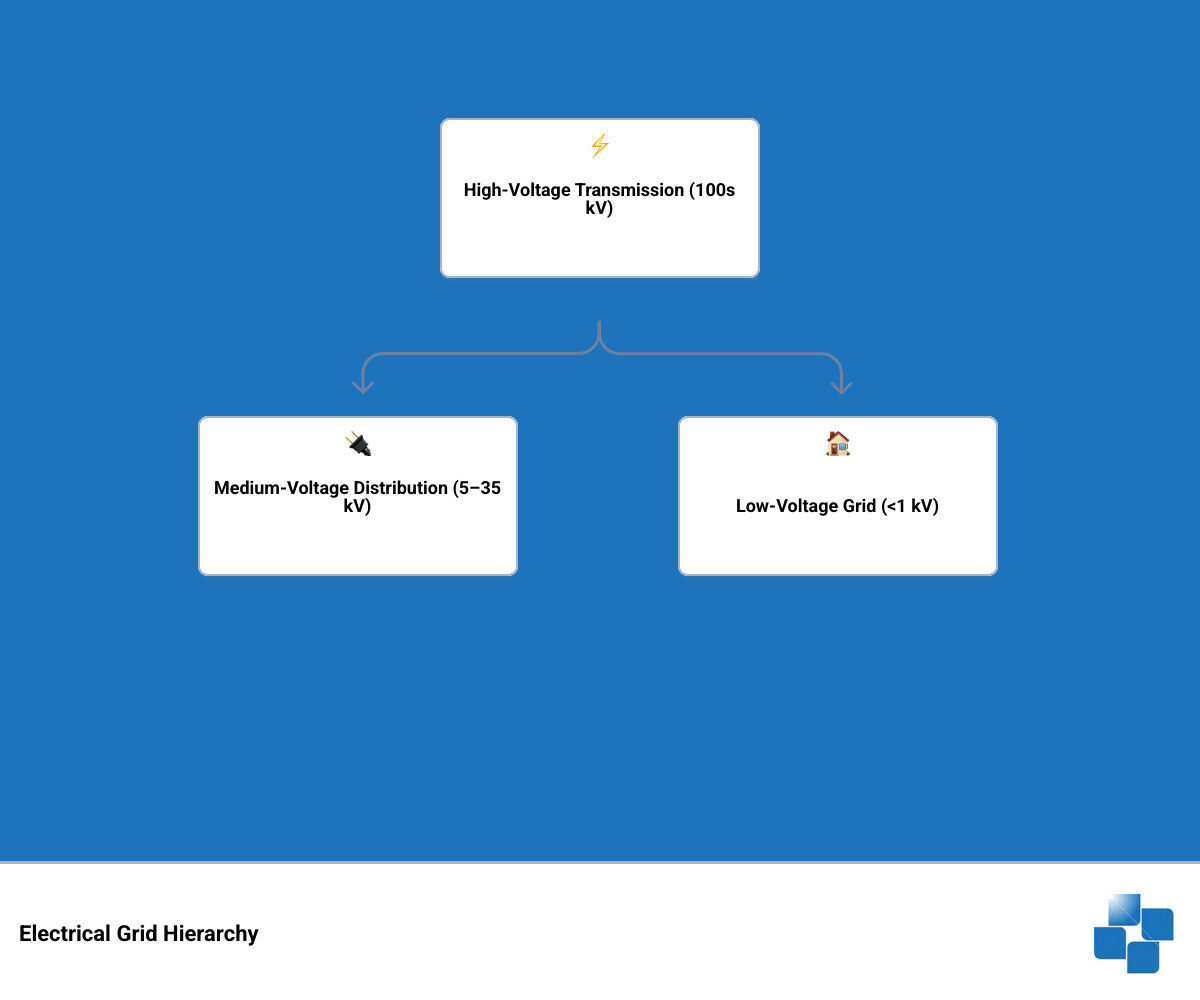
Think of the electrical grid as a long relay race. Power plants generate electricity at very high voltages. That energy travels hundreds of miles on transmission lines, then steps down through substations, and finally reaches your neighborhood through the low voltage grid — the last leg of the race.
It’s easy to overlook this final layer. But it’s arguably the most important one. And as more solar panels, electric vehicles, and smart devices connect to it, the low voltage grid is under more pressure than ever before.
I’m Bill French, Sr., Founder and CEO of FDE Hydro™, and my decades of experience in heavy civil construction and modular hydropower infrastructure have given me a front-row seat to how clean energy generation connects to the low voltage grid and ultimately powers communities. In the sections ahead, we’ll break down exactly how this system works — from transformer to plug.
Handy low voltage grid terms:
What is a Low Voltage Grid?
A low voltage grid is the part of the wider Electrical grid that takes electricity from a local distribution transformer and delivers it to end users at utilization voltage. In plain English, it is the neighborhood-level system that gets power from the pole, pad-mounted transformer, or local kiosk transformer to the meter on a home or business.
Technically, low voltage generally means anything below 1 kV. In practice, the voltages people actually use are much lower:
- 100-127 V in many North American applications
- 220-240 V in much of Europe
- 50 Hz or 60 Hz depending on the regional grid standard
This layer is often called the secondary network because it sits on the secondary side of the distribution transformer. Medium-voltage distribution, typically around 5-35 kV, feeds the transformer. The transformer steps that power down to a safer and more usable level. From there, the low voltage network takes over.
That handoff matters. The transformer is the bridge between the broader utility system and everyday consumption points like:
- houses
- apartments
- offices
- shops
- public lighting
- light industrial facilities
If you want a broader primer on what we mean by “grid” in electrical engineering, our article on What grid means in electrical engineering is a useful companion.
One helpful way to picture the path is this:
- Generation creates electricity.
- Transmission moves it long distances at high voltage.
- Substations reduce it to medium voltage.
- Distribution transformers reduce it again to low voltage.
- The low voltage grid carries it to the meter.
- The customer installation carries it from the meter to outlets, lights, motors, and equipment.
So where does the low voltage grid end? In most definitions, it ends at the electricity meter. Beyond that point, the internal wiring belongs to the customer side of the installation.
Regional Architectures: North America vs. Europe
The overall purpose of the low voltage grid is the same in the United States, Canada, Brazil, and Europe: safe final delivery of electricity. But the physical design can look very different depending on the local voltage standard and network tradition.
One of the biggest differences is service voltage. North America commonly uses 120/240 V systems for residential customers, while much of Europe uses 230/400 V. Because higher voltage can deliver the same power with less current, European low-voltage feeders can usually be longer before voltage drop becomes a problem.
Research consistently shows this difference in architecture:
- North American secondary connections are often limited to about 250 feet, or roughly 80 m
- European low-voltage designs can extend as far as about 1 mile, or roughly 1,600 m
- European distribution transformers are often in the 300-1000 kVA range
- North American neighborhood transformers are commonly smaller, around 25-50 kVA
Here is a simple comparison based on the Low-voltage network reference and standard utility practice:
| Feature |
North America |
Europe |
| Common residential voltage |
120/240 V |
230/400 V |
| Frequency |
60 Hz |
50 Hz |
| Typical LV feeder length |
Up to about 80 m |
Up to about 1,600 m |
| Typical transformer size |
25-50 kVA common in local service |
300-1000 kVA common |
| Typical layout |
More transformers closer to loads |
Fewer, larger transformers serving wider areas |
| Voltage tolerance reference |
ANSI C84.1 often cited |
National and EN-based frameworks |
In North America, lower utilization voltage means utilities usually place transformers closer to customers. In Europe, higher service voltage allows broader low-voltage coverage from each transformer. Brazil often follows 60 Hz systems and uses regional low-voltage arrangements that can resemble either compact urban or more extended distribution models depending on the utility and density.
Voltage tolerance is another important design point. In the United States, ANSI C84.1 is often used as a reference, with service voltage targets that keep delivered power within an acceptable band. If voltage drifts too low, motors struggle and electronics may misbehave. Too high, and equipment stress rises. The grid’s job is not just to deliver power, but to deliver good power.
Earthing also differs by region. Utilities may use TN, TT, or related earthing arrangements depending on local codes and practices. The details vary, but the goal is always the same: provide a controlled fault path and reduce shock risk.
Topologies and Components of the low voltage grid
Not all low-voltage systems are built the same way. Utilities choose topology based on reliability needs, load density, cost, and geography.
The three classic low-voltage network topologies are:
- radial networks
- spot networks
- grid networks
Radial networks
A radial network is the simplest and most common arrangement. Power flows along one main path from the transformer to customers. If a fault occurs on that path, customers downstream can lose service until the issue is isolated and repaired.
Radial systems are popular because they are:
- less expensive to build
- easier to protect
- simpler to operate
- well suited to suburban and rural areas
In lower-density service territories, a single feeder may serve many customers, and a rural primary feeder may supply dozens of distribution transformers. Radial design is the workhorse of the power world. It is not glamorous, but neither is a wrench, and both are essential.
Spot networks
Spot networks are used where reliability matters much more than lowest cost. They usually serve one concentrated site through multiple transformers connected in parallel on the low-voltage side.
Typical applications include:
- hospitals
- large commercial buildings
- business districts
- critical public facilities
These systems often use network protectors. A network protector is a specialized breaker that prevents reverse power flow from the low-voltage side back into a failed transformer or feeder. That way, a problem upstream does not drag the whole site down with it.
Grid networks
Grid networks are even more interconnected. They are common in dense downtown areas where multiple low-voltage feeders and transformers are tied together through underground conductors. Customers may be served from several paths at once, which greatly improves continuity of service.
Benefits include:
- high redundancy
- fewer outages from single equipment failures
- better service continuity for dense urban loads
Protection in these systems is more sophisticated. Utilities may use:
- network protectors
- cable limiters for fast short-circuit isolation
- coordinated protective devices across multiple feeders
Grid networks are more complex and more expensive, but for central business districts and other critical load centers, the reliability benefit can be worth it.
For a more general look at how grid designs affect daily life, see our article on how the electrical grid powers our lives.
Key Components of the low voltage grid
Whatever the topology, most low-voltage networks are built from a familiar set of parts.
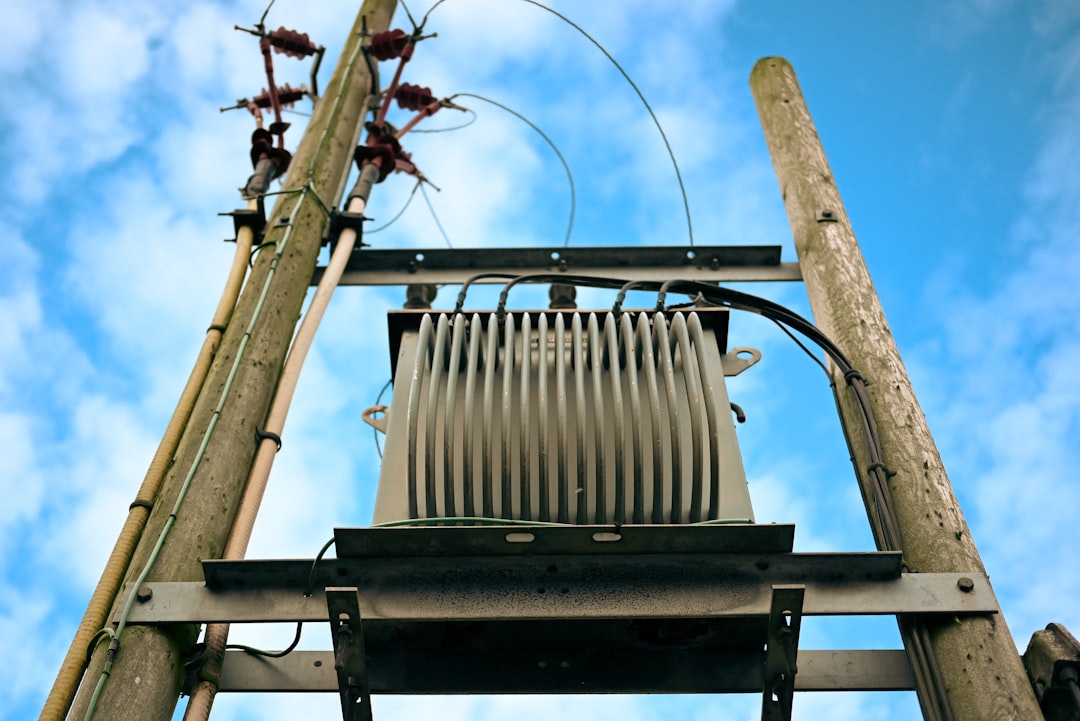
These are the entry point to the low-voltage system. They step power down from medium voltage, often 5-35 kV, to end-user voltage. They can be:
- pole-mounted
- pad-mounted
- installed in kiosks or compact substations
- placed in vaults in dense urban areas
Feeders
Low-voltage feeders carry power from the transformer into the neighborhood or local service area. They may be overhead or underground. Feeder size is selected based on expected load, voltage drop limits, fault duty, and future growth.
Service drops or service lines
These are the final conductors from the low-voltage feeder to the individual customer connection point and meter. In overhead systems, this may be a visible drop to a house. In underground systems, it may be a buried service lateral.
Protection devices
Safety and reliability depend on layered protection, including:
- fuses
- circuit breakers
- residual current devices in consumer installations
- network protectors in spot and grid networks
- cable limiters in interconnected urban systems
Smart meters
The traditional meter simply measured energy use. The modern smart meter does much more. It can support interval data, outage detection, remote reading, and in some cases better visibility into the low-voltage system itself.
That matters because the low-voltage layer has historically been the least visible part of the distribution system, even though it can be far larger than the medium- and high-voltage layers combined. Some utility analyses suggest the LV network can be 10 times the size of the upper distribution network.
If you are interested in how distributed assets and local control fit into this picture, our Microgrid Technology guide is a good next step.
Modern Challenges and Digitalization
For decades, many utilities treated the low voltage grid as mostly passive. Power went one way, from transformer to customer, and loads were fairly predictable. That world is fading fast.
Today, the LV network is where the energy transition becomes very real. The main pressures include:
- rooftop solar PV exporting back to the grid
- EV charging creating sharp evening peaks
- heat pumps increasing winter demand in electrified buildings
- batteries changing charging and discharge patterns
- rising expectations for resilience and power quality
This creates two opposite operating extremes:
-
Low load, high generation
In sunny periods, rooftop solar can push voltage upward and even reverse normal power flow.
-
High load, low generation
During peak charging or heating periods, feeders and transformers can become overloaded and voltage can sag.
These issues are one reason utilities now talk about the LV network as the “final frontier” of grid orchestration. It is big, complex, and historically under-instrumented.
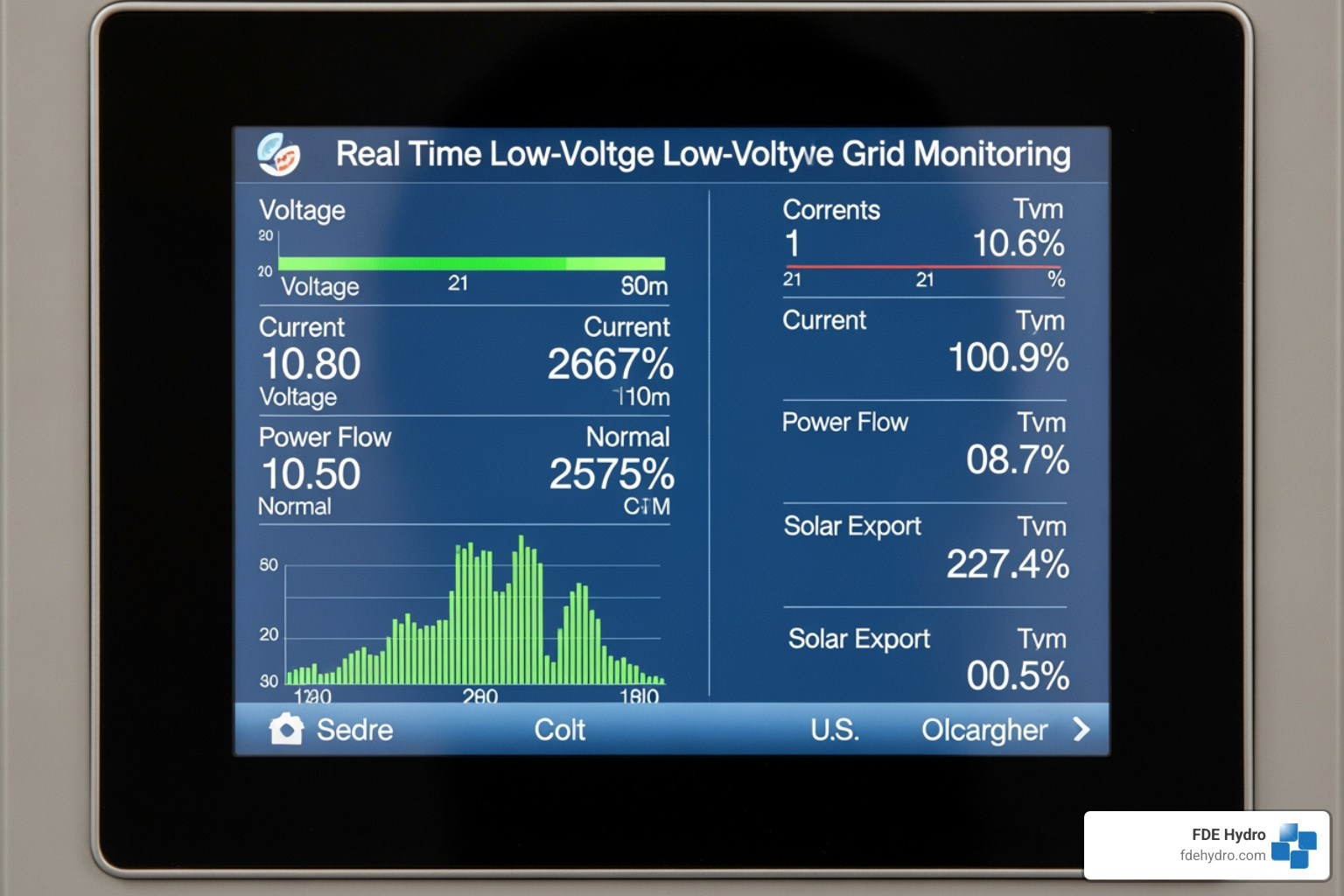
Digitalization is changing that. Smart meters, sensors, and software platforms are improving visibility and enabling more active control. Worldwide smart meter adoption is projected to reach about 78% by 2028, which is a major shift for low-voltage data availability.
A modern low-voltage management stack may include:
- AMI and smart meter data
- transformer-level monitoring
- dynamic topology models
- low-voltage state estimation
- outage analytics
- voltage quality monitoring
- DER visibility and control
This trend also matters for regions where FDE Hydro works, including the United States, Canada, Brazil, and Europe. As more renewable generation comes online, local distribution constraints increasingly shape what projects can connect, how fast they can connect, and how reliably they can operate.
Optimizing the low voltage grid with Smart Technology
The good news is that utilities are not flying blind anymore. Research on modern low-voltage optimization shows real gains from coordinated control strategies.
Some standout findings include:
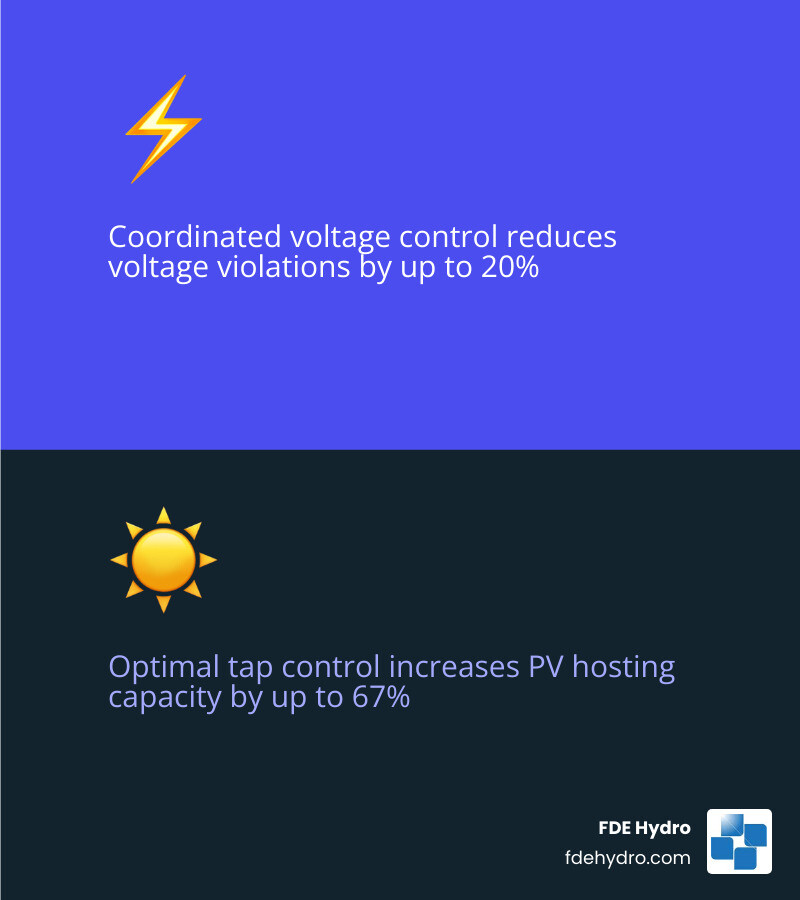
- coordinated voltage control can reduce voltage violations by up to 20%
- integrated voltage-reactive power control can cut imbalance by about 25%
- optimal tap control can increase PV hosting capacity by up to 67%
- short-term solar forecasting can reduce unnecessary tap changer operations by nearly 56%
How does that work in practice?
Voltage control
Voltage must stay within acceptable limits at the customer service point. Utilities can manage this through transformer tap settings, feeder design, reactive power support, and smarter DER control.
Tap changers
On-load tap changers and voltage regulators adjust transformer output to keep voltage stable as demand and generation change. In a DER-heavy network, those adjustments can become more frequent, which is why smarter forecasting matters.
Forecasting and analytics
Short-term solar forecasting helps utilities avoid overreacting to passing clouds and sudden output swings. Better forecasting means fewer unnecessary mechanical operations and longer equipment life.
Flexible demand
Smart EV charging, demand response, and coordinated heat pump operation can shift or smooth load. Instead of reinforcing every feeder immediately, utilities can sometimes buy time with intelligence.
LVDC trends
Low-voltage DC, or LVDC, is an emerging topic worth watching. Traditional low-voltage systems are usually AC, but DC networks can make sense in selected applications where loads or generation are already DC-based, such as:
- battery systems
- EV charging hubs
- data-rich commercial buildings with power electronics
- certain microgrids and hybrid systems
DC can reduce some conversion losses and simplify integration with batteries and solar. That said, AC remains the standard for public low-voltage distribution, and LVDC is still a niche rather than a replacement.
If you want to dig deeper into intelligent control, our article on optimizing microgrid operations explores many of the same digital ideas at the local grid scale.
Frequently Asked Questions about Low Voltage Networks
What is the difference between a low voltage grid and a microgrid?
A low voltage grid is usually part of the public utility distribution system. A microgrid is a smaller local power system that can often operate either connected to the main grid or independently.
Key differences:
- The low voltage grid is a voltage layer in the wider utility network.
- A microgrid is an operational system with local generation, controls, and defined boundaries.
- A microgrid can often island, meaning it can disconnect and keep serving local loads on its own.
- A standard low-voltage feeder usually cannot do that by itself.
In other words, “low voltage” describes the electrical level, while “microgrid” describes the architecture and operating mode. Many microgrids operate at low voltage, but not every low-voltage network is a microgrid.
For a full primer, see What Is A Microgrid.
How do utilities ensure safety in LV networks?
Safety starts with design and continues through protection, grounding, and maintenance.
Core safety measures include:
- earthing systems that create a controlled fault path
- fuses and circuit breakers that interrupt dangerous current
- residual current devices that detect leakage current
- insulation and enclosure standards
- voltage control within acceptable limits
- clear separation between utility and customer installations
Touch voltage matters too. Around 50 V is often treated as an approximate safety threshold for dangerous contact conditions, which is one reason low voltage still requires serious protection even though it is far below transmission levels.
In more complex spot and grid networks, utilities also rely on:
- network protectors to block harmful reverse flow
- cable limiters for rapid short-circuit isolation
- coordinated protection settings so only the faulted section trips
As low-voltage systems become more dynamic, safety increasingly depends on visibility as well as hardware. Better data helps utilities identify overloads, outages, and abnormal voltage conditions earlier.
Why is the low voltage grid called the “final frontier” of the energy transition?
Because this is where decentralization shows up first and most intensely.
The low-voltage layer is where:
- prosumers export rooftop solar
- EVs plug in after work
- homes electrify heating
- batteries charge and discharge
- customer expectations for reliability become very personal
Historically, this layer was not heavily monitored. Utilities understood the transmission system well, the substation fairly well, the medium-voltage feeders reasonably well, and the low-voltage layer… less well. That has changed because the edge of the grid is now active, not passive.
Data-driven analytics, smart meters, and local controls are helping utilities move from guesswork to informed orchestration. That shift is essential for resilience, flexibility, and faster integration of clean energy resources.
And when the grid does suffer major disturbances, restoration still depends on understanding how all layers reconnect safely. Our article on how power grids come back to life adds useful context to that bigger picture.
Conclusion
The low voltage grid may be the last step in the power system, but it is no small detail. It is the layer that turns bulk electricity into usable energy at homes, businesses, industrial sites, and public infrastructure.
It also happens to be where many of the most important grid changes are happening right now:
- more distributed solar
- more electrified transport
- more electric heating
- more smart devices
- more need for visibility and control
At FDE Hydro, we care about this end of the system because generation and delivery are inseparable. Our work in modular hydropower and water-control infrastructure supports a cleaner, more flexible power future, but that future only succeeds if the electricity can be absorbed and managed all the way down to the local distribution edge.
Hydropower remains one of the grid’s most valuable balancing resources, especially when paired with modern digital control and strong distribution planning. If you want to explore that connection further, read 4 Reasons Why Hydropower Is The Guardian Of The Grid.
And if you would like more plain-English guides on transmission, distribution, resilience, and restoration, visit our power grid article library.
by Adaptify Support | May 29, 2026 | Hydro Facility Articles
Why Affordable Pumped Storage Builds Are the Key to Grid-Scale Energy Storage in 2026
Affordable pumped storage builds are large-scale energy storage projects that use two reservoirs at different elevations to store and release electricity — and they are rapidly becoming the most cost-effective solution for long-duration grid storage.
Here’s what makes them affordable:
- Closed-loop and off-river designs eliminate costly river permitting and reduce environmental hurdles
- Brownfield and former industrial sites (like old mines or smelters) cut land acquisition and site prep costs significantly
- Modular and precast construction methods reduce build time and civil engineering expenses
- Existing reservoir infrastructure can serve as the lower basin, avoiding one full reservoir build
- Multiple revenue streams — energy arbitrage, frequency regulation, capacity payments — shorten payback periods
- DOE grants and utility partnerships offset early-stage development and licensing costs
The result: modern projects are targeting costs in the range of $2.5–$4.9 million per MW, with some modular systems projecting payback periods as short as 3 years.
The U.S. currently operates about 20.1 GW of pumped storage capacity, but with FERC reviewing preliminary permits for nearly 47.8 GW of potential new capacity, the pipeline is enormous. The challenge isn’t the technology — it’s the cost and complexity of building it. High capital expenditure, long permitting timelines, and traditional construction methods have kept many projects on the drawing board for decades.
That’s the problem this article tackles head-on.
I’m Bill French, Sr., Founder and CEO of FDE Hydro™, and I’ve spent the last decade developing patented modular precast construction technologies specifically designed to make affordable pumped storage builds a reality — not just a target. My background spans 50+ years in heavy civil construction and site development, including selection by the DOE’s Water Power Technology Office to help shape the national roadmap for next-generation hydropower.
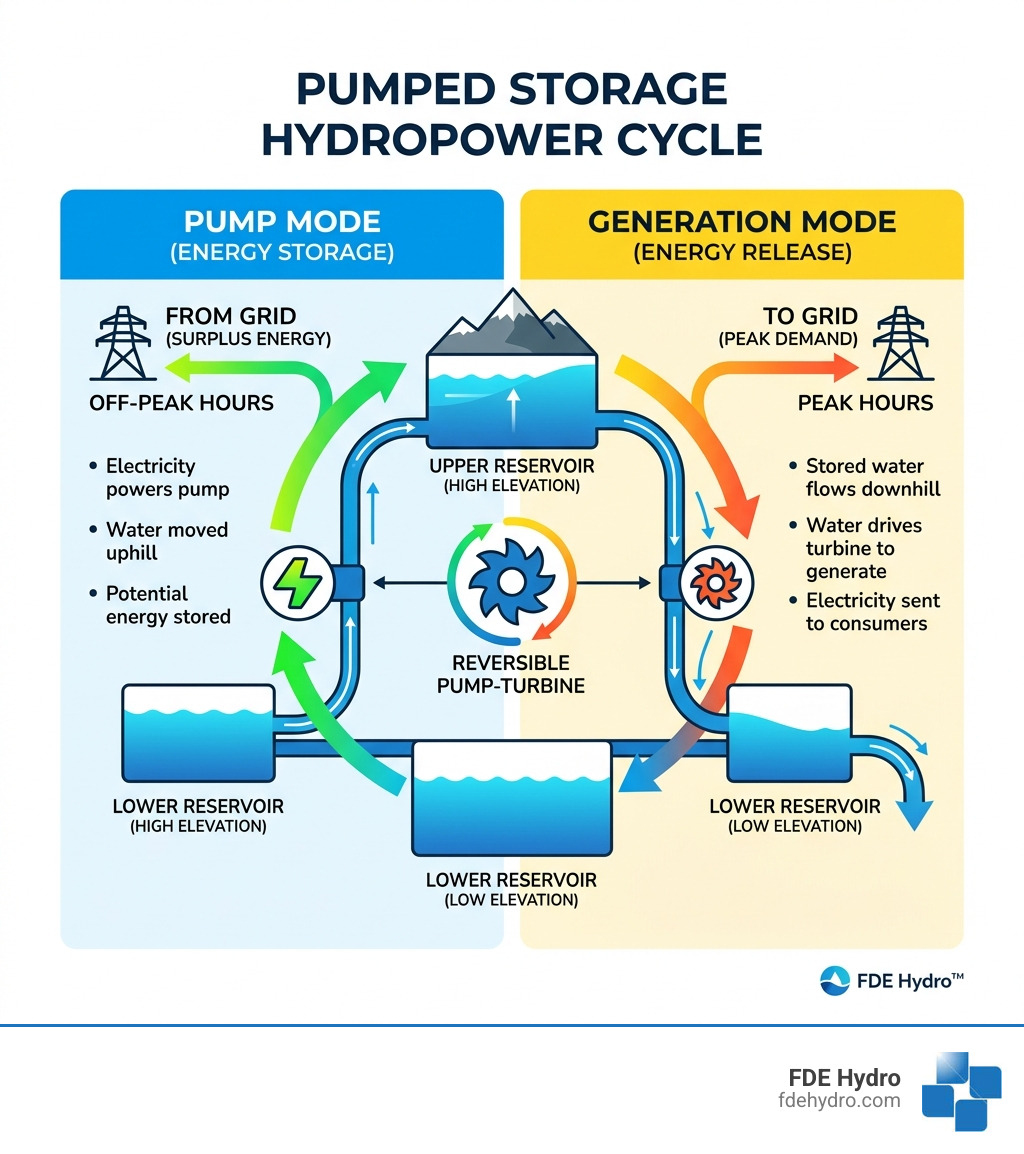
Quick look at affordable pumped storage builds:
The Economics of Affordable Pumped Storage Builds
When we talk about the economics of Pumped Storage Hydropower (PSH), we have to look at the “Big Picture” of the grid. As of May 2026, the demand for long-duration energy storage (LDES) has skyrocketed, driven by the massive expansion of AI data centers and the retirement of old coal plants. PSH is the “heavy lifter” of the storage world. Unlike lithium-ion batteries, which are great for short bursts of 2–4 hours, PSH can comfortably provide 10 to 12 hours of full-power output.
The primary cost drivers for PSH are civil engineering and capital expenditure (CAPEX). Building massive reservoirs, tunneling through mountains, and installing heavy machinery is expensive. However, by focusing on affordable pumped storage builds, we can bring the cost per MW down to levels that compete directly with fossil gas.
To understand these costs, tools like the Pumped Storage Hydropower Cost Model from NREL are invaluable. They allow us to estimate costs based on specific geography and materials. We’ve seen that Why Pumped Storage Is Making A Huge Splash is because it offers a lifespan of 50 to 100 years, far outlasting the 10-to-15-year cycle of chemical batteries.
Reducing Capital Expenditure in Affordable Pumped Storage Builds
The secret sauce to lowering CAPEX is civil engineering optimization. Traditionally, building a dam meant years of pouring “wet” concrete on-site, which is prone to weather delays and high labor costs. By switching to precast structural components—what we call the “French Dam” approach—we can move much of the work to a controlled factory environment.
This streamlined site preparation means we aren’t just cutting corners; we’re cutting timelines. When you Reduce Construction Costs, you aren’t just saving money on materials; you’re saving on the interest of the loans needed to fund these billion-dollar projects. A deep dive into Hydro Power Project Costs A Deep Dive Into The Dollars And Cents shows that labor and time are often the biggest variables.
Financial Benchmarks for Modern Projects
Let’s look at some real-world numbers from the research. The Lewis Ridge project in Kentucky is a prime example of a modern, ambitious build. It carries a price tag of about $1.3 billion for a 266 MW capacity, which works out to approximately $4.9 million per MW. While that sounds like a lot, it provides 8 hours of discharge and acts as a massive hedge against gas price volatility.
Another benchmark is the Gordon Butte Pumped Storage Project in Montana. With a projected construction cost of $986 million for 400 MW, it shows how scale can improve the math. These projects are proving that Project Cost Reduction is possible when you select the right site and use modern engineering.
| Feature |
Traditional PSH |
Modular Precast PSH |
| Construction Time |
8–12 Years |
4–6 Years |
| Civil Works Cost |
High (On-site labor intensive) |
Lower (Factory controlled) |
| Lifespan |
50–100 Years |
50–100 Years |
| Environmental Impact |
High (On-river) |
Low (Closed-loop) |
Modular Innovations and Precast Solutions for Faster Deployment
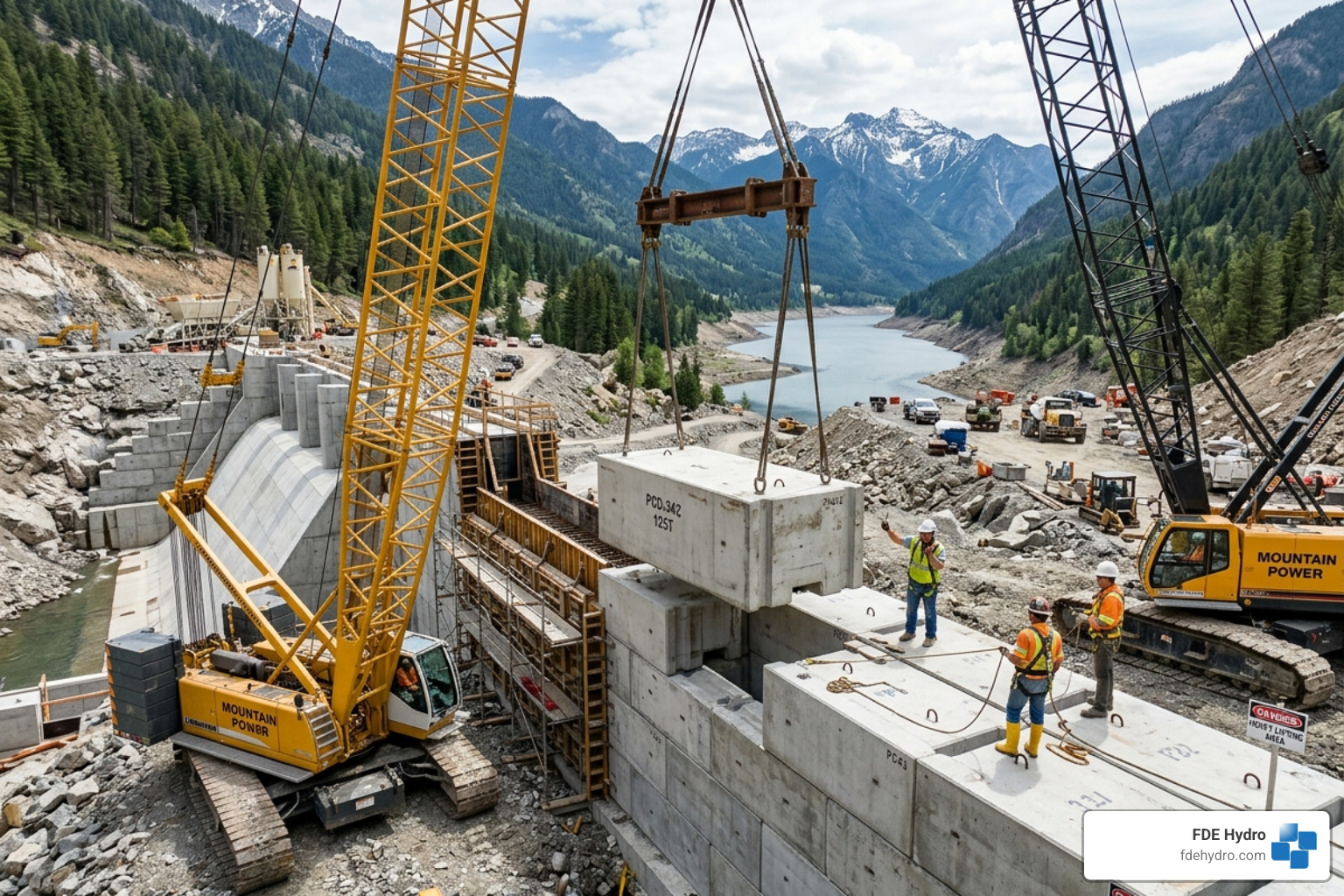
The biggest barrier to affordable pumped storage builds has always been the “bespoke” nature of the projects. Every site was treated like a unique piece of art. But in 2026, we don’t have time for art—we need infrastructure. Modular technology allows us to use standardized reservoir modules and rapid-assembly civil works.
At FDE Hydro, our Modular Dam Construction method uses precast concrete sections that lock together like giant Lego blocks. This isn’t just a gimmick; it’s a fundamental shift in how we handle water.
Scaling Affordable Pumped Storage Builds with Modular Technology
By using precast concrete, we can ensure high-quality, high-strength structures that are ready to install the moment they arrive at the site. This eliminates the “curing time” associated with traditional pours. Furthermore, modularity allows for smaller, more distributed PSH systems.
Projects like ORNL’s GLIDES (Ground-Level Integrated Diverse Energy Storage) are pushing the boundaries of what “modular” means. GLIDES uses prepressurized vessels where water acts as a piston to compress gas. It’s a closed-loop, modular system that can achieve round-trip efficiencies as high as 82%. When you combine this with Small But Mighty A Guide To Modular Pumped Storage And Its Benefits, you see a path toward installing energy storage almost anywhere, not just in the mountains.
Payback Periods and Revenue Streams
The financial viability of these builds is often better than people realize. For instance, a 60-MWh GLIDES system has a projected 3-year payback period. How? By tapping into multiple revenue streams:
- Arbitrage: Buying low (when solar is peaking) and selling high (during the evening peak).
- Frequency Regulation: Getting paid to keep the grid’s heartbeat steady.
- Spinning Reserves: Providing instant power if another plant fails.
With $10 million in annual revenue potential from ancillary services, PSH is easily the Most Cost Effective Renewable Energy storage solution over its lifetime.
Leveraging Brownfields and Closed-Loop Designs to Lower Costs
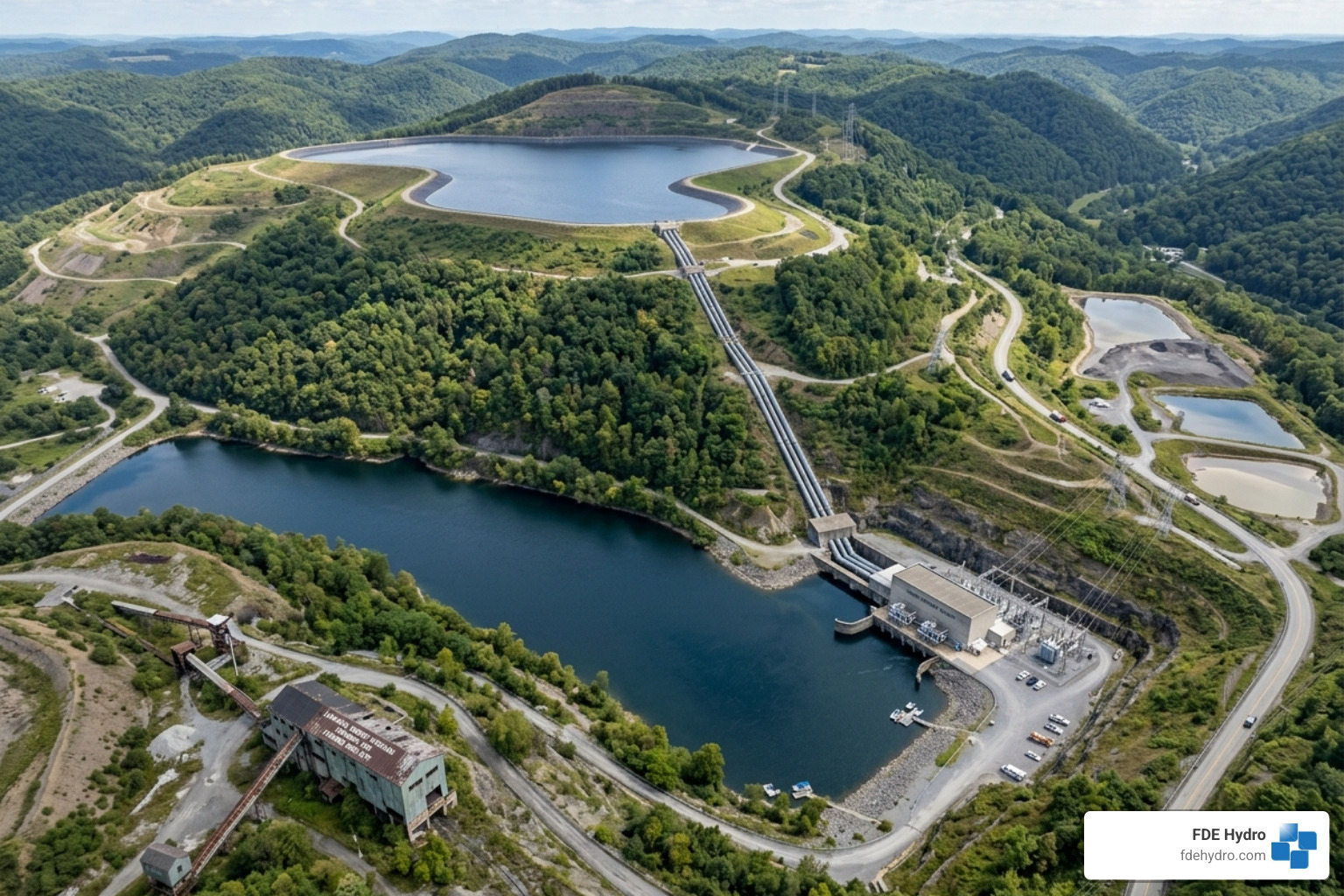
One of the cleverest ways to achieve affordable pumped storage builds is to stop looking for pristine mountains and start looking at “disturbed” land. Brownfields—former industrial sites like coal mines, quarries, or aluminum smelters—are gold mines for energy storage.
Using an old mine (like the Lewis Ridge project) or a former smelter (like the Goldendale project) solves several problems at once. First, the “hole” is already dug, which drastically reduces excavation costs. Second, these sites often already have transmission lines and road access.
By repurposing these sites, we also simplify land acquisition. You aren’t fighting for new permits on untouched wilderness; you’re performing “remediation” by turning an old industrial liability into a green energy asset. This is a key strategy for Cutting Costs Not Corners Your Guide To Construction Budget Reduction.
Minimizing Environmental and Regulatory Barriers
Traditional PSH often involved damming a river, which is an environmental and permitting nightmare. Modern affordable pumped storage builds are almost exclusively “closed-loop.” This means they move a fixed amount of water between two reservoirs that aren’t connected to a natural river system.
Closed-loop systems:
- Require a one-time fill (e.g., 5,000 to 10,000 acre-feet).
- Have minimal impact on fish and aquatic ecosystems.
- Speed up the FERC licensing process because the environmental “footprint” is so much smaller.
As we explain in Pumped Up Everything You Need To Know About Hydropower Energy Storage/, these systems act like a giant battery that just happens to use gravity and water instead of lithium and cobalt.
Policy Support and Grid Reliability Benefits
We aren’t doing this alone. The U.S. government has realized that long-duration storage is a national security issue. In 2024 and 2025, we saw massive DOE grants, including an $81 million award for clean energy on mine lands. This policy support is what makes the initial design and permitting phases of affordable pumped storage builds feasible for developers.
Research from Replacing Gas with Low-cost, Abundant Long-duration Pumped Hydro in Electricity Systems shows that low-cost PSH can replace fossil gas entirely without a cost penalty. This is a game-changer for reaching 100% renewable goals in states like New York and California.
Long-Duration Storage and Baseload Replacement
The beauty of PSH is “mechanical inertia.” When a massive turbine is spinning, it provides a physical stability to the grid that software-controlled batteries just can’t match. This makes PSH a true baseload replacement for retiring coal and gas plants.
Take the White Pine Pumped Storage Project in Nevada. It targets 1,000 MW of capacity. Or the Goldendale project in Washington, which uses 2,400 feet of vertical “head” to create massive energy density. These projects provide 10–12 hours of discharge, ensuring that even if the wind doesn’t blow for a day, the lights stay on. This is the core of Hydropower Energy Storage.
Economic Impact and Job Creation
Building these facilities is a massive boost for local economies. A typical 1,000 MW project creates hundreds of construction jobs over 4–6 years and dozens of permanent, high-paying technical roles. Beyond jobs, these projects provide millions in local tax revenues, helping rural counties fund schools and infrastructure.
Through utility collaborations—like the San Vicente project where the San Diego County Water Authority is partnering with private developers—we see how public-private partnerships can lower the financial risk and ensure Pumped Storage Hydropower remains a public benefit.
Frequently Asked Questions about Affordable PSH
What is the typical cost per MW for affordable pumped storage builds?
In 2026, we are seeing costs range from $2.5 million to $4.9 million per MW. The lower end is achieved by using existing reservoirs as the lower basin or repurposing deep mine shafts. The higher end typically involves complete “greenfield” closed-loop systems with significant tunneling.
How do closed-loop systems reduce environmental impacts?
Closed-loop systems don’t dam or divert natural rivers. They use a fixed volume of water that cycles back and forth. This means no impact on fish migration, no change in river temperatures, and much lower “evaporative loss” than open-river reservoirs. This makes the permitting process much faster and cheaper.
Why is modular PSH the most viable solution for long-duration grid storage?
Modular PSH, like our French Dam system, allows for faster construction and predictable costs. Because the components are precast, we avoid the “surprises” of on-site concrete pours. Additionally, modularity allows us to build smaller, 10–50 MW systems that can be placed closer to demand centers, reducing the need for massive new transmission lines.
Conclusion
The era of the “megaproject” that takes 20 years to build is over. To meet our 2030 and 2045 climate goals, we need affordable pumped storage builds that can be deployed in half that time.
At FDE Hydro™, we believe the answer lies in the marriage of proven physics and modern manufacturing. By using our French Dam technology, we are helping developers across North America, Brazil, and Europe turn the dream of cheap, long-duration storage into a precast reality. Whether it’s retrofitting an existing dam or building a new closed-loop system in an old quarry, the goal is the same: grid reliability that doesn’t break the bank.
Ready to see how modularity can change your next project? More info about modular dam solutions
by Adaptify Support | May 28, 2026 | Precast Dam Articles
Why Low-Cost Precast Hydropower Is Changing the Economics of Clean Energy
Low-cost precast hydropower is a construction approach where concrete dam and powerhouse components are manufactured off-site in controlled factory conditions, then rapidly assembled on-site — cutting capital costs by 40–60% and project timelines by up to 50% compared to traditional cast-in-place methods.
Key benefits at a glance:
- Cost reduction: 40–60% lower construction costs vs. conventional dams
- Speed: Project duration cut up to 4x; saves 6–12 months on average
- Capital cost targets: $2,124–$3,419/kW at real project sites
- LCOE target: $0.05–$0.07/kWh for greenfield sites
- Durability: 100+ year certified service life
- Environmental impact: Minimal riverbed disruption, built-in fish and sediment passage
The U.S. sits on enormous untapped clean energy potential — 65 gigawatts in undeveloped rivers and streams, plus another 12 gigawatts at existing non-powered dams. Yet hydropower accounts for only about 7% of America’s electricity, and greenfield stream development makes up less than 10% of recent capacity growth.
The reason? Civil construction costs. Depending on project size, physical civil works can consume anywhere from 40% to 90% of total hydropower capital costs. Conventional cast-in-place concrete construction is slow, weather-dependent, and riddled with schedule and budget risk. That financial burden has kept hundreds of viable hydropower sites sitting idle.
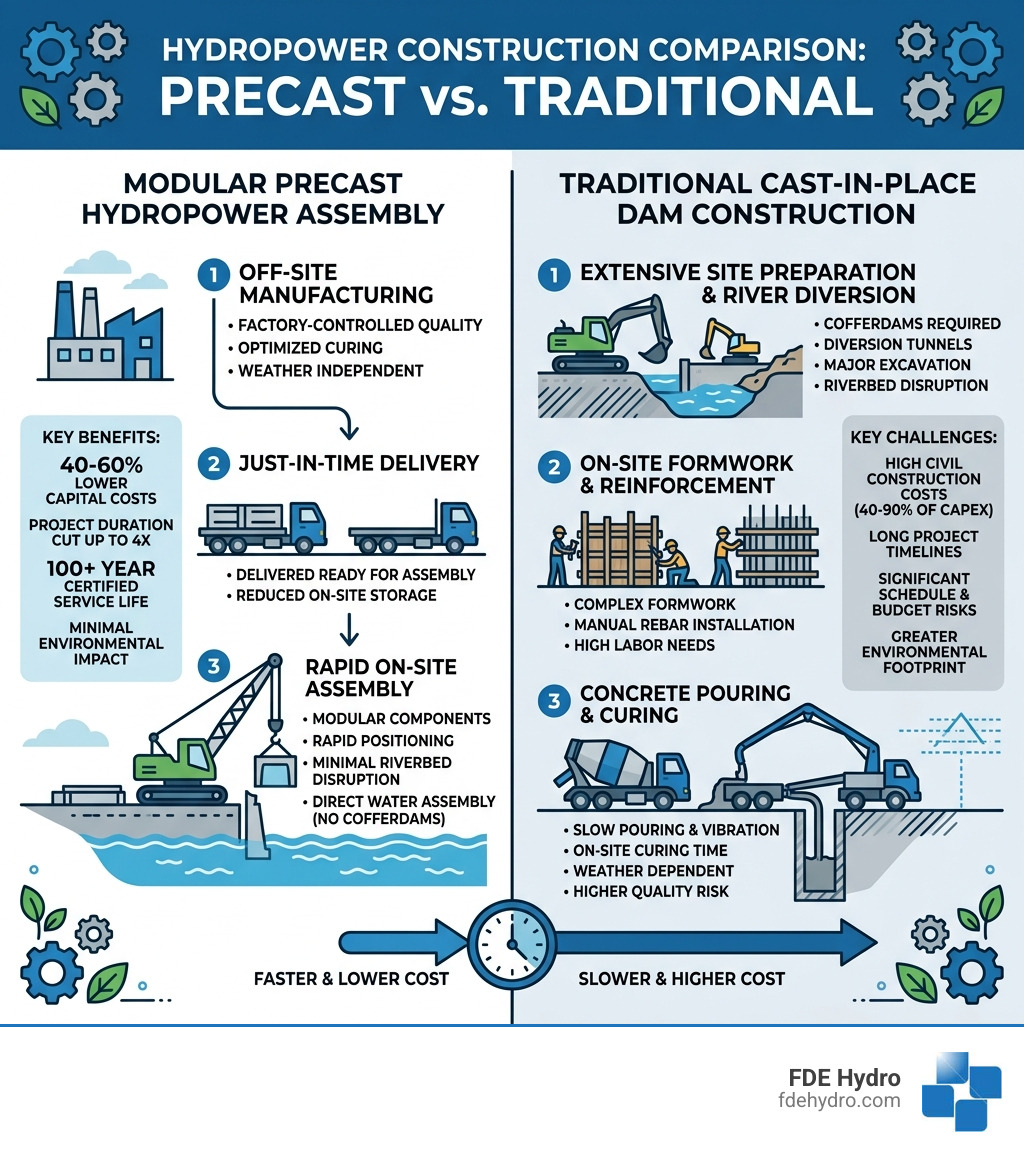
Precast modular construction flips that equation. Components are built in a factory — where quality is controlled, curing is optimized, and weather doesn’t matter — then delivered just-in-time and assembled on-site, even directly in the water without cofferdams or diversion tunnels. The result is a faster, cheaper, lower-risk path to clean hydropower generation.
I’m Bill French Sr., Founder and CEO of FDE Hydro™, and I’ve spent decades in heavy civil construction — including landmark modular infrastructure projects — before developing the patented French Dam technology to bring low-cost precast hydropower from concept to reality with U.S. Department of Energy support. In this guide, I’ll walk you through exactly how precast modular systems work, what they cost, and why they represent the most promising path to unlocking America’s untapped hydropower potential.
Related content about low-cost precast hydropower:
The Shift to Low-Cost Precast Hydropower
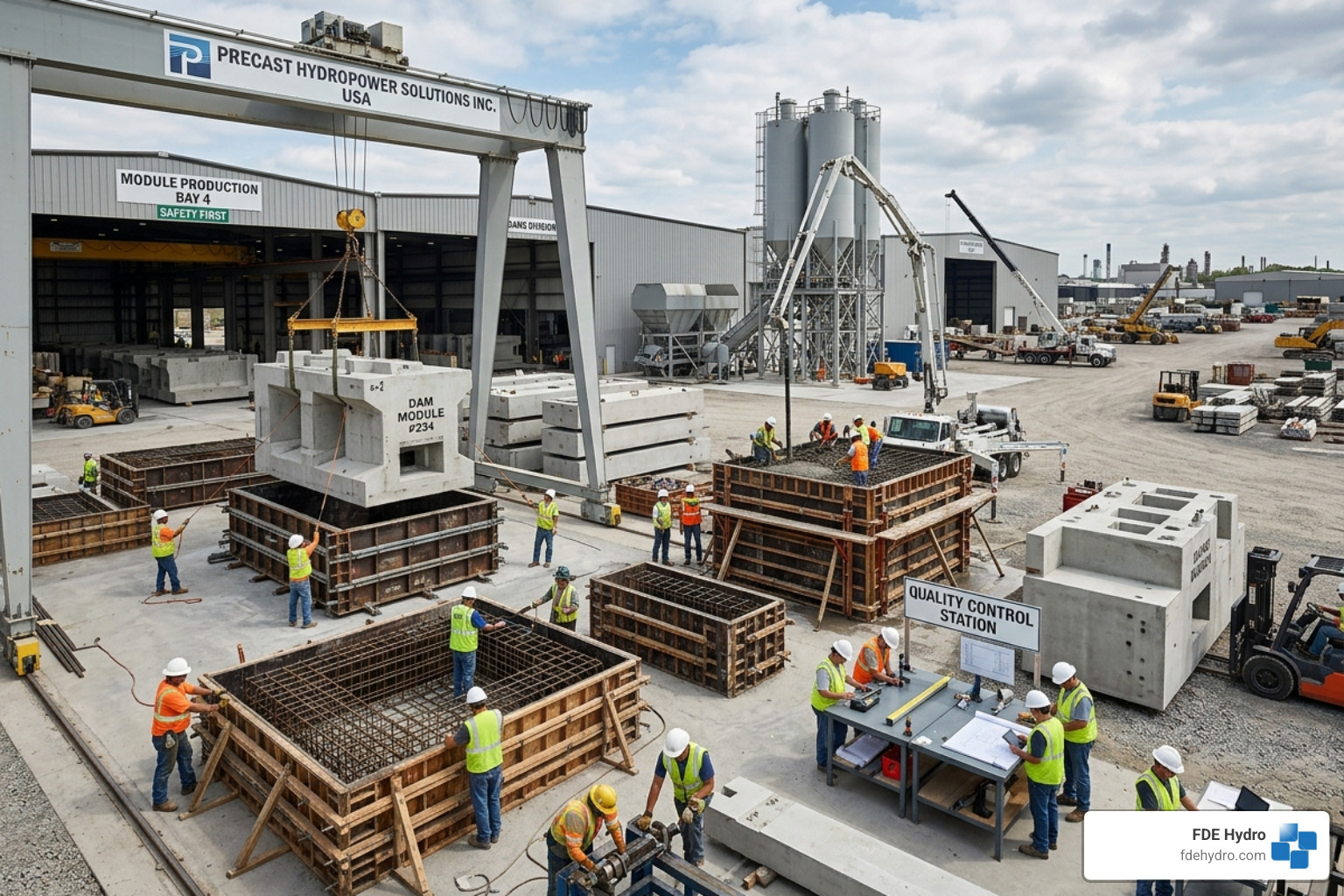
For decades, the hydroelectric industry has been stuck in a “bespoke” mindset. Every dam was a unique, site-specific engineering challenge requiring thousands of tons of concrete to be poured on-site. We are changing that by introducing precast modularity—a shift from construction to manufacturing.
In traditional construction, you are at the mercy of the river. You have to build expensive cofferdams to divert water, wait for dry weather to pour concrete, and hope the curing process isn’t ruined by a sudden cold snap or flood. With low-cost precast hydropower, we move the heavy lifting to a controlled factory environment.
By utilizing Precast Concrete Advantages, we eliminate the “unpredictable” from the environment. Our modules are manufactured to exact specifications, allowing for “in-the-wet” installation. This means we can often install structures directly into the waterway without massive diversion tunnels or temporary dams. This weather-independent scheduling ensures that if the factory is running, the project is moving forward. This is the core of Modular Precast Concrete: bringing industrial precision to the riverbank.
Standardizing Low-Cost Precast Hydropower Components
The key to lowering costs is standardization. In the past, turbines and dams were designed from scratch for every site. Our h-Modulor system changes this by using standardized, stackable modules.
We break the dam down into functional “blocks”:
- Generation modules: These house the turbomachinery and power electronics.
- Water passage modules: These include crest gates and spillway sections.
- Sediment passage modules: Essential for river health, these use sluice gates to allow natural river materials to move downstream.
By treating a dam like a sophisticated set of LEGOs, we use Precast Concrete Technology to create a system where components are interchangeable and scalable.
Rapid Deployment and Site Disturbance
One of the biggest hurdles for new hydro is the environmental “footprint” of construction. Traditional sites look like massive scars on the landscape for years. Because our modules are truck-transportable and ready for immediate assembly, we can complete on-site work in a fraction of the time.
Rapid installation means minimal riverbed disruption. Instead of a multi-year construction circus, we aim for a surgical strike. This approach is the hallmark of Modular Dam Construction, where the goal is to get in, get the power flowing, and let the river return to its natural state as quickly as possible.
Economic Advantages of Modular Systems
The math behind low-cost precast hydropower is hard to ignore. When civil works represent up to 90% of your budget, cutting those costs in half changes everything.
| Feature |
Traditional Cast-in-Place |
Precast Modular (French Dam) |
| Construction Time |
2–4 Years |
6–12 Months |
| Capital Cost (CapEx) |
High ($5,000+/kW) |
Low ($2,100–$3,500/kW) |
| Weather Risk |
Significant |
Minimal |
| Labor Costs |
High (On-site specialized) |
Lower (Off-site manufacturing) |
| Environmental Impact |
High (Diversion/Cofferdams) |
Low (In-the-wet assembly) |
We have seen Project Cost Reduction reach 40-60% in comparative studies. This isn’t just a theory; our work has been supported by the U.S. Department of Energy (DOE) under initiatives like FOA DE-FOA-0001286. The DOE set a “stretch goal” of getting installed capital costs below $2,000/kW. While traditional methods struggle to stay under $5,000/kW, our h-Modulor redesigns are already hitting estimates well below $3,500/kW. To understand the granular details of these savings, see Why Precast Cost Less.
Achieving Competitive LCOE Targets
The Levelized Cost of Energy (LCOE) is the ultimate metric for any power plant. For hydropower to compete with wind and solar in April 2026, it needs to hit a target of $0.05–$0.07/kWh.
We achieve this through:
- 80% Capacity Factor Sizing: Unlike wind or solar, hydro provides steady, baseload-like power.
- Early Commissioning: By saving a year on construction, you start selling electricity a year sooner, which drastically improves the project’s Internal Rate of Return (IRR).
For a deep dive into the financial modeling of these sites, check out Hydro Power Project Costs A Deep Dive Into The Dollars And Cents.
Long-Term Durability and Warranties
A common question we get is: “If it’s cheaper and faster, is it weaker?” Actually, the opposite is true. Concrete poured on a rainy job site is rarely as strong as concrete cured in a climate-controlled factory.
Because we control the batch consistency and curing environment, we can offer a 100-year warranty on civil structures. This high-strength concrete is engineered to outlast the very people who install it. The Precast Concrete Industry has proven this durability in bridges and skyscrapers for decades; we are simply applying those rigorous standards to the water.
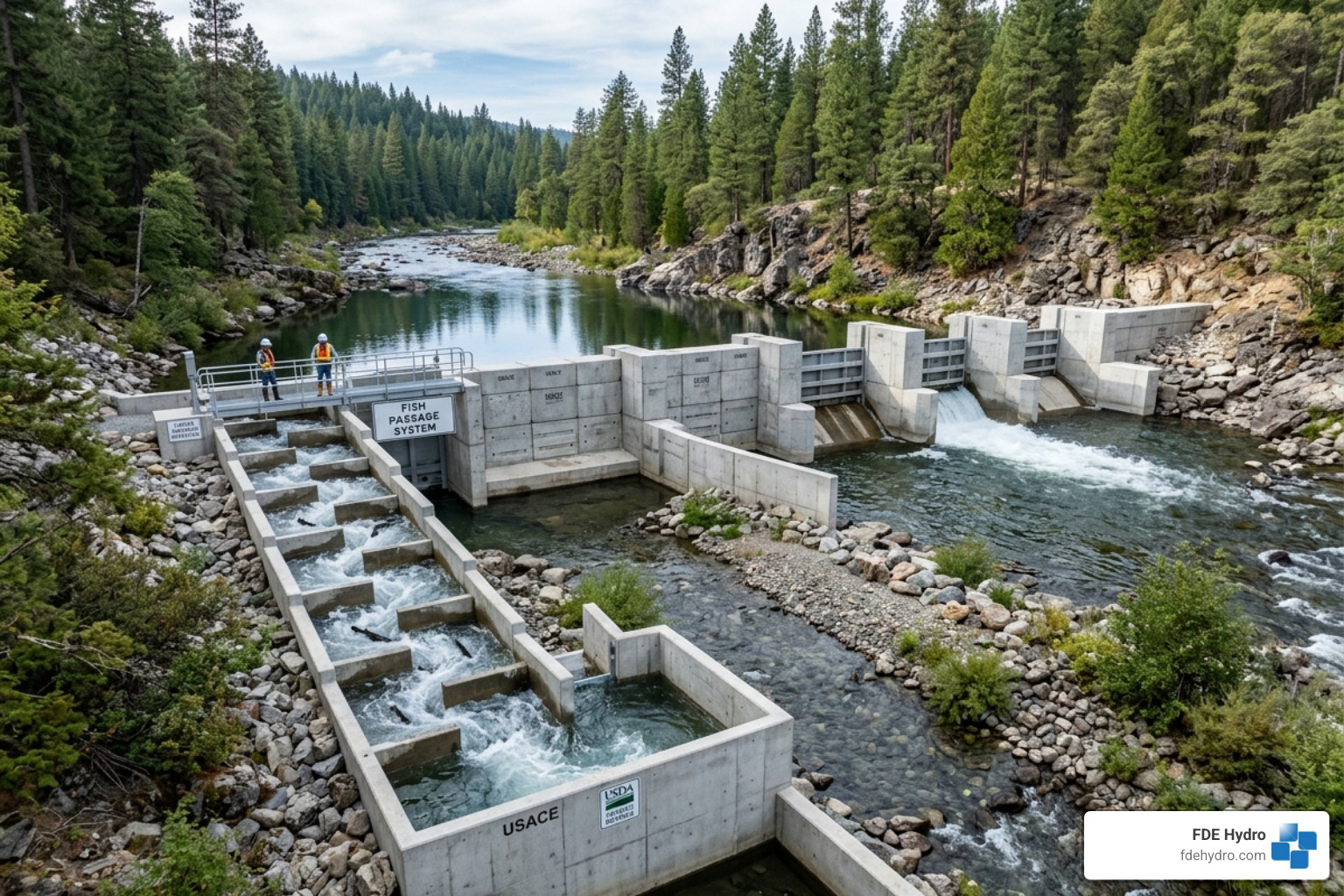
Modern hydropower must be “low-impact.” We don’t just want to generate green electrons; we want to preserve the river’s ecosystem. Our modular designs include dedicated stacks for fish bypass, sediment management, and maintaining water quality.
Projects like Canada’s $11BN Green Energy Project Is A Game Changer show the scale of what is possible, but our focus is on making that same impact at a local level with minimal land use. Furthermore, because our dams are modular and secured with underpinning rather than massive permanent excavation, they are much easier to decommission or reconfigure if environmental needs change in the future. This “easy-on, easy-off” approach is a core value of the Modular Precast Dam.
Innovations in Water and Sediment Passage
Our recent h-Modulor redesigns have focused on reducing the weight of generation modules by 45-56%, which reduces the number of truckloads needed for a project by a third. But the real innovation is in how the water moves. We’ve integrated:
- Sluice gates: To prevent sediment buildup that plagues traditional dams.
- Recreational passage: Allowing kayakers and boaters to navigate the river safely.
These features ensure that French Dam Technology Passes The Test for both engineers and environmentalists.
Supporting Green Energy Growth
There is a massive opportunity at “non-powered dams”—structures that already exist for flood control or irrigation but don’t produce a single watt of power. Adding our modular powerhouses to these sites is one of the fastest ways to grow the grid.
In places like New York, where New York doles out more low-cost hydropower allocations to spur job growth, the demand for clean, local energy is sky-high. By using Precast Models, we can turn these silent giants into clean energy engines without the massive costs of a new greenfield build.
Real-World Case Studies: Balcony Falls and LPS 566
To prove the viability of low-cost precast hydropower, we look at two primary design case studies: Balcony Falls and LPS 566.
Balcony Falls (James River, VA): This site served as our primary design case. By using the h-Modulor system, we estimated an installation cost of $3,419/kW. Perhaps more impressively, the construction timeline was projected at just 58 weeks. In hydropower, finishing a project in just over a year is nearly unheard of.
LPS 566 (Spokane River, WA): Our secondary case study showed even more dramatic savings. This site achieved an estimated cost of $2,124/kW with a lightning-fast 42-week construction timeline.
These aren’t just numbers on a page; they represent the Prototype Of Modular Precast French Dam Completed and tested under real-world conditions. We’ve proven that we can assemble a full-scale prototype (six 27,000lb blocks) in under 3.5 hours.
Scalability and Replication Potential
The beauty of a standardized design is that once you solve it for one river, you can replicate it for a hundred others. We use rules-based modeling to sift through thousands of potential sites. In our research, we narrowed down 7,000 potential U.S. sites to 168 high-priority candidates that are perfect for modular deployment. As Precast Pushes The Limits Of Scale, we see a future where hydropower isn’t a “one-off” project, but a repeatable product.
DOE Funding and R&D Milestones
Our journey has been marked by significant R&D milestones supported by the DOE (FOA-1836). We were awarded $1,421,666 to develop “Rapidly Deployable Hydropower Civil Works Technologies.” This funding allowed us to focus on weight reduction and “truck-transportable” modules that don’t require specialized oversized load permits for every single piece. These innovations are directly aimed at lowering Hydropower Project Costs across the board.
Frequently Asked Questions about Low-Cost Precast Hydropower
How does low-cost precast hydropower reduce environmental impact?
Traditional construction is loud, dirty, and disruptive. By manufacturing off-site, we reduce the time heavy machinery is active in the river. Our modules are designed with integrated fish bypass and sediment transport channels to maintain the biological “highway” of the river. We also use Modular Powerhouses that have a much smaller physical footprint than traditional concrete bunkers.
What are the specific cost savings of low-cost precast hydropower?
You can expect a 40-60% reduction in capital expenditures (CapEx). Most of this comes from eliminating cofferdams, reducing on-site labor by 50%, and shaving 6-12 months off the construction schedule. When you Reduce Construction Costs, you also lower the investment risk, making it easier to secure financing for your project.
How long do modular precast dams last?
They are engineered for a service life of 100+ years. Because the modules are cured in a controlled factory environment, the concrete reaches much higher strengths (often 6,000 psi or more) compared to on-site pours. This leads to a defect-free finish and superior resistance to freeze-thaw cycles. For more on the longevity of these systems, see The Future Is Modular Understanding Precast Concrete Systems.
Conclusion
The era of the $10,000/kW, decade-long hydropower project is coming to an end. At FDE Hydro, we believe that the French Dam and our low-cost precast hydropower systems are the disruptive innovations the industry has been waiting for.
By combining the speed of manufacturing with the permanence of concrete, we are unlocking the 65 GW of untapped potential in our rivers. Whether you are looking at a greenfield site in New York or retrofitting a non-powered dam in California, modular precast is the fastest, safest, and most cost-effective path to a clean energy future.
Explore Low-Cost Precast Hydropower Solutions and see how we can bring predictability to your next water infrastructure project.
by Adaptify Support | May 27, 2026 | Energy Resource Articles
Is Base Energy Worth It? Here’s What You Need to Know
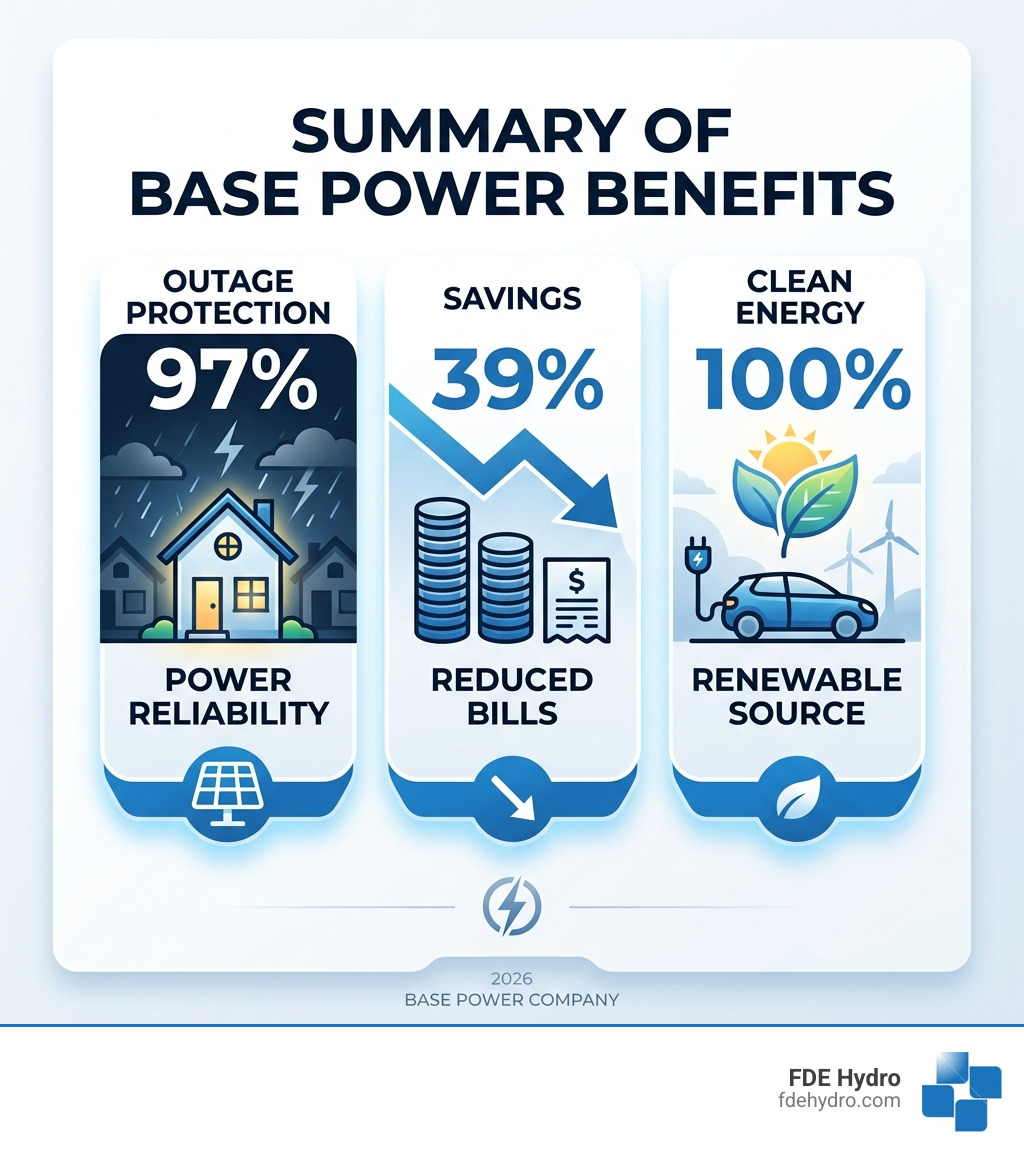
Base energy plans from Base Power give Texas homeowners an affordable way to get backup power and lower electricity bills — without buying expensive equipment.
Here’s a quick summary before we dive in:
| Feature |
Details |
| Who it’s for |
Texas homeowners seeking backup power + lower energy bills |
| Installation cost |
$695 (25 kWh) or $995 (50 kWh) |
| Monthly membership |
$19/mo or $29/mo |
| Energy rate |
8.5¢/kWh + utility delivery fees |
| Backup coverage |
Protects against ~97% of outages |
| Contract length |
36 months |
| Solar required? |
No |
| Availability |
Texas (Oncor and CenterPoint service areas) |
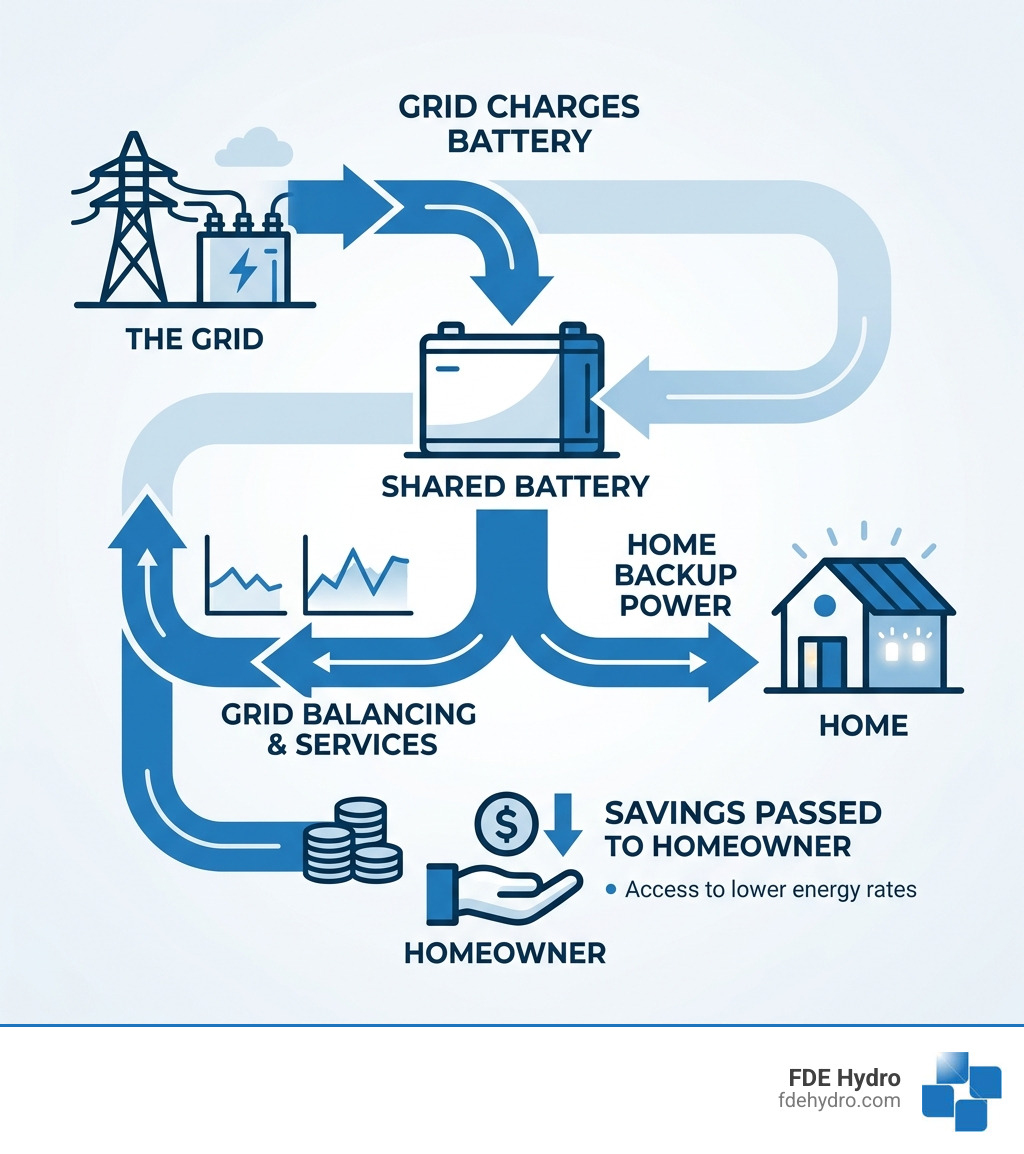
The idea is simple: Base Power installs a large battery at your home, uses it to help balance the grid, and passes the savings on to you in the form of lower energy rates. You get backup power. They earn revenue from grid services. Everyone wins — at least in theory.
But is it actually a good deal? That depends on your home, your energy usage, and how much you value having the lights on when your neighbors don’t.
The Texas grid has been under growing pressure — from record summer heat loads to the memory of Winter Storm Uri in 2021, when millions lost power for days. That history makes reliable home backup more than a convenience. For many families, it’s a priority.
I’m Bill French, Sr., Founder and CEO of FDE Hydro™, and I’ve spent decades working across heavy civil construction and clean energy infrastructure — including being selected by the U.S. Department of Energy to help define next-generation solutions for base energy and hydropower. In this review, I’ll break down exactly what Base Power offers, what it costs, and whether it delivers real value.
Easy base energy word list:
What is Base Power and How Does the Business Model Work?
At its core, Base Power is a technology-driven energy provider that treats residential homes as part of a massive, distributed power plant. In electrical engineering, we often talk about the base load—the minimum amount of electricity needed to keep the grid running 24/7. Historically, this was provided by massive, unvarying plants like coal, nuclear, or large-scale hydropower.
Base Power is modernizing this concept. By deploying thousands of distributed batteries across Texas, they are creating a Virtual Power Plant (VPP). Here is how the business model works:
- Distributed Batteries: Instead of building one giant, expensive natural gas peaker plant, Base installs 25 kWh or 50 kWh batteries at individual homes.
- Grid Balancing: When the Texas grid is under strain—like on a 105-degree August afternoon—Base can discharge energy from these batteries back into the grid. This helps prevent blackouts and reduces the need for expensive, high-emission peaker plants.
- Revenue Sharing: Base makes its money by selling these grid services (balancing and capacity) to the utility market. Because they earn revenue from the grid, they can afford to subsidize the cost of the battery for you.
- The CoServ Partnership: A prime example of this scale is their 100-MW partnership with the Denton County Electric Cooperative (CoServ). This network of home batteries provides the same capacity as a traditional gas-fired peaker plant but can be deployed in just two years, compared to the five years typically required for a gas plant.
By understanding what grid means in electrical engineering, we can see that Base Power isn’t just selling you electricity; they are inviting you to host a piece of the infrastructure that keeps the lights on for everyone.
Understanding Base Energy Plans and Pricing
When you look at a typical base energy bill in Texas, it’s often filled with “teaser rates” and “hidden fees” that disappear after three months. Base Power takes a different approach by offering fixed, transparent pricing.
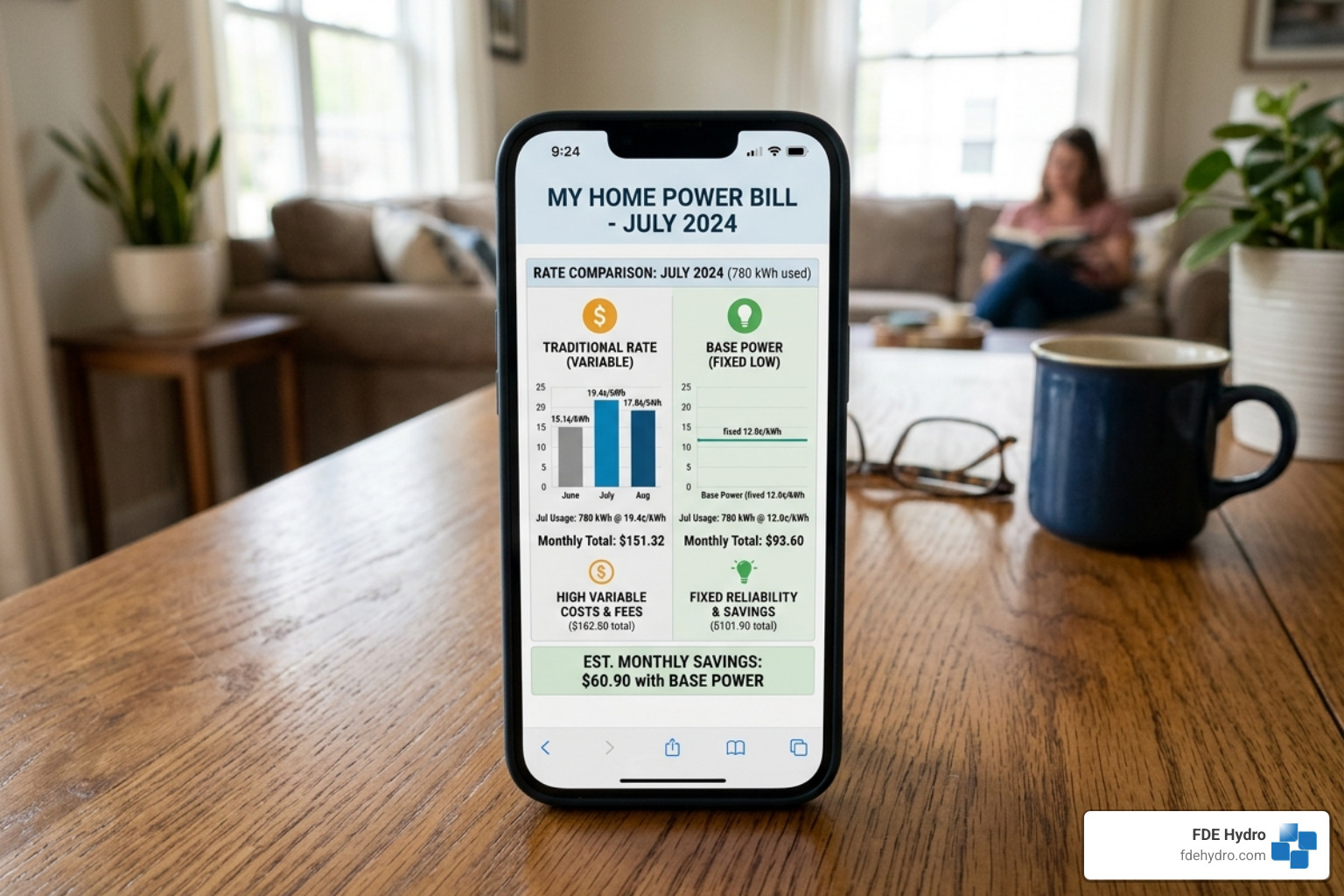
The current pricing structure (as of April 2026) is broken down into three main components:
- Installation Fee: You pay a one-time upfront fee of $695 for a single battery (25 kWh) or $995 for two batteries (50 kWh). This is significantly lower than the $15,000 to $20,000 you might pay for a standalone solar battery system.
- Monthly Membership: There is a recurring fee of $19/month for the single battery plan or $29/month for the double battery plan. This covers the maintenance, software updates, and the “insurance” of having backup power ready at all times.
- Energy Rate: Base offers a fixed energy rate, currently around 8.5¢/kWh. It is important to remember that you still have to pay utility delivery fees (from Oncor or CenterPoint), which usually add another 4¢ to 6¢ per kWh.
Compared to the 22¢/kWh some Texans were paying during peak periods, many customers report overall savings of around 39% after switching. To understand the fundamentals of these costs, you can check out our Energy 101 guide. You can also view their low-cost, fixed-rate energy details directly.
Is Base Energy Available in Your Area?
Because Base Power acts as a Retail Electric Provider (REP), they are currently limited to the deregulated parts of Texas. Specifically, they serve homes in the Oncor and CenterPoint service areas, which cover much of Dallas-Fort Worth, Austin, and Houston.
To qualify, you generally need to own a single-family home with a garage or exterior space suitable for a battery cabinet. The company handles the permitting and installation, ensuring the system meets all local codes. You can learn more about the specific eligibility and how it works on their site.
Maximizing Savings with Base Energy Solar Integration
If you already have solar panels, Base Power integrates seamlessly. They don’t require solar to work—their batteries can charge straight from the grid—but solar owners get the added benefit of renewable energy solutions that work even when the sun goes down.
Base offers a solar buyback rate of 3¢/kWh plus a real-time wholesale bonus. While this isn’t “1-to-1 net metering,” the low fixed rate you pay for energy often offsets the difference, making it a competitive choice for solar households looking for reliable backup.
Technical Specs: Reliability and Safety of the System
Safety is a common concern when putting a large battery next to your house. Base uses Lithium Iron Phosphate (LFP) cells. In sustainable power generation, LFP is known for being much more stable than the nickel-cobalt chemistries found in many electric vehicles or older home batteries.
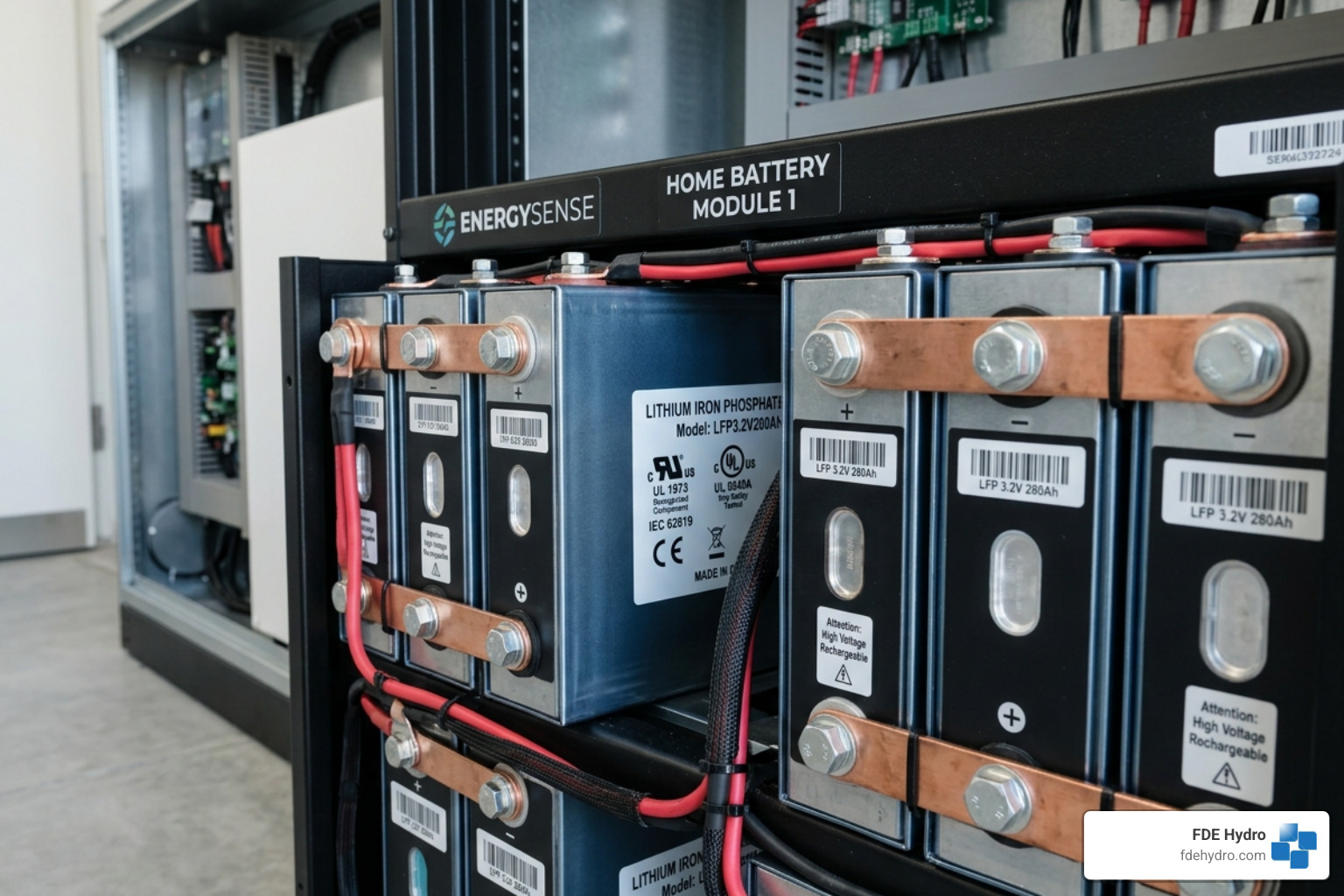
Key technical highlights include:
- Capacity: Options for 25 kWh or 50 kWh.
- Certifications: The hardware is certified to UL 1973, UL 1741, and UL 9540A standards.
- Fire Suppression: Each unit includes active fire suppressants.
- Reliability: Base batteries maintain an average 93% state of charge, ensuring they are ready for an outage at a moment’s notice.
What happens when the grid goes dark? Base provides an automatic switchover that is so fast you might only notice a slight flicker of the lights. The system is designed to protect against 97% of Texas outages.
The duration of your backup depends on your usage:
- 25 kWh Battery: Can last 24–48 hours under “low usage” (lights, fridge, Wi-Fi) or about 4 hours if you are running the AC and heavy appliances.
- 50 kWh Battery: Doubles those numbers, providing a true whole-home experience for 24 hours or more.
This type of “black start” capability is essential for grid resilience. If you’re curious about how large-scale systems recover, read The Black Start Blueprint: How Power Grids Come Back To Life.
Comparing Home Batteries to Traditional Backup Solutions
Many homeowners wonder if they should just buy a portable gas generator or a traditional solar battery. When we look at base energy security, the “shared model” Base Power uses changes the math significantly.
| Feature |
Base Power |
Traditional Generator |
Standard Solar Battery |
| Upfront Cost |
$695 – $995 |
$3,000 – $10,000 |
$15,000 – $25,000 |
| Maintenance |
Included |
High (Oil, Fuel, Testing) |
Low |
| Noise |
Silent |
Very Loud |
Silent |
| Fuel Source |
Grid/Solar |
Gas/Propane |
Solar/Grid |
| Automatic? |
Yes |
Sometimes |
Yes |
For those interested in how these systems function as a localized energy source, our guide on what is a microgrid explains the engineering behind self-sufficient power zones.
With over 10,000 homes now powered by Base, the real-world data is rolling in. On platforms like Reddit, Texas residents have shared detailed breakdowns of their experiences.
- The Pros: Customers frequently praise the 4.9-star service and the speed of installation (Base is currently installing at a pace of 60+ customers per day). Many report that they didn’t even realize their neighborhood had a power outage until they saw their neighbors’ dark houses.
- The Cons: Some users on Reddit have pointed out that you give up control of the battery. Because Base uses the battery for grid balancing, you can’t manually decide when to charge or discharge it. However, since Base guarantees a high state of charge (93%) for backup, most users find this a fair trade-off for the low cost.
- Savings: One customer testimonial highlighted a drop from 22¢/kWh to the Base rate, resulting in a 39% monthly bill reduction.
You can find more customer stories and performance data on their official site.
Frequently Asked Questions about Home Energy
How much does it cost to deinstall the battery?
If you decide to leave Base Power before your contract is up, or if you move and the new owner doesn’t want the system, there is a deinstallation fee. While early Reddit discussions mentioned fees up to $1,000, current reports suggest the fee has been lowered to around $250 in many cases. Always check your specific Electricity Facts Label (EFL) for the most up-to-date contract terms.
Can I use a portable generator with the Base system?
Yes! Starting in Fall 2025, Base is introducing a generator plug-in. This allows you to connect a portable generator to the Base system during an extended multi-day outage. The generator can recharge the battery, which then powers your home. This “hybrid” approach offers incredible flexibility, similar to how modular hydro provides flexible power generation for the larger grid.
Does the battery work without solar panels?
Absolutely. This is one of the biggest misconceptions about home batteries. Base batteries are designed to charge directly from the grid when energy is plentiful and cheap. This makes them an excellent energy resource development tool for any homeowner, regardless of whether they have panels on their roof.
Conclusion
As we look toward the future of the Texas grid in 2026 and beyond, it’s clear that the old way of doing things—relying solely on massive, centralized power plants—isn’t enough. We need smarter, more distributed solutions to maintain grid stability.
At FDE Hydro™, we believe in the power of modular infrastructure. Whether it’s our patented “French Dam” technology for hydroelectric power generation or Base Power’s distributed home batteries, the goal is the same: making clean, reliable energy more accessible and affordable.
Base Power offers a compelling “middle ground” for homeowners. You don’t have to spend $20,000 to protect your family from the next big storm, and you don’t have to settle for soaring energy bills. By participating in a shared model, you’re not just saving money—you’re helping build a more resilient Texas.
If you’re ready to take the next step, you can schedule a call with a Base advisor or explore more about sustainable power generation on our site.
Ready to learn more about the future of energy? Check out these resources:
by Adaptify Support | May 26, 2026 | Hydro Facility Articles
Is a Mini Hydro Power Plant Worth the Investment in 2026?
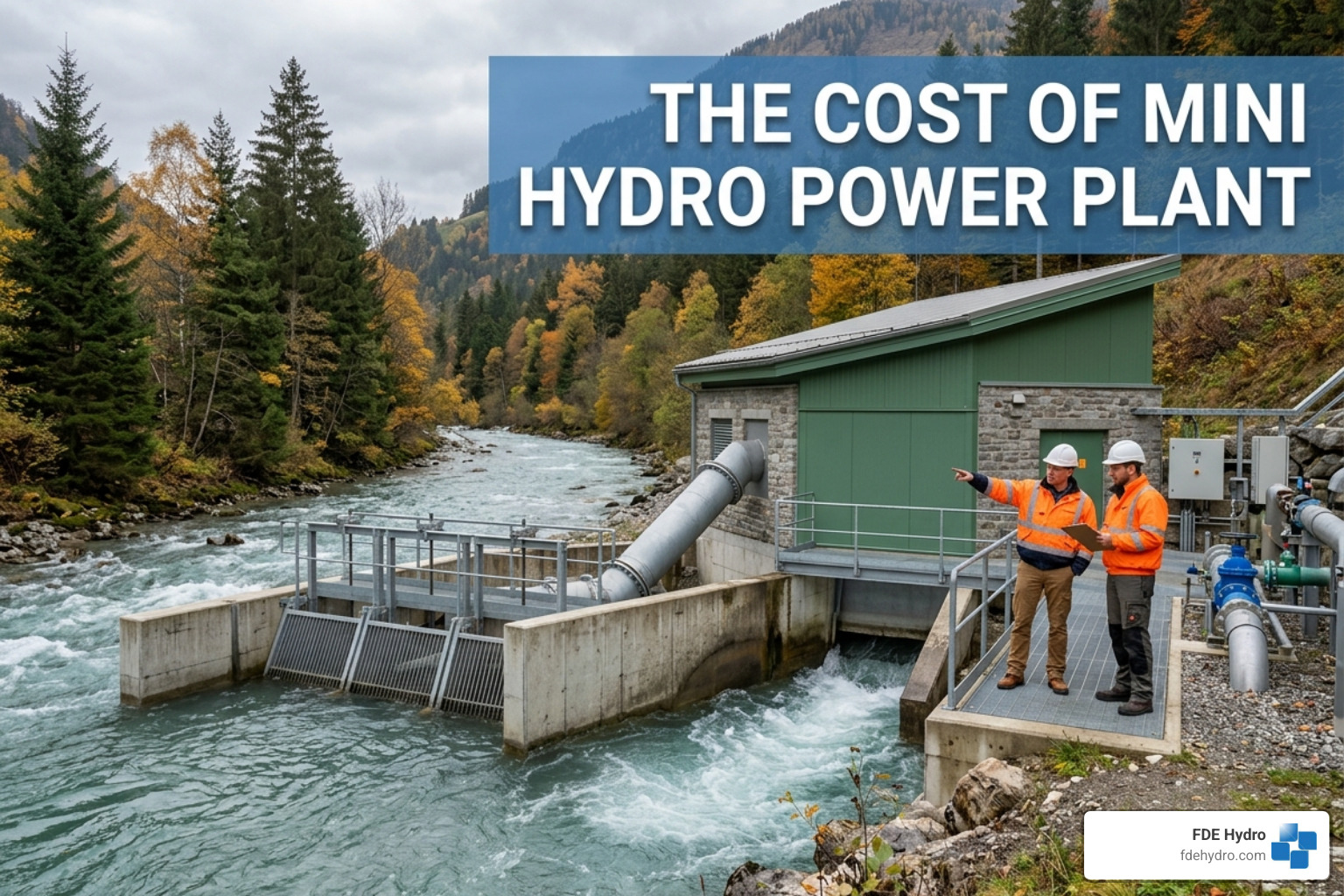
The cost of mini hydro power plant projects is one of the most searched questions among infrastructure decision-makers right now — and for good reason. Here’s a quick answer before we dive deeper:
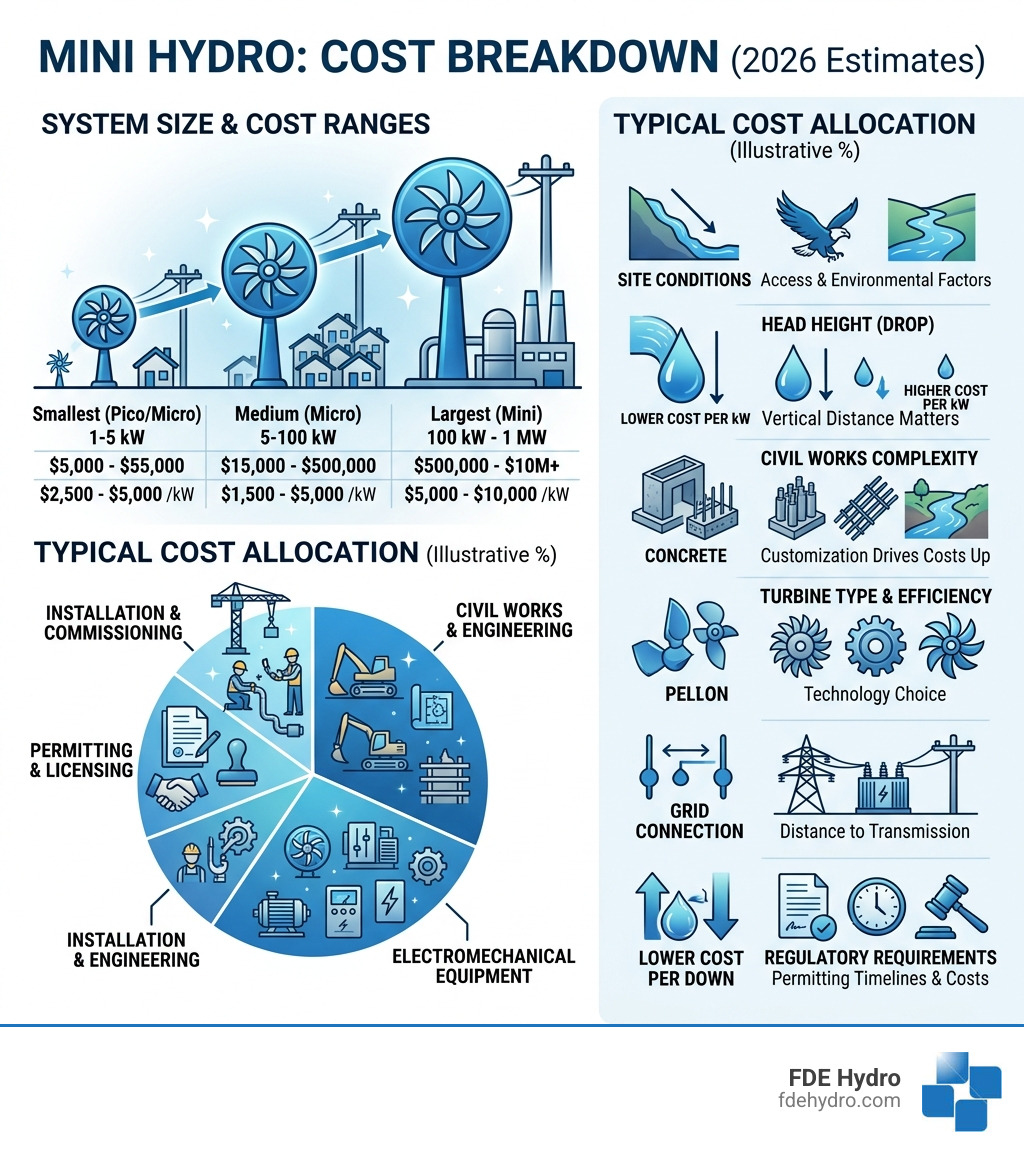
Mini and micro hydro system costs at a glance (2026):
| System Size |
Estimated Total Cost |
Cost per kW |
| 1-5 kW (pico/micro) |
$5,000 – $55,000 |
$2,500 – $5,000/kW |
| 5-100 kW (micro) |
$15,000 – $500,000 |
$1,500 – $5,000/kW |
| 100 kW – 1 MW (mini) |
$500,000 – $10M+ |
$5,000 – $10,000/kW |
Note: Costs vary significantly based on site conditions, head height, turbine type, and civil works complexity.
Small-scale hydropower sits at a fascinating crossroads in 2026. On one side, you have genuinely compelling economics — low operating costs, long asset life, and predictable output that solar and wind simply can’t match. On the other, the upfront price tag and project complexity can feel daunting, especially when conventional construction methods drive costs higher than they need to be.
The numbers tell an interesting story. A modest 5 kW micro hydro system typically runs between $15,000 and $55,000 all-in, while larger mini hydro projects in the 100 kW to 1 MW range can reach well into the millions. But the per-kilowatt cost doesn’t tell the whole story. Unlike solar panels sitting idle on a cloudy day, a well-sited hydro system runs around the clock — giving it a long-term economic edge that changes how you calculate real value.
This guide breaks down exactly where the money goes, what drives costs up or down, and where modern modular construction methods are reshaping the economics of small hydro development.
I’m Bill French, Sr., Founder and CEO of FDE Hydro™, and I’ve spent decades in heavy civil construction before focusing specifically on reducing the cost of mini hydro power plant development through patented modular and precast construction systems. My work with the U.S. Department of Energy’s Water Power Technology Office has given me a front-row seat to the real cost drivers in this industry — and where the biggest opportunities for savings lie.
Quick look at cost of mini hydro power plant:
Breaking Down the Total Cost of Mini Hydro Power Plant Projects
When we look at the capital expenditure (CAPEX) for a hydroelectric project, it’s rarely just about the turbine. In fact, for many projects, the mechanical equipment is the smaller slice of the pie. The “hidden” costs often lie in the civil works—the concrete, the digging, and the infrastructure required to get water to the machine and power to the grid.
For a standard 5 kW micro system, you might spend $4,000 on the turbine but $20,000 on the powerhouse and $8,000 on the piping. As you scale up to a 100 kW mini hydro plant, the complexity grows. A deep dive into Hydro Power Project Costs A Deep Dive Into The Dollars And Cents reveals that site-specific civil engineering can account for up to 60% of the total budget.
| Component |
5 kW Micro System Cost |
100 kW Mini System Cost |
| Turbine |
$4,000 – $13,000 |
$40,000 – $150,000 |
| Generator |
$800 – $6,000 |
$15,000 – $60,000 |
| Powerhouse / Civil Works |
$5,000 – $20,000 |
$150,000 – $600,000 |
| Piping (Penstock) |
$3,500 – $8,000 |
$50,000 – $200,000 |
| Controls & Electrical |
$800 – $3,000 |
$20,000 – $80,000 |
| Installation & Labor |
$3,000 – $8,000 |
$100,000 – $300,000 |
Equipment and Component Cost of Mini Hydro Power Plant Systems
The mechanical heart of your plant—the turbine and generator—varies in price based on quality and origin. You can find a Cost of micro hydro power plant listing for a few thousand dollars on global marketplaces, but for long-term reliability in North American or European climates, industrial-grade components are essential.
Induction generators are often favored for their lower cost and simplicity, especially for grid-tied systems. However, if you are running an off-grid homestead or a remote industrial site, you might opt for more expensive permanent magnet generators that offer better efficiency at variable speeds. Control panels have also evolved; in 2026, most systems include digital governors and safety shut-offs as standard, adding a few thousand dollars to the equipment bill but potentially saving the turbine from catastrophic overspeed events.
Piping and Intake Infrastructure Expenses
The intake is where your project begins, and it’s often where environmental regulators focus their attention. High-quality Hydropower Project Costs include the price of specialized screens—like Coanda screens—which allow water through while keeping fish and debris out. These can cost between $1,500 and $4,000 for small systems but drastically reduce maintenance.
The penstock (the pipe that carries water to the turbine) is another major variable. While HDPE (High-Density Polyethylene) is popular for its durability and ease of installation in rugged terrain, the length of the run is the primary cost driver. A short, steep run is always more cost-effective than a long, shallow one.
Key Factors Influencing Small-Scale Hydropower Investment
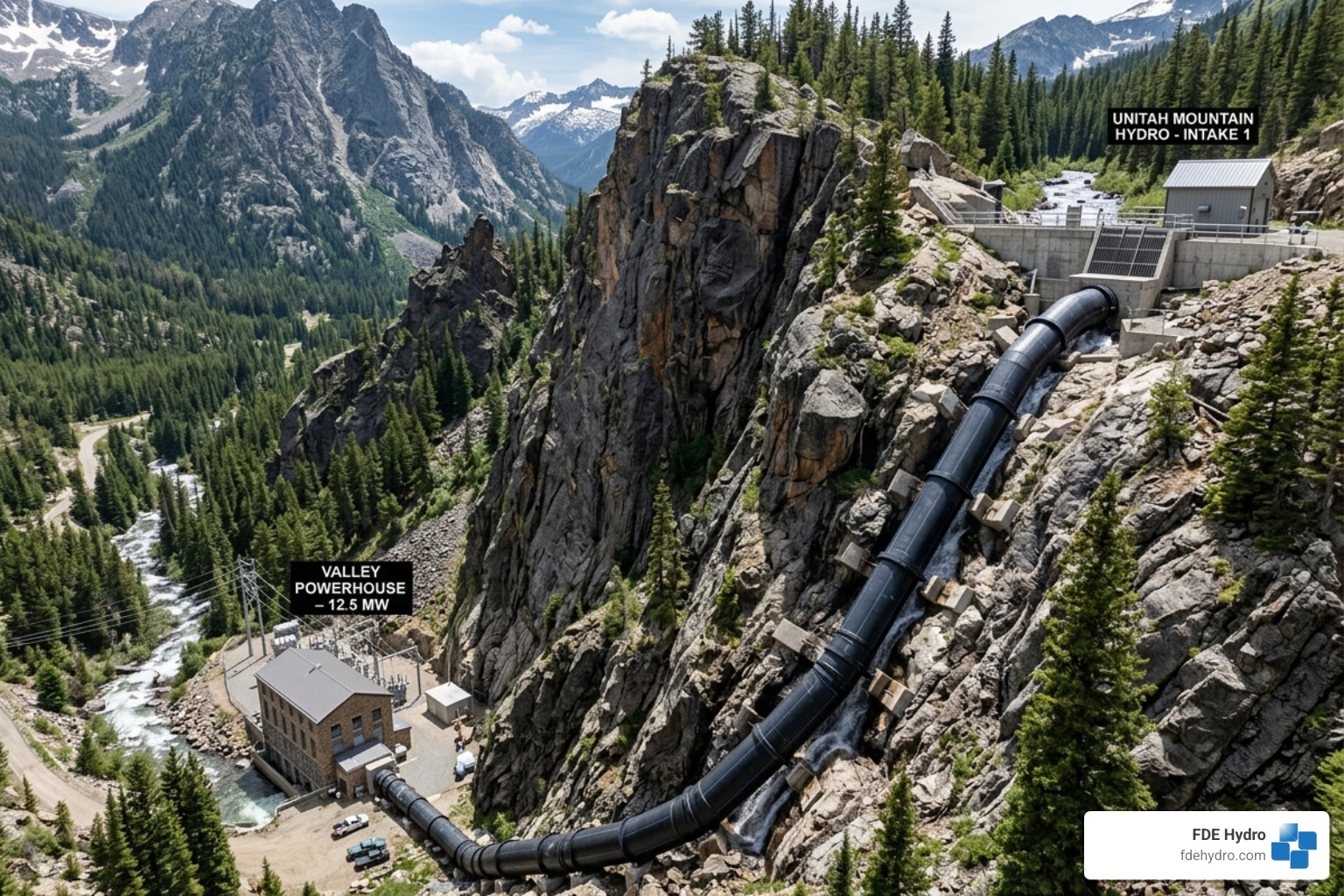
Hydropower is uniquely site-dependent. Unlike solar, where you can just add more panels, a hydro site is limited by the laws of physics: Power = Head x Flow x Efficiency.
- Head (Vertical Drop): This is the most critical factor. High head (a steep drop) allows you to use a smaller, faster, and cheaper turbine to generate the same amount of power as a low-head site.
- Flow Rate: This determines the volume of water available. More flow means a larger turbine and larger diameter piping, which increases the cost of mini hydro power plant construction.
- Site Accessibility: If we have to build a road to get a crane to your powerhouse site, your costs will skyrocket. This is where modular, smaller components become a financial lifesaver.
The U.S. Hydropower Market Report (2023 edition) highlights that while equipment costs have remained relatively stable, the labor and regulatory costs associated with site preparation have seen the most volatility.
Site-Specific Variables Affecting the Cost of Mini Hydro Power Plant Construction
Geological conditions can make or break a budget. Encountering solid bedrock during penstock trenching or finding unstable soil at the intake site can add tens of thousands in unforeseen expenses. This is a primary reason why we advocate for thorough site assessments before a single shovel hits the ground.
Environmental permitting is another “soft cost” that feels very “hard” when the bills arrive. Even for micro-scale projects, you may need water rights, fish passage studies, and interconnection agreements with your local utility. In North America, the regulatory landscape has improved—with expedited exemptions for certain small conduit projects—but budgeting $5,000 to $15,000 for “paperwork” is a realistic baseline for mini-scale projects. You can learn more about these complexities in our guide to Breaking Down The Dam Costs Of Hydropower Projects.
Automation and Remote Monitoring Requirements
In 2026, “unattended operation” is the goal for most small plants. Modern smart controls and IoT (Internet of Things) integration allow you to monitor bearing temperatures, vibration, and electrical output from your smartphone. While these systems add roughly 5-10% to the initial electrical budget, they significantly improve Hydroelectric Dam Efficiency and reduce the need for manual site visits, which is a major long-term saving.
The real magic of hydropower is in the “O&M”—Operations and Maintenance. While a diesel generator or even a wind turbine has many high-wear moving parts, a well-designed hydro turbine is remarkably simple.
Ongoing annual maintenance for a micro hydro plant typically averages between $0.005 and $0.02 per kWh. For a 5 kW system running at a high capacity factor, you might only spend a few hundred dollars a year on grease, seal replacements, and clearing debris from the intake. This is significantly lower than the $213/kW average O&M cost seen in older, less efficient small-scale plants. For more on keeping these costs low, see our resource on Hydro Power Plant Maintenance.
Return on Investment and Levelized Cost of Energy
The Levelized Cost of Energy (LCOE) for micro hydro is among the lowest in the renewable world, often ranging from $0.05 to $0.15 per kWh over the life of the system. Compare that to the 25-30 cents per kWh some remote communities pay for grid power, and the investment starts to look very attractive.
With the 2025 federal Investment Tax Credit (ITC) offering a 30% credit for renewable energy property, many of our clients are seeing payback periods of 7 to 12 years. When you consider that a hydro plant can easily last 40 to 50 years with basic care, you’re looking at 30+ years of essentially free electricity. The Benefits Of Hydropower Plant ownership extend far beyond the initial balance sheet.
Strategies to Minimize Initial Capital Expenditure
We’ve spent years at FDE Hydro™ figuring out how to kill the “custom-built” cost trap. Traditionally, every hydro plant was a bespoke engineering project. By moving toward modular design and prefabricated components, we can slash construction timelines and labor costs.
Our patented “French Dam” technology uses precast concrete modules that act as both the water control structure and the foundation for the powerhouse. This approach eliminates the need for expensive on-site formwork and the “hurry up and wait” of pouring concrete in remote river environments. We’ve found that Why Precast Cost Less isn’t just about the material—it’s about the weeks of labor saved.
Utilizing Modular Powerhouses and Existing Infrastructure
One of the smartest ways to reduce the cost of mini hydro power plant development is to stop building new dams. North America is full of “non-powered dams”—structures that already exist for flood control or irrigation but don’t produce a single watt of power.
By using Modular Powerhouses, we can “plug in” a generation system to an existing canal drop or dam outlet. This avoids the most expensive and environmentally sensitive part of the project: the dam itself. This strategy is central to how we Reduce Construction Costs for our clients in New York, Canada, and Brazil.
Scalable Implementation and Project Cost Reduction
If the total budget is a hurdle, we often recommend a phased approach. Start with the “Minimum Viable System”—the intake and a single turbine—and design the civil works to accommodate a second turbine later as budget allows. Using local labor for simple tasks like penstock trenching while reserving experts for the turbine alignment is another classic Project Cost Reduction tactic.
Frequently Asked Questions about Small Hydro Costs
What is the estimated total cost for a 5 kW micro hydro system in 2026?
In 2026, a high-quality 5 kW system typically costs between $15,000 and $55,000. The lower end covers DIY-heavy installations with shorter penstocks, while the higher end reflects “turnkey” professional installations with significant civil works or complex terrain.
How do mini hydro costs compare to solar or wind installations?
While the upfront cost of hydro is often higher per watt than solar, the output is much higher. A 5 kW solar array might produce 15-20 kWh per day (depending on sun), but a 5 kW hydro system can produce 120 kWh per day because it runs 24/7. This makes the “cost per generated kWh” for hydro significantly lower over time.
What are the primary ongoing maintenance expenses for small plants?
The main expenses are bearing lubrication, intake cleaning (seasonal), and periodic seal replacements. For grid-tied systems, there may also be annual insurance and “interconnection” fees charged by the utility, but these are generally minimal compared to the energy savings.
Conclusion
As we look at the energy landscape of April 2026, the cost of mini hydro power plant technology is becoming more accessible than ever. The shift toward modular construction, combined with favorable tax incentives and high-efficiency smart controls, has turned small-scale hydro from a “hobbyist” pursuit into a serious infrastructure investment.
Whether you are a landowner in New York looking for energy independence or a developer in Brazil retrofitting existing water systems, the key to success is mitigating risk early. By focusing on accurate site data and utilizing modern construction methods like our precast modular systems, you can turn a mountain stream into a 50-year financial asset.
Secure your investment with long-term hydropower financing and risk mitigation and start your journey toward sustainable, 24/7 power today.

