

What Powers Your Plug? A Plain-English Guide to the Low Voltage Grid
The low voltage grid is the final stage of the electrical power system — the part that delivers electricity directly to your home, office, or factory at a safe, usable voltage.
Quick answer:
| Question | Answer |
|---|---|
| What is a low voltage grid? | The segment of the power grid that operates below 1 kV, delivering electricity to end users |
| What voltages does it use? | 100–127 V or 220–240 V AC, at 50 or 60 Hz depending on region |
| Where does it start? | At the distribution transformer, which steps down medium voltage (5–35 kV) |
| Where does it end? | At your electricity meter |
| Who uses it? | Homes, businesses, industrial facilities, public lighting |
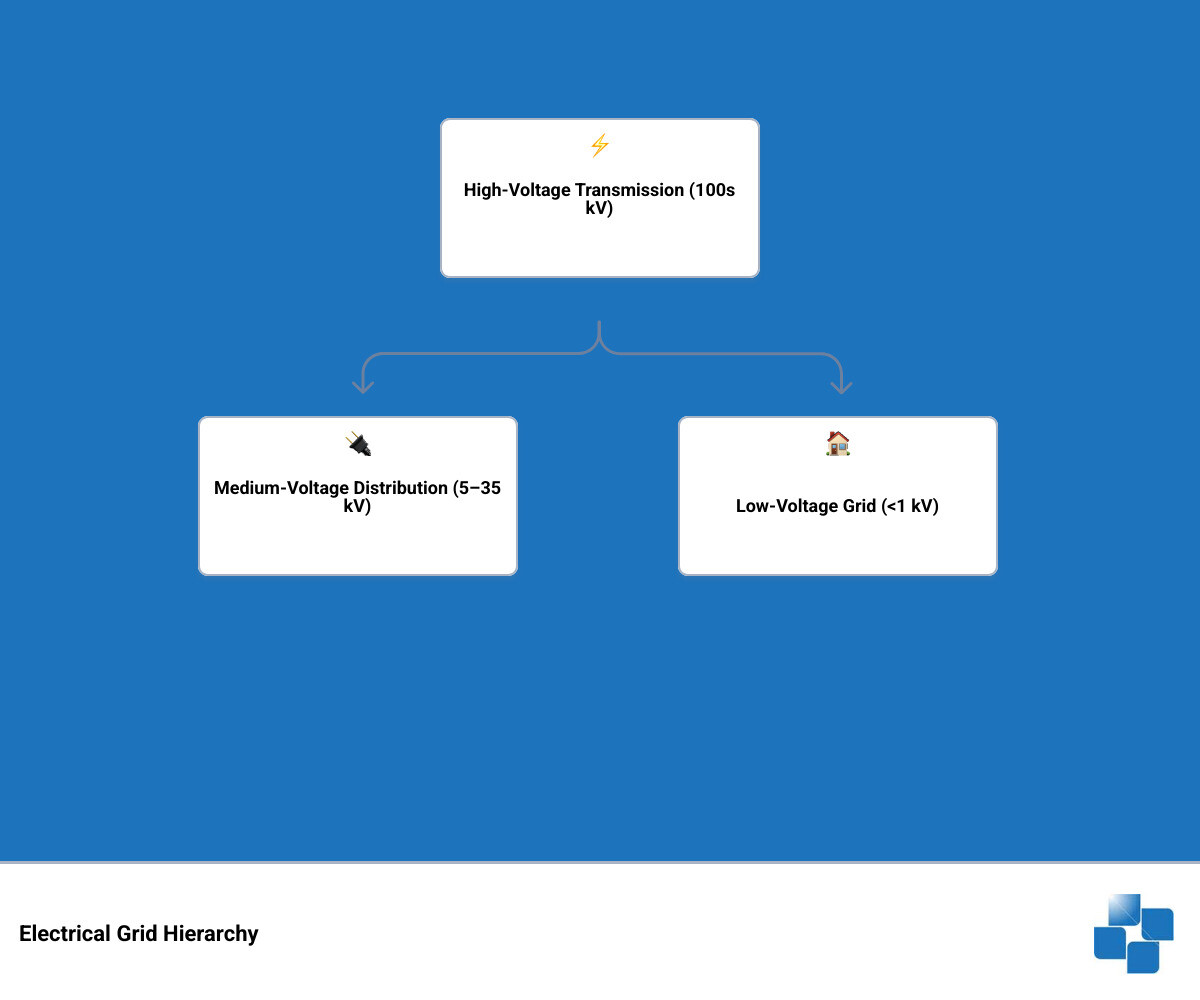
Think of the electrical grid as a long relay race. Power plants generate electricity at very high voltages. That energy travels hundreds of miles on transmission lines, then steps down through substations, and finally reaches your neighborhood through the low voltage grid — the last leg of the race.
It’s easy to overlook this final layer. But it’s arguably the most important one. And as more solar panels, electric vehicles, and smart devices connect to it, the low voltage grid is under more pressure than ever before.
I’m Bill French, Sr., Founder and CEO of FDE Hydro™, and my decades of experience in heavy civil construction and modular hydropower infrastructure have given me a front-row seat to how clean energy generation connects to the low voltage grid and ultimately powers communities. In the sections ahead, we’ll break down exactly how this system works — from transformer to plug.
Handy low voltage grid terms:
What is a Low Voltage Grid?
A low voltage grid is the part of the wider Electrical grid that takes electricity from a local distribution transformer and delivers it to end users at utilization voltage. In plain English, it is the neighborhood-level system that gets power from the pole, pad-mounted transformer, or local kiosk transformer to the meter on a home or business.
Technically, low voltage generally means anything below 1 kV. In practice, the voltages people actually use are much lower:
- 100-127 V in many North American applications
- 220-240 V in much of Europe
- 50 Hz or 60 Hz depending on the regional grid standard
This layer is often called the secondary network because it sits on the secondary side of the distribution transformer. Medium-voltage distribution, typically around 5-35 kV, feeds the transformer. The transformer steps that power down to a safer and more usable level. From there, the low voltage network takes over.
That handoff matters. The transformer is the bridge between the broader utility system and everyday consumption points like:
- houses
- apartments
- offices
- shops
- public lighting
- light industrial facilities
If you want a broader primer on what we mean by “grid” in electrical engineering, our article on What grid means in electrical engineering is a useful companion.
One helpful way to picture the path is this:
- Generation creates electricity.
- Transmission moves it long distances at high voltage.
- Substations reduce it to medium voltage.
- Distribution transformers reduce it again to low voltage.
- The low voltage grid carries it to the meter.
- The customer installation carries it from the meter to outlets, lights, motors, and equipment.
So where does the low voltage grid end? In most definitions, it ends at the electricity meter. Beyond that point, the internal wiring belongs to the customer side of the installation.
Regional Architectures: North America vs. Europe
The overall purpose of the low voltage grid is the same in the United States, Canada, Brazil, and Europe: safe final delivery of electricity. But the physical design can look very different depending on the local voltage standard and network tradition.
One of the biggest differences is service voltage. North America commonly uses 120/240 V systems for residential customers, while much of Europe uses 230/400 V. Because higher voltage can deliver the same power with less current, European low-voltage feeders can usually be longer before voltage drop becomes a problem.
Research consistently shows this difference in architecture:
- North American secondary connections are often limited to about 250 feet, or roughly 80 m
- European low-voltage designs can extend as far as about 1 mile, or roughly 1,600 m
- European distribution transformers are often in the 300-1000 kVA range
- North American neighborhood transformers are commonly smaller, around 25-50 kVA
Here is a simple comparison based on the Low-voltage network reference and standard utility practice:
| Feature | North America | Europe |
|---|---|---|
| Common residential voltage | 120/240 V | 230/400 V |
| Frequency | 60 Hz | 50 Hz |
| Typical LV feeder length | Up to about 80 m | Up to about 1,600 m |
| Typical transformer size | 25-50 kVA common in local service | 300-1000 kVA common |
| Typical layout | More transformers closer to loads | Fewer, larger transformers serving wider areas |
| Voltage tolerance reference | ANSI C84.1 often cited | National and EN-based frameworks |
In North America, lower utilization voltage means utilities usually place transformers closer to customers. In Europe, higher service voltage allows broader low-voltage coverage from each transformer. Brazil often follows 60 Hz systems and uses regional low-voltage arrangements that can resemble either compact urban or more extended distribution models depending on the utility and density.
Voltage tolerance is another important design point. In the United States, ANSI C84.1 is often used as a reference, with service voltage targets that keep delivered power within an acceptable band. If voltage drifts too low, motors struggle and electronics may misbehave. Too high, and equipment stress rises. The grid’s job is not just to deliver power, but to deliver good power.
Earthing also differs by region. Utilities may use TN, TT, or related earthing arrangements depending on local codes and practices. The details vary, but the goal is always the same: provide a controlled fault path and reduce shock risk.
Topologies and Components of the low voltage grid
Not all low-voltage systems are built the same way. Utilities choose topology based on reliability needs, load density, cost, and geography.
The three classic low-voltage network topologies are:
- radial networks
- spot networks
- grid networks
Radial networks
A radial network is the simplest and most common arrangement. Power flows along one main path from the transformer to customers. If a fault occurs on that path, customers downstream can lose service until the issue is isolated and repaired.
Radial systems are popular because they are:
- less expensive to build
- easier to protect
- simpler to operate
- well suited to suburban and rural areas
In lower-density service territories, a single feeder may serve many customers, and a rural primary feeder may supply dozens of distribution transformers. Radial design is the workhorse of the power world. It is not glamorous, but neither is a wrench, and both are essential.
Spot networks
Spot networks are used where reliability matters much more than lowest cost. They usually serve one concentrated site through multiple transformers connected in parallel on the low-voltage side.
Typical applications include:
- hospitals
- large commercial buildings
- business districts
- critical public facilities
These systems often use network protectors. A network protector is a specialized breaker that prevents reverse power flow from the low-voltage side back into a failed transformer or feeder. That way, a problem upstream does not drag the whole site down with it.
Grid networks
Grid networks are even more interconnected. They are common in dense downtown areas where multiple low-voltage feeders and transformers are tied together through underground conductors. Customers may be served from several paths at once, which greatly improves continuity of service.
Benefits include:
- high redundancy
- fewer outages from single equipment failures
- better service continuity for dense urban loads
Protection in these systems is more sophisticated. Utilities may use:
- network protectors
- cable limiters for fast short-circuit isolation
- coordinated protective devices across multiple feeders
Grid networks are more complex and more expensive, but for central business districts and other critical load centers, the reliability benefit can be worth it.
For a more general look at how grid designs affect daily life, see our article on how the electrical grid powers our lives.
Key Components of the low voltage grid
Whatever the topology, most low-voltage networks are built from a familiar set of parts.
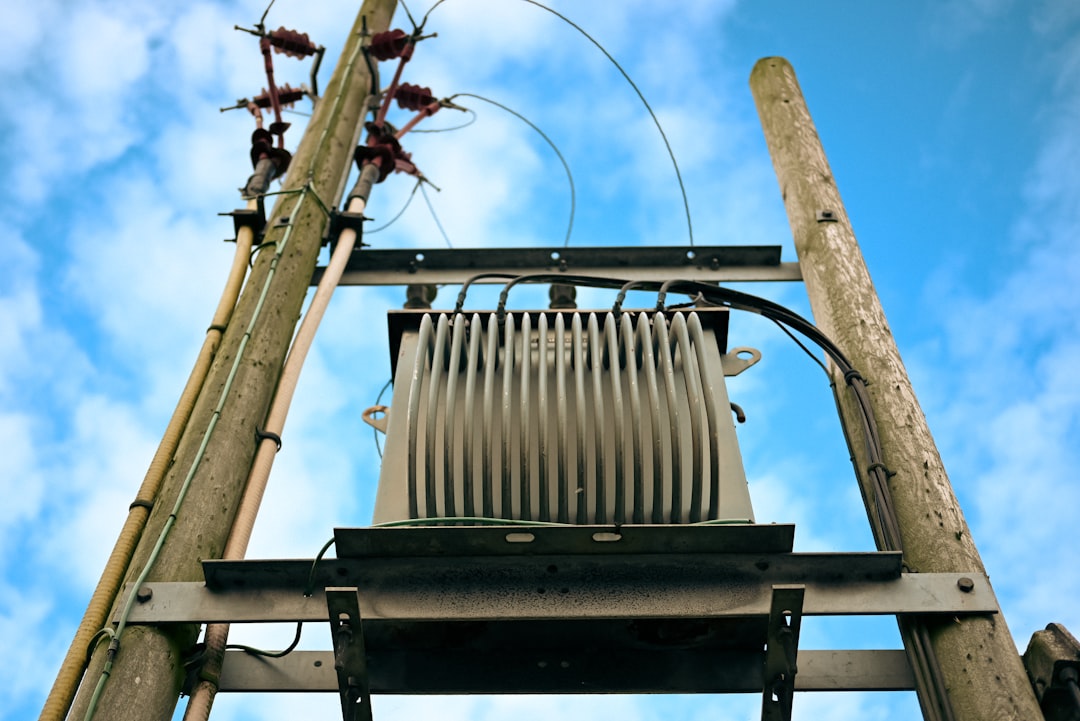
Distribution transformers
These are the entry point to the low-voltage system. They step power down from medium voltage, often 5-35 kV, to end-user voltage. They can be:
- pole-mounted
- pad-mounted
- installed in kiosks or compact substations
- placed in vaults in dense urban areas
Feeders
Low-voltage feeders carry power from the transformer into the neighborhood or local service area. They may be overhead or underground. Feeder size is selected based on expected load, voltage drop limits, fault duty, and future growth.
Service drops or service lines
These are the final conductors from the low-voltage feeder to the individual customer connection point and meter. In overhead systems, this may be a visible drop to a house. In underground systems, it may be a buried service lateral.
Protection devices
Safety and reliability depend on layered protection, including:
- fuses
- circuit breakers
- residual current devices in consumer installations
- network protectors in spot and grid networks
- cable limiters in interconnected urban systems
Smart meters
The traditional meter simply measured energy use. The modern smart meter does much more. It can support interval data, outage detection, remote reading, and in some cases better visibility into the low-voltage system itself.
That matters because the low-voltage layer has historically been the least visible part of the distribution system, even though it can be far larger than the medium- and high-voltage layers combined. Some utility analyses suggest the LV network can be 10 times the size of the upper distribution network.
If you are interested in how distributed assets and local control fit into this picture, our Microgrid Technology guide is a good next step.
Modern Challenges and Digitalization
For decades, many utilities treated the low voltage grid as mostly passive. Power went one way, from transformer to customer, and loads were fairly predictable. That world is fading fast.
Today, the LV network is where the energy transition becomes very real. The main pressures include:
- rooftop solar PV exporting back to the grid
- EV charging creating sharp evening peaks
- heat pumps increasing winter demand in electrified buildings
- batteries changing charging and discharge patterns
- rising expectations for resilience and power quality
This creates two opposite operating extremes:
-
Low load, high generation
In sunny periods, rooftop solar can push voltage upward and even reverse normal power flow. -
High load, low generation
During peak charging or heating periods, feeders and transformers can become overloaded and voltage can sag.
These issues are one reason utilities now talk about the LV network as the “final frontier” of grid orchestration. It is big, complex, and historically under-instrumented.
Digitalization is changing that. Smart meters, sensors, and software platforms are improving visibility and enabling more active control. Worldwide smart meter adoption is projected to reach about 78% by 2028, which is a major shift for low-voltage data availability.
A modern low-voltage management stack may include:
- AMI and smart meter data
- transformer-level monitoring
- dynamic topology models
- low-voltage state estimation
- outage analytics
- voltage quality monitoring
- DER visibility and control
This trend also matters for regions where FDE Hydro works, including the United States, Canada, Brazil, and Europe. As more renewable generation comes online, local distribution constraints increasingly shape what projects can connect, how fast they can connect, and how reliably they can operate.
Optimizing the low voltage grid with Smart Technology
The good news is that utilities are not flying blind anymore. Research on modern low-voltage optimization shows real gains from coordinated control strategies.
Some standout findings include:
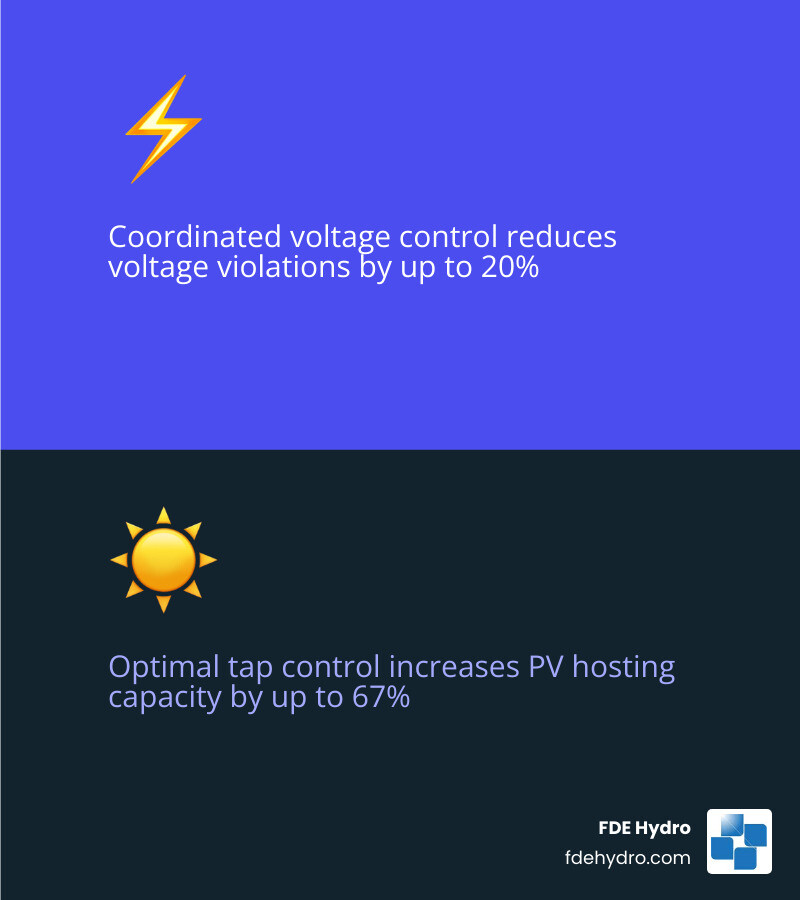
- coordinated voltage control can reduce voltage violations by up to 20%
- integrated voltage-reactive power control can cut imbalance by about 25%
- optimal tap control can increase PV hosting capacity by up to 67%
- short-term solar forecasting can reduce unnecessary tap changer operations by nearly 56%
How does that work in practice?
Voltage control
Voltage must stay within acceptable limits at the customer service point. Utilities can manage this through transformer tap settings, feeder design, reactive power support, and smarter DER control.
Tap changers
On-load tap changers and voltage regulators adjust transformer output to keep voltage stable as demand and generation change. In a DER-heavy network, those adjustments can become more frequent, which is why smarter forecasting matters.
Forecasting and analytics
Short-term solar forecasting helps utilities avoid overreacting to passing clouds and sudden output swings. Better forecasting means fewer unnecessary mechanical operations and longer equipment life.
Flexible demand
Smart EV charging, demand response, and coordinated heat pump operation can shift or smooth load. Instead of reinforcing every feeder immediately, utilities can sometimes buy time with intelligence.
LVDC trends
Low-voltage DC, or LVDC, is an emerging topic worth watching. Traditional low-voltage systems are usually AC, but DC networks can make sense in selected applications where loads or generation are already DC-based, such as:
- battery systems
- EV charging hubs
- data-rich commercial buildings with power electronics
- certain microgrids and hybrid systems
DC can reduce some conversion losses and simplify integration with batteries and solar. That said, AC remains the standard for public low-voltage distribution, and LVDC is still a niche rather than a replacement.
If you want to dig deeper into intelligent control, our article on optimizing microgrid operations explores many of the same digital ideas at the local grid scale.
Frequently Asked Questions about Low Voltage Networks
What is the difference between a low voltage grid and a microgrid?
A low voltage grid is usually part of the public utility distribution system. A microgrid is a smaller local power system that can often operate either connected to the main grid or independently.
Key differences:
- The low voltage grid is a voltage layer in the wider utility network.
- A microgrid is an operational system with local generation, controls, and defined boundaries.
- A microgrid can often island, meaning it can disconnect and keep serving local loads on its own.
- A standard low-voltage feeder usually cannot do that by itself.
In other words, “low voltage” describes the electrical level, while “microgrid” describes the architecture and operating mode. Many microgrids operate at low voltage, but not every low-voltage network is a microgrid.
For a full primer, see What Is A Microgrid.
How do utilities ensure safety in LV networks?
Safety starts with design and continues through protection, grounding, and maintenance.
Core safety measures include:
- earthing systems that create a controlled fault path
- fuses and circuit breakers that interrupt dangerous current
- residual current devices that detect leakage current
- insulation and enclosure standards
- voltage control within acceptable limits
- clear separation between utility and customer installations
Touch voltage matters too. Around 50 V is often treated as an approximate safety threshold for dangerous contact conditions, which is one reason low voltage still requires serious protection even though it is far below transmission levels.
In more complex spot and grid networks, utilities also rely on:
- network protectors to block harmful reverse flow
- cable limiters for rapid short-circuit isolation
- coordinated protection settings so only the faulted section trips
As low-voltage systems become more dynamic, safety increasingly depends on visibility as well as hardware. Better data helps utilities identify overloads, outages, and abnormal voltage conditions earlier.
Why is the low voltage grid called the “final frontier” of the energy transition?
Because this is where decentralization shows up first and most intensely.
The low-voltage layer is where:
- prosumers export rooftop solar
- EVs plug in after work
- homes electrify heating
- batteries charge and discharge
- customer expectations for reliability become very personal
Historically, this layer was not heavily monitored. Utilities understood the transmission system well, the substation fairly well, the medium-voltage feeders reasonably well, and the low-voltage layer… less well. That has changed because the edge of the grid is now active, not passive.
Data-driven analytics, smart meters, and local controls are helping utilities move from guesswork to informed orchestration. That shift is essential for resilience, flexibility, and faster integration of clean energy resources.
And when the grid does suffer major disturbances, restoration still depends on understanding how all layers reconnect safely. Our article on how power grids come back to life adds useful context to that bigger picture.
Conclusion
The low voltage grid may be the last step in the power system, but it is no small detail. It is the layer that turns bulk electricity into usable energy at homes, businesses, industrial sites, and public infrastructure.
It also happens to be where many of the most important grid changes are happening right now:
- more distributed solar
- more electrified transport
- more electric heating
- more smart devices
- more need for visibility and control
At FDE Hydro, we care about this end of the system because generation and delivery are inseparable. Our work in modular hydropower and water-control infrastructure supports a cleaner, more flexible power future, but that future only succeeds if the electricity can be absorbed and managed all the way down to the local distribution edge.
Hydropower remains one of the grid’s most valuable balancing resources, especially when paired with modern digital control and strong distribution planning. If you want to explore that connection further, read 4 Reasons Why Hydropower Is The Guardian Of The Grid.
And if you would like more plain-English guides on transmission, distribution, resilience, and restoration, visit our power grid article library.
