

Why Construction Costs Are Soaring—And What You Can Do About It
Reduce construction costs without sacrificing quality—that’s the challenge facing every project manager today. Here’s how to get started:
- Strategic Planning: Apply value engineering during design to eliminate unnecessary expenses.
- Innovative Methods: Use prefabrication and modular construction to cut labor costs by 20-40%.
- Smart Sourcing: Buy materials in bulk and source locally to reduce transportation expenses.
- Technology Integration: Implement BIM and construction management software to prevent costly errors.
- Waste Reduction: Minimize material waste through careful planning and reuse strategies.
- Risk Management: Establish contingency funds and clear contracts to avoid budget overruns.
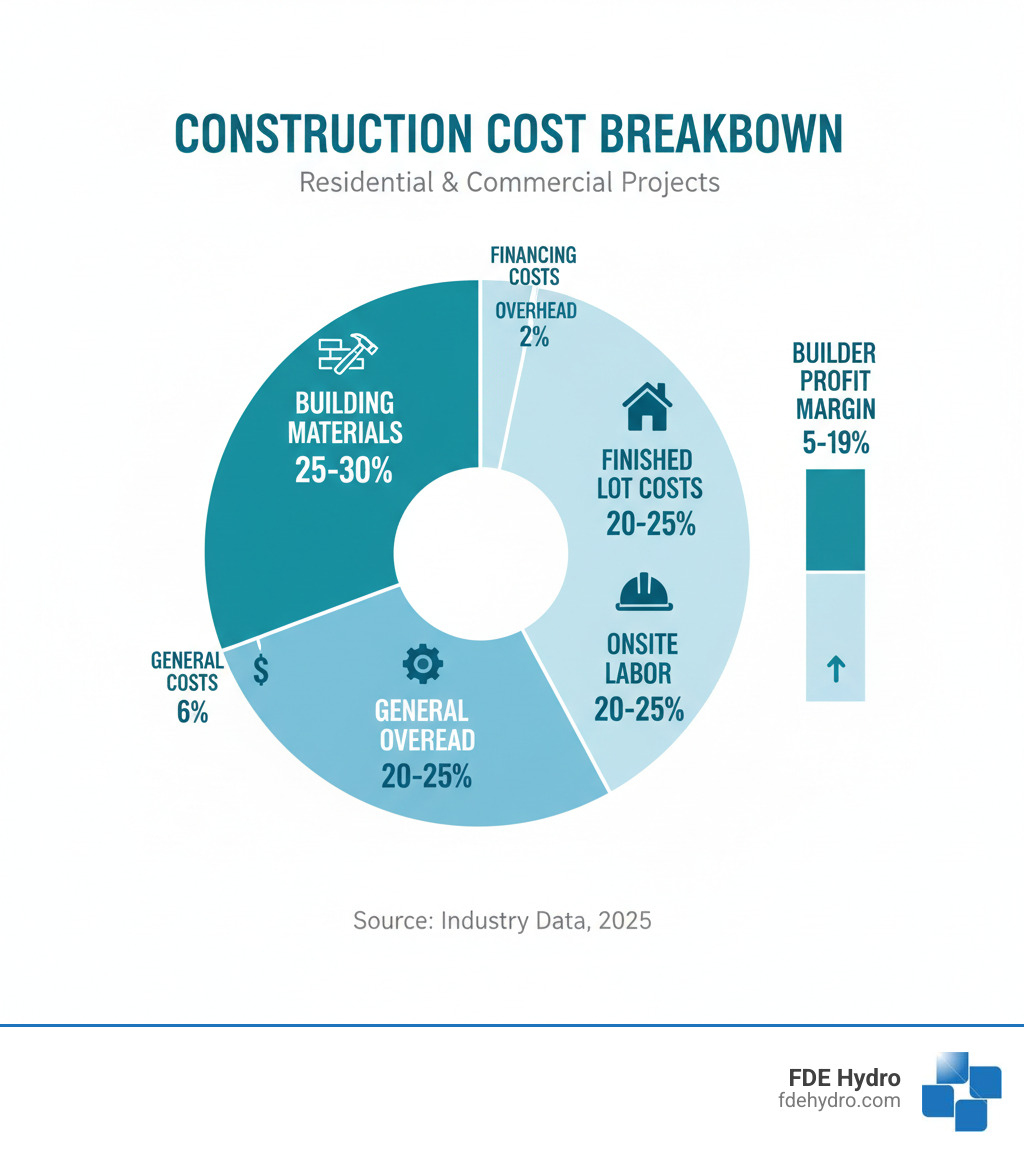
The construction industry faces unprecedented pressure from rising material prices and labor shortages. With material and labor costs representing over 90% of project expenses, profitability is squeezed across every sector. Yet, cost overruns aren’t inevitable. The primary obstacle is often mismanagement and lack of supervision, not a lack of tools. Strategic approaches can deliver substantial savings: 20-30% for residential projects, 10-20% for infrastructure, and 25-35% for industrial construction.
This guide provides a comprehensive blueprint for savings across the project lifecycle. You’ll find proven strategies for delivering on-time, on-budget results, even in challenging economic conditions. The key is to understand your costs and implement strategic controls at each phase. Whether for a small residential build or a multi-million dollar infrastructure project, the fundamentals are the same: plan carefully, build efficiently, and manage relentlessly.
I’m Bill French Sr., founder and CEO of FDE Hydro. With five decades in heavy civil construction and hydropower, I’ve pioneered methods to reduce construction costs using innovative modular approaches. My experience leading over $200M in annual projects has taught me that the smartest savings come from working better, not cheaper.
Essential reduce construction costs terms:
Strategic Planning and Design: The Foundation of Cost Savings
The journey to reduce construction costs begins long before the first shovel hits the ground—it starts in the planning and design phase. Smart decisions here have the biggest impact on your bottom line, preventing costly rework later. It’s much cheaper to fix a problem on paper than to rebuild on-site. That’s why we start with a comprehensive cost breakdown structure (CBS)—a detailed outline of every expense. This financial roadmap provides clarity on where to spend and save. We also consider our Means and Methods early, selecting the most efficient construction techniques for the job.

How Value Engineering Helps Reduce Construction Costs
Value engineering isn’t about cutting corners; it’s about maximizing value at minimum cost without compromising quality. The process involves critically analyzing every design element and material. For each component, we ask: “Is this the most efficient way to achieve our goal?”
Life-cycle cost analysis is a key part of this. We look beyond the upfront price to consider long-term expenses like maintenance and energy use. High-performance insulation might cost more initially but saves thousands in energy bills over the building’s lifespan.
Space optimization is another powerful tool. Efficient layouts can reduce overall square footage without sacrificing functionality. Every square foot eliminated saves on materials, labor, and future utility costs. For kitchens and bathrooms—the most expensive rooms per square foot—consider phased upgrades. Install cost-effective fixtures initially and plan to upgrade later. For example, rough in the plumbing for a jetted tub but install a standard one first. The upgrade becomes a simple swap without structural changes.
Smart Design Choices for a Leaner Budget
Early design decisions have ripple effects throughout the project. Here are the choices that make the biggest difference:
- Define wants versus needs: Honestly separate the must-haves from the nice-to-haves to prioritize spending where it truly matters.
- Choose stock vs. custom designs: Modifying an existing stock plan offers personalization while saving substantially on architectural fees compared to a fully custom design.
- Reduce square footage: A smaller footprint is the most direct way to reduce construction costs, as it means less material, labor, and a shorter timeline.
- Build upward, not outward: A two-story design is more cost-effective than a sprawling single-story home of the same size because it minimizes foundation and roof expenses relative to the living area.
- Simplify roof systems: A simple roofline is far more economical than a complex one with multiple gables and valleys, requiring fewer materials and less specialized labor.
- Use open-plan layouts: Reducing interior walls and doors saves on materials and labor while making spaces feel larger and more flexible.
- Select finishes wisely: Using drywall for ceilings costs about half as much as pine paneling. These choices add up quickly.
- Use expensive materials strategically: For specialty homes, use expensive finishes like logs or stone as accents rather than covering entire surfaces. This provides visual interest without the high price tag.
Smart design doesn’t feel like a compromise; it feels like intelligent planning that delivers a beautiful, functional project without unnecessary expense.
Innovative Materials and Methods to Reduce Construction Costs
The materials you choose and the methods you employ can transform your project’s bottom line. We’ve spent decades exploring innovative approaches that cut costs and deliver better, faster results.
The Power of Prefabrication and Off-Site Building
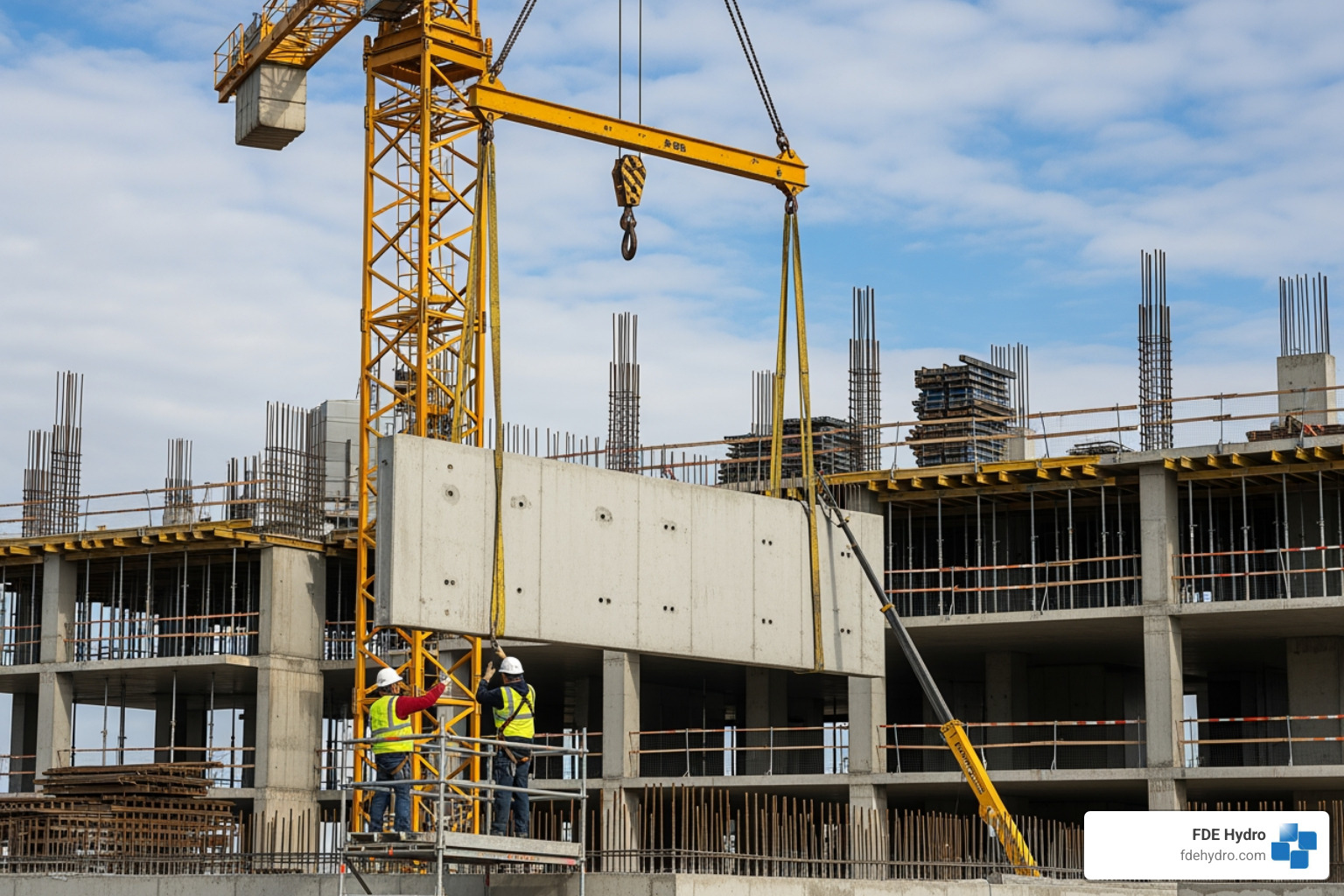
Prefabrication and modular construction involve manufacturing building components in a factory and assembling them on-site. This approach has revolutionized building in North America, Brazil, and Europe, offering substantial benefits:
- Reduced on-site labor: Factory workflows are streamlined and unaffected by weather, directly lowering labor costs.
- Minimized material waste: Controlled environments allow for precise cuts and material optimization, drastically reducing waste compared to traditional sites.
- Faster project completion: Components are manufactured while site preparation occurs, shaving months off schedules. At FDE Hydro, our proprietary “French Dam” modular technology exemplifies this speed, allowing projects to generate revenue sooner. Learn more about our Modular Construction Techniques.
- Improved quality control: Factory conditions allow for consistent inspections and adherence to standards, resulting in fewer defects.
The durability and energy efficiency of precast concrete panels are exceptional. A 6.5″ concrete wall offers a fire-resistance rating of four hours or more. These panels can integrate multiple layers (finishes, insulation, structure) into one system, while their thermal mass helps regulate indoor temperatures, lowering long-term energy costs.
Our research shows Why Precast Costs Less. In our projects, modular precast concrete eliminates labor-intensive processes and waste, delivering transformative savings that help clients reduce construction costs.
Strategic Sourcing for Materials and Equipment
Smart procurement is about finding the best value, not just the lowest price. This means balancing cost with quality and reliability.
- Build strong supplier relationships: Long-term partnerships with reputable suppliers can lead to better pricing, volume discounts, and flexible payment terms.
- Negotiate bulk purchase discounts: Accurate forecasting allows for buying in volume, which yields significant per-unit savings on large-scale projects.
- Source materials locally: This reduces transportation costs and leverages local suppliers’ knowledge of regional codes and logistics. For projects requiring Rapid Installment of Module Precast Civil Infrastructure, local sourcing is essential.
- Use just-in-time (JIT) delivery: Materials arrive precisely when needed, minimizing on-site storage, damage, and theft. JIT requires meticulous planning but is a powerful tool to reduce construction costs.
Optimizing On-Site Operations and Labor Management
Even with great planning, what happens on the job site can make or break your budget. Inefficient operations or poor labor management can derail a project, but small improvements here can yield dramatic results to reduce construction costs.
Labor costs can consume 40% of a construction project’s budget, so managing this expense is essential. Start by hiring skilled workers. Experienced tradespeople command higher rates but work faster, make fewer mistakes, and produce higher quality results, which ultimately lowers costs by reducing rework and delays.
Better scheduling is another game-changer. Coordinating trades effectively minimizes downtime and keeps the project moving. We also invest in training and development. A well-trained workforce is safer and more efficient, and safety training alone prevents costly accidents.
How Technology Can Reduce Construction Costs
Technology gives craftspeople better tools to work smarter. Here’s how it helps:
- Building Information Modeling (BIM) creates a detailed 3D digital model of the project. This allows for “clash detection,” identifying problems like a pipe running through a beam before construction begins. Fixing issues with a mouse click instead of a jackhammer prevents costly rework and keeps schedules on track.
- Construction management software provides real-time visibility into project costs, schedules, and subcontractors. Kingston Homes, for example, achieved a 15% cost reduction using such software. It allows managers to address budget issues immediately, not at the end of the month.
- Drones are invaluable for fast, accurate site surveys and progress monitoring. They can also conduct safety inspections in hard-to-reach areas, reducing risk.
- Automation and robotics are increasingly used for repetitive tasks like rebar-tying, performing them faster and with more consistent quality than manual methods.
Controlling Scope Creep and Change Orders
Change orders are budget killers. A seemingly “little change” can cascade through a project, causing rework, schedule delays, and increased subcontractor costs.
Our first defense is developing clear contracts that outline every project aspect, including a process for handling changes. Ambiguity invites uncontrolled costs.
We also implement a formal change management process. Every request is documented, evaluated for its cost and schedule impact, and formally approved by all stakeholders before implementation. This ensures everyone understands the financial implications.
Maintaining clear communication with stakeholders prevents many change orders by surfacing potential issues early. Finally, avoiding last-minute design changes after construction begins is critical. The cost of changes multiplies exponentially once work is underway. Get the design right before the first pour to reduce construction costs dramatically.
Navigating Financials, Risks, and Regulations
To reduce construction costs, you must understand financial realities, manage risks, and steer regulations. These factors can make or break your bottom line.
Proactive Risk and Financial Management
Every project has risks; how you manage them determines success. Many wonder about acting as their own general contractor to save on the builder’s 4.8% to 18.9% profit margin. However, this is risky. Subcontractors often charge homeowners more, you lack the purchasing power of a professional builder, and insurance premiums are higher. The cost of inexperience and mistakes can quickly erase any potential savings.
Contingency funds are essential. We build a 5-10% cushion into our budgets for surprises like material surcharges or unexpected site conditions. This prevents delays while scrambling for funds.
Building strong relationships with lenders secures favorable financing terms, which can significantly reduce construction costs over a project’s life. A single percentage point difference on a multi-million dollar project is substantial. Finally, adequate insurance is a necessary upfront cost that protects against catastrophic financial losses.
How Regulations and Competition Impact the Bottom Line
The regulatory environment and market competition directly influence construction costs. We’ve seen this across North America and Brazil.
Restrictive Project Labour Agreements (PLAs) can dramatically inflate costs by limiting competition. In Ontario, Canada, a PLA is projected to add $168 million to $525 million to the cost of a new hospital because fewer companies could bid on the work.
Conversely, open competition drives down prices. The Region of Waterloo in Canada saved $24 million in two years after opening tenders to all qualified companies, seeing a 14% drop in average bid prices. The City of Hamilton estimated savings up to 21%. As one report notes, Increased competition is critical to counter rising construction prices.
Skilled trades training program rigidity also presents a challenge. When certification depends on hours worked rather than skill, it creates labor shortages. Reforming the system to recognize skills at every stage would expand the labor pool, address shortages, and ultimately reduce construction costs.
Frequently Asked Questions about Reducing Construction Costs
What is the most effective way to lower construction costs?
The most powerful way to reduce construction costs is through meticulous pre-construction planning and design. Decisions made during this phase—simplifying a roofline, reducing square footage, or applying value engineering—have the largest downstream effect on material and labor costs. Projects that invest time and expertise upfront consistently come in on budget.
Can I save money by acting as my own general contractor?
While it’s tempting to save the builder’s profit margin (which can be 4.8% to 18.9%), the risks often outweigh the reward. Subcontractors may charge you more than a professional builder who provides repeat business. You’ll lack a builder’s purchasing power for materials and have to buy or rent specialty tools for a single job.
Furthermore, insurance companies view individual builders as a higher risk, leading to higher premiums. The cost of mistakes due to inexperience can quickly eliminate any supposed savings. Unless you have significant construction experience, hiring a professional is usually the smarter financial choice.
How does technology like BIM help reduce costs?
Building Information Modeling (BIM) saves money by creating a detailed 3D digital model of your project, allowing you to catch problems before they become expensive. The key feature is clash detection. This lets you see where elements conflict—like a plumbing line running through a structural beam—and fix the issue digitally during the design phase.
Resolving these conflicts on a screen instead of on-site with jackhammers prevents costly rework, material waste, and schedule delays. In my experience with large-scale infrastructure, BIM is invaluable for ensuring modular components fit together precisely, which is critical for staying on budget and on schedule.
Conclusion
The path to reduce construction costs isn’t about taking shortcuts; it’s about building smarter. We’ve walked through the essential strategies that deliver exceptional value, starting with strategic planning and design, where your most powerful cost-saving decisions are made.
Next is the power of innovation—embracing prefabrication, modular construction, and smart sourcing to slash costs and timelines. On-site efficiency and management preserve those savings through technology like BIM and vigilant scope control. Finally, understanding the financial and regulatory landscape protects your bottom line from unexpected hits.
The construction industry faces challenges, but obstacles can be overcome. Data shows that systematic strategies can yield savings of 10-35% depending on the sector. The key is a commitment to planning, innovation, and excellence in execution.
At FDE Hydro, we’ve built our reputation on this philosophy. Our innovative modular precast concrete technology, the “French Dam,” is designed to lower expenses and accelerate project timelines in the energy and water sectors across North America, Brazil, and Europe. We’ve spent five decades proving that the smartest way to reduce construction costs is to work better, not cheaper.
The future of construction belongs to those who accept these principles. Every project is an opportunity to prove that quality, efficiency, and cost-effectiveness can coexist.
Ready to see how modular innovation can transform your next project? Learn more about controlling Hydropower Project Costs with FDE Hydro’s cutting-edge solutions.
