by Adaptify Support | Apr 17, 2026 | Microgrid Articles
Why Microgrid Management Is the Key to Smarter, More Resilient Energy
Microgrid management is the process of controlling, optimizing, and coordinating distributed energy resources (DERs) — like solar panels, wind turbines, battery storage, and generators — within a localized grid that can operate independently or alongside the main utility grid.
Here’s a quick breakdown of what effective microgrid management involves:
- Real-time control — Balancing power generation and demand instantly, at every moment
- Mode switching — Seamlessly transitioning between grid-connected and islanded (autonomous) operation
- Energy optimization — Dispatching the lowest-cost, cleanest energy sources first
- Load management — Shifting flexible loads to reduce peak demand and operating costs
- Resilience planning — Keeping critical systems running during outages or grid disturbances
The stakes are high. Extreme weather events, aging grid infrastructure, and surging power demand — especially from data centers and industrial facilities — are pushing energy leaders to rethink how power is delivered and protected. By 2035, microgrids are envisioned to be essential building blocks of the future electricity delivery system, according to the U.S. Department of Energy’s Microgrid Program Strategy.
In short: a well-managed microgrid means the lights stay on, costs go down, and carbon emissions shrink — even when the larger grid fails.
I’m Bill French, Sr., Founder and CEO of FDE Hydro™, and my decades of experience in heavy civil construction and modular infrastructure — including being selected by the DOE to help shape the next generation of clean energy solutions — give me a unique lens on how microgrid management intersects with scalable, cost-effective power generation. In the sections ahead, we’ll break down everything you need to know to optimize your microgrid operations.

Similar topics to microgrid management:
What is Microgrid Management?
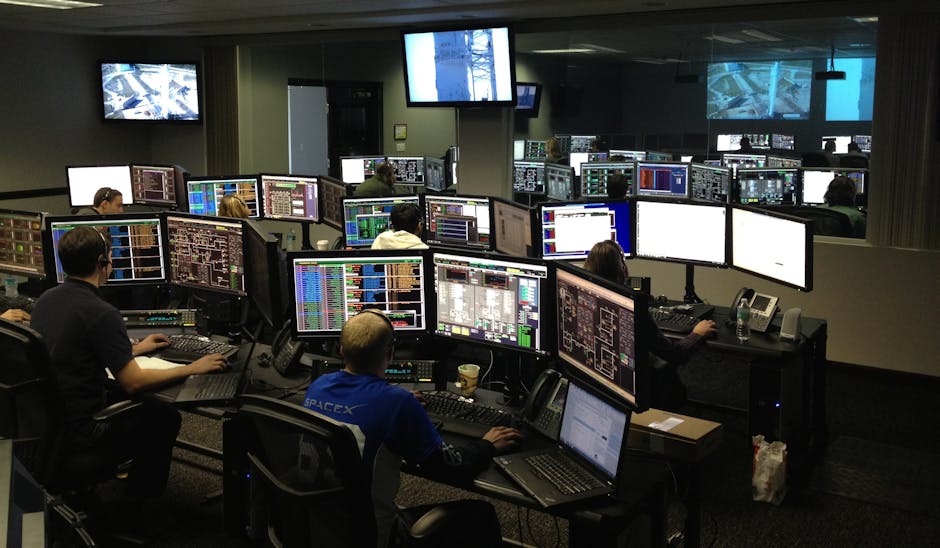
At its simplest, microgrid management is the digital “brain” that tells a local energy system how to behave. While a microgrid looks like a collection of hardware—solar panels, batteries, and wires—it is actually defined by its ability to act as a single controllable entity.
According to the IEEE 2030.7 standard, a microgrid must have clearly defined electrical boundaries. Within these boundaries, the management system must balance the needs of the users with the available supply from various energy sources. Think of it like a conductor leading an orchestra; the sun might provide the violins and the wind the woodwinds, but without the conductor (the management system), you just have a lot of noise instead of a symphony.
The core goal of what is a micro-grid management is to ensure that the local system can disconnect from the main utility grid during a storm or outage—a process called “islanding”—and continue to provide stable power to its local loads.
Core Components of Microgrid Management Systems
To manage a grid effectively, you need several layers of technology working in harmony. We generally categorize these into four main buckets:
- Distributed Energy Resources (DERs): These are the workhorses. They include renewable sources like solar and wind, as well as “dispatchable” sources like diesel generators, gas turbines, or small-scale modular hydropower.
- Energy Storage Systems (BESS): Batteries are the “buffer” of the microgrid. They soak up excess energy when the sun is shining and spit it back out when a cloud passes over or when the main grid goes dark.
- SCADA and Control Systems: Supervisory Control and Data Acquisition (SCADA) systems provide the interface for operators. They gather data from every sensor in the field and allow the management software to make decisions in milliseconds.
- Load Management: This is the “demand” side of the equation. Smart management systems can actually talk to buildings and machines, asking them to turn down their power usage when supply is tight.
| Feature |
Grid-Connected Mode |
Islanded (Autonomous) Mode |
| Primary Goal |
Cost optimization and peak shaving |
Maintaining voltage and frequency stability |
| Power Source |
Utility grid + local DERs |
Local DERs + Energy Storage only |
| Voltage/Frequency |
Set by the main utility grid |
Set by “grid-forming” inverters or generators |
| Energy Trading |
Can sell excess power back to the grid |
No connection to the utility |
The Role of Advanced Control and Optimization
Modern microgrid management has moved far beyond simple “on/off” switches. We are now seeing the rise of Scientific research on multi-microgrid energy management that utilizes sophisticated algorithms to predict the future.
Real-time controls operate at sub-cycle speeds (faster than a single blink of an eye) to prevent system collapse if a generator suddenly trips. Meanwhile, load forecasting uses weather data and historical patterns to predict exactly how much energy will be needed tomorrow.
One of the most exciting developments is demand response. Instead of just increasing supply when people turn on their AC, the management system can slightly shift the timing of industrial processes or water pumping to match when renewable energy is most abundant. Research shows that this type of active load management can reduce daily operational costs by 1.6% in grid-connected mode and nearly 0.5% in islanded mode.
Key Benefits: Reliability, Resiliency, and Decarbonization
Why go through the trouble of installing a microgrid technology suite? It usually comes down to three big wins:
- Reliability: In many parts of North America and Brazil, the main grid is becoming less reliable due to age and extreme weather. A microgrid ensures that even if the utility fails, your facility stays powered.
- Decarbonization: By prioritizing solar, wind, and hydropower, we can significantly shrink a facility’s carbon footprint. Advanced management systems ensure we use every drop of renewable energy before turning on a backup diesel generator.
- Energy Savings: By “peak shaving”—using stored battery power when utility prices are highest—businesses can save thousands on their monthly power bills.
Understanding what-is-a-microgrid-and-how-does-it-work is the first step toward realizing these savings. In fact, for many energy-intensive industries, microgrids have shifted from a “nice-to-have” luxury to an essential business continuity tool.
Supporting Critical Infrastructure and Remote Communities
For some, a microgrid isn’t just about saving money; it’s about survival. Hospitals and military bases require 100% “up-time.” If the power flickers for even a second, lives or missions could be at risk.
We also see massive benefits for remote communities and mining operations in places like Northern Canada or the Brazilian interior. These areas often rely on expensive diesel fuel flown or trucked in at great cost. By managing a mix of local renewables and storage, these communities can cut their fuel reliance by 50% or more.
Innovative projects like the Research on OptGrid for autonomous optimization from the National Renewable Energy Laboratory (NREL) are showing how we can manage over 1 million individual devices simultaneously. This “bottom-up” approach allows the grid to reconfigure itself into a patchwork of microgrids that can self-heal during a disaster.
Overcoming Challenges in Microgrid Management
It’s not all sunshine and rainbows. Managing a localized grid comes with significant technical hurdles:
- Renewable Variability: Solar and wind are “intermittent.” If a cloud covers your solar farm, your power output can drop by 80% in seconds. The management system must be fast enough to kick in a battery or generator to fill that gap.
- Cybersecurity: Because microgrids rely on digital communication, they are potential targets for hackers. Protecting the “brains” of the grid is just as important as protecting the physical wires.
- Frequency and Voltage Control: In the big utility grid, massive spinning turbines provide “inertia” that keeps the power stable. In a small microgrid, you don’t have that momentum. You need advanced “grid-forming” inverters to mimic that stability.
To solve these problems, engineers use Hardware-in-the-Loop (HIL) testing. This involves plugging the actual microgrid controller into a supercomputer that simulates “worst-case scenarios”—like a lightning strike or a sudden cyber-attack—to see how the “brain” reacts before it’s ever installed in the real world.
Future Trends in Microgrid Management and Clustering
We are entering the era of the “Fractal Grid.” Instead of one giant grid, the future will likely consist of thousands of small microgrids that can “cluster” together. If one microgrid has extra solar power, it can trade it to a neighbor that is running low.
Emerging trends include:
- AI and Meta-Heuristics: Using algorithms like the “One-to-One Based Optimizer” (OOBO) to find the perfect balance of battery charging and generator use.
- Multi-Microgrid Clustering: Linking several systems together to improve the resilience of an entire city or region.
- DOE Strategy: The U.S. Department of Energy is pushing for microgrids to be the “building blocks” of the entire national grid by 2035.
Best Practices for Design, Simulation, and Validation
If you’re looking into navigating-the-hybrid-microgrid-market-a-deep-dive, there are a few “golden rules” to follow:
- Start with a Digital Twin: Before you pour a single yard of concrete, create a digital model of your microgrid. This allows you to simulate how it will perform in January vs. July.
- Adhere to Standards: Ensure your system is compatible with IEEE 2030.7 (for control) and IEEE 2030.8 (for testing). This ensures your “brain” can talk to equipment from different manufacturers.
- Prioritize Predictive Analysis: Don’t just react to what is happening now. Use a system that looks at weather forecasts and historical load data to prepare for the next 24 hours.
For more deep dives into specific technologies, you can explore our category/microgrid-articles.
Frequently Asked Questions about Microgrid Management
How does a microgrid switch to islanded mode?
The transition happens through a process called “islanding detection.” The controller constantly monitors the connection to the main grid. If it detects a voltage drop or a total outage, it opens a “Point of Interconnection” (POI) switch. Within milliseconds, the local generators and batteries take over the full load to prevent a blackout.
What are the economic impacts of microgrid optimization?
Research shows that smart management can reduce daily operational costs by 0.5% to 1.6%. While that sounds small, for a large industrial site or a data center, those savings can equal hundreds of thousands of dollars per year. Furthermore, the ability to avoid a single “business-stopping” outage can pay for the entire system in one day.
How do standards like IEEE 2030.7 affect deployment?
These standards provide a common language. Without them, a solar inverter from Company A might not be able to “talk” to a battery from Company B. Following these standards ensures that your microgrid is “future-proof” and can be expanded as your needs grow.
Conclusion
The transition to a cleaner, more resilient energy future isn’t just about building more solar panels or wind turbines—it’s about the intelligence that manages them. Microgrid management is the essential bridge between “green energy” and “reliable energy.”
At FDE Hydro™, we believe that hydropower is a perfect partner for these localized systems. Our innovative, patented “French Dam” technology uses modular precast concrete to build or retrofit hydroelectric dams faster and more affordably than traditional methods. Because hydropower is “dispatchable”—meaning we can turn it up or down as needed—it provides the perfect stable backbone for a microgrid’s management system.
Whether you are in New York, California, or Brazil, the goal remains the same: a smarter, more autonomous grid that works for us, rather than one we have to worry about.
More info about what is a microgrid
by Adaptify Support | Apr 1, 2026 | Microgrid Articles
What Are Microgrid Benefits? A Quick Answer Before We Dive In
Microgrid benefits are real, measurable, and increasingly hard to ignore — especially for anyone responsible for keeping critical infrastructure running.
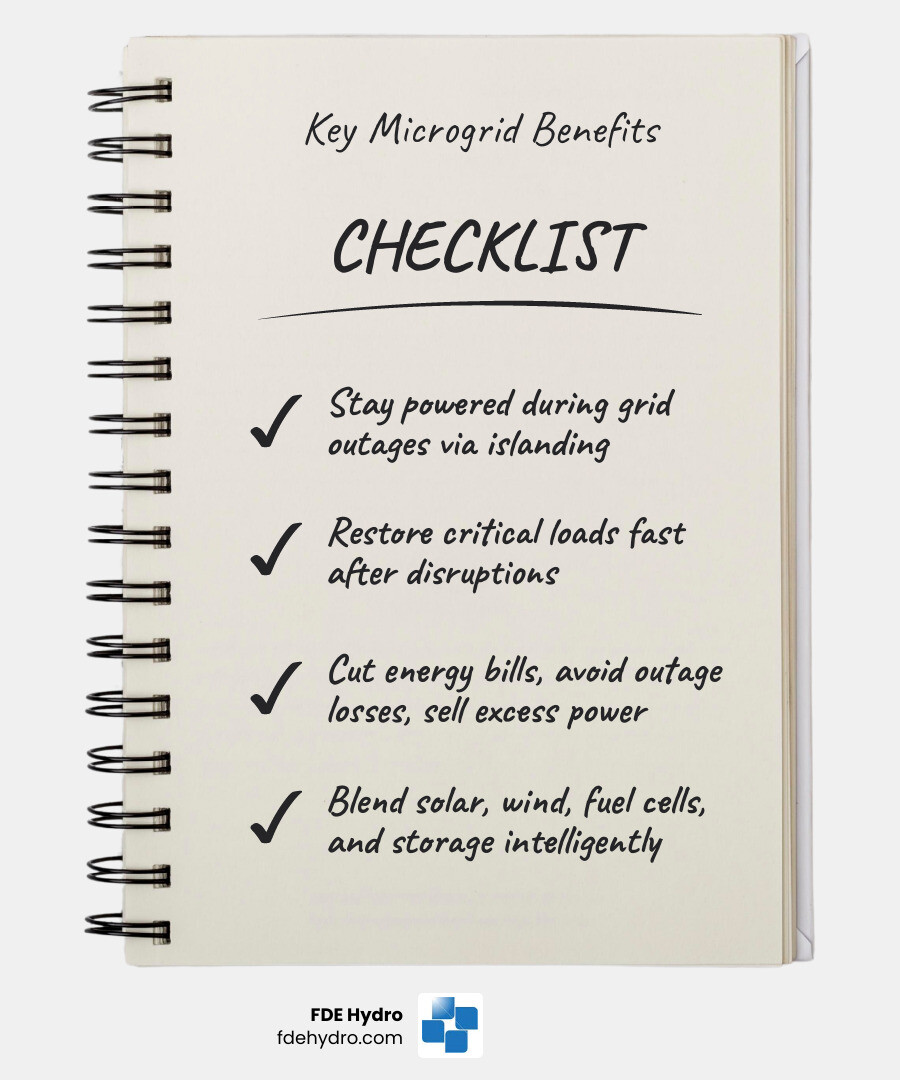
Here is a quick summary:
| Benefit |
What It Means for You |
| Reliability |
Stay powered during grid outages via islanding |
| Resilience |
Restore critical loads fast after disruptions |
| Cost savings |
Cut energy bills, avoid outage losses, sell excess power |
| Clean energy |
Blend solar, wind, fuel cells, and storage intelligently |
| Grid support |
Reduce congestion, provide ancillary services |
| Cybersecurity |
Distributed architecture resists attacks |
| Community value |
Power hospitals, rural areas, and emergency services |
The traditional power grid was built for a different era. Most U.S. transmission lines and transformers are over 25 years old, and the average power plant is past 30. That aging infrastructure is now being tested by more frequent extreme weather, cyberattacks, and surging demand.
The stakes are not abstract. Power outages cost the U.S. economy between $25 billion and $70 billion every year. A single 30-minute interruption can cost a medium or large business more than $15,000. And events like Superstorm Sandy — which cut power to roughly 8 million customers across 15 states — have shown just how fragile centralized power systems can be.
Microgrids offer a fundamentally different approach. Instead of depending on a distant power plant sending electricity over hundreds of miles of wire, a microgrid generates and manages power locally. When the central grid fails, it simply disconnects — a process called islanding — and keeps running on its own.
That one capability changes everything for infrastructure planners, community leaders, and project developers.
I’m Bill French, Sr., Founder and CEO of FDE Hydro™, and over five decades of heavy civil construction and my work with the U.S. Department of Energy’s Water Power Technology Office, I’ve seen how modular, distributed energy systems — including those delivering microgrid benefits through run-of-river hydro — can transform both energy reliability and project economics. I’ll walk you through exactly why microgrids deserve serious consideration for your next infrastructure project.
Terms related to microgrid benefits:
1. Unmatched Reliability and Resilience (The Core microgrid benefits)

When we talk about microgrid benefits, reliability is almost always the headline. In the traditional “central grid” model, a single fallen tree or a lightning strike at a distant substation can trigger a cascading outage that leaves millions in the dark. We saw this during the 2003 Northeast Blackout, which impacted 50 million people and 61,800 MW of load.
Microgrids change the math by localizing the “blast radius” of an outage. Between 2003 and 2012, severe weather caused outages costing the U.S. an average of $18B-$33B per year. For businesses like data centers, grocery stores, or research labs, these aren’t just statistics—they represent lost inventory and halted productivity.
One of the most powerful features and benefits of microgrids is the ability to prioritize power restoration. In a central grid failure, the utility decides who gets power back first. With a microgrid, a college campus or a hospital can program its system to keep the lights on in research labs and surgical suites while shedding non-essential loads. This autonomous operation was famously demonstrated by Princeton University during Superstorm Sandy, where the campus remained a “beacon of light” while much of New Jersey sat in darkness for two weeks.
To understand the full scope of these systems, it helps to look at more info about microgrid systems and how they serve as the backbone for modern energy security.
Islanding: The Key to Energy Independence
The “magic trick” of a microgrid happens at the Point of Common Coupling (PCC). This is the mechanical and digital “handshake” between the local system and the utility. When the controller senses a voltage drop or a frequency disturbance on the main grid, it triggers a “seamless transition” into island mode.
In this state, the microgrid relies entirely on its own generation—whether that’s solar, battery storage, or a modular hydroelectric unit. According to the Microgrid Overview Fact Sheet, this capability allows facilities to continue serving their community even when the macrogrid is completely incapacitated. It’s localized control at its finest.
2. Economic Advantages: Lowering Costs and Creating Revenue
While reliability gets the glory, the dollars and cents of microgrid benefits are what often seal the deal for CFOs and city managers.
Traditional grid power is surprisingly inefficient. Between 5% and 10% of electricity is lost simply traveling through transmission lines—what we call “line losses.” Furthermore, central power plants are often only 30-40% efficient because the heat generated during electricity production is simply vented into the atmosphere.
| System Type |
Typical Efficiency |
| Average U.S. Central Grid |
30% – 40% |
| Combined Heat and Power (CHP) Microgrid |
80% – 90% |
By using Combined Heat and Power (CHP) systems, microgrids capture that waste heat to warm buildings or provide industrial steam, doubling the efficiency of the fuel used.
But the savings don’t stop at efficiency. We use microgrids for energy arbitrage—charging batteries when prices are low and using that stored power when utility rates spike. We also participate in demand response programs, where the utility actually pays the microgrid owner to reduce their draw from the grid during peak times.
For a medium-sized factory, avoiding a single 30-minute interruption can save over $15,000 in lost production time. Over a decade, that’s a massive return on investment. Furthermore, microgrids act as “Non-Wires Alternatives” (NWA). Instead of a utility spending $1 billion on a new substation, they can often support the development of a microgrid to manage local demand more cost-effectively. You can find a deeper dive into these market dynamics in the Taxonomy of microgrid market value.
3. Environmental Sustainability and Clean Energy Integration
One of the most persistent challenges with renewable energy is intermittency—the sun doesn’t always shine, and the wind doesn’t always blow. Microgrids solve this by acting as a “buffer.”
By blending diverse sustainable resources—like solar, wind, and run-of-river hydro—with energy storage and smart controllers, we can maintain a steady power supply regardless of the weather. This is a core part of what is a microgrid and how does it work? It’s not just about having solar panels; it’s about the “brain” (the controller) that balances them.
Microgrids allow us to:
- Mitigate Greenhouse Gases: By shifting away from large, coal-fired plants toward local renewables.
- Meet Renewable Portfolio Standards: Helping states and corporations hit their legally mandated clean energy targets.
- Optimize Fuel Use: Using natural gas generators only when necessary to “firm up” renewable output.
Maximizing microgrid benefits through Clean Energy Integration
Smart controllers are the unsung heroes here. They can be programmed to prioritize the “greenest” electron available. If the batteries are full and the sun is out, the system will use that power first. If the river flow is high, our modular hydro units can provide the “baseload” that solar can’t. This intelligent blending is a major focus of research on microgrid technologies, which looks at how to push renewable penetration to 100% in local systems.
4. Strengthening the Central Grid and Bolstering Cybersecurity
It might seem counterintuitive, but one of the biggest microgrid benefits is that they actually make the central grid stronger.
Think of the central grid like a highway. During rush hour, it gets congested. Microgrids act like “local roads” that take the pressure off the highway. By providing ancillary services—like frequency regulation and voltage support—microgrids help the utility maintain a stable 60Hz signal across the entire region. They can even provide “Black Start” capabilities, helping the main grid reboot after a total collapse.
Cybersecurity is another area where microgrids shine. The U.S. grid is a massive, interconnected target. A successful attack on a major substation can have a “domino effect.” However, the microgrid technology and components we use today are built on a distributed architecture. If one generator or one microgrid is compromised, it can be isolated from the rest of the system, preventing the attack from spreading. This “cellular” approach to energy makes the entire nation more resistant to both cyber and physical attacks.
5. Societal Impact: Community Well-being and Economic Growth
Microgrids aren’t just for military bases and hospitals; they are engines for economic development. When a community can guarantee 99.999% power reliability, it attracts high-quality employers like pharmaceutical manufacturers and data centers. These businesses create local jobs and expand the tax base.
In Europe, European microgrid research initiatives have shown that localized energy helps protect vulnerable populations. During a heatwave or a blizzard, a community center powered by a microgrid becomes a “refuge” where people can find climate control, charge phones, and access medical equipment.
Realizing microgrid benefits in Remote and Underserved Areas
For remote communities, the benefits are even more dramatic. Take the case of Hartley Bay in British Columbia. This remote coastal community historically relied on expensive, dirty diesel generators. By implementing a smart microgrid and demand response system, they reconfigured their diesel dispatch and saved an estimated 77,000 litres of fuel per year—a $77,000 annual saving.
This isn’t just about money; it’s about energy sovereignty. Tribal nations in the U.S. and remote communities in Canada are using microgrids to break their dependence on outside fuel and take control of their own futures. The success of The First Canadian Smart Remote Microgrid serves as a blueprint for rural electrification projects worldwide.
6. Overcoming Implementation Challenges and Planning for the Future
We won’t sugarcoat it: microgrids are complex. A 2018 study found that microgrids in the Continental U.S. cost an average of $2 million to $5 million per megawatt to develop. There are also regulatory hurdles, as many current laws were written for a world where only big utilities owned power plants.
However, the technology is evolving rapidly. At FDE Hydro™, we are tackling the “cost and time” barrier using our patented French Dam technology. By using modular precast concrete, we can build or retrofit hydroelectric systems—a perfect baseload source for microgrids—much faster and for less money than traditional poured-in-place concrete methods.
Whether you are looking at what is a micro-grid? for the first time or you are ready to start siting your generation assets, the future of the grid is clearly distributed. As we integrate more “smart” tech and better storage, these systems will only become more scalable and efficient.
Frequently Asked Questions about Microgrids
How does a microgrid differ from a traditional central grid?
The traditional grid is centralized—power is made at a big plant far away and sent to you. A microgrid is distributed—power is made right where it’s used. The biggest difference is the “islanding” capability; a microgrid can run even if the main grid is dead.
Can microgrids really lower energy bills for businesses?
Yes, in three ways: by “peak shaving” (using your own power when utility rates are highest), by selling excess energy back to the grid, and by avoiding the massive costs of business interruptions. A 30-minute outage can cost $15,000; avoiding just two of those a year pays for a lot of equipment.
What are the main components needed for a microgrid?
You need four things:
- Generation (Solar, Hydro, or Gas)
- Storage (Batteries or Thermal)
- The Controller (The “brain” that manages everything)
- The PCC (The switch that connects you to the utility)
Conclusion
The microgrid benefits we’ve discussed—from saving $77,000 in fuel in a remote village to keeping hospitals running during a hurricane—point toward a single truth: the future of energy is local. By combining the resilience of “islanding” with the economic power of energy arbitrage and the sustainability of renewables, microgrids offer a path to a more secure and affordable energy future.
If you’re interested in how modular hydro can serve as the foundation for your local energy system, we invite you to learn more about microgrid solutions and see how we’re helping to rebuild the grid, one module at a time.
by Adaptify Support | Mar 12, 2026 | Microgrid Articles
The Hybrid Microgrid Market Is Reshaping How the World Powers Itself
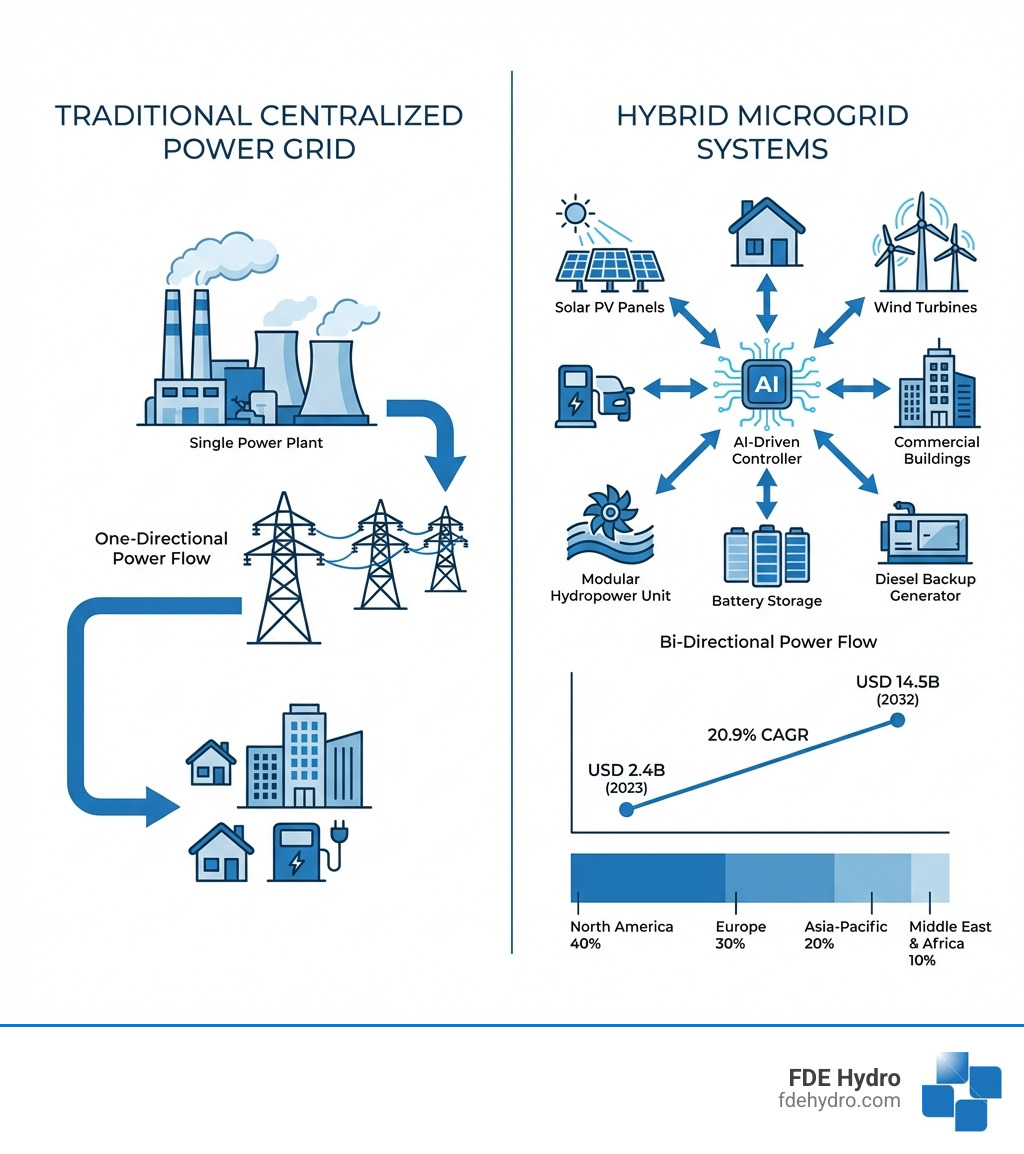
The hybrid microgrid market is one of the fastest-growing segments in the global energy industry — valued at USD 2.4 billion in 2023 and projected to reach USD 14.5 billion by 2032, growing at a CAGR of over 20.9%.
Here’s a quick snapshot of where things stand:
| Metric |
Data |
| Market Value (2023) |
USD 2.4 billion |
| Projected Value (2032) |
USD 14.5 billion |
| Growth Rate (CAGR) |
20.9% (2024-2032) |
| Largest Region |
North America (~40% share) |
| Fastest Growing Region |
Asia-Pacific (~20% share, USD 8B by 2032) |
| Grid-Connected Segment |
USD 10.3B+ by 2032 |
| Flow Battery Storage CAGR |
24%+ through 2032 |
This growth isn’t a fluke. It’s being driven by three converging forces: rising energy insecurity, declining costs for solar and battery storage, and urgent pressure to decarbonize power systems globally.
Traditional centralized grids are struggling. Extreme weather events, aging infrastructure, and soaring electricity prices are exposing their limits. Hybrid microgrids — which combine multiple power sources like solar, wind, or hydropower with storage and backup generation — offer a smarter, more resilient alternative. They can operate independently or alongside the main grid, making them valuable for everything from remote mining operations to urban hospitals.
For infrastructure developers and project owners already navigating the complexity of large-scale energy projects, understanding this market isn’t optional — it’s a strategic necessity.
I’m Bill French, Sr., Founder and CEO of FDE Hydro™, with over five decades of experience in heavy civil construction and a focus on modular hydropower solutions that integrate directly into the hybrid microgrid market. My work developing patented precast modular systems for run-of-river hydro and pumped storage puts me at the intersection of civil infrastructure and next-generation distributed energy — exactly where this market is heading.
Hybrid microgrid market terms to learn:
Understanding the Hybrid Microgrid Market: Components and Architecture
At its core, a hybrid microgrid is a localized group of electricity sources and loads that normally operates connected to and synchronous with the traditional wide-area synchronous grid, but can also disconnect to function in “island mode.” What makes it “hybrid” is the strategic combination of multiple generation types—usually pairing intermittent renewables with steady, dispatchable baseload power.
In the hybrid microgrid market, we see a sophisticated dance between various technologies. Solar PV and wind turbines often provide the bulk of the “green” electrons when conditions are right. However, to ensure the lights stay on when the sun goes down or the wind stops, these are paired with hydropower energy storage or traditional fossil fuel backups like diesel generators and natural gas engines.
Interestingly, the market is moving toward even cleaner baseload options. We are seeing more projects where a Hybrid Microgrid Combines Hydrogen Fuel Cells with Battery Storage to eliminate onsite emissions entirely. This integration is vital for achieving true energy autonomy.
Traditional vs. Hybrid Microgrids: A Quick Comparison
| Feature |
Traditional Microgrid |
Hybrid Microgrid |
| Primary Power Source |
Usually a single source (e.g., Diesel or Gas) |
Multiple sources (Solar + Hydro + Diesel) |
| Sustainability |
High carbon footprint |
Significantly reduced emissions |
| Operational Cost |
High (tied to fuel prices) |
Lower (leverages free renewable energy) |
| Resilience |
Limited by fuel supply |
High (diversified energy portfolio) |
Key Components and Connectivity
To understand what-is-a-microgrid-and-how-does-it-work, you have to look at the “brain” and the “muscle.” The muscle consists of the generation assets and power electronics (inverters and converters) that manage electricity flow. The brain is the controller that decides when to draw from the grid, when to charge the batteries, and when to “island” the system.
Most systems in the hybrid microgrid market are grid-connected, meaning they exchange power with the utility to balance costs. However, in remote areas or during disasters, the ability to switch to island mode is a lifesaver. A great real-world example of this complexity is the NTPC solar-hydrogen-battery microgrid in Ladakh. This project uses a 3.7 MW solar plant as a key component of a high-altitude system that provides reliable power where traditional infrastructure simply can’t reach.
The Role of Energy Storage and Controllers
Without storage, a renewable microgrid is just a fair-weather friend. Microgrid-technology has advanced to include a variety of storage devices:
- Lithium-ion batteries: The current gold standard for short-duration response.
- Flow batteries: Gaining traction for long-duration storage due to their high cycle life and scalability.
- Flywheels: Used for high-power, short-duration frequency regulation.
These assets are managed by AI-driven controllers and IoT integration. These smart systems use predictive analytics to forecast weather patterns and load demand, ensuring that energy is used as efficiently as possible. This level of load management is what allows a facility to stay powered up while simultaneously reducing its overall carbon footprint.
Market Dynamics: Drivers, Growth Projections, and Segments
The hybrid microgrid market is currently undergoing a massive valuation surge. As we noted, the market is expected to hit USD 14.5 billion by 2032, but some reports, like the Hybrid Microgrid Market Size, Growth, Trends Report 2035 | MRFR, suggest that the broader microgrid sector could reach as high as USD 173.3 billion by 2035.
A major trend shifting the landscape is the rise of Microgrid-as-a-Service (MaaS). This model allows businesses and communities to enjoy the benefits of a microgrid without the heavy upfront capital expenditure. Instead, they pay a monthly service fee or a per-kWh rate, much like a standard utility bill, but with the added benefits of resilience and green energy.
Key Drivers of the Hybrid Microgrid Market
Why is everyone suddenly talking about hybrid microgrids?
- Energy Security: With cyber threats and natural disasters on the rise, having a “power island” is the ultimate insurance policy.
- Declining Costs: The price of lithium-ion batteries and solar panels has plummeted over the last decade. Li-ion costs dropped from roughly $1,300/kWh in 2010 to around $740/kWh recently, with projections hitting $230/kWh by 2035.
- Renewable Mandates: Governments are forcing a shift away from fossil fuels, making the 4-reasons-why-hydropower-is-the-guardian-of-the-grid more relevant than ever as a stable, renewable baseload.
- EV Infrastructure: As we all trade our gas tanks for charging cables, the strain on the central grid is immense. Hybrid microgrids help manage this peak demand locally.
Primary Market Segments and Applications
We see the hybrid microgrid market branching into several critical end-use sectors:
- Industrial & Commercial: Factories and data centers cannot afford even a millisecond of downtime. A single power interruption can cost a semiconductor manufacturer over $1 million.
- Data Centers: Companies like Honeywell and LS Electric are partnering to integrate AI platforms with battery storage specifically to help data centers stay online amid strained grid capacity.
- Remote Communities: For islands or mountain villages, hybrid systems are often the only way to get 24/7 power without relying exclusively on expensive, dirty diesel shipments.
- Military & Healthcare: These are “mission-critical” applications where energy resilience is literally a matter of life and death.
Regional Analysis: Dominant Markets and Emerging Opportunities
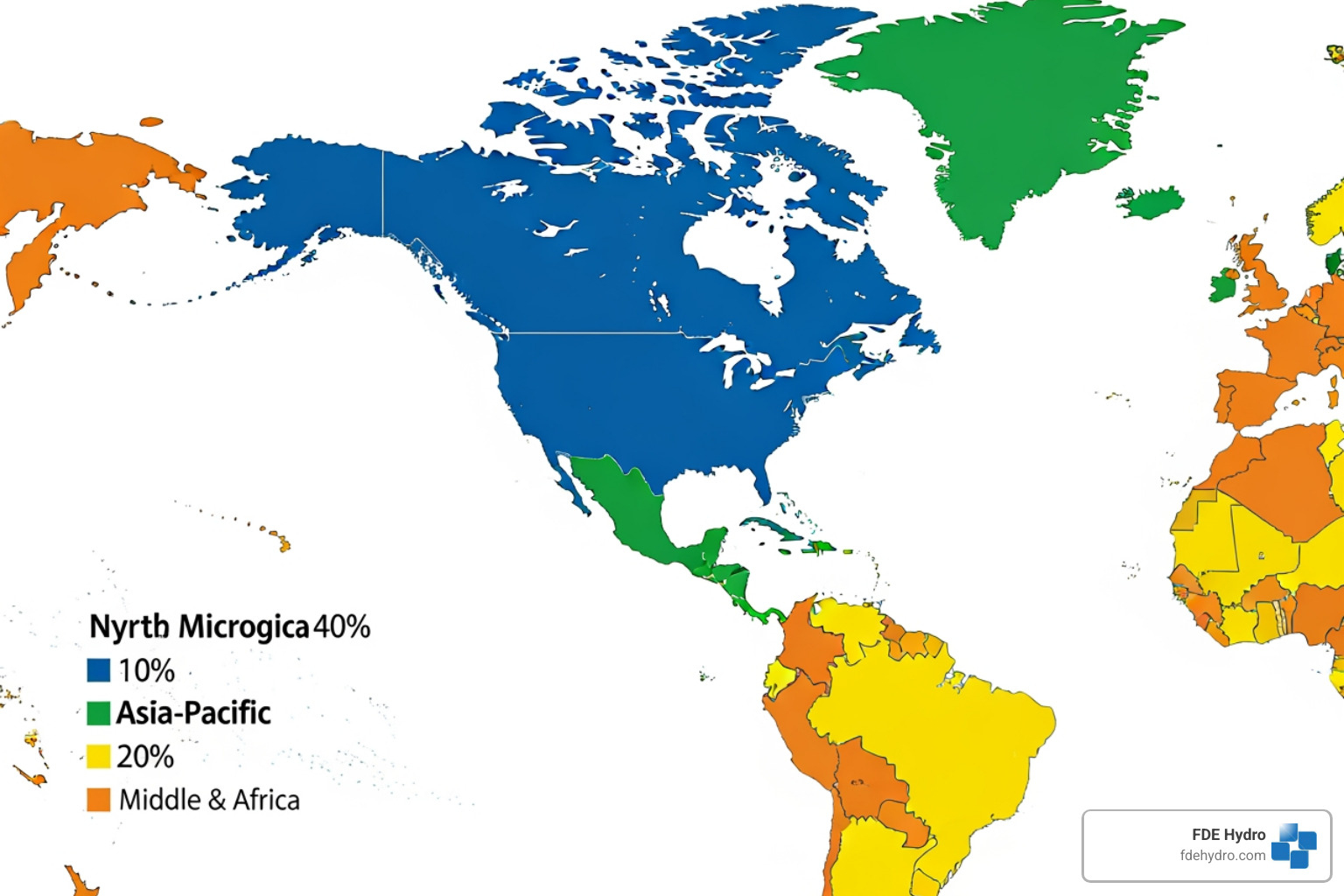
The hybrid microgrid market is a global phenomenon, but the drivers vary significantly by region.
North America: The Innovation Hub
North America currently holds the largest slice of the pie at 40% market share. In the United States, states like California and New York are leading the charge. California’s frequent wildfires and subsequent public safety power shutoffs have made microgrids a necessity for survival. The North America Hybrid Microgrid Market, Growth Report 2032 highlights that federal and state incentives are key. For instance, the US DOE has funneled over USD 220 million into microgrid research, while California has provided over USD 1.4 billion in incentives for energy storage since 2001.
Europe: The Sustainability Leader
Europe follows closely with a 30% share. Driven by the EU Green Deal and stringent decarbonization targets, European countries like Germany and France are focusing on integrating microgrid articles and technologies that favor high renewable penetration. Their focus is heavily on “Grid 2.0″—a bi-directional system where every building can potentially act as a mini-power plant.
Asia-Pacific: The Growth Engine
Holding a 20% share, Asia-Pacific is the fastest-growing region. Rapid urbanization in India and China is creating a massive appetite for electricity that the aging central grids simply can’t satisfy. China already has over 1,000 microgrids in operation, focusing on reducing urban emissions. In India, solar microgrids are being deployed to provide clean energy to millions of rural households for the first time.
Policy Frameworks and Emerging Economies
Government policy is the “wind in the sails” for this market. In the U.S., the power grid articles often discuss the importance of the Self-Generation Incentive Program (SGIP) and federal resilience funding. Meanwhile, in Brazil, the energy market is shifting toward distributed generation, with over 20 GW of distributed solar added since 2012.
Emerging markets are also finding unique uses for these systems:
- Mining Operations: In remote parts of Canada, Brazil, and Australia, mines are using hybrid microgrids to slash diesel consumption by up to 60%.
- Rural Electrification: In Sub-Saharan Africa and parts of Latin America, DC microgrids are connecting small villages, skipping the need for massive, expensive transmission lines.
Technological Innovations and Implementation Challenges
Innovation is moving at breakneck speed. We are moving beyond simple “backup power” into the realm of digital twins and predictive analytics. A digital twin is a virtual replica of the microgrid that allows operators to test “what-if” scenarios—like a major storm or a sudden spike in demand—before they happen in the real world.
Research from the Lawrence Berkeley National Laboratory is constantly pushing the boundaries of microgrid reliability, ensuring these systems can handle the complex task of balancing multiple energy sources. Furthermore, hydropower-advancements-innovations-2025 are making it easier to integrate small-scale hydro into these systems, providing a “guardian of the grid” that offers 24/7 reliability that solar and wind alone cannot match.
Overcoming Barriers to Deployment
Despite the rosy projections, it’s not all smooth sailing. The hybrid microgrid market faces several hurdles:
- High Capital Costs: Even with declining prices, the upfront cost of hardware (which accounts for roughly 75% of a project’s cost) is significant.
- Grid Integration Complexity: Utilities aren’t always thrilled about losing customers to self-generation. Navigating the regulatory and technical requirements to “hook up” to the main grid can be a headache.
- Cybersecurity Risks: As microgrids become more “connected” via IoT and AI, they become targets for hackers. Protecting the digital infrastructure is just as important as protecting the physical wires.
- Interoperability: Ensuring that a solar inverter from one company talks nicely to a battery from another and a hydropower innovation unit from a third requires standardized communication protocols.
Frequently Asked Questions about Hybrid Microgrids
How do hybrid microgrids differ from traditional microgrids?
Traditional microgrids usually rely on a single energy source (often a diesel generator) for backup. Hybrid microgrids use dual-source integration, prioritizing renewables (solar, wind, hydro) and using fossil fuels or hydrogen only when necessary. This results in better fuel flexibility, lower costs, and a much smaller carbon footprint.
What is the projected growth of the grid-connected segment?
The grid-connected segment is expected to exceed USD 10.3 billion by 2032. This growth is fueled by utilities using microgrids to enhance disaster resilience and provide ancillary services (like frequency regulation) back to the main grid, turning a cost center into a revenue generator.
Why are flow batteries gaining traction in this market?
Flow batteries are the “marathon runners” of the storage world. Unlike lithium-ion, which is great for 2-4 hour bursts, flow batteries offer long-duration storage and can be cycled thousands of times without degrading. The flow battery segment is set to grow at a CAGR of over 24% through 2032 as the market demands more “firm” renewable power.
Conclusion: The Future of Resilient Energy
The hybrid microgrid market is more than just a technological trend; it is the foundation of a more sustainable and resilient global energy architecture. As we push toward net-zero targets and navigate an increasingly volatile climate, the ability to generate, store, and manage power locally is becoming indispensable.
At FDE Hydro™, we believe that hydropower is a critical piece of this puzzle. Our modular precast concrete technology (the “French Dam”) is designed to make building and retrofitting hydroelectric systems faster and more cost-effective. By providing a stable, 24/7 renewable power source, we help hybrid microgrids achieve the reliability they need to truly replace traditional fossil-fuel generation.
The future of hydropower is modular, decentralized, and perfectly aligned with the needs of the modern grid. Whether you are in the United States, Canada, Brazil, or Europe, the shift toward localized power is here.
Ready to see how resilient energy can transform your project? Explore our microgrid solutions and join us in building a smarter, cleaner power future.
by Bill French Sr. | Feb 16, 2026 | Microgrid Articles
What is Microgrid Technology and Why It Matters
Microgrid technology is a localized electrical grid system that can operate independently from or in connection with the main power grid. Here’s what defines a microgrid:
- Self-contained system with distributed energy resources (solar, wind, generators, batteries)
- Clearly defined electrical boundaries serving a specific area or facility
- Intelligent control systems that manage energy flow automatically
- Two operating modes: connected to the main grid or “islanded” (independent operation)
- Critical capability: Can disconnect during outages and keep power flowing locally
The U.S. Department of Energy defines a microgrid as “a group of interconnected loads and distributed energy resources within clearly defined electrical boundaries that acts as a single controllable entity with respect to the grid.” Unlike a simple backup generator, a microgrid operates 24/7, intelligently managing multiple energy sources to optimize reliability, cost, and clean energy use.
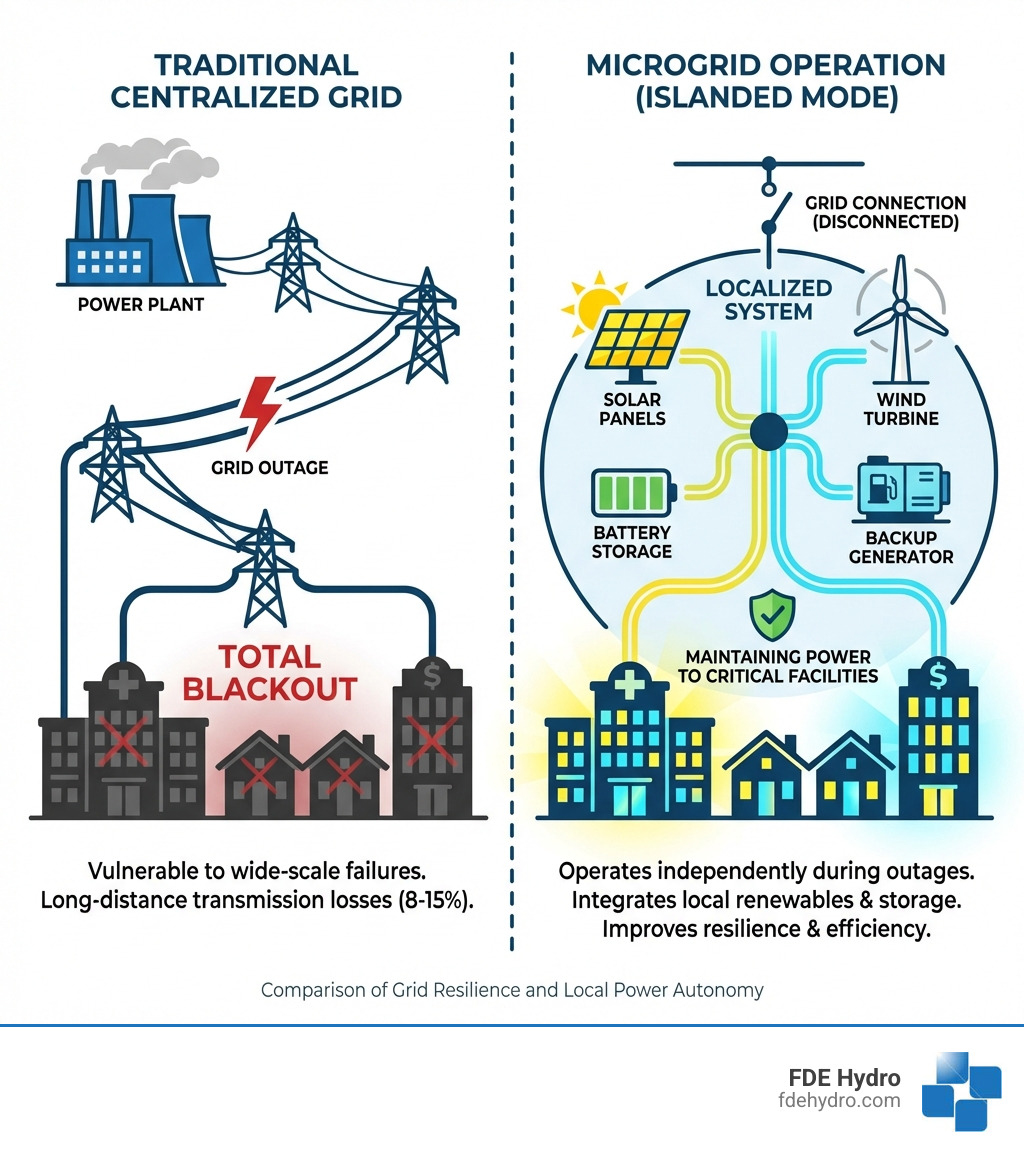
The need for microgrid technology has never been more urgent. Traditional centralized grids lose 8% to 15% of electricity during transmission, and aging infrastructure leaves communities vulnerable to increasingly severe weather events. Superstorm Sandy in 2012, for example, left 7.9 million people across 15 states without power—a stark reminder of our grid’s fragility. Microgrids offer a solution by generating power close to where it’s consumed, dramatically improving resilience and efficiency.
The market recognizes this potential. Global microgrid capacity is projected to reach 19,888.8 MW by 2028, up from just 3,480.5 MW in 2019, with the market expected to approach $39.4 billion by 2028. This explosive growth reflects microgrids’ proven ability to improve energy security, integrate renewable resources, and reduce costs for everything from military bases and hospitals to remote communities and industrial facilities.
I’m Bill French Sr., Founder and CEO of FDE Hydro™. After five decades in infrastructure development, I founded our company to deliver modular hydropower solutions. In 2015, while working with the Department of Energy’s Water Power Technology Office, I saw how perfectly microgrid technology integrates with renewables like hydropower to create resilient energy systems. This guide will explain how microgrids work, their components, and why they are essential for our energy future.
Essential microgrid technology terms:
The Anatomy of a Microgrid: Key Components and How They Work
A microgrid is a sophisticated system of interconnected electrical components working together to provide reliable power. More than just generators, it’s an intelligent system that adapts to changing energy demands and disruptions. Understanding its core elements is key to appreciating microgrid technology.
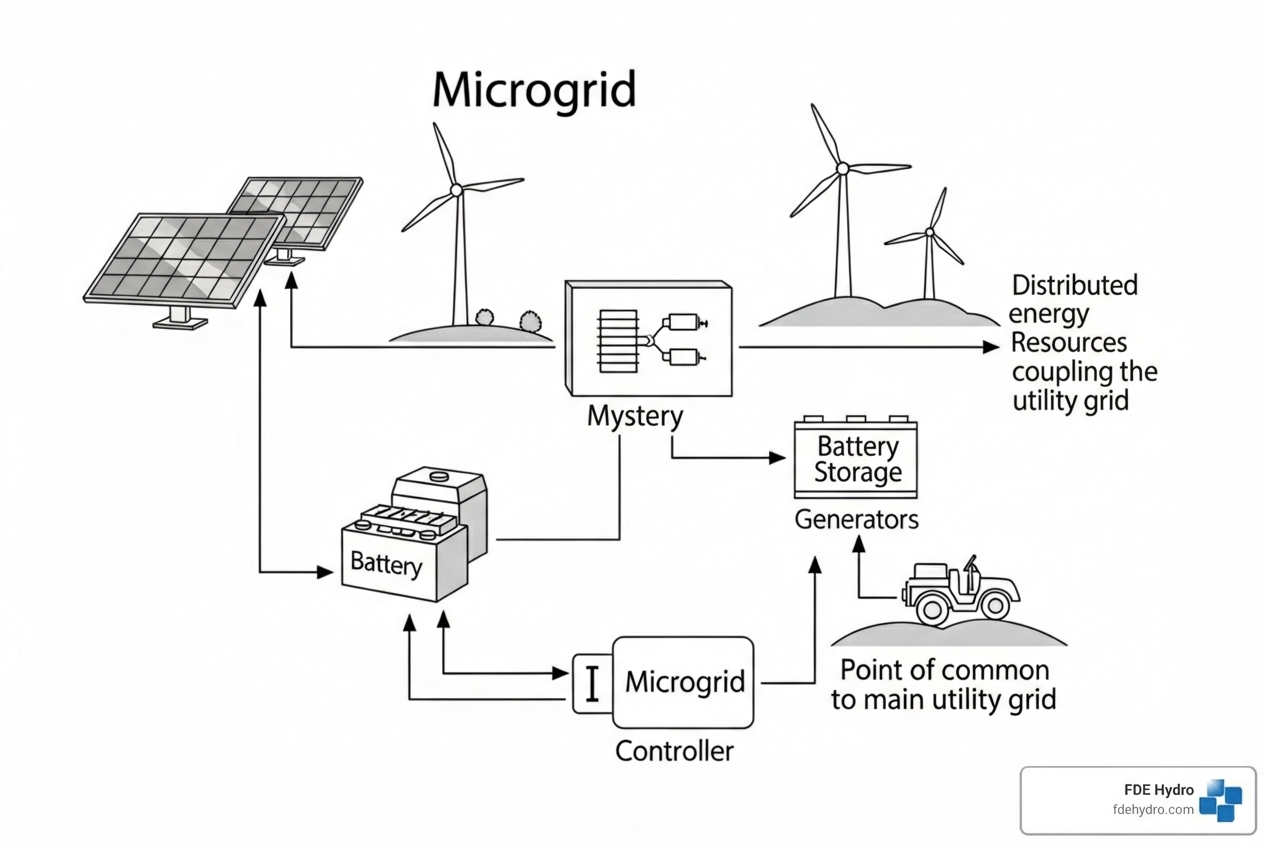
The primary building blocks of any microgrid include Distributed Energy Resources (DERs), energy storage systems, and the all-important microgrid controller. These components are typically connected within a defined electrical boundary, often interacting with the larger utility grid at a specific Point of Common Coupling (PCC).
Key Components of Modern Microgrid Technology
Let’s dive a little deeper into the specific components that make up these localized energy networks:
- Distributed Energy Resources (DERs): These are the power producers within the microgrid, often located close to the point of consumption. They are diverse and can include:
- Solar panels: Using the sun’s energy, solar photovoltaic (PV) systems are increasingly integral to microgrids, offering clean, renewable power. We’ve seen significant research and development in solar integration for these systems.
- Wind turbines: Especially effective in windy regions, these provide another renewable source of electricity, balancing the intermittency of solar.
- Combined Heat and Power (CHP) systems: These highly efficient systems capture waste heat from electricity generation for heating or cooling, greatly improving overall energy efficiency.
- Generators: Often fueled by natural gas or diesel, these provide reliable backup power, particularly when renewable sources are insufficient or during extreme events.
- Hydropower: For us at FDE Hydro™, this is a game-changer. Hydropower offers a highly reliable, dispatchable, and continuous source of renewable energy, making it an ideal anchor resource for any microgrid. Our modular powerhouses and innovative “French Dam” technology are designed to integrate seamlessly into resilient energy infrastructures.
- Energy Storage Systems (ESS): The critical role of energy storage cannot be overstated. Renewables like solar and wind are intermittent, meaning their output fluctuates. Energy storage, primarily large-scale batteries, smooths out these fluctuations, stores excess power for later use, and provides instant power during outages. Lithium-ion batteries are a common choice due to their energy density and declining costs.
- Inverters: These devices are essential for converting direct current (DC) electricity from solar panels or batteries into alternating current (AC) for use by most household and commercial appliances, or vice-versa.
- Microgrid Controller: This is the “brain” of the operation. The microgrid controller is a sophisticated software and hardware system that manages all DERs, loads, and storage. It constantly monitors energy demand and supply, decides when to connect or disconnect from the main grid, optimizes energy flow for efficiency or cost, and ensures grid stability.
- Point of Common Coupling (PCC): This is the electrical point where the microgrid connects to the main utility grid. It’s the gateway, allowing power to flow both into and out of the microgrid when it’s operating in grid-connected mode.
Types of Microgrids: AC, DC, and Hybrid Topologies
Just as there are different ways to generate and store power, there are various structural configurations for microgrids, each with its own advantages:
- AC Microgrids: The most common type, these systems distribute power using alternating current, compatible with most existing electrical infrastructure and appliances. DERs that produce DC (like solar and batteries) require inverters to convert their power to AC before distribution.
- DC Microgrids: These systems distribute power using direct current. They are particularly efficient when integrating DC-producing DERs (solar, batteries) and DC loads (LED lighting, electronics, electric vehicles), as they minimize conversion losses. We’re seeing growing interest in DC microgrids in various applications.
- Hybrid Microgrids: These combine both AC and DC buses, connected by bidirectional converters. This topology offers the best of both worlds, allowing for efficient integration of both AC and DC sources and loads, and providing greater flexibility.
Beyond these fundamental topologies, microgrids also come in different scales and operational modes:
- Nanogrids: These are essentially very small microgrids, often serving a single home or building. They represent the smallest scale of localized energy management. The interconnection of multiple nanogrids can even form a larger microgrid.
- Stand-alone vs. Grid-connected: A key characteristic of microgrid technology is its ability to operate in two modes. A grid-connected microgrid normally operates connected to the main utility grid, but it can disconnect and function autonomously in “island mode” if technical or economic conditions dictate. An isolated microgrid, also known as a “stand-alone microgrid,” operates entirely off-the-grid, without any connection to a wider electric power system. These are common in remote areas or islands where grid extension is impractical or too costly.
Here’s a quick comparison of the main microgrid topologies:
| Feature |
AC Microgrid |
DC Microgrid |
Hybrid Microgrid |
| Efficiency |
Good, but conversion losses for DC sources/loads |
High, especially with DC sources/loads |
Very High, optimized for both AC and DC |
| Cost |
Moderate, leverages existing AC infrastructure |
Potentially lower for new DC-heavy installations |
Higher initial complexity, but long-term savings |
| Complexity |
Moderate, well-understood |
Simpler control for DC components |
High, combines AC and DC control challenges |
| Applications |
Most common, general purpose |
Data centers, EV charging, residential solar |
Comprehensive energy management |
Microgrid Control and Management Systems
The sophistication of microgrid technology truly shines in its control and management systems. These systems are what allow a microgrid to operate intelligently, making real-time decisions to optimize performance.
A common approach is hierarchical control, which involves multiple layers of management:
- Primary Control: The fastest layer, responsible for immediate voltage and frequency stabilization and power sharing among DERs to ensure flicker-free power.
- Secondary Control: This layer restores voltage and frequency to their nominal values and manages power quality, correcting any deviations.
- Tertiary Control: The highest layer handles economic optimization. It manages power flow, grid interaction (buying/selling power), and demand response strategies, allowing the microgrid to adjust consumption based on price or grid conditions.
Control can also be centralized, where a single entity makes all decisions, or decentralized, where individual DERs have more autonomy and communicate to achieve overall system goals. Many modern systems use a blend, with a central Energy Management System (EMS) overseeing distributed intelligence. Our own expertise in AI energy management aligns perfectly with these advanced control strategies.
The National Renewable Energy Laboratory (NREL) has been deeply involved in the modeling, development, testing, and deployment of microgrids since 2001, conducting extensive research into control algorithms and cyber-physical test platforms. Their work highlights the continuous innovation in making these systems smarter and more robust. We are constantly learning from their advancements to ensure our hydropower solutions contribute effectively to modern grid architectures.
Microgrid Benefits: Enhancing Resilience, Efficiency, and Sustainability
The appeal of microgrid technology isn’t just theoretical; it delivers tangible benefits that address some of the most pressing challenges facing our energy infrastructure today. From keeping critical services running during major outages to reducing our carbon footprint, microgrids are proving to be invaluable assets.

Resilience and Reliability Against Grid Disturbances
A compelling advantage of microgrids is their ability to provide unparalleled resilience and reliability. For critical facilities like hospitals, data centers, and emergency services, a loss of power can be catastrophic.
- Grid Independence and Islanding Capability: This is where microgrids truly shine. They can seamlessly disconnect, or “island,” from the main utility grid when a disturbance occurs, continuing to power local loads autonomously. This means that while your neighbors might be in the dark, essential services within the microgrid’s boundaries remain operational. This capability is key to blackout protection and ensures critical infrastructure can weather any storm.
- Hardened Infrastructure: Microgrids are often designed with improved physical and cyber security, making them less vulnerable to extreme weather, natural disasters, or even cyberattacks. The damage from Superstorm Sandy underscored the profound need for more resilient local energy solutions. We understand the importance of hardening infrastructure, a core principle in our sustainable infrastructure development efforts.
Efficiency and Affordability
Microgrids also offer significant economic and efficiency gains for operators and consumers.
- Reduced Energy Loss: By generating power closer to where it’s consumed, microgrids drastically reduce the transmission and distribution losses inherent in traditional grids, where as much as 8% to 15% of electricity dissipates in transit. This makes the entire system more efficient.
- Lower Energy Costs: Intelligent microgrid controllers can optimize energy use by leveraging cheaper power sources when available. This includes strategies like peak shaving, where the microgrid uses its own generation or stored energy during periods of high demand to avoid purchasing expensive electricity from the main grid at peak rates. This can lead to substantial project cost reduction for consumers and businesses.
- Reduced Infrastructure Investment: In some cases, deploying microgrids can defer or even avoid the need for costly upgrades to traditional grid infrastructure. For example, feasibility studies have shown microgrids enabling the deferral of a $1 billion substation in New York, demonstrating their potential to provide a more cost-effective solution than traditional grid expansion.
Contribution to Decarbonization
Microgrid technology is a powerful tool in the fight against climate change, facilitating the transition to a cleaner energy future.
- Integration of Renewables: Microgrids are perfectly suited for integrating high percentages of renewable energy sources like solar, wind, and, of course, hydropower. Their control systems can manage the variability of these sources, ensuring a stable and reliable power supply. This is a core part of our mission at FDE Hydro™ in promoting sustainable power generation.
- Reduced Fossil Fuel Reliance and Lower Carbon Emissions: By maximizing renewable energy use, microgrids reduce dependence on fossil fuels, leading to a significant decrease in greenhouse gas emissions. This directly supports decarbonization efforts across various sectors.
- Supporting EV Charging Infrastructure: As electric vehicles become more common, the demand for charging infrastructure will surge. Microgrids can help support the EV transition by providing localized, resilient, and often renewable-powered charging stations, easing the strain on the main grid.
- Balancing Intermittent Renewables: The intelligence of the microgrid controller, combined with energy storage, allows for the effective balancing of intermittent renewables. When the sun isn’t shining or the wind isn’t blowing, stored energy or other dispatchable DERs (like hydropower or generators) can seamlessly step in, ensuring continuous power delivery.
The Future of Microgrid Technology: Challenges, Opportunities, and Innovations
The journey of microgrid technology is still unfolding, but its trajectory is clear: it’s a rapidly expanding sector ready for significant growth and innovation. Microgrids are undeniably a cornerstone of future energy systems, with growth driven by the need for grid modernization, the push towards smart grids, and the potential of vehicle-to-grid (V2G) integration.
Overcoming Deployment Challenges
While the benefits are immense, deploying microgrids isn’t without its problems. We’re actively working to address these challenges to open up the full potential of this technology.
- Technical Challenges:
- Low Inertia Systems: Microgrids heavy with inverter-based resources (solar, batteries) lack the inherent stability (inertia) of traditional power plants. This makes them susceptible to frequency issues, demanding sophisticated control algorithms to maintain stability, especially in island mode.
- Protection Coordination: Diverse DERs create complex and reverse power flows, complicating traditional grid protection. This requires advanced, adaptive coordination to prevent equipment damage and ensure safety.
- Modeling Complexities: Predicting microgrid behavior under various conditions requires advanced modeling and simulation tools to account for load changes, renewable intermittency, and grid disconnections.
- Economic and Regulatory Problems:
- High Initial Costs: While microgrids offer long-term savings, the upfront capital investment can be substantial. A 2018 study by NREL found that microgrids in the Continental U.S. cost an average of $2 million-$5 million per megawatt to develop.
- Complex Regulations: The regulatory landscape for microgrids is still evolving. Navigating interconnection standards, utility tariffs, and local permitting can be a significant barrier. The “legal identity” of a microgrid and clear ownership models are still being defined in many jurisdictions.
- Interconnection Standards: Standards like IEEE 2030.7 provide a framework for microgrid controllers, but their implementation and local interpretation can still pose challenges. We believe that streamlining these processes is essential for broader adoption.
Real-World Examples and Case Studies
Despite the challenges, innovative microgrids are being successfully implemented across our target geographies, demonstrating their diverse applications and profound impact.
- Calistoga Resiliency Center, California: This zero-emission microgrid, powered by battery energy storage and hydrogen fuel cells, can power the town for up to 48 hours during emergencies.
- Sonoma Community Microgrid Initiative, California: This initiative improves local energy resilience with community-scale microgrids for areas facing wildfire risks.
- Military Base Applications: Installations like MCAS Miramar in California use advanced microgrids integrating diverse fuels and intelligent controls. They prioritize energy security and operational continuity, making them highly resilient.
- University Campuses: Many universities in the U.S. and Europe, including in New York, are microgrid pioneers, using them to maintain power for critical research and campus facilities during outages.
- Data Centers: With immense power needs, data centers in places like New York City are using microgrid technology to ensure uninterrupted operation, often integrating their own generation and storage.
- Rural Electrification (Mini Grids): In remote areas of Brazil, Canada, and Europe, microgrids (or “mini grids”) provide essential electricity where grid extension is cost-prohibitive, often using renewables. Brazil’s largest microgrid at Unicamp University, for example, includes 2 MWh of battery storage.
- Île d’Yeu, France: This European island community’s Harmon’Yeu microgrid uses solar panels and battery storage to increase local energy autonomy and reduce fossil fuel reliance.
- Stone Edge Farm Winery, California: This winery operates a sophisticated microgrid with micro-turbines, fuel cells, batteries, hydrogen electrolyzers, and PV systems, demonstrating advanced energy independence.
The Role of Microgrids in Grid Modernization
Microgrids are pivotal to the broader change of our entire electric grid, serving as essential building blocks for a cleaner, more reliable, and flexible energy future.
- Advanced Control Strategies: The development of sophisticated control algorithms, often using AI and machine learning in energy management, is pushing the boundaries of what microgrids can achieve. These systems predict demand, optimize DER dispatch, and manage grid transitions.
- Clustered Microgrids: A trend towards interconnected or “clustered” microgrids allows them to share resources and provide mutual support, enhancing regional resilience and creating a more robust, self-healing network.
- Hardware-in-the-Loop (HIL) Testing: Research facilities like NREL use advanced HIL testing to rigorously evaluate microgrid controllers and components in realistic simulations before field deployment, accelerating innovation.
- Open-Source Hardware and Software: The growth of open-source tools for microgrid optimization and control, like SAMA (Solar Alone Multi-Objective Advisor), is democratizing access to advanced microgrid technology.
- A Comprehensive Review: A detailed review of microgrid technologies, key drivers, and outstanding issues highlights how microgrids address the “three Ds” of energy change: decentralization, decarbonization, and democratization, reinforcing their role as a fundamental shift in energy infrastructure.
Frequently Asked Questions about Microgrids
We often encounter common questions about microgrid technology as more communities and industries explore these innovative energy solutions. Let’s address some of the most frequent inquiries.
What is the difference between a microgrid and a backup generator?
A traditional backup generator is a reactive solution, providing power only when the main grid fails. It’s designed for temporary emergency power and doesn’t actively manage energy or interact with the grid.
A microgrid, however, is a proactive, self-contained energy system. It incorporates multiple generation sources (like renewables), energy storage, and an intelligent controller. This controller actively manages power flow 24/7, optimizes for cost and efficiency, and can seamlessly operate connected to the grid or independently (“islanded”). It’s a fundamental shift from simple backup to comprehensive energy management and resilience.
Can a microgrid sell power back to the main grid?
Yes. Many grid-connected microgrids can sell excess power back to the utility, turning them into “prosumers”—producers and consumers of energy. When a microgrid generates more power than it needs, or when grid prices are high, its controller can sell the excess, creating a revenue stream that helps offset investment costs.
Beyond selling energy, microgrids can provide valuable ancillary services to the main grid, such as frequency regulation and voltage support. Utilities often pay for these services, which help stabilize the larger grid and further improve the economic viability of microgrid technology.
How does hydropower fit into a microgrid?
Hydropower is an exceptionally strong fit for microgrid technology, acting as a highly reliable and dispatchable anchor resource. While solar and wind are excellent renewable sources, their output is intermittent. Hydropower, particularly from smaller, run-of-river or modular dams, offers a consistent, predictable, and controllable power supply.
This stability is invaluable within a microgrid, as it can:
- Provide Baseload Power: Hydropower can consistently meet a significant portion of the microgrid’s energy demand, reducing reliance on fossil fuel generators.
- Balance Intermittent Renewables: When solar or wind output drops, hydropower can quickly ramp up generation to compensate, ensuring a stable power supply without relying heavily on battery storage or less clean sources.
- Improve Resilience: As a dispatchable resource, hydropower significantly strengthens the microgrid’s ability to operate reliably in island mode, providing a continuous power source during main grid outages.
- Offer Long-Term Sustainability: Our focus at FDE Hydro™ is on developing sustainable hydropower solutions using innovative modular construction techniques. Our “French Dam” technology is designed for efficient, cost-effective, and environmentally sensitive hydropower generation, making it an ideal long-term component for community or industrial-scale microgrids in North America, Brazil, and Europe. This integration of reliable, clean hydropower is crucial for building truly resilient and sustainable energy futures.
Conclusion: Powering a Smarter, More Resilient World
We’ve explored microgrid technology, from its components and operational modes to its profound benefits. Microgrids represent a pivotal shift in how we generate, distribute, and consume electricity. They offer unparalleled resilience against grid failures, improve efficiency by reducing transmission losses, and drive sustainability by integrating renewable energy.
The traditional centralized grid, while a marvel of engineering, is increasingly vulnerable to modern demands and the growing threat of climate change. Microgrids, with their local intelligence and ability to “island” when needed, are emerging as the essential building blocks for the electric grid of the future. They empower communities, businesses, and critical infrastructure to take control of their energy destiny.
At FDE Hydro™, we are deeply committed to this future. Our innovative, patented modular precast concrete technology, often referred to as “French Dam” technology, is designed to deliver cost-effective and rapid deployment of hydropower solutions. By integrating our sustainable hydropower into microgrids, we can provide the reliable, dispatchable renewable energy needed to stabilize these local grids and contribute to a smarter, more resilient energy landscape across North America, Brazil, and Europe.
The future of energy is distributed, intelligent, and sustainable. We invite you to join us in powering this transition.
Learn more about our innovative hydropower solutions
by Bill French Sr. | Jan 1, 2026 | Microgrid Articles
The Dawn of Energy Independence: An Introduction to Microgrids
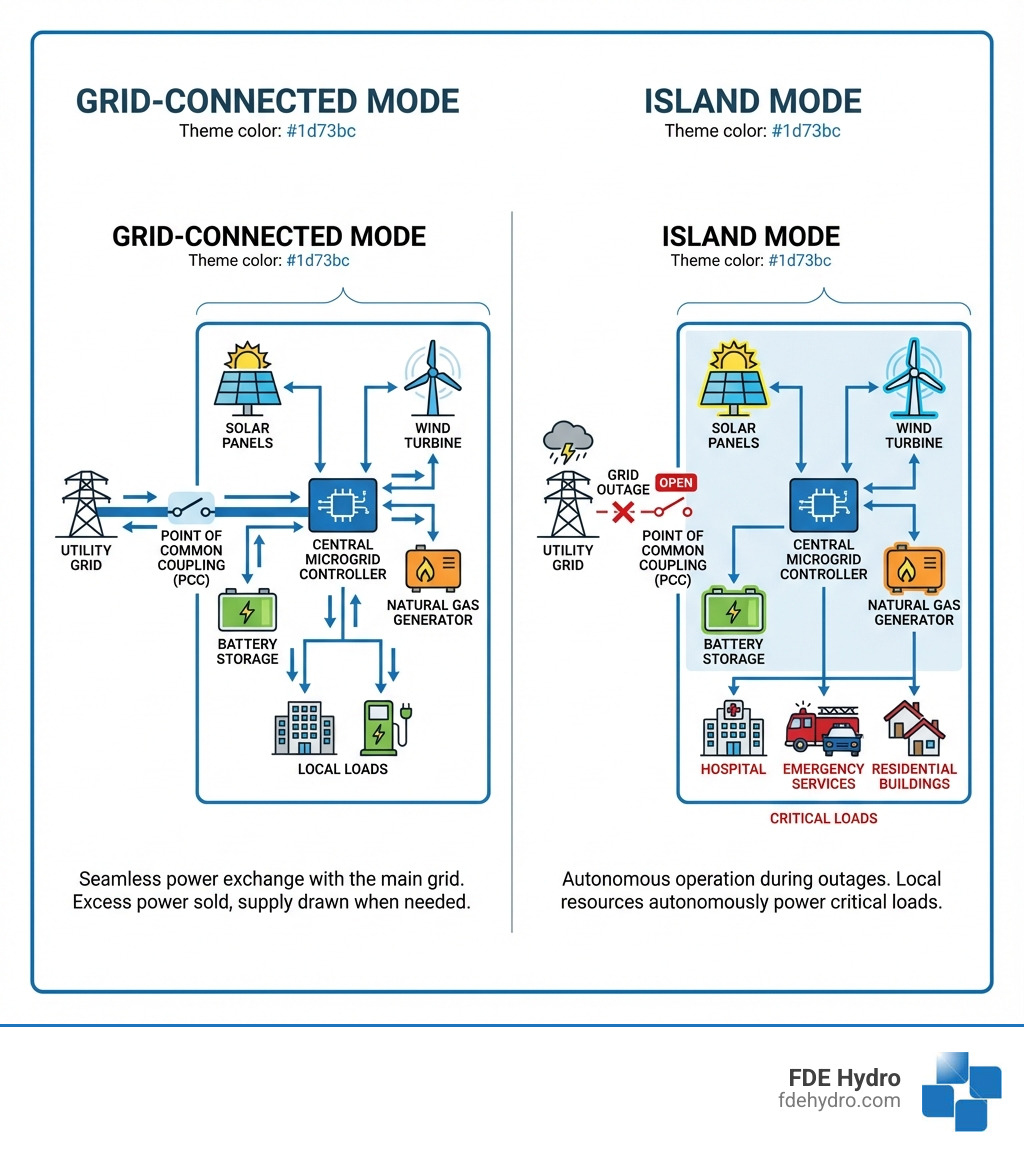
What is a microgrid and how does it work? A microgrid is a group of interconnected loads and distributed energy resources within clearly defined electrical boundaries that acts as a single controllable entity. It can operate either connected to the main utility grid or independently in “island mode,” using local generation sources like solar panels, wind turbines, batteries, and natural gas generators to power a localized area such as a campus, hospital, or community.
Quick Answer: How Microgrids Work
- Grid-Connected Mode: The microgrid operates alongside the main utility grid, drawing power when needed, selling excess power back, or providing services like peak shaving to reduce energy costs.
- Island Mode: When the main grid experiences an outage or disturbance, the microgrid automatically disconnects and operates independently using its local energy resources to keep critical facilities powered.
- Key Components: A microgrid controller (the “brain”) manages distributed energy resources (solar, wind, batteries, generators), monitors grid conditions, and coordinates the seamless transition between operating modes.
When Superstorm Sandy struck in 2012, a university microgrid successfully islanded from the local distribution grid and continued to provide reliable power to its campus while also serving as a community resilience hub. This real-world example demonstrates why microgrids represent more than backup power—they’re a fundamental shift toward localized energy independence and grid resilience.
The global market for microgrids could grow to USD 55 billion by 2032, driven by falling costs of renewable energy and energy storage, increasing grid vulnerabilities, and the urgent need for resilient power systems. From airports saving $1 million annually to remote communities gaining reliable electricity for the first time, microgrids are changing how we generate, distribute, and consume power.
I’m Bill French Sr., Founder and CEO of FDE Hydro, and I’ve spent decades working on infrastructure projects that require reliable, resilient power systems. Through my participation in the Department of Energy’s Hydropower Vision Technology Task Force and extensive work in heavy civil construction, I’ve seen what is a microgrid and how does it work to support critical operations and enable sustainable energy futures. This guide will walk you through everything you need to know about these systems.
What is a Microgrid and How Does It Work?
Defining the Modern Microgrid: More Than Just Backup Power
At its heart, what is a microgrid and how does it work can be understood as a localized, self-sufficient energy system designed to provide reliable power to a specific area. The U.S. Department of Energy (DOE) defines a microgrid as “a group of interconnected loads and distributed energy resources within clearly defined electrical boundaries that acts as a single controllable entity with respect to the grid.” This means it has clear borders, whether it’s a university campus, a military base, or an industrial park, and it can be controlled as one cohesive unit.
This definition, highlighted in initiatives like The US DoE’s Microgrid Initiative, emphasizes its dual nature: a microgrid can operate either connected to the larger utility grid (grid-connected mode) or entirely on its own (island mode). This ability to “island” is a game-changer, allowing critical facilities to maintain power even when the main grid goes down. It’s not just about having a backup generator; it’s about intelligent, localized energy management that ensures continuity and optimizes energy use.
The Anatomy of a Microgrid: Key Components Explained
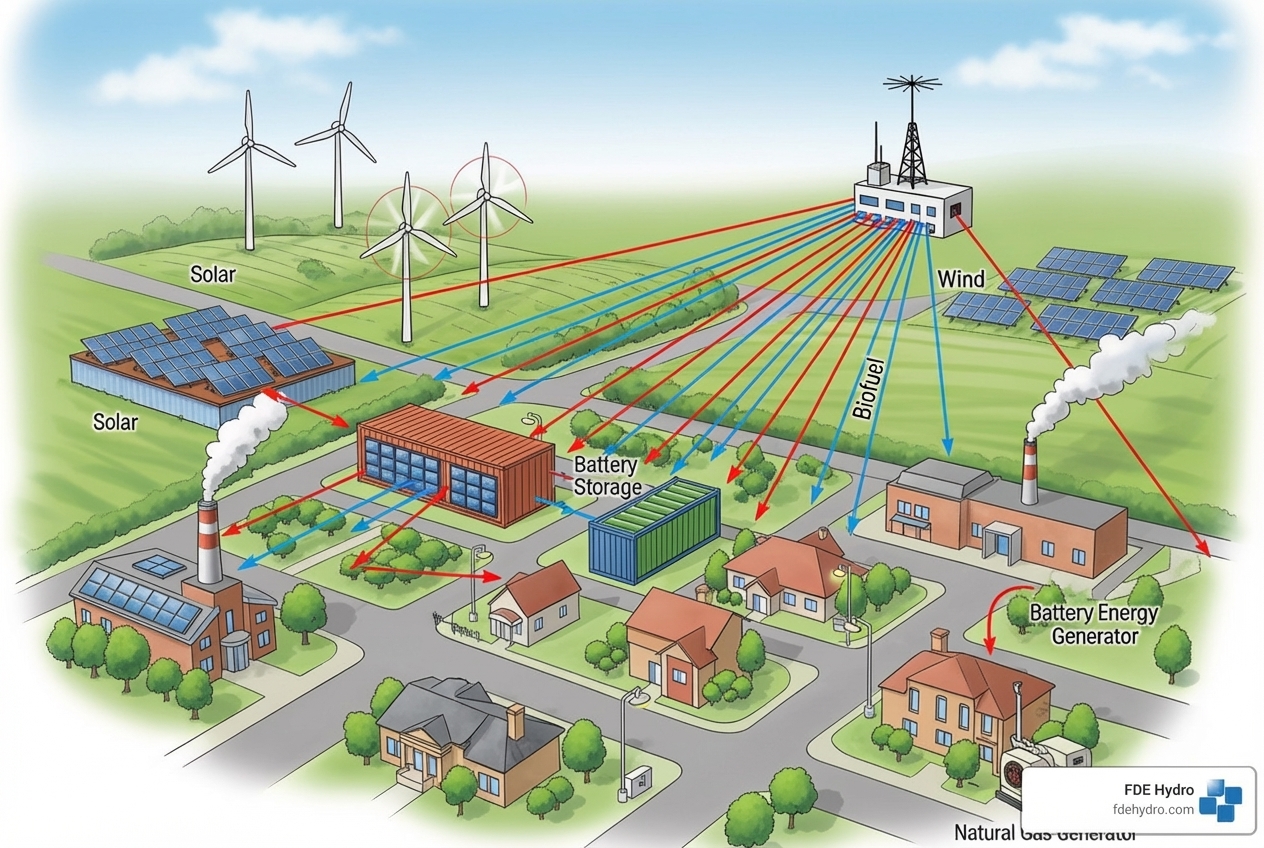
To understand what is a microgrid and how does it work, we need to dissect its core components. Think of a microgrid as a miniature version of the larger utility grid, complete with its own generation, distribution, and control systems.
The main parts include:
- Distributed Energy Resources (DERs): These are the power sources located within the microgrid’s boundaries. They can be traditional generators like diesel or natural gas, or, increasingly, renewable sources such as solar panels, wind turbines, and even hydroelectric systems—a specialty of ours at FDE Hydro. These DERs are crucial for generating electricity close to where it’s consumed, reducing transmission losses.
- Energy Storage Systems (ESS): Often comprising large battery banks, such as lithium-ion batteries, ESS are vital for balancing intermittent renewable energy sources (like solar when the sun isn’t shining) and providing instant power during grid outages. They store excess energy and release it when demand is high or generation is low.
- Microgrid Controller: This is the “brain” of the microgrid. It’s a sophisticated software and hardware system that continuously monitors grid conditions, manages the DERs and ESS, balances loads, and decides when to connect to or disconnect from the main grid. It ensures stable and efficient operation, orchestrating all the components in harmony.
- Point of Common Coupling (PCC): This is the electrical connection point where the microgrid interfaces with the larger utility grid. It’s the gateway that allows the microgrid to exchange power with the main grid or disconnect from it entirely.
- Loads: These are simply the consumers of electricity within the microgrid’s boundaries—buildings, homes, businesses, and critical infrastructure.
For a deeper dive into the fundamental concepts of electricity and energy, you might find our page on More about energy basics illuminating.
How a Microgrid Works in Its Two Primary Operational Modes
The operational flexibility of a microgrid is one of its most defining characteristics, allowing it to function effectively in two distinct modes:
- Grid-Connected Mode: In this mode, the microgrid operates in parallel with the main utility grid, drawing power from it when local generation is insufficient or less economical, and feeding excess power back into the grid when local generation surpasses demand. This mode offers several advantages:
- Peak Shaving: By generating or discharging stored energy during periods of high demand and high utility prices, microgrids can significantly reduce electricity bills. It’s like having your own energy buffet during rush hour!
- Demand Response: Microgrids can respond to signals from the utility to reduce their consumption from the main grid, helping to stabilize the larger system during strain.
- Revenue Generation: In some regulatory environments, microgrids can sell surplus power or provide ancillary services (like voltage regulation) back to the main grid, creating an additional income stream.
- Island Mode: This is where the microgrid truly shines in terms of resilience. When a disturbance occurs on the main grid (a blackout, storm damage, or equipment failure), the microgrid controller detects the anomaly at the PCC and automatically disconnects from the main grid. It then operates autonomously, using its internal DERs and ESS to power its local loads.
- Autonomous Operation: The microgrid controller carefully balances generation and demand within its boundaries, ensuring stable power delivery to connected facilities.
- Black Start Capability: Many microgrids are designed with the ability to “black start”—meaning they can restart their own generation sources and restore power to the local loads without any external power from the main grid. This is crucial for rapid recovery after a complete blackout.
- Seamless Islanding: The transition from grid-connected to island mode is often so quick and smooth that occupants within the microgrid may not even notice an interruption, a testament to the sophistication of modern microgrid controls.
The Powerful Payoffs: Key Benefits of Microgrids
Microgrids offer a compelling suite of advantages that address some of the most pressing energy challenges of our time, from aging infrastructure to climate change.
Best Resilience and Reliability

One of the most immediate and impactful benefits of microgrids is their ability to improve power continuity and resilience. We’ve all experienced the frustration of a power outage, but for critical facilities like hospitals, emergency services, and data centers, an outage can be catastrophic.
During Superstorm Sandy, as we mentioned earlier, the New York University microgrid successfully disconnected from the main grid and continued to provide power to much of its campus, acting as a vital lifeline and resilience hub for the community during a widespread blackout. This isn’t an isolated incident; microgrids are specifically designed to support critical infrastructure by ensuring that power keeps flowing even when the main grid fails.
By localizing power generation and distribution, microgrids can significantly reduce the duration and impact of outages. When a disturbance occurs, the microgrid simply “islands” itself, protecting its internal loads from the instability of the larger grid. This self-sufficiency means quicker recovery times and a more robust energy supply for the facilities that need it most.
Significant Economic and Efficiency Gains
Beyond resilience, microgrids offer substantial economic and efficiency benefits that can lead to impressive savings and smarter energy management.
Consider the Pittsburgh International Airport, which switched to a solar and natural gas microgrid. This strategic move led to a reported USD 1 million in savings in its first year alone, as detailed in How a microgrid saved an airport $1 Million. That’s a serious chunk of change! Similarly, a California winery built a microgrid around photovoltaic (PV) solar energy, reducing its monthly energy bills from USD 15,000 to a mere USD 1,000. These aren’t just isolated success stories; they highlight the potential for significant operational cost reductions.
A key factor in this efficiency is the reduction of transmission losses. In traditional grids, electricity can lose anywhere from 8 to 15% of its energy while traveling long distances from centralized power plants to consumers. By generating power closer to the point of consumption, microgrids minimize these losses, delivering more of the generated energy directly to where it’s needed.
Furthermore, with advanced control systems, often leveraging sophisticated algorithms and even AI in energy management, microgrids can dynamically manage energy supply and demand. They can optimize when to use local generation, when to draw from the grid, and when to store energy, all based on real-time prices and operational needs. This intelligent management contributes directly to lower operating costs and a more efficient energy ecosystem.
For us at FDE Hydro, a core mission is to advance sustainable energy solutions, and microgrids are powerful allies in this endeavor. They provide an ideal platform for integrating clean energy sources and reducing our collective carbon footprint.
Microgrids excel at incorporating diverse renewable energy technologies like solar, wind, and crucially for us, hydropower. By combining these with energy storage systems, microgrids can overcome the inherent intermittency of renewables (what happens when the sun doesn’t shine or the wind doesn’t blow?). The stored energy or a backup generator can seamlessly fill any gaps, ensuring a consistent and reliable power supply. This integration is key to achieving sustainability goals and transitioning towards a cleaner energy future.
Moreover, by enabling the widespread adoption of local renewable generation, microgrids reduce reliance on fossil fuel-based power plants, leading to fewer greenhouse gas emissions. They are a tangible step towards cleaner air and a healthier planet. Our work in developing efficient and reliable hydropower solutions, for instance, perfectly complements the microgrid model, providing a consistent, low-carbon DER. To learn more about the potential of various green technologies, explore our insights on efficient renewable resources.
From Concept to Community: Types, Challenges, and Real-World Examples
Microgrids aren’t a one-size-fits-all solution; they come in various configurations, each custom to specific needs and environments. However, their implementation isn’t without its problems.
A Spectrum of Microgrid Classifications
Understanding the different types of microgrids helps illustrate their versatility:
- Remote (Off-Grid) Microgrids: These microgrids operate entirely independently of the main utility grid, often in isolated locations where connecting to the central grid is impractical or too costly. Think remote communities in Canada or Brazil, scientific research stations, or island nations. They rely solely on their internal DERs and storage.
- Grid-Connected Microgrids: The most common type, these microgrids are physically connected to the main utility grid but have the capability to disconnect and operate autonomously when needed. They offer the best of both worlds: grid reliability for daily operations and independent resilience during outages.
- Networked Microgrids: These are more advanced systems where multiple microgrids or DERs are connected to the same utility grid circuit segment, often serving a wider geographic area. They can share resources and improve overall resilience across a larger community.
Beyond these operational classifications, microgrids can also be categorized by their scale and complexity:
- Level 1 “Single Building Microgrid”: This is the simplest form, typically serving a single building with one or more DERs, such as a solar PV system or a combined heat and power (CHP) unit, all interconnected at a single utility meter.
- Level 2 “Partial Feeder” or “Campus Microgrid”: This type serves multiple buildings or a campus (like a university or industrial park) with a single or multiple DER system, still usually interconnected at one utility meter. The New York University microgrid is a prime example of a campus microgrid.
- Level 3 “Full Feeder” or “Community Microgrid”: These are the most extensive, serving multiple buildings or customers where loads and generation sources may not be at the same utility meter. These advanced microgrids have one point of common coupling (PCC) where they can operate independently from the utility grid, providing resilience to an entire community.
Navigating the Challenges of Implementation
While the benefits are clear, deploying microgrids involves several key considerations and challenges:
- High Upfront Costs: Microgrids require significant initial investment. A 2018 study by the National Renewable Energy Laboratory (NREL) found that microgrids in the Continental U.S. cost an average of $2 million-$5 million per megawatt (MW) to develop. This can be a barrier for many potential adopters.
- Regulatory Barriers: The regulatory landscape for microgrids is still evolving. Interconnection standards, tariffs for selling power back to the grid, and ownership models can vary significantly, creating complexities in planning and deployment.
- Technical Complexity: Designing, integrating, and operating a microgrid involves sophisticated engineering. Managing diverse DERs, ensuring seamless transitions between grid-connected and island modes, and maintaining power quality all require advanced technical expertise and control systems.
- Cybersecurity Concerns: As highly integrated and automated systems, microgrids are susceptible to cyber threats. Protecting the control systems and communication networks from malicious attacks is paramount to maintaining reliability and security.
Despite these challenges, the long-term benefits in resilience, cost savings, and sustainability often outweigh the initial problems. For those interested in the broader picture of developing robust energy systems, our Energy infrastructure development guide offers further insights.
Microgrids in Action: Case Studies
Real-world examples truly bring to life what is a microgrid and how does it work. We’ve already touched upon a few, but let’s dig into some others within our operational geographies:
- Pittsburgh International Airport (United States): This facility implemented a microgrid using solar and natural gas generation. As noted earlier, it saved the airport USD 1 million in its first year, demonstrating both economic viability and improved energy independence for critical infrastructure.
- New York University (New York, United States): During the widespread power outages caused by Superstorm Sandy, NYU’s microgrid successfully isolated itself from the main grid, providing continuous power to its campus. This allowed the university to serve as a vital community resource, highlighting the resilience benefits for urban centers.
- California Winery (California, United States): A great example of a smaller-scale microgrid, this winery integrated photovoltaic (PV) solar energy into its operations. The result was a dramatic reduction in monthly energy bills, from USD 15,000 to just USD 1,000, showcasing how microgrids can benefit commercial enterprises and agricultural sectors. You can find more insights into similar projects in the California microgrid case studies.
These examples, from major transportation hubs to academic institutions and agricultural businesses, underscore the diverse applications and tangible benefits that microgrids deliver.
Frequently Asked Questions About Microgrid Technology
We often get asked specific questions about microgrids, so let’s address some of the most common ones.
How do microgrids differ from the smart grid?
This is a fantastic question! While both microgrids and smart grids aim to modernize our energy infrastructure, they operate on different scales and have distinct primary functions.
- Scale: The most significant difference is scale. A microgrid is a localized energy system, typically serving a campus, a neighborhood, or an industrial facility. It has clearly defined electrical boundaries. In contrast, a smart grid is a large-scale modernization of the entire utility grid—an expansive network that covers vast geographic areas, potentially an entire state or country.
- Autonomy: A microgrid’s defining characteristic is its ability to “island”—to disconnect from the main grid and operate independently. This self-sufficiency is what provides localized resilience. A smart grid, while highly advanced with two-way communication and automation, is still fundamentally connected to and dependent on the central power generation and transmission system. It improves efficiency, reliability, and responsiveness across the entire grid, but it doesn’t typically operate autonomously in localized segments during a full grid outage.
Think of it this way: if the traditional grid is a highway system, a smart grid is an upgraded, intelligent highway with real-time traffic monitoring and automated vehicle control. A microgrid, however, is a self-contained private road system with its own power generation, capable of operating even if the main highway is shut down.
What is the role of Distributed Energy Resources (DERs) in a microgrid?
Distributed Energy Resources (DERs) are the very heart of a microgrid. Without them, a microgrid wouldn’t exist! They are the small-scale, localized electricity generators and storage devices that allow a microgrid to produce power close to its consumers.
DERs can include a variety of technologies:
- Solar panels: Capturing energy from the sun.
- Wind turbines: Using wind power.
- Hydropower: Utilizing flowing water, a specialty for us at FDE Hydro, offering a consistent and powerful renewable source.
- Geothermal: Tapping into the Earth’s heat.
- Combined Heat and Power (CHP): Generating both electricity and useful heat from a single fuel source.
- Energy storage systems: Primarily batteries, which store excess energy from renewables or the grid and discharge it when needed.
These DERs enable local generation and self-sufficiency, which are fundamental to a microgrid’s operation. They allow the microgrid to reduce its reliance on the main grid, cut down on transmission losses, and provide power even during outages. For anyone looking to start on projects involving these technologies, our Guide to renewable energy projects is an excellent resource.
What is the first step to building a microgrid?
Building a microgrid is a significant undertaking, but the first step is always the most crucial: a thorough feasibility study. This isn’t just about crunching numbers; it’s about understanding needs, assessing capabilities, and charting a clear path forward.
Here’s what a comprehensive feasibility study typically involves:
- Defining Goals: What do you want your microgrid to achieve? Is it primarily for resilience during outages, significant cost savings, integrating more renewables, or a combination? Clear goals will guide all subsequent decisions.
- Identifying Critical Loads: Which facilities or processes absolutely cannot lose power? For a hospital, it’s life support and operating rooms. For a data center, it’s servers. Understanding these critical loads is paramount for designing a system that ensures their continuous operation.
- Assessing Existing Infrastructure: What power sources, electrical distribution systems, and control mechanisms are already in place? This audit helps identify what can be leveraged and what needs to be added or upgraded.
- Site Audit: A detailed physical inspection of the proposed microgrid site to evaluate space for DERs (like solar arrays or our modular hydropower solutions), assess interconnection points, and identify any environmental or logistical constraints.
- Load Data Analysis: Collecting historical electricity consumption data (ideally 12 months of 15-minute interval utility bills) to understand energy demand patterns, peak loads, and energy profiles.
This initial phase helps determine if a microgrid is technically viable and economically beneficial for your specific location and objectives.
The Future is Local: Building a Resilient Energy Tomorrow
The energy landscape is undeniably shifting. With increasing grid vulnerabilities due to aging infrastructure and extreme weather events, coupled with the urgent need for decarbonization, microgrids represent a powerful solution. The projected growth of the global microgrid market to USD 55 billion by 2032 underscores a clear trend towards energy independence and decentralization.
This shift empowers communities, campuses, and industries to take control of their energy destiny, fostering resilience against disruptions and paving the way for a more sustainable future. At FDE Hydro, we’re proud to contribute to this revolution by providing foundational hydropower components that offer reliable, clean energy generation within these localized systems. Our innovative modular precast concrete technology is designed to significantly reduce the cost and time of building and retrofitting hydroelectric dams in North America, Brazil, and Europe, making robust microgrid solutions more accessible.
As we continue to innovate and expand our capabilities, we believe that the principles of localized, resilient, and sustainable energy will define the next generation of power infrastructure. We invite you to learn more about how we can help you achieve your energy goals and explore our advanced microgrid solutions.

