by Adaptify Support | Apr 14, 2026 | Hydropower Articles
How Hydroelectric Power Is Produced: The Energy Behind Moving Water
How hydroelectric power is produced is simpler than most people think. Here’s the quick answer:
How Hydroelectric Power Is Produced — Quick Summary:
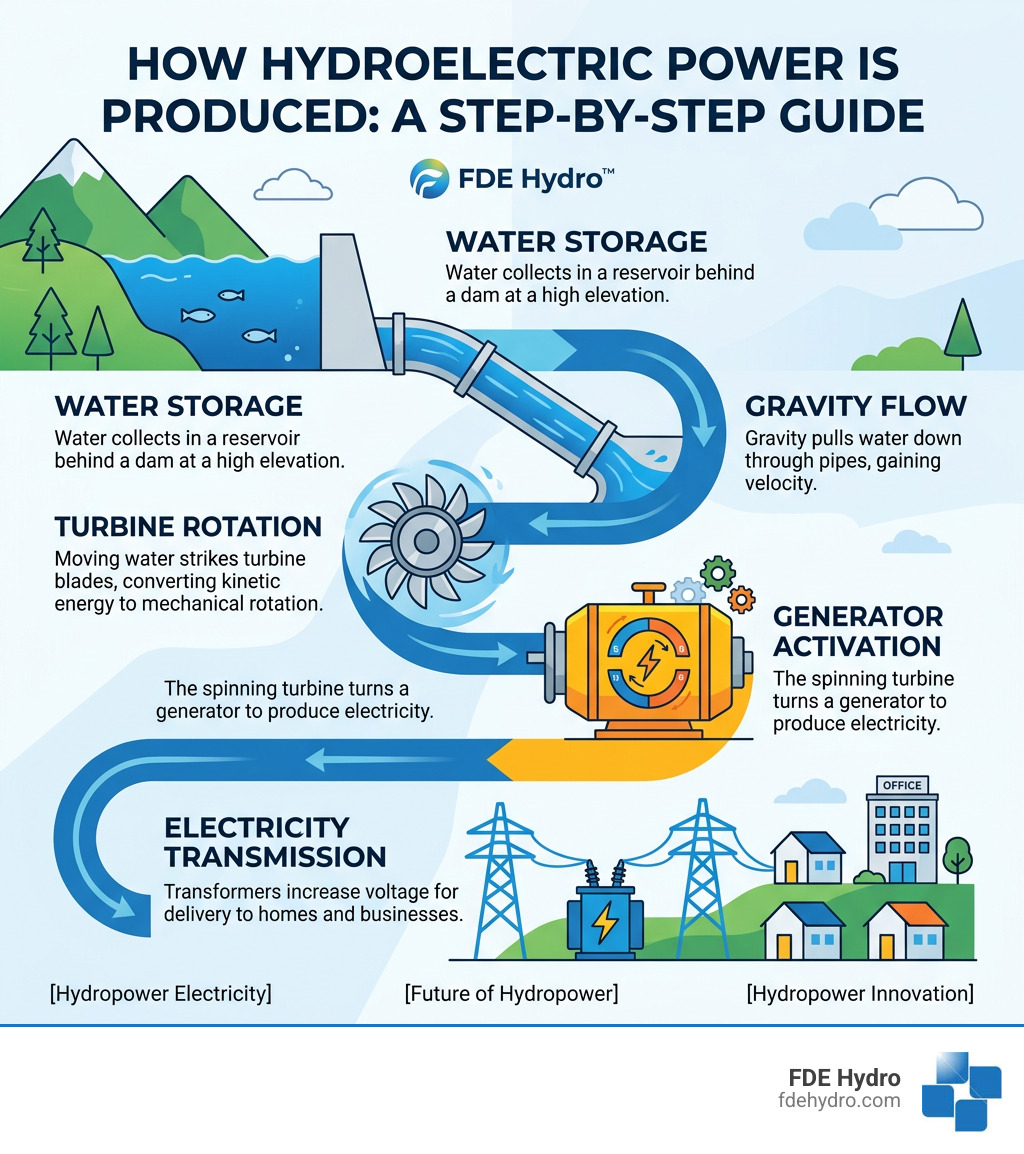
- Water is stored at a high elevation, typically in a reservoir behind a dam
- Water flows down through a large pipe called a penstock, gaining speed from gravity
- Moving water strikes turbine blades, converting kinetic energy into mechanical rotation
- The turbine spins a generator, which uses electromagnetic induction to produce electricity
- Electricity is stepped up by transformers and sent out across transmission lines to homes and businesses
It’s essentially the same energy conversion chain used in coal or nuclear plants — except the “fuel” is falling water, and it never runs out.
People have harnessed the force of moving water for mechanical work for thousands of years. But it wasn’t until the early 1880s that this power was first converted into electricity — first in Michigan in 1880, and then commercially on the Fox River in Wisconsin in 1882. Today, hydropower supplies roughly 15% of the world’s electricity, more than all other renewable sources combined.
I’m Bill French, Sr., Founder and CEO of FDE Hydro™, and I’ve spent decades in heavy civil construction before turning my focus to modernizing how hydroelectric power is produced through modular, precast construction methods. In 2015, I was selected by the U.S. Department of Energy to help define the next-generation roadmap for hydropower solutions — and that hands-on experience shapes everything we build at FDE Hydro™.
Easy how hydroelectric power is produced word list:
The Fundamentals of How Hydroelectric Power is Produced
At its heart, hydroelectric power generation is an elegant dance between gravity and the water cycle. We don’t actually “create” energy; we simply harvest it as it moves from one place to another.
The sun provides the initial “pump” by evaporating water from oceans and lakes. This water falls back to Earth as rain or snow, often at high elevations. As that water seeks the lowest point—the sea—it carries immense potential energy. By placing a facility in its path, we can capture that energy.
Gravity and Water Pressure
The “muscle” behind a hydro plant comes from two main variables: Head and Flow.
- Head (Vertical Drop): This is the distance the water falls. The higher the drop, the more pressure is created at the bottom.
- Flow (Volume): This is the amount of water moving through the system over time.
When we are calculating available power, we use a simple formula: Power equals the product of efficiency, density, flow rate, gravity, and head height. In plain English: if you have a massive amount of water falling from a great height, you have a powerhouse on your hands.
This is why you’ll see massive dams in places like California or New York, but fewer in flat states like Kansas. Without a significant “drop,” the water doesn’t have enough “push” to spin heavy industrial turbines efficiently.
Key Components of a Hydropower Facility
To understand how hydroelectric power is produced, we need to look at the specialized tools we use to catch the current. Every hydro-electric dam is a feat of engineering, but they all share a few hydro-dam components.
- The Dam: This is the primary barrier that holds back the river, creating a reservoir. At FDE Hydro™, we specialize in hydroelectric dam construction using modular precast concrete, which makes building these massive structures faster and more cost-effective.
- The Reservoir: This acts like a giant battery, storing potential energy in the form of water until the electrical grid needs it.
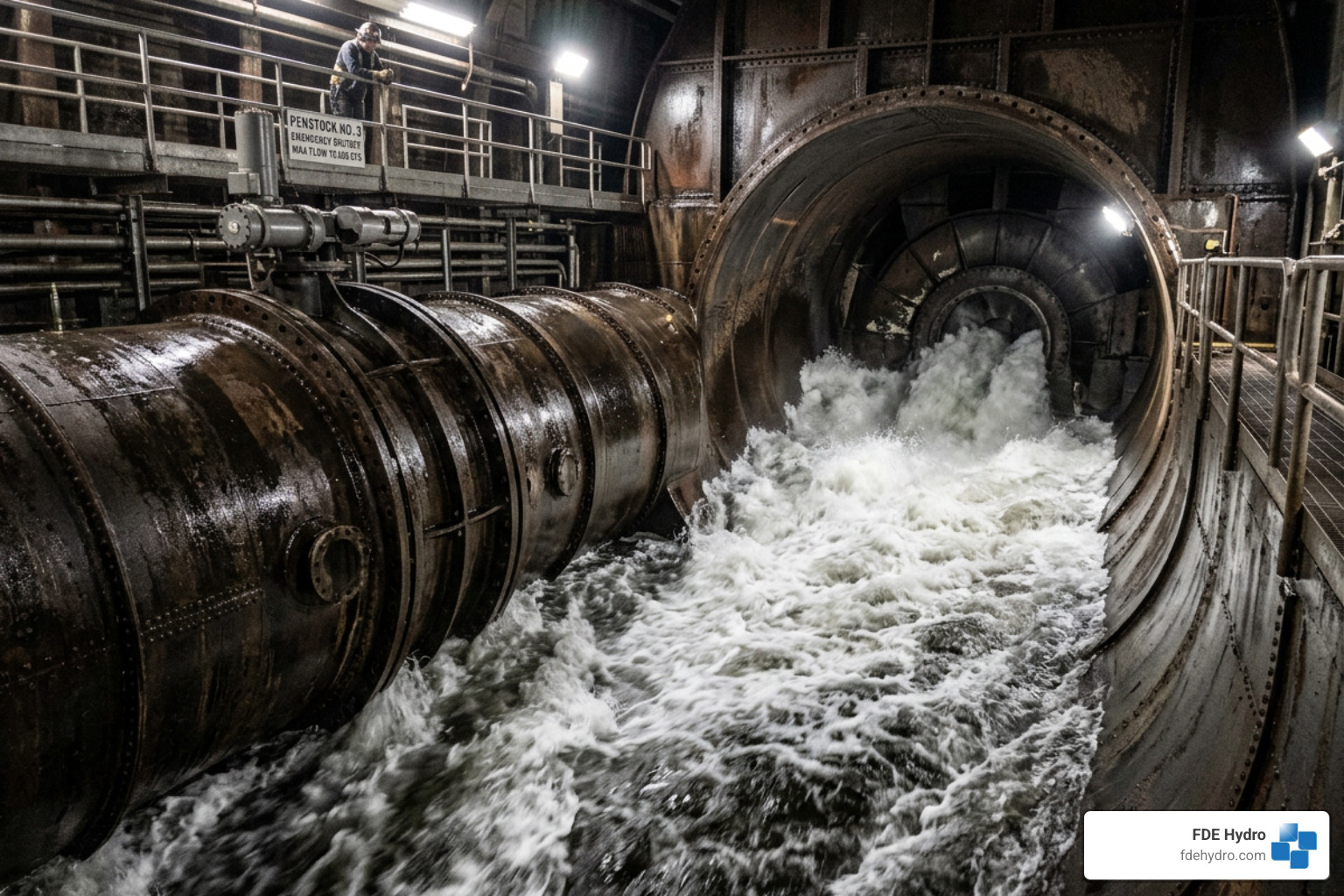
- Intake and Penstock: Gates open to allow water into the system. It then travels through a “penstock”—a large, reinforced pipe that builds up immense pressure as the water descends.
- The Turbine: Think of this as a high-tech version of an old-fashioned water wheel. The pressurized water strikes the turbine blades, causing them to spin.
- The Generator: Attached to the turbine by a shaft, the generator contains giant magnets that spin inside coils of copper wire. This movement “excites” electrons, creating an electrical current.
- The Powerhouse: This is the building that protects the turbines and generators. You can find more details in our hydroelectric dam components ultimate guide.
Step-by-Step: How Hydroelectric Power is Produced in Conventional Plants
Let’s walk through the step-by-step generation process as if we were following a single drop of water:
- Step 1: Storage. The drop sits in the reservoir, full of potential energy.
- Step 2: The Plunge. The intake gate opens, and the drop enters the penstock. Gravity pulls it downward, converting that potential energy into kinetic energy (motion).
- Step 3: The Impact. The drop hits the turbine runner. Its momentum is transferred to the blades, turning the mechanical shaft.
- Step 4: Induction. Inside the generator, the spinning shaft rotates magnets. This process, called electromagnetic induction, generates electricity.
- Step 5: The Exit. Having done its job, the water drop exits through the tailrace and returns to the river downstream, completely unchanged.
- Step 6: Transmission. The electricity travels to a transformer, which increases the voltage so it can travel long distances over power lines to your toaster.
Diverse Methods: How Hydroelectric Power is Produced Across Different Systems
While the “big dam” model is the most famous, we use several different methods depending on the geography and the needs of the grid.
- Run-of-the-River: These systems don’t require a massive reservoir. Instead, they divert a portion of the river’s natural flow through a turbine. They are great for reducing environmental impact but are more dependent on seasonal rainfall.
- Pumped-Storage Hydropower: This is the world’s largest “battery.” During the night, when electricity is cheap and demand is low, we use excess power to pump water from a lower reservoir to an upper one. When everyone wakes up and turns on their coffee makers, we release that water back down to generate power. It’s a net energy consumer, but it provides vital grid stability.
- Conduit Systems: These clever setups place small turbines inside existing water tunnels, such as those used for city water supplies or irrigation. We’re essentially getting “free” energy from infrastructure that is already moving water.
| Feature |
Conventional Dam |
Run-of-River |
Pumped-Storage |
| Storage Capacity |
High (Reservoir) |
Low to None |
High (Two Reservoirs) |
| Grid Flexibility |
High |
Moderate |
Very High |
| Environmental Footprint |
Large |
Small |
Moderate |
| Primary Goal |
Baseload Power |
Constant Supply |
Peak Demand/Storage |
Advantages and Environmental Challenges of Hydropower
There are many benefits of a hydropower plant, but like any energy source, it comes with trade-offs. We believe in being transparent about both.
The Bright Side: Why We Love Hydro
First, it’s renewable. As long as the sun shines and the rain falls, we have fuel. Second, it’s flexible. Unlike nuclear or coal, which take a long time to “ramp up,” a hydro unit can go from zero to full power in just a few minutes. This makes it the perfect partner for wind and solar—when the wind stops blowing, hydro can kick in instantly to keep the lights on. Finally, these plants have an incredible lifespan. Many facilities in the U.S. and Canada have been operating for over 100 years.
The Challenges: Doing Better for the Planet
We have to be honest about the impact on local ecosystems. Building a dam changes the temperature and flow of a river, which can affect fish and wildlife. Methane emissions from tropical reservoirs can also be a concern in places like Brazil, as submerged vegetation decays.
However, modern engineering is finding solutions. We now use fish ladders and “fish-friendly” turbines to help migratory species like salmon move past dams safely. We also focus on hydroelectric dam efficiency to get more power out of existing structures without needing to flood new land.
Global Impact and Statistics of Water Power
Hydropower isn’t just a local success story; it’s a global powerhouse. According to the IEA Hydropower Special Market Report, global installed capacity reached almost 1,400 GW in recent years.
- Global Leader: China is the undisputed heavyweight, home to the Three Gorges Dam, which has a staggering capacity of 22,500 MW. In 2022 alone, China added 24 GW of new capacity—nearly three-quarters of all global additions.
- The U.S. Perspective: In 2022, hydroelectricity accounted for about 6.2% of total U.S. utility-scale generation and nearly 28.7% of all renewable generation.
- The Giants: The largest facility in the U.S. is the Grand Coulee Dam in Washington State, with a capacity of 6,765 MW.
- Regional Strength: In places like Canada and Brazil, hydropower provides the vast majority of the nation’s electricity, contributing significantly to their energy independence.
Frequently Asked Questions about Hydroelectricity
What is the difference between “head” and “flow” in power production?
Think of “head” as the pressure from a garden hose with a nozzle—it’s the force created by the height of the water. “Flow” is like a massive, slow-moving river—it’s the total volume of water. To get the most electricity, you want a balance of both. A small stream with a massive 500-foot drop (high head) can produce as much power as a huge river with only a 10-foot drop (high flow).
Is hydroelectricity truly a carbon-neutral energy source?
While the operation of the plant itself produces no direct CO2, we have to look at the “lifecycle.” This includes the carbon used in hydroelectric dam design and construction. In some tropical regions, decaying vegetation in reservoirs can release methane. However, compared to fossil fuels, the greenhouse gas research shows that hydropower remains one of the cleanest options available, especially in temperate regions like North America and Europe.
Which countries lead the world in hydroelectric generation?
China leads by a wide margin, followed by Brazil, Canada, and the United States. These four nations possess the perfect combination of mountainous terrain and large river systems necessary for high-capacity generation.
Conclusion
Understanding how hydroelectric power is produced helps us appreciate the vital role this “white coal” plays in our modern world. It is a bridge between the ancient wisdom of water wheels and the high-tech needs of a carbon-free future.
At FDE Hydro™, we are committed to the future of hydropower by making it easier and faster to build. Our patented “French Dam” technology uses modular precast concrete to retro-fit existing non-powered dams and build new, efficient systems across the United States, Canada, Brazil, and Europe. By reducing construction time and costs, we’re helping more communities harness the current.
If you’re interested in learning more about our innovative hydroelectric power solutions guide, we invite you to Explore our Hydropower Solutions and join us in building a more resilient, renewable grid.
by Adaptify Support | Apr 13, 2026 | Power Grid Articles
Unplugging the Mystery: Understanding Electrical Energy Distribution
The electrical energy distribution system is the final step in delivering electricity to homes and businesses. It’s the crucial link that takes high-voltage power from transmission lines and makes it safe and usable for everyday needs.
Here’s a quick look at what electrical energy distribution means:
- Final Stage: It’s the last part of electricity delivery, connecting the grid to individual consumers.
- Voltage Reduction: It lowers electricity from high transmission voltages to safe levels for use.
- Local Networks: It includes substations, transformers, and local power lines running through neighborhoods.
- Everyday Power: It’s how electricity reaches your outlets and appliances.
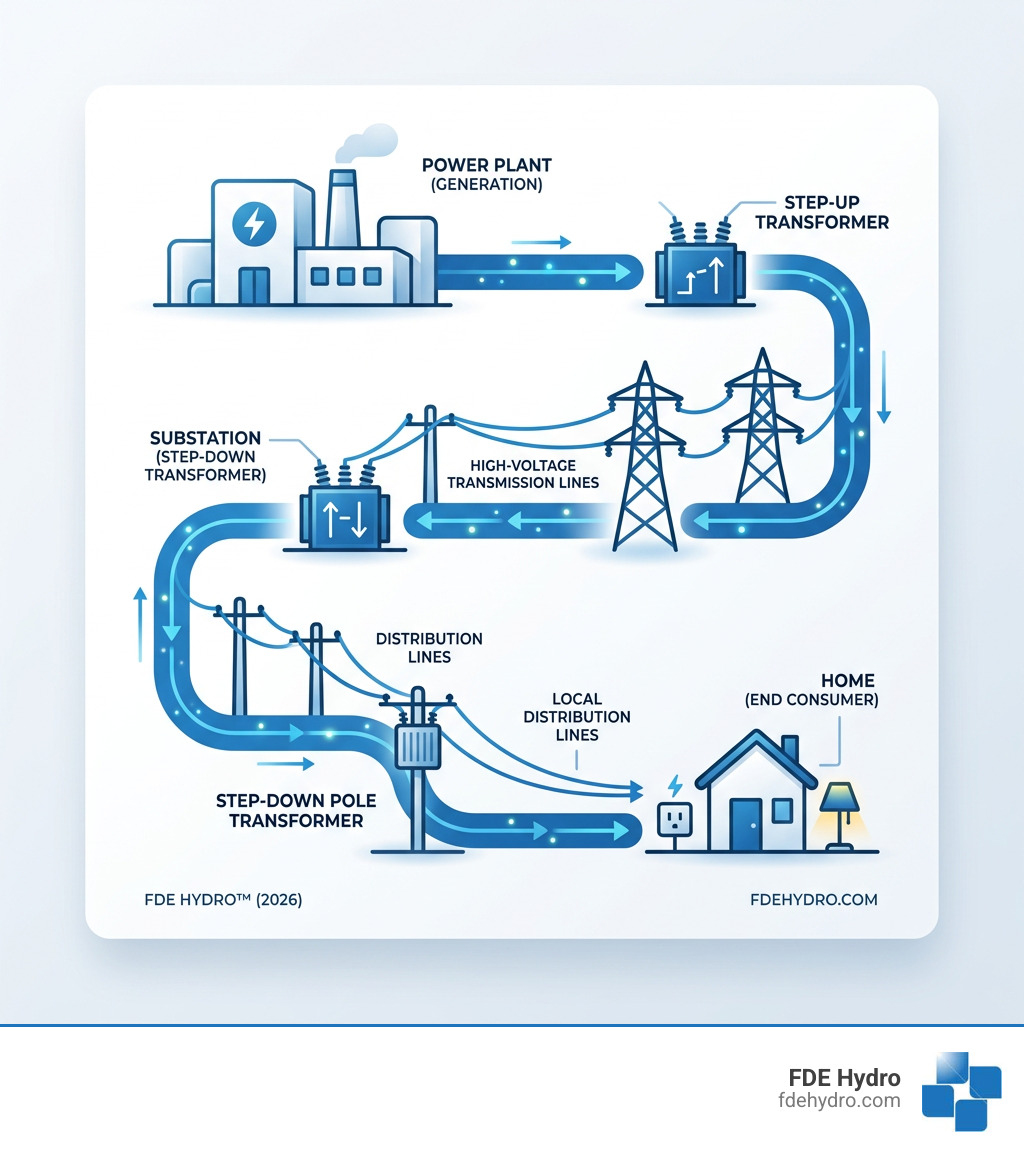
Think of the electrical grid as a vast highway system for power. Electricity begins its journey at power plants, travels across country on giant transmission lines, and then reaches your local community. But it doesn’t just flow directly into your home. It needs a special network to transform that high-powered energy into the right voltage for your devices. This is where electrical distribution comes in. It’s a complex and vital system that keeps our modern world running. Without it, the electricity we generate would never safely reach us.
As Bill French Sr., Founder and CEO of FDE Hydro™, my five-decade career in heavy civil construction has often intersected with the foundational elements of our energy infrastructure, including the critical stage of electrical energy distribution. From constructing modular precast bridges to defining strategic plans for next-generation hydropower, my work focuses on robust, sustainable solutions that power communities efficiently.
Electrical energy distribution word roundup:
What is Electrical Energy Distribution?
When we talk about How Power Grids Work, we are looking at a massive, interconnected machine. In fact, the North American electric power system is often described as the largest and most complex machine ever built by humanity. Within this machine, electrical energy distribution represents the “last mile.” While transmission moves bulk power over long distances at incredibly high voltages, distribution is the local wiring that weaves through our streets in New York City, Lawrence, and across California.
According to the Electric Power Distribution Handbook, this stage is defined by its proximity to the end-user. Approximately 60 percent of all energy utilized in the United States passes through this interconnected system. The process involves taking electricity from the transmission grid—which usually operates at 69 kV or higher—and stepping it down to medium and then low voltages. This ensures that the 120/240V required by your toaster or the 480V required by a local factory is delivered reliably and safely.
The unsung hero of this entire process is the transformer. Without it, we would be stuck in the 1880s, unable to send power more than a mile or two. Transformers work on the principle of electromagnetic induction to change voltage levels. In the distribution phase, we primarily use “step-down” transformers.
You’ve likely seen these units—they are the gray “trash cans” mounted on utility poles or the green metal boxes sitting on concrete pads in suburban neighborhoods. Their job is to take the “primary” distribution voltage (often between 4 kV and 35 kV) and drop it down to the “utilization” voltage of 120/240V for residential use. In the UK and parts of Europe where we operate, these transformers are often sized to provide 1 to 2 kW per household, ensuring the local kettle and heater can run simultaneously without a hitch.
Distribution Substations: The Transition Point
The distribution substation is the handshake between the high-voltage transmission world and your local neighborhood. Think of it as a massive sorting facility. Here, high-voltage lines enter the station and connect to busbars—thick conductors that act as a common connection point.
At the substation, several key things happen:
- Voltage Reduction: Huge transformers drop the voltage from transmission levels (like 115 kV or 230 kV) down to primary distribution levels.
- Circuit Protection: High-voltage circuit breakers and relays stand ready to “trip” and cut power if a fault, like a lightning strike, occurs.
- Voltage Regulation: Because electricity loses pressure (voltage) as it travels down long wires, substations use regulators to keep the voltage steady for the customers furthest away.
- Monitoring: Modern substations use sophisticated equipment to send data back to a central control room, allowing utilities to see exactly how much power is being used in real-time.
The Anatomy of the Distribution System: Primary vs. Secondary
To understand the grid, we have to look at its two main layers. Primary Distribution Voltage Levels typically range from 2.4 kV to 35 kV. This is the “medium voltage” that travels from the substation to your street. The secondary distribution system is the final stretch—the wires that run from the local transformer directly into your meter box.
| Feature |
Primary Distribution |
Secondary Distribution |
| Voltage Range |
2 kV to 35 kV |
120 V to 600 V |
| Users |
Large industrial/commercial |
Residential/Small business |
| Infrastructure |
Large poles, heavy insulators |
Service drops, local transformers |
| Purpose |
Moving power through towns |
Delivering power to outlets |
In North America, the secondary standard is almost universally 120/240V split-phase. This allows a home to have 120V for standard lights and outlets, while providing 240V for heavy-duty appliances like clothes dryers or electric vehicle chargers.
Network Configurations: Radial, Loop, and Network
How we connect these wires matters for reliability. There are three main ways engineers design these layouts:
- Radial Systems: This is the simplest and most common setup, especially in suburban and rural areas. Power flows from the substation along a single path to the customers. It’s cost-effective, but if a tree falls on the main line, everyone “downstream” loses power.
- Loop Systems: Imagine a circle. Power can reach a customer from two different directions. If there’s a break in the line, switches can be flipped to “backfeed” the power from the other side, minimizing the duration of the outage.
- Network Systems: This is the gold standard for reliability, used in high-density areas like downtown New York City. Every customer is connected to multiple power sources simultaneously. If one transformer or line fails, the others pick up the slack instantly without the lights even flickering.
Research into Microgenetic multiobjective reconfiguration algorithms shows that utilities are now using AI and advanced math to constantly “reconfigure” these networks to reduce power loss and improve stability.
Urban vs. Rural Distribution Infrastructure
The geography of where we live dictates what the grid looks like. In urban centers, the electrical energy distribution system is largely invisible, tucked away in underground conduits to protect it from the elements and save space. This is expensive to build but very reliable.
In rural areas, the challenges are different. We have to move power over vast distances to reach just a few homes. To save on costs, rural systems often use higher primary voltages (like 12.47 kV or 34.5 kV) to reduce energy loss over long wires. In very remote areas, you might even see a Single-Wire Earth Return (SWER) system, which uses one wire and the literal ground to complete the circuit—a clever, though limited, way to bring power to the most isolated farms.
Historical Evolution: From the War of Currents to Modern Infrastructure
We didn’t always have a unified grid. In the late 1800s, the “War of Currents” pitted Thomas Edison against George Westinghouse. Edison’s Pearl Street Station, opened in 1882, provided 100V Direct Current (DC). It was safe, but DC couldn’t be easily transformed to higher voltages, meaning power plants had to be within 1.5 miles of the customer.
Westinghouse, utilizing the Notes on the Jablochkoff System and the transformer, championed Alternating Current (AC). AC could be stepped up to thousands of volts for efficient long-distance travel and then stepped down for use. Westinghouse’s “universal system” eventually won out, allowing us to build large power plants—like the massive hydropower facilities FDE Hydro™ supports—far away from cities and still deliver power efficiently.
Regional Variations in Electrical Energy Distribution
Even though AC won the war, the world didn’t agree on the details. This led to the regional variations we see today. North America settled on 60Hz and 120V for residential use. Most of Europe and Brazil use 50Hz and 230V.
One of the most fascinating cases is Japan. Because early power companies in the 1890s imported equipment from different places (German 50Hz gear for Tokyo and US 60Hz gear for Osaka), the country remains split. Japan’s incompatible power grids are still divided by a frequency line today. During the 2011 earthquake, this made it difficult to share power between the two halves of the country, requiring massive HVDC converter stations to bridge the gap.
Modern Challenges and the Future of Electrical Energy Distribution
Today, the grid is facing its biggest transformation since the time of Westinghouse. We are moving from a “one-way street” (power plant to consumer) to a “two-way highway.” This is driven by distributed energy resources (DERs) like rooftop solar panels and local wind farms.
One major trend we are seeing is the rise of the microgrid. A microgrid is a local energy system that can operate while connected to the main grid or “island” itself during a blackout. This is becoming essential for hospitals and military bases.
Furthermore, the surge in Electric Vehicles (EVs) is putting a new kind of pressure on our local wires. While a U.S. Department of Energy report on EV future suggests that our overall power generation is sufficient, the “coincident peak”—everyone plugging in their cars at 6:00 PM—could strain local transformers. We need smart charging and grid upgrades to handle this new load.
Smart Grids and SCADA Systems
To manage this complexity, we are building “Smart Grids.” This involves integrating microgrid-technology and digital sensors throughout the distribution network.
A key component is SCADA (Supervisory Control and Data Acquisition). These systems allow utility operators to monitor thousands of data points every second. If a tree branch touches a wire, an “automated recloser” can detect the fault, briefly disconnect the power to let the branch fall, and then automatically restore power in seconds. This prevents a temporary flicker from becoming a multi-hour blackout.
Reliability, Redundancy, and Environmental Impact
As we modernize, we are also focusing on the Environmental Impacts of Distributed Generation. Centralized power plants often lose about 5% to 6% of their energy just in transmission and distribution. By generating power closer to where it’s used—through small-scale hydropower or solar—we can significantly reduce these “line losses.”
However, we must balance this with land use and infrastructure needs. At FDE Hydro™, we believe that retrofitting existing water control systems with our modular technology is a prime example of how to increase “green” generation without the massive environmental footprint of a new, large-scale dam. This kind of distributed generation provides reliability and redundancy, making the entire grid more resilient to storms and physical threats.
Frequently Asked Questions about Electrical Distribution
What is the difference between transmission and distribution?
Transmission is the “bulk” movement of electricity at very high voltages (115 kV to 765 kV) over long distances from power plants to substations. Distribution is the “local” delivery of that power at lower voltages (under 35 kV) from substations to individual homes and businesses.
Why do different countries use different voltages and frequencies?
It largely comes down to history and which equipment was available when those countries first electrified. Europe adopted higher voltages (230V) because it was more efficient for their denser cities, while North America stayed with 120V for safety reasons during the early development of the grid.
How do electric vehicles affect the local distribution grid?
EVs don’t necessarily require more power plants, but they do require stronger local infrastructure. If many neighbors charge high-powered EVs at the same time, it can overheat the local neighborhood transformer. Utilities are solving this with “smart charging” programs that encourage charging during off-peak hours (like late at night).
Conclusion
The electrical energy distribution system is a marvel of engineering that we often take for granted. From the historical battles of the War of Currents to the high-tech SCADA systems of today, this network is the lifeblood of our modern society. As we look toward a future filled with EVs, microgrids, and renewable energy, the need for a resilient and modernized grid has never been greater.
At FDE Hydro™, we are proud to play a role in this energy evolution. Our innovative, patented modular precast concrete technology—the “French Dam”—is designed to make building and retrofitting hydroelectric systems faster and more cost-effective. By supporting renewable generation that can feed directly into these local distribution networks, we help ensure a stable, sustainable, and powerful future for communities across North America, Brazil, and Europe.
Curious to learn more about how we are hardening the grid for the next generation? Check out more power grid articles on our blog.
by Adaptify Support | Apr 10, 2026 | Hydro Facility Articles
What is Modern Water Infrastructure and Why is Modernization Essential Today?
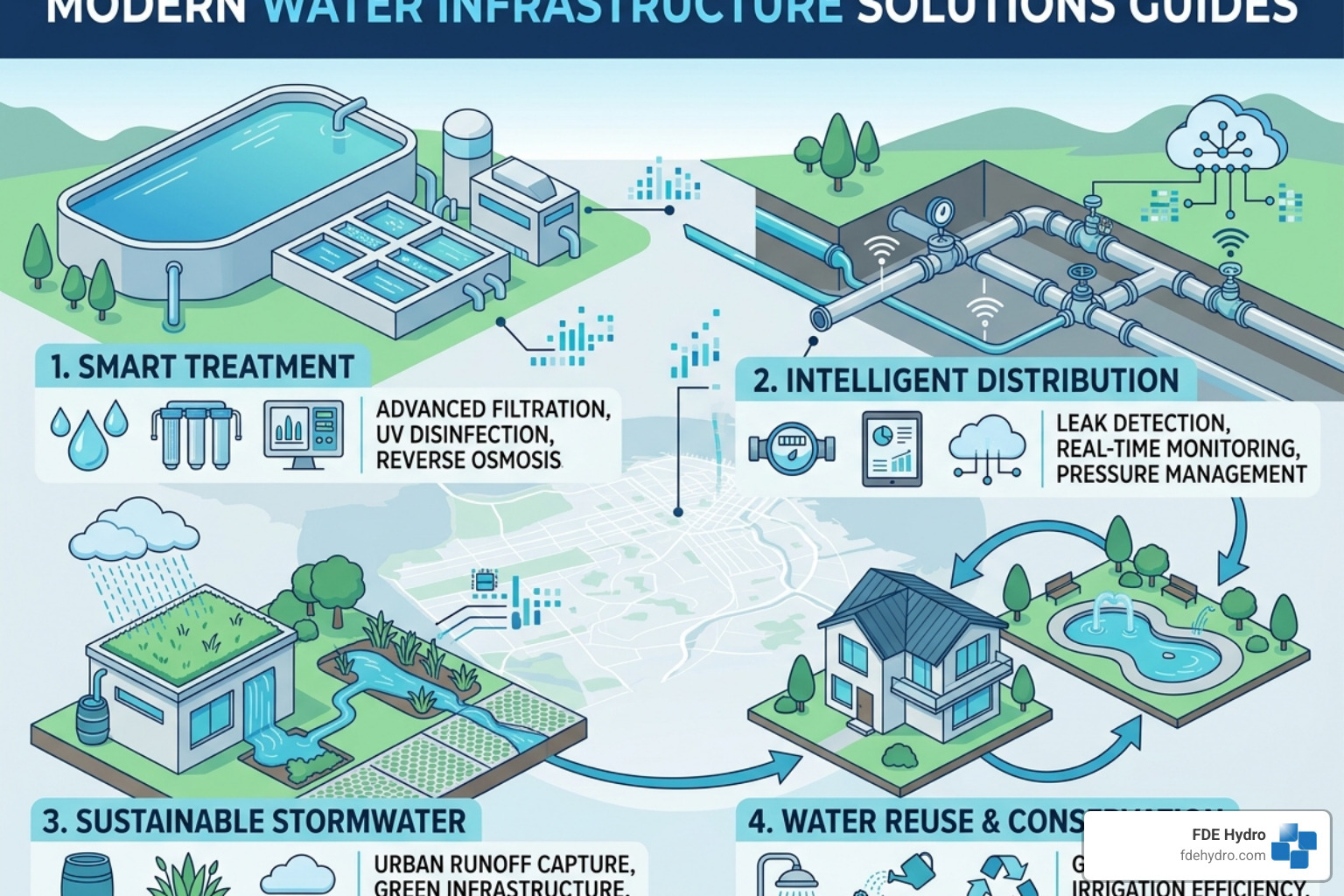
Modern water infrastructure encompasses the comprehensive network of physical and digital systems designed to collect, treat, store, and distribute water, as well as manage wastewater and stormwater. This includes everything from vast pipeline networks, advanced treatment facilities, and smart metering systems to critical assets like dams and water control structures. These structures are fundamental to managing our precious water resources, regulating flow, preventing floods, and enabling hydropower generation. At FDE Hydro™, we understand the pivotal role these larger systems play in the overall water management ecosystem.
Modernization of this infrastructure is not merely an option but a critical necessity in April 2026. Many of our existing water systems, particularly in regions like New York, California, and across North America, were built after World War II, with some components now over a century old. This aging infrastructure is a primary driver of inefficiency and risk. Consider these stark realities:
- Water Loss: Up to 40% of water can be lost in some cities due to leaks, corrosion, and inefficiencies in aging infrastructure. Globally, roughly one in every five gallons of treated drinking water is lost or unbilled due to leaks, broken meters, or system inefficiencies. This represents a massive waste of a vital resource and the energy used to treat and transport it.
- Climate Change Impacts: Unpredictable weather patterns, including severe droughts and intense floods, are becoming more common. Our infrastructure must be resilient enough to withstand these extremes, ensuring consistent water supply during dry periods and effective stormwater management during heavy rainfall.
- Population Growth and Urbanization: Rapid population increases in urban centers like New York City demand greater capacity and more efficient systems to meet growing water needs without straining existing resources.
- Emerging Contaminants: New challenges, such as microplastics and pharmaceutical residues, require advanced treatment technologies that older plants were not designed to handle.
The economic benefits of investing in modern water infrastructure are substantial. Every dollar invested in drinking water and wastewater infrastructure has been shown to increase GDP by $6.35, create 1.6 new jobs, and provide $23 in public health-related benefits. This isn’t just about fixing what’s broken; it’s about building a foundation for economic growth, public health, and environmental sustainability.
For further insights into the importance of effective water infrastructure, explore the Building Effective Water Infrastructure | US EPA guide. To understand the foundational elements of water management, our Water Control Structures Guide offers valuable context.
What Are the Primary Challenges Facing Aging Water Systems and How Can They Be Overcome?
Our aging water infrastructure, including pipes, treatment plants, and dams, presents a pervasive issue that leads to leaks, frequent breaks, and systemic inefficiencies. Many of these systems, particularly in established regions across North America and Europe, are well past their intended lifespan. For example, water loss due to leaks can range from 8% in 20-year-old systems to a staggering 30% in systems over 60 years old. This not only wastes treated water but also incurs significant costs for utilities in terms of energy, chemicals, and repairs.
A critical challenge is the significant funding gap. In the U.S. alone, an estimated $1.2 trillion is needed over the next 20 years just to maintain legacy drinking water and wastewater systems at current service levels. Yet, federal funding for the water sector has declined significantly, accounting for only about 4% of infrastructure funding, compared to 25-45% for other infrastructure sectors like highways and aviation. This disparity leaves many municipalities, especially smaller communities, struggling to finance necessary upgrades.
The “balkanized” nature of the water sector further complicates matters. With over 50,000 community water systems and 16,000 sanitary sewer systems in the U.S., there’s often a lack of unified frameworks and shared best practices, hindering the rapid adoption of innovative solutions. High operation and maintenance (O&M) costs, which now often exceed capital project spending, also strain utility budgets.
Finally, the escalating impacts of climate change, such as prolonged droughts in California and increased flood risks in New York, directly threaten water supply predictability and infrastructure resilience. Our existing systems were not designed for the extreme weather events we now face.
Overcoming these challenges requires a multi-faceted approach:
- Proactive Planning: Shifting from reactive repairs to predictive maintenance, using data to anticipate failures and prioritize investments.
- Innovative Technologies: Adopting smart technologies, modular solutions, and advanced materials to extend asset life and improve efficiency.
- Strategic Investment: Exploring diverse financing models and advocating for increased federal and state support.
For a deeper dive into financing strategies for local leaders, refer to Paying for Water Systems: A Guide for Local Leaders.
The integration of smart technologies and nature-based solutions is revolutionizing how we manage water, making systems more efficient, resilient, and sustainable.
Leveraging Smart Technologies
Smart technologies offer unprecedented capabilities for real-time monitoring, predictive analytics, and optimized operations:
- IoT Sensors: Internet of Things (IoT) sensors deployed throughout water networks can provide real-time data on pressure, flow, and water quality. This enables rapid leak detection, reducing response times from days to mere hours. For example, cities have seen annual savings of $95,000 to $210,000 by drastically cutting leak response times.
- AI Analytics: Artificial intelligence (AI) and machine learning algorithms analyze vast datasets from sensors and other sources to predict equipment failures, optimize treatment processes, and forecast demand, moving us from reactive maintenance to proactive management.
- Advanced Metering Infrastructure (AMI): AMI systems replace traditional meters with digital ones that provide hourly or daily water usage data. This not only improves billing accuracy but also empowers customers with information to manage their consumption and helps utilities quickly identify unusual usage patterns indicating leaks.
- Digital Twins and GIS: Digital twins create virtual replicas of physical infrastructure, allowing for simulations and scenario planning. Geographic Information Systems (GIS) integrate spatial data for asset management, facility mapping, and 2D/3D visualization, crucial for complex networks in cities like Toronto or São Paulo.
- Wastewater-Based Epidemiology: This innovative application uses wastewater analysis as an early warning system for public health threats, tracking community-level health trends and the presence of pathogens.
These smart solutions are driving the future of water infrastructure, as highlighted by Driving the future: Smart water solutions for Canada’s infrastructure …. For more on how these systems integrate, our Water Control System Complete Guide provides additional context.
Nature-Based Solutions (NBS) and Green Infrastructure
Beyond technological fixes, nature-based solutions (NBS) and green infrastructure integrate ecological processes into water management, offering multiple benefits:
- Stormwater Management: Solutions like rain gardens, green roofs, and permeable pavers absorb and filter stormwater runoff, reducing the burden on conventional drainage systems and preventing pollution. A single rain garden can manage 5,000-10,000 gallons of stormwater per year, while green roofs can handle 7,000-15,000 gallons per 1,000 sq. ft. annually.
- Water Quality Improvement: Wetlands and riparian buffers naturally filter pollutants, improving the quality of surface and groundwater.
- Ecosystem Services: NBS enhance biodiversity, create urban green spaces, reduce urban heat island effects, and provide recreational opportunities, contributing to overall community well-being in cities like Vancouver or Berlin.
- Reduced Treatment Loads: By managing water closer to its source, NBS can significantly reduce the volume and pollutant load entering traditional treatment plants, leading to cost savings.
What Innovative Approaches and Financing Models Support Sustainable Water Infrastructure Development?
Modernizing water infrastructure requires not only technological advancements but also creative approaches to funding and implementation. We are seeing a shift towards more sustainable and financially viable models.
Innovative Financing Models
Traditional funding sources often fall short, necessitating diverse financing strategies:
- Green Bonds: These financial instruments are specifically designed to fund environmentally friendly projects. They attract eco-minded investors and provide capital for sustainability-focused upgrades, such as water treatment plant modernizations or green infrastructure initiatives.
- Public-Private Partnerships (PPPs): PPPs involve collaboration between public entities and private companies, allowing for shared risk, leveraging private sector expertise, and accessing additional capital. Over 2,000 municipalities in the U.S. have entered into some form of P3 for water system management.
- Performance Contracts: Energy Savings Performance Contracts (ESPCs) allow infrastructure upgrades, particularly those focused on energy efficiency, to be financed by the guaranteed savings they generate. For instance, cities have achieved over 1 million kWh of electricity and 60,000 Therms saved in 2024 through such contracts, making upgrades budget-neutral.
- Federal Programs: Initiatives like the American Rescue Plan Act (ARPA) and the Bipartisan Infrastructure Law (IIJA) in the U.S., along with programs like the Water Infrastructure Finance and Innovation Act (WIFIA), provide significant grants and low-interest loans for water projects.
- Resilience Bonds: These innovative bonds can provide financing for large-scale water infrastructure projects, especially for communities vulnerable to natural disasters, helping them prepare for and recover from climate-related events.
The establishment of a National Water Technology Pipeline, as proposed in the U.S., could further spur innovation and commercialization by dedicating federal funding (e.g., $12 billion over 10 years) to advanced water technologies, as discussed in Establishing a National Water Technology Pipeline.
Decentralized and Modular Water Systems
Decentralized and modular water systems are gaining traction for their flexibility, resilience, and quicker deployment, particularly in remote areas or for specific needs. These systems reduce dependence on large, centralized infrastructure, offering greater adaptability to local conditions and demands.
At FDE Hydro™, we are at the forefront of this modular revolution, especially for larger water control structures. Our innovative, patented modular precast concrete technology (“French Dam”) is transforming the way hydroelectric dams and water control systems are built and retrofitted. By utilizing pre-engineered, factory-produced concrete components, we significantly reduce construction costs and time, enhance quality control, and minimize environmental impact on-site. This approach is highly effective in diverse geographies, from the expansive river systems of Brazil to the established hydropower sites in North America and Europe. This method offers a scalable and efficient solution for upgrading critical water infrastructure assets.
Water Reuse, Recycling, and Rainwater Harvesting
These practices are fundamental to creating a circular water economy and enhancing water security:
- Water Reuse and Recycling: Treating wastewater to a high standard for non-potable uses (e.g., irrigation, industrial processes) or even for potable reuse significantly reduces demand on freshwater sources. Blackwater recycling can yield up to 80% water savings, while graywater reuse (from sinks, showers) can save 30-50% for landscape irrigation.
- Rainwater Harvesting: Collecting and storing rainwater for various uses, from irrigation to non-potable indoor uses, reduces strain on municipal supplies and provides a resilient local water source.
These strategies contribute immensely to Sustainable Water Infrastructure.
How Can Communities Effectively Plan and Implement Modern Water Infrastructure Projects?
Implementing modern water infrastructure requires a structured, strategic approach. Here’s a step-by-step guide for cities and utilities in regions like New York, California, Kansas, or across Canada, Brazil, and Europe:
1. Assessment and Prioritization
Begin by understanding your current system’s health and vulnerabilities.
- Conduct Thorough Water Audits: Use methodologies from organizations like the International Water Association to quantify water losses and identify inefficiencies.
- Assess Current System Health: Evaluate the age, condition, and performance of pipes, pumps, treatment plants, and control structures.
- Identify Vulnerabilities: Pinpoint areas prone to leaks, contamination, or capacity issues, especially in the face of climate change impacts.
- Prioritize Upgrades: Based on risk, cost-effectiveness, and community impact, determine which upgrades are most critical. Use predictive modeling to anticipate failures and schedule maintenance proactively.
- Key Assessment Metrics: Focus on metrics like water loss percentage, energy consumption per volume of water treated/distributed, and average asset age.
2. Strategic Planning
Develop a clear roadmap for the future.
- Long-Term Planning Frameworks: Implement Asset Management Plans (AMP), Capital Improvement Plans (CIP), and Effective Utility Management (EUM) principles to ensure a comprehensive, forward-looking strategy.
- Set Clear, Measurable Goals: Define specific objectives, such as “reduce water loss by 25% in two years” or “achieve 10% energy savings in pumping operations.”
- Integrate Climate Change Adaptation: Incorporate strategies to enhance resilience against droughts, floods, and other climate impacts into all planning stages.
For comprehensive guidance on project planning, refer to our Water Infrastructure Projects Guide.
3. Technology Adoption
Embrace innovation cautiously and strategically.
- Pilot New Technologies: Before a full-scale rollout, test new digital tools, sensors, or treatment processes in smaller, controlled sections of the network.
- Focus on Interoperability: Ensure that new systems can communicate and integrate with existing infrastructure and data platforms.
- Train Workforce: Invest in training programs to equip staff with the skills needed to operate and maintain smart technologies.
4. Financing Strategy
Secure the necessary funds through diverse channels.
- Mix of Funding Sources: Explore a combination of green bonds, public-private partnerships, federal and state grants, low-interest loans, and performance contracts.
- Adequate and Equitable Rate Structures: Ensure water rates are sufficient to cover operational costs and fund necessary upgrades, while also being fair and affordable for all residents.
- Customer Assistance Programs: Implement programs to support low-income households, ensuring access to essential water services.
5. Community Engagement and Governance
Build trust and support through transparency and participation.
- Foster Transparent Policies: Communicate project plans, regulations, and financial decisions clearly and openly.
- Empower Local Stakeholder Participation: Hold regular town meetings, create online dashboards to show progress, and establish advisory groups that involve community members in decision-making.
- Build Education and Awareness: Run workshops and provide educational materials to help residents understand the value of water and the need for infrastructure investments.
For guidance on equitable water management, see Equitable Water Management: A Practical Guide for Utilities | RAND.
6. Implementation and Monitoring
Execute plans efficiently and continuously track performance.
- Efficient Construction Methods: Utilize advanced construction techniques that reduce time and cost. For large-scale projects like dams and water control systems, FDE Hydro’s modular precast concrete technology offers significant advantages in speed, cost-effectiveness, and quality control across North America, Brazil, and Europe.
- Continuous Monitoring: Regularly track key performance indicators (KPIs) such as water loss reduction, energy savings, and customer satisfaction.
- Adaptive Management: Be prepared to adjust strategies based on performance data and evolving conditions.
Real-World Examples of Successful Modernization:
- City of Hitchcock, Texas: This city achieved annual savings of $1.1 million from water meter upgrades and wastewater treatment plant efficiency improvements, demonstrating the power of smart investments.
- South Bend, Indiana: By implementing a smart sewer system with sensors and predictive analytics, South Bend reduced combined sewer overflows by 80% and saved $400 million in avoided capital costs.
- Springfield (example city): Reduced leak response time from 6 days to 1 day, saving $150,000 annually, showcasing the immediate impact of real-time monitoring.
Frequently Asked Questions about Modern Water Infrastructure Solutions
What are the biggest benefits of modernizing water infrastructure?
Modernization leads to significant water loss reduction, improved public health and safety, enhanced resilience against climate change, substantial energy savings, and long-term cost efficiencies through predictive maintenance and extended asset life. It ensures a reliable, safe, and sustainable water supply for current and future generations.
How can small communities afford major water infrastructure upgrades?
Small communities can leverage federal and state grants, explore public-private partnerships, utilize energy savings performance contracts, and implement phased upgrade plans. Decentralized and modular solutions, such as FDE Hydro’s modular precast concrete technology for water control structures, can also offer more affordable and scalable options compared to traditional large-scale projects, making advanced infrastructure accessible even with limited budgets.
What role does water reuse play in modern water infrastructure?
Water reuse, recycling, and rainwater harvesting are crucial for sustainable water management. They reduce reliance on finite freshwater sources, mitigate drought impacts (especially in regions like California), and decrease wastewater discharge. By treating and repurposing water, these practices contribute significantly to a circular water economy, enhancing regional water resilience and security.
Conclusion
The journey towards modern water infrastructure is complex but essential for ensuring a sustainable and resilient future. By embracing smart technologies, nature-based solutions, innovative financing, and robust community engagement, cities and utilities can overcome the challenges of aging systems and climate change. The integration of advanced construction methods, such as FDE Hydro’s modular precast concrete technology for dams and water control systems, further accelerates this transformation, delivering efficiency and long-term value across North America, Brazil, and Europe. The definitive guide to modern water infrastructure solutions is not just about fixing pipes; it’s about building a future where water is managed intelligently, equitably, and sustainably for all.
Learn more about advanced hydropower and water control solutions with FDE Hydro™
by Adaptify Support | Apr 10, 2026 | Hydro Facility Articles
Why Green Energy Dam Retrofits Are One of America’s Best Untapped Clean Energy Opportunities
Green energy dam retrofits are one of the fastest, lowest-impact ways to add renewable electricity to the U.S. grid right now. Here’s a quick summary of what you need to know:
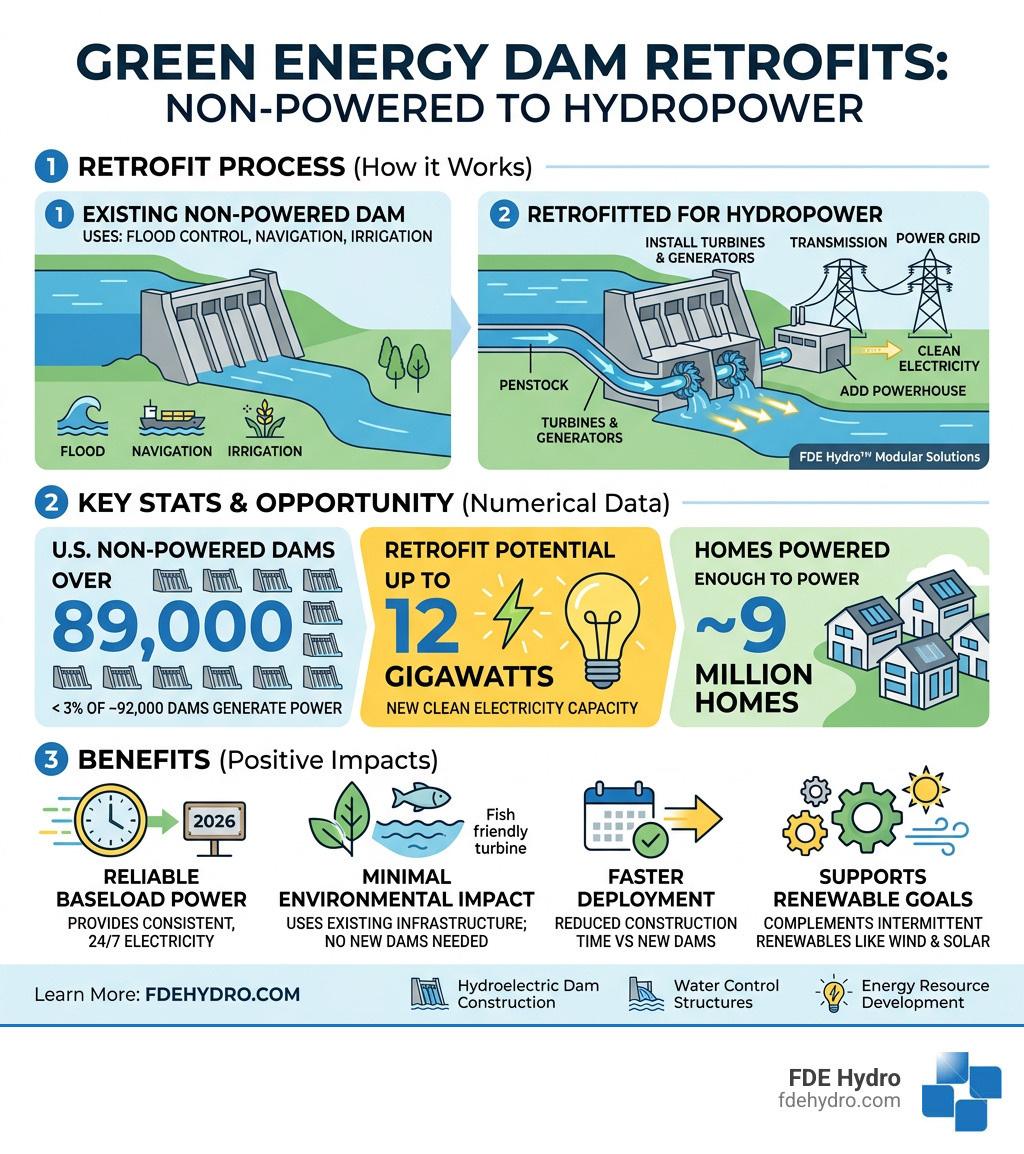
- What they are: Adding turbines and power generation equipment to existing dams that currently produce no electricity
- Scale of opportunity: Over 89,000 U.S. dams generate no power — less than 3% of 92,000+ total dams do
- Potential impact: Up to 12 gigawatts of new clean electricity — enough to power 9 million homes
- Key advantage: No new dam construction needed, meaning less environmental disruption and faster deployment
- Who benefits: Grid operators, utilities, communities, and infrastructure owners looking for reliable, 24/7 renewable power
Most people think expanding hydropower means building new dams. It doesn’t.
The U.S. already has tens of thousands of dams sitting idle — built for flood control, irrigation, or navigation — that have never generated a single watt of electricity. That’s an enormous amount of clean energy potential going to waste, right now, in infrastructure that already exists.
The case for action is straightforward. Retrofitting is faster than new construction, avoids the environmental and community disruption of building from scratch, and can deliver reliable baseload power that complements intermittent renewables like wind and solar.
This guide walks you through everything you need to know — from the scale of the opportunity and the tools to identify it, to the technical, regulatory, and environmental realities of getting a retrofit project done.
I’m Bill French, Sr., Founder and CEO of FDE Hydro™ and a participant in the U.S. Department of Energy’s Hydropower Vision Technology and Performance Task Force, where I helped shape the national roadmap for green energy dam retrofits and next-generation hydropower solutions. Over the past decade, I’ve developed patented modular civil construction technologies specifically designed to make hydropower retrofits faster, more cost-effective, and more environmentally sound. Let’s get into it.
Green energy dam retrofits terms simplified:
The Massive Potential of Green Energy Dam Retrofits
When we look at the landscape of American infrastructure, we see more than 92,000 dams. It is a staggering figure, but even more shocking is that only about 2,500 of them actually produce electricity. The rest—roughly 89,000 dams—are “non-powered.” They were built for flood control, recreation, or navigation, and they have been sitting there for decades, letting water flow past without capturing its kinetic energy.
The potential here is massive. According to the DOE report on hydropower vision, green energy dam retrofits could add up to 12 gigawatts of additional electricity to our grid. To put that in perspective, that is enough to power 9 million homes—or every single home in Tennessee, Alabama, and Georgia combined.
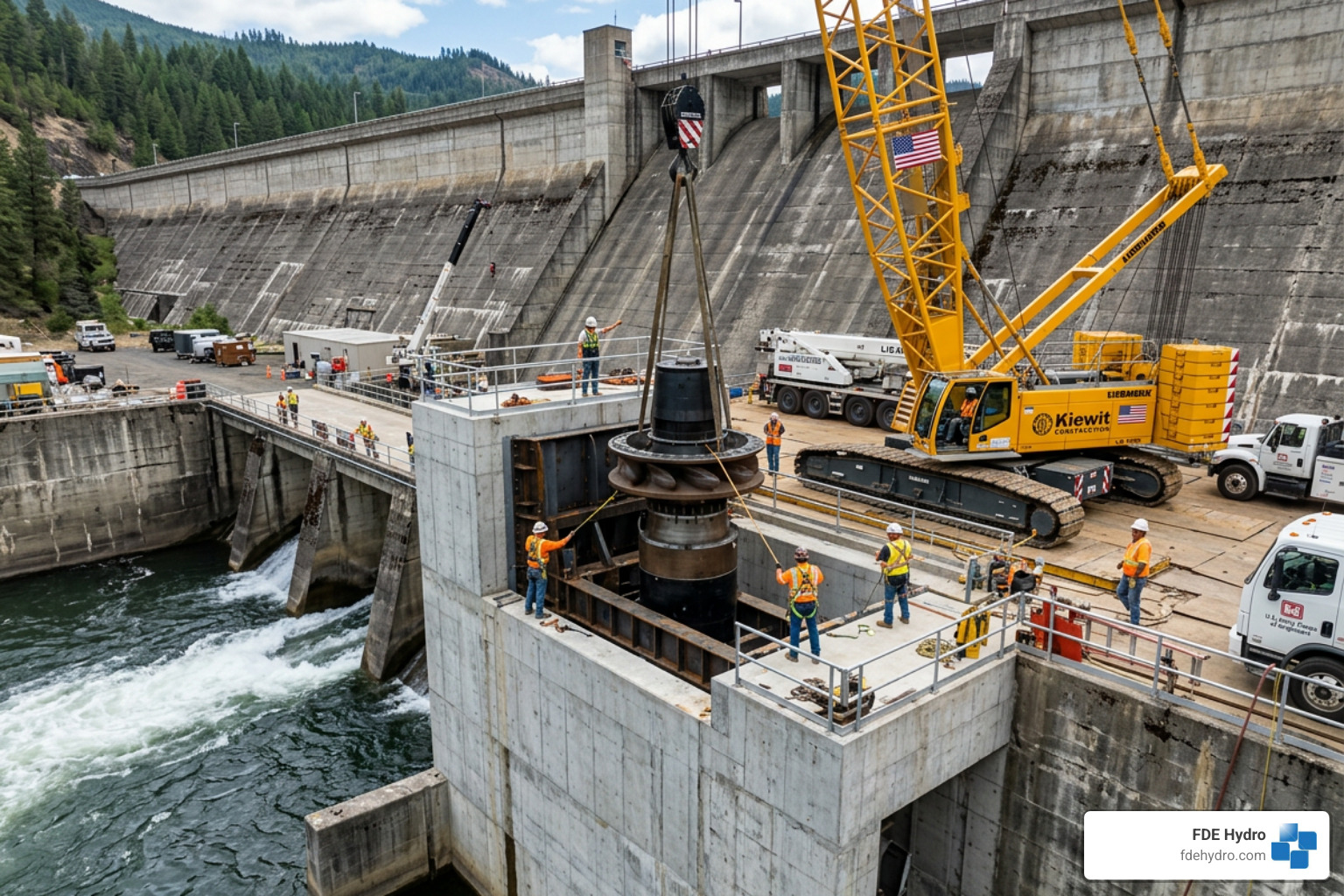
However, we have to be realistic about the hurdles. As noted in the ORNL report on development challenges, factors like aging infrastructure, specific dam designs, and the sheer cost of traditional construction can slow things down. That is why we focus so heavily on hydropower retrofitting techniques that utilize modern materials and modular designs to bypass the headaches of “pouring mud” (traditional cast-in-place concrete) in a riverbed.
By leveraging these existing structures, we aren’t just adding power; we are increasing energy resilience. A retrofitted dam provides a secure, local source of energy that doesn’t depend on global supply chains for fuel. It is the ultimate “reduce, reuse, recycle” for the power industry.
Prioritizing Green Energy Dam Retrofits with NPD HYDRO
With 89,000 dams to choose from, where do we start? We can’t just throw a turbine at every pile of rocks and concrete in the country. This is where data-driven tools become our best friends.
The Oak Ridge National Laboratory (ORNL) and other national labs have developed the NPD HYDRO tool. This is a comprehensive, web-based platform that helps developers and communities prioritize which dams are the best candidates for a retrofit. It looks at variables across four major categories:
- Grid Connectivity: How close is the dam to existing power lines?
- Community Security: Could this dam power a nearby hospital or school during a blackout?
- Industrial Proximity: Are there factories or natural gas stations nearby that need reliable 24/7 power?
- Environment: What is the local fish population like, and what are the water quality requirements?
By using non-powered dam retrofit research, we can narrow down the list to the “low-hanging fruit”—the dams that offer the highest return on investment with the lowest environmental footprint.
Economic Benefits of Green Energy Dam Retrofits
Retrofitting isn’t just good for the planet; it’s a shot in the arm for local economies. When we take an idle piece of infrastructure and turn it into a power plant, we create high-paying, local jobs in construction, engineering, and long-term maintenance.
Moreover, many of these dams are aging. The average age of a U.S. dam is over 50 years. Instead of just letting them crumble, we can change out aging infrastructure and replace it with next-generation systems. This modernization increases the value of the asset and provides a steady stream of tax revenue for the local community.
While the 12 GW figure is the “total” potential, experts suggest that about 4.8 GW of that is economically feasible to develop by 2050 using current technology. That is still enough to power over 2 million homes without building a single new wall in a river.
Overcoming Technical and Regulatory Hurdles
If retrofitting dams is such a great idea, why haven’t we done all of them yet? Well, as anyone in the hydro industry will tell you, working with water is never “simple.”
First, there is the age of the dams. With an average age of 57 years, many structures require significant rehabilitation before they can support power generation equipment. We often see dams that were never designed to hold the weight or the vibrations of a turbine. This is where we use next-generation civil solutions like modular precast concrete to reinforce the structure without the massive costs and timelines of traditional rebuilds.
Then there is the regulatory maze. The Federal Energy Regulatory Commission (FERC) licensing process is notoriously rigorous. While it’s vital for safety and environmental protection, it can take years to navigate.
We also have to deal with “optimism bias.” A study on power output projections found that past retrofit projects often overestimated their actual power generation by an average of 3.6 times. This highlights the need for better site-specific engineering and realistic flow modeling before we break ground.
| Dam Type |
Retrofit Suitability |
Key Challenges |
| Navigation Dams |
High |
Usually concrete; stable water levels; easier to install penstocks. |
| Flood Control Dams |
Medium |
Large seasonal changes in water levels; may require deep structural work. |
| Irrigation Dams |
Low/Medium |
Water usage is prioritized for crops; flow can be highly seasonal or intermittent. |
| Recreation Dams |
Variable |
Often small; community pushback regarding water level changes. |
Environmental Mitigation in Green Energy Dam Retrofits
We love rivers, and we want to keep them healthy. Historically, “big hydro” got a bad rap for blocking fish migration and altering water chemistry. But green energy dam retrofits are different. Because the dam is already there, we aren’t creating new fragmentation of the ecosystem.
Instead, a retrofit is often an opportunity to improve the environmental standing of the dam. Modern projects often include:
- Fish-Safe Turbines: New designs that allow fish to pass through the blades unharmed.
- Eel Ramps and Fish Ladders: Adding passage systems that weren’t part of the original 1950s design.
- Dissolved Oxygen Systems: Ensuring the water released from the turbines is healthy for downstream life.
In some cases, we use dam rehabilitation and encapsulation to fix old, leaking structures while we add power, effectively giving the river a cleaner, safer neighbor. As research on the global hydropower boom shows, the environmental cost of a new dam is massive. Retrofitting allows us to skip that cost entirely.
Environmental Advantages and Grid Resilience
In renewables, hydropower is the “steady hand.” While solar is great when the sun shines and wind is fantastic when the breeze blows, hydro provides 24/7 baseload power. This makes it a perfect partner for intermittent sources.
One of the coolest things about a retrofitted dam is its “black start” capability. If the entire grid goes down, a hydro plant can often restart itself without an external power source, helping to “jump-start” the rest of the grid. This is a level of resilience that batteries and solar arrays are still struggling to match at scale.
Furthermore, we are seeing a lot of interest in “pumped storage.” This is basically using two reservoirs as a giant water battery. When there is too much wind or solar on the grid, we use that extra energy to pump water uphill. When the grid needs power, we let the water flow back down through the turbines. This is discussed in detail in this scientific paper on revitalizing existing dams, which highlights how existing infrastructure can be the backbone of a carbon-free grid.
Real-World Success: Case Studies in Modernization
To see the future of green energy dam retrofits, we only need to look at a few standout projects.
Red Rock Dam, Iowa Originally built in 1969 for flood control, Red Rock Dam sat for decades without producing power. Recently, engineers “punched” two massive penstocks through the concrete structure and installed turbines. Today, it generates enough clean energy to power 18,000 homes across four states. It is a perfect example of how a “single-purpose” dam can become a multi-purpose powerhouse.
Bulls Bridge, Connecticut This plant is a lesson in longevity. It first came online in 1903! While it has used the same Francis turbines for over a century, it recently underwent an electrical retrofit. We replaced the old, dangerous oil-filled circuit breakers with modern vacuum circuit breakers. This didn’t just make the plant safer; it ensured this 120-year-old facility can keep providing green energy for another century.
These stories, as highlighted in the Yale Environment 360 report on dam boosts, show that with the right hydro power plant maintenance and technical interventions, we can make our existing infrastructure do more with less.
Frequently Asked Questions about Dam Retrofitting
How many non-powered dams exist in the US?
There are approximately 89,000 non-powered dams in the United States. While not all of them are suitable for power generation (some are too small, too remote, or structurally unsound), thousands represent a viable opportunity for green energy dam retrofits.
What is the difference between a retrofit and a new dam?
A new dam requires flooding new land, displacing communities, and completely altering a river’s ecosystem from scratch. A retrofit uses a dam that is already there. We simply add the “plumbing” (penstocks) and the “engine” (turbines) to the existing wall. It is much faster, cheaper, and more environmentally friendly.
How does climate change affect retrofitted hydropower?
Climate change is a wildcard. Droughts can reduce water flow, which in turn reduces power output. For example, California has seen significant drops in hydro production during dry years. However, hydropower is also a tool for climate adaptation. Dams help manage water supplies during unpredictable weather, and the clean energy they produce helps reduce the carbon emissions that drive climate change in the first place.
Conclusion
The era of building massive, landscape-altering dams is largely over in North America. But the era of “smart hydro” is just beginning. With the 21st Century Dams Act and other bipartisan support gaining steam, we are seeing a renewed focus on the “Three Rs”: Rehabilitate, Retrofit, and Remove.
At FDE Hydro™, we believe that we don’t have to choose between a healthy river and a healthy grid. By using our patented modular precast concrete technology—the French Dam—we can make green energy dam retrofits a reality in a fraction of the time it takes for traditional construction. Our mission is to help dam owners and communities unlock the “wasted” energy flowing through their backyards.
If you are ready to see how existing infrastructure can power the future, explore sustainable hydropower solutions with us. Let’s get to work.
by Adaptify Support | Apr 8, 2026 | News
Why Sustainable Energy Development Matters Now
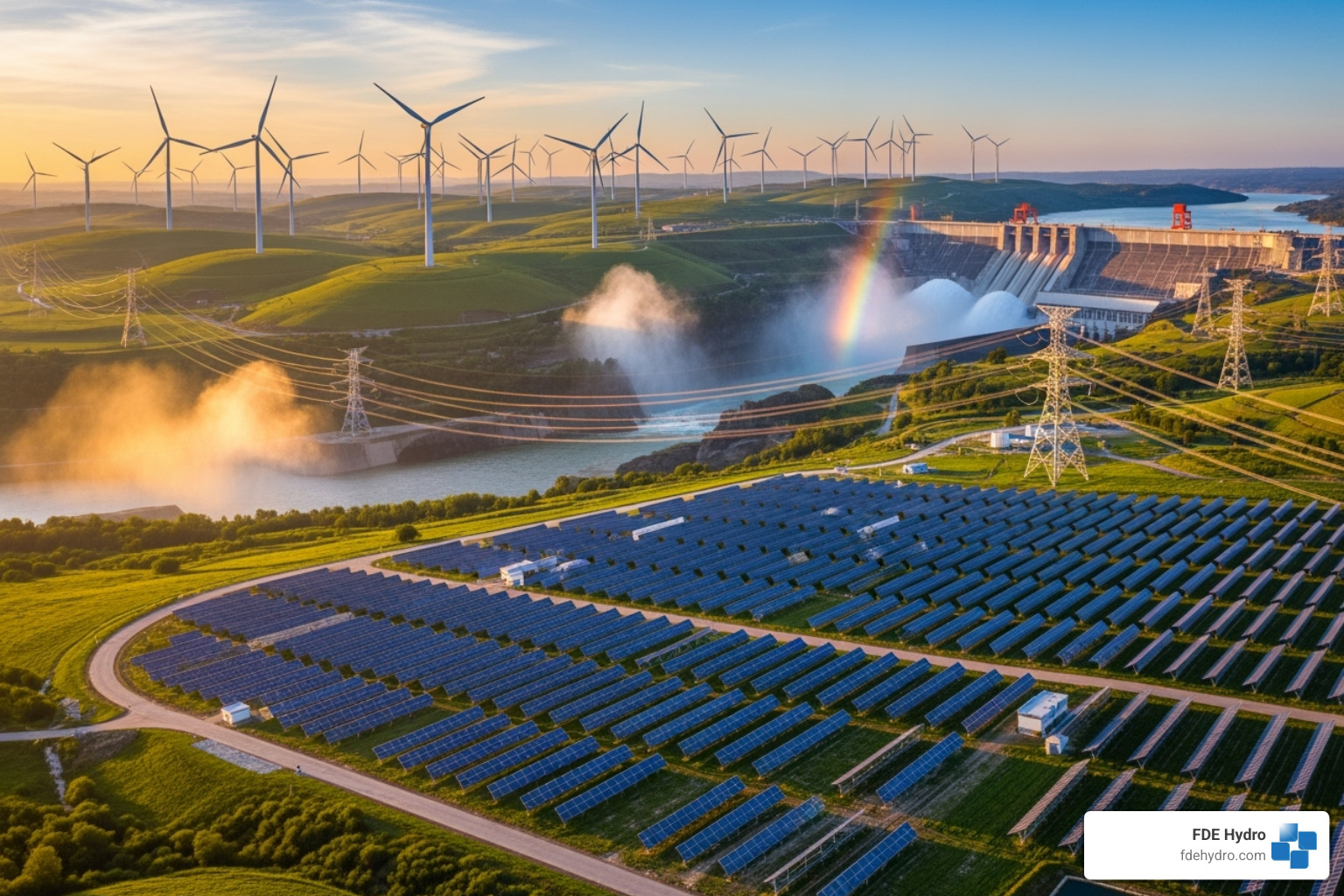
Sustainable energy development is the shift in how we produce, distribute, and consume energy to meet today’s needs without compromising the future. With fossil fuels providing 80% of global energy and the energy sector causing 75% of greenhouse gas emissions, this transition is urgent.
Here’s what sustainable energy development means in practice:
- Universal Access: Ensuring affordable, reliable, and modern energy for all.
- Clean Sources: Transitioning from fossil fuels to renewables like solar, wind, and hydropower.
- Energy Efficiency: Doubling the rate of efficiency improvements by 2030.
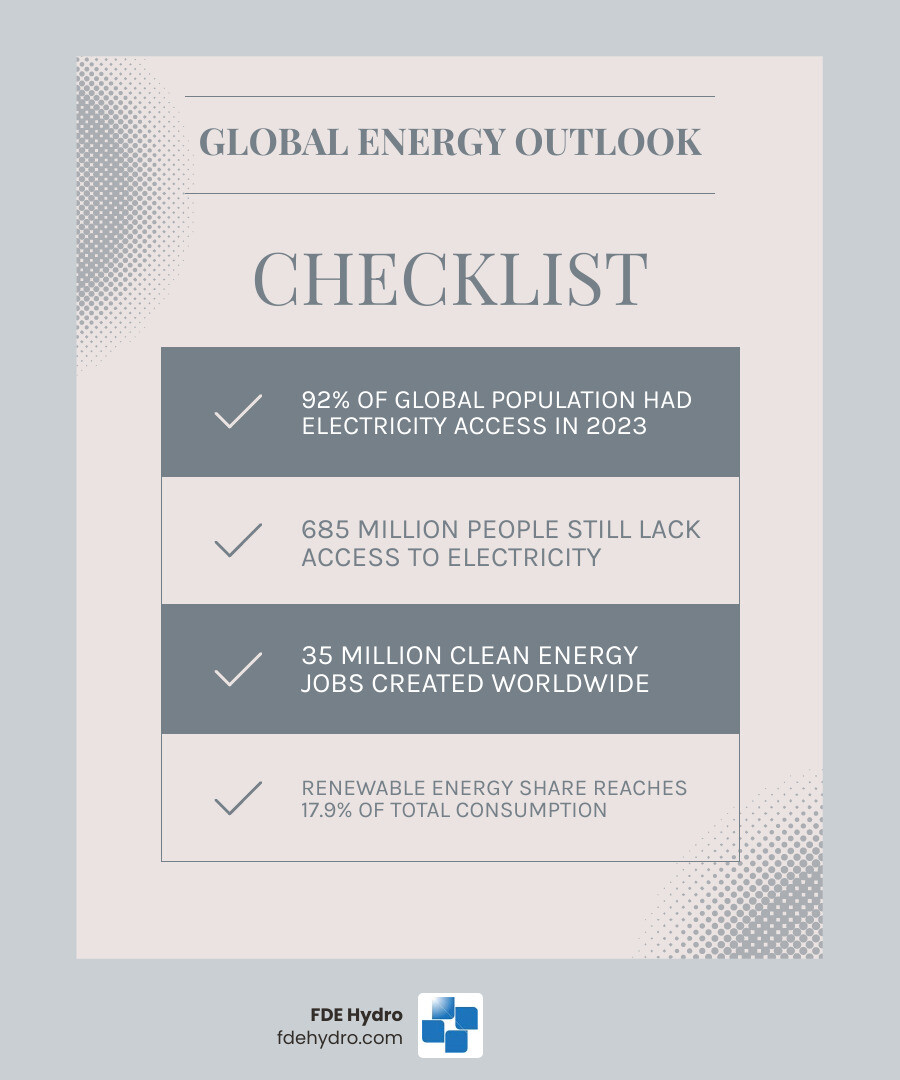
- Just Transition: Creating 35 million clean energy jobs while supporting affected communities.
- Climate Action: Reaching net-zero emissions by 2050 to limit global warming to 1.5°C.
The opportunities are significant. While 645 million people may still lack electricity by 2030, renewable energy is now the cheapest option for new power in most countries. Clean energy investments hit $2 trillion in 2024, and for every dollar invested, renewables create three times as many jobs as fossil fuels. This path requires coordinated action across technology, policy, finance, and education.
I’m Bill French, Sr., Founder and CEO of FDE Hydro™, and I’ve spent decades at the intersection of civil construction and clean energy. Through my work with the Department of Energy’s Hydro Power Vision Technology Task Force and developing modular hydropower solutions, I’ve seen how innovation in sustainable energy development can reduce costs, accelerate deployment, and meet the world’s growing energy needs sustainably.
The Global Push for Sustainable Energy: SDGs and Climate Action
Access to energy is a fundamental building block for education, healthcare, and economic opportunity. The United Nations’ Sustainable Development Goal 7 (SDG 7) aims to “ensure access to affordable, reliable, sustainable and modern energy for all,” linking economic growth, social equity, and environmental protection.
We’ve made progress, with global electricity access rising from 84% in 2010 to 92% in 2023. However, about 645 million people are still projected to lack electricity by 2030, as progress on basic energy access has slowed. The clean cooking challenge is also urgent, with 1.8 billion people expected to still use polluting fuels by 2030, leading to millions of premature deaths from household air pollution, disproportionately affecting women and children.
According to The Sustainable Development Goals Report 2025, we are off track to achieve SDG 7. International financial support for clean energy in developing countries rose to $21.6 billion in 2023, but this is still below what is needed.
This energy access challenge is directly tied to the climate crisis. The Paris Agreement commits nations to limit global warming to 1.5°C, requiring net-zero emissions by 2050. Our current energy system, which relies on fossil fuels for 80 percent of global energy supply, accounts for 75% of greenhouse gas emissions.
The transition to sustainable energy is therefore our best tool for climate mitigation. It involves a fundamental shift to renewables like solar, wind, and hydropower. This move also improves energy security, as 80% of the world’s population lives in countries that import fossil fuels, making them vulnerable to price shocks. Decentralized renewable solutions, like solar home systems and mini-grids, offer a chance for developing nations to leapfrog the fossil fuel era, building modern, resilient energy systems from the ground up. Initiatives like the UNDP’s “Energy Moonshot” aim to accelerate this progress, providing 500 million more people with sustainable energy access by 2025.
Understanding the Sustainable Energy Landscape
The shift to sustainable energy development is driven by compelling economic, health, and social benefits. Renewable energy is now the most affordable source of power for new generation in most countries, with solar and offshore wind being 41% and 53% cheaper than fossil fuels, respectively. This economic advantage is reflected in investment trends: in 2024, clean energy investment reached $2 trillion, far outpacing fossil fuels.
The transition also brings profound co-benefits. By moving away from fossil fuels, we can reduce air pollution, which is associated with 7 million premature deaths every year and costs the global economy $8.1 trillion annually in health damages. Furthermore, the clean energy sector is a major job creator, already employing 35 million people. For every dollar invested, renewables create three times as many jobs as the fossil fuel industry, with a projected net gain of 9 million energy sector jobs by 2030. Finally, embracing local renewable sources improves energy independence, shielding economies from volatile global fuel markets.
Defining Sustainable Energy Development vs. Renewable Energy
It’s common to use “renewable” and “sustainable” interchangeably, but their distinction is crucial for effective policy and investment.
| Feature |
Renewable Energy |
Sustainable Energy |
| Definition |
Energy from sources that naturally replenish on a human timescale. |
Energy that meets present needs without compromising the ability of future generations to meet theirs. |
| Focus |
The source of the energy (e.g., sun, wind, water). |
The entire system and its long-term impacts (environmental, social, and economic). |
| Examples |
Solar, wind, hydropower, geothermal, biomass. |
Responsibly managed renewables, energy efficiency measures, and low-carbon sources with minimal long-term impact. |
| Key Question |
Does the source replenish itself? |
What are the full lifecycle consequences of this energy choice? |
This distinction highlights that not all renewable energy is automatically sustainable. For example, a poorly planned hydropower dam can harm ecosystems, while a well-designed one can be a cornerstone of sustainability. This nuanced approach, reflected in frameworks like the European Green Deal, pushes us to ask deeper questions and make better long-term decisions.
The Co-Benefits of a Clean Energy Future
The beauty of transitioning to sustainable energy development is that climate mitigation is just the beginning. The ripple effects touch nearly every aspect of how we live, work, and thrive as communities.
Start with the air we breathe. Right now, about 99% of people worldwide breathe air that exceeds the World Health Organization’s quality limits. When we burn fossil fuels, we release particulate matter, nitrogen oxides, and sulfur dioxide—the stuff that creates smog, triggers asthma attacks, and causes serious respiratory diseases. The human cost is devastating: air pollution is associated with 7 million premature deaths every year. Behind each of those statistics is a person, a family, a community affected by preventable illness.
The economic burden is equally staggering—$8.1 trillion annually in health damage, representing 6.1% of global GDP. Imagine what we could do with those resources if they weren’t tied up treating pollution-related diseases. Clean energy sources that emit little to no air pollutants offer us a way out. Cleaner air means healthier children, fewer hospital visits, more productive workers, and stronger communities.
Energy independence is another powerful benefit that often gets overlooked. Many countries—especially those that import most of their fossil fuels—find themselves vulnerable to volatile global markets and geopolitical tensions. When energy prices spike or supply chains get disrupted, entire economies feel the impact. Renewable energy changes this equation fundamentally. The sun shines everywhere, the wind blows across every continent, and water flows through countless rivers. Africa alone could generate ten times more electricity than it needs by 2040, entirely from renewables. That’s not just energy independence—that’s energy abundance.
For nations that accept this shift, the benefits are immediate: more stable energy costs, reduced reliance on external suppliers, stronger national security, and greater control over their economic future. Communities that were once dependent on imported fuel can now generate their own power, keeping money and jobs local.
The job creation aspect brings this all together. Yes, some fossil fuel jobs will transition, but the net effect is overwhelmingly positive. For every dollar invested in renewable energy, three times as many jobs are created compared to fossil fuels. By 2030, we’re looking at a net gain of 9 million jobs globally in the energy sector. These aren’t just construction jobs that disappear once a project is built—they’re long-term positions in manufacturing, research, development, operations, maintenance, and innovation. They’re careers that support families and build communities, spread across diverse skill levels and regions.
This is what makes sustainable energy development so compelling. We’re not just solving an environmental problem—we’re creating healthier communities, more stable economies, and better opportunities for millions of people. That’s a future worth building.
Key Priorities for Accelerating the Sustainable Energy Transition
To meet the COP28 goals of tripling global renewable energy capacity and doubling energy efficiency by 2030, we must address several key priorities. A just and inclusive transition is paramount, requiring robust retraining programs and economic support for communities historically dependent on fossil fuels.
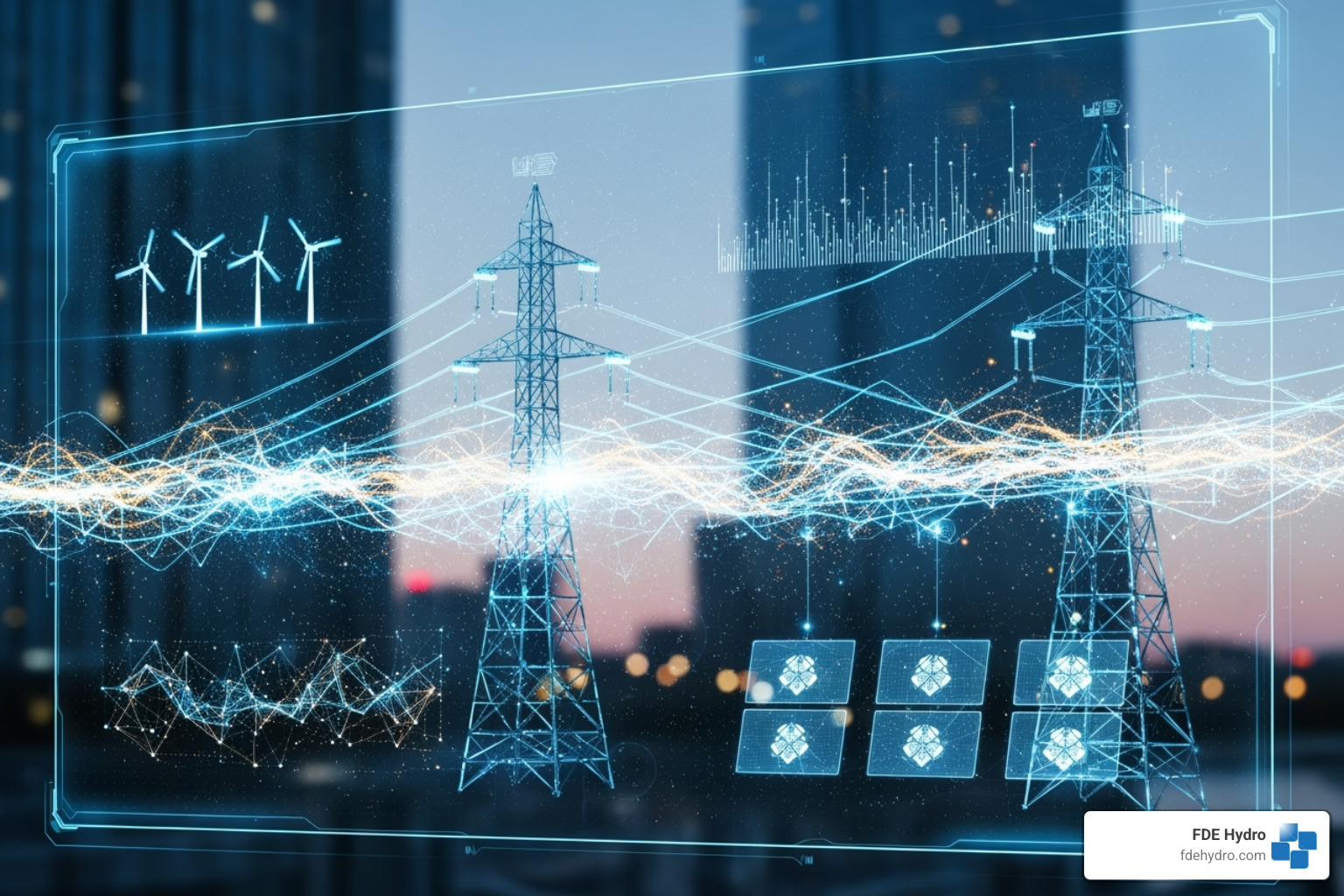
We also face challenges in decarbonizing “hard-to-abate” sectors like aviation, shipping, and heavy industry, where innovations like green hydrogen are needed. As we scale up renewables, the demand for critical minerals like lithium and cobalt will surge, making responsible mining and recycling essential. Furthermore, the intermittent nature of solar and wind requires massive investment in energy storage solutions, from advanced batteries to pumped hydropower, and the development of smart grids to ensure reliability.
Scaling Up Renewables and Improving Energy Efficiency
The good news is that economics are on our side. Renewable energy is the cheapest option for new electricity in most of the world, and the International Renewable Energy Agency projects renewables could supply over 90% of global electricity by 2050. This involves not only building new solar and wind farms but also modernizing existing infrastructure like hydropower. At FDE Hydro, our modular technology makes building new and retrofitting old hydropower facilities faster and more cost-effective.
Equally important is energy efficiency, often called the “first fuel.” Since we currently waste about 60% of the energy we produce, improvements like better insulation in homes and offices, smarter industrial machinery, LED lighting, heat pumps, and electric vehicles can drastically cut demand. This reduces emissions and frees up resources for building new generation capacity.
Creating an Enabling Policy and Financial Environment
Technology alone is not enough; it needs supportive policy and finance. A major barrier is the $7 trillion spent on fossil fuel subsidies in 2022. Phasing these out is critical.
To attract the necessary private capital, especially in developing economies, governments must create a stable investment climate with clear tax incentives, feed-in tariffs, and streamlined permitting processes. Innovative financing models like blended finance, which uses public funds to de-risk projects for private investors, are also essential. The goal is to use public resources strategically to open up the massive pools of private capital needed for the global transition to sustainable energy development.
The Role of Education and Innovation in Sustainable Energy Development
Digital innovation, data, and AI are key accelerators for sustainable energy development. Digitalization can reduce emissions by 20 percent by 2050 by optimizing energy systems, from demand prediction to grid management.
Organizations like the United Nations Development Programme (UNDP) are at the forefront, driving policy and technology shifts. For example, with UNDP support, Uruguay repurposed fossil-fuel subsidies for electric buses, and Mauritius installed a large-scale battery storage system to integrate more renewables. These initiatives show how strategic partnerships and technology can create significant impact.
The Future of Sustainable Energy Development Education
Preparing the next generation of energy leaders requires a new approach to education. Interdisciplinary programs are crucial for providing a holistic understanding of the energy sector’s technical, economic, social, and legal complexities.
The University of Calgary’s Master of Science in Sustainable Energy Development (SEDV) program is a prime example, bringing together faculty from engineering, public policy, Faculty of Law, and other fields. Similarly, Johns Hopkins SAIS offers programs like its MA in Sustainable Energy. These programs connect students with industry professionals and equip them with the critical thinking skills needed to steer the energy transition, training them to be future leaders in energy transition.
Innovations Driving the Energy Transition
The rapid pace of technological innovation is a cornerstone of the energy transition. Here are some key developments:
- Advanced Battery Storage: Crucial for grid stability with intermittent renewables. Innovations in battery chemistry and Pumped Storage Hydropower, a proven technology, are key.
- Green Hydrogen Production: Using renewable electricity to create clean fuel for hard-to-abate sectors like heavy industry and transport.
- Carbon Capture, Utilization, and Storage (CCUS): A technology to capture CO2 emissions from industrial sources, though its cost and scalability are still under debate.
- Small Modular Reactors (SMRs): Smaller, potentially more cost-effective nuclear reactors that offer low-carbon power but still face concerns about waste and safety.
- AI-Powered Grid Management: Using AI to predict demand, optimize generation, and manage smart grids for improved efficiency and reliability.
- Superhot Rock Geothermal Energy: A next-generation technology aiming to open up vast amounts of clean, baseload power from deep geothermal resources.
These innovations, combined with proven technologies like the modernized hydropower infrastructure we build with our Dams, Spillways, and Modular Powerhouses, are building a resilient, low-carbon energy system.
Conclusion
The path to sustainable energy development is both urgent and full of promise. The transition away from fossil fuels is not just an environmental necessity—it is an engine for creating a healthier, more prosperous, and more equitable world.
The goals are clear: tripling renewable capacity and doubling energy efficiency by 2030. Achieving this requires a coordinated effort across technology, policy, finance, and education. The benefits are transformative, including cleaner air, greater energy independence, millions of new jobs, and more stable economies.
Proven renewable technologies like hydropower are essential to this transition. While new innovations are exciting, we must also leverage mature, reliable technologies that can be deployed today. Modernizing existing hydropower infrastructure is a critical, cost-effective way to secure clean, dispatchable power and support the grid as intermittent renewables expand.
At FDE Hydro, we are committed to accelerating this transition. Our innovative modular precast concrete technology dramatically reduces the time and cost of building and retrofitting hydroelectric facilities, including Dams, Spillways, and Modular Powerhouses. By making Hydropower and Pumped Storage Hydropower more accessible and economically viable, we are helping to build the sustainable energy future.
The transition is underway. For More info about innovative hydropower solutions that are making this transition faster and more affordable, I invite you to explore our work.

