

What is Modern Water Infrastructure and Why is Modernization Essential Today?
Modern water infrastructure encompasses the comprehensive network of physical and digital systems designed to collect, treat, store, and distribute water, as well as manage wastewater and stormwater. This includes everything from vast pipeline networks, advanced treatment facilities, and smart metering systems to critical assets like dams and water control structures. These structures are fundamental to managing our precious water resources, regulating flow, preventing floods, and enabling hydropower generation. At FDE Hydro™, we understand the pivotal role these larger systems play in the overall water management ecosystem.
Modernization of this infrastructure is not merely an option but a critical necessity in April 2026. Many of our existing water systems, particularly in regions like New York, California, and across North America, were built after World War II, with some components now over a century old. This aging infrastructure is a primary driver of inefficiency and risk. Consider these stark realities:
- Water Loss: Up to 40% of water can be lost in some cities due to leaks, corrosion, and inefficiencies in aging infrastructure. Globally, roughly one in every five gallons of treated drinking water is lost or unbilled due to leaks, broken meters, or system inefficiencies. This represents a massive waste of a vital resource and the energy used to treat and transport it.
- Climate Change Impacts: Unpredictable weather patterns, including severe droughts and intense floods, are becoming more common. Our infrastructure must be resilient enough to withstand these extremes, ensuring consistent water supply during dry periods and effective stormwater management during heavy rainfall.
- Population Growth and Urbanization: Rapid population increases in urban centers like New York City demand greater capacity and more efficient systems to meet growing water needs without straining existing resources.
- Emerging Contaminants: New challenges, such as microplastics and pharmaceutical residues, require advanced treatment technologies that older plants were not designed to handle.
The economic benefits of investing in modern water infrastructure are substantial. Every dollar invested in drinking water and wastewater infrastructure has been shown to increase GDP by $6.35, create 1.6 new jobs, and provide $23 in public health-related benefits. This isn’t just about fixing what’s broken; it’s about building a foundation for economic growth, public health, and environmental sustainability.
For further insights into the importance of effective water infrastructure, explore the Building Effective Water Infrastructure | US EPA guide. To understand the foundational elements of water management, our Water Control Structures Guide offers valuable context.
What Are the Primary Challenges Facing Aging Water Systems and How Can They Be Overcome?
Our aging water infrastructure, including pipes, treatment plants, and dams, presents a pervasive issue that leads to leaks, frequent breaks, and systemic inefficiencies. Many of these systems, particularly in established regions across North America and Europe, are well past their intended lifespan. For example, water loss due to leaks can range from 8% in 20-year-old systems to a staggering 30% in systems over 60 years old. This not only wastes treated water but also incurs significant costs for utilities in terms of energy, chemicals, and repairs.
A critical challenge is the significant funding gap. In the U.S. alone, an estimated $1.2 trillion is needed over the next 20 years just to maintain legacy drinking water and wastewater systems at current service levels. Yet, federal funding for the water sector has declined significantly, accounting for only about 4% of infrastructure funding, compared to 25-45% for other infrastructure sectors like highways and aviation. This disparity leaves many municipalities, especially smaller communities, struggling to finance necessary upgrades.
The “balkanized” nature of the water sector further complicates matters. With over 50,000 community water systems and 16,000 sanitary sewer systems in the U.S., there’s often a lack of unified frameworks and shared best practices, hindering the rapid adoption of innovative solutions. High operation and maintenance (O&M) costs, which now often exceed capital project spending, also strain utility budgets.
Finally, the escalating impacts of climate change, such as prolonged droughts in California and increased flood risks in New York, directly threaten water supply predictability and infrastructure resilience. Our existing systems were not designed for the extreme weather events we now face.
Overcoming these challenges requires a multi-faceted approach:
- Proactive Planning: Shifting from reactive repairs to predictive maintenance, using data to anticipate failures and prioritize investments.
- Innovative Technologies: Adopting smart technologies, modular solutions, and advanced materials to extend asset life and improve efficiency.
- Strategic Investment: Exploring diverse financing models and advocating for increased federal and state support.
For a deeper dive into financing strategies for local leaders, refer to Paying for Water Systems: A Guide for Local Leaders.
How Can Smart Technologies and Nature-Based Solutions Transform Water Management?
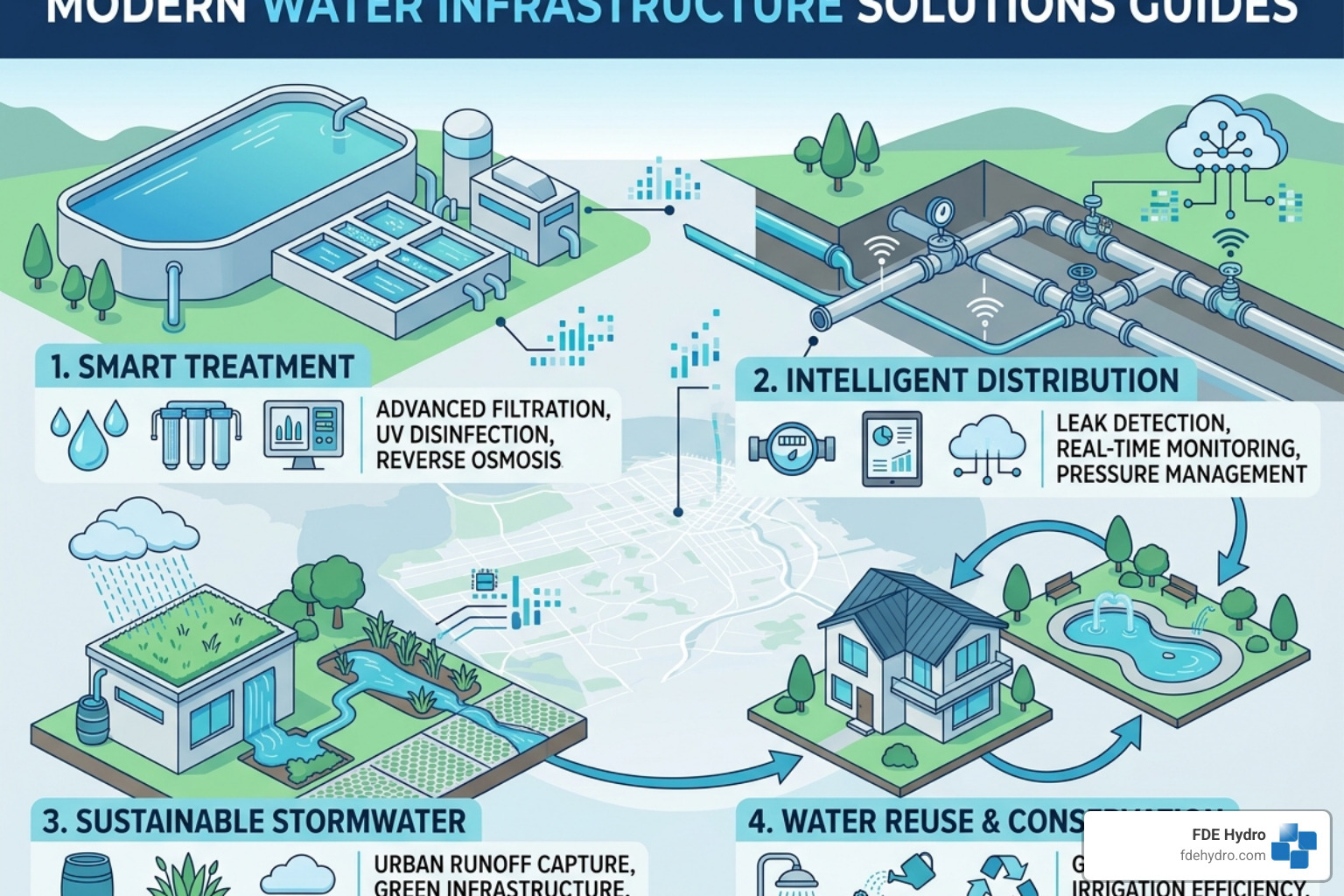
The integration of smart technologies and nature-based solutions is revolutionizing how we manage water, making systems more efficient, resilient, and sustainable.
Leveraging Smart Technologies
Smart technologies offer unprecedented capabilities for real-time monitoring, predictive analytics, and optimized operations:
- IoT Sensors: Internet of Things (IoT) sensors deployed throughout water networks can provide real-time data on pressure, flow, and water quality. This enables rapid leak detection, reducing response times from days to mere hours. For example, cities have seen annual savings of $95,000 to $210,000 by drastically cutting leak response times.
- AI Analytics: Artificial intelligence (AI) and machine learning algorithms analyze vast datasets from sensors and other sources to predict equipment failures, optimize treatment processes, and forecast demand, moving us from reactive maintenance to proactive management.
- Advanced Metering Infrastructure (AMI): AMI systems replace traditional meters with digital ones that provide hourly or daily water usage data. This not only improves billing accuracy but also empowers customers with information to manage their consumption and helps utilities quickly identify unusual usage patterns indicating leaks.
- Digital Twins and GIS: Digital twins create virtual replicas of physical infrastructure, allowing for simulations and scenario planning. Geographic Information Systems (GIS) integrate spatial data for asset management, facility mapping, and 2D/3D visualization, crucial for complex networks in cities like Toronto or São Paulo.
- Wastewater-Based Epidemiology: This innovative application uses wastewater analysis as an early warning system for public health threats, tracking community-level health trends and the presence of pathogens.
These smart solutions are driving the future of water infrastructure, as highlighted by Driving the future: Smart water solutions for Canada’s infrastructure …. For more on how these systems integrate, our Water Control System Complete Guide provides additional context.
Nature-Based Solutions (NBS) and Green Infrastructure
Beyond technological fixes, nature-based solutions (NBS) and green infrastructure integrate ecological processes into water management, offering multiple benefits:
- Stormwater Management: Solutions like rain gardens, green roofs, and permeable pavers absorb and filter stormwater runoff, reducing the burden on conventional drainage systems and preventing pollution. A single rain garden can manage 5,000-10,000 gallons of stormwater per year, while green roofs can handle 7,000-15,000 gallons per 1,000 sq. ft. annually.
- Water Quality Improvement: Wetlands and riparian buffers naturally filter pollutants, improving the quality of surface and groundwater.
- Ecosystem Services: NBS enhance biodiversity, create urban green spaces, reduce urban heat island effects, and provide recreational opportunities, contributing to overall community well-being in cities like Vancouver or Berlin.
- Reduced Treatment Loads: By managing water closer to its source, NBS can significantly reduce the volume and pollutant load entering traditional treatment plants, leading to cost savings.
What Innovative Approaches and Financing Models Support Sustainable Water Infrastructure Development?
Modernizing water infrastructure requires not only technological advancements but also creative approaches to funding and implementation. We are seeing a shift towards more sustainable and financially viable models.
Innovative Financing Models
Traditional funding sources often fall short, necessitating diverse financing strategies:
- Green Bonds: These financial instruments are specifically designed to fund environmentally friendly projects. They attract eco-minded investors and provide capital for sustainability-focused upgrades, such as water treatment plant modernizations or green infrastructure initiatives.
- Public-Private Partnerships (PPPs): PPPs involve collaboration between public entities and private companies, allowing for shared risk, leveraging private sector expertise, and accessing additional capital. Over 2,000 municipalities in the U.S. have entered into some form of P3 for water system management.
- Performance Contracts: Energy Savings Performance Contracts (ESPCs) allow infrastructure upgrades, particularly those focused on energy efficiency, to be financed by the guaranteed savings they generate. For instance, cities have achieved over 1 million kWh of electricity and 60,000 Therms saved in 2024 through such contracts, making upgrades budget-neutral.
- Federal Programs: Initiatives like the American Rescue Plan Act (ARPA) and the Bipartisan Infrastructure Law (IIJA) in the U.S., along with programs like the Water Infrastructure Finance and Innovation Act (WIFIA), provide significant grants and low-interest loans for water projects.
- Resilience Bonds: These innovative bonds can provide financing for large-scale water infrastructure projects, especially for communities vulnerable to natural disasters, helping them prepare for and recover from climate-related events.
The establishment of a National Water Technology Pipeline, as proposed in the U.S., could further spur innovation and commercialization by dedicating federal funding (e.g., $12 billion over 10 years) to advanced water technologies, as discussed in Establishing a National Water Technology Pipeline.
Decentralized and Modular Water Systems
Decentralized and modular water systems are gaining traction for their flexibility, resilience, and quicker deployment, particularly in remote areas or for specific needs. These systems reduce dependence on large, centralized infrastructure, offering greater adaptability to local conditions and demands.
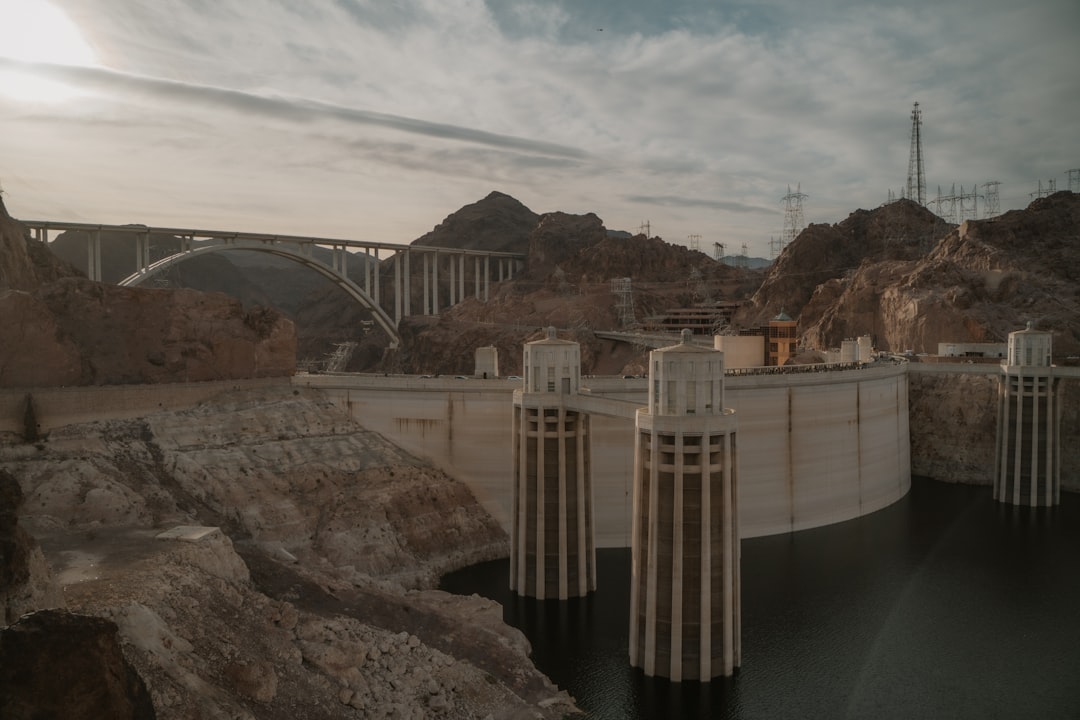
At FDE Hydro™, we are at the forefront of this modular revolution, especially for larger water control structures. Our innovative, patented modular precast concrete technology (“French Dam”) is transforming the way hydroelectric dams and water control systems are built and retrofitted. By utilizing pre-engineered, factory-produced concrete components, we significantly reduce construction costs and time, enhance quality control, and minimize environmental impact on-site. This approach is highly effective in diverse geographies, from the expansive river systems of Brazil to the established hydropower sites in North America and Europe. This method offers a scalable and efficient solution for upgrading critical water infrastructure assets.
Water Reuse, Recycling, and Rainwater Harvesting
These practices are fundamental to creating a circular water economy and enhancing water security:
- Water Reuse and Recycling: Treating wastewater to a high standard for non-potable uses (e.g., irrigation, industrial processes) or even for potable reuse significantly reduces demand on freshwater sources. Blackwater recycling can yield up to 80% water savings, while graywater reuse (from sinks, showers) can save 30-50% for landscape irrigation.
- Rainwater Harvesting: Collecting and storing rainwater for various uses, from irrigation to non-potable indoor uses, reduces strain on municipal supplies and provides a resilient local water source.
These strategies contribute immensely to Sustainable Water Infrastructure.
How Can Communities Effectively Plan and Implement Modern Water Infrastructure Projects?
Implementing modern water infrastructure requires a structured, strategic approach. Here’s a step-by-step guide for cities and utilities in regions like New York, California, Kansas, or across Canada, Brazil, and Europe:
1. Assessment and Prioritization
Begin by understanding your current system’s health and vulnerabilities.
- Conduct Thorough Water Audits: Use methodologies from organizations like the International Water Association to quantify water losses and identify inefficiencies.
- Assess Current System Health: Evaluate the age, condition, and performance of pipes, pumps, treatment plants, and control structures.
- Identify Vulnerabilities: Pinpoint areas prone to leaks, contamination, or capacity issues, especially in the face of climate change impacts.
- Prioritize Upgrades: Based on risk, cost-effectiveness, and community impact, determine which upgrades are most critical. Use predictive modeling to anticipate failures and schedule maintenance proactively.
- Key Assessment Metrics: Focus on metrics like water loss percentage, energy consumption per volume of water treated/distributed, and average asset age.
2. Strategic Planning
Develop a clear roadmap for the future.
- Long-Term Planning Frameworks: Implement Asset Management Plans (AMP), Capital Improvement Plans (CIP), and Effective Utility Management (EUM) principles to ensure a comprehensive, forward-looking strategy.
- Set Clear, Measurable Goals: Define specific objectives, such as “reduce water loss by 25% in two years” or “achieve 10% energy savings in pumping operations.”
- Integrate Climate Change Adaptation: Incorporate strategies to enhance resilience against droughts, floods, and other climate impacts into all planning stages.
For comprehensive guidance on project planning, refer to our Water Infrastructure Projects Guide.
3. Technology Adoption
Embrace innovation cautiously and strategically.
- Pilot New Technologies: Before a full-scale rollout, test new digital tools, sensors, or treatment processes in smaller, controlled sections of the network.
- Focus on Interoperability: Ensure that new systems can communicate and integrate with existing infrastructure and data platforms.
- Train Workforce: Invest in training programs to equip staff with the skills needed to operate and maintain smart technologies.
4. Financing Strategy
Secure the necessary funds through diverse channels.
- Mix of Funding Sources: Explore a combination of green bonds, public-private partnerships, federal and state grants, low-interest loans, and performance contracts.
- Adequate and Equitable Rate Structures: Ensure water rates are sufficient to cover operational costs and fund necessary upgrades, while also being fair and affordable for all residents.
- Customer Assistance Programs: Implement programs to support low-income households, ensuring access to essential water services.
5. Community Engagement and Governance
Build trust and support through transparency and participation.
- Foster Transparent Policies: Communicate project plans, regulations, and financial decisions clearly and openly.
- Empower Local Stakeholder Participation: Hold regular town meetings, create online dashboards to show progress, and establish advisory groups that involve community members in decision-making.
- Build Education and Awareness: Run workshops and provide educational materials to help residents understand the value of water and the need for infrastructure investments.
For guidance on equitable water management, see Equitable Water Management: A Practical Guide for Utilities | RAND.
6. Implementation and Monitoring
Execute plans efficiently and continuously track performance.
- Efficient Construction Methods: Utilize advanced construction techniques that reduce time and cost. For large-scale projects like dams and water control systems, FDE Hydro’s modular precast concrete technology offers significant advantages in speed, cost-effectiveness, and quality control across North America, Brazil, and Europe.
- Continuous Monitoring: Regularly track key performance indicators (KPIs) such as water loss reduction, energy savings, and customer satisfaction.
- Adaptive Management: Be prepared to adjust strategies based on performance data and evolving conditions.
Real-World Examples of Successful Modernization:
- City of Hitchcock, Texas: This city achieved annual savings of $1.1 million from water meter upgrades and wastewater treatment plant efficiency improvements, demonstrating the power of smart investments.
- South Bend, Indiana: By implementing a smart sewer system with sensors and predictive analytics, South Bend reduced combined sewer overflows by 80% and saved $400 million in avoided capital costs.
- Springfield (example city): Reduced leak response time from 6 days to 1 day, saving $150,000 annually, showcasing the immediate impact of real-time monitoring.
Frequently Asked Questions about Modern Water Infrastructure Solutions
What are the biggest benefits of modernizing water infrastructure?
Modernization leads to significant water loss reduction, improved public health and safety, enhanced resilience against climate change, substantial energy savings, and long-term cost efficiencies through predictive maintenance and extended asset life. It ensures a reliable, safe, and sustainable water supply for current and future generations.
How can small communities afford major water infrastructure upgrades?
Small communities can leverage federal and state grants, explore public-private partnerships, utilize energy savings performance contracts, and implement phased upgrade plans. Decentralized and modular solutions, such as FDE Hydro’s modular precast concrete technology for water control structures, can also offer more affordable and scalable options compared to traditional large-scale projects, making advanced infrastructure accessible even with limited budgets.
What role does water reuse play in modern water infrastructure?
Water reuse, recycling, and rainwater harvesting are crucial for sustainable water management. They reduce reliance on finite freshwater sources, mitigate drought impacts (especially in regions like California), and decrease wastewater discharge. By treating and repurposing water, these practices contribute significantly to a circular water economy, enhancing regional water resilience and security.
Conclusion
The journey towards modern water infrastructure is complex but essential for ensuring a sustainable and resilient future. By embracing smart technologies, nature-based solutions, innovative financing, and robust community engagement, cities and utilities can overcome the challenges of aging systems and climate change. The integration of advanced construction methods, such as FDE Hydro’s modular precast concrete technology for dams and water control systems, further accelerates this transformation, delivering efficiency and long-term value across North America, Brazil, and Europe. The definitive guide to modern water infrastructure solutions is not just about fixing pipes; it’s about building a future where water is managed intelligently, equitably, and sustainably for all.
Learn more about advanced hydropower and water control solutions with FDE Hydro™
