

Why Microgrid Management Is the Key to Smarter, More Resilient Energy
Microgrid management is the process of controlling, optimizing, and coordinating distributed energy resources (DERs) — like solar panels, wind turbines, battery storage, and generators — within a localized grid that can operate independently or alongside the main utility grid.
Here’s a quick breakdown of what effective microgrid management involves:
- Real-time control — Balancing power generation and demand instantly, at every moment
- Mode switching — Seamlessly transitioning between grid-connected and islanded (autonomous) operation
- Energy optimization — Dispatching the lowest-cost, cleanest energy sources first
- Load management — Shifting flexible loads to reduce peak demand and operating costs
- Resilience planning — Keeping critical systems running during outages or grid disturbances
The stakes are high. Extreme weather events, aging grid infrastructure, and surging power demand — especially from data centers and industrial facilities — are pushing energy leaders to rethink how power is delivered and protected. By 2035, microgrids are envisioned to be essential building blocks of the future electricity delivery system, according to the U.S. Department of Energy’s Microgrid Program Strategy.
In short: a well-managed microgrid means the lights stay on, costs go down, and carbon emissions shrink — even when the larger grid fails.
I’m Bill French, Sr., Founder and CEO of FDE Hydro™, and my decades of experience in heavy civil construction and modular infrastructure — including being selected by the DOE to help shape the next generation of clean energy solutions — give me a unique lens on how microgrid management intersects with scalable, cost-effective power generation. In the sections ahead, we’ll break down everything you need to know to optimize your microgrid operations.

Similar topics to microgrid management:
What is Microgrid Management?
At its simplest, microgrid management is the digital “brain” that tells a local energy system how to behave. While a microgrid looks like a collection of hardware—solar panels, batteries, and wires—it is actually defined by its ability to act as a single controllable entity.
According to the IEEE 2030.7 standard, a microgrid must have clearly defined electrical boundaries. Within these boundaries, the management system must balance the needs of the users with the available supply from various energy sources. Think of it like a conductor leading an orchestra; the sun might provide the violins and the wind the woodwinds, but without the conductor (the management system), you just have a lot of noise instead of a symphony.
The core goal of what is a micro-grid management is to ensure that the local system can disconnect from the main utility grid during a storm or outage—a process called “islanding”—and continue to provide stable power to its local loads.
Core Components of Microgrid Management Systems
To manage a grid effectively, you need several layers of technology working in harmony. We generally categorize these into four main buckets:
- Distributed Energy Resources (DERs): These are the workhorses. They include renewable sources like solar and wind, as well as “dispatchable” sources like diesel generators, gas turbines, or small-scale modular hydropower.
- Energy Storage Systems (BESS): Batteries are the “buffer” of the microgrid. They soak up excess energy when the sun is shining and spit it back out when a cloud passes over or when the main grid goes dark.
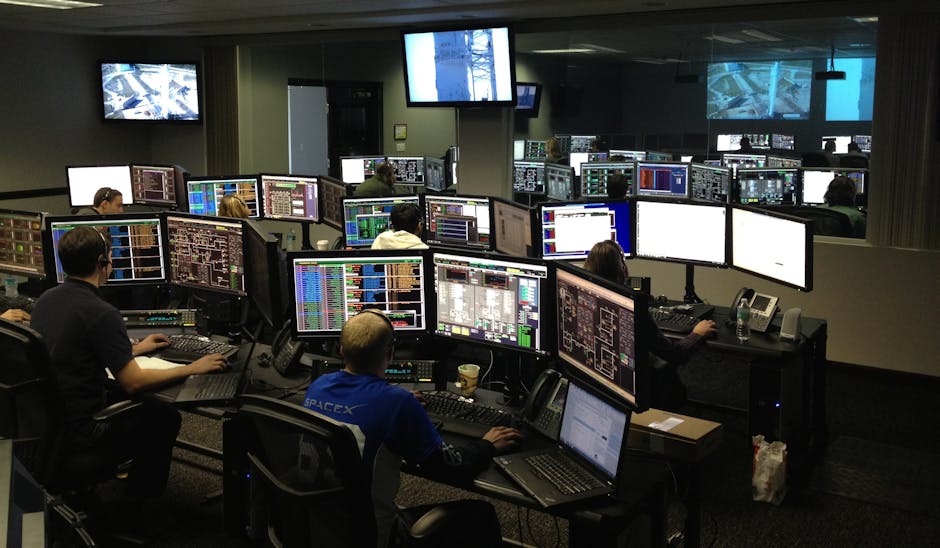
- SCADA and Control Systems: Supervisory Control and Data Acquisition (SCADA) systems provide the interface for operators. They gather data from every sensor in the field and allow the management software to make decisions in milliseconds.
- Load Management: This is the “demand” side of the equation. Smart management systems can actually talk to buildings and machines, asking them to turn down their power usage when supply is tight.
| Feature | Grid-Connected Mode | Islanded (Autonomous) Mode |
|---|---|---|
| Primary Goal | Cost optimization and peak shaving | Maintaining voltage and frequency stability |
| Power Source | Utility grid + local DERs | Local DERs + Energy Storage only |
| Voltage/Frequency | Set by the main utility grid | Set by “grid-forming” inverters or generators |
| Energy Trading | Can sell excess power back to the grid | No connection to the utility |
The Role of Advanced Control and Optimization
Modern microgrid management has moved far beyond simple “on/off” switches. We are now seeing the rise of Scientific research on multi-microgrid energy management that utilizes sophisticated algorithms to predict the future.
Real-time controls operate at sub-cycle speeds (faster than a single blink of an eye) to prevent system collapse if a generator suddenly trips. Meanwhile, load forecasting uses weather data and historical patterns to predict exactly how much energy will be needed tomorrow.
One of the most exciting developments is demand response. Instead of just increasing supply when people turn on their AC, the management system can slightly shift the timing of industrial processes or water pumping to match when renewable energy is most abundant. Research shows that this type of active load management can reduce daily operational costs by 1.6% in grid-connected mode and nearly 0.5% in islanded mode.
Key Benefits: Reliability, Resiliency, and Decarbonization
Why go through the trouble of installing a microgrid technology suite? It usually comes down to three big wins:
- Reliability: In many parts of North America and Brazil, the main grid is becoming less reliable due to age and extreme weather. A microgrid ensures that even if the utility fails, your facility stays powered.
- Decarbonization: By prioritizing solar, wind, and hydropower, we can significantly shrink a facility’s carbon footprint. Advanced management systems ensure we use every drop of renewable energy before turning on a backup diesel generator.
- Energy Savings: By “peak shaving”—using stored battery power when utility prices are highest—businesses can save thousands on their monthly power bills.
Understanding what-is-a-microgrid-and-how-does-it-work is the first step toward realizing these savings. In fact, for many energy-intensive industries, microgrids have shifted from a “nice-to-have” luxury to an essential business continuity tool.
Supporting Critical Infrastructure and Remote Communities
For some, a microgrid isn’t just about saving money; it’s about survival. Hospitals and military bases require 100% “up-time.” If the power flickers for even a second, lives or missions could be at risk.
We also see massive benefits for remote communities and mining operations in places like Northern Canada or the Brazilian interior. These areas often rely on expensive diesel fuel flown or trucked in at great cost. By managing a mix of local renewables and storage, these communities can cut their fuel reliance by 50% or more.
Innovative projects like the Research on OptGrid for autonomous optimization from the National Renewable Energy Laboratory (NREL) are showing how we can manage over 1 million individual devices simultaneously. This “bottom-up” approach allows the grid to reconfigure itself into a patchwork of microgrids that can self-heal during a disaster.
Overcoming Challenges in Microgrid Management
It’s not all sunshine and rainbows. Managing a localized grid comes with significant technical hurdles:
- Renewable Variability: Solar and wind are “intermittent.” If a cloud covers your solar farm, your power output can drop by 80% in seconds. The management system must be fast enough to kick in a battery or generator to fill that gap.
- Cybersecurity: Because microgrids rely on digital communication, they are potential targets for hackers. Protecting the “brains” of the grid is just as important as protecting the physical wires.
- Frequency and Voltage Control: In the big utility grid, massive spinning turbines provide “inertia” that keeps the power stable. In a small microgrid, you don’t have that momentum. You need advanced “grid-forming” inverters to mimic that stability.
To solve these problems, engineers use Hardware-in-the-Loop (HIL) testing. This involves plugging the actual microgrid controller into a supercomputer that simulates “worst-case scenarios”—like a lightning strike or a sudden cyber-attack—to see how the “brain” reacts before it’s ever installed in the real world.
Future Trends in Microgrid Management and Clustering
We are entering the era of the “Fractal Grid.” Instead of one giant grid, the future will likely consist of thousands of small microgrids that can “cluster” together. If one microgrid has extra solar power, it can trade it to a neighbor that is running low.
Emerging trends include:
- AI and Meta-Heuristics: Using algorithms like the “One-to-One Based Optimizer” (OOBO) to find the perfect balance of battery charging and generator use.
- Multi-Microgrid Clustering: Linking several systems together to improve the resilience of an entire city or region.
- DOE Strategy: The U.S. Department of Energy is pushing for microgrids to be the “building blocks” of the entire national grid by 2035.
Best Practices for Design, Simulation, and Validation
If you’re looking into navigating-the-hybrid-microgrid-market-a-deep-dive, there are a few “golden rules” to follow:
- Start with a Digital Twin: Before you pour a single yard of concrete, create a digital model of your microgrid. This allows you to simulate how it will perform in January vs. July.
- Adhere to Standards: Ensure your system is compatible with IEEE 2030.7 (for control) and IEEE 2030.8 (for testing). This ensures your “brain” can talk to equipment from different manufacturers.
- Prioritize Predictive Analysis: Don’t just react to what is happening now. Use a system that looks at weather forecasts and historical load data to prepare for the next 24 hours.
For more deep dives into specific technologies, you can explore our category/microgrid-articles.
Frequently Asked Questions about Microgrid Management
How does a microgrid switch to islanded mode?
The transition happens through a process called “islanding detection.” The controller constantly monitors the connection to the main grid. If it detects a voltage drop or a total outage, it opens a “Point of Interconnection” (POI) switch. Within milliseconds, the local generators and batteries take over the full load to prevent a blackout.
What are the economic impacts of microgrid optimization?
Research shows that smart management can reduce daily operational costs by 0.5% to 1.6%. While that sounds small, for a large industrial site or a data center, those savings can equal hundreds of thousands of dollars per year. Furthermore, the ability to avoid a single “business-stopping” outage can pay for the entire system in one day.
How do standards like IEEE 2030.7 affect deployment?
These standards provide a common language. Without them, a solar inverter from Company A might not be able to “talk” to a battery from Company B. Following these standards ensures that your microgrid is “future-proof” and can be expanded as your needs grow.
Conclusion
The transition to a cleaner, more resilient energy future isn’t just about building more solar panels or wind turbines—it’s about the intelligence that manages them. Microgrid management is the essential bridge between “green energy” and “reliable energy.”
At FDE Hydro™, we believe that hydropower is a perfect partner for these localized systems. Our innovative, patented “French Dam” technology uses modular precast concrete to build or retrofit hydroelectric dams faster and more affordably than traditional methods. Because hydropower is “dispatchable”—meaning we can turn it up or down as needed—it provides the perfect stable backbone for a microgrid’s management system.
Whether you are in New York, California, or Brazil, the goal remains the same: a smarter, more autonomous grid that works for us, rather than one we have to worry about.
