

The Hybrid Microgrid Market Is Reshaping How the World Powers Itself
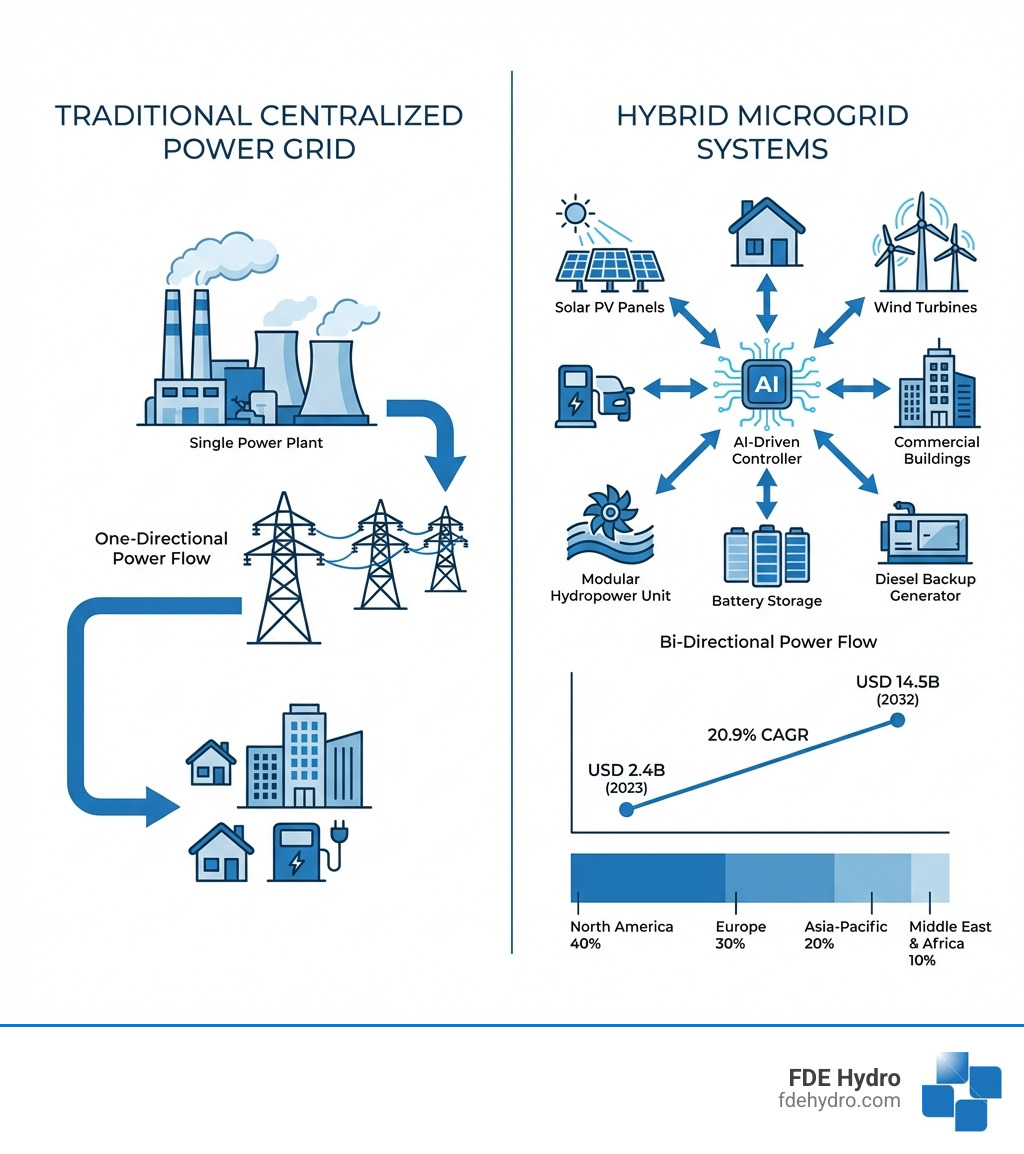
The hybrid microgrid market is one of the fastest-growing segments in the global energy industry — valued at USD 2.4 billion in 2023 and projected to reach USD 14.5 billion by 2032, growing at a CAGR of over 20.9%.
Here’s a quick snapshot of where things stand:
| Metric | Data |
|---|---|
| Market Value (2023) | USD 2.4 billion |
| Projected Value (2032) | USD 14.5 billion |
| Growth Rate (CAGR) | 20.9% (2024-2032) |
| Largest Region | North America (~40% share) |
| Fastest Growing Region | Asia-Pacific (~20% share, USD 8B by 2032) |
| Grid-Connected Segment | USD 10.3B+ by 2032 |
| Flow Battery Storage CAGR | 24%+ through 2032 |
This growth isn’t a fluke. It’s being driven by three converging forces: rising energy insecurity, declining costs for solar and battery storage, and urgent pressure to decarbonize power systems globally.
Traditional centralized grids are struggling. Extreme weather events, aging infrastructure, and soaring electricity prices are exposing their limits. Hybrid microgrids — which combine multiple power sources like solar, wind, or hydropower with storage and backup generation — offer a smarter, more resilient alternative. They can operate independently or alongside the main grid, making them valuable for everything from remote mining operations to urban hospitals.
For infrastructure developers and project owners already navigating the complexity of large-scale energy projects, understanding this market isn’t optional — it’s a strategic necessity.
I’m Bill French, Sr., Founder and CEO of FDE Hydro™, with over five decades of experience in heavy civil construction and a focus on modular hydropower solutions that integrate directly into the hybrid microgrid market. My work developing patented precast modular systems for run-of-river hydro and pumped storage puts me at the intersection of civil infrastructure and next-generation distributed energy — exactly where this market is heading.
Hybrid microgrid market terms to learn:
Understanding the Hybrid Microgrid Market: Components and Architecture
At its core, a hybrid microgrid is a localized group of electricity sources and loads that normally operates connected to and synchronous with the traditional wide-area synchronous grid, but can also disconnect to function in “island mode.” What makes it “hybrid” is the strategic combination of multiple generation types—usually pairing intermittent renewables with steady, dispatchable baseload power.
In the hybrid microgrid market, we see a sophisticated dance between various technologies. Solar PV and wind turbines often provide the bulk of the “green” electrons when conditions are right. However, to ensure the lights stay on when the sun goes down or the wind stops, these are paired with hydropower energy storage or traditional fossil fuel backups like diesel generators and natural gas engines.
Interestingly, the market is moving toward even cleaner baseload options. We are seeing more projects where a Hybrid Microgrid Combines Hydrogen Fuel Cells with Battery Storage to eliminate onsite emissions entirely. This integration is vital for achieving true energy autonomy.
Traditional vs. Hybrid Microgrids: A Quick Comparison
| Feature | Traditional Microgrid | Hybrid Microgrid |
|---|---|---|
| Primary Power Source | Usually a single source (e.g., Diesel or Gas) | Multiple sources (Solar + Hydro + Diesel) |
| Sustainability | High carbon footprint | Significantly reduced emissions |
| Operational Cost | High (tied to fuel prices) | Lower (leverages free renewable energy) |
| Resilience | Limited by fuel supply | High (diversified energy portfolio) |
Key Components and Connectivity
To understand what-is-a-microgrid-and-how-does-it-work, you have to look at the “brain” and the “muscle.” The muscle consists of the generation assets and power electronics (inverters and converters) that manage electricity flow. The brain is the controller that decides when to draw from the grid, when to charge the batteries, and when to “island” the system.
Most systems in the hybrid microgrid market are grid-connected, meaning they exchange power with the utility to balance costs. However, in remote areas or during disasters, the ability to switch to island mode is a lifesaver. A great real-world example of this complexity is the NTPC solar-hydrogen-battery microgrid in Ladakh. This project uses a 3.7 MW solar plant as a key component of a high-altitude system that provides reliable power where traditional infrastructure simply can’t reach.
The Role of Energy Storage and Controllers
Without storage, a renewable microgrid is just a fair-weather friend. Microgrid-technology has advanced to include a variety of storage devices:
- Lithium-ion batteries: The current gold standard for short-duration response.
- Flow batteries: Gaining traction for long-duration storage due to their high cycle life and scalability.
- Flywheels: Used for high-power, short-duration frequency regulation.
These assets are managed by AI-driven controllers and IoT integration. These smart systems use predictive analytics to forecast weather patterns and load demand, ensuring that energy is used as efficiently as possible. This level of load management is what allows a facility to stay powered up while simultaneously reducing its overall carbon footprint.
Market Dynamics: Drivers, Growth Projections, and Segments
The hybrid microgrid market is currently undergoing a massive valuation surge. As we noted, the market is expected to hit USD 14.5 billion by 2032, but some reports, like the Hybrid Microgrid Market Size, Growth, Trends Report 2035 | MRFR, suggest that the broader microgrid sector could reach as high as USD 173.3 billion by 2035.
A major trend shifting the landscape is the rise of Microgrid-as-a-Service (MaaS). This model allows businesses and communities to enjoy the benefits of a microgrid without the heavy upfront capital expenditure. Instead, they pay a monthly service fee or a per-kWh rate, much like a standard utility bill, but with the added benefits of resilience and green energy.
Key Drivers of the Hybrid Microgrid Market
Why is everyone suddenly talking about hybrid microgrids?
- Energy Security: With cyber threats and natural disasters on the rise, having a “power island” is the ultimate insurance policy.
- Declining Costs: The price of lithium-ion batteries and solar panels has plummeted over the last decade. Li-ion costs dropped from roughly $1,300/kWh in 2010 to around $740/kWh recently, with projections hitting $230/kWh by 2035.
- Renewable Mandates: Governments are forcing a shift away from fossil fuels, making the 4-reasons-why-hydropower-is-the-guardian-of-the-grid more relevant than ever as a stable, renewable baseload.
- EV Infrastructure: As we all trade our gas tanks for charging cables, the strain on the central grid is immense. Hybrid microgrids help manage this peak demand locally.
Primary Market Segments and Applications
We see the hybrid microgrid market branching into several critical end-use sectors:
- Industrial & Commercial: Factories and data centers cannot afford even a millisecond of downtime. A single power interruption can cost a semiconductor manufacturer over $1 million.
- Data Centers: Companies like Honeywell and LS Electric are partnering to integrate AI platforms with battery storage specifically to help data centers stay online amid strained grid capacity.
- Remote Communities: For islands or mountain villages, hybrid systems are often the only way to get 24/7 power without relying exclusively on expensive, dirty diesel shipments.
- Military & Healthcare: These are “mission-critical” applications where energy resilience is literally a matter of life and death.
Regional Analysis: Dominant Markets and Emerging Opportunities
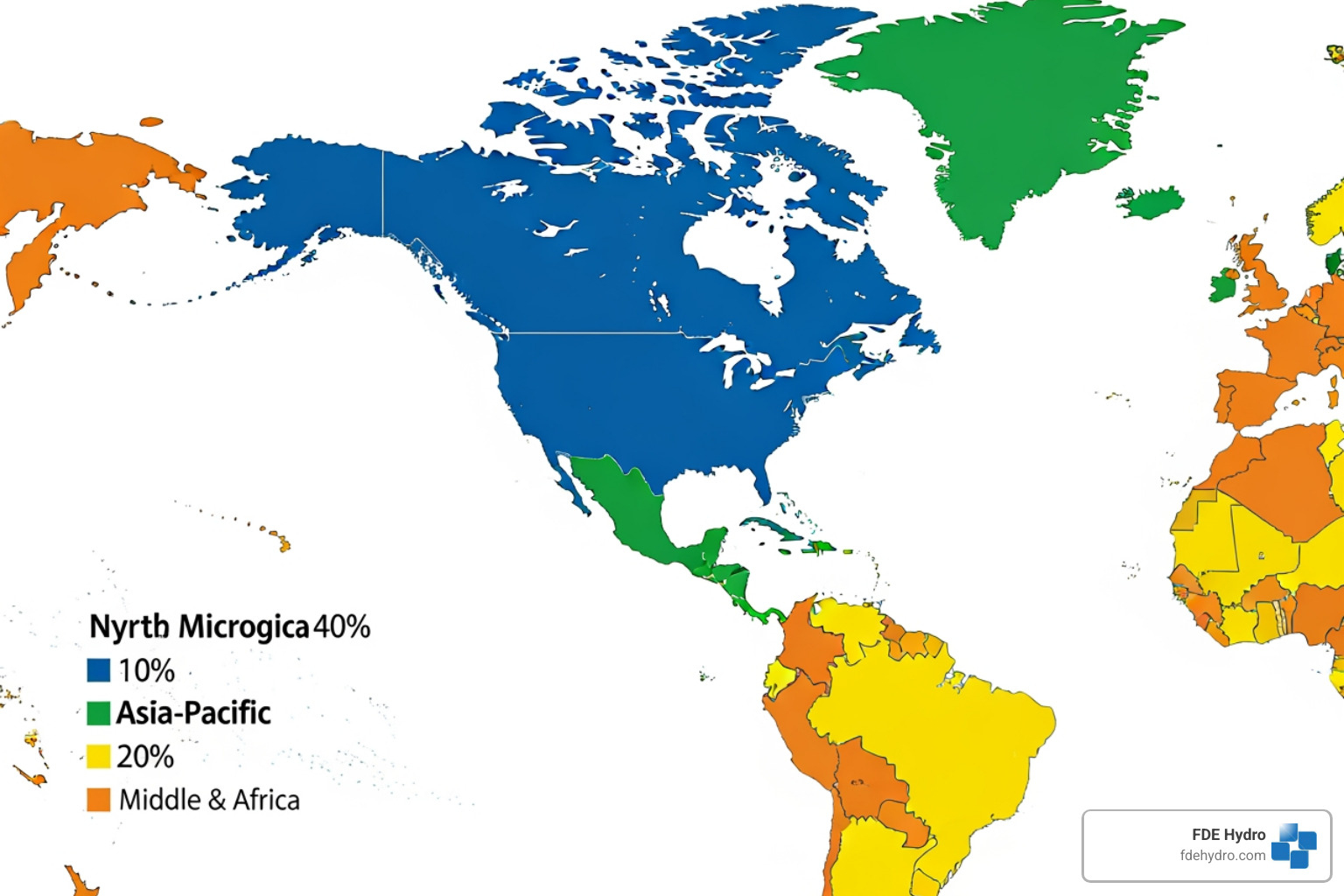
The hybrid microgrid market is a global phenomenon, but the drivers vary significantly by region.
North America: The Innovation Hub
North America currently holds the largest slice of the pie at 40% market share. In the United States, states like California and New York are leading the charge. California’s frequent wildfires and subsequent public safety power shutoffs have made microgrids a necessity for survival. The North America Hybrid Microgrid Market, Growth Report 2032 highlights that federal and state incentives are key. For instance, the US DOE has funneled over USD 220 million into microgrid research, while California has provided over USD 1.4 billion in incentives for energy storage since 2001.
Europe: The Sustainability Leader
Europe follows closely with a 30% share. Driven by the EU Green Deal and stringent decarbonization targets, European countries like Germany and France are focusing on integrating microgrid articles and technologies that favor high renewable penetration. Their focus is heavily on “Grid 2.0″—a bi-directional system where every building can potentially act as a mini-power plant.
Asia-Pacific: The Growth Engine
Holding a 20% share, Asia-Pacific is the fastest-growing region. Rapid urbanization in India and China is creating a massive appetite for electricity that the aging central grids simply can’t satisfy. China already has over 1,000 microgrids in operation, focusing on reducing urban emissions. In India, solar microgrids are being deployed to provide clean energy to millions of rural households for the first time.
Policy Frameworks and Emerging Economies
Government policy is the “wind in the sails” for this market. In the U.S., the power grid articles often discuss the importance of the Self-Generation Incentive Program (SGIP) and federal resilience funding. Meanwhile, in Brazil, the energy market is shifting toward distributed generation, with over 20 GW of distributed solar added since 2012.
Emerging markets are also finding unique uses for these systems:
- Mining Operations: In remote parts of Canada, Brazil, and Australia, mines are using hybrid microgrids to slash diesel consumption by up to 60%.
- Rural Electrification: In Sub-Saharan Africa and parts of Latin America, DC microgrids are connecting small villages, skipping the need for massive, expensive transmission lines.
Technological Innovations and Implementation Challenges
Innovation is moving at breakneck speed. We are moving beyond simple “backup power” into the realm of digital twins and predictive analytics. A digital twin is a virtual replica of the microgrid that allows operators to test “what-if” scenarios—like a major storm or a sudden spike in demand—before they happen in the real world.
Research from the Lawrence Berkeley National Laboratory is constantly pushing the boundaries of microgrid reliability, ensuring these systems can handle the complex task of balancing multiple energy sources. Furthermore, hydropower-advancements-innovations-2025 are making it easier to integrate small-scale hydro into these systems, providing a “guardian of the grid” that offers 24/7 reliability that solar and wind alone cannot match.
Overcoming Barriers to Deployment
Despite the rosy projections, it’s not all smooth sailing. The hybrid microgrid market faces several hurdles:
- High Capital Costs: Even with declining prices, the upfront cost of hardware (which accounts for roughly 75% of a project’s cost) is significant.
- Grid Integration Complexity: Utilities aren’t always thrilled about losing customers to self-generation. Navigating the regulatory and technical requirements to “hook up” to the main grid can be a headache.
- Cybersecurity Risks: As microgrids become more “connected” via IoT and AI, they become targets for hackers. Protecting the digital infrastructure is just as important as protecting the physical wires.
- Interoperability: Ensuring that a solar inverter from one company talks nicely to a battery from another and a hydropower innovation unit from a third requires standardized communication protocols.
Frequently Asked Questions about Hybrid Microgrids
How do hybrid microgrids differ from traditional microgrids?
Traditional microgrids usually rely on a single energy source (often a diesel generator) for backup. Hybrid microgrids use dual-source integration, prioritizing renewables (solar, wind, hydro) and using fossil fuels or hydrogen only when necessary. This results in better fuel flexibility, lower costs, and a much smaller carbon footprint.
What is the projected growth of the grid-connected segment?
The grid-connected segment is expected to exceed USD 10.3 billion by 2032. This growth is fueled by utilities using microgrids to enhance disaster resilience and provide ancillary services (like frequency regulation) back to the main grid, turning a cost center into a revenue generator.
Why are flow batteries gaining traction in this market?
Flow batteries are the “marathon runners” of the storage world. Unlike lithium-ion, which is great for 2-4 hour bursts, flow batteries offer long-duration storage and can be cycled thousands of times without degrading. The flow battery segment is set to grow at a CAGR of over 24% through 2032 as the market demands more “firm” renewable power.
Conclusion: The Future of Resilient Energy
The hybrid microgrid market is more than just a technological trend; it is the foundation of a more sustainable and resilient global energy architecture. As we push toward net-zero targets and navigate an increasingly volatile climate, the ability to generate, store, and manage power locally is becoming indispensable.
At FDE Hydro™, we believe that hydropower is a critical piece of this puzzle. Our modular precast concrete technology (the “French Dam”) is designed to make building and retrofitting hydroelectric systems faster and more cost-effective. By providing a stable, 24/7 renewable power source, we help hybrid microgrids achieve the reliability they need to truly replace traditional fossil-fuel generation.
The future of hydropower is modular, decentralized, and perfectly aligned with the needs of the modern grid. Whether you are in the United States, Canada, Brazil, or Europe, the shift toward localized power is here.
Ready to see how resilient energy can transform your project? Explore our microgrid solutions and join us in building a smarter, cleaner power future.
