

Why Dam Engineering Solutions Matter for Modern Infrastructure
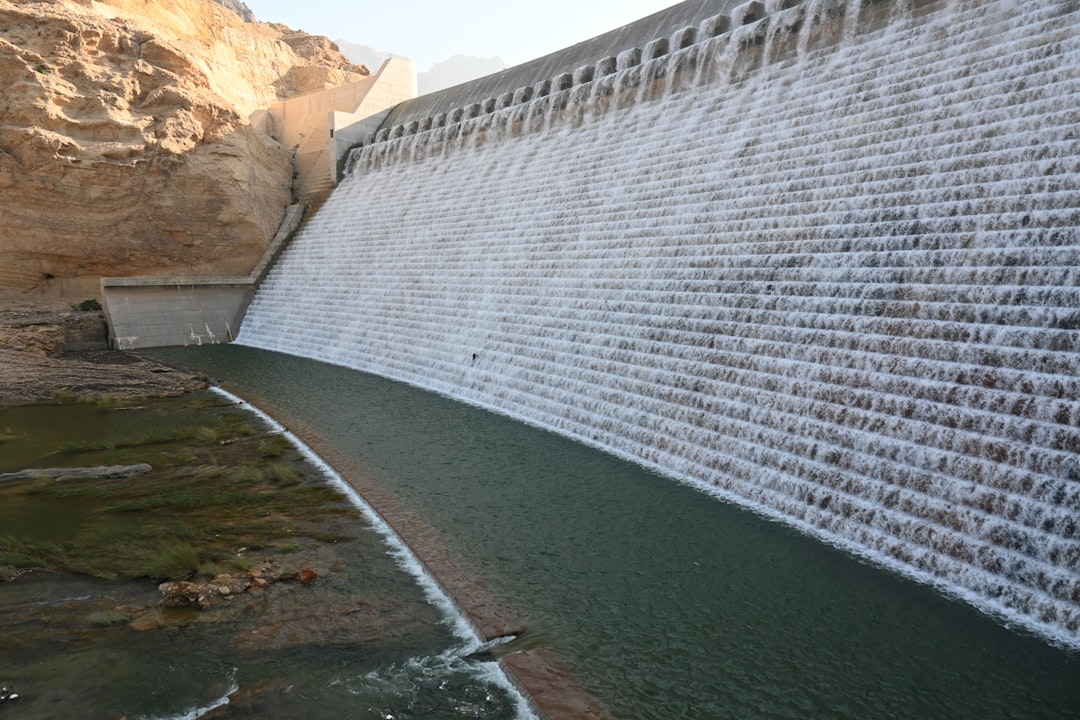
Dam engineering solutions are a comprehensive suite of services for planning, designing, constructing, and maintaining water infrastructure. They cover everything from initial feasibility studies and geotechnical investigations to safety inspections, risk assessments, and rehabilitation—ensuring dams provide reliable flood control, water storage, and hydropower throughout their lifecycle.
Dams are critical resources, but many face challenges from age, climate change, and increasing water demands. This has shifted the industry’s focus from new construction to rehabilitating and extending the life of existing facilities.
In response, innovative methods like Rock-Filled Concrete (RFC) and modular precast systems have emerged. These technologies reduce costs, shorten schedules, and minimize environmental impact, addressing key challenges for dam owners.
I’m Bill French Sr., Founder and CEO of FDE Hydro. We’ve developed patented modular dam engineering solutions that dramatically cut construction time and costs. With five decades in heavy civil construction and experience advising the U.S. Department of Energy, I’ll share practical insights throughout this guide.
The Foundations of Dam Engineering
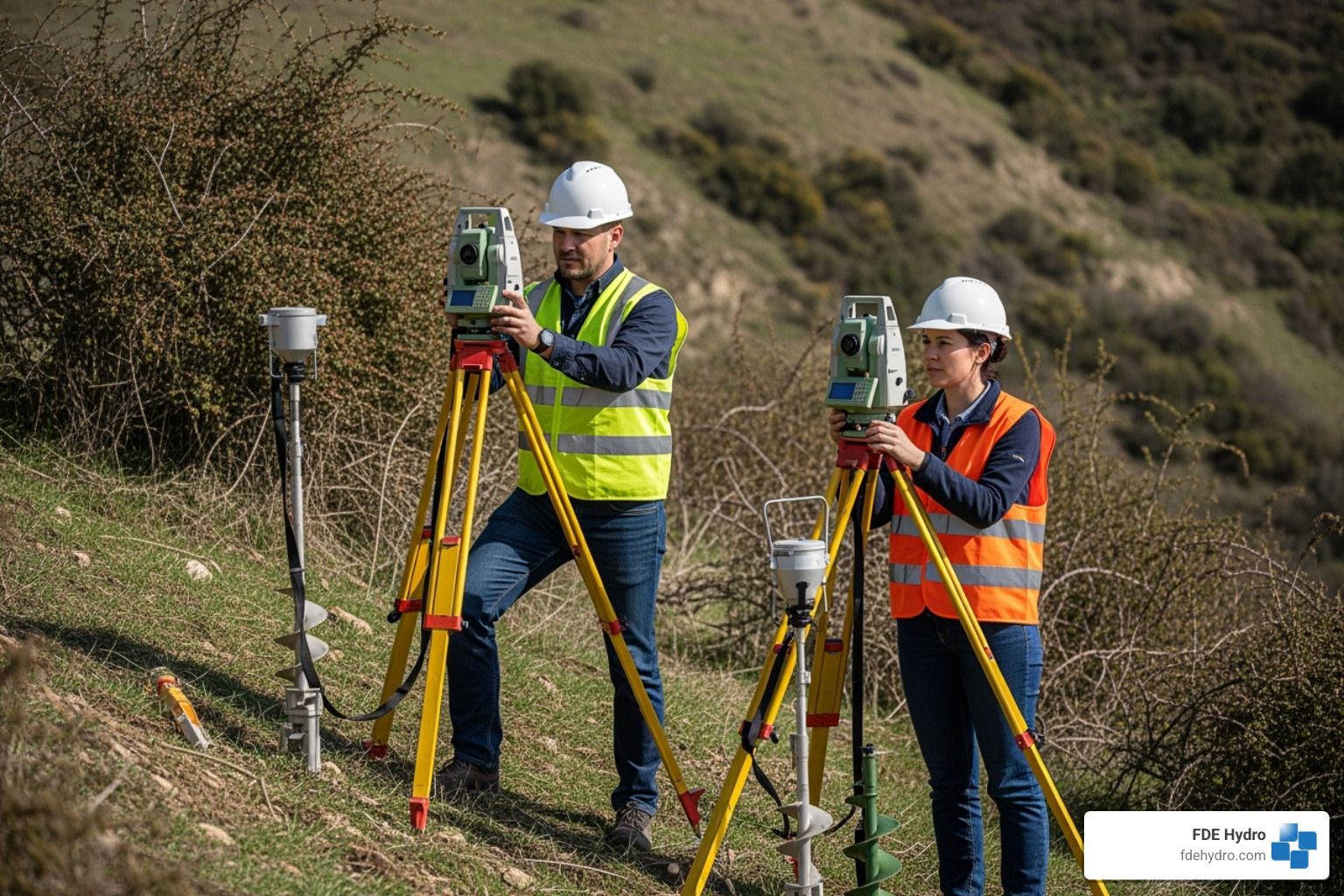
Before construction begins, engineers must understand the site’s geology and hydrology. This foundational work ensures a dam is safe, viable, and built to last.
Core Engineering and Design Services
Every dam project begins with planning and feasibility studies to determine if it’s viable. We assess the location, water availability, environmental impacts, and economic benefits to avoid costly issues later.
Once approved, design and engineering analysis begins. A dam is a complex system designed to withstand water pressure, seismic events, and long-term wear. Our multidisciplinary team creates robust designs for the main structure and critical components like Spillways and other Water Control Structures.
Construction management turns these plans into reality. We oversee the building process to ensure adherence to design, budget, and schedule, with a focus on quality control.
Navigating regulatory requirements is also key. We manage the permitting process and ensure compliance with all Dam Safety Standards, leveraging our relationships with agencies to prevent delays.
Finally, we provide detailed Operations & Maintenance Manuals (O&MM) to guide operators in daily tasks and emergency procedures. Learn more about our approach to Dams and Water Control Structures.
The Role of Geotechnical and Hydrological Evaluations
Geotechnical investigations are critical for understanding the ground beneath a dam. We analyze soil and rock samples to identify potential issues like foundation compression, soil liquefaction during earthquakes, or weak layers that could allow seepage. Seepage analysis models water movement through and under the dam, while stability analysis ensures the structure can withstand all anticipated forces.
Equally important are hydrological evaluations, which analyze rainfall, river flows, and flood history to predict water volumes. A key calculation is the Probable Maximum Flood (PMF), the worst-case flood scenario. The PMF determines the required size of the spillway to prevent the dam from overtopping. Flood routing models simulate water movement through the reservoir during floods, ensuring the dam can handle extreme events.
Combining geotechnical and hydrological knowledge is the foundation of safe, long-lasting dam design.
A Spectrum of Dam Types and Rehabilitation Strategies
No two dams are exactly alike; each is designed for its unique landscape and purpose. Understanding this diversity and the strategies for keeping these structures safe is at the heart of effective dam engineering solutions.
Common Types of Dams
Dams are diverse, with designs custom to their landscape and purpose.
- Earthfill and rockfill dams are built from compacted soil and rock, often sourced locally. They are adaptable and perform well in seismic regions.
- Concrete gravity dams use their immense weight to resist water pressure. They are massive structures built with conventional concrete.
- Arch dams are curved to transfer water loads into strong canyon walls, making them highly efficient in narrow gorges.
- Buttress dams use a series of supports (buttresses) on the downstream side to brace the water-retaining face, reducing the amount of concrete needed.
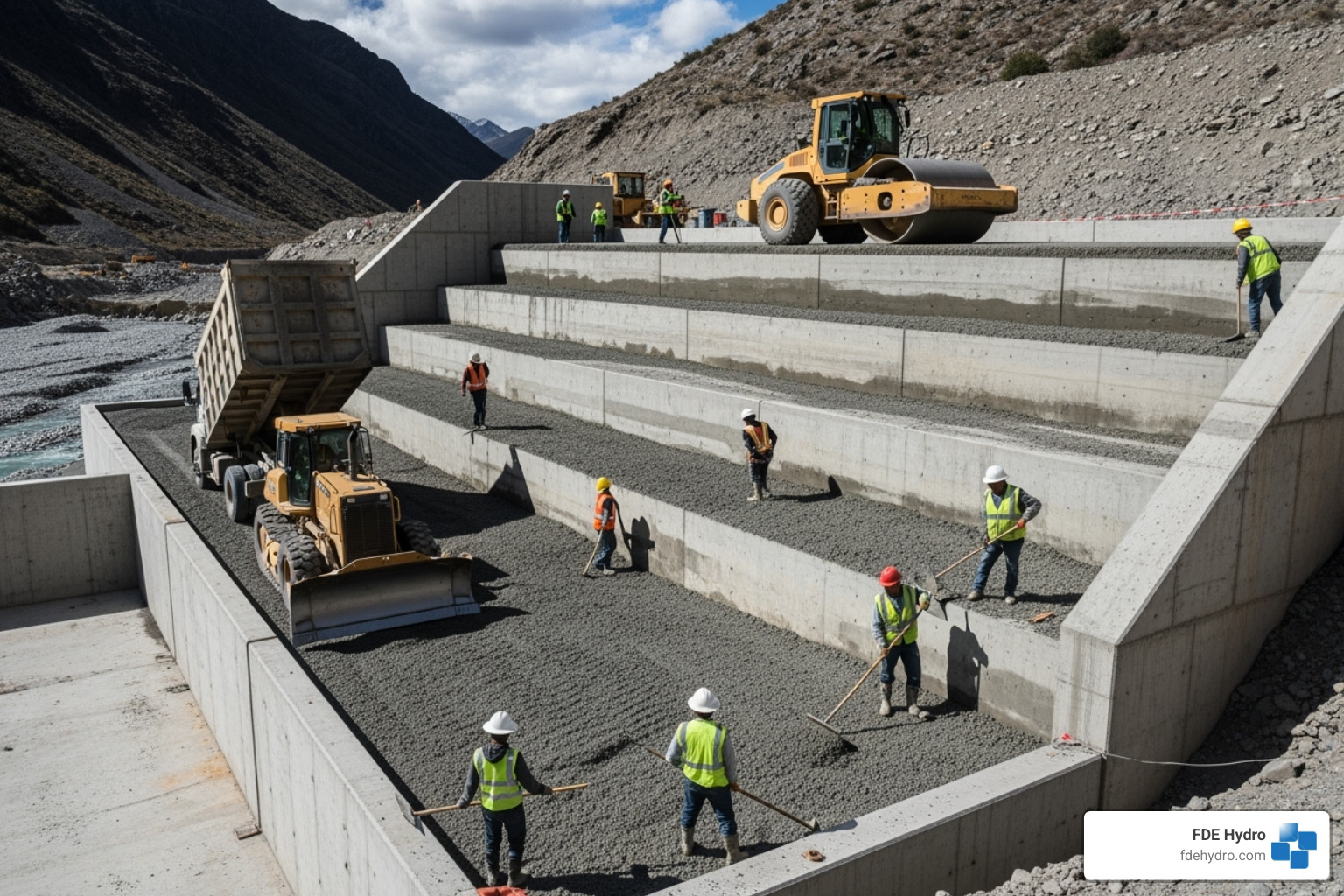
- Roller-Compacted Concrete (RCC) dams are built by placing concrete in layers and compacting it with rollers. This method is faster and more cost-effective than traditional concrete pouring.
- Rock-Filled Concrete (RFC) dams are an innovative approach where self-compacting concrete is poured into voids between large, preplaced rocks. This reduces cement use and improves efficiency. For more details, see A Brief Review of Rock-Filled Concrete Dams and Prospects for Next-Generation Concrete Dam Construction Technology.
Regardless of the type, all dams require properly designed Spillways to safely release excess water during floods and prevent overtopping.
Key Considerations for Comprehensive Dam Engineering Solutions in Rehabilitation
Today, many dam engineering solutions focus on rehabilitating existing structures rather than building new ones. The goal is to extend the life of aging dams and bring them up to modern safety and climate standards.
Key rehabilitation strategies include:
- Structural integrity assessment: This is the first step, involving detailed inspections, material testing, and computer modeling to identify weaknesses and deterioration.
- Spillway capacity upgrades: Climate change has increased the frequency of extreme floods, making it crucial to upgrade spillways on older dams to handle Probable Maximum Flood events and prevent overtopping.
- Seepage control: Uncontrolled water seepage can erode a dam’s foundation. Rehabilitation often includes installing new barriers, grouting, or drainage systems to manage water flow.
- Seismic retrofitting: Dams in earthquake-prone areas are retrofitted to withstand ground motions according to modern seismic codes, which may involve strengthening the structure or foundation.
- Dam raising: Increasing a dam’s height is a cost-effective way to increase water storage or improve flood control without building a new structure.
FDE Hydro’s Dam Rehabilitation Encapsulation technology is an innovative solution for Aging Infrastructure Being Replaced with Next Generation Civil Solutions, extending the life of dams while adding modern safety features. Rehabilitation combines respect for existing infrastructure with new technologies to prepare these structures for the future.
Ensuring Safety, Compliance, and Risk Management
When it comes to dams, there is no compromise on safety. These structures protect communities from catastrophic floods, making safety protocols, compliance, and risk management the foundation of all dam engineering solutions.
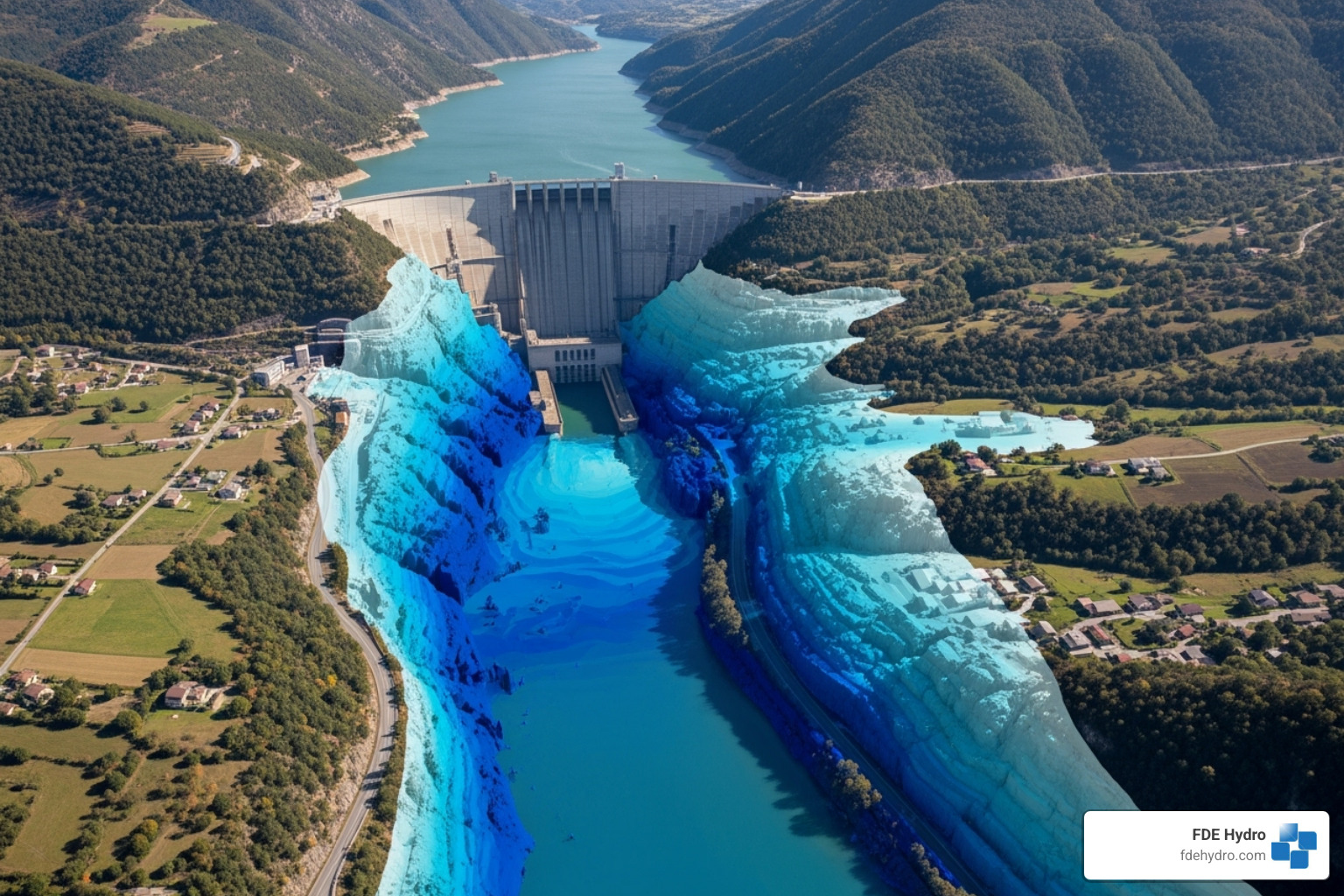
Modern Dam Engineering Solutions for Safety and Risk
Dam safety combines vigilance with technology. It begins with comprehensive dam safety inspections, which are thorough examinations serving as the first line of defense. These include detailed condition assessments and specialized techniques like rope access inspections or UAV reconnaissance for hard-to-reach areas.
Understanding failure potential is also key. Potential Failure Mode Analysis (PFMA) is a systematic process that identifies every credible way a dam could fail. By understanding these modes, we can design preventative measures to strengthen the dam against specific threats.
We use Risk-Informed Decision Making (RIDM) to assess both the probability and consequences of potential failures. By analyzing factors like internal erosion and seismic response, we create a complete risk profile. This allows us to prioritize safety investments where they will have the greatest impact, which is vital when Financing Long-Term Hydropower Requires Mitigating Risks Prior to ROI.
Modern dams are also fitted with instrumentation and monitoring systems that continuously track critical parameters like seepage, pressure, and movement. This real-time data provides early warnings of anomalies, allowing for proactive responses.
Emergency Planning and Regulatory Collaboration
Responsible dam ownership requires planning for the unexpected. Emergency Action Plans (EAPs) are detailed roadmaps outlining procedures in case of an incident. Developed with local responders and regulators, EAPs cover warning systems, evacuation routes, and communication protocols to ensure a swift, coordinated response.
A key component of EAP development is dam breach analysis and inundation mapping. These studies model potential failures and create detailed maps of affected downstream areas. This information is vital for hazard classification and emergency preparedness.
Strong collaboration with regulatory agencies like the Federal Energy Regulatory Commission (FERC) is also essential. We perform FERC Part 12 dam safety assessments and ensure all projects meet legal and environmental mandates. This integrated approach of monitoring, analysis, and planning ensures our dam engineering solutions are robust, compliant, and safe for downstream communities.
The Future of Water Management: Innovative Dam Engineering Solutions
We are actively reimagining what’s possible in dam construction and maintenance. Innovation isn’t just a buzzword; it’s how we respond to challenges like climate change, growing water needs, and aging infrastructure.
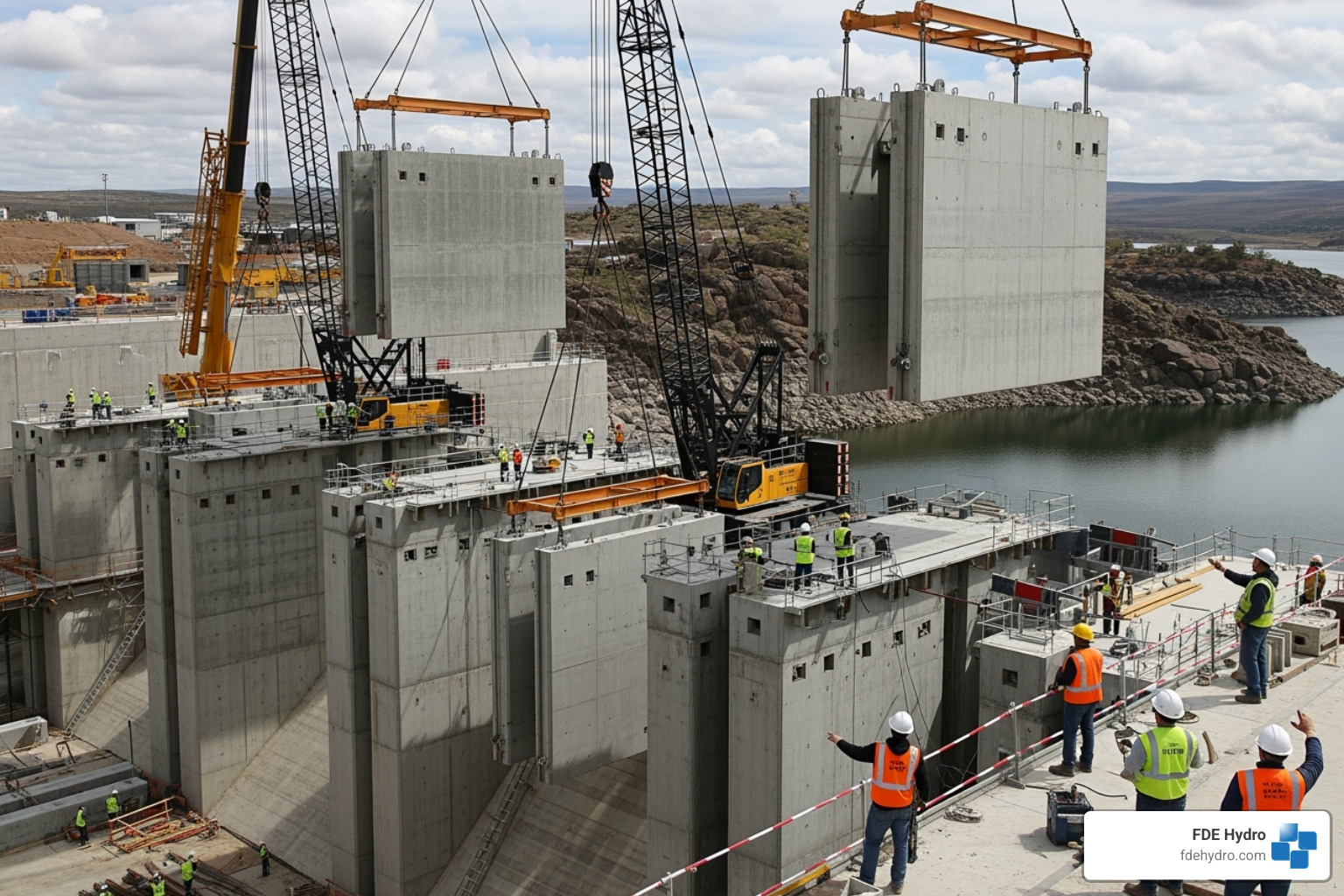
Next-Generation Construction and Materials
The manufacturing principle of building components in controlled factory settings is revolutionizing dam engineering solutions.
Our patented modular precast concrete technology manufactures dam components off-site. This approach dramatically reduces construction time, lowers costs through efficient factory production, and improves quality by building to exact specifications. It also shrinks the environmental footprint by minimizing on-site work duration. This method has proven successful on projects across North America, Brazil, and Europe. Learn more about Why Precast Cost Less and how we are Using Technology to Minimize the Duration of Impacts.
Other industry innovations include:
- Advanced geosynthetics: These engineered fabrics and membranes offer durable, environmentally friendly solutions for sealing, reinforcing, and protecting dams.
- Rock-Filled Concrete (RFC): This method fills voids between large rocks with self-compacting concrete, reducing cement use and construction time.
- Automated construction equipment: Robotics and automation are becoming a reality in dam construction, promising improved safety, precision, and speed.
Advancements in Hydropower and Water Resource Management
Innovations in dam engineering extend to energy production and water management.
Pumped storage hydropower acts like a giant water battery, storing energy by pumping water to an upper reservoir during low demand and releasing it to generate power during peak demand. This technology is crucial for grid stability as we integrate more variable renewables like solar and wind. We are deeply committed to Pumped Storage Hydropower projects.
Modern dam engineering solutions also improve flood control through advanced modeling and smart water management. For water supply protection, our innovations ensure reliable water delivery for growing populations. We also integrate solutions for Aquatic Animal and Recreational Passage to maintain healthy ecosystems.
Hydropower remains a cornerstone of renewable energy. Its ability to ramp up or down instantly makes it uniquely reliable and flexible. As we explain in 4 Reasons Why Hydropower is the Guardian of the Grid, it provides the stability needed for a clean energy future. These advancements show how we are creating intelligent, sustainable systems that balance human needs with environmental protection.
Frequently Asked Questions about Dam Engineering
This field can seem complex, so here are straightforward answers to some of the most common questions we hear.
What are the primary services offered by dam engineering firms?
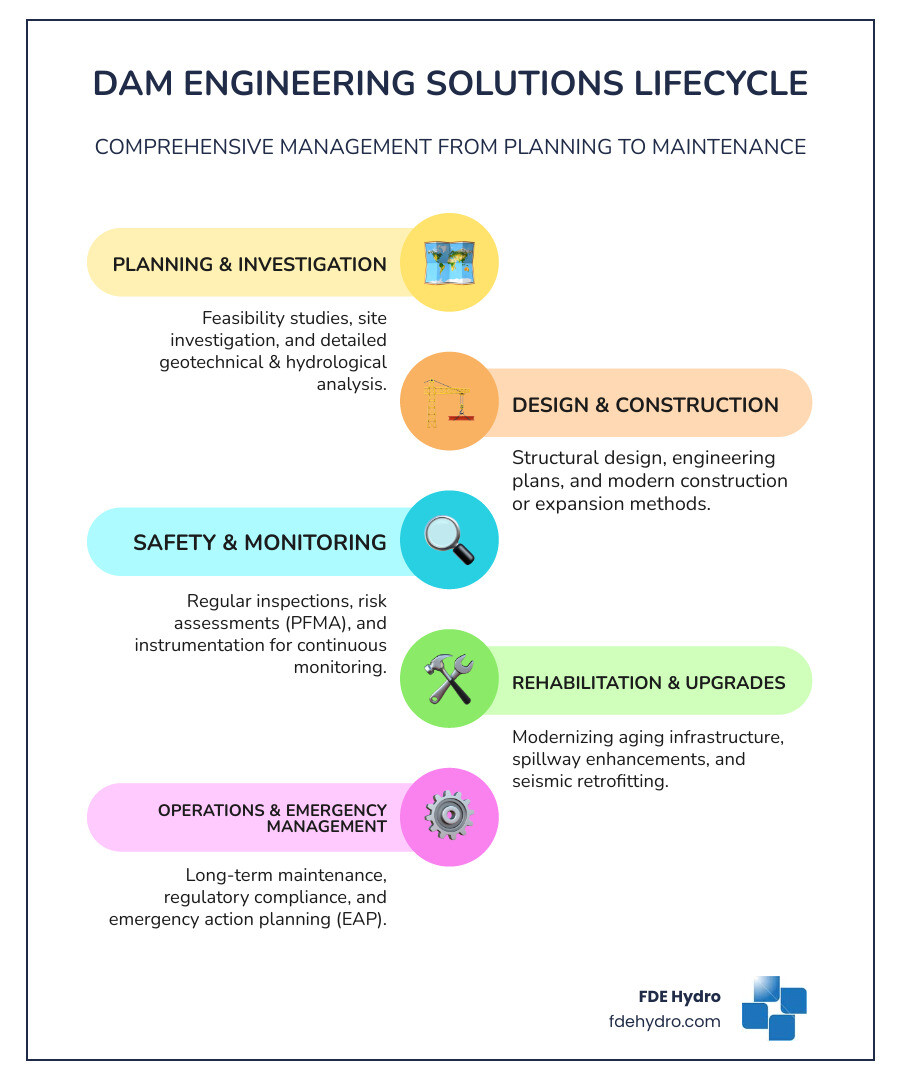
Dam engineering solutions cover a dam’s entire lifecycle. Key services include:
- Planning: Site investigation, feasibility studies, and geotechnical/hydrological analysis.
- Design: Structural design and engineering for the dam and its components.
- Construction: Construction management and administration.
- Operation & Safety: Ongoing dam safety inspections, risk assessments, and developing Emergency Action Plans (EAPs).
- Rehabilitation: Design for spillway upgrades, seepage control, and seismic retrofitting for aging dams.
- Compliance: Support for navigating regulatory and permitting requirements.
How is dam safety evaluated?
Dam safety is evaluated through a multi-layered approach:
- Regular Inspections: Visual checks by experienced engineers, sometimes using rope access or drones (UAVs).
- Instrumentation Monitoring: Sensors embedded in the dam provide real-time data on pressure, seepage, and movement.
- Advanced Analysis: Methods like stability, seepage, and seismic assessments evaluate the dam’s performance under various conditions.
- Risk Assessment: Potential Failure Mode Analyses (PFMAs) identify all possible failure scenarios, while Risk-Informed Decision Making (RIDM) helps prioritize safety investments.
This combination of inspection, monitoring, and analysis ensures continuous safety.
What are the benefits of using modular precast technology in dam construction?
The advantages of modular precast technology, like the patented dam engineering solutions from FDE Hydro, are transformative. The primary benefits include:
- Speed: Manufacturing components off-site while site preparation occurs simultaneously dramatically reduces on-site construction time.
- Cost: Faster construction and efficient factory fabrication lead to significant cost savings. Learn Why Precast Cost Less.
- Quality: Factory production ensures components are built to precise specifications in a controlled environment, improving durability.
- Environmental Impact: A shorter on-site construction period minimizes environmental disruption. See how we are Using Technology to Minimize the Duration of Impacts.
This approach leads to faster, more sustainable project delivery. For more details, explore our precast models.
Conclusion
Dam engineering solutions are vital for managing our water resources, from foundational geotechnical studies to cutting-edge modular construction. These solutions are critical for maintaining aging infrastructure and developing new, sustainable resources.
This guide has covered diverse dam types, the processes that ensure safety and integrity, and the innovations reshaping the industry, such as advanced modular precast technology and pumped storage hydropower. The industry has shifted from new construction to emphasizing rehabilitation and smart resource management. The challenges of aging infrastructure and climate change are being met with solutions that integrate safety, risk management, and innovative technology.
The future of water management is about building smarter, faster, and more sustainably. Technologies like modular precast construction reduce costs and environmental impacts while improving quality. By embracing these advancements, we ensure dams continue to provide reliable flood control, water storage, and clean energy. The work in dam engineering solutions today will secure our water resources for generations. Learn more about next-generation hydropower solutions and see how innovation is changing this critical industry.
