

The Legacy of National Hydropower Day 2024 and Beyond
National Hydropower Day 2024 marked the sixth annual celebration of America’s oldest and most reliable renewable energy source — and the stakes have never been higher.
Quick facts about National Hydropower Day 2024:
| Detail | Info |
|---|---|
| Date | August 24, 2024 |
| Theme | Hydro Powers |
| Established by | National Hydropower Association (NHA) |
| Purpose | Recognize hydropower’s role in clean energy, grid reliability, and American communities |
| How to participate | Social media (#HydroDay), lawmaker tours, press releases, facility events |
Hydropower currently supplies about 6% of all U.S. electricity and nearly 27% of all U.S. renewable electricity generation. That’s more than 2,250 plants across 48 states — quietly keeping the lights on while wind and solar get most of the headlines.
Yet most Americans have no idea how much water power does for them every single day.
That’s exactly why National Hydropower Day exists.
I’m Bill French, Sr., Founder and CEO of FDE Hydro™, and I’ve spent decades in heavy civil construction before turning my focus entirely to modular hydropower solutions — including being selected by the DOE’s Water Power Technology Office to help shape the nation’s next-generation hydropower roadmap, work that made National Hydropower Day 2024 and its call for regulatory reform deeply personal to me. This guide walks you through everything you need to know to celebrate, advocate, and act.
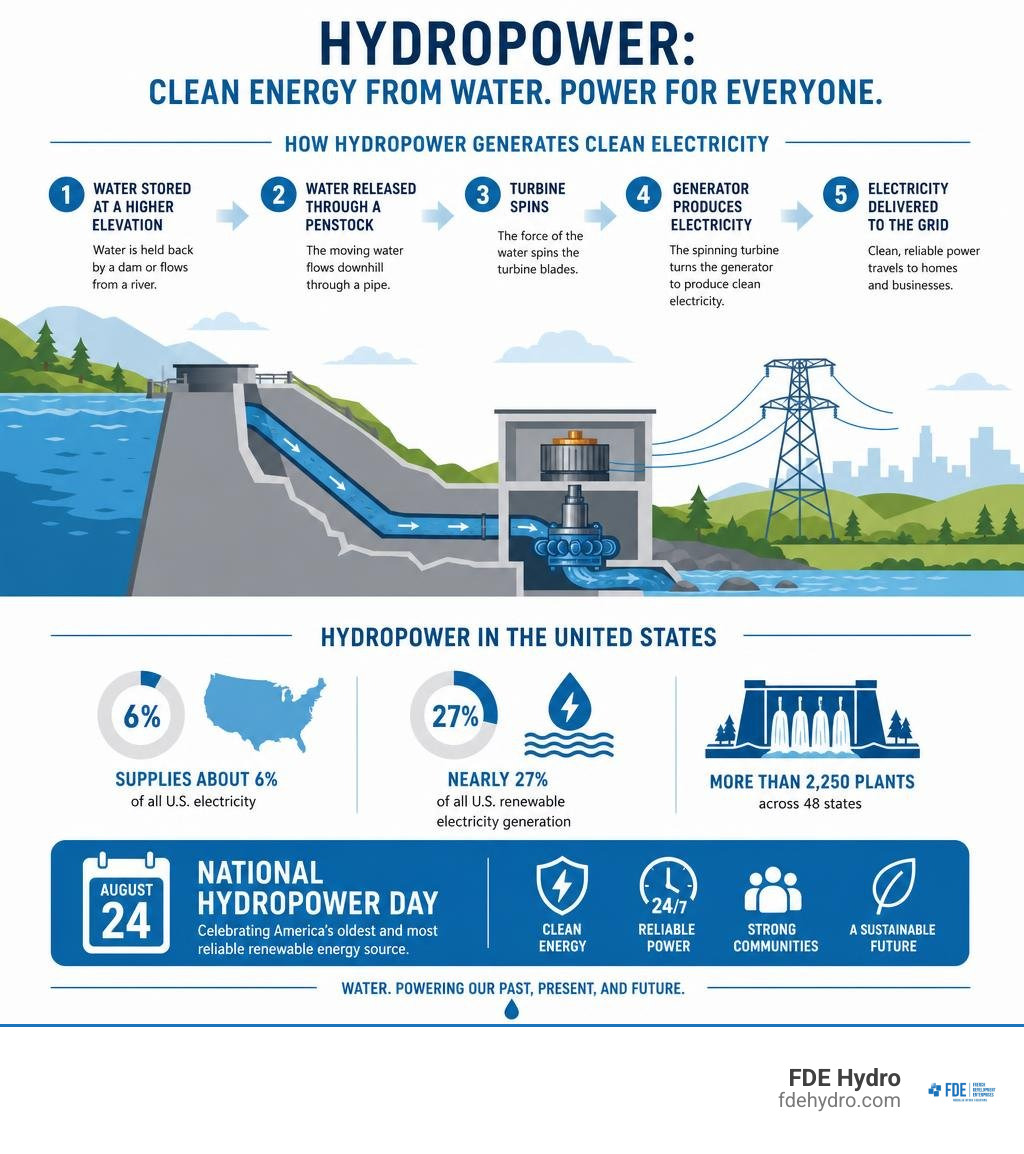
The National Hydropower Association (NHA) established August 24 as National Hydropower Day to celebrate the monumental impact of water power on our energy infrastructure. For over 140 years, hydropower has fueled the United States with clean, 24/7 baseload energy.
When we look back at the establishment of this celebration, it was designed to highlight not just the clean electrons flowing into our homes, but the fundamental grid resiliency and reliability that keeps our communities safe. Unlike some energy sources that are subject to the whims of the weather, hydropower stands as a steady, reliable partner.
To learn more about the foundation of this annual event and access resources from the organizers, visit the official National Hydropower Day – National Hydropower Association page.
How National Hydropower Day 2024 Shaped the Industry’s Future
In 2024, the theme was “Hydro Powers.” This theme acknowledged the diverse ways water power provides for Americans—from generating electricity to fostering local economic growth. However, national hydropower day 2024 was not just a celebration; it was a loud, collective push for much-needed regulatory reforms.
The industry used this national platform to spotlight a massive bottleneck: the relicensing process. Right now, conventional hydropower plants face an uphill battle. On average, securing a license renewal takes over seven years and costs millions of dollars. By 2035, the licenses for nearly 450 hydro facilities are set to expire, putting over 16 GW of clean capacity at risk of decommissioning.
The advocacy efforts kicked off during the 2024 campaign were vital in urging lawmakers to streamline these processes so we do not lose our existing clean energy foundation. You can read the full industry declaration from that pivotal moment in this release: National Hydropower Association Celebrates National.
The 2025 and 2026 Themes: Hydro is Here!
Building on the advocacy of 2024, the subsequent campaigns shifted focus toward public awareness. Under the theme “Hydro is Here!”, the industry has highlighted the literal and figurative presence of hydropower in our daily lives.
Many people do not realize that hydropower facilities do far more than generate clean energy. They are pillars of local infrastructure that support:
- Local Jobs: Employing over 66,000 workers across the country.
- Flood Control: Protecting communities from devastating seasonal weather.
- Irrigation: Diverting and managing water to sustain agricultural fields.
- Recreation: Creating reservoirs that serve as public parks, boating lakes, and fishing spots.
By emphasizing that “Hydro is Here!”, these campaigns connect the abstract concept of renewable energy directly to the tangible benefits we enjoy in our local neighborhoods. For updates on the latest campaigns and upcoming events, check out National Hydropower Day 2025.
Hydropower’s Role in the Modern Clean Energy Grid
As we transition to a completely decarbonized energy grid, the narrative often centers entirely on wind turbines and solar panels. While wind and solar are crucial, they are variable. The wind doesn’t always blow, and the sun eventually sets.
This is where hydropower steps in as the ultimate grid stabilizer. Hydropower is a flexible, carbon-free baseload power source. Because operators can quickly open or close floodgates to adjust water flow, hydro facilities can ramp electricity generation up or down in a matter of seconds. When solar generation drops off in the evening, hydropower quickly fills the gap, preventing blackouts and maintaining grid frequency.
To explore how water power acts as a physical battery for our electric grid, read More info about hydropower energy storage.
Key Takeaways from National Hydropower Day 2024 for Modern Grid Reliability
One of the most important lessons reinforced during national hydropower day 2024 was the critical role of Pumped Storage Hydropower (PSH). PSH operates like a giant water battery, using two reservoirs at different elevations. During periods of low electricity demand (and low prices), excess grid energy is used to pump water to the upper reservoir. When demand peaks, the water is released back down through turbines to generate electricity.
Currently, PSH represents 91% of all utility-scale energy storage in the United States. With 22 GW of pumped storage capacity online, PSH is the backbone of our energy storage strategy.
Federal agencies play a massive role in distributing this reliable power. For example, the Southwestern Power Administration (SWPA) markets and delivers wholesale hydropower from multi-purpose projects to 113 not-for-profit utilities, passing the direct economic and environmental benefits of hydro to over 10 million electricity users in regions like Kansas. Discover more about SWPA’s regional contributions here: SWPA Hydro Powers 2024 National Hydropower Day.
Diversifying Water Power: From Run-of-River to Conduit Systems
When most people think of hydropower, they picture a massive concrete gravity dam like Hoover Dam. But modern water power is incredibly diverse and highly adaptable to different environments. The main technologies featured during our annual celebrations include:
- Impoundment Facilities: Conventional systems that use a dam to store water in a reservoir.
- Run-of-River Systems: Systems that divert a portion of a river’s natural flow through a channel or penstock to spin a turbine, requiring little to no water storage.
- Conduit Hydropower: A highly efficient technology that retrofits existing water infrastructure—such as irrigation canals, municipal water pipelines, and aqueducts—with small turbines. This generates clean energy from water that is already flowing for other purposes, with virtually zero environmental footprint.
- Low-Impact Hydropower: Projects that add power-generating capabilities to existing non-powered dams, avoiding the environmental disruption of building new structures.
To dive deeper into how these different systems work and which ones are leading the clean energy transition, read The Ultimate Guide to Modern Hydropower Technology.
Overcoming Industry Challenges: Relicensing, Modernization, and Technology
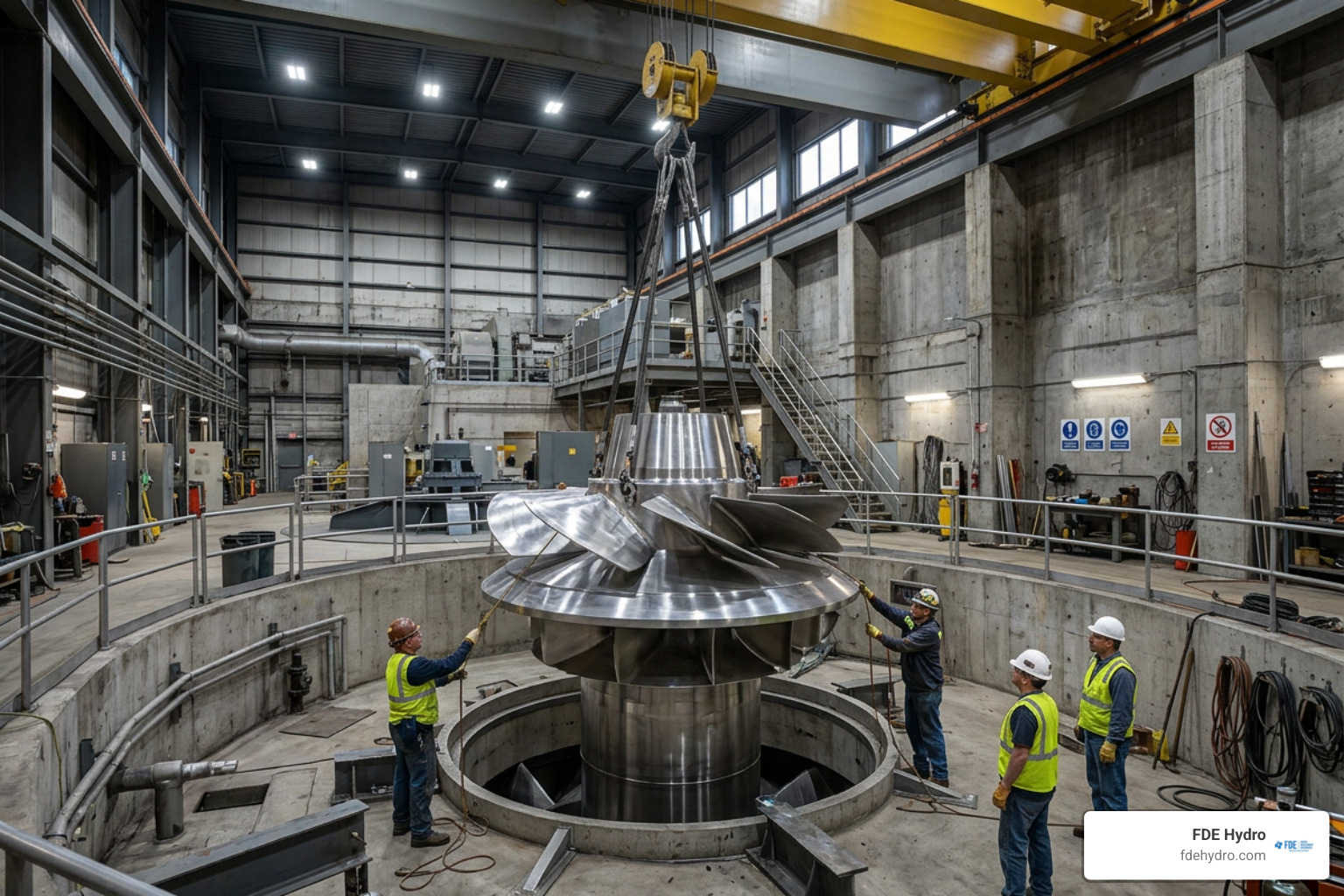
Despite its clear benefits, the hydropower industry faces serious headwinds. As mentioned, the relicensing process is incredibly slow and expensive. When a plant’s license expires, the uncertainty can lead owners to consider decommissioning rather than spending millions on bureaucratic red tape. This puts 16 GW of clean, reliable energy across 450 facilities at risk.
At FDE Hydro™, we believe the solution lies in rapid modernization and technological innovation. Our patented modular precast concrete technology, known as the French Dam, is designed to completely revolutionize how we build and retrofit dams. By utilizing precast modular components manufactured off-site, we can construct or upgrade water control and hydroelectric systems in a fraction of the time and at a significantly lower cost than traditional poured-in-place concrete methods. This technology is already making waves across North America, Brazil, and Europe, showing that we can preserve and expand our hydro footprint without breaking the bank.
To see how modern technology is solving these industry bottlenecks, explore More info about hydropower innovation.
Environmental Stewardship and Fish Passage Innovations
Modern hydropower is deeply committed to coexisting peacefully with local ecosystems. Historically, dams presented major obstacles to migrating fish. Today, cutting-edge engineering is solving these ecological challenges.
Organizations like the Pacific Northwest National Laboratory (PNNL) are pioneering advanced fish passage technologies. At their 7,400-square-foot Aquatic Research Laboratory, researchers develop and test tools like:
- Fish Ladders and Bypass Channels: Physical pathways that allow fish to safely navigate around dams.
- Acoustic Tags: Tiny, harmless sensors (like PNNL’s award-winning SHAD-TAGS) that track fish movement to ensure they are bypassing turbines safely.
- The Flow Tradeoff Tool: A software toolkit that helps operators balance water flow decisions to optimize both clean energy production and downstream fish habitats.
To learn more about how technology is protecting aquatic life while keeping our grid powered, check out More info about hydropower advancements.
Federal Support and Infrastructure Upgrades
The modernization of our national fleet is heavily supported by federal partnerships. The U.S. Army Corps of Engineers (USACE) is actually the single largest owner and operator of hydroelectric power in the country, managing 356 generating units across 75 multi-purpose projects. They generate over 70 billion kilowatt-hours annually—enough to power ten major cities.
Through collaboration with the Department of Energy’s (DOE) Water Power Technologies Office (WPTO), millions of dollars are being funneled into upgrading aging generators, enhancing cybersecurity, and funding advanced manufacturing research like 3D printing for turbine parts.
To visualize the sheer scale of these federal facilities and see how these upgrades are taking shape across the country, flip through the digital lookbook here: Celebrate National Hydropower Day With Our Hydropower Lookbook.
How to Celebrate and Advocate for Hydropower
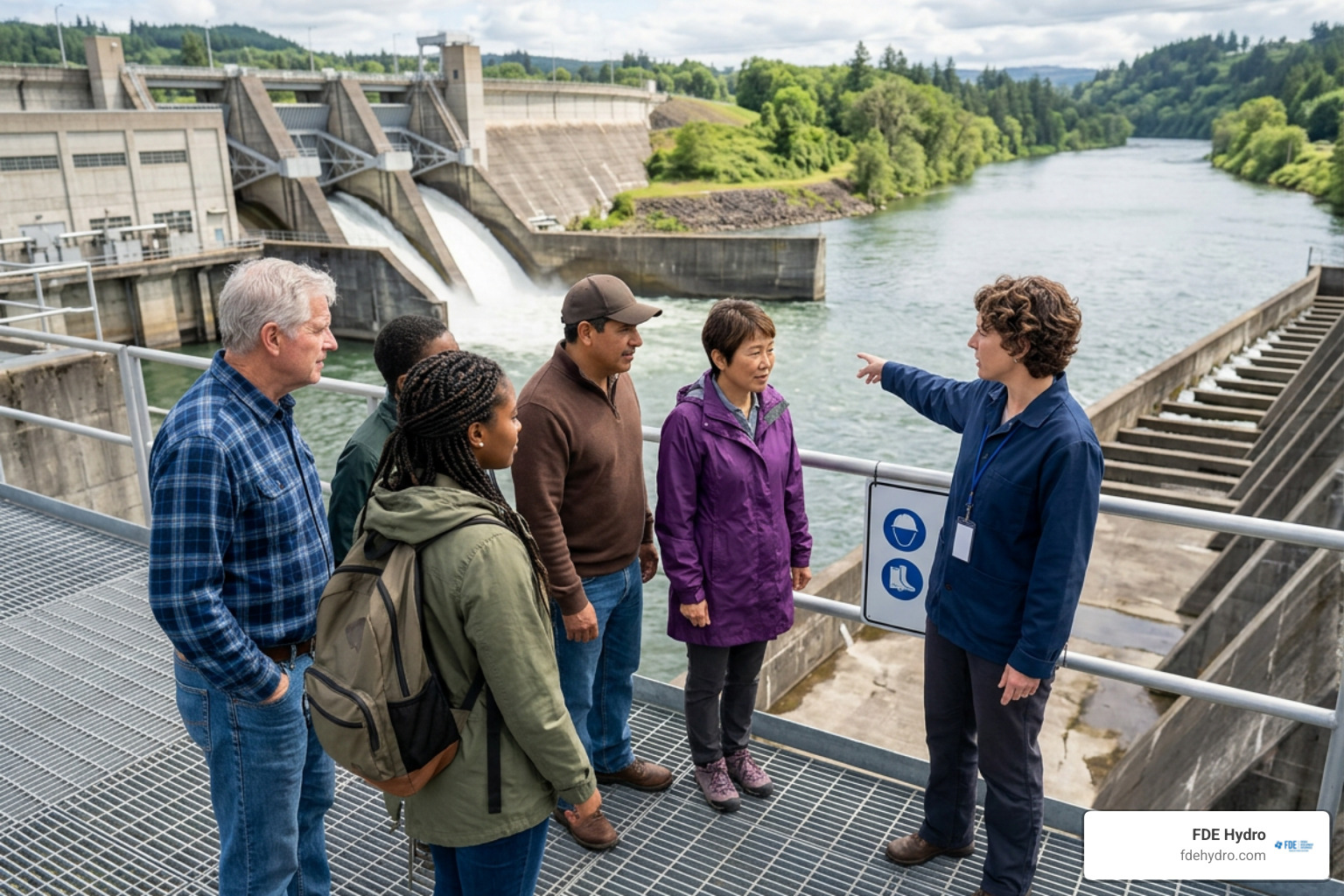
National Hydropower Day is a grassroots movement, and its success relies on people like you making your voices heard. Whether you are an industry professional, a clean energy advocate, or a curious citizen, there are plenty of ways to participate:
- Schedule a Lawmaker Tour: Use advocacy platforms to invite local, state, or federal representatives to tour a nearby hydro facility. Showing lawmakers the physical scale and community benefits of a plant is the single best way to advocate for regulatory reform.
- Engage on Social Media: Share facts, photos of local facilities, or stories of hydro workers using the hashtags #HydroIsHere and #HydroDay.
- Submit Letters to the Editor: Write to your local newspaper explaining why hydropower is vital for your community’s grid reliability and economy.
- Organize Community Events: If you work at a facility, host an open house, a media day, or an educational seminar for local school groups.
For pre-made graphics, sample social media posts, and step-by-step advocacy guides, download the official HydroDay Toolkit – National Hydropower Association.
Workforce Development and the Future of Water Power
Securing the future of hydropower requires investing in the next generation of workers. With over 66,000 Americans currently employed in the sector, there is a growing demand for skilled engineers, technicians, operators, and environmental scientists.
Programs like “Salmon in the Classroom” bring hands-on STEM education to elementary schools, allowing students to raise salmon from eggs to release while learning about water resource management. Meanwhile, internships and university partnerships supported by the DOE and national laboratories are training young professionals in advanced digital twin technology and cybersecurity.
To read more about the career paths opening up in this evolving industry, check out More info about the future of hydropower.
Frequently Asked Questions About Hydropower
How much of the U.S. electricity does hydropower provide?
Hydropower accounts for approximately 6% of total U.S. utility-scale electricity generation and nearly 27% of total utility-scale renewable electricity.
While those are the national averages, the numbers are much higher in specific regions. For example, Washington state leads the nation, producing about 27% of all U.S. hydroelectric power. In fact, utility providers like Seattle City Light rely on hydropower to supply more than three-quarters of the electricity their customers need. For a detailed breakdown of these regional statistics and why they matter for our clean energy transition, read Why National Hydropower Day Matters More Than Ever – Powerlines.
What percentage of U.S. dams produce electricity?
Out of the more than 90,000 dams in the United States, less than 3% actually produce electricity.
The remaining 97% are used exclusively for irrigation, municipal water supply, flood control, or recreation. This represents a massive, untapped opportunity. By retrofitting these existing non-powered dams with modern, low-impact turbines, we can generate gigawatts of clean energy without building a single new dam. To read more about how we can unlock this hidden potential, see More info about hydropower’s next wave.
How does pumped storage hydropower work?
Pumped storage hydropower (PSH) acts as a giant battery for the electrical grid. It uses two water reservoirs at different elevations:
- Storing Energy: When electricity demand is low (such as overnight), cheap excess power from wind or solar is used to pump water from the lower reservoir up to the higher reservoir.
- Generating Energy: During peak demand periods (such as hot summer afternoons), the water is released from the upper reservoir, flowing down through turbines to generate electricity instantly.
There are currently 43 PSH plants operating across the United States, with major clusters in California, Arizona, Colorado, Georgia, and the Carolinas. To learn how PSH fits into the global transition to sustainable infrastructure, read More info about sustainable energy production.
Conclusion
National Hydropower Day is a vital reminder that our clean energy future is built on a foundation of water. As we look ahead, modernizing our existing fleet and retrofitting non-powered dams is essential to maintaining a reliable, carbon-free grid.
At FDE Hydro™, we are proud to lead this charge with our innovative French Dam modular precast concrete technology. By making construction faster, cheaper, and more sustainable, we are helping communities across North America, Brazil, and Europe secure reliable energy for generations to come.
Ready to bring next-generation water power to your next project? Explore our Hydropower Solutions today and join us in celebrating the incredible power of water.
