by Adaptify Support | Apr 23, 2026 | Precast Dam Articles
What Are Water Retention Structures (And Why They Matter)
Water retention structures are engineered systems designed to capture and hold a significant volume of water — whether for flood control, water supply, stormwater management, or environmental protection.
Here is a quick breakdown of the most common types:
| Structure Type |
How It Works |
Common Examples |
| Retention basin/pond |
Holds a permanent pool of water |
Stormwater ponds, reservoirs |
| Detention basin (dry pond) |
Temporarily stores water, then drains |
Dry ponds, flood basins |
| Infiltration basin |
Directs water into the ground |
Bioswales, soakaway systems |
| Underground tank |
Stores water below grade |
Modular cisterns, buried basins |
| Dam/Reservoir |
Large-scale impoundment |
San Luis Reservoir, Ladybower |
Legally, a water retention structure is defined as any structure designed to hold a minimum of 0.378 cubic meters of water — a threshold used in municipal zoning bylaws in cities like Edmonton. That definition is broad enough to cover everything from a backyard hot tub to a reservoir holding millions of acre-feet.
As cities grow and hard surfaces replace natural land, stormwater has nowhere to go. The result: more flooding, more sewer overflows, and more pressure on aging infrastructure. Retention structures are one of the most reliable tools engineers and planners have to manage that pressure.
I’m Bill French Sr., Founder and CEO of FDE Hydro™, with over five decades of experience in heavy civil construction and a focused expertise in modular solutions for water retention structures and hydropower infrastructure. In this guide, I’ll walk you through how these systems work, how they’re built, and what makes modern designs more effective than ever.
Similar topics to Water retention structures:
Defining Water Retention Structures and Their Core Functions
When we talk about Water retention structures, we are describing the heavy lifters of the hydrological cycle. Their primary job is to act as a buffer. In nature, rain falls on soil and soaks in. In our modern world—filled with concrete, asphalt, and rooftops—that water has nowhere to go but “away” as fast as possible. This creates a massive surge that can overwhelm sewers and drown neighborhoods.
The core function of a retention structure is to maintain a permanent pool of water. Unlike other systems that sit empty until it rains, a retention basin is always “on.” When a storm hits, the new runoff enters the basin and displaces the old water. This process does more than just stop a flood; it improves water quality. As the water sits, suspended sediments, pollutants, and nutrients have time to settle to the bottom, effectively “cleaning” the water before it eventually moves downstream.
From a regulatory standpoint, these structures are strictly defined. For example, in many North American jurisdictions, the Preliminary data on urban stormwater BMPs highlights how these systems serve as essential Best Management Practices (BMPs). For those looking into the broader category of water control structures, it is clear that retention is the gold standard for long-term volume management.
Distinguishing Retention from Detention and Infiltration
It is easy to get these terms mixed up, but the differences are critical for engineering.
- Retention Basins (Wet Ponds): These maintain a permanent pool. They are designed for both quantity control and quality improvement.
- Detention Basins (Dry Ponds): These are “dry” most of the time. They are essentially big empty bowls designed to catch a peak flow of water and release it slowly over 24 to 48 hours. They help with flooding but do very little for water quality.
- Infiltration Systems: These are designed to encourage groundwater recharge. Instead of holding water or moving it through a pipe, they use porous bottoms to let water soak directly back into the earth.
Understanding these nuances is vital for anyone managing a water control system. While a dry pond might save you money on the initial dig, it won’t provide the same ecological benefits or “always-ready” capacity of a true retention structure.
The Role of Minimum Volume Thresholds
Why does the number 0.378 cubic meters matter? In municipal zoning and bylaws—particularly in cities like Edmonton—this is the legal line in the sand. If a structure holds more than this amount (roughly 100 gallons), it is officially classified as a water retention structure.
This classification triggers specific safety and construction regulations. It’s why your backyard ornamental pond or hot tub might fall under the same zoning umbrella as a small neighborhood catch basin. For developers, keeping an eye on these thresholds ensures regulatory compliance and prevents legal headaches during the permitting phase of residential applications.
Primary Types of Retention Systems

Water retention structures come in many shapes and sizes, depending on the available land and the volume of water that needs to be managed.
Modular Water Retention Structures in Urban Planning
In tight urban spaces where you can’t just dig a massive hole in the ground, we turn to modular stormwater retention systems. These are often installed under parking lots, athletic fields, or commercial developments.
These systems are engineering marvels. They typically consist of modular tanks or oversized pipes that are wrapped in geomembranes and HDPE liners to prevent the water from leaking into the surrounding soil. Key components include:
- Air Vents: To prevent pressure build-up as the tanks fill rapidly.
- Sump Pumps: To manage controlled release and overflow.
- Catch Basins: To filter out large debris before the water enters the storage modules.
Because these systems are modular, they offer incredible scalability. If a city grows, you can add more modules. For a deeper dive into these types of engineered fixes, check out our guide on water control solutions.
Large-Scale Water Retention Structures: Dams and Reservoirs
At the other end of the spectrum are the giants: dams and reservoirs. These structures provide off-stream storage, meaning they take excess water from rivers during wet seasons and hold it for use during droughts.
Take the San Luis Reservoir in California. It is the largest off-stream reservoir in the United States, with a capacity of over 2 million acre-feet. It serves a dual purpose for both state and federal water projects, proving that large-scale retention is essential for regional water security.
Across the pond, the History of the Ladybower Reservoir in England tells a different story. Built during the height of WWII, this clay-cored earth embankment dam was a strategic necessity for providing drinking water to the East Midlands. Whether it’s for power, drinking water, or flood control, dams remain the ultimate expression of water retention technology.
Engineering Design and Material Selection
Building a structure that can hold millions of liters of water requires more than just a shovel and some dirt. It requires a deep understanding of materials science and hydraulics.
Structural Components for Longevity
To ensure a structure lasts for 50 or 100 years, engineers incorporate several key features:
- Cut-off Trenches: These are deep trenches filled with impermeable material (like clay or concrete) built under the dam or basin wall to prevent water from “piping” or leaking through the foundation.
- Bellmouth Spillways: Often called “plugholes,” these are massive circular drains that allow excess water to be safely diverted when the reservoir reaches capacity.
- Outlet Structures: These control exactly how much water leaves the system and at what speed.
- Geotextile Fabric: Used beneath liners to stabilize the soil and protect the waterproof membranes from punctures.
Properly designed spillways and dam flood control mechanisms are what stand between a successful project and a catastrophic failure.
Advanced Materials in Modern Construction
We’ve come a long way from the simple earth-and-clay dams of the past. Today, we use High-density polyethylene (HDPE) for liners because of its incredible durability and chemical resistance. In urban basins, fiberglass-reinforced polyester pipes are becoming popular because they are lightweight and can be installed much faster than traditional concrete.
At FDE Hydro™, we focus on the next evolution: modular precast concrete. Our patented “French Dam” technology allows us to build and retrofit water retention structures in a fraction of the time it takes for traditional “pour-in-place” methods. By using modular precast dams, we can ensure higher quality control in a factory setting before the components ever reach the site.
Real-World Applications and Case Studies
To truly understand the impact of these structures, we have to look at the numbers. They are staggering.
Urban Success Stories: Montréal’s Basin Network
The city of Montréal has built one of the most impressive networks of water retention structures in North America, with a total capacity of nearly 49 million liters.
- The Rockfield Basin: This massive underground structure can capture up to 16,000 liters of water every second during a storm. It holds 45,000 cubic meters—the equivalent of 15 Olympic-sized swimming pools. Before this basin was built, the Lachine Canal would overflow 5 to 6 times a year. Now, overflows are expected only once every five years.
- The Lavigne Basin: Located beneath Parc Lefebvre, this basin holds 20,000 cubic meters (8 Olympic pools) and required tunneling nearly 2 kilometers through solid bedrock.
- The William Retention Basin: This project used the world’s largest fiberglass-reinforced polyester pipes (over 3 meters in diameter) to relieve the sewer system of 12,000 cubic meters of water.
These projects show how cities can use dam construction methods and oversized piping to protect residents from the increasing intensity of modern storms.
Massive Infrastructure: San Luis and Ladybower
Large-scale reservoirs operate on a different scale entirely. The San Luis Reservoir doesn’t just hold water; it balances the needs of an entire state. With the Los Banos Detention Dam nearby maintaining 14,000 acre-feet of space specifically for flood control, the system is a masterclass in seasonal water management.
Meanwhile, the Ladybower Reservoir in the UK is famous for its “sunken villages.” During construction in the 1940s, the villages of Ashopton and Derwent were completely submerged. Today, when water levels drop during extreme droughts, the ruins of these villages reappear—a haunting reminder of the trade-offs sometimes required for large-scale water security.
Construction Challenges and Maintenance Requirements
Building a water retention structure is rarely a straightforward task, especially in an urban environment.
Overcoming Urban Construction Hurdles
When you’re building a basin like Montréal’s Rockfield, you’re often dealing with bedrock blasting. This requires precision explosives and constant vibration monitoring to ensure that nearby buildings aren’t damaged.
Construction also involves:
- Sewer Integration: Connecting a new 45,000-cubic-meter tank to an existing, aging sewer network is a delicate surgical operation.
- Noise Mitigation: Working in a residential neighborhood means you can’t just blast around the clock.
- Preventive Inspections: Before any work begins, we conduct video surveys of every building within a certain radius to establish a baseline.
For those interested in the technical side of these builds, our guide on hydroelectric dam construction covers many of the same heavy civil challenges.
Essential Maintenance for System Efficiency
A retention pond isn’t a “set it and forget it” project. Without maintenance, it becomes a swampy eyesore.
- Vegetation Control: While plants are great for filtering nutrients, they can eventually clog inlets and outlets. Mechanical harvesting is often necessary to keep the water flowing.
- Sediment Removal: Over time, the “cleaning” function of the pond means the bottom fills with muck. This sediment must be dredged every 10 to 20 years to maintain storage capacity.
- Debris Clearance: Trash from city streets eventually finds its way into these basins. Regular cleaning of catch basins and trash racks is non-negotiable.
Whether you’re building new dams or performing dam rehabilitation, maintenance is the key to longevity.
Frequently Asked Questions about Water Retention
How do retention structures address climate change?
As climate change increases the frequency of “100-year storms,” our old sewer systems simply can’t keep up. Water retention structures provide the “surge capacity” needed to handle these intense rainfall events. They allow us to build more resilient infrastructure that complies with new, stricter environmental regulations.
What is the difference between a retention pond and a dry pond?
The main difference is the permanent pool. A retention pond always has water, which supports aquatic life and helps remove pollutants. A dry pond (detention basin) only holds water for a few days after a storm. Retention ponds generally have higher aesthetic and property value because they look like natural lakes.
Why are geomembranes used in modular systems?
Geomembranes act as a waterproof skin. In modular systems, they ensure that the collected stormwater doesn’t leak out into the surrounding soil, which could cause sinkholes or contaminate groundwater. They are a cost-effective way to ensure the system remains sealed and efficient.
Conclusion
The art of containment is about more than just holding water; it’s about balance. By using water retention structures, we can balance the needs of our growing cities with the health of our natural environment. From the massive reservoirs like San Luis to the modular tanks hidden beneath our feet in Montréal, these systems are the silent guardians of our urban landscape.
At FDE Hydro™, we believe that the future of water management lies in innovation. Our modular precast concrete technology is designed to make these essential structures faster to build, cheaper to maintain, and more durable than ever before. Whether you are building a new hydropower facility or a city-wide stormwater network, the importance of mitigating risks for long-term hydropower ROI cannot be overstated.
Sustainable water management is a marathon, not a sprint. By investing in high-quality water retention structures today, we are ensuring a safer, drier, and cleaner world for the next generation.
by Adaptify Support | Apr 22, 2026 | Precast Dam Articles
Why Anchors in Concrete Are Critical to Structural Safety
Anchors in concrete are specialized fasteners used to attach objects, equipment, or structural elements to hardened concrete after it has already cured. Unlike cast-in-place fasteners, these are installed after the concrete sets — making them essential for retrofits, repairs, and modular construction.
Quick answer — what you need to know:
| Topic |
Key Fact |
| What they are |
Fasteners installed into hardened concrete, brick, or block |
| Main types |
Mechanical (wedge, sleeve, screw) and adhesive (epoxy, hybrid acrylic) |
| Duty ratings |
Light (up to 50 lbs), medium (up to 200 lbs), heavy (200+ lbs) |
| Minimum concrete age |
7 days for mechanical anchors; 21 days for adhesive anchors |
| Key standard |
ACI 355.2 (mechanical) / ACI 355.4 (adhesive) |
| Critical factors |
Embedment depth, concrete strength, edge distance, load type |
Choosing the wrong anchor — or installing it incorrectly — can lead to catastrophic failure, especially under dynamic or sustained loads. In large-scale infrastructure like hydropower facilities, that risk multiplies fast.
I’m Bill French, Sr., Founder and CEO of FDE Hydro™, and over five decades of heavy civil construction — including modular precast concrete infrastructure and hydropower development — I’ve worked directly with the challenges of specifying and installing anchors in concrete across demanding structural environments. That experience shapes every practical recommendation in this guide.

Know your anchors in concrete terms:
Understanding the Fundamentals of Anchors in Concrete

When we talk about anchors in concrete, we are essentially discussing the bridge between a static concrete mass and the dynamic world of machinery, railings, and structural steel. At FDE Hydro, we often work with massive Precast Concrete Technology, where precision anchoring is the difference between a system that lasts a century and one that fails in a season.
The “base material” is your starting point. Not all concrete is created equal. Standard concrete is typically designated at 3,000 psi, meaning it can carry a compression stress of 3,000 pounds per square inch after its 28-day curing period. However, in our world of high-performance infrastructure, we often encounter high-strength concrete measured between 7,000 and 14,500 psi.
Cast-in-Place vs. Post-Installed
There are two main ways to get a fastener into concrete. Cast-in-place anchors (like headed bolts or J-bolts) are positioned in the formwork before the pour. These offer great strength but zero flexibility if you realize the layout is off by an inch. Post-installed anchors — the focus of this guide — are installed into hardened concrete. This allows for much higher precision in final equipment alignment.
The Hardening Process
Concrete doesn’t just “dry”; it cures through a chemical process called hydration. This is why timing matters. You should never install mechanical anchors in “green” concrete less than 7 days old. For adhesive anchors, the stakes are higher; you must wait at least 21 days to ensure the chemical bond isn’t compromised by the moisture levels of curing concrete. If you’re unsure which path to take, consult an Anchor Selection Guide to match your project needs.
Choosing the Right Anchor for Your Application
Selecting the right anchor is a bit like choosing the right pair of shoes: a stiletto is great for a gala, but you wouldn’t wear them to build a dam. You need to consider the load type, the environment, and how much “wiggle room” you have.
We categorize loads into three main buckets:
- Shear Load: The downward force (think of a heavy TV hanging on a wall).
- Tensile Load: The “pull-out” force (think of a ceiling fan trying to pull itself out of the roof).
- Dynamic/Vibration Loads: This is common in hydropower where turbines or flowing water create constant movement. Mechanical anchors can sometimes “walk” or loosen under these conditions, making adhesive options more attractive.
Environmental factors like moisture and chemicals also dictate your material choice. While zinc-plated anchors are fine for dry indoor use, we recommend 304 or 316 stainless steel for any “wet” or outdoor applications to prevent corrosion.
Mechanical vs. Adhesive Anchors in Concrete
Mechanical anchors rely on friction or mechanical interlock. Wedge anchors, for instance, expand against the walls of the hole as you tighten the nut. They are reliable and provide immediate loading capabilities.
Adhesive anchors, on the other hand, use an epoxy resin or hybrid acrylic to bond a threaded rod to the concrete. These are fantastic for heavy-duty applications or where you need to place anchors close to an edge, as they don’t exert the same expansion pressure that could crack the concrete. If you’re planning an adhesive installation, use an Adhesive Cartridge Estimator to ensure you have enough “juice” for the job.
Load Capacities and Duty Ratings for Anchors in Concrete
Understanding duty ratings helps prevent over-engineering (which is expensive) or under-engineering (which is dangerous):
- Light-Duty: Supports up to 50 pounds. Think of plastic wall plugs or small concrete screws.
- Medium-Duty: Up to 200 pounds. Sleeve anchors and larger concrete screws fit here.
- Heavy-Duty: Over 200 pounds (often reaching thousands of pounds). Wedge anchors and adhesive systems are the kings of this category, used for structural beams and heavy machinery.
Holding strength isn’t just about the anchor itself; it’s about how it interacts with the concrete.
Embedment Depth
This is the distance the anchor extends into the concrete. A general rule of thumb: a 1/4″ diameter anchor requires a minimum embedment of 1″, while a 3/4″ anchor needs at least 3-1/4″. Deeper is usually better for holding power, but you must be careful not to drill through the entire slab!
Edge Distance and Spacing
If you place an expansion anchor too close to the edge of a concrete slab, the expansion force can literally snap the corner off. Similarly, if you place two anchors too close together, their “stress cones” overlap, reducing the effective holding power of both. Always follow the manufacturer’s spacing requirements — usually 10 times the anchor diameter for spacing and 5 times for edge distance.
Cracked vs. Uncracked Concrete
In the engineering world, we assume all concrete will eventually crack. Tension zones in a structure naturally develop micro-cracks. For critical safety applications, you must use anchors specifically tested for “cracked concrete” per Evaluating the Performance of Post-Installed Mechanical Anchors (ACI 355.2). These anchors are designed to maintain their grip even if a crack passes directly through the anchor hole.
Step-by-Step Installation Guide for Anchors in Concrete
Installing anchors in concrete is a “measure twice, drill once” kind of job. Here is how we ensure a perfect set every time.
You’ll need a hammer drill (not a regular drill!), carbide-tipped bits, a blow-out pump or compressed air, a wire brush, and a torque wrench.
Pro Tip: Match your bit size exactly to the anchor requirements. For a 1/4″ anchor, you typically need a 3/16″ hole for concrete screws, but check the packaging! Using a worn-out bit will result in a hole that is too small, making anchor insertion a nightmare.
Proper Drilling and Cleaning Techniques
- Drill: Set your hammer drill to “hammer-and-rotation” mode. Drill the hole at least 1/2″ deeper than the required embedment to allow for any leftover dust.
- Clean (The most important step): Use the “Blow-Brush-Blow” method. Blow out the dust, scrub the walls with a wire brush, and blow it out again. If the hole is dirty, an adhesive anchor will bond to the dust, not the concrete, and a mechanical anchor might not set properly.
- Insert and Torque: Tap the anchor into place. Use a torque wrench to tighten it to the manufacturer’s specifications. For mechanical anchors, we often follow the 10% initial torque rule to ensure the expansion mechanism is engaged before final tightening.
At FDE Hydro, we utilize Modular Precast Concrete because it allows us to cast many of our attachment points in a controlled factory environment. However, for field adjustments and retrofitting older dams, these post-installation steps are our daily bread and butter.
Advanced Challenges and Code Compliance
In heavy civil and hydropower projects, we rarely have a “clean” slab of concrete. We have to deal with the “skeleton” inside: the rebar.
Rebar Interference
Hitting rebar while drilling isn’t just annoying; it can compromise the structural integrity of the slab. We use ground-penetrating radar (GPR) or X-ray imaging to locate rebar before we start. If you must go through it, specialized rebar cutting bits are available, but you should always get engineering approval before cutting structural steel.
Compliance and Standards
For any project involving life safety or significant infrastructure, you must comply with the International Building Code (IBC) and ACI standards. Look for anchors that have an ICC-ES evaluation report. These reports provide the verified data you need for your calculations.
For high-stakes installations, “Special Inspections” are often required. This might mean “periodic inspection” (checking a few anchors) or “continuous inspection” (an inspector watching every single adhesive anchor being installed in an overhead position). If you end up with a “missed” hole, it must be repaired with non-shrink grout with a minimum compressive strength of 4,000 psi to maintain the integrity of the base material. You can find more technical details in the UFGS 05 05 20 Post-Installed Concrete and Masonry Anchors documentation.
Frequently Asked Questions about Concrete Anchors
How deep should a concrete anchor be embedded?
The minimum embedment depth depends on the diameter and the load. For a standard 1/4″ anchor, 1 inch is usually the minimum. For a 3/4″ anchor, you’re looking at 3-1/4″. However, always refer to the specific manufacturer’s technical data sheet, as high-performance anchors may have different requirements to achieve their rated capacity.
Can concrete anchors be removed or reused?
It depends on the type. Wedge anchors are generally permanent; you have to cut them off flush or pound them into the hole and grout over them. Concrete screws (like Tapcons) are removable and sometimes reusable, though we don’t recommend reusing them for critical loads as the “threads” they cut into the concrete can wear down. Adhesive anchors are permanent—once that epoxy sets, that rod is part of the building!
What is the difference between cracked and uncracked concrete for anchoring?
“Uncracked” concrete is a theoretical state where no tension is expected to cause cracking. In reality, most structural concrete is considered “cracked” because of the way it handles loads. Anchors rated for cracked concrete have passed more rigorous testing (like ACI 355.2) to ensure they can bridge a gap if the concrete separates slightly under seismic or structural stress.
Conclusion
Mastering the use of anchors in concrete is essential for anyone working in construction, but it is absolutely vital in the hydropower and water control industry. At FDE Hydro, our French Dam technology relies on the perfect marriage of modular precast efficiency and rock-solid anchoring.
Whether you are retrofitting an existing dam or building a new water control system, the principles remain the same: choose the right material, respect the cure times, clean your holes meticulously, and always follow the code.
Sustainable construction and long-term durability aren’t just buzzwords for us—they are the foundation of everything we build. For more information on how we are revolutionizing hydropower infrastructure with innovative concrete solutions, visit us at https://fdehydro.com/hydropower/. Stay safe, and keep those anchors tight!
by Adaptify Support | Apr 21, 2026 | Precast Dam Articles
Why Better Water Management Systems Are Essential
Water management systems are integrated approaches that use technology and planning to control, distribute, and conserve water resources efficiently. Unlike older methods, these systems leverage real-time data and smart technologies to improve outcomes.
Here’s why they are crucial:
- Real-time Insights: They provide instant information on water flow, quality, and usage.
- Resource Conservation: They help prevent water loss, such as leaks, and optimize usage.
- Energy Efficiency: Smart systems can reduce the energy needed for water treatment and distribution.
- Infrastructure Resilience: They detect issues early, prolonging the life of water infrastructure.
- Improved Water Quality: Continuous monitoring helps ensure safer water.
Water is a valuable resource necessary for life and economic growth. In fact, the UN recognized the human right to water and sanitation in 2010. However, our world faces a growing water crisis. By 2030, global freshwater demand is projected to outpace supply by a staggering 40%. This urgent situation calls for advanced water management systems.
Inefficient traditional methods contribute to this problem. For example, approximately 30% of treated water is lost in transmission before it ever reaches consumers. This waste highlights the need for smarter solutions. Modern systems use technology to make water use more efficient and sustainable. The smart water management market is growing fast, valued at $16.08 billion in 2023, and expected to reach $30.80 billion by 2028. This growth shows a clear shift towards better, more effective ways to manage this vital resource.
I’m Bill French Sr., Founder and CEO of FDE Hydro. My company focuses on delivering modular civil construction methods for the hydropower industry, recognizing the profound impact advanced water management systems have on present and future environments. This article will guide you through the transformative power of these systems.
Water management systems terms to learn:
Understanding Modern Water Management Systems

When we talk about traditional water management, we’re often looking at a “break-fix” model. In places like New York or California, much of the underlying infrastructure was laid down decades ago. These older systems rely on manual inspections and fragmented data. If a pipe bursts or a valve fails, we usually find out because there’s a geyser in the middle of the street or a sudden drop in pressure.
Modern water management systems, however, represent a digital revolution. By integrating the Internet of Things (IoT) and 5G connectivity, we can now “see” inside the pipes in real-time. This isn’t just about knowing if water is moving; it’s about granular data. We’re talking about thousands of sensors measuring flow, pressure, and temperature every second.
With 5G, these devices can communicate instantly, even from hard-to-reach underground locations. This connectivity allows for Water Management Solutions that are proactive rather than reactive. Instead of waiting for a disaster, we use data to predict where the next weak point might be. For those managing federal facilities, the Federal Energy Management Program resources provide excellent frameworks for transitioning from these legacy methods to high-tech, efficient alternatives.
Smart Water Management Systems for Leak Detection
One of the most heartbreaking statistics in our industry is that roughly 30% of treated water—water we’ve spent money and energy to clean—is lost in transmission. It literally leaks into the ground before it reaches a single faucet.
Smart water management systems tackle this with acoustic sensors and high-precision flow monitoring. These sensors can “hear” the tiny hiss of a pinhole leak long before it becomes a catastrophic break. By catching these issues early, utilities can move toward predictive maintenance. One utility in the UK—a region with similar infrastructure challenges to our North American networks—saved over 3.4 million liters per day through better leakage detection, resulting in annual savings of more than £1.3 million. Implementing robust Water Control Systems is no longer just an environmental choice; it’s a massive financial win.
Evaluating Water Management Systems for Industrial Use
For industrial applications in regions like Kansas or Ontario, the scale of water use is immense. Evaluating the right system means looking at SCADA (Supervisory Control and Data Acquisition) integration. SCADA has been around for a while, but modern versions are much more powerful.
We now use cloud-based “digital twins”—virtual replicas of a physical water plant. This allows operators to test “what-if” scenarios in a safe digital environment before making changes to the actual system. When evaluating these systems, scalability and data interoperability are key. You want a system that grows with your business and can talk to different types of hardware. Effective Water Resource Management requires a unified view of your entire water cycle, from intake to discharge.
Key Technologies Driving Efficiency and Conservation
The “brain” of modern water management systems is Artificial Intelligence (AI) and Machine Learning (ML). These technologies take the mountain of data coming from IoT sensors and turn it into actionable insights.
In the past, an operator might have to look at twenty different screens to understand what was happening. Today, AI can analyze those patterns automatically. For example, if a pump is vibrating in a way that suggests it will fail in three weeks, the AI sends an alert to schedule a repair now. This kind of predictive analytics doesn’t just save water; it saves energy. In some countries, water processing and treatment plants consume 3% to 5% of the total national energy supply. By optimizing these operations, we can significantly lower the carbon footprint of our Sustainable Water Infrastructure.
For a look at how large-scale government systems handle this, you can explore the technical details on the Corps Water Management System. The USACE uses these tools to manage hundreds of reservoirs and locks, ensuring flood control and navigation remain reliable through advanced modeling.
Irrigation Optimization and Wastewater Treatment
Agriculture is another area where we see massive gains. Traditional irrigation often relies on simple timers, which might turn the sprinklers on even during a rainstorm (we’ve all seen that happen at the local park!).
Smart weather-based controllers change the game. Systems like WeatherTRAK have shown they can achieve 95% of the maximum conservation potential by adjusting schedules based on real-time local weather data. In the Campbell Union School District, this technology returned $111,000 in water savings to the district budget.
In wastewater treatment, digital twins and AI help optimize nutrient retention. This ensures that the water we return to our rivers and Great Lakes is cleaner, protecting the environment while reducing the chemical costs of treatment. These are the types of Water Infrastructure Solutions that make a tangible difference in our communities.
The Role of Government Agencies in Technology Advancement
We don’t do this alone. Government agencies play a vital role in setting standards and providing expertise. The EPA, for instance, has been a leader in internal water conservation. At their National Vehicle and Fuel Emissions Laboratory, they saved 24.8 million gallons of water annually by simply replacing old “single-pass” cooling systems with recirculated loops.
Other agencies like the NRCS focus on agricultural water quality, helping farmers implement drainage management that keeps nutrients in the fields and out of our waterways. Meanwhile, the USACE manages the heavy lifting of our national water control, operating approximately 700 dam and lock projects. Their work in Water Management at EPA and other federal branches provides a roadmap for private businesses to follow.
Economic and Environmental Benefits of Implementation
Implementing these systems is an investment, but the ROI is often much faster than people realize. Let’s look at the numbers:
Beyond the direct water savings, there’s the energy component. When you use less water, you pump less water. When you pump less water, you use less electricity. One energy company reduced its maintenance costs by 25% and downtime by 50% just by using AI for predictive maintenance.
Furthermore, smart water management systems build infrastructure resilience. In the U.S., waterborne pathogens cause more than 7 million illnesses and 6,000 deaths each year. By using real-time quality monitoring, we can detect contaminants immediately, preventing public health crises and the massive legal and economic costs associated with them. For more on this, check out Water Solutions That Work: A Comprehensive Guide to Innovation.
Overcoming Challenges in Infrastructure Deployment
It’s not all smooth sailing, of course. Transitioning to smart water management systems comes with hurdles.
- Data Security: As soon as you connect a water system to the internet, you have to worry about cyber threats. Protecting our water supply from hackers is a top priority.
- Interoperability: Different sensors and software need to be able to talk to each other. If your leak detector can’t communicate with your main control valve, the system is broken.
- Skills Gap: We need a new generation of “water-tech” workers. It’s no longer enough to know how to fix a pipe; you also need to understand data analytics and software interfaces.
- Initial Costs: While the long-term savings are huge, the upfront cost of sensors, 5G networking, and AI software can be a barrier for smaller municipalities.
Our Water Control Infrastructure Guide 2025 goes into more detail on how to navigate these challenges, particularly focusing on how to phase in technology to manage costs.
Best Practices for Implementing Water Management Systems
If we’ve learned anything from our work at FDE Hydro, it’s that you shouldn’t try to do everything at once. Here is our recommended approach for businesses and utilities:
- Start with a Business Case: Identify your biggest pain point. Is it leakage? High energy bills? Regulatory compliance? Start there.
- Phased Deployment: Don’t rip out your whole system. Install IoT sensors in one high-risk zone first to prove the ROI.
- Focus on Interoperability: Work with data architects early on to ensure your new tech will integrate with your existing SCADA systems.
- Upskill Your Workforce: Invest in training for your current team. They know the physical pipes better than anyone; they just need the tools to manage the digital side.
- Automate Alerts: Set up dashboards that provide real-time alerts to mobile devices so your team can react instantly to issues.
- Consider Modular Technology: In physical infrastructure, we’ve seen great success with modular precast concrete. At FDE Hydro, our “French Dam” technology allows for faster, more cost-effective builds and retrofits of water control structures. This modularity fits perfectly with the “smart” philosophy—it’s flexible, efficient, and designed for the future.
For a deeper dive into planning, see our Water Infrastructure Projects Guide.
Frequently Asked Questions about Water Management
How do smart water systems differ from traditional management?
Traditional management is reactive and relies on manual checks and historical data. Smart water management systems are proactive, using IoT sensors, 5G, and AI to provide real-time, granular data. This allows operators to fix problems before they happen and optimize water use down to the gallon.
What are the primary benefits of using AI in water infrastructure?
AI can analyze massive amounts of data to find patterns humans might miss. This leads to predictive maintenance (fixing things before they break), optimized energy use in treatment plants, and automated responses to leaks or contamination. It basically acts as a 24/7 expert monitor for your entire network.
How do these systems address global water scarcity?
By reducing the 30% of water lost to leaks, optimizing agricultural irrigation (which uses the majority of our freshwater), and allowing for safe water reuse, these systems help bridge the gap between supply and demand. As demand is expected to outpace supply by 40% by 2030, these efficiencies are our best hope for a sustainable future.
Conclusion
The future of water is digital. As the smart water management market continues its rapid growth toward $30 billion, businesses and utilities that embrace these technologies will find themselves more resilient, more profitable, and more sustainable.
At FDE Hydro, we believe that combining these high-tech digital solutions with innovative physical infrastructure—like our modular precast concrete systems—is the key to solving the global water crisis. Whether you are in New York, California, Brazil, or Europe, the goal remains the same: managing our most precious resource with the respect and intelligence it deserves.
Learn more about the future of flexible power generation and how we can help you build a more water-secure world.
by Adaptify Support | Apr 3, 2026 | Precast Dam Articles
Why Water Management Infrastructure Matters More Than Ever
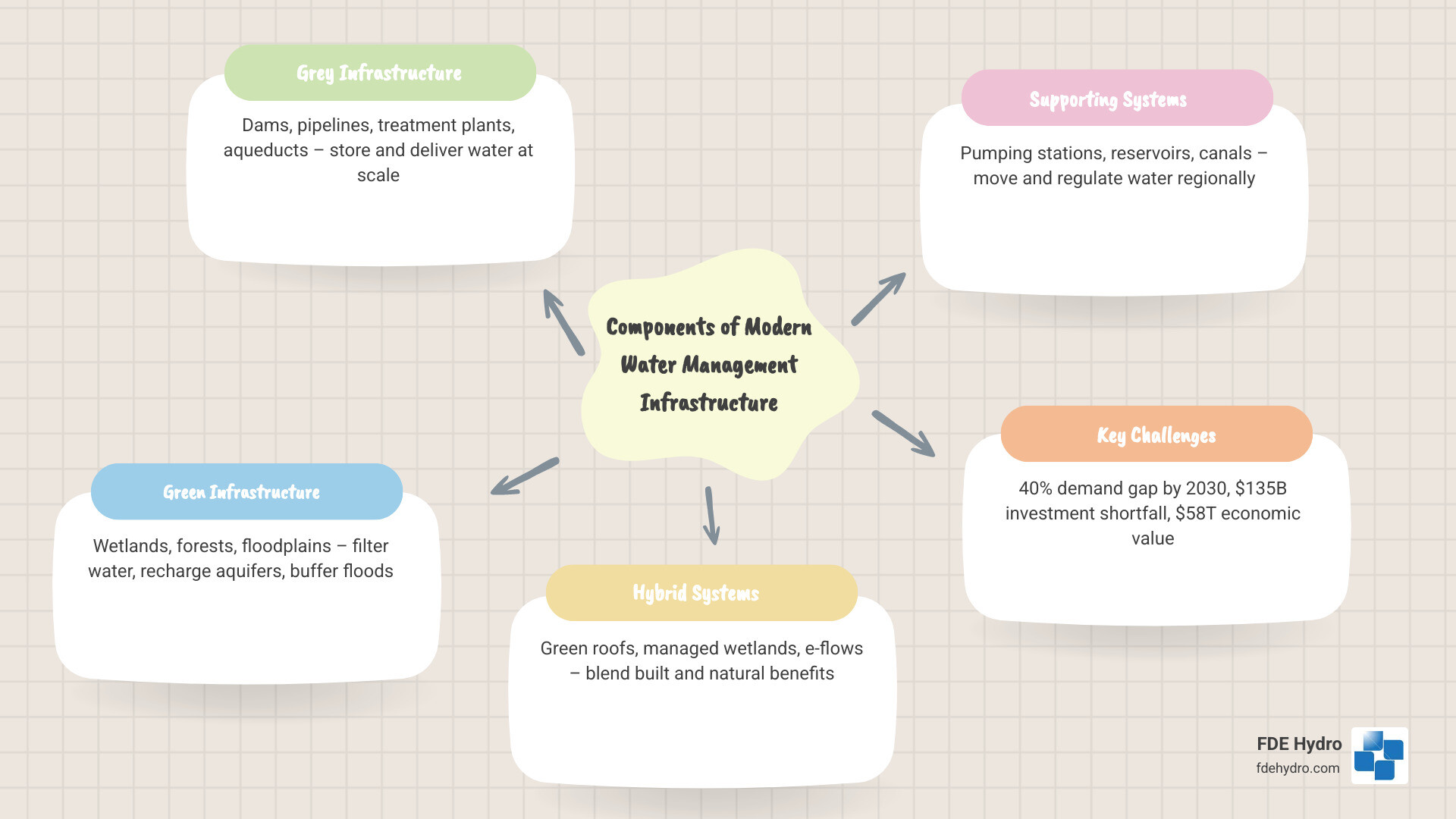
Water management infrastructure encompasses the systems — both built and natural — that collect, store, treat, and deliver water to homes, farms, and industries.
Here is a quick overview of what it includes and why it matters:
| Category |
Examples |
Key Purpose |
| Grey (built) infrastructure |
Dams, pipelines, treatment plants, aqueducts |
Store and deliver water at scale |
| Green (natural) infrastructure |
Wetlands, forests, river floodplains |
Filter water, recharge aquifers, buffer floods |
| Hybrid systems |
Green roofs, managed wetlands, e-flows |
Combine built and natural benefits |
| Supporting systems |
Pumping stations, reservoirs, canals |
Move and regulate water across regions |
Why it matters:
- Global water demand is expected to outstrip supply by 40% by 2030
- The total economic value of water reached $58 trillion in 2021 — roughly 60% of global GDP
- Every $1 invested in water and sanitation returns $4 in reduced healthcare costs
- Despite this, the world faces an annual $135 billion investment shortfall to meet SDG water goals
Without well-designed, well-maintained water infrastructure, communities face shortages, crop failures, economic losses, and public health crises. This is not a future risk — it is already happening in regions across the globe.
I’m Bill French, Sr., Founder and CEO of FDE Hydro™, and I’ve spent decades leading complex heavy civil construction projects — from large-scale site development to modular infrastructure innovation — giving me a front-row seat to the challenges and opportunities in water management infrastructure. In this guide, I’ll walk you through how these systems work, where they’re falling short, and what smarter, more efficient approaches look like today.
Water management infrastructure glossary:
Defining Water Management Infrastructure: Grey vs. Green Systems
When we talk about water management infrastructure, we are looking at a continuum. On one end, you have the “grey” systems—the hard, engineered assets like concrete dams and steel pipes. On the other end is “green” infrastructure—the natural ecosystems like forests and wetlands that provide essential water services.
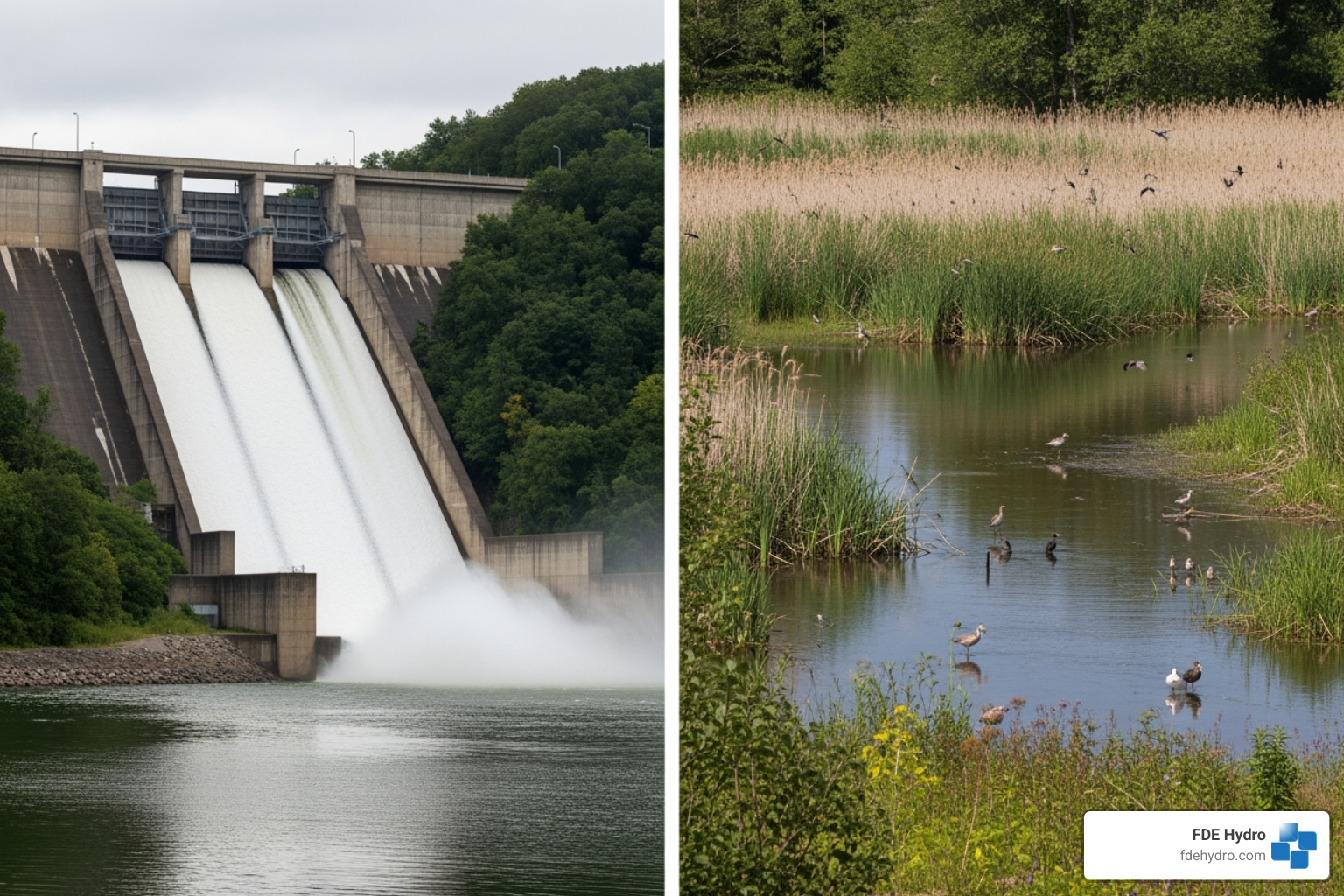
For a long time, the world focused almost exclusively on grey infrastructure. While these systems are vital for moving massive amounts of water to thirsty cities, they often came at the cost of the environment. Today, we are learning that the most resilient systems are those that integrate both. By combining the reliability of built structures with the flexibility of nature, we can create sustainable water infrastructure that protects biodiversity while serving human needs.
An exciting example of this integration is the proposal to cover open canals with solar panels. Scientific research on energy and water co-benefits from solar-covered canals suggests that such a move could reduce evaporation by 11 to 22 million gallons per mile while generating clean energy to power the very pumps that move the water.
The Role of Grey Systems in Modern Water Management Infrastructure
Grey infrastructure remains the backbone of urban and agricultural life. Think of the California Aqueduct, a 444-mile marvel that moves water from the north to the south of the state. These systems include:
- Dams and Reservoirs: These act as massive “batteries” for water, holding it during wet years to ensure we have enough during droughts.
- Aqueducts and Pipelines: These are the highways of water, stretching hundreds of miles to bridge the gap between where water is found and where it is needed.
- Pumping Plants: Facilities like the Edmonston Pumping Plant lift water nearly 2,000 feet over mountains—an incredible feat of engineering.
- Treatment Plants: These ensure that the water coming out of your tap is safe to drink and that wastewater is cleaned before being returned to the environment.
At FDE Hydro™, we focus on making this grey infrastructure more efficient. Our Water Control Infrastructure Guide 2025 highlights how modular precast concrete technology can build these essential assets faster and with a lower carbon footprint.
Nature-Based Solutions and Hybrid Water Management Infrastructure
Green infrastructure isn’t just about “saving the trees”—it’s a functional part of a Water Control System. Nature-based solutions include:
- Wetlands: These act as natural filters, removing pollutants from runoff before it reaches our rivers.
- Groundwater Recharge: Instead of letting storm runoff flow into the ocean, we use managed plains to let it soak back into the earth, refilling our aquifers.
- Environmental Flows (E-flows): This involves managing dams to mimic natural river cycles, which is critical for the survival of fish like the Chinook salmon.
Hybrid systems use nature to take the pressure off built systems. For example, a restored wetland can act as a buffer for a levee, reducing the risk of a catastrophic breach during a flood.
The Economic and Social Imperative for Investment
The numbers behind water management infrastructure are staggering. Water isn’t just a resource; it’s an economic engine. In 2021, the quantifiable economic use value of water was estimated at $58 trillion. That’s 60% of the entire world’s GDP!
However, there is a massive gap between what we need and what we are spending.
| Metric |
Value |
| Total mobilized funds needed by 2030 |
$6.7 Trillion |
| Annual global investment shortfall |
$135 Billion |
| Return on Investment (ROI) for sanitation |
4:1 (in health savings) |
Investing in Water Infrastructure Solutions isn’t just about building pipes; it’s about saving lives. For every dollar we put into clean water and sanitation, we save four dollars in healthcare costs. That is a return any investor would love.
Socioeconomic Challenges and Community Impact
While the benefits are clear, we must be honest about the challenges. Historically, large-scale projects have sometimes displaced populations or disrupted cultural heritage. Balancing the need for regional water security with local community rights is essential for Water Resource Management.
A modern success story in balancing these needs is the Navajo-Gallup Water Supply Project. In the Gallup, New Mexico area, groundwater levels have dropped about 200 feet over the last decade. Over 40% of Navajo Nation households have had to haul water for their daily needs. This project will eventually deliver 37,764 acre-feet of water annually to 250,000 people through 300 miles of pipeline, providing equitable access to a community that has long been underserved.
Environmental Impacts and the Infrastructure Risk Paradox
Every time we move water or block a river, there are consequences. Dams can fragment habitats and block fish migration. Reservoirs, especially in warmer climates, can emit greenhouse gases from decomposing organic matter.
One of the most visible impacts in California is land subsidence. In the Tulare Basin, the ground is literally sinking at a rate of about one foot per year because we are pumping groundwater faster than nature can replace it. This sinking doesn’t just damage the environment; it wrecks our Water Control Structures, causing canals to crack and lose their capacity to move water.
Managing Risks in Aging Systems
This brings us to the “infrastructure risk paradox.” This is the idea that the safer we make an area (by building a levee or a dam), the more people want to build there. If that aging infrastructure eventually fails, the damage is far greater than if we had never built the protection in the first place.
Managing this risk requires:
- Continuous Monitoring: Using satellite data (InSAR) to track how the ground is moving.
- Regular Maintenance: Many of our current systems are decades old and need urgent repair.
- Smart Retrofitting: Instead of starting from scratch, we can use modern Water Control Systems to upgrade existing dams. At FDE Hydro™, our modular precast technology allows us to retrofit dams with minimal disruption to the local environment and at a fraction of the traditional cost.
Learn more about these challenges in our Water Infrastructure Projects Guide.
Case Studies: Large-Scale Water Distribution in California
California serves as a living laboratory for water management infrastructure. The state relies on two massive, interconnected systems:
- The State Water Project (SWP): This project, managed by the state, delivers water to 27 million people and 750,000 acres of farmland. On average, about 66% of its water goes to cities and 34% to agriculture.
- The Central Valley Project (CVP): A federal project that focuses more heavily on farming, delivering about 5 million acre-feet of water to farms every year—enough to irrigate 3 million acres.
These projects are what allow California to be an agricultural powerhouse and a home to nearly 40 million people. But they are under pressure. The Central Valley Project and the SWP must now navigate a future where the snowpack—our natural reservoir—is shrinking due to rising temperatures.
Climate Adaptation and Future Resilience
Climate change is the biggest threat to these systems. Experts predict that SWP reliability could drop by 25% in just the next 20 years. To fight back, the state has developed the State Water Project Adaptation Strategy.
Resilience strategies include:
- Forecast-Informed Reservoir Operations (FIRO): Using better weather data to decide exactly when to hold water and when to release it for flood safety.
- Desalination: Turning seawater into fresh water, though this remains an expensive option.
- Climate Bonds: Using innovative financial mechanisms to fund projects that meet strict environmental and resilience standards.
For a deeper dive into how we can build for the future, check out our guide on Water Management Solutions.
Frequently Asked Questions about Water Infrastructure
What is the difference between grey and green water infrastructure?
Grey infrastructure refers to human-engineered structures like dams, pipes, and treatment plants. Green infrastructure uses natural systems—like wetlands, forests, and soil—to manage water flow and quality. A hybrid approach uses both to maximize efficiency and environmental health.
Why is there a global funding gap for water projects?
The gap exists because water infrastructure is incredibly expensive to build and maintain, and the benefits (like improved public health) are often long-term and hard to monetize immediately. We need to mobilize about $6.7 trillion by 2030 to meet global goals, but we are currently falling short by $135 billion every year.
How does land subsidence affect water delivery systems?
When groundwater is over-pumped, the soil layers collapse, causing the ground to sink. This “subsidence” can change the slope of gravity-fed canals (like the California Aqueduct), reducing their capacity and causing structural cracks that are very expensive to repair.
Conclusion
Building better water management infrastructure is the defining challenge of our generation. We have to find a way to balance the development needs of a growing population with the urgent necessity of conservation.
At FDE Hydro™, we believe the answer lies in innovation. By using our patented modular precast concrete technology—the “French Dam”—we can build and retrofit hydroelectric dams and Water Control Structures in a way that is faster, cheaper, and more sustainable. Whether we are working in the United States, Canada, Brazil, or Europe, our goal is to provide the Water Control Solutions that make a climate-resilient future possible.
Water is life, but it’s our infrastructure that makes modern life possible. Let’s build it right.
by Adaptify Support | Mar 31, 2026 | Precast Dam Articles
Why Water Management Infrastructure Is the Foundation of Modern Society
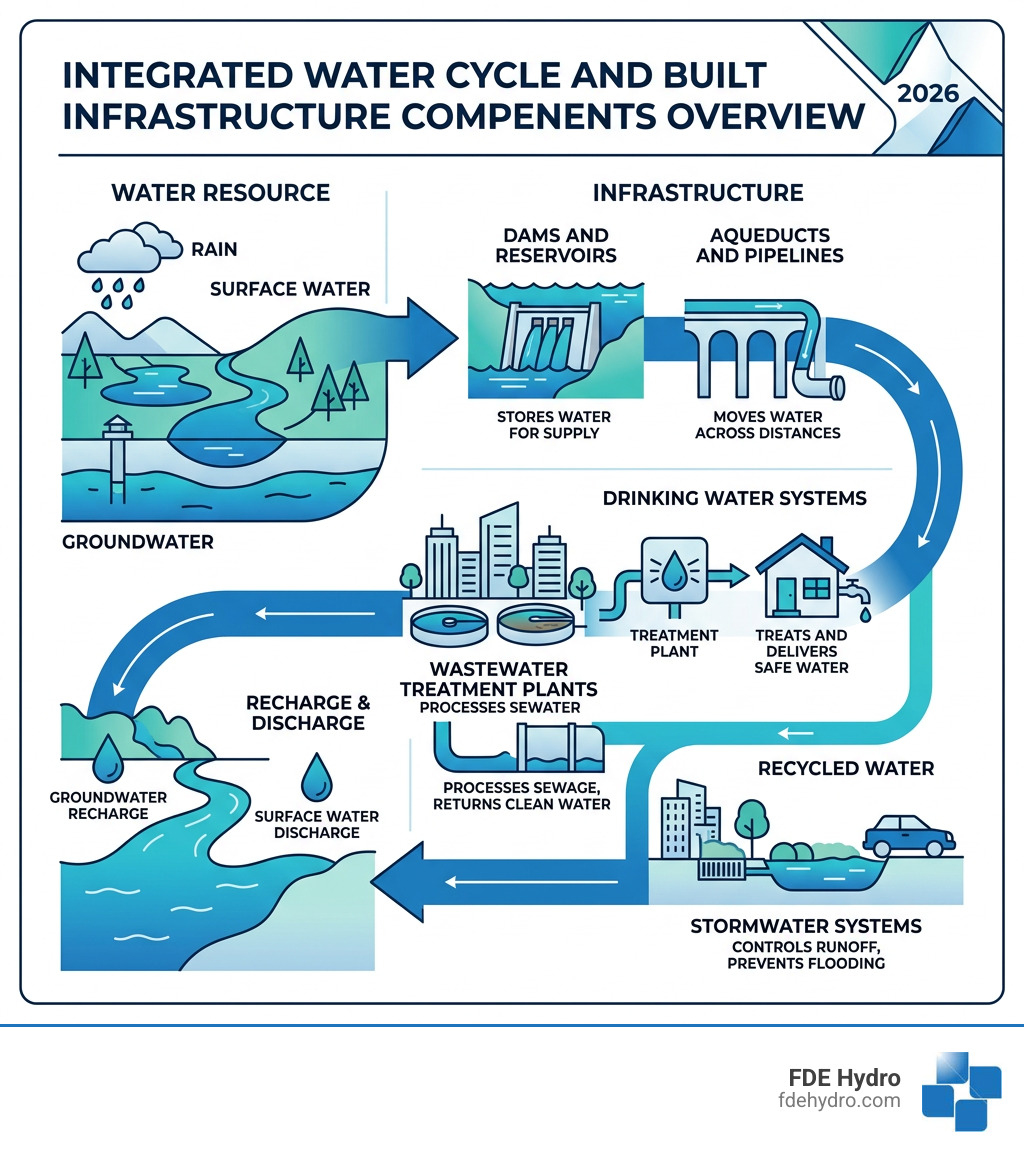
Water management infrastructure is the network of systems — pipes, treatment plants, dams, reservoirs, aqueducts, and stormwater controls — that collects, treats, stores, and delivers water to communities while safely removing wastewater.
Here is a quick overview of what it includes and why it matters:
| Component |
What It Does |
| Drinking water systems |
Treats and delivers safe potable water to homes and businesses |
| Wastewater treatment plants |
Processes sewage and returns clean water to the environment |
| Stormwater systems |
Controls runoff to prevent flooding and pollution |
| Dams and reservoirs |
Stores water for supply, flood control, and power generation |
| Aqueducts and pipelines |
Moves water across long distances to where it is needed |
Together, these systems serve over 80% of the U.S. population with clean drinking water and treat the wastewater of roughly 75% of Americans. Globally, the need for reliable water infrastructure is urgent — experts estimate a $10 trillion investment is needed by 2030 just to meet basic development goals, yet the world currently falls short by about $135 billion every year.
Much of what exists today was built after World War II. Some components are now over 100 years old. The gap between what we have and what we need — in funding, capacity, and resilience — is growing fast.
This guide walks you through how water management systems are built, what threatens them, and where the industry is heading.
I’m Bill French, Sr., Founder and CEO of FDE Hydro™ — a company built on five decades of heavy civil construction experience and focused on delivering modular solutions to the water management infrastructure and hydropower industries. My background spans large-scale site development, federal infrastructure projects, and patented modular construction technologies designed to make water systems faster, safer, and more cost-effective to build. That experience shapes every insight in this guide.
Water management infrastructure terms to learn:
Defining the Core Components of Water Management Infrastructure
To understand water management infrastructure, we have to look beneath the surface—literally. Most of us only think about water when we turn on a tap or flush a toilet, but those actions are the “last mile” of a massive engineering feat.
The infrastructure is generally divided into three main categories: drinking water, wastewater, and stormwater. Each has its own set of guidelines and studies that dictate how they are built and maintained.
| System Type |
Number of Systems (U.S.) |
Primary Goal |
| Public Drinking Water |
~152,000 |
Deliver safe, potable water |
| Wastewater Treatment |
>16,000 |
Remove contaminants before discharge |
| Stormwater |
Varies by municipality |
Prevent urban flooding and erosion |
Beyond these, we have the “heavy lifters”: dams, reservoirs, and aqueducts. These components are responsible for the bulk storage and transport of water, often across hundreds of miles. In places like New York or California, these systems are the lifeblood of the economy, supporting both massive urban populations and vast agricultural tracts.
Drinking Water Systems and Distribution Networks in Water Management Infrastructure
The scale of the U.S. drinking water network is staggering. It includes more than 2.2 million miles of underground pipes. If you were to lay those pipes end-to-end, they would wrap around the Earth nearly 90 times.
These systems are composed of:
- Intake Structures: Drawing water from lakes, rivers, or aquifers.
- Treatment Plants: Using filtration and disinfection to meet safety standards.
- Storage Tanks: Elevated or ground-level reservoirs that maintain pressure and provide emergency supply.
- Distribution Mains: The massive network of pipes that move water to your neighborhood.
While large cities like Raleigh require facilities that handle tens of millions of gallons daily, there is also a critical need for smaller systems. The EPA provides specific guidelines for communities with fewer than 10,000 people, where the challenges of maintenance and funding are often more acute.
Wastewater Treatment and Resource Recovery
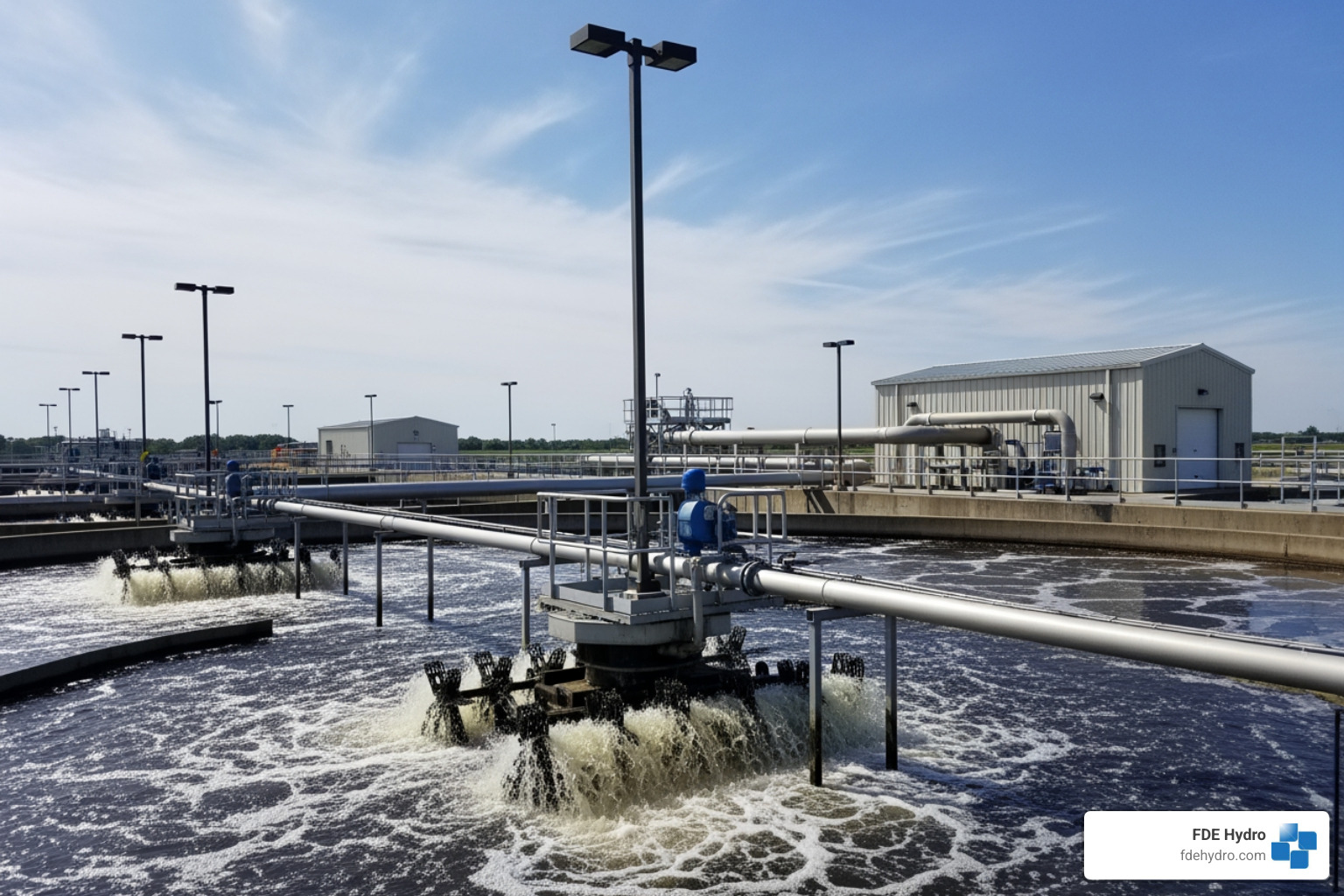
Wastewater treatment is essentially a factory process designed to mimic and accelerate nature’s way of cleaning water. There are more than 16,000 wastewater treatment plants in the U.S., and on average, they function at about 81% of their design capacity. However, 15% of these facilities have already reached or exceeded their limit.
The process typically involves:
- Mechanical Treatment: Removing large debris and grit.
- Biological Treatment: Using bacteria to break down organic matter in aeration tanks.
- Chemical Treatment: Disinfecting the water (often with chlorine or UV light) to meet federal discharge standards.
In major hubs like New York City, these plants process hundreds of millions of gallons every single day. The goal is no longer just “disposal”—it is “resource recovery,” where we extract energy, nutrients, and reclaimed water from what was once considered waste.
Critical Challenges Facing Modern Water Systems
We are currently at a crossroads. Much of our water management infrastructure was built in the post-WWII era, intended to last 50 years. We are now well past that expiration date. In some older cities, we are still relying on wooden pipes or brick sewers laid over a century ago.
The American Society of Civil Engineers (ASCE) frequently highlights these priority issues. The primary hurdles include:
- Aging Systems: Frequent main breaks lose trillions of gallons of treated water annually.
- Lead Service Lines: The urgent need to replace toxic lead pipes in older communities.
- Cyber Threats: As systems become more digital, they become targets for hackers looking to disrupt public services.
- Natural Disasters: Earthquakes, hurricanes, and floods can take out a treatment plant or breach a levee in hours.
The Impact of Climate Change on Water Management Infrastructure
Climate change is an “accelerant” for all these problems. In the Western U.S., prolonged droughts have led to record-low reservoir levels. In some cases, over-pumping of groundwater has caused the land itself to sink—a process known as subsidence.
The State Water Project Adaptation Strategy notes that reliability could be reduced by as much as 25% over the next 20 years. We aren’t just dealing with “less water”; we are dealing with “more unpredictable water.” Sea-level rise threatens to contaminate coastal aquifers with saltwater, while extreme storms overwhelm combined sewer systems, leading to raw sewage overflows.
Funding and Investment Shortfalls
The gap between what we need to spend and what we actually spend is wide. Globally, the shortfall is $135 billion annually. In the U.S., the Bipartisan Infrastructure Law has made a historic $50 billion investment in water infrastructure, primarily through the Clean Water and Drinking Water State Revolving Funds.
While this is a massive step forward, it is only a fraction of the total need. This is where we see the rise of Sustainable Water Infrastructure initiatives and public-private partnerships. We need to find ways to build more efficiently, and that is exactly why we developed the modular “French Dam” technology—to cut the time and cost of construction so that limited funds can go further.
The Lifecycle of Water Infrastructure Development Projects
Building a new treatment plant or dam isn’t like building a house. These are multi-decade commitments that involve hundreds of stakeholders.
The process is structured into four main phases:
- Planning: Feasibility studies, flood risk assessments, and Water Resources Management analysis.
- Preconstruction: Bidding, cost estimation, and refining designs for “constructability.”
- Construction: The actual physical build, which often requires on-site concrete plants for large-scale projects like dams.
- Post-construction: Rigorous testing, third-party inspections, and the creation of “as-built” documents for future maintenance.
Coordination is managed through groups like the Water Government Coordinating Council (WGCC) and the Sector Coordinating Council (WSCC), which ensure that private owners and government agencies are aligned on security and safety.
The Construction and Inspection Process
Once ground is broken, the focus shifts to precision and compliance. For pipelines, work is often done in segments—excavation, installation, and finishing—to allow parallel progress.
Quality control is non-negotiable. Facilities must follow NPDES inspection and testing protocols to ensure they aren’t leaking pollutants into the environment. Similarly, water storage facilities must meet strict safety standards to prevent catastrophic failures. We’ve found that using digital document management tools like Procore helps keep these complex projects on track, ensuring that every RFI and submittal is accounted for.
Case Studies: Large-Scale Water Projects in the United States
To see water management infrastructure at its most ambitious, we look to the massive projects that transformed the American West.
The Central Valley Project (CVP), managed by the Bureau of Reclamation, is a network of 20 dams and reservoirs and over 500 miles of canals. It annually delivers about 7 million acre-feet of water. To put that in perspective, it’s enough water to irrigate 3 million acres of farmland—producing food that feeds millions.
Then there is the California State Water Project (SWP). It is the nation’s largest state-owned water and power generator. Its centerpiece, the California Aqueduct, is over 400 miles long. It lifts water nearly 2,000 feet over the Tehachapi Mountains—the highest single-lift pumping effort in the world.
Adapting the California State Water Project
These historic projects are now being forced to modernize. The SWP is implementing a Climate Action Plan to address the “new normal” of extreme weather. Managers use a data dashboard to monitor reservoir levels and snowpack in real-time.
One of the biggest issues they face is land subsidence. In parts of the San Joaquin Valley, the ground is sinking by up to a foot per year because of groundwater depletion. This causes the concrete canals of the aqueduct to buckle and lose their “carrying capacity.” Fixing this requires a blend of Water Control Structures and new management strategies to recharge aquifers during wet years.
Future Trends and Sustainable Solutions
The future of water management infrastructure isn’t just about more concrete; it’s about smarter concrete and nature-based solutions.
- Nature-Based Solutions: Integrating wetlands and forests into the water cycle to naturally filter water and reduce flood peaks.
- Solar Canals: There is groundbreaking research on solar-covered canals which suggests that covering aqueducts with solar panels can generate massive amounts of renewable energy while reducing water loss from evaporation by up to 22 million gallons per mile.
- Digital Twins: Creating virtual replicas of water systems to predict how they will react to a flood or a pipe break before it happens.
- Modular Construction: This is where we are leading the way. By using patented modular precast concrete technology, we can build or retrofit dams and Water Control Systems in a fraction of the time required by traditional “poured-in-place” methods.
Frequently Asked Questions about Water Infrastructure
Why is much of the U.S. water infrastructure outdated?
Most of our systems were built in the mid-20th century with a 50-year lifespan. For decades, funding was diverted to other priorities, leading to a “fix-it-when-it-breaks” mentality rather than proactive maintenance.
What are the main threats to water system security?
The primary threats include physical attacks on remote facilities, cyberattacks on automated control systems, natural disasters like earthquakes, and the slow-moving threat of climate change-induced drought.
How does the Bipartisan Infrastructure Law help local communities?
It provides $50 billion in grants and low-interest loans. This allows communities—especially rural ones—to replace lead pipes, address PFAS “forever chemicals,” and upgrade aging treatment plants that they otherwise couldn’t afford.
Conclusion
The path to a resilient future depends on how we manage our most precious resource. Water management infrastructure is no longer just about moving water from point A to point B; it is about energy efficiency, environmental stewardship, and economic survival.
At FDE Hydro™, we believe that the old ways of building are too slow and too expensive for the challenges we face today. Our modular precast “French Dam” technology is designed to help communities in North America, Brazil, and Europe build Sustainable Water Infrastructure faster. Whether it’s retrofitting a historic dam for hydropower or building new Water Infrastructure Solutions, we are committed to building the future of water management.
Ready to learn more about how we can accelerate your next project? Explore our water control infrastructure guide.
by Adaptify Support | Mar 6, 2026 | Precast Dam Articles
What is Precast Modular Technology?
Precast Modular Technology is a modern way to build. It involves making parts of a building, or even whole rooms, in a factory. These parts are then brought to the construction site and put together quickly.
Here’s a quick look at what Precast Modular Technology is:
- Factory-made: Building sections or “modules” (like walls, floors, or entire bathroom pods) are created in a controlled factory setting.
- Off-site precision: This allows for high quality and exact measurements, as factory conditions are ideal.
- On-site assembly: Once made, these modules are shipped to the building site and rapidly assembled, like giant LEGO blocks.
- Faster construction: This method significantly cuts down the time it takes to build, compared to traditional ways.
The construction world is changing fast, and Precast Modular Technology is leading the way. This innovative approach moves much of the building process from the messy, outdoor construction site to clean, efficient factories. Instead of building piece-by-piece on location, large parts of a structure are made ahead of time.
Think of it like this: whole rooms, wall sections, or floor panels are cast from concrete in a factory. These “modules” are built with high precision and quality control. Once they are ready, they are delivered to the building site. There, workers quickly put them together. This way of building is a big step away from traditional methods. It makes construction faster, more reliable, and often better for the environment.
I’m Bill French Sr., and I’ve spent decades in civil construction, where I’ve seen how Precast Modular Technology is changing the industry, especially in projects like modular bridge construction. At FDE Hydro™, we’re focused on bringing these powerful, factory-made solutions to the hydropower sector, building faster and smarter.
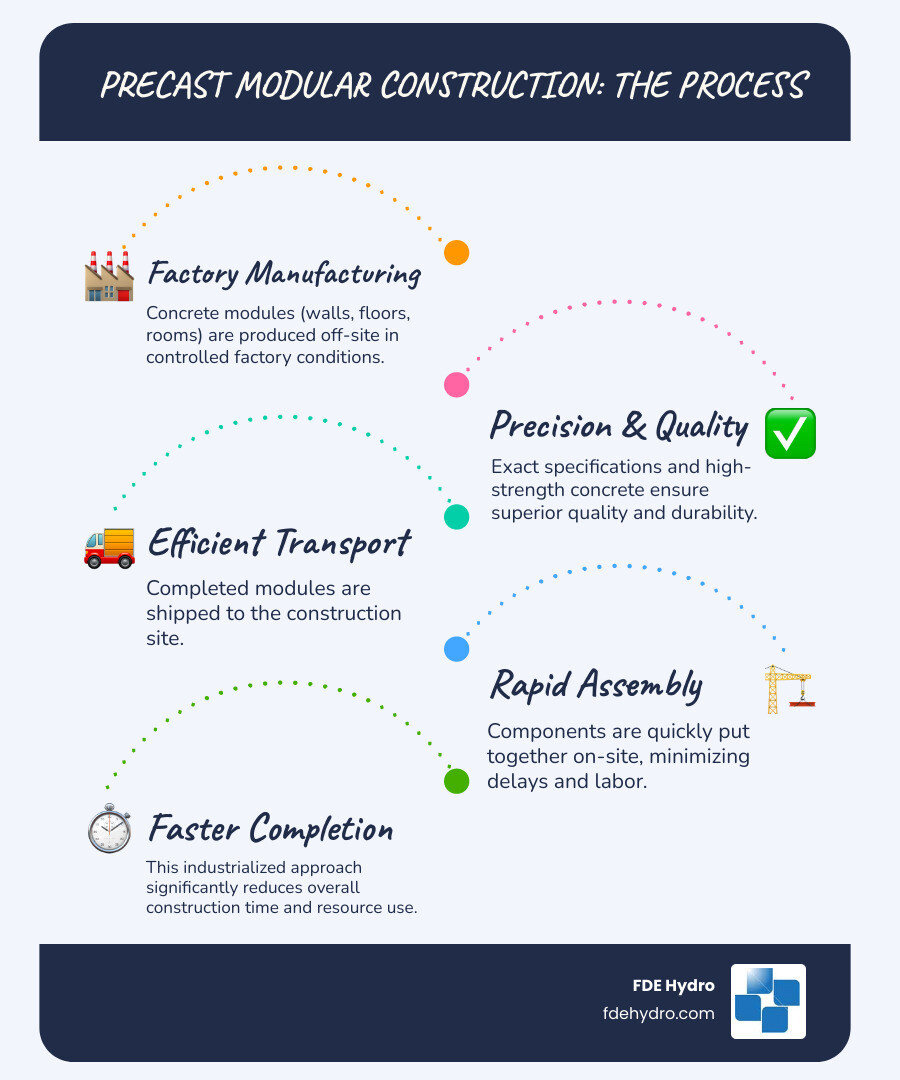
At its core, Precast Modular Technology involves the industrialized design, production, and construction using prefabricated reinforced concrete elements. This means that instead of pouring concrete and building walls on-site (traditional cast-in-situ methods), components like slabs, walls, and stairs are manufactured off-site in a controlled environment. These elements are then transported and assembled on the construction site. This method is gaining popularity worldwide because it offers significant advantages over traditional building.
For instance, 3D Modular Precast Technology involves casting “lego-like” concrete modules—such as entire rooms, toilets, kitchens, and bathrooms—in a factory. These complete units are then delivered to the site, ready for assembly. This change in how we build means less time, cost, and resources are expended compared to conventional approaches. We achieve this by leveraging advanced Modular Construction Techniques that streamline the entire process from design to assembly.
Key Precast Modular Technology vocabulary:
The Unbeatable Advantages of Building Modular
When we talk about the benefits of Precast Modular Technology, we’re not just talking about minor improvements; we’re discussing a shift that makes construction faster, more cost-effective, higher quality, more sustainable, and safer. Many industry experts consider modular precast one of the fastest, most profitable, sustainable, and cost-effective ways to build today.
Let’s look at how Precast Modular Technology stacks up against traditional construction methods:
| Feature |
Precast Modular Construction |
Traditional Construction |
| Timeline |
Significantly reduced due to parallel processes and off-site manufacturing |
Longer, sequential processes, subject to delays |
| On-site Labor |
Minimized, requiring smaller, specialized assembly teams |
High demand for various trades, labor-intensive |
| Waste |
Dramatically reduced through factory precision and material management |
Higher waste generation from on-site cutting and errors |
| Weather Delays |
Manufacturing unaffected by weather; only assembly is exposed |
Highly susceptible to weather-related delays |
| Quality |
Superior, consistent quality due to controlled factory environment |
Varies greatly, dependent on on-site conditions and labor skills |
We’ve seen how adopting precast solutions leads to a wide array of benefits. You can Explore Precast Concrete Advantages to understand the depth of these benefits.
Accelerated Construction Timelines
One of the most compelling advantages of Precast Modular Technology is the dramatic reduction in construction timelines. How do we achieve this? It’s all about efficiency and parallel processing.
Unlike traditional construction, where site preparation and building construction happen sequentially, precast modular methods allow for both to occur simultaneously. While our teams are preparing the foundation and site, modules are being manufactured in a factory. This parallel workflow significantly shortens the overall construction timeline. For example, precast installation can save up to 30% of the time compared to a poured-in-place solution.
The controlled factory environment also means that manufacturing can continue regardless of adverse weather conditions. Rain, snow, or extreme temperatures—which would typically halt or delay traditional on-site work—have no impact on module production. This ensures continuous work and predictable delivery schedules. The reduced need for on-site labor also contributes to speed, as fewer workers are needed for the assembly phase, allowing for quicker mobilization and completion. This focus on speed is critical for projects demanding Rapid Installment of Module Precast Civil Infrastructure.
Superior Quality and Precision Through Factory Control
Quality and precision are paramount in construction, and this is where Precast Modular Technology truly shines. When components are manufactured in a controlled factory environment, they are built to exact specifications, resulting in higher quality and consistency than what can typically be achieved on a dynamic construction site.
This controlled setting allows for rigorous quality control at every stage of production. Each module is carefully crafted, ensuring improved precision, consistency, and durability. This means fewer defects, less rework, and a stronger, more reliable finished product. The robust construction techniques used in module manufacturing also improve the resilience of buildings, making them more resistant to natural disasters such as earthquakes and hurricanes. The result is a high-strength concrete product with many inherent benefits, as it is manufactured off-site at a specialized production facility. We dig deeper into these aspects when we Learn about Precast Concrete Technology.
Cost Savings and Environmental Responsibility
Beyond speed and quality, Precast Modular Technology also offers significant cost savings and plays a crucial role in environmental responsibility.
The efficiency of factory production leads to better resource management and the use of sustainable materials, which in turn reduces waste and minimizes environmental impact. The efficient use of materials and resources in a factory setting minimizes waste and reduces the overall environmental footprint of construction projects. This approach not only helps us build greener but also contributes to lower long-term operating costs.
For instance, buildings constructed with advanced precast systems can be 60% more energy-efficient and produce less than 10% of the greenhouse gas emissions compared to typical low-rise buildings. This inherent energy efficiency, often achieved by positioning insulation on the exterior of the precast concrete walls, reduces heating and cooling demands. Furthermore, precast concrete is fire, mold, and weather-resistant, reducing long-term maintenance needs. This leads to buildings that are less costly to build and operate. To understand the full financial picture, we encourage you to Discover Why Precast Costs Less.
The Building Blocks: Components and Applications of Precast Modular Technology
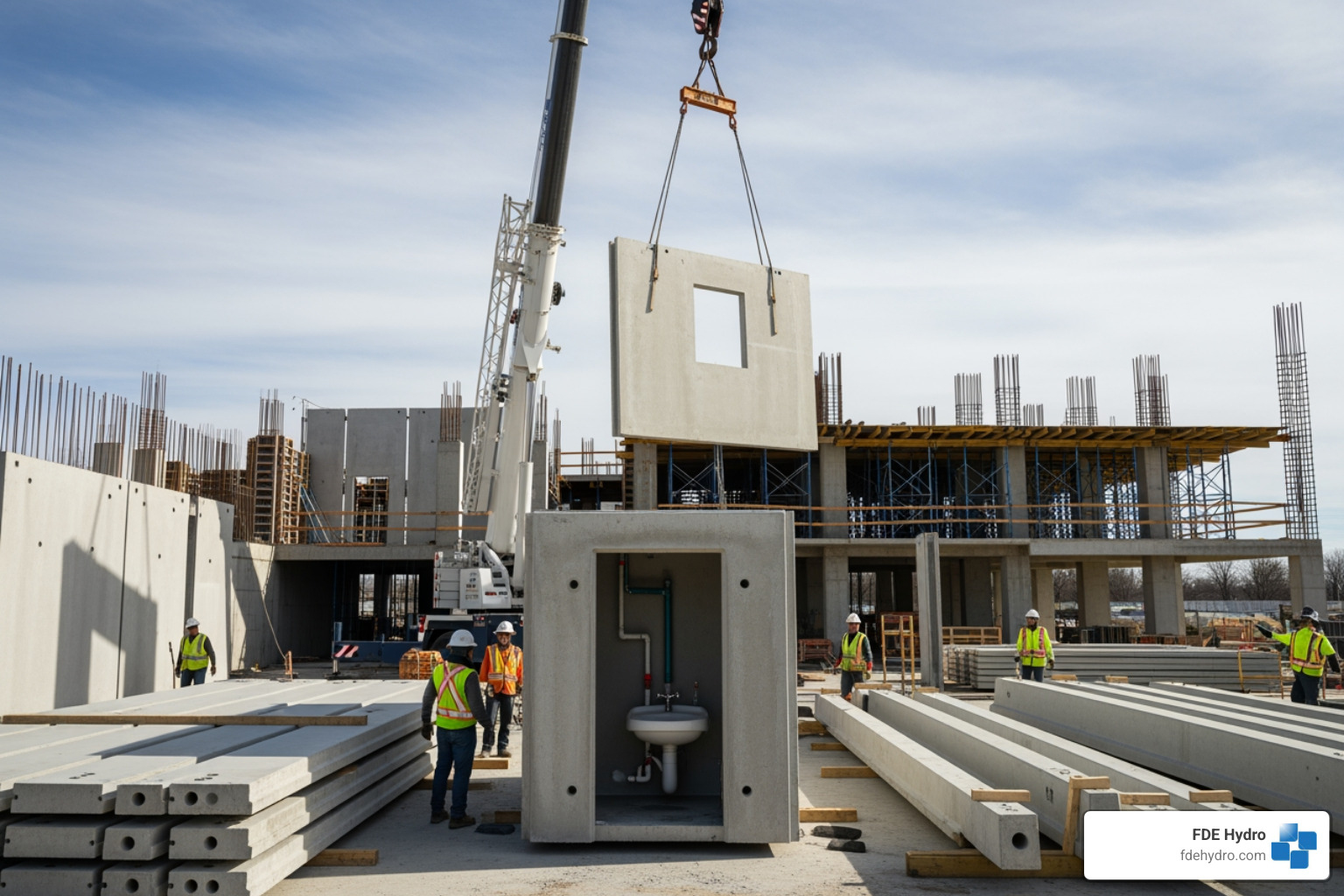
The versatility of Precast Modular Technology lies in its “building blocks”—the diverse components and modules that can be manufactured off-site. These elements range from simple flat panels to complex three-dimensional volumetric units, allowing us to construct a wide array of structures. This technology is changing multiple industries, from housing to critical infrastructure.
The core idea is to create standardized, yet adaptable, components that can be rapidly assembled. From structural panels to entire bathroom pods, the possibilities are vast. This adaptability means that a broad spectrum of projects can benefit from the speed, quality, and sustainability that precast modular methods offer.
The Core Components of Precast Modular Technology
At the heart of Precast Modular Technology are its varied components. We can categorize these into several types:
- 2D Panels: These are flat elements like precast wall panels and floor slabs. They are engineered to bear loads and form the structural envelope of a building. For example, some precast concrete building systems use structural building modules and precast wall panels, while others rely on prefabricated concrete panels for walls, floors, and stairs.
- 3D Volumetric Modules: These are complete, three-dimensional units, often referred to as volumetric pods. They can be entire rooms, bathrooms, kitchens, or utility spaces. 3D Modular Precast Technology involves casting these “lego-like” concrete modules in a factory. Bathroom pods, commonly used in hotels and retirement homes, are a prime example of these prefabricated components that are installed directly on the building site.
- Structural Elements: Beyond panels, precast technology also produces beams, columns, and stairs. These elements are designed to integrate seamlessly, forming the skeleton of the structure. For instance, precast stairs are often manufactured as monolithic pieces with embedded electrical conduits and slip-resistant finishes.
- Integrated Systems: A significant advancement in precast modular construction is the ability to embed various building systems directly into the concrete components during manufacturing. This can include electrical conduits, plumbing lines, fire suppression systems, and even HVAC ductwork. Some advanced systems, for example, integrate multiple construction divisions—structural, architectural, electrical, building envelope, heating/cooling, fire suppression, and plumbing—into single precast components.
We constantly develop new applications and designs for these components. You can See examples of Precast Models that showcase the breadth of this technology.
Precast Modular Technology is not limited to a single sector; its advantages make it suitable for a diverse range of industries and building types, particularly in North America, Brazil, and Europe.
- Multi-Unit Residential Housing: From detached houses to multi-story apartment buildings, modular precast offers rapid construction and consistent quality, helping to address housing shortages. We’ve seen significant use of precast components in residential projects, often constituting a large volume of the structural concrete.
- High-Demand Data Centers: The rapid growth of data centers, especially across North America, demands expedited construction schedules. There are nearly 5,000 operating data centers across North America, with hundreds more in development. The Canada data center market alone is projected to more than double by 2030 to U$22.24 billion. Precast modular concrete is proving to be a robust solution for these facilities, which require high load capacities, large clear spans, and rapid deployment.
- Hospitals and Schools: Public buildings like schools and hospitals benefit from the speed and controlled environment of modular construction, allowing for faster delivery of essential infrastructure with high quality and minimal disruption to surrounding communities.
- Hotels and Hospitality: The use of volumetric pods, such as prefabricated bathroom units, significantly accelerates hotel construction, ensuring consistency and quality across many rooms.
- Infrastructure: Beyond buildings, precast modular elements are invaluable for infrastructure projects. This includes bridges, tunnels, and water control systems. We are actively involved in these applications, particularly for Aging Infrastructure Being Replaced with Next-Generation Civil Solutions.
Navigating Challenges and The Future Outlook

While the benefits of Precast Modular Technology are undeniable, like any advanced construction method, it comes with its own set of challenges. However, the industry is continuously innovating to address these, paving the way for an even brighter future. The outlook for precast modular construction is incredibly promising, as it offers compelling solutions to some of the most pressing global demands, from housing crises to the rapid expansion of digital infrastructure.
Addressing the Practical Limitations
We acknowledge that there are specific problems that need to be considered when implementing Precast Modular Technology:
- Transportation Logistics for Large Modules: Transporting large modules from the factory to the construction site can be logistically challenging, especially for sites located in remote or hard-to-reach areas. This requires careful planning and specialized heavy transport equipment.
- High Initial Factory Investment: The initial setup for a specialized manufacturing facility can be significant. The cost of specialized equipment and the development of factory infrastructure may be higher than traditional construction methods. However, this investment often pays off through economies of scale and long-term efficiency gains.
- Site Access Constraints: Urban construction sites, particularly in dense cities like New York City, can have limited access, making it difficult to maneuver and hoist large precast components. This necessitates meticulous site planning and coordination.
- Perceived Design Rigidity: Historically, modular construction was sometimes associated with a uniform, boxy aesthetic. However, modern Precast Modular Technology offers a wide range of design options and architectural finishes, allowing for significant flexibility and unique building designs. We can achieve diverse architectural styles through various exterior cladding options, ensuring aesthetic freedom.
The Future of Precast Modular Technology in a Demanding World
The future of Precast Modular Technology is bright, driven by global trends and specific industry demands.
- Solving Housing Shortages: In many regions, including parts of the United States and Europe, there’s an urgent need for affordable and rapidly deployable housing. Precast modular methods offer a scalable solution to build quality homes faster and more efficiently.
- Fueling the Data Center Boom: The digital economy relies heavily on data centers, and their demand is exploding. Globally, a McKinsey report forecasts $6.7 trillion of capital expenditures associated with data centers and supporting infrastructure over the next five years. The current timeline of nine to twelve months to complete a new facility is no longer acceptable, with developers targeting under four months for turnkey data centers. Precast concrete provides the speed, structural integrity, and thermal performance needed for these critical facilities, which are growing rapidly in North America, with nearly 5,000 operating data centers across the continent and hundreds more in development in the U.S. and Canada.
- Impact of AI on Construction Needs: The rise of Artificial Intelligence (AI) is further accelerating the demand for data centers and other specialized infrastructure. Precast Modular Technology is uniquely positioned to meet these urgent, high-volume demands.
- Smart Cities and Digitalization: As cities evolve into smart, interconnected environments, the need for efficient, adaptable, and sustainable construction methods grows. Precast modular solutions align perfectly with the principles of smart city development, offering industrialized construction that can be integrated with digital design and building management systems.
Case Study Spotlight: Next-Generation Infrastructure
At FDE Hydro™, we are at the forefront of applying Precast Modular Technology to critical infrastructure, demonstrating its power in real-world scenarios across North America, Brazil, and Europe. Our innovative, patented modular precast concrete technology, often referred to as the “French Dam,” is specifically designed for building and retrofitting hydroelectric dams and water control systems. This significantly reduces construction costs and time, providing solutions for:
- Rapid Bridge Construction: Using modular precast elements, we’ve seen examples of A National Example of Rapid Bridge Construction Using Modular Precast Elements that dramatically cut down project timelines and minimize disruption.
- Water Control Systems: Our expertise extends to developing advanced water control infrastructure, utilizing modular precast for efficiency and durability.
- Hydropower Applications: The “French Dam” technology exemplifies how modular precast can revolutionize hydroelectric projects, offering faster deployment and improved resilience. You can learn more about Modular Dam Construction and how we’re building the future of renewable energy.
Frequently Asked Questions about Precast Modular Construction
We often get questions about Precast Modular Technology. Here are some of the most common ones we address:
How durable are precast modular buildings?
Precast Modular Technology results in exceptionally durable structures. Buildings constructed with precast concrete are designed for a long lifespan, often exceeding 100 years. The robust nature of precast concrete means it offers superior resistance to fire, mold, pests, and general wear and tear, reducing long-term maintenance needs. Furthermore, the inherent strength and precise engineering of precast modules significantly improve resilience against natural disasters such as earthquakes and hurricanes, ensuring structures remain safe and stable.
Is precast modular construction environmentally friendly?
Yes, Precast Modular Technology is highly environmentally friendly. The controlled factory environment allows for precise material usage, minimizing waste and enabling efficient recycling of materials. This significantly reduces on-site construction waste, noise, and dust levels, making construction projects less disruptive to surrounding communities. Moreover, precast modular buildings are designed for inherent energy efficiency, often incorporating insulation directly into the panels. This leads to structures that are 60% more energy-efficient and produce less than 10% of the greenhouse gas emissions compared to traditional buildings, reducing the operational carbon footprint over the building’s lifespan.
Can you customize the design of a precast modular building?
Absolutely! Modern Precast Modular Technology offers remarkable design flexibility. While standardization is key to efficiency, it does not limit aesthetic choices or unique building designs. We can achieve a wide range of architectural styles and finishes. The exterior cladding, for example, is often separate from the precast structure, allowing for diverse architectural expressions that can be applied either in the factory or on-site. This ensures that while the core structure benefits from modular efficiency, the final appearance can be fully customized to meet specific design visions and blend seamlessly with any urban or natural landscape.
Conclusion: Building the Future, One Module at a Time
As we’ve explored, Precast Modular Technology is more than just a construction method; it’s a paradigm shift that is reshaping how we build the world around us. From accelerating timelines and enhancing quality to driving sustainability and reducing costs, its advantages are revolutionizing the construction industry. This technology provides efficiency and scalability previously unimagined, addressing critical demands like housing shortages and the exponential growth of data centers.
At FDE Hydro™, we are proud to be part of this revolution, applying advanced modular precast systems to vital infrastructure projects. Our patented “French Dam” technology for hydroelectric dams and water control systems in North America, Brazil, and Europe is a testament to the power and potential of this innovative approach. As the industry evolves, precast modular systems offer a smarter, faster, and more sustainable path forward for everything from housing to critical infrastructure. We believe the future is truly modular, and we are building it, one precisely engineered component at a time.
Learn more about innovative modular dam solutions

