by Adaptify Support | Jan 9, 2026 | News
Why Innovative Construction Techniques Matter for Modern Infrastructure
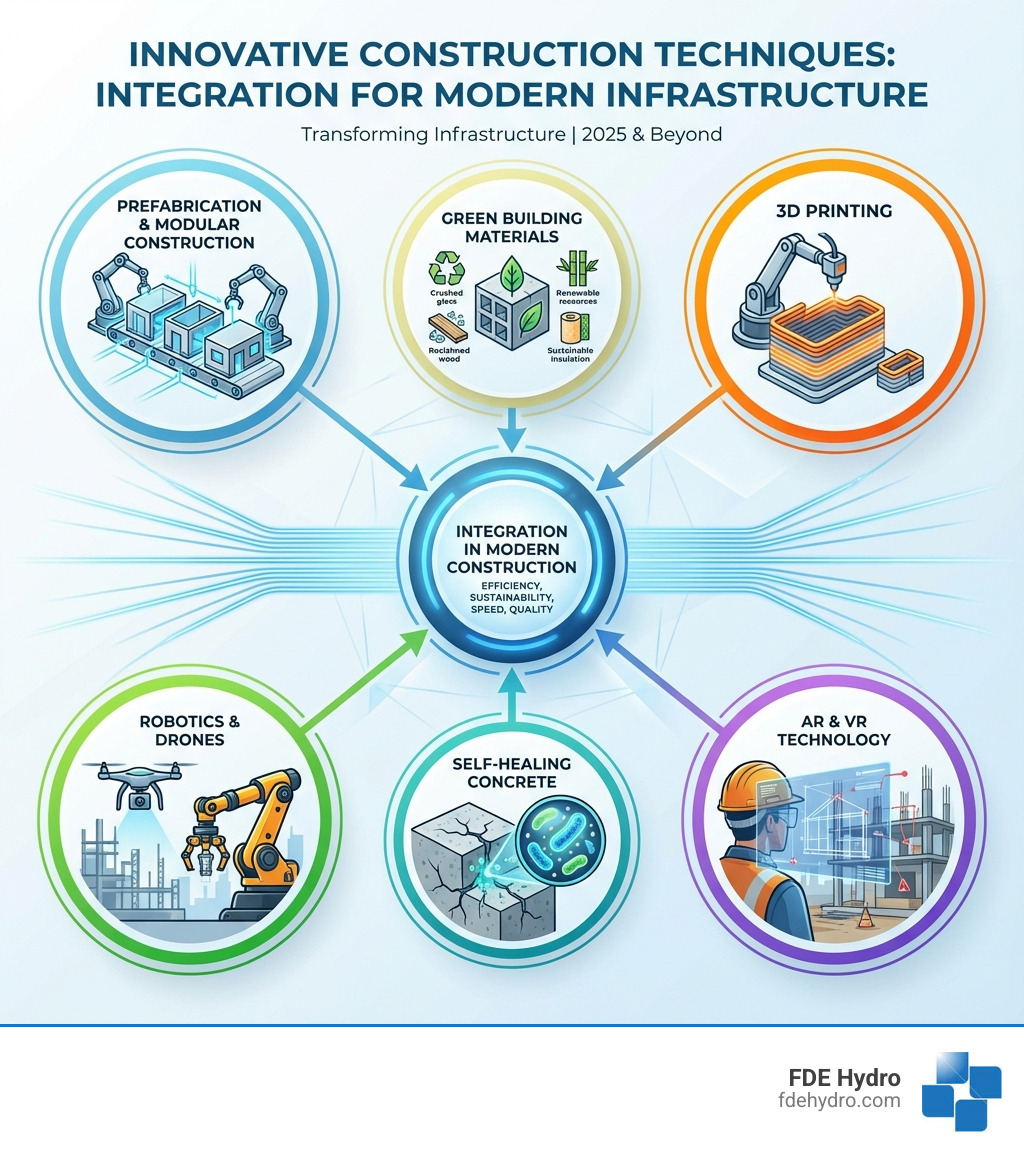
Innovative construction techniques are changing how we build, offering faster project delivery, reduced costs, improved safety, and greater sustainability. Here’s what you need to know:
Key Innovative Construction Techniques:
- Prefabrication & Modular Construction – Building components off-site in controlled environments for rapid on-site assembly
- 3D Printing – Using additive manufacturing to create building components with minimal waste
- Robotics & Drones – Automating dangerous tasks and providing real-time site monitoring
- Augmented & Virtual Reality (AR/VR) – Visualizing designs and detecting clashes before construction begins
- Self-Healing Concrete – Using bacteria and healing agents to automatically repair cracks
- Green Building Materials – Incorporating recycled, renewable, and energy-efficient materials
Primary Benefits:
- 20-50% reduction in construction timelines
- Improved quality control through factory settings
- Improved worker safety by moving work off-site
- Lower environmental impact and material waste
- Significant long-term cost savings
The construction industry is at a turning point. Traditional methods struggle to meet the demands of modern projects—especially large-scale infrastructure like hydropower facilities, where time, cost, and risk are critical.
The good news? Technology and innovation are finally catching up. From modular construction that can cut foundation costs in half to cloud-based tools that 85% of contractors are already implementing, the industry is experiencing its most significant change in generations.
For project owners and decision-makers overseeing water infrastructure and hydropower development, these innovations aren’t just interesting—they’re essential. High capital costs, extended timelines, and operational uncertainties have long plagued conventional construction approaches. Modern techniques offer a path forward that reduces risk while accelerating delivery.
I’m Bill French Sr., founder and CEO of FDE Hydro, where we’ve spent the past decade pioneering modular precast solutions for the hydropower industry. Through my five decades leading major site and civil construction projects—from Boston’s Logan Airport to the I-93 Fast14 bridge project—I’ve witnessed how innovative construction techniques can transform project outcomes when applied correctly.
Related content about Innovative construction techniques:
The Rise of Off-Site Construction: Prefabrication and Modular Building
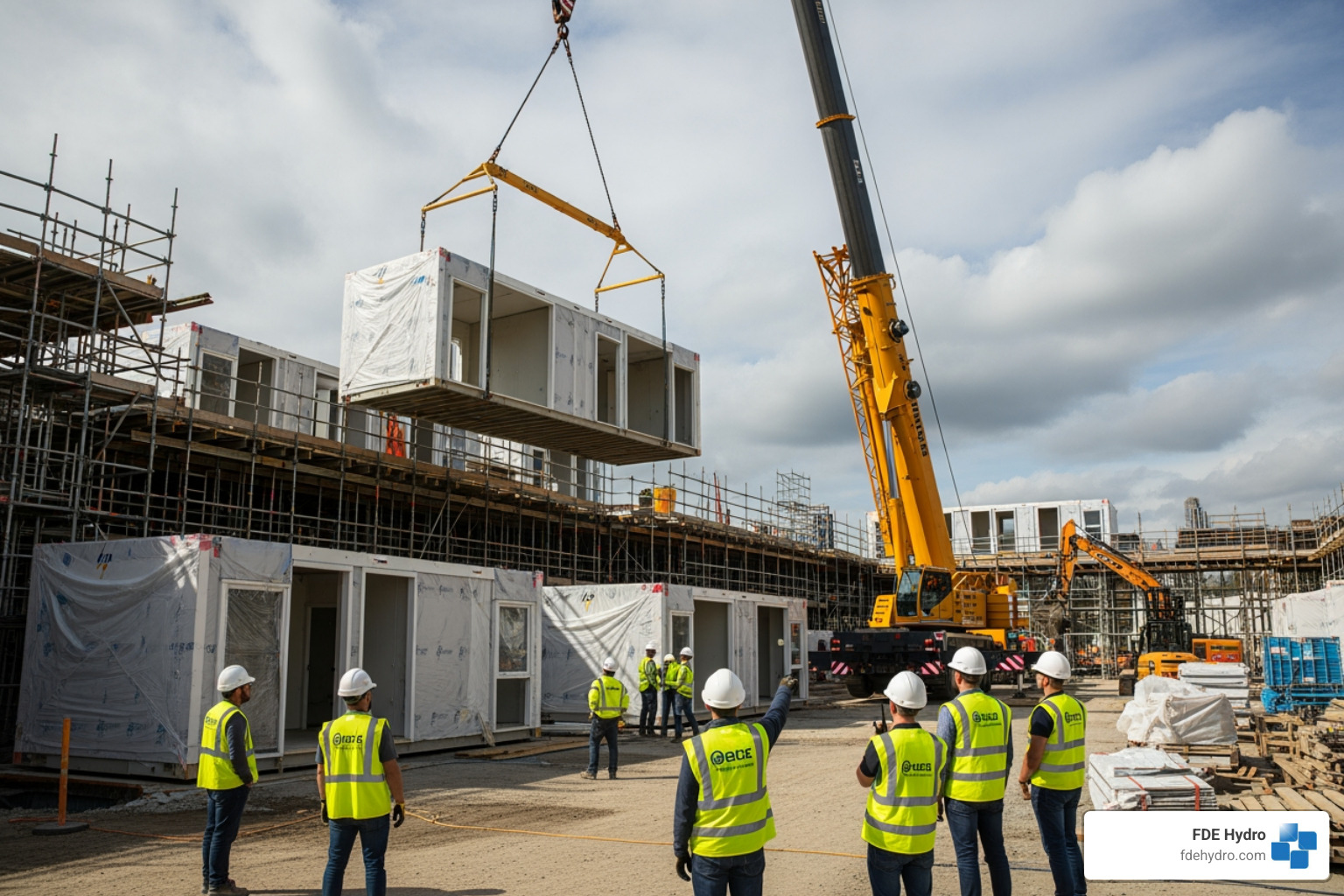
A significant shift in construction is the move towards off-site methods like prefabrication and modular building. Instead of building from scratch on-site, components and entire building sections are manufactured in controlled factory environments.
What is prefabrication? It’s the process of manufacturing building components, such as walls, floors, or roof trusses, in a factory and then transporting them to the construction site for assembly. Technology is making its benefits easier to access.
Modular construction takes this a step further. It involves creating complete, three-dimensional building sections or “modules” – sometimes even entire rooms like bathrooms or kitchens – in a factory. These finished units are then shipped to the site and assembled, much like stacking building blocks. This approach significantly reduces on-site labor and time. For instance, we’ve seen five laborers install hundreds of hospital bathrooms in days using modular construction.
The benefits of this factory-controlled environment are immense. It allows for rigorous quality control, ensuring that each component meets precise specifications before it even reaches the job site. This precision translates directly into higher quality and more durable structures. In fact, a Dodge Data & Analytics SmartMarket report indicates that 90% of contractors report improved productivity, quality, and schedule certainty when using prefabrication compared to traditional methods. It’s no wonder that 61% of contractors expect to employ prefabrication methods in at least 10% of their projects in the next three years, a significant increase from the 44% currently using it.
At FDE Hydro, we’re applying these very principles to critical water infrastructure projects. Our innovative modular precast concrete technology, often referred to as “French Dam” technology, allows us to build and retrofit hydroelectric dams and water control systems in North America, Brazil, and Europe with unprecedented speed and efficiency. By precasting large, complex components off-site, we minimize on-site work, reduce environmental impact, and deliver projects faster. You can learn more about our approach to Modular Construction Techniques, how we achieve Rapid Installment of Module Precast Civil Infrastructure, and view our various Precast Models.
How Prefabrication Improves Efficiency and Reduces Costs
The core appeal of prefabrication and modular construction lies in their ability to dramatically improve efficiency and slash costs. Let’s look at how:
| Metric |
Traditional On-Site Construction |
Modular Construction |
| Timeline |
Longer, weather-dependent |
Shorter, factory-controlled |
| Waste |
Higher material waste |
Minimized, recycled |
| Quality Control |
Site-dependent, variable |
Factory-controlled, consistent |
| Weather Delays |
Frequent |
Minimal |
The most striking benefit is schedule compression. Modular construction can lead to a remarkable 20–50% schedule compression. This speed is achieved because much of the work happens simultaneously: site preparation occurs while modules are being manufactured in the factory. This parallel processing eliminates many of the sequential delays inherent in traditional construction.
Reduced labor costs are another major advantage. With a significant portion of the work moved to a factory, the need for skilled labor on the job site is diminished, and tasks can often be completed more efficiently with specialized machinery. For instance, some foundation systems can cut the cost of creating a foundation in half compared to a traditional foundation. This is a game-changer, especially for projects with tight budgets.
Furthermore, off-site manufacturing inherently minimizes material waste. Factories are set up to optimize material usage, recycle scraps, and control inventory far more effectively than a busy, often chaotic, construction site. This not only saves money but also significantly reduces the environmental footprint of a project.
Our work at FDE Hydro exemplifies these advantages. Our modular precast solutions for infrastructure, such as those used in A National Example of Rapid Bridge Construction Using Modular Precast Elements and Modular Dam Construction, are designed to be fabricated off-site, allowing for quicker installation and substantial cost savings while maintaining superior quality and durability.
Digital and Robotic Innovations on the Modern Jobsite
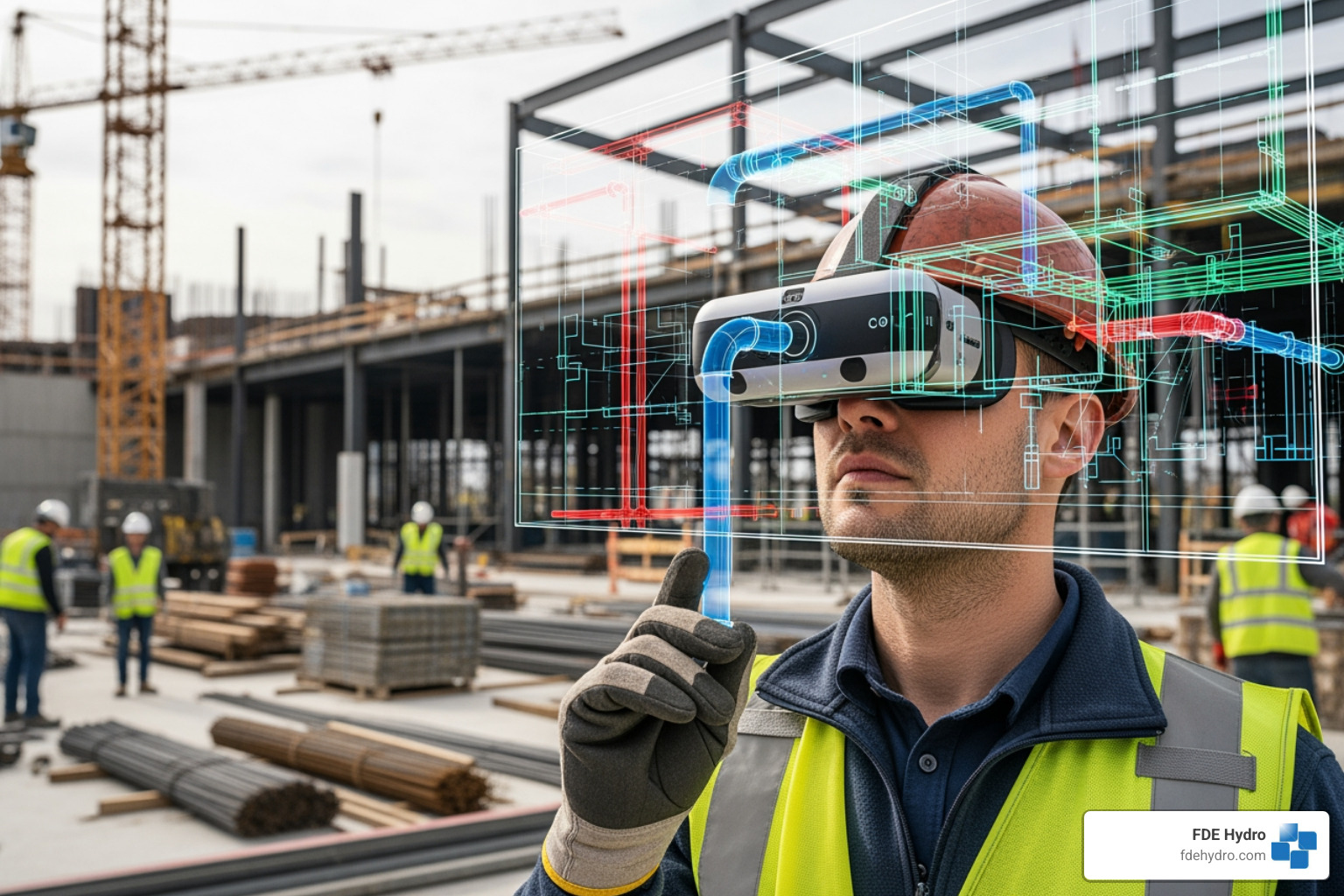
The digital revolution has certainly found its way to our construction sites, bringing with it a wave of innovative construction techniques that are redefining how we plan, execute, and monitor projects. This digital change, coupled with automation, empowers us to make data-driven decisions that improve every aspect of construction.
At the heart of this change is Building Information Modeling (BIM). BIM isn’t just about 3D models; it’s a collaborative process that allows architects, engineers, and contractors to work together on a detailed virtual representation of a structure. This helps us visualize and analyze design decisions, pinpoint interferences, and resolve errors before construction even begins, saving invaluable resources and preventing costly clashes.
Complementing BIM are cloud-based tools, which are proving to be the greatest efficiency driver in the market today. These systems connect workers to projects in real-time, providing a seamless flow of information between the back office and the field. This means real-time inputs of critical project data for analysis and response, improving collaboration and reducing project costs and durations. It’s no surprise that 85% of contractors have either implemented or are planning to implement cloud solutions. As research shows, cloud computing is an innovation enabler for other emerging construction technologies like BIM, IoT, virtual reality, augmented reality, and big data analytics. We believe that storing project data in the cloud is a no-brainer for any forward-thinking contractor.
3D Printing: Revolutionizing Speed and Material Use
When we talk about groundbreaking innovative construction techniques, 3D printing often comes to mind, and for good reason! This additive manufacturing process is literally building the future, layer by layer.
How does 3D printing work in construction? Large-scale 3D printers deposit successive layers of material, often a specialized concrete mix, to create building components or even entire structures. It’s fascinating to watch, and you can get a glimpse of the process in this video: What Is 3D Printing and How Does It Work? | Mashable Explains.
The benefits are compelling:
- Speed of construction: 3D-printed homes have been constructed in a matter of days in some regions. This speed is crucial for affordable housing projects, enabling quick and precise construction with minimal labor.
- Complex architectural designs: 3D printing allows for intricate designs and shapes that would be difficult, if not impossible, to achieve with traditional methods.
- Reduced material waste: By precisely depositing only the necessary material, 3D printing significantly minimizes waste, contributing to a more sustainable construction process.
The market for 3D printing in Architecture and Construction is projected to explode, reaching $47.95 million by 2030 (up from $10.94 million in 2021), indicating a staggering 101% CAGR growth rate. This signifies immense confidence in its potential.
However, it’s not without its challenges. We face regulatory problems and construction permits that are often designed for traditional methods, creating roadblocks for widespread adoption. Scalability is also a consideration – while impressive for individual homes, scaling up for large commercial or infrastructure projects is still an evolving area. According to 3drific, government regulations and construction permits are currently the biggest early roadblocks for 3D printed houses becoming widely available.
Drones and Robotics: Enhancing Safety and Productivity
The construction site of today is a far cry from what it was even a decade ago, thanks to the integration of drones and robotics. These aren’t just fancy gadgets; they are essential tools that are significantly enhancing safety and productivity.
Drones have become our eyes in the sky. They are invaluable for:
- Site surveying: Quickly capturing accurate topographical data.
- Aerial inspections: Reaching inaccessible areas for routine checks or damage assessment without putting workers at risk.
- Progress monitoring: Providing real-time aerial footage that helps project managers track progress and identify potential issues.
- Safety monitoring: Overseeing large sites to ensure compliance with safety protocols and respond quickly to incidents.
Meanwhile, robotics are taking on tasks that are repetitive, dangerous, or require extreme precision. Construction firms with a budget can apply robotics to any task that can be automated. This includes:
- Automated bricklaying: Robots can lay thousands of bricks per day with high precision.
- Demolition: Automating dangerous demolition tasks improves worker safety by keeping humans out of harm’s way.
- Welding and drilling: Robots perform these tasks with high accuracy and consistency, improving quality and reducing errors.
The primary benefits are clear: improved worker safety and increased productivity. While construction workers make up only 6% of the U.S. labor force, they account for 20% of worker deaths. Drones and robotics help mitigate these risks by automating hazardous tasks, allowing our human capital to focus on more important problem-solving. They can also operate 24/7, accelerating project timelines. This innovative approach aligns with our goal of Using Technology to Minimize the Duration of Impacts on our projects.
Augmented (AR) and Virtual Reality (VR) in Construction
Imagine walking through a building before it’s even built, or seeing a digital blueprint overlaid onto a physical foundation as you work. This is no longer science fiction; it’s the reality of Augmented Reality (AR) and Virtual Reality (VR) in construction.
Virtual reality has become an integral part of the pre-construction process. It offers a low-stakes way to visualize an entire project, allowing us to:
- Design visualization: Immersive 3D models help clients and stakeholders truly understand the design.
- Clash detection: Identifying potential conflicts between different building systems (like plumbing and electrical) in a virtual environment, preventing costly rework on site.
- Stakeholder walkthroughs: Conducting virtual tours to gather feedback and make critical changes before any physical work begins, increasing efficiencies and preventing problems.
Augmented reality, on the other hand, transforms how workers interact with their tasks on-site. AR allows workers to overlay digital models onto physical sites, providing:
- Installation guidance: Workers can see exactly where components need to go, reducing errors and speeding up installation.
- Error reduction: By comparing the actual build to the digital model in real-time, deviations can be caught and corrected immediately.
- Task analysis: AR tools help workers analyze problems and assist with building and repair.
Technology leaders expect AR to surpass VR within the next 3 to 5 years, presenting a wide range of opportunities. When combined with Building Information Modeling (BIM), AR allows construction professionals to interact with a fully-rendered 3D model of a building before construction begins. These technologies are crucial for AI-Driven Development, enabling smarter design and more efficient execution.
Smart Materials and Sustainable Innovative Construction Techniques
Our commitment to building a better future extends beyond just speed and efficiency; it encompasses a profound responsibility towards sustainability. This is where smart materials and sustainable innovative construction techniques truly shine. The core principles of green building guide us towards energy efficiency, reduced carbon footprints, and ultimately, a more harmonious relationship with our planet. For us, particularly in water infrastructure, this means prioritizing Sustainable Infrastructure Development.
A prime example of successful sustainable construction is The Edge in Amsterdam, often hailed as the most sustainable office building in the world. This remarkable structure uses solar energy, rainwater harvesting systems, and intelligent lighting to achieve a near-zero energy footprint. Its success demonstrates the tangible benefits of integrating green building principles from concept to completion, including the often-overlooked aspect of IoT integration for smart, responsive building management.
Self-Healing Concrete for Increased Durability
Imagine concrete that can fix its own cracks. It sounds like something from a sci-fi movie, but self-healing concrete is becoming a reality, representing a truly innovative material. The concept, often referred to as bioconcrete, involves embedding bacteria or other healing agents within the concrete mix. When cracks appear and water seeps in, these agents are activated, producing limestone or other materials that fill the fissures. You can see this fascinating process in action here: What if cracks in concrete could fix themselves?.
The benefits of this material are substantial:
- Extended structural lifespan: By automatically repairing minor cracks, the concrete’s integrity is maintained, significantly prolonging the life of structures.
- Reduced maintenance costs: Less need for manual crack repair translates directly into lower long-term maintenance expenses.
- Increased durability: Structures become more resilient to environmental stressors and wear and tear.
While incredibly promising, challenges remain, primarily in terms of cost and ensuring the healing agents remain viable under various environmental conditions over extended periods. However, the potential for increasing the longevity of our infrastructure, including our hydropower facilities, is immense.
Green Building and Sustainable Materials
The pursuit of sustainability in construction is not a trend; it’s an imperative. Our core principles of green construction revolve around minimizing environmental impact throughout a building’s lifecycle, from material sourcing to operation and eventual deconstruction.
This involves:
- Use of recycled materials: Repurposing recyclables for construction began as early as the 1960s. Today, we incorporate materials like recycled steel, reclaimed wood, and even recycled plastics into new builds, significantly reducing the demand for virgin resources.
- Eco-friendly materials: We actively seek out eco-friendly materials that have a lower environmental footprint, such as bamboo (a rapidly renewable resource) and low-carbon concrete.
- Renewable resources: Modern timber frame construction is an excellent example. Using engineered wood products from sustainably managed forests reduces a building’s carbon footprint and offers a renewable alternative to traditional materials.
- Energy-efficient design: This includes integrating solar panels for renewable energy generation and implementing rainwater harvesting systems. Rainwater harvesting, for example, reduces reliance on municipal water supplies and mitigates stormwater runoff, which is particularly relevant to our focus on Sustainable Water Infrastructure. Passive solar design, optimizing window placement and using thermal mass materials, also minimizes the need for artificial heating and cooling.
These environmentally conscious choices help create greener buildings that are not only better for the planet but also offer long-term operational savings for owners.
The Advantages and Challenges of Adopting New Techniques
Embracing innovative construction techniques is a journey of weighing significant benefits against practical drawbacks. It’s a strategic decision that involves evaluating initial investments against long-term returns, understanding new skill requirements, and navigating the changing regulatory landscape. We believe the advantages far outweigh the challenges, especially for those committed to efficiency and sustainability.
Primary Advantages: Building Faster, Safer, and Smarter
The push for innovation is driven by a clear set of compelling advantages that fundamentally transform how we approach projects:
- Reduced construction time: Techniques like prefabrication, modular construction, 3D printing, and automation significantly cut down on project durations. Modular construction alone can achieve 20-50% schedule compression, turning months into weeks.
- Improved worker safety: Moving tasks from hazardous on-site conditions to controlled factory environments, and employing drones and robotics for dangerous jobs, drastically reduces risks. Between 1974 and 2007, the number of fatal injuries to employees in the UK fell by 73 percent and reported nonfatal injuries fell by 70 percent due to PPE regulations and technological advancements.
- Improved precision and quality: Factory-controlled environments and automated processes ensure higher accuracy and consistency, leading to superior quality structures with fewer defects.
- Cost savings: While some innovative methods might have higher upfront costs, they often lead to substantial long-term savings through quicker completion, reduced labor needs, minimized waste, and lower operational costs over the building’s lifespan. For example, some advanced foundation systems can cut foundation costs in half.
- Increased sustainability: From green building materials and energy-efficient designs to reduced material waste, these techniques promote environmentally responsible construction practices.
- Reduced material waste: Precision manufacturing and optimized processes in off-site construction minimize waste, contributing to both cost savings and environmental benefits.
Key Challenges to Widespread Implementation
Despite the overwhelming advantages, we acknowledge that the path to widespread adoption of innovative construction techniques is not without its problems:
- High initial investment costs: Implementing new technologies like large 3D printers, robotics, or advanced modular factories requires significant upfront capital. This can be a barrier for smaller firms or those with limited access to financing.
- Need for specialized training and skilled labor: These advanced techniques demand a workforce with new skills, from operating complex machinery and software to understanding digital workflows. There’s a current skills gap that needs to be addressed through training and education.
- Potential for job displacement: While new technologies create new types of jobs, there’s a concern that automation could displace some traditional construction roles, requiring a careful transition and retraining strategy for the workforce.
- Dependence on technology and power: Modern construction relies heavily on digital systems, power infrastructure, and connectivity. Any disruption in these areas can bring projects to a halt.
- Regulatory and building code problems: Existing building codes and regulations are often designed for traditional construction methods. Adapting these frameworks to accommodate rapid advancements in areas like 3D printing or new material compositions can be a slow and complex process, as seen with challenges in making 3D printed houses widely available due to government regulations.
Frequently Asked Questions about Innovative Construction Techniques
We often get asked about the practical implications of these new approaches. Here are some of the most common questions:
How do these innovative techniques specifically speed up construction projects?
The acceleration of construction projects through innovative construction techniques is multifaceted:
- Off-site manufacturing (modular/prefabrication): By building components or entire modules in a factory concurrently with on-site groundwork, we drastically reduce the overall project timeline. This parallel processing is a huge time-saver.
- Automation (robotics/3D printing): Robots can perform repetitive tasks much faster and with greater accuracy than human labor, while 3D printers can rapidly construct elements layer by layer.
- Parallel processing: As mentioned, tasks that used to be sequential can now happen at the same time, such as foundation work and module fabrication.
- Reduced weather delays: Factory-based work is immune to adverse weather conditions, ensuring consistent progress regardless of rain, snow, or extreme temperatures.
- Faster inspections (drones): Drones can conduct comprehensive site inspections and surveys in a fraction of the time it would take human inspectors, providing real-time data for quick decision-making.
- Improved planning (BIM/VR): Advanced digital tools like BIM and VR allow for meticulous planning and early clash detection, preventing costly delays and rework on-site.
Are modern construction techniques better for the environment?
Absolutely! Many modern innovative construction techniques are inherently designed with sustainability in mind, making them significantly better for the environment:
- Reduced on-site waste: Off-site manufacturing leads to precise material usage and efficient recycling programs, dramatically cutting down on landfill waste.
- Optimized material usage: Digital design and automated processes ensure that materials are used efficiently, minimizing excess and scraps.
- Use of sustainable and recycled materials: Green building practices actively incorporate renewable resources like timber, and recycled content, reducing the demand for virgin materials and their associated environmental impacts.
- Improved energy efficiency in finished buildings: Techniques like Insulated Concrete Forms (ICF) and passive solar design contribute to highly insulated, energy-efficient buildings, leading to lower operational energy consumption and reduced greenhouse gas emissions over the building’s lifespan.
- Lower carbon footprint over building lifecycle: From reduced transportation emissions due to fewer deliveries to more efficient energy use in the completed structure, the overall carbon footprint is significantly lowered.
What should future engineers consider when developing new construction techniques?
As we look ahead, engineers developing new innovative construction techniques must prioritize several key considerations:
- Sustainability and circular economy: Focus on materials that are renewable, recyclable, and have a low embodied carbon. Design for deconstruction and reuse.
- Cost-effectiveness and scalability: Innovations must not only be efficient but also economically viable and adaptable to projects of varying sizes and complexities, from small residential buildings to large-scale infrastructure like hydropower plants.
- Automation and AI integration: Continue to leverage AI and automation for greater efficiency, safety, and data-driven decision-making, including predictive analytics.
- Durability and low maintenance: Develop materials and methods that result in structures with longer lifespans and reduced maintenance requirements, like self-healing concrete.
- Human safety and collaboration: Ensure that new technologies improve, rather than compromise, worker safety and facilitate seamless collaboration among all project stakeholders.
The Future is Now: Embracing the Next Generation of Construction
The construction industry is at the cusp of a profound change, driven by a wave of innovative construction techniques that are reshaping every aspect of building. We’ve moved beyond merely constructing; we’re now designing, fabricating, and assembling with unprecedented precision, speed, and environmental consciousness. The shift towards a tech-integrated, sustainable industry is not a distant dream but a tangible reality that we are actively building today.
The future outlook includes increased automation, with robotics and drones taking on more complex tasks, and AI-driven project management, where algorithms optimize schedules, manage resources, and provide invaluable predictive analytics to mitigate risks before they arise. This intelligent approach allows us to make smarter decisions, faster.
At FDE Hydro, we are proud to be at the forefront of this evolution, playing a critical role in pioneering modular methods for essential civil infrastructure, particularly in hydropower and water control systems across North America, Brazil, and Europe. Our commitment to innovation is unwavering, as we strive to deliver projects that are not only efficient and cost-effective but also sustainable and resilient for generations to come.
As project owners and stakeholders, embracing these next-generation construction methods is no longer optional; it’s a strategic imperative for long-term success. We invite you to explore how these advancements can benefit your next project.
Learn how to mitigate risks for your long-term hydropower projects
by Bill French Sr. | Dec 25, 2025 | News
AI for Sustainability: Balancing Innovation with Environmental Responsibility
AI for sustainability represents one of the most important—and complex—challenges of our time. Here’s what you need to know:
How AI Helps Sustainability:
- Environmental Monitoring: Tracks deforestation, methane emissions, and biodiversity changes in real-time
- Energy Optimization: Manages smart grids and forecasts renewable energy production
- Precision Agriculture: Reduces water usage by up to 25% and chemical runoff by 30%
- Climate Prediction: Improves weather forecasting and disaster early warning systems
- Waste Management: Improves recycling efficiency by up to 50% through automated sorting
Environmental Costs of AI:
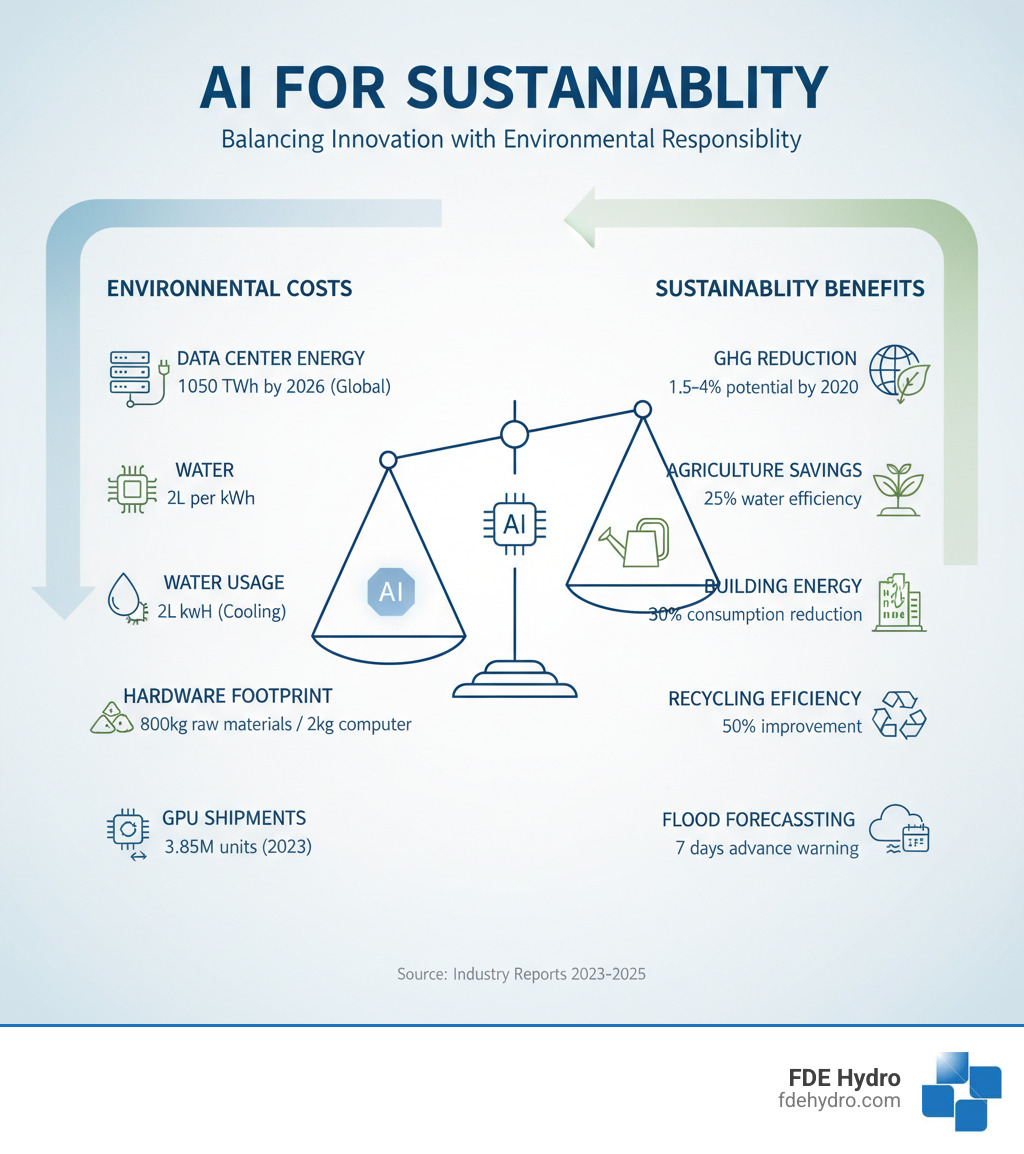
- Energy Consumption: Data centers use about 1% of global electricity; AI queries consume 5-10x more than traditional searches
- Water Usage: Requires approximately 2 liters of water per kilowatt-hour for cooling
- Hardware Impact: A 2 kg computer requires 800 kg of raw materials to manufacture
- Carbon Emissions: Training a single large language model can generate 552 tons of CO2
There’s real urgency here. AI could help reduce global greenhouse gas emissions by 1.5-4% by 2030. But the number of data centers has surged from 500,000 in 2012 to 8 million today, and their electricity consumption is projected to more than double by 2026.
Sustainability, as defined by the 1987 Brundtland Report, means “development that meets the needs of the present without compromising the ability of future generations to meet their own needs.” This definition captures why the AI sustainability question matters so much.
The Cornell AI for Sustainability Initiative (CAISI) represents one of the leading efforts to address this challenge. It connects academia, industry, and nonprofits to develop AI-powered solutions focused on decarbonizing energy and agri-food systems while advancing sustainable materials findy.
This guide explores both sides of AI’s sustainability story. You’ll learn about the environmental costs of AI infrastructure, the powerful ways AI enables sustainability solutions across sectors, and the practical strategies for reducing AI’s footprint through optimization and renewable energy.
I’m Bill French Sr., Founder and CEO of FDE Hydro, a company delivering modular civil construction solutions to the hydropower industry. With decades of experience in heavy civil construction and five years focused on next-generation hydropower technology, I’ve seen how innovation can advance both business goals and environmental stewardship, making AI for sustainability a natural evolution in our industry’s approach to clean energy infrastructure.
The Environmental Cost of the AI Boom
There’s something ironic about AI for sustainability. Here we have this powerful technology that could help solve environmental problems, yet it’s creating some pretty serious environmental challenges of its own. The infrastructure needed to build, train, and run AI models—especially the complex systems behind tools like ChatGPT—requires massive amounts of resources. We’re talking about staggering energy consumption, enormous water usage, and a hidden cost in raw materials and electronic waste that most people never see.
It’s the classic double-edged sword: a tool with incredible potential that comes with its own set of problems we need to solve.
The Soaring Energy and Water Demands of Data Centers
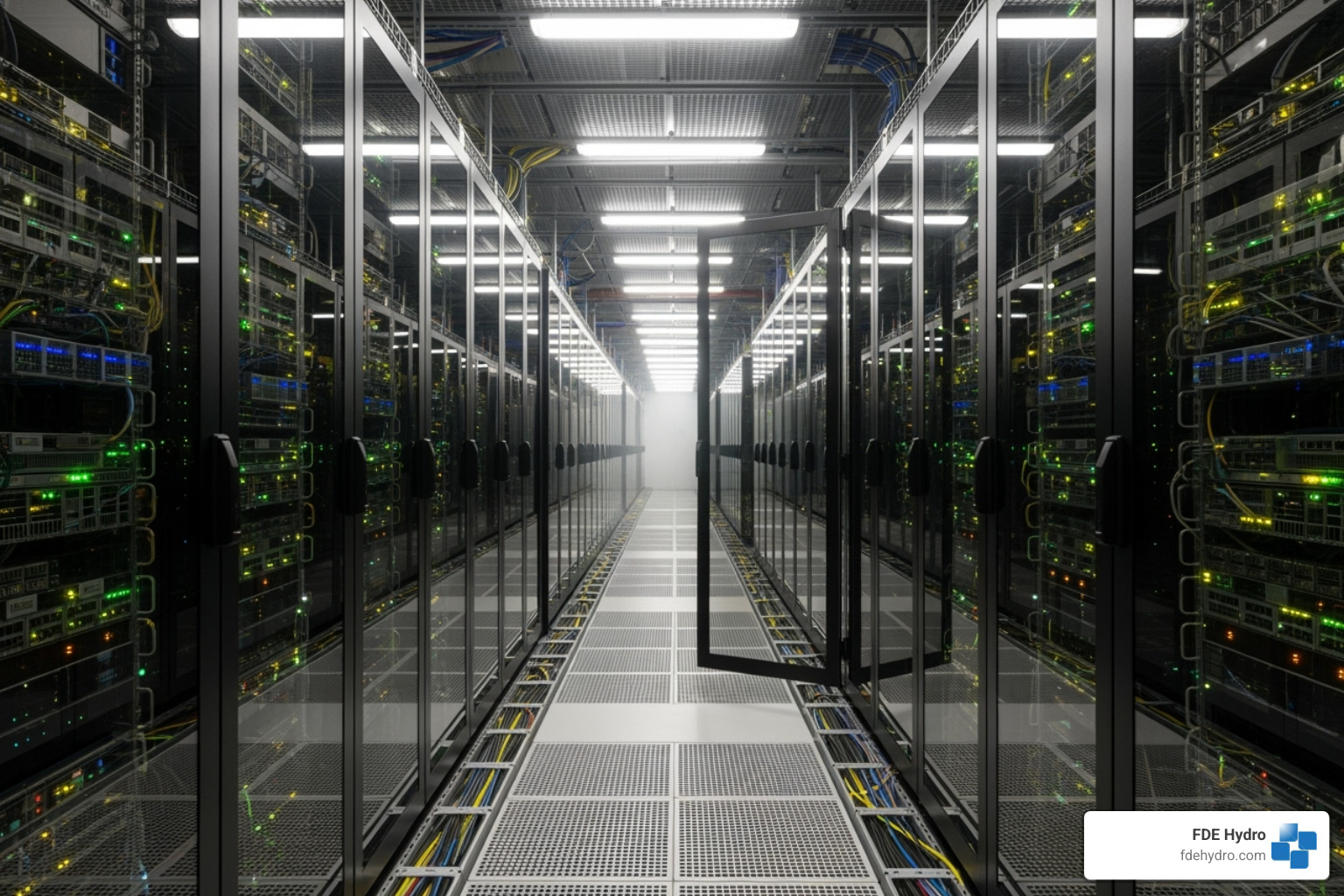
Data centers are where AI’s environmental challenge really hits home. These massive, temperature-controlled buildings house all the computing infrastructure—servers, storage drives, network equipment—that power our digital world. And with AI exploding in popularity, their numbers have grown dramatically. We went from 500,000 data centers in 2012 to 8 million today. That’s not a typo.
This explosive growth means one thing: these facilities are consuming electricity at an incredible rate. In North America alone, the power requirements nearly doubled from 2,688 megawatts at the end of 2022 to 5,341 megawatts by the end of 2023. Globally, data centers consumed 460 terawatt-hours in 2022, and we’re looking at 1,050 terawatt-hours by 2026. To put that in perspective, data centers could soon rank fifth globally in electricity consumption—using more power than most countries.
Generative AI is especially power-hungry. A single ChatGPT query uses about five to ten times the electricity of a regular search. Training one large model like GPT-3 consumed 1,287 megawatt hours of electricity and generated roughly 552 tons of carbon dioxide. That’s enough energy to power 120 average American homes for an entire year—just to train one model.
The hardware demands are equally staggering. GPU shipments to data centers jumped from 2.67 million in 2022 to 3.85 million in 2023. All those powerful chips need cooling, which puts enormous strain on power grids. When the grid can’t keep up, facilities often turn to diesel generators to handle the load, which just adds more greenhouse gas emissions to the problem.
In Ireland, the situation is particularly striking. AI-driven data centers could account for nearly 35 percent of the country’s total energy use by 2026. That’s simply not sustainable if we keep powering these facilities the same way we do today. The IEA report on electricity demand lays out these challenges in detail.
But it’s not just about electricity. Data centers are incredibly thirsty, too. All those powerful machines generate tremendous heat, and cooling them requires vast amounts of water. For every kilowatt-hour of energy a data center uses, it needs roughly two liters of water for cooling. When you add it all up, AI-related infrastructure globally may soon consume six times more water than the entire country of Denmark.
This matters even more when you consider that a quarter of humanity already lacks access to clean water and sanitation. The environmental footprint of generative AI extends far beyond electricity—it touches our most precious resources.
From Mines to Landfills: The Hidden Lifecycle Costs
The environmental story of AI doesn’t start when you flip the switch on a data center. It begins much earlier, deep in mines where workers extract rare earth elements and other raw materials. And it doesn’t end when a server stops working—it continues in landfills where electronic waste piles up.
Manufacturing computer hardware, especially the specialized chips AI systems need, is shockingly resource-intensive. Building a 2 kg computer requires 800 kg of raw materials. Let that sink in—you need 400 times more materials than the finished product weighs. Many of these materials are rare earth elements, and extracting them can devastate local environments and create social problems in mining communities.
The supply chain for AI hardware spans the globe, with manufacturing and transportation adding significant energy use and emissions at every step. And here’s where things get worse: AI technology evolves so rapidly that hardware becomes obsolete quickly. This creates a mounting e-waste crisis that we’re only beginning to understand.
These discarded electronics aren’t just trash—they contain hazardous substances like mercury and lead. If not properly handled, they pose serious risks to human health and the environment. The UNCTAD report on electronics paints a sobering picture of just how much electronic waste we’re generating globally.
We need to think more carefully about the full picture. As MIT research on AI’s sustainability implications points out, we must systematically understand what new AI developments really cost us. We need to weigh the perceived benefits of generative AI against its complete environmental and societal costs—from the mines to the data centers to the landfills.
Before we deploy AI for sustainability solutions at massive scale, we need to make sure the net effect is genuinely positive. That means being honest about the entire lifecycle impact and working to reduce it at every stage. The good news? We’re becoming more aware of these challenges, and awareness is the first step toward finding real solutions.
Using AI for Sustainability: Applications and Case Studies
Now we get to the exciting part. Yes, AI infrastructure has environmental costs—but the technology itself holds remarkable promise for tackling some of our planet’s biggest sustainability challenges. When we deploy AI for sustainability thoughtfully, it becomes a powerful ally in our fight against climate change and resource depletion.
The numbers tell a compelling story. Research suggests that AI for sustainability applications could reduce global greenhouse gas emissions by 1.5-4% by 2030. That might not sound like much at first, but when you’re talking about global emissions, even a few percentage points represent millions of tons of carbon dioxide kept out of our atmosphere.
The key is applying AI where it can make the biggest difference: monitoring our environment in real-time, optimizing how we use resources, and helping us make smarter decisions about energy, food, water, and waste. Let’s look at how this plays out across different sectors.
Revolutionizing Energy and Utilities
The energy sector is undergoing its biggest change in a century, and AI is accelerating that change in ways we couldn’t have imagined even a decade ago.
Think about the complexity of managing a modern power grid. You’ve got thousands of power sources—some steady and predictable, others like wind and solar that fluctuate with the weather. You’ve got millions of consumers whose demand changes by the hour. And you need to balance it all in real-time, because electricity can’t be stored easily at scale (well, except through technologies like pumped storage hydropower, but more on that in a moment).
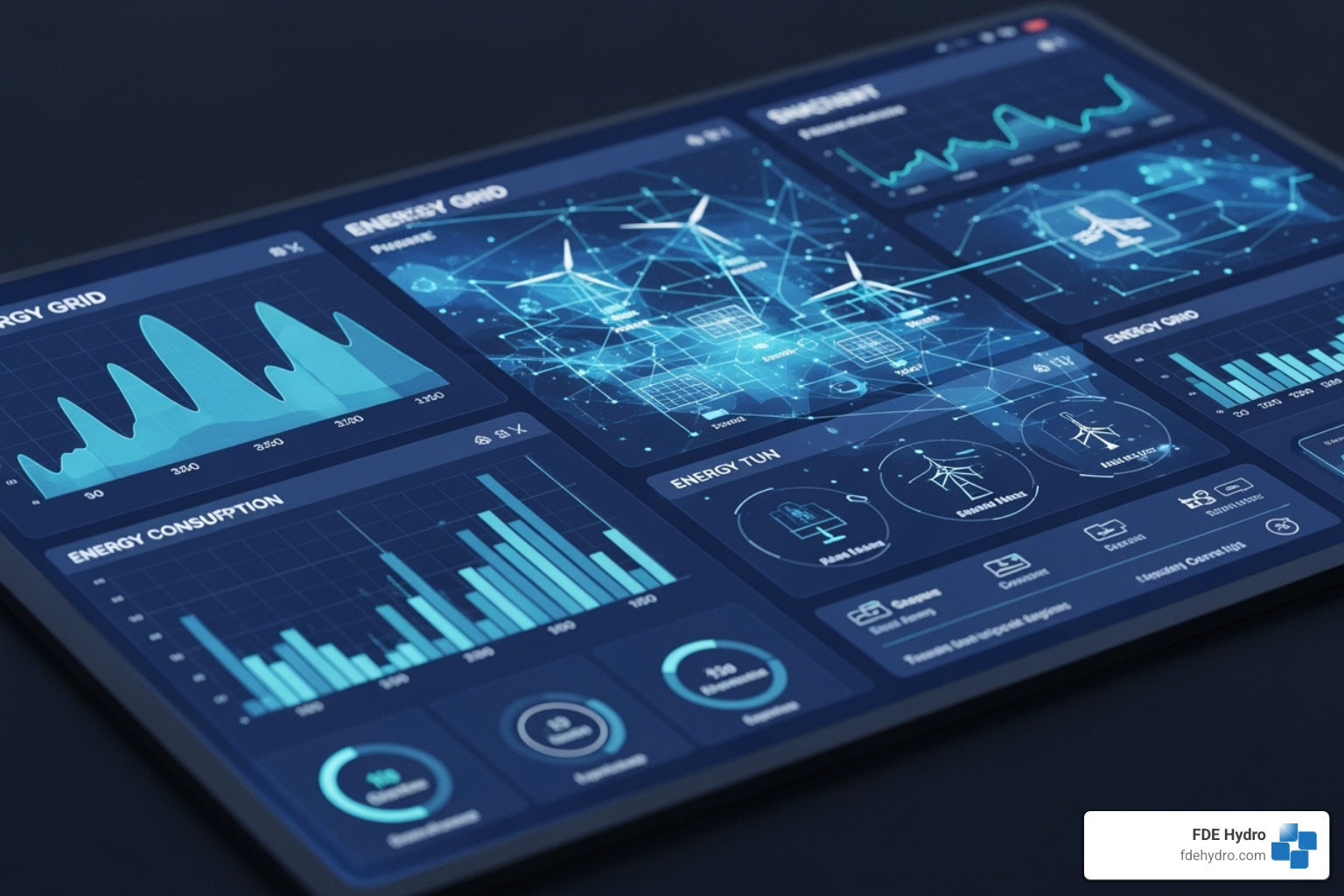
AI algorithms excel at this kind of complex optimization. They analyze real-time data from across the grid to predict energy demand and supply shifts, allowing smart grids to distribute power more effectively. This is particularly vital for integrating intermittent renewable energy sources like solar and wind. When AI can forecast renewable energy generation with precision, grid operators can balance supply and demand without resorting to fossil fuel backup power.
At FDE Hydro, we see how critical stable, dispatchable power is in this evolving landscape. Hydropower, especially pumped storage, acts as a natural partner for AI-driven grid optimization. While AI manages the complex dance of variable renewables, hydropower provides the flexibility and reliability the grid needs. Our modular hydropower solutions are designed to integrate seamlessly into these smart energy systems. You can learn more about how hydropower is the guardian of the grid and the potential of pumped storage hydropower to support these efforts.
Beyond the grid itself, AI is changing how individual buildings and industrial facilities use energy. Smart energy management systems learn usage patterns and automatically adjust HVAC, lighting, and other energy-intensive operations to minimize waste. Some systems have achieved an average 30% reduction in building energy consumption. The U.S. Department of Energy recognized the critical role that innovative hydropower technologies play in this sustainable energy future, endorsing FDE Hydro’s technology in their Hydropower Vision Report. Read more about how the U.S. Department of Energy Hydropower Vision Report endorses FDE Technology.
Water utilities are also benefiting from AI’s analytical power. Advanced systems can identify anomalies in water distribution networks, detecting leaks that would otherwise go unnoticed for months or years. Some implementations have achieved a 40% reduction in water leakage and helped agricultural users decrease water consumption by 25%. When water scarcity affects billions of people, these improvements matter enormously.
Cultivating a Greener Future with AI in Agriculture
Agriculture faces an enormous challenge: feeding a growing global population while reducing its environmental footprint. Currently, farming accounts for about 70% of global freshwater use and contributes significantly to greenhouse gas emissions through fertilizer use and land-use changes.
This is where precision farming powered by AI offers genuinely transformative solutions. Instead of treating an entire field the same way, AI analyzes data from drones, IoT sensors, and satellite imagery to understand the specific needs of different areas within a single field. The soil might be drier here, the nutrient levels different there, pest pressure higher in another spot.
AI algorithms can determine precisely how much water, fertilizer, and pesticide each area needs—and just as importantly, when it needs it. The results are impressive. Some precision farming platforms have achieved up to 25% reductions in water usage and 30% reductions in chemical runoff, all while boosting crop yields by 20%. Less waste, fewer chemicals entering waterways, more food produced. That’s a win across the board.
The environmental benefits extend beyond individual farms. AI helps optimize entire food supply chains, from farm to fork, reducing spoilage and waste at every step. Research on AI to improve the food and agriculture sector demonstrates the technology’s broad applicability across the industry.
For retailers, AI platforms can predict inventory needs more accurately, leading to 20% reductions in food waste. Restaurants using AI demand forecasting have decreased surplus food by 15%. When you consider that roughly one-third of all food produced globally is wasted, these improvements represent significant progress toward AI for sustainability goals.
Optimizing Waste Management and the Circular Economy
Let’s be honest: we’ve created a waste problem. Globally, we generate over 2 billion tons of municipal solid waste annually, and much of it ends up in landfills or polluting our environment. Traditional recycling processes struggle with efficiency and contamination, making it economically challenging to recycle many materials.
AI-powered automated sorting systems are changing this equation dramatically. Using computer vision and machine learning, these systems can identify and separate different types of materials with unprecedented speed and accuracy. They can distinguish between different grades of plastic, identify contaminated materials, and sort at speeds no human workforce could match.
Some advanced sorting systems have improved recycling efficiency by 50%. That means less contamination, more materials actually getting recycled instead of landfilled, and better economics for recycling operations. When recycling becomes more profitable, more of it happens—it’s that simple.
But AI’s role in waste reduction goes beyond just sorting what we’ve already thrown away. Throughout the supply chain, AI helps companies reduce waste before it happens. By accurately forecasting demand, optimizing logistics, and identifying inefficiencies, AI moves us toward a more circular economy where resources stay in use as long as possible.
Enhancing Environmental Monitoring and Climate Prediction
Perhaps the most direct application of AI for sustainability is helping us understand what’s actually happening to our planet. Climate change and environmental degradation are complex, global phenomena that generate enormous amounts of data—more than any human team could possibly analyze manually.
AI excels at processing this flood of information. Algorithms can analyze satellite imagery to track deforestation rates in near real-time, monitoring vast forest areas that would be impossible to survey on the ground. They can identify illegal sand dredging operations that damage marine ecosystems, as demonstrated by UNEP’s Marine Sand Watch. They can even detect when oil and gas facilities vent methane, a greenhouse gas over 80 times more potent than carbon dioxide in the short term.
For climate prediction, AI models are pushing the boundaries of what’s possible. Traditional weather and climate models require massive computational resources and still struggle with certain types of predictions. AI approaches can forecast weather patterns and extreme events with greater accuracy and longer lead times.
Google’s Flood Forecasting project can predict riverine floods up to seven days in advance, providing crucial early warnings to vulnerable communities in over 100 countries. Seven days might not sound like much, but it’s enough time to evacuate, move livestock, and prepare emergency supplies—potentially saving thousands of lives. You can learn more about this initiative at Google’s Flood Forecasting project.
AI is also making breakthroughs in wildfire detection. New satellite systems are being developed that can track wildfires globally with high-resolution imagery updated every 20 minutes, enabling faster response times that could prevent small fires from becoming disasters.
Cities are using AI to tackle extreme heat by analyzing satellite and aerial imagery to identify neighborhoods most vulnerable to heat islands—areas where concrete and asphalt create dangerously high temperatures. Armed with this information, urban planners can target cooling interventions like tree planting and reflective surfaces where they’re needed most.
The applications keep expanding. AI can analyze flight data and weather patterns to help airlines avoid creating contrails—those white streaks behind planes that, it turns out, contribute significantly to climate warming. It can monitor biodiversity changes, track wildlife populations, and identify ecosystems under stress before they collapse.
What ties all these applications together is AI’s ability to find patterns in complexity, to make sense of vast datasets, and to provide actionable insights that help us protect our planet. The technology isn’t perfect, and it comes with environmental costs of its own. But when deployed thoughtfully, AI for sustainability gives us powerful tools to address challenges that once seemed impossible.
As we accept the power of AI for sustainability, it’s equally crucial to address the technology’s own environmental footprint. We can’t solve environmental problems by creating new ones. The goal is to develop “Green AI”—AI systems that are inherently more efficient and powered by sustainable infrastructure. This requires a multi-pronged approach, focusing on optimizing the AI models themselves, designing more efficient hardware and data centers, and ensuring these facilities are powered by renewable energy.
| Feature |
Benefits of AI for Sustainability |
Risks & Environmental Costs |
| Energy Systems |
Optimizes smart grids, integrates renewables, and reduces building energy consumption by up to 30%. |
Data centers consume ~1% of global electricity (projected to double by 2026), with AI queries using 5-10x more energy than standard searches. |
| Water Resources |
Reduces water usage in agriculture by up to 25% and detects leaks in utility networks. |
Data centers require ~2 liters of water per kWh for cooling, straining local water supplies. |
| Climate & Environment |
Improves climate prediction, tracks deforestation and emissions, and improves disaster warnings. |
Training a single large AI model can generate over 552 tons of CO2 emissions. |
| Resource Management |
Improves recycling efficiency by up to 50% and enables precision agriculture to reduce chemical runoff. |
Manufacturing hardware is resource-intensive (800 kg of raw materials for a 2 kg computer) and contributes to a growing e-waste problem. |
by Bill French Sr. | Nov 10, 2025 | News
Why Energy Infrastructure Development is Critical to Our Future
Energy infrastructure development is the foundation of our transition to clean energy and the key to meeting explosive growth in electricity demand from AI, electric vehicles, and industrial electrification. Here’s what you need to know:
Core Components of Modern Energy Infrastructure:
- Renewable Generation – Solar, wind, and hydropower facilities replacing fossil fuels
- Grid Modernization – Smart grids, energy storage, and transmission upgrades enabling clean energy integration
- Flexible Baseload – Pumped storage hydropower and advanced batteries balancing intermittent renewables
- Modular Construction – Precast solutions reducing project timelines and capital costs
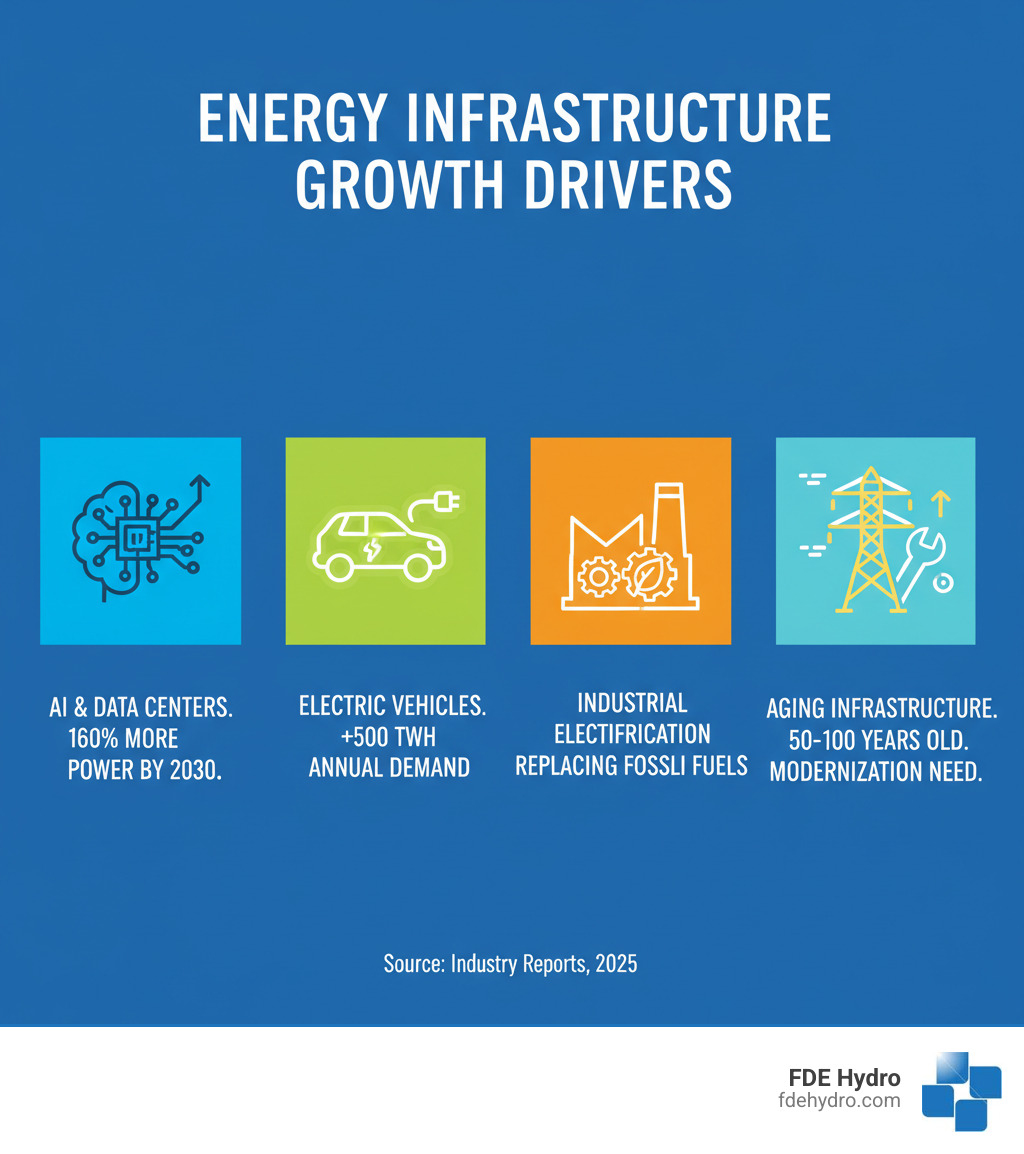
The energy landscape is changing rapidly. Global electricity demand is projected to surge, driven by AI data centers, millions of EVs, and industrial electrification. Simultaneously, much of our existing infrastructure—dams, transmission lines, and power plants—is 50 to 100 years old and requires urgent modernization.
This convergence of rising demand and aging systems creates an urgent need for innovative solutions that can be deployed quickly and sustainably.
Traditional construction methods can’t keep pace. With conventional hydropower projects taking 7-10 years to complete, the industry needs a fundamental shift in how we build energy infrastructure.
I’m Bill French Sr., Founder and CEO of FDE Hydro™, where we’ve developed patented modular precast solutions specifically designed to accelerate energy infrastructure development in the hydropower sector. My five decades leading major civil construction projects—from Boston’s Logan Airport to landmark DOT bridge initiatives—taught me that innovation in construction methods is just as critical as innovation in energy technology itself.
The Unprecedented Surge: Why We Need More Energy Infrastructure Now
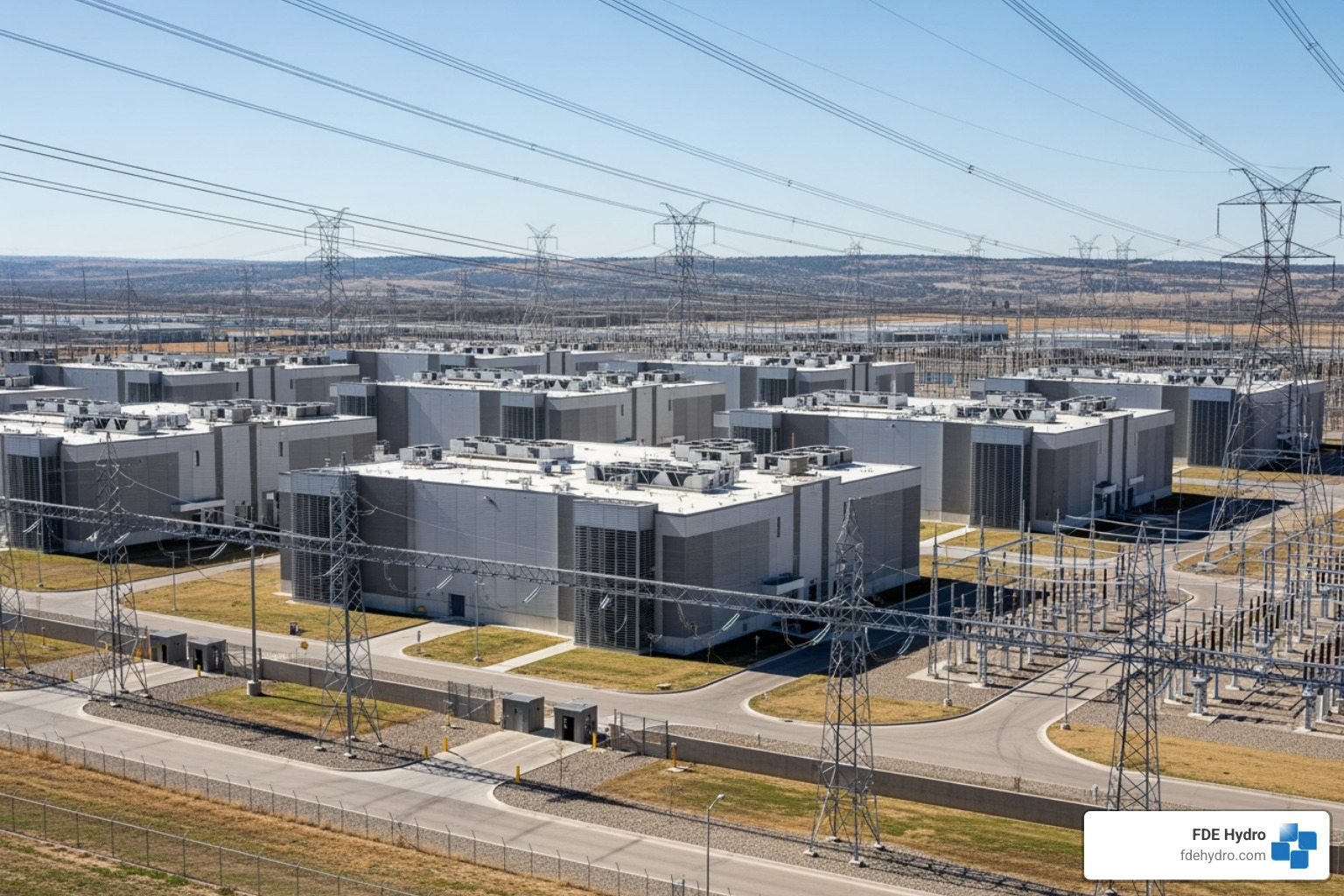
The electricity that powers our lives is facing unprecedented demand, and our current energy infrastructure development isn’t ready. This represents a fundamental shift in how much electricity the world needs and how quickly we need it.
Artificial Intelligence tools are incredibly power-hungry. The massive data centers that house these AI systems are becoming some of the largest electricity consumers on the planet. According to projections, AI and generative AI spending will exceed $631 billion globally by 2028, and that massive investment translates directly into electricity consumption.
The International Energy Agency warns that data centers could consume 160% more power by 2030 compared to 2022. In the United States, these digital warehouses are projected to use 7.5% of total electricity demand by 2030—up from just 2.5% in 2022. Understanding this challenge is why we’ve developed specific solutions, which you can explore on our Data Center Energy Resource page.
Beyond AI, Electric vehicles are changing our power grids. As millions more EVs replace gas-powered cars, they’ll add an estimated 500 TWh of annual electricity demand, a massive shift in energy consumption.
Electrification is spreading everywhere. It’s not just cars. We’re electrifying heating systems, industrial processes, and manufacturing operations that previously ran on fossil fuels. The onshoring movement—bringing manufacturing back to North America and Europe—means more factories requiring more power, right here on our grids.
Then there’s the climate reality we all face. Our net-zero goals mean we’re actively replacing coal plants, gas turbines, and oil refineries with clean electricity. The European Union is experiencing substantial increases in electricity demand as it pursues ambitious climate targets. Every fossil fuel source we retire must be replaced with clean power generation and the infrastructure to deliver it.
This convergence of AI growth, vehicle electrification, industrial change, and climate action creates what experts are calling the energy infrastructure megatrend. It’s not just one sector driving demand—it’s everything, all at once.
The challenge is clear: we need to build decades worth of energy infrastructure in just a few years. Traditional construction methods that take 7-10 years per project simply won’t cut it. We need innovation, speed, and solutions that can scale quickly while remaining sustainable and cost-effective. That’s exactly why modern approaches to building energy infrastructure—like modular precast construction—are becoming essential rather than optional.
The Clean Energy Revolution: Technologies Shaping Our Future

The clean energy revolution isn’t just about generating power differently—it’s about rethinking our entire approach to energy infrastructure development. New technologies must work together to create a sustainable, reliable system. Generating clean energy is only half the battle; we must also modernize its delivery and ensure it’s available when needed.
Without the right infrastructure to distribute and store power from renewables, the effort is wasted. That’s why understanding the fundamentals matters. If you’re looking to grasp the basics of how energy systems work, our Energy 101 guide is a great place to start.
The Rise of Renewables: Solar, Wind, and Water
Solar panels are popping up on rooftops and in massive arrays across deserts. Solar photovoltaic (PV) technology has become remarkably affordable and efficient, converting sunlight directly into electricity with increasingly impressive results. Wind turbines, those graceful giants dotting hillsides and offshore waters, are capturing breezes and changing them into clean power at scales our grandparents could never have imagined.
These technologies are absolutely essential for cutting carbon emissions, but they come with a catch. The sun sets every evening. The wind doesn’t blow on schedule. This intermittency creates a real challenge for our electrical grids, which need consistent, reliable power every second of every day. You can’t just tell a hospital or data center that the lights will come back on when the wind picks up.
Hydropower is the unsung hero of renewable energy. Unlike its renewable cousins, it offers the ability to provide baseload power while remaining completely clean. When you need electricity, you can open the gates and let water flow through turbines. When demand drops, you can reduce the flow. It’s responsive, reliable, and renewable.
Even better, advanced systems like Pumped Storage Hydropower function as nature’s battery. During times when solar and wind are producing more electricity than the grid needs, pumped storage uses that excess power to pump water uphill into a reservoir. When demand spikes or the wind stops blowing, that water flows back down through turbines, generating electricity exactly when it’s needed. This grid integration capability makes hydropower the guardian that keeps our lights on while we transition to renewables. You can learn more about why we’re so passionate about this on our Hydropower page.
Modernizing the Backbone: Smart Grids and Advanced Technologies
Our electrical grids were designed decades ago for a simpler time. Power flowed in one direction: from big central power plants out to homes and businesses. That model worked fine when energy came from a handful of massive coal or nuclear plants, but it’s completely inadequate for today’s diverse, distributed renewable energy landscape.
Smart grids are revolutionizing this outdated system through digitalization. These intelligent networks use sensors, automated controls, and real-time data to monitor and optimize how electricity flows. When a tree falls on a power line during a storm, a smart grid can automatically reroute power around the problem, restoring service in minutes instead of hours. This grid resilience is crucial as extreme weather events become more common.
Battery storage technology is advancing rapidly, allowing us to bank renewable energy for when it’s needed most. Large-scale battery installations can store excess solar power generated at noon and release it during the evening peak. Meanwhile, microgrids are creating self-sufficient energy islands that can operate independently during grid outages, keeping critical facilities like hospitals and emergency services running no matter what. Our work in Microgrid development focuses on making these systems more accessible and efficient.
All these technologies work together to improve efficiency across the entire energy system, reducing waste and ensuring that clean electrons get where they need to go.
The Challenge of Aging Infrastructure and the Need for Modernization
Here’s an uncomfortable truth: while we’re racing to build the energy systems of tomorrow, much of our existing infrastructure is barely holding on. Many of the dams, transmission lines, and water control systems we depend on were built fifty to a hundred years ago. They’ve served us well, but they’re showing their age in concerning ways.
The average dam in the United States has been standing for over half a century. Many are approaching or have exceeded their original design life. This creates serious safety concerns—a failing dam isn’t just an inconvenience, it’s a potential catastrophe. Beyond safety, aging infrastructure is simply inefficient. Outdated equipment wastes energy, and frequent breakdowns lead to costly outages and repairs that drain budgets without actually improving anything.
Retrofitting these aging structures isn’t a simple paint-and-patch job. We’re talking about comprehensive efficiency upgrades that bring decades-old facilities up to modern standards. This includes replacing worn-out components, installing modern control systems, and reinforcing structural elements to handle both current demands and future climate challenges.
The good news? This challenge is driving innovation in how we approach infrastructure projects. We’re developing solutions that don’t just repair what’s broken—they fundamentally improve how we build. Our company has been at the forefront of this change, recognizing that Aging Infrastructure Being Replaced With Next Generation Civil Solutions isn’t just a necessity, it’s an opportunity.
Water control structures are particularly critical. These systems manage everything from flood control to irrigation to power generation. Modernizing them means ensuring they can withstand increasingly severe weather while efficiently managing water resources for multiple purposes. Our work on Water Control Structures focuses on creating resilient, adaptable systems that will serve communities for generations to come.
The path forward requires embracing next-generation solutions that dramatically reduce construction time and costs while delivering superior performance. Traditional methods simply take too long and cost too much. We need approaches that can rapidly deploy improvements across thousands of aging sites before minor problems become major failures.
Overcoming Global Problems in Energy Infrastructure Development
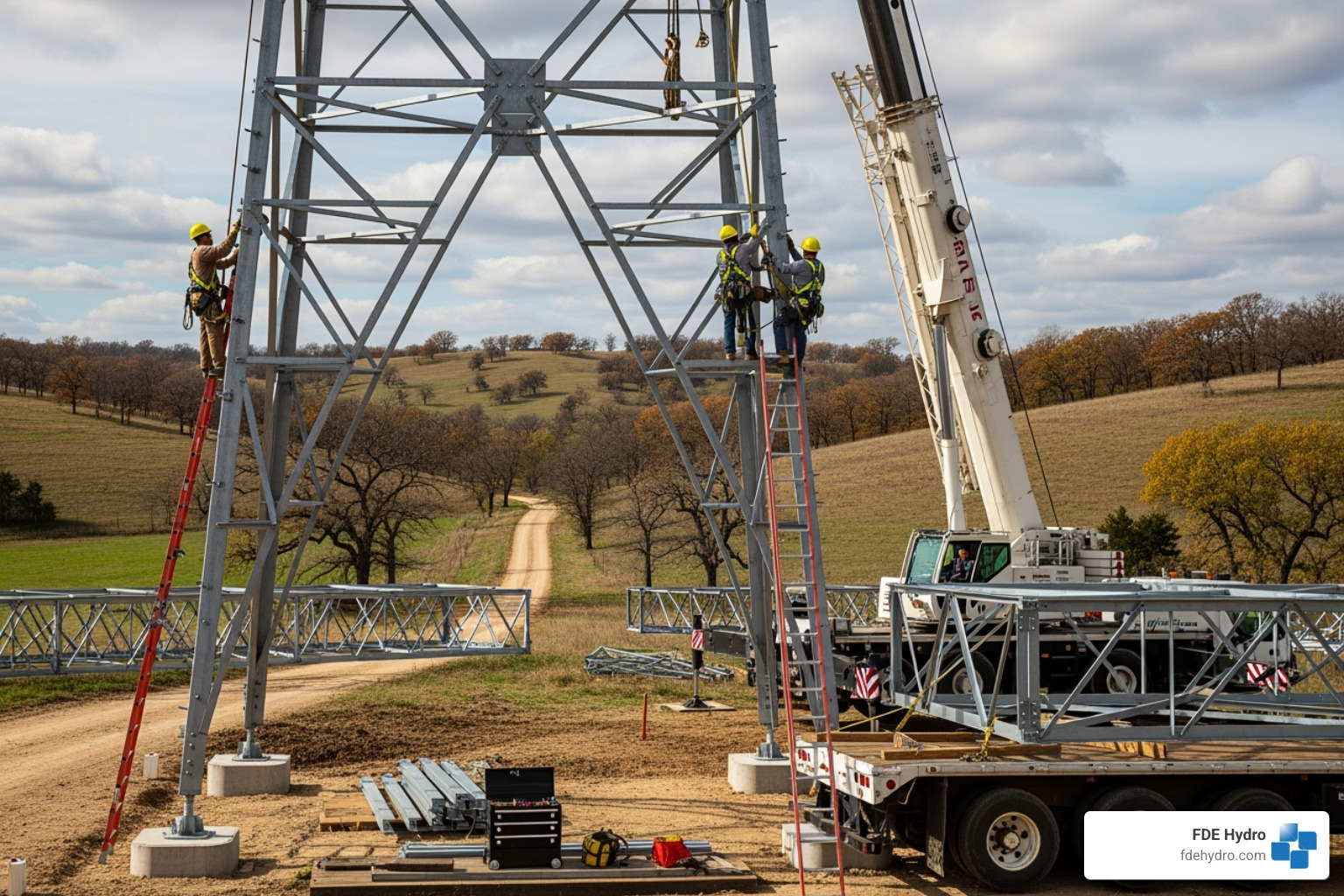
Building the energy infrastructure we need for a clean future sounds straightforward on paper. In reality, it’s a complex puzzle with pieces scattered across continents, boardrooms, and political capitals. The challenges we face go far beyond just engineering and construction—they touch on international relations, financial systems, and government bureaucracy.
Think of it this way: you can design the perfect hydropower system, but if you can’t get the materials, secure the funding, or obtain permits in a reasonable timeframe, that perfect design stays on paper. These aren’t small problems—they’re massive obstacles that slow down progress when we need speed more than ever.
For those planning major projects like hydropower facilities, understanding these challenges upfront is essential. That’s why we’ve written extensively about how Financing Long-Term Hydropower Requires Mitigating Risks Prior to ROI. You need to know what you’re up against before breaking ground.
Navigating Geopolitics and Supply Chain Vulnerabilities
Energy security has always been about more than just keeping the lights on. It’s about national sovereignty, economic stability, and strategic independence. The shift to clean energy changes the game but doesn’t eliminate these concerns—it just reshapes them.
Here’s the irony: as we move away from fossil fuels to reduce dependence on oil-producing regions, we’re creating new dependencies on critical minerals. Lithium for batteries, rare earth elements for wind turbines, copper for solar installations—these materials are concentrated in just a handful of countries. When one nation controls most of the world’s supply of something essential, that creates vulnerability.
The COVID-19 pandemic gave us a harsh lesson in what happens when global supply chains break down. Projects stalled. Costs skyrocketed. Delivery times stretched from weeks to months. Solar panels, turbine components, and construction materials all became harder to source. The energy sector felt these disruptions as acutely as any industry.
Now, governments are scrambling to reduce these vulnerabilities through export diversification and domestic production. Canada, for example, is pushing hard on what it calls “national interest projects”—critical infrastructure like LNG terminals and cross-border pipelines that strengthen energy security and economic resilience. Leaders like Mark Carney have been vocal about the need to streamline approvals for these projects. You can read more about Canada’s national interest projects and the push to get them built faster.
The reality is that energy infrastructure development happens in a geopolitical context. Every major project involves navigating international relationships, trade policies, and strategic considerations that extend far beyond the construction site.
The Investment Gap: Financing the Future of Energy
Let’s talk numbers. The world needs to invest somewhere between $1 trillion and $3 trillion annually in energy infrastructure over the next few decades to meet our climate goals and growing electricity demand. That’s not a typo—trillion with a T, every single year.
This massive investment gap is particularly acute in emerging markets, where electricity demand is growing fastest but capital is hardest to access. These are the places that need clean energy most urgently, yet they face the steepest financing challenges.
The problem is that clean energy projects often come with high capital costs upfront. Yes, a solar farm or hydropower facility has low operating costs once it’s running, but building it requires enormous initial investment. Add in the long project timelines—sometimes seven to ten years for major hydropower developments—and you’ve got a financing challenge that scares away many investors.
Utilities around the world are caught in a particularly difficult spot. A World Bank study on utilities found that many are already financially stretched, struggling to maintain existing infrastructure while facing pressure to invest in new clean energy capacity. In developing countries especially, utilities lack the financial resources needed for the massive grid investment required to integrate renewables and meet growing demand.
The numbers are staggering. Grid modernization alone requires hundreds of billions of dollars annually worldwide. Without innovative financing mechanisms—public support, international development funding, or new partnership models—many utilities simply can’t afford to make the necessary investments. This financing challenge is one of the biggest threats to our clean energy transition.
Streamlining Progress: The Role of Policy and Regulation
Here’s a frustrating reality: you can have perfect technology, willing investors, and community support, and still wait years—sometimes a decade or more—for government approvals. Permitting delays and regulatory uncertainty are silent killers of energy projects.
I’ve seen it over my five decades in civil construction. A project that should take five years to build ends up taking fifteen because it spends ten years in regulatory limbo. Environmental reviews stack on top of each other. Different agencies require overlapping studies. Approval processes vary wildly between jurisdictions. The uncertainty makes investors nervous and drives costs through the roof.
The good news is that governments are starting to recognize this bottleneck. The European Union has designated certain energy projects as Projects of Common Interest (PCIs) and Projects of Mutual Interest (PMIs), giving them priority status for streamlined approvals. These initiatives recognize that cross-border energy infrastructure is too important to get bogged down in bureaucracy.
In Canada, there’s a growing movement toward fast-tracking national projects that are critical for energy security and economic competitiveness. The goal is simple: cut through red tape without sacrificing environmental protection or community consultation.
What we need are supportive policies that provide regulatory certainty. Developers and investors need to know what’s required, how long it will take, and that the rules won’t change midstream. Clear timelines, coordinated reviews between agencies, and predictable processes make it possible to plan and finance major infrastructure projects.
This isn’t about lowering standards—it’s about eliminating redundancy and creating efficient systems that can keep pace with the urgency of our energy challenges. When every year of delay adds costs and pushes back our climate goals, regulatory reform becomes as important as technological innovation.
Innovative Solutions Accelerating the Transition
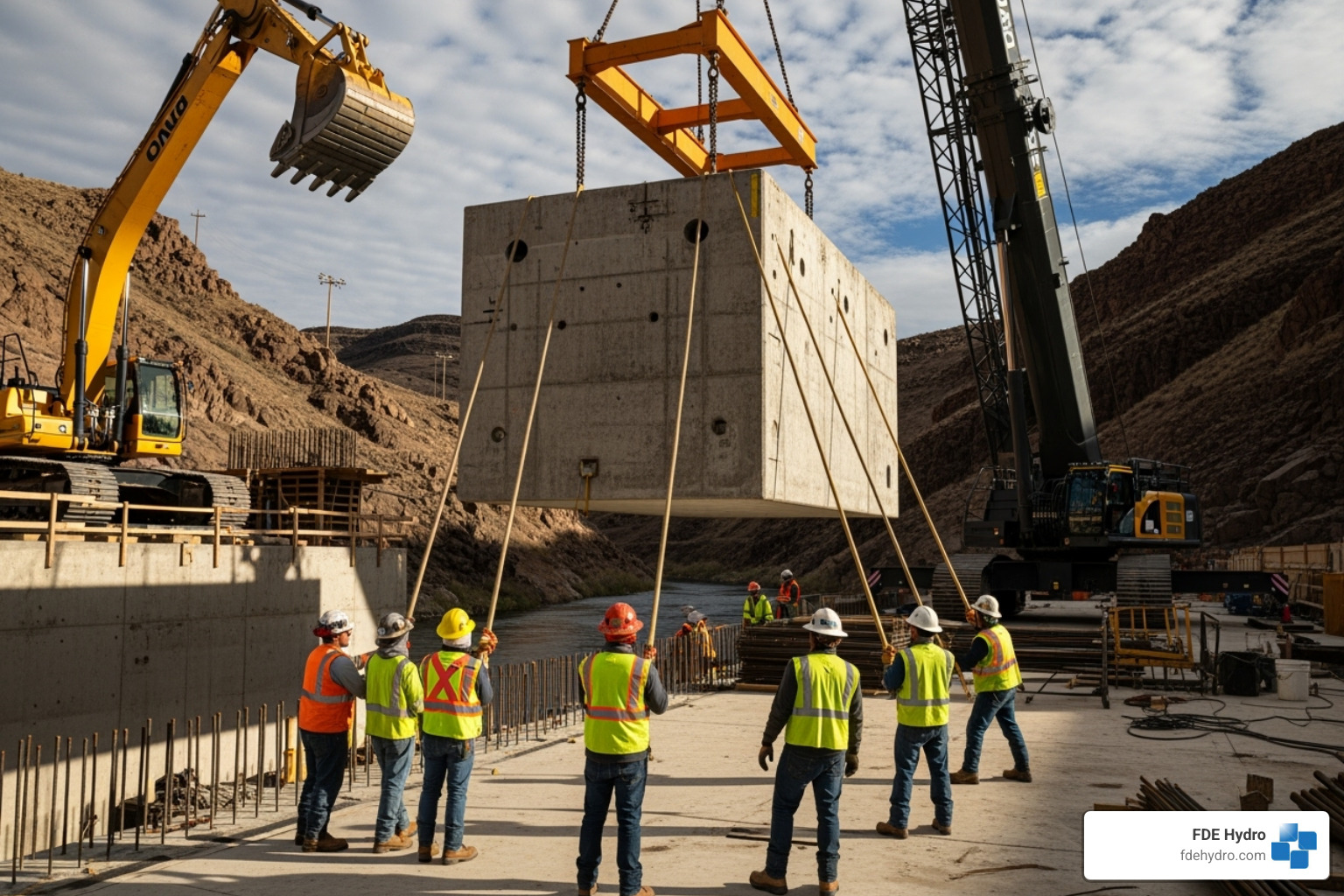
The obstacles to energy infrastructure development are real, but here’s the good news: brilliant minds around the world are developing solutions that actually work. We’re seeing breakthrough approaches in how projects get funded, how structures get built, and how we can maximize the clean energy sources we already have. This isn’t just theory—these innovations are actively changing how we build our energy future. For a closer look at how we’re bringing one of our oldest renewable energy sources into the modern era, visit our page on Reinvigorating Hydropower.
New Models for Financing and Partnership
The massive investment gap we talked about earlier? It requires thinking differently about money. Traditional government funding alone simply can’t cover the trillions needed for the energy transition. That’s why Public-Private Partnerships (PPPs) are becoming essential—they bring together government resources with private sector efficiency and capital to get projects built faster.
Independent Transmission Projects (ITPs) are another game-changer, allowing private companies to build and operate transmission lines that expand grid capacity without waiting for utilities to find the budget. And then there’s blended finance, which mixes public and private funding in ways that reduce risk for everyone involved, making projects viable in places where they otherwise wouldn’t be.
The World Economic Forum has put together what they call a Playbook of Solutions that showcases these innovative approaches. The key is using smart de-risking tools that make clean energy projects attractive to private investors. When you share the risk intelligently, you open up the capital needed to actually build things. It’s about making the math work for everyone—governments, investors, and ultimately, the communities that need reliable clean energy.
Sustainable Construction and Innovative Energy Infrastructure Development
Here’s where things get really interesting. The way we’ve traditionally built energy infrastructure—slowly, expensively, with massive environmental disruption—simply doesn’t cut it anymore. We need sustainable construction methods that consider the entire lifecycle of a project, from the materials we source to how structures can eventually be decommissioned. Every choice matters, from reducing waste to minimizing the carbon footprint of construction itself.
This is exactly what we’ve focused on at FDE Hydro™. Our patented modular precast concrete technology fundamentally changes how hydropower infrastructure gets built. Instead of pouring concrete and building everything on-site over many years, we manufacture precision-engineered precast modules in controlled factory environments. Think of it like prefab housing, but for dams and water control structures. These high-quality modules are then transported to the site and assembled rapidly—sometimes in a fraction of the time traditional methods require.
The advantages are profound. Projects that used to take five to seven years can now be completed much faster through our Rapid Installment of Module Precast Civil Infrastructure approach. The cost savings are substantial too—and we explain exactly Why Precast Cost Less on our website. Manufacturing in a factory means consistent quality, better concrete curing, and structures that last longer. And because there’s less on-site construction, there’s dramatically less disruption to local ecosystems and communities.
This isn’t just about building faster. It’s about building smarter, with sustainable materials and methods that actually respect the environment we’re trying to protect. Every module we manufacture represents a commitment to minimizing environmental impact while accelerating the clean energy transition.
The Role of Hydropower in Innovative Energy Infrastructure Development
Hydropower deserves special attention because it solves one of the biggest challenges in energy infrastructure development: keeping the lights on when solar and wind can’t. We’ve talked about the intermittency problem with renewables—hydropower is the answer. It provides grid stability, reliability, and flexibility in ways that batteries alone simply can’t match at scale.
When you need power at 2 AM on a windless night, hydropower delivers. When there’s a sudden spike in demand during a hot afternoon, hydropower can ramp up almost instantly. This is why we say there are 4 Reasons Why Hydropower Is The Guardian Of The Grid—it’s the backbone that keeps everything stable while other renewables do their important work.
Pumped storage hydropower acts as nature’s battery, storing excess renewable energy by pumping water uphill when generation is high, then releasing it through turbines when demand peaks. This energy storage capability is becoming more valuable every day as we add more variable renewable sources to the grid.
Here’s what makes our approach even more powerful: with FDE Hydro’s modular technology, we’re not limited to building new Dams. We can retrofit existing dams quickly and affordably, adding new generating capacity, upgrading safety systems, or converting conventional facilities into pumped storage powerhouses. Projects that were economically unfeasible with traditional construction methods suddenly make sense. This means we can open up the potential of thousands of existing structures across North America, Brazil, and Europe without the decade-long timelines and prohibitive costs that have held back hydropower development.
The future of clean energy isn’t just about building new things. It’s about being smart with what we already have, upgrading it efficiently, and deploying proven technologies like hydropower in innovative new ways. That’s the path forward for sustainable energy infrastructure development.
Conclusion
We’ve reached a defining moment in human history. The electricity that powers our lives—from the smartphones in our pockets to the AI systems changing industries—is about to surge beyond anything we’ve seen before. At the same time, our planet desperately needs us to clean up how we generate that power. It’s a challenge that keeps energy leaders awake at night, but it’s also an opportunity that gets innovators like us out of bed each morning.
The truth is, there’s no single silver bullet. We can’t simply plaster the world with solar panels or dot every hillside with wind turbines and call it done. Energy infrastructure development requires a thoughtful blend of renewable technologies working together, each playing to its strengths. We need the steady, reliable backbone of hydropower balancing the intermittency of wind and solar. We need smart grids that can orchestrate this complex dance of electrons. And we absolutely need faster, more affordable ways to build all of this infrastructure.
The financial and political problems are real. Projects that take a decade to permit and build simply won’t cut it when demand is doubling in years, not decades. But here’s the encouraging part: the solutions are emerging. Innovative financing models are open uping capital. Governments are beginning to streamline approvals. And new construction methods—like our modular precast technology—are proving that we can build critical infrastructure in months instead of years, at a fraction of traditional costs.
At FDE Hydro, we’re not just talking about the future—we’re building it, one modular section at a time. Our patented precast concrete technology is already helping projects move from planning to operation faster than anyone thought possible. Whether it’s retrofitting an aging dam to add clean generating capacity or constructing entirely new pumped storage facilities to act as giant batteries for the grid, we’re proving that speed and sustainability don’t have to be at odds.
The energy transition isn’t coming—it’s here. And while the challenges are significant, so is our collective ingenuity. By embracing innovation in how we finance, regulate, and physically build our energy infrastructure development projects, we can create an energy system that’s not only clean and reliable but also resilient enough to power whatever the future brings. For our children and grandchildren, this isn’t just about keeping the lights on. It’s about building a world where abundant, affordable, clean energy enables human flourishing for generations to come.
Explore how advanced hydropower solutions are powering the future of clean energy.
by Bill French Sr. | Nov 6, 2025 | News
Why Hydropower Innovation Matters Now More Than Ever
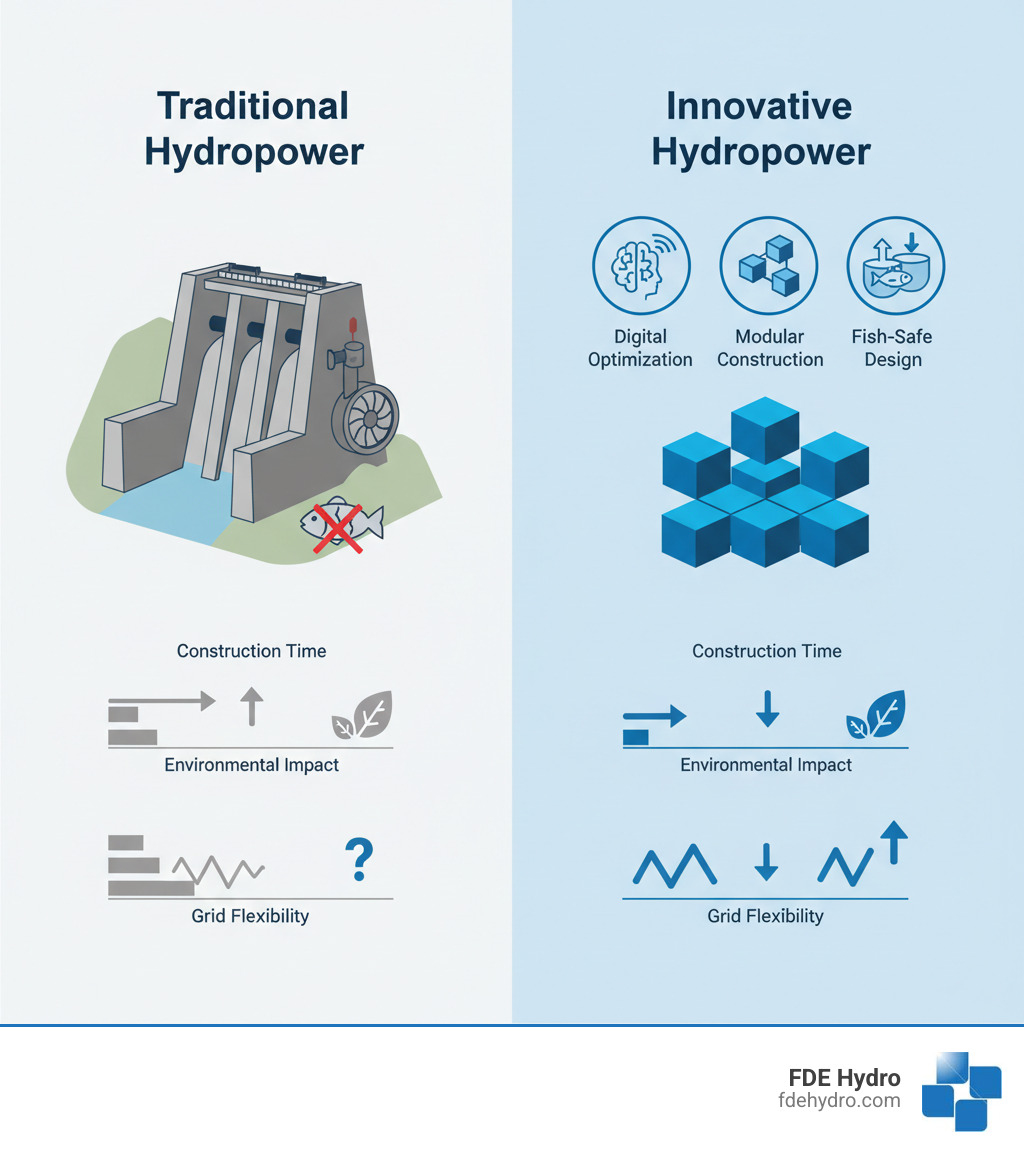
Hydropower innovation is changing the world’s oldest renewable energy source into a cutting-edge solution for 21st-century grid challenges. Here are the key innovations reshaping the industry:
- Digital Technologies: AI and digital twins are optimizing operations and could add 42 TWh to global generation
- Modular Construction: Prefabricated systems reduce construction time and costs dramatically
- Fish-Friendly Designs: New turbines and passage systems cut aquatic life mortality by over 20%
- Pumped Storage: Advanced systems provide 96% of U.S. energy storage capacity
- Marine & Tidal Power: Emerging technologies could capture 120-400 GW from ocean currents
- Smart Grid Integration: Improved flexibility supports intermittent solar and wind power
Hydropower isn’t stuck in the past. Despite being around for nearly 150 years, it’s experiencing what experts call a “renaissance.” The industry is moving beyond massive concrete dams toward smarter, smaller, and more sustainable solutions that work with nature rather than against it.
The numbers tell the story. Hydropower already operates at over 90% efficiency—far better than fossil fuels. It accounts for 24% of U.S. renewable electricity and 60% in Canada. But there’s untapped potential everywhere: adding generation to existing non-powered dams could deliver 4.8 GW of new capacity, enough to power up to 4.8 million homes.
The innovation surge addresses real problems. Traditional hydropower construction is expensive, slow, and site-specific. Environmental concerns about fish migration and ecosystem disruption have limited new development. Grid operators need flexible, fast-responding power sources to balance variable solar and wind generation.
New technologies are solving these challenges. Modular systems slash construction timelines. AI-powered operations squeeze more energy from existing facilities. Fish-friendly turbines let salmon and other species pass safely. Dynamic pumped storage turns hydropower into a massive battery for the grid.
I’m Bill French Sr., Founder and CEO of FDE Hydro, where we’ve pioneered modular precast solutions that are revolutionizing civil construction for the hydropower industry through innovations like the patented “French Dam.” My five decades in heavy civil construction, combined with participation in the DOE’s Hydropower Vision Technology Task Force, have given me unique insight into how hydropower innovation can deliver faster, more sustainable, and more cost-effective projects for the clean energy transition.
The Digital Wave: Smartening Up Hydropower Operations
Digitalization is changing hydropower plants from simple mechanical systems into smart, adaptive assets. This change is about reimagining how we operate, maintain, and optimize hydropower for a cleaner energy future.
The numbers speak for themselves. Researchers estimate that digital upgrades alone could add 42 TWh to global hydropower generation. That’s enough electricity to power millions of homes, squeezed from facilities already running at over 90% efficiency. When you’re already operating near the top of your game, finding that extra edge is remarkable.
Digitalization: A Key Driver of Hydropower Innovation
The heart of this digital revolution is in performance analytics and digital twins. Performance analytics involves collecting real-time data on everything—water flow, turbine efficiency, generator output, and weather patterns—to let operators fine-tune operations minute by minute.
Digital twins take this further, creating a complete virtual replica of a plant. This allows operators to test new strategies and predict maintenance needs months in advance without real-world risk, acting like a crystal ball for the facility.
These virtual models are changing maintenance from reactive to predictive. Instead of waiting for something to break, operators can schedule repairs during planned downtime, dramatically reducing costs and keeping plants running smoothly. One platform uses real-time simulations to optimize operations based on the complex interplay of weather, technical capabilities, market prices, and environmental factors.
Machine learning is making hydropower plants even smarter. Some systems now leverage earth observation data and advanced algorithms to optimize energy generation and trading based on snow and water availability. They can predict how much water will be available weeks in advance, helping operators make better decisions about when to generate and when to store.
Even maintenance inspections are getting a high-tech makeover. Drone-based monitoring now captures detailed 3D models of turbines and infrastructure, allowing engineers to spot potential problems without sending people into dangerous spaces. These drones can access areas that would be risky or impossible for human inspectors, improving both safety and the quality of inspections.
The Clean Energy Technology Observatory report highlights how digitalization is key to mitigating environmental impacts while optimizing generation. By considering weather patterns, market conditions, and ecological factors simultaneously, these systems help plants operate more sustainably. For more insights into how data is changing energy resources, explore our resources on data-driven energy resources.
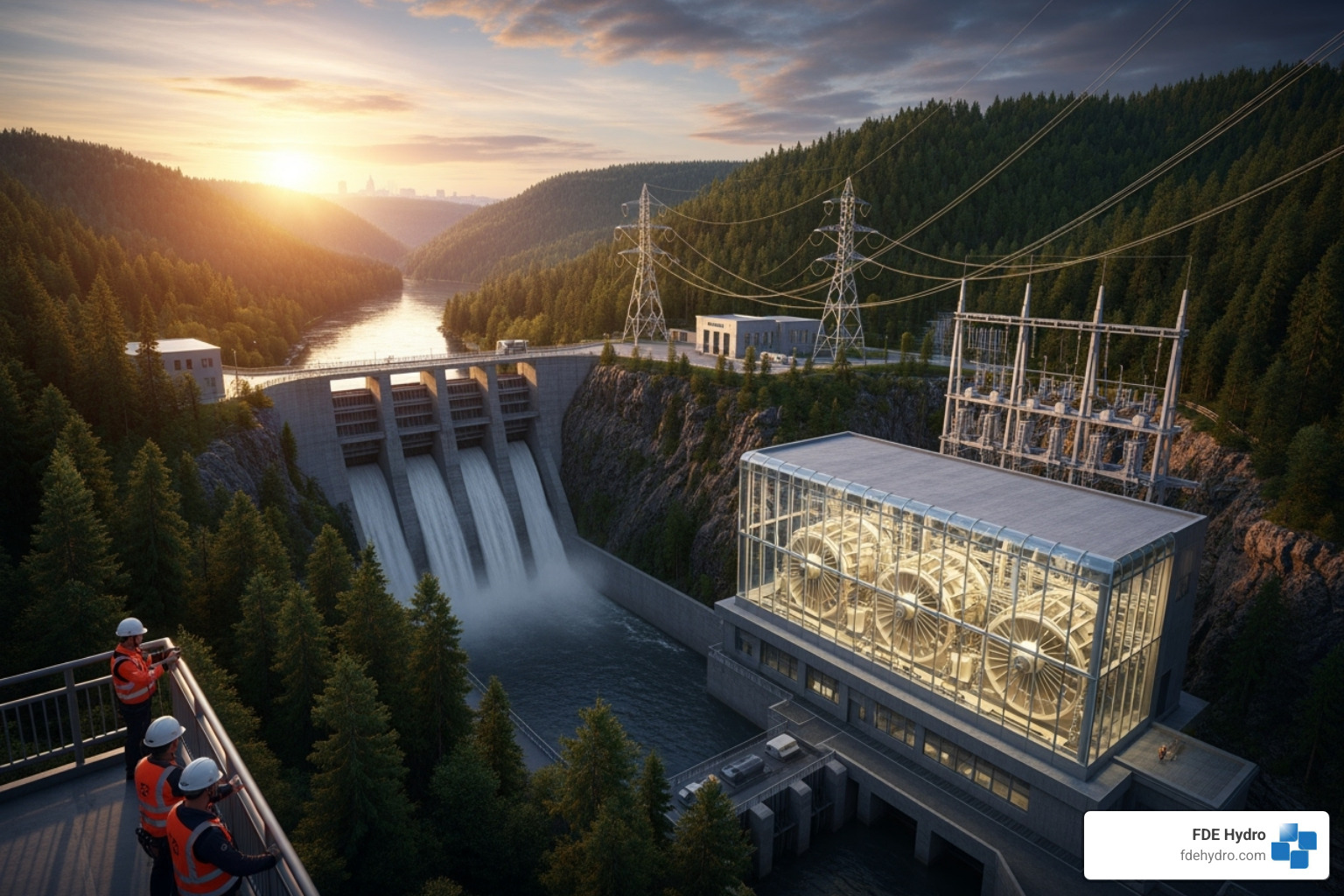
Enhancing Grid Reliability and Resilience
Hydropower’s role in grid stability is crucial, especially with the rise of intermittent renewables like solar and wind. When the sun isn’t shining or the wind isn’t blowing, Pumped Storage Hydropower (PSH) acts as the unsung hero of grid stability.
PSH acts like a massive rechargeable battery. When electricity is abundant and cheap, it pumps water uphill to a reservoir. When demand spikes, the water flows back down through turbines, generating power on demand. It’s a simple and effective system.
The scale is impressive. PSH represents roughly 96% of all commercial storage capacity in the United States. No other technology comes close. Preliminary studies suggest at least 35 GW of new PSH capacity might be feasible, which would be a game-changer for grid reliability.
What makes hydropower truly special is its flexibility. Unlike coal or nuclear plants that take hours to start up, hydropower can respond almost instantly. This rapid response capability is exactly what grid operators need to balance intermittent renewables.
Hydropower also provides “black start” capabilities. If the entire grid goes down, hydropower plants can restart themselves without external power and help bring the rest of the grid back online. It’s like having a backup generator for the entire electrical system. To learn more about this critical role, check out our article on hydropower as the guardian of the grid.
Recent projects are pushing these capabilities even further. The XFLEX HYDRO project in Europe upgraded existing hydropower stations with AI and advanced control systems to improve their energy storage potential and flexibility. One breakthrough is the ‘hydraulic short circuit’ system, which allows a PSH plant to pump and generate electricity simultaneously, with smart software managing the energy flow in real-time. This kind of hydropower innovation is essential for meeting renewable energy goals.
There’s even potential to repurpose old industrial sites. Former coal mine lands, for instance, can be transformed into pumped storage facilities, turning environmental liabilities into clean energy assets. It’s a win-win: providing valuable energy storage while contributing to regional economic revitalization.
As the grid continues its transition to renewable energy, hydropower’s role as a stabilizer and storage solution becomes more valuable every day. The digital tools making this possible aren’t just incremental improvements—they’re fundamental to building a reliable, clean energy future.
While hydropower is a clean energy source, traditional dams have raised valid environmental concerns, particularly regarding aquatic life. Fortunately, a significant wave of hydropower innovation is now dedicated to minimizing these impacts, ensuring our pursuit of renewable energy works with nature, not against it.
Fish-Friendly Turbines and Passages
A primary objection to hydropower has been its impact on fish migration. Statistics show that over 20% of fish can die passing through older plants, a challenge that threatens the industry’s social license. The good news? We’re actively solving this problem through innovative designs that protect aquatic life while still generating clean energy.
One of the most visible solutions is the fish ladder—a series of stepped pools that allow migrating fish to bypass dams entirely. Think of it as a staircase for fish. The Thompson Falls hydroelectric plant in Montana features the first full-length fish ladder in the state, specifically designed to help bull trout, a threatened species, steer upstream to their spawning grounds. These ladders use carefully manipulated water flows to create a natural pathway that guides fish safely around obstacles. For more information on facilitating safe passage for aquatic life, see our resources on aquatic animal passage.
Beyond ladders, advancements in turbine design are critical. Fish-friendly turbines like the Alden turbine (with wider, slower blades), minimum gap runner turbines, and very-low-head turbines are all engineered to drastically reduce fish mortality while maintaining efficiency. Even pumps as turbines (PATs) in smaller applications can be designed to be much safer for fish.
These innovations represent a fundamental shift in how we think about hydropower design. We’re no longer accepting fish mortality as an unavoidable cost of clean energy. Instead, we’re engineering solutions that achieve both ecological balance and sustainable power generation.
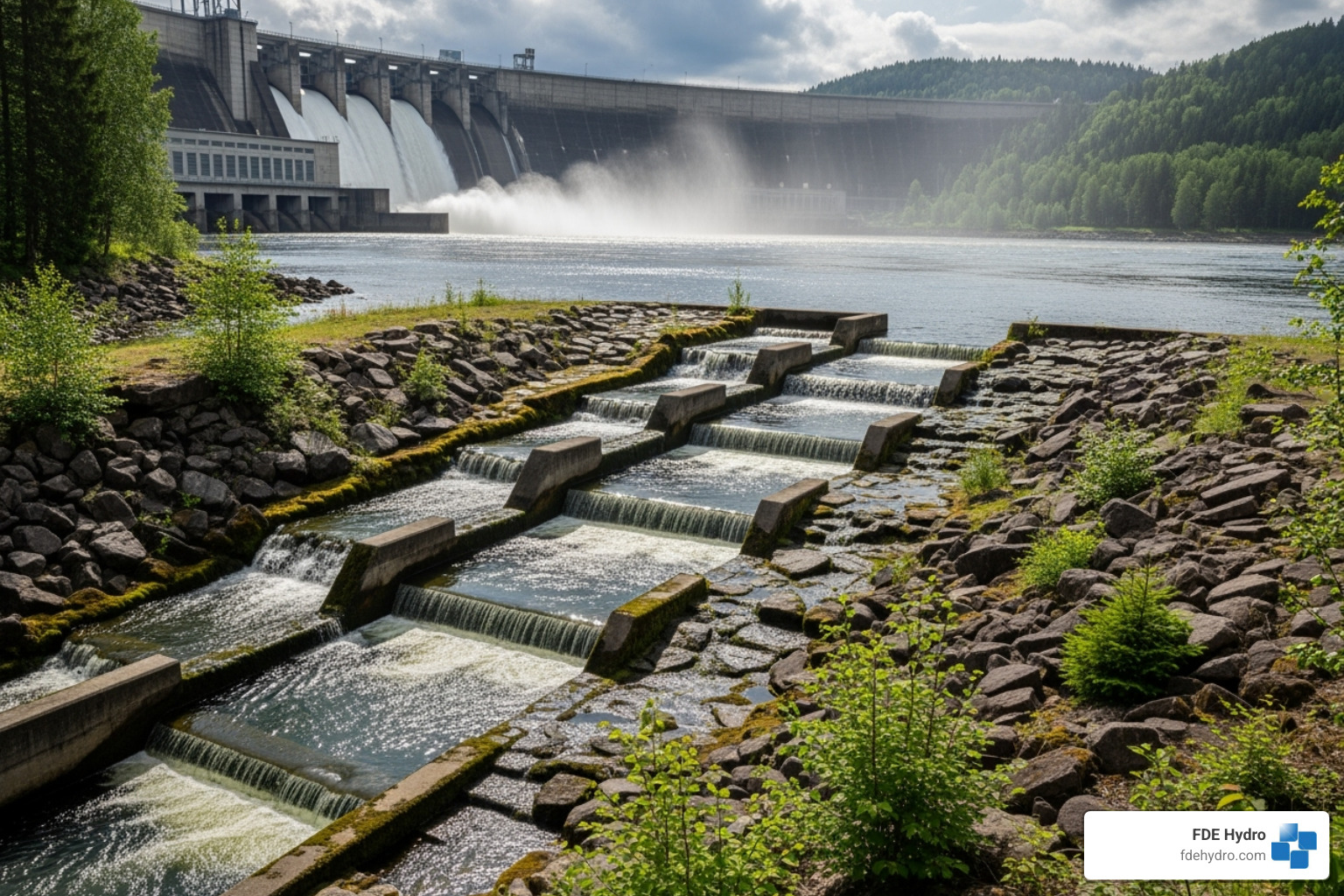
Alternative Infrastructure: Artificial Channeling and Low-Impact Growth
Beyond making turbines safer, hydropower innovation is exploring alternative infrastructure approaches that reduce overall environmental impact. This includes run-of-river systems and artificial channeling—methods that generate power with a much smaller footprint than traditional large-scale dams.
Run-of-river hydropower relies on the natural flow of water, often with no dam at all or only a very small diversion structure. This approach minimizes ecosystem alteration and allows natural sediment flow, which is critical for river health. Smaller-scale hydro installations, often called mini hydro or pico hydro (systems below 5kW), are excellent for supplying reliable renewable energy to rural communities. Some can even power individual homes from a single stream. These systems often use designs like Archimedes screws or vortex turbines, which are inherently gentle on fish because of their slower rotational speeds and larger passages.
Artificial channeling takes a different approach by constructing engineered waterways—canals or tunnels—to direct water flow for energy production in a controlled manner. This can be an alternative to traditional dam infrastructure in ecologically sensitive areas, allowing for power generation while minimizing negative effects on existing river ecosystems. The beauty of this approach is that it can work around critical habitats rather than flooding them.
These low-impact growth strategies are vital for expanding hydropower in locations where large dams simply aren’t feasible or desirable. We’re actively developing innovative water control structures that support these types of environmentally conscious approaches, allowing for efficient energy generation with minimal ecological disruption.
The future of hydropower is about building smarter, smaller, and more environmentally harmonious systems that work with the natural flow of water.
The Future of Hydropower Innovation: Powering the Grid
The future of hydropower isn’t just about maintaining what we have—it’s about reimagining what’s possible. As our energy needs evolve and climate challenges intensify, hydropower innovation is opening doors to vast untapped potential while delivering the energy security and economic benefits our communities need.
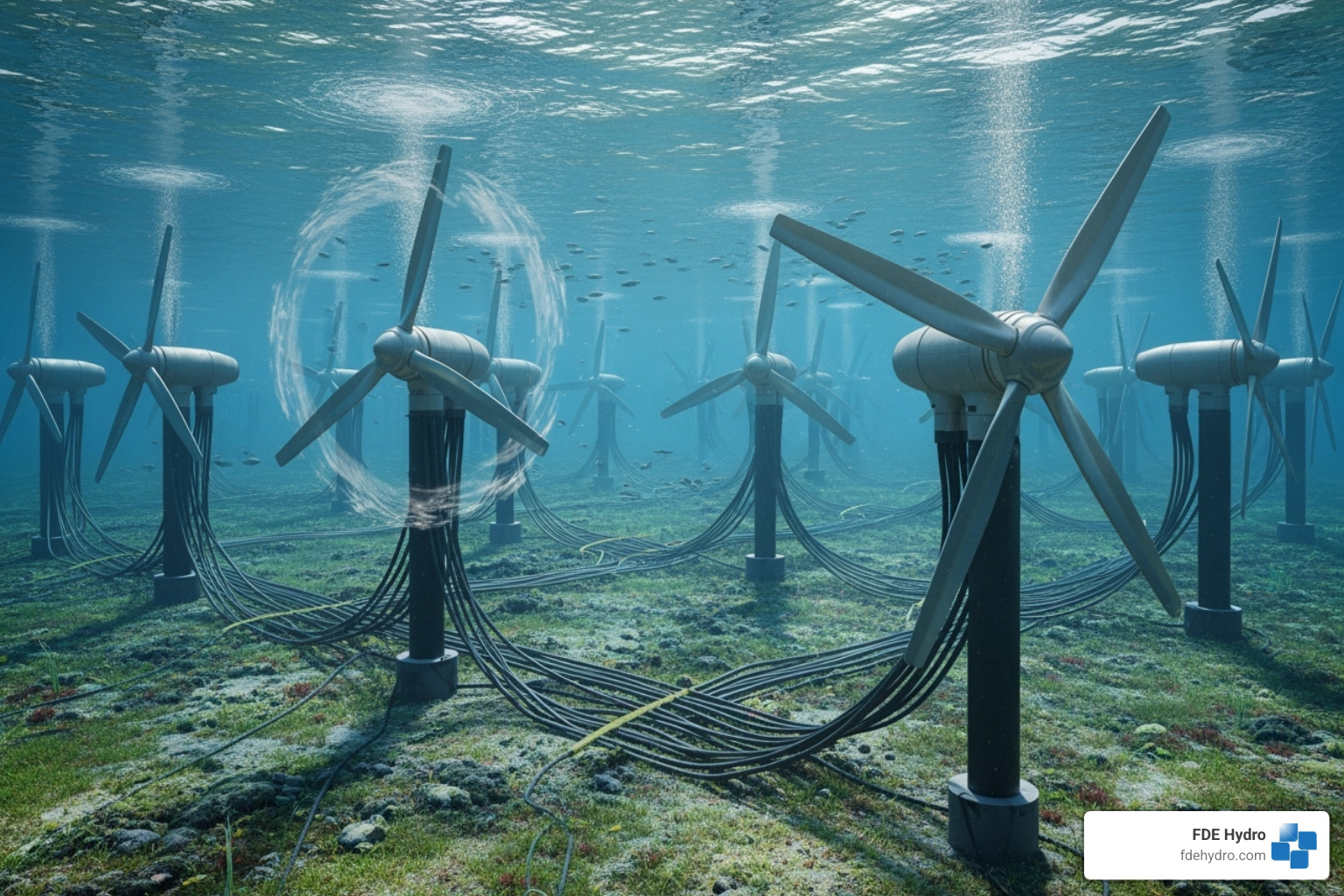
Modular Construction: A Game-Changer for Hydropower Innovation
Traditional hydropower projects have long been held back by complexity, custom engineering, lengthy timelines, and high costs. Modular construction is changing all that, representing one of the most exciting developments in the industry.
The concept is simple: prefabricate standardized components in a factory and assemble them on-site. This dramatically cuts construction time, makes costs predictable, and improves quality by moving work into a controlled environment away from weather and site constraints.
At FDE Hydro, we’ve been pioneering this approach with our patented modular precast concrete technology—the “French Dam.” This innovation is already changing how hydroelectric dams and water control systems are built and retrofitted across North America, Brazil, and Europe. What used to take years can now happen in months. What seemed financially impossible becomes feasible.
The real game-changer is scalability. Modular systems work whether you’re building a small run-of-river project or upgrading a major facility. This flexibility is particularly powerful when it comes to non-powered dams—existing structures that control water but don’t generate electricity. The U.S. Department of Energy estimates that retrofitting these dormant assets could add 4.8 GW of reliable, renewable electricity to the grid. That’s enough to power nearly 5 million homes, all from infrastructure that’s already there.
Beyond speed and cost, modular construction also means less local disruption, consistent quality, and adaptable designs for multiple sites. It’s making hydropower development more efficient, sustainable, and accessible. To see how we’re putting this approach into practice, visit our modular powerhouses page.
Tapping New Waters: Marine and Hydrokinetic (MHK) Technology
While rivers have long been a power source, oceans are the next frontier for hydropower innovation. The energy in tides, waves, and ocean currents is immense, with estimates suggesting 120 and 400 GW could be captured from tidal power alone—an enormous untapped resource.
Marine and Hydrokinetic (MHK) technologies capture energy from moving water. Tidal stream generators act like underwater wind turbines, wave energy converters harness wave motion, and barrage systems use tidal differences.
These aren’t just theoretical concepts. Right here in the United States, NREL has deployed three 35kW turbines made from resilient composite materials in New York City’s East River. This project has already broken the US record for marine energy production, proving that tidal power can work even in challenging urban environments with heavy boat traffic and variable conditions.
While the technology is young, it’s evolving rapidly with new designs and materials. MHK shows the same potential that pumped storage did decades ago.
Our expertise in modular construction translates well to this emerging field. The same principles that make land-based projects faster and more economical apply to marine infrastructure. In fact, we’re already exploring applications with modular sea wall systems that could support future MHK development. The ocean is vast, and we’re just beginning to tap its clean energy potential.
Advanced Turbines and Dynamic Pumped Storage
Even the turbine, the heart of every hydropower plant, is experiencing a renaissance through hydropower innovation.
Modern turbines are becoming smarter and more adaptable. 3D-printed turbines allow manufacturers to create custom designs quickly and efficiently, perfect for small to medium-scale plants. Variable-speed turbines can adjust their rotation to optimize performance whether water flow is high or low, making them ideal partners for solar and wind power.
The power injector is a clever innovation that uses air-water injection to boost a turbine’s capacity. The XFLEX HYDRO project in Europe has combined these with batteries, creating hybrid plants that respond to grid changes in seconds.
Perhaps the most transformative development is in dynamic pumped hydropower, an evolution of the concept that already provides 96% of commercial storage capacity in the United States. Now, it’s getting even better.
New high-density hydro solutions use specialized fluids 2.5 times denser than water. This change allows operation on sites with less elevation difference, dramatically reducing costs and environmental impact by enabling smaller reservoirs.
Another brilliant innovation is repurposing underground mines for pumped storage. Abandoned mines already have the vertical depth needed for energy storage—why not put them to work? This approach transforms environmental liabilities into clean energy assets.
Hybrid combinations of pumped storage, batteries, and smart turbines create power plants that can do it all: store excess solar and wind energy, respond instantly to demand changes, and provide the black start capabilities that keep our grid resilient. For a deeper look at how pumped storage is evolving, explore our pumped storage hydropower page.
These are fundamental advances that position hydropower as the flexible, reliable backbone of a clean energy future.
Frequently Asked Questions about Hydropower Innovation
How do new technologies make hydropower more environmentally friendly?
New technologies make hydropower more eco-friendly in three key ways. First, fish-safe turbine designs (like Alden and minimum gap runner turbines) use wider passages and slower speeds to let fish pass through with significantly lower injury risk. Second, advanced fish passage systems, such as fish ladders and bypass channels, provide safe alternative routes around dams. For more details on these systems, check out our page on aquatic animal passage. Third, alternative infrastructure approaches like run-of-river systems generate power with minimal disruption to river ecosystems. Our innovative water control structures support this philosophy of working with nature.
Can hydropower be built faster and cheaper?
Yes, primarily through modular construction. Instead of building from scratch on-site, prefabricated components are manufactured in a factory and assembled rapidly at the project location. This approach, which we’ve pioneered at FDE Hydro with our patented “French Dam” technology, dramatically cuts construction time from years to months and reduces costs. The process also improves quality control and minimizes on-site environmental disruption. This efficiency makes it economically feasible to develop new sites and retrofit the 4.8 GW of potential capacity at existing non-powered dams. You can learn more about these designs on our modular powerhouses page.
What is the role of hydropower in a grid dominated by solar and wind?
Hydropower is the essential partner to intermittent renewables like solar and wind, providing reliability when they are unavailable. Its primary role is energy storage through Pumped Storage Hydropower (PSH), which acts as a giant grid-scale battery. PSH uses surplus renewable energy to pump water uphill and releases it to generate power on demand, accounting for roughly 96% of all commercial energy storage capacity in the United States.
Beyond storage, hydropower provides essential grid stability services, including rapid response to demand changes and “black start” capability to restart the grid after a complete blackout. These capabilities make it the guardian of grid reliability. For a deeper understanding of this critical role, read our article on why hydropower is the guardian of the grid.
Conclusion: A New Era for the Oldest Renewable
Hydropower has been with us for nearly 150 years, but as we’ve seen throughout this article, it’s anything but old-fashioned. Hydropower innovation is breathing new life into this cornerstone renewable, changing it into a dynamic, flexible, and increasingly sustainable solution for our energy future.
The numbers tell an inspiring story. We’re looking at 4.8 GW of potential from non-powered dams just waiting to be activated. Another 35 GW could come from new pumped storage facilities. And the oceans? They hold a staggering 120 to 400 GW of untapped marine and hydrokinetic energy. Add to this the 42 TWh we could gain through digital optimization of existing plants, and you start to see the massive opportunity ahead.
What makes hydropower truly special is its ability to work alongside other renewables. While solar and wind are fantastic, they’re unpredictable. Hydropower, especially pumped storage, acts as the grid’s backbone—storing excess energy when the sun is bright and the wind is strong, then releasing it exactly when we need it. It’s this flexibility, combined with efficiency rates above 90%, that makes hydropower irreplaceable in our clean energy mix.
The environmental concerns that once held hydropower back are being addressed head-on. Fish-friendly turbines, sophisticated passage systems, and low-impact designs like run-of-river systems are proving we can generate clean power while respecting aquatic ecosystems. It’s about working with nature, not against it.
At FDE Hydro, we’re proud to contribute to this evolution with our modular precast concrete technology. The “French Dam” approach we’ve pioneered is making hydropower development faster, more affordable, and more accessible across North America, Brazil, and Europe. We’re proving that hydropower innovation isn’t just about new ideas—it’s about practical solutions that work in the real world.
This isn’t just about generating electricity, though that’s certainly important. It’s about reimagining our relationship with water as a resource. It’s about building resilience into our energy systems. It’s about creating economic opportunities while protecting the environment. And it’s about ensuring that communities everywhere have access to reliable, clean power.
The future of hydropower is here, and it’s more exciting than ever. Whether it’s through digital twins optimizing plant operations, modular construction slashing project timelines, or marine turbines capturing the ocean’s energy, innovation is opening doors we never knew existed.
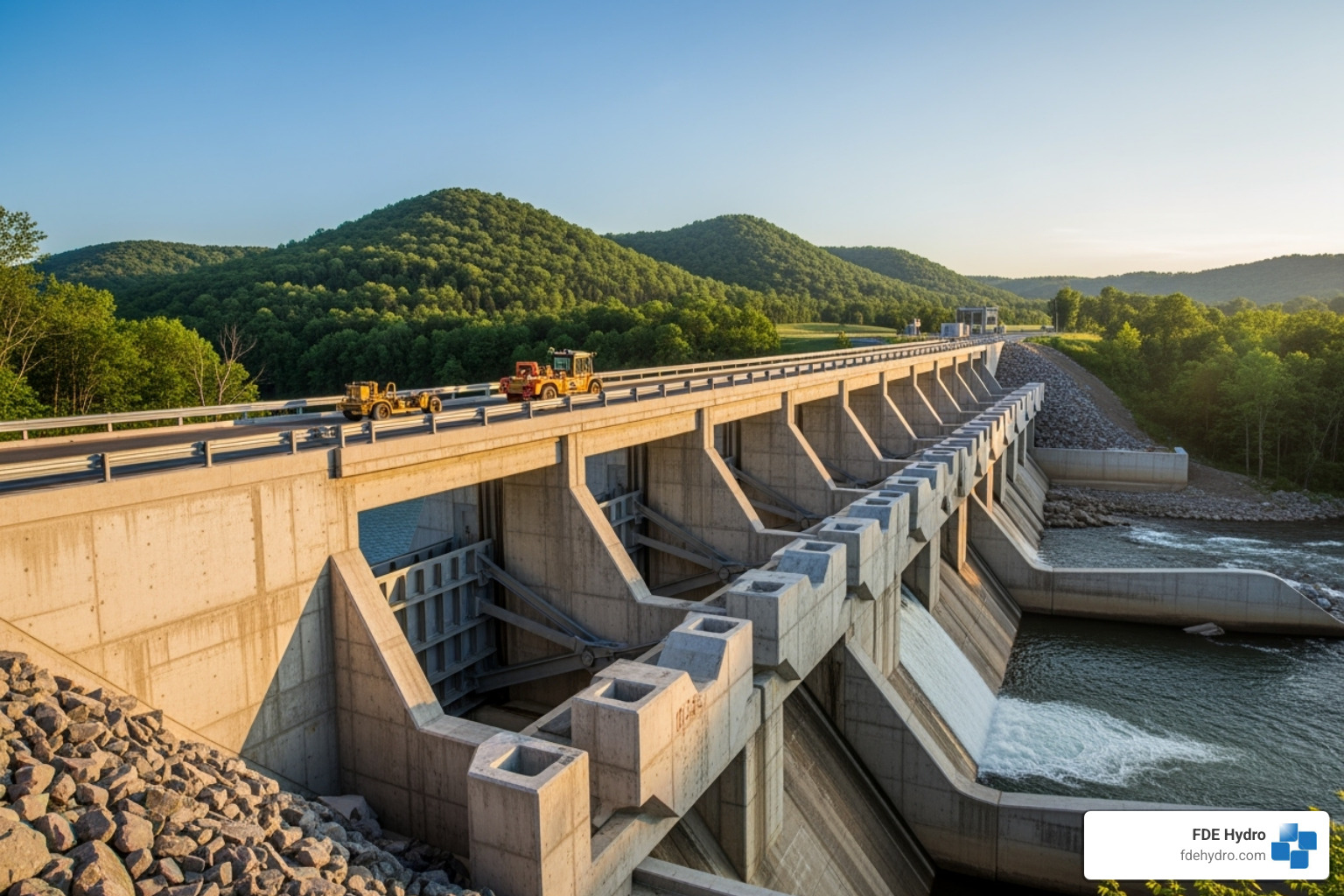
Ready to see how hydropower can power your future? Learn more about the future of hydropower and find how we’re making this ancient renewable resource work for tomorrow’s world.
by Bill French Sr. | Nov 4, 2025 | News
Why Modern Water Control Systems Matter More Than Ever
Water control systems are essential technologies that monitor, measure, and manage the flow and quality of water in residential, commercial, industrial, and municipal applications. Whether you’re looking to optimize irrigation, protect equipment, or ensure water quality, modern systems offer proven solutions backed by advanced sensors, automated controls, and real-time monitoring.
Quick Buyer’s Guide – Water Control Systems by Application:
| Application |
Key System Type |
Primary Benefit |
Typical Water Savings |
| Residential Irrigation |
Weather-based or soil moisture controllers |
Prevents overwatering |
15,000 gallons/year per home |
| Commercial Buildings |
Integrated flow control with sensors |
Prevents stagnation, protects equipment |
15-40% reduction |
| Industrial Processes |
Automated monitoring with remote access |
Leak detection, process optimization |
15-40% reduction |
| Municipal Water Supply |
Battery-powered remote monitoring |
Detects water loss, manages distribution |
Varies by network size |
Water scarcity is a growing concern. In the United States alone, nearly 8 billion gallons of water are used daily for outdoor irrigation, and experts estimate that up to 50 percent of this is wasted due to inefficient systems. Climate change and drought accelerate these challenges, making efficient water management critical for everyone.
Modern water control systems address these issues through intelligent automation. Instead of relying on fixed timers, today’s systems use sensors to track weather, soil moisture, pressure, and flow rates in real time. Controllers process this data to automatically adjust valves and pumps, delivering exactly what’s needed—no more, no less.
Beyond conservation, these systems protect equipment like pumps from damage, detect leaks before they become disasters, and integrate with Building Management Systems (BMS) for centralized control. The returns are measurable: replacing a basic timer with a smart irrigation controller can save 15,000 gallons per household annually, while commercial and industrial installations routinely achieve 15-40% water use reductions.
From residential landscapes to hydropower facilities, water control systems are critical for managing one of our most precious resources. They combine sensors (flow meters, pressure transducers), actuators (valves, pumps), and intelligent controllers into integrated systems that operate autonomously, alert users to problems, and provide data for continuous improvement.
As Bill French Sr., Founder & CEO of FDE Hydro™, I’ve spent decades on large-scale civil construction and hydropower projects where effective water control systems are fundamental to success and safety. My work has reinforced that whether you’re managing a small well or a major treatment facility, the principles of smart, reliable water control remain the same.
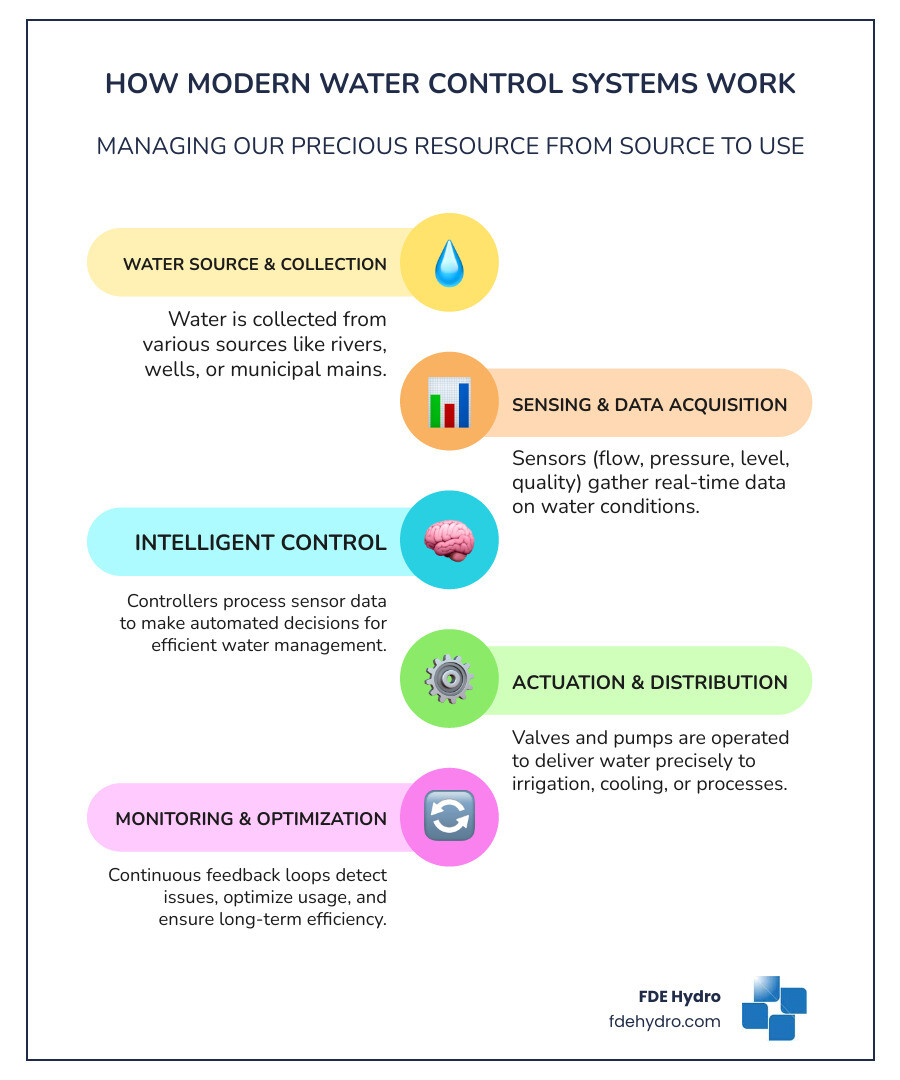
Key Applications Across Sectors
Water control systems touch nearly every part of our lives, adapting to meet the unique demands of each sector—whether that’s keeping a lawn green without waste, maintaining water quality in a hospital, or managing millions of gallons in an industrial facility.
Let’s look at where these systems make the biggest difference.
Residential & Landscape Applications
If you’ve ever seen sprinklers watering the sidewalk during a rainstorm, you’ve witnessed the problem of inefficient irrigation firsthand. Up to 50 percent of outdoor water use is wasted through overwatering and poorly timed systems.
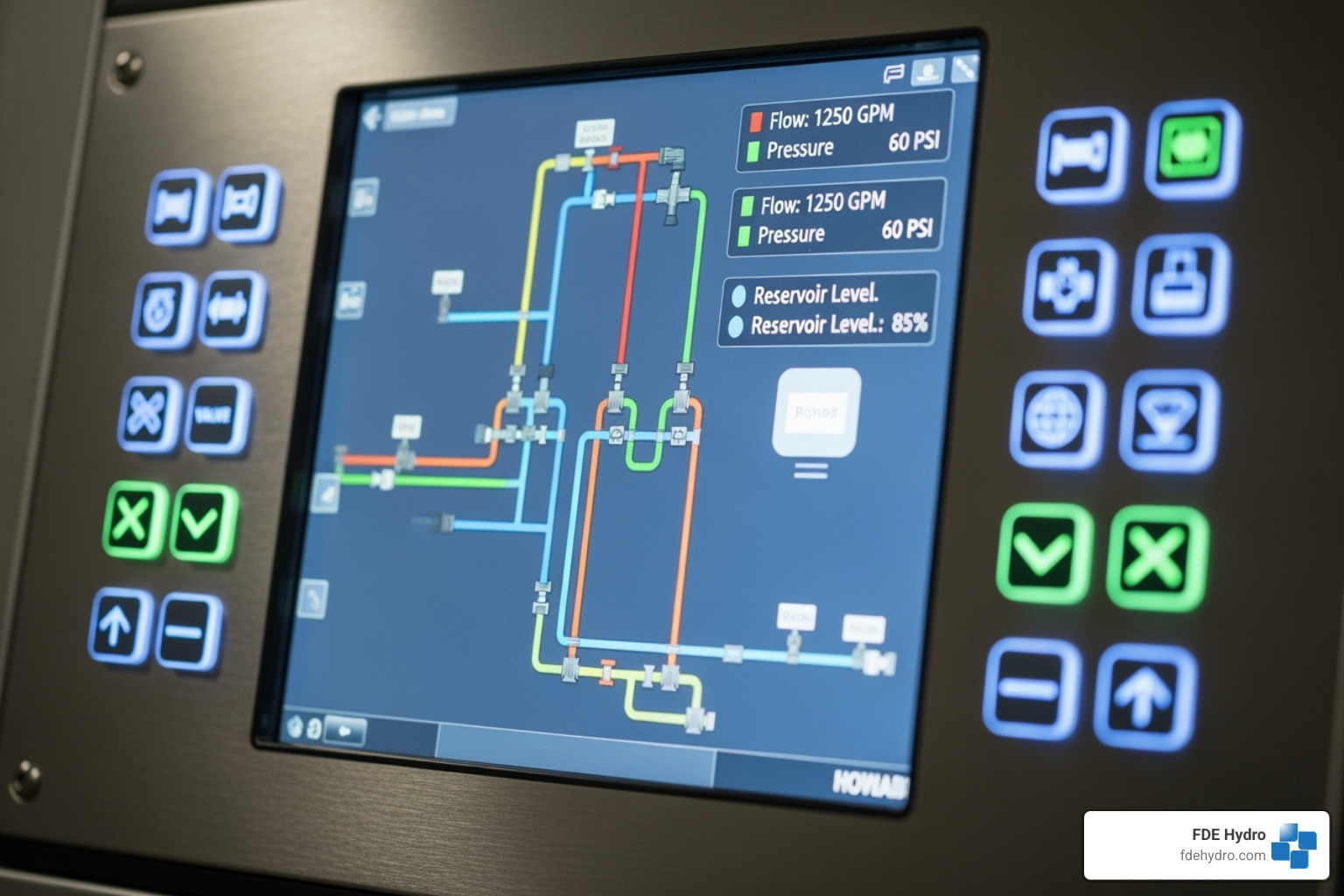
Advanced irrigation controllers have changed this completely. Instead of running on a fixed schedule, these smart systems think about what your landscape needs. Weather-based controllers adjust watering based on local conditions like temperature and rainfall. Soil moisture-based controllers go further, using in-ground sensors to stop irrigation the moment your soil has enough water.
The EPA’s WaterSense program certifies controllers that meet strict efficiency standards. Swapping an old timer for a WaterSense model can save the average home 15,000 gallons per year. If every U.S. home with automatic sprinklers made this switch, we’d save 390 billion gallons of water and $4.5 billion annually.
Beyond irrigation, water control systems manage other critical home needs. They provide reliable automation for sump pumps to prevent flooding and monitor well water systems to keep pumps from running dry and burning out. Modern systems use durable stainless steel sensors with no moving parts, delivering 99% uptime over a 15-year lifecycle.
Commercial & Building Systems
Commercial buildings face complex water management challenges, balancing efficiency with health and safety codes.
In plumbing system design, specialty valves are crucial for preventing water stagnation, which can lead to the growth of bacteria like Legionella. These systems ensure water keeps moving and maintains safe temperatures.
For cooling towers, old mechanical float switches are unreliable. Electronic sensors solve this by integrating seamlessly with Building Management Systems (BMS), providing real-time level monitoring to prevent costly overflows or downtime.
For fire protection systems, reliability is non-negotiable. Modern water control systems designed for fire protection tanks maintain less than 1% failure rates over 15 years, ensuring water is always available in an emergency.
HVAC systems and high-purity water applications in labs require equally precise control for heating and cooling loops or maintaining purity standards for research. We understand how these systems integrate into large-scale projects, which is why we approach every installation with careful planning. You can learn more about our process on our Means and Methods page.
Industrial & Municipal Water Control Systems
The stakes get even higher at industrial and municipal scales, where water control systems impact public health, environmental compliance, and economic productivity.
Wastewater treatment plants and process water systems rely on sophisticated controls to manage everything from intake to discharge, ensuring regulatory compliance while optimizing efficiency. These systems track flow rates, pressure, and chemical levels, making real-time adjustments.
Many industries use build-own-operate models for their water systems, letting specialists handle reverse osmosis, water softening, and ultrapure water production. Preventative maintenance programs are key to avoiding catastrophic failures.
Municipal water networks benefit enormously from remote monitoring. Battery-powered systems can operate for up to five years, transmitting data via cellular networks. Operators can track consumption in real time, spotting leaks between valves before they waste thousands of gallons and ensuring water levels in tanks and sewers stay within optimal ranges.
Water reclamation, seawater desalination, and condensate polishing all depend on precise flow control managed by regulators, restrictors, and sensors across diverse applications.
At FDE Hydro, our work extends to the largest scale of water management. We design and build Water Control Structures and Spillways that manage massive water volumes for flood control and hydropower, representing water control systems at their most critical.
Core Components of Modern Water Control Systems
Every effective water control system relies on three elements working together: sensors that gather information, actuators (like valves and pumps) that take action, and controllers that make intelligent decisions. This integration enables the automation, real-time monitoring, and equipment protection that keeps systems running smoothly.
Think of it as a coordinated team: sensors watch and measure, controllers process information and decide, and valves and pumps do the work. When all three work in harmony, the system responds instantly to changing conditions and uses only the water truly needed.
Sensors and Monitors
Sensors are the eyes and ears of a water control system, gathering data on water flow, pressure, level, and quality.
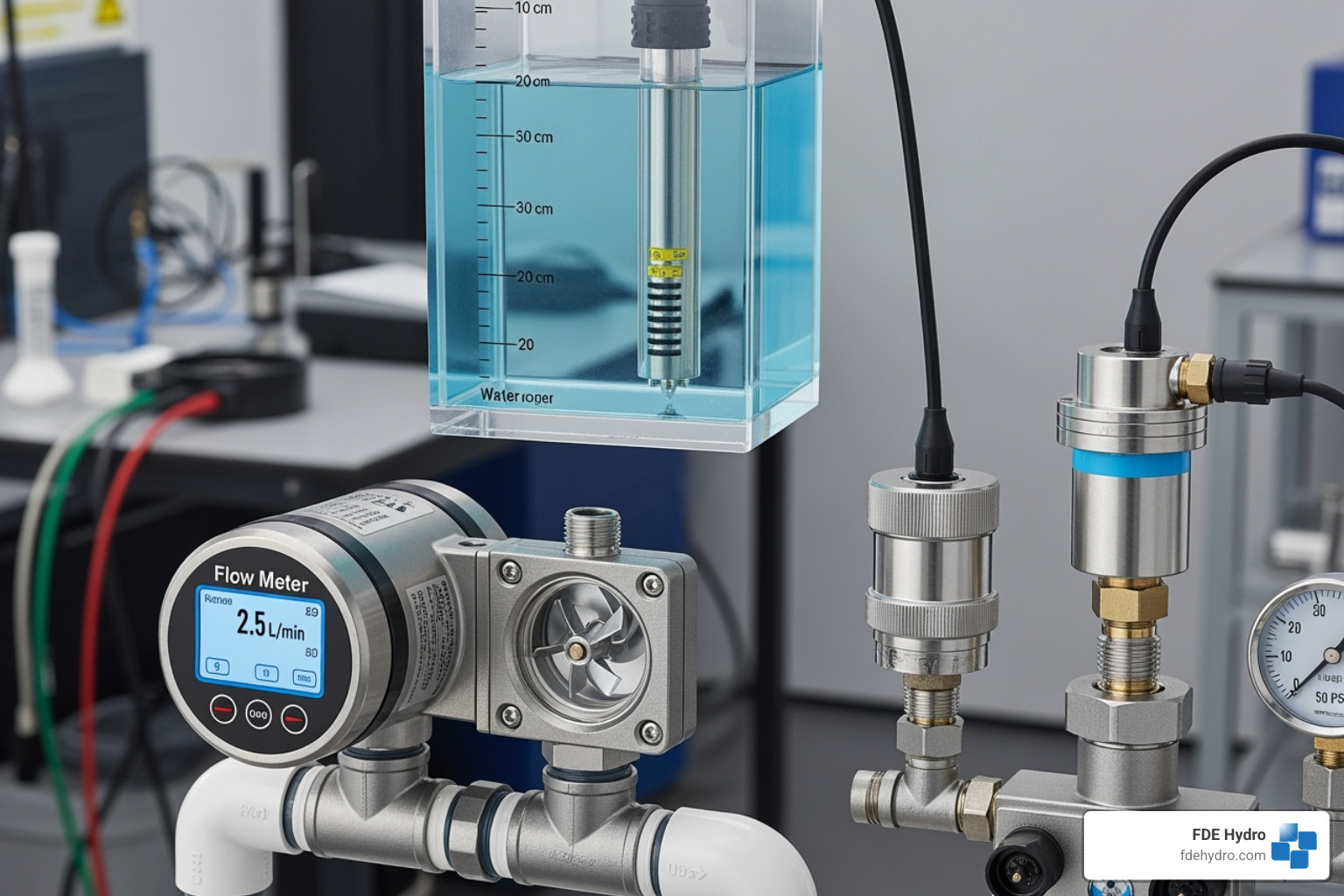
Flow meters and turbines, like those from Signet or Autotrol, measure water volume and velocity, which is essential for detecting leaks and optimizing irrigation. Level sensors, such as the robust stainless steel models from Waterline Controls, monitor tanks and wells to prevent overflows or dry-running pumps. Pressure transducers identify blockages and protect equipment like hydrophores from damaging pressure fluctuations. Water quality monitors, including Hach hardness monitors, assess parameters like pH or conductivity to ensure regulatory compliance and prevent equipment damage. Finally, temperature sensors are key for managing health risks like Legionella in building systems.
Valves, Pumps, and Regulators
If sensors are the eyes and ears, then valves, pumps, and regulators are the muscles. They take action based on commands from the controller.
Control valves and automatic valves, such as reliable Fleck/Pentair models, regulate water flow in response to controller signals, especially in water treatment processes.
Backflow preventers are a critical safety feature, protecting potable water supplies by preventing contaminated water from flowing backward into the clean system.
Flow restrictors and regulators from companies like Cannon Water Technology manage fluid dynamics in industrial applications, ensuring consistent flow rates regardless of pressure changes.
Hydrophore pumps are often used with storage tanks or alternative water sources. Intelligent water control systems protect these pumps by ensuring they never run dry.
Solenoid valves are electrically operated components that quickly open or close to control water flow, making them a go-to choice for automated systems.
Controllers and Software
The controller is the brain of the operation. It interprets sensor data, makes decisions, and sends commands to the valves and pumps.
Electronic controls and microcontrollers are the core processing units. The ESP32 microcontroller is a versatile choice for custom systems due to its built-in Wi-Fi and Bluetooth capabilities.
Programmable Logic Controllers (PLCs) are industrial-grade computers that automate complex processes in municipal and industrial settings, built for 24/7 reliability.
Remote monitoring and IoT integration have transformed water management. Systems like MTA Messtechnik’s WCS use battery-powered units and mobile networks to allow remote access from any web browser. Data logging tools, such as Cannon Water Technology’s Carlon Car-Logger, enable historical analysis for continuous optimization.
Battery-powered systems solve a critical challenge for remote locations without reliable power, with some units operating for up to five years on a single charge.
User interfaces, whether a local display or a web portal, make this technology accessible, allowing you to configure and manage your water control system without needing an engineering degree. A study on modern system design explores how these components integrate to create robust, user-friendly solutions.
Designing for Efficiency and Conservation
The real magic of water control systems isn’t in any single component—it’s in how they come together. A thoughtfully designed system is a powerful tool for conservation, delivering measurable water and cost savings.
The System Design & Implementation Process
Creating an effective water control system requires careful planning, as each application has unique needs demanding a custom approach.
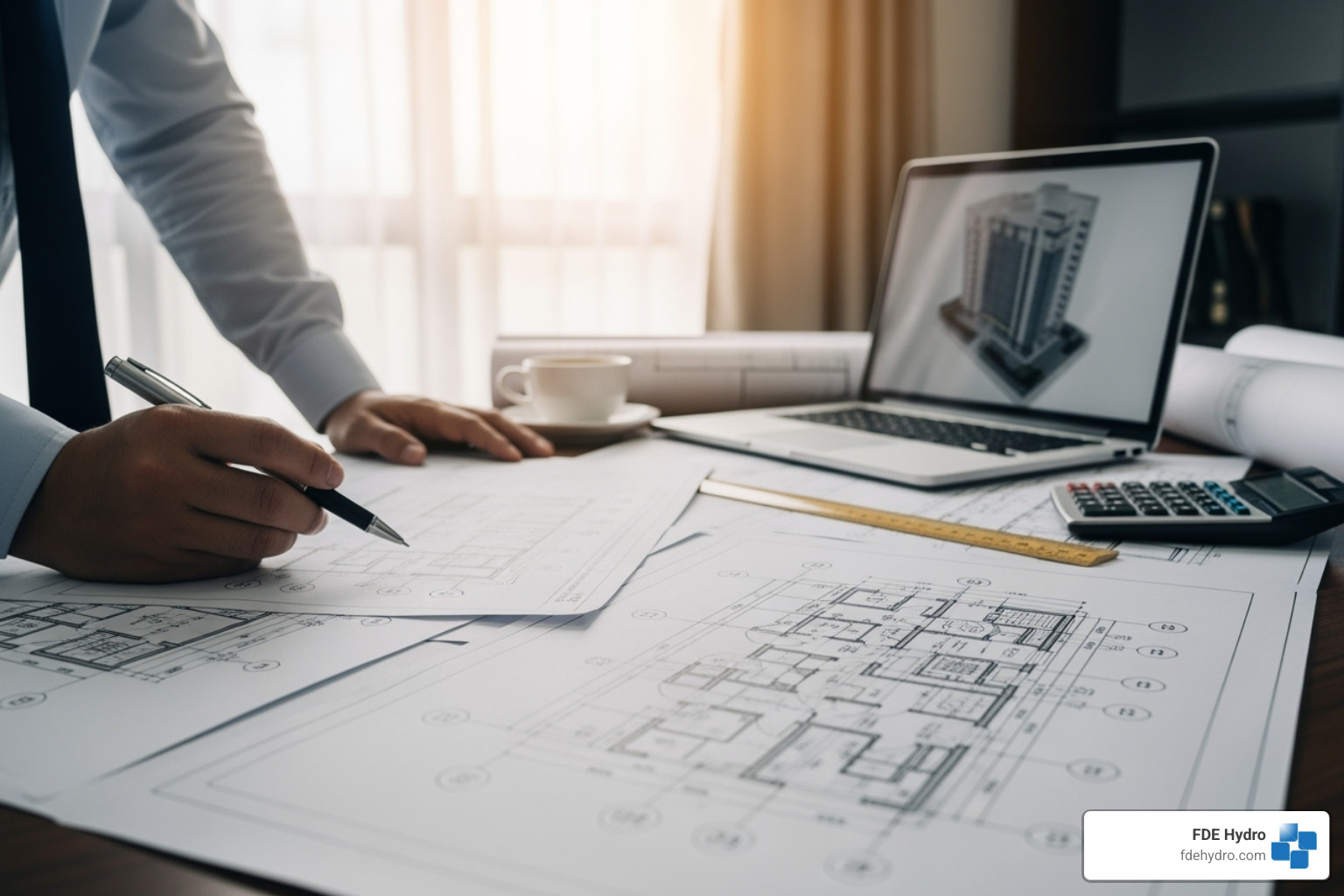
An effective system follows a clear process: an initial design phase to define requirements, documentation and submittals for clarity, system fabrication of custom-built components, and finally, on-site commissioning and startup to test and fine-tune the system. Clear documentation and proper commissioning are crucial for preventing costly mistakes and ensuring long-term performance.
Sizing calculators are invaluable tools during the design phase, helping engineers select the right equipment capacity for applications like industrial reverse osmosis or water softeners. Correct sizing prevents wasting money on oversized equipment or suffering from inadequate performance with undersized systems.
At FDE Hydro, we’ve seen how construction efficiency impacts the success of water infrastructure. Our modular precast concrete technology—”French Dam” technology—dramatically reduces construction time and costs for large-scale water control structures. This efficiency extends to the water control systems themselves, making the entire project more cost-effective. It’s one of the key reasons Why Precast Cost Less.
Maximizing Water Savings with Advanced Technology
The numbers tell a compelling story about what modern water control systems can achieve.
A home that switches to a WaterSense labeled irrigation controller saves 15,000 gallons of water annually. For commercial properties, the savings scale dramatically. For example, a Dallas office complex cut water use by 40%, saving 12.5 million gallons and achieving a 1.5-year payback on its smart irrigation system. Another installation achieved a 66% water savings by connecting smart controls to the building’s automation system. These are sound financial investments with rapid returns.
Leak detection is the unsung hero of water conservation. Systems with flow and pressure sensors can spot hidden leaks almost immediately by detecting abnormal flow patterns or pressure drops, alerting you before they become expensive disasters.
Pressure management also plays a key role. High water pressure stresses plumbing and increases consumption. Pressure reducing valves lower inlet pressure to optimal levels, protecting the system and reducing waste.
For irrigation, automated scheduling has revolutionized water use. Smart controllers adjust based on real-time weather data or soil moisture readings, eliminating the wasteful overwatering common with fixed timers.
In industrial settings, precise flow control enables more efficient chemical dosing. By knowing the exact volume of water being treated, you can add the precise amount of chemicals needed, reducing costs and improving effectiveness.
The broader impact of these technologies is profound. As we face increasing climate challenges, water management becomes critical infrastructure. At FDE Hydro, we believe that The Biggest Untapped Solution to Climate Change is in the Water. Smart water control systems are about building a sustainable future where every drop counts.
Frequently Asked Questions about Water Control Systems
You’ve learned a lot about water control systems, but you might still have some practical questions. Let’s tackle the most common ones.
How do smart water control systems conserve water?
Smart systems use real-time data to make intelligent decisions. Instead of fixed timers, weather-based controllers check for rain and humidity, while soil moisture sensors measure water levels directly at the plant roots. This precision eliminates overwatering. In larger facilities, they also provide immediate leak detection and pressure optimization, preventing waste and saving money. A typical home can save 15,000 gallons annually, with commercial sites often seeing 40-70% reductions in water use.
What are the main components I need for a basic water control setup?
Every water control system follows a basic sense, think, act logic.
- Sensors to measure what’s happening (e.g., a water level sensor in a tank or a flow meter in a pipe).
- A controller (the brain) to process that information and decide what to do.
- Actuators (e.g., a valve or pump) to carry out the controller’s decision.
For example, a level sensor in a tank tells a controller when the water is low. The controller then activates a valve to refill the tank and tells it to close when the sensor signals the tank is full. It’s a simple, reliable, and automatic process. More complex systems add more specialized sensors for pressure or water quality, but the basic framework remains the same.
Can these systems be integrated into an existing building or facility?
Absolutely. Modern water control systems are designed with retrofitting in mind. You don’t need to start from scratch.
Wireless sensors eliminate the need to run new wiring, and modular controllers can be added to existing setups. Most importantly, standard communication protocols allow new components to talk to your existing Building Management Systems (BMS) or industrial control networks. For example, electronic sensors can use dry contacts to integrate seamlessly with a BMS for centralized monitoring.
Remote monitoring systems that connect via mobile networks are another easy integration, sending data to a web server you can access from anywhere. The key is working with experienced professionals who can ensure the new water control systems work harmoniously with what you already have, resulting in a more efficient system that delivers measurable savings.
Conclusion
From smart irrigation in a backyard to sophisticated systems managing municipal water networks, the message is clear: water control systems are essential infrastructure. They are no longer a ‘nice-to-have’ but a necessity for a sustainable future.
The numbers represent real conservation and cost savings. A single household can save 15,000 gallons annually, while commercial facilities often reduce water use by 15-40% or more. When multiplied across thousands of sites, the impact is profound.
Reliability is just as important as savings. Modern water control systems protect expensive equipment, detect leaks before they become disasters, and ensure water quality through continuous monitoring. They work around the clock, making small adjustments that lead to major improvements in efficiency.
The future of water management is smart and connected. Battery-powered sensors, remote monitoring, and IoT integration are changing how we interact with water infrastructure, moving us from reactive management to proactive stewardship.
At FDE Hydro, we see this change daily. Our innovative modular precast concrete technology—”French Dam” technology—creates the physical structures that support these sophisticated water control systems. Whether it’s a new hydropower facility or a retrofitted dam, the principles are the same: efficiency, reliability, and sustainability built from the foundation up.
Water is our most precious resource, and managing it wisely is not optional. We have the technology and knowledge to do it right. From residential landscapes to renewable energy projects, water control systems prove that conservation and performance go hand in hand.
If you’re interested in learning how we’re applying these principles to renewable energy and large-scale water management, I invite you to explore our innovative solutions for Hydropower. Together, we can build a future where every drop counts.
by Bill French Sr. | Oct 30, 2025 | News
Canada’s Emerging Role in the Global Crypto Mining Industry
Canada crypto mining has positioned the country as the world’s fourth-largest Bitcoin mining hub, trailing only the United States, China, and Kazakhstan. Here’s what you need to know:
- Global Production Share: Canadian facilities produce 6.48% of all Bitcoin mined globally
- Energy Consumption: 4,048 gigawatt hours consumed since the start of 2024
- Financial Impact: $424.2 million in electricity expenditure (based on $0.10/kWh average rate)
- Regulatory Environment: No specific mining license required, but tax obligations apply through the Canada Revenue Agency (CRA)
- Key Advantage: Access to abundant, relatively low-cost electricity, particularly from hydroelectric sources
The country’s cold climate and stable political environment make it attractive for mining operations, but the April 2024 Bitcoin halving event doubled the energy required to mine a single Bitcoin—from 407,059 kWh to 850,219 kWh—significantly impacting profitability.
Why does this matter for infrastructure leaders? The massive energy demands of crypto mining are creating unprecedented opportunities for innovative power solutions. My experience with the Department of Energy’s hydropower task force and my work at FDE Hydro has shown that Canada crypto mining operations need what we prioritize in hydropower: reliable, cost-effective, and sustainable energy. Success hinges on efficient infrastructure that minimizes capital expenditure and accelerates project timelines.
The Landscape of Canada Crypto Mining: Energy, Costs, and Scale
Canada’s cold climate, stable governance, and affordable electricity have made it the world’s fourth-largest Bitcoin mining hub. This success, however, comes with a significant energy cost.
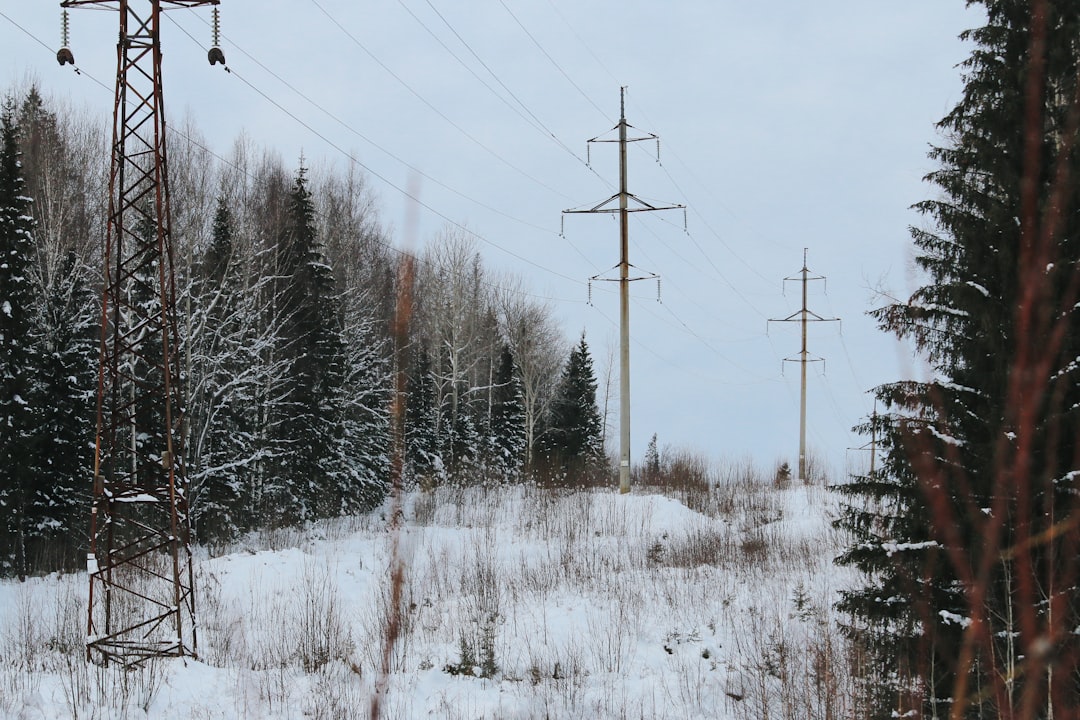
Bitcoin mining is an energy-intensive global race where specialized computers (ASICs) solve complex puzzles to validate transactions and earn new Bitcoin. Operations in Canada range from small-scale enthusiasts to industrial warehouses with thousands of rigs. For all of them, a constant, reliable, and affordable power supply is the single most critical factor for profitability.
Electricity Consumption and Grid Impact
The energy consumption of Canada crypto mining is staggering. Since the start of 2024, operations have used 4,048 gigawatt hours of electricity, costing an estimated $424.2 million. This is enough energy to power over 363,000 Canadian homes for a year or charge every electric vehicle in Canada more than 160 times.
This massive demand places real pressure on power infrastructure, as large mining operations can strain local grids. For energy infrastructure professionals, this challenge presents a clear opportunity to develop and deploy scalable, reliable power solutions. You can explore more detailed global data through the Cambridge Bitcoin Electricity Consumption Index.
The Halving’s Effect on Profitability
The Bitcoin “halving” is a pre-programmed event that cuts the mining reward in half, occurring roughly every four years. The April 2024 halving dropped the reward from 6.25 BTC to 3.125 BTC per block, fundamentally changing the economics for Canada crypto mining operations.
Overnight, the energy required to mine one Bitcoin more than doubled. This forces miners to find cheaper electricity or invest in more efficient equipment to remain profitable. Efficiency has never been more critical. A recent study breaks down these dramatic shifts in detail.
| Metric |
Before April 2024 Halving |
After April 2024 Halving |
| Bitcoin Block Reward |
6.25 BTC |
3.125 BTC |
| Energy to Mine 1 BTC |
407,059 kWh |
850,219 kWh |
| Cost to Mine 1 BTC (at $0.10/kWh) |
$42,656.06 |
$89,095.14 |
Key Players in Canada Crypto Mining
The Canadian crypto mining scene features several major players adapting to the evolving market.
- Hut 8 (TSX:HUT) is one of Canada’s largest operators, with data centers across North America offering self-mining, hosting, and managed services. The company has shown significant growth and has announced ambitious expansion plans, including developing new sites and partnering with technology providers like Bitmain to improve its mining capabilities.
- SOL Strategies (CSE:HODL, NASDAQ:STKE), formerly Cypherpunk Holdings, pivoted to focus exclusively on the Solana blockchain. Instead of mining Bitcoin, they invest in Solana projects and operate validators. This strategic shift has been met with positive investor sentiment.
- Bitcoin Well (TSXV:BTCW, OTCQB:BCNWF) focuses on making Bitcoin accessible to everyday Canadians through a network of Bitcoin ATMs and an online portal. The company has reported significant growth in its customer base and continues to build its Bitcoin reserves.
Navigating the Rules: Crypto Mining Regulations and Taxes
While the cryptocurrency world can seem unregulated, Canada has established clear rules for crypto mining, woven into existing tax and business laws. For anyone involved in Canada crypto mining, understanding these frameworks is essential for legal compliance and profitability.

Unlike some countries, Canada does not require a specific “crypto mining permit.” Instead, the Canada Revenue Agency (CRA) applies existing tax laws, while provincial governments regulate electricity and business operations. The key is understanding how the CRA views your mining activities and what that means for your tax obligations.
The CRA’s Stance: Hobby vs. Business
The CRA evaluates each mining situation to determine if it’s a business or a hobby, a distinction that significantly impacts taxation. Factors include the regularity of mining, profit motive, and the scale of your operation. A few rigs running occasionally might be a hobby, while a dedicated facility is clearly a business.
- If mining is a business, the fair market value of mined coins is considered taxable income upon receipt. Any subsequent sale can also trigger capital gains. This income must be reported on your tax return like any other business.
- If mining is a hobby, tax obligations are generally limited to capital gains when you sell the crypto.
The CRA encourages voluntary disclosure for past unreported crypto income, which can help reduce penalties. Maintaining detailed records of all transactions, costs, and sales is crucial for compliance. For official guidance, refer to the Mining cryptocurrency – Canada.ca page.
Understanding GST/HST for Mining Activities
Businesses involved in Canada crypto mining must also steer the Goods and Services Tax (GST) and Harmonized Sales Tax (HST), governed by the Excise Tax Act. Section 188.2 of the act defines cryptoassets and mining activities.
Following legislative changes effective February 5, 2022, the provision of a mining activity itself is generally not considered a taxable supply for GST/HST purposes. This means miners typically do not charge GST/HST on their mining services. The trade-off is that they generally cannot claim Input Tax Credits (ITCs) on related expenses like electricity and equipment.
The CRA distinguishes between mining groups (where members share risks and rewards) and mining pools (where an operator pays for computing power), which affects GST/HST application. The rules are complex and evolving, so consulting the official Mining Activities in respect of Cryptoassets notice and seeking professional accounting advice is highly recommended.
Regional Hotbeds and Sustainability Efforts
Canada’s diverse energy landscape has created distinct regional hubs for Canada crypto mining, each with unique advantages. As the industry grows, however, it faces increasing pressure to operate sustainably.
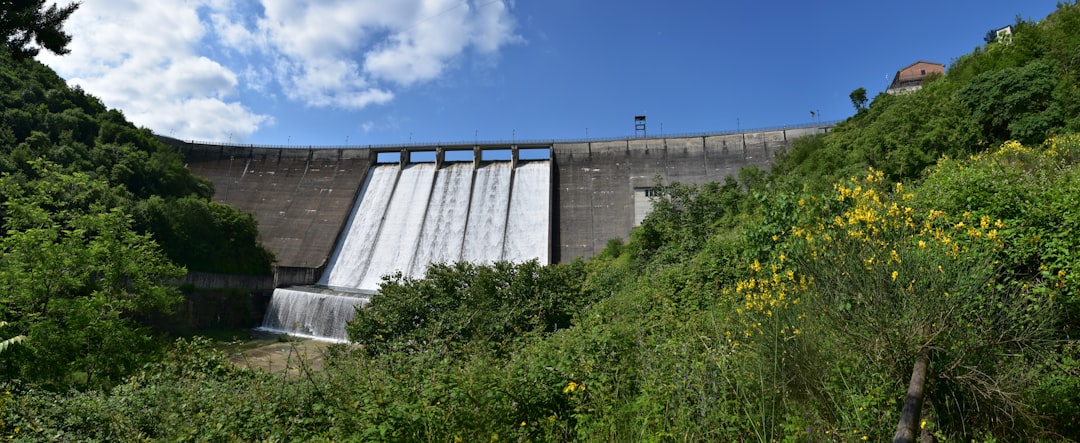
Canada’s cold climate provides natural cooling for heat-generating mining rigs, a significant geographic advantage. This, combined with a strong commitment to renewable energy, positions the nation uniquely. The central question is no longer just if we can mine, but if we can do so responsibly.
Provincial Powerhouses: Quebec, Alberta, and Atlantic Canada
- Quebec was an early magnet for miners due to its abundant, low-cost hydroelectricity and cold climate. However, a surge in demand led Hydro-Québec to impose a moratorium on new operations in 2018 to protect the grid. Pre-existing facilities continue to benefit from the province’s green energy.
- Alberta became a key player by offering greater flexibility, with both on-grid and off-grid solutions. Its diverse energy market, including natural gas and renewables, allows miners to negotiate competitive rates.
- Atlantic Canada, particularly New Brunswick, attracted miners like HIVE Blockchain Technologies when Quebec’s market tightened. New Brunswick’s 80% non-emitting energy grid, powered by nuclear and hydro, allows companies to market their Bitcoin as “green.”
Some operations act as “flexible load centers,” consuming surplus power during off-peak hours. This “reverse battery” strategy helps utilities balance the grid and demonstrates how mining can integrate with, rather than just strain, existing infrastructure.
The Future of Canada Crypto Mining: The Push for Sustainability
The conversation around Canada crypto mining has shifted from profitability to responsibility. While the industry’s energy consumption is high, Canada’s reliance on clean energy sources like hydropower creates “green Bitcoin” with a lower carbon footprint than crypto mined elsewhere using fossil fuels.
Hydropower is the foundation of sustainable crypto mining in Canada, providing the consistent, renewable power needed for 24/7 operations. This is where infrastructure innovation is critical. At FDE Hydro, our patented modular precast concrete technology—the “French Dam” approach—accelerates the construction and retrofitting of hydroelectric facilities. By reducing costs and timelines, we make clean energy more accessible for energy-intensive industries in Canada, the US, Brazil, and Europe.
Innovation also extends to byproducts. Waste heat from mining rigs, traditionally vented, can be repurposed for district heating or to warm agricultural greenhouses. Another frontier is flared gas mining, where natural gas that would otherwise be burned off at oil wells is captured to power mining operations, turning an environmental liability into a productive asset.
This push for sustainability is becoming a competitive advantage. Miners who can prove their operations run on renewable energy are better positioned for future partnerships and market leadership.
Frequently Asked Questions about Crypto Mining in Canada
Here are straight answers to some of the most common questions about Canada crypto mining.
Is crypto mining still profitable in Canada?
Profitability is not guaranteed and depends on several key factors:
- Bitcoin’s Price: Higher prices directly increase the value of mining rewards.
- Electricity Cost: This is a miner’s largest expense. Access to low-cost power, particularly from hydro sources, is a major advantage in Canada.
- Hardware Efficiency: Newer ASIC miners produce more hashes per watt, making them more competitive. Outdated equipment can quickly become unprofitable.
- The Halving: The April 2024 halving cut mining rewards in half, effectively doubling the cost to mine a single Bitcoin.
In short, profitability is challenging but achievable, especially for large-scale operations with efficient hardware and access to cheap, renewable energy. For hobbyists, it has become much more difficult.
What are the main risks of mining cryptocurrency in Canada?
While there are opportunities, Canada crypto mining involves significant risks:
- Regulatory Changes: Federal and provincial rules for crypto are still evolving. Changes to tax laws or energy policies, like Quebec’s 2018 moratorium, can happen quickly.
- Energy Price Volatility: Electricity rates can fluctuate due to market demand, weather patterns, and policy changes, directly impacting profitability.
- Environmental Scrutiny: The industry’s high energy consumption draws public and governmental concern, which could lead to stricter regulations or fees.
- Global Competition: Canadian miners compete with operations worldwide, some of which may have lower energy costs or more favorable regulations.
- Hardware Obsolescence: Mining equipment has a short lifespan and requires significant capital investment, with a high risk of rapid depreciation.
- Market Volatility: The price of Bitcoin and other cryptocurrencies is notoriously volatile, meaning the value of mining rewards can plummet unexpectedly.
Do I need a license to mine crypto in Canada?
No, there is no specific federal “crypto mining license” in Canada. However, you must comply with several existing regulations:
- Business Registration: If you operate as a business (which the CRA will likely assume for any serious operation), you must register it provincially and federally.
- Tax Registration: You must register for and handle GST/HST once your revenues exceed the threshold.
- Provincial Utility Regulations: You must secure power agreements and permits from local utility providers, which often have specific rules for large energy consumers.
- Zoning and Local Bylaws: Your facility must comply with local zoning, noise, and building codes.
While there’s no single license, navigating these business, tax, utility, and municipal requirements is essential for legal operation.
Conclusion
Canada crypto mining is a story of balancing innovation with responsibility. Our nation has become the world’s fourth-largest Bitcoin mining hub by leveraging its political stability, abundant energy, and cold climate. However, this success is challenged by massive electricity consumption and the economic pressures of events like the 2024 Bitcoin halving.
The future of the industry in Canada will be determined by its commitment to sustainability. The operations that thrive will be those that accept renewable energy, particularly hydropower, as their foundation. Offering “green Bitcoin” powered by Canadian hydroelectricity is not just a marketing advantage; it’s a step toward building a more responsible digital economy.
The regulatory landscape will continue to evolve, requiring careful navigation of tax and utility rules. But these frameworks are designed to ensure the industry grows in a way that benefits the economy without compromising our grid or environmental goals.
This is where we see our role at FDE Hydro. Our patented modular precast concrete technology—the “French Dam”—makes building and retrofitting hydroelectric facilities faster and more affordable. We are helping create the sustainable energy infrastructure that forward-thinking industries need, whether for mining in Canada or renewable projects in the United States, Brazil, and Europe.
The path forward is clear: Canada crypto mining must be powered by clean, reliable energy. The operations that recognize this today will lead tomorrow. Canada has the resources and expertise to set the global standard for responsible cryptocurrency mining.
To explore how sustainable hydropower infrastructure can support your energy-intensive operations, we invite you to Learn more about hydropower solutions.

