by Adaptify Support | Apr 28, 2026 | Energy Resource Articles
The World Is Wasting 60% of Its Energy — Here’s Why That Has to Change
Renewable energy efficiency is the measure of how much useful energy we actually get out of the energy we produce — and right now, the global average is shockingly low.
Quick answer: Key renewable energy efficiency metrics at a glance
| Metric |
What It Measures |
Why It Matters |
| Energy intensity |
Energy used per unit of GDP |
Lower = more efficient economy |
| LCOE |
Cost per kWh of electricity generated |
Lower = cheaper clean power |
| Primary energy efficiency |
Share of input energy converted to useful output |
World average: ~40% |
| Carbon intensity |
CO₂ emitted per unit of energy |
Lower = cleaner energy mix |
| Capacity factor |
Actual vs. maximum possible output |
Higher = more reliable generation |
The numbers are stark. The world’s energy system operates at roughly 40% efficiency — meaning nearly 60% of all energy inputs are simply wasted. In the United States, that waste climbs to almost 70%. Meanwhile, between 2010 and 2022, energy efficiency improvements accounted for 82% of global carbon emissions reductions — far outpacing what renewable energy deployment achieved on its own.
This isn’t just a technical problem. It’s the central challenge of the entire energy transition.
To stay on a 1.5°C climate pathway, two things must happen by 2030:
- Triple global renewable power capacity (from 3,382 GW to over 11,000 GW)
- Double the annual rate of energy efficiency improvement (to 4% per year)
Right now, we’re on track for neither. Global efficiency progress in 2025 is estimated at just 1.8% — less than half the required pace.
That gap is exactly why understanding how efficiency and renewables work together is so critical — not just for policymakers, but for anyone building the infrastructure that powers our future.
I’m Bill French, Sr., Founder and CEO of FDE Hydro™, and I’ve spent decades in heavy civil construction and hydropower innovation — including serving on the U.S. Department of Energy’s Hydropower Vision Task Force — developing modular solutions that directly improve renewable energy efficiency at the project level. In this guide, I’ll break down the metrics, the stakes, and the strategies that make efficiency and renewables the ultimate power couple.
Related content about renewable energy efficiency:
Defining the Metrics of Renewable Energy Efficiency
When we talk about renewable energy efficiency, we aren’t just looking at how much sun hits a panel or how much wind spins a turbine. We are looking at the entire journey of an electron from the source to your toaster. To analyze this effectively, we use specific metrics that tell us if our energy system is a lean, green machine or a leaky bucket.
One of the most important concepts is the difference between primary energy and final energy. Primary energy is the raw energy found in nature (like the movement of water in a river), while final energy is what actually reaches the end-user. The gap between them is often filled with “thermal conversion losses”—the heat wasted when burning fossil fuels. This is where renewables have a massive “built-in” efficiency advantage.
Because sources like wind, solar, and hydropower don’t require burning fuel to create steam, they avoid those massive thermal losses. According to IRENA, tripling our renewable capacity is the only way to meet the 1.5°C goal precisely because of this superior system-wide efficiency.
Comparing Costs and Efficiency
Efficiency isn’t just a physics problem; it’s an economic one. We use the Levelized Cost of Energy (LCOE) to measure the average net present cost of electricity generation for a plant over its lifetime.
| Power Source |
LCOE (2022 Avg USD/kWh) |
Efficiency Notes |
| Hydropower |
$0.061 |
Highly efficient; provides 24/7 baseload and storage. |
| Solar PV |
$0.049 |
Costs dropped 89% in a decade; 29% cheaper than fossil fuels. |
| Onshore Wind |
$0.033 |
Costs dropped 70% in a decade; 52% cheaper than fossil fuels. |
| Fossil Fuels |
$0.05 – $0.20+ |
High waste (60-70%) due to thermal conversion. |
As we explore what renewable energy resource is the most efficient, we see that hydropower stands out because of its ability to offer high capacity factors and long-term reliability that variable sources like wind and solar are still working to match through storage.
The Role of Primary Energy Intensity in Renewable Energy Efficiency
Energy intensity is a key metric for tracking progress under the UN’s Sustainable Development Goals (SDG 7). It measures how much energy a country uses to produce one dollar of economic wealth. If energy intensity is falling, it means we are getting better at sustainable energy production.
Currently, the world is struggling with system losses. In the U.S., nearly 70% of energy is lost before it does any work. Much of this happens at the power plant or during transmission. Research from the Lawrence Berkeley National Laboratory highlights that by focusing on “negawatts”—the energy we don’t have to produce because we’ve become more efficient—we can meet demand without building new, expensive power plants.
How Electrification Enhances Renewable Energy Efficiency
The “secret sauce” of a highly efficient renewable system is electrification. When we switch from a gas-powered car to an electric vehicle (EV), or from a gas boiler to a heat pump, we aren’t just changing the fuel; we are radically improving the efficiency of the machine itself.
An EV is roughly three times more efficient than a gasoline car. A heat pump can be 300% to 400% efficient because it moves heat rather than creating it. By adopting these clean energy solutions, we allow renewables to do more work with less raw power.
5 Reasons Efficiency is the “First Fuel” of the Energy Transition
In the energy world, we often call efficiency the “first fuel.” Why? Because the cleanest, cheapest kilowatt-hour is the one you never have to generate in the first place.
When we combine renewable energy efficiency with aggressive deployment, we create a synergy that is far more powerful than either could be alone. Here are five reasons why efficiency must lead the way as the most cost effective renewable energy strategy.
1. Efficiency is the Cheapest Energy Resource
Building a new power plant—even a cheap solar farm—costs money. But insulating a building or upgrading an industrial motor often pays for itself in just a few years. According to the IEA, efficiency is frequently the least expensive way to meet new energy demand.
In the U.S., energy efficiency has met 67% of the total growth in energy demand since 1950. That is more than any other single resource, including oil, gas, or coal. It’s an “expandable, declining-cost resource” that saves consumers and utilities billions of dollars.
2. Massive Carbon Mitigation Potential
If we want to hit net-zero, we can’t just build our way there with solar panels. Between 2010 and 2022, efficiency improvements were responsible for a staggering 82% of global carbon emissions reductions. While renewables are essential, efficiency does the heavy lifting in the background.
By finding the best renewable energy options available today, we can maximize this mitigation. For example, switching from incandescent bulbs to LEDs reduces primary energy use by 90%. That’s 90% less coal or gas that needs to be burned to keep the lights on.
3. Reducing Global Energy Waste
The sheer amount of energy we throw away is mind-boggling. The United Nations points out that our global energy system is only 40% efficient. In the U.S., where the system is older and more spread out, waste hits 70%.
This waste isn’t just “lost heat”; it’s lost money and unnecessary pollution. Comprehensive energy assessments and technologies like variable speed drives for industrial pumps can slash this waste. By designing systems with wider, straighter pipes and smarter motors, we can reduce the friction that eats up so much of our power.
4. Enhancing Grid Flexibility and Storage
As we add more variable renewables like wind and solar, the grid becomes harder to manage. Efficiency helps by reducing the “peak” demand—the times when everyone turns on their AC at once.
Furthermore, we need hydropower energy storage to act as a giant battery for the grid. Pumped storage hydro is currently the largest form of installed energy storage globally, providing the flexibility needed to balance out the moments when the sun isn’t shining or the wind isn’t blowing.
5. Driving Economic Competitiveness
Efficiency makes businesses more profitable. Industries today produce 20% more value per unit of energy than they did in 2000. For countries in the European Union, efficiency has been a shield against high energy prices and geopolitical instability, avoiding the need for 20% more fossil fuel imports.
Overcoming Barriers to Global Adoption
If efficiency and renewables are so great, why aren’t we doing more? The truth is, there are significant hurdles—from red tape to “vampire” appliances that suck power even when they’re off.
One of the biggest issues is permitting delays. In some regions, it can take nine years to get an offshore wind project approved. We also face a “split incentive” problem: why would a landlord pay for a new, efficient boiler if the tenant is the one paying the energy bill?
To overcome these, we need:
- Streamlined Permitting: Adopting “one-stop shop” models for project approvals.
- Stronger Standards: Implementing Minimum Energy Performance Standards (MEPS) so that only the most efficient appliances can be sold.
- Innovative Financing: Programs like “Pay as You Save” tie the cost of an energy upgrade to the utility meter, not the individual, making it easier for homeowners to invest.
We also need to look beyond the turbine at how we build our infrastructure. At FDE Hydro™, we focus on modular construction to slash the time and cost of hydroelectric projects, making renewable deployment faster and more efficient from day one.
Frequently Asked Questions about Renewable Energy Efficiency
What is the difference between energy efficiency and energy conservation?
It’s a common mix-up! Energy conservation is a behavioral change—like turning down the thermostat and wearing a sweater. You are using less energy by accepting a lower level of service (a colder house).
Energy efficiency, on the other hand, is a technological upgrade. It means using a high-efficiency heat pump and better insulation to keep your house just as warm while using 50% less electricity. You get the same (or better) service with less input. According to the IEA, efficiency is about maintaining quality of life while reducing environmental impact.
Why must energy efficiency improvements double by 2030?
At the COP28 climate summit, the world agreed that we need to double our annual rate of efficiency improvement from roughly 2% to 4%. Why? Because our current pace isn’t enough to offset the growth in global energy demand. As developing nations grow and we electrify transport, our total electricity needs are skyrocketing. If we don’t double our efficiency, we will have to build twice as many wind and solar farms just to keep up, making the hydropower electricity transition much harder and more expensive.
How does hydropower contribute to system-wide efficiency?
Hydropower is the “Swiss Army Knife” of the grid. Unlike wind and solar, it is “dispatchable,” meaning we can turn it on or off in seconds to meet demand. This prevents the need for inefficient fossil fuel “peaker” plants. Additionally, hydroelectric dam efficiency is incredibly high; modern turbines can convert over 90% of the energy in falling water into electricity. By providing long-duration storage and grid stability, hydro makes the entire renewable system more efficient.
Conclusion
The path to a net-zero future isn’t paved with just one technology. It requires the “Ultimate Power Couple”: aggressive renewable deployment and radical energy efficiency. By focusing on renewable energy efficiency, we can stop wasting 60% of our resources and start building a system that is affordable, reliable, and clean.
At FDE Hydro™, we are doing our part by reimagining how energy infrastructure is built. Our patented French Dam technology uses modular precast concrete to build and retrofit dams in North America, Brazil, and Europe. This innovative approach significantly reduces construction costs and time, ensuring that the next generation of hydropower is as efficient as possible.
Whether it’s through integrative design in our buildings or modular innovation in our dams, the goal is the same: more service, less waste, and a healthier planet. It’s time to embrace the power of “negawatts” and get serious about renewable energy solutions.
by Adaptify Support | Apr 7, 2026 | Energy Resource Articles
Why Every Decision-Maker Should Understand the Renewable Energy Source Landscape
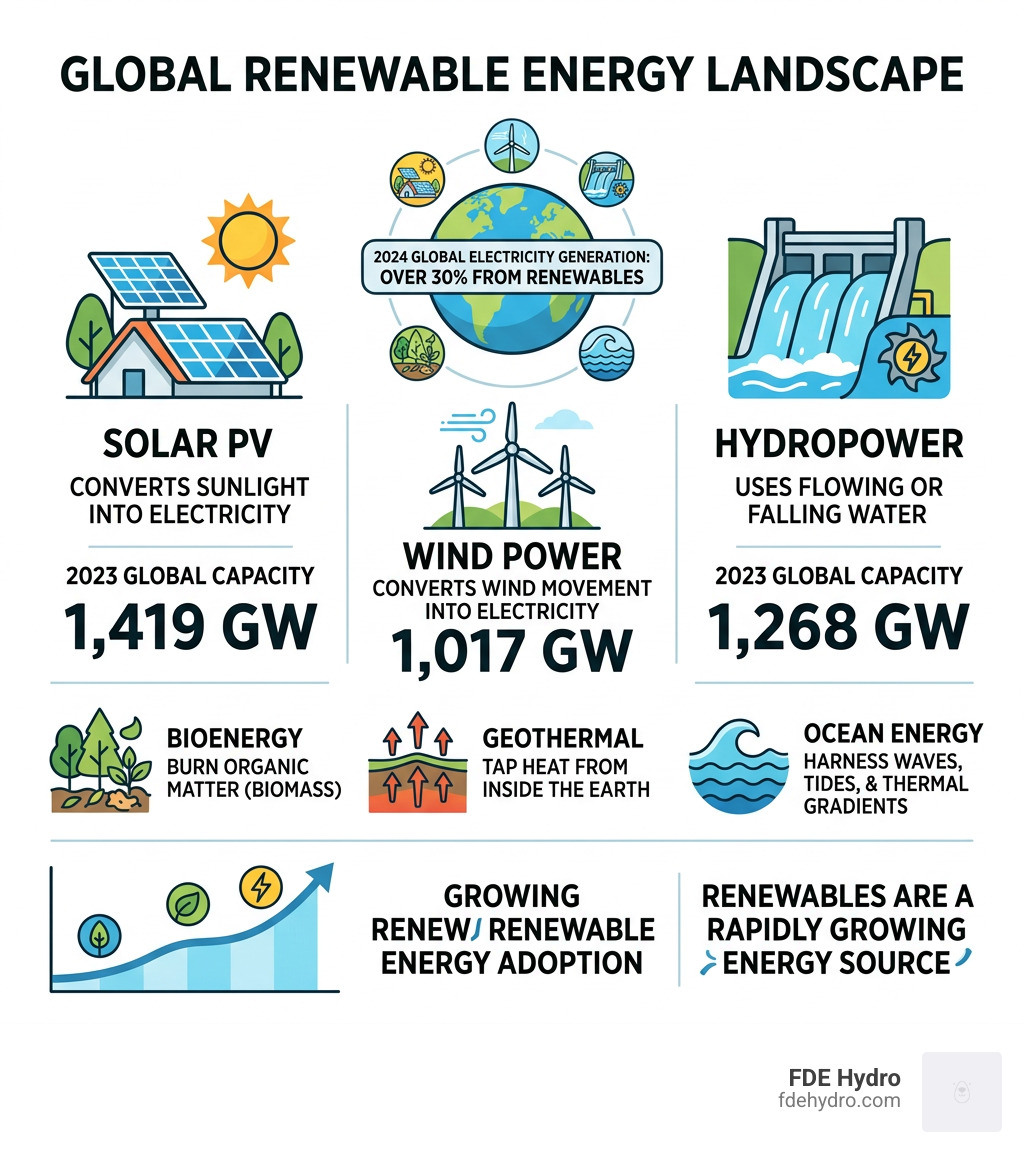
A renewable energy source is any energy resource that is naturally replenished faster than it is consumed — meaning it will not run out. Here are the major types at a glance:
| Renewable Energy Source |
How It Works |
2023 Global Capacity |
| Solar PV |
Converts sunlight into electricity |
1,419 GW |
| Wind Power |
Converts wind movement into electricity |
1,017 GW |
| Hydropower |
Uses flowing or falling water to generate electricity |
1,268 GW |
| Bioenergy |
Burns organic matter (biomass) to produce energy |
Varies by region |
| Geothermal |
Taps heat from inside the Earth |
Mature, stable output |
| Ocean Energy |
Harnesses waves, tides, and thermal gradients |
Early-stage development |
Together, these sources supplied over 30% of global electricity generation in 2024 — and that share is growing fast.
The energy world is changing at a pace most people didn’t expect a decade ago. Renewable energy is no longer a niche alternative. It’s the dominant choice for new electricity capacity being built worldwide. In the U.S. alone, renewables accounted for 21% of total electricity generation in 2023, up from near-zero contributions just a few decades earlier. Globally, projections point to renewables exceeding 45% of electricity generation by 2030.
For infrastructure decision-makers — especially those overseeing large-scale water and energy projects — understanding which renewable technologies exist, how they perform, and where they fit in the broader energy transition is no longer optional. It’s essential.
I’m Bill French, Sr., Founder and CEO of FDE Hydro™, and for over five decades I’ve worked at the intersection of heavy civil construction and energy infrastructure, including being selected by the U.S. Department of Energy to help shape the national roadmap for next-generation hydropower as a renewable energy source. That hands-on experience — from excavation to modular dam innovation — is the lens through which this guide is written.
Renewable energy source further reading:
Defining the Renewable Energy Source: Renewables vs. Alternatives
To truly understand the shift in our power grids, we must first get our definitions straight. While often used interchangeably, “renewable energy” and “alternative energy” carry different technical weights.
A renewable energy source is defined by its ability to naturally replenish itself on a human timescale. Sunlight, wind, and the hydrological cycle aren’t going anywhere. In contrast, fossil fuels like coal, oil, and natural gas are finite; once we burn through the reserves that took millions of years to form, they are gone.
The term “alternative energy” generally refers to any energy source that is a non-traditional substitute for fossil fuels. This can include nuclear power. While nuclear is a “carbon-free” source, it is not strictly renewable because it relies on finite supplies of uranium. However, some scientists argue that if we move toward breeder reactors, the definition might blur.
Another key distinction is the carbon footprint. Most renewables are carbon-neutral or low-carbon. For example, when we burn biomass, it releases carbon dioxide, but that carbon was recently absorbed by the plant during its growth, creating a closed loop. Fossil fuels, however, release “ancient” carbon that has been buried for millennia, which is the primary driver of the greenhouse effect.
For a deeper dive into how we are moving toward a grid dominated by these resources, we recommend reviewing this scientific research on the electricity-powered world. Understanding these basics is the first step in our Energy 101 journey.
Primary Types of Renewable Energy Source Technology
The transition to a sustainable future isn’t a “one-size-fits-all” scenario. It requires a diverse portfolio of technologies, each with unique strengths and geographic requirements. In our work across the United States, Canada, Brazil, and Europe, we see these technologies interacting to create more resilient grids.
The primary categories of renewable energy source technology include:
- Solar Photovoltaics (PV): Capturing sunlight directly using semiconducting materials.
- Wind Power: Utilizing the kinetic energy of airflows through onshore and offshore turbines.
- Hydropower: Harnessing the energy of moving water, from massive dams to run-of-river systems.
- Bioenergy: Converting organic materials (biomass) into heat, electricity, or liquid fuels.
- Geothermal: Tapping into the thermal energy stored beneath the Earth’s crust.
Technology Comparison Table: Growth and Share
| Technology |
2023 Generation Share |
Annual Growth Rate (2014-2023) |
Key Characteristic |
| Solar PV |
~5.5% |
25% |
Fastest growing; intermittent |
| Wind |
~8% |
13% |
High technical potential; variable |
| Hydropower |
14.3% |
~1% |
Largest renewable source; baseload |
| Bioenergy |
Varies |
Stable |
Controllable; provides heat/fuel |
| Geothermal |
<1% |
Stable |
24/7 baseload; site-specific |
As we explore renewable energy solutions, it becomes clear that while solar and wind are the “growth engines,” traditional sources like hydropower remain the “backbone” of the system.
Solar and Wind: The Leaders of Renewable Energy Source Capacity
Solar and wind have become the “poster children” of the energy transition for a good reason: their costs have plummeted while their capacity has exploded.
Solar PV capacity reached a staggering 1419 GW in 2023. This growth is driven by “Swanson’s Law,” which suggests that the cost of solar panels drops by about 20% for every doubling of cumulative shipped capacity. Today, in many parts of the U.S. and Europe, solar is the cheapest form of new electricity generation available.
Wind Power followed closely, crossing the 1000 GW threshold in 2023. We are seeing a massive push toward offshore wind, particularly in Europe and the coastal United States, because offshore winds are generally stronger and more consistent than those on land.
The biggest challenge for these two is intermittency. The sun doesn’t always shine, and the wind doesn’t always blow. To solve this, we need overcapacity and better storage. However, the theoretical potential is nearly limitless. According to research, the Technical Potential of Solar and Wind could meet global energy demand 100 times over.
Hydropower and the Role of Modern Infrastructure
While solar and wind get the headlines, hydropower is the quiet workhorse of the renewable energy source world. In 2023, it accounted for 14.3% of global electricity generation — more than solar and wind combined in many regions.
Hydropower’s greatest strength is its ability to provide baseload power. Unlike solar or wind, a dammed hydroelectric system can provide a steady, controllable flow of electricity 24/7. It can also act as a giant battery through pumped-storage technology, which currently accounts for over 85% of all grid-scale energy storage worldwide.
At FDE Hydro™, we focus on making this traditional source fit for the 21st century. The old way of building dams — massive, multi-decade, billion-dollar cast-in-place concrete projects — is often too slow and expensive for today’s needs. We’ve pioneered the French Dam, a patented modular precast concrete technology.
By using precast sections, we can build or retrofit hydroelectric dams in a fraction of the time and at a significantly lower cost. This is particularly vital for retrofitting existing non-powered dams. In the U.S. alone, there are thousands of dams that do not currently produce electricity; adding our modular systems to these existing structures is one of the fastest ways to increase clean energy capacity without the environmental impact of a new “greenfield” project.
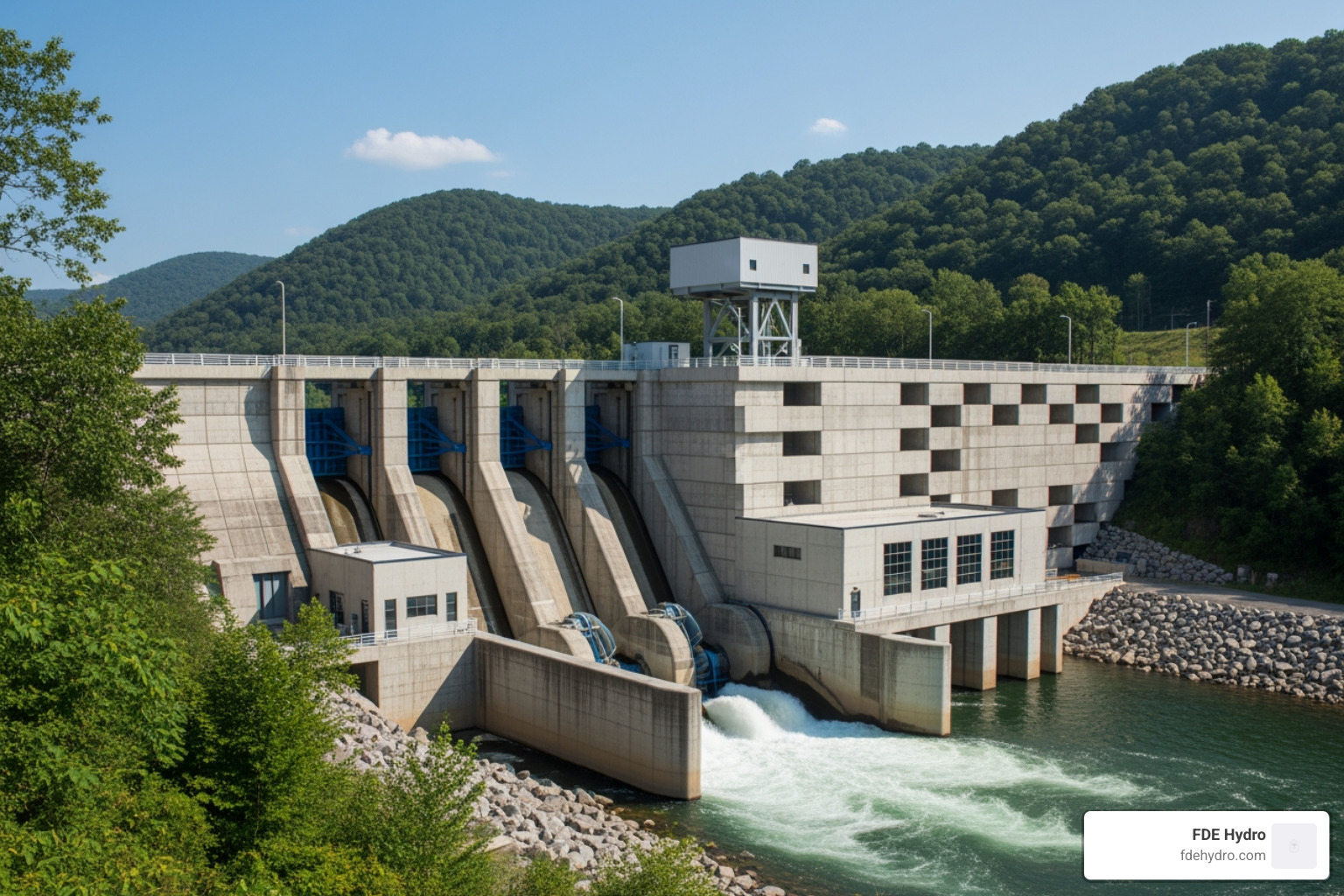
Whether it’s in the rugged terrain of Canada or the industrial hubs of Brazil, our sustainable power generation solutions are proving that hydropower is a modern, high-tech renewable energy source.
Current Statistics and Market Trends for 2024
The numbers for 2024 confirm that the energy transition has reached a tipping point. Globally, renewables now account for over 30% of electricity generation.
In the United States, the 2023 data showed that renewables provided about 9% of total energy consumption (8.2 quadrillion BTUs). While that might sound small, “total energy” includes transportation and industrial heat. When we look strictly at the electric power sector, renewables provided 21% of U.S. electricity in 2023.
Key 2023/2024 Stats:
- Global Solar Growth: Solar PV accounted for 70% of the growth in renewable electricity generation in 2023.
- U.S. Generation: Wind and solar now produce enough electricity to power nearly the entire country if the grid were perfectly efficient.
- Investment: Global investment in clean energy reached record highs, significantly outpacing investment in fossil fuels.
The IEA Renewables 2023 Report highlights that we are on a path to triple global renewable capacity by 2030, provided that policy support remains strong. For those planning infrastructure, our Renewable Energy Projects Complete Guide provides a roadmap for navigating this fast-moving market.
Global Adoption of a Renewable Energy Source
The adoption of renewables is no longer limited to wealthy nations. In fact, developing countries are often leading the charge because renewables allow them to “leapfrog” traditional, expensive centralized grids.
Brazil is a prime example. It has one of the cleanest electricity matrices in the world, largely thanks to its massive hydropower resources and a rapidly growing wind sector. In Europe, countries like Norway generate nearly 100% of their electricity from renewables (mostly hydro).
The economic benefits are also undeniable. Globally, the renewable sector employed over 12 million people as of 2020, with solar PV being the largest employer. Beyond jobs, renewables provide energy security. By using a local renewable energy source, countries reduce their dependence on imported fuels and the volatile price swings of global oil and gas markets.
Overcoming Intermittency and Storage Challenges
The “Achilles’ heel” of a grid powered by a renewable energy source has always been variability. The sun sets, and the wind dies down. How do we keep the lights on?
The answer lies in a combination of storage, diversity, and sector coupling.
- Battery Storage: Lithium-ion battery costs have dropped as fast as solar costs. Large-scale battery arrays are now being deployed in California and New York to “shave the peak” of evening demand.
- Innovative Storage: Beyond lithium, we see emerging tech like sand batteries in Finland, which store heat for months, and green hydrogen, which uses excess renewable power to split water into hydrogen fuel.
- Pumped Hydro: As mentioned, this is the most mature storage tech. By pumping water uphill when energy is cheap (mid-day solar) and letting it flow down when energy is needed, we create a massive physical battery.
- Sector Coupling: This involves linking the electricity, heating, and transport sectors. For example, using electric vehicle batteries to support the grid during high demand (Vehicle-to-Grid).
For those interested in the technical side of grid integration, this Research on sector coupling is an excellent resource. Integrating these clean energy solutions is the next great engineering challenge of our time.
Frequently Asked Questions about Clean Energy
What is the most efficient renewable energy source?
Efficiency can be measured in different ways, but in terms of energy conversion efficiency, hydropower is the undisputed king. Modern hydroelectric turbines can convert over 90% of the energy in falling water into electricity. For comparison, solar panels typically range from 15% to 22%, and wind turbines are usually between 35% and 45%. You can find more details in our guide on what renewable energy resource is the most efficient.
How do costs of renewables compare to fossil fuels?
In most of the world, new wind and solar projects are now cheaper than new coal or gas plants. The “Levelized Cost of Energy” (LCOE) for solar and onshore wind has dropped so significantly that it is often cheaper to build new renewables than to continue operating existing coal plants. Hydropower also remains highly cost-effective over its long lifespan (often 50-100 years), especially when using modular construction to reduce upfront capital.
Can renewables meet 100% of global energy demand?
Technically, yes. The solar energy hitting the Earth in just one hour is enough to power the entire world for a year. The challenge isn’t the amount of energy; it’s the infrastructure required to capture, store, and move it. With a mix of technologies — including baseload hydro and geothermal, variable wind and solar, and robust storage — a 100% renewable grid is physically possible and increasingly economically viable.
Conclusion
The shift toward every available renewable energy source is no longer just an environmental goal; it is an economic and security imperative. From the solar farms of California to the modular hydroelectric power solutions we are implementing in Brazil and Europe, the transition is well underway.
We are moving away from a world of finite, polluting fuels toward a future of abundance and sustainability. By leveraging innovative technologies like our modular precast concrete “French Dam,” we can accelerate this transition, making clean energy more affordable and accessible than ever before.
The future of energy is decentralized, digital, and, above all, renewable. At FDE Hydro™, we are proud to be building the infrastructure that makes that future possible.
Ready to explore how modular hydropower can fit into your next project? Visit our Renewable Energy Solutions page to learn more.
by Adaptify Support | Mar 23, 2026 | Energy Resource Articles
Why Eco Friendly Power Generation Is the Most Important Energy Shift of Our Time
Eco friendly power generation refers to producing electricity from natural, renewable sources that release little to no greenhouse gases — unlike coal, oil, and natural gas.
Here are the main sources at a glance:
| Source |
How It Works |
Share of Global Electricity |
| Solar PV |
Converts sunlight into electricity |
~5.5% (growing fast) |
| Wind |
Turbines capture kinetic energy from wind |
~7.8% |
| Hydropower |
Moving water drives turbines |
~14.4% |
| Geothermal |
Earth’s internal heat produces steam |
Small but stable |
| Biomass |
Organic matter burned or converted to gas |
Small but dispatchable |
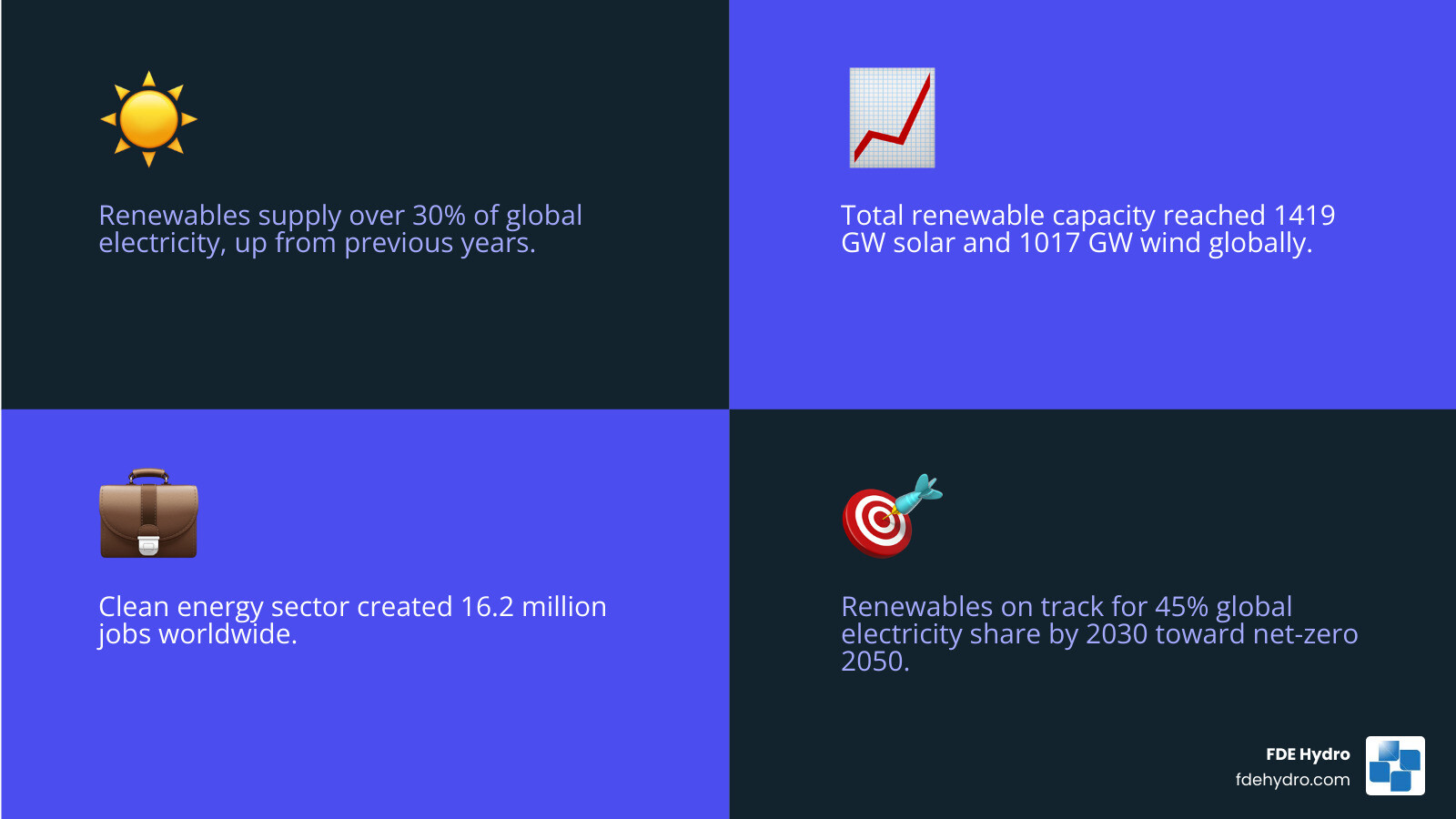
Together, renewables now supply over 30% of global electricity — and that share is climbing every year.
The stakes are high. Fossil fuels still account for nearly 60% of electricity generation worldwide, and the power sector is the single largest source of global greenhouse gas emissions. The consequences are real: air pollution alone causes an estimated 7 million premature deaths every year, while the economic damage runs into the trillions.
The good news? Cleaner alternatives exist, they are scaling fast, and — in most cases — they are now cheaper than the fuels they replace.
I’m Bill French Sr., Founder and CEO of FDE Hydro™, and I’ve spent decades in heavy civil construction before turning my focus to modular hydropower solutions that make eco friendly power generation faster, more affordable, and more practical to deploy at scale. In the sections below, I’ll walk you through the key sources, the real-world economics, and what it takes to accelerate this transition.
Eco friendly power generation word list:
5 Main Sources of Eco Friendly Power Generation
When we talk about Sustainable Power Generation, we are looking at a “Renewable Energy Universe” that transforms natural resources into the electricity that powers our homes in New York, our offices in Brazil, and our industries in Europe.
The International Renewable Energy Agency (IRENA) estimates that 90 percent of the world’s electricity can and should come from renewable sources by 2050. To get there, we rely on five heavy hitters:
- Solar PV: Using the photovoltaic effect to turn sunlight directly into current.
- Wind Energy: Capturing the breeze through massive blades, both on land and at sea.
- Hydropower: Using the weight and flow of water. This is where we at FDE Hydro™ focus our energy, using our French Dam technology to make Sustainable Energy Production more accessible.
- Geothermal: Tapping into the Earth’s core heat.
- Biomass: Converting organic waste into biopower through combustion or anaerobic digestion.
The Dominance of Solar in Eco Friendly Power Generation
Solar Photovoltaic (PV) technology isn’t just growing; it’s sprinting. In 2023, solar PV accounted for a staggering 70% of the global growth in renewable electricity generation. With a total capacity reaching 1419 GW, it has become the “people’s power,” appearing on rooftops from California to Kansas.
Why is it winning? It’s simple: economics. Solar has become the most affordable source of power in many parts of the world. Since 2010, the cost of solar energy has plummeted, following “Swanson’s Law,” which suggests that the cost of solar panels drops by about 20% every time the global manufacturing capacity doubles.
Harnessing Wind and Water
While solar grabs the headlines, wind and water provide the backbone of the grid. Global wind capacity has topped 1017 GW, with offshore wind becoming a major player in Europe and the coastal United States. Offshore winds are often stronger and more consistent than those on land, with speeds at sea being up to 90% greater than over land.
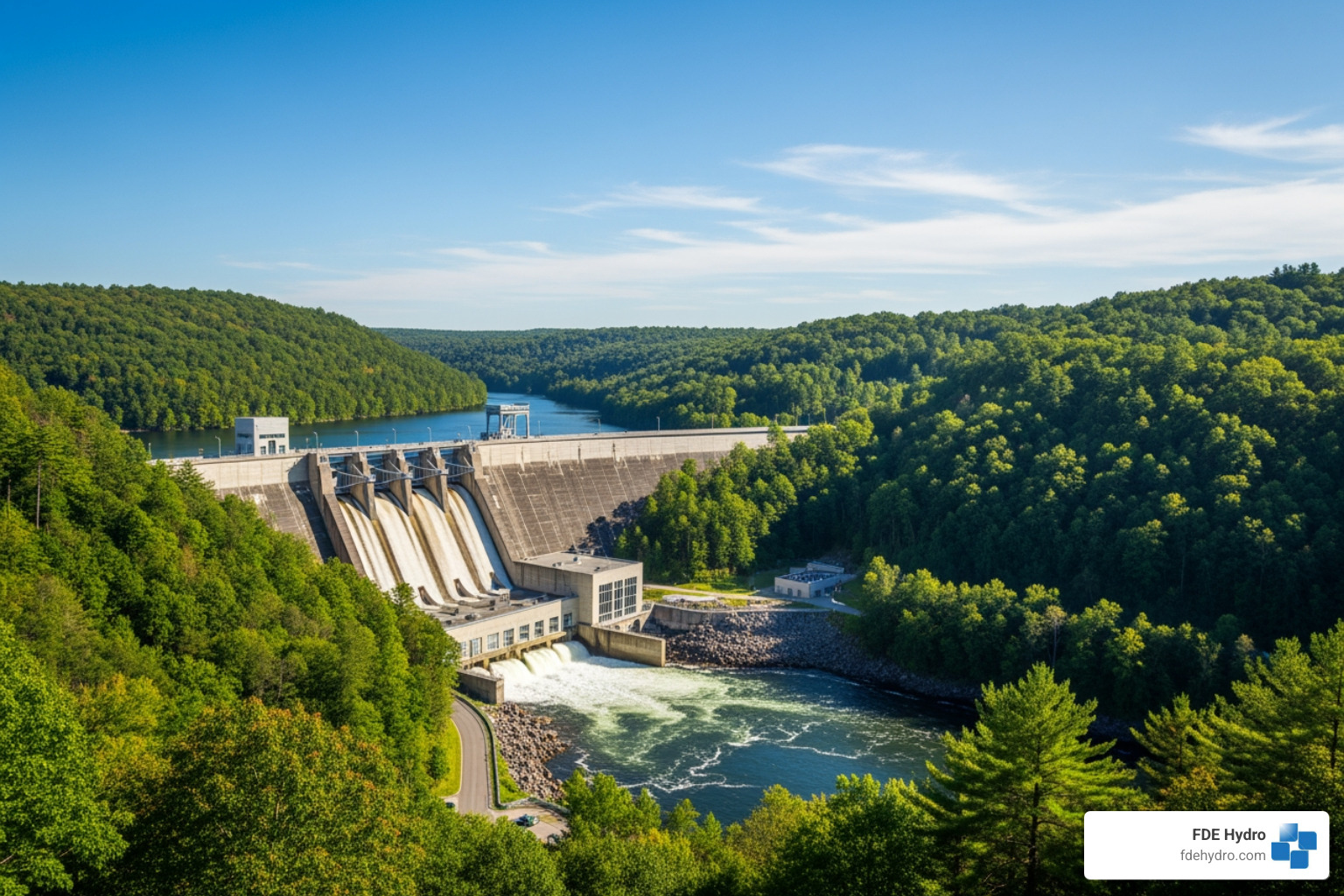
Then there is hydropower—the world’s largest source of renewable electricity, with a capacity of 1268 GW. Hydro is unique because it is “dispatchable,” meaning we can turn it on or off to balance the grid when the sun isn’t shining or the wind isn’t blowing.
At FDE Hydro™, we believe the future of hydro lies in Low Environmental Impact solutions. Traditional dam construction can be slow and expensive. Our patented French Dam technology uses modular precast concrete to retrofit existing structures or build new water control systems in a fraction of the time. Whether it’s in Lawrence, Kansas, or the river basins of Brazil, we are proving that you can have clean, reliable power without the decade-long construction wait.
The Economic and Health Case for Clean Energy
Switching to eco friendly power generation isn’t just about saving polar bears (though we like them, too). It’s about people and the economy.
The clean energy sector is a massive job engine. In 2023, 16.2 million people were employed in renewables—part of a larger 35 million-strong clean energy workforce. For every dollar invested, renewable energy creates three times as many jobs as the fossil fuel industry.
Then there’s the health factor. Fossil fuels aren’t just warming the planet; they are polluting our lungs. The World Health Organization (WHO) notes that air pollution is linked to 7 million premature deaths every year. Beyond the human tragedy, the economic health damage amounts to $8.1 trillion a year, which is roughly 6.1% of global GDP. When we choose Clean Energy Solutions, we aren’t just buying electricity; we are buying cleaner air and longer lives.
Global Trends in Eco Friendly Power Generation
We are currently in the middle of a massive pivot. Fossil fuels still dominate, but their grip is slipping. Between 2015 and 2024, renewable capacity increased by 140% (adding 2,600 GW).
Currently, renewables account for over 30% of global electricity. Current projections suggest we will hit 45% by 2030. However, to reach the ultimate goal of Net-Zero by 2050, we need to move even faster. The IEA reports that while 60 per cent of electricity generation still comes from fossil fuels, the investment trend has flipped: in 2024, $2 trillion went into clean energy—$800 billion more than what was spent on fossil fuels.
Navigating Challenges in the Renewable Transition
If eco friendly power generation is so great, why haven’t we switched 100% already? There are real hurdles to clear:
- Intermittency: The sun sets, and the wind dies down. We need ways to bridge the gap.
- Grid Modernization: Our current power grids were designed for a few massive, centralized coal plants, not millions of distributed solar panels and wind farms.
- Subsidies: Despite the progress, the fossil fuel industry received about $7 trillion in subsidies in 2022. That’s a lot of “old energy” momentum to fight against.
Overcoming Intermittency and Costs
The solution to intermittency is a mix of storage and diversity. Pumped-storage hydroelectricity—something we are very passionate about at FDE Hydro™—currently accounts for over 85% of all grid-scale energy storage. When we have extra solar power during the day, we use it to pump water uphill. When demand peaks at night, we let that water flow down through turbines.
Smart grids and AI are also helping by predicting demand and managing “sector coupling”—like using electric vehicle batteries to feed power back into the grid during peak hours. AI for Sustainability is no longer science fiction; it’s how we keep the lights on in NYC and California.
Is it expensive? Not anymore. Take a look at how the costs compare:
| Technology |
Cost Trend |
Comparison to Fossil Fuels |
| Solar PV |
Down 80%+ since 2010 |
41% cheaper |
| Offshore Wind |
Rapidly falling |
53% cheaper |
| Hydropower |
Stable and low |
Highly competitive |
Over 90% of new renewable projects are now cheaper than fossil fuels. The “upfront cost” might be high, but the “fuel” (sun, wind, water) is free forever.
Global Leadership and Emerging Innovations
Different regions are playing to their geographic strengths. Canada is a world leader in hydropower, which provides over 60% of its electricity. China has become a global innovator in solar and wind, while the EU is leading the charge in “Green Deals” and policy frameworks.
We are also seeing incredible “out of the box” thinking:
- Agrivoltaics: Growing crops underneath solar panels. The panels provide shade (reducing water evaporation), and the plants cool the panels (increasing efficiency).
- Enhanced Geothermal: Drilling deeper to access heat in areas without natural hot springs.
- Marine Energy: Tapping into the predictable power of tides and waves.
The power sector remains the largest source of global greenhouse gas emissions, but these innovations are the tools we need to close that gap.
Leading Nations in Sustainable Adoption
In North America, Canada’s reliance on moving water is a blueprint for others. According to the Open Maps Energy Factbook, renewables provided nearly 17% of Canada’s total primary energy supply in 2022.
In the U.S., states like California and New York are setting aggressive targets to phase out gas-fired power. These regions are moving toward Sustainable Infrastructure Development that prioritizes the long-term health of the environment over short-term convenience.
Frequently Asked Questions about Sustainable Energy
What is the difference between renewable and sustainable energy?
It’s a subtle but important distinction. Renewable energy comes from sources that are naturally replenished, like the sun and wind. They won’t run out.
Sustainable energy is a broader term. It includes renewables but also looks at the impact of that generation. For example, a massive hydro project that displaces thousands of people might be “renewable” (the water keeps flowing), but it might not be considered “sustainable” in a social or ecological sense. At FDE Hydro™, we focus on Renewable Energy Solutions that respect the local ecosystem, ensuring Hydropower Environmental Impact is kept to an absolute minimum.
Is eco-friendly power actually cheaper than fossil fuels?
Yes. In most of the world, building new solar or wind is now cheaper than continuing to run existing coal plants. Prices for these technologies are dropping so fast that over 90% of new projects are now cheaper than fossil fuels. When you factor in the $7 trillion in “hidden” costs (subsidies and health damages) that fossil fuels rack up, the choice becomes even clearer.
How many jobs are created by the clean energy sector?
The transition is a massive net-positive for workers. While some jobs in coal and oil production will decrease, the IEA estimates an overall increase in energy sector jobs. Currently, 16.2 million people work directly in renewables, and that number is expected to grow as we invest the $4.5 trillion annually needed to reach our 2050 goals.
Conclusion
The path to 100% eco friendly power generation by 2050 is a mountain we have to climb, but we already have the gear. From the solar arrays of California to the Sustainable Water Infrastructure projects we are leading in Europe and Brazil, the transition is well underway.
Decarbonizing the grid is the single most effective way to combat climate change. It’s not just about “saving the earth”—it’s about building a world where energy is abundant, affordable, and doesn’t make us sick. At FDE Hydro™, we are proud to be part of that solution with our modular French Dam technology, making hydropower faster and cheaper to deploy.
Learn more about French Dam modular technology and how we are changing the face of hydropower
by Adaptify Support | Mar 19, 2026 | Energy Resource Articles
Why the World is Rushing to Identify the Best Renewable Energy Solutions
Best renewable energy options are no longer a distant dream—they’re powering homes, businesses, and entire nations right now. Here’s what you need to know:
Quick Answer: Which Renewable Energy is Best?
| Energy Source |
Best For |
Key Advantage |
| Wind Power |
Overall efficiency |
1,164% energy return on input |
| Hydroelectricity |
Grid stability |
90% conversion efficiency, reliable baseload |
| Solar PV |
Distributed generation |
41% cheaper than fossil fuels, fastest job growth |
| Geothermal |
Continuous power |
24/7 availability, minimal land use |
| Biomass |
Energy storage |
Dispatchable power on demand |
The reality? There’s no single “best” option. The ideal choice depends on your location, resources, and specific energy needs.
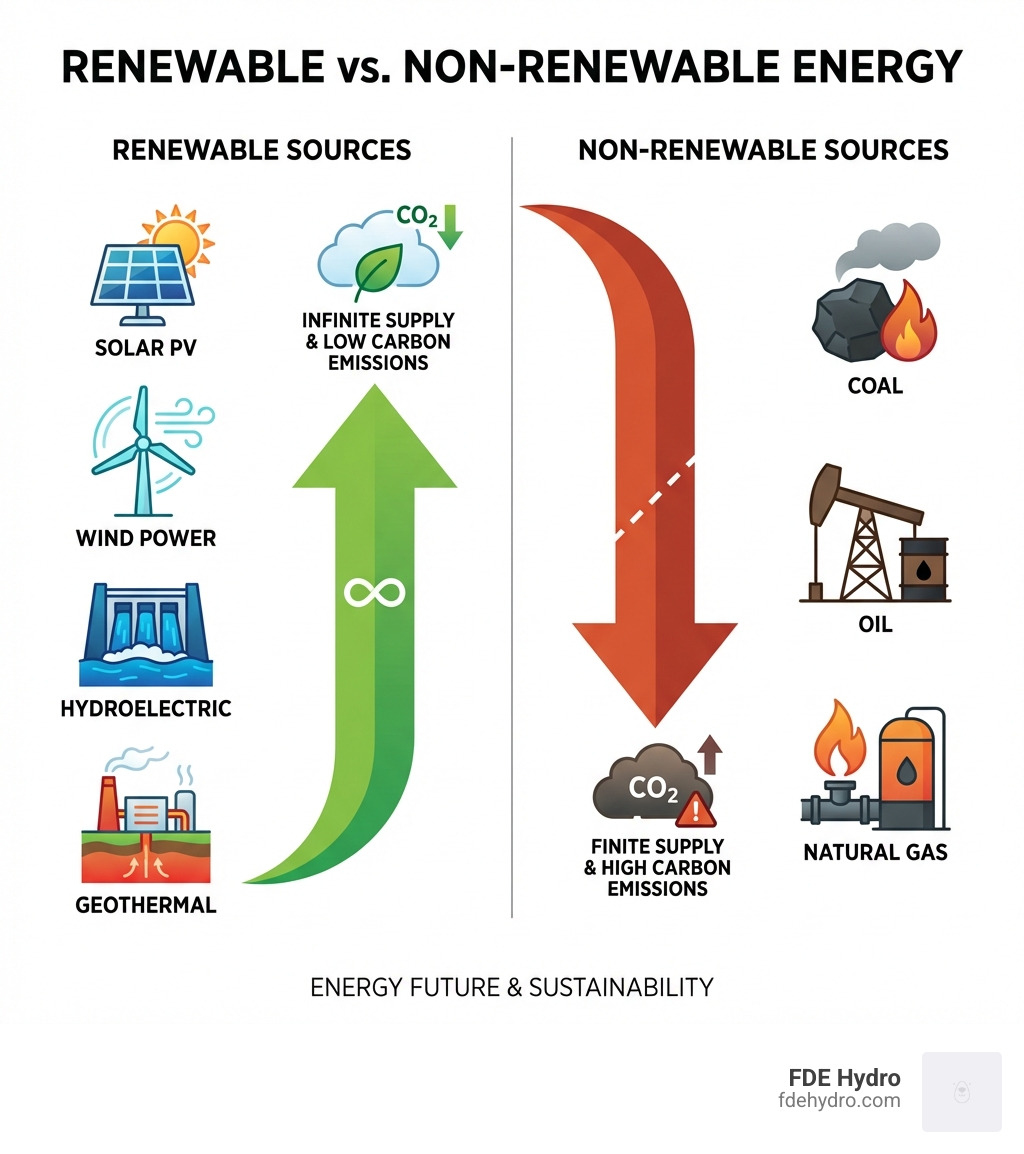
Energy is at the heart of both our climate challenge and its solution. For decades, we’ve relied on fossil fuels that release carbon dioxide and pollutants, contributing to nearly 75% of global emissions over the past 20 years. Meanwhile, renewable energy sources—derived from sunlight, wind, moving water, and earth’s heat—are replenished faster than we can use them.
The shift is already happening. In 2024, renewables accounted for over 30% of global electricity generation and are projected to reach 45% by 2030. More impressive: over 90% of new renewable projects now cost less than fossil fuel alternatives. Solar and offshore wind have become 41% and 53% cheaper than fossil fuels respectively.
But efficiency matters as much as cost. Wind energy provides an astounding 1,164% return on its original energy input, while hydroelectricity converts energy at a 90% rate—the highest conversion efficiency among all renewable sources. Even solar thermal, the least efficient renewable option, still outperforms coal’s meager 29% efficiency.
Countries are proving this transition works. Denmark sources 88% of its power from renewables, with wind alone providing 58%. Several nations including Iceland, Costa Rica, and Norway have reached or come close to 100% renewable electricity. Canada stands as the world’s third-largest hydroelectricity producer, with moving water providing 61.7% of the nation’s electricity generation.
The benefits extend beyond environmental protection. For every dollar invested, renewable energy creates three times as many jobs as fossil fuels. Solar power alone supported 4.9 million jobs in 2022—more than a third of all renewable energy employment worldwide. In Ireland, wind and solar farms have saved homes and businesses €840 million since 2000.
Yet challenges remain. Solar and wind face intermittency—they don’t generate power when the sun doesn’t shine or wind doesn’t blow. Storage solutions, smart grids, and diversified energy portfolios are addressing these limitations. Innovations like agrivoltaics (combining solar panels with agriculture), enhanced geothermal systems, and modular hydropower construction are making renewables more practical and efficient.
For large-scale infrastructure projects, the stakes are even higher. Traditional renewable energy construction often involves extended timelines, massive capital expenditure, and significant risk. That’s where innovation becomes critical—not just in the energy source itself, but in how we build and deploy it.
I’m Bill French Sr., founder and CEO of FDE Hydro, where we’ve spent nearly a decade developing modular construction solutions that make deploying the best renewable energy infrastructure faster, more cost-effective, and less risky for major water and power projects. Having participated in the Department of Energy’s Hydro Power Vision Technology Task Force and led construction innovations across New England, I’ve seen how the right approach can transform renewable energy from concept to reality.
Best renewable energy terms to know:
What is the Best Renewable Energy Source for Efficiency?
When we talk about the best renewable energy for efficiency, we have to look at how much energy we get out compared to what we put in. This is often measured as the “energy return on investment.”
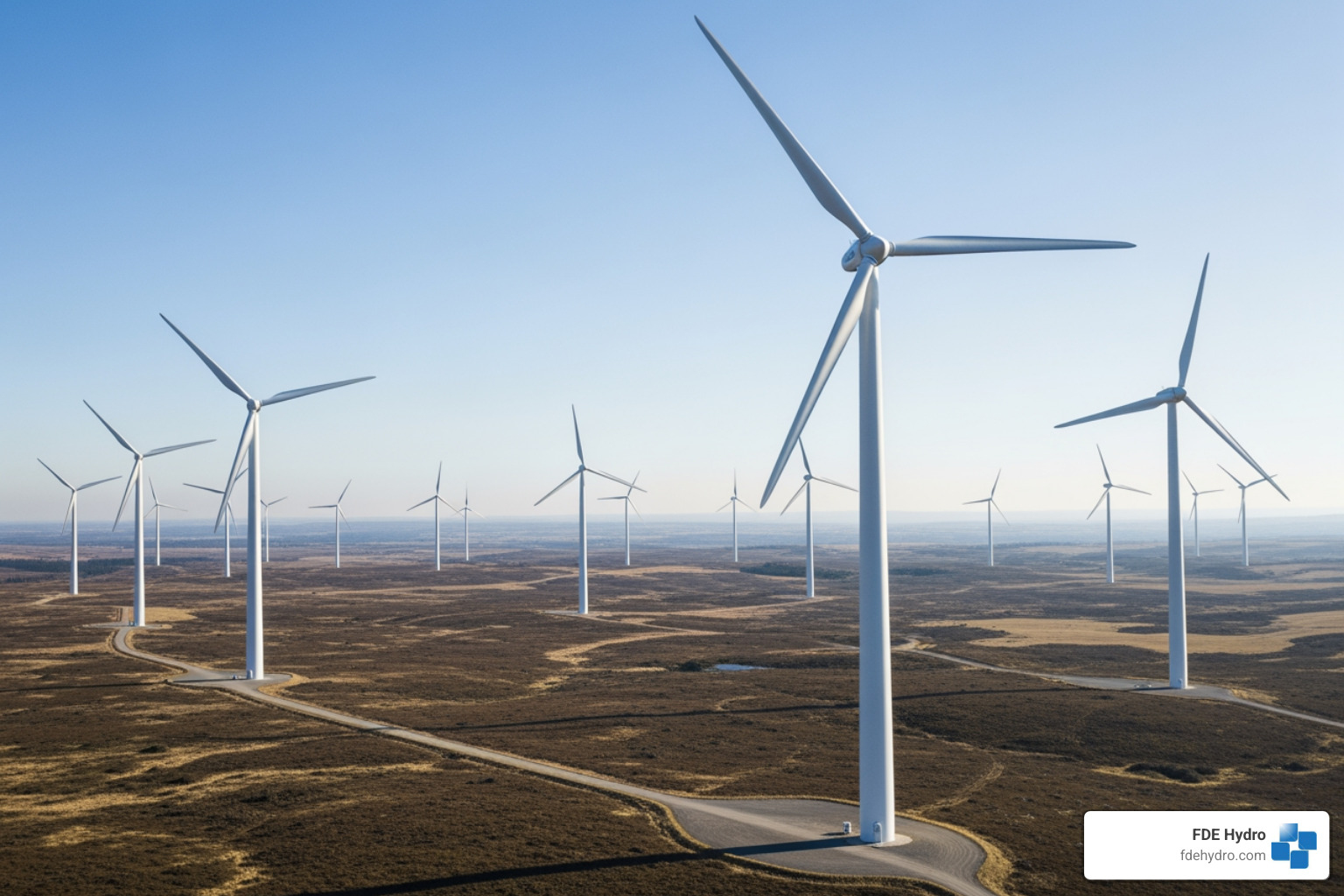
Wind power currently holds the crown for the highest energy return. It provides an impressive 1,164% of its original input of energy. This means for every bit of energy spent manufacturing, installing, and maintaining a turbine, it gives back over eleven times that amount in clean electricity. Because wind turbines require no fuel and are independent of water for cooling, they are incredibly “drought-proof” and efficient.
However, if we look at “conversion efficiency”—how much of the raw natural force is turned into electricity—hydroelectricity is the undisputed leader. Water can generate electricity with a conversion efficiency of about 90%. To put that in perspective, even the most advanced solar panels usually hover between 15% and 22% efficiency.
In contrast, non-renewable sources are surprisingly wasteful. According to the U.S. Department of Energy, fossil fuels like coal are finite resources formed over millions of years that must be mined or drilled and then burned. This process is inherently inefficient; coal only provides about 29% of its original energy value as usable power.
Efficiency Comparison Table
| Energy Source |
Efficiency Metric |
Performance |
| Wind |
Energy Return on Input |
1,164% |
| Hydroelectricity |
Conversion Efficiency |
90% |
| Geothermal |
Availability (Capacity Factor) |
~74-90% |
| Solar PV |
Conversion Efficiency |
15-22% |
| Coal |
Energy Value Retained |
29% |
| Solar Thermal |
Efficiency Rank |
Lowest (Water dependent) |
Comparing the Top 5 Renewable Energy Sources
To find the best renewable energy for a specific project, we must weigh the pros and cons of each mainstream technology. Whether you are in New York, California, or Brazil, the geography dictates which of these five will perform best.
- Solar Energy: Captures sunlight using photovoltaic (PV) cells. It is the fastest-growing sector for jobs and is becoming incredibly affordable.
- Wind Energy: Uses large blades to capture kinetic energy. Offshore wind is particularly powerful because sea winds are often 90% faster than those over land.
- Hydropower: Relies on the flow of water to generate energy. According to the U.S. Office of Energy Efficiency and Renewable Energy (EERE), it is one of the oldest and largest sources of renewable energy.
- Geothermal Energy: Taps into the heat from the earth’s core. It is one of the few renewables that can provide “baseload” power—meaning it runs 24/7 regardless of the weather.
- Biomass: Uses organic materials (like wood or agricultural waste) to create fuel or electricity. While renewable, it is often debated because it involves combustion, which can release emissions if not managed carefully.
Why Solar is Often Called the Best Renewable Energy for Homes
Solar power has become the people’s choice for renewable energy. It is uniquely suited for “distributed generation,” where power is made right on the roof where it’s used.
One of the biggest reasons solar is winning the popularity contest is cost. Solar power is now 41% cheaper than fossil fuel alternatives. This massive price drop has fueled a boom in rooftop solar. In Australia, for instance, one in three households now has panels.
Beyond the bills, solar is a massive economic engine. According to a 2023 report from the World Economic Forum (WEF), there were nearly 4.9 million solar energy jobs in 2022, accounting for more than a third of all renewable energy jobs worldwide. This growth is reflected in the IRENA PDF Source, which notes that total renewable jobs grew from 7.3 million in 2012 to over 13 million in a decade.
Hydroelectricity: The Best Renewable Energy for Grid Stability
While solar and wind are great, they are variable. We need a “battery” for the grid, and that is where hydropower shines. As we often discuss at FDE Hydro, hydropower is the guardian of the grid because it is dispatchable—you can turn it on or off as needed.
Canada is a global superstar in this field. It is the third-largest producer of hydroelectricity in the world. In 2022, moving water provided a staggering 61.7% of Canada’s electricity generation. You can explore the Open Maps Energy Factbook to see how this resource is distributed across the provinces.
The benefits of a hydropower plant go beyond just power. Dams provide water storage for irrigation and flood control. Furthermore, pumped-storage hydropower acts as a giant natural battery, storing excess solar or wind energy by pumping water uphill to be released when the grid needs it most.
Global Leaders in the Clean Energy Transition
Looking at the world stage, we see that the transition to the best renewable energy is not just possible—it’s already happening.
Other honorable mentions include Spain, which generates 43% of its electricity from wind and solar, and Ireland, which used impressive growth in wind to end coal generation in 2025. Even Germany, an industrial heavyweight, is installing more than 100,000 solar panels every day to reach its 80% renewable target.
Overcoming Challenges with Modern Innovation
The biggest critique of the best renewable energy options like wind and solar is intermittency—the “what if the sun doesn’t shine?” problem. However, the 2023 report by Deloitte suggests the industry is evolving rapidly to solve this.
Energy Storage and Smart Grids
Batteries are the most famous solution, but they aren’t the only ones. We are seeing a boom in large-scale storage, including “sand batteries” in Finland and traditional pumped hydro. Smart grids use AI to balance demand, ensuring that when a cloud passes over a solar farm in California, a hydro plant or a battery bank automatically kicks in to fill the gap.
Agrivoltaics
One challenge for solar is land use. Agrivoltaics solves this by raising solar panels high enough to allow crops to grow or livestock to graze underneath. This dual-use strategy protects farmland while generating clean power, making solar the best renewable energy choice for rural areas in places like Kansas or New York.
Modular Hydropower
At FDE Hydro, we believe the future of hydropower lies in hydropower innovation. Traditional dams take a decade to build. Our “French Dam” technology uses modular precast concrete to build or retrofit systems in a fraction of the time. This makes it easier for communities in North America and Brazil to harness their existing water resources without the massive overhead of traditional construction.
Frequently Asked Questions about Renewable Energy
Which renewable energy is the most reliable?
Geothermal and hydroelectricity are generally considered the most reliable because they provide “baseload” power. Unlike solar or wind, they can run 24 hours a day, 7 days a week, regardless of weather conditions. This makes them the most-cost-effective-renewable-energy options for maintaining a steady grid.
How does renewable energy help the economy?
It’s a job-creating machine! For every dollar invested, renewable energy creates three times as many jobs as the fossil fuel industry. Furthermore, it saves money. In the UK, wind power saved homes and businesses £104.3 billion between 2010 and 2023. In Spain, electricity prices dropped by nearly 20% as their renewable share grew.
Is there a single “best” energy source for every country?
No. The best renewable energy is always the one that fits the local environment. Iceland uses geothermal because it sits on a volcanic ridge. Canada uses hydro because of its vast river systems. The best strategy is a “portfolio approach”—using a mix of sources to ensure the lights stay on no matter what.
Conclusion
Finding the best renewable energy for your needs is about matching technology to geography. From the 90% conversion efficiency of water to the staggering 1,164% energy return of wind, the options available today are more powerful and affordable than ever before.
At FDE Hydro, we are proud to be part of this transition. Our French Dam technology is designed to make renewable energy projects more accessible by cutting down the time and cost of construction. Whether we are retrofitting an old dam in New England or building new capacity in Brazil, our goal is to help the world find its spark through sustainable, reliable power.
The transition away from fossil fuels is no longer just an environmental necessity—it’s an economic “no-brainer.” With solar and wind now cheaper than coal, and innovative construction methods making hydro more viable, the path to a 100% renewable future is clear.
Ready to learn more about how water can power your future? Explore our guide to what renewable energy resource is the most efficient or contact us to see how we can help with your next hydropower project.
by Adaptify Support | Mar 11, 2026 | Energy Resource Articles
Why Construction Cost Reduction Matters for Large-Scale Infrastructure Projects
Construction cost reduction is the strategic process of minimizing project expenses without compromising quality, safety, or functionality. For large-scale water infrastructure and hydropower projects, effective cost reduction can mean the difference between a project that moves forward and one that stalls indefinitely.
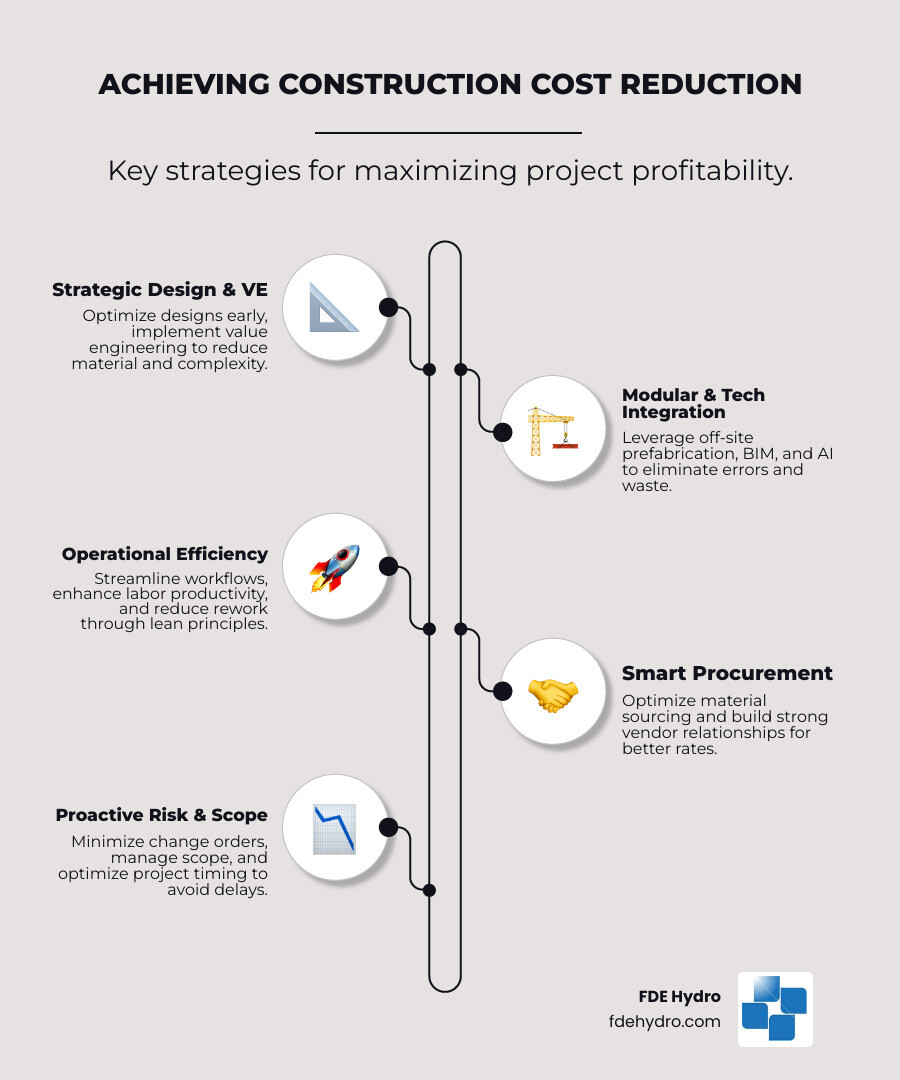
Key strategies for construction cost reduction include:
- Strategic Design & Value Engineering – Optimize designs early to reduce material usage and structural complexity
- Modular & Prefabricated Construction – Shift work off-site to controlled factory environments for 25-35% savings on industrial projects
- Technology Integration – Leverage BIM, AI, and project management software to eliminate errors and waste
- Operational Excellence – Streamline workflows, improve labor productivity, and reduce rework through lean principles
- Smart Procurement – Build strong vendor relationships and optimize material sourcing strategies
- Risk Mitigation – Identify potential delays early and maintain realistic budgets with 5-15% contingency allowances
- Timing Optimization – Schedule projects during off-peak seasons to secure better contractor rates
- Scope Management – Minimize change orders and scope creep through clear planning and stakeholder alignment
The construction industry faces unprecedented challenges. In Canada alone, residential building costs have increased 58% since 2020, while housing starts dropped 34% in major municipalities. Material inflation, labor shortages, and regulatory burdens continue to squeeze profit margins across all project types. For hydropower and water infrastructure projects specifically, these pressures are compounded by extended timelines, complex site conditions, and the scale of capital investment required.
Yet the data shows a clear path forward. Leading contractors applying lean principles have reduced completion times by up to 30% and cut addressable costs by up to 15%—boosting company-wide margins by 2-3 percentage points. Modular construction methods demonstrate even more dramatic results, with potential savings of 25-35% for industrial projects compared to traditional approaches.
The stakes are high. A delayed power plant can increase costs by 20%. A major office building delayed by disagreements can nearly double project costs. For hydropower facilities—where construction timelines stretch across years and budgets reach into the hundreds of millions—every percentage point of cost reduction translates into significant capital preservation and improved project viability.
I’m Bill French Sr., Founder and CEO of FDE Hydro™, and over five decades I’ve led construction projects ranging from Boston’s Logan Airport to the modular French Dam system, always focused on delivering construction cost reduction through innovation and operational excellence. This guide distills proven strategies from across the construction industry—from residential housing to massive infrastructure projects—with particular emphasis on approaches that work for large-scale water and hydropower facilities.
Learn more about construction cost reduction:
Identifying the Primary Drivers of Construction Expenses
To master construction cost reduction, we first have to look at where the money is actually going. In the current market, especially across North America and Europe, the financial landscape of a project is often dictated by factors beyond a simple “bricks and mortar” calculation.
Whether we are talking about a new home in Toronto or a massive water control structure in New York, the breakdown of expenses generally follows a predictable—if painful—pattern. In residential construction, building materials typically account for 25-30% of the total cost, while onsite labor takes another 20-25%. However, the “silent” drivers are often the most impactful. For instance, in Canada, a staggering 36% of the cost of a new home is attributable to the tax burden, including development fees and levies.
When we move into heavy civil and commercial sectors, site conditions and regulatory compliance become massive cost centers. Topography, soil quality, and local environmental regulations can inflate a budget by millions if not managed proactively. Understanding these drivers is the first step in Project Cost Reduction.
| Cost Category |
Residential (%) |
Commercial/Infrastructure (%) |
| Materials |
25-30% |
30-40% |
| Onsite Labor |
20-25% |
25-35% |
| Land/Lot Costs |
20-25% |
10-20% |
| Taxes/Regulatory |
36% (Canada) |
15-25% |
| Overhead/Financing |
8% |
10-15% |
Material inflation has been particularly brutal. Since 2020, residential building costs in Canada have spiked by 58%. This isn’t just about the price of lumber; it’s about the compounding effect of supply chain disruptions and global demand. For those of us in the hydropower sector, we see similar trends in steel and specialized concrete. This is why lower construction costs and taxes are the only path to maintaining a healthy, growing economy.
Analyzing the Impact of Project Timing
Timing isn’t just about the weather; it’s about the market. If we try to break ground when every other developer in California is doing the same, we’re going to pay a premium for labor and equipment.
Strategic timing involves scheduling projects to leverage off-peak seasons. In many regions, contractors are eager to lock in work for the autumn or winter months to keep their crews busy. By starting a project when demand is lower, we can often negotiate better rates and ensure higher availability of top-tier talent.
Furthermore, locking in material prices during market dips can lead to substantial savings. We’ve found that even a three-month shift in a project start date can result in a 5-10% difference in total labor costs. For more on how to time your efforts, check our guide on how to Reduce Construction Costs.
Understanding the Tax and Regulatory Burden
It’s no secret that red tape costs money. From New York City to Toronto, regulatory compliance is a major hurdle. In NYC, recent building code updates have been aimed at speeding up construction and cutting costs by simplifying approval processes. NYC Updates Building Code to Speed Construction is a great example of how policy can directly impact the bottom line.
However, the 36% tax burden we see in some Canadian markets is a sobering reminder that we must account for government fees early. This includes everything from permit costs to environmental impact assessments. For hydropower projects, these regulatory “soft costs” can be even higher due to the intense scrutiny on water resources and fish passage.
Strategic Design and Value Engineering for Savings
If we wait until we’re on the job site to start thinking about savings, we’ve already lost. True construction cost reduction begins at the architect’s desk. Design optimization is about finding the sweet spot where functionality, aesthetics, and cost-effectiveness meet.
One of the simplest ways to save is by reducing square footage or opting for simpler designs. Every corner we add to a building’s footprint adds cost in framing, foundation, and finishing. Choosing “stock” designs or standardized modules rather than custom, one-off designs can save thousands in engineering fees and material waste. This is what we call mastering the Means and Methods of modern construction.
Value engineering (VE) is often misunderstood as just “cutting things out.” In reality, it’s a systematic method to improve the “value” of goods or services by using an examination of function. We look at a component and ask: “Can we achieve this same function at a lower cost without losing quality?”
For example, substituting a high-end finish for a durable, lower-cost alternative that looks nearly identical can save millions on a large project. In structural engineering, we might look at the “functional recovery” time after a seismic event. By designing for resilience, we might spend slightly more upfront but save exponentially on long-term repair costs. Research like Estimating the Costs and Performance of Enhanced Building Design shows that recovery-based design can lead to massive ROI.
In our world of dams and spillways, we often ask Why Precast Costs Less. The answer lies in the controlled environment of a factory, which eliminates the variables of weather and onsite labor inefficiencies.
Minimizing Change Orders and Scope Creep
Change orders are the “silent killers” of construction budgets. A client decides to add a bathroom or move a wall halfway through the job, and suddenly the schedule is blown, and the budget is in tatters.
To prevent this, we must have a “blueprint commitment.” This means spending more time in the planning phase to ensure every stakeholder has a crystal-clear vision of the finished project. Once the plans are signed, they should be set in stone unless a serious error is finded. By sticking to the plan, we avoid the hidden costs of rescheduling subcontractors and re-ordering materials. This is the core of Building Smarter: The Innovative Precast Concrete Way.
Leveraging Technology for Construction Cost Reduction
The construction site of 2025 looks very different than it did twenty years ago. We are in the midst of a digital change where AI-Driven Development and automation are no longer science fiction—they are essential tools for survival.

Technology allows us to see problems before they happen. By Analyzing cost impacts across the entire process of prefabricated building components, researchers have found that early-stage digital optimization has the highest coefficient of influence on the final price tag.
Implementing Modular Methods for Construction Cost Reduction
At FDE Hydro™, we’ve seen how modularity changes the game. Our patented “French Dam” technology uses Modular Precast Concrete to build hydroelectric dams and water control systems.
Instead of pouring concrete in a riverbed—a process that is messy, dangerous, and expensive—we manufacture the dam in sections at a factory. These modules are then shipped to the site and assembled. This Rapid Installment of Module Precast Civil Infrastructure can reduce construction time by months and cut costs by up to 30%. It’s about industrializing the process, much like the automotive industry did a century ago.
Utilizing BIM and AI for Resource Management
Building Information Modeling (BIM) is our best defense against “clash” errors. When the plumbing, electrical, and structural systems are all modeled in 3D before a single shovel hits the dirt, we can identify conflicts that would otherwise cost thousands to fix in the field.
AI is taking this a step further by optimizing how we use resources. From scheduling the most efficient delivery routes to predicting when a piece of equipment might fail, AI is the ultimate tool for efficiency. For a deeper dive, see how The Future of Foundations: How AI is Optimizing Infrastructure and AI for Resource Management are reshaping the industry.
Operational Excellence and Labor Productivity
You can have the best technology in the world, but if your crew isn’t working efficiently, you’re still going to overspend. Operational excellence is about the “Kaizen” philosophy—the idea of continuous, incremental improvement.
We believe in training our crews not just to do the job, but to understand the budget. When workers are motivated and understand how their efficiency impacts the project’s success, they become partners in construction cost reduction. This involves using Innovative Construction Techniques and maintaining a culture of accountability.
Streamlining Workflows with Value Stream Mapping
Value Stream Mapping (VSM) is a lean tool used to analyze the current state and design a future state for the series of events that take a project from beginning to end. It helps us identify:
- Waiting time: Crews standing around because materials haven’t arrived.
- Defects: Rework that consumes twice the labor and materials.
- Over-processing: Doing more work than the client required.
According to the Lean Advantage in Large Construction Projects, contractors using these methods have seen a 15% reduction in addressable costs. It’s about making the work flow like a river—no bottlenecks, no stagnant pools.
Enhancing Site Safety and Equipment Maintenance
Safety isn’t just a moral imperative; it’s a financial one. One serious accident can shut down a site for weeks, lead to massive OSHA fines, and skyrocket insurance premiums. By prioritizing daily site walks and proper PPE, we avoid these “black swan” expenses.
Similarly, preventive maintenance on equipment is vital. A skid steer that breaks down on a Tuesday can delay three different subcontractors. Following manufacturer schedules and performing pre-use inspections ensures our “fleet” stays in the fight. We also look at Using Technology to Minimize the Duration of Impacts on the environment, which often aligns with faster, safer work.
Financial Management and Risk Mitigation
A project without an itemized budget is just a wish. We recommend a fully transparent budget that breaks down every single expense, from the largest steel beam to the smallest screw. This allows us to track project costs weekly and find exactly where money is being wasted.
We always include a contingency allowance—typically 5 to 15 percent. This isn’t “free money”; it’s a buffer for the unknowns, like a sudden spike in material prices or a week of torrential rain. For those looking for Budget-Friendly Power: Your Guide to Cost-Efficient Renewable Energy, this financial discipline is non-negotiable.
To stay on track, we monitor specific KPIs:
- Cost Variance (CV): Are we over or under budget right now?
- Schedule Variance (SV): Are we ahead or behind the timeline?
- Labor Productivity: How many man-hours are we spending per unit of work?
Regularly reviewing these numbers helps us catch problems while they are small and fixable. Financing Long-Term Hydropower Requires Mitigating Risks Prior to ROI, and KPIs are the dashboard that tells us if we’re on the right road.
Strategic Procurement and Vendor Partnerships
Building strong partnerships with contractors and vendors is better than constantly “bid-shopping.” When we have a long-term relationship with a supplier, we get better service, more reliable delivery, and often, volume discounts.
“Smarter buying” also means knowing when to buy in bulk and when to use Just-In-Time (JIT) delivery to avoid storage costs. Sometimes, it’s more cost-effective to outsource specialized tasks—like environmental permitting or complex electrical work—rather than trying to do everything in-house. This is a key part of Sustainable Infrastructure Development.
Frequently Asked Questions about Construction Cost Reduction
What is the difference between OPEX and COG in construction?
In the construction world, COG (Cost of Goods Sold) refers to the direct costs of building a specific project—think materials, direct labor, and equipment rentals for that site. OPEX (Operating Expenses) are the ongoing costs of running our business, like office rent, insurance, and the salaries of our support staff. To maximize profit, we have to keep a sharp eye on both.
How does value engineering differ from simple cost-cutting?
Simple cost-cutting usually means just removing features or using “cheap” materials, which can hurt the project’s quality. Value engineering is a smarter approach; it focuses on maintaining the same (or better) function and quality but finding a more efficient or less expensive way to achieve it. It’s about value, not just the price tag.
Can sustainable materials actually reduce long-term project costs?
Absolutely! While some sustainable materials have a higher upfront cost, they often lead to massive savings over the life of the building. Energy-efficient insulation reduces utility bills, and durable materials like precast concrete require far less maintenance. In the long run, “green” is often the most “gold” strategy we have.
Conclusion
At the end of the day, construction cost reduction isn’t about being cheap—it’s about being smart. By fostering strategic partnerships, embracing modular technology like our French Dam system, and maintaining a relentless focus on efficiency, we can build the infrastructure the world needs without breaking the bank.
We’ve seen that when we prioritize long-term value over short-term shortcuts, everyone wins. The project stays on budget, the quality remains high, and the resulting infrastructure serves the community for decades to come. If you’re ready to see how innovation can transform your next project, we invite you to Learn more about Hydropower Construction. Let’s build something great together—efficiently.
by Adaptify Support | Mar 5, 2026 | Energy Resource Articles
Why Construction Renewable Energy Matters More Than Ever
Construction renewable energy encompasses both the use of clean energy sources to power construction sites and equipment, and the specialized construction of renewable energy infrastructure such as solar farms, wind turbines, hydroelectric facilities, and energy storage systems.
Quick Overview: Key Aspects of Construction Renewable Energy
- Powering Construction Sites: Using solar panels, wind power, and hydrogen fuel cells to run equipment and reduce fossil fuel dependency
- Building Renewable Infrastructure: Constructing solar farms, wind turbines, hydropower facilities, and energy storage systems
- Cost Savings: Solar construction costs fell 8% in 2020 while delivering long-term operational savings
- Environmental Impact: Reducing the 55 tons of CO2 emissions typically generated when building a new house
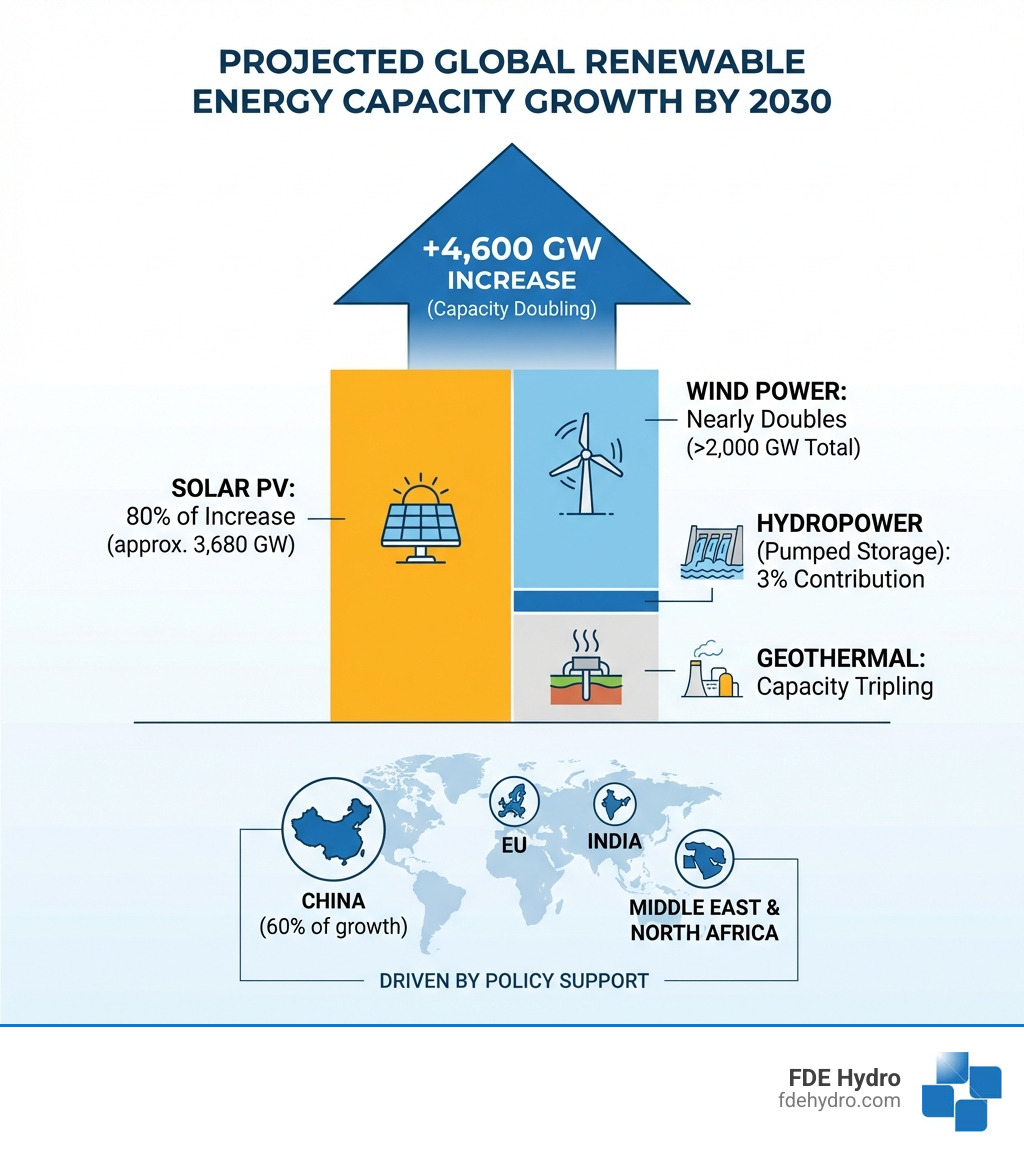
- Market Growth: Global renewable power capacity is expected to double by 2030, adding 4,600 gigawatts
The construction industry stands at a critical crossroads. Building a single new house generates approximately 55 tons of carbon dioxide into the atmosphere. Construction equipment in regions like the UAE alone consumes about 6 billion gallons of non-renewable fuel annually. Yet the same industry is also building the solution—constructing the solar farms, wind turbines, and hydroelectric facilities that will power our clean energy future.
This dual role makes construction renewable energy both a challenge and an opportunity. Companies that master it can slash their operational costs, meet increasingly strict environmental regulations, and tap into a market that’s projected to add capacity equivalent to China, the European Union, and Japan’s power generation combined by 2030.
The economics are compelling. While average construction costs for solar photovoltaic systems fell 8% to $1,655 per kilowatt in 2020, renewable energy installations have already reduced global coal imports by 700 million tonnes and saved an estimated $1.3 trillion since 2010. Solar panels pay for themselves over their lifetime, and technologies like photovoltaic windows can reduce greenhouse gas emissions by 80% compared to fossil fuel use during construction.
The momentum is undeniable. Solar PV accounts for almost 80% of the global increase in renewable power capacity over the next five years. Corporate power purchase agreements and merchant plants now drive 30% of global renewable capacity expansion. Countries like India are on track to become the second-largest renewables growth market globally, while innovations in hydrogen-powered construction equipment and modular infrastructure are solving long-standing challenges around cost, speed, and flexibility.
I’m Bill French Sr., Founder and CEO of FDE Hydro, where I’ve spent decades pioneering modular civil construction solutions for the hydropower industry after building W.L. French Excavating Corporation into a top-tier site contractor with $200M in annual revenues. My work in construction renewable energy has focused on developing innovations like the “French Dam” that dramatically reduce construction costs and timelines while benefiting present and future environments.
The Spectrum of Renewable Energy in Construction
When we talk about construction renewable energy, we’re discussing a dynamic field that leverages nature’s power for both temporary construction needs and permanent energy infrastructure. The primary renewable energy sources being used in construction projects today are solar, wind, hydropower, geothermal, and biomass. Each offers unique advantages and applications, changing how we build and how we power our world. For a deeper dive into how these projects come to life, we invite you to explore our Renewable Energy Projects Complete Guide.
Solar Power: From Rooftops to Utility-Scale Farms
Solar power is undeniably the shining star of the renewable energy revolution. It’s versatile, scalable, and increasingly affordable. In construction renewable energy, solar is applied in numerous ways:
- Utility-scale solar farms: These vast installations, like the Hillsboro Solar project in Lawrence County, Alabama, or the Travertine Solar project, harness solar energy to feed into the grid. Their construction involves significant civil planning, mechanical and electrical work, substations, and interconnection. We see these projects frequently across the United States.
- Photovoltaic windows: Imagine a building that generates its own power! These innovative windows absorb sunlight, reducing a building’s greenhouse gas emissions by up to 80% compared to fossil fuel use during construction and operation.
- Solar-powered equipment: Manufacturers like Volvo are introducing construction equipment, such as loaders and excavators, that can be powered by renewable energy. This reduces reliance on diesel and cuts down on emissions directly at the job site.
- Solar site lighting: A simple yet effective application, solar lights provide an economical and convenient alternative to traditional fossil fuel-powered lighting for construction sites.
- Panel Technology: The choice of solar panel technology impacts efficiency and cost. Crystalline silicon panels are the most common in the United States, often using solar tracking systems that move to follow the sun, maximizing electricity production. Cadmium telluride tracking panels have seen significant cost reductions, making them an attractive option.
This widespread adoption underscores the importance of Clean Energy Solutions in the built environment.
Wind Energy: Using Power on a Grand Scale
Wind power, a formidable force in the renewable landscape, involves the construction of towering turbines designed to capture kinetic energy. Its application in construction renewable energy primarily revolves around creating the infrastructure for wind farms:
- Onshore wind farms: These are built across vast landscapes, often requiring extensive logistical planning and resource distribution. Installing more than 1,000 wind turbines, as some companies have done, showcases the scale of these operations. The construction involves significant mechanical and electrical expertise.
- Offshore wind projects: While facing challenges like policy changes, supply chain bottlenecks, and rising costs, offshore wind development continues, particularly in Europe and parts of the United States. These projects demand highly specialized marine construction techniques.
- Turbine installation: This complex process requires not only mechanical and electrical prowess but also substantial financial strength from the construction companies involved.
- Site power: For construction sites located near existing wind farms or in areas without grid access, tapping into wind-generated electricity can be a viable alternative to gas generators.
Although average construction costs for wind turbines increased by 8% in 2020, the long-term benefits of clean energy generation continue to drive investment in this sector.
Hydropower: The Foundation of Renewable Energy Construction
Hydropower, the using of flowing water, remains a cornerstone of clean energy, accounting for about 71% of green energy globally. In construction renewable energy, our focus at FDE Hydro is often on:
- Dam structures: From traditional concrete dams to innovative modular solutions, the construction of these structures is fundamental to hydropower generation.
- Powerhouse construction: This involves building the facilities that house turbines and generators, converting water’s energy into electricity.
- Pumped storage: A crucial aspect for grid stability, pumped storage hydropower facilities store energy by pumping water to a higher reservoir, then releasing it to generate power when demand is high. This technology is seeing faster growth due to its role in grid integration.
- Civil infrastructure: Hydropower projects are inherently civil engineering marvels, requiring expertise in tunneling, reservoirs, and transmission/delivery systems.
At FDE Hydro, we’re particularly excited about our innovative, patented modular precast concrete technology, often referred to as the “French Dam.” This approach significantly reduces construction costs and time for building and retrofitting hydroelectric dams and water control systems in North America, Brazil, and Europe. We believe this innovation is a game-changer for Hydroelectric Dam Construction and represents The Biggest Untapped Solution to Climate Change is in the Water.
Emerging Sources: Geothermal, Biomass, and Hydrogen
Beyond the big three, other renewable sources are playing an increasing role in construction renewable energy:
- Geothermal: Using Earth’s internal heat, geothermal capacity additions are expected to triple by 2030, with the United States being a key market for this growth.
- Biomass: Biomass power plants convert organic matter into energy. These facilities can be fueled by municipal solid waste or wood byproducts, offering a sustainable way to manage waste while generating power.
- Hydrogen fuel cells: These offer scalable and portable solutions for mobile construction sites, potentially replacing gas generators. Hydrogen-powered construction equipment, such as excavators, is also emerging, promising significant emission reductions.
These sources, alongside the more established ones, contribute to a diverse portfolio of Sustainable Energy Production methods for the construction sector.
The Business Case: Economic and Environmental Benefits
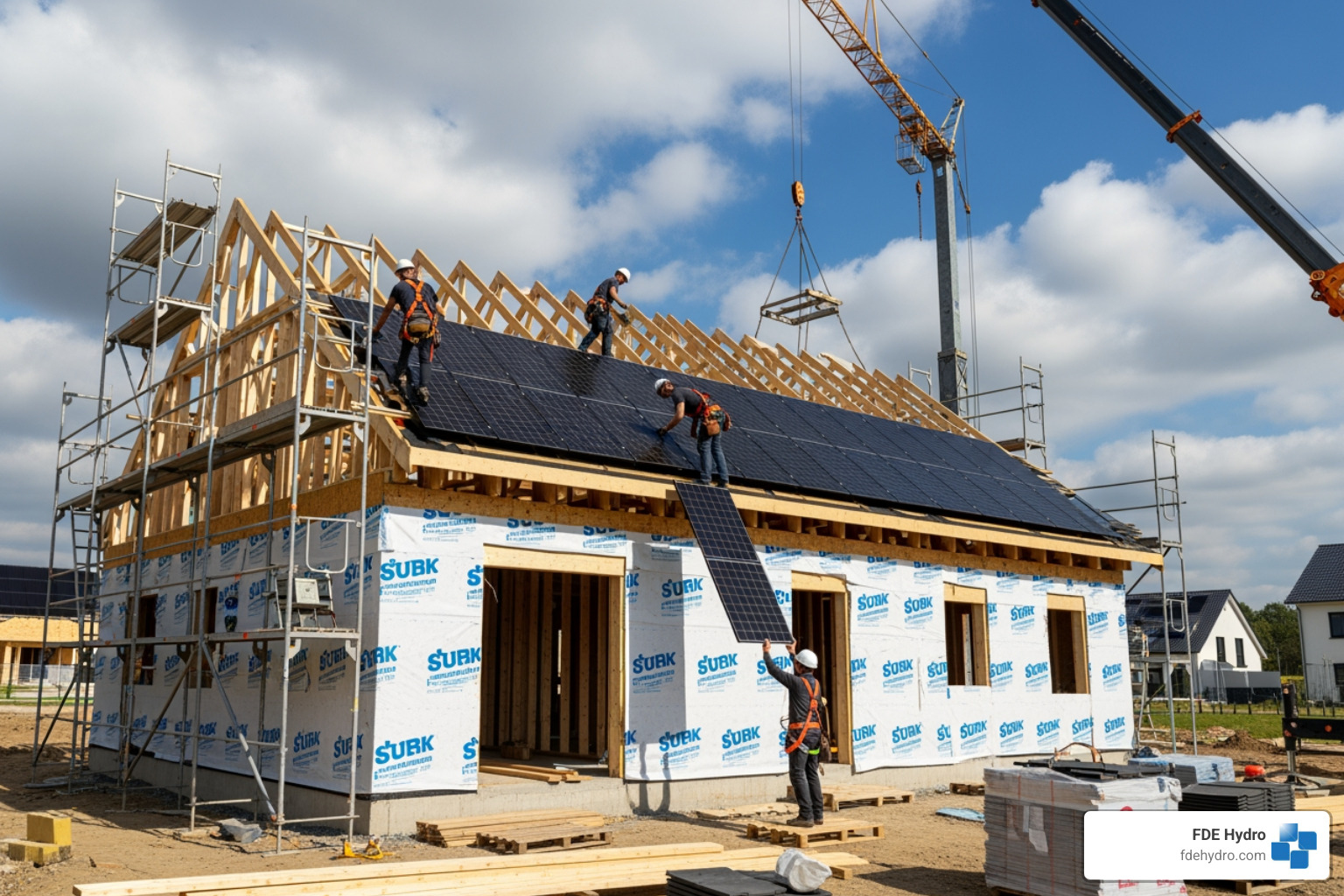
The transition to construction renewable energy isn’t just an environmental imperative; it’s a smart business decision. Adopting renewable energy in construction has a profound impact on CO2 emissions and environmental sustainability, while simultaneously improving productivity and operational efficiency for construction companies. This dual benefit makes the business case incredibly compelling, driving a shift towards Green Energy Construction.
Driving Down Costs and Boosting ROI
For construction companies, the bottom line is always crucial. Integrating renewable energy solutions can lead to substantial economic benefits:
- Construction cost trends: While average construction costs for wind turbines and natural gas-fired generators saw increases in 2020, solar photovoltaic systems continued their downward trend, falling 8%. This makes solar an increasingly attractive investment for both temporary site power and permanent installations.
- Fuel cost savings: Replacing diesel generators and other fossil fuel-dependent equipment with renewable alternatives significantly reduces ongoing fuel expenses. This predictability in energy costs helps long-term financial planning.
- Long-term profitability: Although some renewable energy installations may have higher upfront costs, they often pay for themselves over time through reduced operational expenses and potential revenue generation. For instance, a 6-kilowatt solar PV system for a single-family home can cost around $12,700 after federal tax incentives, but it offsets significant energy use, leading to long-term savings.
Understanding the full financial picture, including upfront investment versus long-term savings, is key to realizing the true value. For more insights into project financing, especially for large-scale infrastructure, consider our guide on Hydropower Project Costs.
Enhancing Energy Efficiency in Residential Construction
In new home construction and remodels, renewable energy solutions contribute significantly to energy efficiency and cost savings, which is a major draw for prospective homebuyers.
- Whole-house systems approach: We advocate for a whole-house systems approach, which views the house as an energy system with interdependent parts. This ensures that renewable energy integration, like solar panels, works synergistically with insulation, efficient windows, and HVAC systems for optimal performance.
- ENERGY STAR ratings: Homebuyers prioritize ENERGY STAR-rated features, and integrating renewables helps achieve these certifications, boosting property value and appeal.
- Solar panel costs for homes: A single-family home typically needs between 15 and 34 solar panels to offset most of its energy use. Panels cost anywhere between $2.40 and $3.60 per watt (including installation). On average, a 6-kilowatt PV system for a single-family home can cost around $12,700 after federal tax incentives, making it a sound long-term investment.
- Financing options: Various options exist for homeowners, including loans, system leases, a power purchase agreement (PPA), or enrolling in a Property Assessed Clean Energy (PACE) program.
The most impactful environmental benefit of construction renewable energy is the significant reduction in carbon emissions.
- Fossil fuel reliance: Construction sites are notoriously reliant on fossil fuels for powering equipment, heating, lighting, and air conditioning. This dependence is a primary reason for the industry’s substantial carbon footprint.
- Greenhouse gas reduction: By switching to renewable sources, we directly cut down on greenhouse gas emissions. For example, using solar energy for site power or hydrogen fuel cells can dramatically lower the environmental impact of operations.
- Material production emissions: Even the production of building materials themselves contributes to emissions. By building more efficiently and integrating renewable energy into the construction process, we can mitigate these impacts.
- Electrification of equipment: As more heavy machinery becomes electric or hydrogen-powered, the potential for a truly zero-emission construction site becomes a reality. This shift not only reduces emissions but also often improves operational efficiency by reducing noise and maintenance.
Using tools like AI Energy Management can further optimize energy consumption on construction sites, ensuring that every watt of renewable power is used as efficiently as possible.
Navigating the Landscape of Construction Renewable Energy
The journey towards widespread construction renewable energy is filled with both challenges and opportunities. Understanding these dynamics is crucial for any company looking to build renewable energy projects or integrate clean energy into their operations. For a comprehensive overview of the sector, we recommend our Energy Infrastructure Development Complete Guide.
Overcoming Key Industry Challenges
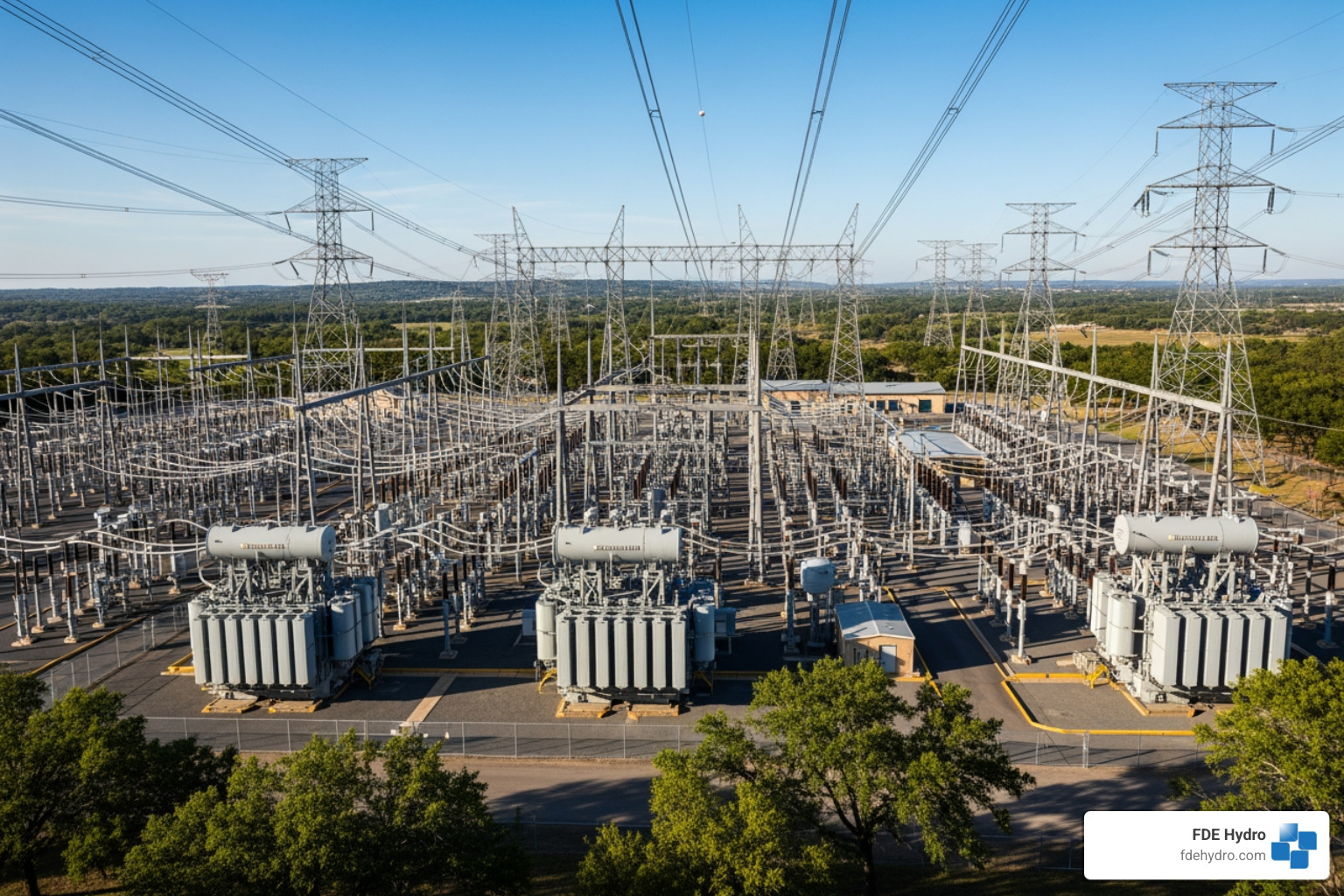
Despite the clear benefits, the transition to renewable energy in the construction industry faces several problems:
- Supply chain bottlenecks: The rapid growth in renewable energy demand has strained supply chains, particularly for solar PV components and rare earth elements used in wind turbines. This can lead to delays and increased costs.
- Rising material costs: While solar costs have generally decreased, certain components, especially for wind power, have seen cost increases. This impacts project budgets and timelines.
- Permitting delays: Lengthy and complex permitting processes can significantly slow down renewable energy projects. In the United States, policy changes affecting federal tax credits and permitting of onshore wind and solar PV projects on federal land have caused significant revisions in growth forecasts.
- Grid integration: As more variable renewable energy (like solar and wind) comes online, integrating it into existing electricity grids becomes more complex. This can lead to issues like curtailment, where renewable energy generation is deliberately reduced due to grid constraints or low demand. We’ve seen this challenge in parts of the United States and Brazil.
- Curtailment risks: This issue is a growing concern for utility-scale projects, impacting profitability and leading to project cancellations in some regions.
These challenges highlight the need for smart solutions, including sophisticated grid management and potentially decentralized energy systems like a Microgrid.
The Role of Government Policy and Incentives
Government policies and incentives play a pivotal role in driving the adoption of renewable energy in construction. They can accelerate growth or, conversely, slow it down through policy shifts.
- Federal tax credits: Historically, federal tax credits in the United States have been major drivers of renewable energy deployment. However, policy changes, including the earlier phase-out of some federal tax credits, have led to significant downward revisions in the US renewable growth forecast—almost 50% lower than previously expected.
- Auction systems: Many governments are moving towards competitive auction systems for new renewable energy capacity, which can drive down costs but also impact investor profitability.
- Property Assessed Clean Energy (PACE): Programs like Property Assessed Clean Energy (PACE) offer innovative financing mechanisms for energy efficiency and renewable energy improvements, often repaid through property taxes. These are available in various US states, including California and New York.
- Permitting reform: Streamlining environmental assessments and digitalizing application processes are crucial steps governments can take to accelerate project development. In the European Union, for example, utility-scale solar PV capacity in Germany, Spain, Italy, and Poland has seen an upward revision due to more favorable conditions.
- Regional policies: Specific regional initiatives, such as those discussed in New York’s Green Surge: Unpacking Renewable Energy in the City, are vital for fostering local growth and addressing unique regional needs.
These policies create the framework within which construction renewable energy projects thrive or face headwinds.
Seizing Growth Opportunities in a Changing Market
Despite the challenges, the opportunities in construction renewable energy are immense, fueled by global demand and innovative financing.
- Corporate PPAs: Corporate Power Purchase Agreements (PPAs) are a major driver of renewable capacity expansion, accounting for 30% of global growth. Companies are increasingly committing to sourcing clean energy, creating a robust market for new renewable energy projects.
- Investor interest: The long-term stability and environmental benefits of renewable energy continue to attract significant investor interest, providing capital for new developments.
- New project development: With global renewable power capacity expected to double by 2030, there’s an unprecedented need for new project development, from large-scale solar and wind farms to new hydropower facilities and energy storage solutions.
This dynamic environment means that companies engaged in Renewable Energy Construction are at the forefront of a global change.
Innovations Shaping the Future of Green Energy Construction
The future of construction renewable energy is being actively shaped by remarkable technological advancements and forward-looking trends. These innovations are not only making clean energy more efficient and affordable but also changing the very methods we use to build. We’re on the cusp of an exciting era, as detailed in our Hydropower Advancements Innovations 2025 guide.
The Next Wave of Construction Renewable Energy Technology
Technological advancements are enabling the seamless integration of renewable energy into construction equipment and sites, improving productivity and efficiency.
- Modular Precast Concrete: This is where FDE Hydro truly shines. Our innovative Modular Precast Concrete technology, including the “French Dam” system, revolutionizes the construction and retrofitting of hydroelectric dams. By manufacturing components off-site, we drastically reduce on-site construction time, costs, and environmental impact. This approach is being successfully applied across North America, Brazil, and Europe.
- Hydrogen-powered excavators: Prototypes and early models of hydrogen-powered construction equipment, such as excavators, are emerging. These machines offer zero-emission operation, particularly beneficial for urban construction sites and projects sensitive to air quality.
- Photovoltaic windows: As mentioned earlier, these integrated building components generate electricity while providing natural light, becoming an active part of a building’s energy system rather than just a passive envelope.
- AI for Sustainability: Artificial intelligence and machine learning are being deployed to optimize energy generation, manage grid integration, and predict energy demand. AI for Sustainability can analyze vast datasets to improve efficiency and reduce waste across construction and energy operations.
- Digital solutions: Beyond AI, a range of digital tools, from advanced project management software to real-time monitoring systems for renewable assets, is enhancing productivity and decision-making in the sector.
These innovations are propelling Hydropower Innovation and the broader renewable construction industry forward.
Global Forecasts and Future Trends
The future trends for renewable energy adoption in the global construction sector are overwhelmingly positive, albeit with some regional nuances.
- Global capacity doubling by 2030: Global renewable power capacity is expected to double between now and 2030, increasing by 4,600 gigawatts (GW). This is a monumental expansion, showcasing the commitment to a green future.
- Solar PV dominance: Solar PV is projected to account for almost 80% of this global increase in renewable power capacity over the next five years. Its low cost, faster permitting times, and broad social acceptance continue to drive its rapid expansion.
- Wind capacity growth: Wind power capacity is still expected to nearly double to over 2,000 GW by 2030, despite facing challenges in supply chains and rising costs.
- Pumped-storage interest: With rising grid integration challenges, there’s renewed interest in pumped-storage hydropower, which is expected to grow almost 80% faster over the next five years compared to the previous five. This highlights its critical role in providing grid flexibility.
While global renewable capacity is set to grow strongly, driven primarily by solar PV, as detailed by the IEA in Global renewable capacity is set to grow strongly, driven by solar PV, we must acknowledge regional variations. For instance, the forecast for the United States was revised down by almost 50% due to policy changes affecting tax credits and import restrictions. Conversely, the EU forecast saw a slight upward revision, particularly for utility-scale solar PV in Germany, Spain, Italy, and Poland.
The Future of Hydropower remains bright, especially with advancements in pumped storage and modular construction techniques, ensuring its continued relevance in the evolving energy landscape.
Frequently Asked Questions about Renewable Energy in Construction
We often get asked common questions about integrating renewable energy into construction. Here are some answers to help clarify the path forward.
What is the most cost-effective renewable energy source for a construction project?
The “most cost-effective” source for a construction project largely depends on site-specific factors and the application.
- Solar for site power: For temporary site power and lighting, solar panels are often highly cost-effective due to decreasing construction costs (down 8% in 2020) and the elimination of fuel expenses. They’re easy to deploy and scale.
- Sourcing from grid-scale renewables: For larger, longer-term projects, directly sourcing power from nearby grid-scale renewable facilities (like wind or hydropower plants) can be highly cost-effective, especially if the local grid infrastructure is robust.
- Decreasing solar construction costs: The continued reduction in solar construction costs makes it an increasingly attractive option for both temporary and permanent installations.
A detailed energy audit and consultation with renewable energy experts can determine the optimal solution for your specific project.
How can construction companies finance the transition to renewable energy?
Financing options for renewable energy solutions in construction are diverse and growing:
- Power Purchase Agreements (PPAs): A power purchase agreement (PPA) allows a company to buy electricity generated by a renewable energy system installed on their property or nearby, without owning the system itself. This can eliminate upfront capital costs.
- System leases: Similar to PPAs, leasing allows companies to pay a fixed monthly rate for a renewable energy system, benefiting from the generated power without the burden of ownership.
- Property Assessed Clean Energy (PACE): Property Assessed Clean Energy (PACE) programs, available in several US states, offer financing for energy efficiency and renewable energy improvements, repaid through property taxes.
- Government incentives: Various federal, state, and local incentives, including tax credits, grants, and rebates, can significantly reduce the net cost of renewable energy installations.
- Loans: Traditional loans from banks and other financial institutions are also available for companies looking to invest in their own renewable energy infrastructure.
What are the first steps to integrating renewables into a construction business?
Integrating renewables can start small and scale up:
- Energy audits: Begin by conducting a thorough energy audit of your operations to understand current energy consumption, identify key areas for reduction, and pinpoint opportunities for renewable integration.
- Solar for site lighting: A simple and immediate step is to replace traditional lighting with solar-powered alternatives, which are economical and convenient.
- Electrifying small equipment: Transitioning smaller, frequently used equipment (power tools, compact machinery) to electric models powered by portable renewable sources or grid connections.
- Evaluating fleet transition: For larger equipment, begin evaluating the feasibility and ROI of transitioning to electric or hydrogen-powered vehicles as they become more available and cost-effective.
- Partnering with experts: Collaborate with renewable energy specialists and construction renewable energy companies to develop a comprehensive strategy for integrating clean energy into your projects and operations.
Conclusion
The construction industry is undergoing a profound green shift, driven by both compelling economic advantages and an urgent environmental imperative. Construction renewable energy is no longer a niche concept but a mainstream necessity, offering solutions to reduce CO2 emissions, improve energy efficiency, and improve operational productivity.
While challenges such as supply chain issues, permitting delays, and grid integration complexities persist, innovations and supportive policies are paving the way forward. From the decreasing costs of solar PV to the exciting potential of hydrogen-powered equipment and advanced modular construction techniques for hydropower, the future of green energy construction is bright.
At FDE Hydro, we are proud to be at the forefront of this change. Our innovative modular precast concrete technology is pioneering solutions that make Hydroelectric Power Solutions Guide more efficient and cost-effective, helping to build a sustainable future. To learn more about the future of sustainable energy infrastructure, explore our comprehensive guide to hydropower.

