by Bill French Sr. | Dec 27, 2025 | Precast Dam Articles
Why Modular Precast Concrete Matters for Modern Infrastructure
Modular precast concrete is a construction method where concrete elements are prefabricated in a factory and assembled on-site. This approach significantly reduces environmental impact, accelerates timelines, and increases productivity compared to traditional methods, making it critical for infrastructure like hydropower facilities and dams where reducing costs and timelines is paramount.
Key benefits of modular precast concrete:
- Speed – Up to 30% faster than poured-in-place construction, with modules installed in hours or days instead of weeks
- Quality – Factory-controlled manufacturing minimizes errors and enables use of high-performance materials
- Durability – Structures last 100-150+ years with superior resistance to fire, storms, floods, and earthquakes
- Sustainability – Reduces waste, enables material reuse, and can achieve 60% better energy efficiency
- Cost – Lower overall project costs through reduced labor, faster timelines, and less site disruption
The construction industry generates about 38% of global CO2 emissions. Traditional methods create significant waste and are prone to weather delays. In contrast, industrialized prefabrication optimizes material use, improves quality management, and dramatically reduces on-site construction time, offering a proven solution to the challenges of large-scale civil construction.
I’m Bill French Sr., Founder and CEO of FDE Hydro, and I’ve spent five decades in heavy civil construction, including groundbreaking work with modular precast concrete on projects like the I-93 Fast14 bridge construction. My experience has shown that this construction method represents the future of efficient, sustainable infrastructure development.

Modular precast concrete definitions:
The Core Principles: How It Works and Why It’s Different
Think of modular precast concrete as building with sophisticated, giant blocks instead of pouring concrete on-site. It’s a fundamental shift from traditional construction. Instead of dealing with weather, multiple crews, and material logistics on a chaotic site, we manufacture standardized concrete elements in a controlled factory environment. These precision-engineered pieces are then transported and assembled on-site like a puzzle.
Traditional construction is unpredictable. Rain, snow, or extreme heat can delay projects and affect quality. With modular precast concrete, we eliminate these variables. Manufacturing indoors ensures consistent quality and dramatically reduces waste. The accuracy of factory production means pieces fit together perfectly, a level of precision nearly impossible to achieve in the field.
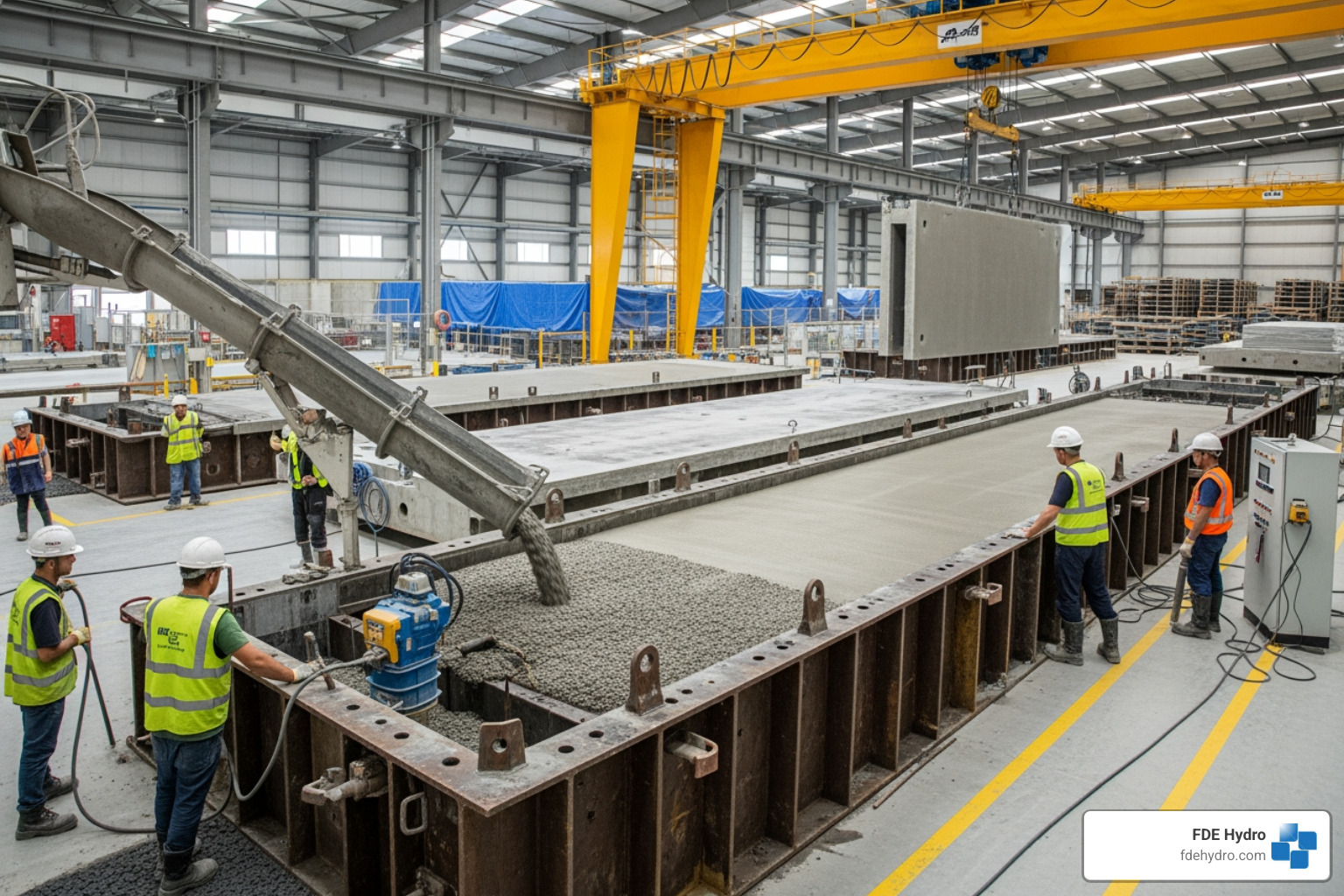
The speed difference is remarkable, with projects completed months faster. For infrastructure like hydropower systems, this speed means faster delivery and lower costs. This approach also leads to cleaner, more organized sites with less noise and disruption. Modular Construction Techniques have transformed how we build critical infrastructure.
| Feature |
Modular Precast Construction |
Traditional On-Site Construction |
| Timeline |
Rapid turnkey (weeks/months), up to 30% faster, weather-independent |
Slower (months/years), susceptible to weather delays |
| Quality Control |
Factory-controlled, integrated quality checks, minimized inaccuracies |
On-site variability, weather-dependent, potential for human error |
| Waste Reduction |
Optimized material flows, reduced on-site waste |
Significant on-site waste generation, material inefficiencies |
| Weather Impact |
Manufacturing unaffected by weather, indoor assembly |
Highly susceptible to weather delays and conditions |
| Site Congestion |
Minimized on-site labor, fewer trucks, less noise |
High traffic, noise, and labor density on-site |
| Material Use |
Enables high-performance, resource-efficient materials |
Standard materials, often less optimized for performance |
The Process of Modular Precast Concrete Manufacturing
Creating modular precast concrete elements is a precise, orchestrated process that begins long before on-site work.
It starts with design and engineering, where advanced software like Building Information Modeling (BIM) and Computer-Aided Design (CAD) are used to create inherently modular structures. Each element is engineered to the millimeter for strength, efficiency, and ease of assembly. These digital tools, which have evolved since the 1980s, enable mass customization with incredible precision.
Next, high-precision, often reusable molds are fabricated based on the designs. The concrete casting occurs in a controlled factory, allowing the use of high-performance mixes under ideal temperature and humidity. The curing process is also controlled, often accelerated with steam or heat to achieve strength rapidly and consistently. Finally, factory finishing (like insulation or waterproofing) is applied before modules are transported to the site, ready for installation.
When modular precast concrete elements arrive, the project shifts into high gear. While modules are manufactured, site preparation like laying foundations occurs simultaneously. This just-in-sequence delivery minimizes site congestion, noise, and the number of vehicles compared to traditional construction.
Large cranes handle crane erection, lifting modules into place. Entire sections can be installed in a single day—work that would take weeks with poured-in-place methods. Specialized connection technology securely joins the modules, creating a monolithic structure. This process requires minimized on-site labor, resulting in a safer, more efficient site with less construction noise and congestion. This rapid, turnkey construction is a game-changer for delivering critical infrastructure like hydropower plants and water control systems quickly and efficiently.
The Evolution of Building: From Historical Concepts to Modern Systems
The concept of modular precast concrete is over a century old. Early experiments with precast elements appeared in the late 1800s, such as reinforced concrete beams in the 1891 Biarritz Casino and room-sized modules in 1896. By the early 20th century, architects like Walter Gropius championed prefabrication for affordable housing, and large-scale projects like Liverpool’s Eldon Street Mass Housing in 1905 proved its viability.
The real boom occurred after World War II, when Europe’s need for rapid rebuilding drove the “Mass Production and Standardization” era. Systems like I-464 and Camus used large, standardized precast panels. While fast, these “closed modular systems” resulted in monotonous designs and limited flexibility.
In response, the “Open Prefabrication Period” (1970-1985) introduced compatible components from various manufacturers, allowing for more creative freedom. This shifted the focus from monolithic modules to flexible component assembly.
The digital revolution, starting around 1985, transformed manufacturing. CAD (Computer-Aided Design) and PLC (Programmable Logic Controller) systems enabled mass customization, combining mass-production efficiency with custom-design flexibility. This dramatically reduced labor and increased precision.
By the 2000s, Building Information Modeling (BIM), combined with CAM (Computer-Aided Manufacturing), created a seamless digital workflow from concept to production. Today, we can design, simulate, and generate manufacturing instructions within a single integrated environment. This evolution is what makes modern modular precast concrete so capable, allowing us to build smarter and with higher quality than ever. Research on Modularisation in Construction and Precast Building Systems documents this journey.
Key Advantages of Modular Precast Concrete
After five decades in heavy civil construction, I’ve seen that modular precast concrete stands apart. It’s a reimagining of how we build critical infrastructure, offering transformative advantages in speed, durability, sustainability, cost, safety, and resilience. These are not abstract claims but measured outcomes on real projects, from hydropower facilities to water control systems.
Accelerated Construction Timelines
Time is money in construction, and traditional schedules are vulnerable to weather and labor issues. Modular precast concrete changes this equation, achieving up to 30% time savings compared to conventional methods.
The key is weather-independent manufacturing. While on-site work halts for rain or snow, our factories produce high-quality modules in climate-controlled facilities. When modules arrive on-site, components that would take weeks to build are installed in hours or days. This rapid turnkey approach, detailed in our work with Rapid Installment of Module Precast Civil Infrastructure, is invaluable for projects with tight seasonal windows, such as hydropower facilities.
Best Durability and Resilience
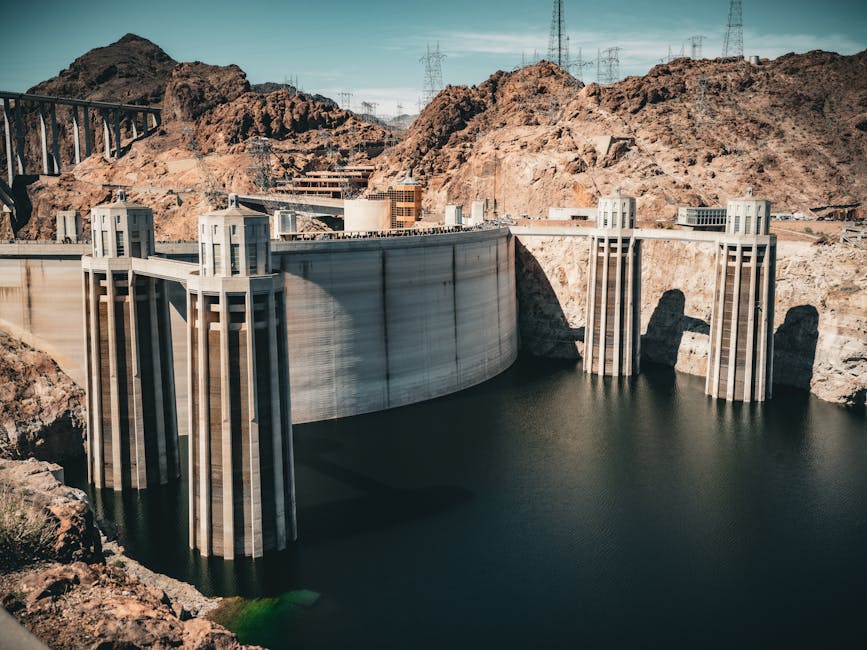
Infrastructure like dams and hydropower plants must last for centuries. Modular precast concrete delivers an extraordinary lifespan of 100 to 150 years or more, thanks to high-performance materials and factory-controlled quality that eliminates on-site inconsistencies.
Beyond longevity, these structures offer superior resistance to disasters like tornadoes, earthquakes, floods, and fires. This resilience comes from the inherent strength of engineered precast concrete. The structural integrity achieved in a factory simply cannot be matched in the field, where curing conditions are variable. This durability also means low maintenance requirements, leading to dramatically lower lifecycle costs and greater long-term confidence for project owners.
Sustainability and Economic Benefits
The construction industry is a major contributor to global environmental challenges, causing about 38% of global CO2 emissions and consuming 85% of mineral raw materials. Modular precast concrete offers a more sustainable path.
Factory production optimizes material flows, drastically reducing the waste common on traditional job sites. The resulting structures can also be up to 60% more energy-efficient due to superior insulation and airtight construction. Furthermore, the modular design supports a circular economy; modules can be reused, re-deployed, or recycled, minimizing demolition and extending material life.
These environmental advantages are complemented by economic benefits. Modular precast concrete typically costs less over the asset’s lifecycle due to reduced labor, faster completion, and lower maintenance. This value proposition, detailed in Why Precast Cost Less, makes renewable energy infrastructure more affordable and accessible.
Modern Applications and the Role of Technology
The versatility of modular precast concrete has expanded from simple structures to sophisticated, mission-critical infrastructure. At FDE Hydro, we apply these techniques to challenging water projects across North America, Brazil, and Europe, where cutting-edge technology is the foundation of our success.
Diverse Infrastructure Applications
Our work at FDE Hydro centers on replacing aging water infrastructure. We use our patented modular precast concrete technology to construct hydropower plants and retrofit dams with unprecedented speed and efficiency. This approach extends the life of critical community assets.
The impact of this technology spans multiple sectors:
- Bridge Construction: Rapid replacement systems allow entire bridge sections to be installed overnight, minimizing traffic disruption, as seen in A National Example of Rapid Bridge Construction Using Modular Precast Elements.
- Water Control Systems: Factory-made elements ensure reliability for everything from complex aqueducts to flood control structures.
- Tunnels: Precast segments create stable, low-maintenance underground passages.
- Retaining Walls: Precast systems manage difficult terrains and protect vital infrastructure.
Other applications include utility buildings, pump stations, and water treatment facilities, all benefiting from the precision of factory manufacturing. The Precast/Prestressed Concrete Institute showcases many such Modular Components from the Precast/Prestressed Concrete Institute, which serve as ready-to-install “building blocks.”
The Impact of Technology and Overcoming Challenges
Modern technology makes modular precast concrete exceptional. Building Information Modeling (BIM) is central, allowing us to create a complete virtual model to simulate construction and prevent conflicts. CAD/CAM systems bridge design and reality, translating precise digital plans into physical elements. Automation in manufacturing further improves accuracy, safety, and quality.
However, the method has considerations that require expertise. Transportation logistics for large modules demand careful planning and specialized equipment. Connection complexities require advanced engineering to ensure structural integrity, especially for dams. Perhaps most importantly, success depends on early design integration. The modular approach must be part of the project from its inception, requiring close collaboration between designers, engineers, and manufacturers.
These challenges are not roadblocks but factors that are managed through experience, planning, and innovation.
The Future of Construction: Trends and Innovations
The evolution of modular precast concrete is accelerating, driven by the global need for smarter, more sustainable infrastructure. Future trends promise to make this method even more powerful.
Mass customization is becoming standard. Digital design and automated manufacturing allow for unique, shape-optimized elements that meet specific project needs efficiently. This supports higher ecological standards and CO2 reduction by enabling precisely designed, high-quality components.
Breakthroughs in high-performance concrete are also emerging. New mixtures, including self-healing variants, ultra-high-performance concrete (UHPC), and low-carbon concretes, are making modules stronger, more durable, and more sustainable. These materials allow for thinner, lighter, yet more robust structures.
We are also moving toward smart modules with integrated technology. Embedded sensors can monitor structural health, fiber optics can provide data, and integrated systems can manage heating and cooling. These intelligent modules will offer real-time performance insights and predictive maintenance capabilities.
Further automation in factories and on-site, using robotics and drones, will streamline logistics, boost safety, and reduce labor needs. As labor shortages persist, automation is a necessity for updating infrastructure affordably. These innovations are enabling larger and more complex projects, pushing the boundaries of what’s possible with precast. Learn more about how precast is expanding its capabilities.
Conclusion
As we’ve seen, modular precast concrete is more than a construction method—it’s a transformative approach to building vital infrastructure. From its historical roots to today’s digitally-powered systems, it consistently outperforms traditional methods.
The advantages are clear: accelerated timelines, superior durability and resilience for a 100-150+ year lifespan, and significant sustainability and economic benefits. For projects like hydropower plants, dams, and bridges across North America, Brazil, and Europe, modular precast concrete is proving its worth. The integration of modern technology, from BIM to automation, enables unparalleled precision and scale.
At FDE Hydro, we are proud to pioneer this innovation with our patented technology for hydroelectric dams and water control systems. This represents a fundamental shift in the construction paradigm—a smarter, faster, and stronger way to build. It’s how we future-proof our infrastructure, ensuring reliability and efficiency for generations to come.
Want to dive deeper into how we’re revolutionizing hydropower solutions with our advanced modular precast concrete technology? We invite you to explore further.
Learn more about advanced hydropower solutions
by Bill French Sr. | Dec 26, 2025 | Energy Resource Articles
The Rise of Eco Friendly Crypto Mining
If you’re looking for Eco friendly crypto mining methods, here’s a quick overview of how the industry is becoming more sustainable:
- Renewable Energy: Using clean sources like hydro, solar, and wind.
- Efficient Mechanisms: Moving from Proof-of-Work (PoW) to Proof-of-Stake (PoS).
- Heat Reuse: Repurposing waste heat for heating or agriculture.
- Grid Balancing: Stabilizing power grids by managing energy demand.
- Waste Energy: Utilizing flared natural gas that would otherwise be wasted.
Eco friendly crypto mining is a critical topic, as the high energy use of currencies like Bitcoin has raised significant environmental concerns over carbon emissions and grid strain.
However, the industry is shifting towards greener mining. This guide explores innovative solutions for creating digital value responsibly, benefiting both the planet and the digital economy.
My name is Bill French Sr., and as the Founder and CEO of FDE Hydro, I’ve dedicated my career to sustainable infrastructure solutions. My team and I developed the “French Dam,” a patented modular hydropower system, which directly supports the potential for truly Eco friendly crypto mining operations.
Quick look at Eco friendly crypto mining:
The concept of “digital gold” is compelling, but traditional cryptocurrency mining, especially for Bitcoin, has historically come at a high environmental cost, straining natural resources.
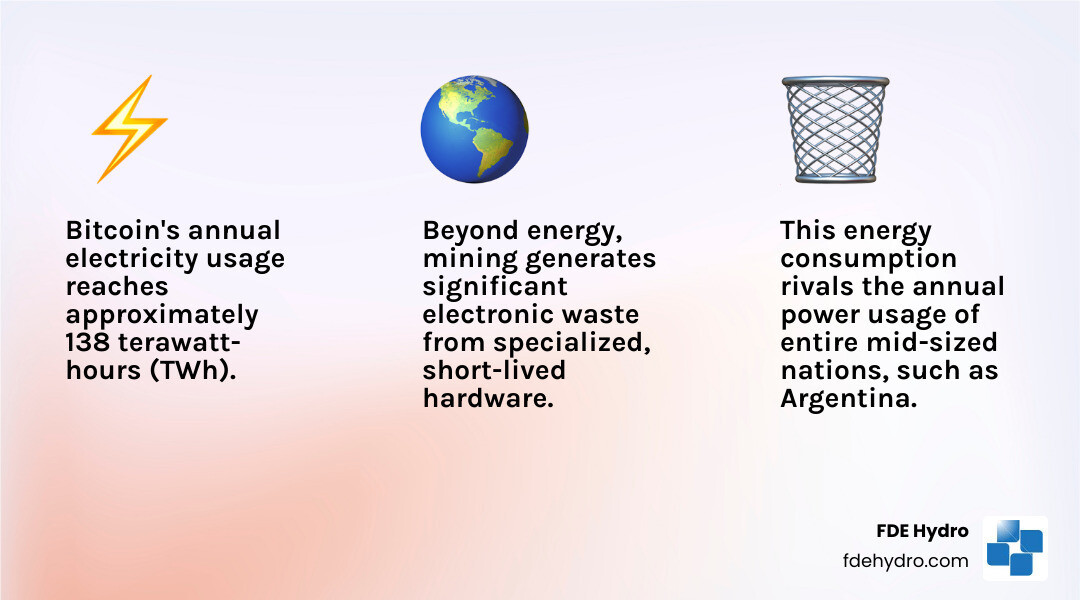
Traditional crypto mining, particularly for big names like Bitcoin, relies on something called Proof-of-Work (PoW). It’s super secure, but it also uses a ton of energy. Recent studies estimate Bitcoin’s annual electricity usage at around 138 TWh (terawatt-hours)—comparable to the consumption of a country like Argentina or Ukraine.
When sourced from fossil fuels, this energy use results in significant carbon emissions, once estimated at nearly 40 million tons of CO2 annually. Beyond emissions, the full environmental story includes electronic waste (e-waste), water consumption, land use, and noise pollution. As detailed in a study on Bitcoin’s environmental effects, these challenges highlight the need for sustainable crypto solutions.
How Proof-of-Work (PoW) Drives Energy Demand
Proof-of-Work (PoW) is energy-intensive by design. It involves a global competition where powerful computers race to solve complex mathematical puzzles. The winner adds the next block of transactions to the blockchain and earns a cryptocurrency reward.
The network’s difficulty automatically adjusts to maintain a consistent block creation time, forcing miners to use ever-more powerful hardware. This led to the development of Application-Specific Integrated Circuits (ASICs)—machines designed solely for mining that consume vast amounts of electricity.
This incentive structure creates a continuous cycle of seeking cheaper electricity and more powerful hardware, driving the network’s total energy consumption upward. As HBR explains, Bitcoin’s energy use is integral to its security, making the balance with Eco friendly crypto mining a key challenge.
Beyond Energy: The Full Environmental Impact
While we often focus on energy use, the environmental toll of traditional crypto mining goes much deeper than just electricity bills.
Reliance on fossil fuels significantly increases mining’s carbon footprint. Despite growing awareness, recent CCAF estimates showed a substantial portion of Bitcoin’s energy still comes from non-renewable sources like coal and natural gas, contributing to greenhouse gas emissions.
Another major issue is electronic waste (e-waste). ASIC miners have a short lifespan of 4-5 years before becoming obsolete. One 2021 study estimated this generates over 30,000 tons of e-waste annually, posing a significant disposal and recycling challenge.
Water consumption is another concern, as facilities require large amounts for cooling, especially in warm climates. This can strain local water supplies in water-scarce regions.
Finally, noise pollution from the constant hum of cooling fans can disrupt nearby communities. At FDE Hydro, we design modular, contained solutions that minimize environmental impacts like noise, which is vital for truly Eco friendly crypto mining.
The Green Revolution: Advancing Sustainable Mining with Renewable Energy
The environmental challenges of crypto mining have sparked a green revolution in the industry. This shift away from fossil fuels is driven by economics and a vision for the future of cryptocurrency.
Switching from fossil fuels to clean energy can cut a mining operation’s greenhouse gas emissions by over 70%. This isn’t a minor improvement; it’s a fundamental reimagining of the industry.
At FDE Hydro, our patented modular hydropower systems are a perfect match for this transition. By reducing the cost and construction time of hydroelectric projects, we make clean energy more accessible for miners across North America and beyond.
Energy-efficient practices are also crucial. Miners are optimizing operations with better cooling, more efficient hardware, and timing their energy use to align with renewable availability. This combination makes Eco friendly crypto mining economically attractive.
Hydropower: A Leading Solution for Eco Friendly Crypto Mining
The greenest mining operations often cluster around hydroelectric resources in places like Canada, the Pacific Northwest of the United States, and Brazil. Hydropower offers a key advantage over other renewables: reliability.
Let’s be honest about the differences between traditional mining and hydropower-based operations:
| Feature |
Traditional Fossil-Fuel Mining |
Hydropower-Based Mining |
| Energy Source |
Coal, Natural Gas, Oil |
Hydroelectric Dams |
| Carbon Emissions |
High |
Very Low to Zero |
| Energy Cost Stability |
Volatile, subject to market fluctuations |
Generally stable and low over long term |
| Environmental Impact |
Significant (GHG, air pollution, water use for cooling towers) |
Minimal (habitat disruption during construction, water flow management) |
| Operational Reliability |
Dependent on fuel supply chains |
Highly reliable, consistent baseload power |
| Scalability |
Can be scaled with grid access |
Scalable, especially with modular solutions like ours |
| Grid Impact |
Adds strain, especially during peak demand if grid is fossil-heavy |
Can improve grid stability, use excess capacity |
Hydroelectric power provides a consistent, renewable energy supply 24/7, unlike intermittent solar and wind. This baseload power is invaluable for mining operations that need to run continuously. The IEA offers a comprehensive review of hydropower’s environmental advantages.
The low carbon emissions of hydropower are another key benefit. Powering rigs with water instead of coal virtually eliminates an operation’s carbon footprint, which is increasingly important to environmentally conscious investors.
Modern hydropower technology also offers scalability and reliability. Our modular French Dam system was designed to overcome the high cost and long construction timelines of traditional dams, making it feasible to develop new hydro resources for mining operations.
Hydropower-based mining also strengthens network security and decentralization. Geographically dispersed operations powered by local renewables make the network more resilient to disruptions.
Addressing Challenges in Renewable-Powered Mining
However, renewable-powered mining faces several challenges.
Key challenges include grid integration to balance variable renewables, managing seasonal variability in power generation (even for hydro), and securing the large infrastructure investment required for new projects.
Modular and scalable solutions are essential. Our technology addresses this by allowing projects to start smaller and expand as needed. Overcoming adoption barriers requires proving that green mining is economically smart. As renewable energy is often the cheapest option, the business case for Eco friendly crypto mining is becoming undeniable.
Powering the Future: Hydropower and Eco Friendly Crypto Mining
The future of Eco friendly crypto mining is not just an environmental imperative; it’s a smart business decision. Environmental responsibility and economic advantage are now aligning.
Miners need cheap, reliable energy to remain profitable, especially as Bitcoin rewards decrease. Increasingly, renewable energy is the cheapest option, with some sources costing less than two cents per kilowatt-hour. This makes the choice for green energy an obvious one.
This economic reality is driving global change. For example, Gryphon Digital Mining achieved 100% renewable power by early 2024, primarily from hydroelectric sources. Other major players show a similar commitment. CleanSpark (94% carbon-free power), TeraWulf (91% zero-carbon), Iris Energy (95-99% renewable), and Bitfarms (99% renewable) all rely heavily on sources like hydro, nuclear, wind, and solar.
This trend is industry-wide. Recent data from the Cambridge Centre for Alternative Finance shows that sustainable sources (renewables and nuclear) now power over half of the Bitcoin network, a significant increase from previous years. The industry is changing in real time.
Tapping into Clean Energy Sources
The future of Eco friendly crypto mining depends on smart infrastructure connecting miners to clean power. Hydroelectric power is central to this vision due to its 24/7 reliability.
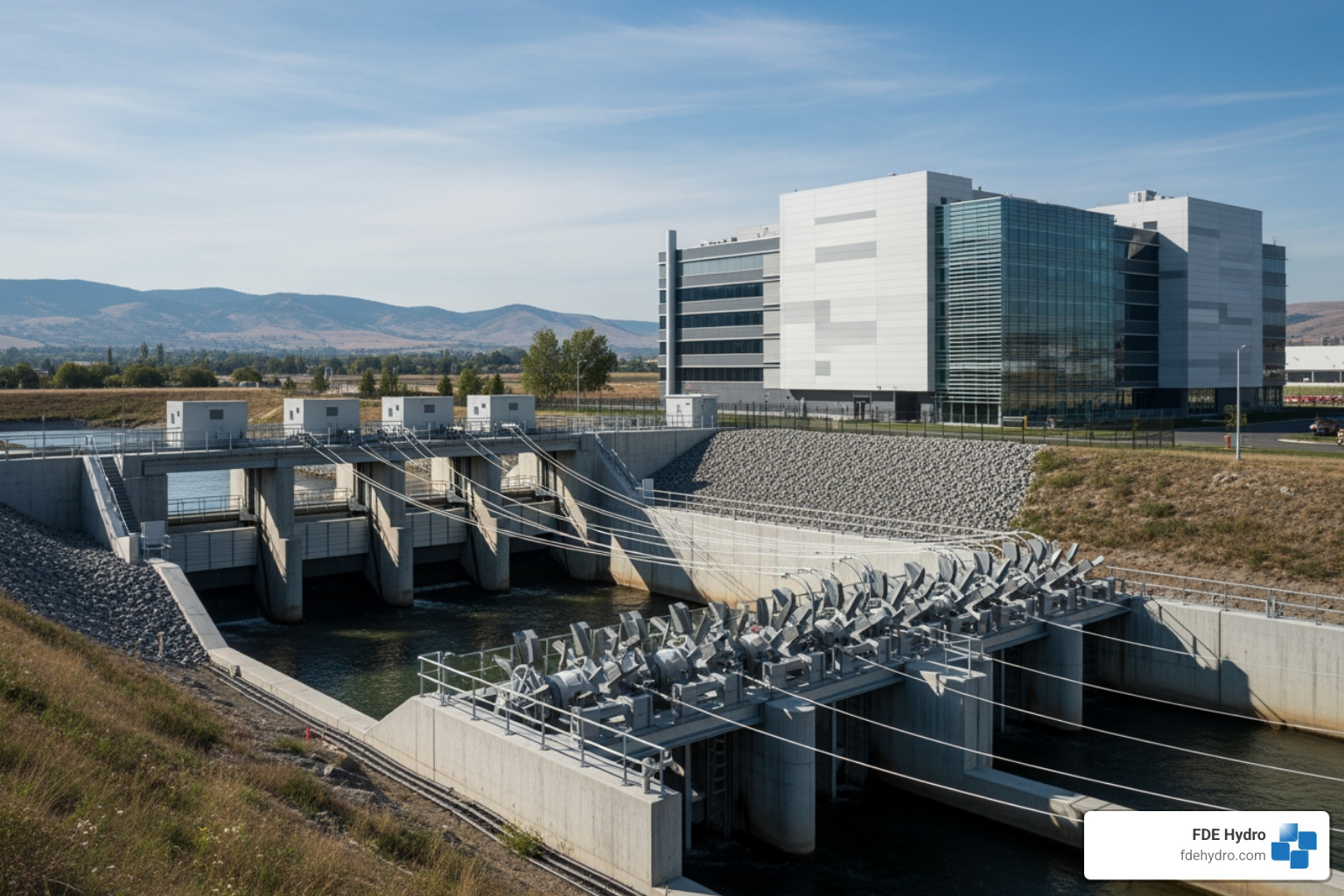
Our work at FDE Hydro is directly relevant here. The French Dam, our patented modular hydropower system, overcomes the high cost and long timelines of traditional hydro projects, accelerating clean energy adoption. This allows us to deploy affordable, dedicated clean energy infrastructure for miners across the United States, Canada, Brazil, and Europe, matching the scale and location of their operations.
While hydropower provides reliable baseload power, it can be combined with solar and wind to create a resilient, hybrid energy mix. This approach offers flexibility and maximizes the use of clean resources.
The Symbiotic Relationship with Energy Grids
Eco friendly crypto mining operations are evolving from mere energy consumers to active partners in stabilizing renewable energy grids.
Renewable sources like solar and wind often produce excess power when demand is low. This energy is typically wasted, or ‘curtailed.’ Crypto miners can act as a ‘buyer of last resort,’ consuming this surplus energy and making renewable projects more financially viable. Through demand response programs, they can also power down during peak demand to stabilize the grid, as seen in places like Texas.
This flexibility acts as a shock absorber for the grid. In fact, one study shows that Bitcoin mining can accelerate the sustainable energy transition by improving the economics of renewable plants.
Measuring and Verifying Eco Friendly Crypto Mining
As the industry matures, transparently measuring and verifying Eco friendly crypto mining claims is crucial to prevent ‘greenwashing.’
It’s important to distinguish between zero-carbon (no emissions from the source, like hydropower) and carbon-neutral (emissions are offset via methods like purchasing Renewable Energy Certificates). While carbon-neutrality has a role, we believe in prioritizing true zero-carbon energy sources. Preventing emissions at the source is always the better approach.
Transparency is key. Initiatives are emerging to help miners measure and report their energy use with standardized metrics, allowing for data-backed validation of green claims. At FDE Hydro, we support this push for verification. Our modular hydropower systems provide verifiable, zero-carbon energy, making sustainability a built-in feature of the infrastructure itself.
Beyond the Grid: Innovative Approaches to Sustainable Mining
Beyond clean energy, the crypto mining industry is embracing creative solutions to shrink its environmental footprint. This innovative, circular-economy approach is at the heart of Eco friendly crypto mining.
Turning Waste into Value: Heat Reuse and Gas Flaring
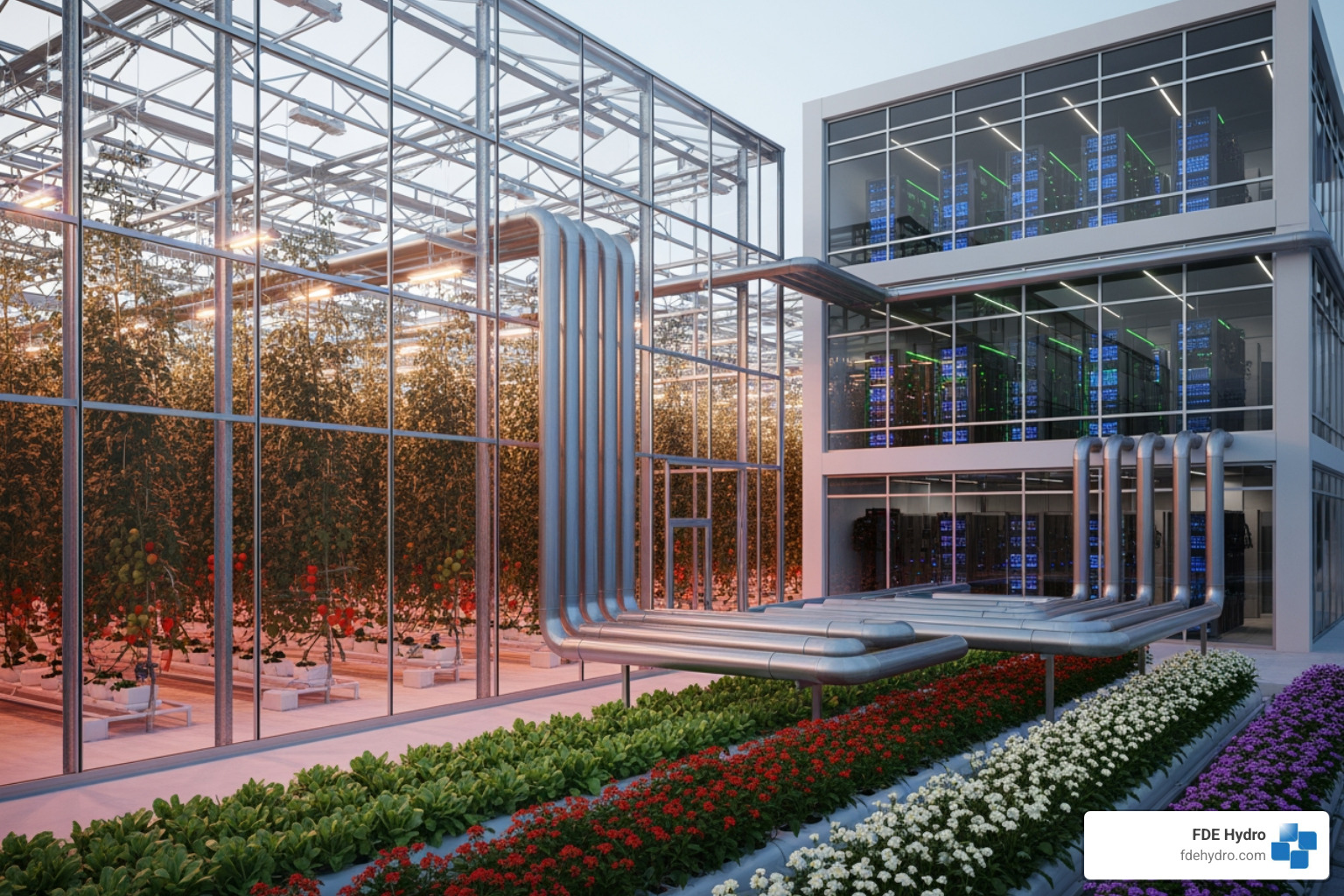
One of the most innovative strategies is heat reuse, which turns the immense heat generated by mining equipment into a valuable resource. In Europe, some companies capture this waste heat for district heating systems. Others use it to warm greenhouses for agriculture, as seen in the Netherlands. In a unique example from Norway, one miner even uses waste heat to dry timber, showcasing how byproducts can serve other industries.
Another innovation tackles gas flaring at oil fields. Instead of wasting this methane—a potent greenhouse gas—companies are capturing it to power mobile mining rigs. This reduces emissions while providing energy for Eco friendly crypto mining.
The Role of Policy and Market Incentives
Technology alone isn’t enough; government policy and market incentives are crucial for promoting sustainable mining.
In the United States, government reports have highlighted crypto’s climate impact, leading to a mix of policies. Some states have placed moratoriums on certain mining types, while others offer tax incentives for using clean energy.
A key market challenge is the ‘lack of product differentiation’—it’s difficult to distinguish ‘green’ Bitcoin from Bitcoin mined with fossil fuels. This can penalize miners who invest in renewable energy. Potential solutions include subsidies for green mining or methods to ‘tag’ coins based on their energy source, ensuring that sustainability makes good business sense.
Frequently Asked Questions about Eco-Friendly Crypto Mining
Here are answers to some of the most common questions about making crypto mining more sustainable.
Which cryptocurrencies are the most eco-friendly?
The most eco-friendly cryptocurrencies are defined by two factors: their consensus mechanism and their energy source.
The primary difference is between energy-intensive Proof-of-Work (PoW), used by Bitcoin, and the highly efficient Proof-of-Stake (PoS) mechanism. PoS validators stake their own crypto to validate transactions, eliminating the need for a computational race. When Ethereum switched to PoS in 2022 (‘The Merge’), its energy consumption dropped by over 99.9%.
Other cryptocurrencies designed for sustainability include Solana (PoS), Cardano (PoS), and Chia, which uses a unique ‘Proof of Space and Time’ mechanism based on hard drive storage.
However, the energy source is just as important. A PoW currency like Bitcoin can be mined sustainably when powered by renewables. At FDE Hydro, our modular hydropower systems provide the reliable, zero-carbon energy needed to make PoW mining eco-friendly.
Can Bitcoin mining ever be truly sustainable?
Yes, Bitcoin mining can be truly sustainable, and the transition is already happening.
The path to 100% renewable-powered PoW is driven by economics. Miners seek the cheapest energy, and renewables like hydropower are now often the most cost-effective option. This advantage is critical as mining rewards decrease over time.
Bitcoin mining also offers a unique sustainability benefit: grid stabilization. Miners can act as a flexible load, consuming excess renewable energy that would otherwise be wasted and powering down during peak demand. This helps balance the grid and improves the economics of renewable projects.
Leading companies are already proving this model works. Gryphon Digital Mining, CleanSpark, TeraWulf, Iris Energy, and Bitfarms all power their large-scale operations with exceptionally high percentages (91-100%) of carbon-free and renewable energy, with a heavy reliance on hydropower.
These large-scale facilities prove that Eco friendly crypto mining is both feasible and profitable. Our modular hydropower technology at FDE Hydro accelerates this transition by making clean energy infrastructure more accessible.
How can I support eco friendly crypto mining?
Anyone can take steps to support Eco friendly crypto mining.
- Support transparent miners. Choose mining companies that openly report their energy mix and carbon footprint. This encourages accountability and allows for informed decisions.
- Advocate for smart policy. Encourage policymakers in the United States, Canada, Brazil, and Europe to create regulations and incentives that favor renewable energy for mining.
- Invest in green operations. Consider investing in mining operations powered by renewables like hydropower. Supporting these companies helps fund the infrastructure, like that built by FDE Hydro, needed for a sustainable digital future.
- Choose green platforms. As the market evolves, use exchanges and platforms that highlight or prioritize sustainably mined assets. This sends a clear market signal that sustainability matters.
Conclusion: Building a Sustainable Digital Future
The journey of cryptocurrency mining began with energy-intensive Proof-of-Work systems that raised valid environmental concerns, from carbon emissions to e-waste. It became clear that the “digital gold” rush needed a greener path.
The good news is that a green revolution is underway. The industry is rapidly shifting to Eco friendly crypto mining by embracing clean energy like solar, wind, and especially hydropower. Leading companies in the United States, Canada, and Europe are proving that renewable-powered mining is a present-day reality.
Innovation extends beyond clean energy to a circular economy model. Creative solutions like reusing waste heat for district heating or agriculture and using flared gas to power mining rigs turn waste into value.
This evolution is also a smart economic move. Eco friendly crypto mining helps stabilize energy grids by acting as a flexible load, making renewable projects more profitable and pushing the industry toward a greener future.
At FDE Hydro, we believe the future of cryptocurrency must be sustainable. Our patented modular hydropower technology offers a practical path forward by reducing the cost and time needed to build renewable energy infrastructure. This is vital for a greener digital economy, enabling miners in the United States, Canada, Brazil, and Europe to access clean, reliable power.
The journey to fully Eco friendly crypto mining is ongoing. Through continued innovation and shared commitment, we can build a sustainable digital future that benefits our planet, our communities, and the digital economy.
Learn more about our innovative hydropower solutions
by Bill French Sr. | Dec 25, 2025 | News
AI for Sustainability: Balancing Innovation with Environmental Responsibility
AI for sustainability represents one of the most important—and complex—challenges of our time. Here’s what you need to know:
How AI Helps Sustainability:
- Environmental Monitoring: Tracks deforestation, methane emissions, and biodiversity changes in real-time
- Energy Optimization: Manages smart grids and forecasts renewable energy production
- Precision Agriculture: Reduces water usage by up to 25% and chemical runoff by 30%
- Climate Prediction: Improves weather forecasting and disaster early warning systems
- Waste Management: Improves recycling efficiency by up to 50% through automated sorting
Environmental Costs of AI:
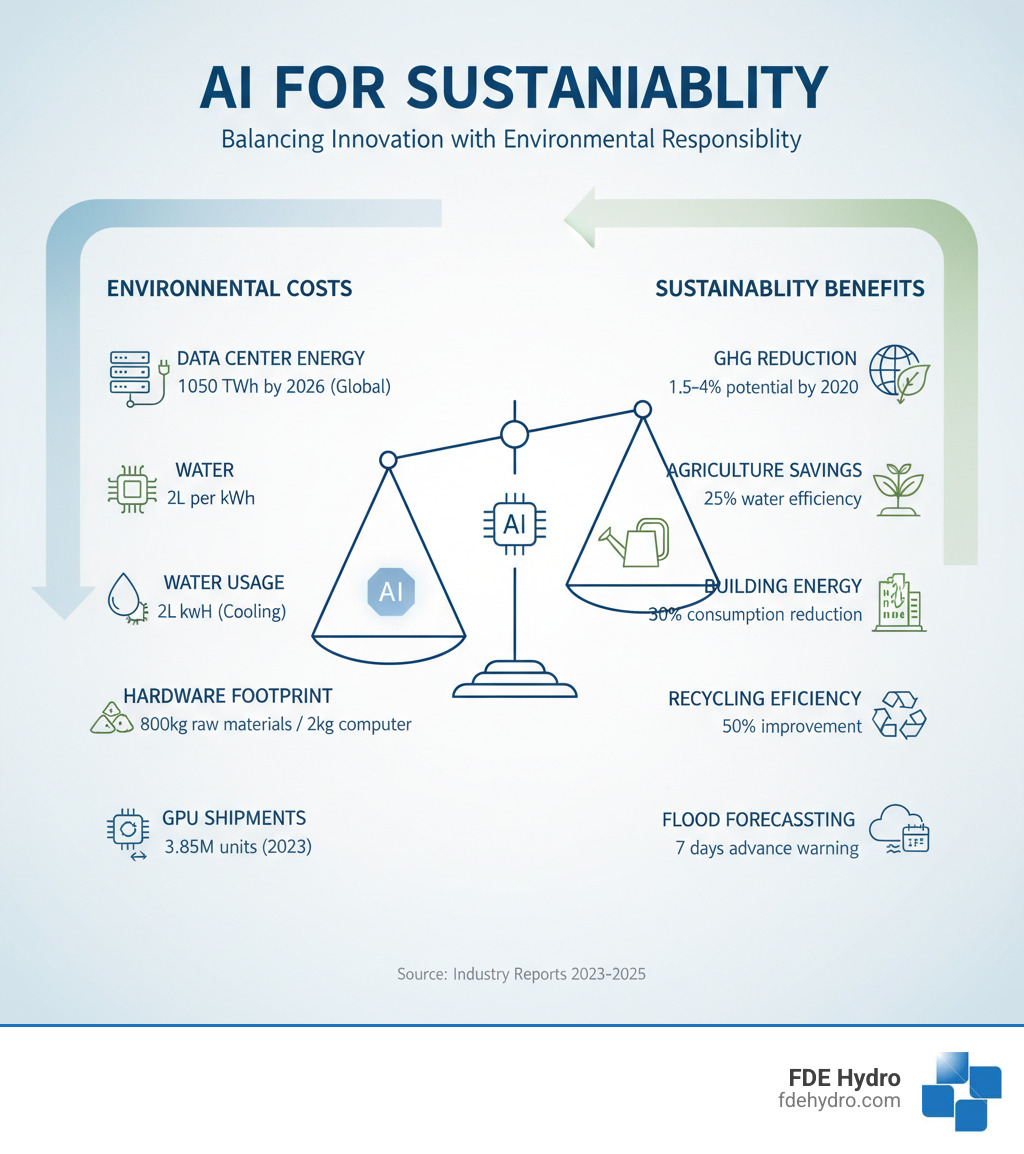
- Energy Consumption: Data centers use about 1% of global electricity; AI queries consume 5-10x more than traditional searches
- Water Usage: Requires approximately 2 liters of water per kilowatt-hour for cooling
- Hardware Impact: A 2 kg computer requires 800 kg of raw materials to manufacture
- Carbon Emissions: Training a single large language model can generate 552 tons of CO2
There’s real urgency here. AI could help reduce global greenhouse gas emissions by 1.5-4% by 2030. But the number of data centers has surged from 500,000 in 2012 to 8 million today, and their electricity consumption is projected to more than double by 2026.
Sustainability, as defined by the 1987 Brundtland Report, means “development that meets the needs of the present without compromising the ability of future generations to meet their own needs.” This definition captures why the AI sustainability question matters so much.
The Cornell AI for Sustainability Initiative (CAISI) represents one of the leading efforts to address this challenge. It connects academia, industry, and nonprofits to develop AI-powered solutions focused on decarbonizing energy and agri-food systems while advancing sustainable materials findy.
This guide explores both sides of AI’s sustainability story. You’ll learn about the environmental costs of AI infrastructure, the powerful ways AI enables sustainability solutions across sectors, and the practical strategies for reducing AI’s footprint through optimization and renewable energy.
I’m Bill French Sr., Founder and CEO of FDE Hydro, a company delivering modular civil construction solutions to the hydropower industry. With decades of experience in heavy civil construction and five years focused on next-generation hydropower technology, I’ve seen how innovation can advance both business goals and environmental stewardship, making AI for sustainability a natural evolution in our industry’s approach to clean energy infrastructure.
The Environmental Cost of the AI Boom
There’s something ironic about AI for sustainability. Here we have this powerful technology that could help solve environmental problems, yet it’s creating some pretty serious environmental challenges of its own. The infrastructure needed to build, train, and run AI models—especially the complex systems behind tools like ChatGPT—requires massive amounts of resources. We’re talking about staggering energy consumption, enormous water usage, and a hidden cost in raw materials and electronic waste that most people never see.
It’s the classic double-edged sword: a tool with incredible potential that comes with its own set of problems we need to solve.
The Soaring Energy and Water Demands of Data Centers
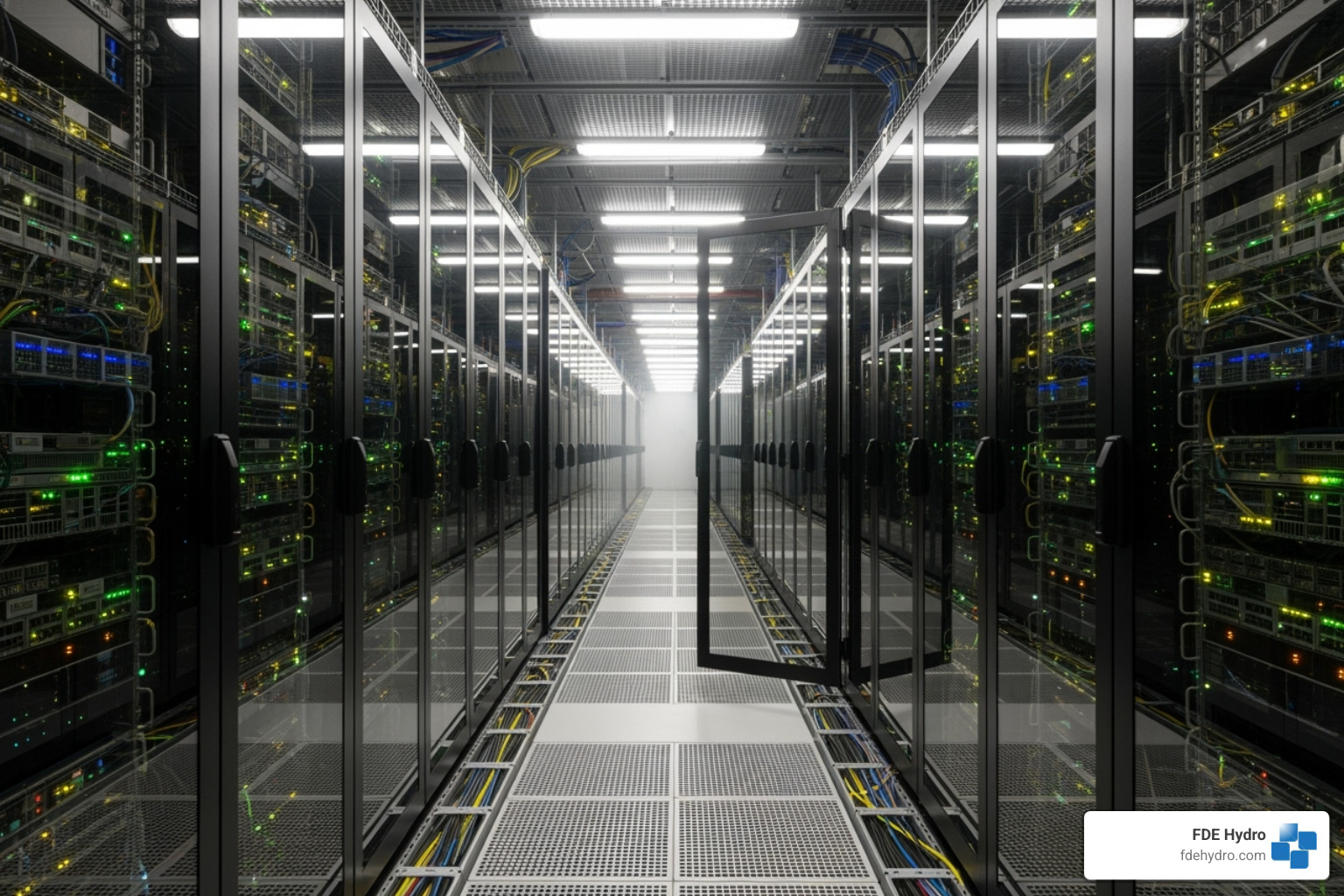
Data centers are where AI’s environmental challenge really hits home. These massive, temperature-controlled buildings house all the computing infrastructure—servers, storage drives, network equipment—that power our digital world. And with AI exploding in popularity, their numbers have grown dramatically. We went from 500,000 data centers in 2012 to 8 million today. That’s not a typo.
This explosive growth means one thing: these facilities are consuming electricity at an incredible rate. In North America alone, the power requirements nearly doubled from 2,688 megawatts at the end of 2022 to 5,341 megawatts by the end of 2023. Globally, data centers consumed 460 terawatt-hours in 2022, and we’re looking at 1,050 terawatt-hours by 2026. To put that in perspective, data centers could soon rank fifth globally in electricity consumption—using more power than most countries.
Generative AI is especially power-hungry. A single ChatGPT query uses about five to ten times the electricity of a regular search. Training one large model like GPT-3 consumed 1,287 megawatt hours of electricity and generated roughly 552 tons of carbon dioxide. That’s enough energy to power 120 average American homes for an entire year—just to train one model.
The hardware demands are equally staggering. GPU shipments to data centers jumped from 2.67 million in 2022 to 3.85 million in 2023. All those powerful chips need cooling, which puts enormous strain on power grids. When the grid can’t keep up, facilities often turn to diesel generators to handle the load, which just adds more greenhouse gas emissions to the problem.
In Ireland, the situation is particularly striking. AI-driven data centers could account for nearly 35 percent of the country’s total energy use by 2026. That’s simply not sustainable if we keep powering these facilities the same way we do today. The IEA report on electricity demand lays out these challenges in detail.
But it’s not just about electricity. Data centers are incredibly thirsty, too. All those powerful machines generate tremendous heat, and cooling them requires vast amounts of water. For every kilowatt-hour of energy a data center uses, it needs roughly two liters of water for cooling. When you add it all up, AI-related infrastructure globally may soon consume six times more water than the entire country of Denmark.
This matters even more when you consider that a quarter of humanity already lacks access to clean water and sanitation. The environmental footprint of generative AI extends far beyond electricity—it touches our most precious resources.
From Mines to Landfills: The Hidden Lifecycle Costs
The environmental story of AI doesn’t start when you flip the switch on a data center. It begins much earlier, deep in mines where workers extract rare earth elements and other raw materials. And it doesn’t end when a server stops working—it continues in landfills where electronic waste piles up.
Manufacturing computer hardware, especially the specialized chips AI systems need, is shockingly resource-intensive. Building a 2 kg computer requires 800 kg of raw materials. Let that sink in—you need 400 times more materials than the finished product weighs. Many of these materials are rare earth elements, and extracting them can devastate local environments and create social problems in mining communities.
The supply chain for AI hardware spans the globe, with manufacturing and transportation adding significant energy use and emissions at every step. And here’s where things get worse: AI technology evolves so rapidly that hardware becomes obsolete quickly. This creates a mounting e-waste crisis that we’re only beginning to understand.
These discarded electronics aren’t just trash—they contain hazardous substances like mercury and lead. If not properly handled, they pose serious risks to human health and the environment. The UNCTAD report on electronics paints a sobering picture of just how much electronic waste we’re generating globally.
We need to think more carefully about the full picture. As MIT research on AI’s sustainability implications points out, we must systematically understand what new AI developments really cost us. We need to weigh the perceived benefits of generative AI against its complete environmental and societal costs—from the mines to the data centers to the landfills.
Before we deploy AI for sustainability solutions at massive scale, we need to make sure the net effect is genuinely positive. That means being honest about the entire lifecycle impact and working to reduce it at every stage. The good news? We’re becoming more aware of these challenges, and awareness is the first step toward finding real solutions.
Using AI for Sustainability: Applications and Case Studies
Now we get to the exciting part. Yes, AI infrastructure has environmental costs—but the technology itself holds remarkable promise for tackling some of our planet’s biggest sustainability challenges. When we deploy AI for sustainability thoughtfully, it becomes a powerful ally in our fight against climate change and resource depletion.
The numbers tell a compelling story. Research suggests that AI for sustainability applications could reduce global greenhouse gas emissions by 1.5-4% by 2030. That might not sound like much at first, but when you’re talking about global emissions, even a few percentage points represent millions of tons of carbon dioxide kept out of our atmosphere.
The key is applying AI where it can make the biggest difference: monitoring our environment in real-time, optimizing how we use resources, and helping us make smarter decisions about energy, food, water, and waste. Let’s look at how this plays out across different sectors.
Revolutionizing Energy and Utilities
The energy sector is undergoing its biggest change in a century, and AI is accelerating that change in ways we couldn’t have imagined even a decade ago.
Think about the complexity of managing a modern power grid. You’ve got thousands of power sources—some steady and predictable, others like wind and solar that fluctuate with the weather. You’ve got millions of consumers whose demand changes by the hour. And you need to balance it all in real-time, because electricity can’t be stored easily at scale (well, except through technologies like pumped storage hydropower, but more on that in a moment).
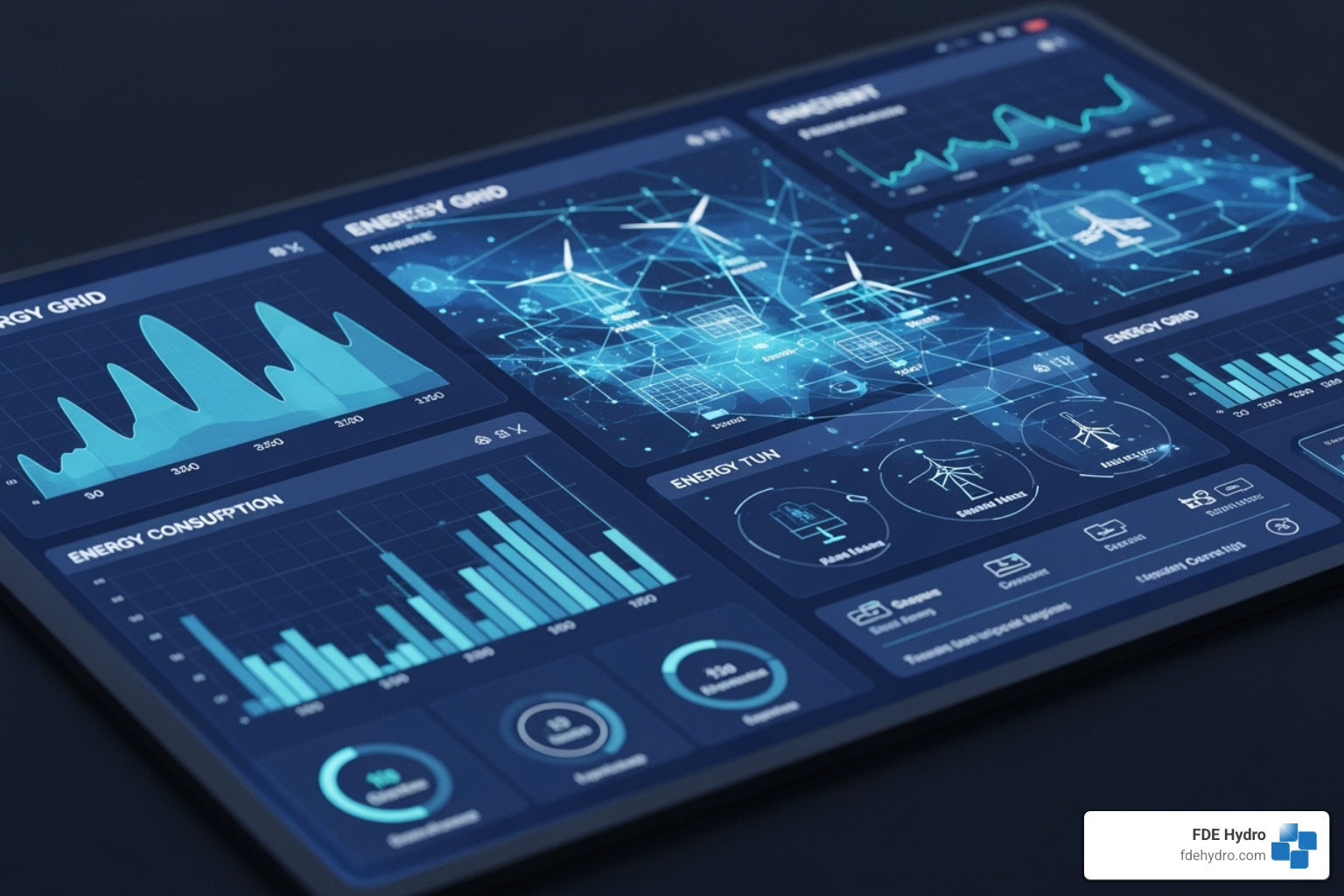
AI algorithms excel at this kind of complex optimization. They analyze real-time data from across the grid to predict energy demand and supply shifts, allowing smart grids to distribute power more effectively. This is particularly vital for integrating intermittent renewable energy sources like solar and wind. When AI can forecast renewable energy generation with precision, grid operators can balance supply and demand without resorting to fossil fuel backup power.
At FDE Hydro, we see how critical stable, dispatchable power is in this evolving landscape. Hydropower, especially pumped storage, acts as a natural partner for AI-driven grid optimization. While AI manages the complex dance of variable renewables, hydropower provides the flexibility and reliability the grid needs. Our modular hydropower solutions are designed to integrate seamlessly into these smart energy systems. You can learn more about how hydropower is the guardian of the grid and the potential of pumped storage hydropower to support these efforts.
Beyond the grid itself, AI is changing how individual buildings and industrial facilities use energy. Smart energy management systems learn usage patterns and automatically adjust HVAC, lighting, and other energy-intensive operations to minimize waste. Some systems have achieved an average 30% reduction in building energy consumption. The U.S. Department of Energy recognized the critical role that innovative hydropower technologies play in this sustainable energy future, endorsing FDE Hydro’s technology in their Hydropower Vision Report. Read more about how the U.S. Department of Energy Hydropower Vision Report endorses FDE Technology.
Water utilities are also benefiting from AI’s analytical power. Advanced systems can identify anomalies in water distribution networks, detecting leaks that would otherwise go unnoticed for months or years. Some implementations have achieved a 40% reduction in water leakage and helped agricultural users decrease water consumption by 25%. When water scarcity affects billions of people, these improvements matter enormously.
Cultivating a Greener Future with AI in Agriculture
Agriculture faces an enormous challenge: feeding a growing global population while reducing its environmental footprint. Currently, farming accounts for about 70% of global freshwater use and contributes significantly to greenhouse gas emissions through fertilizer use and land-use changes.
This is where precision farming powered by AI offers genuinely transformative solutions. Instead of treating an entire field the same way, AI analyzes data from drones, IoT sensors, and satellite imagery to understand the specific needs of different areas within a single field. The soil might be drier here, the nutrient levels different there, pest pressure higher in another spot.
AI algorithms can determine precisely how much water, fertilizer, and pesticide each area needs—and just as importantly, when it needs it. The results are impressive. Some precision farming platforms have achieved up to 25% reductions in water usage and 30% reductions in chemical runoff, all while boosting crop yields by 20%. Less waste, fewer chemicals entering waterways, more food produced. That’s a win across the board.
The environmental benefits extend beyond individual farms. AI helps optimize entire food supply chains, from farm to fork, reducing spoilage and waste at every step. Research on AI to improve the food and agriculture sector demonstrates the technology’s broad applicability across the industry.
For retailers, AI platforms can predict inventory needs more accurately, leading to 20% reductions in food waste. Restaurants using AI demand forecasting have decreased surplus food by 15%. When you consider that roughly one-third of all food produced globally is wasted, these improvements represent significant progress toward AI for sustainability goals.
Optimizing Waste Management and the Circular Economy
Let’s be honest: we’ve created a waste problem. Globally, we generate over 2 billion tons of municipal solid waste annually, and much of it ends up in landfills or polluting our environment. Traditional recycling processes struggle with efficiency and contamination, making it economically challenging to recycle many materials.
AI-powered automated sorting systems are changing this equation dramatically. Using computer vision and machine learning, these systems can identify and separate different types of materials with unprecedented speed and accuracy. They can distinguish between different grades of plastic, identify contaminated materials, and sort at speeds no human workforce could match.
Some advanced sorting systems have improved recycling efficiency by 50%. That means less contamination, more materials actually getting recycled instead of landfilled, and better economics for recycling operations. When recycling becomes more profitable, more of it happens—it’s that simple.
But AI’s role in waste reduction goes beyond just sorting what we’ve already thrown away. Throughout the supply chain, AI helps companies reduce waste before it happens. By accurately forecasting demand, optimizing logistics, and identifying inefficiencies, AI moves us toward a more circular economy where resources stay in use as long as possible.
Enhancing Environmental Monitoring and Climate Prediction
Perhaps the most direct application of AI for sustainability is helping us understand what’s actually happening to our planet. Climate change and environmental degradation are complex, global phenomena that generate enormous amounts of data—more than any human team could possibly analyze manually.
AI excels at processing this flood of information. Algorithms can analyze satellite imagery to track deforestation rates in near real-time, monitoring vast forest areas that would be impossible to survey on the ground. They can identify illegal sand dredging operations that damage marine ecosystems, as demonstrated by UNEP’s Marine Sand Watch. They can even detect when oil and gas facilities vent methane, a greenhouse gas over 80 times more potent than carbon dioxide in the short term.
For climate prediction, AI models are pushing the boundaries of what’s possible. Traditional weather and climate models require massive computational resources and still struggle with certain types of predictions. AI approaches can forecast weather patterns and extreme events with greater accuracy and longer lead times.
Google’s Flood Forecasting project can predict riverine floods up to seven days in advance, providing crucial early warnings to vulnerable communities in over 100 countries. Seven days might not sound like much, but it’s enough time to evacuate, move livestock, and prepare emergency supplies—potentially saving thousands of lives. You can learn more about this initiative at Google’s Flood Forecasting project.
AI is also making breakthroughs in wildfire detection. New satellite systems are being developed that can track wildfires globally with high-resolution imagery updated every 20 minutes, enabling faster response times that could prevent small fires from becoming disasters.
Cities are using AI to tackle extreme heat by analyzing satellite and aerial imagery to identify neighborhoods most vulnerable to heat islands—areas where concrete and asphalt create dangerously high temperatures. Armed with this information, urban planners can target cooling interventions like tree planting and reflective surfaces where they’re needed most.
The applications keep expanding. AI can analyze flight data and weather patterns to help airlines avoid creating contrails—those white streaks behind planes that, it turns out, contribute significantly to climate warming. It can monitor biodiversity changes, track wildlife populations, and identify ecosystems under stress before they collapse.
What ties all these applications together is AI’s ability to find patterns in complexity, to make sense of vast datasets, and to provide actionable insights that help us protect our planet. The technology isn’t perfect, and it comes with environmental costs of its own. But when deployed thoughtfully, AI for sustainability gives us powerful tools to address challenges that once seemed impossible.
As we accept the power of AI for sustainability, it’s equally crucial to address the technology’s own environmental footprint. We can’t solve environmental problems by creating new ones. The goal is to develop “Green AI”—AI systems that are inherently more efficient and powered by sustainable infrastructure. This requires a multi-pronged approach, focusing on optimizing the AI models themselves, designing more efficient hardware and data centers, and ensuring these facilities are powered by renewable energy.
| Feature |
Benefits of AI for Sustainability |
Risks & Environmental Costs |
| Energy Systems |
Optimizes smart grids, integrates renewables, and reduces building energy consumption by up to 30%. |
Data centers consume ~1% of global electricity (projected to double by 2026), with AI queries using 5-10x more energy than standard searches. |
| Water Resources |
Reduces water usage in agriculture by up to 25% and detects leaks in utility networks. |
Data centers require ~2 liters of water per kWh for cooling, straining local water supplies. |
| Climate & Environment |
Improves climate prediction, tracks deforestation and emissions, and improves disaster warnings. |
Training a single large AI model can generate over 552 tons of CO2 emissions. |
| Resource Management |
Improves recycling efficiency by up to 50% and enables precision agriculture to reduce chemical runoff. |
Manufacturing hardware is resource-intensive (800 kg of raw materials for a 2 kg computer) and contributes to a growing e-waste problem. |
by Bill French Sr. | Dec 24, 2025 | Energy Resource Articles
Why Renewable Energy Construction Matters Now More Than Ever
Renewable energy construction is the specialized process of designing and building infrastructure that generates power from clean sources like solar, wind, and water. This rapidly expanding sector is changing the global energy landscape by replacing fossil fuel facilities with cleaner alternatives, employing millions, and driving technological innovation in large-scale infrastructure.
Key facts about renewable energy construction:
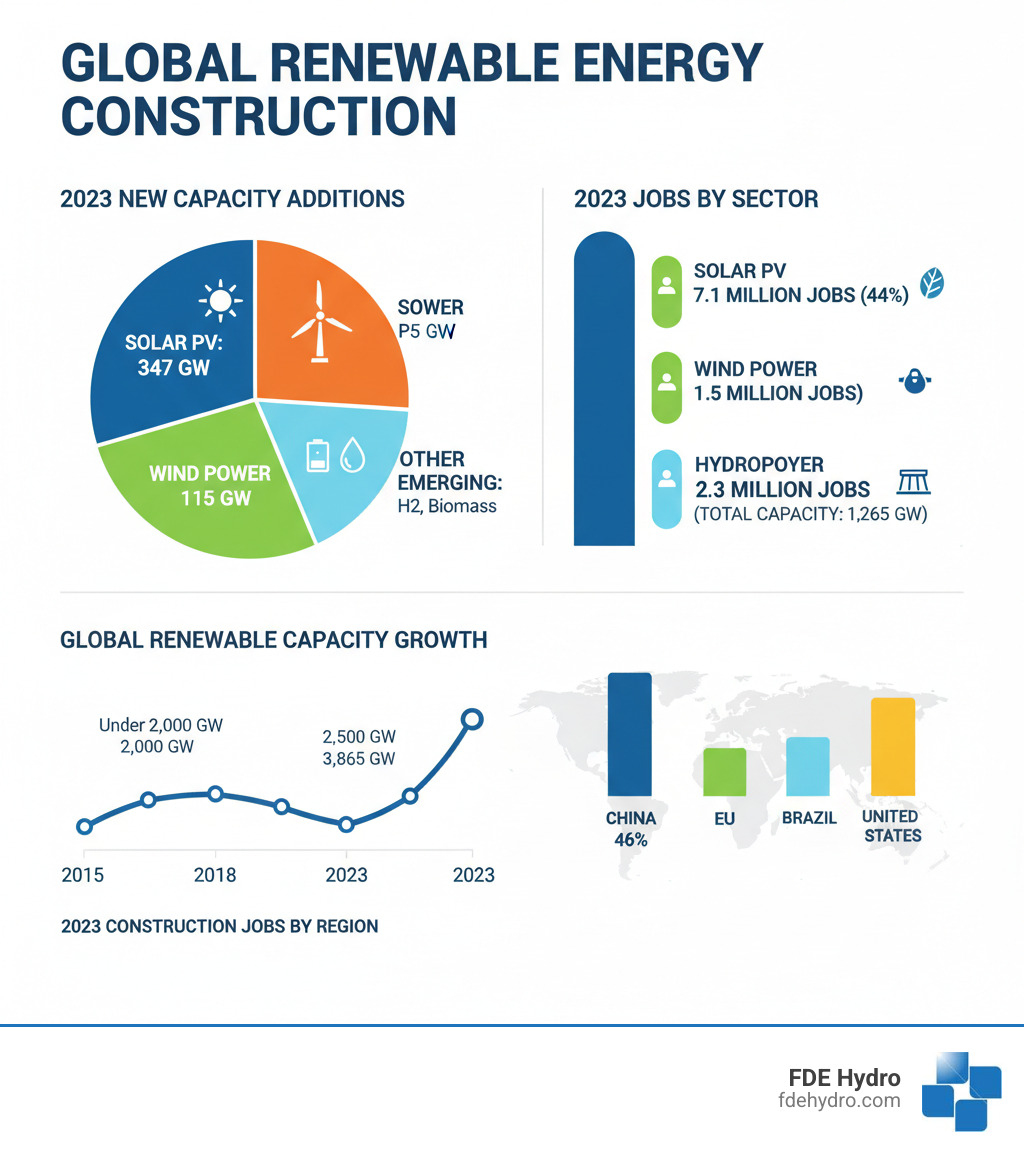
- Scale of Growth: 473 gigawatts (GW) of new renewable capacity were installed globally in 2023, with solar PV leading at 347 GW.
- Employment Impact: The sector employed 16.2 million people worldwide in 2023, with solar PV accounting for 7.1 million jobs.
- Major Project Types: Solar farms, wind parks, hydroelectric facilities, battery storage, and green hydrogen plants.
- Top Challenges: Supply chain constraints, skilled labor shortages, permitting delays, and grid integration.
- Cost Trends: Technology costs continue to fall while demand accelerates, making projects more economically viable.
The global shift to renewables is reshaping the construction sector. A convergence of climate goals, government incentives, and falling technology costs has created an unprecedented building boom in clean energy infrastructure. While the sector faces challenges like supply chain strains and labor shortages, the momentum is undeniable, with global investment in clean technology manufacturing reaching $235 billion in 2023.
I’m Bill French Sr., Founder and CEO of FDE Hydro. We’ve pioneered modular construction solutions for the hydropower industry, including our patented French Dam technology. With five decades of experience in major civil construction, I’ve seen how innovation can dramatically reduce costs and timelines in renewable energy construction.
Find more about renewable energy construction:
The Driving Forces Behind the Green Building Boom
An unprecedented surge in renewable energy construction is fundamentally changing how we power our lives. This green building boom is driven by several converging forces.
The urgency to reduce carbon emissions has moved from policy discussions to concrete action on construction sites worldwide. Governments are backing this with financial incentives that have transformed the economic equation for renewable projects. In the United States, federal tax credits can cover up to 30% of adoption costs, while similar government policies in Europe and Brazil are creating favorable investment conditions.
It’s not just governments pushing this forward. Corporate ESG goals have become a powerful driver, as major companies build onsite solar, invest in wind farms, and partner on community projects to meet carbon neutrality targets. This is good for the planet and for business, as customers, investors, and employees increasingly demand sustainability.
Energy security is another key motivator. Countries are realizing the strategic advantage of domestic renewable resources like wind, sun, and water, which offer resilience and independence from the geopolitical complications of imported fossil fuels. Building out clean energy infrastructure means building national resilience.
Perhaps most compellingly, the economics have fundamentally shifted. Falling technology costs have made renewable energy construction financially smart. With no ongoing fuel costs, the global market for clean energy technologies is projected to nearly triple to over $2 trillion by 2035. Finally, strong public demand for sustainability translates into the political will and corporate action needed to reshape our energy landscape.
At FDE Hydro, we see these forces driving innovation in sustainable power generation, particularly in building and modernizing hydropower facilities faster and more cost-effectively than ever before.
A Spectrum of Projects: What’s Being Built?
Renewable energy construction encompasses a diverse ecosystem of projects, each designed to harness nature’s power in unique ways. From vast solar fields to towering wind turbines, this sector is changing our landscapes.
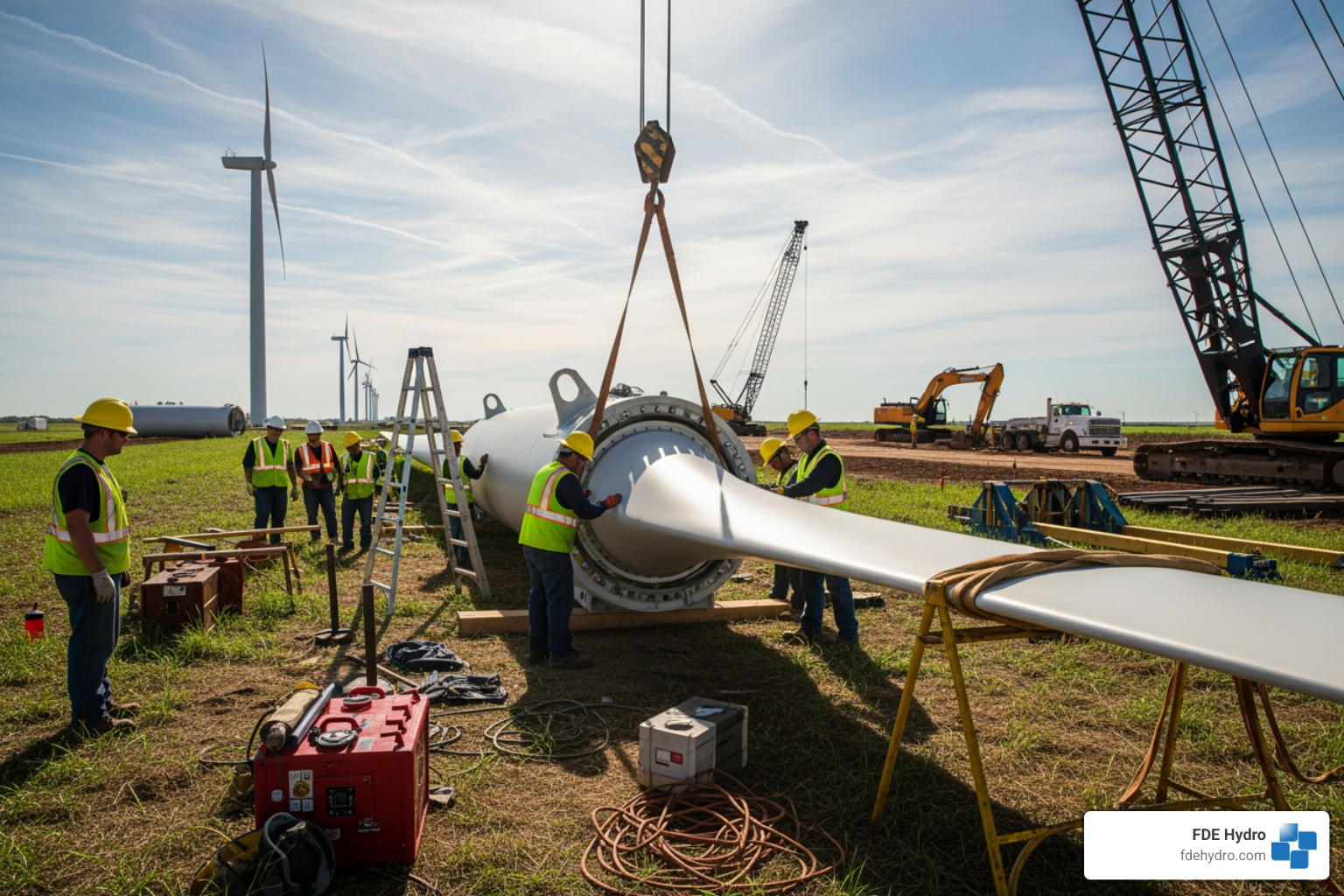
This section details the major types of renewable energy construction projects changing our energy landscape.
Solar Power Plant Construction
Solar is the fastest-growing segment in renewable energy construction, with a record 347 GW of solar photovoltaic capacity added globally in 2023. Utility-scale solar farms can cover thousands of acres, requiring extensive site preparation and complex electrical work for grid interconnection. In 2023, the U.S. installed 24.8 GW, Europe added 54.3 GW, and Brazil installed 11.9 GW. Other projects include community solar, which allows multiple customers to share a local installation, and agrivoltaics, an innovative approach where liftd solar panels allow farming to continue beneath them. Even buildings are becoming power generators, with building-integrated solar systems capable of fulfilling up to 83% of a structure’s energy needs, contributing to efficient Sustainable Power Generation.
Wind Farm Construction
Wind energy construction presents impressive logistical challenges, such as transporting massive turbine blades. Onshore wind farms require massive foundations and tall towers; in 2023, the US installed 6.3 GW and Brazil added nearly 5 GW. Offshore wind projects are even more complex, using stronger winds in harsh marine environments with specialized underwater foundations and subsea cabling. Globally, 115 GW of wind power capacity were added in 2023, driven by technology like improved blade designs. We’re also seeing innovation in building-integrated wind systems as part of comprehensive Energy 101 solutions.
Hydropower Construction and Modernization
Water is one of our oldest and most reliable renewable sources, and it’s where FDE Hydro’s expertise shines. While new dam construction continues in regions like Brazil, much of the opportunity in North America and Europe lies in hydropower retrofitting. Modernizing aging facilities with new turbines and controls can dramatically boost efficiency and extend their operational life. This work involves upgrading powerhouses, dams, spillways, and gates. Learn more about Hydropower Retrofitting.
Pumped storage hydropower is also crucial, acting as a giant grid battery by storing energy to be released during peak demand. This technology is vital for integrating intermittent renewables like solar and wind. More about Pumped Storage Hydropower.
Our patented French Dam technology revolutionizes these projects. This modular precast concrete system, utilizing Modular Construction Techniques, significantly reduces costs and timelines, making Hydroelectric Dam Construction faster and more sustainable.
Emerging Renewable Energy Construction Projects
The sector constantly evolves with new technologies:
- Battery Energy Storage Systems (BESS) are critical for grid stability, storing excess renewable energy for later use.
- Green hydrogen facilities use renewable electricity to split water, creating a clean fuel for heavy industry and transportation.
- Biomass power plants convert organic waste into electricity, requiring specialized material handling equipment.
- Geothermal energy extraction taps into the earth’s heat, providing reliable baseload power through deep well drilling and power plant construction.
These emerging areas highlight an important truth: The Biggest Untapped Solution to Climate Change is in the Water, and in the ingenuity of our engineers and construction crews.
Navigating the Complexities of Renewable Energy Construction
Building a clean energy future presents real challenges, but these same challenges are driving innovation and creating significant economic opportunities. This section explores the primary problems, required expertise, and economic impacts of clean energy infrastructure development.
Overcoming Key Construction Challenges
Renewable energy projects come with a unique set of complications:
- Supply chain constraints: Global demand for components like solar panels and turbine blades leads to delays and cost increases, sometimes forcing project cancellations.
- Permitting and regulatory maze: Navigating local, state, and federal permits is often lengthy and unpredictable, creating uncertainty for developers.
- Grid integration issues: Connecting new projects to the grid often requires significant and costly upgrades to existing transmission infrastructure, leading to delays.
- Skilled labor shortage: The sector’s rapid growth has led to a shortage of qualified engineers, project managers, and electricians. Robust workforce development programs are critical.
- Managing project costs: The upfront capital investment for construction is substantial. Innovative methods, like FDE Hydro’s modular approach, are key to reducing costs and ensuring financial returns, as detailed in Financing Long-Term Hydropower Requires Mitigating Risks Prior to ROI.
Essential Expertise for Project Success
Success in renewable energy construction depends on assembling a team with the right expertise:
- Preconstruction services: Meticulous planning and risk mitigation are crucial to avoid costly surprises during the build phase.
- Engineering and design: Deep knowledge of renewable technologies is paramount to optimize for efficiency, longevity, and site-specific conditions.
- Project management: Professionals must execute complex projects on time and budget while coordinating diverse labor forces and subcontractors.
- Quality control: Every component must meet stringent standards to ensure safety and long-term performance.
- Site safety protocols: A world-class safety culture is non-negotiable to protect workers in inherently dangerous environments.
- Risk management: Proactively addressing environmental, financial, and operational risks keeps projects on track. At FDE Hydro, we bring this comprehensive expertise to every project, as outlined in our Energy Infrastructure Development: Complete Guide.
The Economic and Social Impact of Renewable Energy Construction
The growth of renewable energy construction is changing economies and communities in profound ways.
Renewable energy employed 16.2 million people globally in 2023, with solar PV leading at 7.1 million jobs and wind at 1.5 million. These are often well-paying, future-proof careers. The EU has 1.8 million jobs in the sector, the U.S. has over 1 million, and Brazil boasts 1.6 million. You can explore these figures in IRENA’s annual review on jobs.
Beyond direct employment, projects inject capital into local economies by using local suppliers and crews. Many developers also prioritize community benefit agreements, providing direct economic advantages to local residents. The ultimate goal is a just energy transition that ensures this massive shift provides inclusive and equitable socio-economic benefits for everyone.
The Future is Now: Innovation and Sustainability in Construction
The renewable energy construction sector is evolving rapidly, driven by essential innovations that are making projects smarter, faster, and more sustainable.

This section looks at the technologies and trends shaping the next generation of green infrastructure.
Technological Innovations Shaping the Sector
Technology is changing how we build massive infrastructure projects. AI Energy Management helps optimize project schedules and manage grid operations. Drones are now a common tool for site surveying and inspection, improving efficiency and safety. Robotics are increasingly used for repetitive assembly tasks, while advanced materials like more efficient solar cells and lighter turbine blades are expanding what’s possible.
Modular construction is a key innovation. At FDE Hydro, we’ve pioneered this with our Modular Powerhouses and patented French Dam technology. We fabricate components in a factory and assemble them on-site, which slashes construction time, minimizes environmental disruption, and ensures superior quality. This proves Why Precast Cost Less while delivering better results. These Modular Construction Techniques are revolutionizing hydropower.
Building a Sustainable Future, Sustainably
If we’re building clean energy infrastructure, we must build it cleanly. This means integrating sustainability into every phase of construction.
We use green building practices, such as choosing sustainable materials and energy-efficient equipment. We practice responsible land stewardship; for example, agrivoltaics projects allow farming to continue under solar panels. We also conduct lifecycle assessments and accept circular economy principles by designing for durability, reuse, and recycling to minimize waste. Reducing our construction carbon footprint by optimizing logistics and using cleaner fuels is an ongoing priority. This holistic approach to Sustainable Infrastructure Development is critical for meeting global climate goals, as noted in the IEA’s report on energy tech perspectives.
Outlook and Future Trends
Looking ahead, several key trends are reshaping renewable energy construction:
- Hybrid projects combining solar with battery storage are becoming standard to provide reliable power.
- Grid modernization with smart technologies is essential to handle the complexity of modern energy systems.
- Decentralized energy resources like microgrids are gaining traction, making the energy system more resilient.
- Repowering aging assets, such as retrofitting older wind and hydropower facilities with modern technology, can dramatically increase output. This is a core part of our work in Hydropower Retrofitting.
These trends point to a future that is not just cleaner, but smarter and more resilient. At FDE Hydro, we are proud to help shape the Future of Hydropower and the broader renewable energy landscape.
Frequently Asked Questions about Renewable Energy Construction
Here are answers to some of the most common questions we receive about renewable energy construction, based on our decades of experience in the field.
What are the biggest challenges in renewable energy construction today?
The biggest challenges in renewable energy construction are supply chain disruptions, a shortage of skilled labor, lengthy and complex permitting processes, and delays in connecting projects to the electrical grid. These factors can increase costs and extend project timelines, making streamlined construction processes like those we explore in Financing Long-Term Hydropower Requires Mitigating Risks Prior to ROI even more critical.
How does technology make renewable construction more efficient?
Technology is making renewable energy construction faster, safer, and more cost-effective. For example, our modular precast components, like those used in our patented French Dam technology, are fabricated in controlled factory settings for higher quality and then rapidly assembled on-site. This approach, detailed in Why Precast Cost Less, significantly reduces construction timelines. Other key technologies include AI-driven project management and drones for site surveying, all of which boost efficiency and are central to innovations like our Modular Powerhouses.
Which renewable energy sector creates the most construction jobs?
Solar photovoltaics (PV) is the largest job creator in renewable energy construction, accounting for 7.1 million jobs globally in 2023. The sector provides employment across the entire value chain, from manufacturing to installation and maintenance. Wind energy is also a major employer with 1.5 million jobs, while hydropower offers stable, long-term employment, particularly in the modernization projects that FDE Hydro specializes in.
Conclusion: Building the Power of Tomorrow
Renewable energy construction is not just another industry—it’s the foundation upon which we’re building a livable future. Every solar farm, wind turbine, and modernized hydropower facility represents hope, progress, and a commitment to a better world.
Despite challenges like supply chain tangles and complex regulations, the momentum is undeniable. In 2023, the world added 473 gigawatts of new renewable capacity, and the sector now employs 16.2 million people globally, boosting economies from North America to Brazil and Europe.
At FDE Hydro, we’ve seen how innovation can revolutionize this field. Our patented French Dam technology and modular precast solutions prove we can build critical Hydropower infrastructure faster, more cost-effectively, and with less environmental disruption than traditional methods.
Looking forward, the opportunities are breathtaking. Hybrid projects, grid modernization, and the repowering of aging assets are becoming standard. The convergence of AI, modular techniques, and advanced materials is making previously impossible projects routine.
Beyond the technology and economics, we are building resilience and a system that works with nature. The challenges are real, but when innovation meets determination, remarkable things happen. We are not just building the power of tomorrow; we are constructing opportunity, security, and a sustainable future, one project at a time.
by Bill French Sr. | Dec 23, 2025 | Case Studies
Why Project Costs Spiral Out of Control
Project cost reduction is the strategic process of decreasing expenses while maintaining or improving quality and scope. Here’s how to achieve it:
Top Strategies for Project Cost Reduction:
- Improve estimation accuracy – Involve your team and use historical data
- Establish clear baselines – Set firm scope, schedule, and cost benchmarks
- Control scope creep – Implement formal change control processes
- Optimize resources – Use capacity planning and strategic allocation
- Manage risks proactively – Identify and mitigate potential cost drivers early
- Leverage technology – Automate processes and improve collaboration
- Adopt modern methods – Use prefabrication and lean principles
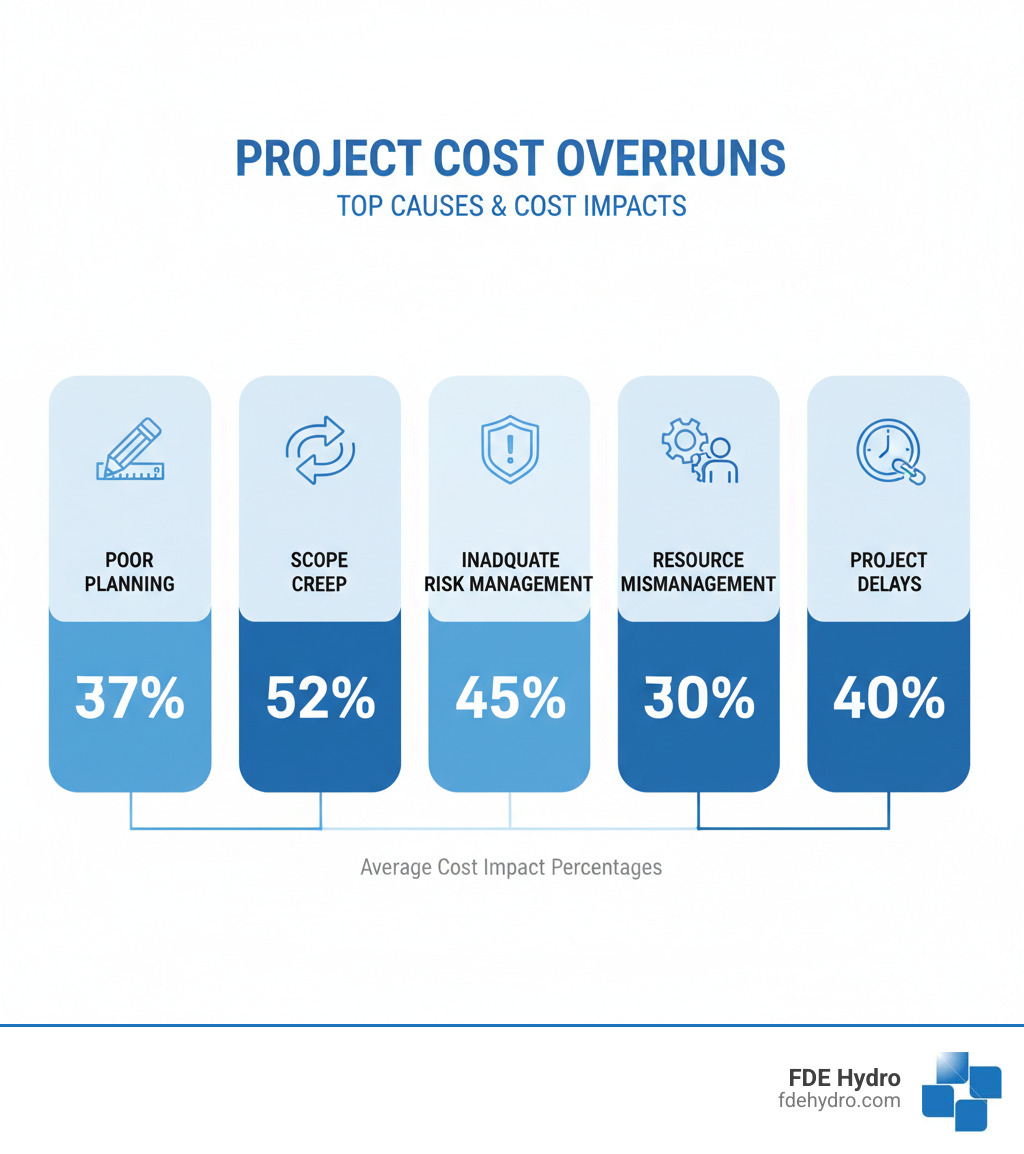
The harsh reality is that most projects exceed their budgets. Research shows 37% of projects fail due to poor planning, and 52% experience scope creep. These are fundamental breakdowns in cost control that can derail even the most promising infrastructure projects.
The construction industry faces unique pressures, where materials and equipment can represent over 70% of expenses. Combined with project delays and resource mismanagement, you have a perfect storm for budget overruns.
But cost reduction isn’t about cutting corners; it’s about working smarter. Cost-cutting is a reactive, temporary fix (like freezing hiring) that often damages a project’s long-term health. Cost reduction is a strategic, permanent improvement (like streamlining workflows) that strengthens it.
For large-scale infrastructure like hydropower systems, the stakes are even higher. Traditional methods involve enormous capital and long timelines, where every delay multiplies costs. As Bill French Sr., founder of FDE Hydro, I’ve spent five decades in heavy civil construction managing over $200M in annual projects. I’ve seen how strategic cost reduction separates success from failure. Through innovative approaches like modular precast construction, we’ve helped clients dramatically reduce capital costs and project timelines in hydropower development.
Project cost reduction terms to learn:
Master the Blueprint: Planning and Estimation for Cost Control
Effective project cost reduction begins long before work starts. It’s rooted in thorough planning—the blueprint phase that sets a project up for financial success.
1. Sharpen Your Estimates for Ultimate Accuracy in Project Cost Reduction
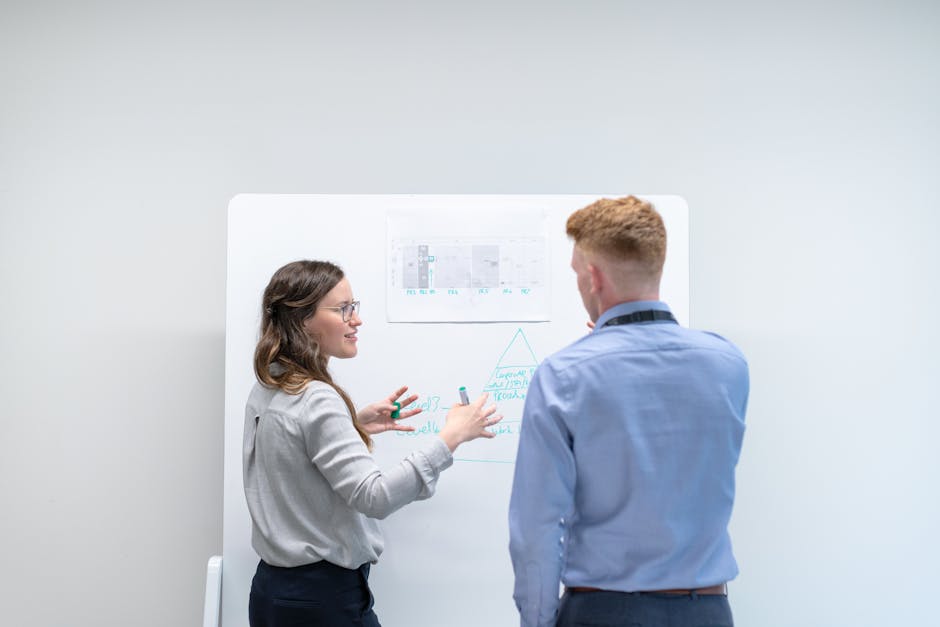
Inaccurate estimates are a primary cause of cost overruns. The problem often starts when estimates are made by people disconnected from the actual work. As Bryan Berthot notes, accuracy improves dramatically when the people doing the work are involved in estimating it.
By using bottom-up estimating, you tap into your team’s direct knowledge of task complexity and potential roadblocks. This not only improves accuracy but also increases commitment to the estimates. Supplement this expertise with historical data analysis. Reviewing past projects provides a data-driven reality check on how long tasks took and what resources they required, turning guesswork into informed projection.
Every estimate must be supported by a Basis of Estimate (BoE). This document is your financial roadmap, defining the scope, assumptions, exclusions, and methodology behind your numbers. For large-scale work like Hydropower Project Costs, a detailed BoE is essential for preventing budget-busting surprises.
2. Establish a Rock-Solid Project Baseline
With accurate estimates in hand, lock them into a project baseline. This fixed reference point is your project’s North Star, telling you if you’re on course. Without it, you’re navigating blind.
A complete baseline includes three parts: the scope baseline (the “what”), the schedule baseline (the “when”), and the cost baseline (the “how much”). Together, these components are essential for performance measurement.
Baselines are powerful tools for project cost reduction because they provide an early warning system. Regularly comparing actuals against the baseline highlights deviations immediately, letting you fix small problems before they escalate. For complex projects, we use a detailed Cost Breakdown Structure (CBS) to map every expense, from materials to labor. This granular approach, tied to our Means and Methods, ensures every step aligns with our financial goals.
A baseline isn’t rigid; it’s a standard for evaluating changes. When a change is proposed, you can assess its true cost impact against the baseline, enabling strategic decisions instead of reactive scrambling.
Execute with Precision: Managing Scope, Resources, and Risks
Even the best plan can fail during execution. To keep your project cost reduction efforts on track, you must master three critical elements: managing scope, optimizing resources, and preparing for risks.
3. Tame Scope Creep Before It Bites Your Budget
Scope creep—the slow addition of unplanned features or tasks—is a notorious budget killer. Research shows that 52% of projects experience scope creep, leading to cost overruns from added labor, materials, and timeline extensions.
The antidote is twofold. First, create crystal-clear documentation of all requirements and deliverables, agreed upon by all stakeholders. This becomes your project’s constitution. Second, implement a formal change control process. Every requested change, no matter how small, must be reviewed for its impact on cost, schedule, resources, and risk. This allows stakeholders to make informed decisions.
This process isn’t about saying “no”; it’s about being transparent about the true cost of changes. Regular stakeholder communication reinforces this discipline, turning clients into partners in protecting the project’s scope.
4. Optimize Your Resource Allocation
Poor resource management is a silent budget drain. Over-staffing, unnecessary overtime, and misuse of skilled personnel all lead to inefficiency and cost overruns.
Smart resource allocation starts with capacity planning to gain visibility into team availability and skills. From there, focus on:
- Strategic allocation: Match the right person to the right task. Don’t assign senior experts to routine work or junior members to critical challenges.
- Cross-training: Build a versatile team to reduce dependence on expensive external specialists and eliminate bottlenecks.
- Strategic outsourcing: Use external experts for limited, specialized tasks when it’s more cost-effective than hiring or training in-house.
Finally, engaged employees are more productive. As Business News Daily notes, valued employees work more efficiently and make fewer mistakes, directly supporting project cost reduction. For complex projects like Energy Infrastructure Development, optimizing resources is critical to finishing on time and within budget.

Leverage Modern Methods for Maximum Project Cost Reduction
To achieve maximum project cost reduction, you must move beyond traditional methods. This means anticipating problems, using technology, and rethinking the fundamentals of how projects are built.
5. Proactively Manage Risks to Avoid Costly Surprises
Projects rarely go exactly as planned. Proactive risk management prepares you for the inevitable surprises, turning potential crises into manageable issues. As the PMBOK Guide on risk management suggests, the goal is to decrease the impact of negative events and increase the impact of positive ones.
The process is straightforward:
- Identify risks early and continuously throughout the project.
- Analyze their likelihood and potential cost impact to prioritize your focus.
- Develop mitigation strategies to reduce the most significant threats, such as lining up backup suppliers or creating contingency plans.
This analysis informs your contingency funds—calculated buffers designed to absorb the cost of unforeseen events. For complex hydropower projects, this proactive approach is essential for financial viability, as discussed in Financing and Mitigating Risks.
6. Accept Technology and Automation
Construction has been slow to digitize, but technology is a powerful lever for project cost reduction. Modern project management software provides real-time visibility into budget utilization, allowing for immediate course correction.
Automation can free up teams from repetitive work; studies show up to 45% of tasks could be automated, and accounting automation alone can yield a 200% ROI in the first year. Additionally, optimizing software licenses can save up to 30%, according to Gartner.
Building Information Modeling (BIM) is transformative, creating a digital twin of the project to identify clashes and errors before construction begins. At FDE Hydro, technology is central to our modular approach. We use digital design and advanced manufacturing to produce high-precision components off-site, which is Why Precast Costs Less. This method reduces errors, cuts labor costs, and minimizes waste.

7. Innovate with Modern Construction and Manufacturing Techniques for Project Cost Reduction
The most dramatic project cost reduction comes from innovating how we build. Traditional methods are prone to expensive rework, which can consume 5% of a total project’s cost.
Lean manufacturing principles, which focus on eliminating waste, can cut costs by 5% to 20% in the first year. But the biggest game-changer is modular construction and prefabrication. By manufacturing components in a controlled factory setting and assembling them on-site, you gain immense benefits:
- Reduced on-site labor and weather delays.
- Improved quality control.
- Dramatically shorter construction times, saving on overhead.
- Lower material waste.
- Predictable costs locked in early.
Studies show this approach can save 10-20% on infrastructure projects. Our patented “French Dam” technology at FDE Hydro is a prime example. We manufacture modular precast components and use Rapid Installment of Module Precast Civil Infrastructure to build and retrofit dams with significantly lower costs and faster timelines. These Modular Construction Techniques deliver proven, real-world value.
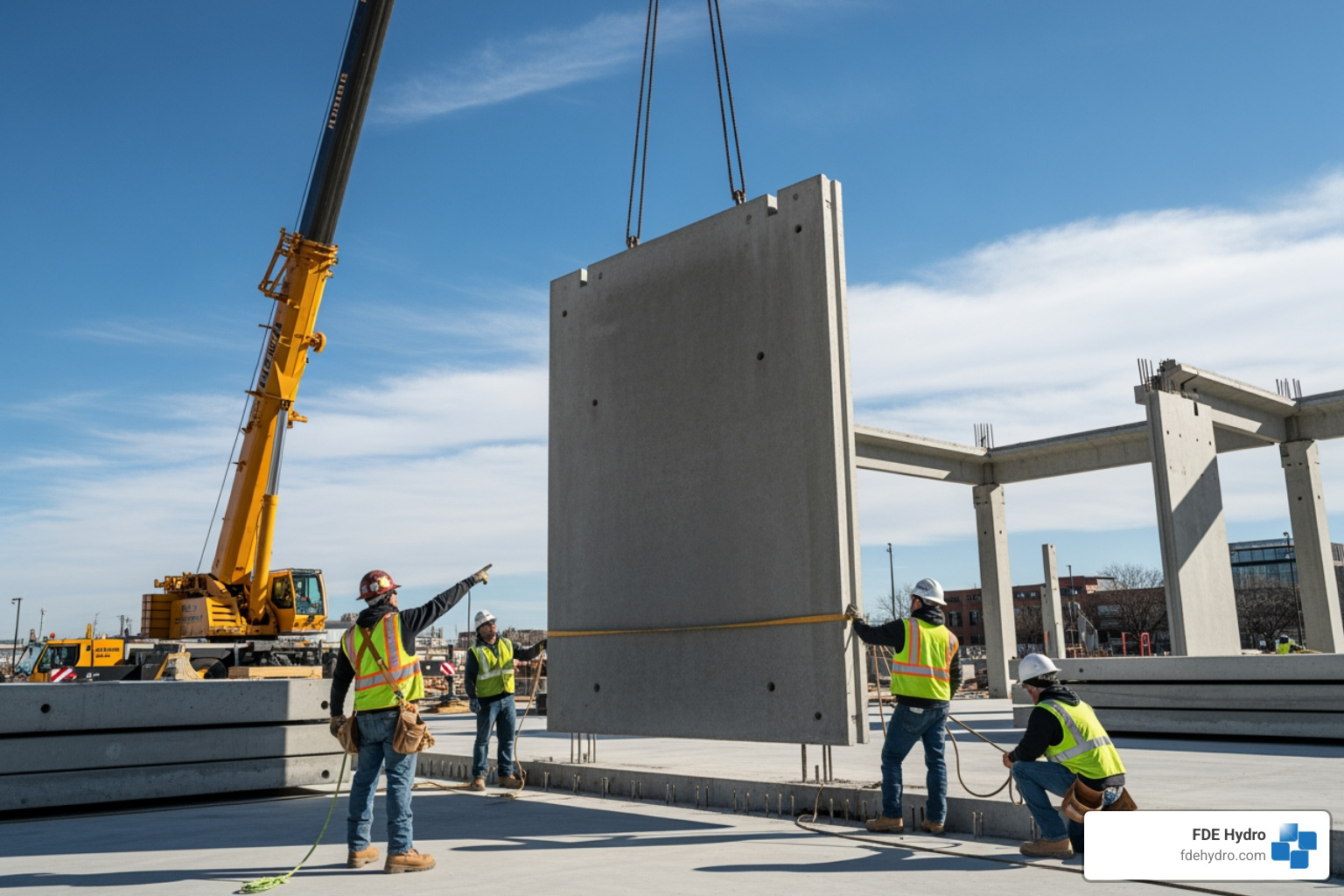
Frequently Asked Questions about Project Cost Reduction
What’s the difference between cost reduction and cost-cutting?
This is a critical distinction. Cost-cutting is a reactive, short-term measure, like freezing hiring or delaying maintenance. It provides immediate savings but often harms quality, morale, and long-term project health.
Project cost reduction, on the other hand, is a strategic, long-term approach focused on improving efficiency. It involves optimizing processes, eliminating waste, and improving productivity to achieve permanent decreases in cost without sacrificing quality. One is a desperate fix; the other is a sustainable improvement.
What are the most common causes of project cost overruns?
The most frequent causes of budget overruns are preventable through better management. They include:
- Poor estimates: Unrealistic initial budgets set the project up for failure. As noted earlier, 37% of projects fail due to poor planning.
- Scope creep: Uncontrolled changes and additions cause costs to balloon. This affects 52% of projects.
- Ineffective risk management: Failing to plan for potential problems leaves the budget exposed to costly surprises.
- Project delays: Every delay extends costs for labor, equipment, and overhead.
- Poor resource management: Inefficient use of personnel and equipment leads to waste and higher expenses.
Addressing these issues is the foundation of effective project cost reduction.
How can technology help in reducing project costs?
Technology is a powerful tool for project cost reduction by improving efficiency and providing critical insights. Key benefits include:
- Improved Accuracy: Tools like Building Information Modeling (BIM) and analytics software lead to more precise estimates and help detect design clashes before they become expensive on-site rework.
- Automation: Automating repetitive tasks (up to 45% of them, according to research) frees up human resources for higher-value work. Accounting automation alone can deliver a 200% ROI in the first year.
- Real-Time Data: Modern software provides instant visibility into project spending, allowing managers to address budget deviations immediately instead of waiting for month-end reports.
- Better Collaboration: Cloud-based platforms ensure all stakeholders are working from the same, up-to-date information, which reduces miscommunication and errors.
At FDE Hydro, technology is integral to our modular approach and is a key reason Why Precast Costs Less. By leveraging digital design and advanced manufacturing, we achieve sustainable cost savings.
Conclusion: Building a Culture of Cost-Consciousness
The strategies outlined in this guide provide a powerful toolkit for changing your project’s financial health. However, true project cost reduction is more than a checklist; it’s a culture of continuous improvement that should permeate every decision in your organization.
When everyone on your team understands how their choices impact the bottom line, they become partners in efficiency. This mindset isn’t about being cheap; it’s about being smart, resourceful, and deliberate with every dollar spent.
At FDE Hydro, this philosophy is at our core. Our innovative modular precast concrete technology, the “French Dam,” was born from a relentless focus on building better, faster, and more cost-effectively. By prefabricating components and rapidly assembling them on-site, we have dramatically cut construction timelines and costs for clients across North America, Brazil, and Europe. The result is predictable costs, faster delivery, and exceptional quality—turning cost-consciousness into a competitive advantage.
So where do you go from here? Start by implementing one strategy tomorrow. Formalize your change control process, invest in better software, or refine your estimation process with your team. Small, consistent steps compound into significant savings over time.
Every dollar saved through strategic project cost reduction is a dollar that can be reinvested in innovation, people, and growth. It strengthens your competitive position and builds a more resilient future.
Ready to see how modern construction techniques can transform your next hydropower project? Learn more about our innovative dam solutions and find how we’re helping clients build smarter, faster, and more economically.

