Don’t Just Replace It, Change It Out: A Practical Guide
Why Component Changeout Matters for Your Hydropower Assets
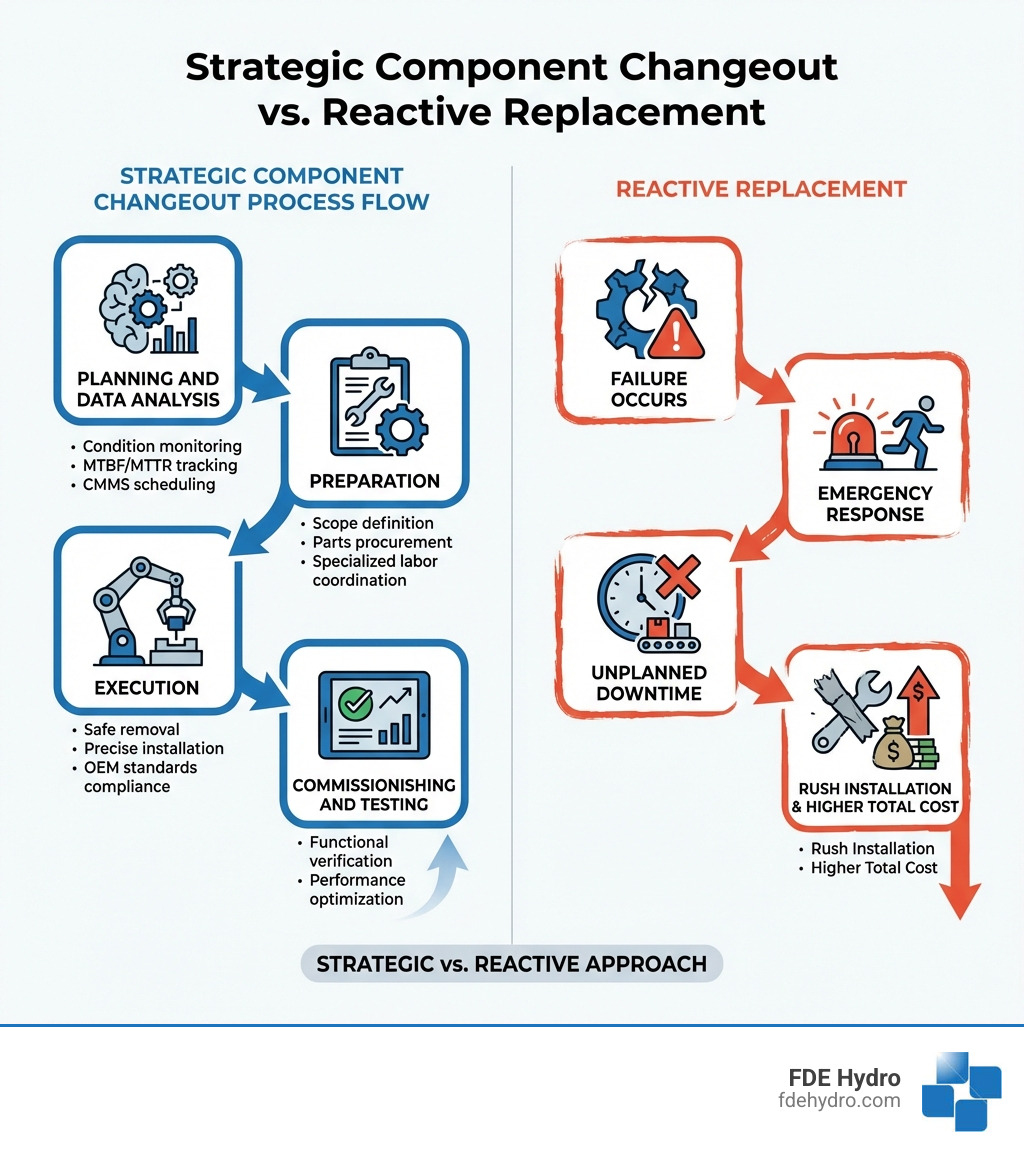
Component changeout is the planned removal and replacement of a critical part or assembly within a larger system, typically performed as part of a proactive maintenance strategy rather than in response to failure.
Key aspects of component changeout:
- Strategic vs. Reactive: Unlike emergency repairs, component changeout is scheduled based on lifecycle data, condition monitoring, or predictive maintenance analysis
- System-Level Focus: It often involves removing an entire assembly (like a turbine runner or generator rotor) rather than fixing individual failed parts
- Specialized Process: Requires detailed planning, specialized labor, proper tooling, and adherence to OEM specifications
- Cost Impact: Run-to-failure strategies cost three to ten times more than planned maintenance programs that include strategic component changeouts
- Common Applications: Aircraft engines, industrial equipment, network hardware, and hydropower infrastructure all rely on component changeout strategies
In industries like hydropower, component changeout represents the difference between controlled, optimized operations and costly emergency shutdowns. When you proactively change out a worn turbine runner or generator component during a planned outage, you avoid catastrophic failures that can shut down production for weeks or months. This approach maximizes equipment availability, extends asset life, and dramatically reduces total maintenance costs.
I’m Bill French Sr., and over five decades of managing heavy civil construction and infrastructure projects, I’ve learned that strategic component changeout planning is essential for keeping critical systems operational and avoiding the crushing costs of reactive maintenance. My work with the Department of Energy’s Hydro Power Vision Task Force reinforced how modern hydropower facilities must adopt data-driven component management to remain competitive.
Basic component changeout terms:
The “Why”: From Reactive Repair to Strategic Replacement
At FDE Hydro, we understand that maintaining critical infrastructure like hydroelectric dams and their intricate components is not just about keeping the lights on; it’s about optimizing performance, ensuring safety, and maximizing return on investment. The journey from reactive repair to strategic component changeout is a fundamental shift that underpins modern asset management.

The True Cost of Failure
Imagine a critical turbine component in one of our North American or Brazilian hydropower facilities fails unexpectedly. The immediate impact is obvious: unplanned downtime, a halt in power generation, and a direct hit to revenue. But the costs don’t stop there. Emergency repairs often involve expedited shipping for parts, overtime pay for technicians, and a scramble for specialized equipment, all escalating expenses dramatically. Research shows that run-to-failure strategies can cost three to ten times as much as planned maintenance programs. This staggering difference highlights the economic folly of waiting for something to break.
Beyond the financial toll, there are significant safety hazards associated with sudden failures. A malfunctioning component can lead to cascading failures, damaging other parts of the system and potentially endangering personnel. For us, operating hydroelectric dams across diverse regions like the US, Canada, Brazil, and Europe, safety is paramount. Furthermore, the reputation of reliability, hard-earned by consistent energy supply, can be tarnished by frequent unplanned outages. This is why we advocate for a proactive approach to component changeout.
Choosing Your Maintenance Strategy
The decision of how to maintain your assets is a strategic one, with various approaches offering different trade-offs in cost, complexity, and effectiveness. Let’s explore the common maintenance strategies:
- Run-to-Failure (RTF): This is the “fix it when it breaks” approach. While seemingly low-cost upfront (no planning, no preventative work), it’s the most expensive in the long run. We’ve seen how this strategy leads to unpredictable downtime, higher repair costs, and potential safety risks. It’s often chosen by operators who convince themselves they’re extracting maximum value by keeping equipment running until it completely gives out, but the reality is far from it.
- Planned Maintenance (PM): Also known as preventive maintenance, this involves scheduling maintenance tasks and component changeouts based on time intervals or usage (e.g., every 5,000 hours or annually). It’s a significant improvement over RTF, reducing unexpected failures and allowing for better resource allocation. However, it can sometimes lead to replacing components that still have useful life remaining.
- Condition Monitoring (CM): This strategy involves continuously or intermittently monitoring specific component attributes against performance thresholds. Techniques like Spectrometric Oil Analysis Programs (SOAP)—analyzing oil samples for minute metallic elements to detect wear—or vibration analysis for rotating machinery are excellent examples. When a parameter deviates, it signals a developing fault, allowing for a planned component changeout before complete failure.
- Predictive Maintenance (PdM): The most advanced strategy, PdM uses sensor data, advanced analytics, and machine learning to predict when a component is likely to fail. By analyzing patterns in vibration, temperature, pressure, or other parameters, we can forecast degradation and schedule component changeouts at the optimal time, maximizing component lifespan and minimizing downtime. This is where modern CMMS systems truly shine.
| Strategy | Cost (Upfront) | Complexity | Effectiveness (Downtime Reduction) |
|---|---|---|---|
| Run-to-Failure | Low | Low | Very Low (High Unplanned Downtime) |
| Planned | Medium | Medium | Medium (Reduced Unplanned Downtime) |
| Condition-Based | High | High | High (Significant Unplanned Downtime Reduction) |
| Predictive | Very High | Very High | Very High (Optimized Unplanned Downtime Reduction) |
Risks and Mitigation in a Component Changeout
Even with the best planning, component changeouts aren’t without their challenges. We always consider potential risks and implement robust mitigation strategies.
- Installation Errors: Mistakes during installation can shorten a component’s life, affect performance, and even lead to premature failure. This is particularly true for heavy components like those in hydropower turbines, which require precise tolerances and alignment. Our mitigation includes utilizing highly skilled, specialized labor and adhering strictly to OEM standards and detailed procedures, like those outlined in comprehensive guides for complex machinery.
- Specialized Labor Shortage: Finding the right personnel, trained for specialized tasks, can be a challenge. For major component changeouts in our facilities, we might leverage external services from specialized engineering firms, for example, who provide engineers, supervisors, and technicians. This ensures that the work is performed by certified professionals with global knowledge center access for troubleshooting.
- Supply Chain Delays: Sourcing critical spare parts, especially for specialized hydropower equipment, can lead to delays. We mitigate this through strategic spare parts management, robust supplier relationships, and maintaining optimal inventory levels.
- Safety Protocols: Working with heavy machinery and high-voltage systems carries inherent risks. Our strict safety protocols, including Lockout-Tagout (LOTO) procedures, comprehensive safety briefings, and mandatory Personal Protective Equipment (PPE), are non-negotiable. Specialized crews are trained for efficient and safe operations, reducing exposure to unfamiliar and complicated change-outs.
Thorough planning, detailed work instructions, and rigorous training are our cornerstones for successful component changeouts, ensuring we minimize risks and maximize efficiency.
The Strategic Playbook: Planning and Data-Driven Decisions
Effective component changeout is not an ad-hoc event; it’s a carefully planned operation driven by data and supported by advanced technology. For FDE Hydro, this strategic playbook helps us manage our assets across North America, Brazil, and Europe, ensuring optimal performance and longevity.
Managing Spares and On-Shelf Deterioration
A critical aspect of any component changeout strategy is spare parts management. It’s not enough to simply have spare parts; we need to manage them intelligently, especially those prone to on-shelf deterioration. This refers to parts that degrade over time even when not in use, like certain seals, rubber components, or sensitive electronic parts.
Research highlights the importance of provisioning strategies for such components. Two common strategies for consuming spare parts are:
- Degraded-First (DF): This strategy prioritizes using older, slightly degraded parts first, as long as they still meet performance criteria. The unique insight here is that the DF strategy can lead to the biggest savings compared to random selection, especially when replacement demand is independent of the consumption strategy.
- New-First (NF): This strategy always uses the newest available spare part. While it might seem intuitive, studies show that the NF strategy often results in the highest expected cost among the alternatives because it allows older parts to continue deteriorating on the shelf, potentially becoming unusable or requiring earlier replacement of the equipment they are installed in.
For our hydropower operations, optimizing spare parts management means developing mathematical models to determine optimal order intervals and quantities, taking into account the impact of on-shelf deterioration. This ensures we have the right parts at the right time, minimizing costs and improving the reliability of our critical systems.
Leveraging CMMS for a Strategic Component Changeout
Modern Computerized Maintenance Management Systems (CMMS) are indispensable tools for facilitating and optimizing component changeout schedules. They transform maintenance from a reactive chore into a data-driven science.
At FDE Hydro, we use CMMS to manage numerous aspects of equipment maintenance, providing a centralized platform for all our operational sites. Key functionalities within a CMMS that support effective component tracking and management include:
- Component Tracking: Beyond just knowing a component’s geographical location, our CMMS tracks its performance, lifecycle stage, and Mean Time To Repair (MTTR). This data helps us identify indirect costs like lost production or increased energy consumption due to underperforming components.
- Backlog Management: An active failure-prevention strategy, backlog management uses CMMS to detect component conditions, time-in-service, and equipment performance. This allows our maintenance planners to develop a plan and a set of actions to avoid non-routine maintenance. Effective backlog management is crucial for preventing small issues from escalating into major failures.
- Planned Component Replacement: Our CMMS allows us to schedule component changeouts based on calculated Mean Time Between Failure (MTBF) data. This MTBF, computed from in-service data, provides an average service life for components, enabling us to compare longevity across different manufacturers or overhaul vendors. For example, if we find that certain seals in our turbine runners have an MTBF of X hours, we can schedule their replacement just before that threshold is reached.
- Condition Monitoring Integration: When our CMMS is linked to machine sensors, it provides real-time monitoring of critical parameters like vibration, temperature, or pressure in a generator bearing. A drop in pressure, for instance, alerts managers to potential wear, reduced efficiency, and imminent failure.
- Predictive Maintenance Analytics: Leveraging the power of data, our CMMS uses predictive algorithms to analyze sensor data and forecast component degradation. This allows us to predict when a component changeout will be needed, giving us ample time to prepare spares, consumables, and specialized technical resources.
By centralizing data and automating processes, CMMS helps us move beyond simple scheduling to truly optimize our component changeout strategies, maximizing component life and reducing overall maintenance costs.
The “How-To”: A General Procedure for a Major Component Changeout
Performing a major component changeout in a hydropower facility, whether it’s a turbine runner, a generator stator, or a large control system, demands a systematic approach. While specifics vary by component and manufacturer, we follow a general, rigorous procedure to ensure safety, efficiency, and quality.
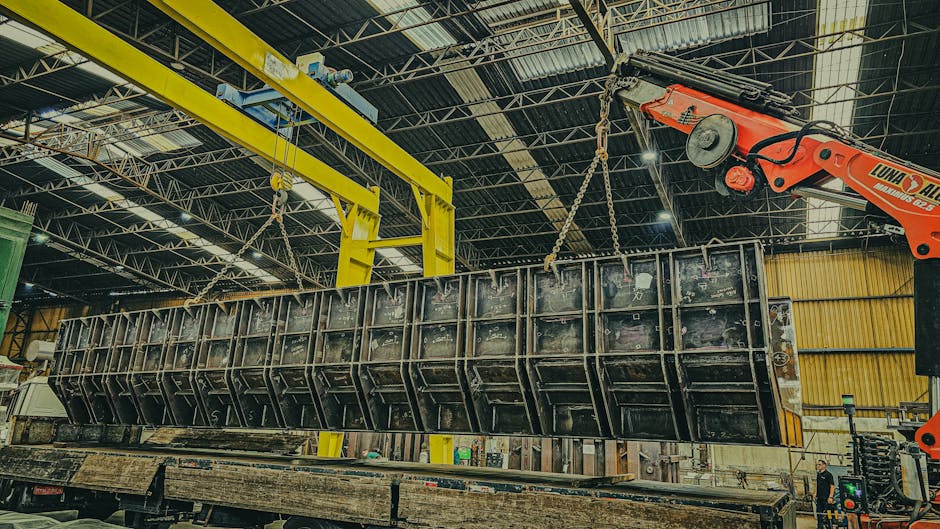
Phase 1: Preparation and Removal
This phase is all about meticulous planning and safe execution.
- Scope of Work Definition: We begin by clearly defining the scope of the component changeout. This includes identifying the exact component, understanding its function, and reviewing all manufacturer’s instructions and technical specifications. For instance, for a turbine runner removal, we’d detail the specific model, its current condition, and the replacement component’s exact specifications.
- Safety Briefing and LOTO: Before any physical work begins, a comprehensive safety briefing is conducted. All personnel involved understand the risks and our strict safety protocols, including Lockout-Tagout (LOTO) procedures. This ensures that the system is de-energized, isolated, and cannot be accidentally restarted during the operation.
- Disconnecting Systems: This involves systematically disconnecting all interfaces to the component. For example, in a generator component changeout, we would disconnect electrical leads, hydraulic lines, cooling systems, and any control linkages. Each disconnection is carefully documented and labeled to ensure correct reconnection. We wrap moisture-proof tape over exposed electrical connector ends to protect them from dirt and moisture, and coil cables neatly, tying them to the assembly being removed.
- Hoisting and Rigging: For heavy components, specialized hoisting and rigging equipment are essential. We carefully inspect hoisting slings for condition and ensure the hoist has sufficient capacity to lift the component safely. As mounting bolts are removed, the component is steadily eased away from its position, preventing damage to surrounding structures.
- Documenting the Process: Throughout the removal, we document every step, including photographs, measurements, and any observed anomalies. This creates a valuable record for future maintenance and helps in troubleshooting.
Phase 2: Installation and Commissioning
Once the old component is removed, the focus shifts to installing the new one and bringing the system back online.
- New Component Inspection: Before installation, the new component undergoes a thorough visual inspection to check for any shipping damage or defects. All part numbers and specifications are verified against our work order.
- Mounting and Alignment: The new component is carefully maneuvered into place using precision hoisting equipment. This is a critical step, especially for large rotating equipment like turbine shafts or generator rotors, where precise alignment is paramount. We adhere to manufacturer-specified torque limits for all clamps and bolts, often using specialized tools to achieve exact tightness. For example, torque specifications for certain heavy-duty industrial components can be as precise as 9.7 in-lbs (1.09 N-m), as seen in other complex hardware installations.
- System Reconnection: All previously disconnected electrical, hydraulic, and control systems are reconnected according to our detailed documentation. We always use new O-ring seals when connecting various lines to prevent leaks.
- Pre-Operation Checks: Before powering up, a series of pre-operation checks are performed. This might include fluid level checks, insulation resistance tests for electrical components, and verifying all safety interlocks are functional.
- Functional Testing and Commissioning: The system is then powered on, and a series of functional tests are conducted to ensure the new component operates correctly and integrates seamlessly with the overall system. This could involve ground run-ups, vibration analysis, and performance validation against design specifications. For example, for a generator, we’d monitor output, temperature, and vibration signatures to ensure optimal performance.
The Value of Specialized Services
For complex and critical component changeouts in hydropower, relying on specialized labor or external services offers significant benefits. These experts bring a depth of knowledge and experience that can be invaluable.
- External Expertise: Companies specializing in industrial maintenance, or even the original equipment manufacturer (OEM), possess specialized skills and tools. They are trained for intricate tasks, ensuring the work is done correctly the first time. The FAA, for example, requires manufacturers to identify and establish mandatory replacement times for certain parts, emphasizing the need for expert adherence to these guidelines. Example of detailed procedures for aircraft engines demonstrates the level of detail and expertise required for such critical changeouts.
- OEM Standards and Warranty Protection: Specialized crews are adept at performing change-outs correctly according to OEM standards, which is crucial for maintaining warranty validity. This also minimizes the need for additional rework, saving time and money.
- Reduced Downtime: With advanced planning tools and critical path planning, specialized services can significantly reduce downtime during major component changeouts. Their efficiency means our hydropower facilities can return to operation faster.
- Risk Transfer: Engaging external experts can also transfer some of the operational and safety risks associated with complex procedures. Their comprehensive insurance and safety protocols provide an added layer of protection.
At FDE Hydro, our innovative modular precast concrete technology is designed to reduce construction costs and time for dams. This forward-thinking approach extends to maintenance, where we recognize that specialized, efficient component changeouts are key to maximizing the lifespan and operational efficiency of our assets.
Advanced Component Management in Complex Systems
Managing components within complex systems like our hydroelectric dams requires a nuanced approach that goes beyond general maintenance. It involves understanding the entire lifecycle of each component and leveraging sophisticated tools to track and optimize its performance.
“Component Maintenance” vs. General Maintenance
In leading maintenance management systems, “component maintenance” is distinct from general, in-situ maintenance. Defining component-specific work refers to work that requires the removal of a component or a part from a top-level asset (like a turbine) or from its immediate parent component in the equipment hierarchy.
Imagine a large generator rotor bearing. General maintenance might involve lubrication or visual inspection while it’s still installed. However, if that bearing requires a complete overhaul, it’s removed from the generator and sent to a specialized maintenance shop. This is component maintenance. This work is completed by technicians in a dedicated shop, not directly on the asset itself. This approach allows for:
- Specialized Shop Work: Components can be routed to specialized shops equipped for detailed repair, calibration, or overhaul.
- Off-site Repair: Critical repairs can happen off-site, potentially by external vendors, minimizing disruption to the main asset.
- Asset Hierarchy Integration: Our CMMS tracks these components through their entire journey, from removal to repair to re-installation, integrating this data within the asset’s overall hierarchy.
This distinction is crucial for managing the complex lifecycle of high-value parts in our hydropower infrastructure across the US, Canada, Brazil, and Europe.
Key CMMS Functionalities for Tracking
Modern CMMS systems offer robust functionalities essential for advanced component management and strategic component changeouts.
- Automated Work Orders and Fault Assignment: When a component needs attention, our CMMS can automatically generate work orders. For instance, if a fault is detected on a component through condition monitoring, the system automates the creation of a component work package. For example, in many advanced systems, when a component is removed because of a logged fault, a copy of the fault is automatically created on the component, a component work package is created, and the fault is assigned to that work package. This streamlines the process and ensures accountability. Component removal due to faults highlights how such systems efficiently manage unexpected issues.
- Serial Number Tracking: Each critical component, such as a turbine blade or a generator coil, is tracked by its unique serial number. This allows us to maintain a detailed history of its performance, repairs, and installations across different assets. This is vital for understanding component longevity and identifying patterns of failure.
- Maintenance History Logs: Our CMMS compiles a comprehensive maintenance history for each component. This log includes every inspection, repair, adjustment, and component changeout, providing an invaluable resource for decision-making regarding future maintenance, spare parts provisioning, and even procurement.
- Lifecycle Cost Analysis: By tracking all costs associated with a component from acquisition to disposal (including maintenance, repairs, and downtime costs), our CMMS enables us to perform lifecycle cost analysis. This helps us make informed decisions about whether to repair, replace, or upgrade components, ultimately optimizing our capital allocation.
These functionalities empower our fleet managers to leverage data and technology effectively, improving component lifespan, reducing maintenance costs, and significantly increasing equipment availability across all our hydropower operations.
Frequently Asked Questions about Component Changeout
What is the biggest mistake to avoid in component replacement?
The most common error we see, and strive to avoid, is adopting a reactive, run-to-failure approach. This is significantly more expensive than planned maintenance, leads to extensive downtime, and poses greater safety risks. As we discussed, run-to-failure can cost three to ten times more than planned maintenance. Strategic planning, driven by data and proactive component changeout schedules, is always more cost-effective and safer in the long run.
How do you decide between repairing a component and performing a full changeout?
The decision between repairing a component and performing a full component changeout is a complex one, requiring a careful cost-benefit analysis. We consider several factors:
- Component Criticality: For highly critical components in our hydroelectric dams (e.g., turbine runners, generator main shafts) whose failure could cause catastrophic damage or extensive downtime, a full changeout is often preferred to ensure maximum reliability, even if a repair is technically feasible.
- Repair Costs vs. Replacement Costs: We compare the estimated cost of repair (labor, parts, specialized tools) against the cost of a new replacement component.
- Mean Time To Repair (MTTR): How long will the repair take? If the MTTR is excessively long, leading to extended downtime, a quicker component changeout might be more economical.
- Mean Time Between Failure (MTBF): Does the repair restore the component to its original MTBF, or will it likely fail again sooner? A full changeout often resets the MTBF, providing greater long-term reliability.
- Warranty and OEM Recommendations: We also consider manufacturer warranties and their recommendations, as some repairs might void warranties or not be supported by the OEM.
For critical components in our hydropower systems, a full component changeout is often the preferred route to ensure the highest level of reliability and operational continuity.
Can a CMMS really predict when a part will fail?
Yes, a CMMS can enable predictive maintenance (PdM) capabilities that are designed to forecast when a part might fail. It does this by integrating with sensor data (e.g., from vibration monitors, temperature sensors, pressure gauges) and applying advanced analytics and algorithms. The CMMS learns patterns of normal operation and identifies deviations that indicate degradation.
Unlike preventive maintenance, which schedules tasks based on fixed intervals, PdM allows us to intervene at the optimal moment – just before a failure occurs, but not so early that useful life is wasted. For instance, our CMMS could analyze the vibration signature of a large motor bearing in a generator. As the bearing begins to degrade, its vibration pattern changes. The CMMS detects these subtle changes, alerts technicians, and advises on the timeframe for intervention, allowing for a planned component changeout before performance drops to an unacceptable level or a catastrophic failure occurs. This capability is a game-changer for optimizing maintenance schedules and extending asset life.
Conclusion
Strategic component changeout is more than just a maintenance task; it’s a strategic process that underpins the reliability, efficiency, and longevity of critical infrastructure, especially in the hydropower industry. By moving away from reactive “fix-it-when-it-breaks” approaches towards proactive, data-driven planning, we can open up significant benefits.
We’ve explored how understanding the true costs of failure, adopting sophisticated maintenance strategies, and intelligently managing spare parts are crucial. Leveraging modern CMMS functionalities for component tracking, backlog management, and predictive analytics empowers us to make informed decisions, optimize schedules, and minimize risks. The meticulous “how-to” procedures, from preparation and removal to installation and commissioning, underscore the importance of specialized labor and adherence to strict safety and quality standards.
For FDE Hydro, this commitment to advanced component changeout strategies aligns perfectly with our mission to develop innovative, modular precast concrete technology for hydroelectric dams. By building more robust and easily maintainable structures, we enable our clients in North America, Brazil, and Europe to benefit from reduced construction costs and time, and also from increased reliability and lower operational costs throughout the asset’s lifecycle. A well-executed component changeout strategy is key to ensuring continuous, sustainable power generation.
To learn more about how our innovative solutions can contribute to the modernization and efficiency of your hydropower assets, we invite you to explore innovative dam solutions.