by Adaptify Support | Feb 3, 2026 | News
The Era of Rethinking Water Infrastructure
Building new dams has been humanity’s answer to water management challenges for over a century, but the landscape is shifting dramatically. Here’s what you need to know about new dam construction today:
Key Facts About Building New Dams:
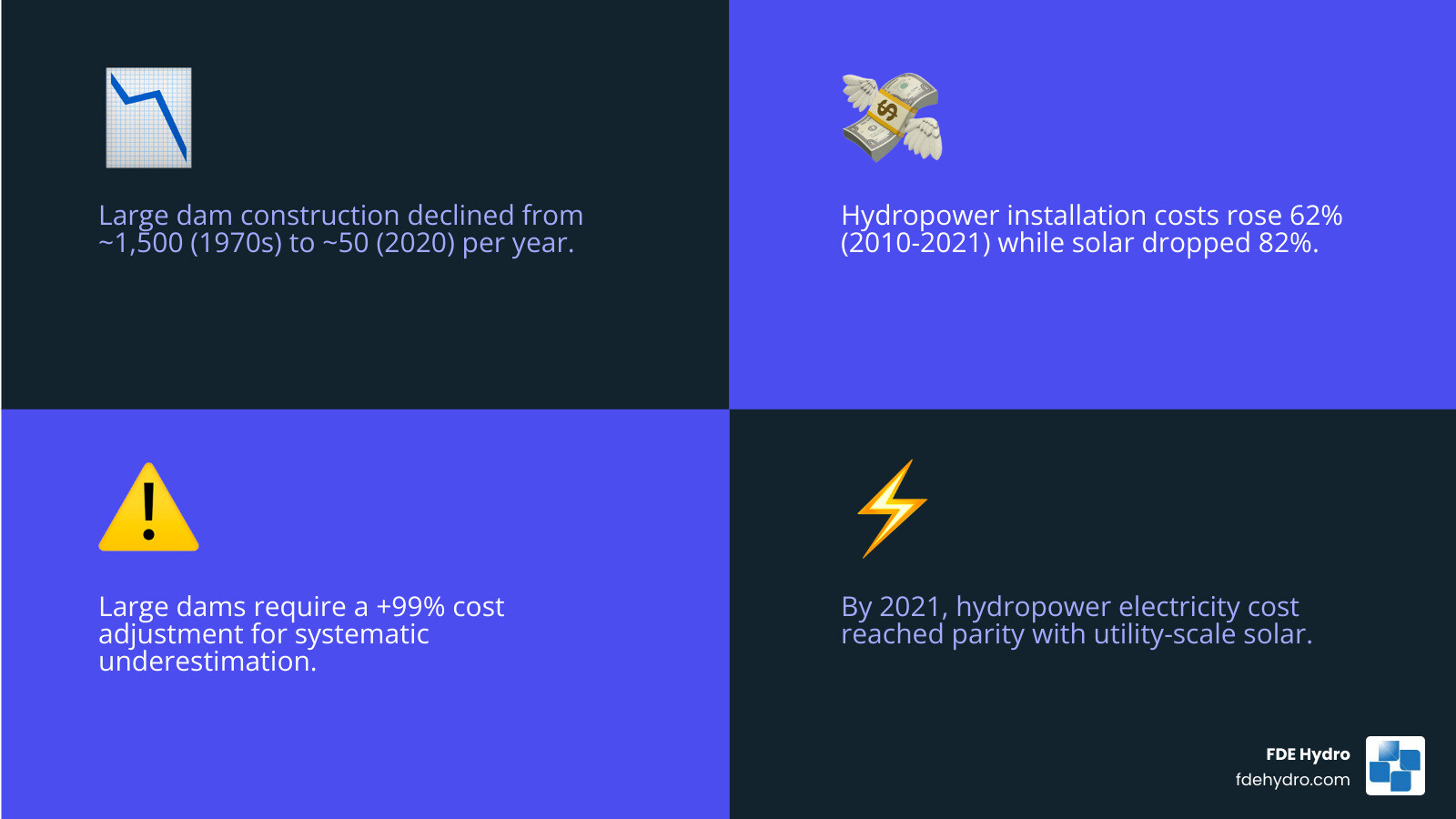
- Construction declined sharply – from ~1,500 large dams built annually in the late 1970s to only ~50 per year by 2020
- Costs have skyrocketed – hydropower installation costs rose 62% between 2010-2021, while solar dropped 82%
- Economic viability questioned – large dams require a +99% cost adjustment to account for systematic underestimation
- Climate uncertainty – droughts and extreme floods threaten dam effectiveness and safety
- Alternatives emerging – closed-loop pumped storage, dam modernization, and distributed renewables offer viable paths forward
When the largest dam removal in U.S. history began on the Klamath River in 2023, it seemed the era of building new dams was over. Yet just a month later, California finalized funding for the Sites Reservoir project—a massive new dam that will be the state’s first major reservoir in half a century. This paradox captures our current moment perfectly.
We’re caught between two realities. On one hand, global projections point to an increased demand for hydropower of 400 GW by 2050 and a need for 460 km³/yr more stored water for irrigation—a 70% increase. On the other hand, the economic case for massive concrete structures is crumbling. By 2021, the cost of electricity from hydropower reached parity with utility-scale solar at 4.8 cents per kilowatt-hour, while onshore wind was already cheaper at 3.3 cents.
The question isn’t whether we need water infrastructure solutions—we clearly do. The question is whether building new dams in the traditional sense is the answer, or whether we should be focusing on smarter alternatives: modernizing existing structures, embracing modular construction methods, and investing in distributed solutions that work with nature rather than against it.
As Bill French Sr., Founder and CEO of FDE Hydro, I’ve spent decades in heavy civil construction and have been directly involved in developing next-generation hydropower solutions, including modular approaches to building new dams that dramatically reduce both cost and construction time. This article examines why the traditional mega-dam playbook no longer works—and what we should be doing instead.
Building new dams terms explained:
The Modern Dilemma: Why Are We Still Considering New Dams?
The debate around building new dams is complex, fueled by pressing global needs for energy and water, alongside the undeniable impacts of climate change. While the heyday of massive dam construction might be behind us, the motivations for considering new projects in regions like North America, Brazil, and Europe remain potent.
Energy Needs in a Carbon-Conscious World
One of the primary drivers for considering building new dams is the demand for renewable energy. Hydropower, as a source of low-carbon electricity, has historically been lauded for its contribution to climate mitigation and adaptation. Globally, projections indicate an increased demand for hydropower of around 400 GW by 2050, representing about 60-64% of the identified potential and a 35% increase compared to today.
Hydropower’s ability to provide baseload power—a constant, reliable supply of electricity—is particularly attractive. This makes it a valuable complement to intermittent renewable sources like solar and wind power, which fluctuate with weather conditions. Pumped storage technology, which uses excess power to pump water uphill to a reservoir, then releases it to generate electricity when demand is high, is often highlighted as a flexible solution. We believe that integrating such technologies with existing infrastructure can significantly improve grid stability.
However, we must also acknowledge the critical discussions surrounding hydropower’s environmental impact. While no fuels are burned during operation, the construction of large dams involves significant carbon footprints from concrete. Furthermore, reservoirs themselves can emit greenhouse gases, primarily methane from decaying vegetation, which critics argue can rival fossil fuel emissions. These complexities mean we need to evaluate hydropower’s role with open eyes, ensuring that our pursuit of clean energy doesn’t inadvertently create new environmental burdens. You can learn more about the role of hydroelectricity in our energy future at our Hydroelectric Dams page.
Water Security in an Unpredictable Climate
Beyond energy, the most compelling argument for building new dams often revolves around water management challenges. Climate change is ushering in an era of unpredictable weather patterns, characterized by more intense rainfall events and prolonged, severe droughts. This variability creates a dual challenge: how to store water during periods of abundance and how to ensure supply during scarcity.
In regions like the American Southwest, the reliance on dams for agriculture and urban populations is immense. Upmanu Lall, director of the Columbia Water Center in New York, notes that “The West would look very different if these [dams] were not there.” Similarly, in California, the Sites Reservoir project aims to capture water from increased winter rains, bolstering the state’s resilience against future droughts. This proposed reservoir is designed to store water for various uses, including agriculture, urban utilities, and even environmental flows, despite being a new major construction in an era of dam removals.
For us, the focus is on developing robust Water Infrastructure Solutions that address these needs without repeating past mistakes. This means considering how new storage capacity can be integrated efficiently and sustainably, especially in areas like Brazil and Europe, where water resources are also under increasing pressure.
The Staggering Gamble of Building New Dams
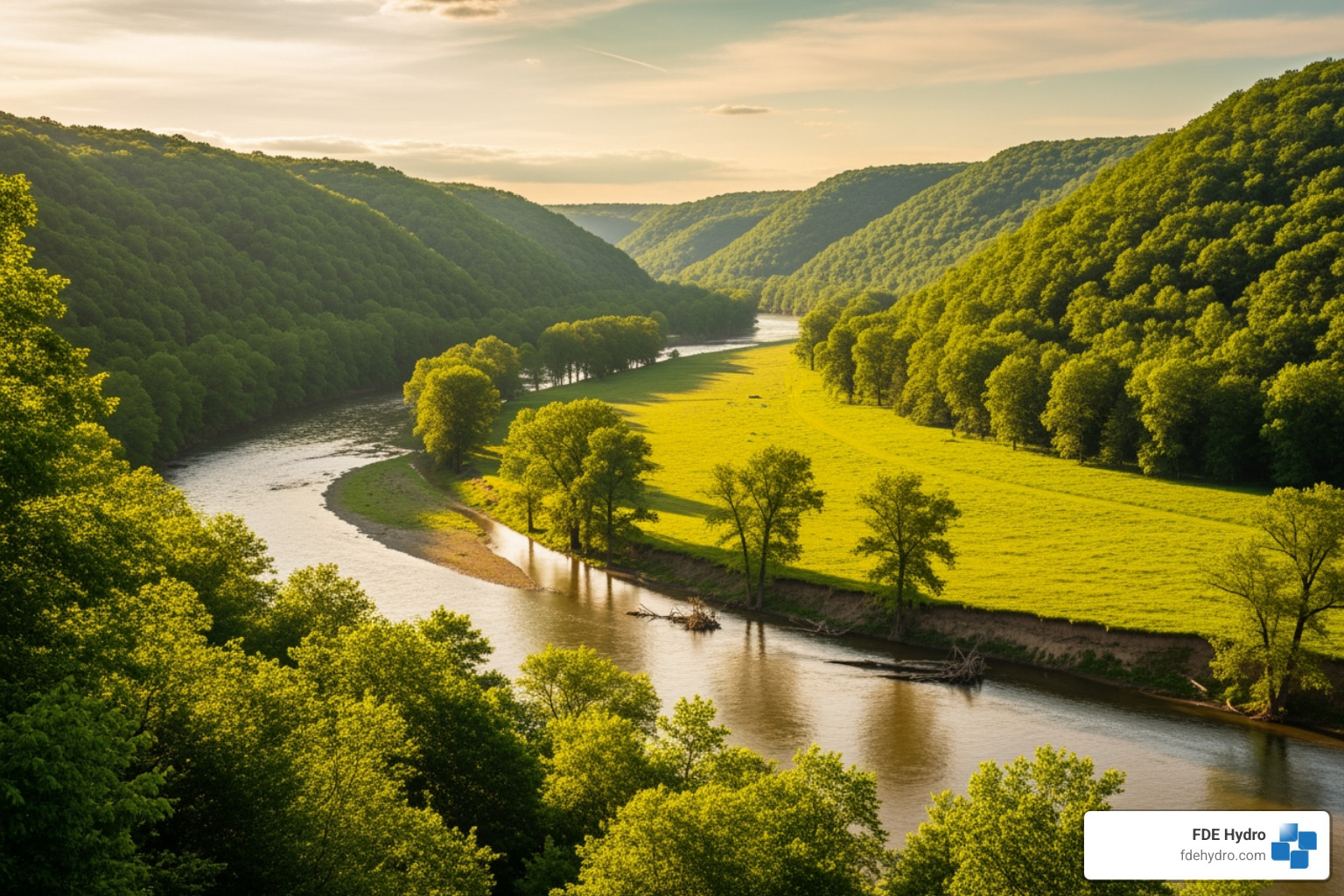
Despite the apparent needs, the decision to proceed with building new dams is increasingly viewed as a staggering gamble. The economic, environmental, and social costs associated with these megaprojects are often underestimated, leading to controversies and long-term challenges. Globally, the trend has seen a dramatic downturn. A 2021 study highlighted that construction of large dams globally fell from a late-1970s peak of about 1,500 a year to around 50 a year in 2020. This decline isn’t just a coincidence; it reflects a growing awareness of the true price of these structures.
The Economic Black Hole: Costs, Overruns, and Smarter Solutions
When we talk about building new dams, we often hear about the immense benefits they promise. However, the economic reality is frequently far less rosy. Large hydropower dams are notorious for cost overruns, ranking among the highest for any type of megaproject. Estimates are systematically and severely biased below actual values, with research suggesting an uplift of +99% is required to de-bias systematic cost underestimation. This means projects often end up costing twice their initial budget!
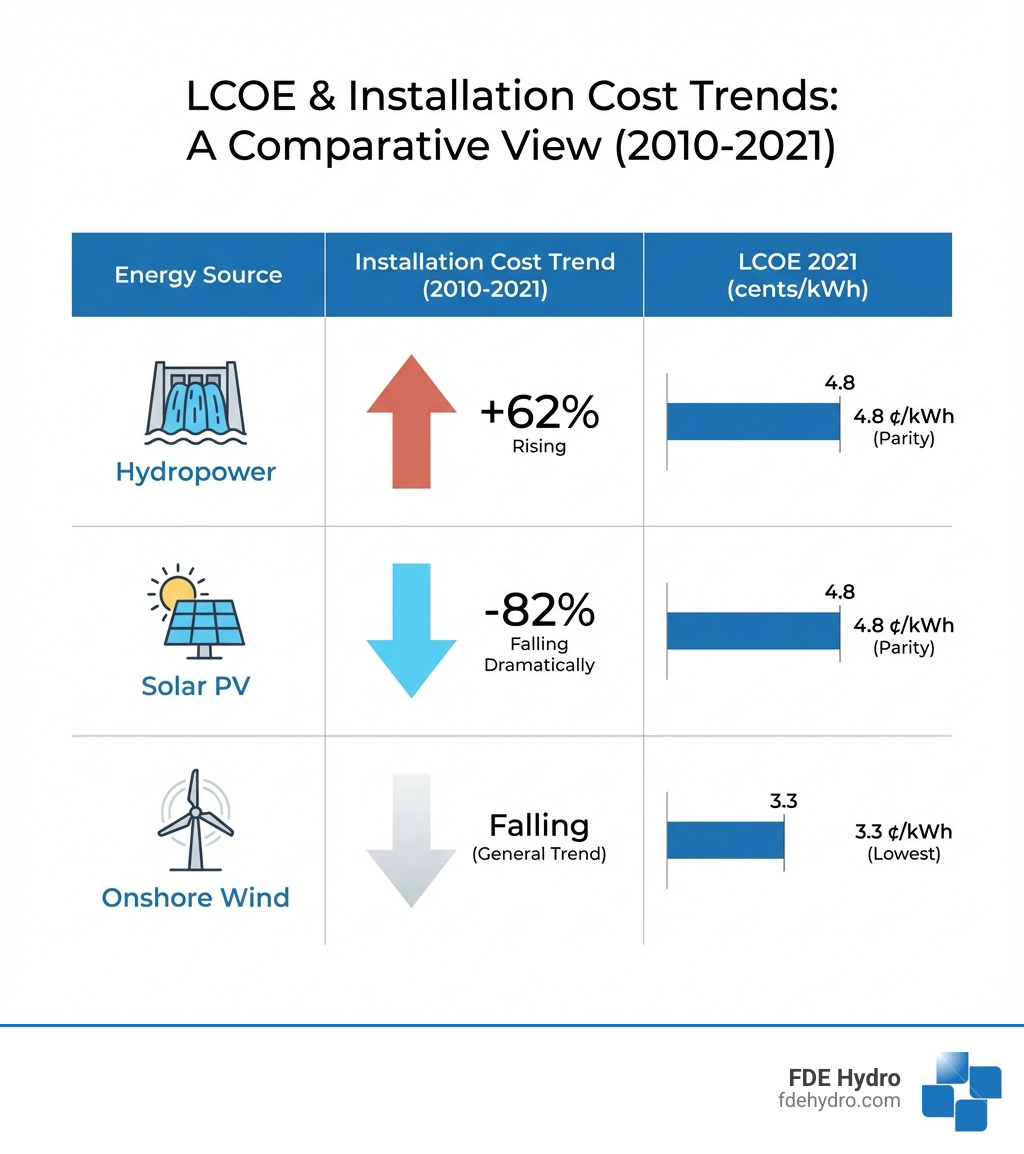
Let’s look at the numbers. Between 2010 and 2021, the cost of hydropower installation rose by 62%. Over the same period, the cost of solar power installation dropped by a staggering 82%. By 2021, the cost of electricity derived from hydropower and utility-scale solar power had reached parity, at 4.8 cents per kilowatt-hour, while onshore wind was already lower, at 3.3 cents per kilowatt-hour. Investments in new hydropower have also dropped significantly, from a peak of $26 billion in 2017 to an estimated $8 billion in 2022.
This shift in economic viability is undeniable. As a company focused on Hydroelectric Power Generation, we recognize that traditional approaches to building new dams are simply not competitive with other renewable energy sources. This economic reality demands a re-evaluation of our investment priorities.
For a deeper dive into the financial realities, we recommend reading the detailed research on hydropower megaproject costs. It provides a sobering look at how often these projects exceed their budgets, and why agile energy alternatives with shorter construction horizons are often a smarter choice for policymakers.
The Lasting Scars on Ecosystems and Communities
Beyond the financial costs, the environmental and social impacts of building new dams cast long shadows. Dams have stoppered nearly two-thirds of the globe’s major water systems, devastating their ecosystems. This river fragmentation disrupts natural flows, blocks fish migration, and alters aquatic habitats. The construction of the Belo Monte Dam in Brazil, for example, flooded vast rainforest areas and displaced indigenous people, highlighting the severe social costs.
Sediment trapping is another significant issue. As reservoirs age, they collect sediment, which deprives downstream channels of essential nutrients and substrate. This accumulation also reduces a dam’s storage capacity and power generation potential over time, effectively shortening its lifespan. We have seen how this issue affects existing Dams across North America and Europe.
Furthermore, the social consequences are profound. Large dams have historically displaced millions of people, many from Indigenous communities, and adversely affected the livelihoods of billions. The controversies surrounding new dam projects often center on these environmental sustainability concerns and the equitable distribution of benefits, questioning who truly profits and who pays the highest price.
The Future of Water Management: Smarter, Not Just Bigger
The challenges associated with building new dams in the traditional sense don’t negate the need for robust water management. Instead, they push us towards smarter, more innovative solutions that prioritize efficiency, sustainability, and adaptability. This includes emerging trends in construction, exploring alternatives to large-scale projects, and critically addressing our aging infrastructure.
Innovating Construction: New Methods for Building and Modernizing Dams
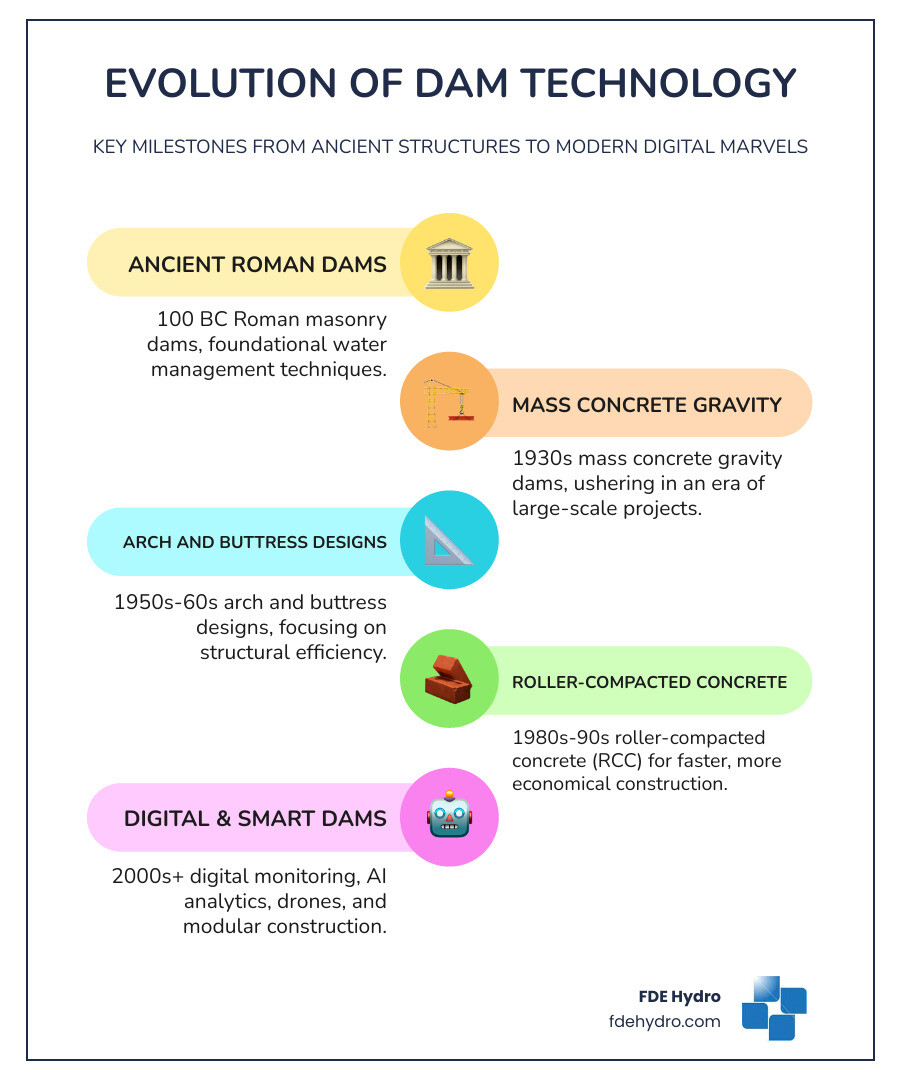
The modern approach to dam construction is characterized by technological advancements and a focus on efficiency. One such advancement is Roller Compacted Concrete (RCC). RCC is a drier concrete mix that is placed in layers and then compacted by rollers, similar to how asphalt is laid. This method significantly speeds up construction and reduces costs compared to traditional mass concrete pouring. You can find more info on Roller Compacted Concrete and its applications.
A prime example of this innovation is the Gross Dam project in Boulder County, Colorado. Crews are raising the dam by 131 feet using RCC, making it the tallest dam in Colorado and the largest dam raise in the U.S. This project involves building 118 concrete steps, each four feet tall, using mini-dump trucks, bulldozers, and rollers. The dam’s design is also being altered from a curved gravity dam to a more efficient thick arch dam in the center, leveraging the canyon’s natural geometry for support. This strategic use of advanced materials and design showcases how we can improve existing infrastructure rather than always pursuing entirely new structures.
At FDE Hydro, we are at the forefront of these innovations, particularly with our patented modular precast concrete technology, often referred to as “French Dam” technology. This approach allows for the rapid installment of civil infrastructure, significantly reducing both construction time and costs for building new dams or retrofitting existing ones. Our Modular Construction Techniques offer a scalable and sustainable alternative that is well-suited for projects across North America, Brazil, and Europe. This method not only addresses the cost and time overruns inherent in traditional dam projects but also minimizes on-site environmental disruption.
Rethinking the Need for Building New Dams: Viable, Integrated Solutions
Given the complexities, we need to broaden our perspective beyond just building new dams. Viable, integrated solutions offer a more holistic and often more sustainable path forward for water management and energy generation.
Consider these alternatives to large, conventional dams:
- Water conservation programs: Reducing demand through efficiency measures can be far more cost-effective than increasing supply.
- Groundwater recharge: Replenishing underground aquifers can store vast amounts of water naturally, often with fewer environmental impacts.
- Wastewater recycling: Treating and reusing wastewater for non-potable purposes can significantly extend existing water supplies.
- Off-river storage: Building reservoirs away from main river channels, which are filled during high flows, can minimize ecological disruption.
- Closed-loop pumped hydro: These systems, often built off-river, store energy without the extensive environmental footprint of conventional hydropower dams.
- Dam rehabilitation and modernization: Instead of new construction, focusing on repairing, upgrading, and expanding the capacity of existing dams can be a more efficient use of resources. The cost of rehabilitating the nation’s 4,000-plus federally owned dams in the U.S. alone is estimated at $27.6 billion, highlighting the scale of this ongoing need.
- River restoration: In some cases, removing outdated or unsafe dams can restore natural river flows and ecosystem health.
Our expertise in Dam Rehabilitation Encapsulation is a testament to this philosophy. We believe that by improving the performance and safety of existing structures, we can achieve many of the benefits of new construction without the associated environmental and financial risks. This proactive approach ensures our water infrastructure remains resilient and functional for generations to come. You can explore more about various Dam Construction Methods and their applications.
Frequently Asked Questions about New Dam Construction
Here, we address some common questions that arise when considering building new dams in today’s environment.
Are large dams a good investment compared to other renewables?
Historically, hydropower was considered a cheap and reliable energy source. However, this perception has significantly changed. Our research shows that between 2010 and 2021, hydropower installation costs rose 62%, while solar power installation costs dropped an impressive 82%. By 2021, the cost of electricity generated from hydropower reached parity with utility-scale solar at 4.8 cents per kilowatt-hour. Meanwhile, onshore wind power was already more economical at 3.3 cents per kilowatt-hour.
Furthermore, large dams are notorious for cost overruns. Studies indicate that they have the highest average cost overrun (+99%) of any megaproject type, meaning projects frequently end up costing double their initial estimates. This financial uncertainty, coupled with the increasing competitiveness of solar and wind, makes the economic case for building new dams less compelling than it once was.
Climate change introduces significant uncertainty into a dam’s long-term performance. We are witnessing more frequent and intense extreme weather events, which directly impact water availability.
- Droughts: Intensified droughts can dramatically lower reservoir levels. This directly impacts hydropower production, as seen in Brazil and Europe, where low water levels have led to energy shortages. It also threatens water supply for agriculture and urban areas, as experienced in the American Southwest and São Paulo.
- Floods: Conversely, extreme floods can exceed a dam’s spillway capacity, posing severe safety risks to downstream communities. While dams are often built for flood control, a 2022 study in Nature Communications showed that they can, in some cases, actually raise flood risk by altering the makeup and structure of riverbeds downstream.
- Future Risks: A study by the World Wildlife Fund found that almost two in three planned hydropower dams globally will be in river basins with very high or extreme risks for droughts, floods, or both, by the year 2050. This highlights a critical challenge: the very climate conditions driving the need for water storage also threaten the effectiveness and safety of the dams built to address them.
What happens to a dam at the end of its life?
Dams, like all infrastructure, have a finite lifespan. One of the primary long-term challenges is sediment accumulation in reservoirs. Sediment carried by rivers settles behind the dam, gradually reducing the reservoir’s storage capacity and, consequently, its ability to generate power or supply water. Removing this accumulated sediment is usually too difficult and expensive to consider. Existing large dams have already lost an estimated 13-19% of their storage capacity and are predicted to lose another 10% by 2050.
As dams age, they also require significant maintenance and rehabilitation. Aging infrastructure can pose safety concerns and operational inefficiencies. The cost to rehabilitate the more than 4,000 federally owned dams in the U.S. alone is estimated at $27.6 billion. When a dam reaches the end of its useful life, decisions must be made regarding its decommissioning or removal, which can also be complex and costly. This long-term financial burden is a crucial factor to consider when planning new projects.
Conclusion: A New Framework for Our Rivers
The discussion around building new dams is no longer black and white; it’s a vibrant spectrum of possibilities and challenges. While the traditional era of mega-dam construction is waning, our need for secure water resources and clean energy is more urgent than ever. The paradox we face today — declining new dam construction globally versus targeted new projects in specific regions like California — underscores the necessity for a nuanced and adaptable approach.
We believe the future of water management and hydropower lies not in blindly pursuing larger, more expensive projects, but in a smarter, more integrated framework. This means shifting our focus from sheer scale to strategic solutions that consider true costs, both economic and environmental, and leverage innovative technologies.
For us at FDE Hydro, this translates into pioneering modular precast concrete systems. Our “French Dam” technology offers a compelling solution by significantly reducing construction time and cost overruns, making hydropower projects more viable and sustainable. This approach not only supports the development of new, smaller facilities where appropriate but also plays a crucial role in modernizing and rehabilitating our existing, aging dam infrastructure.
By embracing water conservation, groundwater recharge, wastewater recycling, and advanced construction methods, we can secure our water future and generate clean energy without sacrificing our rivers and communities. It’s about finding the right balance, mitigating risks, and ensuring that our long-term hydropower projects are financially sound and environmentally responsible. We are committed to mitigating risks in long-term hydropower projects and building a sustainable future for our rivers and the generations to come.
by Adaptify Support | Feb 2, 2026 | News
Why Modern Dam Technology Matters for Critical Infrastructure
Modern dam technology encompasses advanced construction methods, intelligent monitoring systems, and sustainable design practices that are changing how we build and manage these essential structures. Today’s dams integrate innovations like modular construction, digital twins, AI-powered analytics, and eco-friendly materials to deliver safer, faster, and more cost-effective solutions.
Key advances in modern dam technology include:
- Modular and precast construction – Reduces build time by 30-50% compared to traditional methods
- Real-time structural monitoring – Fiber optic sensors, drones, and satellite imagery detect issues early
- Advanced materials – Self-compacting concrete, geotextiles, and composite materials improve durability
- Environmental integration – Fish passage systems and sediment management minimize ecological impact
- Digital systems – AI and digital twins enable predictive maintenance and lifecycle optimization
Dams serve as the backbone of modern civilization, providing flood control, enabling irrigation for agriculture, and generating clean hydroelectric power. From ancient Roman water management structures to today’s instrumented megastructures, dam technology has evolved dramatically over millennia.
Yet the industry faces mounting pressure. Aging infrastructure requires rehabilitation. Climate change demands greater resilience. Project costs and timelines spiral using conventional methods. The water infrastructure sector needs innovation now more than ever.
I’m Bill French Sr., Founder and CEO of FDE Hydro™, where we’ve pioneered modular civil construction solutions for the hydropower industry, including patented innovations in modern dam technology that reduce costs and accelerate delivery. My five decades leading major civil construction projects, from Boston’s Logan Airport to the I-93 Fast14 modular bridge initiative, have given me insight into how innovation transforms infrastructure outcomes.
Basic Modern dam technology terms:
From Manual Labor to Megastructures: The Evolution of Construction
For centuries, dam construction was an arduous, labor-intensive undertaking. Imagine the sheer willpower and muscle required to build the massive masonry and earth-fill dams of old. These structures, while impressive for their time, relied heavily on manual labor, basic tools, and locally sourced materials. Construction was slow, often taking decades, and the designs were relatively simple, prioritizing sheer mass and gravity to withstand water pressure.
But just as the world has transformed, so too has the way we build these essential structures. The shift began to accelerate in the 1980s and 1990s, moving away from brute force and towards precision engineering and advanced materials. Today, modern dam technology has completely revolutionized Dam Construction Methods. We’ve transitioned from primarily manual processes to highly mechanized and automated systems, enabling the creation of larger, stronger, and more efficient dams in a fraction of the time. This evolution isn’t just about speed; it’s about safety, sustainability, and economic viability, especially for critical infrastructure projects across North America, Brazil, and Europe.
| Parameter |
Historical Dam Construction |
Modern Dam Construction |
| Materials |
Masonry, earth, rock, rudimentary concrete |
High-performance concrete, steel, composite materials, geotextiles |
| Construction Speed |
Years to decades (e.g., Hoover Dam: 5 years for a massive structure) |
Months to a few years for complex structures (e.g., modular systems reduce time by 30-50%) |
| Labor Requirement |
Very high, manual labor-intensive |
Significantly reduced, highly skilled labor for operation and oversight |
| Safety |
Relied on empirical knowledge, prone to unforeseen issues |
Data-driven design, advanced monitoring, stringent quality control |
| Environmental Control |
Minimal consideration, often significant local impact |
Comprehensive environmental impact assessments, mitigation strategies |
Innovations in Concrete and Material Placement
The backbone of many modern dams is concrete, but not just any concrete. Modern dam technology leverages advanced concrete technologies like high-performance concrete (HPC), which offers superior strength, durability, and reduced permeability compared to traditional mixes. This means dams can be built thinner yet stronger, requiring less material overall.
Layered construction methods, often involving roller-compacted concrete (RCC), have also become commonplace. RCC is a drier, stiffer concrete mix placed in layers and compacted by vibratory rollers, similar to asphalt. This technique dramatically speeds up construction, reduces cement content, and lowers costs. For example, projects utilizing these methods in the United States and Canada have seen significant time and cost savings.
At FDE Hydro, we’ve taken this concept even further with our patented modular precast concrete technology, often referred to as “French Dam” technology. This innovation allows large sections of the dam to be manufactured off-site in controlled environments, then transported and assembled rapidly on-site. This approach isn’t just theoretical; it delivers tangible benefits, reducing construction costs and time by 30-50% compared to traditional methods. This efficiency is critical for projects, especially when considering Design and Construction Considerations for Hydraulic Structures in challenging environments or with tight deadlines.
Advanced Materials and Equipment
Beyond high-performance and roller-compacted concrete, the palette of materials available to dam engineers has expanded significantly. Self-compacting concrete (SCC), which flows and consolidates under its own weight without external vibration, simplifies placement in complex forms and tight spaces, improving quality and reducing labor. Composite materials, combining the strengths of different substances, offer innovative solutions for specific structural challenges. Geotextiles, synthetic fabrics, are increasingly used for reinforcement, filtration, and drainage within earth-fill dams, significantly enhancing their stability and longevity.
The equipment used on-site has also undergone a massive change. Gone are the days of rudimentary shovels and wheelbarrows. Today’s construction sites feature fleets of sophisticated machinery: massive excavators, automated concrete batching plants, laser-guided placement systems, and highly efficient cranes. Automated material transfer systems ensure a continuous and precise supply of concrete and other materials, minimizing delays and maximizing efficiency.
This blend of advanced materials and cutting-edge equipment is a hallmark of modern dam technology, allowing us to build bigger, better, and faster across our operational areas in North America, Brazil, and Europe. Our own Precast Concrete Technology is a prime example of how material innovation, combined with smart construction methods, can revolutionize the industry.
Ensuring Longevity and Safety with Modern Dam Technology
The safety and longevity of dams are paramount. These structures hold back immense forces of water, and any failure can have catastrophic consequences for downstream communities and ecosystems. This is why modern dam technology places a heavy emphasis on proactive safety management and data-driven decision-making, particularly as we address the challenges of aging infrastructure across North America and Europe. We’re not just building dams; we’re building resilient, long-lasting assets designed to perform reliably for a century or more. Our approach to Hydropower Asset Management is centered on these principles.
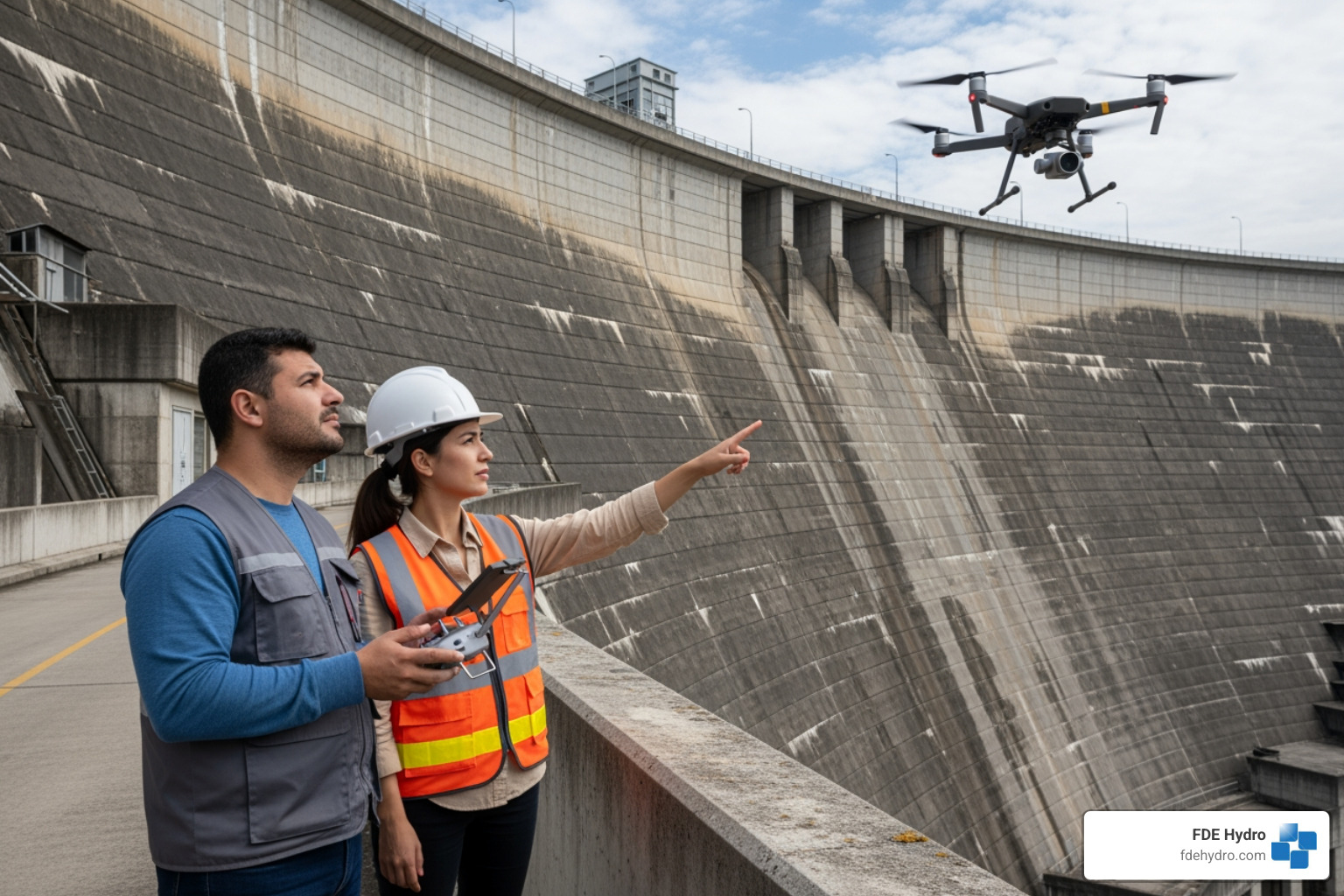
Advanced Monitoring and Structural Health
One of the most significant advancements in modern dam technology is the ability to continuously monitor a dam’s health in real-time. This is achieved through sophisticated Structural Health Monitoring (SHM) systems. Imagine having a dam that can tell you how it’s feeling!
Remote sensing technologies, including satellite imagery and advanced LiDAR scans, provide broad overviews of ground movement and structural deformation. Drones equipped with high-resolution cameras and thermal imaging sensors offer detailed visual inspections of dam faces, spillways, and surrounding areas, reaching places that are otherwise inaccessible or dangerous for human inspectors. This allows us to detect subtle changes or potential issues long before they become critical.
Inside and around the dam, a network of sensors provides crucial data. Fiber optic sensors can detect minute strains and temperature changes within the concrete, indicating stress points. Geotechnical instrumentation, such as piezometers, monitors pore water pressure within the dam’s foundation and embankment, a key indicator of stability. Inclinometers measure subsurface ground movement, helping to identify potential landslides or foundation shifts. All this data is fed into centralized systems, allowing engineers to analyze trends, predict potential problems, and make informed decisions about maintenance and repairs, ensuring the safety of communities in places like New York, California, and Kansas.
The Critical Role of Seepage Control
Ask any dam engineer, and they’ll tell you: seepage is the silent killer of dams. It’s a primary cause of dam failures, slowly eroding foundations, reducing stability, and ultimately compromising the entire structure. The United States Bureau of Reclamation, a leading authority on water resource management, has highlighted this challenge, stating that approximately 70% of dam failures are due to seepage issues. This statistic underscores why effective seepage control is not just important, but absolutely critical for the safety and longevity of any dam, particularly in regions with diverse geological conditions like Brazil.
Modern dam technology tackles seepage with a multi-pronged approach. Grout curtains, formed by injecting cement or chemical grouts into the ground beneath the dam, create an impermeable barrier to block water flow. Seepage barriers, often constructed from impermeable clay or geomembranes, are integrated into the dam’s design. Groundwater management systems, including drainage galleries and relief wells, collect and safely divert any water that does seep through, preventing it from building up pressure or eroding the foundation.
Crucially, real-time data analysis from monitoring systems allows for the early detection of abnormal seepage patterns. If a piezometer detects an unexpected rise in pore water pressure, or if flow meters in drainage galleries show an increase, engineers can investigate and intervene immediately. This proactive approach, enabled by advanced sensors and analytics, is a cornerstone of ensuring the integrity of Water Control Structures and preventing costly and dangerous failures.
Building for the Future: Sustainability and Resilience
As we look to the future, modern dam technology must steer a complex landscape of balancing energy needs with environmental stewardship. Climate change brings increased unpredictability, from more intense floods to prolonged droughts, demanding greater resilience from our infrastructure. Simultaneously, global population growth and economic development are driving increased demands for water and clean energy. This means our dams must be designed not just for today, but for a changing tomorrow, supporting Sustainable Water Infrastructure.
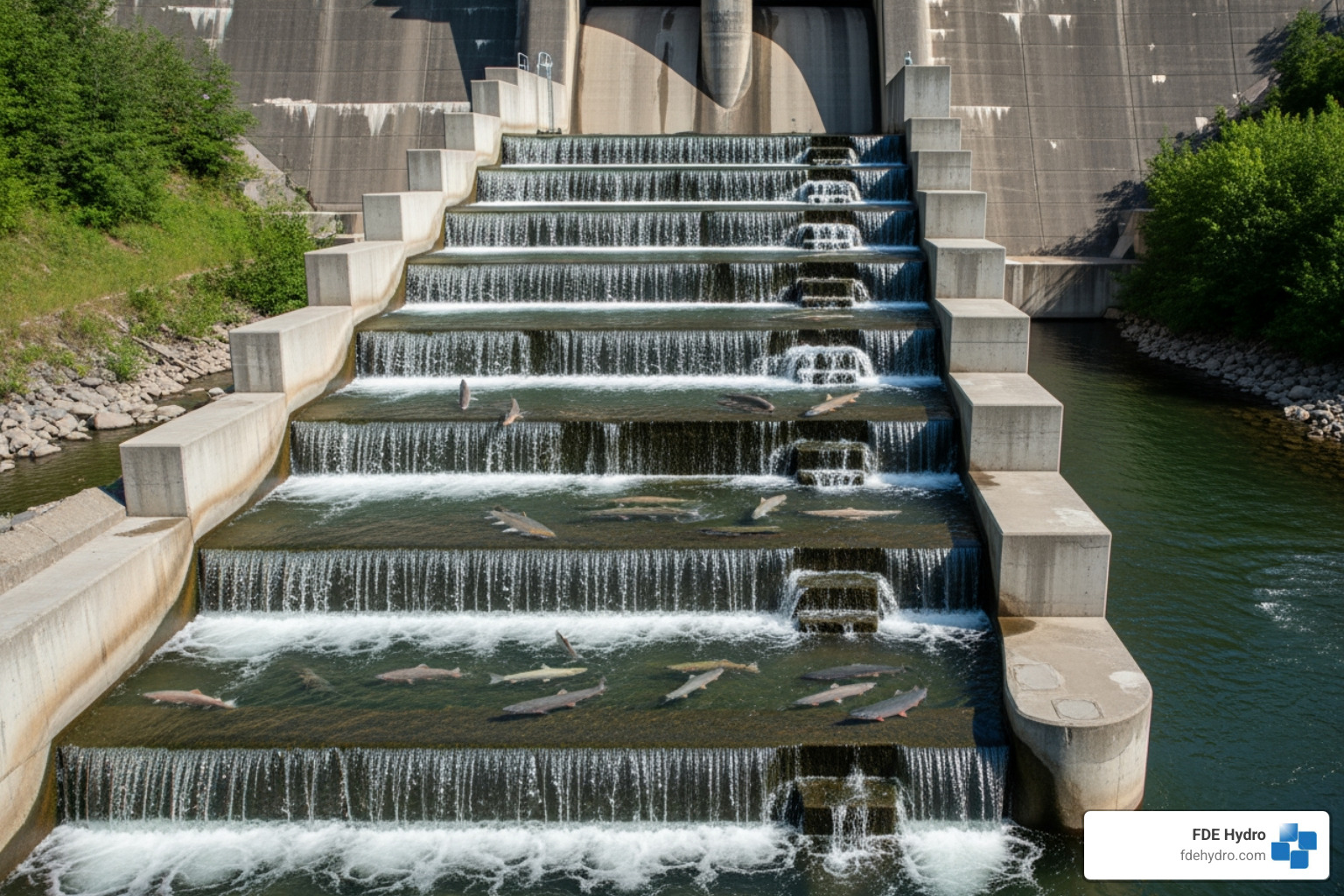
Eco-Friendly Design and Hydropower Optimization
The environmental impact of dams has been a significant concern for decades, particularly regarding river ecosystems and fish migration. Modern dam technology addresses these concerns head-on through eco-friendly design principles and advanced mitigation strategies.
Environmental Impact Assessments (EIAs) are now standard practice, guiding design choices to minimize ecological footprints. A key innovation is the development of effective fish passage solutions, such as fish ladders, elevators, and nature-like bypass channels, which allow migratory fish species to safely steer around dams. Fish-friendly turbine designs reduce mortality rates for fish passing through hydroelectric facilities.
Sediment management is another critical aspect. Dams can trap sediment, impacting downstream river health and reservoir capacity. Modern dam technology incorporates strategies like sediment flushing, bypass tunnels, and sluicing to maintain a more natural sediment flow, preserving downstream habitats and extending the operational life of reservoirs. These integrated approaches are vital for ensuring that hydropower remains a truly sustainable source of clean energy, as detailed in discussions around Hydropower Environmental Impact.
Rehabilitating and Upgrading Existing Dams
Many of the dams in North America and Europe were built decades ago, and while they have served us well, they are now aging infrastructure. The challenges range from structural degradation and outdated components to insufficient capacity for modern flood events or energy demands. This is where modern dam technology offers transformative solutions.
Instead of costly and disruptive full replacements, rehabilitation and upgrading projects leverage new technologies to extend the life and improve the performance of existing dams. This might involve strengthening concrete with advanced materials, installing new spillway gates for improved flood control, or upgrading turbines and generators to improve Hydroelectric Dam Efficiency.
Our modular precast concrete technology at FDE Hydro is particularly well-suited for these rehabilitation projects. We can rapidly and cost-effectively encapsulate existing structures, add new sections, or reinforce critical areas, significantly extending the dam’s operational life and enhancing its capabilities. This approach minimizes downtime, reduces environmental impact, and provides a sustainable solution for maintaining our vital water infrastructure, a process we call Dam Rehabilitation Encapsulation.
The Next Frontier: Emerging Technologies in Dam Engineering
The field of dam engineering is constantly evolving, pushing the boundaries of what’s possible. As we face increasingly complex challenges—from climate change impacts to the need for greater efficiency and sustainability—modern dam technology continues to innovate. The focus is shifting towards risk-informed decision-making, adapting to non-stationary hazards, and using the power of digital tools to create truly smart infrastructure. These advancements represent the cutting edge of Advances in Dam Engineering.
The Digital Revolution: AI, Digital Twins, and Modern Dam Technology
Perhaps the most exciting developments in modern dam technology are happening in the digital field. Artificial Intelligence (AI) and machine learning are changing how we design, build, and operate dams. AI algorithms can process vast amounts of data from structural monitoring systems, weather forecasts, and hydrological models to predict potential issues before they arise. This predictive maintenance capability allows operators to schedule interventions proactively, minimizing risks and maximizing uptime.
Digital twins are another game-changer. A digital twin is a virtual replica of a physical dam, updated in real-time with data from sensors and operational systems. This allows engineers to simulate various scenarios, test different operational strategies, and even predict the impact of future events, all without affecting the physical structure. It’s like having a crystal ball for your dam!
This technology enables comprehensive lifecycle simulation, from initial design through construction, operation, and eventual decommissioning. The growing adoption of digital twins and AI in dam engineering signifies a profound shift, enhancing safety, efficiency, and sustainability across projects in New York City, Lawrence, and beyond. You can learn more about The role of artificial intelligence and digital technologies in dam engineering and how it contributes to AI for Sustainability.
Innovations on the Horizon: The Future of Modern Dam Technology
The future of modern dam technology is incredibly exciting, with several groundbreaking innovations on the horizon:
- 3D Printing of Custom Components: Imagine printing complex dam components, such as intricate spillway gates or specialized turbine parts, directly on-site or in a factory. This could revolutionize customization, reduce waste, and speed up construction for unique project requirements.
- Self-Healing Concrete: Researchers are developing concrete mixes that can automatically repair small cracks, extending the lifespan of structures and reducing maintenance needs. This would be a monumental leap for dam durability.
- Autonomous Construction Equipment: Fully autonomous excavators, dozers, and concrete placers could operate around the clock with minimal human intervention, improving safety, efficiency, and precision on construction sites.
- Modular Dam Construction Techniques: While already a reality with FDE Hydro’s patented “French Dam” technology, the modular approach is ready for even wider adoption. Our system, which uses precast concrete components, significantly reduces construction time and costs, offering a rapid deployment solution for new hydro facilities and critical infrastructure upgrades across North America, Brazil, and Europe. This approach aligns perfectly with the drive for speed, cost reduction, and quality control in large-scale civil engineering projects. Explore more about Modular Dam Construction and its potential.
These innovations promise a future where dams are not only stronger and more efficient but also more adaptive, sustainable, and seamlessly integrated into their environments.
Conclusion
We’ve journeyed through the incredible evolution of dam technology, from the labor-intensive constructions of antiquity to the smart, sustainable megastructures of today. What was once a feat of brute force and rudimentary engineering has transformed into a sophisticated blend of advanced materials, digital intelligence, and environmental consciousness. This leap, driven by modern dam technology, has made our dams safer, more efficient, and better equipped to handle the challenges of a changing world.
The future of hydropower and water management is brighter than ever. With innovations like modular construction, real-time monitoring, AI-powered analytics, and eco-friendly designs, we are building structures that are not only resilient but also in harmony with our planet. Innovators like FDE Hydro are at the forefront of this revolution, pioneering next-generation solutions, such as our patented modular precast concrete technology, to meet global water and energy challenges with unparalleled speed, cost-effectiveness, and quality.
The journey continues, and we are committed to shaping a future where our essential infrastructure is stronger, smarter, and greener for generations to come. We invite you to Explore the future of hydropower and its role in a sustainable world and see how these advancements are making a real difference.
by Adaptify Support | Jan 30, 2026 | News
Why Dam Construction Companies Are Essential to Modern Infrastructure
Dam construction companies are the backbone of critical water infrastructure worldwide, responsible for building and maintaining the structures that provide hydropower, control floods, supply water, and protect communities. These specialized firms combine heavy-civil engineering expertise with advanced construction capabilities to deliver projects ranging from modest $4.5 million structures to massive $450 million facilities. The most experienced firms have portfolios with hundreds of water storage projects and decades of experience across all dam types, from levees to major hydropower facilities.
The dam construction industry faces unprecedented challenges today. Over 60% of existing dams in the United States are over 60 years old and require significant upgrades, while climate change, environmental regulations, and growing hydropower demands push companies to innovate. Modern dam construction firms must balance traditional heavy-civil construction methods with cutting-edge technologies like Roller-Compacted Concrete (RCC), underwater robotics, and modular construction approaches that reduce costs and accelerate timelines.
The scope of services these companies provide extends far beyond simply pouring concrete. Leading firms offer comprehensive capabilities including underwater inspections using ROV technology, specialized diving operations, scour and erosion protection, gate maintenance, cofferdam installation, and complete rehabilitation of aging structures. They work across all dam types—from earthfill and rockfill to concrete gravity, arch, and buttress designs—serving both government agencies and private clients through various contract formats like Construction Management (CM) and Design-Build arrangements.
I’m Bill French Sr., Founder and CEO of FDE Hydro™, and over five decades I’ve witnessed how dam construction companies have evolved from my experience founding and leading W.L. French Excavating Corporation through major infrastructure projects and now pioneering modular solutions for the hydropower industry. Understanding which companies lead this specialized field and what capabilities distinguish them is essential for anyone planning water infrastructure investments.
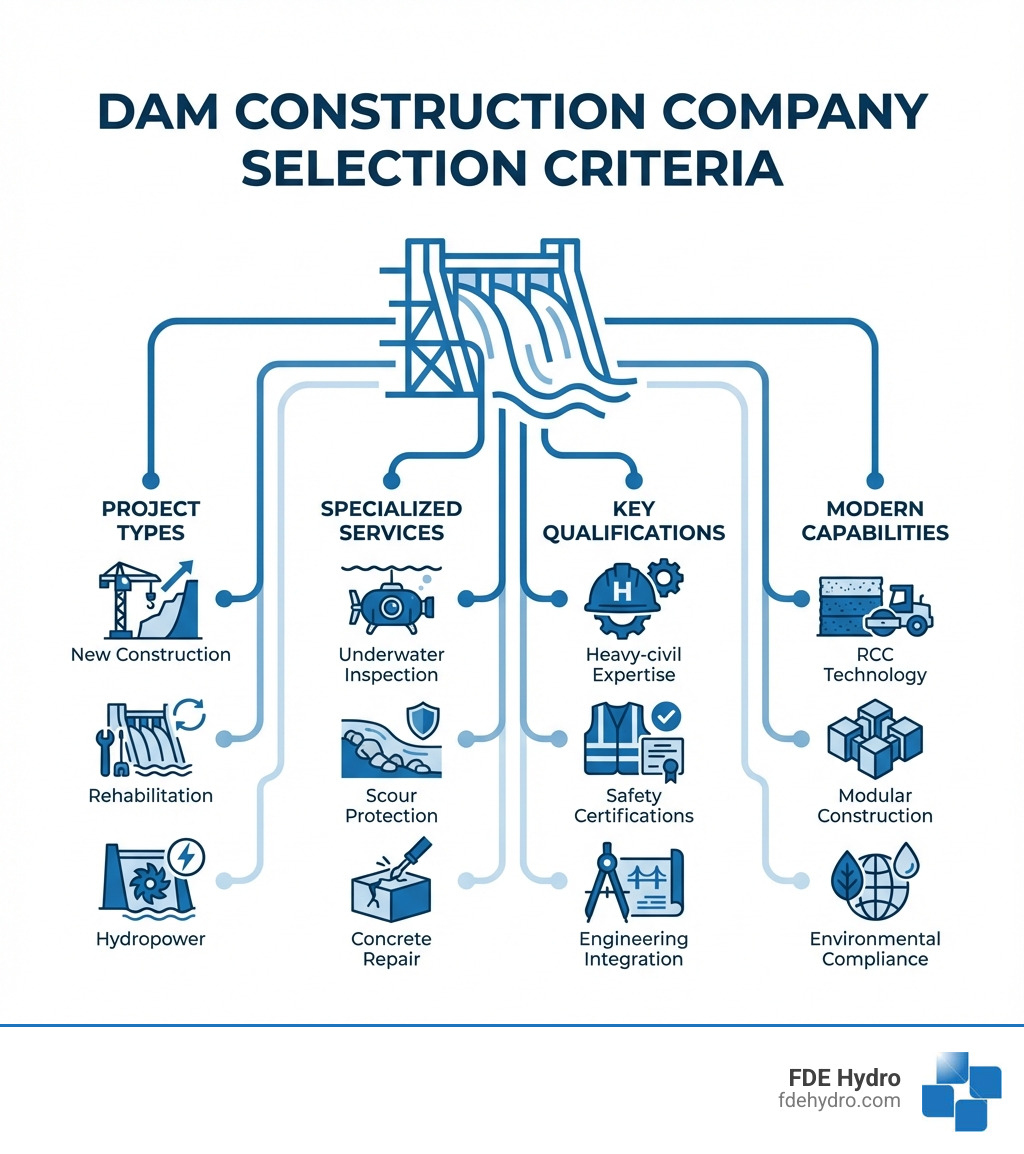
Scope of Work: Projects and Specialized Services
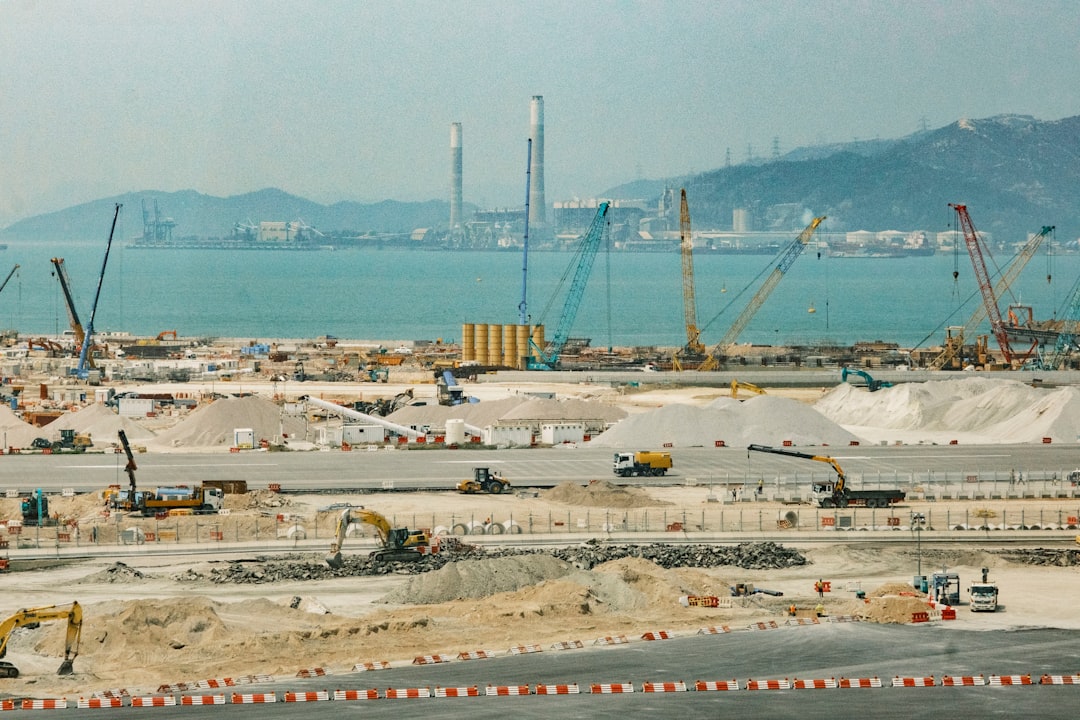
When we talk about dam construction companies, we’re discussing firms that undertake an incredibly diverse range of projects. From creating new structures that harness the power of water to carefully rehabilitating aging infrastructure, their work is fundamental to modern society. These companies are not just builders; they are problem-solvers, engineers, and innovators, constantly adapting to environmental needs and technological advancements.
Project Types Undertaken by Dam Construction Companies
The types of dam construction projects are as varied as the landscapes they inhabit. We see companies working on:
- New Dam Construction: This involves planning, designing, and building entirely new structures, often for purposes like hydroelectric power generation, water supply, or flood control. Some firms, for example, have constructed over 40 new dams, ranging from $4.5 million to $450 million projects. Industry leaders have completed more than 500 surface water storage projects across North America.
- Dam Rehabilitation and Upgrades: With many dams in the United States being over 60 years old, rehabilitation is a critical area. This includes structural repairs, upgrades to improve safety and efficiency, and retrofitting for new functions. Many firms specialize in repairs on navigational, hydroelectric, diversion, storage, detention, and earthen structures of all sizes, often working both above and below the waterline.
- Hydroelectric Dams: These are designed to generate electricity. Our work at FDE Hydro™ focuses specifically on this vital renewable energy sector. More info about Hydroelectric Dam Construction
- Diversion Dams: Used to divert water from a river or stream into a canal, pipeline, or other channel for irrigation, water supply, or power generation.
- Storage and Detention Dams: Creating reservoirs for water supply, irrigation, flood control, and recreation. There are over 92,000 reservoirs in the United States serving these wide-ranging purposes.
- Earthfill and Rockfill Dams: These are embankment dams constructed primarily of compacted earth or rock. Some global leaders have held the record for designing the world’s highest rockfill dam three separate times, showcasing their expertise in this area.
- Concrete Dams: These include various designs such as gravity, arch, buttress, arch-gravity, and Roller-Compacted Concrete (RCC) dams. Leading companies have designed more than 25 new concrete dams of differing types, with heights ranging from 46 to 984 feet. The industry covers a full spectrum of concrete dams, including mass concrete, concrete buttress, and concrete arch designs. More info about Hydroelectric Dam Components Ultimate Guide
Specialized and Support Services
Beyond the core construction, dam construction companies offer a suite of specialized services essential for the longevity and safety of these structures.
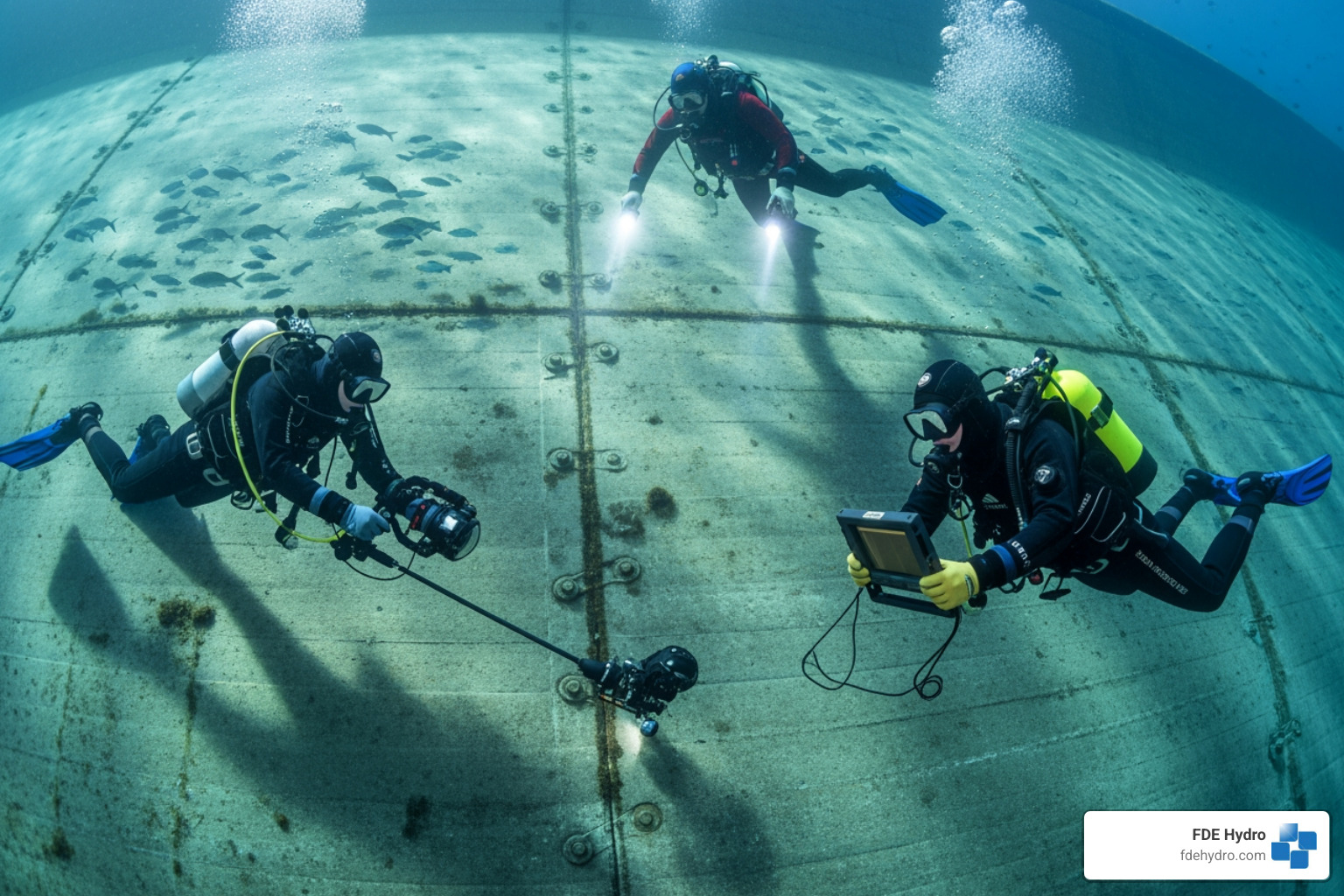
- Underwater Inspections and Survey: Critical for assessing the condition of submerged dam components. Specialized companies use divers and advanced technology like ROVs, underwater acoustic imaging, and high-resolution multi-beam hydrographic surveys for thorough inspections, often for regulatory requirements like FERC Part 12 inspections in the US.
- Deep Water Diving: For complex underwater tasks like concrete repair, gate maintenance, and scour protection in challenging environments. Specialized equipment, including mixed gas systems and recompression chambers, may be used.
- Scour and Erosion Protection: Scour and erosion pose significant threats to dam stability. Companies install measures like articulated block mattresses, rip rap, and concrete armor units to protect foundations and embankments.
- Concrete Repair: This can range from small surface repairs to mass pours, both above and below the waterline, using traditional methods or precast attachments.
- Gate Maintenance and Replacement: Rehabilitation or replacement of mechanical water control components such as roller gates, sluice gates, and actuators. Precision manufacturing, alignment, and installation are crucial.
- Cofferdam Installation: Temporary watertight enclosures used to dewater an area, allowing construction or repair work to proceed in dry conditions. Experienced firms have been installing all types of cofferdams since the early 1930s. More info about Water Control Structures
What Defines Leading Dam Construction Companies?
Leading dam construction companies distinguish themselves through a combination of robust engineering capabilities, meticulous project management, and an unwavering commitment to safety and compliance. They leverage decades of experience and continually invest in innovation to tackle the most complex water infrastructure challenges.
The Crucial Role of Engineering and Project Management
The successful execution of dam projects hinges on exceptional engineering and project management.
- Feasibility Studies and Design: Before any ground is broken, extensive studies are conducted to determine the viability and optimal design of a dam. Leading companies provide full-service support, including planning, analysis, and design, drawing on teams of engineers, scientists, planners, economists, and risk analysts. This includes services like civil layout, geotechnical programs, and stability analyses.
- Project Planning and Execution: Managing large-scale dam projects, from initial planning to completion, is a monumental task. It involves coordinating vast resources, specialized equipment, and skilled personnel. The Base Mine Dam project, for example, involved a contract value of $408 million CAD, with total excavation of 2,344,370 m3 and over 9 million m3 of common fill, showcasing the sheer scale of these endeavors in Canada.
- Contract Formats and Owner Types: Dam construction projects typically involve various contract formats, such as Construction Management (CM) or Design-Build. Project owners are diverse, ranging from government entities (federal, state, provincial, municipal) to private companies (e.g., mining companies for tailings dams, utilities for hydropower). Firms in this sector support both government and private owners, reflecting the broad client base.
Ensuring Safety and Regulatory Compliance
Safety and regulatory compliance are paramount in dam construction, particularly given the critical nature of these structures.
- Industry Certifications: Leading dam construction companies often hold numerous industry certifications, which demonstrate their commitment to high standards. Examples include ISNetworld, Avetta, Cognibox, and Alcumus SafeContractor, which signify adherence to stringent health, safety, environmental, and quality regulations. For instance, certifications like BCCSA COR® in Canada and other globally recognized approvals demonstrate this commitment.
- Risk Management and Safety Programs: Comprehensive risk management strategies and robust safety programs are essential. Leading firms cultivate a “genuine culture of safety and quality management” as a core foundation.
- Regulatory Compliance: Dams are heavily regulated. Companies must comply with standards such as FERC Part 12 dam safety evaluations and potential failure mode analyses (PFMAs) in the United States. Services can also include FEMA levee certification and compliance assessments, crucial in regions like New York. More info about Water Control Systems
Navigating Modern Challenges with Innovative Solutions
The dam construction industry faces a complex array of modern challenges, from aging infrastructure to the undeniable impacts of climate change. Yet, dam construction companies are rising to meet these problems with innovative solutions and forward-thinking approaches.
Key Challenges in Modern Dam Construction
- Aging Infrastructure: A significant challenge is the sheer age of existing dams. Industry data shows that structures in the US operate for over 60 years on average before requiring significant upgrades. This necessitates a shift in focus from new construction to extensive rehabilitation and modernization projects.
- Climate Change Adaptation: Changing weather patterns, including increased flood risks and altered water availability, demand more resilient and adaptable dam designs. Companies must consider climate change impacts in their planning, design, and construction, as noted by industry leaders.
- Environmental Regulations and Sustainability: Strict environmental regulations require careful planning to mitigate the ecological impact of dam projects. This involves comprehensive environmental impact assessments and incorporating sustainability considerations into every phase.
- Sedimentation: The accumulation of sediment in reservoirs reduces storage capacity and affects dam operations. Addressing sedimentation is a continuous challenge for maintaining dam efficiency and longevity.
- Meeting Increased Hydropower Demands: As the world seeks more renewable energy sources, the demand for hydropower is growing. Dam construction companies are challenged to upgrade existing facilities and build new, advanced hydroelectric plants to meet these needs, balancing power generation with environmental protection. View our Case Studies
Innovative Technologies Used by Leading Dam Construction Companies
Innovation is key to overcoming these challenges, and dam construction companies are at the forefront of adopting new technologies.
- Roller-Compacted Concrete (RCC): This method of concrete placement offers significant advantages. Leading firms have prepared designs for over 25 RCC dams and rehabilitation structures, emphasizing its benefits: faster construction, simpler constructability, and reduced costs compared to conventional concrete. The Olivenhain Dam in the United States, at 308 feet, stands as a testament to RCC’s capabilities. More info about Precast Concrete Technology
- Advanced Survey Technology: For both above and below-water applications, high-tech survey methods are crucial. This includes underwater acoustic imaging and high-resolution multi-beam hydrographic surveys, which provide detailed insights into existing conditions for more precise planning and execution, as used by specialized firms.
- Modular Construction Techniques: Our work at FDE Hydro™ is pioneering modular precast concrete technology for building and retrofitting hydroelectric dams. This approach significantly reduces construction costs and time, making projects more efficient and sustainable, particularly in regions like North America, Brazil, and Europe. More info about Modular Construction Techniques
- Microseismic Technology: For specialized applications like mitigating risks in tailings dams, microseismic technology can be employed for advanced monitoring and analysis, as highlighted in the industry.
The Evolution and Future of Dam Construction
The dam construction industry has a long and storied history, with some leading firms boasting over a century of experience in construction and hydraulic engineering. This rich past informs its dynamic present and future.
How the Industry Has Evolved
- Shift from New Construction to Rehabilitation: While new dams are still built, a significant evolution has been the increased focus on rehabilitating, upgrading, and maintaining existing structures. This is a direct response to the aging infrastructure and the need to extend the operational lifespan of dams, which averages over 60 years.
- Development of RCC: The widespread adoption of Roller-Compacted Concrete has transformed concrete dam construction, offering speed and cost efficiencies that were once unimaginable.
- Advances in Underwater Construction: Specialized diving crews and advanced underwater technologies have made it possible to perform complex repairs and inspections below the waterline, often providing cost-effective alternatives to expensive cofferdams, as demonstrated by specialized underwater construction firms.
- Increased Focus on Safety Culture: The industry has matured to place an even greater emphasis on safety and quality management, moving beyond mere compliance to foster a genuine culture of safety across all operations. More info about French Dam Technology Passes the Test
- Environmental and Sustainability Considerations: What was once an afterthought is now integrated into every stage of a project, reflecting a broader societal and regulatory shift towards sustainable development. More info about Dam Construction Methods
Future Trends Shaping the Industry
The future of dam construction is ready for exciting advancements, driven by technology, environmental imperatives, and the need for greater efficiency.
- Increased Use of Modularity: As championed by FDE Hydro™, modular construction techniques, particularly with precast concrete, will become more prevalent. These methods offer faster deployment, reduced on-site labor, and greater quality control, especially beneficial for projects in remote locations or with tight schedules in regions like North America, Brazil, and Europe.
- AI in Project Management: Artificial intelligence and machine learning will play a growing role in optimizing project planning, scheduling, risk assessment, and resource allocation, leading to more efficient and predictable project outcomes.
- Advanced Monitoring and Smart Dams: The integration of advanced sensor technology, including microseismic monitoring for tailings dams, will create “smart dams” that provide real-time data on structural integrity and environmental conditions, enhancing safety and operational efficiency.
- Focus on Resiliency and Community Protection: With increasing climate volatility, future dam projects will place an even stronger emphasis on building community resiliency and robust flood protection systems, as demonstrated by ongoing work in intelligent water management.
- Dam Decommissioning and Removal: As some dams reach the end of their useful life or are deemed environmentally detrimental, the industry will see an increase in dam decommissioning and removal projects, requiring specialized expertise to manage the environmental and logistical challenges.
Frequently Asked Questions about Dam Construction
What are the main types of dam construction projects?
Dam construction companies undertake a wide array of projects, including new dam construction for purposes like hydropower generation, water supply, and flood control. They also specialize in the rehabilitation, repair, and upgrading of existing structures, which often involves working on navigational, hydroelectric, diversion, storage, detention, and earthen dams. Specific dam types include earthfill, rockfill, gravity, arch, buttress, and Roller-Compacted Concrete (RCC) dams.
How do companies ensure safety on such large-scale projects?
Ensuring safety on large-scale dam projects is paramount. Dam construction companies implement robust safety management systems, adhere to strict regulatory standards (such as FERC Part 12 guidelines in the US), and pursue industry certifications like ISNetworld, Avetta, and BCCSA COR® (in Canada). They also conduct comprehensive risk assessments, potential failure mode analyses (PFMAs), and maintain dedicated safety programs with highly trained personnel.
What is Roller-Compacted Concrete (RCC)?
RCC is an innovative method of concrete placement widely used by dam construction companies. Unlike conventional concrete, RCC uses a drier mix that can be compacted by vibratory rollers, similar to how asphalt is laid. This technique offers several advantages, including faster construction times, simpler constructability, and significantly reduced costs. It is particularly popular for gravity dams due to its efficiency and strength.
Conclusion
The world of dam construction companies is one of immense scale, intricate engineering, and profound impact. These firms are not merely builders; they are custodians of critical infrastructure, essential for everything from generating renewable energy to ensuring safe drinking water and protecting communities from floods. From the specialized services of underwater inspection and scour protection to the grand vision of new hydroelectric facilities, their expertise is indispensable.
Choosing the right partner in this specialized field means looking for key capabilities: a deep understanding of heavy-civil engineering, a proven track record of project management excellence, an unyielding commitment to safety and compliance, and a forward-thinking approach to innovation. Companies that accept cutting-edge technologies like Roller-Compacted Concrete (RCC), advanced survey methods, and modular construction are best positioned to address the complex challenges of aging infrastructure, climate change, and growing energy demands.
At FDE Hydro™, we are proud to contribute to this vital industry, driving the future of hydropower with our innovative, patented modular precast concrete technology. Our solutions are designed to significantly reduce construction costs and time, advancing the industry in North America, Brazil, and Europe. We believe that innovation is not just an advantage but a necessity in building a sustainable future.
Learn more about advanced hydropower solutions and how FDE Hydro™ is leading the way in Modular Dam Construction.
Contact Us to discuss your next project and find how our expertise can benefit you.
by Adaptify Support | Jan 29, 2026 | News
Why NYC Renewable Energy Matters More Than Ever
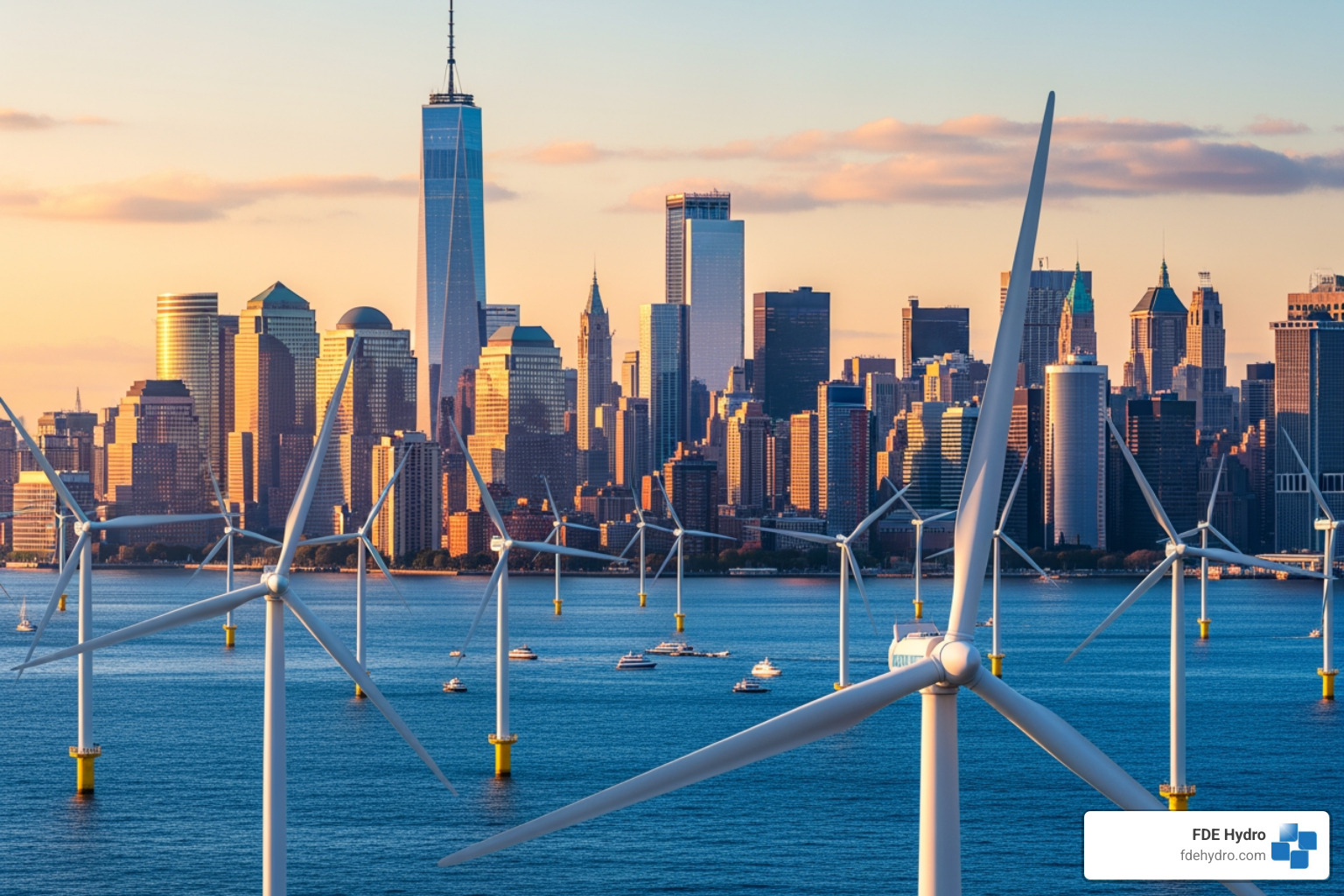
New York City is at a critical juncture, with its energy grid currently relying on nearly 90% fossil fuels. To combat this, the city has set ambitious goals: achieving 100% clean energy by 2040, supported by targets of 1,000 MW of solar power by 2030 and 9,000 MW of offshore wind by 2035. This transition is not just about environmental responsibility; it’s a vital move for public health, economic development, and grid resilience.
The primary challenge is overcoming transmission bottlenecks to bring abundant upstate renewable energy to the city. This requires a coordinated effort in offshore wind development, distributed solar, and, most importantly, modernizing our transmission infrastructure.
As the Founder and CEO of FDE Hydro™, I’ve seen the potential of innovative infrastructure solutions. Our work in modular construction is ready to support the large-scale changes needed to power NYC’s clean energy future.
The Tale of Two Grids: NYC’s Energy Mix vs. New York State
New York presents a tale of two distinct energy grids. While upstate New York boasts a power mix that is nearly 90% emission-free, primarily from hydropower, New York City’s grid is a relic, powered almost entirely by fossil fuels.
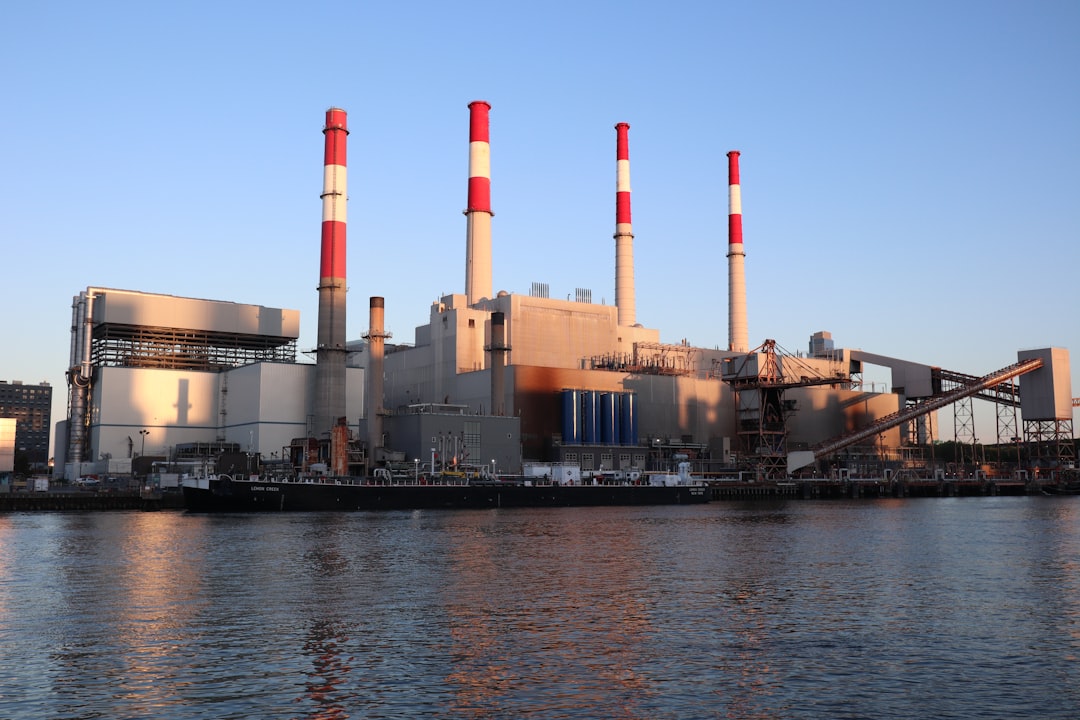
These in-city power plants, often located in dense neighborhoods, contribute to local air pollution and public health issues, making NYC’s grid the dirtiest in the state. In contrast, New York is the third-largest hydropower producer in the nation, with renewables like solar and wind also contributing to a cleaner upstate profile.
The core problem is transmission capacity. Bottlenecks in the existing grid prevent this clean energy from reaching NYC, the state’s largest energy consumer. This disparity highlights the urgent need for robust transmission upgrades to connect the city with the state’s vast renewable resources. For a deeper dive, the New York Independent System Operator (NYISO) Power Trends 2024 report offers detailed insights.
Charting the Course: NYC’s Ambitious Renewable Energy Goals
New York State is actively building a clean energy future, guided by the groundbreaking Climate Leadership and Community Protection Act (Climate Act). This legislation sets some of the nation’s most ambitious goals, including:
- 70% renewable electricity by 2030
- 100% zero-emission grid by 2040
- 100% economy-wide net-zero carbon emissions by 2050
As the state’s largest energy consumer, New York City has established its own aligned targets:
- 100% clean energy by 2040
- 1,000 MW of solar power by 2030 (currently at 572 MW as of 2024)
- 9,000 MW of offshore wind by 2035
These targets are driving a fundamental shift in how the city is powered, spurring investment and innovation. Progress towards these goals is tracked on the New York’s Climate Act Dashboard.
Powering the Five Boroughs: Key Projects Changing NYC Renewable Energy
To bridge the gap between its current energy profile and its ambitious goals, New York is undertaking several large-scale projects. These initiatives are designed to overhaul the city’s energy infrastructure, replacing outdated fossil fuel plants with clean, renewable sources. The strategy is multi-pronged, focusing on three key areas:
- Offshore Wind: Using the powerful winds off the Atlantic coast.
- Distributed Solar: Maximizing solar power generation within the city’s five boroughs.
- Transmission Upgrades: Building new high-voltage lines to bring clean energy from upstate and Canada directly into the city.
These projects represent a significant investment in a sustainable future, promising cleaner air and economic benefits. For a comprehensive look at the projects changing New York’s energy landscape, check out our Renewable Energy Projects Complete Guide.
The Role of Hydropower: A Steady Current in a Sea of Change
While solar and wind power are intermittent, hydropower provides a consistent, reliable source of clean energy. It is the bedrock of New York’s existing renewable portfolio, and its role is set to expand as the state builds out its transmission capacity.
The Unsung Hero of New York’s Grid
New York is already the third-largest producer of hydroelectric power in the United States, thanks to massive facilities like the Robert Moses Niagara Power Plant and the St. Lawrence-FDR Power Project. This existing infrastructure provides a stable, around-the-clock supply of clean energy that is crucial for balancing the variable output of wind and solar.
Modernizing for the Future
As more intermittent renewables come online, the need for reliable, dispatchable power like hydro becomes even more critical. This is where FDE Hydro comes in. Our innovative, modular precast concrete technology is designed to modernize and upgrade existing hydropower facilities, as well as to build new, smaller-scale projects more efficiently and cost-effectively. By improving the performance and lifespan of these assets, we can help ensure that hydropower remains a cornerstone of New York’s clean energy future. Our work is about making sure this foundational renewable resource is ready for the demands of a 21st-century grid.
The Tale of Two Grids: NYC’s Energy Mix vs. New York State
When we talk about New York’s energy landscape, it is truly a tale of two distinct grids. On one hand, we have much of New York State, particularly upstate, which boasts a remarkably clean energy profile. On the other, there is New York City, a busy metropolis with an energy grid that is, quite frankly, a bit of a relic.
NYC’s current energy mix is heavily reliant on fossil fuels. In fact, its power is almost 90 percent fossil fuel-based. This is not because the city lacks ambition, but largely due to the power plants located right in the city, many of which rely on traditional, carbon-intensive fuels. These in-city plants, often found in densely populated areas like Queens and the Bronx, contribute significantly to localized air pollution, impacting public health.
Contrast this with the rest of New York State. Upstate New York’s power mix is approaching 90 percent emission-free, thanks primarily to abundant hydropower resources. New York was the third largest hydropower producer in the nation in 2023, with hydro alone providing 22% of the state’s total generation. When solar, wind, and biomass are included, renewables collectively provided about one-tenth of the state’s total electricity generation in 2023.
So, why is that clean upstate energy not fully powering the city? The main challenge lies in transmission capacity. Significant bottlenecks in the electric grid inhibit the transfer of abundant upstate renewable energy to New York City, the state’s largest load center. NYC consumes nearly one-third of the state’s annual electric demand and remains largely powered by its local, fossil fuel-heavy infrastructure. In 2023, natural gas-fired power plants alone accounted for almost three-fifths of New York’s generating capacity and provided 46% of the state’s electricity net generation.
This stark contrast highlights the urgent need for robust transmission upgrades to connect the city to cleaner power sources available elsewhere in the state. You can explore the state’s energy trends in more detail by reviewing the New York Independent System Operator (NYISO) Power Trends 2024 report.
Charting the Course: NYC’s Ambitious Renewable Energy Goals
New York State, and by extension NYC, is not just talking about a clean energy future; it is actively building it with a clear roadmap of ambitious goals and targets. These targets are largely shaped by the groundbreaking Climate Leadership and Community Protection Act (Climate Act), which serves as the foundational policy for the statewide renewable energy transition.
The Climate Act sets nation-leading goals:
- 70% renewable electricity by 2030
- 100% zero-emission grid by 2040
- 100% economy-wide net-zero carbon emissions by 2050
NYC, as the state’s largest consumer of electricity, plays a pivotal role in achieving these objectives. The city has set its own ambitious targets, aligned with the state’s vision:
- 100% clean energy by 2040
- 1,000 MW of solar power by 2030 (572 MW installed as of 2024)
- 9,000 MW of offshore wind by 2035
These targets represent a fundamental shift in how the city is powered. The Climate Act provides the legal and policy structure that drives investment, incentivizes development, and sets the pace for the transition. Progress is tracked through the New York’s Climate Act Dashboard.
Powering the Five Boroughs: Key Projects Changing NYC Renewable Energy
To bridge this gap and meet its ambitious goals, New York is undertaking several large-scale projects designed to overhaul the city’s energy infrastructure and replace outdated fossil fuel plants with clean, renewable sources. The strategy focuses on three key areas:
- Offshore Wind: Using powerful winds off the Atlantic coast.
- Distributed Solar: Expanding solar power generation within the city’s five boroughs.
- Transmission Upgrades: Building new high-voltage lines to bring clean energy from upstate and Canada directly into the city.
These projects represent a major investment in a sustainable future, promising cleaner air and long-term economic benefits. For a comprehensive look at the projects changing New York’s energy landscape, explore our Renewable Energy Projects Complete Guide.
The Role of Hydropower: A Steady Current in a Sea of Change
While solar and wind power are intermittent, hydropower provides a consistent, reliable source of clean energy. It is the bedrock of New York’s existing renewable portfolio, and its role is set to expand as the state builds out its transmission capacity.
The Unsung Hero of New York’s Grid
New York is already the third-largest producer of hydroelectric power in the United States, thanks to large facilities like the Robert Moses Niagara Power Plant and the St. Lawrence-FDR Power Project. This infrastructure provides a stable supply of clean energy that is crucial for balancing the variable output of wind and solar.
Modernizing for the Future
As more intermittent renewables are integrated into the grid, the need for reliable, dispatchable power like hydro becomes even more critical. FDE Hydro’s modular precast concrete technology is designed to modernize and upgrade existing hydropower facilities and support new, smaller-scale projects more efficiently and cost-effectively. By improving performance and extending asset life, we help ensure that hydropower remains a cornerstone of New York’s clean energy future and is ready for the demands of a modern grid.
The Driving Forces: Policy, Investment, and Key Players
New York’s ambitious energy transition is driven by forward-thinking policy, substantial public and private investment, and the work of key state and city agencies. Together, these forces are accelerating the shift away from fossil fuels and toward a cleaner, more resilient grid.
At the heart of this change are two landmark pieces of legislation: the Climate Leadership and Community Protection Act (Climate Act) and the Build Public Renewables Act (BPRA). These laws provide the framework and mandate for scaling up renewable energy and modernizing transmission.
The Policy Powerhouse: The Climate Act and BPRA
The Climate Leadership and Community Protection Act (Climate Act), signed in 2019, is New York’s foundational climate policy. It legally mandates a 100% zero-emission electricity sector by 2040 and an 85% reduction in economy-wide greenhouse gas emissions by 2050. This act is the primary driver for developing large-scale renewables and transmission upgrades.
Complementing this is the Build Public Renewables Act (BPRA) of 2023. This law empowers the New York Power Authority (NYPA) to build and own new renewable energy projects. The BPRA aims to accelerate renewable development, ensure the use of union labor, and prioritize replacing polluting “peaker” plants in disadvantaged communities, giving the public sector a direct role in building a clean energy future.
The Architects of the Transition: State and City Agencies
Several key agencies are leading New York’s clean energy transition.
- New York State Energy Research and Development Authority (NYSERDA): NYSERDA drives clean energy innovation and deployment. It manages the procurement of large-scale renewable projects, including offshore wind and land-based renewables, and runs programs like NY-Sun to promote solar adoption and energy efficiency.
- New York Power Authority (NYPA): As the nation’s largest state public power organization, NYPA operates major hydroelectric facilities and transmission lines. The Build Public Renewables Act (BPRA) has expanded its role to include developing new, publicly owned renewable generation, as detailed in its Renewable Strategic Plan.
- New York City Mayor’s Office of Climate & Environmental Justice (MOCEJ): MOCEJ leads the city’s efforts to meet NYC’s climate goals, from promoting solar energy to advancing an equitable transition.
These organizations, along with private partners like FDE Hydro, form a collaborative ecosystem. We contribute expertise in modernizing hydropower and developing smart grid solutions, such as AI for Resource Management, to support a more resilient and sustainable energy future.
Challenges and Opportunities on the Road to 2040
New York City’s journey to a 100% clean energy grid presents both significant challenges and substantial opportunities.
Key Challenges:
- Infrastructure Upgrades: The existing grid needs extensive upgrades to handle new renewable energy sources, a complex and costly task in a dense urban environment.
- Cost and Funding: The transition requires large-scale investment while maintaining affordability for consumers.
- Siting and Permitting: Major projects often face lengthy permitting processes and must earn community support.
- Supply Chain and Workforce: A skilled workforce and robust supply chain for renewable components are essential to keep projects on schedule.
Vast Opportunities:
- Economic Growth and Jobs: The transition can create thousands of green jobs in construction, manufacturing, and operations.
- Improved Public Health: Replacing fossil fuel plants, particularly in environmental justice communities, will cut air pollution and improve health outcomes.
- Energy Independence and Resilience: A modernized, decentralized grid powered by local renewables is more secure and resilient to disruptions.
- Technological Innovation: The clean energy push is accelerating advances in energy storage, smart grid technology, and innovative construction methods, where companies like FDE Hydro are helping reshape critical water and energy infrastructure.
The Tale of Two Grids: NYC’s Energy Mix vs. New York State
When we talk about New York’s energy landscape, it is truly a tale of two distinct grids. On one hand, we have much of New York State, particularly upstate, which boasts a remarkably clean energy profile. On the other, there is New York City, a busy metropolis with an energy grid that is, quite frankly, a bit of a relic.
NYC’s current energy mix is heavily reliant on fossil fuels. Its power is almost 90 percent fossil fuel-based. This is largely due to power plants located within the city that rely on traditional, carbon-intensive fuels. These in-city plants, often found in densely populated areas like Queens and the Bronx, contribute significantly to localized air pollution and public health impacts, making NYC’s grid the dirtiest within the state.
Upstate New York tells a different story. Its power mix is approaching 90 percent emission-free, thanks primarily to abundant hydropower resources. New York was the third largest hydropower producer in the nation in 2023, with hydro providing 22% of the state’s total generation. When solar, wind, and biomass are added, renewables collectively supplied about one-tenth of the state’s total electricity generation in 2023. New York generates more power from renewable resources than any other state east of the Mississippi River, producing more hydroelectric power than all but two other states (Washington and California) in 2023.
The question is why all that clean upstate energy is not powering the city. The main challenge lies in transmission capacity. Bottlenecks in the electric grid inhibit the transfer of abundant upstate renewable energy to New York City, the state’s largest load center. While New York State has made great strides in greening its grid, NYC, which consumes nearly one-third of the state’s annual electric demand, remains largely powered by local, fossil fuel-heavy infrastructure. In 2023, natural gas-fired power plants alone accounted for almost three-fifths of New York’s generating capacity and provided 46% of the state’s electricity net generation.
This contrast underscores the urgent need for robust transmission upgrades to connect the city to cleaner power sources available elsewhere in the state. For more detail on these trends, review the New York Independent System Operator (NYISO) Power Trends 2024 report.
Charting the Course: NYC’s Ambitious Renewable Energy Goals
New York State, and by extension NYC, is actively building a clean energy future guided by the Climate Leadership and Community Protection Act (Climate Act), which serves as the foundational policy for the statewide renewable energy transition.
The Climate Act sets nation-leading goals:
- 70% renewable electricity by 2030
- 100% zero-emission grid by 2040
- 100% economy-wide net-zero carbon emissions by 2050
NYC, as the state’s largest consumer of electricity, plays a central role in meeting these objectives and has set aligned targets:
- 100% clean energy by 2040
- 1,000 MW of solar power by 2030 (with 572 MW installed as of 2024)
- 9,000 MW of offshore wind by 2035
These targets reflect a fundamental shift in how the city is powered. The Climate Act provides the overarching legal and policy framework that shapes NYC’s renewable energy strategy, drives investment, and sets timelines. Progress toward these goals can be tracked on the New York’s Climate Act Dashboard.
The Tale of Two Grids: NYC’s Energy Mix vs. New York State
When we talk about New York’s energy landscape, it is truly a tale of two distinct grids. On one hand, we have much of New York State, particularly upstate, which boasts a remarkably clean energy profile. On the other, there is New York City, a busy metropolis with an energy grid that is, quite frankly, a bit of a relic.
NYC’s current energy mix is heavily reliant on fossil fuels. Its power is almost 90 percent fossil fuel-based. This is not due to a lack of ambition, but to the power plants located in the city that rely on carbon-intensive fuels. These in-city plants, often found in densely populated areas like Queens and the Bronx, contribute significantly to localized air pollution and public health concerns, making NYC’s grid the dirtiest within the state.
Upstate New York presents a very different picture. Its power mix is approaching 90 percent emission-free, thanks primarily to hydropower. New York was the third largest hydropower producer in the nation in 2023, with hydro alone providing 22% of the state’s total generation. Including solar, wind, and biomass, renewables collectively provided about one-tenth of the state’s total electricity generation in 2023. New York generates more power from renewable resources than any other state east of the Mississippi River and produces more hydroelectric power than all but two other states (Washington and California).
The key question is why that clean upstate energy does not fully power NYC. The primary issue is transmission capacity. Bottlenecks in the electric grid limit the transfer of abundant upstate renewable energy to New York City, the state’s largest load center. Although New York State has made major strides in cleaning its grid, NYC, which consumes nearly one-third of the state’s annual electric demand, is still largely powered by local, fossil fuel-heavy infrastructure. In 2023, natural gas-fired power plants accounted for almost three-fifths of New York’s generating capacity and supplied 46% of the state’s electricity net generation.
This contrast highlights the urgent need for robust transmission upgrades to connect NYC to cleaner power sources across the state. For a detailed view of these dynamics, consult the New York Independent System Operator (NYISO) Power Trends 2024 report.
Charting the Course: NYC’s Ambitious Renewable Energy Goals
New York State, and by extension NYC, is actively building a clean energy future with a clear roadmap of goals shaped by the Climate Leadership and Community Protection Act (Climate Act), the cornerstone of the statewide renewable transition.
The Climate Act establishes the following targets:
- 70% renewable electricity by 2030
- 100% zero-emission grid by 2040
- 100% economy-wide net-zero carbon emissions by 2050
As the state’s largest electricity consumer, NYC has set its own complementary targets:
- 100% clean energy by 2040
- 1,000 MW of solar power by 2030 (572 MW installed as of 2024)
- 9,000 MW of offshore wind by 2035
These objectives represent a fundamental shift in how the city is powered and how infrastructure is planned and financed. The Climate Act provides the legal framework that guides NYC’s renewable energy strategy and investment decisions. Progress toward these goals can be monitored via the New York’s Climate Act Dashboard.
by Adaptify Support | Jan 28, 2026 | News
Why Innovative Precast Concrete Matters for Modern Infrastructure

Innovative precast concrete is revolutionizing how we build by manufacturing concrete elements off-site in controlled factory environments, then assembling them rapidly on location. This approach delivers faster construction timelines, superior quality control, and improved sustainability compared to traditional methods.
Key innovations changing precast concrete today:
- Smart Technology Integration – Embedded sensors and IoT devices monitor structural health in real-time
- Modular Systems – Off-site fabrication enables rapid assembly and scalability for large projects
- Sustainable Mix Designs – Recycled materials and CO2 injection reduce carbon footprint by up to 30%
- Digital Fabrication – BIM and digital twin technology optimize design and eliminate errors
- Advanced Materials – High-performance insulated panels deliver superior energy efficiency
- Faster Timelines – Parallel processing cuts construction schedules by 50% or more
The numbers tell a compelling story. With 1,939 precast concrete manufacturing businesses operating in the U.S. and the global market projected to reach $168.17 billion by 2026, this construction method has moved from niche to mainstream. Modern projects demand speed, precision, and sustainability—and innovative precast concrete delivers on all three fronts.
The construction industry faces mounting pressure. Traditional cast-in-place methods struggle with weather delays, inconsistent quality, extended timelines, and rising labor costs. Meanwhile, infrastructure needs grow more urgent. Innovative precast concrete addresses these challenges head-on through factory-controlled manufacturing, where concrete elements cure under optimal conditions, and modular assembly, where components arrive ready to install.
What makes precast “innovative” today goes far beyond simply pouring concrete off-site. Modern precast incorporates cutting-edge technology at every stage—from digital modeling that catches design conflicts before production begins, to smart sensors embedded within panels that monitor performance for decades. These advances transform concrete from a passive building material into an intelligent, responsive system.
The benefits extend across multiple dimensions. Speed: Projects that once took months now complete in weeks. Quality: Factory conditions produce consistent results that exceed industry certification standards. Durability: Precast concrete withstands extreme conditions including freeze-thaw cycles, fire, floods, and seismic events. Sustainability: Reduced waste, lower emissions, and energy-efficient thermal properties support green building goals.
For large-scale infrastructure projects—particularly in water control systems, bridges, and hydropower facilities—innovative precast concrete offers a transformative solution. The modular approach reduces capital expenditure, accelerates delivery timelines, and minimizes the financial and operational risks inherent in conventional construction.
I’m Bill French Sr., Founder and CEO of FDE Hydro, where we’ve pioneered patented modular precast concrete solutions specifically for the hydropower industry, including our approach to natural run-of-river hydro facilities and water control systems. My five decades in heavy civil construction, including landmark projects utilizing modular precast bridge construction, have shown me how innovative precast concrete transforms project outcomes—delivering superior results faster, safer, and more sustainably than traditional methods.
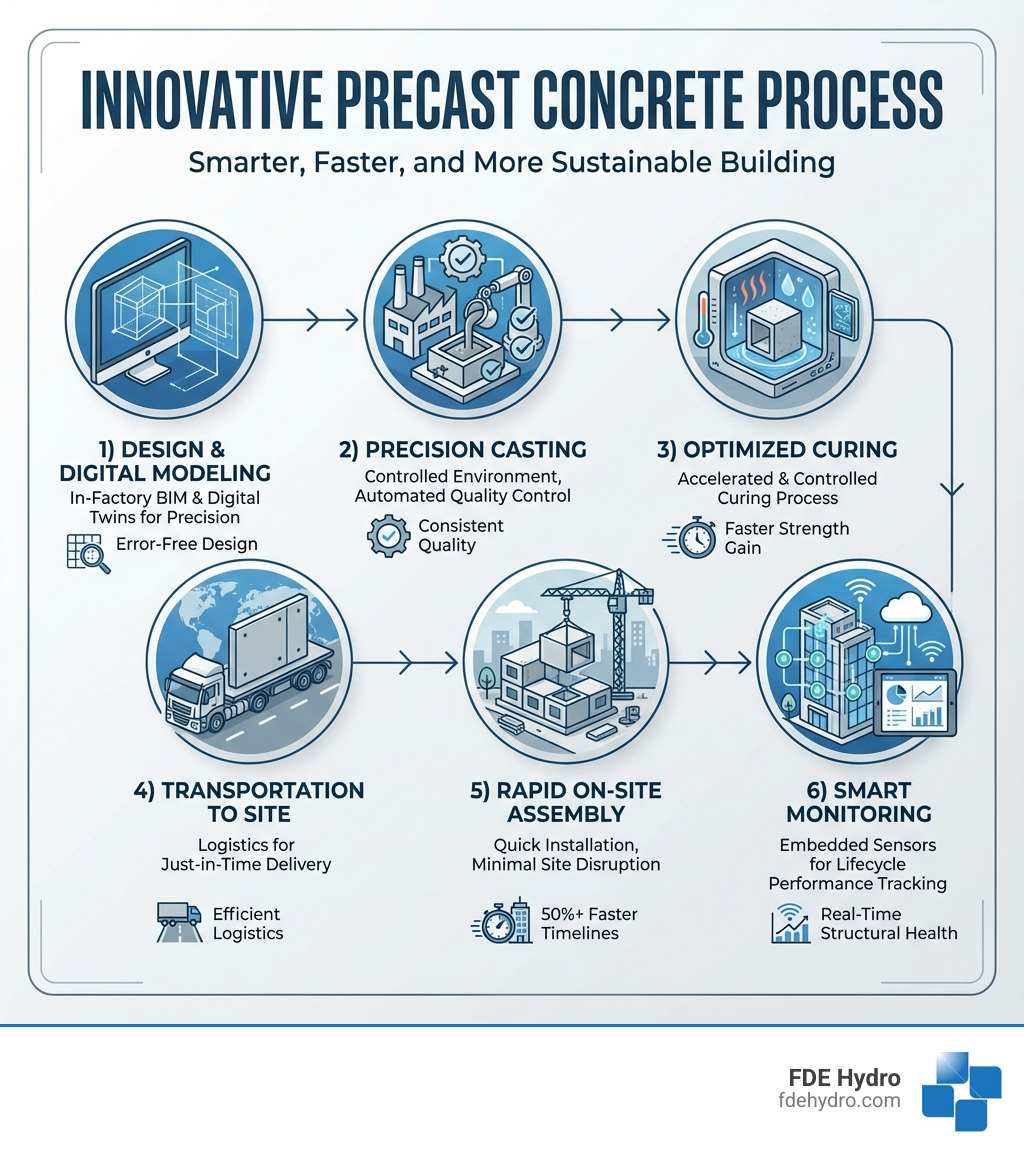
Common innovative precast concrete vocab:
Core Advantages: Why Innovative Precast Concrete is Reshaping Construction
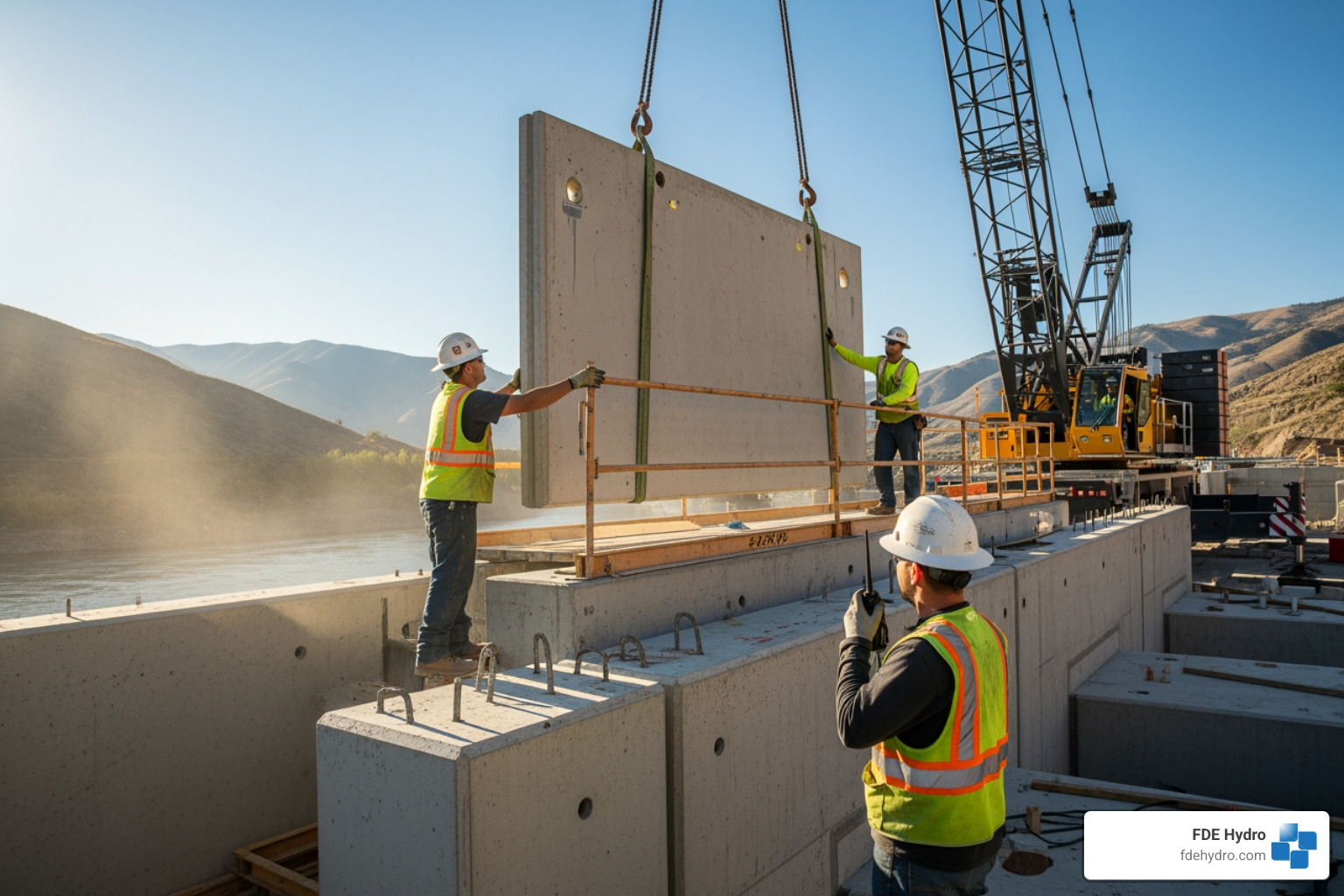
When we talk about innovative precast concrete, we’re discussing a fundamental shift in how construction projects are conceived and executed. This isn’t just about efficiency; it’s about building better, stronger, and more sustainably. Our experience has shown us that this method brings unparalleled benefits, from accelerating project timelines to ensuring a superior, lasting quality. It offers architects and engineers incredible design freedom while providing resilience against the harshest environmental conditions. You can explore more about these advantages on our page dedicated to Precast Concrete Advantages.
Best Speed and Efficiency
Imagine a construction site that runs like a well-oiled machine, largely free from the unpredictable delays of weather or labor shortages. That’s the reality with innovative precast concrete. Our elements are manufactured off-site in controlled factory environments, allowing for parallel processing—meaning while site preparation is underway, the building components are already being created. This significantly reduces on-site construction time and lowers labor costs, especially crucial in regions like North America, Brazil, and Europe where skilled labor can be scarce or expensive.
This off-site approach means we’re not battling the elements; whether it’s a New York winter or a Brazilian rainy season, fabrication continues uninterrupted. This all-weather capability ensures consistent production schedules. Once the precast elements arrive on site, assembly is rapid, minimizing disruption to the surrounding environment and communities. For instance, a small, skilled team can assemble vast amounts of infrastructure, with precast wall panels capable of enclosing over 4,000 sq ft per day, per team. Such efficiency is invaluable for projects requiring a quick turnaround, like our work in critical civil infrastructure. Learn more about how we achieve this in our article on Rapid Installment of Module Precast Civil Infrastructure.
Superior Quality and Durability
Quality control is paramount in construction, and here, innovative precast concrete truly shines. Because elements are produced in a factory, every step, from mix design to curing, is carefully controlled. This factory-controlled environment ensures consistent results that often exceed the stringent requirements of PCI (Precast/Prestressed Concrete Institute) Plant Certification. We’re talking about greater impermeability and strength than what’s typically achievable with on-site cast-in-place concrete.
Beyond consistency, precast concrete offers exceptional durability. It can withstand extreme conditions that would challenge other materials, providing robust protection from a wide variety of environmental factors. This includes remarkable resistance to freeze-thaw cycles—a significant advantage for infrastructure in colder climates like Canada or the northern U.S.—as well as superior fire resistance, which increases containment times and improves safety. Its inherent strength also provides excellent security against blast and earthquake events, and outstanding acoustic insulation, making it ideal for a wide range of structures from residential buildings in California to major infrastructure projects in Europe. Find how precast pushes boundaries on our Precast Pushes the Limits of Scale page.
Architectural Freedom and Aesthetics
Gone are the days when concrete was synonymous with drab, gray structures. Today’s innovative precast concrete offers architects and designers virtually unlimited options for aesthetic expression. Architectural precast elements can be crafted with stunning craftsmanship, incorporating a vast array of colors, textures, and forms. Whether the goal is to mimic natural stone, create intricate patterns, or achieve a striking modern aesthetic, precast concrete provides the flexibility to bring even the most ambitious visions to life.
This design freedom extends to complex shapes and custom finishes that would be difficult, if not impossible, to achieve with traditional methods. From the sleek facades of high-rise buildings in New York City to the neat retaining walls in a Kansas campus, precast concrete allows for unique and award-winning designs. It means we’re not just building functional structures; we’re creating beautiful, inspiring environments. Our design process, which emphasizes innovation and creativity, is detailed on our Precast Concrete Design Process page.
The Forefront of Innovative Precast Concrete Technology
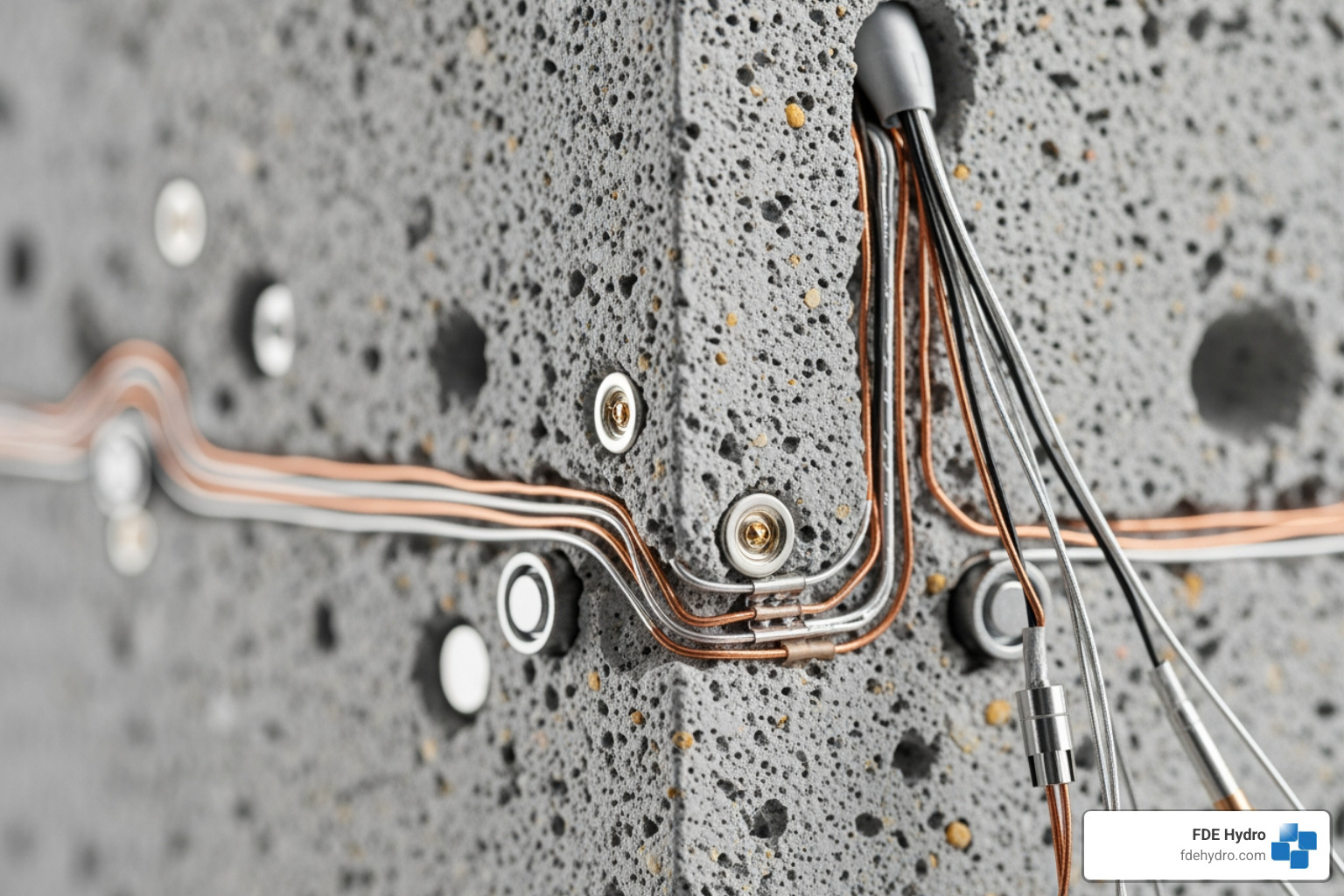
The world of innovative precast concrete is constantly evolving, driven by technological advancements that are making our structures smarter, more efficient, and more resilient. We are moving beyond just manufacturing concrete elements off-site; we are embedding intelligence into them, optimizing their design and production through digital tools, and utilizing advanced materials for superior performance. These innovations are reshaping the construction landscape across North America, Brazil, and Europe, ensuring our projects are future-proof. You can dig deeper into these advancements by reading about Innovations and Trends in Precast Concrete Manufacturing & Installation.
Smart Concrete: Embedding Intelligence into Structures
Imagine a bridge that can tell you when it needs maintenance, or a dam that monitors its own structural integrity in real-time. This is the promise of “smart concrete,” a key aspect of innovative precast concrete. By embedding sensors and integrating IoT (Internet of Things) technologies directly into precast elements during manufacturing, we can create structures that are continuously monitored. These smart sensors track critical parameters such as temperature, humidity, stress, strain, and even the formation of micro-cracks.
This real-time structural health monitoring provides invaluable data, enabling predictive maintenance rather than reactive repairs. It means potential issues can be identified and addressed before they become major problems, significantly enhancing safety and extending the longevity of our infrastructure, including vital water control systems. This integration of smart technology transforms precast concrete from a passive material into an active, intelligent component of our built environment. For more information on how smart technology is shaping the future, visit our partners’ insights on innovative precast concrete solutions for smart cities and sustainable growth.
The Role of Innovative Precast Concrete in Digital Fabrication
Digital tools are revolutionizing how we design and produce precast concrete. Our approach leverages digital modeling and Building Information Modeling (BIM) to optimize every stage of a project. BIM is an all-in-one technology that combines digital design, project management, and architecture, creating a cloud-based environment for seamless collaboration among all stakeholders. This allows us to model and manage the design and placement of precast concrete walls, floors, and specialized components with unprecedented precision.
Through BIM, we achieve 3D project visualization, which is far faster and less error-prone than traditional 2D techniques. It enables our design teams to quickly see, manipulate, and adjust projects to meet exact quality, cost, and schedule expectations. Furthermore, digital twin technology allows for the simulation and optimization of precast concrete manufacturing processes, identifying efficiencies and potential issues before physical production even begins. This level of digital fabrication drastically reduces errors, minimizes material waste, and improves overall project control. Explore how we use these advanced models on our Precast Models page.
Advanced Materials and Manufacturing
The quest for stronger, lighter, and more sustainable precast elements drives continuous innovation in materials and manufacturing processes. High-performance insulated panels are a prime example, incorporating advanced insulation materials like expanded polystyrene (EPS) or polyurethane foam to deliver superior thermal performance. These panels are crucial for creating energy-efficient buildings, reducing heating and cooling costs, and contributing to greener structures across diverse climates.
We also see the integration of non-metallic insulation systems, such as advanced fiber composite ties, which improve the structural integrity and thermal performance of precast sandwich panels without creating thermal bridges. Another significant advancement is CO2 injection technology, which mineralizes captured carbon dioxide within fresh concrete mixes. This process not only reduces the carbon footprint of the concrete but also improves its strength without impacting batching times. On the manufacturing floor, worker safety innovations, like bionic exoskeletons, are being explored to assist with handling heavy precast components, reducing the risk of injury and improving productivity. Retractable enclosures provide controlled environments for concrete curing, preventing defects and ensuring consistent quality regardless of external weather conditions.
Modular Systems and Sustainability: Building for the Future
The future of construction is undeniably modular and sustainable, and innovative precast concrete is at the heart of this change. We are committed to building not just for today, but for generations to come, focusing on green building principles, circular economy models, and superior energy efficiency. Our work, particularly in water control systems and renewable energy, exemplifies this commitment. Holcim, a leading partner for sustainable construction, also highlights the importance of precast and prefabricated solutions for a greener future on their Precast and prefabricated solutions page.
The Power of Modular Precast Construction
Modular precast construction is a game-changer, especially for large-scale infrastructure projects and complex urban developments in busy areas like New York City or the expansive regions of Brazil. By manufacturing structural elements off-site and then assembling them rapidly on location, we open up incredible efficiencies. This off-site fabrication allows for consistent quality control in a factory setting, free from weather delays and site constraints.
Once on-site, these pre-fabricated modules enable rapid assembly, significantly cutting down construction timelines and minimizing on-site labor needs. The scalability and adaptability of modular systems mean they can be custom for anything from commercial complexes to critical infrastructure like bridges and dams. This approach is particularly effective in addressing current building challenges, such as the urgent need for infrastructure upgrades or the rapid deployment of housing solutions. Our patented “French Dam” technology, for instance, uses modular precast elements to dramatically reduce the time and cost associated with building and retrofitting hydroelectric dams and water control systems. You can learn more about these powerful techniques on our Modular Construction Techniques page and see a real-world application in A National Example of Rapid Bridge Construction Using Modular Precast Elements.
How Innovative Precast Concrete Champions Sustainable Construction
Sustainability is not just a buzzword for us; it’s a core principle embedded in our use of innovative precast concrete. We actively champion sustainable construction through several key practices. Our mix designs often incorporate recycled materials like fly ash and slag, which are industrial by-products, reducing the demand for virgin resources and lowering the concrete’s carbon footprint. Factory production also inherently generates less waste compared to traditional cast-in-place methods, as excess materials can be reused or recycled.
Beyond its production, precast concrete contributes significantly to energy-efficient buildings. Its thermal mass properties help regulate indoor temperatures, reducing the need for excessive heating or cooling and thereby lowering energy consumption and costs. This makes it an excellent choice for green building projects, especially for facilities like hydropower plants where long-term operational efficiency is paramount. Furthermore, the inherent durability and longevity of precast concrete minimize maintenance requirements and extend the service life of structures, leading to lower life cycle costs and a reduced environmental impact over time. Our efforts in Dam Rehabilitation Encapsulation demonstrate our commitment to long-term sustainable solutions.
Frequently Asked Questions about Innovative Precast Concrete
How does precast concrete compare to traditional cast-in-place concrete?
This is a question we hear often, and the differences are significant. When we compare innovative precast concrete to traditional cast-in-place methods, several key advantages emerge:
- Quality Control: Precast concrete elements are manufactured in a controlled factory environment. This means consistent mix designs, precise dimensions, and optimal curing conditions, leading to superior quality, greater impermeability, and consistent strength that often exceeds industry standards. Cast-in-place, by contrast, is more susceptible to variations due to on-site conditions, weather, and labor practices.
- Speed: Off-site manufacturing allows for parallel processing – elements are being produced while site work progresses. This dramatically accelerates construction timelines. Once on-site, precast elements are simply assembled, leading to faster completion. Traditional methods involve pouring, curing, and forming on-site, which can be time-consuming and prone to delays.
- Weather Dependency: Factory production is immune to adverse weather, ensuring consistent schedules. Cast-in-place construction is highly dependent on favorable weather, leading to potential delays and cost overruns.
- Site Congestion & Safety: Precast significantly reduces on-site activity, meaning less equipment, fewer workers, and a cleaner, safer job site. Traditional methods often lead to crowded sites, increased traffic, and higher safety risks.
- Cost-Effectiveness: While initial unit costs for precast might sometimes appear higher, the overall project cost is often lower due to reduced construction time, lower labor costs, minimized waste, and improved quality that reduces future maintenance. We explore these savings in more detail on our Why Precast Cost Less page.
What types of projects benefit most from innovative precast?
Innovative precast concrete truly shines in projects that demand speed, precision, quality, and durability. We find it to be the ideal solution for:
- Large-scale Infrastructure: Think bridges, tunnels, highways, and crucially, water control systems and hydroelectric dams. For projects like our patented “French Dam” technology, where rapid deployment and long-term resilience are critical, modular precast is transformative. Examples include major bridge replacements across the U.S. or new hydropower installations in Brazil and Europe.
- High-rise Buildings: In dense urban environments like New York City, precast allows for rapid construction with minimal site disruption, making it perfect for commercial and residential towers.
- Parking Garages: These often feature repetitive elements, making them perfectly suited for the efficiency and cost-effectiveness of precast.
- Projects with Repetitive Elements: Any project where components are replicated, such as certain types of housing, schools, or retaining wall systems, gains immense benefit from the precision and speed of factory production.
- Green Building Projects: Its sustainable attributes, like thermal mass and the ability to incorporate recycled materials, make it a go-to for environmentally conscious developments.
We’ve seen precast used in everything from the Kansas State Innovative Campus to critical civil infrastructure, proving its versatility and efficacy. Our work in Modular Dam Construction is a prime example of how this innovation addresses complex challenges in the renewable energy sector.
What is the future outlook for the precast industry?
The future for innovative precast concrete is incredibly bright, marked by continued growth and exciting technological advancements. We anticipate several key trends shaping the industry:
- Continued Market Growth: With the precast market expected to reach USD $168.17 billion by 2026, the demand for efficient, high-quality, and sustainable construction solutions will only intensify.
- Increased Adoption of Smart Technology: We’ll see even more widespread integration of IoT and sensors for real-time monitoring of structures, enabling predictive maintenance and enhancing longevity. This will be critical for complex infrastructure like dams and bridges, ensuring their performance over decades.
- AI and Machine Learning in Quality Control: Artificial intelligence is already beginning to optimize workflows and detect defects in precast manufacturing, leading to even higher levels of precision and consistency.
- Greater Focus on the Circular Economy: The industry will continue to push boundaries in using recycled materials, developing self-healing concrete, and minimizing waste, contributing significantly to a more sustainable built environment.
- Advanced Digital Fabrication: BIM and digital twin technologies will become even more sophisticated, offering unparalleled design flexibility, error reduction, and project visualization from concept to completion.
Essentially, innovative precast concrete is shaping the future of construction by prioritizing speed, quality, and sustainability. It’s becoming an even more intelligent, versatile, and environmentally responsible solution for the next generation of building challenges. Our commitment to advancing Precast Concrete Technology reflects this exciting outlook.
Conclusion: The Smart Choice for Next-Generation Infrastructure
As we’ve explored, innovative precast concrete is far more than just a building material; it’s a sophisticated construction method that addresses the most pressing demands of modern infrastructure development. We’ve seen how its core advantages—best speed, superior quality, incredible design freedom, and inherent resilience—are reshaping projects across North America, Brazil, and Europe.
From smart concrete embedded with real-time sensors to digital fabrication techniques that eliminate waste and improve precision, the technological advancements in this field are truly transformative. The power of modular precast construction, particularly in addressing complex challenges like those in the renewable energy sector, offers scalable and sustainable solutions. Moreover, its commitment to sustainability, through recycled materials and energy-efficient designs, positions it as a leader in green building practices.
Innovative precast concrete is the smart choice for next-generation infrastructure. It delivers projects faster, builds them stronger, and ensures they are more sustainable for the future. At FDE Hydro, we are proud to be at the forefront of this innovation, utilizing our patented modular precast concrete technology to revolutionize the construction and retrofitting of hydroelectric dams and water control systems. Our solutions offer not just buildings, but intelligent, durable, and environmentally responsible infrastructure that stands the test of time.
We invite you to learn more about our cutting-edge approaches and how we can transform your next project by visiting our page on means and methods.
by Adaptify Support | Jan 27, 2026 | News

Living with a low environmental impact isn’t just a feel-good measure—it’s about creating measurable change. The average person produces 6.28 tonnes of greenhouse gas emissions annually, though this varies by location and lifestyle. The good news is that research shows adopting key sustainable behaviors could reduce individual emissions enough to completely offset an average person’s footprint.
Here are the fastest ways to achieve low environmental impact:
- Transportation: Live car-free or switch to electric vehicles.
- Diet: Adopt a plant-forward diet.
- Home Energy: Switch to a renewable energy supplier and improve insulation.
- Consumption: Buy less, choose quality over quantity, and support sustainable companies.
- Advocacy: Vote for environmental policies and push for systemic change.
The challenge is both personal and structural. Without supportive systems like public transit and renewable energy access, individual efforts achieve only a fraction of their potential. This highlights the critical intersection of personal action and systemic change.
As Bill French Sr., founder and CEO of FDE Hydro™, I’ve spent decades developing modular hydropower solutions that reduce the environmental impact of clean energy construction. My work with the Department of Energy’s Water Power Technology Office reinforces that achieving low environmental impact requires both individual commitment and innovative infrastructure solutions that make sustainable choices accessible to everyone.
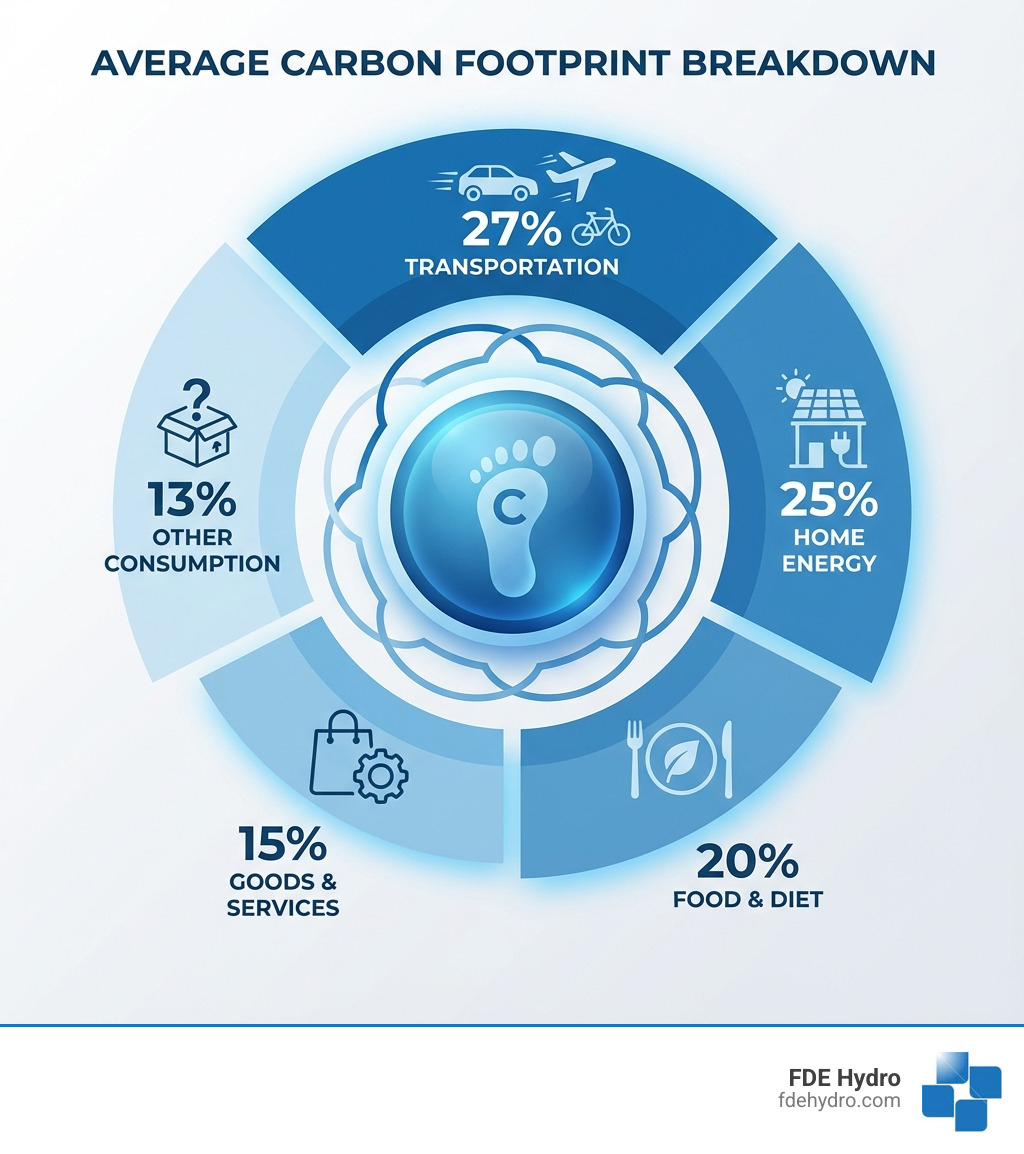
Low environmental impact terms to learn:
When we talk about achieving a low environmental impact, it’s easy to feel overwhelmed. But some actions pack a much bigger punch than others. Let’s explore the most significant ways we, as individuals, can reduce our environmental footprint, backed by compelling data.
Adopting a Diet with a Low Environmental Impact
Our dietary choices profoundly affect the planet. Eating less meat and more plant-based foods is one of the most powerful changes we can make, as plant-based food production generally has fewer greenhouse gas emissions and requires less energy, land, and water. Shifting to a vegetarian diet can reduce a carbon footprint by up to 500 kilograms of CO2e per year, while a vegan diet can save up to 900 kilograms annually. Beyond what we eat, how we manage food is crucial. Shopping for local, seasonal produce reduces transportation emissions from the average 1,500-mile journey food travels.
Preventing food waste is also key, as the UK’s 9.5 million tonnes of food waste in 2018 generated 25 million tonnes of greenhouse gases. Smart meal planning and proper storage can drastically cut these emissions. You can learn more about how to adopt an Earth-friendly diet and find ways to beat food waste. Even large institutions are making changes, like the Los Angeles Unified School District’s “meatless Monday” initiative, showing how systemic shifts can support individual choices.

Rethinking Your Transportation
Our transportation choices are another critical factor. Fossil-fueled vehicles are major contributors to greenhouse gases and air pollution, with transport accounting for 27% of the UK’s total emissions in 2019. The most impactful change is reducing reliance on personal vehicles. Living car-free is highly effective, and opting for public transport, cycling, or walking drastically cuts emissions.
Cities like Bogotà, Colombia, have shown success by investing in cycling infrastructure, raising the share of bicycle trips to 9% by 2017. If driving is necessary, electric vehicles (EVs) are a cleaner alternative. For existing cars, simple maintenance like properly inflating tires helps; a tire that is 20% underinflated can increase a vehicle’s fuel consumption by 10%. Air travel also has a substantial environmental cost. Replacing flights with videoconferencing or train travel can significantly reduce your impact. For more on transport emissions, see this data regarding UK’s total emissions.
Creating an Energy-Efficient Home
Reducing energy consumption at home is a cornerstone of low environmental impact living. A key step is improving insulation, as up to 25% of a home’s heating energy is lost through the roof and 40% through gaps in windows and doors. Sealing cracks and adding insulation can dramatically reduce energy use. Smart thermostats can also save an average of 16.5% on energy by optimizing heating and cooling. Upgrading to ENERGY STAR® appliances and switching to LED or CFL bulbs are also effective. Don’t forget to unplug appliances to avoid ‘phantom load,’ which can cost households £50-£86 a year.
Conserving water with Low flow showerheads also saves the energy used to pump and heat it. A home energy audit can identify more opportunities. Policies like the European Green Deal’s Social Climate Fund support these efforts by providing financial aid for investments in home energy efficiency and clean mobility. Our commitment to Sustainable Power Generation is key to powering these efficient homes.
Supporting Clean Energy Solutions
Actively supporting and transitioning to clean energy is another powerful action. One direct way is to choose renewable energy for your home. Many power companies in the United States and Europe offer renewable energy certificates or green energy plans, ensuring your electricity comes from sources like wind, solar, or hydropower. Our financial choices also hold immense power.
In the UK, pension funds hold an estimated £128 billion in fossil fuels. A mass switch from these funds could reduce 19 tonnes of GHG emissions per year per person, showing the ripple effect of our investments. This principle applies across North America and Europe. By choosing banks and pension providers that prioritize sustainability, we can exert significant pressure for change. We can also support Companies committed to sustainability and businesses that use green energy. This collective consumer power sends a strong market signal for cleaner operations.
Conscious Consumerism and Waste Reduction
Our daily purchasing habits and how we manage waste are inextricably linked to our environmental footprint. By making thoughtful choices about what we buy and how we dispose of it, we can significantly contribute to a low environmental impact lifestyle.
The Role of Conscious Consumerism in Achieving a Low Environmental Impact
Conscious consumerism is about making informed decisions that consider the social, environmental, and economic impacts of the products and services we buy. This is particularly vital in industries like fashion.
Fast fashion, characterized by inexpensive, trendy clothing items that are quickly brought to market, comes at a steep environmental cost. It uses more water and energy for manufacturing and shipping, and products typically don’t last long, fueling a culture of over-consumption. The environmental impact is staggering: synthetic materials shed microplastics in washing machines, contributing 500,000 tonnes yearly to microplastic pollution in our oceans, where over 14 million tonnes already reside. Furthermore, the UK alone produces around 1 million tonnes of textile waste per year, much of which ends up in landfills, releasing greenhouse gases as it decomposes.
To counteract this, we can accept product longevity and circularity. Instead of buying cheap, disposable items, we can invest in quality products that are designed to last. When we do need something new, we should consider buying secondhand. The benefits of secondhand shopping are numerous, from reducing demand for new production to extending the life cycle of garments and other goods. Donating old clothes gives them a second life and maximizes the energy used in their creation. This mindset shifts us from a linear “take-make-dispose” economy to a more sustainable, circular one.
Mastering the 3 R’s: Reduce, Reuse, Recycle
The familiar mantra of “Reduce, Reuse, Recycle” remains a cornerstone of waste reduction and achieving a low environmental impact.
Reduce is arguably the most important “R.” The less we consume, the less waste we generate, and the fewer resources are extracted and processed. This involves mindful purchasing—buying only what we need, choosing products with minimal packaging, and avoiding single-use items.
Reuse means finding new purposes for items or using them repeatedly. This could be as simple as bringing reusable shopping bags, water bottles, and coffee cups. It also extends to repairing items instead of replacing them, or creatively repurposing old goods. For example, in office settings, offering employees recyclable food containers for leftovers can greatly reduce food waste, which is a significant issue globally.
Recycle is the last line of defense against landfill waste. Handling waste is a carbon-intensive process, and recycling helps mitigate this by giving materials like plastics a second life. While recycling programs vary by location, we can all make an effort to recycle common items like paper, plastic, glass, and metal. Composting organic waste, especially food scraps, is another powerful strategy. Globally, food waste is a massive contributor to greenhouse gas emissions, and by composting, we divert it from landfills and create nutrient-rich soil.
By mastering these three principles, we actively reduce the environmental implications of waste generation and contribute to a more sustainable consumption model.
Beyond Personal Choice: Driving Systemic Change
While individual actions are vital for a low environmental impact lifestyle, we must also recognize that personal choices alone are not enough to address the climate crisis. Systemic change, driven by governmental policies and corporate actions, plays an equally, if not more, crucial role.
The Power of Collective Action and Advocacy
The narrative that individuals alone can save the planet often distracts from larger, structural issues. The concept of the personal carbon footprint was notably popularized by an oil giant, shifting focus away from corporate responsibility. Research shows that while behavioral shifts could theoretically cut global emissions by up to 70% by 2050, individual efforts without supportive systems achieve only a fraction of this potential. The rest depends on governments and businesses making sustainable choices accessible.
This is where our collective power comes in:
- Voting for Environmental Policies: Support candidates with strong environmental platforms.
- Supporting Advocacy Groups: Donating to organizations fighting the extinction crisis amplifies our voices.
- Pushing for Corporate Responsibility: Collective consumer pressure can shift corporate practices, as seen in viral campaigns that pushed major corporations toward sustainable sourcing.
- Demanding Enabling Infrastructure: Governments can offer financial incentives for renewable energy adoption and energy-efficient renovations, as seen in the Netherlands’ successful transition to a leading renewable energy user. Systemic pressure creates the conditions for us to make sustainable choices.
Understanding Environmental Justice
As we strive for a low environmental impact future, it’s crucial to understand the connections between environmental inequalities and how environmental hazards disproportionately impact vulnerable communities. Not everyone experiences environmental burdens equally.
Communities with lower levels of income and education, as well as the elderly, children, and other vulnerable groups, are often more impacted by air, water, and noise pollution, and the adverse effects of climate change. For instance, within wealthier regions, poorer communities tend to be exposed to higher local levels of nitrogen dioxide (NO2) because they are often located closer to sources of pollution like busy roadways or industrial areas.
Furthermore, cheaper housing is frequently more difficult to keep cool in summer and warm in winter, exacerbating health impacts during extreme weather. Marginalized communities often have less access to green spaces and face higher financial barriers in obtaining flood insurance or implementing flood-proofing strategies.
The concept of a “just transition” aims to address these inequalities. The European Green Deal explicitly strives to transform the EU into a modern, resource-efficient, and competitive economy with “no person and no place left behind.” Tools like the Just Transition Mechanism and the new Social Climate Fund in Europe are designed to provide financial support to help vulnerable citizens and micro-enterprises with investments in energy efficiency and clean mobility, ensuring that the transition to a climate-neutral economy is equitable.
Cities themselves play a crucial role in alleviating environmental and socio-economic inequalities through urban sustainability efforts and Sustainable Infrastructure Development. By recognizing and actively working to mitigate these disparities, we can ensure that a low environmental impact future is also a just future for everyone. We can also Explore European Climate and Health Observatory website for more resources.
Innovations for a Low Environmental Impact Future
Looking ahead, scientific and engineering innovations are critical to building a truly sustainable world. These advancements provide solutions that go beyond individual choices, changing industries and infrastructure to fundamentally reduce our collective environmental footprint.
The Promise of Green Chemistry
Green chemistry is a fascinating and relatively new field that offers a proactive approach to achieving a low environmental impact at the molecular level. Instead of cleaning up pollution after it occurs, green chemistry focuses on designing chemical products and processes that reduce or eliminate the use or generation of hazardous substances from the outset.
The core philosophy of green chemistry is encapsulated in its Twelve Principles, which guide chemists and engineers in developing more sustainable solutions. These principles include designing chemical syntheses to prevent waste, using less hazardous chemical syntheses, designing safer chemicals that are effective but have little to no toxicity, and using renewable feedstocks instead of depletable ones. It also emphasizes increasing energy efficiency in chemical processes, for example, by running reactions at room temperature and pressure whenever possible.
The Basics of Green Chemistry | US EPA highlights that green chemistry is distinct from remediation; it’s about prevention at the source. This approach is aligned with the Pollution Prevention Act of 1990 in the United States, which prioritizes preventing or reducing pollution at its source.
By applying these principles, we can develop everything from safer pharmaceuticals to more eco-friendly plastics, fundamentally altering the environmental profile of countless products and processes. You can learn more about these principles in depth through resources like Green Chemistry: Principles and Practice and TRI Green Chemistry and Green Engineering Reporting.
Building a Sustainable World
Achieving a low environmental impact on a global scale requires robust Clean Energy Infrastructure and a commitment to Sustainable Energy Production. This is where large-scale projects and innovative technologies come into play, fundamentally reshaping how we power our societies.
Renewable energy projects are at the forefront of this change. Solar, wind, geothermal, and hydropower offer clean alternatives to fossil fuels. Hydropower, in particular, plays a critical role. As FDE Hydro™, we are dedicated to developing innovative, patented modular precast concrete technology for building and retrofitting hydroelectric dams and water control systems.
Our “French Dam” technology significantly reduces construction costs and time in North America, Brazil, and Europe, making clean hydropower more accessible and efficient. This approach addresses the Hydropower Environmental Impact while maximizing its benefits.
Beyond individual power plants, the concept of smart grids is revolutionizing energy distribution. These advanced grids use digital technology to monitor and manage the transport of electricity, optimizing energy use and integrating diverse renewable sources more effectively. This allows for greater efficiency and resilience in our energy systems. For a deeper dive into these technologies, our AI Energy Resource Complete Guide provides comprehensive insights.
The broader shift towards a circular economy—where resources are kept in use for as long as possible, extracting the maximum value from them whilst in use, then recovering and regenerating products and materials at the end of each service life—is also essential. This approach minimizes waste and resource depletion, creating a truly sustainable industrial system. Investing in Sustainable Water Infrastructure and exploring Renewable Energy Projects Complete Guide are crucial steps towards this future. Understanding What Renewable Energy Resource Is The Most Efficient? helps guide these large-scale investments.
Frequently Asked Questions about Lowering Your Environmental Impact
We often have questions about the real impact of our actions. Let’s tackle some common ones.
What is the single most effective way to reduce my environmental impact?
Several high-impact choices consistently rise to the top:
- Living Car-Free or Significantly Reducing Driving: This is often cited as one of the most impactful personal changes, as it is 78 times more impactful than composting.
- Adopting a Plant-Forward Diet: Reducing meat and dairy consumption has a massive impact. A vegan diet can save nearly 1 ton of CO2 annually.
- Avoiding Air Travel: For frequent flyers, choosing alternatives like trains or videoconferencing drastically cuts emissions.
- Improving Home Energy Efficiency and Switching to Renewable Energy: Switching to a renewable energy supplier (which can save an average household one tonne of carbon per year) and improving insulation are highly effective.
These four areas are among the most significant changes we can make for a low environmental impact.
Do small, everyday actions like recycling really make a difference?
Yes, small actions make a difference, though perhaps not always in the way we expect. While we may overestimate the impact of recycling compared to going car-free, these habits are still important. They build sustainable thinking, send market signals for eco-friendly products, foster awareness, and demonstrate demand for the systemic changes that governments and industries can provide. So, keep recycling, reducing, and reusing. Every action contributes to the larger movement towards a low environmental impact world.
How can I live more sustainably on a tight budget?
Living sustainably doesn’t have to be expensive; in fact, many eco-friendly practices save money.
- Reduce Consumption: The simplest way to be sustainable is to buy less. Before buying, ask if you truly need it.
- Prevent Food Waste: Plan meals and use leftovers to save money and reduce waste.
- Walk, Bike, or Use Public Transport: Ditching the car saves on gas, insurance, and maintenance. Walking and cycling are free.
- DIY and Repair: Fix items instead of replacing them. Look for local “libraries of things” to borrow tools.
- Buy Secondhand: Find clothing, furniture, and electronics at a fraction of the cost in thrift stores or online.
- Conserve Energy at Home: Turn off lights, unplug unused appliances, and wash clothes in cold water to cut utility bills.
- Grow Your Own: Even a small herb garden can save money on groceries and reduce food miles.
Conclusion
Achieving a low environmental impact is a multifaceted journey that intertwines our individual choices with broader systemic changes. We’ve explored how impactful shifts in our diet, transportation, home energy use, and consumer habits can significantly reduce our personal carbon footprint. From embracing plant-based meals and ditching fast fashion to insulating our homes and advocating for clean energy, every action counts.
However, we also recognize that our individual efforts are amplified when supported by robust governmental policies and responsible corporate actions. The fight for environmental justice, the innovations of green chemistry, and the development of sustainable infrastructure are all critical components of this collective endeavor.
As we continue to innovate in sectors like renewable energy, FDE Hydro™ remains committed to enabling a sustainable future. Our work in modular hydropower technology in North America, Brazil, and Europe exemplifies how innovative solutions can dramatically reduce the environmental footprint of essential infrastructure. By combining personal commitment with a push for systemic solutions, we can build a world where a low environmental impact is not just an aspiration, but a lived reality for all.
We encourage you to take these insights and apply them to your life, your community, and your advocacy. Together, we can create a more sustainable and equitable future. Learn more about sustainable dam technology and our commitment to clean energy.

