by | Feb 27, 2026 | News
Why Hydro Dam Efficiency Matters for Your Next Project
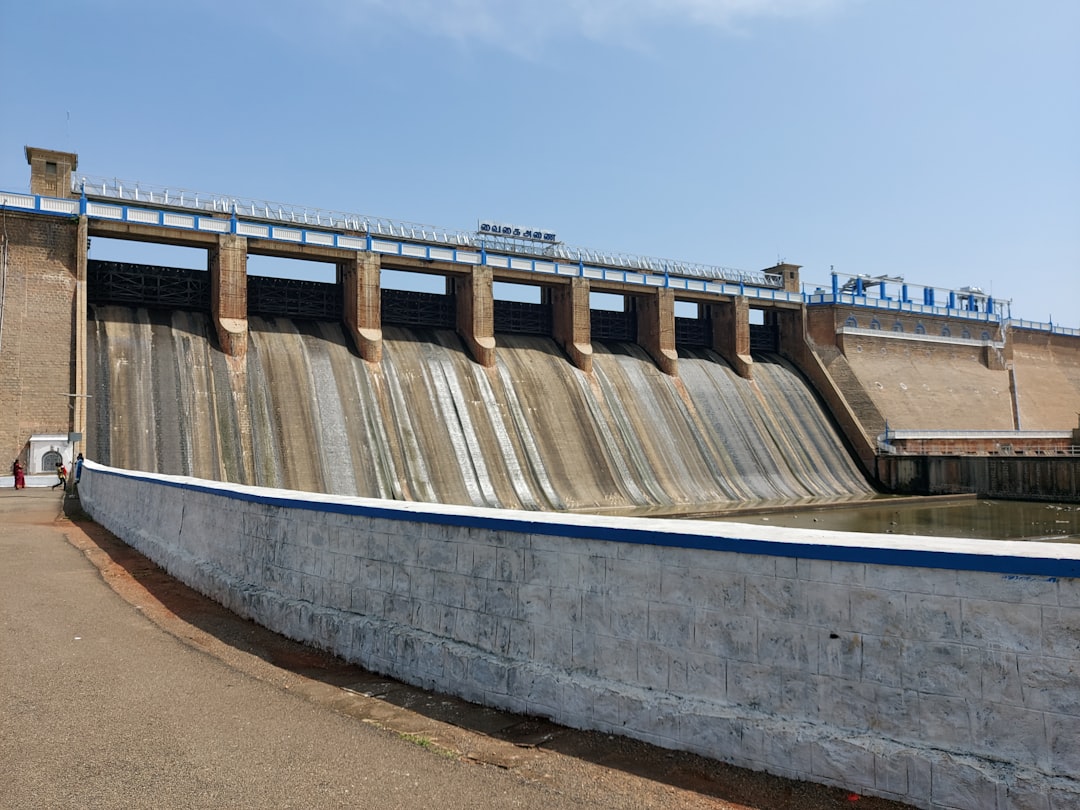
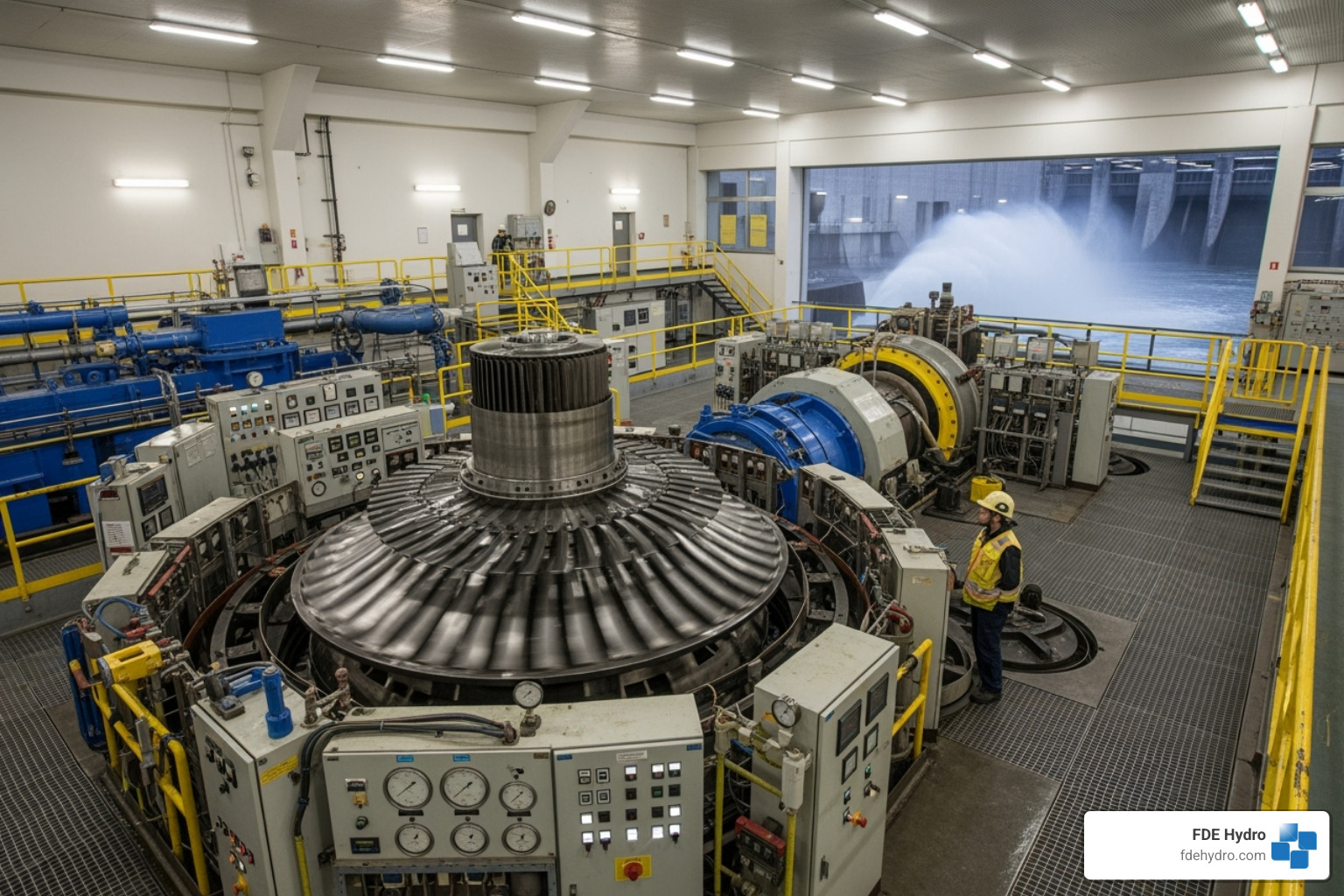
Hydro dam efficiency stands at the forefront of renewable energy generation, converting up to 90% of water’s potential energy into electricity—significantly outperforming solar (30-36%), wind (25-45%), and even coal (33-40%). This remarkable water-to-wire conversion makes hydropower one of the most efficient energy sources available today.
Key efficiency factors at a glance:
- Conversion efficiency: 90% from water to electrical power
- Capacity factor: Typically 40% in the U.S., varying by season and water availability
- Core metrics: Water consumption rate (RC), hydropower utilization rate (RU), and power generation rate
- Primary influences: Hydraulic head, water flow rate, turbine type, and dam design
- Lifespan advantage: 65-85 years with low operational costs despite high upfront investment
But here’s what most project managers miss: Efficiency isn’t just about the turbine. It’s about the entire system—from reservoir management and penstock design to modernization strategies and environmental considerations. A dam with the best turbine can still underperform due to sedimentation, outdated infrastructure, or inefficient operational practices.
The hydropower industry faces a critical juncture. By 2030, more than 20% of global hydropower units will exceed 55 years old and require refurbishment. Meanwhile, only 25% of the world’s 45,000 large dams currently generate electricity, representing enormous untapped potential. The challenge isn’t just building new facilities—it’s maximizing what we already have while reducing construction timelines, capital expenditure, and environmental impact.
As Bill French Sr., Founder and CEO of FDE Hydro™, I’ve spent five decades in civil construction and the last decade specifically focused on hydro dam efficiency through modular construction innovations. Our work with the Department of Energy’s Hydropower Vision Task Force has shown that next-generation solutions can dramatically improve both economic and environmental performance.
Understanding and Measuring Hydro Dam Efficiency
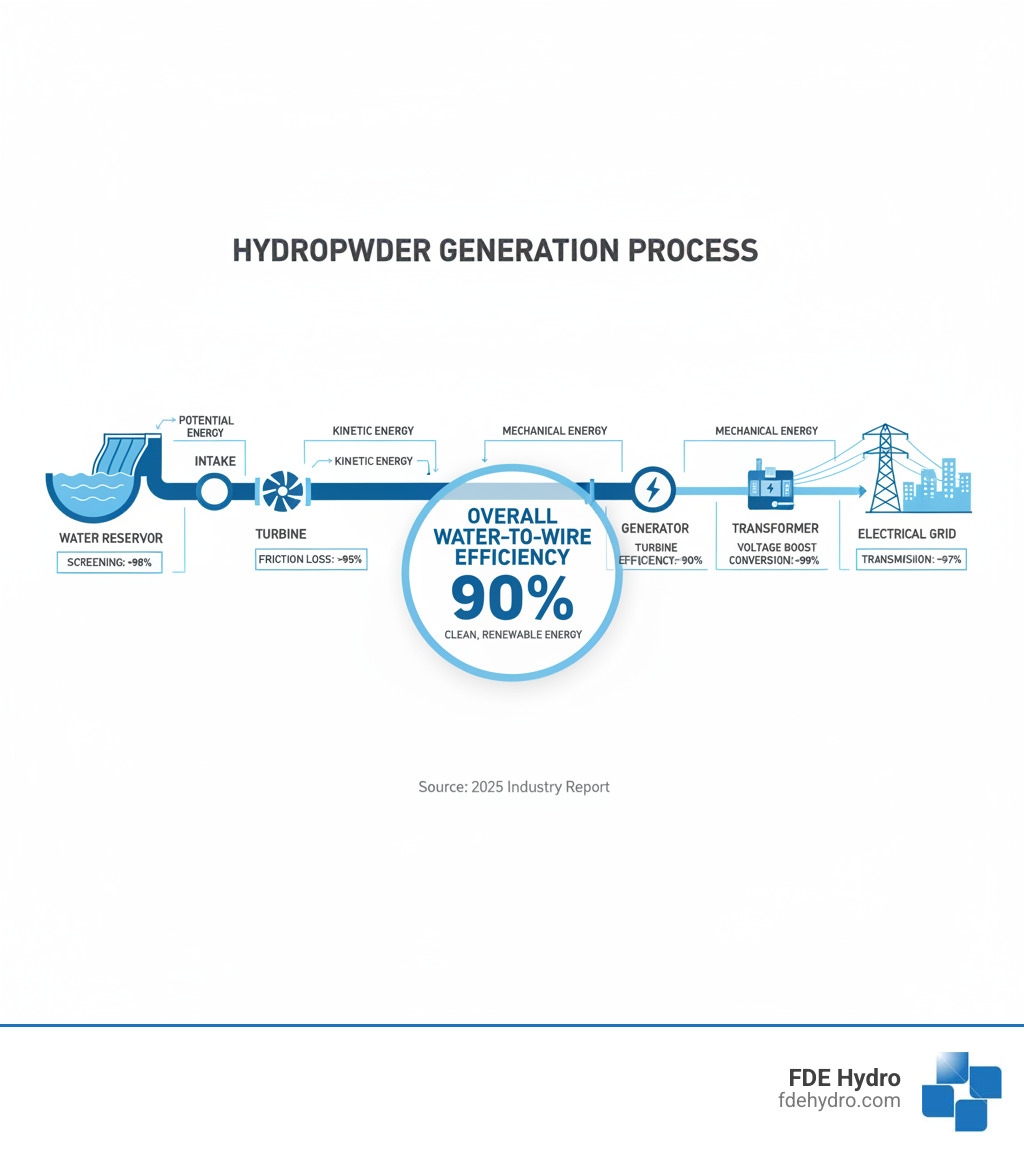
When we talk about hydro dam efficiency, we’re really asking: how well does this massive structure convert falling water into electricity? The answer is impressive. Modern hydroelectric plants achieve water-to-wire efficiency of up to 90%—meaning nearly every drop of potential energy becomes usable power.
This isn’t just good. It’s exceptional. Solar panels convert sunlight at 30-36% efficiency. Wind turbines operate at 25-45%. Even coal-fired power plants, which have been optimized for over a century, typically max out at 33-40%. Hydropower’s superior conversion rate is precisely why it remains a leading renewable source in the U.S., accounting for a substantial portion of utility-scale renewable electricity generation.
But here’s the thing: that 90% figure is an average. Real-world performance varies dramatically based on dozens of factors—from how the water flows through the penstock to whether sediment has accumulated in the reservoir. That’s why understanding the right metrics matters so much.
Core Metrics for Hydro Dam Efficiency
Theoretical calculations can tell you what should happen. But actual measurements tell you what is happening—and that’s where the real story unfolds.
Three core metrics reveal the truth about any hydropower plant’s performance. The water consumption rate (RC) shows how much water you’re using per unit of electricity generated. If this number creeps too high, you’re essentially wasting water—using more than necessary to produce the same amount of power.
The hydropower utilization rate (RU) measures how much of your available water potential actually becomes electricity. A low RU means you’re leaving energy on the table, like having money in your pocket but never spending it. Finally, the power generation rate tracks your actual electrical output over time—the bottom line that determines whether your plant is meeting expectations.
A fascinating case study on power station evaluation examined China’s Longyangxia power station and found something surprising. The theoretical calculations suggested the plant should perform well, but actual measurements revealed “unreasonable” economic operation. The water consumption rate exceeded 1 (too much water used), the utilization rate fell below 1 (underperforming potential), and the improvement index stayed negative (declining efficiency). The lesson? Site-specific data from real-time observations beats theoretical models every time.
This is why we emphasize practical, measurable performance at FDE Hydro. Understanding these fundamentals helps project managers make informed decisions. For those new to these concepts, our Energy 101 resource breaks down the basics of energy conversion and efficiency in plain language.
Why Capacity Factor Matters
Here’s where things get interesting. Even with 90% conversion efficiency, most U.S. hydroelectric plants operate at a capacity factor of around 40%. That means they generate 40% of what they could produce if running at full capacity 24/7.
Why such a gap? Because hydro dam efficiency isn’t just about machinery—it’s about water availability, and water doesn’t arrive on a predictable schedule.
Spring snow-melt can flood reservoirs with water, driving generation skyward. Summer droughts can reduce flows to a trickle, forcing plants to dial back output or shut down entirely. California’s prolonged drought conditions have repeatedly forced adjustments in hydropower generation. Brazil faces similar challenges as river basins dry up, directly impacting capacity factors across its hydropower-dependent grid.
These seasonal variations might sound like a weakness, but they actually reveal hydropower’s hidden strength: reliability and dispatchability. Unlike solar panels that go dark at sunset or wind turbines that stop when the breeze dies, hydropower responds to demand changes almost instantly. When the grid needs more power—right now—hydropower can deliver.
This flexibility makes hydropower the backup dancer that keeps the whole show running smoothly. It’s why we call it the guardian of the grid, stepping in precisely when intermittent renewables like solar and wind can’t produce. The capacity factor may be 40%, but that 40% shows up exactly when you need it most. Learn more about this critical role in our article on 4 Reasons Why Hydropower is the Guardian of the Grid.
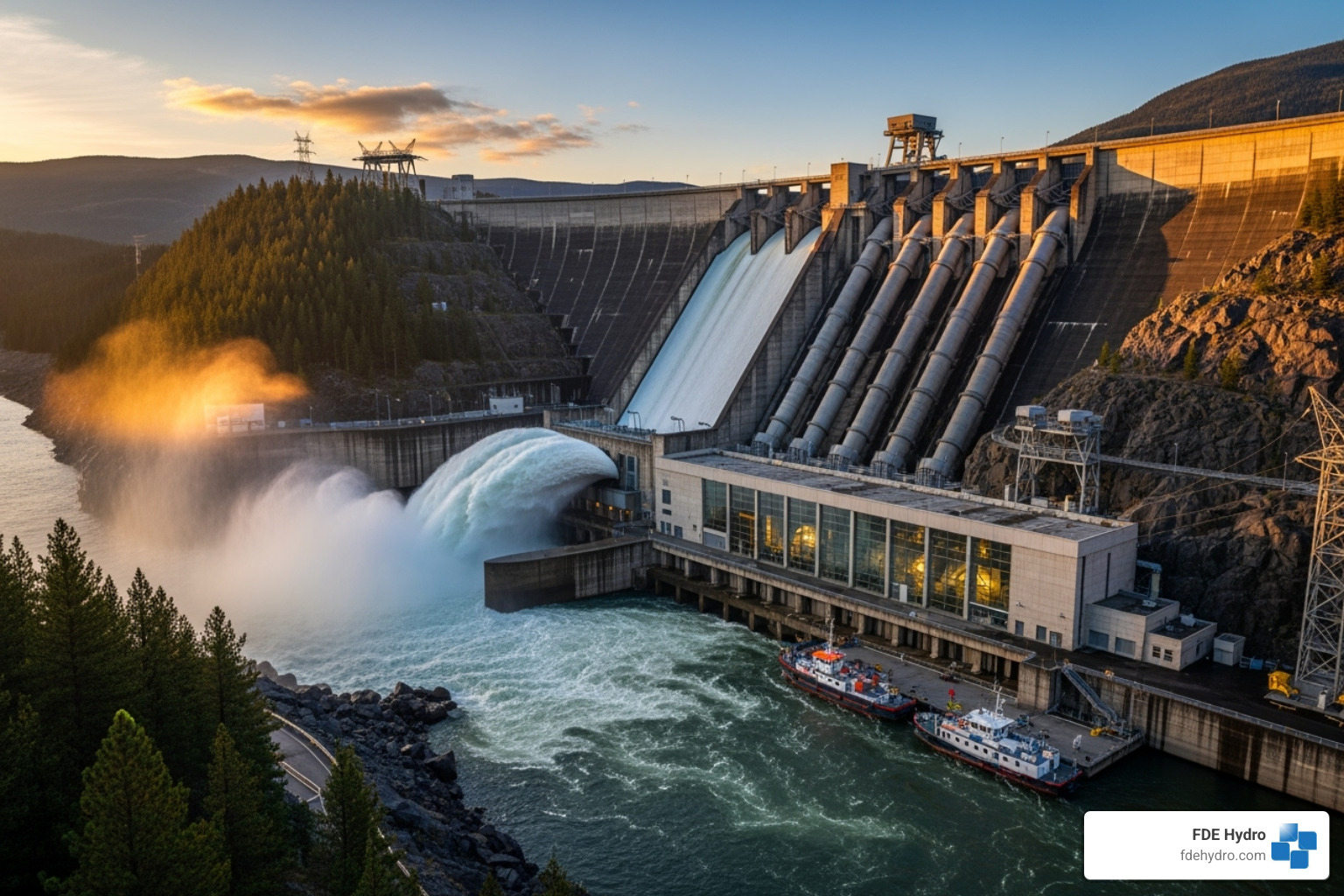
Understanding hydro dam efficiency means recognizing that it’s not just about one component working well—it’s about how all the pieces work together. Think of it like an orchestra: every instrument matters, and when one is out of tune, the whole performance suffers.
The most critical factor is hydraulic head, which is simply the vertical distance water falls from the reservoir surface down to the turbine. The higher the head, the more potential energy you’re working with. It’s like dropping a ball from a ten-story building versus dropping it from your hand—more height means more power.
Then there’s water flow rate, or discharge. This measures how much water passes through your turbines over time. More water flowing means more energy to capture, but only if your system can handle it efficiently.
The penstock—that large pipe carrying water from the reservoir to the turbine—plays a bigger role than most people realize. Its length, diameter, material, and internal smoothness all create friction that robs energy from the water before it even reaches the turbine. Every bend, every rough surface, every unnecessary length reduces the water’s velocity and pressure, directly cutting into your efficiency.
Finally, there’s an invisible enemy working against every hydropower facility: sedimentation. Rivers naturally carry sediment downstream, and over time, this silt, sand, and gravel settles in reservoirs. This reduces storage capacity, affects water availability, and can clog intake structures. Even worse, sediment can erode turbine blades, particularly in Francis turbines, gradually degrading performance and increasing maintenance costs.
The Role of Turbine and Generator Design
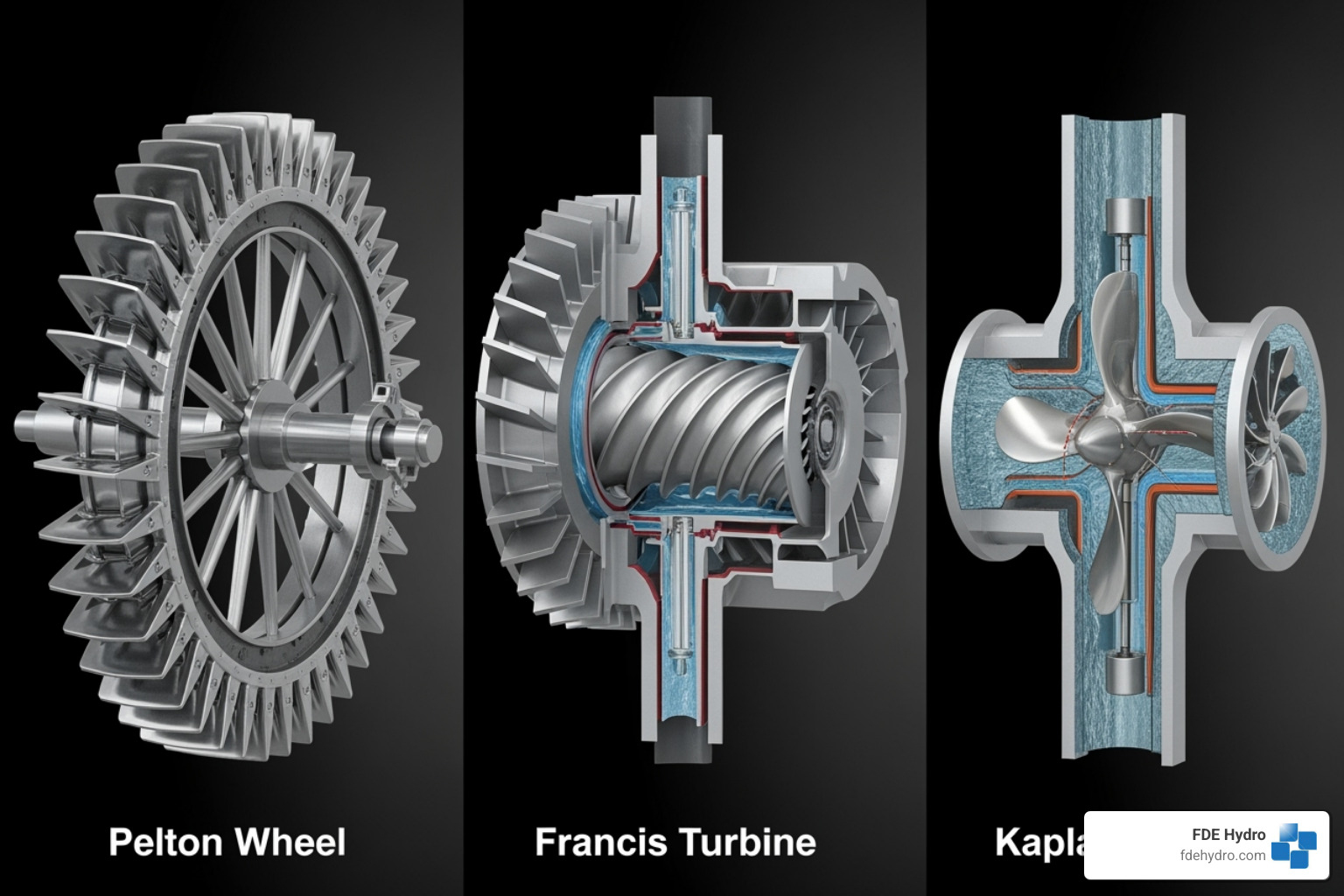
The turbine is where the magic happens—where falling water becomes spinning motion. But not all turbines are created equal, and choosing the wrong one for your site is like putting snow tires on a race car.
Pelton turbines work best with high head and low flow situations, making them perfect for mountainous areas where water drops from great heights but in smaller volumes. Francis turbines are the Swiss Army knives of hydropower—versatile enough to handle medium head and medium flow conditions. Kaplan turbines shine in low head, high flow environments, like the wide, flat rivers common in many parts of the world.
Matching the turbine type to your specific site conditions isn’t optional—it’s fundamental to achieving good hydro dam efficiency. But even the perfect turbine won’t stay perfect forever. Wear and tear take their toll through cavitation (where air bubbles collapse against metal surfaces, creating tiny pits) and sediment erosion. Regular refurbishment and advanced protective coatings can extend turbine life and maintain performance.
Modern variable-speed turbines represent a significant advancement. Unlike traditional fixed-speed turbines, they can adjust to varying water flows, operating efficiently across a wider range of conditions. This flexibility translates directly into better overall efficiency.
And let’s not forget the generator—the turbine’s partner in the conversion process. While the turbine transforms water energy into mechanical rotation, the generator converts that rotation into electrical energy. Its efficiency matters too, and keeping it well-maintained ensures you’re getting the most out of every drop of water.
Dam Design and Type
The fundamental design of your hydropower facility shapes everything about its performance, environmental impact, and operational flexibility. Three main types dominate the landscape, each with distinct characteristics that affect hydro dam efficiency.
Impoundment dams are what most people picture when they think of hydropower—large structures creating substantial reservoirs. These offer tremendous advantages: high storage capacity, flexible power generation on demand, flood control capabilities, and reliable water supply. They’re the workhorses of dispatchable renewable energy. However, creating large reservoirs comes with environmental and social considerations that can’t be ignored.
Run-of-the-river facilities take a different approach entirely. Rather than storing water, they harness the natural flow of a river with minimal or no storage. Water passes through the powerhouse and rejoins the river downstream, often within hours. These facilities typically have lower environmental impacts since they don’t flood large areas. The trade-off? Their power output depends entirely on river flow, making them less flexible and more vulnerable to seasonal variations.
Diversion structures operate similarly to run-of-the-river plants, channeling water from a river through a canal or penstock to a powerhouse before returning it downstream. They also rely on natural flow patterns rather than storage.
Each design represents different priorities. Impoundment dams excel at grid stability and dispatchable power but require careful environmental planning. Run-of-the-river and diversion facilities minimize ecological disruption but sacrifice controllability. Understanding these trade-offs is essential for any project manager evaluating options. For more details on various dam structures and their applications, visit our More info about Dams page. The Department of Energy also provides excellent resources on Types of hydropower plants explained.
Balancing Efficiency with Economic and Environmental Realities
Here’s the truth about hydro dam efficiency: achieving it isn’t just about engineering brilliance. It’s about navigating a complex landscape where economics, environmental stewardship, and long-term planning all intersect.
Let’s talk money first. Building a hydroelectric dam requires serious upfront investment. We’re talking about projects that can stretch into the billions of dollars and take years—sometimes decades—to complete. The Itaipu Dam in Brazil and Paraguay? Eighteen years and $18 billion. Since the 1950s, the world has invested an estimated $2,000 billion in dam construction. That’s not pocket change.
But here’s where hydropower shines: once you build it, it keeps delivering. These structures last 65-85 years with remarkably low operational and maintenance costs. Think of it as buying quality boots that last a lifetime versus cheap ones you replace every year. The math works out beautifully over time—if you can manage the initial problems.
And those problems are real. Construction delays average around 44%, while cost overruns can hit a staggering 96%. These aren’t just statistics—they represent real financial risks that can sink a project or burden communities for generations. Smart planning, innovative construction methods, and creative financing strategies become absolutely critical. Financing Long-Term Hydropower Requires Mitigating Risks Prior to ROI explores how to steer these challenges effectively.
Now, let’s address the environmental side—because this is where conversations get nuanced. Yes, hydropower generates clean electricity without burning fossil fuels. But creating a massive reservoir isn’t without ecological consequences.
Fish migration presents one of the most visible challenges. Salmon fighting their way upstream to spawn don’t care about our energy needs—they just need to get home. Dams can block these ancient migratory routes, disrupting entire life cycles. We’ve developed solutions like fish ladders and elevators, but they’re not perfect. And even when fish successfully steer these passages, turbines themselves can cause mortality.
Water quality changes too. Reservoirs alter natural temperature patterns and oxygen levels, creating different conditions than the free-flowing river that existed before. Aquatic species adapted to cold, oxygen-rich rushing water suddenly find themselves in warmer, slower environments.
Here’s something that surprises many people: reservoirs can actually produce greenhouse gases. In tropical regions especially, vegetation flooded during reservoir creation decomposes underwater, releasing methane—a greenhouse gas far more potent than carbon dioxide. While these emissions typically remain much lower than fossil fuel alternatives, they remind us that “renewable” doesn’t automatically mean “impact-free.”
The human dimension matters too. Creating large reservoirs means flooding terrestrial habitats and sometimes displacing entire communities. The social consequences can be severe and long-lasting, as history has shown us in projects from Guatemala to China and beyond.
None of this means hydropower isn’t worthwhile—it absolutely is. But maximizing hydro dam efficiency means acknowledging these trade-offs honestly and designing projects that minimize harm while delivering clean, reliable energy. It’s about being smart, responsible, and innovative all at once.
The Role of Pumped-Storage Hydropower
Want to see hydropower’s future? Look at pumped-storage hydropower (PSH). This technology transforms the entire concept of hydro dam efficiency by turning hydroelectric facilities into massive renewable batteries.
The concept is beautifully simple. During periods of low electricity demand—say, the middle of the night—PSH facilities pump water from a lower reservoir uphill to an upper reservoir. When demand spikes during the day, that stored water rushes back down through turbines, generating electricity exactly when we need it most. The round-trip efficiency typically ranges from 70-85%, which is remarkably good for energy storage.
But here’s where it gets really exciting: PSH solves one of renewable energy’s biggest headaches. Imagine a gorgeous sunny afternoon when solar panels are cranking out more electricity than anyone needs. Or a windy night when turbines are spinning furiously while everyone’s asleep. Without storage, that excess energy goes to waste. PSH captures it, stores it as potential energy in liftd water, and releases it precisely when the grid needs help.
This flexibility makes hydropower the ultimate team player in our energy system. Solar and wind provide the star power, but PSH ensures the show goes on even when clouds roll in or winds calm down. It’s why we call hydropower “the guardian of the grid”—it’s always there, ready to step in and balance the system. 4 Reasons Why Hydropower is the Guardian of the Grid explains this critical role in detail.
PSH systems come in two main configurations. Open-loop systems maintain a continuous connection to natural water bodies like rivers or lakes, while closed-loop systems operate as self-contained units without outside water connections. Closed-loop designs often minimize aquatic impacts since they don’t interfere with natural waterways.
Here’s a perspective worth considering: pumped storage hydropower currently provides the largest share of global energy storage capacity—far more than all battery technologies combined. As we push toward grids powered primarily by variable renewables, PSH becomes not just helpful but essential. It’s the bridge technology that makes a renewable energy future actually achievable.
For anyone serious about understanding modern hydropower’s role in grid stability and renewable integration, More info about Pumped Storage Hydropower offers comprehensive insights into this game-changing technology.
Enhancing Hydropower: Modernization and Future Innovations
Here’s something that might surprise you: the biggest opportunity for improving hydro dam efficiency isn’t about building massive new dams. It’s about making smarter use of what we already have.
Think about this for a moment—nearly two-thirds of the world’s 45,000 large dams don’t generate any electricity at all. They’re just sitting there, holding back water for flood control, irrigation, or water supply. That’s an enormous untapped resource. The Biggest Untapped Solution to Climate Change is in the Water, and we believe retrofitting these non-powered dams could open up clean energy without the environmental headaches of new construction.
The numbers back this up. In Europe, modernizing the existing hydropower fleet could boost generation by 8.4% across the EU and 9.4% for the entire continent. Here in the United States, refurbishment and upgrades could increase conventional hydropower output by roughly 8.8%. That’s a lot of clean electricity from structures that are already built.
But modernization isn’t just about bolting on new turbines. We’re entering an era where digitalization and artificial intelligence are changing how hydropower plants operate. Advanced analytics can predict water inflows and electricity demand with remarkable accuracy, helping operators fine-tune generation schedules. Machine learning algorithms monitor equipment health around the clock, catching potential problems before they become expensive failures. Some systems can even adjust turbine operations in real-time to squeeze out every last kilowatt. The National Renewable Energy Laboratory Hydropower Research is leading the charge in developing these smart technologies.
Strategies for Improving Hydro Dam Efficiency
When it comes to boosting hydro dam efficiency, we’ve learned that the details matter. Small improvements across multiple areas can add up to significant gains.
Turbine and generator refurbishment is often the first place to start. Many hydropower plants are decades old, running on equipment designed when your grandparents were young. Upgrading or replacing these aging workhorses with modern designs typically increases power output by 5-10%. In some cases, renewing electromechanical parts can push improvements up to 20%. It’s like trading in your old sedan for a hybrid—same basic function, but far better performance.
Erosion is the silent efficiency killer. Sediment-laden water and cavitation gradually wear away turbine blades, reducing their efficiency and shortening their lifespan. Advanced coatings create a protective shield on these critical components, maintaining peak performance and cutting down on costly repairs. It’s preventive medicine for your power plant.
Sediment management deserves special attention. Over time, rivers deposit silt, sand, and gravel in reservoirs, slowly stealing storage capacity and potentially damaging machinery. Techniques like strategic flushing, targeted dredging, or installing sediment bypass systems keep reservoirs healthy and turbines safe. Our work in More info about Dam Rehabilitation Encapsulation directly addresses these challenges, helping existing infrastructure stay productive for decades longer.
Smart operational changes can also make a real difference. During flood seasons, bringing idle units online and managing water releases carefully prevents wasting valuable water that could be generating power. In dry seasons, coordinating reservoir levels and generation schedules across multiple facilities maximizes output when water is scarce. The Longyangxia power station case study showed exactly how important these operational refinements can be.
The Future of Dam Construction
Traditional dam construction is expensive, slow, and disruptive. A single large project can take decades and cost billions. We knew there had to be a better approach.
That’s why we developed our modular construction method using patented precast concrete technology—what we call “French Dam” technology. Instead of pouring concrete on-site for months or years, we manufacture precision components in a controlled factory environment, then ship them to the project site for rapid assembly.
The advantages are transformative. Construction time drops dramatically because we’re not waiting for concrete to cure in the field or dealing with weather delays. Costs come down through efficient factory production and reduced labor requirements. Quality improves because every component is built to exact specifications in a controlled setting.
Our modular approach also brings flexibility. The same basic components can be adapted to different site conditions and dam sizes, whether you’re building a small run-of-the-river facility or a larger impoundment structure. It’s like having building blocks that work for whatever you need.
Perhaps most importantly, this method supports environmental-by-design principles. Less on-site disruption means less impact on local ecosystems. The precision of factory manufacturing makes it easier to integrate features like fish-friendly designs and optimized water release mechanisms right from the start. You can explore more about our innovative approach on our More info about Means and Methods page.
The U.S. Department of Energy recognized the potential of this approach in their Hydropower Vision Report, specifically endorsing technologies like ours as essential for open uping hydropower’s full potential. The U.S. Department of Energy Hydropower Vision Report Endorses FDE Technology. We’re proud to be helping reshape how the industry thinks about hydro dam efficiency and construction.
The future of hydropower isn’t just about generating more electricity—it’s about generating it smarter, faster, and with less impact on the communities and ecosystems we all depend on.
Conclusion
Throughout this journey into hydro dam efficiency, we’ve finded something remarkable: hydropower isn’t just efficient—it’s the heavyweight champion of renewable energy conversion, changing up to 90% of water’s potential energy into electricity. That’s a performance level that solar, wind, and even coal-fired plants can only dream about.
But here’s what really matters: efficiency isn’t just a number on a technical spec sheet. It’s the result of countless decisions—from selecting the right turbine type for your site’s specific hydraulic head to managing sediment buildup in reservoirs. It’s about understanding that a plant’s capacity factor tells a story of seasonal variations, drought impacts, and the delicate dance between installed capacity and actual generation. It’s recognizing that the penstock design matters just as much as the turbine itself.
We’ve also learned that hydro dam efficiency exists within a larger context. Yes, those high upfront construction costs can be daunting—sometimes taking decades to recoup. Yet hydropower facilities last 65 to 85 years with remarkably low operational costs, making them sound long-term investments. Meanwhile, we must carefully balance these economic benefits against environmental realities: fish migration, water quality, habitat changes, and yes, even greenhouse gas emissions from certain reservoirs.
The real excitement lies in what’s ahead. Pumped-storage hydropower is revolutionizing grid stability, acting as a massive battery that stores surplus renewable energy and releases it when needed. Digitalization and AI are optimizing operations in ways we couldn’t have imagined a decade ago. And perhaps most promising: nearly two-thirds of the world’s large dams don’t generate electricity yet—representing an enormous untapped opportunity to expand clean energy without building new structures from scratch.
At FDE Hydro™, we’re passionate about making this future real through modular, precast concrete construction that slashes both construction time and costs. Our “French Dam” technology embodies what we believe hydropower should be: efficient, sustainable, and economically viable. The U.S. Department of Energy agrees—they’ve endorsed our approach in their Hydropower Vision Report as exactly the kind of innovation the industry needs.
The path forward is clear. By upgrading existing infrastructure, embracing smart technology, and building smarter when we do build, we can open up hydropower’s full potential. This isn’t just about generating more electricity—it’s about powering our communities with clean, reliable energy for generations to come.
Ready to be part of this change? Discover the future of Hydropower with us.
by | Feb 26, 2026 | News
Why Renewable Energy Projects Are Changing Canada’s Power Grid
Renewable energy projects across Canada are experiencing unprecedented growth, fundamentally reshaping how the nation generates electricity. Here’s what you need to know:
Key Facts About Canada’s Renewable Energy Projects:
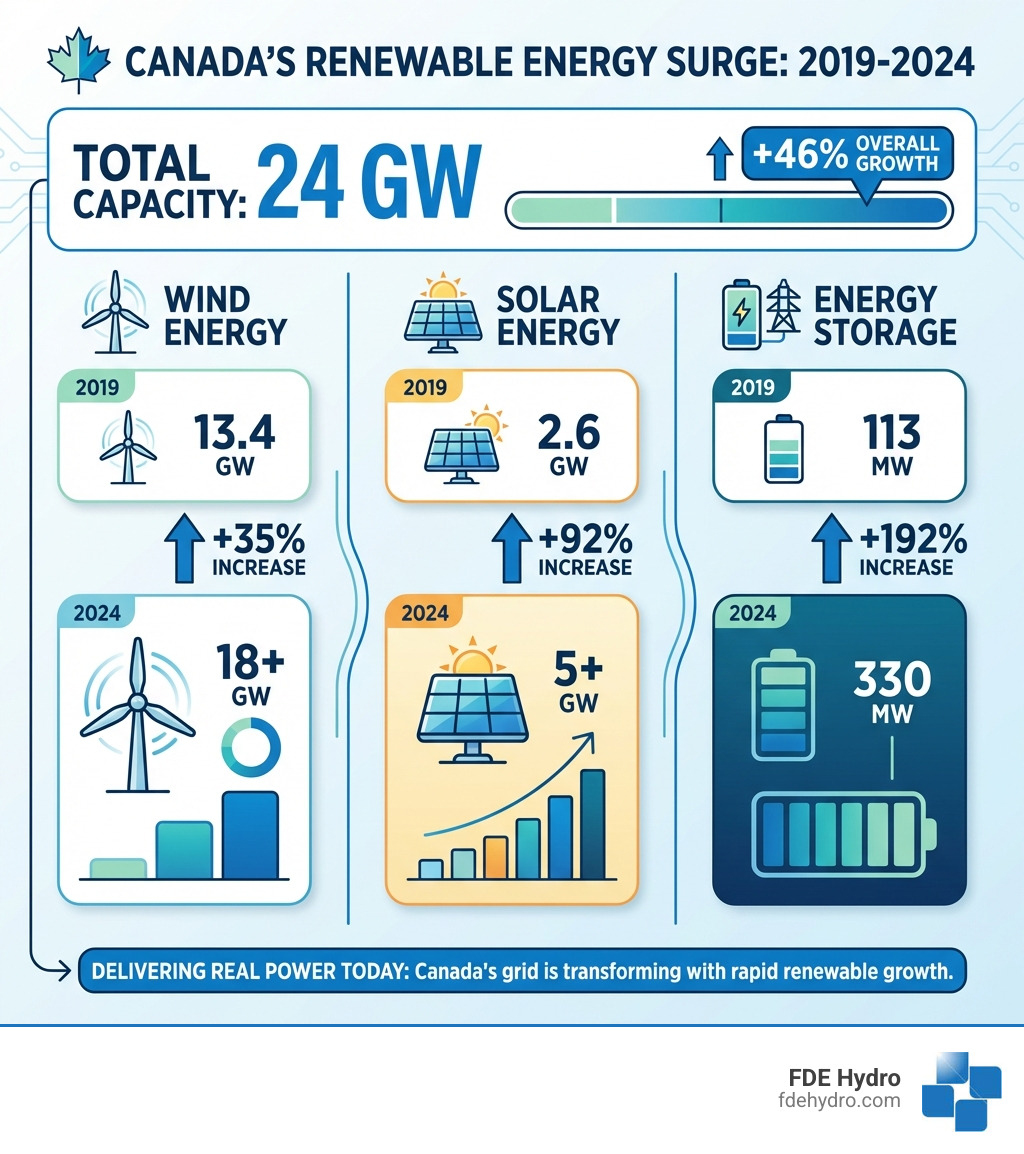
- Total Capacity: 24 GW of wind, solar, and energy storage installed by end of 2024
- Growth Rate: 46% increase in total renewable capacity over the past 5 years (2019-2024)
- Project Count: 341 wind energy projects and 217 major solar projects currently producing power
- Energy Storage: 330 MW capacity with 192% growth since 2019
- Home Power: Operating projects can meet electricity needs of approximately 1.9 million homes
- Global Standing: Canada ranks 9th worldwide for wind capacity and 24th for solar capacity
Canada’s renewable energy sector is no longer just a promise for tomorrow—it’s delivering real power today. The numbers tell a compelling story: wind and solar now meet more than 8% of Canada’s total electricity demand, and major players like Enbridge have committed over US$8 billion to projects either operating or under construction. With solar costs dropping 83% globally since 2009 and wind costs down 65%, the economic case for renewables has never been stronger.
The change spans coast to coast, from massive offshore wind farms to nearly 96,000 on-site solar installations powering homes and businesses. Energy storage capacity is growing even faster than generation, tripling in just five years to help balance the grid and maximize renewable output.
I’m Bill French Sr., Founder and CEO of FDE Hydro, and I’ve spent decades working on renewable energy projects through my participation in the Department of Energy’s Hydro Power Vision Technology Task Force and developing innovative modular solutions for the hydropower industry. This expertise gives me a front-row seat to the innovations reshaping how we build and deploy clean energy infrastructure.
Related content about renewable energy projects:
Canada’s Renewable Energy Boom: A Statistical Snapshot
Canada is truly experiencing a green energy renaissance, with renewable energy projects rapidly expanding across the nation. By the end of 2024, our total installed capacity for wind, solar, and energy storage hit an impressive 24 GW. This isn’t just a slight bump; it represents a remarkable 46% growth over the past five years alone, from 2019 to 2024. These clean energy sources are no longer niche players, with wind and solar collectively meeting more than 8% of Canada’s electricity demand in 2023. Globally, Canada stands proudly, ranking 9th for installed wind energy capacity and 24th for installed solar energy capacity.
A Diverse Energy Mix
Our journey towards a sustainable future is powered by a diverse portfolio of renewable energy projects. While hydropower has long been the backbone of Canada’s electricity grid, wind and solar are rapidly closing the gap, complemented by crucial energy storage solutions.
-
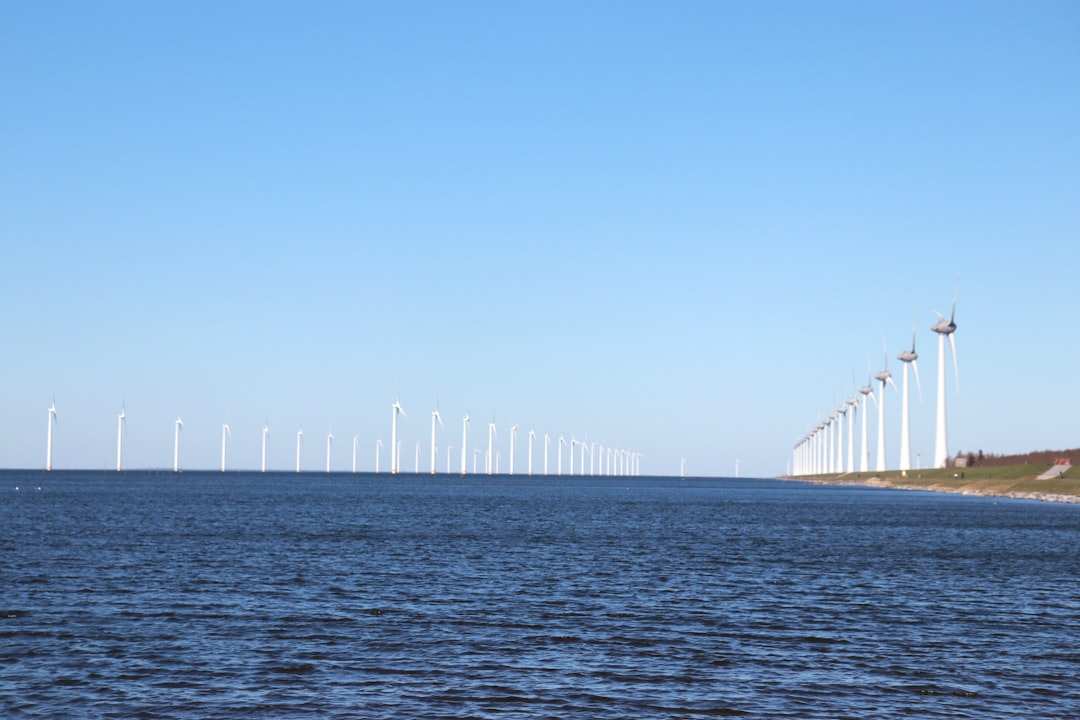
Wind Energy: Wind power is a dominant force in Canada’s renewable landscape. We now boast over 18 GW of wind energy capacity, an increase of 35% in the last five years. Across the country, 341 wind energy projects are actively producing power. This significant capacity places Canada 9th in the world for installed wind energy, demonstrating our commitment to Sustainable Power Generation.
-
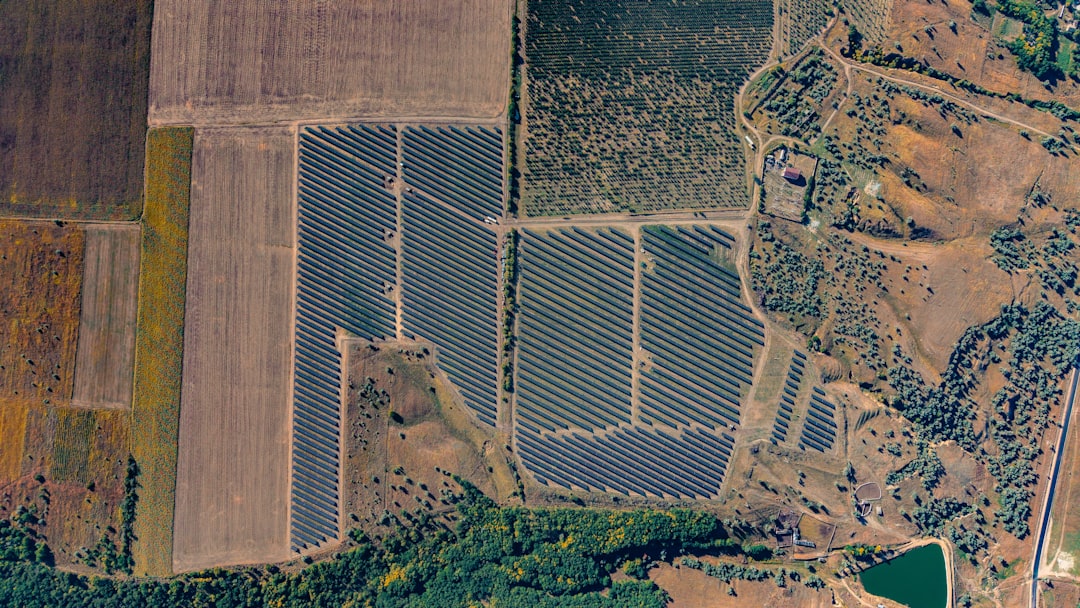
Solar Energy: Solar power is shining brighter than ever in Canada. Our total solar energy capacity (including both utility-scale and on-site installations) now exceeds 5 GW. This sector has seen an astounding 92% growth in the past five years, making it one of the fastest-growing segments. We have 217 major solar energy projects producing power, alongside nearly 96,000 on-site solar energy installations across the country, from New York to California and across Canada.
-
Hydropower: While wind and solar are expanding rapidly, we must never forget the long-standing champion of Canada’s renewable energy mix: hydropower. It remains Canada’s primary electricity source, providing a stable and reliable foundation for our grid. Our expertise at FDE Hydro, especially in innovative modular dam construction, plays a vital role in enhancing this critical sector. For a deeper dive into this robust resource, explore our Hydroelectric Power Solutions Guide.
-
Energy Storage: Crucial for grid stability and integrating intermittent renewables, energy storage is also experiencing explosive growth. Canada’s energy storage capacity has reached 330 MW, representing an incredible 192% growth in just the past five years. This rapid expansion highlights the essential role storage plays in making our grid more resilient and efficient.
Mapping Canada’s Green Power
Understanding the geographical distribution of renewable energy projects is key to appreciating Canada’s green energy transition. These projects are not concentrated in one area but are spread across the country, leveraging regional strengths. For instance, wind farms often thrive in the vast plains, while solar installations are increasingly prevalent in sunnier regions like parts of Alberta and Ontario.
Data tracking and reporting are vital for monitoring this progress. Organizations like the Canadian Renewable Energy Association (CanREA) play a crucial role in compiling and disseminating statistics on installed capacity, growth trends, and project locations. This data helps us identify patterns, understand regional contributions, and plan for future development.
A powerful tool for visualizing this landscape is interactive mapping. These maps often highlight not only the location and type of renewable energy projects but also important details like Indigenous-owned projects, which are a significant and growing part of Canada’s renewable energy story. To truly grasp the scale and spread of these initiatives, we encourage you to explore the Canadian Renewable Energy Project Map. Click here to view the original map on the ArcGIS webapp map.
The Driving Forces: Key Players and Landmark Renewable Energy Projects
The rapid expansion of renewable energy projects in Canada is largely fueled by significant corporate investment and the successful execution of landmark initiatives. These players and projects are not just building infrastructure; they are building the future of our energy system.
Leading the charge are companies like Enbridge, a major North American energy infrastructure company that has made substantial commitments to clean energy. They have invested more than US$8 billion (about C$12 billion) in capital towards renewable energy projects that are currently either in operation or under construction. Their diversified portfolio boasts a gross capacity of 7,212 MW of zero-emission energy (4,082 MW net). This includes 23 wind farms (4,871 MW gross capacity), 17 solar energy operations (2,345 MW gross capacity), and even one geothermal project (22 MW gross capacity). These operating projects alone, with their 2,595 MW net generation capacity, are enough to meet the electricity needs of about 1.9 million homes. To understand how this compares to typical energy use, you can refer to Energy Consumption – Canadian homes.
Another key player is Kruger Energy, which owns a diversified portfolio of renewable energy production sites with a combined installed capacity of 650 MW. These companies, alongside many others, are demonstrating the viability and profitability of large-scale renewable energy development.
Notable Canadian renewable energy projects
Canada is home to numerous impressive renewable energy projects that showcase our innovative spirit and commitment to sustainability. While specific project details are vast, a few examples highlight the diversity and scale of these efforts:
- Travers Solar Project (Alberta): As one of the largest solar farms in Canada, this project is a testament to the potential of utility-scale solar in the country’s sunniest province. Projects like this contribute significantly to the national solar capacity and demonstrate the effectiveness of large-scale Green Energy Construction Complete Guide.
- Henvey Inlet Wind Project (Ontario): Located on the traditional territory of the Henvey Inlet First Nation, this project exemplifies successful community partnerships and Indigenous involvement in major renewable energy development. It’s a powerful example of how wind power can benefit local economies and communities.
- Oneida Energy Storage Project (Ontario): This significant battery energy storage facility is a critical step towards integrating more intermittent renewables into Ontario’s grid, providing flexibility and reliability.
These projects, among others, often involve intricate planning, advanced engineering, and strong collaboration between developers, communities, and governments.
The Growing Role of Energy Storage
The integration of renewable energy projects, particularly wind and solar, necessitates robust energy storage solutions. Why? Because the sun doesn’t always shine, and the wind doesn’t always blow. Energy storage technologies are vital for achieving grid stability, ensuring that electricity supply consistently meets demand.
In Canada, energy storage plays an increasingly critical role in making our grid more flexible and reliable. Battery technology, like that used in the Oneida project, allows us to store excess renewable energy generated during peak production times and release it when needed, smoothing out fluctuations and preventing waste. This capability is paramount for a modern, resilient grid. We are also seeing advancements in Pumped Storage Hydropower, which offers large-scale, long-duration storage capabilities, perfectly complementing other renewable sources.
Beyond large-scale grid applications, energy storage also underpins the development of microgrids. These localized energy systems can operate independently or connected to the main grid, providing improved reliability and energy security, especially for remote communities or critical infrastructure. To learn more about these fascinating systems, check out What is a Microgrid and How Does it Work?.
Trends Shaping the Future of Clean Energy
The landscape of renewable energy projects is constantly evolving, driven by global investment trends and relentless technological advancements. We are witnessing a monumental shift in how the world powers itself, and Canada is at the forefront of many of these exciting developments.
Global investment in clean energy is on an unprecedented trajectory, projected to rise to more than $3 trillion (U.S.) in 2025. This surge in capital is a clear indicator of the world’s commitment to decarbonization and the growing confidence in renewable technologies. In fact, solar energy is expected to eclipse oil production for the first time in terms of investment, a truly historic milestone.
The Compelling Economics of Renewables
One of the most significant trends driving the proliferation of renewable energy projects is the dramatic plummeting of costs for key technologies. This isn’t just a minor reduction; it’s a game-changer that has made renewables highly competitive with, and often cheaper than, traditional fossil fuels.
- Solar Power: Globally, the cost of solar energy has declined by an astonishing 83% since 2009. This massive reduction has made solar power accessible and affordable for a vast range of applications, from massive utility-scale farms to individual rooftop installations.
- Wind Power: Similarly, wind energy costs have fallen by 65% globally since 2009. This makes wind farms an incredibly attractive investment for generating clean, large-scale electricity.
These cost trends are not just global phenomena; they directly impact the economic viability and rapid deployment of renewable energy projects in Canada, the United States, Brazil, and Europe. Lower costs mean more projects can be built, more clean energy can be generated, and the transition away from fossil fuels can accelerate. This economic advantage is further solidified by ongoing innovation, often protected by Renewable Energy Patents, which continue to drive efficiencies and cost reductions.
Key technological advancements for renewable energy projects
Beyond cost reductions, continuous technological advancements are refining and expanding the capabilities of renewable energy projects. These innovations touch every aspect, from generation to storage and grid integration.
- Hydropower Innovation: While an older technology, hydropower is far from stagnant. Innovations in turbine design, operational efficiency, and environmental mitigation are constantly improving its performance. At FDE Hydro, we are pioneering advanced modular precast concrete technology for dams, known as the “French Dam.” This innovation drastically reduces construction time and costs for new hydroelectric facilities and retrofits, making hydropower projects more agile and economically attractive. These advancements are critical for maximizing the potential of existing and new hydro resources. Learn more about these exciting developments in Hydropower Advancements & Innovations 2025.
- Grid Modernization: The influx of intermittent renewable energy necessitates a smarter, more flexible grid. Smart grids, enabled by advanced sensors, communication technologies, and artificial intelligence, are designed to manage the dynamic flow of renewable power, optimize energy distribution, and improve reliability.
- AI in Energy Management: Artificial intelligence (AI) is rapidly becoming an indispensable tool for optimizing renewable energy projects. AI can forecast renewable energy generation more accurately, predict energy demand, manage energy storage systems efficiently, and even optimize the maintenance schedules of wind turbines and solar panels. This intelligent management improves the overall efficiency and reliability of renewable energy systems. For a comprehensive look at how AI is changing the sector, refer to our AI Energy Resource Complete Guide and how it contributes to AI for Sustainability.
The Broader Impact: Benefits Beyond the Grid
The benefits of renewable energy projects extend far beyond simply generating clean electricity. They are powerful engines for economic growth, job creation, and environmental stewardship, fundamentally contributing to a more sustainable and prosperous future.
One of the most tangible impacts is job creation. The development, construction, operation, and maintenance of wind farms, solar arrays, and hydropower facilities require a skilled workforce across numerous sectors. From engineers and construction workers to technicians and project managers, these projects create thousands of direct and indirect jobs. This includes specialized roles in manufacturing components, installing systems, and maintaining complex equipment over the lifespan of the projects. Investing in Clean Energy Infrastructure is a clear path to economic development and resilient local economies.
Equally important are the significant emissions reduction benefits. By displacing fossil fuel-based electricity generation, renewable energy projects drastically cut greenhouse gas emissions, playing a critical role in combating climate change. Canada, like many nations, has ambitious net-zero goals, and the expansion of renewables is central to achieving these targets. Every megawatt-hour generated by wind, solar, or hydro means less reliance on polluting sources, leading to cleaner air and a healthier environment. This shift towards Sustainable Energy Production is an essential component of fostering Eco-Friendly Living: Your Guide to a Low Environmental Footprint.
Furthermore, these projects often bring additional community benefits, such as local tax revenues, land lease payments, and opportunities for local businesses. They improve energy independence and security by reducing reliance on imported fuels and volatile global energy markets. The overall impact is a greener, more robust energy system that supports both environmental health and economic vitality.
Frequently Asked Questions about Renewable Energy in Canada
As renewable energy projects continue to gain prominence, many questions arise about their role and impact. Let’s address some of the most common inquiries regarding Canada’s clean energy landscape.
What is the largest source of renewable energy in Canada?
Without a doubt, hydropower remains the largest source of renewable energy in Canada. It has historically provided, and continues to provide, over 60% of our electricity generation. Hydropower facilities, ranging from massive dams to smaller run-of-river plants, have been a long-standing backbone of the Canadian grid, offering reliable, dispatchable power. Its ability to store large amounts of energy (especially with pumped hydro) and respond quickly to demand fluctuations makes it an invaluable asset for grid stability. Indeed, there are 4 Reasons Why Hydropower is the Guardian of the Grid, highlighting its crucial role.
Which province is leading in new wind and solar projects?
While many provinces are actively developing renewable energy projects, Alberta has emerged as a significant leader in new wind and solar projects in recent years. This surge is driven by a combination of favorable policies, abundant wind and solar resources, and a deregulated electricity market that encourages private investment. Ontario has also historically been a leader in installed capacity, particularly for wind, but Alberta’s recent growth trajectory for new projects is particularly noteworthy.
How do costs for solar and wind compare to a decade ago?
The cost comparison for solar and wind energy over the past decade is nothing short of revolutionary. We’ve seen a significant decline that has fundamentally reshaped the energy market. Globally, solar energy costs have plummeted by an astounding 83% since 2009. Similarly, wind energy costs have seen a substantial reduction of 65% since 2009. These dramatic cost reductions have made both solar and wind power highly competitive, and often the cheapest option, for new electricity generation in many regions, including Canada. This economic shift is a primary driver behind the rapid expansion of renewable energy projects across the country and around the world.
Conclusion: Powering Canada’s Sustainable Future
The journey of Canada’s renewable energy projects is a compelling narrative of growth, innovation, and unwavering commitment to a sustainable future. We have seen how installed capacity for wind, solar, and energy storage has surged by 46% in just five years, reaching an impressive 24 GW. This expansion is changing our power grid, with wind and solar now meeting more than 8% of Canada’s electricity demand.
The economic landscape has dramatically shifted, with plummeting costs for solar (down 83% globally since 2009) and wind (down 65% globally since 2009) making these technologies increasingly attractive. This, coupled with significant corporate investments from major players like Enbridge and Kruger Energy, paints a picture of robust and accelerating development.
Looking ahead, the future outlook for renewable energy projects in Canada is exceptionally strong. Technological advancements, including sophisticated grid modernization and the integration of AI for optimized energy management, will continue to improve the efficiency and reliability of our clean energy systems. Canada’s vast and largely untapped renewable resources, from the abundant sun and wind to the immense potential of our waterways, promise even greater growth.
At FDE Hydro, we are proud to contribute to this vital energy transition through our innovative hydropower technology, including our patented modular precast concrete solutions. By significantly reducing the cost and time associated with building and retrofitting dams, we are making hydropower more accessible and efficient, ensuring it remains a cornerstone of Canada’s clean energy mix.
Canada’s energy transition is not just about meeting environmental targets; it’s about building a resilient, prosperous, and sustainable future for generations to come. We are excited to be a part of this journey.
Learn more about the future of Hydropower
by Adaptify Support | Feb 18, 2026 | News
Why Commercial Renewable Energy Solutions Matter Now
Renewable energy solutions are changing how businesses operate by offering cost savings, energy independence, and a competitive edge. For commercial operations, transitioning to clean energy is not just environmentally responsible; it’s economically strategic.
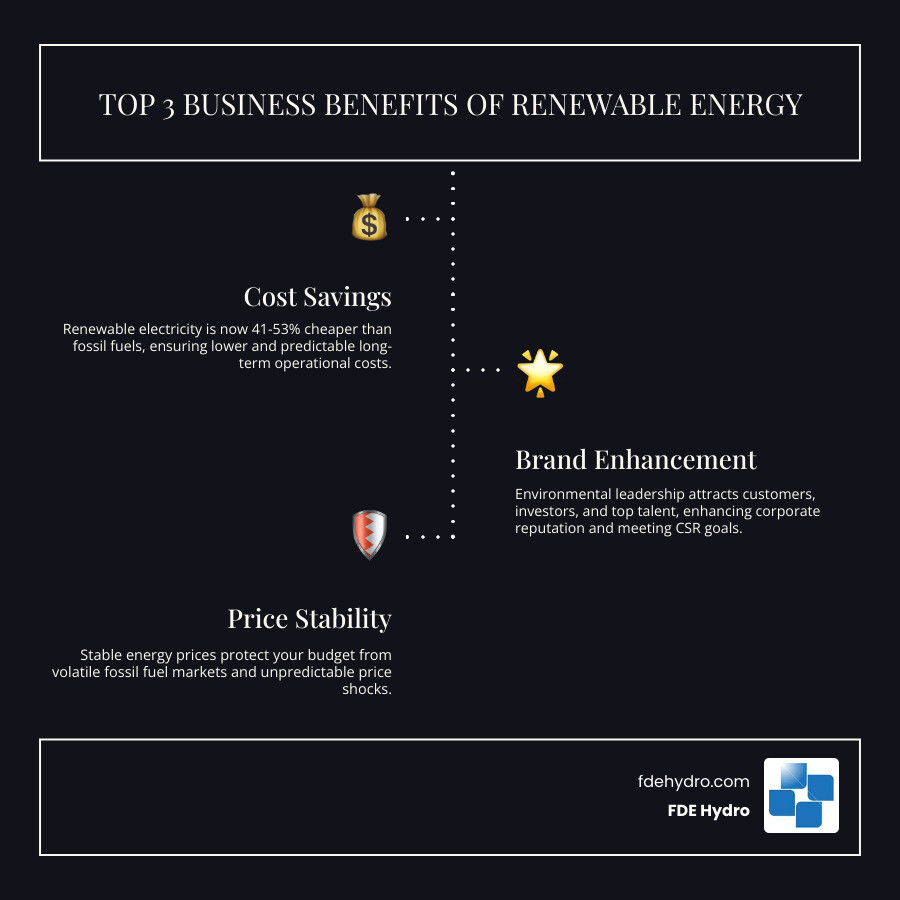
Top 3 business benefits of renewable energy:
- Cost Savings – Renewable electricity is now cheaper than fossil fuels in most parts of the world, with solar and offshore wind being 41% and 53% cheaper, respectively.
- Brand Improvement – Companies demonstrating environmental leadership attract customers, investors, and top talent.
- Price Stability – Unlike volatile fossil fuel markets, renewable energy provides predictable, long-term operational costs.
The numbers are compelling. In 2024, $2 trillion flowed into clean energy—$800 billion more than fossil fuels—while the sector drove 10% of global GDP growth in 2023. Renewables also create three times as many jobs per dollar invested compared to fossil fuels.
The path forward is clear: over 90% of new renewable projects cost less than fossil fuel alternatives. Modern renewable energy solutions include solar, wind, hydropower, geothermal, energy storage, and emerging technologies like green hydrogen. Businesses can procure these through direct ownership, power purchase agreements (PPAs), or renewable energy credits (RECs).
The health case strengthens the business argument. Air pollution from fossil fuels causes 7 million premature deaths annually, with economic health damages totaling $8.1 trillion per year. A clean energy transition eliminates these costs and positions your organization as a responsible corporate citizen.
I’m Bill French Sr., Founder and CEO of FDE Hydro. With five decades in heavy civil construction, I’ve seen how businesses can leverage renewable energy to build resilient, cost-effective, and sustainable operations. At FDE Hydro, we pioneer innovative modular construction for hydropower that dramatically reduces project timelines and costs.
Key renewable energy solutions vocabulary:
Why Your Business Should Transition to Clean Energy
The move to clean energy is a present-day imperative and a smart business decision. For businesses in the United States, Canada, Brazil, and Europe, embracing renewable energy solutions offers a multitude of benefits that span economic, environmental, and social spheres. It’s about building a more resilient, profitable, and respected business.
The Economic Case for Renewables
The primary goal for businesses is to thrive, and renewables offer a direct path to achieving that.
Historically, energy bills have been a significant and unpredictable expense. With renewable energy solutions, such as solar or wind, the “fuel” is free. While there’s an initial investment, operational costs are dramatically lower and more predictable, leading to substantial savings. In fact, over 90% of new renewable projects are now cheaper than fossil fuel alternatives.
Stable energy prices are a game-changer for financial planning. Knowing your energy costs will remain relatively constant for decades, insulated from the price shocks of fossil fuel markets, reduces financial risk and allows for better long-term strategy.
Governments in regions like the United States and Canada often provide significant tax incentives, rebates, and grants that drastically reduce upfront capital expenditure. Furthermore, investing in on-site renewable energy solutions can increase your property’s value, making it a more attractive asset to buyers and tenants.
The clean energy sector is a massive engine for growth, driving 10% of global GDP growth in 2023. For every dollar invested, renewable energy creates three times as many jobs as the fossil fuel industry. A strong commitment to sustainability also improves your brand image, attracting customers, investors, and employees who prioritize strong environmental, social, and governance (ESG) credentials.
We see this as a powerful opportunity for Energy Resource Development for businesses across our operating regions.
The Environmental and Social Impact
Beyond economics, the environmental and social benefits of adopting renewable energy solutions are profound. The most direct benefit is a significant reduction in your carbon footprint, as renewables create far lower emissions than burning fossil fuels.
This also improves local air quality. Fossil fuels release harmful pollutants that contribute to smog, acid rain, and respiratory illnesses, causing an estimated 7 million premature deaths annually. By choosing renewables, your business helps reduce these pollutants and their associated health costs, which amount to $8.1 trillion a year globally.
Adopting renewable energy solutions allows your business to meet and exceed its sustainability goals. Businesses that actively work towards Sustainable Power Generation demonstrate a commitment to responsible operations and position themselves as leaders.
The transition to a clean energy economy must also be a just transition, ensuring that the shift supports workers and communities. By investing in renewables, businesses contribute to this positive societal shift.
A Guide to Commercial Renewable Energy Solutions
Renewable energy solutions for commercial clients include a diverse portfolio of technologies and procurement methods. Whether you’re a small business in Kansas or a large corporation in New York City, there’s a pathway to clean energy for you.
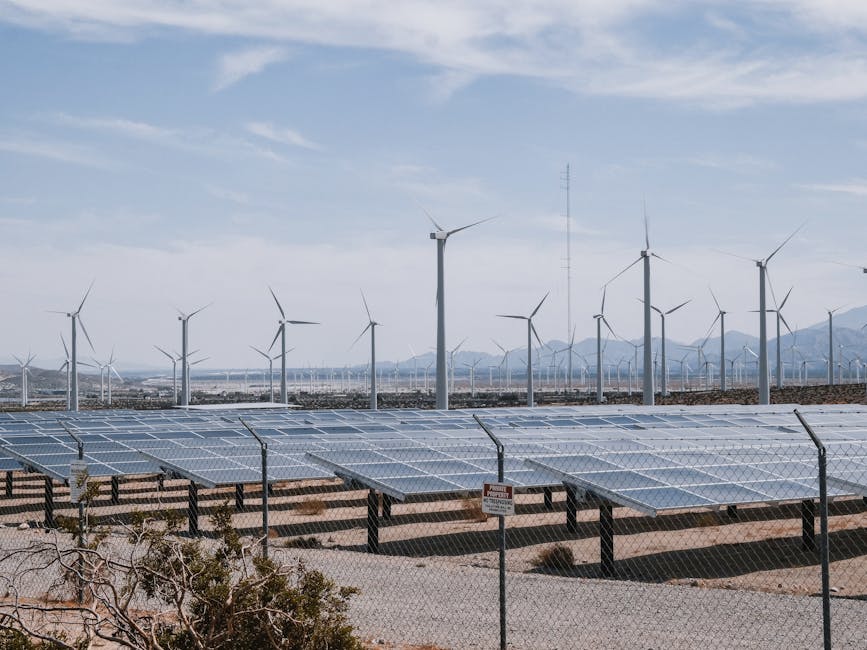
Organizations can procure renewable energy in three primary ways:
- Owning renewable energy systems and consuming the energy they generate.
- Purchasing renewable power from third-party-owned systems, often through Power Purchase Agreements (PPAs).
- Purchasing unbundled renewable energy credits (RECs). To make renewable energy claims, an organization must own and retire the RECs associated with the power.
Solar and Wind Power Solutions
Solar and wind are two of the most recognizable and rapidly expanding renewable energy solutions, with costs that have plummeted over the last decade.
Solar PV Systems: Solar offers versatile solutions for businesses.
- Rooftop Solar: Converts unused roof space into a power generator.
- Ground-Mount Solar: For businesses with available land, allowing for larger-scale deployment.
- Solar Carports: Offer dual benefits of shaded parking and electricity generation.
The cost of manufacturing solar panels has fallen dramatically, and they offer a long-term return on investment with a lifespan of roughly 30 years.
Wind Power: This is a viable solution for businesses in windy regions of the United States, Canada, or Europe.
- Onshore Wind Turbines: Can range from smaller turbines for individual businesses to utility-scale projects.
- Offshore Wind Farms: The growth of offshore wind contributes to an increasingly decarbonized grid from which businesses can draw power.
The falling costs of both solar and wind make them attractive for businesses looking to control costs. We view these as critical components of broader Energy Resource Development strategies.
Hydropower and Geothermal Energy Solutions
While solar and wind get headlines, hydropower and geothermal energy solutions offer powerful advantages, especially for industrial applications.
Hydropower: As the largest source of renewable electricity globally, hydropower provides reliable, baseload power. Its ability to store energy makes it crucial for grid stability. At FDE Hydro, our patented modular precast concrete technology allows us to build and retrofit hydroelectric dams with significantly reduced construction costs and time. This makes hydropower more accessible and cost-effective in North America, Brazil, and Europe. We also focus on solutions like Pumped Storage Hydropower, which acts like a giant battery for the grid. We’re committed to Reinvigorating Hydropower to support clean energy grids.
Geothermal Energy: Geothermal harnesses the Earth’s internal heat for consistent power and heating/cooling.
- Geothermal Heating and Cooling Systems: Use stable underground temperatures for highly efficient HVAC, leading to significant cost savings.
- Geothermal Power Plants: In geologically active areas, these plants provide continuous, baseload electricity.
Incentives are often available; we encourage businesses to check DSIRE.org for local policies.
Emerging Renewable Energy Solutions
The landscape of renewable energy solutions is constantly evolving with new technologies.
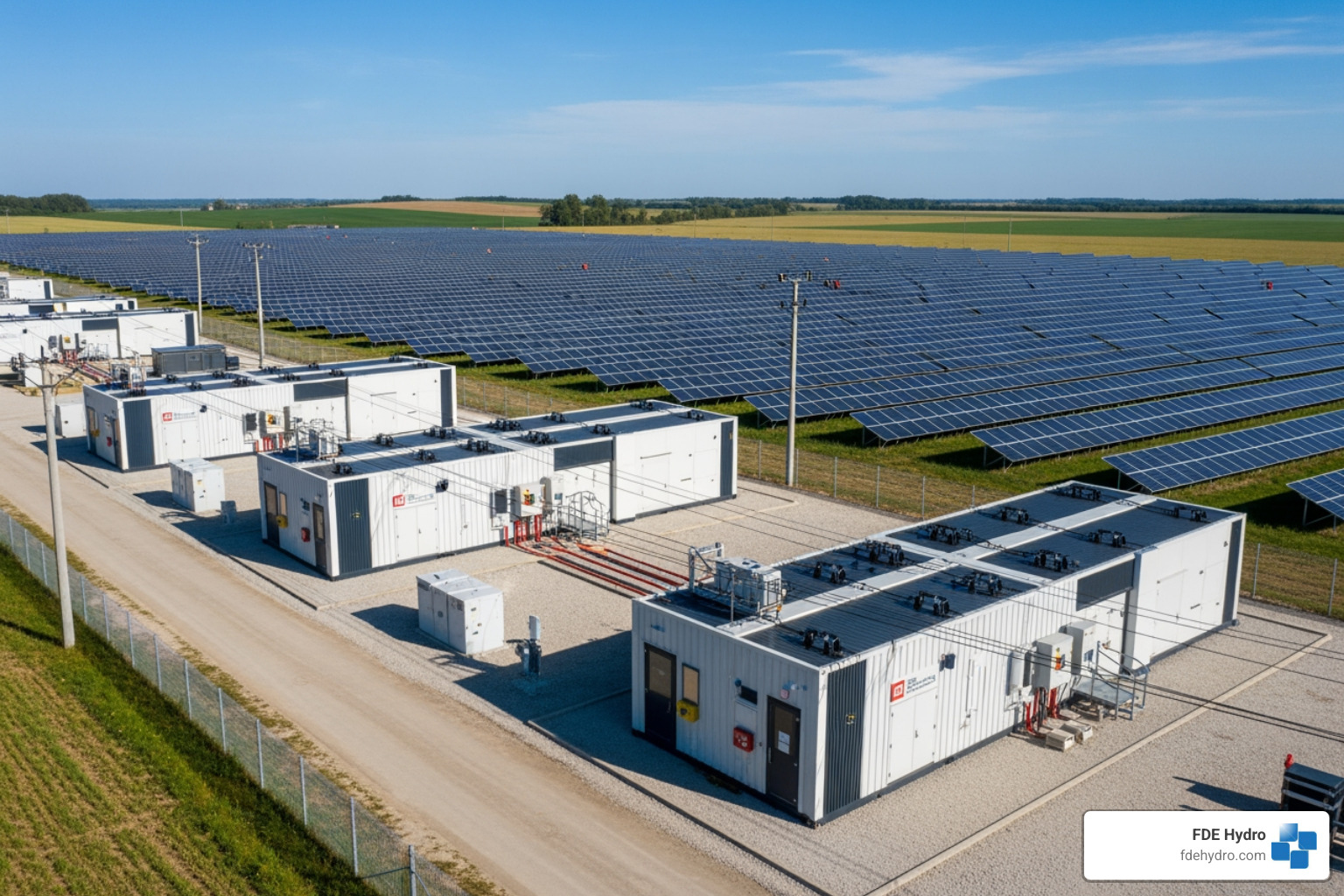
Battery Storage: Critical for integrating intermittent renewables, battery systems store excess energy, improve resilience, and reduce peak demand charges. This is a key component of Microgrid development.
Green Hydrogen: Produced with renewable electricity, green hydrogen is an emerging clean fuel for decarbonizing heavy industry and transportation.
Bioenergy: Produced from organic materials, sustainable bioenergy can play a role in waste management and providing dispatchable power.
Ocean Energy: Though in early stages, technologies like wave and tidal power have immense theoretical potential for future clean energy generation.
From Blueprint to Operation: Managing Your Energy Project
A commercial renewable energy project involves a detailed journey from concept to operation. At FDE Hydro, we streamline this process for Green Energy Construction, ensuring efficiency and optimal performance.
Navigating Development and Construction
The development phase begins with meticulous site selection and navigating the complex permitting process, which varies by region. We engage proactively with stakeholders to ensure projects are developed responsibly.
Construction management is where our unique capabilities shine. Our Innovative Construction Techniques, particularly our modular precast concrete technology, significantly reduce construction time and costs. This is a game-changer for large-scale projects like hydropower dams. By prefabricating components, we minimize on-site disruption and accelerate project timelines, contributing directly to Project Cost Reduction. We have successfully applied these methods across our operations in North America, Brazil, and Europe.
Once built, the focus shifts to operations, maintenance (O&M), and asset optimization using digital technologies. Modern renewable energy solutions are increasingly smart. Data analytics from sensors provide real-time insights, allowing for predictive maintenance that identifies potential issues before they cause costly downtime.
Artificial Intelligence (AI) is also revolutionizing asset management. AI for Resource Management can analyze vast datasets to forecast energy production and optimize dispatch. For instance, AI can learn optimal operating patterns for a hydropower plant based on water levels and electricity demand, maximizing output.
Effective grid integration is another critical aspect. Advanced digital solutions help manage the balance of supply and demand, ensuring grid stability. By leveraging these technologies, we ensure your investment delivers maximum value throughout its operational life.
The Evolving Landscape of Global Energy
The global energy transition is accelerating, presenting immense opportunities for businesses across the United States, Canada, Brazil, and Europe. We are witnessing an unprecedented shift towards renewable energy solutions, driven by economic advantages, environmental imperatives, and technological advancements.
Global renewable electricity capacity is expanding rapidly. While much of this growth is driven by countries like China, their scale and innovation indicate what is possible globally. This momentum translates into unparalleled opportunities for Sustainable Infrastructure Development in our regions. Projections show onshore wind additions almost doubling by 2030, offshore wind capacity quadrupling, and over 165 GW of new hydropower becoming operational between 2024-2030.
Innovations Driving the Transition
The pace of innovation in renewable energy solutions is breathtaking. Advanced energy storage, including next-generation batteries and pumped storage hydropower, is crucial for addressing intermittency and ensuring a stable power supply.
Digital technologies are at the forefront. Digital twins allow for predictive modeling and remote monitoring, while AI-powered grid management systems are becoming essential for balancing complex grids. Innovative applications like agrivoltaics (combining agriculture with solar) are also gaining traction, allowing land to serve dual purposes. These integrated solutions offer multiple benefits, an approach supported by initiatives like the World Economic Forum’s Centre for Energy & Materials.
Challenges and Opportunities on the Horizon
Despite rapid progress, the transition faces challenges that also present opportunities for growth.
Key challenges include grid modernization to integrate decentralized renewables, the need for consistent policy support to de-risk investments, and ensuring supply chain resilience. Workforce development is also critical to meet the growing demand for skilled labor.
Financing the transition remains a hurdle, but the estimated $4.5 trillion needed annually until 2030 to reach net-zero represents an enormous investment opportunity.
At FDE Hydro, we are positioned to address many of these challenges. Our modular construction techniques make hydropower projects more economical and faster to deploy, directly helping with cost and timeline issues. We believe that by embracing Hydropower Advancements Innovations 2025 and collaboration, we can open up the full potential of renewable energy solutions.
Frequently Asked Questions About Commercial Renewables
Here are some common questions from businesses considering the switch to renewable energy solutions.
What are the primary financial benefits of switching to renewable energy?
The financial benefits are substantial and multifaceted:
- Reduced Electricity Bills: Generating your own power or locking in long-term contracts significantly lowers monthly energy expenses.
- Long-Term Budget Certainty: Renewable energy costs are predictable for decades, unlike volatile fossil fuel prices.
- Tax Credits and Rebates: Government incentives in the United States, Canada, and Europe can drastically reduce the upfront cost of installations.
- Increased Asset Value: Properties with modern renewable energy solutions often command higher market values.
- Positive Brand Perception: Strong corporate social responsibility can lead to increased customer loyalty and attract top talent.
How can a business procure renewable energy without installing its own system?
Several options exist for businesses that cannot or prefer not to install on-site systems:
- Power Purchase Agreements (PPAs): A third party installs and operates a system on your property, and you buy the power at a fixed rate.
- Virtual Power Purchase Agreements (VPPAs): A financial contract for power from an off-site project that provides RECs and price certainty.
- Unbundled Renewable Energy Credits (RECs): Purchasing RECs allows your business to claim renewable energy use even if your power comes from the grid mix.
- Community Solar: Subscribe to a local solar farm and receive credits on your electricity bill.
- Green Tariffs: Opt to pay your utility a premium to source your energy from renewables.
Which renewable energy technology is the most efficient?
Efficiency varies, but in terms of energy conversion, Hydropower is one of the most efficient sources, converting over 90% of available water energy into electricity.
- Solar PV Efficiency: Panels convert around 15-22% of sunlight to electricity, and this figure is constantly improving.
- Wind Turbine Efficiency: Modern turbines have high capacity factors (35-50%+), meaning they generate power a significant amount of the time.
- Geothermal Efficiency: Geothermal plants have very high capacity factors, often running 24/7, making them reliable for baseload power.
The “most efficient” technology depends on your location, energy needs, and available resources.
Build Your Sustainable Future Today
The transition to renewable energy solutions is a profound business opportunity, not just an environmental choice. We’ve explored the compelling economic advantages, from cost savings and stable prices to improved brand value. We’ve also highlighted the critical environmental and social benefits, including reduced carbon footprints and cleaner air.
The future of energy is clean and decentralized. For businesses in the United States, Canada, Brazil, and Europe, embracing this future means building a more resilient, competitive, and sustainable operation. The tools and technologies are available today to transform your energy landscape.
At FDE Hydro, we are proud to be at the forefront of this change. Our innovative modular precast concrete technology is revolutionizing hydropower, offering faster, more cost-effective ways to harness the power of water. We are dedicated to providing Clean Energy Infrastructure that supports your business goals and contributes to a healthier planet.
Taking the next step is a decision that will pay dividends for years to come. We are here to partner with you on this journey.
Explore our innovative means and methods for renewable energy projects.
by Adaptify Support | Feb 17, 2026 | News
Why Speed Matters in Critical Infrastructure Deployment
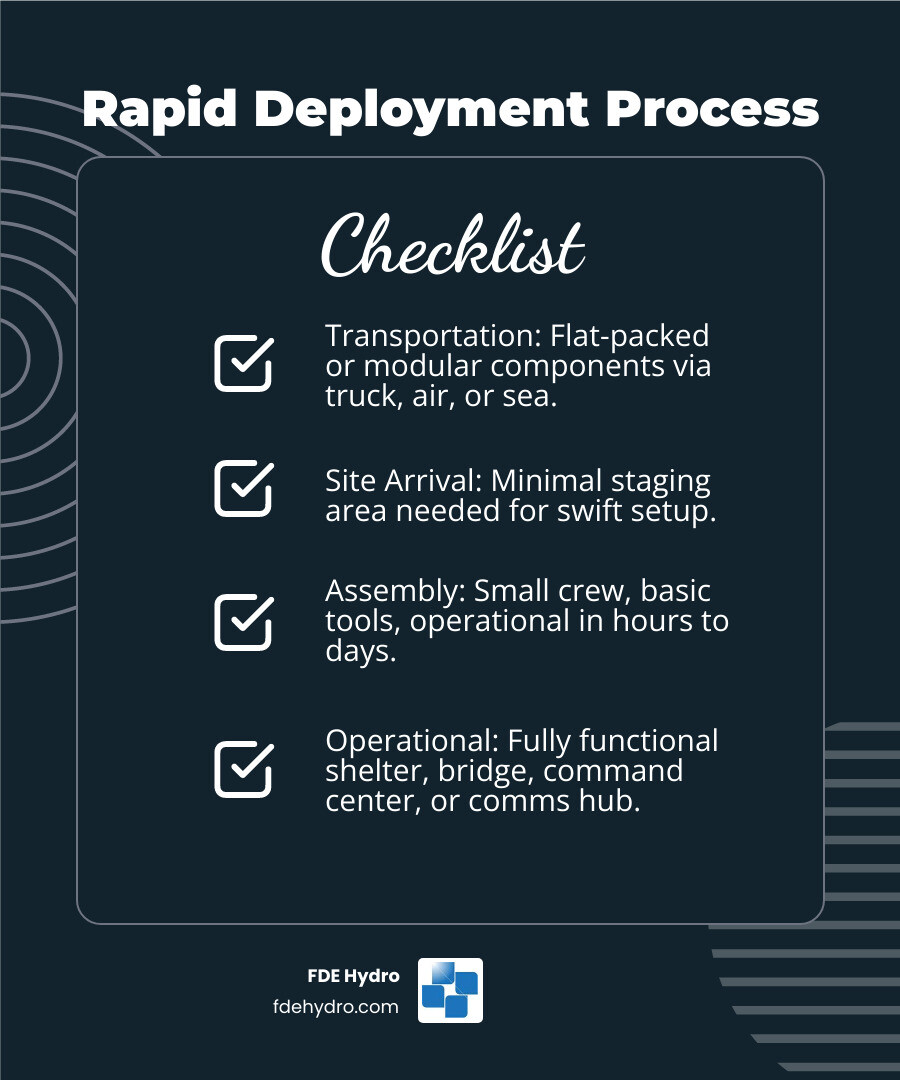
Rapidly deployable solutions are systems, structures, or technologies designed to be transported, assembled, and made operational in minimal time—often within hours or days rather than weeks or months. These solutions are critical when time is the most valuable resource.
Key characteristics of rapidly deployable systems include:
- Speed: Operational in hours to days, not weeks or months
- Portability: Lightweight, flat-packed, or modular for easy transport
- Simplicity: Minimal crew size, often requiring little specialized training
- Flexibility: Configurable for multiple applications and environments
- Durability: Built to withstand harsh conditions despite rapid setup
The world faces accelerating challenges that don’t wait for traditional construction timelines. Natural disasters strike with little warning. Military operations demand immediate infrastructure in remote locations. Critical infrastructure fails unexpectedly. Communication networks collapse when they’re needed most.
Traditional construction methods—measured in months and years—simply can’t keep pace with these urgent demands. A hospital that takes 18 months to build offers no help during a pandemic’s first wave. A bridge requiring six months of engineering and construction can’t restore supply chains after a catastrophic flood.
This gap between need and capability has driven innovation across multiple sectors. The military pioneered many rapid deployment technologies out of necessity—soldiers can’t wait for permanent bases in conflict zones. Emergency responders adopted and adapted these approaches for disaster relief. Now, industries from telecommunications to hydropower are finding how rapidly deployable systems can transform project economics and timelines.
The stakes are tangible. A RAPID steel barrier wall can expand to 35 feet long and be deployed by five unskilled workers in under 30 minutes—potentially saving lives in active threat situations. Modular structures can provide 1,600 square feet of usable space while storing in just 200 square feet when flat-packed, enabling massive logistical efficiencies. Underwater sensor arrays can be deployed at Arctic chokepoints to monitor submarine activity without requiring shore-based infrastructure in extreme environments.
I’m Bill French Sr., founder and CEO of FDE Hydro, where we’ve spent decades pioneering modular precast construction methods that make rapidly deployable infrastructure practical for hydropower and civil projects. My experience leading large-scale site development and participating in the Department of Energy’s Hydropower Vision initiative has shown me how modular, rapidly deployable approaches can transform both emergency response and planned infrastructure development.
Whether responding to emergencies, supporting military operations, or building critical infrastructure on accelerated timelines, rapidly deployable technologies share a common promise: delivering capability when and where it’s needed most, without compromise.
Handy rapidly deployable terms:
Why the World Needs to Move Faster: Challenges Demanding Rapid Solutions
The call for rapidly deployable solutions isn’t just a matter of convenience; it’s a critical response to a world that seems to be speeding up, often in unpredictable ways. From the sudden fury of natural disasters to the complex demands of military operations and the unexpected failure of vital infrastructure, the need for quick, effective interventions has never been greater.
The world is facing increasingly serious threats, including stronger storms, devastating fires, historic-level floods, and even cycles of more deadly pandemics. Governments and organizations in regions like the United States, Canada, and Europe must respond quickly to these threats to protect their citizens and maintain stability. When a bridge collapses in Kansas, or a hurricane devastates a coastal community in New York, we can’t afford to wait months for traditional solutions.
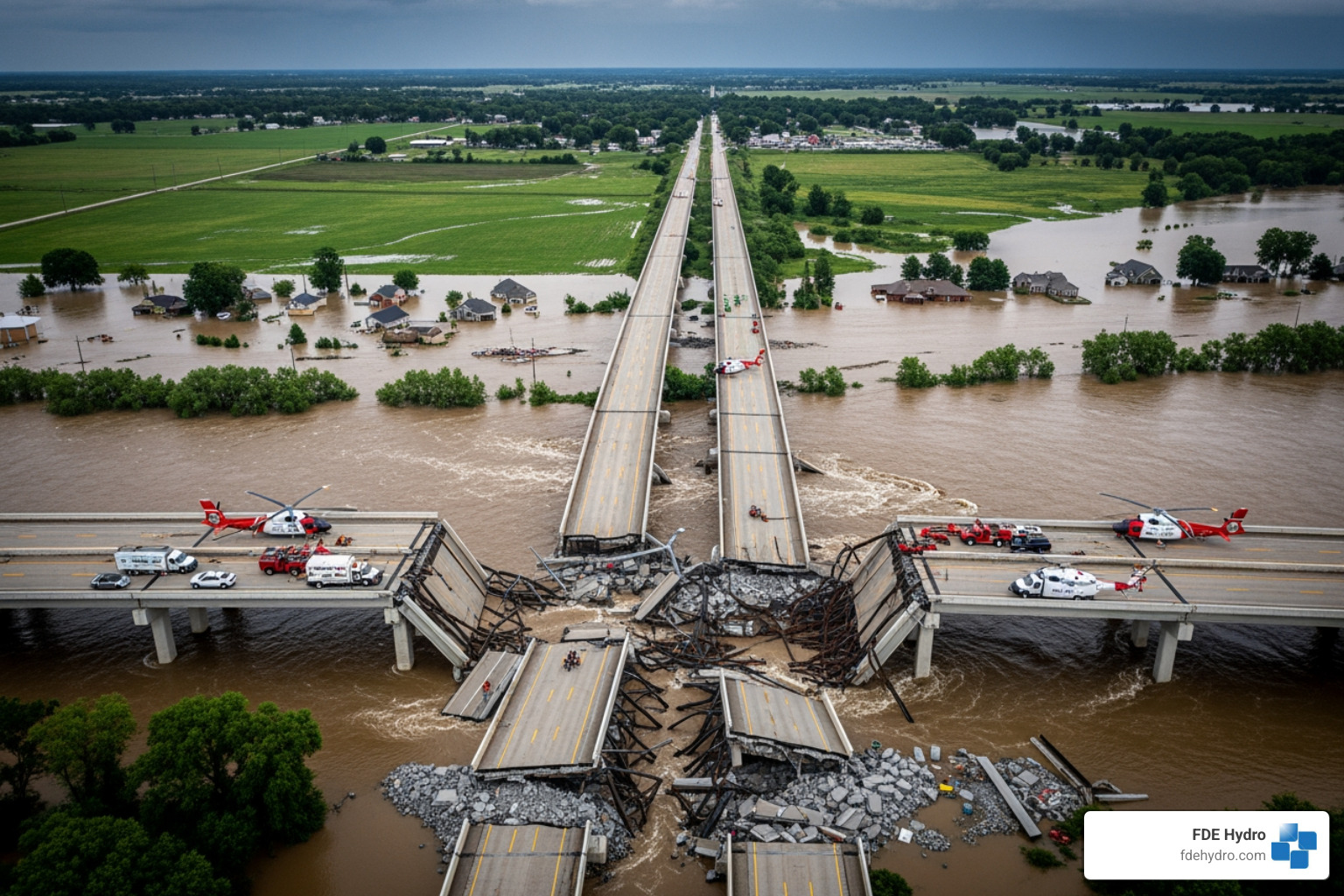
These challenges often present themselves as:
- Natural disasters: Earthquakes, floods, wildfires, and hurricanes can wipe out infrastructure and leave communities isolated in an instant, demanding immediate shelter, medical aid, and communication.
- Humanitarian crises: Whether due to conflict or natural catastrophe, large populations may require urgent, temporary housing, medical facilities, and logistical support.
- Military conflict: Operations require swift establishment of bases, protection, and communication in often hostile and remote environments.
- Infrastructure failure: Unexpected breakdowns in power grids, transportation networks, or water systems can cripple daily life and require immediate, temporary fixes.
- Communication blackouts: Loss of traditional communication channels in emergencies can sever vital links, making rapidly deployable connectivity solutions essential.
- Security threats: Protecting assets and personnel from evolving threats requires flexible and fast-to-deploy physical barriers and surveillance.
- Pandemic response: As we’ve seen, global health crises necessitate quick establishment of testing centers, temporary hospitals, and mass notification systems.
Bridging Critical Gaps in Emergencies
In the chaos of an emergency, the ability to quickly provide basic necessities and critical services can be the difference between life and death. Rapidly deployable solutions are purpose-built to bridge these immediate gaps:
- Shelter provision: When homes are destroyed, we need to quickly erect emergency shelters and housing. These can range from simple tents to sophisticated modular structures. The State of California has even undertaken studies on rapidly deployable emergency housing to address the needs of its vulnerable populations after disasters.
- Medical facilities: Temporary hospitals, clinics, and isolation units can be set up in hours or days, providing crucial medical care where permanent facilities are overwhelmed or inaccessible. Some solutions include emergency hospitals and decontamination tents that are instantly available for deployment.
- Mass notification systems: In times of crisis, clear and immediate communication is paramount. Solutions like Alertus offer rapidly deployable mass notification systems to address challenges from stronger storms to pandemics, ensuring critical information reaches affected populations efficiently. These systems are vital for managing multiple sites centrally or communicating via distributed networks in the United States.
- Decontamination tents: In situations involving hazardous materials or biological threats, quickly establishing decontamination zones is essential for public safety.
- Emergency housing: Beyond immediate shelters, modular systems can create more robust emergency housing, offering comfort and resilience for longer durations.
Securing Assets and Personnel
Protecting people and valuable assets, especially in dynamic or high-threat environments, is another area where rapidly deployable technologies shine.
- Force protection: Military and security forces require immediate defensive structures.
- Perimeter security: Establishing secure zones quickly is vital for events, temporary bases, or disaster relief efforts. The ERDC’s Ready Armor Protection Instant Deployment (RAPID) wall is a prime example. This steel barrier wall can expand like an accordion to 35 feet long and be deployed by an unskilled crew of five in less than 30 minutes. It’s seven times faster to assemble than comparable technologies, providing ballistic and fragmentation protection, intrusion prevention, and line-of-sight denial for urban operations or asset protection. You can learn more about the ERDC’s deployable RAPID wall here.
- Checkpoints and command centers: For crowd control, traffic management, or incident response, rapidly deployable checkpoints and mobile command centers are essential. These can be set up quickly for events like the NFL Draft, as demonstrated by the ERDC’s technologies.
- Underwater surveillance: In strategic locations, such as Canada’s Arctic Territory, rapidly deployable fixed array sensor (RDFAS) projects are being developed. These underwater sensors can be rapidly deployed, recovered, and redeployed to strategic choke points to monitor for submarine activity, operating without shore-based infrastructure in cold, near-ice environments. This project aims to provide a flexible and cost-reduced array capability, able to be deployed along an invading submarine’s most likely route based on intelligence.
- Asset protection: From critical infrastructure to temporary storage, these solutions offer immediate physical protection against various threats.
A Spectrum of Solutions: Rapidly Deployable Systems Across Sectors
The beauty of rapidly deployable solutions lies in their versatility. What started as military necessity has blossomed into a diverse array of technologies serving numerous sectors, including emergency response, communication, and infrastructure development. We see these solutions cropping up from the busy streets of New York City to remote construction sites in Brazil.
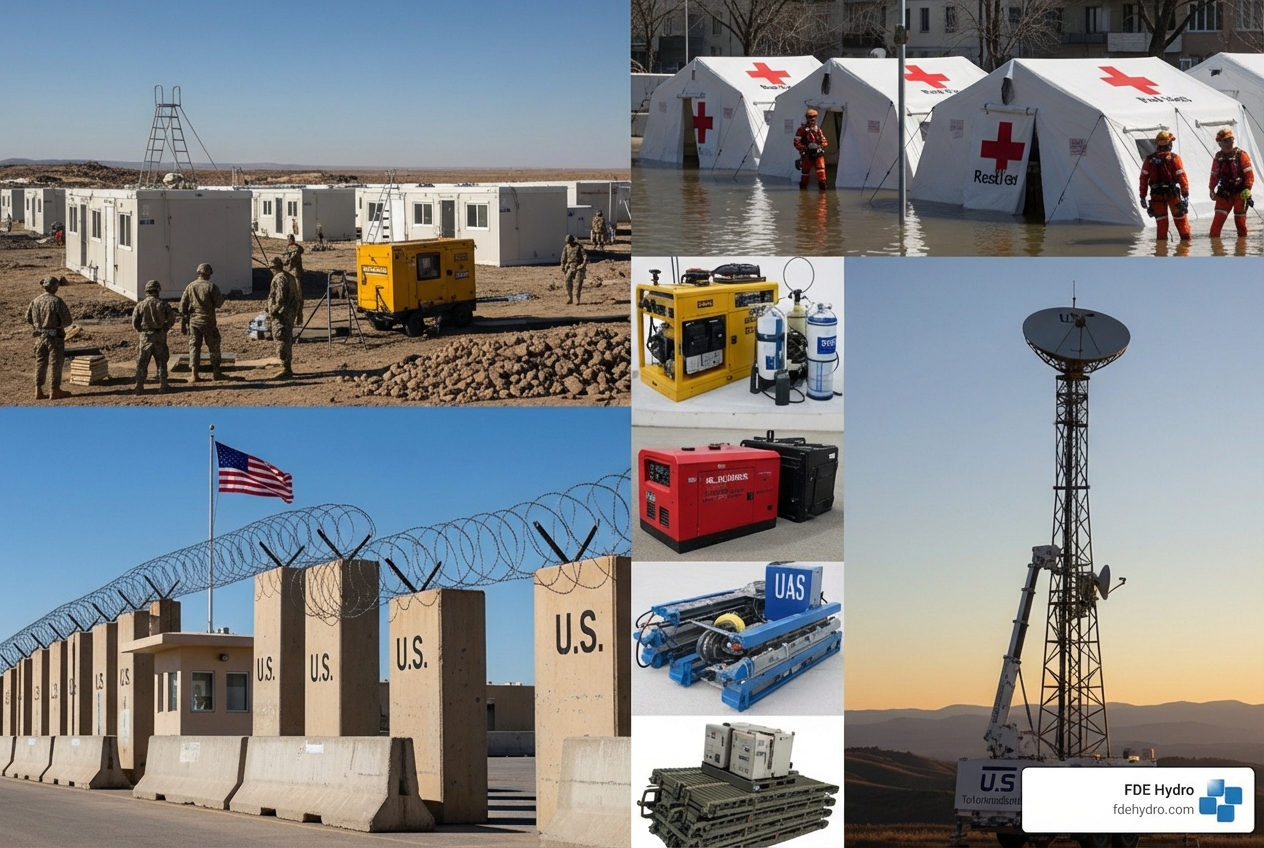
Infrastructure and Shelter Solutions
When we talk about rapidly deployable infrastructure, we’re often talking about structures that can literally be picked up, moved, and reassembled with impressive speed.
- Modular buildings: These systems use standardized frame and wall panel assemblies that allow stacking and connecting in any direction. They can be configured for virtually any application: housing (single-family, multi-family, dormitories, barracks), commercial (offices, retail), educational (schools, classrooms), healthcare (hospitals, clinics), and recreational facilities. Our own work at FDE Hydro, especially with Modular Construction Techniques and Rapid Installment of Module Precast Civil Infrastructure, exemplifies how modularity can revolutionize construction, even for large-scale projects like hydropower dams.
- Inflatable shelters: Lightweight and surprisingly robust, these structures can be deployed quickly by inflating them, providing immediate cover for aid, military, or emergency response operations. RAPID Cabin® and RAPID Hangar® are examples of high-performance, military-grade inflatable solutions built for demanding environments.
- Emergency housing: Beyond basic tents, these are designed for longer-term, more comfortable stays, crucial for disaster recovery in California and other affected areas.
- Temporary bridges and decking systems: For damaged infrastructure or challenging terrain, rapidly deployable decking systems like ERDC’s Over-Decking System can bridge free spans up to 46 feet, accommodating heavy vehicles like an M1A1 main battle tank. These systems are adjustable, configurable, and adaptable for quick deployment at austere locations, offering an expedient ramp and platform for loading/unloading rolling stock from various transportation modalities.
- Accordion-style barriers: As mentioned, the RAPID steel barrier wall is a formidable example of how physical security can be rapidly established.
- Command centers: CRESCENDO provides a rapidly deployable, versatile command center for personnel in disaster recovery or field incident response environments to interoperate with others via their existing communications. It’s lightweight and transportable, able to fit into a vehicle or aircraft overhead locker.
- Medical facilities: Whether inflatable or modular, these provide essential healthcare infrastructure in emergency zones.
Communication and Command Systems
In an age where connectivity is king, losing it can be catastrophic. Rapidly deployable communication systems ensure we stay connected, even when traditional networks fail.
- Mobile command centers: These are fully equipped vehicles or modular units that can be quickly driven or flown into an incident zone, becoming the nerve center for response efforts. Crescendo’s system, for instance, allows for dynamic networking of multiple units and connection to third-party systems via VoIP/SIP.
- Satellite connectivity: Leveraging technologies like Starlink Satellite, these solutions provide seamless, high-performance internet wherever and whenever it is needed, particularly in remote areas or after disaster-induced blackouts. This is crucial for emergency response teams and temporary worksites across the US and Canada.
- 4G/5G networks: Portable 4G/5G nodes can create temporary cellular coverage, restoring vital communication for communities.
- Interoperable radio systems: Bridging communication gaps between different agencies (police, fire, EMS) is critical. Systems that integrate IP, analog, radio, and cellular systems into a single platform are invaluable.
- Mass notification: As Alertus highlights, these systems are essential for disseminating critical information during rapidly unfolding events.
- VoIP/SIP integration: This allows diverse communication devices to talk to each other, creating a unified communication environment in the field.
- Real-time monitoring: Integrated systems allow for real-time tracking of events and resources, improving situational awareness for emergency responders.
Military and Defense Systems
The military has been a primary driver of rapidly deployable innovation, needing to establish and secure operations in diverse and often hostile environments.
- Inflatable hangars: RAPID Hangar®, made from durable Drop-Stitch Weave Fabric, offers a reusable and cost-effective alternative to traditional steel structures for aircraft and vehicle protection.
- Protective barriers: Beyond the RAPID wall, various systems offer quick-to-erect ballistic and blast protection for personnel and equipment.
- Water crossing platforms: RAPID Platform® is an inflatable, military-grade solution designed to enable ground vehicles to cross water bodies like rivers and lakes, supporting payloads ranging from 1,814 kg to over 90,718 kg. This eliminates the need for time-consuming and costly traditional bridge construction.
- Underwater sensor arrays: The RDFAS project for the Canadian Armed Forces/Royal Canadian Navy is a clear example, providing a flexible and cost-reduced array capability for anti-submarine warfare.
- Covert operations: Some rapidly deployable platforms even feature silent propulsion for stealthy deployments.
- EU Rapid Deployment Capacity: Europe is also investing in its Rapid Deployment Capacity, recognizing the strategic importance of being able to react swiftly to crises.
The Core Advantages and Enabling Technologies
What makes rapidly deployable solutions so appealing? It’s a combination of practical benefits and the smart application of cutting-edge technology. These systems are not just about doing things faster; they’re about doing them better, more efficiently, and often more cost-effectively.
Key Benefits of Rapidly Deployable Systems
The advantages are clear, especially when compared to traditional construction or response methods:
- Speed of deployment: This is the defining characteristic. A RAPID steel barrier wall, for instance, can be deployed in less than 30 minutes by an unskilled crew of five. Modular structures can be assembled in hours or days, not weeks or months.
- Portability: Many solutions are designed as ‘Flat Packed’ units for intermodal transportability, meaning they can be easily moved by air, road, rail, or sea. This minimizes staging and storage requirements. For example, 1,600 sq ft of usable space from modular units can be stored in a mere 200 sq ft area when flat-packed and double-stacked.
- Modularity: The ability to combine standardized components allows for flexible configurations and scalability. Need a bigger command center? Just add more modules!
- Scalability: Solutions can be expanded or contracted based on evolving needs, from a single shelter to a full base camp.
- Reusability: Many systems are engineered to be disassembled and returned to a flat-pack system for storage and subsequent reuse across multiple missions, offering significant cost savings and tactical flexibility. RAPID Hangar® is a prime example of a reusable, inflatable structure.
- Durability: Despite their rapid setup, these solutions are built to withstand challenging conditions, including specific wind, snow, and seismic requirements, ensuring they perform when it matters most.
- Reduced labor needs: Many systems are designed for assembly by small, unskilled crews, reducing reliance on specialized labor and heavy equipment. The ERDC’s Over-Decking System, for example, doesn’t require power tools, heavy equipment, or skilled labor for assembly.
- Cost-effectiveness: By reducing construction time, labor, and the need for heavy machinery, rapidly deployable solutions often lead to significant Project Cost Reduction. As we often say at FDE Hydro, there are many reasons Why Precast Cost Less—and rapid deployment is a big part of that equation. They provide a reliable, cost-effective alternative to traditional construction, particularly for military and field operations.
Technological Drivers of Rapidly Deployable Innovation
Behind every impressive rapidly deployable solution is a story of technological innovation. These advancements are pushing the boundaries of what’s possible:
- Advanced materials: The development of lightweight, high-strength fabrics (like Drop-Stitch Weave Fabric and Double Wall Reinforced Fabric for inflatable structures) and resilient composites allows for highly portable yet durable construction.
- Inflatable structures: These have moved far beyond simple bouncy castles, now forming the basis for military-grade hangars, shelters, and even water-crossing platforms.
- Modular Precast Concrete: This is where FDE Hydro truly shines. Our patented modular precast concrete technology is a game-changer for hydropower and civil infrastructure. It allows for components to be manufactured off-site under controlled conditions, then transported and rapidly assembled on-site, drastically cutting down construction time and cost for dams and water control systems in North America, Brazil, and Europe. This approach is a cornerstone of Innovative Construction Techniques Guide.
- 3D printing: While still emerging for large-scale structures, 3D printing holds immense promise for on-demand fabrication of components in remote locations.
- Hydraulic systems: Simple yet powerful hydraulic systems, as seen in the RAPID steel barrier wall, enable quick expansion and retraction of complex structures with minimal human effort.
- Satellite communication: Technologies like Starlink have revolutionized remote connectivity, providing high-speed internet access in areas where traditional infrastructure is non-existent or compromised, making rapidly deployable connectivity a reality for emergency responders and field operations.
From Blueprint to Field: Deployment Logistics and Future Innovations
Getting a rapidly deployable solution from concept to operational reality involves careful planning and execution. It’s not just about the technology itself, but how we manage its journey and anticipate its evolution.
Logistical Considerations for Successful Deployment
Even the fastest solution requires smart logistics to ensure it arrives and functions as intended.
- Transportation methods: Whether by air, truck, rail, or sea, the design of rapidly deployable systems prioritizes efficient transport. Many are designed as ‘Flat Packed’ units for intermodal transportability, meaning they can be moved via various modes without needing to be repacked.
- Flat-pack design: This minimizes volume, allowing more units to be transported at once and reducing shipping costs. For example, a 4-module unit (800 sq ft total) can be transported flat-packed, containing all erection materials and assembly components.
- Staging and storage: Efficient storage and staging areas are crucial, especially for reusable systems that need to be ready for the next deployment. The ability to store large amounts of usable space in a small footprint is a key advantage.
- Crew size and skill: The goal is often minimal crew size, ideally unskilled personnel, to reduce logistical complexity and training requirements. The RAPID wall’s deployment by five unskilled personnel in under 30 minutes is a testament to this design philosophy.
- Equipment needs: Solutions are increasingly designed to require minimal or no heavy equipment or power tools for assembly, simplifying operations in austere environments.
- Intermodal transport: The seamless transition between different transportation modes is vital for global reach and efficiency. These considerations are part of the Means and Methods we always evaluate in our project planning at FDE Hydro, ensuring our modular solutions are as efficient to deploy as they are to build.
The Next Frontier: Future Trends in Rapid Deployment
The field of rapidly deployable technologies is far from static. Innovation continues at a brisk pace, promising even more sophisticated and autonomous solutions.
- Increased automation: Imagine drones deploying sensor networks or robotic systems assembling modular shelters with minimal human intervention. This is already on the horizon, reducing risk and increasing speed.
- Smart self-assembling structures: Future systems might use advanced robotics and AI to self-assemble, even adapting to environmental conditions autonomously.
- Sustainable materials: As environmental concerns grow, there will be a greater emphasis on using recycled, recyclable, or rapidly renewable materials for these temporary and reusable structures.
- Improved sensor integration: We’ll see more sophisticated, miniaturized sensors integrated into deployable structures for real-time monitoring of everything from structural integrity to environmental conditions. The RDFAS project is just one early example of this trend.
- AI-driven logistics: Artificial intelligence will optimize transportation routes, predict maintenance needs, and manage inventory for rapidly deployable assets, making deployment even smoother and more efficient.
- Next-gen biosecurity platforms: As highlighted by projects like HoX securing a Department of War-backed Lawrence Livermore Pilot Contract in California, the development of advanced biosecurity platforms that can be rapidly deployed to detect and mitigate biological threats is a critical future trend.
Conclusion: Building a Resilient Future, Faster
We’ve seen that rapidly deployable technologies are not just a niche; they are a fundamental shift in how we approach problem-solving in a , unpredictable world. From providing immediate shelter and medical aid in disaster zones to securing military operations and restoring vital communication, these solutions offer speed, efficiency, and resilience when every second counts.
The versatility of these solutions is truly remarkable, spanning military, emergency response, communication, and infrastructure sectors. Their core benefits—speed, portability, modularity, reusability, and cost-effectiveness—make them indispensable tools for governments, NGOs, and businesses alike. From the RAPID steel barrier wall to modular command centers and satellite internet hubs, these innovations empower us to react quickly and effectively to crises.
Technological advancements, particularly in advanced materials, inflatable structures, and our own pioneering Modular Precast Concrete at FDE Hydro, are continually pushing the boundaries of what’s possible. These innovations are changing construction timelines and project economics, enabling us to build a more resilient future, faster.
At FDE Hydro, we understand the profound impact of rapidly deployable methodologies. Our commitment to innovative construction techniques, especially in hydropower and water control systems, directly contributes to this vision. By significantly reducing construction costs and time for critical infrastructure, we are helping to future-proof essential systems across North America, Brazil, and Europe.
The future promises even greater automation, intelligence, and sustainability in rapidly deployable systems. As we continue to face evolving challenges, the ability to deploy solutions with instant impact will be more critical than ever. We are proud to be at the forefront of this movement, helping to build resilience and ensure that when the unexpected happens, we are ready to respond.
To learn more about how our innovative approaches can benefit your next project, especially in the critical area of water infrastructure, we invite you to explore our work. Learn about Modular Dam Construction.
by Bill French Sr. | Feb 10, 2026 | News
Why Advanced Manufacturing Matters for Modern Industry
Advanced manufacturing techniques represent the use of innovative technologies and processes—such as automation, artificial intelligence, robotics, and 3D printing—to improve efficiency, quality, and flexibility in production. Here’s what you need to know:
Key Differences from Traditional Manufacturing:
| Aspect |
Traditional Manufacturing |
Advanced Manufacturing |
| Production Strategy |
Mass production, standardized products |
Customization, customer-focused |
| Labor Requirements |
Semi-skilled workforce (3:1 ratio) |
Highly skilled workforce (4:1 ratio) |
| Technology |
Mechanized processes, manual oversight |
Automation, AI, IoT, sensors |
| Investment Focus |
Physical infrastructure and equipment |
R&D and digital infrastructure |
| Flexibility |
Dedicated production lines, limited adaptability |
Dynamic, rapidly flexible systems |
| Data Usage |
Manual tracking and reporting |
Real-time monitoring and analytics |
Since the 1950s, these techniques have transformed how we build everything from aircraft components to medical implants. Manufacturing represents about 30% of energy use in the United States and supports nearly 13 million jobs—about 9% of the workforce. The adoption of automation and artificial intelligence has not only increased efficiency but has also led to higher precision and improved quality control.
The benefits are clear: companies can reduce production costs through lower labor expenses, cheaper materials, streamlined production lines, and reduced inventory. Advanced manufacturing techniques allow for improved competitiveness through improved outputs, increased value, better quality, and greater market responsiveness.
I’m Bill French Sr., Founder and CEO of FDE Hydro™, where we’ve applied advanced manufacturing techniques—specifically modular precast construction—to revolutionize hydropower infrastructure delivery. After five decades leading heavy civil construction projects, including landmark modular bridge work on the I-93 Fast14 project, I’ve seen how these innovations can transform traditional industries.
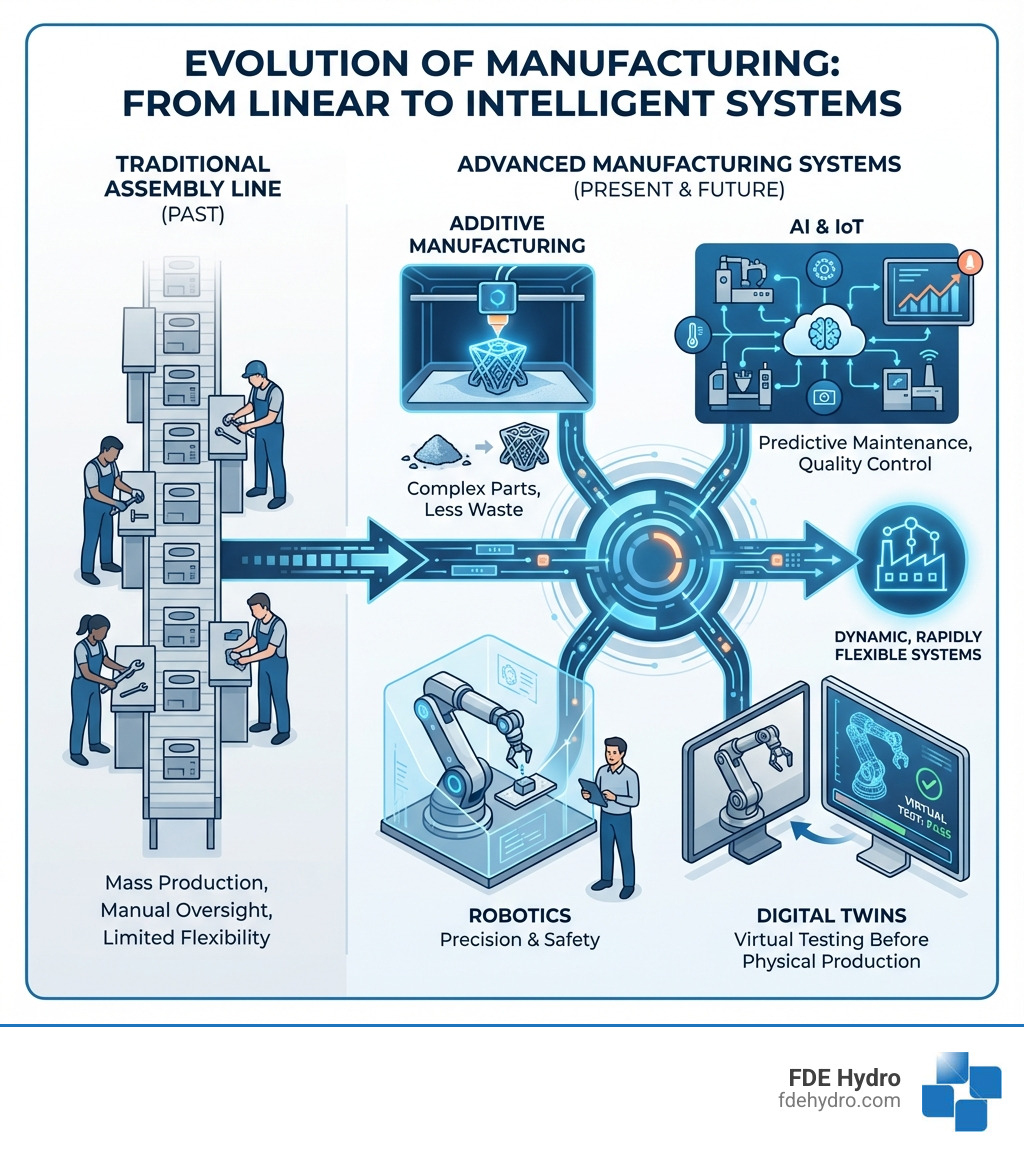
Handy Advanced manufacturing techniques terms:
The Core Technologies Driving the Revolution
The manufacturing landscape is undergoing a profound change, driven by a suite of cutting-edge technologies that are reshaping how products are designed, produced, and delivered. These advanced manufacturing techniques are not just incremental improvements; they represent a paradigm shift towards smarter, more efficient, and more adaptable production systems.
At their heart, these innovations are powered by automation, sophisticated data analytics, pervasive interconnectivity, and intelligent smart systems. This convergence of technologies forms the backbone of what many call Industry 4.0, enabling manufacturers to achieve unprecedented levels of precision, customization, and responsiveness.
The goal is to create products of better quality, faster, and at lower costs, allowing companies to position themselves competitively in the market. We’re seeing this play out across various sectors, from the intricate world of aerospace to the robust demands of civil infrastructure. To dig deeper into how artificial intelligence is steering this evolution, you can explore our insights on AI-Driven Development.
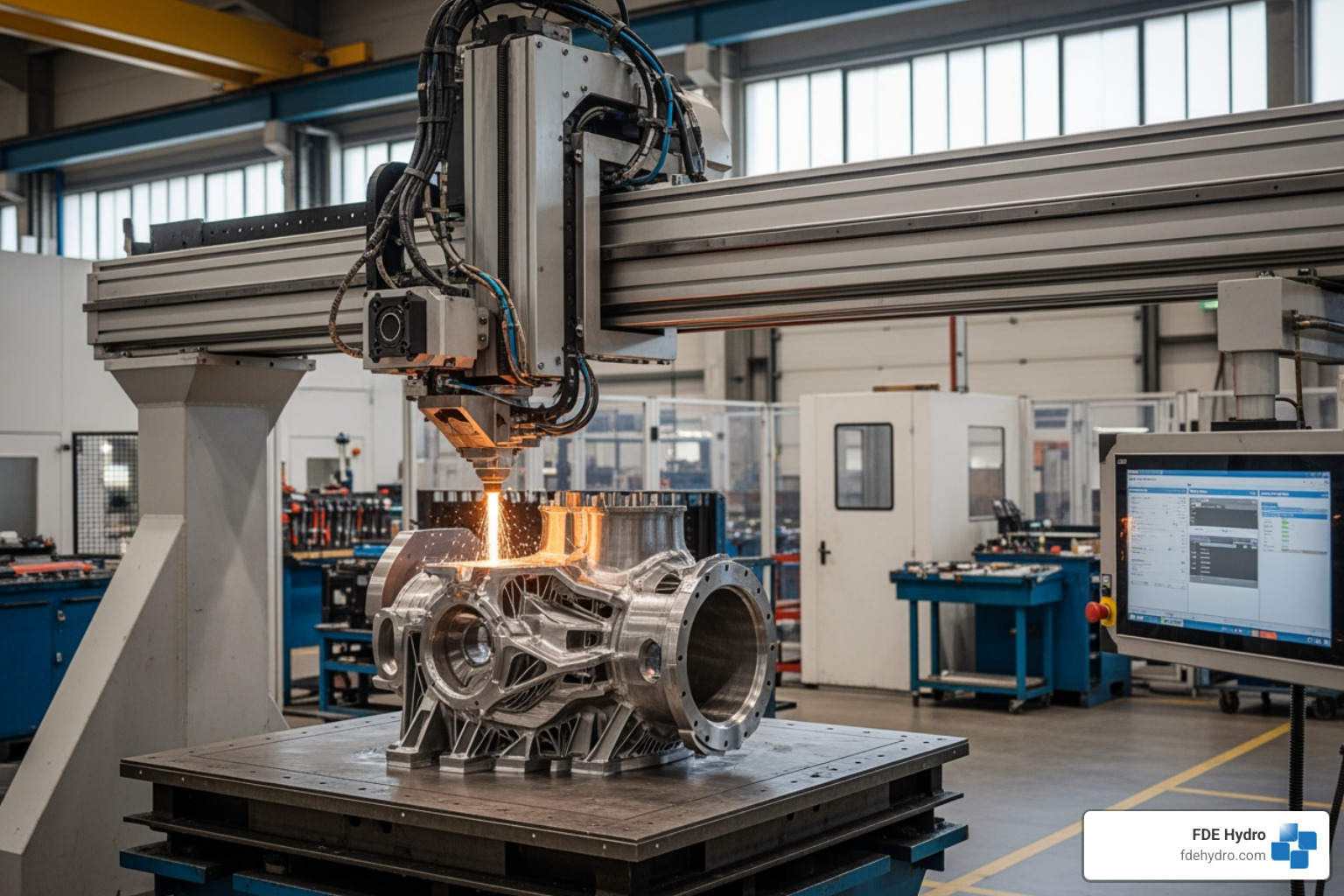
Additive Manufacturing (3D Printing)
Perhaps one of the most visually striking and advanced manufacturing techniques is Additive Manufacturing (AM), commonly known as 3D printing. Unlike traditional “subtractive” methods that remove material to create a part, AM builds objects layer-by-layer from digital designs. This process allows for the creation of incredibly complex geometries that would be impossible or prohibitively expensive to produce with conventional methods. Think of it: a basic cube takes roughly the same time and effort to print as a highly intricate structure with the same enclosed volume. This concept of “complexity for free” is a game-changer.
AM significantly reduces material waste because it only uses the necessary material, making it a more environmentally friendly option. We’re talking about everything from metallic components for aerospace, plastic prototypes for consumer goods, to ceramic parts for specialized applications. This technology has progressed far beyond simple prototyping, now enabling the fabrication of functional end-use parts. For a comprehensive dive into this fascinating field, explore this review on Revolutionizing manufacturing: A comprehensive overview of additive manufacturing.
AI, IoT, and Big Data
In the field of advanced manufacturing techniques, intelligence is just as crucial as physical production. This is where Artificial Intelligence (AI), the Internet of Things (IoT), and Big Data come into play, forming the nervous system and brain of modern factories. IoT involves embedding sensors, software, and other technologies into physical objects to connect and exchange data over the internet. These sensors collect vast amounts of data in real-time from machinery, production lines, and even environmental conditions.
This “Big Data” is then fed into AI systems that can analyze patterns, predict outcomes, and make intelligent decisions. For instance, AI algorithms can predict machine failures before they happen, enabling predictive maintenance and drastically reducing downtime. They can monitor product quality with incredible precision, ensuring consistent output and minimizing defects.
This real-time monitoring and data-driven decision-making empower manufacturers to optimize operations, improve efficiency, and respond rapidly to changes in demand or production issues. Our commitment to intelligent resource allocation is further detailed in our page on AI for Resource Management. Cloud computing plays a vital role here, enabling us to store, access, and process this data remotely, facilitating real-time communication and analysis across our facilities in the United States, Canada, Brazil, and Europe.
Advanced Robotics and Automation
Robotics and automation are the muscle and dexterity of advanced manufacturing techniques. Modern robots are no longer just caged machines performing repetitive tasks; they are becoming more intelligent, collaborative (cobots), and versatile. These advanced robots can handle precision tasks with superhuman accuracy and consistency, operate in hazardous environments without risk to human workers, and work 24/7 without breaks, significantly boosting productivity.
For example, automated CMM (Coordinate Measuring Machine) inspection ensures parts are made to the highest levels of quality and precision, a critical aspect in industries like medical devices or aerospace. CNC (Computer Numerical Control) technologies, including Wire EDM, milling, turning, and grinding, allow for the machining of difficult-to-machine alloys to micro tolerances and high surface finishes.
This level of automation not only increases efficiency but also frees up human workers from mundane or dangerous tasks, allowing them to focus on more complex problem-solving, innovation, and oversight. As we’ve seen in our own work, these technologies are pivotal for ensuring successful project delivery on time, the first time.
Impact Across Industries: Benefits and Applications
The adoption of advanced manufacturing techniques is not merely about technological novelty; it’s about delivering tangible, transformative benefits that redefine competitiveness in the global market. We’re talking about a fundamental shift that leads to improved product quality, significantly reduced production costs, greater customization capabilities, and a faster time-to-market for new innovations.
These factors collectively improve a company’s competitiveness, allowing even smaller enterprises to stand toe-to-toe with industry giants. Our exploration into how these innovations are shaping the energy sector can be found on our Next-Gen Manufacturing: Energy Resource page.
Key Sectors Leading the Way
The revolution brought about by advanced manufacturing techniques is sweeping across numerous industries, with some sectors leading the charge due to their inherent demands for precision, innovation, and efficiency.
- Aerospace Industry: This sector relies heavily on AM for lightweight, complex components, robotics for precision assembly, and advanced materials for improved performance and fuel efficiency.
- Automotive Industry: From electric vehicle battery technology to lightweight chassis components and digital manufacturing processes, advanced manufacturing is driving innovation in car design and production.
- Medical Devices Industry: Custom implants, prosthetics, and intricate surgical instruments are being rapidly prototyped and produced with unparalleled accuracy using 3D printing and advanced robotics.
- Electronics Industry: The demand for smaller, faster, and more efficient chips and devices pushes the boundaries of nanotechnology, laser machining, and advanced materials.
- Energy Sector: Our own work at FDE Hydro™ is a prime example. We leverage modular precast concrete technology—an advanced manufacturing technique—to build and retrofit hydroelectric dams and water control systems in North America, Brazil, and Europe. This approach significantly reduces construction costs and time, echoing the broader trend of advanced manufacturing in developing cutting-edge, efficient, and environmentally friendly solutions like solar panels, wind turbines, and advanced batteries.
Industries utilizing advanced manufacturing techniques include:
- Automotive industry
- Aerospace industry
- Pharmaceutical industry
- Electronics industry
- Medical devices industry
- Robotics industry
- High-volume goods
- Rapid prototyping
Sustainability and Environmental Benefits
Beyond economic gains, advanced manufacturing techniques offer significant advantages in sustainability and environmental stewardship. This is a critical area where innovation can truly make a difference for our planet.
- Reduced Energy Consumption: By optimizing processes and using more efficient machinery, advanced manufacturing concepts help reduce the overall energy footprint of production. Powering manufacturing with renewable energy sources is also a growing trend.
- Less Material Waste: Techniques like additive manufacturing (3D printing) minimize waste by using only the material needed, unlike traditional subtractive methods. This is particularly impactful when working with expensive or rare materials.
- Recyclable Materials and Green Supply Chains: The development of novel materials, such as thermoplastic resins for recyclable wind turbine blades, and bio-optimized technologies for plastic waste recycling and upcycling, are direct outcomes of advanced manufacturing research. Furthermore, supply chain analyses help improve product life cycles, promoting greener practices from design to end-of-life.
- Greenhouse Gas Emission Reduction: The cumulative effect of these efficiencies and material innovations is a substantial reduction in greenhouse gas emissions. For those interested in how AI specifically contributes to these efforts, we encourage you to visit our AI for Sustainability page. The National Renewable Energy Laboratory (NREL) has highlighted how advanced manufacturing focuses on energy efficiency, renewable energy integration, and product recyclability. You can learn more about this on their Advanced Manufacturing Energy Basics page.
A Practical Guide to Adopting Advanced Manufacturing Techniques
For any company, whether a large corporation or a small to medium-sized enterprise (SME), embracing advanced manufacturing techniques requires careful strategic planning. It’s not just about buying new machines; it’s about changing processes, upskilling your workforce, and often, rethinking your entire business model. The journey involves understanding the potential return on investment (ROI) and navigating various implementation barriers.
SMEs, in particular, might feel daunted by the initial investment and complexity. However, advanced manufacturing can level the playing field, allowing smaller companies to compete effectively by optimizing resource usage and reducing error rates. Low-cost, easy-to-implement technologies can offer significant productivity increases. For instance, America’s Seed Fund (SBIR/STTR) supports startups and small businesses in translating research into products and services, including advanced manufacturing. You can find more information on America’s Seed Fund for advanced manufacturing.
Here’s a comparison of key considerations for SMEs versus large enterprises:
| Consideration |
SMEs |
Large Enterprises |
| Investment |
Phased, targeted, leverage grants/partnerships |
Significant, strategic, R&D budgets |
| Skills |
Upskilling existing staff, external training |
Internal training academies, specialized hires |
| Scalability |
Modular adoption, focus on specific needs |
Enterprise-wide integration, global rollout |
| Risk |
Higher perceived risk, focus on quick wins |
Managed risk, long-term strategic view |
| Flexibility |
Agile adaptation, rapid implementation |
Complex integration, change management crucial |
Key Implementation Considerations
Successfully adopting advanced manufacturing techniques hinges on addressing several critical factors:
- Workforce Skills Gap and Technical Training: The shift from traditional to advanced manufacturing demands a highly skilled workforce. We need technicians proficient in data analytics, robotics programming, AI oversight, and sophisticated software. Companies must invest in technical training, reskilling, and upskilling programs for their existing employees, and collaborate with educational institutions to cultivate the next generation of talent.
- Initial Investment: While the long-term benefits are substantial, the upfront cost of advanced machinery, software, and infrastructure can be significant. Careful financial planning, exploring government grants (like those from the NSF in the US or similar programs in Canada and Europe), and understanding the ROI are crucial.
- Digital Infrastructure: A robust digital backbone is essential. This includes high-speed internet, secure networks, and cloud computing capabilities to support data exchange, real-time monitoring, and remote operations across facilities in places like New York, California, Kansas, or Brazil.
- Cybersecurity: As manufacturing becomes more interconnected, the risk of cyber threats increases. Protecting sensitive data, intellectual property, and operational systems is paramount. Implementing strong cybersecurity protocols is not just a technical necessity but also a way to boost competitive advantage by assuring clients of data safety.
The Role of Modular and Precast Methods
In our experience at FDE Hydro™, particularly in civil infrastructure, modular and precast methods stand out as highly effective advanced manufacturing techniques. These approaches embody many of the core principles of advanced manufacturing:
- Off-site Fabrication: Components, like our modular precast concrete elements for dams, are manufactured in a controlled factory environment. This allows for superior quality control, precise material mixing, and optimized production processes that are simply not achievable on a dynamic construction site.
- Quality Control: The factory setting enables rigorous testing and inspection, ensuring that every component meets the highest standards before it even leaves the plant. This translates to a more reliable and durable end product.
- Reduced On-site Labor: By pre-manufacturing large sections off-site, the amount of labor required at the construction location is significantly reduced. This not only lowers costs but also improves safety and minimizes disruption to the surrounding environment.
- Faster Installation: Modular components can be rapidly assembled on-site, dramatically cutting down construction timelines. We’ve seen this in our work on hydropower projects, where rapid deployment is a major advantage.
- For a deeper understanding of these methods, you can explore our page on Modular Construction Techniques and specifically Precast Concrete Technology. These techniques are a testament to how advanced manufacturing principles can be applied to large-scale, complex projects, yielding efficiencies and quality that traditional methods cannot match.
Frequently Asked Questions about Advanced Manufacturing
We often get asked about the nuances of advanced manufacturing techniques. Here, we aim to clarify some common queries.
What is the difference between smart manufacturing and advanced manufacturing?
While often used interchangeably, it’s helpful to think of smart manufacturing as a subset of advanced manufacturing techniques. Advanced manufacturing is a broader term encompassing all innovative technologies and methods that improve productivity, efficiency, and competitiveness in manufacturing. This includes everything from new materials and processes to automation and digitalization.
Smart manufacturing, on the other hand, specifically focuses on data-driven, automated processes and interconnected systems. It’s characterized by the extensive use of IoT, AI, and big data to create intelligent, self-optimizing factories. So, while all smart manufacturing is advanced, not all advanced manufacturing necessarily falls under the “smart” umbrella (e.g., a novel material development might be advanced but not inherently “smart” in its production without interconnected systems).
How does cloud computing improve advanced manufacturing?
Cloud computing is a game-changer for advanced manufacturing techniques because it enables companies to store, access, and process vast amounts of data remotely. This offers several key benefits:
- Scalability: Manufacturers can easily scale their computing resources up or down as needed, without investing in expensive on-premise hardware.
- Collaboration: Cloud platforms facilitate real-time collaboration among design teams, production engineers, and supply chain partners, regardless of their geographical location (e.g., between our offices in New York and our project sites in Brazil).
- Centralized Data Management: It provides a centralized repository for all manufacturing data, from CAD designs and production parameters to quality control reports. This single source of truth streamlines operations and reduces errors.
- Real-time Analysis: With data residing in the cloud, AI and analytics tools can process it in real-time, providing immediate insights for predictive maintenance, quality control, and operational optimization.
Essentially, cloud computing provides the flexible, powerful, and secure infrastructure needed to support the data-intensive nature of modern advanced manufacturing techniques.
What are digital twins and how are they used?
A digital twin is a virtual replica of a physical asset, process, or system. In the context of advanced manufacturing techniques, it’s like having a living, breathing digital copy of your factory floor, a specific machine, or even a product.
These digital twins are built using real-time data from IoT sensors, AI models, and sophisticated simulation software. They are used for:
- System Simulation: Engineers can run simulations on the digital twin to test new layouts, optimize production workflows, or predict the impact of changes without disrupting actual production.
- Process Optimization: By analyzing how the digital twin performs under various conditions, manufacturers can identify bottlenecks, improve efficiency, and fine-tune processes.
- Predictive Analysis: The digital twin can predict potential issues or failures in its physical counterpart, enabling proactive maintenance and preventing costly downtime.
- Reduced Physical Prototyping: Instead of building multiple physical prototypes, designers can test and refine product designs virtually using the digital twin, saving time and resources.
Digital twins provide a powerful tool for understanding, predicting, and optimizing complex manufacturing operations, making them an indispensable part of advanced manufacturing techniques.
Conclusion: Building the Future of Industry
We’ve journeyed through the intricate world of advanced manufacturing techniques, exploring how they are fundamentally reshaping industries across the globe. From the precision of additive manufacturing to the intelligence of AI and IoT, and the efficiency of advanced robotics, these innovations offer a compelling vision for the future of production. The benefits are clear: superior product quality, reduced costs, improved customization, faster time-to-market, and a significant boost in competitiveness. Crucially, these techniques also pave the way for a more sustainable future, minimizing waste and optimizing energy use.
For companies like ours, operating in vital sectors such as renewable energy and hydropower, embracing these techniques isn’t just an option—it’s a necessity. At FDE Hydro™, we are proud to be at the forefront of this revolution, particularly through our innovative modular precast concrete technology. This approach embodies the spirit of advanced manufacturing techniques by bringing factory-controlled precision, efficiency, and speed to the construction of hydroelectric dams and water control systems in North America, Brazil, and Europe. Our experience demonstrates that by leveraging these advancements, we can overcome traditional challenges, reduce construction time and costs, and deliver infrastructure that is both high-quality and sustainable.
The future of industry is dynamic, intelligent, and interconnected. By continuing to invest in research, foster skilled workforces, and adopt these transformative technologies, we are not just building products; we are building a better, more efficient, and more sustainable world.
To learn more about how we are innovating in the hydropower sector, we invite you to explore our work on Learn more about innovations in hydropower.
by Adaptify Support | Feb 9, 2026 | News
Why Cost-Effective Crypto Mining Matters in 2025
Cost effective crypto mining is no longer about who can afford the most expensive hardware—it’s about who can operate most efficiently. The mining landscape has fundamentally shifted: after Bitcoin’s halving, rising electricity prices, and increased network difficulty, profitability now belongs to those who optimize every variable in the equation: Revenue – Electricity Cost = Real Profit.
Quick Answer: The Four Pillars of Cost-Effective Mining
- Hardware Efficiency – Choose miners with the best J/TH or J/MH ratio (11-15 J/TH is competitive), not just the highest hash rate
- Electricity Costs – Target rates below $0.10/kWh through hosting or on-site renewable power
- Smart Coin Selection – Mine lower-difficulty altcoins (Monero, Zcash, Ravencoin) instead of competing directly with Bitcoin’s industrial miners
- Mining Pools – Join pools to share resources and achieve consistent, predictable payouts
The reality is stark: mining Bitcoin at home with typical electricity rates ($0.12-$0.24/kWh) makes it nearly impossible to profit. But older, efficient hardware mining the right coins in regions with cheap power can still generate returns. The key insight from 2025 data shows that efficiency metrics matter more than hardware age—a 2020 Antminer Z15 consuming 1,510W can still outperform newer machines if it targets the right algorithm.
For operations at scale, electricity represents the single largest variable cost. It takes approximately 266,000 kWh to mine one Bitcoin, translating to $13,300-$133,000 depending on your power rates. This is why geographic advantage and access to renewable energy sources like hydropower have become critical competitive differentiators.
As Bill French Sr., Founder and CEO of FDE Hydro™, I’ve spent decades in civil construction and infrastructure, and now focus on delivering modular solutions that enable sustainable, low-cost power generation for energy-intensive industries. Through my work with the Department of Energy’s Hydro Power Vision initiative and developing next-generation hydropower infrastructure, I’ve seen how access to affordable, clean energy transforms the economics of Cost effective crypto mining. This guide will show you exactly how to build a profitable mining operation by optimizing every element of your setup.
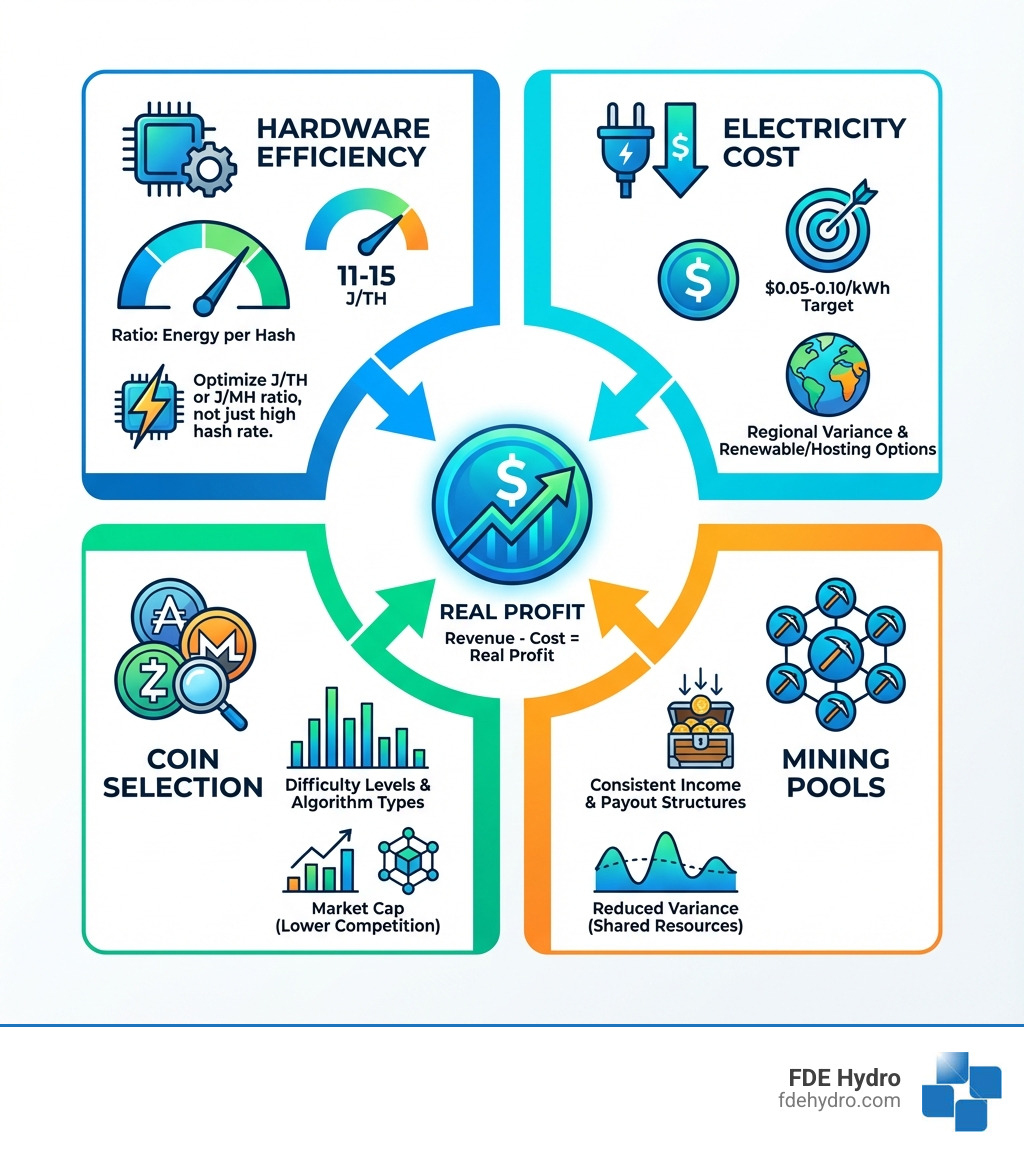
Simple guide to Cost effective crypto mining terms:
The Economics of Crypto Mining: Key Factors for Profitability
When we talk about cost effective crypto mining, we’re essentially trying to solve a complex puzzle. What are the most crucial pieces that determine whether we’re printing money or just burning through our wallet? It boils down to a few core factors: the cost of our hardware, the price of electricity, the efficiency of our mining algorithm, the ever-changing mining difficulty, and the overall network hash rate. Understanding these dynamics is our first step towards maximizing profit.
Understanding Mining Difficulty and Network Hash Rate
Imagine a treasure hunt where everyone is looking for the same chest. The more people join the hunt, the harder it becomes for any one person to find the treasure. That’s essentially what mining difficulty and network hash rate represent in the crypto world.
Mining difficulty is a measure of how hard it is to find a new block for a given cryptocurrency. This difficulty adjusts dynamically, usually every few weeks or so, to ensure that new blocks are found at a consistent rate (e.g., every 10 minutes for Bitcoin). If more miners join the network, the difficulty goes up, making it harder to earn rewards. Conversely, if miners leave, the difficulty drops.
The network hash rate is the total combined computational power being used to mine a specific cryptocurrency. A higher hash rate means more competition. This directly impacts our reward probability: with more people trying to solve the same problem, our individual chances of being the one to find the solution (and earn the block reward) decrease. Over time, this constant adjustment can significantly affect our long-term earnings, making what was once profitable suddenly less so. For instance, Bitcoin’s mining difficulty is notoriously hard, presenting a formidable challenge for individual miners.
The Crucial Role of Hardware: Hash Rate vs. Efficiency
Our mining hardware is our digital pickaxe, and choosing the right one is paramount. We often hear about “hash rate” – the raw speed at which our machine can perform calculations (e.g., TH/s for terahashes per second, GH/s for gigahashes per second). A higher hash rate means more attempts to solve the block, which sounds great on paper.
However, the real hero in cost effective crypto mining is energy efficiency, measured in Joules per Terahash (J/TH) or Joules per Megahash (J/MH). This metric tells us how much electricity our machine consumes for every unit of hashing power it produces. A machine with a high hash rate but poor efficiency will quickly drain our profits through electricity bills.
We’ve seen new hardware like the Bitmain Antminer S21 XP+ Hyd (500Th) offering an impressive 11 J/TH, and the Bitmain Antminer S21e XP Hyd 3U at 13 J/Th. Other contenders like the Auradine Teraflux AH3880 are at 14.5 J/T, the Bitdeer SealMiner A2 Pro Hyd at 14.9 J/TH, and the MicroBT WhatsMiner M66S++ at 15.5 J/TH. These machines are setting the standard, and we find that a balance of 11-15 J/TH is highly competitive for modern mining operations. Choosing equipment that strikes the best balance of price, performance, and energy efficiency is key to our success.
The Power Equation: Why Electricity Cost is King
If hardware is our pickaxe, electricity is the fuel. And just like a car, if the fuel costs too much, the journey isn’t worth it. Electricity cost is undeniably the single most critical factor in cost effective crypto mining. It’s our primary operational expense, often dwarfing the initial hardware investment over the long run.
The impact of our electricity rate ($/kWh) on our profit margin cannot be overstated. A slight difference in cents per kilowatt-hour can completely flip a mining operation from profitable to a money pit. We know it takes around 266,000 kWh to mine a single Bitcoin. If our electricity costs $0.10/kWh, that’s $26,600 just for power. If it’s $0.20/kWh, that jumps to $53,200! This variable alone can make or break our mining venture. This is why we at FDE Hydro are so passionate about Sustainable Energy Production for power-intensive operations like crypto mining.
Choosing Your Mining Hardware for the Best ROI
Investing in mining hardware is a significant step, and we want to ensure every dollar we spend contributes to a strong return on investment (ROI). It’s not just about the upfront cost, but also the total cost of ownership over the machine’s lifespan.
Selecting Hardware for Cost Effective Crypto Mining
When we’re looking at hardware for cost effective crypto mining, we need to evaluate several aspects beyond just the sticker price.
- Initial Purchase Price: While the most profitable machines often cost over $1,000, we’ve seen a wide range. For example, the Bitmain Antminer S21e XP Hyd 3U can be $17,000+, while the Auradine Teraflux AH3880 starts around $7,800, and the Bitdeer SealMiner A2 Pro Hyd can be found for $3,958. For altcoin mining, options like the IceRiver ALEO AE1 Lite start from $1,899, and the VolcMiner D1 (18.5Gh) from $1,885. Our budget will heavily influence our choices.
- Power Consumption (Watts): This directly ties into our electricity bill. A machine’s power draw needs to be balanced against its hash rate. For instance, the Bitmain Antminer S21e XP Hyd 3U has a hash rate of 860 TH/s with a power consumption of 11,180W, giving it that excellent 13 J/Th efficiency.
- Hash Rate Performance: This is the raw processing power. We need to ensure the hash rate is sufficient to compete on the network for our chosen cryptocurrency.
- Algorithm Support: Different cryptocurrencies use different mining algorithms. Bitcoin uses SHA-256, while Litecoin and Dogecoin use Scrypt. Aleo uses zkSNARK. Our hardware must support the algorithm of the coin we intend to mine. For example, a SHA-256 miner won’t mine Scrypt coins.
Long-Term Considerations: Depreciation, Maintenance, and Resale Value
Buying a mining rig isn’t a one-and-done deal. We need to think about the long haul.
- Hardware Depreciation: Mining hardware, especially ASICs, can depreciate rapidly as newer, more efficient models are released. This means the value of our equipment will likely decrease over time.
- Maintenance Needs: These machines work hard! They generate significant heat and can be noisy (often 50-85 decibels, sometimes higher – think vacuum cleaner levels!). Proper cooling solutions are essential, especially for high-performance units that often use hydro cooling. Maintenance includes keeping them clean, ensuring good airflow, and occasionally replacing parts.
- Resale Value: The potential resale value of our mining hardware can significantly impact our overall cost-effectiveness. If we can sell our used equipment for a decent price, it lowers our net investment. However, rapid technological advancements can diminish resale value quickly.
Bitcoin vs. Altcoins: The Profitability Trade-Off
This is a classic dilemma for miners. Do we go for the king, Bitcoin, or try our luck with the princes and princesses, the altcoins?
- Bitcoin Mining Competition: Bitcoin mining is incredibly competitive. It’s dominated by large-scale operations with massive capital and access to very cheap electricity. For at-home miners, or even medium-sized operations, competing directly with these giants can be a losing battle. Bitcoin’s mining difficulty is very hard, making it challenging to be profitable without significant investment in top-tier ASICs and ultra-low electricity costs.
- Altcoin Opportunities: Many altcoins offer potentially more cost effective crypto mining opportunities. Cryptocurrencies like Monero (XMR), Zcash (ZEC), Ravencoin (RVN), and Vertcoin (VTC) have easier mining difficulties and are often ASIC-resistant, meaning they can be mined profitably with CPUs or GPUs. Ethereum Classic (ETC) also presents an easy to medium difficulty, suitable for at-home miners. These coins provide an entry point without the prohibitive costs of Bitcoin ASICs.
- Coins with Diverse Mining Algorithms: Some altcoins use algorithms that are less resource-intensive or more accessible to general-purpose hardware. This allows us to leverage more affordable GPUs or even CPUs. For example, Aleo uses zkSNARK, which has dedicated miners like the IceRiver ALEO AE1 Lite.
- Niche Cryptocurrencies: Keeping an eye on emerging or niche cryptocurrencies can unveil hidden gems. These might have lower network hash rates, meaning less competition and a higher chance for individual miners to secure rewards before the difficulty ramps up. However, these often come with higher market volatility risks.
The trade-off is clear: Bitcoin offers stability but fierce competition, while altcoins offer potentially higher returns with lower entry barriers but often come with increased price volatility and liquidity risks.
Strategic Mining: Choosing Coins and Pools for Cost-Effectiveness
Once we have our hardware, the next strategic step is deciding what to mine and how to participate in the network. This involves smart coin selection and leveraging the power of mining pools.

Identifying Cost-Effective Cryptocurrencies to Mine
Our goal is to find cryptocurrencies where our mining efforts yield the best return for our investment in hardware and electricity. This means looking beyond just the biggest names.
- Coins with Lower Mining Difficulty: As discussed, coins like Monero (XMR), Zcash (ZEC), Ravencoin (RVN), and Vertcoin (VTC) are often cited for their easier mining difficulties. Monero, Ravencoin, and Vertcoin are particularly interesting because they are ASIC-resistant, allowing us to use more readily available (and often cheaper) CPUs or GPUs. Zcash, while having an easy difficulty, can still benefit from more efficient ASIC miners. Ethereum Classic (ETC), a fork from the 2016 DAO hack, also offers an easy to medium difficulty level.
- Emerging Projects: The crypto landscape is always evolving. New projects, or established altcoin ecosystems like Aleo, Kaspa, and Zcash, can offer higher initial profitability before their network hash rate swells. We need to continuously evaluate their network potential, market capitalization, and trading volume to make informed decisions.
- Evaluating Network and Market Potential: It’s not enough for a coin to be easy to mine; it also needs to have market value. We need to consider the coin’s utility, community support, development roadmap, and where it’s listed for trade. A coin that’s easy to mine but impossible to sell isn’t going to help our bottom line.
The Power of Collaboration: How Mining Pools Boost Profitability
For individual miners, especially when dealing with higher difficulty coins, joining a mining pool is almost a necessity for consistent earnings.
- Combining Hash Power: Mining pools allow us to combine our computational power with thousands of other miners. Instead of trying to find a block by ourselves (which could take years for a small miner on a high-difficulty network), we contribute our hash rate to a collective effort.
- Payout Structures: When the pool collectively finds a block, the reward is distributed among all participants according to their contribution. Different pools have various payout methods, such as proportional (rewards based on effort, good when coin price surges) or pay-per-share (guaranteed flat fee, better for stable, lower coin prices).
- Reward Sharing: While we have to share the rewards, the benefit is significantly reduced variance. Instead of waiting indefinitely for a rare solo block reward, we receive smaller, more frequent payouts. This creates a more predictable income stream, which is crucial for managing operational costs.
Analyzing Financial Viability
Before we commit to any hardware or coin, we need to crunch the numbers. This means estimating our potential profitability and understanding our payback period.
- Profitability Estimation: We can use online tools like BTC.com’s calculator, NiceHash, or ASICminervalue to estimate daily, weekly, or monthly profits. These calculators take into account our hardware’s hash rate, power consumption, electricity cost, and the current network difficulty and coin price.
- Payback Period: This tells us how long it will take for our mining profits to cover our initial hardware investment. A shorter payback period is generally better. For example, under specific conditions, an ASIC miner might show a payback period of 660 days. We need to be realistic about these projections, factoring in potential increases in difficulty and market volatility.
- Using an online mining calculator to forecast earnings: These tools are invaluable. We input our specific hardware details, our electricity cost (e.g., $0.10/kWh for US hosting facilities, or typical home rates), and the current market price of the cryptocurrency. The calculator then provides estimates for revenue, electricity costs, and net profit. Remember to factor in pool fees (typically 1-2%) for an accurate picture. These calculations help us make informed decisions about which coins to mine and whether a particular hardware setup is truly cost effective crypto mining for us.
The Ultimate Guide to Cost Effective Crypto Mining Power Solutions
We’ve established that electricity is the king of operational costs. Therefore, securing low-cost, stable power is the ultimate game-changer for cost effective crypto mining. This is where geography and innovative energy solutions, like those provided by FDE Hydro, come into play.
The Geographic Advantage: How Regional Electricity Costs Impact Profitability
Electricity costs vary wildly across different regions, and this variance can make or break a mining operation.
- Global Electricity Price Variance: We see significant differences globally. While some regions in the US offer hosting facilities with rates as low as $0.06-$0.075/kWh, typical home mining rates worldwide can range from $0.12-$0.24/kWh. This disparity is why large-scale miners often flock to areas with abundant and cheap energy.
- High-Cost vs. Low-Cost Regions: If we’re operating in New York City or California, where electricity rates can be higher, our profit margins will be squeezed. Conversely, regions like Canada, particularly areas with significant hydropower resources, can offer some of the most competitive electricity prices. This is why Canada Crypto Mining has become attractive. For us, accessing these lower rates, either through dedicated facilities or by generating our own power, is paramount.
- Impact on Operational Viability: If our electricity cost is above $0.10/kWh, it often makes more sense to consider hosting services in regions with cheaper power. This critical threshold can be the difference between a profitable venture and one that consistently operates at a loss.
The Future of Cost Effective Crypto Mining: Renewable Energy
The shift towards renewable energy isn’t just about being eco-friendly; it’s a strategic move for cost effective crypto mining.
- Shifting to Renewables: Many crypto miners are already embracing renewable energy sources, such as hydro and solar power, to reduce both costs and environmental impact. This trend will only accelerate.
- Hydropower and Other Clean Energy Sources: Hydropower, in particular, offers a consistent, reliable, and often very low-cost source of electricity. Unlike solar or wind, hydropower can provide baseload power, making it ideal for energy-intensive, 24/7 operations like crypto mining. This is precisely where FDE Hydro focuses its efforts.
- Securing Low, Stable Energy Prices: By tapping into renewable sources, we can secure long-term, stable energy prices, insulating our operations from volatile energy markets. This predictability is invaluable for financial planning and maximizing profitability. This commitment contributes to overall Crypto Mining Sustainability.
Beyond the Grid: On-Site Sustainable Power Generation
The ultimate play for cost effective crypto mining is to control our energy supply directly.
- Co-locating Mining Farms with Hydropower Sources: Imagine a mining facility situated right next to a hydropower plant. This eliminates transmission costs, reduces energy losses, and provides unparalleled access to cheap, clean power. This model is gaining traction in regions like the US and Canada.
- Reducing Transmission Costs: Transmission and distribution charges can add significantly to our electricity bill. By generating power on-site, we bypass many of these costs, dramatically lowering our operational expenses.
- Energy Independence: Producing our own power grants us energy independence, shielding us from grid outages and price fluctuations. This level of control is a significant competitive advantage. At FDE Hydro, we specialize in modular solutions for Sustainable Power Generation, making it easier and more affordable to implement on-site energy for various applications, including crypto mining. Our innovative modular precast concrete technology can rapidly deploy new hydropower facilities, dramatically reducing construction costs and time, particularly in North America and Brazil. This is an incredible opportunity for miners looking to truly optimize their power costs.
Frequently Asked Questions about Cost-Effective Mining
Is crypto mining still profitable for individuals?
Yes, it can be, but the game has changed. Profitability for individuals now hinges on efficiency, securing low-cost power (ideally below $0.10/kWh), and making smart coin selections. We can’t compete on raw hash rate with industrial farms, but we can out-optimize them on other fronts.
Can I start mining with a small budget?
Yes, you absolutely can, but it’s crucial to manage expectations. Starting with a smaller budget means focusing on efficient, potentially second-hand hardware, joining mining pools for consistent payouts, and being extremely mindful of electricity costs. We might need to target easier-to-mine altcoins rather than Bitcoin.
How do I calculate potential mining profitability?
We use online mining calculators. We input our hardware’s hash rate, its power consumption in watts, and our electricity cost per kWh. Don’t forget to factor in any mining pool fees. These calculators will then estimate our potential daily or monthly profit, helping us determine if our setup is truly cost effective crypto mining.
Conclusion: Building a Sustainable and Profitable Mining Future
The landscape of crypto mining has evolved, moving past the days of easy profits and into an era where precision, efficiency, and sustainability are paramount. For us, building a profitable mining future means embracing a strategy centered on efficiency over expenditure.
We must prioritize operational excellence in every facet of our mining endeavors, from selecting the most energy-efficient hardware to strategically choosing which cryptocurrencies to mine. The role of clean energy, particularly hydropower, cannot be overstated. It offers the stability and low-cost electricity necessary to thrive in this competitive environment.
At FDE Hydro, we are proud to contribute to Sustainable Infrastructure Development by providing innovative solutions for clean power generation. Our modular precast concrete technology is designed to make hydropower more accessible and affordable, ultimately supporting energy-intensive industries like cost effective crypto mining in North America, Brazil, and Europe. We believe that by integrating sustainable practices, we can not only maximize profits but also build a more responsible and resilient future for cryptocurrency.
Learn more about how hydropower is powering the next generation of sustainable industries.

