by Bill French Sr. | Nov 12, 2025 | Case Studies
Why Non-Powered Dams Are the Next Frontier in Clean Energy
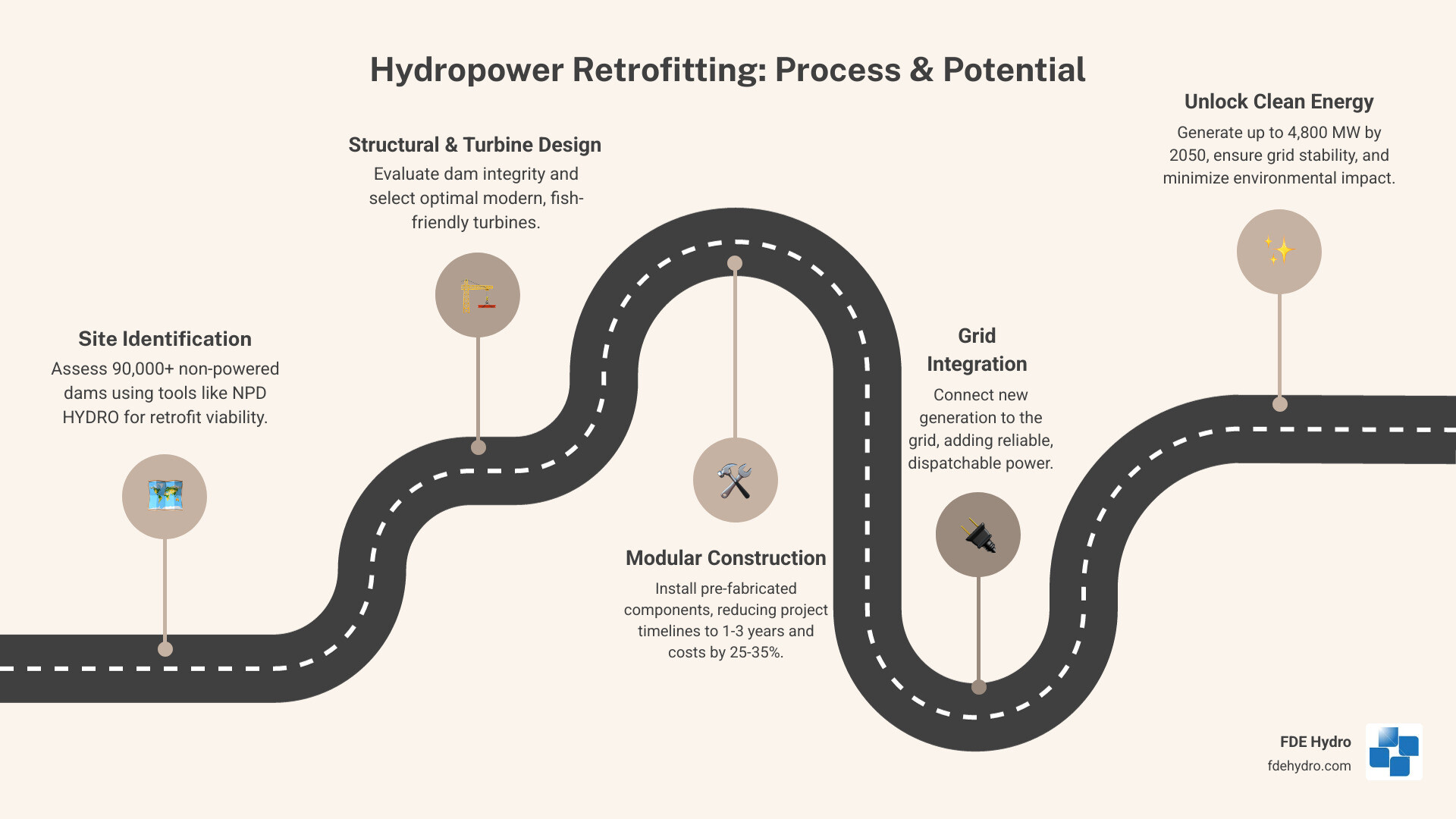
Hydropower retrofitting is the process of adding electricity generation to existing non-powered dams or upgrading aging hydropower facilities. This approach leverages existing structures to generate clean energy, avoiding the high environmental and financial costs of building new dams. Key benefits include minimal ecosystem disruption, 25-35% lower capital costs, and the addition of reliable power to stabilize a grid increasingly reliant on intermittent solar and wind.
Consider the Red Rock Dam in Iowa. For 50 years, it served only for flood control. After a recent retrofit, it now generates enough electricity to power 18,000 homes annually—without building a single new structure.
This is the promise of hydropower retrofitting: changing dormant infrastructure into clean energy assets. Across the United States, more than 90,000 dams exist, but less than 3% generate power. Retrofitting these structures could add 4,800 megawatts of economically feasible capacity by 2050, helping the nation meet ambitious renewable energy targets. As of January, 88 such projects were in the Federal Energy Regulatory Commission’s (FERC) development pipeline.
However, challenges like aging infrastructure, lengthy regulatory processes, and difficult financing must be addressed. Innovation is key to overcoming these problems. New assessment tools, modern turbine designs, and modular construction are making projects faster and more cost-effective.
I’m Bill French Sr., Founder and CEO of FDE Hydro™, where we’ve pioneered modular civil construction solutions for hydropower retrofitting. After five decades in heavy civil construction and participation in the Department of Energy’s Hydropower Vision Technology Task Force, I’ve seen how innovation can dramatically reduce project timelines and costs while expanding clean energy capacity.
The Untapped Potential: Why Retrofit Non-Powered Dams?
Of the 90,000+ dams in the United States, fewer than 3% generate electricity. The rest manage floods, store water, or support irrigation, but produce zero power. These non-powered dams (NPDs) represent a massive, overlooked opportunity in our clean energy transition. As LeRoy Coleman of the National Hydropower Association notes, the industry’s focus has shifted to “develop on what’s out there.” This is the core of hydropower retrofitting: working smarter with existing assets.
This approach allows us to meet clean energy goals, strengthen grid reliability, and create economic benefits with minimal environmental impact. It’s not about building more dams; it’s about making existing ones work harder.
Meeting Clean Energy Demands
As pressure to decarbonize intensifies, hydropower retrofitting is a game-changer. The DOE Hydropower Vision report estimates that retrofitting could add up to 12,000 megawatts (MW) of capacity to the U.S. grid, with 4,800 MW being economically feasible by 2050. That’s enough to power millions of homes without building a single new dam. The potential is global, with modernization in Europe projected to boost generation by over 8%.
Retrofitting is attractive because it leverages existing infrastructure. The dam, reservoir, and often transmission lines are already in place. Even environmental groups, typically skeptical of hydropower, often see retrofits as a pragmatic solution because they work within an existing footprint, avoiding the impacts of new construction. This aligns with sustainable development by maximizing past investments and contributing to carbon reduction goals.
For more on how hydropower fits into our clean energy future, the U.S. Department of Energy hydropower resources offer detailed information.
Enhancing Grid Stability and Reliability
Solar and wind power are vital but intermittent. Hydropower provides the dispatchable, on-demand power needed to ensure a stable grid 24/7. It is the perfect partner for integrating renewables, ramping up when solar drops off and down when wind surges.
The most powerful example is pumped storage hydropower (PSH)—essentially a giant water battery. When electricity is cheap and abundant, water is pumped to an upper reservoir. When demand spikes, the water is released through turbines to generate power. PSH accounts for over 94% of the world’s long-duration energy storage capacity, providing critical services like frequency control and black-start capability.
The Bath County PSH example in Virginia can power 750,000 homes and has been a stabilizing force on the grid for decades. Even smaller, conventional retrofits contribute by adjusting their output in real-time to balance the grid—a flexibility that becomes more valuable as we add intermittent renewables.
Economic and Community Benefits
Retrofitting an existing dam is far more economical than building a new one. Research shows that converting existing plants to pumped storage can cost 25-35% less than new installations. These savings are attracting significant private investment and are further encouraged by federal funding in the bipartisan infrastructure package and state-level incentives like those in Colorado.
Retrofitting delivers a “trifecta” of benefits: new clean energy, construction and operations jobs, and the modernization of aging infrastructure. The NPD HYDRO tool, developed to prioritize retrofit opportunities, considers community and industry factors to ensure projects align with local needs. Modern automation and digitalization are also making smaller projects economically viable for municipalities and local utilities, fostering energy independence and keeping energy dollars in the community.
The return on investment for hydropower retrofitting is measured not just in kilowatt-hours, but in jobs, improved infrastructure, and a more stable, sustainable grid.
Navigating the Challenges of Hydropower Retrofitting
While the potential of hydropower retrofitting is enormous, the path is not without obstacles. From aging concrete to complex regulations, these challenges are significant but solvable. Every existing dam is both an opportunity and a puzzle to be solved with careful engineering and planning.
Overcoming Technical and Structural Problems
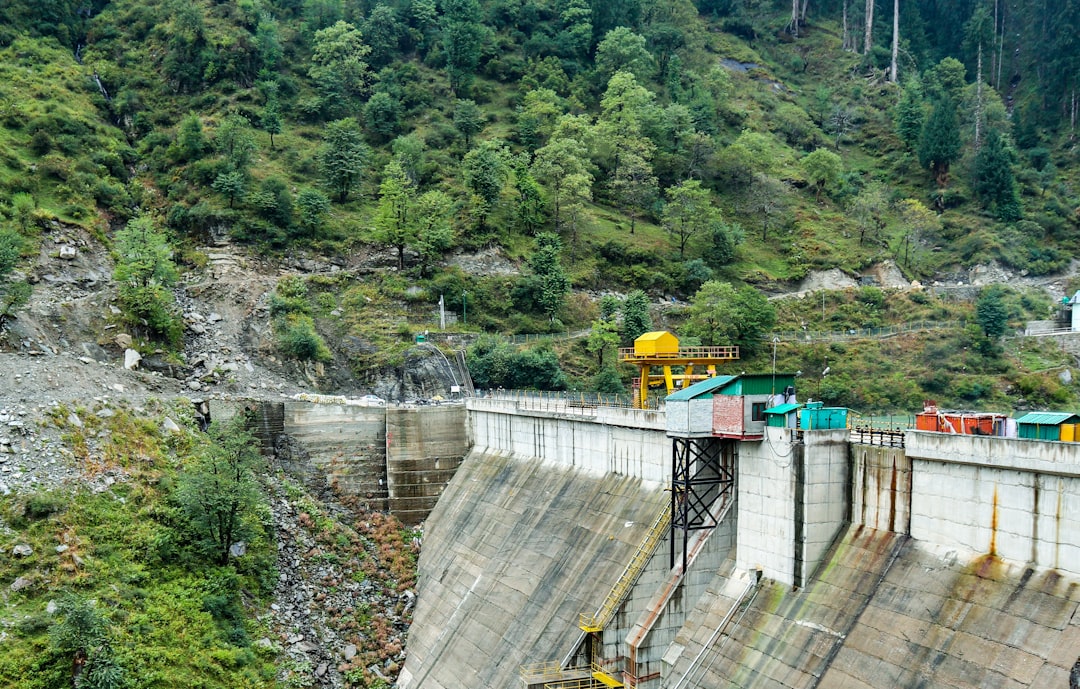
Many hydropower plants are over 40 years old, meaning we are working with infrastructure that predates modern engineering standards. Dam structural integrity is the first concern. At FDE Hydro™, our modular precast concrete technology addresses this directly. Our dam rehabilitation encapsulation approach strengthens existing structures while adding power generation capabilities, extending their lifespan and usefulness.
Water availability is another challenge, as climate change creates less predictable flows. California, for example, faces projections of reduced hydropower output due to droughts. This requires flexible turbine designs that operate efficiently across a wide range of conditions. Sediment management is also critical, as decades of buildup can impact a dam’s structure and turbine efficiency. Modern technologies like 3D modeling and advanced, adaptable turbines help tackle these site-specific engineering problems before construction begins.
Clearing Policy and Financial Roadblocks
Regulatory and financial barriers can be as challenging as technical ones. The FERC licensing process in the U.S. is notoriously lengthy, sometimes taking over a decade. As of January, 88 retrofit projects were waiting in the FERC hydropower development pipeline, representing a significant amount of stalled clean energy potential.
High upfront capital costs and declining power purchase agreement (PPA) rates make financing difficult. For pumped storage projects, the market often fails to properly value their critical grid-stabilizing services. We need supportive policies that recognize the full value of hydropower’s flexibility and storage.
Fortunately, help is on the way. The 21st Century Dams Act and the $1.2 trillion bipartisan infrastructure package aim to expand funding and incentives for retrofitting. Other proposed solutions include extending tax credits and streamlining the permitting process. States like Colorado are also creating models for de-risking projects through low-cost financing. The path forward requires both patience and advocacy to open up the full potential of hydropower.
Innovative Approaches and Modern Technologies
The landscape of hydropower retrofitting is being reshaped by innovation. We are seeing fundamental changes in how we identify, design, and build projects, making them faster, cheaper, and more environmentally sound.
A Spectrum of Hydropower Retrofitting Approaches
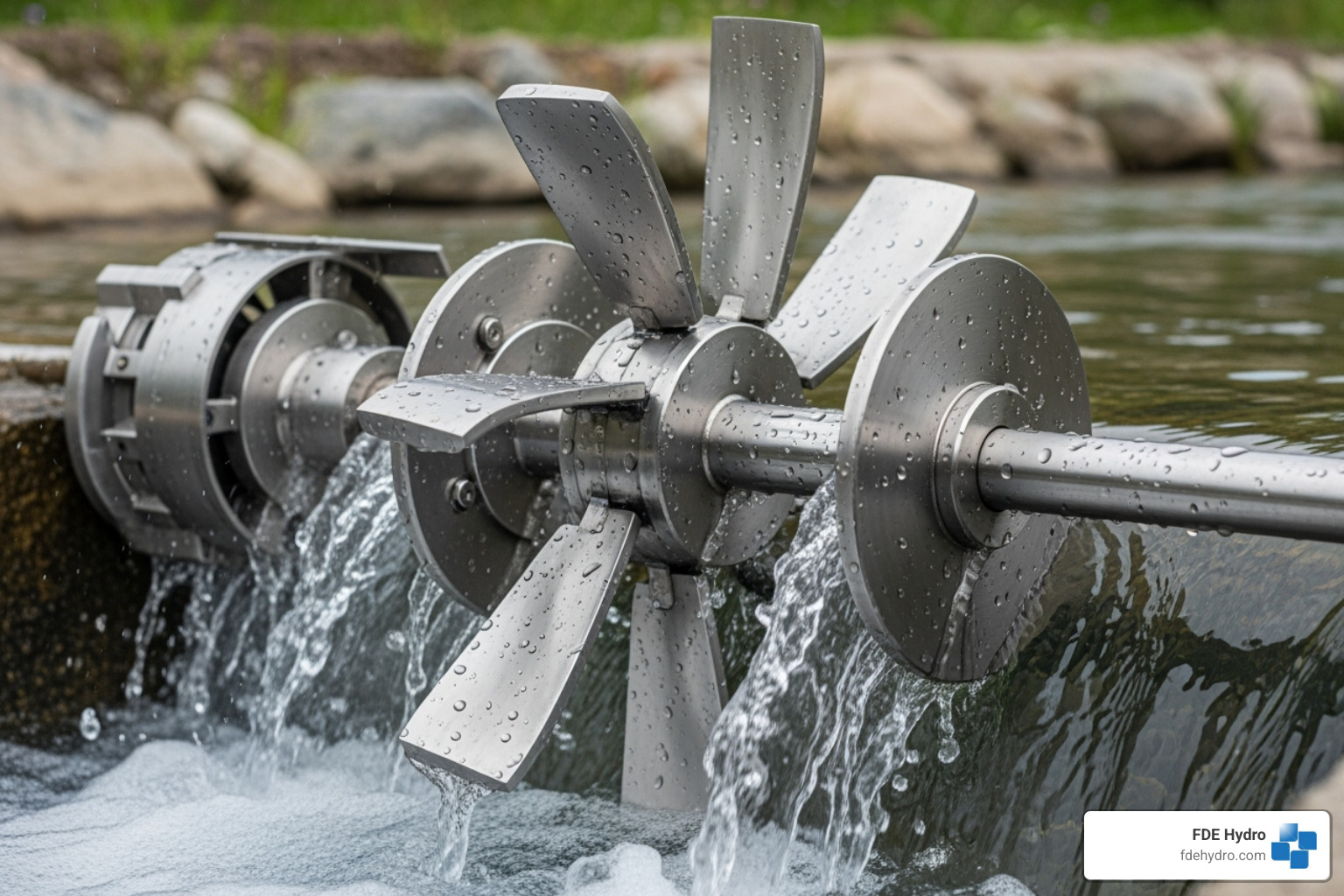
No two dams are alike, so hydropower retrofitting requires a spectrum of solutions. For non-powered dams, simple turbine addition is the most direct path, with modern, submerged designs minimizing construction. For existing power-generating dams, upgrading turbines can boost output by up to 20%, while refurbishing civil works can yield increases of 50% or more.
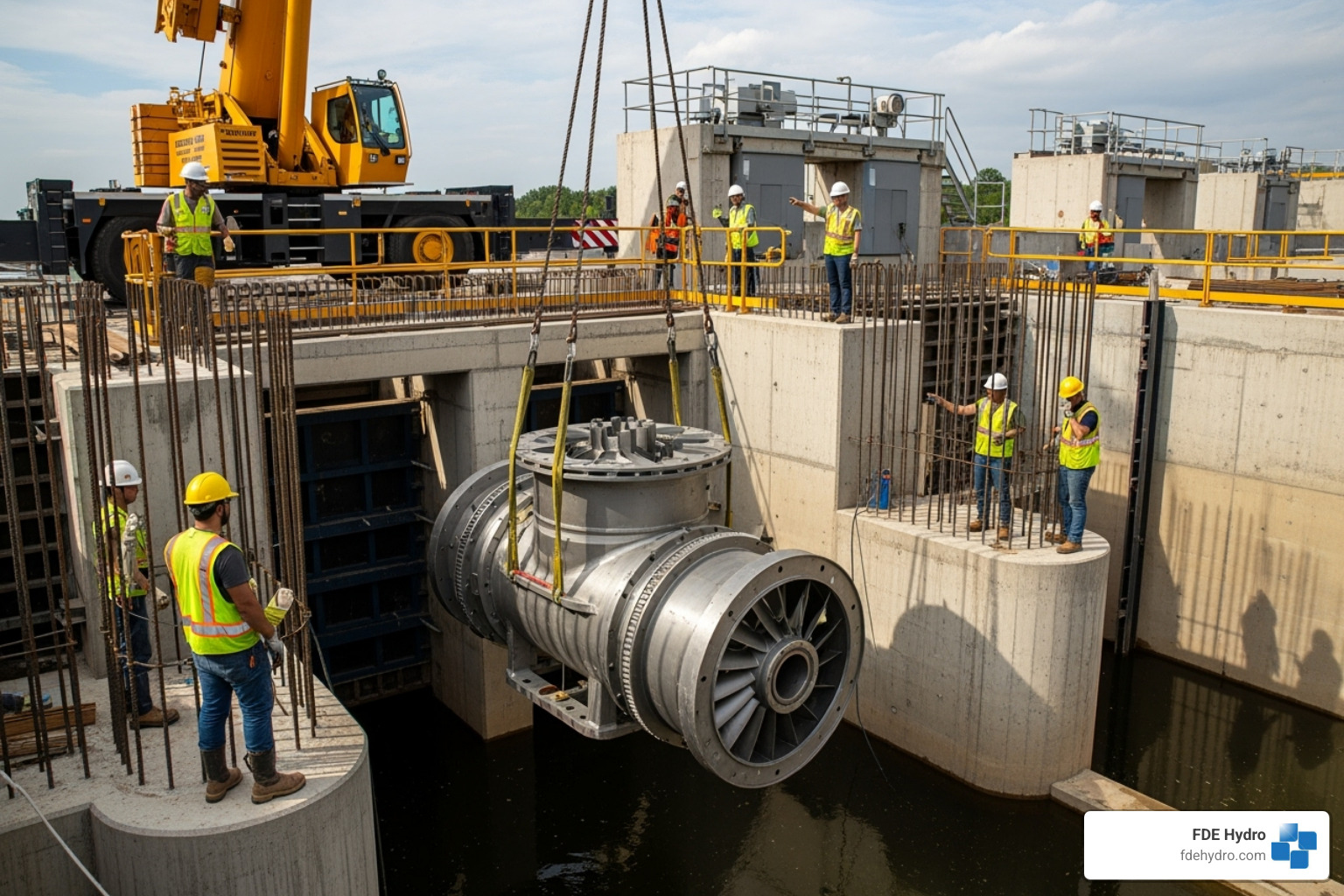
Pumped storage conversion is an exciting frontier, turning existing plants into long-duration energy storage assets. The boosterpump concept makes this more affordable, costing 25-35% less than installing new reversible units. Other operational improvements, like optimizing reservoir levels and modernizing waterways, can also yield significant gains. Our FDE Hydro™ modular precast concrete technology, the “French Dam,” was designed to streamline these approaches. By drastically reducing construction costs and timelines, we make more retrofitting projects economically viable.
Sophisticated digital tools are replacing the guesswork of the past. The NPD HYDRO tool, developed by national laboratories and consultants, analyzes hundreds of non-powered dams across grid, community, industry, and environmental factors. This helps decision-makers focus on the most promising projects.
Digitalization is also revolutionizing plant operations. While hydropower has lagged, it’s catching up fast. IoT platforms enable remote monitoring and control, while AI-powered predictive maintenance helps avoid costly failures. These digital advances can improve overall efficiency and increase annual generation by up to 11% by optimizing water use. Before construction, advanced simulation and modeling provide certainty, using 3D models and fluid dynamics to verify designs and give investors confidence.
Balancing Power with Environmental Protection
If hydropower retrofitting isn’t environmentally responsible, it isn’t sustainable. Fortunately, innovation is making it possible to generate clean energy while protecting aquatic ecosystems. Fish-friendly turbines are a major advance, engineered to allow safe passage and reduce the need for costly exclusion screens.
Environmental flow management—maintaining sufficient downstream water flow to support river health—is now standard practice. Water quality monitoring has also advanced, with technologies like environmental DNA (eDNA) allowing for precise biodiversity tracking. This data enables adaptive management, where operations can be adjusted based on real-time ecological conditions. For projects seeking to prove their credentials, the Low Impact Hydro Institute certification provides rigorous third-party verification.
Research shows that when modernization doesn’t worsen the physical characteristics of rivers, it creates little conflict with environmental objectives. The goal is to generate more power from existing infrastructure without increasing environmental impact. This isn’t just good ethics; it’s good business.
Success Stories and the Future Outlook
The best way to understand the power of hydropower retrofitting is to look at real projects. These aren’t just possibilities—they’re working dams generating clean electricity, proving we can breathe new life into aging infrastructure.
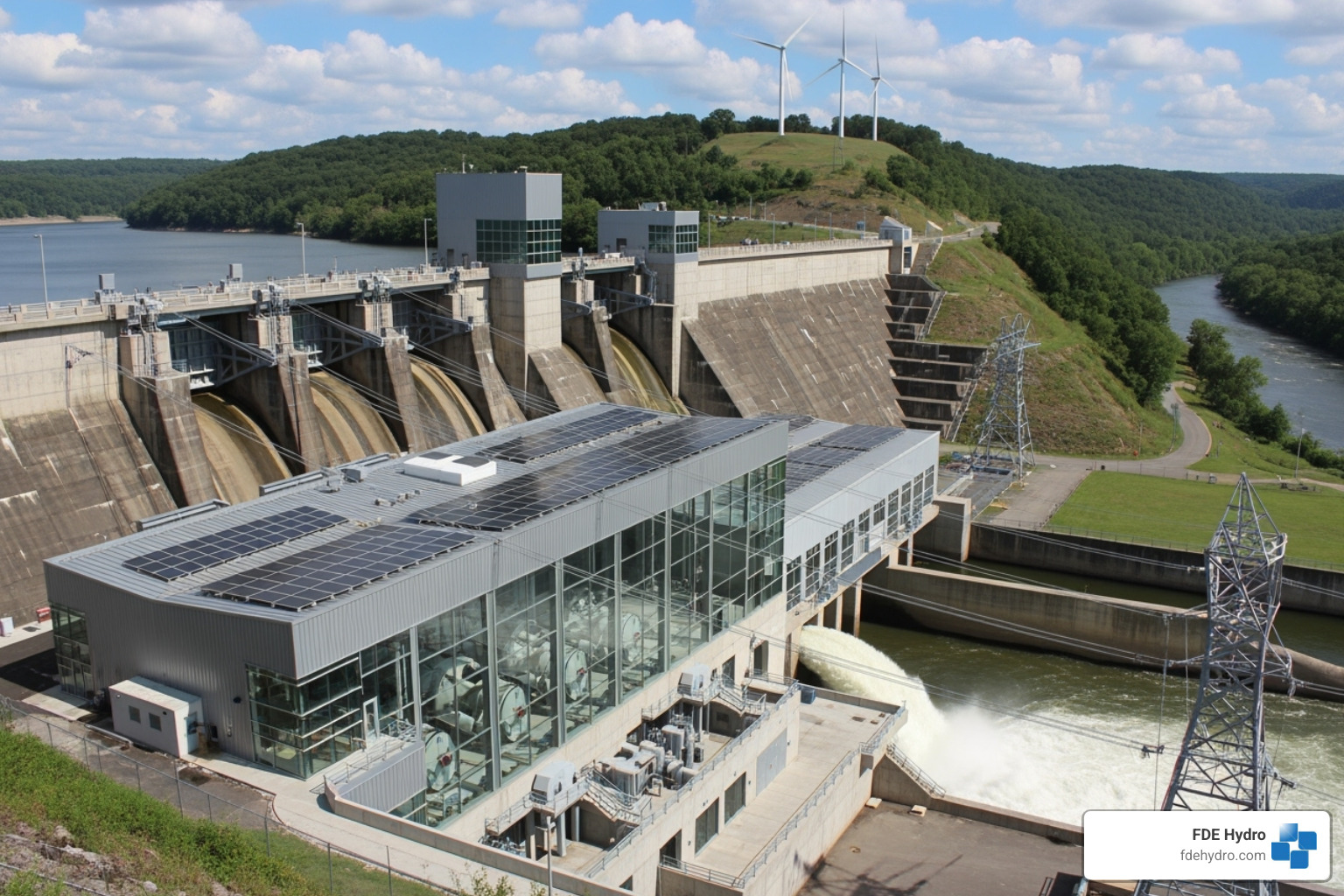
Case Study: Powering a U.S. Dam
The Red Rock Dam in Iowa, once used only for flood control, now powers 18,000 homes after a retrofit. It’s not alone. Since 2000, 36 U.S. dams have been successfully retrofitted, adding over 500 megawatts of renewable capacity. These projects often succeed through public-private partnerships, which bring together the right expertise and financing. For example, long-term power purchase agreements for facilities at existing U.S. Army Corps of Engineers dams create stable revenue streams that make projects financially viable.
Private investment is also flowing into this sector, with hundreds of millions of dollars being licensed for retrofits at dozens of sites. These numbers show that hydropower retrofitting isn’t just environmentally sound; it makes economic sense. These success stories create replicable models that can be scaled up nationwide.
Modernization Efforts in North America and Beyond
The retrofitting revolution is global. Canada is actively pursuing “made-in-Canada solutions” to update its large hydropower fleet, while cross-border collaboration with the U.S. helps share knowledge and technology. In Europe, modernization is projected to increase energy generation by 8.4% for the European Union. The EU-funded ReHydro project, with partners from seven countries, exemplifies this spirit by demonstrating pumped-storage conversions and developing eel-friendly turbines.
Our work at FDE Hydro™ contributes to these efforts by bringing our modular precast concrete technology to projects. We’ve seen how innovative construction approaches can accelerate timelines and make modernization economically feasible.
The Future of Dam Retrofitting
Looking ahead, the trajectory for hydropower retrofitting is exciting. The U.S. Department of Energy projects potential for more than 30 gigawatts of pumped storage hydropower capacity—the “water batteries” critical for a renewable-heavy grid. Globally, 600 GW of pumped storage projects are in development, signaling strong momentum.
Continued innovation will drive this growth. Fish-friendly turbines, AI-powered control systems, and modular construction techniques—like our FDE Hydro™ precast technology—are slashing project timelines and costs. While modernization requires upfront capital, the benefits are clear: decades of reliable clean energy and critical grid services. With a 50-to-100-year asset life, the return on investment for hydropower is very attractive. Events like the World Hydropower Congress reinforce the consensus that retrofitting existing infrastructure plays a strategic role in the energy transition.
Conclusion
Hydropower retrofitting is not just a smart idea—it’s an essential component of our clean energy future. By adding power to non-powered dams and upgrading existing facilities, we can meet ambitious energy targets, strengthen grid stability, and create economic opportunities, all while using infrastructure that is already in place.
While challenges like aging structures, lengthy regulations, and complex financing are real, innovation is providing the solutions. Success stories from Iowa’s Red Rock Dam to Europe’s ambitious modernization programs prove that retrofitting works. New tools, fish-friendly turbines, and advanced digital controls are making projects more efficient and environmentally sound.
At FDE Hydro™, we are at the forefront of this change. Our patented modular precast concrete technology—the “French Dam”—fundamentally alters the economics and timelines of retrofitting. We can reduce construction time from a decade to as little as one to three years, with cost reductions of 25-35% compared to conventional methods. This makes a critical difference when every year of delay is a missed opportunity for clean energy.
Those 90,000+ non-powered dams in the U.S. represent thousands of megawatts of untapped potential. The path forward requires partnership between innovative companies, supportive policymakers, and forward-thinking communities. We are committed to being your partner in this transition, bringing five decades of experience and cutting-edge modular technology to your project.
The future of hydropower is about working smarter with what we have. It’s about turning dormant concrete into productive clean energy assets. Let’s build that future together.
Learn more about our innovative hydropower solutions
by Bill French Sr. | Nov 11, 2025 | Case Studies
Why Dam Construction Methods Matter for Modern Infrastructure
Dam construction methods have evolved from ancient earthen barriers to sophisticated projects that power nations. Understanding these methods is key for new hydropower facilities or rehabilitating aging infrastructure.
Primary Dam Construction Methods:
- Embankment Dam Construction – Building with compacted earth or rock in layers (75% of all dams worldwide)
- Concrete Dam Construction – Pouring reinforced concrete using traditional formwork or Roller-Compacted Concrete (RCC)
- Modular Precast Construction – Assembling factory-built components on-site (emerging innovation)
Key Construction Phases:
- River Diversion – Using cofferdams or tunnels to create a dry work area
- Foundation Preparation – Excavating to bedrock, grouting, and building the plinth
- Dam Structure Assembly – Placing materials in controlled lifts or layers
- Component Installation – Adding spillways, outlet works, and powerhouses
Dams are critical for hydropower, flood control, irrigation, and water supply. Globally, there are over 800,000 dams, but traditional dam construction methods face challenges from climate change, long timelines, and high costs, driving the need for innovation.
Construction begins with site selection, followed by river diversion, foundation preparation, and building the structure. Each phase demands precision to ensure the dam can withstand immense pressure and environmental forces for decades.
I’m Bill French Sr., Founder and CEO of FDE Hydro. With five decades of heavy civil construction experience, I specialize in advancing dam construction methods through modular precast technology. This guide combines traditional principles with emerging innovations to steer modern dam construction.
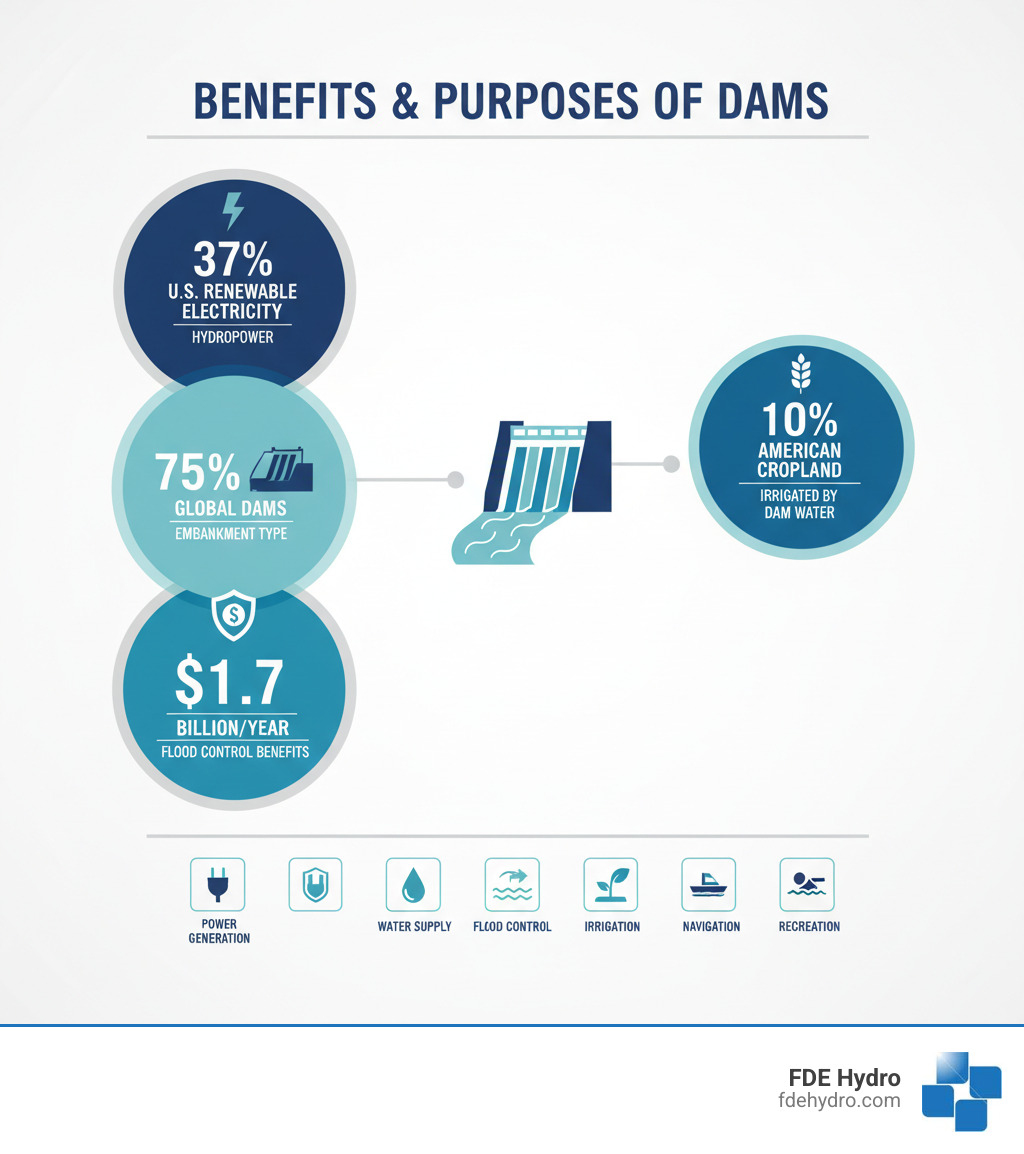
The Blueprint: Classifying Dams and Choosing the Right Design
Choosing a dam design is like selecting a foundation for a house, but with much higher stakes. A site’s geology, topography, and available materials dictate the most effective dam construction methods and design.
Dams are critical infrastructure. In 2022, hydropower provided nearly 37% of all U.S. clean, renewable energy. Beyond power, dams offer billions in annual benefits from flood control, water supply, and irrigation for ten percent of American cropland.
The right dam type depends on a balance of site selection criteria. A narrow canyon with solid rock walls suits a different design than a wide river valley.
Embankment Dams: The Global Standard
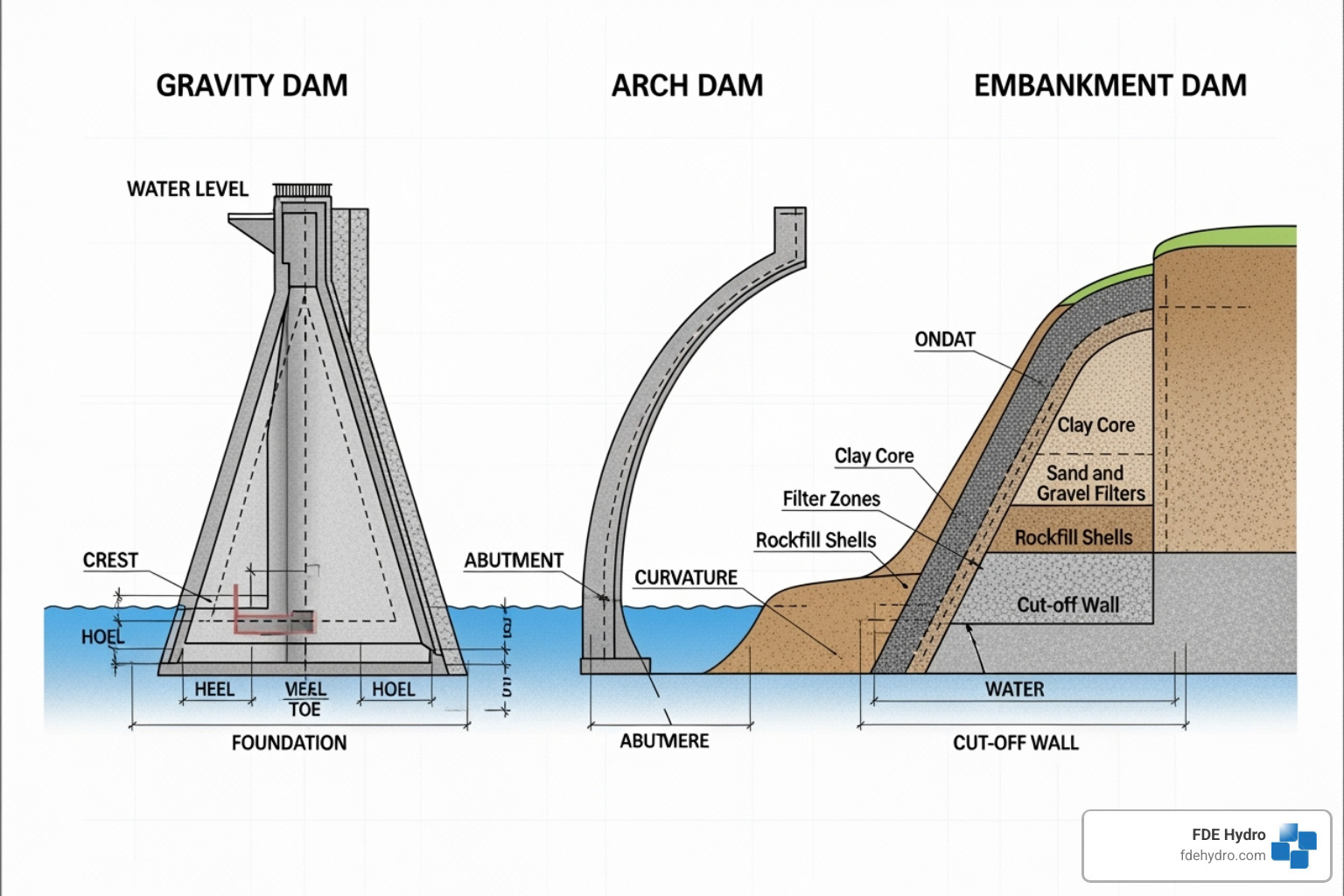
Embankment dams comprise 75% of all dams worldwide due to their adaptability and use of local materials. They are massive structures of compacted earth and rock that rely on their mass weight resistance to hold back water. Construction involves building them layer by layer, with precise compaction methods for each layer to ensure stability.
- Earth-fill dams use soil and clay with an impermeable core to prevent seepage.
- Rock-fill dams use quarried rock with a watertight barrier, such as a concrete face or an internal core, along with filter and drainage systems to control seepage.
Concrete Dams: Monuments of Strength
Concrete dams are rigid structures where geometry is as important as mass in managing immense water forces.
- Gravity dams use their enormous weight to resist water pressure and require strong foundations, like the famous Hoover Dam.
- Arch dams are curved to transfer water pressure horizontally into the canyon walls (abutments), allowing for a thinner, more efficient structure. The curved geometry is key to how Arch Dam Forces work.
- Buttress dams use a series of supports to brace a thin upstream slab, saving on concrete compared to gravity dams.
Roller-Compacted Concrete (RCC) has transformed concrete dam construction. This method involves compacting a dry concrete mix in layers, which speeds up construction, reduces costs, and minimizes heat buildup during curing.
At FDE Hydro, we are dedicated to advancing how we build and rehabilitate Dams, bringing innovation to all approaches.
Key Factors Influencing Dam Design
Selecting the right dam design requires weighing several factors:
- Topography often dictates the initial choice. Narrow gorges may suit an arch dam, while wide valleys are better for embankment or gravity dams.
- Geology and foundation stability are non-negotiable. Weak ground must be removed or treated before construction.
- Material availability directly impacts cost and design choice. On-site earth and rock favor embankment dams.
- The project purpose—hydropower, flood control, or irrigation—shapes the dam’s height and features.
- The design must be engineered to withstand forces like water pressure, uplift, and seismic activity.
- Economic and logistical factors, including cost and site access, are crucial practical considerations.
Our mission is to create robust Water Control Structures that serve communities safely for generations.
A Step-by-Step Guide to Traditional Dam Construction Methods
Building a dam follows a fundamental sequence, even with modern technology. The process relies on extensive geotechnical investigation, material testing, and heavy machinery to move earth and pour concrete.
Phase 1: Site Preparation and River Diversion
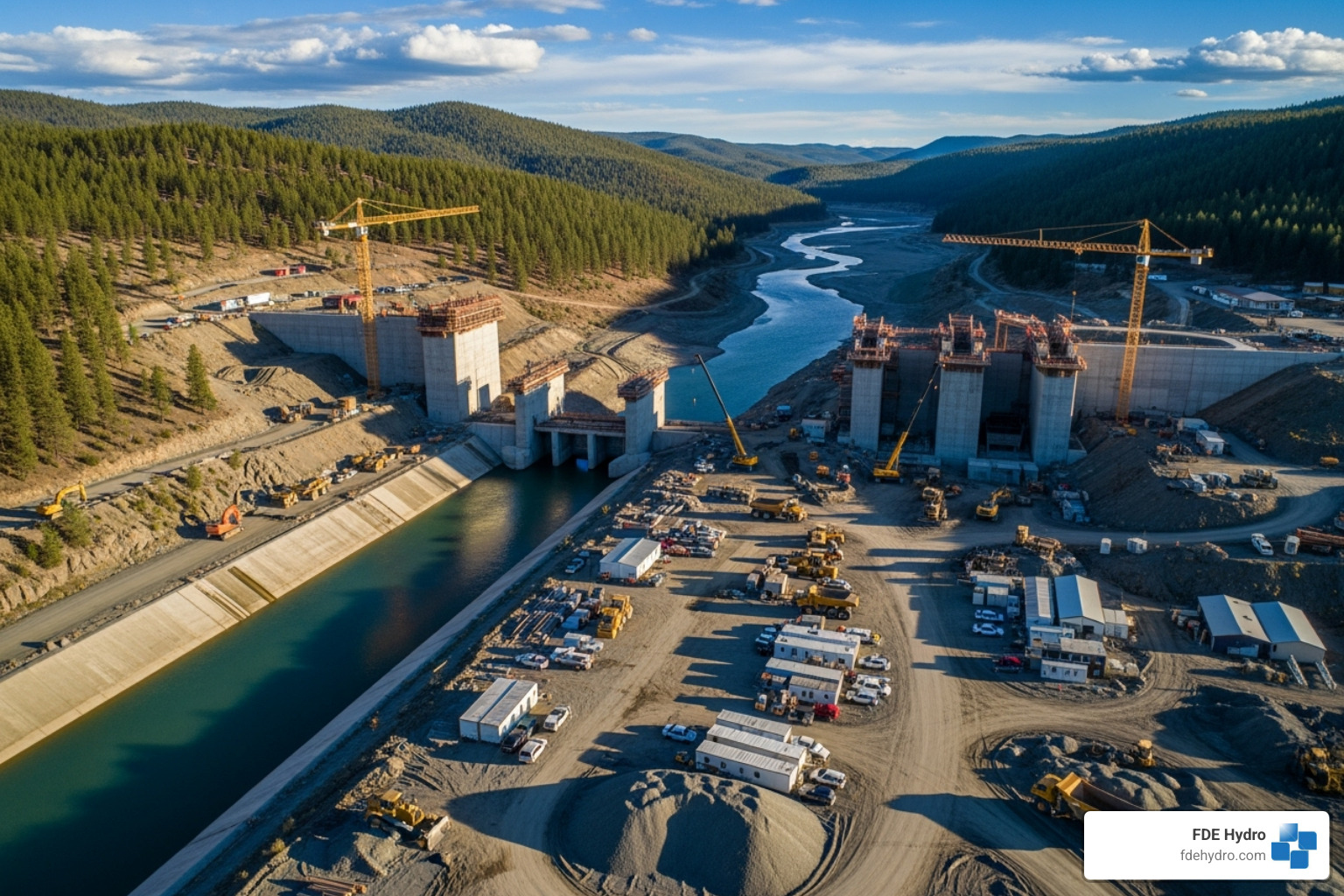
The first phase is dewatering and river diversion. Since you can’t build in a flowing river, the water is rerouted using diversion tunnels, channels, or temporary barriers called cofferdams. Once the work area is dry, crews begin foundation excavation, digging and sometimes blasting down to stable bedrock.
Phase 2: Laying a Stable Foundation
The second phase is creating a stable foundation. After excavation, loose rock is removed, and the bedrock is strengthened and sealed through grouting—injecting a cement mixture into cracks. A concrete plinth may be built to create a level base. Foundation requirements vary by dam type; gravity dams need strong bedrock, while arch dams need solid canyon walls.
Phase 3: Building the Dam Structure – A Comparison of dam construction methods
Phase three is building the dam structure, where dam construction methods for concrete and embankment dams differ.
| Feature |
Concrete Dam Construction |
Embankment Dam Construction |
| Materials |
Concrete, aggregate, cement, reinforcing steel |
Earth, clay, sand, gravel, rock fill |
| Best Site Conditions |
Narrow valleys with strong bedrock |
Wide valleys, variable foundation conditions |
| Construction Speed |
Slower (curing time required between lifts) |
Faster (weather-dependent) |
| Cost |
Higher material costs, lower labor for placement |
Lower material costs if available locally, higher labor |
For concrete dam construction, concrete is poured into formwork in layers called lifts, with time for curing between each pour. Roller-Compacted Concrete (RCC) speeds up this process, as a drier mix can be spread and compacted quickly.
For embankment dam construction, earth or rock is placed and compacted in layers using heavy rollers. An impermeable core of clay or concrete prevents seepage and is protected by surrounding filter and drainage zones.
Phase 4: Installing Essential Components
The final phase is installing essential components for water control and power generation.
- Spillways act as safety valves to release excess water during floods, preventing the dam from overtopping. We design various types of Spillways to handle the maximum probable flood.
- Outlet works are conduits with gates or valves that allow for controlled water releases for supply or maintenance.
- Penstocks are large pipes that carry water under high pressure to the turbines in hydroelectric facilities.
- Powerhouses contain the turbines and generators that produce clean, renewable Hydropower. We also specialize in innovative Modular Powerhouses.
The installation of these components must be carefully sequenced with the main construction. Understanding these traditional methods provides a foundation for appreciating the need for innovative Water Control Structures.
Modern Challenges: Climate Change and Dam Safety
Traditional dam construction methods face new challenges from a changing climate, requiring a shift in how we design, build, and manage these critical structures.
The Impact of a Changing Climate
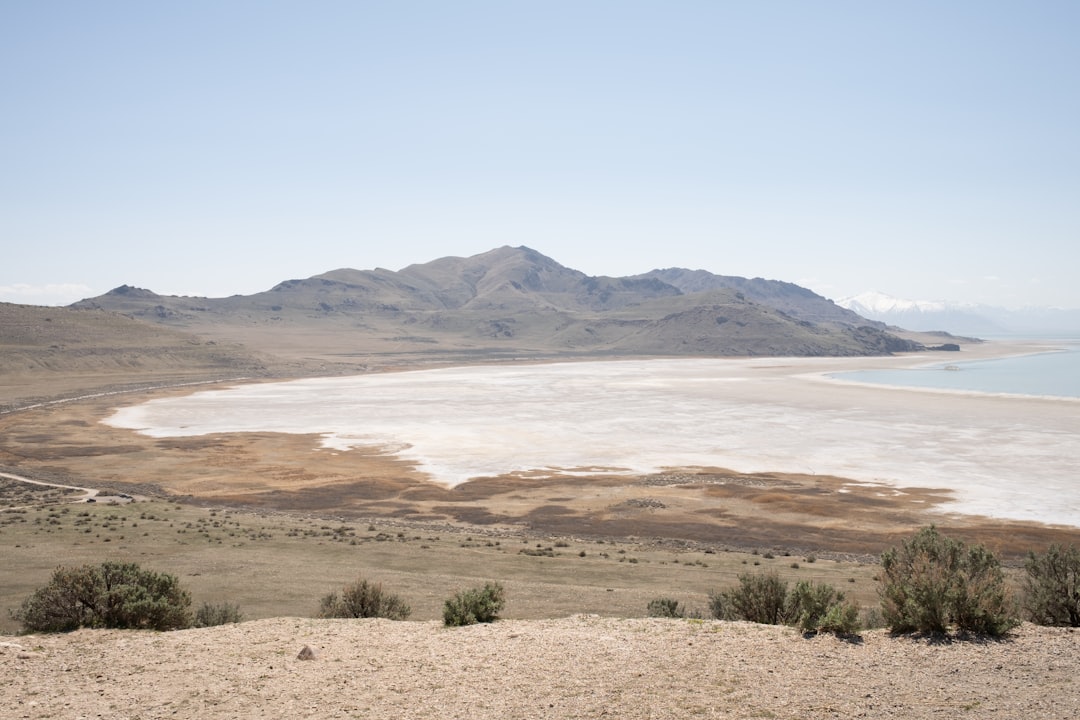
Climate change makes outdated historical data unreliable for dam design. We now see more unpredictable hydrological cycles, leading to extremes of both flooding and drought. This increased flooding risk forces upgrades like the expanded spillway at Folsom Dam, while water stress from drought impacts water supply and power generation.
Environmental Impacts and Mitigation Measures
Dams have significant environmental impacts. They create altered river ecosystems, trap sediment needed downstream, and create fish migration barriers. To mitigate these effects, modern dams incorporate strategies like:
- Fish ladders and bypass systems to help species steer around the structure.
- Environmental flow releases to mimic natural river patterns.
- Sediment management techniques to allow controlled passage of sediment.
These measures help balance human water demands with the needs of riverine ecosystems.
Ensuring Long-Term Safety and Regulation
Dam safety is paramount, as a failure is catastrophic. Common dam failure modes include overtopping (see a video example of its destructive power), foundation failure, and internal erosion. To prevent this, dams are equipped with extensive instrumentation for rigorous monitoring practices to track pressure, seepage, and movement.
Strict safety regulations provide a framework for accountability. In the U.S., the National Inventory of Dams (NID) catalogs dams, most of which are regulated at the state level. Public resources like the Living Near Dams Booklets also help inform communities about potential risks.
The Future of Dam Building: Innovation and Sustainability
Climate change challenges are driving innovation in dam construction methods, pushing the industry toward smarter, more sustainable infrastructure.
Emerging Technologies in dam construction methods
The industry is undergoing a technological renaissance. Innovations include:
- Advanced materials like stronger, more durable, and even self-healing concrete.
- ICT-driven construction using GPS-guided machinery and real-time data analytics for improved quality control.
- Automated monitoring systems using AI and drones to detect potential issues early.
- Smarter, fish-friendly turbine designs for Reinvigorating Hydropower projects.
Modular Precast Construction: A Paradigm Shift
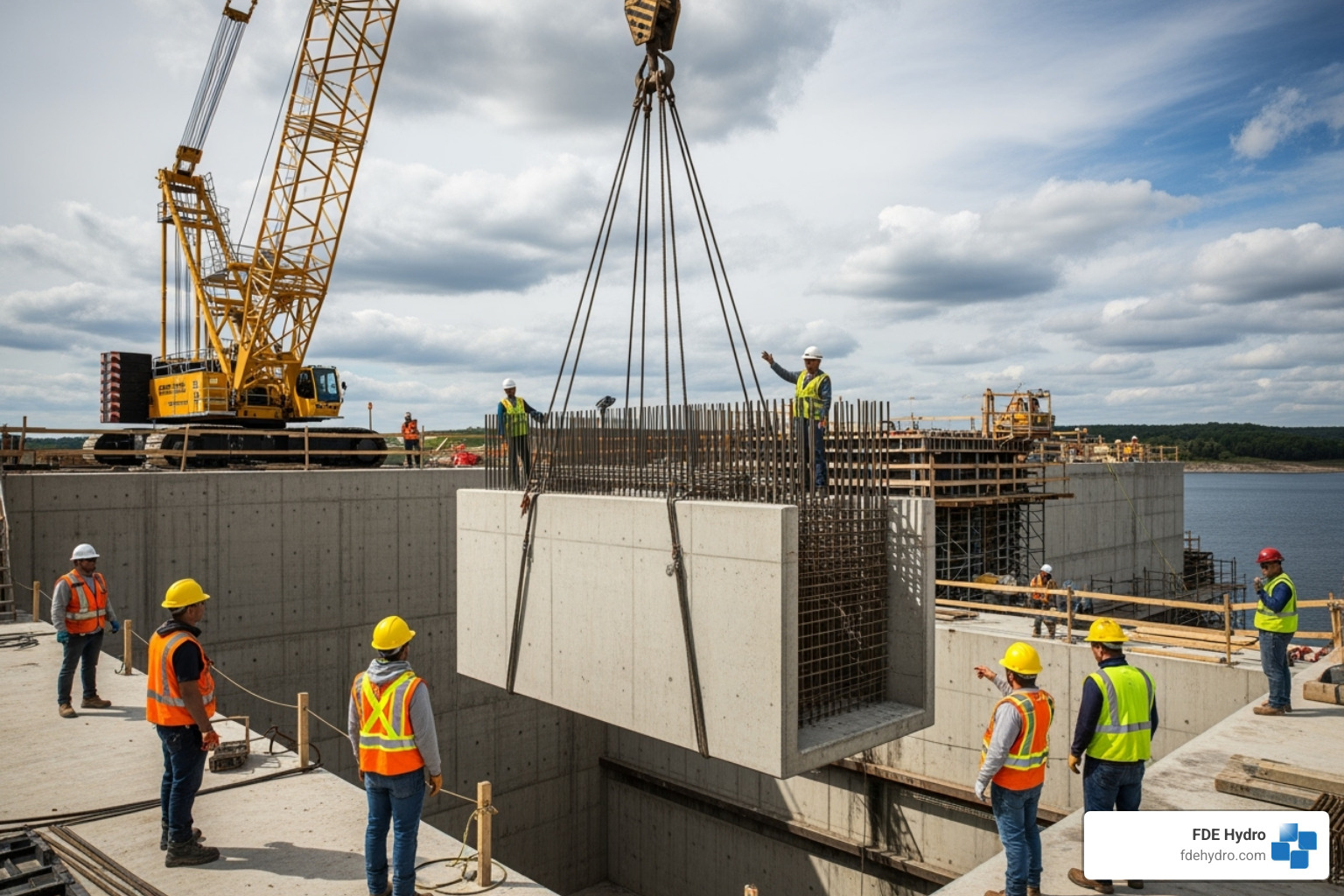
At FDE Hydro, we are pioneering modular precast construction, a approach that moves most construction from the project site to a controlled factory setting. Our innovative French Dam technology involves manufacturing high-quality concrete components off-site while the foundation is prepared. This leads to significant benefits:
- Reduced Construction Time: As demonstrated by our recent Prototype of Modular Precast French Dam Completed, projects can be finished in a fraction of the traditional time.
- Lower Costs: Factory production, reduced on-site labor, and fewer weather delays are Why Precast Cost Less.
- Improved Quality Control: Manufacturing in a controlled environment ensures every component meets exact specifications for superior durability.
- Minimized Environmental Footprint: Shorter on-site construction means less disruption to local ecosystems.
Designing for Resilience and Rehabilitation
Designing for resilience is now standard practice. This includes over-installing for future capacity and using adaptive management strategies. Retrofitting aging dams is also a major opportunity. Our specialized solutions for Dam Rehabilitation & Encapsulation improve the safety and performance of existing infrastructure, making it more resilient for the future.
The future of dam construction is about enhancing proven principles with modern technology. For more information, explore our Means and Methods.
Frequently Asked Questions about Dam Construction
Here are answers to some frequently asked questions about dam construction methods.
What are the 3 main types of dams?
The three main types are embankment, gravity, and arch dams. Embankment dams, the most common type, are made from compacted earth and rock. Gravity dams are massive concrete structures that rely on their own weight for stability. Arch dams are curved concrete structures that transfer water pressure to the canyon walls, allowing for a thinner design.
What are the basic steps to build a dam?
The basic steps to build a dam are:
- River Diversion: Reroute the river around the construction site using cofferdams or tunnels to create a dry work area.
- Foundation Preparation: Excavate down to solid bedrock and treat it to ensure a stable, watertight base.
- Dam Construction: Build the main structure by either placing and compacting layers of earth/rock (embankment) or pouring concrete in lifts (concrete).
- Component Installation: Install spillways, outlet works, and powerhouses to make the dam operational.
Why is dam safety so important?
Dam safety is critical because a failure can be catastrophic, causing loss of life and widespread destruction. Dams must withstand immense forces over a long lifespan. For this reason, design, construction, and ongoing monitoring are subject to rigorous standards. Innovations in dam construction methods, such as modular precast technology, improve safety by creating more durable and resilient structures designed to protect communities for generations to come.
Conclusion
From ancient earthen mounds to modern engineering marvels, dam construction methods have continuously evolved. Today, traditional methods face new pressures from climate change, long timelines, and high costs, making innovation essential.
Modular precast construction offers a path forward. By manufacturing components in a factory, we can build dams faster, more affordably, and with superior quality control, all while minimizing environmental disruption. This approach represents a significant shift toward more sustainable and resilient infrastructure.
At FDE Hydro, our “French Dam” technology embodies this innovative spirit. We combine proven engineering principles with modern methods to create adaptable water control structures that meet the challenges of tomorrow. The future of hydropower depends on building smarter, not just bigger.
We invite you to explore how these innovations can benefit your next project. Learn more about our innovative Means and Methods and find how we are shaping a more resilient future through advanced dam construction methods.
by Bill French Sr. | Nov 7, 2025 | Case Studies
Why Renewable Energy Projects Matter More Than Ever
Renewable energy projects are shifting global electricity generation from fossil fuels to clean sources like solar, wind, and hydropower. These initiatives range from massive utility-scale installations to smaller community efforts, all aiming for sustainable, affordable power.
Key Facts About Renewable Energy Projects:
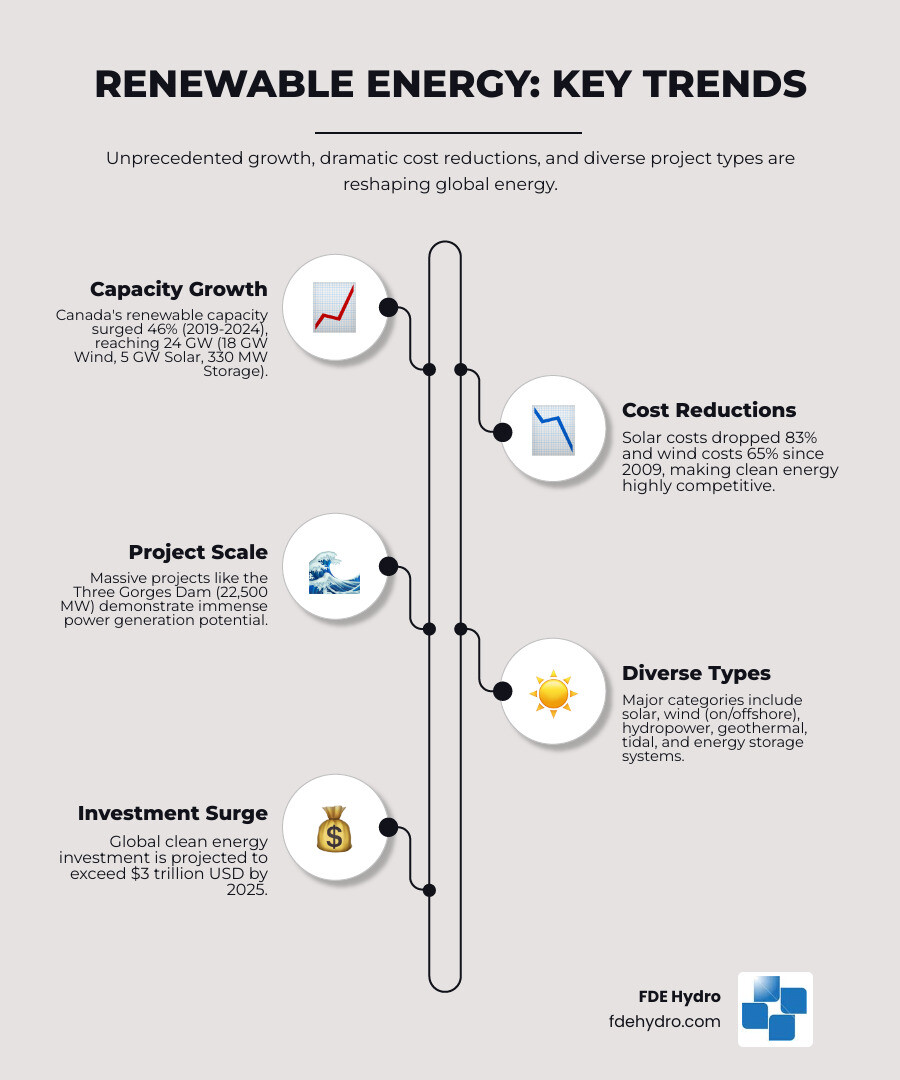
- Global Growth: Wind, solar, and storage capacity has surged 46% in Canada alone over the past five years (2019-2024)
- Dramatic Cost Declines: Solar energy costs have dropped 83% since 2009; wind energy costs fell 65%
- Scale: The world’s largest renewable projects generate tens of thousands of megawatts—the Three Gorges Dam produces 22,500 MW
- Project Types: Major categories include solar farms, wind farms (onshore and offshore), hydropower facilities, geothermal plants, tidal stations, and battery storage systems
- Investment: Global clean energy investment is on track to exceed $3 trillion USD by 2025
The momentum is undeniable. China’s Tengger Desert Solar Park generates 1,547 MW across 43 square kilometers. The UK’s Walney Offshore Wind Farm powers 600,000 homes. Canada now has over 24 GW of installed wind, solar, and storage capacity, including 341 wind projects and 217 major solar installations. More than 8% of Canada’s electricity demand was met by wind and solar in 2023.
This expansion stems from three forces: technological innovation making renewables cheaper than fossil fuels, urgent climate goals, and proven economic benefits like job creation and energy independence.
Yet challenges remain. Grid integration, intermittency of solar and wind, environmental considerations for large-scale installations, and the sheer capital investment required for major projects all demand innovative solutions. This is especially true for hydropower—the backbone of grid stability and energy storage—where traditional construction methods can be prohibitively expensive and time-consuming.
For decision-makers overseeing large infrastructure projects, modular construction approaches are changing the equation. By reducing timelines, lowering capital costs, and mitigating risks, these innovations make renewable projects more feasible and financially attractive.
I’m Bill French Sr., Founder & CEO of FDE Hydro™, where we’ve developed patented modular solutions that accelerate renewable energy projects while reducing costs and environmental impacts. My work on the Department of Energy’s Hydro Power Vision Task Force and five decades in heavy civil construction have given me a front-row seat to how renewable energy projects are evolving—and how the right construction methods can make or break their success.
The Global Titans: Largest Operational Renewable Energy Projects
The world’s largest renewable energy projects aren’t just power stations—they’re proof of what’s possible when engineering ambition meets the forces of nature. These operational giants generate enough electricity to power entire regions, and they show us that the clean energy transition isn’t some distant dream. It’s already happening at massive scale.
Hydropower Giants
Let’s start with the heavyweight champion: the Three Gorges Dam in China. With a jaw-dropping capacity of 22,500 MW, it’s not just the world’s largest renewable energy project—it’s the largest power station of any kind on the planet.
But Three Gorges does more than generate electricity. It controls devastating floods that once plagued the Yangtze River valley. It improved navigation for shipping, which alone cuts carbon dioxide emissions by an estimated ten million tonnes annually. That’s the beauty of well-designed hydropower: multiple benefits from a single infrastructure investment.
Hydropower has been the workhorse of clean energy for over a century, and it’s not going anywhere. Modern facilities provide reliable, dispatchable power that can ramp up or down as needed—something solar and wind simply can’t do alone. Pumped storage hydropower acts like a giant battery for the grid, storing energy when it’s abundant and releasing it during peak demand. It’s truly the power of modern Hydropower.
Sprawling Solar Farms
China’s Tengger Desert Solar Park, the “Great Wall of Solar,” features 43 square kilometers of panels generating 1,547 MW. It’s a prime example of using barren land for a renewable powerhouse.
In California’s Mojave Desert, the Ivanpah Solar Facility uses a different approach: concentrated solar power. 300,000 mirrors focus sunlight on towers to create steam, generating 392 MW. Its dry-cooling technology also conserves 95% more water than traditional systems, vital in the desert.
Using the Wind and Tides
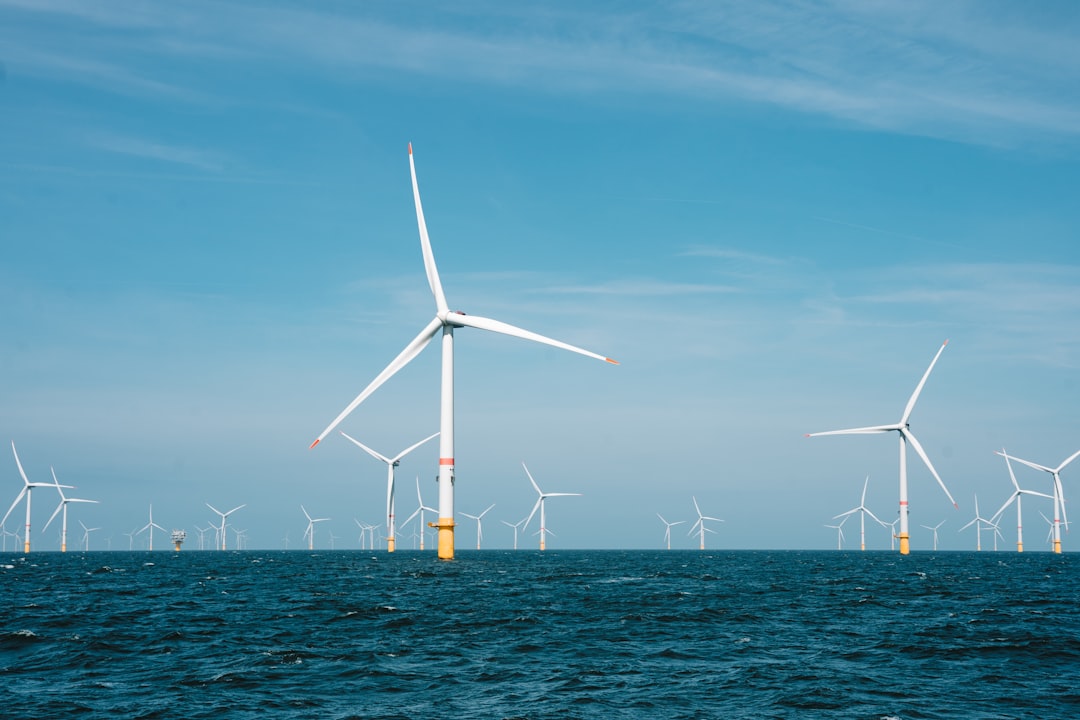
Wind energy has come into its own, especially offshore where the winds blow stronger and more consistently. The Walney Offshore Wind Farm off the UK coast demonstrates this perfectly. With 650 MW of capacity, its 189 turbines generate enough electricity to power 600,000 homes. These steel giants stand in the Irish Sea like silent guardians, converting ocean breezes into clean power around the clock.
Onshore wind has its own champions. The Roscoe Wind Farm in Texas sprawls across 400 square kilometers of open rangeland, where 627 turbines generate 781.5 MW of electricity. Texas has the wind resources and the wide-open spaces, making it perfect for this kind of massive onshore installation.
But perhaps the most unique project in this category harnesses a force we rarely think about: the tides. The Sihwa Lake Tidal Power Station in South Korea uses tidal barrage technology to capture the daily ebb and flow of the ocean. It’s a brilliant use of predictable, renewable energy that generates 552.7 GWh annually—power you can literally set your watch by.
Tapping into the Earth’s Heat
Finally, let’s go underground. Geothermal energy might be the least visible renewable resource, but it’s incredibly powerful. The Geysers in California is the world’s largest geothermal field, with a total capacity of 1,517 MW.
Four miles beneath the surface, a massive magma chamber creates natural steam reservoirs. Wells tap into this steam, which drives turbines to generate electricity. The result? The Geysers accounts for 20% of all renewable power generated in California—steady, reliable, sustainable electricity that flows day and night, rain or shine.
These global titans prove that large-scale renewable energy projects aren’t just feasible—they’re already powering our world. From China’s solar deserts to California’s geothermal fields, from offshore wind farms to the mighty rivers of hydropower, clean energy is operating at scales that would have seemed impossible just a generation ago.
The North American Clean Energy Boom
North America isn’t sitting on the sidelines watching the global renewable revolution unfold—we’re right in the thick of it. Both Canada and the United States are investing heavily in clean power, and the results speak for themselves.
Canada’s Green Expansion
Canada’s renewable energy story over the past five years is nothing short of remarkable. Between 2019 and 2024, the country’s combined wind, solar, and energy storage capacity jumped by 46%—a growth rate that reflects serious commitment to clean power.
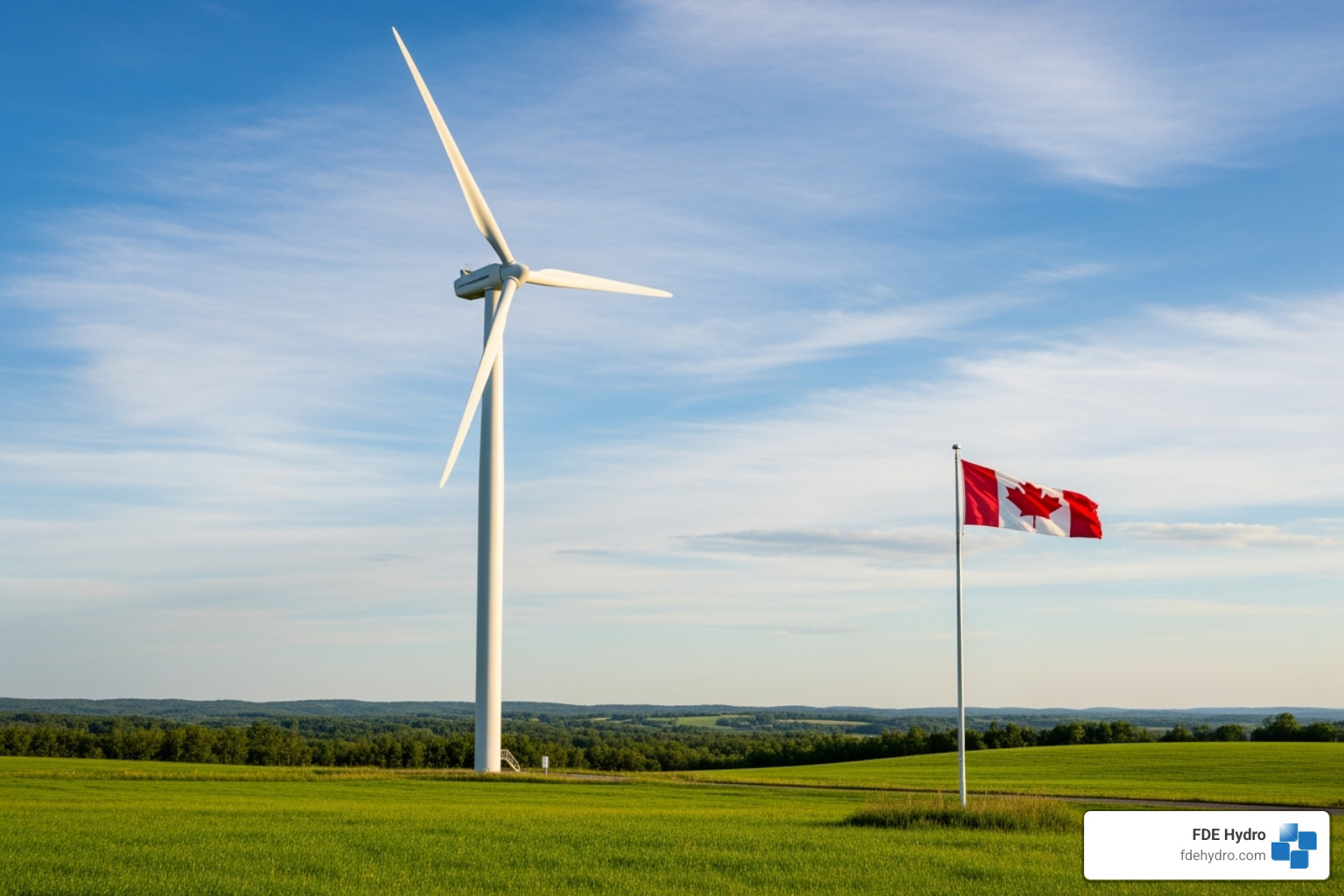
Today, Canada has more than 24 GW of total installed capacity. That breaks down to over 18 GW of wind power, more than 5 GW of solar (including both utility-scale and on-site installations), and 330 MW of energy storage. By 2023, wind and solar alone were meeting over 8% of Canada’s total electricity demand.
The numbers are impressive: Canada now has 341 wind and 217 major solar projects, plus nearly 96,000 smaller on-site solar installations. Over five years, solar capacity grew 92% and wind 35%. Most striking is the 192% surge in energy storage, showing a commitment to grid reliability with growing renewables.
What makes Canada’s renewable journey particularly meaningful is the active participation of Indigenous communities. Many renewable energy projects across the country are either Indigenous-owned or developed through genuine partnerships with First Nations. These collaborations recognize that sustainable development means including the voices and leadership of those who have stewarded these lands for generations. You can explore the full landscape of Canada’s renewable infrastructure, including Indigenous-owned initiatives, through this interactive map of Canada’s renewable projects.
U.S. Projects on Public Lands
South of the border, America’s vast public lands are becoming proving grounds for utility-scale renewable development. The Bureau of Land Management (BLM) oversees millions of acres with excellent solar and wind resources, and they’re putting that potential to work.
So far, the BLM has approved 13 solar projects generating a combined 3,645 MW and 2 wind energy projects totaling 1,280 MW on federal lands. These aren’t small installations—they’re massive undertakings that deliver clean electricity to thousands of homes and businesses.
But what’s already built is just the beginning. The BLM’s pipeline of proposed projects is substantial: 35 solar projects totaling 20,827 MW and 3 wind projects adding another 2,821 MW are currently moving through the National Environmental Policy Act (NEPA) review process. This thorough environmental assessment ensures these projects meet strict standards for protecting wildlife, cultural resources, and ecosystem health while delivering clean energy.
The lengthy NEPA process balances the need for renewable power with responsible land stewardship, requiring detailed analysis before construction. The BLM provides information on active renewable projects in the U.S..
Between Canada’s rapid capacity growth and the United States’ strategic use of public lands, North America is proving that clean energy isn’t just about environmental goals—it’s about economic opportunity, energy independence, and building infrastructure that will serve us for decades to come.
The Future is Now: Major Planned Renewable Energy Projects
The renewable energy sector isn’t just growing—it’s exploding with ambition. The renewable energy projects currently on the drawing board are so massive they make today’s largest installations look modest by comparison. We’re talking about projects that will fundamentally reshape how the world generates and uses electricity.
Global Megaprojects on the Horizon
When I look at what’s being planned around the world, I have to admit the numbers are almost hard to believe. These aren’t just incremental improvements—they represent quantum leaps in our energy infrastructure.
Take the China Desert Project, where planners envision an astonishing 100 GW of combined solar and wind capacity spread across China’s vast desert regions. This isn’t a single installation but rather a coordinated push to transform barren landscapes into clean energy powerhouses. One proposed project in the Kubuqi desert alone targets 455 GW—a figure that’s nearly incomprehensible when you consider that the world’s largest current power station generates 22.5 GW.
Australia is making equally bold moves with the Western Green Energy Hub, a 50 GW project combining solar and wind power in Western Australia. What makes this particularly exciting is its focus on green hydrogen production—using clean electricity to split water into hydrogen and oxygen. This positions Australia to become a global leader in producing clean fuel that can decarbonize industries that can’t easily run on electricity alone.
Perhaps the most ambitious hydropower project ever conceived is the Grand Inga Dam in the Democratic Republic of Congo. With a proposed capacity between 40 and 70 GW, it would dwarf even the Three Gorges Dam, using the tremendous power of the Congo River. If built, it would be a game-changer for African energy access.
Green Energy Oman plans to develop 25 GW of solar and wind capacity, also heavily focused on green hydrogen production to establish Oman as a clean fuel exporter. Meanwhile, the Australia-Asia Power Link proposes something that sounds like science fiction: transmitting 17-20 GW of solar power from Australia to Singapore through an undersea cable spanning thousands of kilometers. It’s a glimpse into a future where clean energy flows across continents and oceans.
Many of these megaprojects share a common thread—they’re designed not just to generate electricity but to produce green hydrogen, which is emerging as a crucial tool for decarbonizing heavy industries, shipping, and aviation. For anyone wanting to dive deeper into the full landscape of planned projects worldwide, there’s a comprehensive resource available: See a comprehensive list of planned projects.
Future Forecasts and Sector Trends
The financial commitment behind this change is staggering. Global investment in clean energy is projected to exceed $3 trillion by 2025. This isn’t just governments writing checks—it’s private capital recognizing that renewables make economic sense, not just environmental sense.
We’re seeing continued cost declines across the board. Solar and wind technologies are becoming cheaper every year as manufacturing scales up and efficiency improves. What was expensive a decade ago is now often the cheapest form of new electricity generation available. This trend shows no signs of stopping.
But generating clean power is only half the battle. Grid modernization is becoming absolutely critical as we add more renewable capacity. Traditional power grids were designed for large, centralized fossil fuel plants that run continuously. Renewables like solar and wind are different—they’re distributed and intermittent, producing power when nature cooperates, not necessarily when demand peaks.
This is where energy storage becomes essential. Battery systems, pumped hydro storage, and other technologies are the glue that holds a renewable-powered grid together, storing excess energy when the sun shines and wind blows, then releasing it when needed. Understanding the role of energy storage in the future grid isn’t optional anymore—it’s fundamental to making the whole system work.
Technological innovation continues at a blistering pace. We’re seeing advances in solar panel efficiency, larger and more efficient wind turbines, artificial intelligence optimizing grid operations in real-time, and manufacturing techniques that reduce costs and environmental impacts. The International Energy Agency forecasts that reaching net-zero emissions by 2050 will require accelerating innovation, particularly in technologies still in development stages.
The future of renewable energy projects isn’t just bright—it’s absolutely transformative. From desert solar installations measured in hundreds of gigawatts to intercontinental power cables, we’re witnessing the birth of a fundamentally different energy system. And it’s happening faster than most people realize.
Overcoming Problems in Renewable Energy Development
Let’s be honest: while the future of renewables looks incredibly promising, getting these renewable energy projects to scale isn’t a walk in the park. We’re dealing with real challenges that range from technical puzzles to environmental considerations and, of course, the inevitable regulatory complexity.
Key Barriers to Scaling Up Renewable Energy Projects
The biggest headache? Grid integration. Our electricity grids were built decades ago for a different world—one where power plants ran steadily around the clock. Now we’re asking these grids to handle solar and wind power that comes and goes with the weather. When the sun sets or the wind dies down, we need backup. When both are producing at full capacity, we need somewhere to store or use that energy. It’s a balancing act that requires serious infrastructure upgrades.
Then there’s the land use question. A solar farm that produces hundreds of megawatts needs space—sometimes thousands of acres. Wind farms need room too, though they can share land with farming and ranching. But finding the right location often means navigating competing interests: agricultural land, wildlife habitats, scenic viewpoints, and community concerns all come into play.
Speaking of wildlife and habitats, the environmental impacts of construction deserve careful attention. Yes, renewables are clean once they’re operating, but building them can temporarily affect local ecosystems. Birds and bats face risks from wind turbines. Dam construction changes river flows and aquatic habitats. Solar farms can alter desert ecosystems. We need to build these projects thoughtfully, minimizing disruption wherever possible.
The regulatory maze can slow even the best projects to a crawl. Multiple levels of government often need to sign off. Environmental assessments take time. Community consultations are essential but add months or years to timelines. Each jurisdiction has its own rules, and navigating them all requires patience and expertise.
Finally, there’s the money question. Financing large-scale projects remains challenging despite falling technology costs. A multi-gigawatt wind farm or solar installation still requires hundreds of millions in upfront investment. Lenders want certainty about returns, which means managing risks carefully. For hydropower specifically, financing long-term hydropower projects demands smart strategies to reduce risk before investors see returns.
Innovative Solutions and Supportive Policies
Here’s the good news: for every challenge, brilliant minds are developing solutions. And governments are stepping up with policies that actually help.
Smart grids are revolutionizing how we manage electricity. These digital systems can predict demand, balance supply in real time, and automatically route power where it’s needed. They’re like giving the grid a brain upgrade. Paired with microgrids—smaller, localized power systems that can operate independently—we’re building resilience into our energy infrastructure. Communities can keep the lights on even when the main grid faces problems. Learn more about microgrid development and how these systems are changing energy delivery.
Government support makes a real difference. Canada’s Smart Renewables and Electrification Pathways Program (SREPs) is putting money where it matters—over $170 million in funding for projects worth more than $1.5 billion. This isn’t just about big utility-scale installations. The program supports everything from wind and solar farms to EV charging infrastructure and grid modernization. It’s comprehensive, strategic, and effective.
Community-led initiatives are changing the game too. When local communities own or participate in renewable projects, everyone benefits. Schools install solar panels. Indigenous communities develop wind farms on their lands. These smaller-scale efforts build local capacity, create jobs, and keep energy dollars in the community. Organizations like Bullfrog Power and TRCA are champions of these grassroots projects.
And let’s talk about technological innovation—because this is where things get exciting. Better solar panels and more efficient turbines grab headlines, but construction innovation matters just as much. At FDE Hydro, we’ve developed modular precast concrete technology that cuts hydropower construction time dramatically. Instead of pouring concrete on-site for months, we build components in a controlled factory environment and assemble them quickly on location. This approach reduces costs, minimizes environmental disruption, and gets projects online faster. Using technology to minimize construction impacts isn’t just smart—it’s essential for accelerating our transition to clean energy.
The challenges are real, but so are the solutions. With smart technology, supportive policies, and innovative construction methods, we’re overcoming the barriers that once seemed impossible.
The Economic and Community Impact of Renewable Energy Projects
When we talk about renewable energy projects, we’re not just discussing clean electricity—we’re talking about changing communities and creating real economic opportunity. These projects put people to work, lower energy bills, and give communities a stake in their own energy future.
Driving Economic Growth and Job Creation
The renewable energy sector is a job creation powerhouse. Every wind farm, solar installation, and hydropower facility needs skilled workers to design, build, and maintain it. Think about the Roscoe Wind Farm in Texas—during construction, crews were installing one turbine every single day. That’s engineers, crane operators, electricians, and project managers all working together. And those jobs don’t disappear when construction ends; operations and maintenance positions keep communities employed for decades.
The economic benefits ripple outward through entire supply chains. Manufacturing components, transporting materials, providing professional services—all of these create employment opportunities far beyond the project site itself.
Once built, solar and wind farms have virtually no fuel costs. This translates to lower energy costs for consumers and businesses over the long term. Stable, predictable electricity prices help communities plan their budgets and attract new businesses looking for affordable power.
Corporate demand is accelerating this trend. Companies pursuing corporate sustainability goals are increasingly investing in renewable energy or purchasing clean power directly. This corporate commitment drives market growth and spurs innovation. Organizations like Bullfrog Power connect businesses and individuals with renewable energy credits, while their “Currents of Change” program directly funds small-scale, community-led projects across Canada. See examples of community-funded projects.
The Toronto and Region Conservation Authority (TRCA) has documented how technological advances, rising fossil fuel costs, and government incentives have fundamentally transformed the business case for renewables in Ontario. Their research helps decision-makers understand the financial advantages of specific renewable technologies.
Community-Led and Indigenous-Owned Projects
Some of the most inspiring renewable energy stories come from communities taking control of their own power generation. These projects aren’t just about kilowatts—they’re about local ownership, shared benefits, and building a more equitable energy system.
Community solar gardens are a perfect example. These shared solar facilities allow multiple households or businesses to subscribe to a portion of the power generated, making solar energy accessible even to renters or those with shaded roofs. Installing solar panels on schools does double duty: it cuts energy costs for educational institutions while giving students hands-on lessons about clean energy technology.
In Canada, Indigenous partnerships are reshaping the renewable energy landscape. Many projects are now developed in collaboration with or entirely owned by First Nations, Métis, and Inuit communities. This ensures that Indigenous peoples aren’t just consulted—they’re active participants and primary beneficiaries of clean energy development. Bullfrog Power has helped fund solar installations in Indigenous communities, supporting energy independence and sustainable economic development.
These community-led initiatives create far more than electricity. They generate local jobs, strengthen community bonds, and give people direct control over their energy future. They prove that the renewable energy transition can be inclusive and empowering, not just corporate-driven.
When communities have skin in the game, they become champions for clean energy. They see how renewable projects can revitalize local economies, reduce energy poverty, and build resilience. That’s the kind of change that lasts.
Conclusion
We’ve covered a lot of ground together—from the mighty Three Gorges Dam generating 22,500 MW to community solar panels on school rooftops. And here’s what stands out: renewable energy projects aren’t just growing; they’re exploding across every continent, reshaping how we think about power generation.
The numbers tell a compelling story. Solar costs have plummeted 83% since 2009. Wind costs dropped 65%. Global investment is racing toward $3 trillion by 2025. These aren’t just statistics—they’re proof that clean energy makes economic sense, not just environmental sense.
What excites me most after five decades in heavy civil construction is seeing how far we’ve come. The world’s largest planned projects—like China’s 100 GW desert initiative or Australia’s 50 GW Western Green Energy Hub—would have seemed like science fiction a generation ago. Yet here we are, planning them, financing them, and building them.
But scale isn’t everything. Those community-led projects and Indigenous partnerships we discussed? They’re just as vital. They show that the clean energy transition isn’t just about massive installations; it’s about empowering people, creating local jobs, and giving communities control over their energy future.
Hydropower remains the backbone of this entire transition. While solar and wind capture headlines, hydropower provides the grid stability that makes everything else possible. It’s the reliable foundation that allows intermittent renewables to flourish. That’s why innovations in hydropower construction—like the modular approaches we’ve pioneered at FDE Hydro—matter so much. When you can cut construction time and costs dramatically while reducing environmental impacts, you remove major barriers that have held back essential infrastructure projects for too long.
The challenges we face—grid integration, financing problems, regulatory complexity—are real. But so are the solutions. Smart grids, energy storage, supportive government programs like Canada’s SREPs, and technological breakthroughs in construction methods are all accelerating our progress.
The future of energy isn’t just renewable. It’s resilient, distributed, and more powerful than ever. It’s utility-scale solar farms in the desert and panels on your neighbor’s roof. It’s offshore wind farms powering 600,000 homes and microgrids serving remote communities. It’s massive dams providing baseload power and tidal stations using ocean currents.
The transition is well underway. The question isn’t whether we’ll get there—it’s how fast we can build the infrastructure to make it happen.
Learn more about the critical role of hydropower in the clean energy future.
by Bill French Sr. | Nov 5, 2025 | Case Studies
Why Hydroelectric Dam Design Matters for Our Energy Future
Hydroelectric dam design is the engineering of structures that harness water’s natural flow to generate electricity. It’s a multidisciplinary field—blending civil, mechanical, electrical, and environmental engineering—to create safe, efficient facilities. Key aspects include the dam structure, reservoir, penstocks, turbines, and generators, all designed while accounting for water flow, head height, geology, and seismic risks.
Modern hydropower is a sophisticated blend of engineering and environmental stewardship. Today, hydropower accounts for 27% of total U.S. utility-scale renewable electricity generation and provides 96% of all utility-scale energy storage through pumped storage facilities. With facilities lasting 65-85 years, today’s design decisions shape our energy future for generations.
Nearly 40% of all currently active hydropower licenses in the United States expire in the next 10 years, presenting a critical opportunity to modernize these assets. Modern designs must generate reliable, carbon-free electricity while allowing fish to migrate safely and maintaining the ecological health of river systems.
I’m Bill French Sr., Founder and CEO of FDE Hydro™, where we’ve pioneered modular civil construction solutions for the hydropower industry including the patented “French Dam” technology. After five decades in heavy civil construction, I’ve witnessed how innovative hydroelectric dam design can dramatically reduce project timelines, costs, and environmental impacts.
This guide walks through the complete process of hydroelectric dam design—from fundamental components to the modern innovations making hydropower more efficient and responsible than ever before.
The Blueprint: Core Components and Types of Hydroelectric Dams
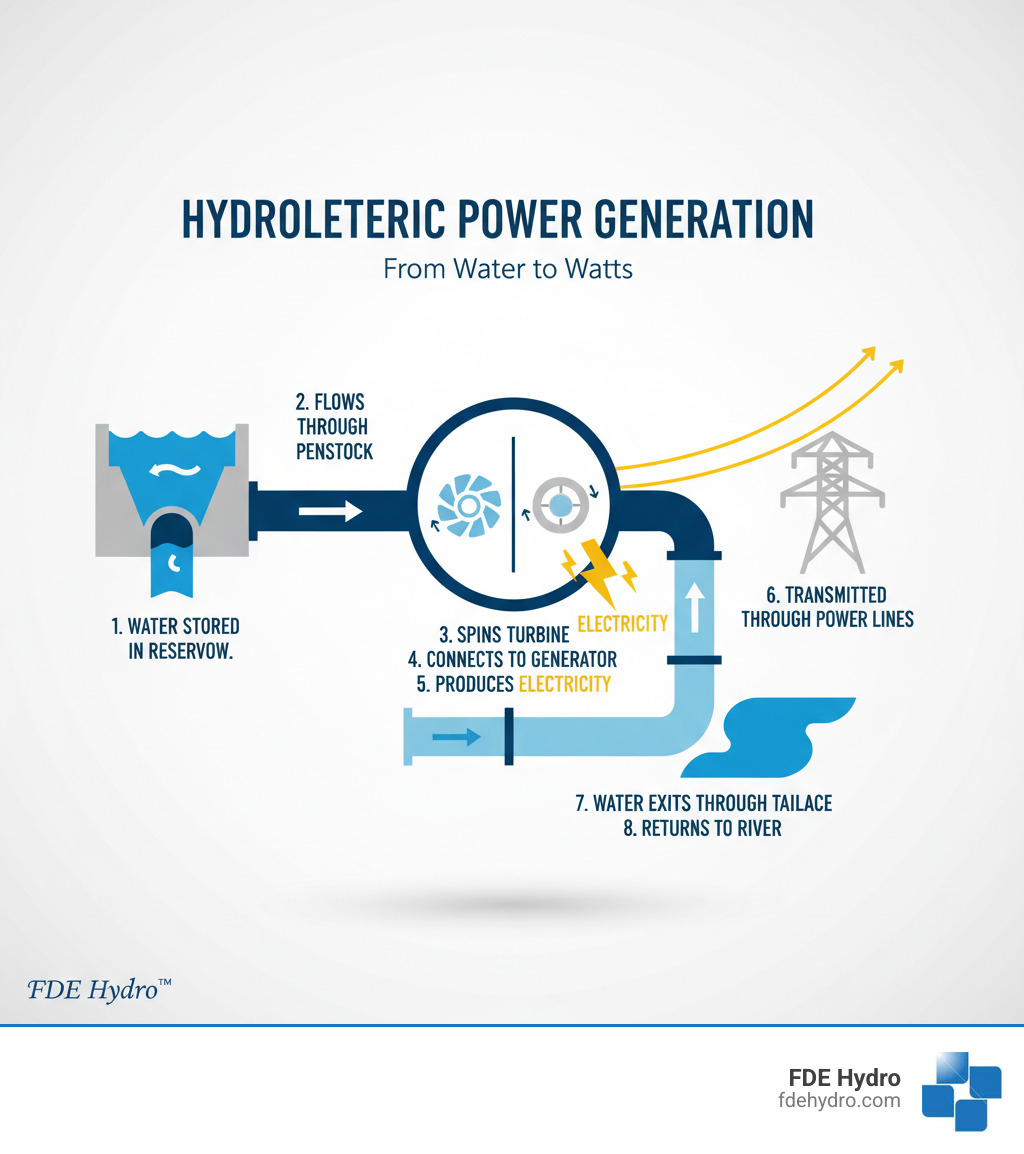
Hydroelectric dam design starts with a simple idea: capturing the energy of flowing water. Water in a high reservoir holds potential energy. As it flows downward through massive pipes, this becomes kinetic energy, which spins turbines. The turbines drive generators, converting mechanical motion into electrical power.
Every hydroelectric facility shares these fundamental components working together.
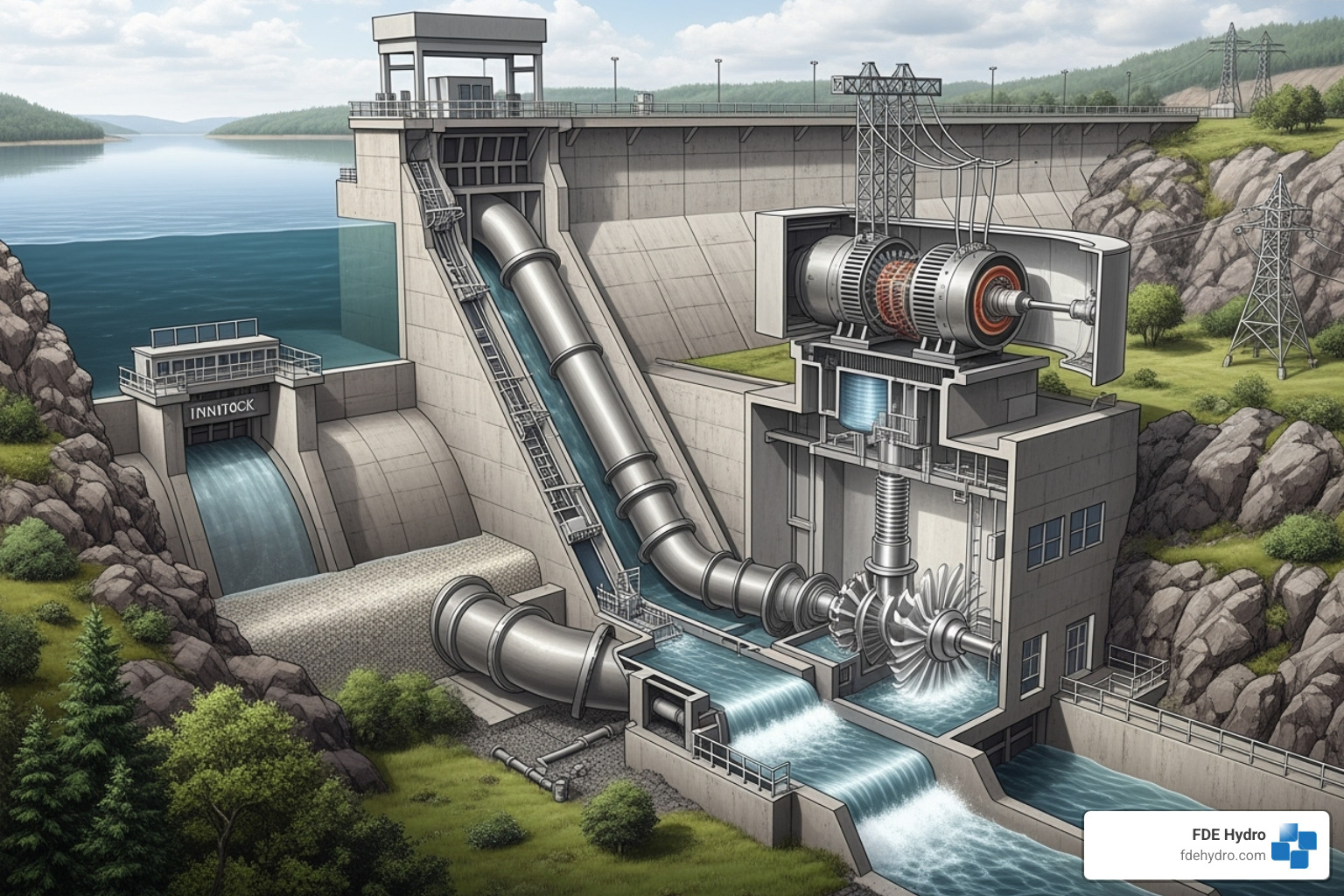
The dam structure creates the “head,” or elevation difference, and holds back the reservoir, an artificial lake storing water’s potential energy. The intake structure controls water flow into penstocks—large pipes that carry water down to the powerhouse. Inside, turbine-generator units convert the water’s force into electricity. Water then exits via the tailrace back to the river, and transmission lines deliver the power to the grid.
Key Components and Functionality in Hydroelectric Dam Design
The heart of hydroelectric dam design is maximizing energy conversion efficiency. Two factors dominate this equation:
Head height is the vertical distance water falls from the reservoir to the turbine. Greater head means more potential energy.
Water flow rate is the volume of water passing through the turbines. More flow means more kinetic energy. Our work designing Water Control Structures focuses on managing these two variables to maximize energy conversion.
Primary Hydroelectric Technologies
While the physics remain constant, hydroelectric dam design takes three distinct forms:
Impoundment dams are what most people envision: a large dam creates a substantial reservoir, storing vast quantities of water. This provides tremendous operational flexibility to generate electricity when demand peaks. However, creating large reservoirs significantly alters the landscape.
Diversion facilities, or run-of-river plants, take a gentler approach. They channel a portion of the river’s natural flow through turbines with minimal water storage. The environmental footprint is considerably smaller, but they offer limited flexibility, functioning primarily as baseload capacity.
Pumped Storage Hydropower is essentially a giant battery for the electrical grid. During periods of low electricity demand, it pumps water from a lower reservoir to an upper one. When demand surges, that stored water rushes back down through turbines, generating electricity. Pumped Storage Hydropower currently provides 96% of all utility-scale energy storage in the United States, making it indispensable for integrating intermittent sources like solar and wind.
The Human Element: Multidisciplinary Expertise in Hydroelectric Dam Design
No one builds a dam alone. The complexity of hydroelectric dam design demands a team of specialists working in harmony. This collaborative approach spans the entire project lifecycle, as every site presents a unique puzzle of geology, hydrology, and ecological factors that require custom solutions. Our advanced Means and Methods in construction depend entirely on this team-based philosophy.
Essential Engineering Disciplines
The backbone of any project is its core engineering team:
- Civil engineers design the dam structure, spillways, and powerhouse, ensuring structural integrity against immense forces.
- Geotechnical engineers are the foundation specialists. They analyze soil and rock to ensure the ground can support the structure and evaluate seismic stability.
- Mechanical engineers design the machinery, including the turbines, gates, and valves that are custom-engineered for each site’s specific head and flow.
- Electrical engineers design the generators, transformers, and switchyards that convert mechanical rotation into grid-ready electricity.
All these disciplines operate within rigorous frameworks like the Federal Energy Regulatory Commission’s Engineering Guidelines for the Evaluation of Hydropower Projects.
Supporting Expertise
Beyond the core engineers, successful hydroelectric dam design requires other vital experts:
- Environmental scientists assess ecological impacts and develop mitigation strategies like fish passages, which are often critical for regulatory approval.
- Geologists provide a big-picture understanding of the site’s rock formations, fault lines, and long-term stability.
- Construction managers translate complex designs into actionable schedules, managing budgets, timelines, and work crews.
- Economic analysts ensure projects are financially viable through feasibility studies and cost-benefit analyses. Our article on Financing Long-Term Hydropower Requires Mitigating Risks Prior to ROI explores this topic.
- Regulatory compliance specialists steer the complex web of permits and approvals from multiple agencies.
This holistic approach ensures each project is not just technically sound, but also environmentally responsible, economically viable, and built to last for generations.
Balancing Power and Planet: Environmental and Safety by Design
Modern hydroelectric dam design requires balancing the use of nature’s power with protecting the river systems that provide it. It’s a responsibility that shapes every design decision.
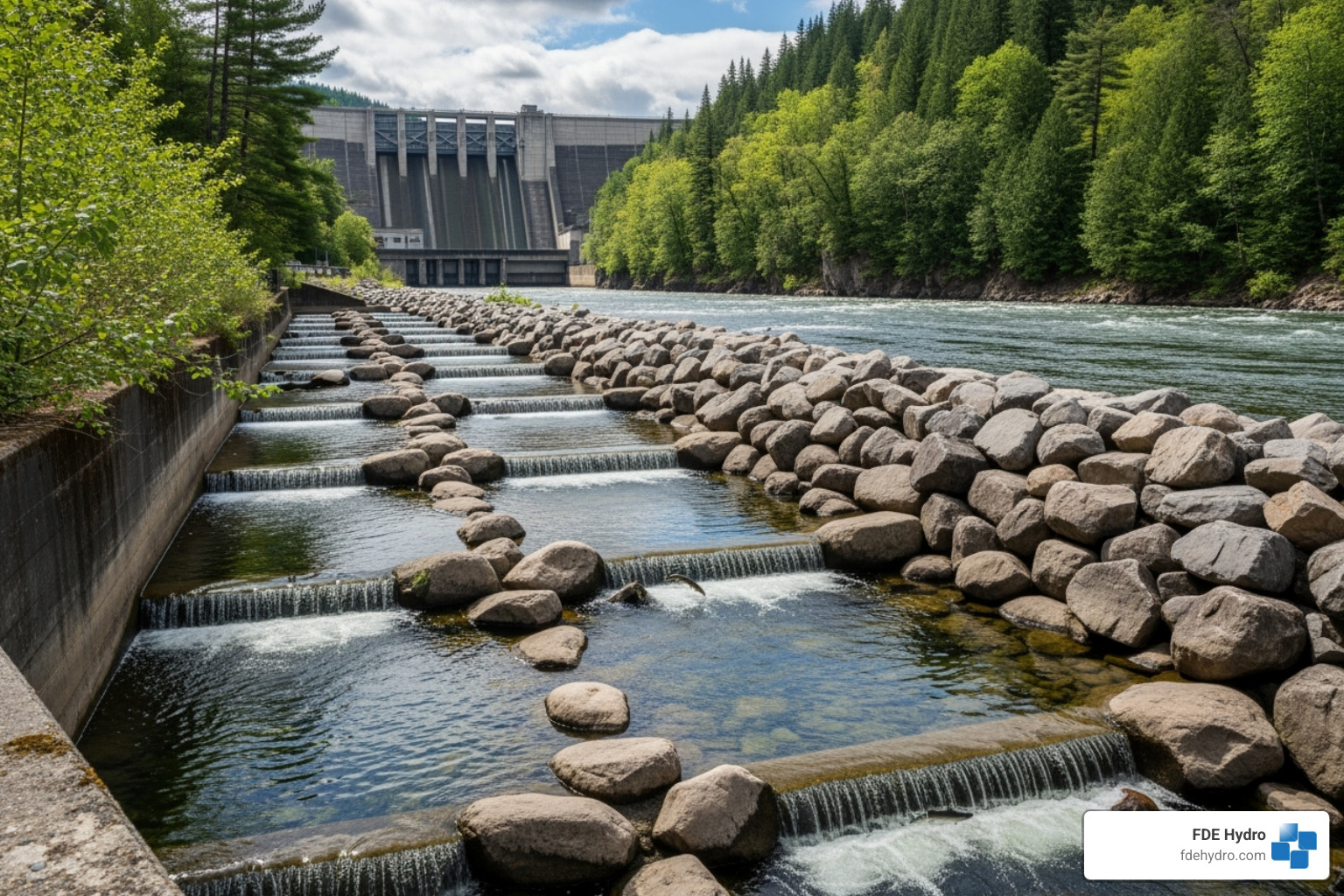
Environmental Considerations in Modern Hydroelectric Dam Design
A major focus is mitigating environmental impacts. Traditional turbines can be harmful to fish, but this has sparked remarkable innovation. The development of fish-friendly turbines with blunted, curved blades can achieve greater than 99% safe passage rates for some species—a game-changing breakthrough.
Beyond fish passage, we address a full range of impacts. We incorporate sediment bypass systems to maintain natural flows, design multi-level intakes to regulate water temperature, and use aeration systems to maintain dissolved oxygen levels. These systems for Aquatic Animal and Recreational Passage are fundamental to modern, responsible design.
Critical Safety and Risk Management
Safety is the other non-negotiable pillar of hydroelectric dam design. When holding back millions of gallons of water, there is no room for error.
The spillway is the primary safety feature, designed to safely release floodwaters that exceed the reservoir’s capacity. We design spillways to handle the Probable Maximum Flood (PMF)—the worst-case flood scenario possible for a location. An undersized spillway is a leading cause of catastrophic dam failures.
Structural stability is also paramount. We perform exhaustive analyses to ensure the dam can resist overturning forces from water pressure and sliding forces that push it downstream. We also design drainage and grouting systems to counter uplift pressures from water seeping underneath the structure.
Seismic considerations are crucial, especially in active regions. Dams must be designed to withstand a Maximum Credible Earthquake without catastrophic failure. Finally, every facility has an Emergency Action Plan (EAP) with early warning systems and evacuation plans for downstream communities. This comprehensive approach to safety and environmental responsibility defines modern hydroelectric facilities.
The Future is Now: Modernization and Innovation in Dam Engineering
The world of hydroelectric dam design is undergoing a remarkable change that’s making projects faster, greener, and more efficient. At FDE Hydro™, we’re proud to be part of this Reinvigorating Hydropower movement.
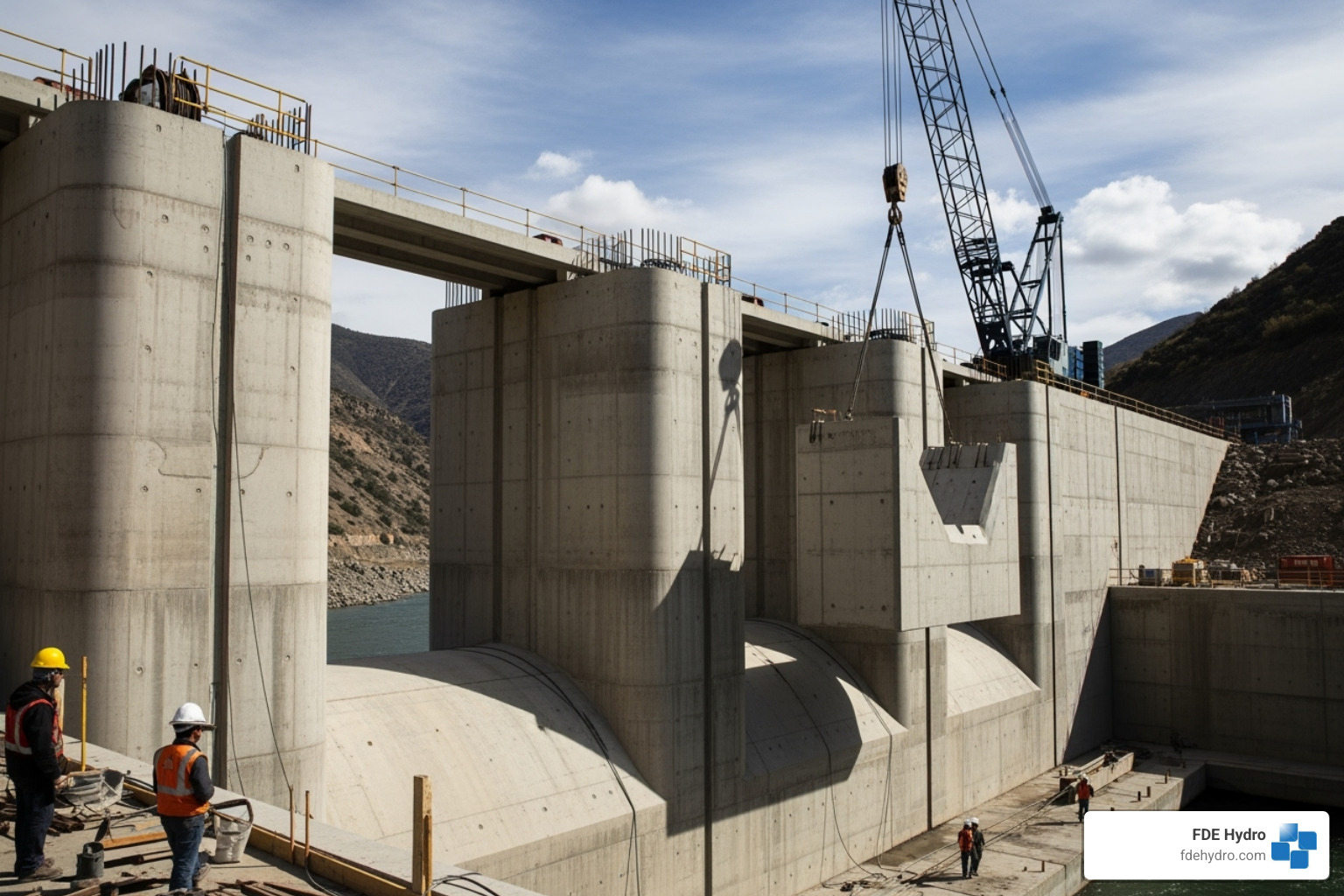
Retrofitting Existing Dams for Power Generation
A huge opportunity lies in retrofitting existing dams. Of the more than 80,000 dams in the U.S., only about 3% generate electricity. Adding hydropower to these non-powered structures could yield an impressive 10,000 MW of energy by 2025. This is where innovation shines. Our modular precast technology is particularly effective for these challenges. We can perform Dam Rehabilitation Encapsulation with minimal disruption, essentially Aging Infrastructure Being Replaced with Next-Generation Civil Solutions.
The digital revolution has also arrived. Building Information Modeling (BIM) creates a complete 3D digital model, allowing teams to spot problems before they become expensive mistakes. Digital twins go further, creating a live virtual copy of the dam fed by sensor data for predictive maintenance and operational optimization. Unmanned Aerial Systems (UAS)—drones—are now standard tools for rapid and safe inspections.
The Rise of Modular and Run-of-River Designs
Two design trends are also reshaping the industry. Run-of-river designs have a smaller environmental footprint, diverting a portion of a river’s flow through turbines without a massive reservoir.
Modular construction is perhaps the most exciting innovation. At FDE Hydro™, our patented “French Dam” technology uses precast concrete sections manufactured off-site. Manufacturing in a controlled factory environment ensures quality and speed. Sections arrive ready to install, dramatically reducing construction time and on-site risks. Our Modular Powerhouses can be assembled in a fraction of the time, and there are compelling reasons Why Precast Cost Less. These innovations are about building smarter—respecting both natural systems and the urgent need for clean, reliable energy.
Frequently Asked Questions about Hydroelectric Dam Design
Over my five decades in this industry, I’ve answered countless questions about hydroelectric dam design. Here are the most common ones.
What are the main types of hydroelectric dams?
There are three primary types. Impoundment facilities use a large dam to create a reservoir, storing water to generate flexible, on-demand power. Diversion facilities (run-of-river) channel a portion of a river’s flow through turbines with minimal storage, resulting in a smaller environmental footprint but less operational flexibility. Pumped Storage Hydropower acts like a giant battery for the grid. It uses cheap, off-peak power to pump water to an upper reservoir and releases it to generate power during peak demand, providing critical grid stability.
Why is spillway design so critical for dam safety?
Spillways are the safety valve that prevents catastrophic failure during extreme floods. If a reservoir fills faster than turbines can release water, the level can rise and overtop the dam—a leading cause of dam collapse. We design spillways to handle the Probable Maximum Flood (PMF), the worst-case flood scenario imaginable for a location, ensuring the dam’s integrity during extreme weather.
Can existing non-powered dams be converted to produce electricity?
Absolutely, and this is one of the biggest opportunities in renewable energy. The U.S. has over 80,000 dams, but only 3% generate power. Retrofitting these structures is often faster and cheaper than building new dams, with a smaller environmental impact. The engineering can be complex, as you’re often working with aging structures. This is where modern techniques like our modular Dam Rehabilitation Encapsulation are invaluable, breathing new life into Aging Infrastructure Being Replaced with Next-Generation Civil Solutions. Studies suggest this could add 10,000 MW of clean energy capacity by 2025.
Conclusion
The story of hydroelectric dam design is one of human ingenuity, evolving from simple watermills to sophisticated facilities that are cornerstones of our energy grid. The design process is a collaborative effort, balancing immense technical challenges with a critical responsibility to protect natural ecosystems.
Hydropower generates 27% of all renewable electricity in the United States and provides an incredible 96% of our utility-scale energy storage. With lifespans of 65 to 85 years, the design decisions we make today will serve generations.
We are at a pivotal moment, with many licenses expiring and tens of thousands of non-powered dams ready for upgrades. This is an extraordinary opportunity to add clean energy capacity with less environmental disruption.
Innovation is driving this change. Fish-friendly turbines, digital twins, and modular precast construction—which we’ve pioneered at FDE Hydro™ with our patented “French Dam” technology—are making hydropower more sustainable and cost-effective.
Hydropower is not a relic; it’s a dynamic technology essential for our future. It provides the stability and storage that enables the growth of intermittent renewables, acting as the 4 Reasons Why Hydropower is the Guardian of the Grid.
The path forward requires balancing energy needs with ecological stewardship. At FDE Hydro™, we’re committed to advancing modular solutions that make hydroelectric dam design faster, more affordable, and more sustainable.
Ready to explore how modular hydropower technology can work for your project? Visit us to Explore advanced dam solutions and find what’s possible when innovation meets experience.
by Bill French Sr. | Nov 3, 2025 | Case Studies
Why Sustainable Water Infrastructure Matters Now More Than Ever
Sustainable water infrastructure involves designing, building, and managing water systems to meet current needs without compromising the future. It balances three key dimensions:
- Operational Sustainability – Reliable service from a skilled workforce and effective utility management.
- Financial Sustainability – Cost-effective lifecycle investments and stable funding.
- Environmental Sustainability – Protection of water quality, ecosystems, and natural resources.
These systems blend traditional engineering with nature-based solutions, renewable energy, and smart technology to create resilient networks that can withstand climate change and serve growing populations.
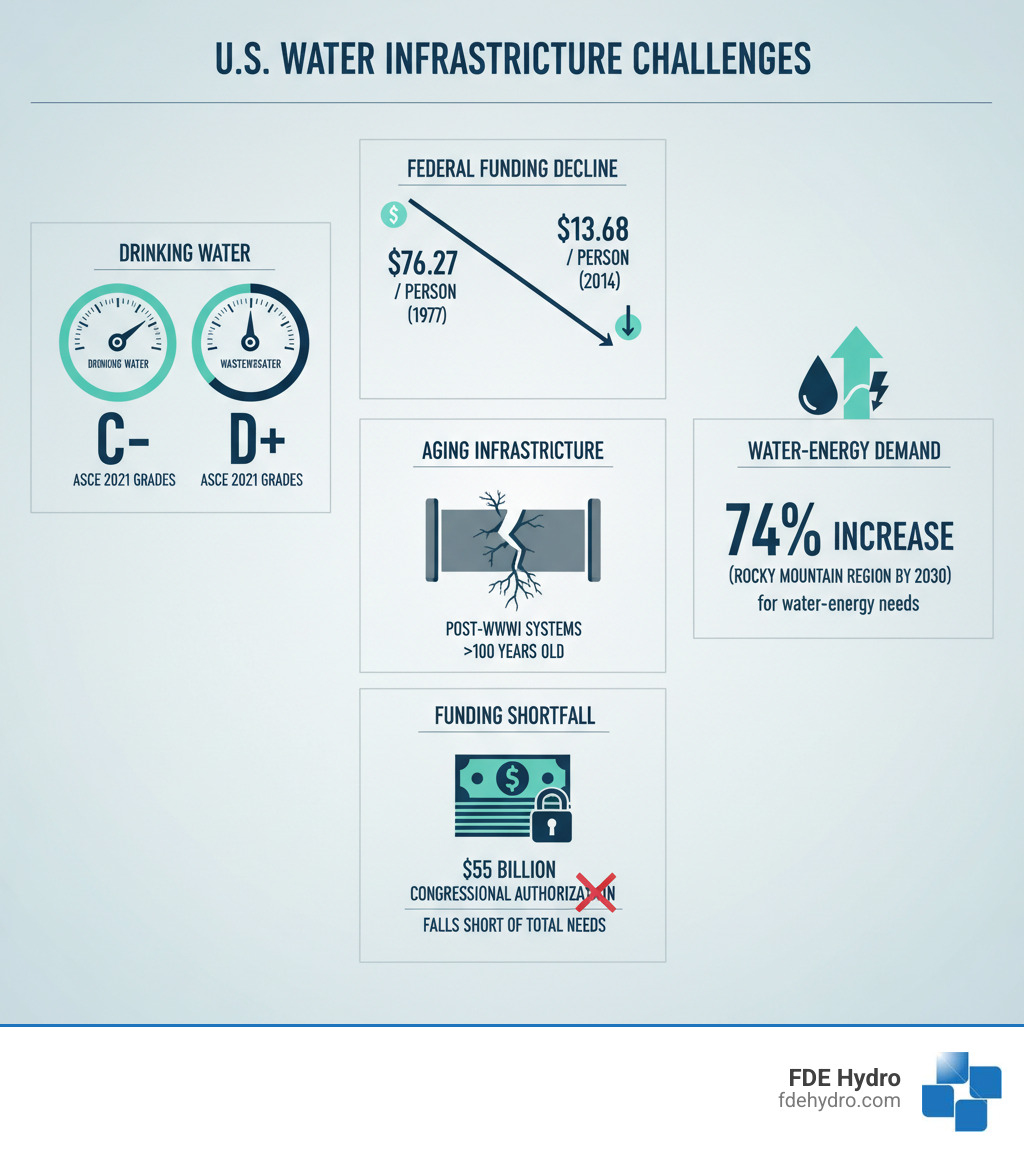
The numbers are stark. The American Society of Civil Engineers’ 2021 report card gave U.S. drinking water infrastructure a C– and wastewater systems a D+. Much of this network, built after WWII, is now over 100 years old. Compounding the issue, federal funding for water infrastructure fell from $76.27 per person in 1977 to just $13.68 in 2014.
Beyond aging pipes, water scarcity and climate change are pushing outdated systems past their breaking point. The demand for water to satisfy energy needs is projected to increase 74% by 2030 in the Rocky Mountain region alone.
Sustainable infrastructure offers a proactive path forward, integrating systems to protect communities and ecosystems. It’s about building smarter, not just bigger.
As Bill French Sr., Founder and CEO of FDE Hydro™, I’ve dedicated my career to this challenge. Our patented modular technologies help communities build resilient water systems faster and more affordably, addressing this urgent national crisis.
The State of Our Water Systems: A Looming Crisis
America’s water systems are facing a crisis decades in the making, as aging pipes and treatment plants struggle under the weight of deferred maintenance. Much of our infrastructure, built during the post-WWII construction boom, is now over 100 years old—far beyond its intended lifespan.
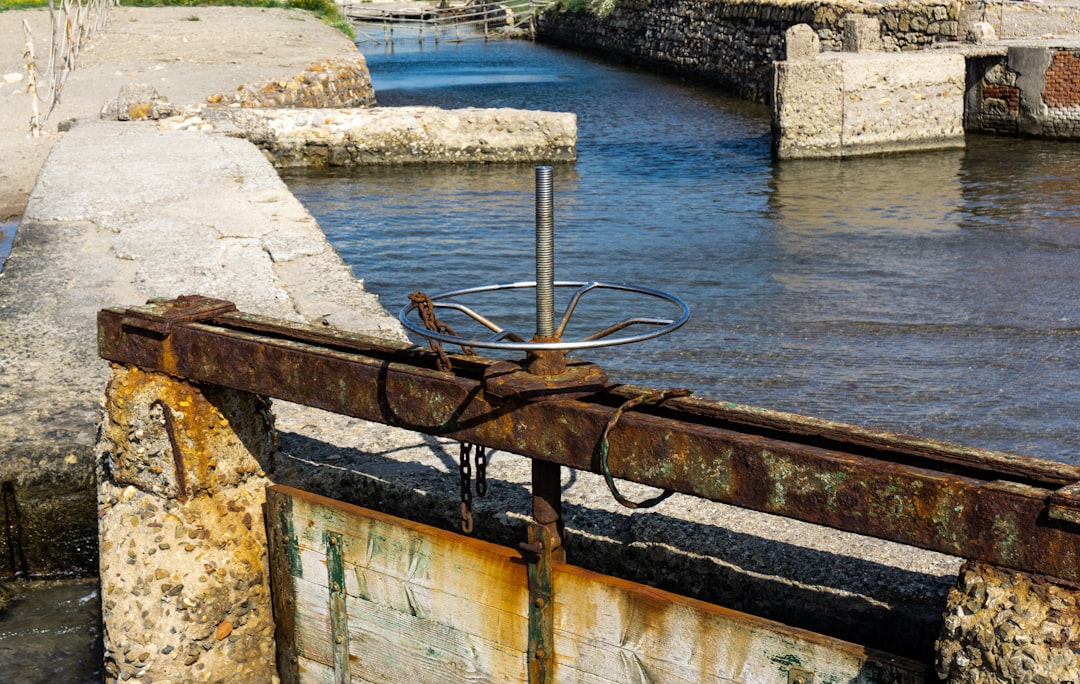
This physical decay is compounded by a financial drought. Federal funding for community water infrastructure plummeted from $76.27 per person in 1977 to just $13.68 in 2014. While the recent $55 billion from the Bipartisan Infrastructure Law is a positive step, it’s not enough to close the enormous repair backlog. Utilities are often stuck in a reactive cycle, fixing emergencies instead of preventing them.
At FDE Hydro™, our modular precast technology helps communities upgrade critical infrastructure faster and more affordably. We believe that Aging Infrastructure Being Replaced with Next Generation Civil Solutions is an urgent necessity.
The Impact of Underinvestment
Chronic underfunding has led to dire consequences. The American Society of Civil Engineers’ 2021 report card gave U.S. drinking water a C– and wastewater a D+. These grades reflect real-world problems: frequent water main breaks, overwhelmed treatment plants, and billions of gallons of treated water lost to leaks.
The growing gap between needs and funding forces utilities into an impossible position, especially in smaller and rural communities that lack the tax base for complex system maintenance. This creates a mounting debt for future generations. Understanding how to fund these projects is critical, which is why Financing Long-Term Hydropower Requires Mitigating Risks Prior to ROI is so important for sustainable development.
Climate Change: The Great Multiplier
Climate change acts as a stress multiplier on our already fragile systems. Increased frequency of droughts and floods pushes infrastructure past its breaking point. Intense rainfall overwhelms stormwater systems, while extended droughts deplete reservoirs. For coastal communities, sea-level rise threatens to contaminate freshwater aquifers and flood treatment plants.
The 2021 Texas power crisis was a stark reminder of system interdependencies; when the power grid failed, so did water treatment facilities. This proves that sustainable water infrastructure must be resilient on multiple fronts. These climate impacts are happening now, revealing new vulnerabilities with every extreme weather event. Investing in modern, adaptable infrastructure is key, because The Biggest Untapped Solution to Climate Change is in the Water.
The Core Principles of Sustainable Water Infrastructure
Sustainable water infrastructure is about creating resilient, efficient, and equitable water networks for the long term. It’s not just about replacing old pipes; it’s a holistic approach built on three pillars:
- Operational Sustainability: Ensuring reliable service through skilled staff and proactive management.
- Financial Sustainability: Securing funding to maintain systems over their entire lifecycle.
- Environmental Sustainability: Protecting water sources and natural ecosystems.
When these align, systems deliver real Value by saving money, ensuring equitable access to water, and protecting natural resources. This “green-gray” approach combines traditional engineering with nature-based solutions, as detailed in research on A green-gray path to global water security and sustainable infrastructure.
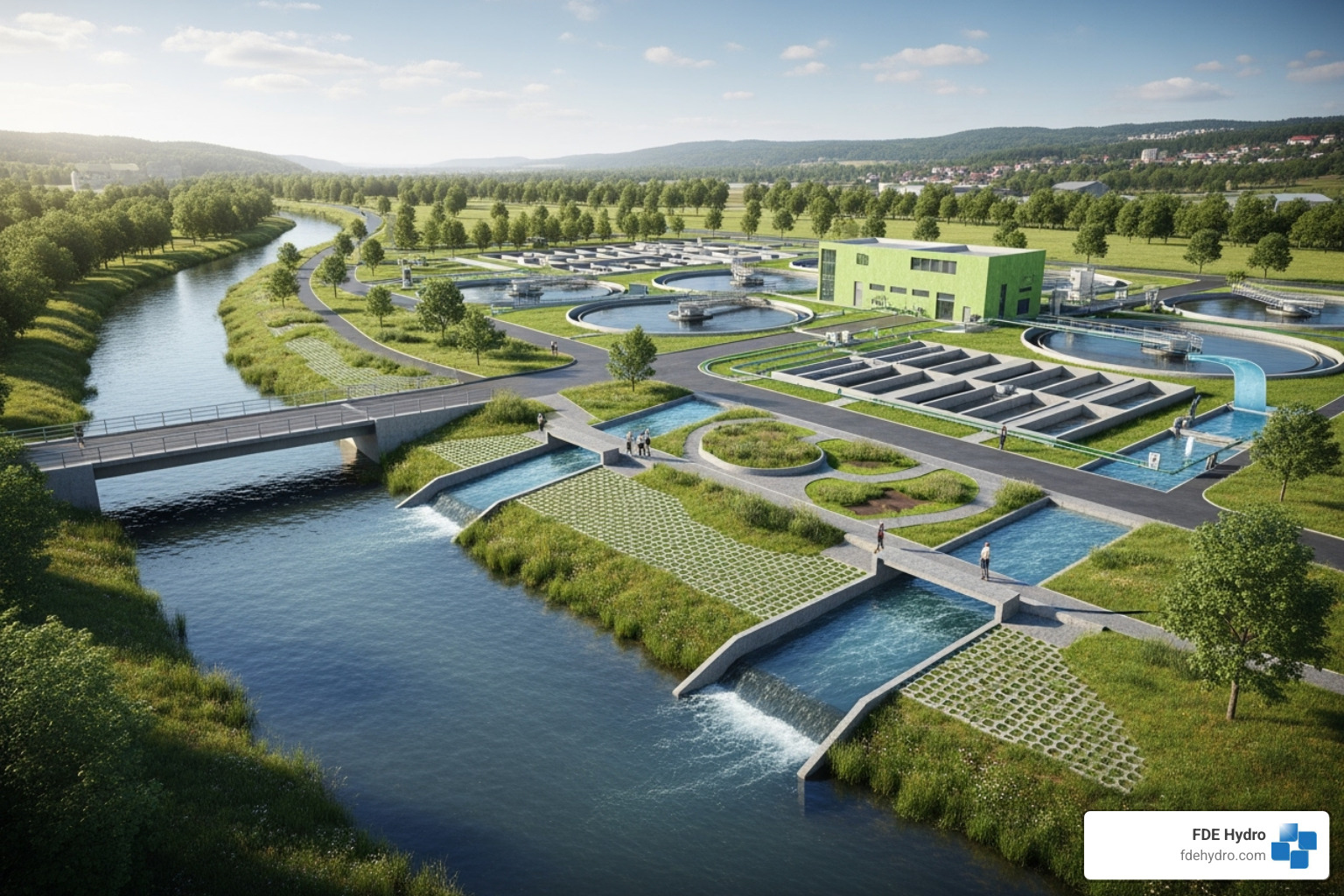
The ‘One Water’ Approach: A Holistic Vision
For decades, drinking water, wastewater, and stormwater were managed in silos. The ‘One Water’ approach changes that by treating all water as a single, interconnected resource. Instead of viewing stormwater as a nuisance, it’s captured for reuse. Treated wastewater becomes a valuable resource for irrigation or industry.
This collaborative philosophy, also known as Integrated Water Resource Management, creates more resilient and efficient systems. A stormwater project can double as a park, and a wastewater plant can become an energy producer.
Building a Framework for Sustainable Water Infrastructure
In practice, a sustainable water system integrates several key components:
- Resilient design to withstand shocks like floods and droughts.
- Resource efficiency to minimize water and energy waste.
- Water reuse to turn treated wastewater into a reliable supply.
- Nature-based solutions like wetlands to complement traditional infrastructure.
- Smart technology like sensors and data analytics for real-time optimization.
- Community engagement to ensure projects meet local needs.
Our modular precast solutions for Water Control Structures embody these principles. By reducing construction time and costs, we make sustainable water management more achievable, helping communities build resilient infrastructure faster.
Key Strategies for a Water-Secure Future
Building a water-secure future requires combining smart technologies, thoughtful planning, and proven management practices. It’s about creating systems that can adapt and thrive.
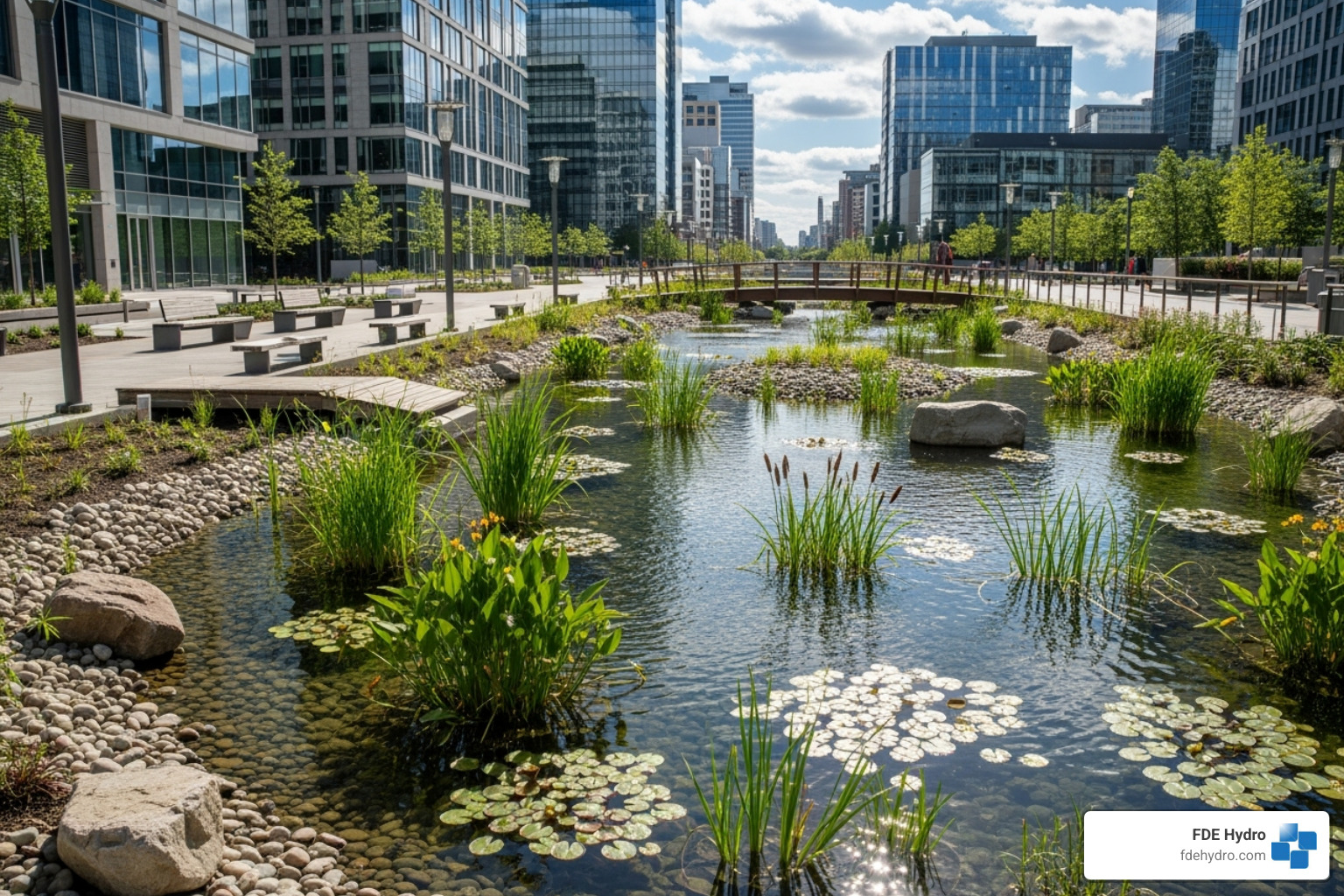
The EPA promotes sustainable water infrastructure by providing tools and resources for modernization, focusing on effective planning, utility management, and clean water technology. Programs like WIFIA and the Clean Water State Revolving Fund help communities finance these upgrades. You can explore more at Sustainable Water Infrastructure | US EPA. These strategies recognize the deep connection between water, energy, infrastructure, and human needs (the WEIHN nexus).
Nature-Based and Green Infrastructure Solutions
Nature-based solutions use natural systems to manage water, often with significant co-benefits. Examples include:
- Constructed wetlands that filter pollutants and create wildlife habitats.
- Permeable pavements that allow rainwater to soak into the ground, reducing runoff.
- Green roofs that absorb rainfall and cool urban areas.
- Riparian buffers that protect streams from erosion and runoff.
These solutions reduce infrastructure costs, improve air quality, and create community amenities. While traditional infrastructure like Dams remains essential for water storage and hydropower, integrating it with nature-based solutions creates more resilient and cost-effective systems.
Centralized Systems and Regionalization
Centralized systems are the workhorses of water delivery and treatment, offering economies of scale that make advanced treatment financially viable and reliable. For rural and small communities struggling with aging systems and limited resources, regionalization is a game-changer.
By consolidating or forming partnerships, communities can pool resources, share expertise, and spread costs across a larger customer base. This improves operational capacity and provides access to modern technologies. When robust centralized infrastructure, supported by solutions like a local Microgrid, forms the backbone of regional resilience, communities achieve true long-term sustainability.
The Role of Utilities and Effective Management
Local water utilities are critical to community health. To be sustainable, they need robust management practices. The EPA’s Effective Utility Management (EUM) framework helps utilities move from a reactive to a proactive stance. Key practices include asset management planning, water loss control programs, and workforce development.
For a utility, sustainability means reliable and affordable service over the long term through transparent processes and resource-efficient investments. Top utilities act as anchor institutions, supporting local economic development and environmental stewardship. Resources from Sustainable and Effective Water Utility Management offer guidance. Our modular solutions at FDE Hydro™ support these goals by enabling rapid, cost-effective infrastructure renewal.
Global Perspectives and Successful Case Studies
Water challenges are global, and communities worldwide are developing solutions for building sustainable water infrastructure. The UN has recognized “the right to safe and clean drinking water and sanitation” as a human right, yet achieving this requires massive investment and smart management.
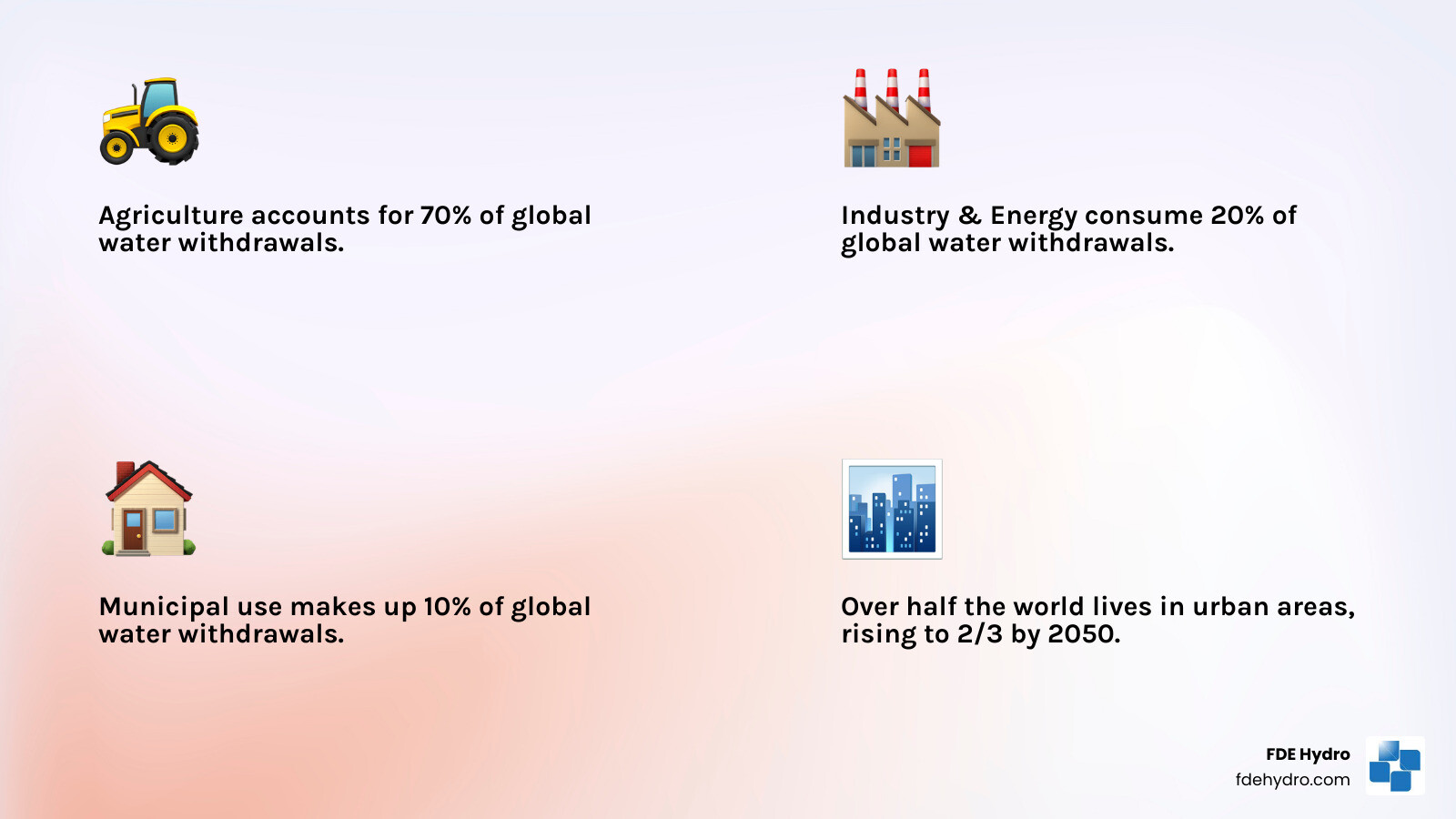
Globally, agriculture consumes 70% of water withdrawals, industry 20%, and municipalities 10%. With over half the world’s population in cities—a figure rising to two-thirds by 2050—urban centers need reliable systems. This requires integrated water resource management (IWRM), which brings all stakeholders together. This is part of the A green-gray path to global water security and sustainable infrastructure that combines different approaches. The universal importance of these efforts is underscored by the United Nations General Assembly recognition of the right to water.
National Strategy: Germany’s Proactive Approach
Despite being a water-rich country, Germany recognized the threats of climate change and developed a comprehensive National Water Strategy. The plan anticipates declining groundwater levels and more frequent extreme weather.
Rather than waiting for a crisis, Germany’s strategy includes 78 measures to secure water quality and quantity for future generations. It emphasizes long-term planning and climate resilience, offering a model for proactive investment. You can read their plan here: Germany’s National Water Strategy.
City-Level Innovation: Rotterdam and Beijing
Cities are also hubs of innovation in sustainable water infrastructure.
Rotterdam, Netherlands, is a world leader in water resilience. The city created “water plazas” that double as public parks and temporary flood retention basins during heavy rain. This approach combines climate-proof urban planning with community amenities.
In Beijing, the Huaifang Underground Water Reclamation Plant (HWRP) is a massive facility that recycles wastewater, improving river quality and easing treatment pressure. Building it underground preserved valuable surface land. The project’s success, recognized when it was awarded Gold in the 12th IWA project innovation awards, shows how cities can use cutting-edge technology to solve water challenges. These examples prove that successful water management requires both long-term planning and bold innovation.
Frequently Asked Questions about Sustainable Water Infrastructure
Here are answers to common questions about building better water systems.
What are the biggest challenges facing US water infrastructure?
The main challenges are a perfect storm of issues:
- Aging Infrastructure: Many pipes and treatment plants are over 70-100 years old, leading to frequent breaks and failures.
- Chronic Underfunding: A massive maintenance backlog exists due to decades of declining investment. Federal funding per person fell from $76.27 in 1977 to $13.68 in 2014, forcing utilities into a reactive “fix-it-when-it-breaks” mode.
- Climate Change: More extreme droughts and floods are stressing already fragile systems, while sea-level rise threatens coastal infrastructure.
- New Contaminants: Older plants were not designed to handle emerging pollutants.
What is the ‘One Water’ approach?
The ‘One Water’ approach is a holistic strategy that treats all water—drinking water, wastewater, stormwater—as a single, valuable resource. Instead of managing them in separate silos, it encourages collaboration to create more resilient and efficient systems. This means capturing stormwater for reuse, treating wastewater to a level where it can be repurposed, and integrating conservation efforts across all sectors. It helps maximize the value of every drop and builds truly sustainable systems.
How can technology improve water infrastructure sustainability?
Technology is a game-changer for sustainable water infrastructure.
- Smart sensors detect leaks in real-time, reducing water loss and preventing catastrophic failures.
- Advanced treatment technologies enable safe water reuse for irrigation, industry, and even drinking water.
- Modular construction, like our patented precast systems at FDE Hydro, dramatically speeds up repairs and new builds, making upgrades faster and more cost-effective.
- Integrating renewable energy, such as Hydropower, with water treatment reduces both carbon footprints and operational costs.
These innovations help build the resilient, efficient systems our communities need for the future.
Conclusion
We have reached a turning point for our nation’s water. The crisis facing our sustainable water infrastructure is clear: the systems of the past cannot meet the demands of a changing climate and growing communities. While challenges like dwindling funding and poor infrastructure grades are sobering, there is reason for optimism. Global examples from Germany, Rotterdam, and Beijing prove that transformative change is possible.
The path forward requires a new mindset: embracing the ‘One Water’ approach, balancing nature-based solutions with robust centralized systems, and adopting effective utility management. Above all, innovation is essential.
At FDE Hydro™, our patented modular precast concrete technology, the “French Dam,” is designed for this future. By dramatically reducing construction time and costs, we make it faster and more affordable for communities to build and retrofit critical water infrastructure. Our technology makes sustainable solutions accessible.
This is about building something better: resilient, efficient, and smart systems. As The U.S. Department of Energy Hydropower Vision Report has endorsed FDE Technology, we are part of a collaborative effort to secure our water future.
The time to act is now. Learn more about how innovative hydropower solutions are creating a sustainable future and find how next-generation technology can help your community. Together, we can turn this challenge into an opportunity for generations to come.
by Bill French Sr. | Oct 31, 2025 | Case Studies
Why Hydroelectric Dam Construction Matters for Our Energy Future
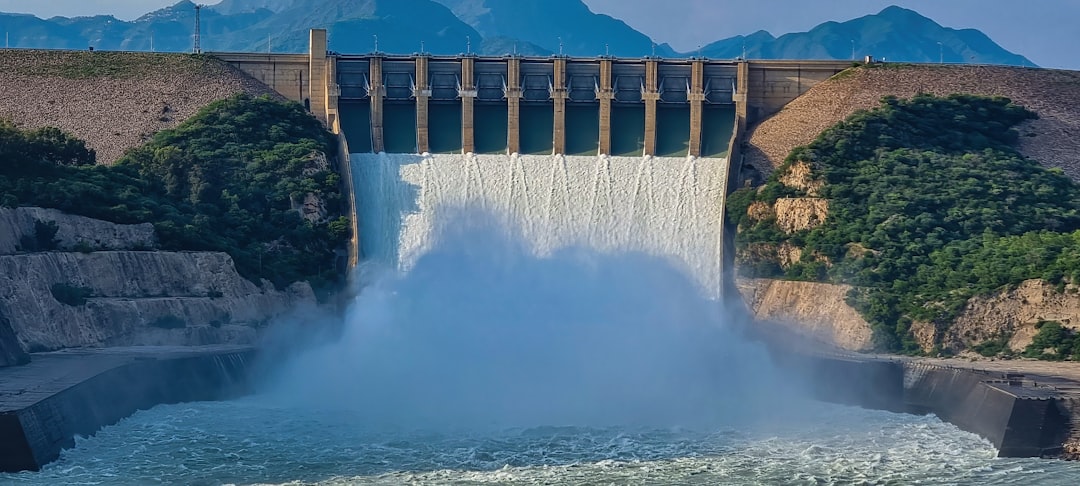
Hydroelectric dam construction transforms flowing water into reliable, renewable electricity. These complex civil engineering projects follow a multi-stage process, from site selection and river diversion to building the dam, installing power equipment, and filling the reservoir.
Hydropower is the world’s largest renewable energy source, supplying 15% of global electricity. Beyond power, these structures provide flood control, irrigation water, and recreational opportunities. However, the industry faces challenges: construction has slowed since the 1970s, costs have risen, and many older dams in North America require modernization.
I’m Bill French Sr., Founder and CEO of FDE Hydro™, where we address these challenges head-on. With five decades of experience in civil construction, I founded FDE Hydro to pioneer faster, more cost-effective methods for hydroelectric dam construction through innovations like modular precast concrete systems.
This guide explores how these engineering marvels are built, their importance to our energy future, and the innovations making them more sustainable.
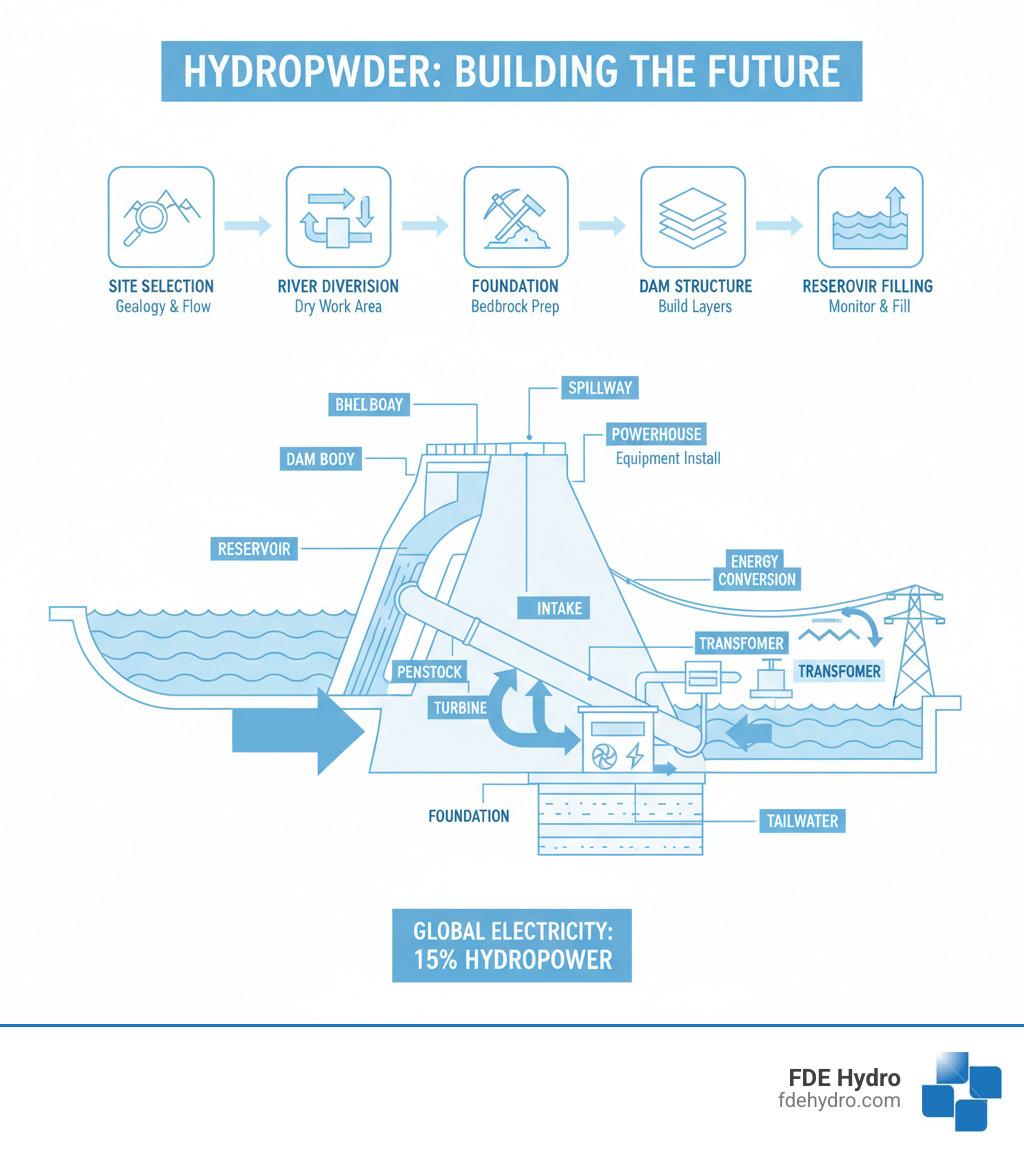
Why We Build Dams: More Than Just Power
While hydropower is a major electricity source—providing 15% of the world’s power and over 59% in Canada—the reasons for hydroelectric dam construction extend far beyond energy generation.
These engineering giants serve multiple critical functions:
- Flood Control: Dams act as safety valves, holding back excess water from snowmelt or heavy storms that would otherwise devastate downstream communities and infrastructure.
- Irrigation and Water Supply: Reservoirs provide a reliable water source for agriculture in arid regions, such as Southern Alberta and B.C., and supply drinking water to cities and industries.
- River Flow Regulation: By maintaining steady, predictable water flow, dams support river navigation, help sustain ecosystems, and ensure water availability during dry seasons.
- Recreation and Tourism: The man-made lakes created by dams become hubs for fishing, boating, and camping, boosting local economies.
World-renowned dams exemplify this multi-purpose design. The Hoover Dam provides power, flood control, and water to the arid U.S. Southwest. China’s Three Gorges Dam, the world’s largest power station, was built equally for flood control on the Yangtze River. And Canada’s W.A.C. Bennett Dam is a cornerstone of both power generation and water management.
These projects are not just power plants; they are comprehensive water management systems. To learn more about how they manage water, see our insights on water control structures.
The Step-by-Step Process of Hydroelectric Dam Construction
Building a hydroelectric dam is a massive and complex undertaking in civil engineering. While each project is unique, the construction process follows a proven sequence of stages, guided by strict safety protocols and comprehensive Engineering Guidelines for the Evaluation of Hydropower Projects.
Here’s a look at how these engineering marvels are built, from the initial site survey to generating power.
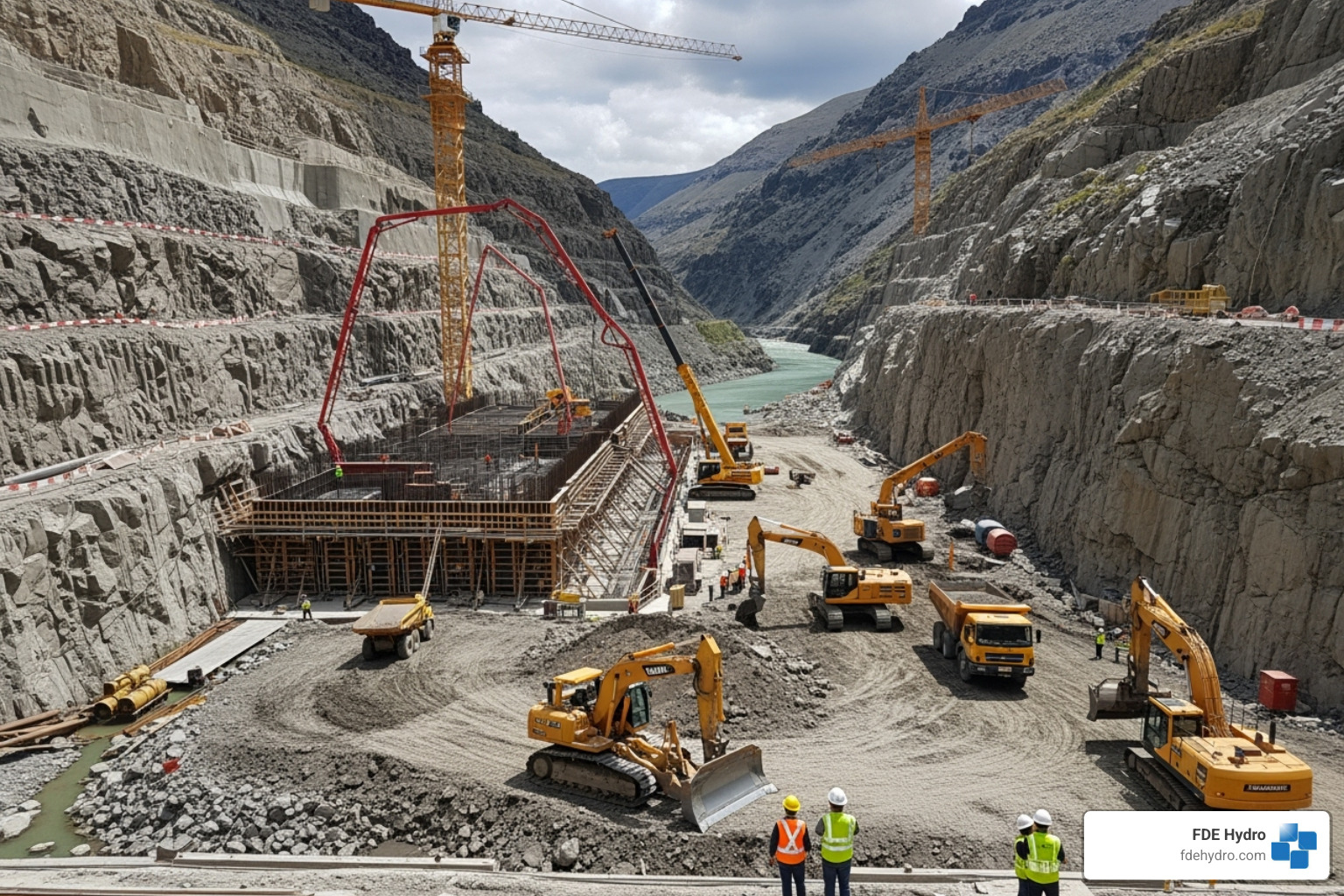
Stage 1: Site Selection and Feasibility Studies
This critical first phase can take years and involves a careful balancing act between technical, economic, environmental, and social factors. Key assessments include:
- Geological Stability: Teams drill test borings to ensure the site has solid bedrock capable of supporting the dam’s immense weight and water pressure.
- Hydrological Analysis: Engineers study decades of river flow data to confirm sufficient water volume and “head” (the vertical drop of the water), which directly determines power generation potential.
- Environmental and Social Impact: Studies evaluate the project’s effects on fish, wildlife, water quality, and local communities, including potential relocations and impacts on cultural sites.
- Economic Viability: The analysis confirms the project is economically sound, considering construction costs and proximity to the power grid for transmission.
Stage 2: River Diversion and Foundation Preparation
To build in a flowing river, the water must first be diverted. This is done using temporary tunnels or channels built around the worksite. Cofferdams—temporary watertight walls—are also used to create a dry area in the riverbed.
With the site dry, foundation preparation begins. Crews excavate all soil and loose material down to solid bedrock. The exposed rock is then cleaned and strengthened. Any cracks are filled with high-pressure grout to create a watertight seal and prevent seepage under the dam. In unstable areas, long steel rock bolts are drilled into the bedrock to reinforce it. This meticulous preparation is vital for the dam’s long-term safety and stability, ensuring it can last for 65 to 85 years or more.
Stage 3: Building the Dam Structure
Once the foundation is prepared, the dam structure begins to rise. The type of dam depends on the site’s geology and available materials.
- Gravity Dams: Massive concrete structures that use their sheer weight to hold back water. They are built by pouring concrete in large, interlocking sections.
- Arch Dams: Graceful, curved structures that transfer water pressure to the strong rock walls of a narrow canyon. They use less concrete than gravity dams.
- Buttress Dams: A solid upstream wall supported by a series of triangular buttresses on the downstream side, saving on concrete while maintaining strength.
- Embankment Dams: Built from compacted layers of earth and rock, often with an impervious clay core. Many of the world’s tallest dams are this type.
A key innovation in hydroelectric dam construction is Roller-Compacted Concrete (RCC), a drier mix that is spread and compacted like pavement. RCC is much faster and less expensive than traditional methods.
During construction, critical components like spillways (to release floodwater safely) and intake structures (to channel water to the turbines) are also built. At FDE Hydro, our modular precast concrete methods offer a more efficient way to build these structures, reducing time and cost. Learn more about dams.
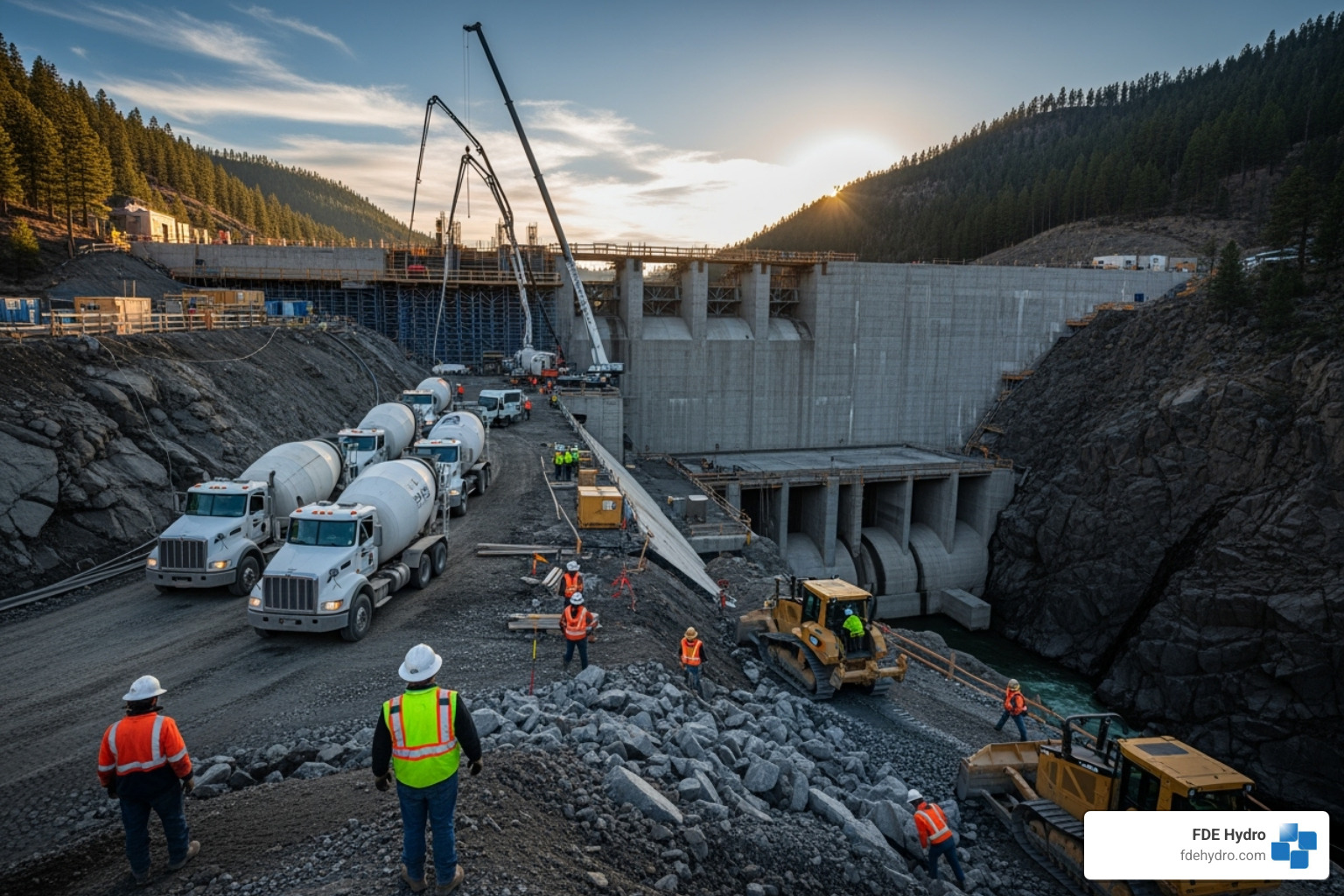
Stage 4: Powerhouse and Equipment Installation
The powerhouse is where falling water is converted into electricity. It can be located at the dam’s base, within the structure, or even deep underground, like at Canada’s Robert-Bourassa generating station.
The process involves installing:
- Penstocks: Large pipes that carry water from the reservoir down to the turbines.
- Turbines and Generators: Fast-moving water spins the turbine blades, which in turn drives a generator. The generator uses electromagnetic induction to produce electricity.
- Transformers and Transmission Lines: Transformers increase the electricity’s voltage for efficient long-distance transport to the power grid.
After installation and testing, the final step is controlled reservoir filling. The reservoir is filled slowly over weeks or months while engineers monitor the dam’s structural integrity. This ensures any issues are addressed before the dam operates at full capacity.
FDE Hydro’s innovative modular powerhouses can streamline this critical stage, reducing project timelines and costs.
How Hydropower Works and Types of Facilities
Hydropower harnesses the energy of moving water. The process is a simple conversion of energy:
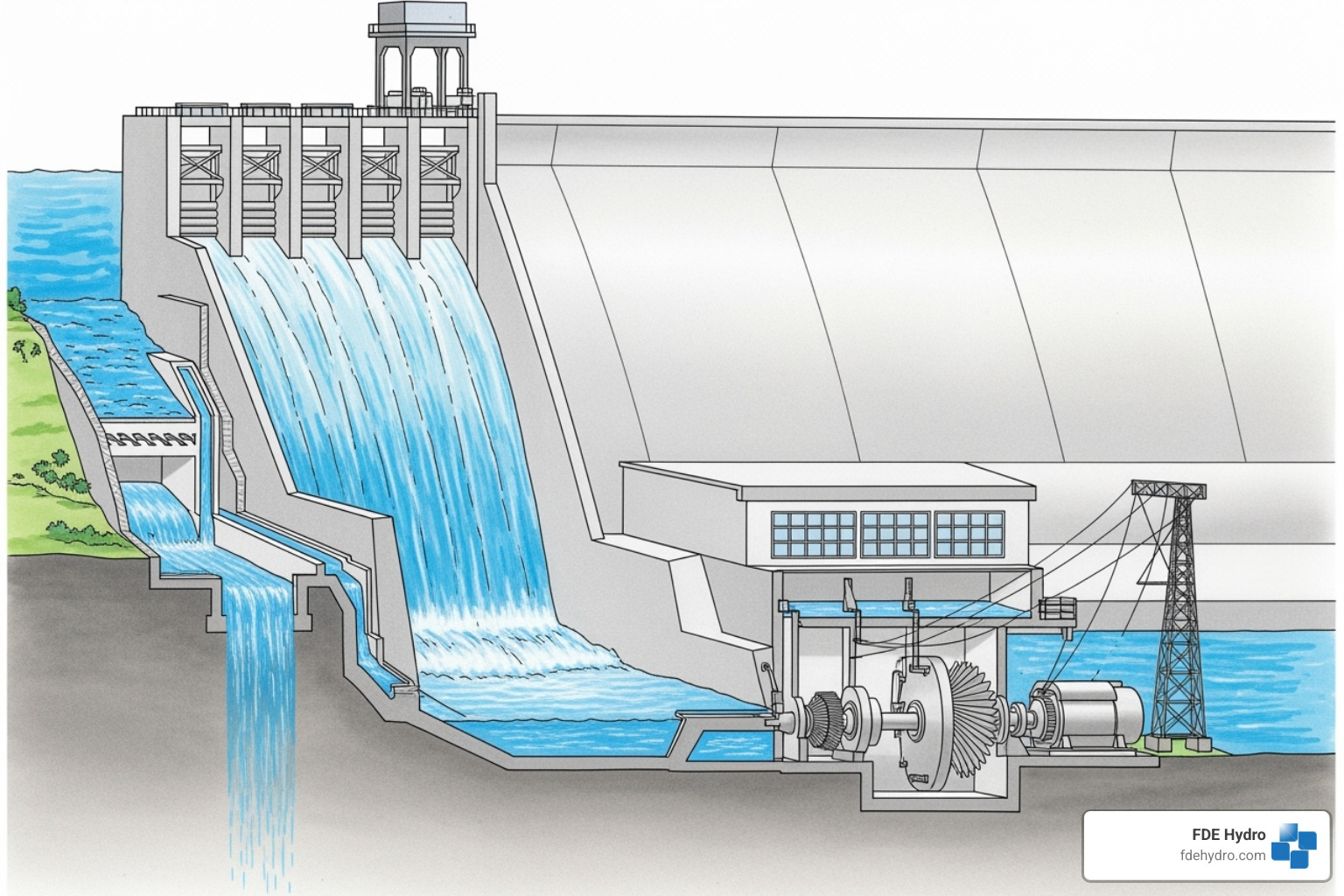
Water in a reservoir holds potential energy. As it flows down a penstock, it becomes kinetic energy. This moving water spins a turbine (mechanical energy), which drives a generator to create electrical energy. The amount of power generated depends on the head (water’s vertical drop) and flow rate.
Conventional Impoundment Dams
This is the most common type, using a large dam to create a reservoir. Storing water allows operators to release it as needed, providing both consistent base-load power and flexible peak power to meet demand. Examples include the Grand Coulee Dam in the U.S. and Canada’s Robert-Bourassa station.
Pumped Storage Hydropower
Pumped storage hydropower (PSH) acts like a giant, rechargeable battery. During low demand, excess grid electricity pumps water from a lower reservoir to an upper one. During high demand, the water is released back down through turbines to generate power. This technology is critical for grid stability, providing 96% of all utility-scale energy storage in the U.S. and balancing intermittent renewables like solar and wind. Learn more about pumped storage hydropower.
Run-of-River and Diversion Facilities
These projects divert a portion of a river’s flow through a powerhouse with little or no reservoir. This reduces the environmental footprint but means power generation fluctuates with the river’s natural flow. Canada’s Beauharnois Power Station is a large-scale example.
Sizes of Hydropower Facilities
Hydropower is highly scalable:
- Large hydro: >30 MW, powering national grids.
- Small hydro: <30 MW, often using existing water flows in canals or municipal systems.
- Micro hydro: <100 kW, for remote communities or single properties.
- Pico hydro: <5 kW, for very small-scale needs.
The Broader Impact of Hydropower Projects
Responsible hydroelectric dam construction requires acknowledging both the benefits and the significant costs—financial, environmental, and social.
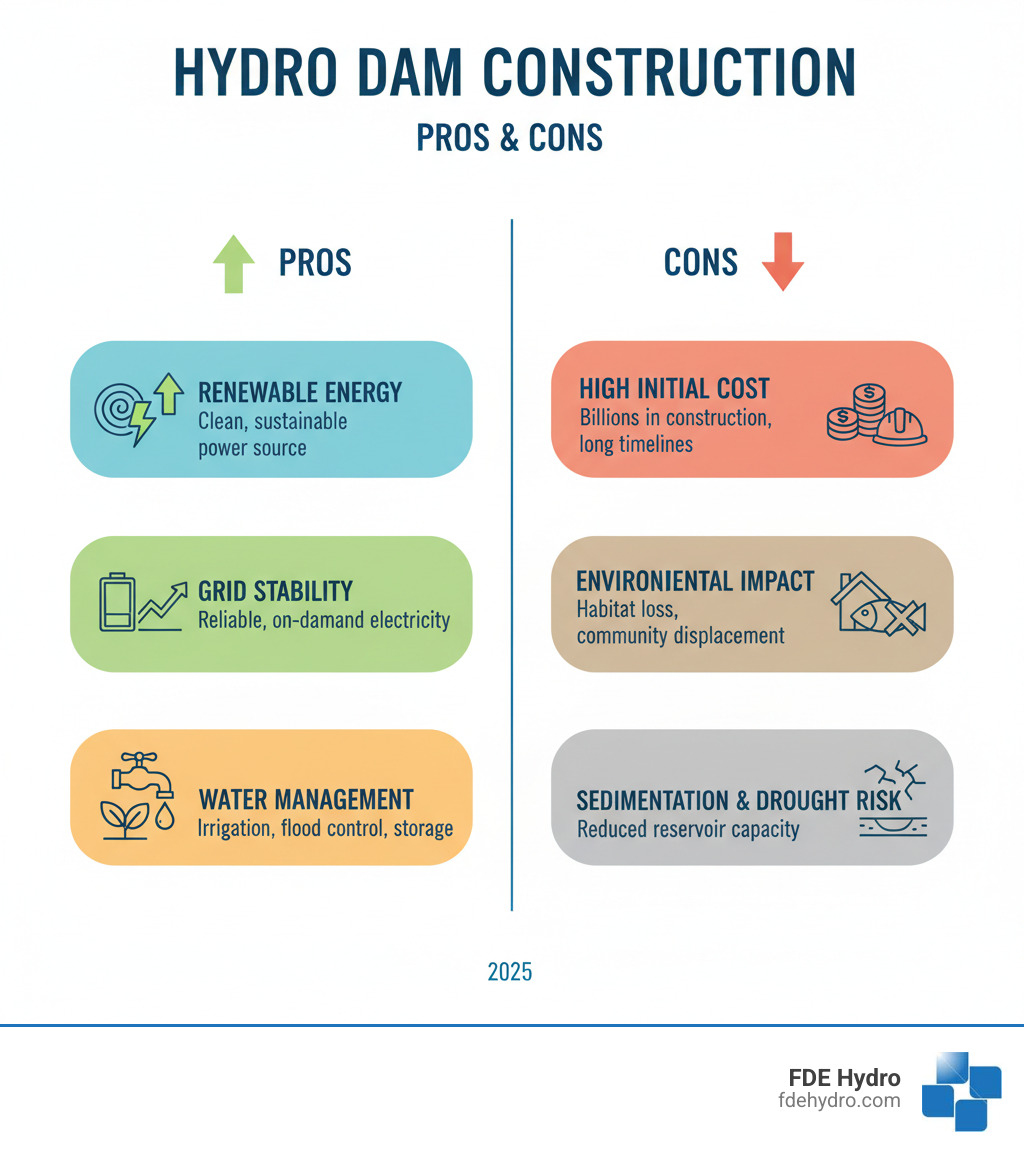
Economic Costs and Benefits
Hydropower projects involve enormous upfront investment and are known for cost overruns, making financing a challenge. That’s why financing long-term hydropower requires mitigating risks prior to ROI. However, their long lifespan (65-85+ years) and free fuel (water) result in low operating costs and affordable electricity over time. The economic landscape is changing, as hydropower costs rose 62% from 2010-2021 while solar and wind costs fell dramatically, making construction innovation essential.
Environmental and Social Considerations
Large dams have significant impacts:
- Ecosystem Alteration: Dams change river flows, block fish migration, and flood terrestrial habitats.
- Sedimentation: Sediment trapped in reservoirs reduces storage capacity over time. A 2021 study found that large dams have already lost 13-19% of their storage to this issue.
- Methane Emissions: In tropical regions, decaying submerged vegetation can release methane, a potent greenhouse gas.
- Human Displacement: Large dam projects have displaced an estimated 40 to 80 million people worldwide, disrupting communities and flooding cultural heritage sites.
Risks and Mitigation
Key risks include catastrophic dam failure (though rare), water loss from evaporation, and reduced reliability due to climate change-induced droughts. Mitigation involves rigorous dam safety programs, regular inspections following Engineering Guidelines for the Evaluation of Hydropower Projects, and continuous monitoring. Modernization is critical, and we must keep using technology to minimize the duration of impacts to ensure safety and environmental stewardship.
The Future of Hydropower: Modernization and Innovation
The era of massive hydroelectric dam construction has slowed since its peak in the 1970s, due to high costs, environmental concerns, and fewer ideal sites. The industry’s focus is now shifting. Instead of building new, the priority is modernizing the vast fleet of existing dams, many of which were built in the mid-20th century and are now aging. This involves aging infrastructure being replaced with next-generation civil solutions.
Hydropower is also taking on a new role as the flexible partner to intermittent renewables like solar and wind, providing crucial grid stability.
Key Challenges in Hydroelectric Dam Construction
Persistent challenges for new and retrofit projects include:
- Time: Large projects take 5-10 years, with megaprojects taking even longer.
- Cost: Enormous upfront investment and frequent cost overruns make financing difficult.
- Permitting: Complex environmental regulations and public opposition can cause significant delays.
Modern Innovations in Hydroelectric Dam Construction
Innovation is key to overcoming these challenges. Advancements include fish-friendly turbines, improved fish passages, and new materials like self-healing concrete. The most transformative innovation is modular precast construction.
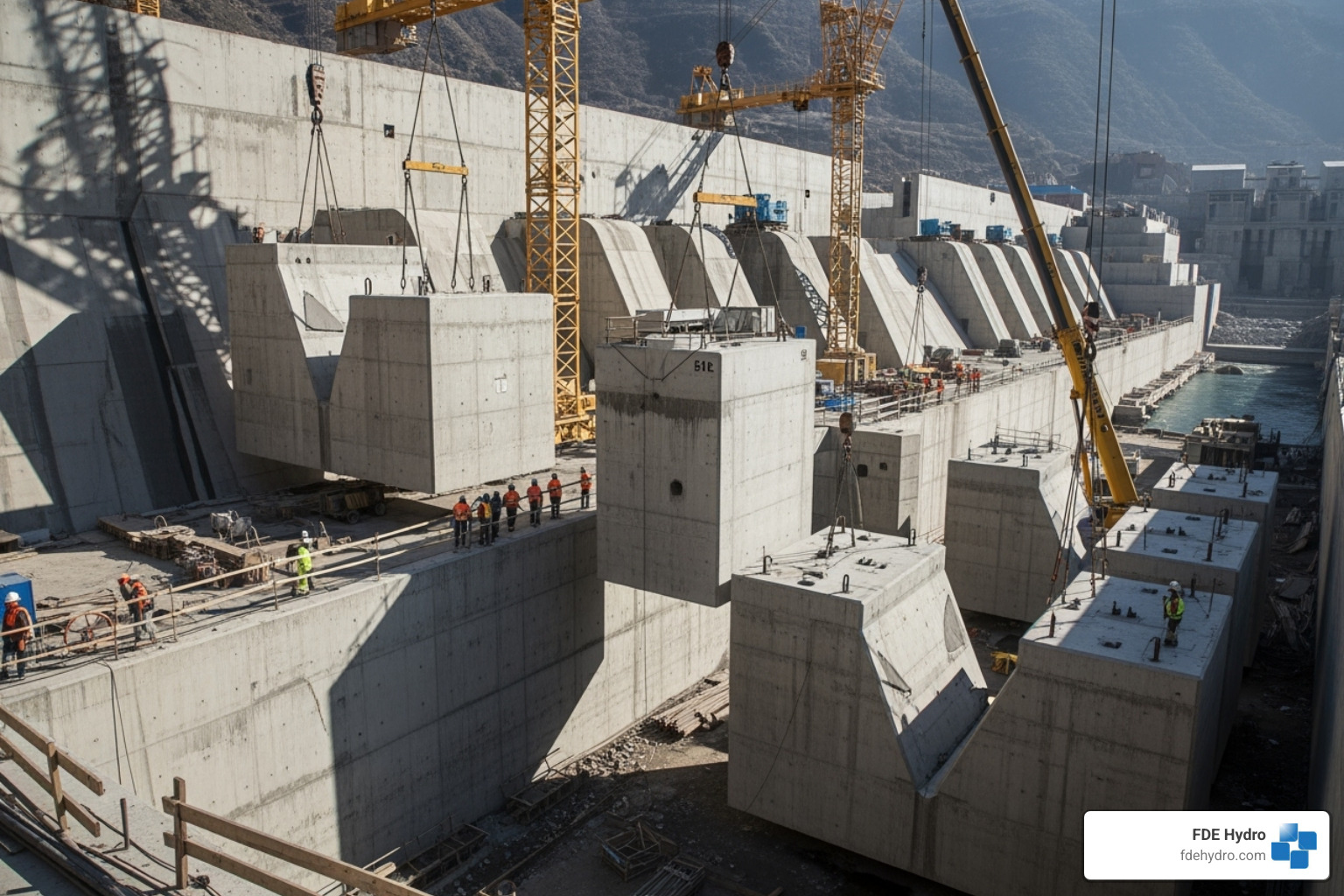
At FDE Hydro, our patented “French Dam” technology revolutionizes the process. We manufacture large concrete components in a factory and assemble them on-site. This approach dramatically reduces construction time, lowers costs, and improves quality control. By tackling the core issues of time and money, modular methods make hydropower projects more viable and sustainable. Find why precast costs less and how we are building a smarter, faster future for hydropower.
Frequently Asked Questions about Hydroelectric Dam Construction
How long does it take to build a hydroelectric dam?
The timeline for hydroelectric dam construction varies significantly with project size and complexity. A small dam may take 2-5 years to build, while a large dam typically requires 5-10 years. Megaprojects like the Three Gorges Dam can take nearly two decades. Factors like site geology, weather, logistics, and environmental permitting all influence the schedule. Innovative methods like FDE Hydro’s modular precast approach can significantly shorten these timelines.
Is hydropower a clean energy source?
Yes, but it’s complicated. During operation, hydropower produces zero direct air pollutants and has a much lower lifecycle carbon footprint than fossil fuels. However, large-scale projects have significant environmental and social trade-offs. The construction process and creation of reservoirs alter ecosystems, block fish migration, and can release methane from submerged vegetation in tropical regions. They can also displace communities. Responsible hydropower development seeks to mitigate these impacts through better design and modern technology.
What is the largest hydroelectric dam in the world?
That depends on the metric:
- By Power Generation: The Three Gorges Dam in China is the world’s largest power station of any kind, with a capacity of 22,500 MW.
- By Height: The Jinping-I Dam, also in China, is the world’s tallest dam at 305 meters.
For comparison, the tallest dams in the U.S. and Canada are the Oroville Dam (230 m) and the Mica Dam (243 m), respectively. These massive projects highlight the scale of traditional construction, which innovative methods now aim to make more efficient.
Conclusion
Hydroelectric dam construction creates remarkable engineering marvels that serve a dual role: they are a major source of renewable energy and vital water management systems for flood control and irrigation. The multi-stage construction process is a testament to engineering skill, but it comes with significant financial, environmental, and social challenges.
The future of hydropower is evolving. The focus is shifting from building new megaprojects to modernizing our existing, aging dam infrastructure. Hydropower’s flexibility, especially through pumped storage, is also becoming indispensable for stabilizing grids that rely on intermittent renewables like solar and wind.
At FDE Hydro, we believe this technology is vital for a sustainable energy future. Our innovative approaches to hydroelectric dam construction, including our patented “French Dam” modular precast technology, are designed to overcome the high costs and long timelines of traditional methods. We are making hydropower projects faster, more affordable, and more practical.
Whether you are developing a new project or modernizing an existing one, we invite you to explore the full potential of modern hydropower solutions with us. Together, we can ensure hydropower remains a cornerstone of our clean energy grid for generations.

