by Bill French Sr. | Feb 10, 2026 | News
Why Advanced Manufacturing Matters for Modern Industry
Advanced manufacturing techniques represent the use of innovative technologies and processes—such as automation, artificial intelligence, robotics, and 3D printing—to improve efficiency, quality, and flexibility in production. Here’s what you need to know:
Key Differences from Traditional Manufacturing:
| Aspect |
Traditional Manufacturing |
Advanced Manufacturing |
| Production Strategy |
Mass production, standardized products |
Customization, customer-focused |
| Labor Requirements |
Semi-skilled workforce (3:1 ratio) |
Highly skilled workforce (4:1 ratio) |
| Technology |
Mechanized processes, manual oversight |
Automation, AI, IoT, sensors |
| Investment Focus |
Physical infrastructure and equipment |
R&D and digital infrastructure |
| Flexibility |
Dedicated production lines, limited adaptability |
Dynamic, rapidly flexible systems |
| Data Usage |
Manual tracking and reporting |
Real-time monitoring and analytics |
Since the 1950s, these techniques have transformed how we build everything from aircraft components to medical implants. Manufacturing represents about 30% of energy use in the United States and supports nearly 13 million jobs—about 9% of the workforce. The adoption of automation and artificial intelligence has not only increased efficiency but has also led to higher precision and improved quality control.
The benefits are clear: companies can reduce production costs through lower labor expenses, cheaper materials, streamlined production lines, and reduced inventory. Advanced manufacturing techniques allow for improved competitiveness through improved outputs, increased value, better quality, and greater market responsiveness.
I’m Bill French Sr., Founder and CEO of FDE Hydro™, where we’ve applied advanced manufacturing techniques—specifically modular precast construction—to revolutionize hydropower infrastructure delivery. After five decades leading heavy civil construction projects, including landmark modular bridge work on the I-93 Fast14 project, I’ve seen how these innovations can transform traditional industries.
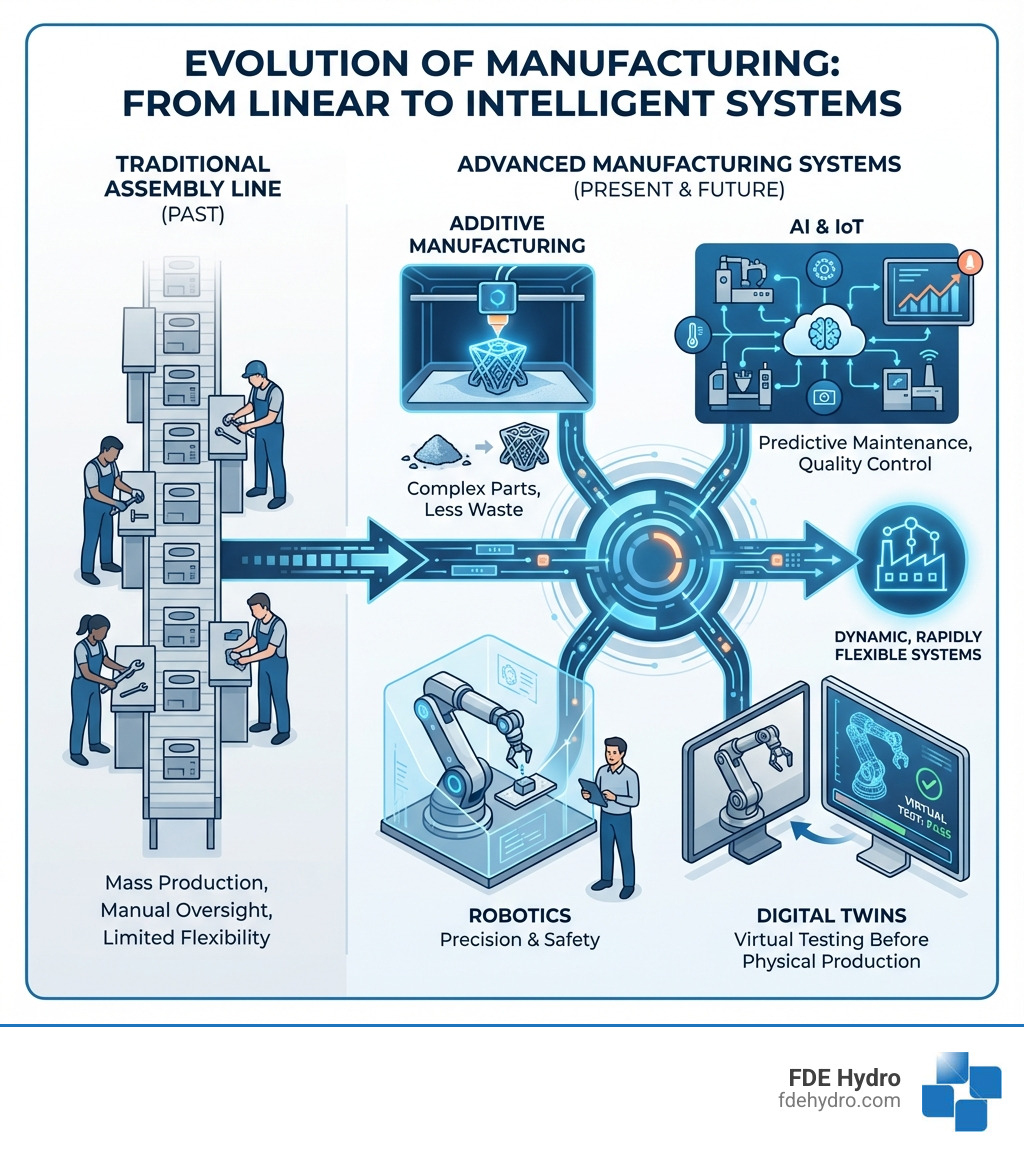
Handy Advanced manufacturing techniques terms:
The Core Technologies Driving the Revolution
The manufacturing landscape is undergoing a profound change, driven by a suite of cutting-edge technologies that are reshaping how products are designed, produced, and delivered. These advanced manufacturing techniques are not just incremental improvements; they represent a paradigm shift towards smarter, more efficient, and more adaptable production systems.
At their heart, these innovations are powered by automation, sophisticated data analytics, pervasive interconnectivity, and intelligent smart systems. This convergence of technologies forms the backbone of what many call Industry 4.0, enabling manufacturers to achieve unprecedented levels of precision, customization, and responsiveness.
The goal is to create products of better quality, faster, and at lower costs, allowing companies to position themselves competitively in the market. We’re seeing this play out across various sectors, from the intricate world of aerospace to the robust demands of civil infrastructure. To dig deeper into how artificial intelligence is steering this evolution, you can explore our insights on AI-Driven Development.
Additive Manufacturing (3D Printing)
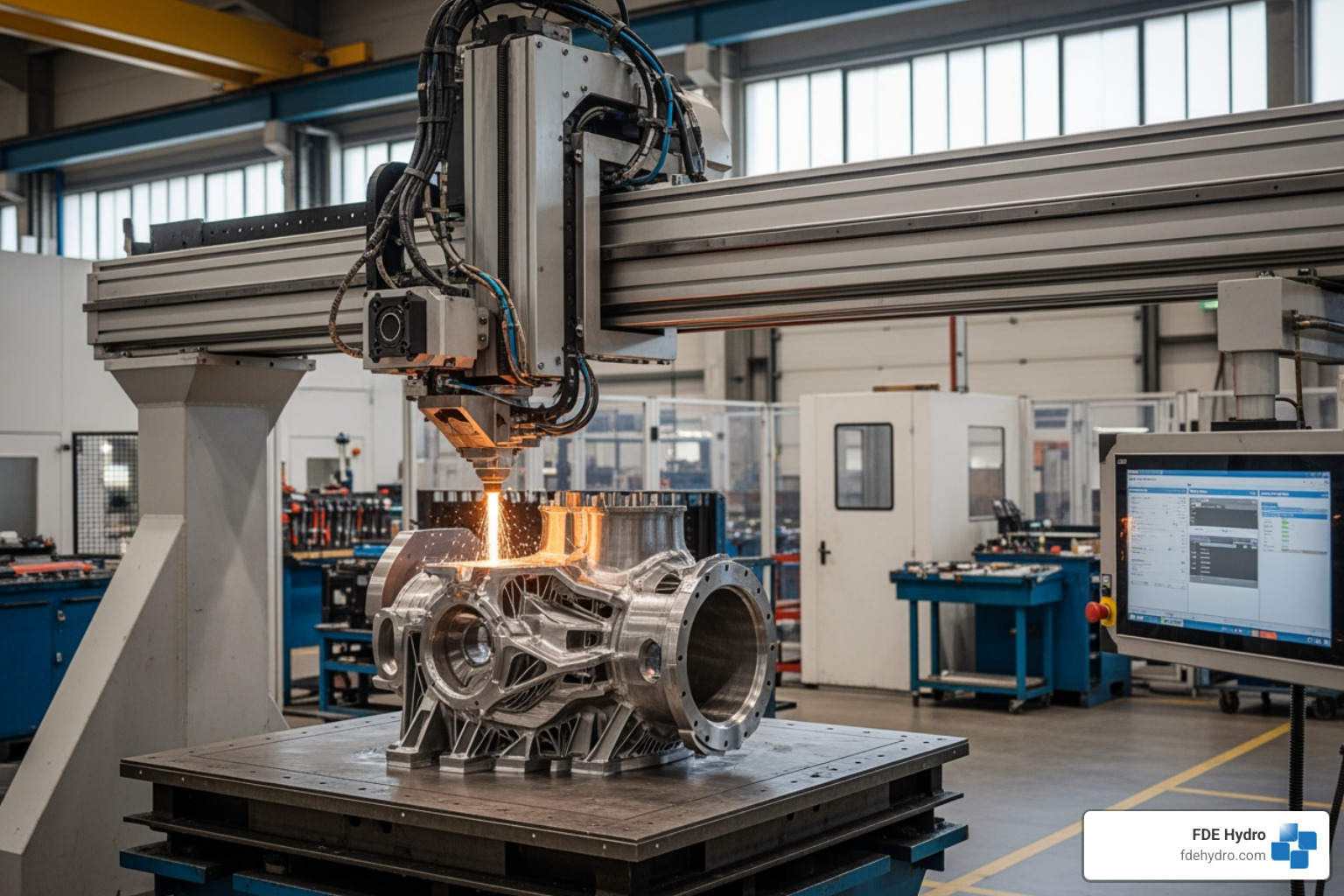
Perhaps one of the most visually striking and advanced manufacturing techniques is Additive Manufacturing (AM), commonly known as 3D printing. Unlike traditional “subtractive” methods that remove material to create a part, AM builds objects layer-by-layer from digital designs. This process allows for the creation of incredibly complex geometries that would be impossible or prohibitively expensive to produce with conventional methods. Think of it: a basic cube takes roughly the same time and effort to print as a highly intricate structure with the same enclosed volume. This concept of “complexity for free” is a game-changer.
AM significantly reduces material waste because it only uses the necessary material, making it a more environmentally friendly option. We’re talking about everything from metallic components for aerospace, plastic prototypes for consumer goods, to ceramic parts for specialized applications. This technology has progressed far beyond simple prototyping, now enabling the fabrication of functional end-use parts. For a comprehensive dive into this fascinating field, explore this review on Revolutionizing manufacturing: A comprehensive overview of additive manufacturing.
AI, IoT, and Big Data
In the field of advanced manufacturing techniques, intelligence is just as crucial as physical production. This is where Artificial Intelligence (AI), the Internet of Things (IoT), and Big Data come into play, forming the nervous system and brain of modern factories. IoT involves embedding sensors, software, and other technologies into physical objects to connect and exchange data over the internet. These sensors collect vast amounts of data in real-time from machinery, production lines, and even environmental conditions.

This “Big Data” is then fed into AI systems that can analyze patterns, predict outcomes, and make intelligent decisions. For instance, AI algorithms can predict machine failures before they happen, enabling predictive maintenance and drastically reducing downtime. They can monitor product quality with incredible precision, ensuring consistent output and minimizing defects.
This real-time monitoring and data-driven decision-making empower manufacturers to optimize operations, improve efficiency, and respond rapidly to changes in demand or production issues. Our commitment to intelligent resource allocation is further detailed in our page on AI for Resource Management. Cloud computing plays a vital role here, enabling us to store, access, and process this data remotely, facilitating real-time communication and analysis across our facilities in the United States, Canada, Brazil, and Europe.
Advanced Robotics and Automation
Robotics and automation are the muscle and dexterity of advanced manufacturing techniques. Modern robots are no longer just caged machines performing repetitive tasks; they are becoming more intelligent, collaborative (cobots), and versatile. These advanced robots can handle precision tasks with superhuman accuracy and consistency, operate in hazardous environments without risk to human workers, and work 24/7 without breaks, significantly boosting productivity.
For example, automated CMM (Coordinate Measuring Machine) inspection ensures parts are made to the highest levels of quality and precision, a critical aspect in industries like medical devices or aerospace. CNC (Computer Numerical Control) technologies, including Wire EDM, milling, turning, and grinding, allow for the machining of difficult-to-machine alloys to micro tolerances and high surface finishes.
This level of automation not only increases efficiency but also frees up human workers from mundane or dangerous tasks, allowing them to focus on more complex problem-solving, innovation, and oversight. As we’ve seen in our own work, these technologies are pivotal for ensuring successful project delivery on time, the first time.
Impact Across Industries: Benefits and Applications
The adoption of advanced manufacturing techniques is not merely about technological novelty; it’s about delivering tangible, transformative benefits that redefine competitiveness in the global market. We’re talking about a fundamental shift that leads to improved product quality, significantly reduced production costs, greater customization capabilities, and a faster time-to-market for new innovations.
These factors collectively improve a company’s competitiveness, allowing even smaller enterprises to stand toe-to-toe with industry giants. Our exploration into how these innovations are shaping the energy sector can be found on our Next-Gen Manufacturing: Energy Resource page.
Key Sectors Leading the Way
The revolution brought about by advanced manufacturing techniques is sweeping across numerous industries, with some sectors leading the charge due to their inherent demands for precision, innovation, and efficiency.
- Aerospace Industry: This sector relies heavily on AM for lightweight, complex components, robotics for precision assembly, and advanced materials for improved performance and fuel efficiency.
- Automotive Industry: From electric vehicle battery technology to lightweight chassis components and digital manufacturing processes, advanced manufacturing is driving innovation in car design and production.
- Medical Devices Industry: Custom implants, prosthetics, and intricate surgical instruments are being rapidly prototyped and produced with unparalleled accuracy using 3D printing and advanced robotics.
- Electronics Industry: The demand for smaller, faster, and more efficient chips and devices pushes the boundaries of nanotechnology, laser machining, and advanced materials.
- Energy Sector: Our own work at FDE Hydro™ is a prime example. We leverage modular precast concrete technology—an advanced manufacturing technique—to build and retrofit hydroelectric dams and water control systems in North America, Brazil, and Europe. This approach significantly reduces construction costs and time, echoing the broader trend of advanced manufacturing in developing cutting-edge, efficient, and environmentally friendly solutions like solar panels, wind turbines, and advanced batteries.
Industries utilizing advanced manufacturing techniques include:
- Automotive industry
- Aerospace industry
- Pharmaceutical industry
- Electronics industry
- Medical devices industry
- Robotics industry
- High-volume goods
- Rapid prototyping
Sustainability and Environmental Benefits
Beyond economic gains, advanced manufacturing techniques offer significant advantages in sustainability and environmental stewardship. This is a critical area where innovation can truly make a difference for our planet.
- Reduced Energy Consumption: By optimizing processes and using more efficient machinery, advanced manufacturing concepts help reduce the overall energy footprint of production. Powering manufacturing with renewable energy sources is also a growing trend.
- Less Material Waste: Techniques like additive manufacturing (3D printing) minimize waste by using only the material needed, unlike traditional subtractive methods. This is particularly impactful when working with expensive or rare materials.
- Recyclable Materials and Green Supply Chains: The development of novel materials, such as thermoplastic resins for recyclable wind turbine blades, and bio-optimized technologies for plastic waste recycling and upcycling, are direct outcomes of advanced manufacturing research. Furthermore, supply chain analyses help improve product life cycles, promoting greener practices from design to end-of-life.
- Greenhouse Gas Emission Reduction: The cumulative effect of these efficiencies and material innovations is a substantial reduction in greenhouse gas emissions. For those interested in how AI specifically contributes to these efforts, we encourage you to visit our AI for Sustainability page. The National Renewable Energy Laboratory (NREL) has highlighted how advanced manufacturing focuses on energy efficiency, renewable energy integration, and product recyclability. You can learn more about this on their Advanced Manufacturing Energy Basics page.
A Practical Guide to Adopting Advanced Manufacturing Techniques
For any company, whether a large corporation or a small to medium-sized enterprise (SME), embracing advanced manufacturing techniques requires careful strategic planning. It’s not just about buying new machines; it’s about changing processes, upskilling your workforce, and often, rethinking your entire business model. The journey involves understanding the potential return on investment (ROI) and navigating various implementation barriers.
SMEs, in particular, might feel daunted by the initial investment and complexity. However, advanced manufacturing can level the playing field, allowing smaller companies to compete effectively by optimizing resource usage and reducing error rates. Low-cost, easy-to-implement technologies can offer significant productivity increases. For instance, America’s Seed Fund (SBIR/STTR) supports startups and small businesses in translating research into products and services, including advanced manufacturing. You can find more information on America’s Seed Fund for advanced manufacturing.
Here’s a comparison of key considerations for SMEs versus large enterprises:
| Consideration |
SMEs |
Large Enterprises |
| Investment |
Phased, targeted, leverage grants/partnerships |
Significant, strategic, R&D budgets |
| Skills |
Upskilling existing staff, external training |
Internal training academies, specialized hires |
| Scalability |
Modular adoption, focus on specific needs |
Enterprise-wide integration, global rollout |
| Risk |
Higher perceived risk, focus on quick wins |
Managed risk, long-term strategic view |
| Flexibility |
Agile adaptation, rapid implementation |
Complex integration, change management crucial |
Key Implementation Considerations
Successfully adopting advanced manufacturing techniques hinges on addressing several critical factors:
- Workforce Skills Gap and Technical Training: The shift from traditional to advanced manufacturing demands a highly skilled workforce. We need technicians proficient in data analytics, robotics programming, AI oversight, and sophisticated software. Companies must invest in technical training, reskilling, and upskilling programs for their existing employees, and collaborate with educational institutions to cultivate the next generation of talent.
- Initial Investment: While the long-term benefits are substantial, the upfront cost of advanced machinery, software, and infrastructure can be significant. Careful financial planning, exploring government grants (like those from the NSF in the US or similar programs in Canada and Europe), and understanding the ROI are crucial.
- Digital Infrastructure: A robust digital backbone is essential. This includes high-speed internet, secure networks, and cloud computing capabilities to support data exchange, real-time monitoring, and remote operations across facilities in places like New York, California, Kansas, or Brazil.
- Cybersecurity: As manufacturing becomes more interconnected, the risk of cyber threats increases. Protecting sensitive data, intellectual property, and operational systems is paramount. Implementing strong cybersecurity protocols is not just a technical necessity but also a way to boost competitive advantage by assuring clients of data safety.
The Role of Modular and Precast Methods
In our experience at FDE Hydro™, particularly in civil infrastructure, modular and precast methods stand out as highly effective advanced manufacturing techniques. These approaches embody many of the core principles of advanced manufacturing:
- Off-site Fabrication: Components, like our modular precast concrete elements for dams, are manufactured in a controlled factory environment. This allows for superior quality control, precise material mixing, and optimized production processes that are simply not achievable on a dynamic construction site.
- Quality Control: The factory setting enables rigorous testing and inspection, ensuring that every component meets the highest standards before it even leaves the plant. This translates to a more reliable and durable end product.
- Reduced On-site Labor: By pre-manufacturing large sections off-site, the amount of labor required at the construction location is significantly reduced. This not only lowers costs but also improves safety and minimizes disruption to the surrounding environment.
- Faster Installation: Modular components can be rapidly assembled on-site, dramatically cutting down construction timelines. We’ve seen this in our work on hydropower projects, where rapid deployment is a major advantage.
- For a deeper understanding of these methods, you can explore our page on Modular Construction Techniques and specifically Precast Concrete Technology. These techniques are a testament to how advanced manufacturing principles can be applied to large-scale, complex projects, yielding efficiencies and quality that traditional methods cannot match.
Frequently Asked Questions about Advanced Manufacturing
We often get asked about the nuances of advanced manufacturing techniques. Here, we aim to clarify some common queries.
What is the difference between smart manufacturing and advanced manufacturing?
While often used interchangeably, it’s helpful to think of smart manufacturing as a subset of advanced manufacturing techniques. Advanced manufacturing is a broader term encompassing all innovative technologies and methods that improve productivity, efficiency, and competitiveness in manufacturing. This includes everything from new materials and processes to automation and digitalization.
Smart manufacturing, on the other hand, specifically focuses on data-driven, automated processes and interconnected systems. It’s characterized by the extensive use of IoT, AI, and big data to create intelligent, self-optimizing factories. So, while all smart manufacturing is advanced, not all advanced manufacturing necessarily falls under the “smart” umbrella (e.g., a novel material development might be advanced but not inherently “smart” in its production without interconnected systems).
How does cloud computing improve advanced manufacturing?
Cloud computing is a game-changer for advanced manufacturing techniques because it enables companies to store, access, and process vast amounts of data remotely. This offers several key benefits:
- Scalability: Manufacturers can easily scale their computing resources up or down as needed, without investing in expensive on-premise hardware.
- Collaboration: Cloud platforms facilitate real-time collaboration among design teams, production engineers, and supply chain partners, regardless of their geographical location (e.g., between our offices in New York and our project sites in Brazil).
- Centralized Data Management: It provides a centralized repository for all manufacturing data, from CAD designs and production parameters to quality control reports. This single source of truth streamlines operations and reduces errors.
- Real-time Analysis: With data residing in the cloud, AI and analytics tools can process it in real-time, providing immediate insights for predictive maintenance, quality control, and operational optimization.
Essentially, cloud computing provides the flexible, powerful, and secure infrastructure needed to support the data-intensive nature of modern advanced manufacturing techniques.
What are digital twins and how are they used?
A digital twin is a virtual replica of a physical asset, process, or system. In the context of advanced manufacturing techniques, it’s like having a living, breathing digital copy of your factory floor, a specific machine, or even a product.
These digital twins are built using real-time data from IoT sensors, AI models, and sophisticated simulation software. They are used for:
- System Simulation: Engineers can run simulations on the digital twin to test new layouts, optimize production workflows, or predict the impact of changes without disrupting actual production.
- Process Optimization: By analyzing how the digital twin performs under various conditions, manufacturers can identify bottlenecks, improve efficiency, and fine-tune processes.
- Predictive Analysis: The digital twin can predict potential issues or failures in its physical counterpart, enabling proactive maintenance and preventing costly downtime.
- Reduced Physical Prototyping: Instead of building multiple physical prototypes, designers can test and refine product designs virtually using the digital twin, saving time and resources.
Digital twins provide a powerful tool for understanding, predicting, and optimizing complex manufacturing operations, making them an indispensable part of advanced manufacturing techniques.
Conclusion: Building the Future of Industry
We’ve journeyed through the intricate world of advanced manufacturing techniques, exploring how they are fundamentally reshaping industries across the globe. From the precision of additive manufacturing to the intelligence of AI and IoT, and the efficiency of advanced robotics, these innovations offer a compelling vision for the future of production. The benefits are clear: superior product quality, reduced costs, improved customization, faster time-to-market, and a significant boost in competitiveness. Crucially, these techniques also pave the way for a more sustainable future, minimizing waste and optimizing energy use.
For companies like ours, operating in vital sectors such as renewable energy and hydropower, embracing these techniques isn’t just an option—it’s a necessity. At FDE Hydro™, we are proud to be at the forefront of this revolution, particularly through our innovative modular precast concrete technology. This approach embodies the spirit of advanced manufacturing techniques by bringing factory-controlled precision, efficiency, and speed to the construction of hydroelectric dams and water control systems in North America, Brazil, and Europe. Our experience demonstrates that by leveraging these advancements, we can overcome traditional challenges, reduce construction time and costs, and deliver infrastructure that is both high-quality and sustainable.
The future of industry is dynamic, intelligent, and interconnected. By continuing to invest in research, foster skilled workforces, and adopt these transformative technologies, we are not just building products; we are building a better, more efficient, and more sustainable world.
To learn more about how we are innovating in the hydropower sector, we invite you to explore our work on Learn more about innovations in hydropower.
by Bill French Sr. | Feb 4, 2026 | Hydropower Articles
The World’s Largest Battery You’ve Never Heard Of
Hydropower energy storage, or pumped-storage hydropower (PSH), is the world’s largest and oldest form of grid-scale energy storage. It functions like a giant water battery, pumping water to an upper reservoir during low electricity demand and releasing it through turbines to generate power during peak demand.
Why it matters:
- Accounts for 94% of global long-duration energy storage capacity
- Provides 179 GW of installed capacity worldwide (as of 2025)
- Stores up to 9,000 GWh of electricity globally
- Offers 70-80% round-trip efficiency with lifespans of 50-100+ years
- Critical for balancing intermittent renewable energy sources like wind and solar
While modern batteries get the headlines, PSH has anchored grid stability since the early 1900s. As the world integrates more renewables, this proven technology is making a major comeback. PSH already provides 97% of utility-scale energy storage in the United States. To meet net-zero targets by 2050, global PSH capacity must more than double to over 420 GW, requiring roughly 10 GW of new capacity annually.
Modern PSH facilities are remarkably flexible, switching between pumping and generating in seconds to provide essential grid services like frequency regulation, voltage control, and black start capability—services that wind and solar cannot provide alone.
As Bill French Sr., Founder and CEO of FDE Hydro™, I’ve spent decades focused on next-generation hydropower solutions. Our work at FDE Hydro™ centers on modular construction innovations that make hydropower energy storage projects faster, more cost-effective, and more environmentally beneficial. The path forward requires both proven technology and new approaches to deployment.
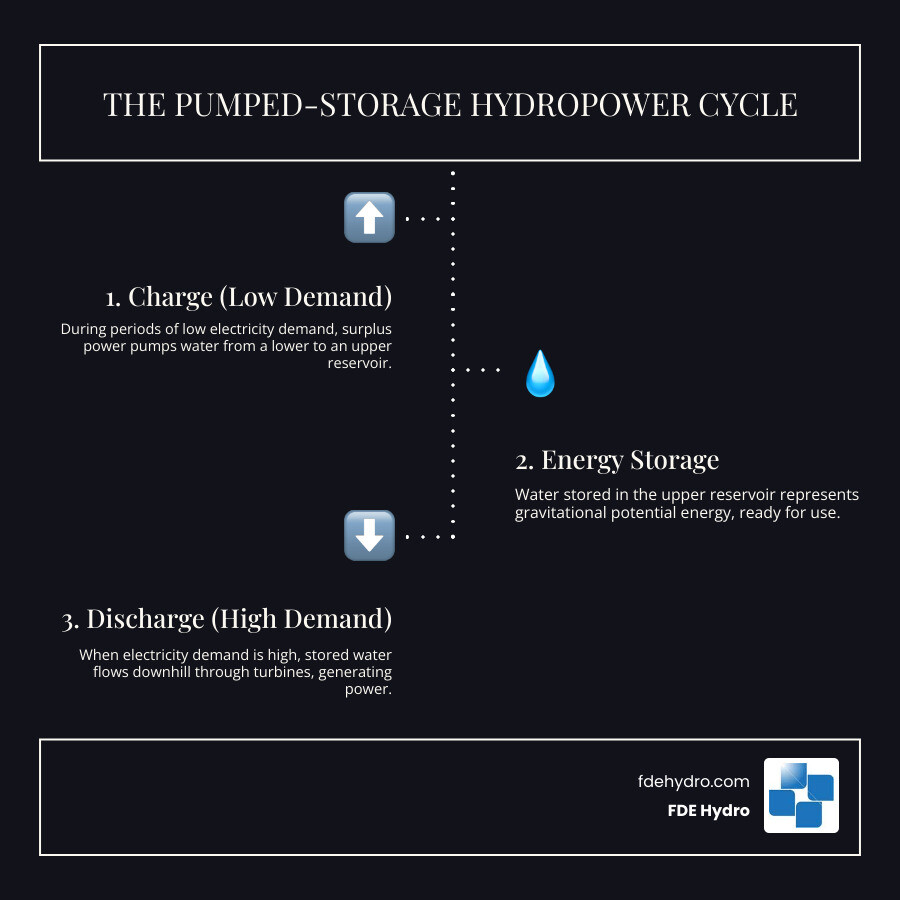
Basic hydropower energy storage terms:
How Pumped-Storage Hydropower Works and Why It’s Essential
At its core, pumped-storage hydropower (PSH) is a simple solution to the complex problem of balancing electricity supply and demand. It’s a rechargeable battery that uses water and gravity.
The process involves two cycles:
- Pumping Cycle (Charging): During low demand or when cheap power from wind or solar is abundant, PSH facilities use electricity to pump water from a lower reservoir to an upper one. This converts electrical energy into stored gravitational potential energy, preventing surplus generation from being wasted.
- Generating Cycle (Discharging): When demand is high, the stored water is released. It flows downhill through large pipes (penstocks), spinning reversible pump-turbines to generate electricity for the grid. This can happen within seconds, making PSH highly responsive.
The key components are massive in scale:
- Upper and Lower Reservoirs: Two bodies of water at different elevations. The height and volume determine the storage capacity.
- Penstocks: Large pipelines connecting the reservoirs.
- Reversible Pump-Turbines: Machines that act as both pumps (moving water up) and turbines (generating power on the way down).
- Motor-Generators: Devices that convert mechanical energy to electrical energy and vice-versa, connecting the facility to the grid.
This mechanism is crucial for maintaining grid reliability. For more details, the U.S. Department of Energy explains How Pumped Storage Hydropower Works.
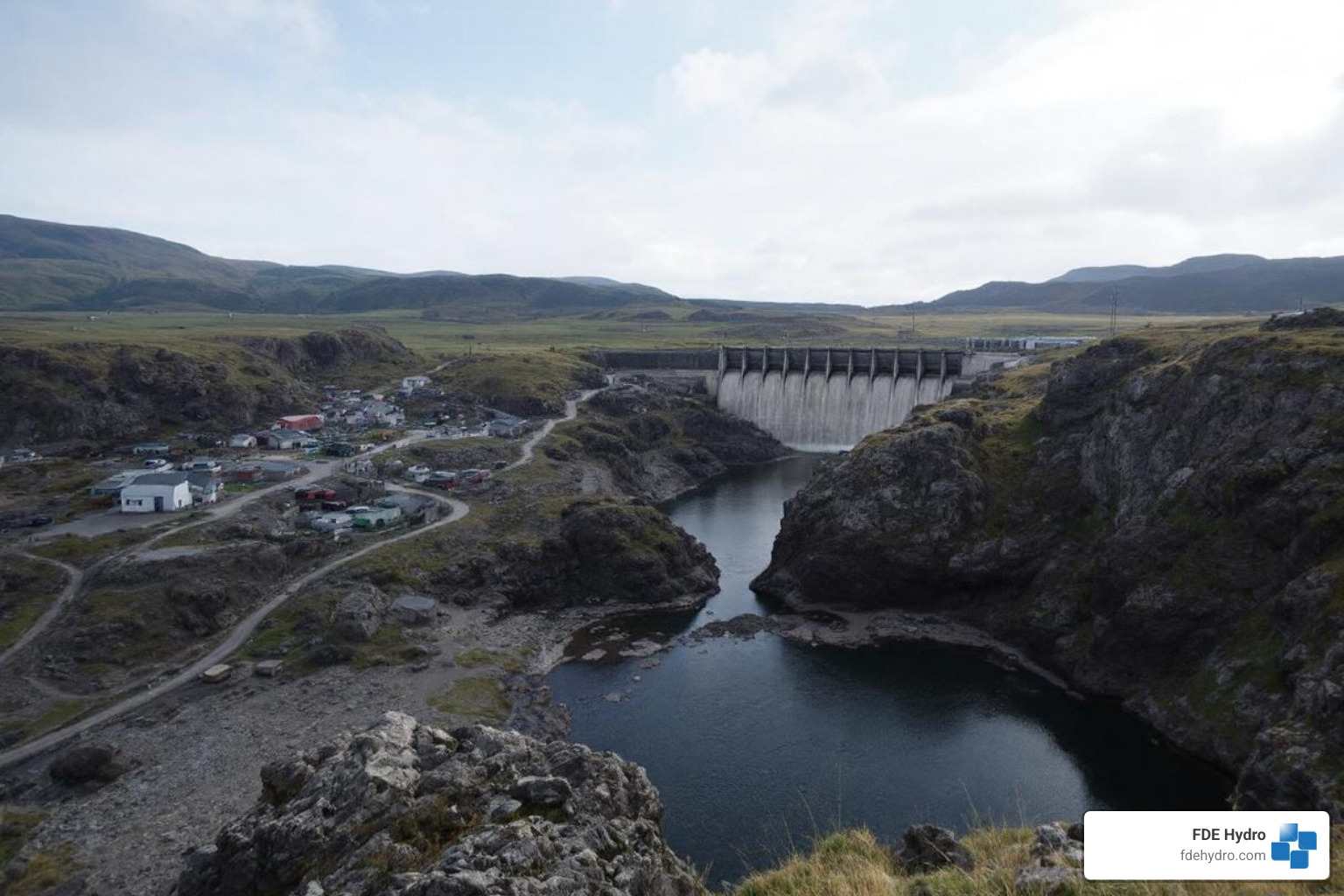
The Key Components and Design Variants
While the basic design of hydropower energy storage is consistent, several variants improve its flexibility:
- Open-Loop Systems: These facilities are connected to a natural water source like a river, allowing them to assist with water management.
- Closed-Loop Systems: These use self-contained reservoirs not connected to natural waterways, reducing environmental impacts and offering more siting flexibility. FDE Hydro™’s modular techniques are ideal for these projects.
- Ternary Sets: Some facilities use separate pumps and turbines for greater operational flexibility.
- Variable-Speed Technology: A major advancement allowing PSH to adjust power consumption or output more precisely, which is vital for managing modern grid fluctuations.
- Underground and Seawater PSH: Innovative concepts using abandoned mines or the ocean as lower reservoirs to overcome geographical constraints. A comprehensive review of pumped hydro energy storage offers more insight.
Benefits for a Renewable-Powered Grid
Hydropower energy storage is the ideal partner for a grid powered by intermittent renewables like wind and solar.
- Balancing Intermittency: PSH absorbs surplus renewable energy by pumping water and releases it to fill gaps when renewable output drops, ensuring a reliable power supply.
- Reducing Curtailment: By storing excess energy that the grid can’t absorb, PSH reduces the wasteful practice of “curtailing” (shutting down) renewable generators.
- Providing Ancillary Services: PSH is a “guardian of the grid,” offering critical stability services:
- Frequency Regulation: Rapidly adjusts power output to maintain the grid’s precise operating frequency.
- Voltage Control: Manages reactive power to maintain stable voltage levels.
- Inertia: The rotating mass of PSH generators naturally resists frequency changes, a crucial property many renewables lack.
- Black Start Capability: Can restart a collapsed grid without external power.
- Rapid Response: Can react to grid needs in seconds, a rapid response capability that is among the best for large-scale storage.
By providing these services, PSH makes the transition to renewables both sustainable and reliable, which is why FDE Hydro™ is focused on Reinvigorating Hydropower for the 21st century.
The Unique Advantages of Hydropower Energy Storage
While battery technology is advancing, hydropower energy storage (PSH) offers distinct advantages for large-scale, long-duration applications.
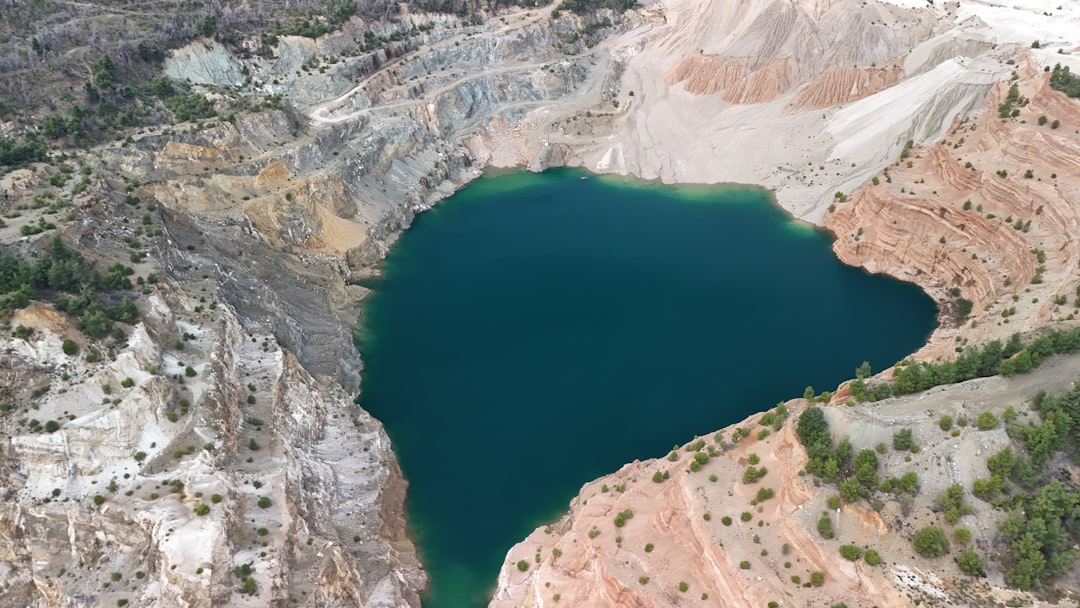
- Long-Duration Storage: PSH is the leader in long-duration storage, capable of providing power for hours, days, or even seasonally. The Bath County PSH, for example, can power 750,000 homes for 11 hours, and many facilities are built for 20+ hours of storage.
- Grid-Scale Reliability: With its massive capacity and rapid response, PSH acts as a shock absorber for the grid, smoothing out fluctuations and providing critical backup power.
- Proven Technology: PSH has operated reliably for over a century, providing confidence in its performance.
- Exceptional Lifespan: Facilities have an incredibly long lifespan of 50 to 100+ years, reducing lifetime costs and aligning with FDE Hydro™’s focus on Sustainable Infrastructure Development.
- Cost-Effectiveness: Despite high upfront capital costs, the immense scale, long life, and low operational costs make PSH highly cost-effective for large-scale storage, as noted in the 2022 Grid Energy Storage Technology Cost and Performance Assessment.
Comparing Hydropower Energy Storage Approaches
Here’s how hydropower energy storage compares to another common solution, utility-scale lithium-ion batteries.
| Characteristic |
Pumped-Storage Hydropower (PSH) |
Lithium-ion Batteries (Utility-Scale) |
| Capacity (GWh) |
Up to 9,000 GWh (globally) |
~240.3 GWh (China, May 2025) |
| Lifespan (years) |
50-100+ |
10-15 |
| Round-Trip Efficiency |
70-80% |
85-95% |
| Long-Duration Storage |
Excellent (hours to seasonal) |
Limited (typically 2-8 hours) |
| Grid Services |
Full suite (inertia, black start, frequency, voltage) |
Frequency, voltage (synthetic inertia) |
| Environmental Footprint |
Significant land/water use, but potential for closed-loop/repurposing solutions |
Raw material extraction, recycling challenges |
| Cost-Effectiveness |
High for large-scale, long-duration |
High for short-duration, rapid response |
The comparison highlights PSH’s strengths: unparalleled storage capacity, longevity, and a full suite of grid services. While its round-trip efficiency is slightly lower than batteries, its long lifespan and low maintenance make it the most cost-effective solution for large-scale, long-duration storage over its lifecycle. This is a key consideration in Financing Long-Term Hydropower Requires Mitigating Risks Prior to ROI.
The Global Landscape and Future of Hydropower Energy Storage
The global energy transition is accelerating the adoption of hydropower energy storage. As of 2025, global PSH capacity reached 179 GW, storing 9,000 GWh of electricity. To meet net-zero goals, IRENA projects that over 420 GW will be needed by 2050, requiring about 10 GW of new capacity annually. You can track projects with the IHA Pumped Storage Tracking Tool.
PSH Development in Key Regions
PSH is a vital asset in key regions where FDE Hydro™ operates:
- United States: PSH is the country’s largest form of energy storage, accounting for 97% of utility-scale capacity with 23 GW across 42 sites. Over 50 GW of new capacity is planned across 21 states, supporting the vision of the Update of the Hydropower Vision Roadmap.
- Canada: The country’s largest energy storage form is PSH, with the Sir Adam Beck Pump Generating Station’s capacity exceeding all of Canada’s other storage technologies combined.
- Europe: A major market with 57 GW of capacity (33% of the global total). Countries like Switzerland, Austria, and Germany continue to rely on PSH for grid flexibility.
- Brazil: Actively exploring PSH to improve grid stability and renewable integration.
- China’s Leadership: China is a leader, adding 7.75 GW in 2024 to reach a total of 58.69 GW. With over 200 GW under construction or approved, it is set to exceed its 2030 target of 120 GW, as detailed in the International Hydropower Association’s (IHA) 2024 World Hydropower Outlook.
The Future of Hydropower Energy Storage in a Net-Zero World
The future of hydropower energy storage involves innovation to meet the demands of a net-zero system.
- Meeting Long-Duration Needs: PSH is uniquely positioned to provide the long-duration energy storage (LDES) needed to balance grids with high levels of renewables.
- Supporting Net-Zero Goals: The projected growth to over 420 GW by 2050 highlights PSH’s critical role in enabling a decarbonized grid.
- Global Potential: The potential is vast, with studies identifying over 800,000 potential sites globally, representing 86 million GWh of storage. Currently, 600 GW of projects are in development.
- Innovations in PSH: R&D continues to advance the technology, from variable-speed turbines to hybrid systems. The International Forum on Pumped Storage Hydropower is working to address barriers and open up PSH’s full potential.
FDE Hydro™ contributes to this future by developing Hydropower Advancements Innovations 2025 through modular construction, making these vital projects more feasible.
Navigating the Problems: Economics, Environment, and Policy
Despite its benefits, the adoption of hydropower energy storage faces economic, environmental, and policy challenges.
- High Upfront Capital Costs: PSH projects are major civil engineering works that require significant initial investment.
- Long Development and Permitting Timelines: Projects often face lengthy permitting processes that can extend for years, adding risk and cost. FDE Hydro™’s modular construction helps accelerate these timelines.
- Market Design: Many electricity markets do not adequately compensate PSH for its full range of grid stability services beyond energy arbitrage (buying low, selling high).
- Revenue Streams: Unpredictable revenue from energy arbitrage, capacity markets, and ancillary services can create financial uncertainty for developers.
Environmental Impacts and Mitigation
Like any large infrastructure, hydropower energy storage has environmental impacts that require careful management.
- Land and Water Use: Reservoirs require significant land and can increase water evaporation.
- Aquatic Ecosystems: Open-loop systems connected to rivers can alter natural flows and affect aquatic life.
- Mitigation Strategies: To minimize impact, the industry is focusing on:
- Closed-Loop Systems: These are not connected to natural waterways and have a smaller ecological footprint. NREL has noted that “closed-loop pumped hydro [is the] ‘smallest emitter’ among energy storage technologies.”
- Repurposing Infrastructure: Using disused mines, quarries, or retrofitting non-powered dams leverages existing sites to reduce new environmental disturbance.
Life-cycle assessments of pumped hydropower storage are crucial for ensuring PSH contributes to Sustainable Power Generation.
Overcoming Barriers with Policy and Innovation
Addressing these challenges requires a concerted effort from policymakers and innovators.
- Regulatory Reform: Streamlining the permitting process is essential to reduce project delays and costs.
- Valuing Grid Services: Markets must evolve to properly compensate PSH for all the grid services it provides, as demonstrated by initiatives like XFLEX Hydro.
- Incentives: Government incentives like investment tax credits (ITCs) can help offset high upfront costs.
- Public-Private Partnerships: Collaboration can de-risk projects and accelerate development.
- Technological Innovation: At FDE Hydro™, our patented modular precast concrete technology, the “French Dam,” revolutionizes Hydroelectric Dam Construction. This approach significantly cuts time and costs for new builds and retrofits of Water Control Systems, making PSH projects more viable and a game-changer for Renewable Energy Construction.
Frequently Asked Questions about Hydropower Energy Storage
Here are answers to some common questions about hydropower energy storage.
Is pumped hydro a net energy consumer?
Yes, PSH is a net energy consumer due to efficiency losses. Its round-trip efficiency is 70-80%, meaning it uses more energy to pump water than it generates. However, its primary role isn’t to create energy but to shift energy in time. It stores cheap, surplus electricity from low-demand periods and delivers it as valuable power during high-demand periods. This ability to balance the grid and integrate renewables far outweighs the net energy loss.
How long can pumped hydro store energy?
Hydropower energy storage excels at long-duration storage. While many plants are designed for 6-12 hours of generation at full capacity, newer facilities often provide 20+ hours. The total energy stored (in GWh) is massive. For instance, the Bath County PSH can power 750,000 homes for 11 hours. Some systems are even designed for seasonal storage, making PSH indispensable for managing long-term energy fluctuations.
Can PSH be built anywhere?
Not traditionally. Conventional PSH requires specific geography with a significant elevation difference between two reservoirs. However, innovation is expanding the possibilities:
- Repurposing Sites: Disused underground mines and quarries can serve as lower reservoirs.
- Coastal Systems: The ocean can be used as a lower reservoir in coastal areas.
- Off-River Sites: Closed-loop systems don’t need a connection to a river, greatly broadening site selection.
Recent studies have identified over 800,000 potential sites globally, showing that innovative engineering is making hydropower energy storage feasible in a growing number of locations. FDE Hydro™’s modular construction further helps make more of these sites viable.
Conclusion
As we steer the complexities of the global energy transition, hydropower energy storage stands out as a proven, powerful, and essential technology. It is the world’s largest battery, quietly ensuring grid stability, integrating variable renewable energy sources, and providing a suite of invaluable ancillary services.
Its best-in-class scale, long lifespan, and robust reliability make it indispensable for achieving net-zero energy goals and building a resilient power grid. While challenges related to high capital costs, lengthy permitting, and market valuation persist, innovative solutions and supportive policies are paving the way for its accelerated growth.
At FDE Hydro™, we are committed to advancing the future of hydropower. Our innovative modular precast concrete technology is designed to make hydropower energy storage projects more efficient, cost-effective, and environmentally responsible. By drastically reducing construction times and costs for dams and water control systems, we are helping to open up the immense potential of PSH in North America, Europe, and Brazil.
We believe that the future of clean energy is in the water. To learn more about how our advanced modular dam construction can benefit your next water control or hydropower project, please don’t hesitate to contact us.
by Bill French Sr. | Jan 6, 2026 | Hydro Facility Articles
Why Understanding Hydroelectric Infrastructure Matters
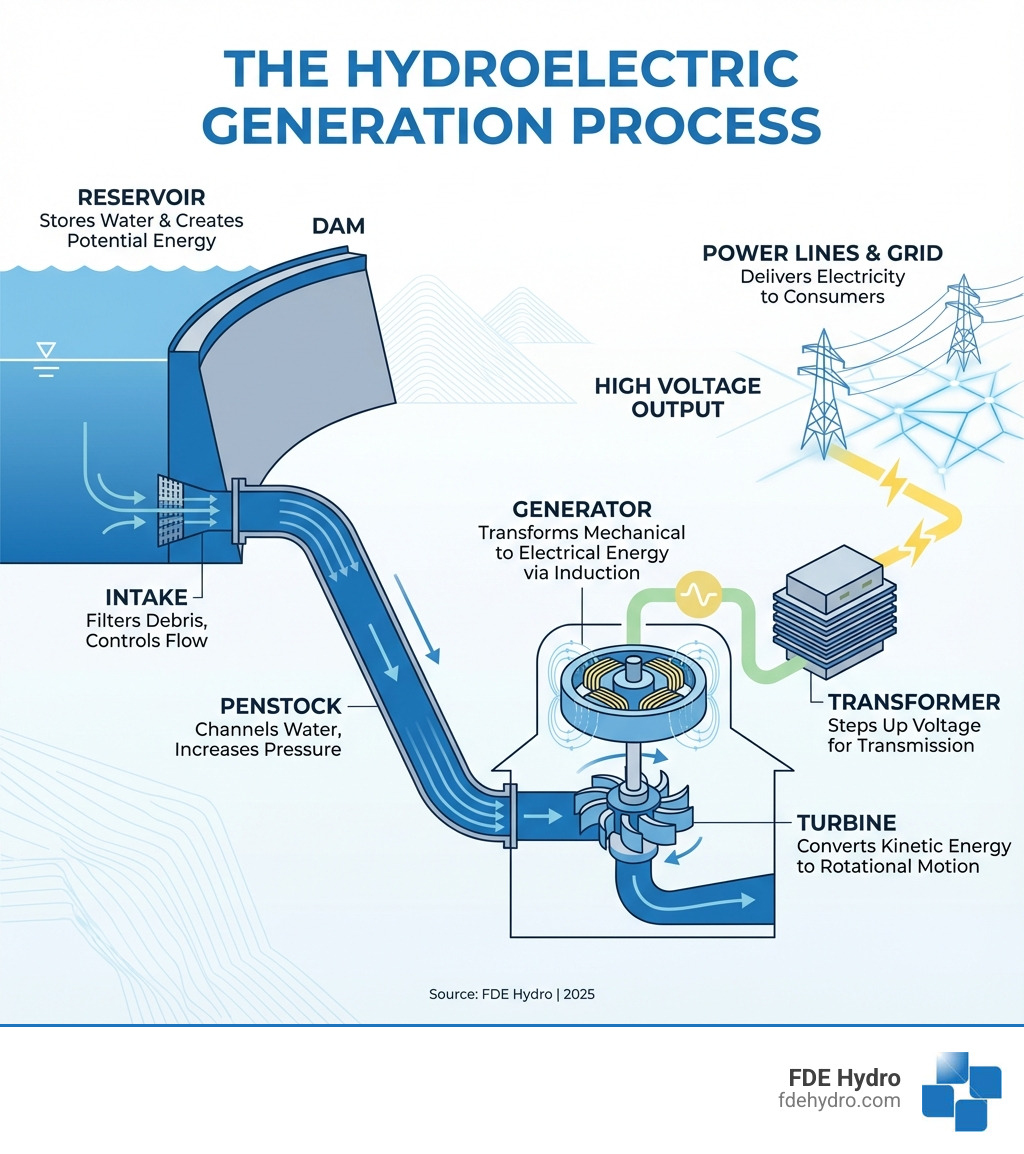
Hydro dam components are the essential building blocks that transform the raw power of flowing water into the electricity that powers over 1 billion people worldwide. These interconnected systems include:
- Dam and Reservoir – Stores water and creates hydraulic head
- Intake Structures and Gates – Controls water flow and filters debris
- Penstock – Channels water under high pressure to the turbines
- Turbine – Converts water’s kinetic energy into rotational motion
- Generator – Transforms mechanical energy into electrical energy
- Transformers and Control Systems – Regulates voltage and manages operations
- Powerhouse – Houses turbines, generators, and control equipment
- Transmission Lines – Delivers electricity to the grid
In 2022 alone, hydropower generated 4,289 TWh, representing 15% of total global electricity production and half of all renewable energy. The beauty of hydroelectric systems lies in their neat simplicity—water flows in one end, and electricity comes out the other, with theoretical conversion efficiencies near 100% because the process involves mechanical energy rather than thermal energy.
Each component plays a critical role in this energy conversion chain. The dam creates potential energy by establishing head height. The penstock accelerates water flow and increases pressure. The turbine converts kinetic energy into rotational motion. The generator uses electromagnetic induction to produce electrical current. And control systems act as the facility’s nervous system, ensuring safe and efficient operation.
I’m Bill French Sr., founder and CEO of FDE Hydro, and over the past five decades I’ve worked extensively with hydroelectric infrastructure, including participation in the Department of Energy’s Hydro Power Vision Technology Task Force focused on next-generation solutions for hydro dam components. This experience has shown me that understanding these core systems is essential for anyone overseeing water infrastructure projects.
The Foundation: Water Containment and Control Structures
At the very heart of any hydroelectric system, we find the structures that manage the water itself. Think of these as the gatekeepers and the battery, holding vast amounts of potential energy ready to be releaseed. Our goal, as engineers and innovators in this field, is to harness this natural power safely and efficiently.
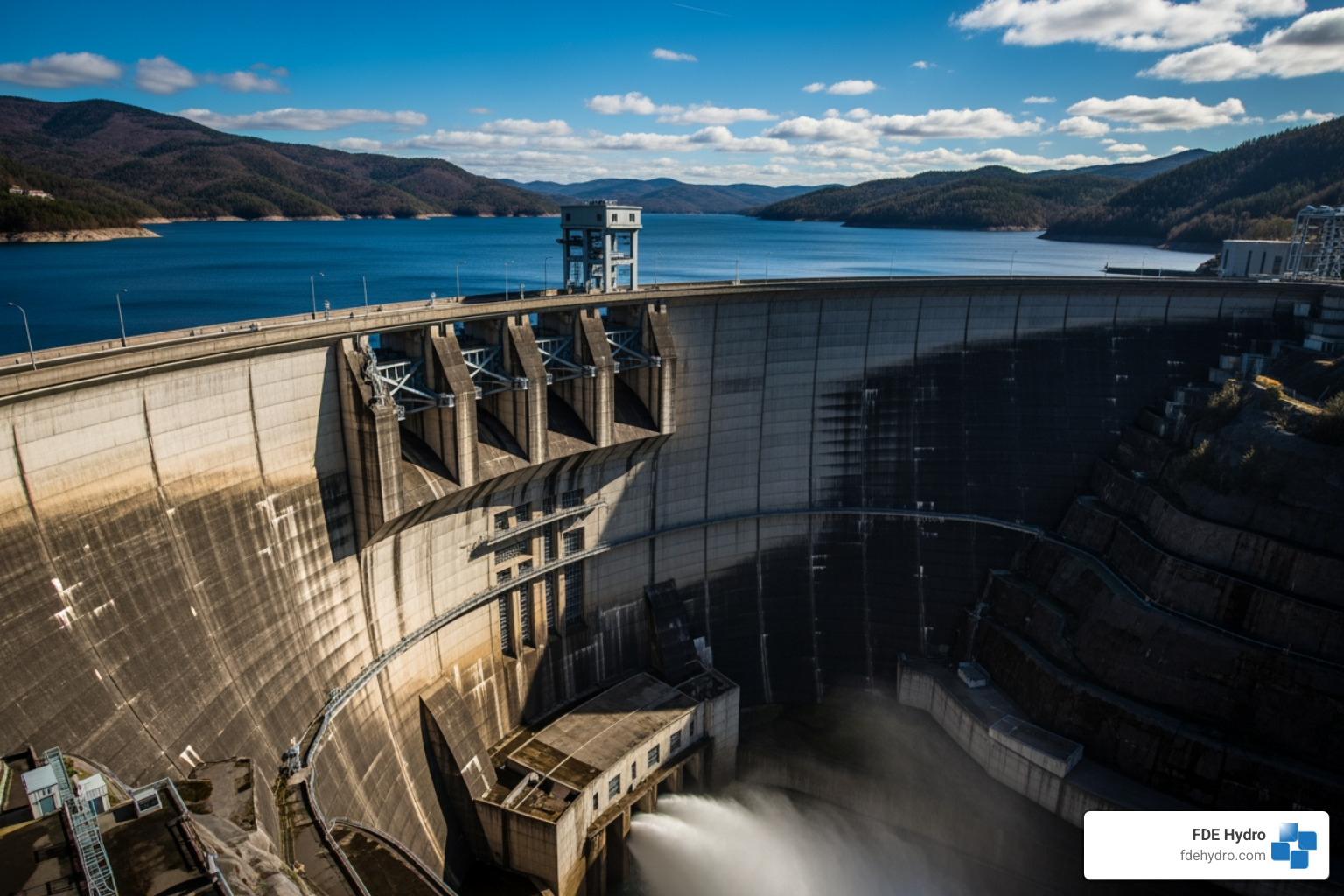
The dam, a colossal feat of engineering, is the primary structure that holds back a river, creating a large body of water known as the reservoir. This isn’t just a big puddle; it’s our energy storage unit. The higher the water is held, the greater its potential energy – a concept we call “head height.” This head height is crucial because it dictates how much force the water will have when it eventually flows through the system.
Beyond power generation, these reservoirs serve multiple vital functions. They are often critical for flood control, regulating water levels to protect downstream communities. Many also provide reliable water supplies for cities and agriculture, and let’s not forget the recreational opportunities they create. Imagine the joy of boating or fishing on a reservoir that’s also powering thousands of homes! The storage capacity of global hydropower reservoirs is truly impressive, estimated at approximately 1,500 terawatt-hours of electrical energy in one full cycle. This makes them nature’s battery, storing energy on a massive scale.
The Dam
When we talk about the dam itself, we’re discussing a structure designed to withstand immense pressure. There are several types, each suited to different geological and hydrological conditions:
- Gravity Dams: These rely on their sheer weight and mass to resist the water’s pressure. They are often thick and robust, like a steadfast guardian holding back the tide.
- Arch Dams: Utilizing a curved design, these dams transfer the water’s force horizontally into the surrounding canyon walls, making them highly efficient in narrow, rocky gorges. They’re like a natural archer, redirecting the force.
- Embankment Dams: Constructed from compacted earth and rock, these dams are usually wider at the base and taper upwards. They are versatile and can be built in various locations.
At FDE Hydro, we’re constantly pushing the boundaries of dam construction. Our innovative modular precast concrete technology, often referred to as the “French Dam,” is revolutionizing how these structures are built and retrofitted in regions like North America, Brazil, and Europe. This approach significantly reduces construction costs and time, making hydropower projects more accessible and sustainable. You can learn more about these methods on our Dam Construction Methods and Dams pages.
Intake, Gates, and Spillways
Once the water is safely stored, we need precise ways to control its flow. This is where the intake structures, gates, and spillways come into play.
The intake structure is the entry point for water from the reservoir into the power generation system. Its design is critical to ensure a smooth, air-free inlet, which is essential for optimal efficiency and to prevent damage to downstream equipment. Imagine trying to drink through a straw that keeps sucking in air – it’s not very effective, right? The same principle applies here.
A crucial part of the intake is the trash rack. These are sturdy screens designed to filter out larger debris like leaves, branches, or even curious logs, preventing them from entering the penstock and potentially damaging the turbine. We also often design an area of ‘quiet water’ at the intake, allowing finer sediment to settle before it can cause abrasive wear on the turbine blades.
Control gates, such as sluice gates, are positioned at the intake to regulate the amount of water flowing into the penstock. These are our precise valves, allowing operators to adjust water flow based on electricity demand or water availability. These high-pressure gates, whether fixed wheel, sliding, or radial, need to be robust to handle the immense forces of the water. For more on how we manage this flow, check out our insights on Water Control Structures.
Finally, spillways are the dam’s ultimate safety valves. They are designed to safely release excess water from the reservoir, especially during periods of heavy rainfall or snowmelt, preventing the dam from being overtopped. This is a critical flood control mechanism, ensuring the safety of the dam and downstream areas. Spillway gates, often radial or fixed wheel, enable controlled flood discharge, making them essential for operational safety. You can dig deeper into their function on our Spillways page.
The Primary Hydro Dam Components for Power Generation
Now that we’ve contained and controlled the water, it’s time to put its energy to work. This section covers the core hydro dam components that perform the magical change of water’s kinetic energy into mechanical energy, and then into electricity. It’s a journey from raw power to usable power!
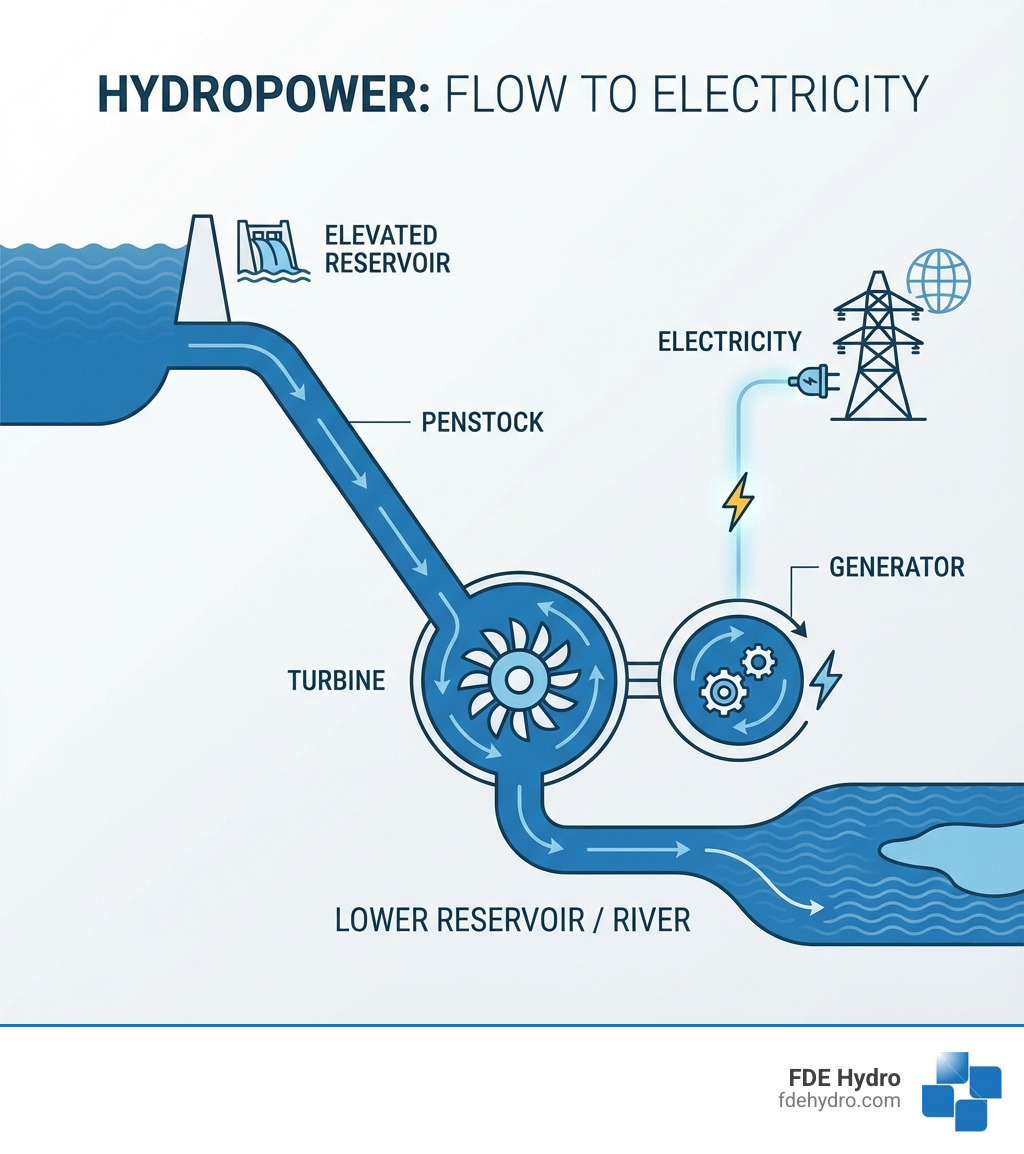
The entire process hinges on a brilliant chain reaction of energy conversion. The potential energy stored in the reservoir is released as water flows downwards, converting into kinetic energy. This kinetic energy then drives the turbine, changing it into mechanical energy. Finally, the generator takes this mechanical energy and, through the wonders of electromagnetism, converts it into the electrical energy that lights up our homes and cities. The elegance of this conversion process, from water’s raw power to electricity, is truly amazing. If you’re curious about the mechanics, we highly recommend exploring How a Hydroelectric Dam Works.
The Penstock
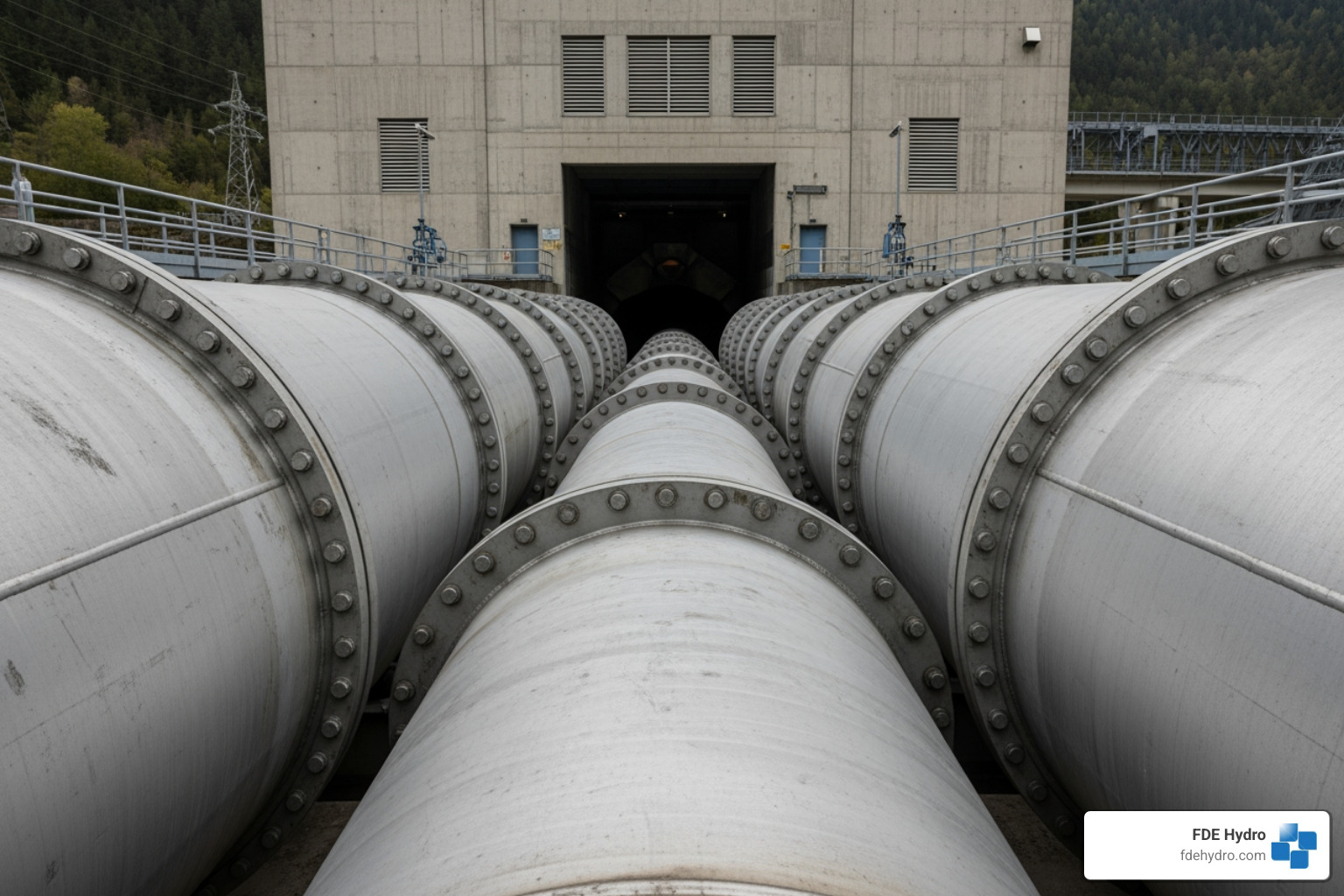
The penstock is essentially a large pipeline that channels water from the intake structure down to the turbine. But it’s far more than just a pipe; it’s a critical component designed to increase water pressure and direct it with immense force. As the water travels down the penstock, the vertical drop creates significant head pressure, focusing the water’s power directly towards the turbine.
Penstocks are typically made of robust materials like steel, capable of withstanding the high internal pressures and external environmental conditions. The design of the penstock—its diameter, length, and routing—is paramount to the system’s efficiency. A small-diameter penstock, for instance, can significantly reduce the available horsepower even if it carries all the available water, due to increased friction. Conversely, larger diameters create less friction, optimizing flow. Furthermore, ensure no air enters the pipeline, as air pockets can reduce horsepower and even damage the turbine. Hydraulic optimization of these water conduits is a major concern in penstock construction, ensuring the least head losses. To learn more about this crucial conduit, check out What is a Penstock?.
Essential Mechanical Hydro dam components: The Turbine
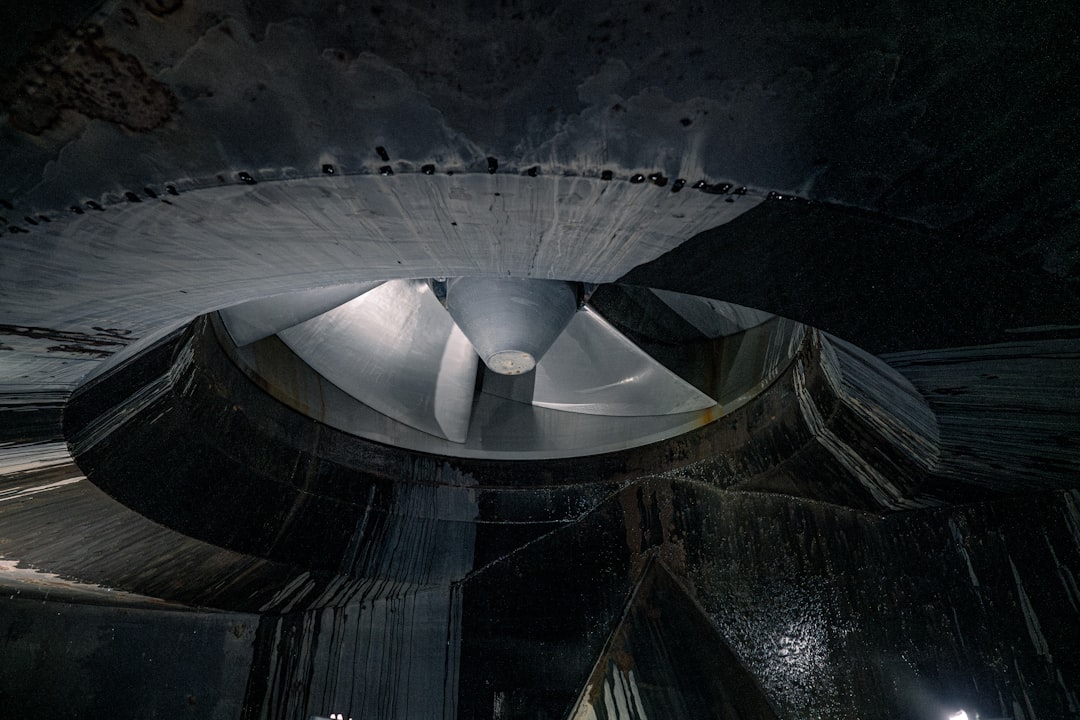
The turbine is often considered the heart of the hydroelectric power plant. It’s the component that directly translates the force of the flowing water into rotational motion, setting the entire electricity generation process in motion. When the high-pressure water from the penstock strikes the turbine’s blades, it causes a central shaft to spin rapidly. This rotational motion is the mechanical energy we’ve been working towards.
Selecting the right type of turbine is crucial and depends heavily on the specific “head” (the vertical distance the water falls) and “flow” (the volume of water available) conditions of the site. Here’s a quick overview of the main types:
| Turbine Type |
Head Conditions |
Flow Conditions |
Typical Application |
| Pelton |
High (150m – 1500m) |
Low |
High head dams with long penstocks. |
| Francis |
Medium (20m – 600m) |
Medium to High |
The most common and versatile type, used in a wide range of conditions. |
| Kaplan |
Low (2m – 50m) |
High |
Run-of-river plants and other low-head projects. |
| Bulb/Pit/S |
Very Low (2m – 30m) |
High |
Low-head projects needing high efficiency and flow capacities. |
| Pump |
Wide Range (Up to 700m) |
Variable |
Pumped storage plants, which can also pump water back to the reservoir. |
Turbine innovation has been ongoing for over 150 years, leading to solutions that are not only powerful but also environmentally conscious. For example, pioneering work has been done on fish-friendly designs and oil-free hubs to prevent water pollution, which aligns perfectly with our commitment to sustainable infrastructure.
Key Electrical Hydro dam components: The Generator
Once the turbine is spinning, its mechanical energy needs to be converted into usable electricity. This is the job of the generator, a marvel of electrical engineering. The generator is directly coupled to the turbine’s shaft, so as the turbine spins, the generator also rotates.
The magic happens inside the generator through a principle called electromagnetic induction. This is where magnets spin rapidly past coils of copper wire (or vice versa), causing electrons to move and thereby generating an electrical current. The generator consists of two main parts:
- Rotor: This is the rotating part, typically equipped with powerful electromagnets.
- Stator: This is the stationary part, containing the copper wire coils.
As the rotor spins within the stator, the magnetic fields cut across the copper coils, inducing an electrical voltage and current. This process converts the mechanical energy from the spinning turbine into electrical energy, specifically alternating current (AC). A typical hydroelectric generator might spin at around 90 revolutions per minute, producing electricity at standard grid frequencies (e.g., 60 Hz in North America). This clever conversion is how we harness the raw force of water into the electrical power we use every day.
The Delivery Network: From Powerhouse to Grid
With electricity successfully generated, the next crucial step is to prepare it for distribution and send it out to the wider world. This involves several more specialized hydro dam components that ensure the power is safe, stable, and ready for consumption.
The powerhouse is the central hub where the turbines and generators are housed. It’s more than just a building; it’s a strategically designed facility that protects all the vital equipment from the elements and serves as the epicenter of renewable energy generation. From here, the newly generated electricity starts on its final journey, passing through transformers for voltage regulation and then onto transmission lines to reach the National Grid.
Operating a hydroelectric dam is a complex dance between water flow, electricity demand, and safety protocols. This is orchestrated by sophisticated control systems, which we like to think of as the dam’s “nervous system.” These systems, often incorporating SCADA (Supervisory Control and Data Acquisition) technology, allow operators to monitor and adjust critical parameters in real-time. We can fine-tune water flow rates, open and close gates, and regulate turbine speeds to ensure the plant operates at peak efficiency and responds dynamically to grid demands. This level of automation and precision is vital for both safety and optimal power output. For more insights into these intricate systems, visit our Water Control Systems page.
Immediately after the generators, the electricity, typically produced at a relatively low voltage, enters the transformers. These are essential for preparing the power for long-distance transmission. Transformers “step up” the voltage, converting the lower voltage electricity into a much higher voltage. Why higher voltage? Because transmitting electricity at high voltages drastically reduces energy loss over long distances. Without this crucial step, a significant portion of the generated power would dissipate as heat before it ever reached our homes and businesses. Once the voltage is boosted, the electricity is ready to be fed into the transmission lines, which carry it across vast distances to substations and ultimately to consumers.
Design, Innovation, and Sustainability in Hydropower
Building and operating hydroelectric dams isn’t just about raw power; it’s about smart design, continuous innovation, and a deep commitment to sustainability. At FDE Hydro, we understand that every decision, from the initial blueprint to daily maintenance, impacts the long-term success and environmental footprint of a project.
Our design considerations always prioritize operational safety, efficiency, and longevity. We aim for systems that are robust, reliable, and easy to maintain. This means building in fail-safe mechanisms, ensuring redundancy in critical systems, and providing comprehensive training for operators. Regular maintenance of all hydro dam components isn’t just a good idea; it’s crucial for ensuring efficiency and extending the lifespan of the entire plant. It helps prevent costly breakdowns, saves budget in the long run, and ensures consistent productivity. Our work with modular precast concrete technology, for instance, significantly reduces the time and cost associated with construction and retrofitting, making these projects more feasible and sustainable. Dive deeper into our advancements on our Hydropower Innovation page.
Minimizing Environmental Impact
While hydropower is a clean, renewable energy source, we acknowledge the importance of minimizing its environmental footprint. Innovations in hydro dam components are constantly evolving to address these concerns, particularly regarding aquatic life and water quality.
A major focus is on protecting fish populations. This has led to the development of fish-friendly turbines, designed to reduce harm to fish passing through the system. Technologies like the Minimum Gap Runner (MGR) improve fish survival rates to over 95% by minimizing gaps where fish could be injured. Some modern turbine concepts, for example, feature slower rotational speeds and fewer blades, specifically engineered to reduce fish mortality. Beyond turbine design, we also implement solutions like fish ladders (structures that allow fish to bypass dams) to facilitate upstream and downstream migration. You can find more details on these advancements in fish-friendly turbine design.
Another critical area is maintaining water quality. Traditional turbine hubs sometimes use oil, which could potentially leak and pollute the water. Innovations like oil-free hubs and greaseless technologies eliminate this risk entirely, ensuring that no harmful substances are released into the environment. Furthermore, aerating turbines (also known as auto-venting turbines) are designed to improve dissolved oxygen levels in the water released downstream. This is particularly important in reservoirs where water at lower depths can become oxygen-deficient, impacting aquatic ecosystems. By drawing atmospheric air into the turbine during operation, we can significantly improve the health of the downstream river environment. These advancements are integral to our vision for Sustainable Power Generation.
The Future of Hydro Dam Components
The world of hydropower is far from static. We are continually exploring new technologies and approaches to make hydroelectric systems even more efficient, sustainable, and adaptable. The future of hydro dam components is exciting and holds immense promise.
We’re seeing rapid advancements in areas like smart sensors and AI for resource management. These technologies allow for unprecedented levels of real-time monitoring, predictive maintenance, and optimized operation. Imagine a system that can anticipate potential equipment failures before they happen, or intelligently adjust water release based on complex weather patterns and energy demand forecasts. This is the power of AI for Resource Management coming to life.
Future trends also include the development of hybrid systems, where hydropower plants are integrated with other renewable energy sources like solar or wind, and coupled with advanced energy storage solutions. This creates a more stable and reliable energy supply, leveraging the strengths of each technology.
At FDE Hydro, we’re particularly enthusiastic about our role in pioneering modular dam construction using precast concrete technology. This approach allows for faster, more cost-effective, and less disruptive construction and retrofitting of dams in North America, Brazil, and Europe. Instead of building dams piece by piece on-site, we can manufacture large, high-quality precast components off-site and then rapidly assemble them. This not only speeds up project timelines but also improves quality control and reduces environmental impact during construction. This innovative shift in construction methodology is a game-changer for the industry, making hydropower expansion more practical and efficient.
Frequently Asked Questions about Hydro Dam Parts
What are the 5 main parts of a hydroelectric dam?
The five primary hydro dam components are:
- The Dam itself, which creates the reservoir.
- The Reservoir, storing the water and its potential energy.
- The Penstock, channeling the water under pressure.
- The Turbine, which converts water’s energy into mechanical rotation.
- The Generator, changing mechanical energy into electricity.
How do the components work together to generate electricity?
It’s a beautifully orchestrated sequence:
Water stored in the reservoir (created by the dam) builds up potential energy. When released, it flows with increasing speed and pressure through the penstock. This high-velocity water strikes the blades of the turbine, causing it to spin. The spinning turbine, in turn, rotates the shaft of the generator, which then uses electromagnetic induction to convert this mechanical energy into electrical energy. This electricity is then sent through transformers and transmission lines to the grid.
What is the most important component of a hydroelectric power plant?
While the turbine and generator are often considered the “heart” of power production because they perform the actual energy conversion to electricity, it’s crucial to understand that all hydro dam components are interdependent. The dam and reservoir provide the necessary potential energy. The penstock delivers the water with force. The intake, gates, and spillways ensure controlled and safe operation. Without any one of these elements functioning correctly, the entire system cannot operate safely or efficiently. Therefore, while some parts directly produce power, the interconnectedness and integrity of all components are what truly make a hydroelectric power plant successful.
Conclusion
We’ve journeyed through the intricate world of hydro dam components, from the towering structures that hold back vast bodies of water to the delicate mechanisms that convert raw kinetic energy into the electricity powering our lives. Each part, whether it’s the mighty dam, the precise control gates, the robust penstock, the dynamic turbine, or the electrical generator, plays an indispensable role in the complex, interconnected system of hydroelectric power generation.
Hydropower stands as a cornerstone of our Clean Energy Infrastructure, providing a reliable and sustainable source of electricity for billions worldwide. As we look to the future, our commitment at FDE Hydro is to continue innovating, developing solutions that not only improve efficiency and safety but also minimize environmental impact. Our modular precast concrete technology is a testament to this, offering advanced and rapid-install solutions for both new construction and retrofitting projects in North America, Brazil, and Europe.
We invite you to explore how our innovative approaches are shaping the future of water infrastructure. To learn more about our cutting-edge designs and how we’re building the next generation of hydroelectric power, we encourage you to explore our advanced and rapid-install solutions with our precast models. Together, we can build a more sustainable and energy-secure future.
by Bill French Sr. | Jan 5, 2026 | Hydropower Articles
Why Hydro Energy Solutions Matter for Modern Infrastructure
Hydro energy solutions are systems and technologies that convert the kinetic energy of flowing or falling water into reliable, clean electricity. These solutions range from traditional dam-based power plants to innovative modular systems and inline generators that can be deployed in pipelines, rivers, and irrigation channels.
Key types of hydro energy solutions include:
- Run-of-River Systems – Generate power from natural river flow without large reservoirs
- Storage Hydropower – Use dams and reservoirs to store water and control power output
- Pumped Storage – Act as giant batteries, storing energy by moving water between reservoirs
- Small-Scale and Inline Systems – Capture energy from existing water infrastructure like pipelines and aqueducts
- Hybrid Solutions – Combine hydropower with solar, wind, or battery storage for improved grid stability
Hydropower currently provides over 15% of the world’s electricity and has the lowest carbon footprint of any energy source over its lifecycle. With 90% operational efficiency, short start-up times of just 3-5 minutes, and the ability to ramp from zero to full output in about one minute, hydropower offers best flexibility for modern grids integrating variable renewable sources.
Yet the industry faces real challenges. By 2030, 40% of global hydro power plants will be at least 40 years old, requiring modernization. Traditional construction methods carry high costs, extended timelines, and significant financial risk. The future belongs to innovative approaches that reduce capital expenditure, accelerate delivery, and minimize environmental impact.
I’m Bill French Sr., Founder and CEO of FDE Hydro, where we’ve pioneered modular precast concrete technology—the “French Dam”—to deliver next-generation hydro energy solutions that cut construction time and costs while benefiting present and future environments. My five decades leading major civil construction projects, combined with participation in the U.S. Department of Energy’s Hydro Power Vision Task Force, have shown me how innovation can transform this essential industry.
Hydro energy solutions terms explained:
The Best Benefits of Hydropower
When we talk about hydro energy solutions, we’re discussing one of the most reliable and efficient forms of renewable energy available. Hydropower harnesses the natural force of water to generate electricity, offering a multitude of benefits that make it a cornerstone of a sustainable energy future. It’s truly a powerhouse of clean energy, contributing significantly to grid stability and the broader energy transition.
One of the most compelling advantages of hydropower is its incredibly low carbon footprint. In fact, it boasts the lowest carbon footprint over its entire lifecycle compared to any other form of energy. This makes it an eco-friendly choice that helps us combat climate change by emitting minimal amounts of CO2. Beyond environmental benefits, hydropower offers exceptional reliability and flexibility. Our systems can start up and shut down quickly, typically within 3-5 minutes, and can accommodate rapid fluctuations in power load, changing from no load to rated output in about one minute. This dispatchable power capability is crucial for balancing the grid, especially as we integrate more intermittent renewable sources like solar and wind.
We believe that hydropower isn’t just an energy source; it’s a guardian of the grid, offering unparalleled efficiency and resilience. For a deeper dive into why we consider hydropower a guardian, explore our article on 4 Reasons Why Hydropower is the Guardian of the Grid. We often ask, What Renewable Energy Resource is the Most Efficient?? Hydropower consistently ranks among the top, with hydro-turbines and hydro-generators achieving extremely high operation efficiency, often around 90% at maximum capacity.
Why Hydropower is a Pillar of Grid Stability
In the quest for a stable and resilient energy grid, hydropower stands out. Its ability to store energy and respond rapidly to demand fluctuations makes it indispensable, particularly in supporting the integration of other renewables. Pumped storage hydropower, in particular, acts like a giant battery, storing excess energy by pumping water to an upper reservoir and then releasing it to generate power when demand is high. This remarkable flexibility accounts for approximately 95% of all energy storage currently available.
The fast start-up times and quick load fluctuation response of hydro energy solutions mean they can instantly step in when solar panels aren’t generating due to clouds or wind turbines are still on a calm day. This makes them perfect complements to variable renewables, ensuring a steady and reliable power supply. We’re proud to contribute to these robust energy solutions, understanding that a strong grid is essential for our modern world. For more details on this crucial technology, you can read our insights on Pumped Storage Hydropower. Additionally, hydropower plays a vital role in enabling localized, resilient energy systems like a Microgrid, providing consistent power even when disconnected from the main grid.
The Economic and Environmental Edge
From an economic standpoint, hydropower is a remarkably cost-effective and long-term investment. Once built, the operating costs are relatively low, and the fuel—water—is free and renewable. This leads to stable and competitive electricity prices, benefiting both consumers and businesses. We see examples where investments in hydropower facilities can be recovered in surprisingly short periods, sometimes as quickly as five years for a 500 kW system, given favorable conditions. This longevity and low operational expenditure contribute significantly to the overall economic advantages of hydro energy solutions.
Environmentally, the benefits are equally compelling. As we’ve mentioned, hydropower has the lowest carbon footprint over its lifecycle. It generates electricity without burning fossil fuels, thus producing minimal greenhouse gas emissions or pollutants. This makes it an eco-friendly natural energy source that is inherently incorporated into Earth’s natural water cycle. We believe that for true Sustainable Power Generation, hydropower is an essential component. For a comprehensive look at the advantages, explore the Benefits of Hydropower Plant.
How Hydropower Works: Plant Types and Core Technology
Understanding how hydro energy solutions work involves looking at the different types of plants and the core technologies that make them tick. At its heart, hydropower is about converting the potential and kinetic energy of water into electricity. This entire process, from the flow of water to the delivery of power, is often referred to as “water-to-wire” solutions. For a foundational understanding, our Hydropower Basics article offers a great starting point.
Key Types of Hydropower Plants
The design and application of a hydropower plant depend heavily on the local geography and energy needs. We categorize them primarily into three types:
| Feature |
Run-of-River Plants |
Storage (Reservoir) Plants |
Pumped Storage Plants |
| Water Flow |
Channels natural river flow; minimal or no storage |
Uses a dam to create a large reservoir |
Two reservoirs (upper & lower) for water cycling |
| Reservoir Size |
Small or none |
Large |
Two distinct reservoirs |
| Environmental Impact |
Generally lower impact on water flow |
Can alter river ecosystems, but manageable |
Can have localized impact, but efficient storage |
| Best Application |
Continuous base load power |
Peak load, base load, and grid regulation |
Grid stability, energy storage, peak load management |
- Run-of-River Plants: These systems divert a portion of a river’s flow through a canal or penstock to a turbine, then return the water to the river downstream. They don’t typically require large dams or reservoirs, minimizing environmental impact on natural water flow. They provide a continuous supply of electricity, ideal for consistent base load power.
- Storage Hydropower Plants: These are what most people envision when thinking of hydropower. They use a dam to create a large reservoir, storing vast amounts of water. This stored water can be released on demand to generate electricity, allowing for adjustable power output to meet fluctuating energy needs. They are highly flexible and can contribute to both base and peak load generation. Our work with Dams is central to these types of solutions.
- Pumped Storage Hydropower Plants: These are essentially large-scale energy storage systems. They feature two reservoirs at different elevations. During periods of low electricity demand (e.g., overnight), surplus power from other sources (like wind or solar) is used to pump water from the lower to the upper reservoir. When electricity demand is high, the water is released from the upper reservoir, flowing through turbines to generate power, much like a conventional storage plant. This makes them invaluable for grid stability and balancing supply and demand.
The Core Components of a Hydropower System
Regardless of the type of plant, certain core technological components are fundamental to all hydro energy solutions:
- Dams and Water Control Structures: For storage and pumped storage plants, dams create the necessary head (vertical distance) for water to fall. For all types, Water Control Structures like gates and spillways manage water flow, ensuring safety and efficiency.
- Penstocks: These are large pipelines or tunnels that carry water from the reservoir or intake to the turbines.
- Turbines: The heart of the power generation process, turbines convert the kinetic energy of flowing water into mechanical energy. Different types are designed for various water heads and flow rates:
- Francis Turbines: The most common type, suitable for medium to high heads and medium flow rates.
- Kaplan Turbines: Ideal for low heads and high flow rates, often used in run-of-river plants.
- Pelton Turbines: Used for very high heads and low flow rates, typically in mountainous regions.
- Bulb Turbines: Similar to Kaplan but with the generator integrated into a sealed bulb-shaped casing directly in the water flow.
- Pump-Turbines: Used in pumped storage plants, these can operate as both a turbine to generate electricity and a pump to move water back uphill.
- Generators: Connected to the turbines, generators convert the mechanical energy from the spinning turbines into electrical energy. Leading manufacturers’ hydro-generators are engineered for high efficiency and reliability.
- Control Systems: These are the brains of the operation, monitoring and regulating the entire hydropower plant. Modern control systems manage water flow, turbine speed, power output, and grid synchronization. They also incorporate advanced features for remote monitoring, predictive maintenance, and integrated control, often allowing for unmanned operation.
- Spillways: Essential safety features that allow excess water to be released from a reservoir without passing through the turbines, preventing dam overtopping during floods.
For a detailed breakdown of these components, our Hydroelectric Dam Components Ultimate Guide provides extensive information. We also offer comprehensive Product solutions & systems for hydropower plants that integrate these critical elements.
The Next Wave: Innovations in Hydro Energy Solutions
The hydropower industry is dynamic, constantly evolving to meet new demands and overcome existing challenges. With a significant portion of global hydro power plants nearing or exceeding 40 years of age by 2030, the need for modernization and innovative hydro energy solutions is more pressing than ever. This era of “reinvigorating hydropower” is marked by remarkable advancements. We are keenly focused on Hydropower Advancements & Innovations 2025 and the broader effort to Reinvigorating Hydropower.
Exploring Modern Hydro Energy Solutions
Digitalization is revolutionizing how we design, operate, and maintain hydropower plants. Advanced control systems now incorporate sophisticated sensors and data analytics, enabling features like predictive maintenance. This means we can anticipate equipment failures before they happen, scheduling maintenance proactively and minimizing downtime. Artificial intelligence (AI) is playing an increasingly critical role, optimizing plant operations for efficiency and grid response. From AI-driven forecasting to automated decision-making, we see the power of AI Energy Management shaping the future.
Beyond digitalization, we’re seeing exciting developments in other areas:
- Hybrid Systems: Integrating hydropower with other renewable sources like solar and wind, often coupled with battery storage, creates more resilient and flexible energy solutions. These hybrid setups can smooth out the intermittency of variable renewables, leveraging hydropower’s dispatchable nature.
- Advanced Materials: While not always visible, the continuous development of more durable, efficient, and environmentally friendly materials for turbines, generators, and civil structures is crucial. These innovations lead to longer asset lifespans and improved performance.
- Small-Scale and Inline Hydro: There’s a growing focus on capturing energy from smaller water flows and existing infrastructure. Inline hydropower generators, for example, can be integrated directly into pipelines, aqueducts, or irrigation channels, delivering power outputs from 4 kW to several megawatts. These modular, containerized solutions offer rapid deployment and minimal civil works, tapping into previously unused energy sources. This approach is particularly promising for distributed generation and reducing energy losses.
- Hydropower Retrofitting: Given the aging infrastructure, the ability to upgrade existing facilities with new turbines, generators, and control systems is vital. Hydropower Retrofitting can significantly extend the operational life of plants, improve efficiency, and increase power output without the need for entirely new construction.
The Future of Hydro Energy Solutions
The future of hydro energy solutions lies in smart, efficient, and sustainable construction methods. We recognize that traditional dam construction can be costly, time-consuming, and carry significant financial risk. That’s why we at FDE Hydro are pioneering the use of modular construction techniques and patented precast concrete technology. Our “French Dam” approach is a prime example of how next-generation civil solutions can dramatically reduce construction time and lower overall costs for building and retrofitting hydroelectric dams and water control systems.
By embracing Modular Construction Techniques, we can fabricate large concrete components off-site in controlled environments, then transport and rapidly assemble them on-site. This not only accelerates project timelines but also improves quality control and reduces environmental disruption at the construction site. This innovative approach is particularly relevant given that Aging Infrastructure Being Replaced With Next Generation Civil Solutions is a global imperative. Our technology is designed to address these challenges head-on, delivering efficient and resilient hydropower infrastructure across North America, Brazil, and Europe.
Balancing Power and Planet: Sustainability and Regional Use
As we develop and operate hydro energy solutions, we recognize the profound responsibility we have to balance power generation with environmental stewardship and community well-being. Hydropower, while clean, must be developed with careful consideration of its impact on aquatic ecosystems and local communities.
Sustainable Development and Operation
Our approach to hydropower development and operation is rooted in sustainability. This includes:
- Environmental Impact Mitigation: We strive to minimize the impact of our projects on local ecosystems. This involves thorough environmental assessments and implementing measures to protect biodiversity.
- Fish Passage Solutions: Ensuring the safe passage of aquatic animals is paramount. In regions like Canada, innovative solutions such as fish ladders or specialized bypass systems are implemented to allow fish like salmon and eels to migrate past dams. For example, a commitment in Rimouski, Quebec, over 25 years ago helped significantly increase the Atlantic salmon population by facilitating their upstream migration. Similarly, hydroelectric plants are designed to protect eel populations during downstream migration. Our work on Aquatic Animal and Recreational Passage highlights these efforts.
- Water Management: Careful management of water levels and flows is essential to maintain river health, support downstream ecosystems, and ensure water quality. This means operating facilities with the utmost respect for rivers as precious natural resources.
- Community Engagement: Collaborating closely with local communities, including Indigenous communities, is a best practice. This ensures that projects are developed with local input and that benefits are shared equitably. A hydroelectric generating facility in Yellow Falls, Ontario, for instance, is a joint undertaking with Indigenous nations, showcasing successful partnerships.
These efforts underscore our commitment to Sustainable Water Infrastructure and mitigating the Hydropower Environmental Impact.
Hydropower’s Global Impact
Hydropower plays a distinct and crucial role in different regions where we operate:
- North America: This continent is a major player in hydropower. In the U.S., hydroelectric power accounts for 18% of the renewable energy mix, providing a stable and reliable power source. Canada is the second-largest producer of hydroelectricity globally, leveraging its vast water resources. Our focus on Hydropower Construction North America reflects the significant potential and ongoing need for modernization in this region.
- Brazil: As a country rich in water resources, Brazil heavily relies on hydropower for its energy needs. Our presence in Brazil allows us to contribute to the nation’s energy security and sustainable development through advanced hydro energy solutions.
- Europe: Many European countries have long histories of hydropower development and are now focused on modernizing existing plants and integrating hydropower more effectively into a highly interconnected grid. We are active in Europe, supporting the green transition and contributing to robust energy infrastructure.
Across these regions, hydro energy solutions are seen as vital for meeting growing electricity demand, enhancing energy independence, and transitioning to a low-carbon economy. We are proud to be part of these Renewable energy and new energy solutions efforts globally.
Conclusion
As we’ve explored, hydro energy solutions are an indispensable part of our global energy landscape, offering a unique blend of reliability, efficiency, and environmental responsibility. From providing over 15% of the world’s electricity with the lowest carbon footprint to acting as the backbone of grid stability through rapid response and energy storage, hydropower’s benefits are clear. Its ability to complement other renewable sources, coupled with its economic advantages of low operating costs and stable prices, positions it as a cornerstone of a sustainable future.
However, the industry faces the challenge of aging infrastructure. This is where innovation becomes paramount. The integration of digitalization, AI, hybrid systems, and small-scale inline generators are paving the way for more intelligent and adaptable hydropower. At FDE Hydro, we are leading this charge with our pioneering modular precast concrete technology—the “French Dam.” Our methods significantly reduce construction time and costs, offering next-generation civil solutions for building and retrofitting hydroelectric dams and water control systems across North America, Brazil, and Europe. We are committed to ensuring that hydropower continues to be a powerful force for clean, sustainable energy.
We invite you to learn more about our innovative approaches and how we are building the future of hydropower. Find our Means and Methods and join us in shaping a more sustainable world.
by Bill French Sr. | Jan 2, 2026 | Precast Dam Articles
Why Modular Precast Is Changing Infrastructure Development
Modular precast is a construction method where concrete building elements are manufactured in a controlled factory environment, then transported to the construction site for rapid assembly. Unlike traditional cast-in-place concrete poured on-site, modular precast offers:
- Faster construction timelines – components arrive ready to install
- Superior quality control – factory conditions ensure consistent, high-strength concrete
- Reduced on-site labor – assembly requires fewer workers than traditional methods
- Improved durability – controlled curing produces more resilient structures
- Cost savings – shorter schedules, less equipment, and earlier building use
The construction industry is under pressure. Infrastructure projects face escalating costs, tight timelines, and mounting risks from weather delays and labor shortages. Traditional cast-in-place concrete construction, while flexible, can’t keep pace with modern demands.
Consider this: data center developers who once accepted nine to 12-month construction schedules are now targeting under four months. Bridge projects that once snarled traffic for years now use prefabricated elements installed over a single weekend. The global forecast shows $6.7 trillion in capital expenditures for data centers and infrastructure over the next five years.
The solution gaining momentum? Modular precast concrete—a method that moves the messy, weather-dependent work of concrete construction from chaotic job sites into climate-controlled factories where precision, speed, and quality reign.
I’m Bill French Sr., Founder and CEO of FDE Hydro™, where we’ve pioneered modular precast applications in hydropower infrastructure, including our patented French Dam technology. My five decades leading major civil construction projects, including the landmark I-93 Fast14 bridge project utilizing modular precast bridge construction, taught me that the future belongs to methods that reduce risk while accelerating delivery.
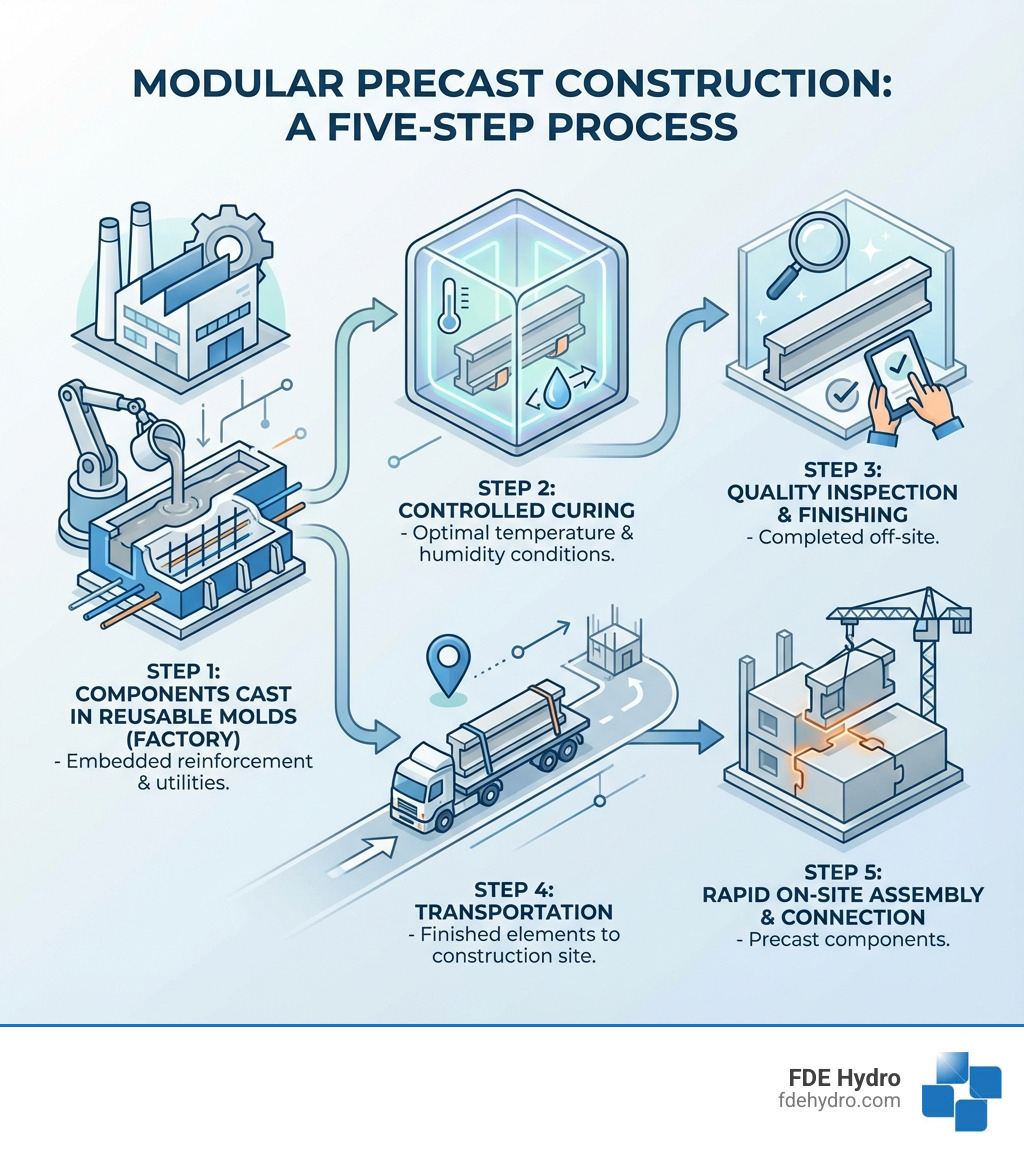
Must-know modular precast terms:
The Core Advantages: Why Build with Modular Precast?
When we talk about modular precast construction, we’re not just discussing a different way to pour concrete; we’re talking about a fundamental shift in how we approach building, emphasizing efficiency, predictability, and long-term value. The benefits extend far beyond the initial construction phase, influencing everything from project timelines and budgets to the structural integrity and environmental footprint of our infrastructure.
Best Speed and Cost-Effectiveness
One of the most compelling reasons to choose modular precast is the sheer speed it brings to a project. Imagine building critical infrastructure components off-site, in parallel with site preparation. This concurrency dramatically shortens project timelines. For instance, some of our clients using modular precast solutions for buildings can have them installed on a level layer of compacted stone in less than an hour, with wall panels and roof slabs erected in a fraction of the time of other methods.
This speed translates directly into significant cost savings. By reducing the time spent on-site, we minimize labor costs, equipment rental fees, and the expenses associated with managing a prolonged construction zone. The precast concrete construction method considers entire costs for the shell, including material savings, lower site equipment costs due to shorter construction time, and earlier building utilization. This concept is beautifully explained in our article Why Precast Cost Less.
Consider the burgeoning data center market. The Canada data center market alone is projected to more than double by 2030 to U$22.24 billion. Globally, a McKinsey report forecasts an astounding $6.7 trillion of capital expenditures associated with data centers and supporting infrastructure over the next five years. The demand for rapid deployment is intense; developers are now targeting not even four months to complete a new data center facility, a stark contrast to the previous nine to 12-month standard. Modular precast is proving to be a game-changer here, as it allows offsite fabrication and rapid onsite assembly, meeting these aggressive timelines.
Beyond buildings, the same principles apply to civil infrastructure. Prefabricated Bridge Elements and Systems (PBES), a form of modular precast, are structural components built offsite to reduce onsite construction time and mobility impact. The use of PBES improves site constructability, total project delivery time, material quality, product durability, and work-zone safety, while also reducing traffic impacts and weather-related delays. This means less disruption for communities and a faster return to full functionality for vital transportation networks.
Superior Quality and Precision
One of the cornerstones of modular precast construction is the unparalleled quality control it offers. When concrete elements are cast in a factory, they are produced in a controlled environment, shielded from the unpredictable whims of weather conditions. This means consistent temperatures, humidity levels, and curing processes, all contributing to a higher-strength, more uniform product.
Unlike cast-in-place concrete, where variables on a construction site can lead to inconsistencies, modular precast benefits from a high degree of quality control. This includes precise measurement of materials, meticulous mixing, and continuous monitoring throughout the casting and curing stages. The result is a high-strength concrete product that meets exact specifications every time. This rigorous control significantly reduces the chances of on-site errors and rework, saving both time and money. Our article on Precast Concrete Advantages digs deeper into how this controlled environment translates to superior structural integrity and longevity.
Improved Durability and Structural Resilience
Modular precast concrete is not just fast and precise; it’s also incredibly tough. The controlled manufacturing process yields a product with exceptional durability and structural resilience, making it ideal for critical infrastructure and long-lasting buildings.
Precast concrete offers unparalleled resistance to fires, natural disasters (such as extreme heat, cold, rain, wind, and even seismic events), insects, and mold. This inherent resilience is a major advantage, especially for structures that must withstand the test of time and environmental stresses. For example, in data centers where structural integrity is paramount, precast concrete can accommodate loads that approach 400lb/ft2 on floors and 350 lb/ft2 on roofs, thanks to innovations like deep-stem double-tees. These robust components can span over 18 meters, providing the large, clear-span spaces often required in such facilities.
The high-strength concrete and meticulous manufacturing process contribute to a longer service life and lower maintenance requirements over the lifetime of the structure. This long-term performance makes modular precast an excellent investment for projects where longevity and minimal upkeep are key considerations, aligning perfectly with the goals of next-gen civil solutions.
Sustainability and Environmental Benefits
In an era where sustainable construction is not just a buzzword but a necessity, modular precast construction shines brightly. Its factory-based production inherently leads to several environmental advantages.
One of the most significant benefits is material savings. For instance, pre-stressed hollow-core slabs, a common modular precast component, can save up to 45 percent in concrete compared to reinforced concrete floors cast in a 3D mold or a plain cast-in-situ reinforced slab. This reduction in material also means a decrease in the amount of pre-stressing steel needed, potentially cutting it by 30 percent due to the lower self-weight of hollow core slabs. In an average apartment, using pre-stressed hollow core slabs can mean savings of about 14 tons of concrete and more than 250 kg of steel – that’s a substantial reduction in resource consumption!
Furthermore, modular precast contributes to energy efficiency. Insulated precast concrete wall panels, for example, can achieve R-values of R-20 or more, depending on the type and thickness of insulation (e.g., EPS, XPS, or polyisocyanurate). These panels can work as the only load-bearing walls, providing excellent thermal performance and reducing heating and cooling loads, especially crucial for energy-intensive facilities like data centers.
The factory setting also allows for better waste management and recycling of materials, reducing overall construction waste that often plagues traditional sites. Less site disruption, reduced noise pollution, and fewer vehicle emissions from prolonged on-site work further underscore the environmental advantages of modular precast. We believe this approach is fundamental to Sustainable Infrastructure Development.
Key Components and Technologies in Modern Systems
The versatility of modular precast lies in the wide array of components and the cutting-edge technologies that drive their production. From simple panels to complex volumetric units, modern systems leverage innovation to deliver customized, high-performance solutions.
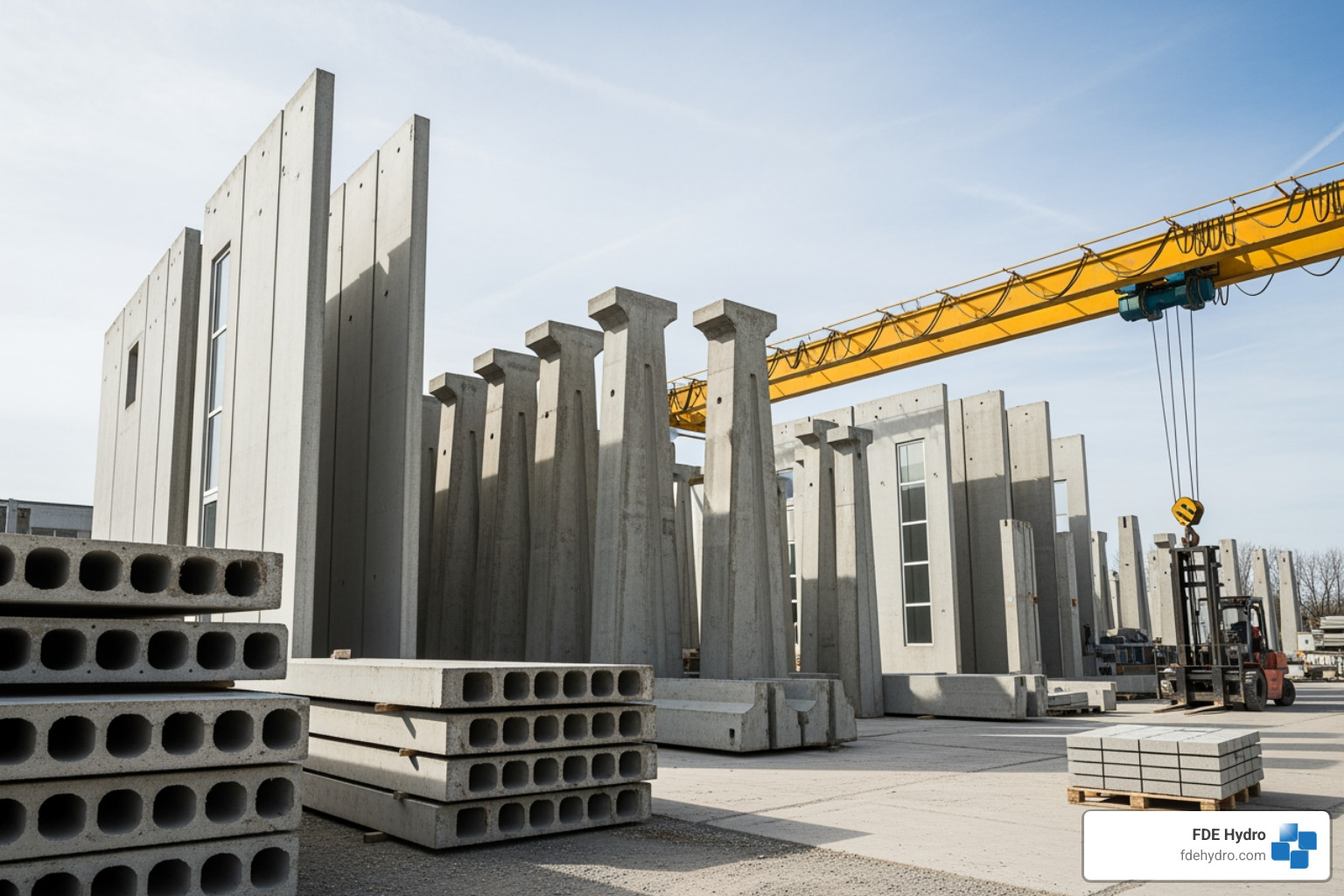
The Building Blocks: From Panels to Pods
At its heart, modular precast construction relies on a diverse range of standardized and custom-made components. These “building blocks” are manufactured with precision in controlled environments, ready for assembly.
- Pre-stressed hollow-core slabs: These are a staple for floors and roofs, capable of spanning from 8 meters to 12 meters. Their hollow cores reduce weight while maintaining structural integrity, leading to material savings.
- Insulated sandwich panels: Comprising two concrete wythes separated by an insulating layer, these panels provide excellent thermal performance (R-values of R-20 or more are achievable) and can serve as both the structural envelope and finished exterior/interior walls.
- Architectural cladding: Beyond structural elements, modular precast allows for highly customizable architectural panels that can be used to clad building facades, offering aesthetic versatility with various finishes and textures.
- Volumetric 3D modules: These are essentially entire rooms or sections of a building cast as a single unit. While they can be heavy (over 30 tons for room-sized modules), they offer extreme speed on-site. Historically, these have been predominant for prison cells, with structures as high as 10 to 12 stories. Their use has expanded to school classrooms, hotel/motel rooms, and even bathroom pods, arriving at the site nearly complete and outfitted. You can find an overview of precast components that illustrates this diversity.
The Role of Technology in modular precast Production
The precision and efficiency of modular precast wouldn’t be possible without advanced technology and automation. The modern precast plant is a hub of innovation, where digital design meets robotic manufacturing.
- Automation and Robotics: From automated batching plants to robotic rebar placement and concrete pouring, automation streamlines the production process, ensuring consistency, speed, and safety. This reduces manual labor and minimizes human error.
- Building Information Modeling (BIM): BIM is crucial for the design and coordination of modular precast projects. It allows for the creation of detailed 3D models of components, facilitating clash detection, optimizing material usage, and ensuring precise fit-up on-site.
- 3D Engineered Models and Digital As-Builts: These technologies improve the accuracy of design and documentation, providing a digital twin of the project that can be used from initial design through to facility management. This level of detail is a significant leap from traditional blueprints.
These technological advancements optimize the entire production process, from design to the construction site, enhancing efficiency, quality control, and the overall deliverability of complex projects. We explore these innovations further in our discussion of Precast Concrete Technology.
Aesthetic Freedom and Customization
A common misconception about modular precast is that it leads to “cookie-cutter” or aesthetically limited buildings. We are here to tell you that is absolutely not the case! Modern modular precast offers remarkable design flexibility and customization options, allowing architects and designers to release their creativity.
Precast concrete is incredibly responsive to the designer’s needs. Colors, shapes, and textures are often more attainable with precast than with competitive materials. We can achieve a vast array of finishes:
- Formliners: These reusable molds can impart intricate patterns, textures, or even simulated natural materials (like wood or stone) onto the concrete surface.
- Textures: From smooth and polished to sandblasted, exposed aggregate, or ribbed, the surface texture can dramatically alter the appearance.
- Colors: Pigments can be added to the concrete mix to achieve a wide spectrum of colors. Additionally, exterior finishes can be stained with UV-resistant, vibrant colors, offering options like simulated ashlar, brick, barnboard, or block.
- Aggregate exposure: By varying the size and type of aggregate and the depth of exposure, we can create unique visual effects, from subtle speckles to bold, textured surfaces.
This level of customization means that modular precast can be used to create visually stunning and unique structures, dispelling any myths about limited design. Just look at how a Breezy Brazilian Prefab Is Made From Six Tiny Modules – Dwell and you’ll see the aesthetic possibilities are virtually endless.
Applications Across Industries: Where Modular Precast Shines
The beauty of modular precast lies in its adaptability. While it excels in projects requiring speed and repetition, its inherent strengths make it suitable for a surprisingly diverse range of applications, from critical infrastructure to modern housing solutions.
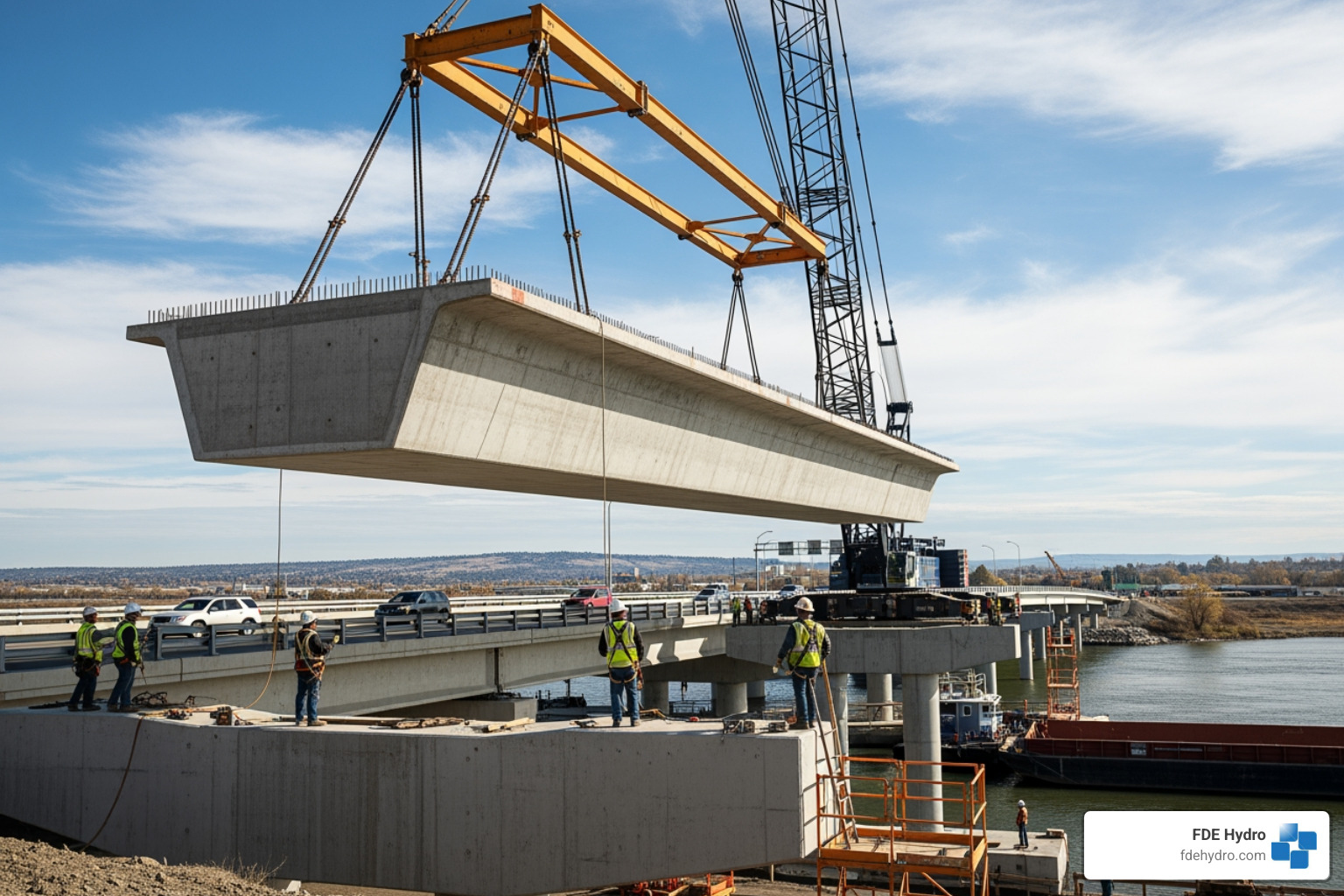
Accelerating Critical Infrastructure
For large-scale public works and vital infrastructure, modular precast is a game-changer. It’s about minimizing disruption, accelerating completion, and ensuring long-term resilience.
- Prefabricated Bridge Elements and Systems (PBES): As mentioned earlier, PBES are critical for Accelerated Bridge Construction (ABC). By building bridge components off-site, we can significantly reduce the time traffic is impacted, improve work-zone safety, and minimize weather-related delays. This method is gaining traction across North America, including projects in the U.S. and Canada, for rapid bridge replacement and rehabilitation. The FHWA’s information on Prefabricated Bridge Elements and Systems highlights how this approach improves site constructability, total project delivery time, material quality, and product durability.
- Water Control Systems: This is where our expertise at FDE Hydro™ truly comes into play. Our patented “French Dam” technology uses modular precast concrete for building and retrofitting hydroelectric dams and other water control systems. This approach significantly reduces construction costs and time compared to traditional methods, especially in regions like North America, Brazil, and Europe where we operate. The rapid installment of module precast civil infrastructure is changing how we approach vital water management projects. You can learn more about this innovative approach in our article on Modular Dam Construction.
Building the Future of Data and Housing
The rapid expansion of the digital world and the ongoing demand for affordable, quality housing present immense challenges that modular precast is uniquely positioned to address.
- Data Centers: The data center boom, fueled by AI and cloud computing, demands unprecedented speed-to-market. With nearly 5,000 operating data centres across North America and hundreds more in development in the U.S. and Canada, the pressure is on. As a McKinsey report indicates, the global capital expenditures for data centers and supporting infrastructure are projected to reach $6.7 trillion over the next five years. Modular precast offers the solution: rapid assembly, ability to accommodate heavy load requirements (up to 400lb/ft2 on floors), and high R-value insulated wall panels (R-20 or more) crucial for maintaining precise temperature control. Its resilience to fire and natural disasters also provides peace of mind for critical operations.
- Multi-story Housing and Commercial Buildings: The efficiency of modular precast is not limited to specialized facilities. It’s a proven method for constructing multi-story apartment buildings, hotels, and classrooms. Modular precast units have been successfully used for prison cells for many years, expanding to school classrooms and hotel/motel rooms. These units can be outfitted and finished at the plant, arriving at the site nearly complete, drastically cutting down on construction time and enabling quicker occupancy.
Navigating the Challenges and Limitations
While the advantages of modular precast are compelling, like any construction method, it comes with its own set of considerations. Understanding these challenges upfront allows for better planning and more successful project outcomes.
Logistical Problems: Transportation and Handling
The very nature of modular precast—large, pre-fabricated elements—introduces specific logistical problems.
- Module weight and size limitations: Room-sized 3D precast concrete modules can weigh more than 30 tons. Transporting such heavy and often oversized components requires specialized equipment and careful planning. The sheer dimensions of panels and modules can be limited by road regulations, bridge clearances, and vehicle capacities.
- Site access: Even if elements can be transported, the construction site itself must be accessible for large delivery vehicles and heavy lifting cranes. Tight urban sites or remote locations can pose significant challenges.
- Specialized transport and crane capacity: The handling and erection of heavy modular precast elements demand powerful cranes and experienced operators. This can add to the project cost and require meticulous scheduling.
Design and Connection Complexity
The factory-controlled precision of modular precast means that design decisions need to be finalized much earlier in the project lifecycle compared to traditional construction.
- Early design freeze: Changes later in the design process can be costly and cause significant delays, as molds may already be fabricated or components produced. This necessitates a more thorough and collaborative design phase upfront.
- Importance of precision: Every connection point, every utility penetration, and every dimension must be exact. Tolerances are much tighter in modular precast, requiring meticulous detailing and coordination between the design team, the precast manufacturer, and the on-site assembly crew.
- Force-fitting connections: The connection details between modular precast elements are critical for structural integrity and must be carefully engineered for force-fitting and durability. These connections need to be robust, efficient to assemble on-site, and capable of transferring loads effectively.
- Collaboration between teams: Successful modular precast projects rely heavily on seamless communication and collaboration among all stakeholders, from architects and engineers to the precast plant and the installation crew. This integrated approach ensures that all potential issues are addressed during the design phase, long before concrete is poured.
| Feature |
Modular Precast |
Cast-in-Place Concrete |
| Flexibility |
Design freeze required early; highly customizable within module constraints |
High design flexibility; changes easier during construction |
| Speed |
Rapid on-site assembly; concurrent off-site production |
Slower on-site construction; sequential operations |
| Quality Control |
Superior (factory controlled environment) |
Variable (site conditions, weather dependent) |
| Initial Planning |
Requires extensive upfront design and coordination |
More adaptable during construction |
| Site Impact |
Minimal disruption, noise, waste |
Significant site activity, noise, waste |
| Weather Dependency |
Low (factory production) |
High (site pouring and curing) |
| Labor Needs |
Lower on-site labor; skilled factory workforce |
Higher on-site labor; less specialized skill often used |
| Cost |
Lower overall project cost (due to speed, efficiency) |
Can be higher due to longer timelines, site overhead |
| Durability |
Excellent (high-strength, controlled curing) |
Good (can vary with site conditions) |
Frequently Asked Questions about Modular Precast Construction
What is the main difference between modular precast and traditional construction?
The primary difference lies in where the building elements are created. Modular precast involves manufacturing components like walls, floors, beams, and even entire 3D modules in a controlled factory setting before transporting them to the site for assembly. This “off-site” approach contrasts sharply with traditional construction, like cast-in-place concrete, which involves forming, pouring, and curing concrete directly on-site.
Traditional methods are slower, more susceptible to weather delays, and can have more variability in quality due to changing site conditions. Modular precast, by moving much of the work into a controlled environment, ensures consistent quality, faster timelines, and reduced on-site disruption.
Is modular precast only for simple, boxy buildings?
Not at all! This is a common misconception we love to dispel. While modular precast is incredibly efficient for repetitive structures like hotel rooms, prison cells, or data centers, modern precast technology offers vast aesthetic flexibility. Through the use of various molds, formliners, aggregates, and specialized finishes, architects can achieve a wide range of complex shapes, intricate textures, and vibrant colors.
We can simulate natural stone, brick, or wood, create unique patterns, or achieve sleek, modern facades. The ability to embed architectural elements directly into the precast during manufacturing means that “customization” is not an afterthought, but an integral part of the design process. The result is structures that are both highly functional and visually appealing, dispelling the myth of “cookie-cutter” buildings.
How long can a modular precast structure last?
Modular precast concrete structures are exceptionally durable and designed for a very long service life. Produced with high-quality, high-strength concrete in a controlled environment, they are inherently more robust and consistent than their cast-in-place counterparts. This controlled production environment leads to concrete that is stronger, denser, and less permeable, making it highly resistant to environmental degradation.
Precast concrete offers unparalleled resistance to fires, natural disasters, insects, and mold. With proper design and maintenance, modular precast structures can easily last for many decades, often 50-100 years or more, requiring minimal upkeep throughout their lifespan. This longevity makes them a highly sustainable and cost-effective choice for long-term infrastructure and building projects.
Conclusion
As we’ve explored, modular precast isn’t just a construction trend; it’s a fundamental evolution in how we build. From accelerating project timelines and delivering significant cost savings to ensuring superior quality, enhancing durability, and championing sustainability, the benefits are clear and compelling. We’ve seen how it’s revolutionizing diverse sectors, from the critical infrastructure of bridges and dams to the booming demand for data centers and housing across North America, Brazil, and Europe.
At FDE Hydro™, we believe in the power of innovation to solve complex challenges. Our work with patented modular precast technology, like the French Dam, is a testament to the transformative potential of this method in renewable energy and water control systems. By embracing modular precast, we’re not just building faster; we’re building better, stronger, and more sustainably for the future.
We invite you to learn more about how modular precast can benefit your next project. Explore advanced modular precast solutions for dams and find how we’re shaping the future of infrastructure, one precise, factory-made component at a time.

