

Why Precast Concrete Is Changing How We Build
Precast concrete is one of the most efficient building materials in modern construction — and if you’re evaluating it for your next project, here’s what you need to know at a glance:
| Feature | What It Means for You |
|---|---|
| Ready-to-install | Components arrive on-site pre-made, cutting labor and delays |
| Controlled quality | Cast in a plant, not exposed to weather or site variables |
| Faster schedules | Can reduce installation time by up to 50% vs. traditional methods |
| Design flexibility | Complex shapes, finishes, and custom specs are all achievable |
| Long service life | High strength, crack resistance, and low maintenance over decades |
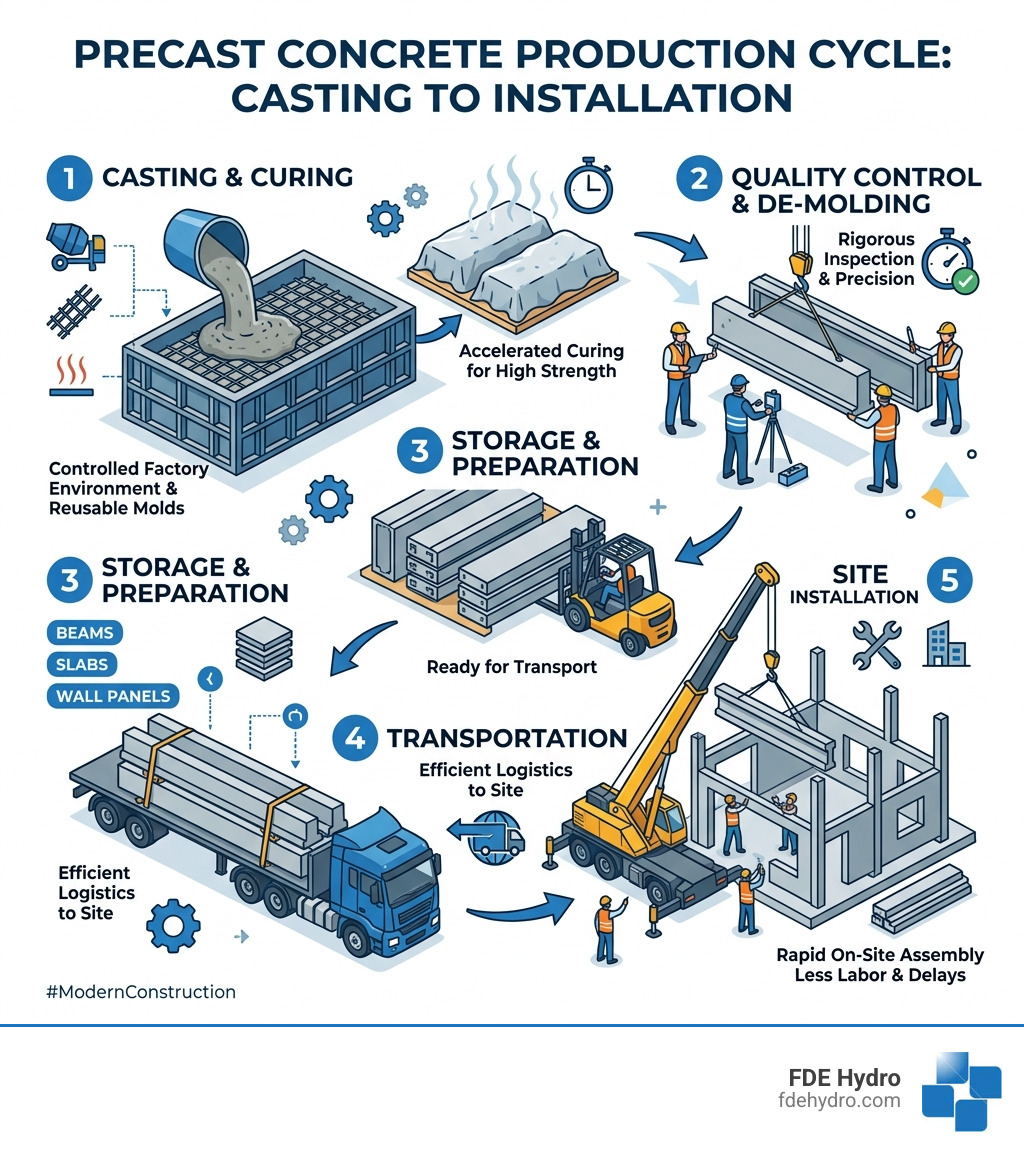
Precast concrete is a construction product made by pouring concrete into reusable molds inside a controlled plant environment — then curing it, transporting it to the job site, and placing it into position. Unlike concrete poured on-site, precast components are manufactured with precision before a project even breaks ground.
The result? Less guesswork. Fewer delays. More consistent results.
That matters enormously when you’re managing a large-scale infrastructure project where cost overruns and schedule slippage aren’t just frustrating — they’re financially damaging.
I’m Bill French, Sr., Founder and CEO of FDE Hydro™, and I’ve spent decades working with precast concrete across major civil and heavy construction projects — including the landmark I-93 Fast14 bridge project, which used modular precast construction to deliver results at a speed traditional methods simply couldn’t match. That real-world experience is the foundation of everything I’ll share in this guide.
Essential Precast Concrete terms:
The Evolution and Manufacturing of Precast Concrete
While we often think of precast concrete as a high-tech modern marvel, its roots actually stretch back to Ancient Rome. The Romans were the masters of early concrete, using it to build their famous aqueducts, tunnels, and culverts. They understood that if you could cast a shape once and repeat it, you could conquer the world (or at least build a very long bridge).
The modern era of precast concrete truly began in 1905. John Alexander Brodie, a city engineer in Liverpool, England, pioneered the use of precast concrete panels to build buildings. He realized that by moving the “messy” part of construction—the pouring and curing—into a controlled environment, he could achieve a level of quality that was impossible in the muddy, rain-soaked trenches of a typical job site. This innovation eventually made its way across the Atlantic, where it revolutionized everything from skyscrapers to subways.
Today, the manufacturing process is a sophisticated blend of art and science. It starts with reusable molds (also called forms). These molds can be made of timber, steel, plastic, rubber, or fiberglass, depending on the desired finish. Because these forms can be used hundreds or even thousands of times, the cost per unit drops significantly compared to one-off site-built forms.
The magic happens in the controlled environment of the plant. Unlike site-poured concrete, which is at the mercy of the weather in New York, Kansas, or California, precast is cast in a climate-controlled facility. This allows for a meticulous curing process. We can monitor temperature and moisture levels perfectly, ensuring the concrete reaches its maximum strength without the risk of freezing, overheating, or drying out too quickly. You can learn more about these technical nuances at About Precast and explore how we apply these principles at Precast Concrete Technology.
Materials and Reinforcement in Precast Concrete
To create high-performance precast concrete, we don’t just use any “mud.” We use high-grade Portland cement (often Grade 43 or 53) and carefully selected aggregates. We also use chemical admixtures—like crystalline waterproofing or oxide pigments—to give the concrete specific properties, such as water resistance or custom colors.
But concrete is like a good team: it needs a strong backbone. That’s where reinforcement comes in. We use rebar for tensile strength, but for many high-load applications, we use prestressed strands. By putting steel cables under high tension before the concrete is poured and then releasing them once it’s cured, we “squeeze” the concrete together. This makes it incredibly strong and resistant to cracking.
| Feature | Precast Concrete | Cast-in-Place (Traditional) |
|---|---|---|
| Curing Location | Controlled Factory | On-site (Weather Dependent) |
| Formwork | Reusable (Cost Efficient) | Single-use or limited reuse |
| Quality Control | High (Laboratory Standards) | Variable (Site Conditions) |
| Installation Speed | Rapid (Plug-and-Play) | Slow (Waiting for Cure) |
| Labor Needs | Minimal on-site crew | Large on-site crew |
Quality Control in the Casting Plant
One of the biggest headaches in construction is “field adjustments.” When a wall doesn’t line up or a beam is a half-inch too long, everything grinds to a halt. In a precast plant, we achieve dimensional accuracy that site-pouring can’t touch. We’re talking about tolerances measured in millimeters.
This consistency ensures that every single piece fits perfectly with the next. Beyond just the shape, the controlled environment allows for high resiliency. Our products are naturally resistant to mold and have extremely low VOC (Volatile Organic Compound) emissions. Because the concrete is so dense and well-cured, it acts as a natural barrier against the elements, preventing the “honeycombing” or structural weaknesses often seen in site-poured structures.
Key Benefits: Why Modern Construction Chooses Precast
If you’ve ever stood on a job site in the middle of a New York winter or a California heatwave, you know that weather is the enemy of a schedule. Precast concrete solves this by moving the critical path indoors.
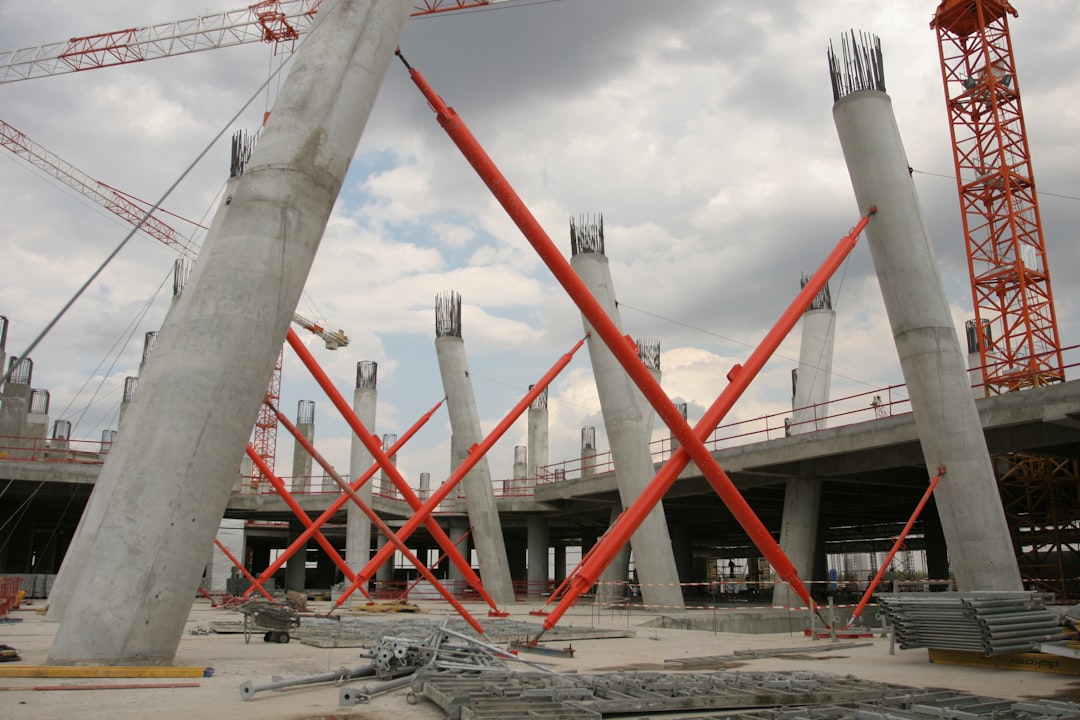
Construction speed is perhaps the most visible benefit. Because the components are manufactured while site preparation and foundation work are happening, they arrive “plug-and-play.” We’ve seen projects where installation time is slashed by up to 50%. This isn’t just about finishing early; it’s about cost savings. Fewer days on-site means lower labor costs, less equipment rental, and reduced financing charges.
Then there is design flexibility. Modern precast isn’t just gray boxes. With computerized equipment and skilled craftsmanship, we can create intricate textures, curves, and colors. It also provides multi-hazard protection, meeting strict standards like FEMA 361 for life safety against storms and high-impact events. For a deeper dive into these perks, check out Precast Concrete Advantages.
Sustainability and Thermal Efficiency of Precast Concrete
We are all looking for ways to build greener, and precast concrete is a surprising leader in sustainability. One of the most effective tools we have is the sandwich panel. These consist of two layers of concrete with a layer of continuous insulation in the middle. These panels can achieve R-values up to R-28.2, which is incredible for thermal efficiency.
Because the insulation is continuous, it eliminates “thermal bridging”—the spots where heat leaks out through studs or connectors. Additionally, manufacturing in a plant drastically reduces waste. Any leftover concrete can be recycled, and because the forms are reusable, we aren’t sending piles of timber to the landfill after every pour. The Canadian Precast Concrete Institute provides excellent resources on how these systems contribute to LEED certification and long-term energy savings.
Strength and Durability Metrics
When we talk about “strength,” we aren’t just talking about how much weight a beam can hold today, but how much it can hold 50 or 100 years from now. Precast concrete is designed for a long service life. Its high density and controlled curing lead to superior crack resistance and a massive load-carrying capacity.
In high-traffic or harsh environments, this durability leads to a significant maintenance reduction. You aren’t constantly patching cracks or dealing with spalling. This is why precast is the go-to for infrastructure that cannot fail. We are constantly seeing how Precast Pushes the Limits of Scale, allowing us to build bigger and stronger than ever before.
Diverse Applications and Quality Standards
The versatility of precast concrete is staggering. You’ll find it in:
- Residential: Precast walls and stairs (even individual steps!) that provide instant basements and sturdy frames.
- Commercial: Massive floor slabs and architectural panels for office buildings and parking garages.
- Transportation: Everything from subway tunnels to A National Example of Rapid Bridge Construction Using Modular Precast Elements.
- Utilities: Concealed underground infrastructure like electrical vaults and communications boxes.
Infrastructure and Civil Engineering Solutions
In civil engineering, precast is the unsung hero. It handles the “dirty work” of our society—septic tanks, manholes, and grease interceptors—with quiet efficiency. Box culverts and retaining walls made of modular blocks allow us to manage water and earth with surgical precision.
At FDE Hydro™, we’ve taken this a step further by applying these principles to the energy sector. Our Prototype of Modular Precast French Dam Completed shows how we can use precast technology to build hydroelectric dams faster and more affordably than traditional methods. By using modular components, we can retrofit existing dams or build new ones with minimal site disturbance.
Certifications for Sourcing Precast Concrete
Not all concrete is created equal. When sourcing precast concrete, you must look for industry certifications to ensure you’re getting a product that will last.
- NPCA Certification: The National Precast Concrete Association (NPCA) certifies plants that meet rigorous quality standards. About 75% of state DOTs (Departments of Transportation) recognize or require NPCA certification.
- PCI Standards: The Precast/Prestressed Concrete Institute (PCI) offers the most proven certification program in the industry, specifically for structural and prestressed components.
- ANSI Accreditation: Look for products that meet American National Standards Institute requirements.
Working with a certified provider like USA Precast Concrete | Precast Concrete Products ensures that the facility undergoes regular, unannounced inspections to maintain these high standards.
Frequently Asked Questions about Precast Concrete
How does precast concrete differ from cast-in-place?
The primary difference is location and control. Cast-in-place is poured into forms built specifically for your job site and cured right there in the elements. Precast is cast in a factory using reusable molds and cured in a perfect environment. This leads to massive labor reduction on-site and weather independence. If it’s pouring rain in New York City, a cast-in-place project might stop; a precast project keeps moving because the pieces were already made last week in a dry plant. For a detailed breakdown of the math, see Why Precast Cost Less.
Is precast concrete more cost-effective for large projects?
Absolutely. The “secret sauce” is formwork reuse. Building custom forms on-site is expensive and time-consuming. In a precast plant, we use the same high-quality steel forms over and over. When you combine that with schedule compression (the building goes up faster) and reduced waste, the ROI becomes very clear. This is the heart of Modular Precast Concrete—standardizing components to drive down costs while increasing quality.
What are the environmental benefits of using precast?
Beyond the thermal efficiency mentioned earlier, precast uses recycled materials like fly ash or slag as cement replacements. Because the components are made to exact specs, there is almost zero site waste. Furthermore, the high thermal mass of concrete helps regulate building temperatures naturally, reducing the load on HVAC systems. You can explore how these systems fit into the “big picture” at The Future is Modular: Understanding Precast Concrete Systems.
Conclusion
At FDE Hydro™, we aren’t just fans of precast concrete—we are innovators in the field. Our patented French Dam technology is a testament to what happens when you apply the efficiency of precast to the challenges of renewable energy. By using modular systems, we are making it possible to build and retrofit hydroelectric dams in North America, Brazil, and Europe at a fraction of the traditional cost and time.
The future of construction isn’t found in the mud and the rain; it’s found in the precision and speed of the casting plant. Whether you are building a bridge, a utility vault, or a hydroelectric powerhouse, precast is the smarter way forward.
Ready to see how we’re Building Smarter: The Innovative Precast Concrete Way? We invite you to Discover our Hydropower Solutions and see how we can help you break the mold on your next project.
