by Bill French Sr. | Dec 23, 2025 | Case Studies
Why Project Costs Spiral Out of Control
Project cost reduction is the strategic process of decreasing expenses while maintaining or improving quality and scope. Here’s how to achieve it:
Top Strategies for Project Cost Reduction:
- Improve estimation accuracy – Involve your team and use historical data
- Establish clear baselines – Set firm scope, schedule, and cost benchmarks
- Control scope creep – Implement formal change control processes
- Optimize resources – Use capacity planning and strategic allocation
- Manage risks proactively – Identify and mitigate potential cost drivers early
- Leverage technology – Automate processes and improve collaboration
- Adopt modern methods – Use prefabrication and lean principles
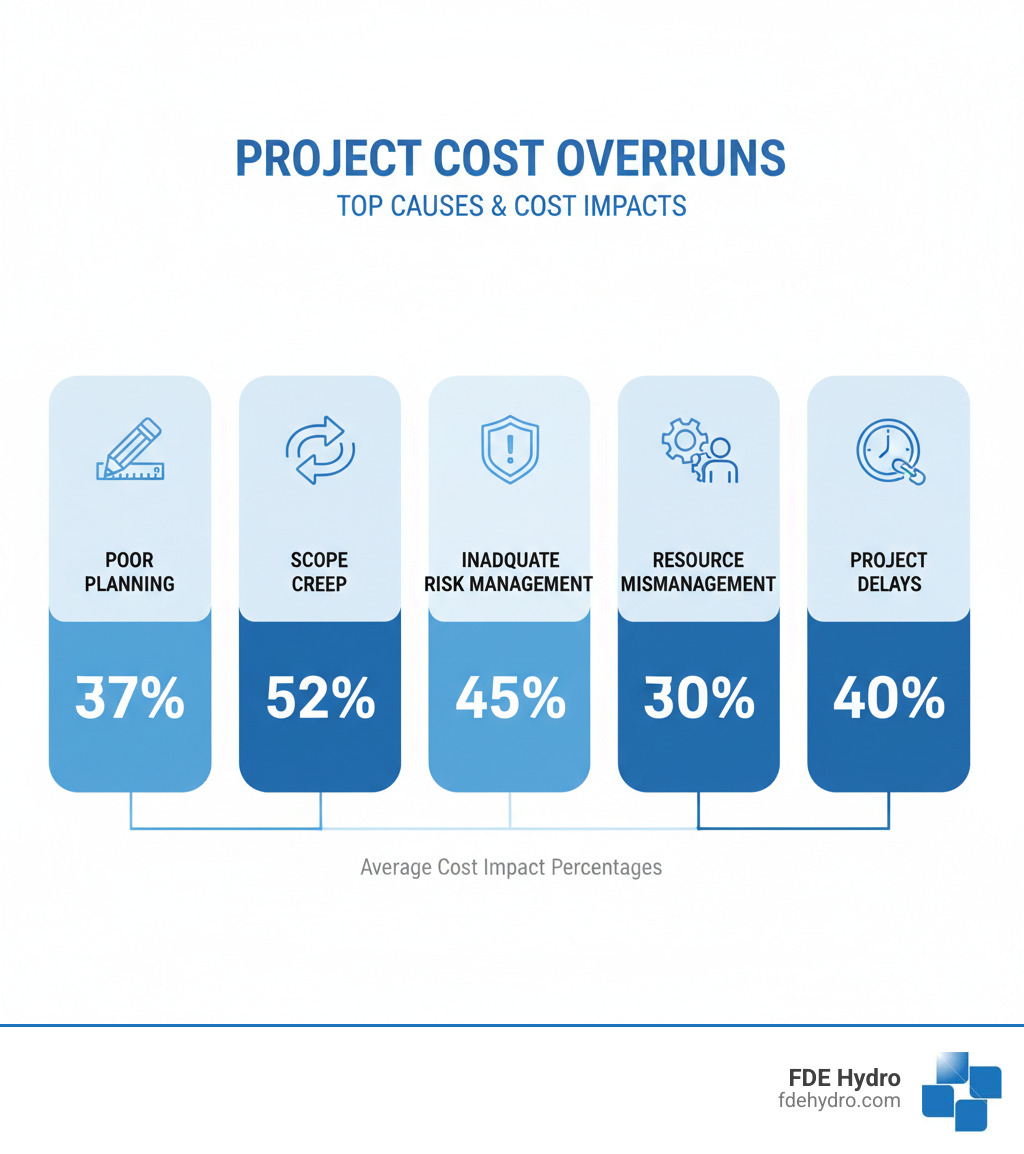
The harsh reality is that most projects exceed their budgets. Research shows 37% of projects fail due to poor planning, and 52% experience scope creep. These are fundamental breakdowns in cost control that can derail even the most promising infrastructure projects.
The construction industry faces unique pressures, where materials and equipment can represent over 70% of expenses. Combined with project delays and resource mismanagement, you have a perfect storm for budget overruns.
But cost reduction isn’t about cutting corners; it’s about working smarter. Cost-cutting is a reactive, temporary fix (like freezing hiring) that often damages a project’s long-term health. Cost reduction is a strategic, permanent improvement (like streamlining workflows) that strengthens it.
For large-scale infrastructure like hydropower systems, the stakes are even higher. Traditional methods involve enormous capital and long timelines, where every delay multiplies costs. As Bill French Sr., founder of FDE Hydro, I’ve spent five decades in heavy civil construction managing over $200M in annual projects. I’ve seen how strategic cost reduction separates success from failure. Through innovative approaches like modular precast construction, we’ve helped clients dramatically reduce capital costs and project timelines in hydropower development.
Project cost reduction terms to learn:
Master the Blueprint: Planning and Estimation for Cost Control
Effective project cost reduction begins long before work starts. It’s rooted in thorough planning—the blueprint phase that sets a project up for financial success.
1. Sharpen Your Estimates for Ultimate Accuracy in Project Cost Reduction
Inaccurate estimates are a primary cause of cost overruns. The problem often starts when estimates are made by people disconnected from the actual work. As Bryan Berthot notes, accuracy improves dramatically when the people doing the work are involved in estimating it.
By using bottom-up estimating, you tap into your team’s direct knowledge of task complexity and potential roadblocks. This not only improves accuracy but also increases commitment to the estimates. Supplement this expertise with historical data analysis. Reviewing past projects provides a data-driven reality check on how long tasks took and what resources they required, turning guesswork into informed projection.
Every estimate must be supported by a Basis of Estimate (BoE). This document is your financial roadmap, defining the scope, assumptions, exclusions, and methodology behind your numbers. For large-scale work like Hydropower Project Costs, a detailed BoE is essential for preventing budget-busting surprises.

2. Establish a Rock-Solid Project Baseline
With accurate estimates in hand, lock them into a project baseline. This fixed reference point is your project’s North Star, telling you if you’re on course. Without it, you’re navigating blind.
A complete baseline includes three parts: the scope baseline (the “what”), the schedule baseline (the “when”), and the cost baseline (the “how much”). Together, these components are essential for performance measurement.
Baselines are powerful tools for project cost reduction because they provide an early warning system. Regularly comparing actuals against the baseline highlights deviations immediately, letting you fix small problems before they escalate. For complex projects, we use a detailed Cost Breakdown Structure (CBS) to map every expense, from materials to labor. This granular approach, tied to our Means and Methods, ensures every step aligns with our financial goals.
A baseline isn’t rigid; it’s a standard for evaluating changes. When a change is proposed, you can assess its true cost impact against the baseline, enabling strategic decisions instead of reactive scrambling.
Execute with Precision: Managing Scope, Resources, and Risks
Even the best plan can fail during execution. To keep your project cost reduction efforts on track, you must master three critical elements: managing scope, optimizing resources, and preparing for risks.
3. Tame Scope Creep Before It Bites Your Budget
Scope creep—the slow addition of unplanned features or tasks—is a notorious budget killer. Research shows that 52% of projects experience scope creep, leading to cost overruns from added labor, materials, and timeline extensions.
The antidote is twofold. First, create crystal-clear documentation of all requirements and deliverables, agreed upon by all stakeholders. This becomes your project’s constitution. Second, implement a formal change control process. Every requested change, no matter how small, must be reviewed for its impact on cost, schedule, resources, and risk. This allows stakeholders to make informed decisions.
This process isn’t about saying “no”; it’s about being transparent about the true cost of changes. Regular stakeholder communication reinforces this discipline, turning clients into partners in protecting the project’s scope.
4. Optimize Your Resource Allocation
Poor resource management is a silent budget drain. Over-staffing, unnecessary overtime, and misuse of skilled personnel all lead to inefficiency and cost overruns.
Smart resource allocation starts with capacity planning to gain visibility into team availability and skills. From there, focus on:
- Strategic allocation: Match the right person to the right task. Don’t assign senior experts to routine work or junior members to critical challenges.
- Cross-training: Build a versatile team to reduce dependence on expensive external specialists and eliminate bottlenecks.
- Strategic outsourcing: Use external experts for limited, specialized tasks when it’s more cost-effective than hiring or training in-house.
Finally, engaged employees are more productive. As Business News Daily notes, valued employees work more efficiently and make fewer mistakes, directly supporting project cost reduction. For complex projects like Energy Infrastructure Development, optimizing resources is critical to finishing on time and within budget.

Leverage Modern Methods for Maximum Project Cost Reduction
To achieve maximum project cost reduction, you must move beyond traditional methods. This means anticipating problems, using technology, and rethinking the fundamentals of how projects are built.
5. Proactively Manage Risks to Avoid Costly Surprises
Projects rarely go exactly as planned. Proactive risk management prepares you for the inevitable surprises, turning potential crises into manageable issues. As the PMBOK Guide on risk management suggests, the goal is to decrease the impact of negative events and increase the impact of positive ones.
The process is straightforward:
- Identify risks early and continuously throughout the project.
- Analyze their likelihood and potential cost impact to prioritize your focus.
- Develop mitigation strategies to reduce the most significant threats, such as lining up backup suppliers or creating contingency plans.
This analysis informs your contingency funds—calculated buffers designed to absorb the cost of unforeseen events. For complex hydropower projects, this proactive approach is essential for financial viability, as discussed in Financing and Mitigating Risks.
6. Accept Technology and Automation
Construction has been slow to digitize, but technology is a powerful lever for project cost reduction. Modern project management software provides real-time visibility into budget utilization, allowing for immediate course correction.
Automation can free up teams from repetitive work; studies show up to 45% of tasks could be automated, and accounting automation alone can yield a 200% ROI in the first year. Additionally, optimizing software licenses can save up to 30%, according to Gartner.
Building Information Modeling (BIM) is transformative, creating a digital twin of the project to identify clashes and errors before construction begins. At FDE Hydro, technology is central to our modular approach. We use digital design and advanced manufacturing to produce high-precision components off-site, which is Why Precast Costs Less. This method reduces errors, cuts labor costs, and minimizes waste.

7. Innovate with Modern Construction and Manufacturing Techniques for Project Cost Reduction
The most dramatic project cost reduction comes from innovating how we build. Traditional methods are prone to expensive rework, which can consume 5% of a total project’s cost.
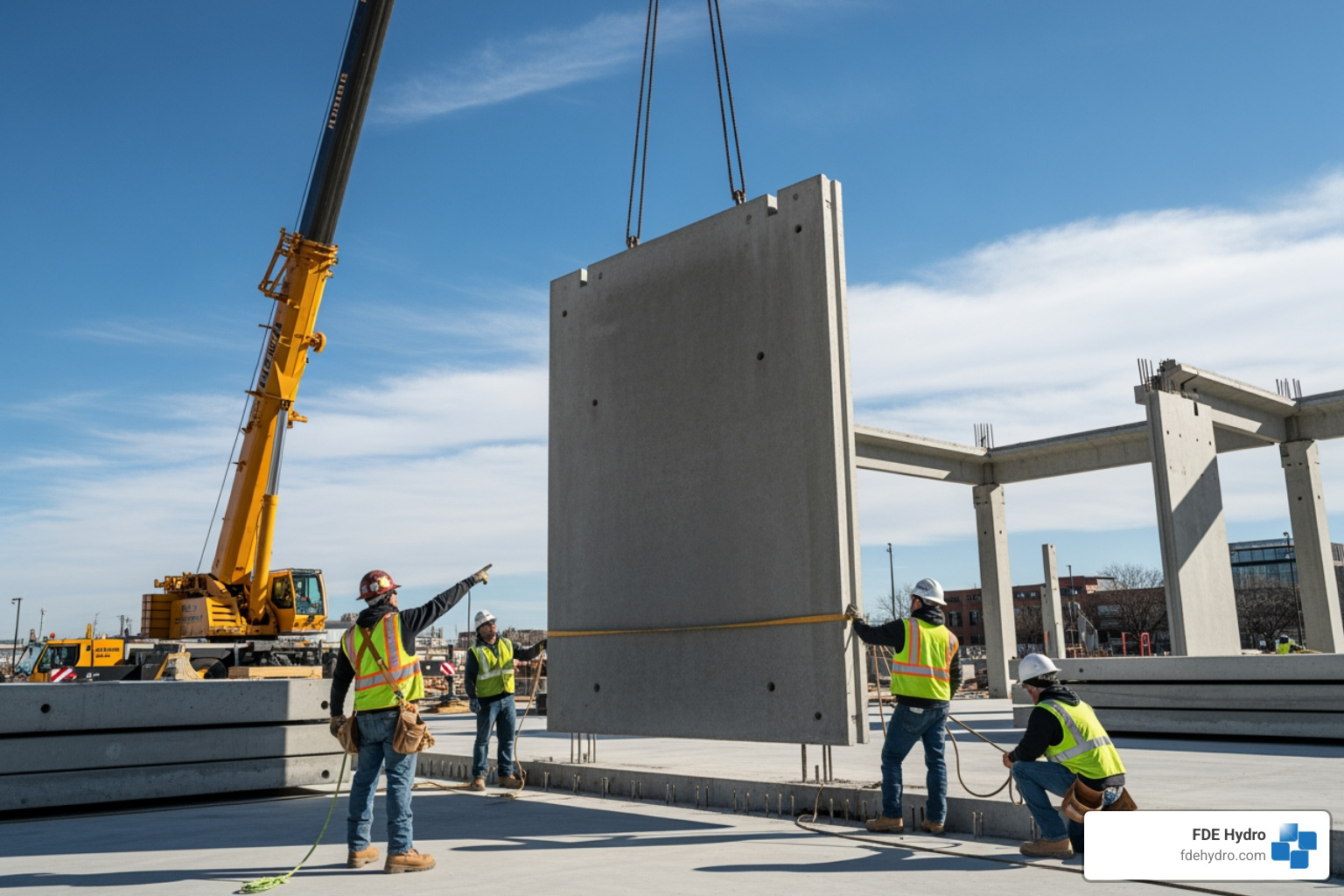
Lean manufacturing principles, which focus on eliminating waste, can cut costs by 5% to 20% in the first year. But the biggest game-changer is modular construction and prefabrication. By manufacturing components in a controlled factory setting and assembling them on-site, you gain immense benefits:
- Reduced on-site labor and weather delays.
- Improved quality control.
- Dramatically shorter construction times, saving on overhead.
- Lower material waste.
- Predictable costs locked in early.
Studies show this approach can save 10-20% on infrastructure projects. Our patented “French Dam” technology at FDE Hydro is a prime example. We manufacture modular precast components and use Rapid Installment of Module Precast Civil Infrastructure to build and retrofit dams with significantly lower costs and faster timelines. These Modular Construction Techniques deliver proven, real-world value.
Frequently Asked Questions about Project Cost Reduction
What’s the difference between cost reduction and cost-cutting?
This is a critical distinction. Cost-cutting is a reactive, short-term measure, like freezing hiring or delaying maintenance. It provides immediate savings but often harms quality, morale, and long-term project health.
Project cost reduction, on the other hand, is a strategic, long-term approach focused on improving efficiency. It involves optimizing processes, eliminating waste, and improving productivity to achieve permanent decreases in cost without sacrificing quality. One is a desperate fix; the other is a sustainable improvement.
What are the most common causes of project cost overruns?
The most frequent causes of budget overruns are preventable through better management. They include:
- Poor estimates: Unrealistic initial budgets set the project up for failure. As noted earlier, 37% of projects fail due to poor planning.
- Scope creep: Uncontrolled changes and additions cause costs to balloon. This affects 52% of projects.
- Ineffective risk management: Failing to plan for potential problems leaves the budget exposed to costly surprises.
- Project delays: Every delay extends costs for labor, equipment, and overhead.
- Poor resource management: Inefficient use of personnel and equipment leads to waste and higher expenses.
Addressing these issues is the foundation of effective project cost reduction.
How can technology help in reducing project costs?
Technology is a powerful tool for project cost reduction by improving efficiency and providing critical insights. Key benefits include:
- Improved Accuracy: Tools like Building Information Modeling (BIM) and analytics software lead to more precise estimates and help detect design clashes before they become expensive on-site rework.
- Automation: Automating repetitive tasks (up to 45% of them, according to research) frees up human resources for higher-value work. Accounting automation alone can deliver a 200% ROI in the first year.
- Real-Time Data: Modern software provides instant visibility into project spending, allowing managers to address budget deviations immediately instead of waiting for month-end reports.
- Better Collaboration: Cloud-based platforms ensure all stakeholders are working from the same, up-to-date information, which reduces miscommunication and errors.
At FDE Hydro, technology is integral to our modular approach and is a key reason Why Precast Costs Less. By leveraging digital design and advanced manufacturing, we achieve sustainable cost savings.
Conclusion: Building a Culture of Cost-Consciousness
The strategies outlined in this guide provide a powerful toolkit for changing your project’s financial health. However, true project cost reduction is more than a checklist; it’s a culture of continuous improvement that should permeate every decision in your organization.
When everyone on your team understands how their choices impact the bottom line, they become partners in efficiency. This mindset isn’t about being cheap; it’s about being smart, resourceful, and deliberate with every dollar spent.
At FDE Hydro, this philosophy is at our core. Our innovative modular precast concrete technology, the “French Dam,” was born from a relentless focus on building better, faster, and more cost-effectively. By prefabricating components and rapidly assembling them on-site, we have dramatically cut construction timelines and costs for clients across North America, Brazil, and Europe. The result is predictable costs, faster delivery, and exceptional quality—turning cost-consciousness into a competitive advantage.
So where do you go from here? Start by implementing one strategy tomorrow. Formalize your change control process, invest in better software, or refine your estimation process with your team. Small, consistent steps compound into significant savings over time.
Every dollar saved through strategic project cost reduction is a dollar that can be reinvested in innovation, people, and growth. It strengthens your competitive position and builds a more resilient future.
Ready to see how modern construction techniques can transform your next hydropower project? Learn more about our innovative dam solutions and find how we’re helping clients build smarter, faster, and more economically.
by Bill French Sr. | Nov 19, 2025 | Case Studies
Why Sustainable Power Generation Matters Now More Than Ever
Sustainable power generation is energy produced from sources that meet our current needs without compromising future generations’ ability to meet theirs. It goes beyond just using renewable sources—it considers the full environmental, social, and economic impact of how we produce electricity.
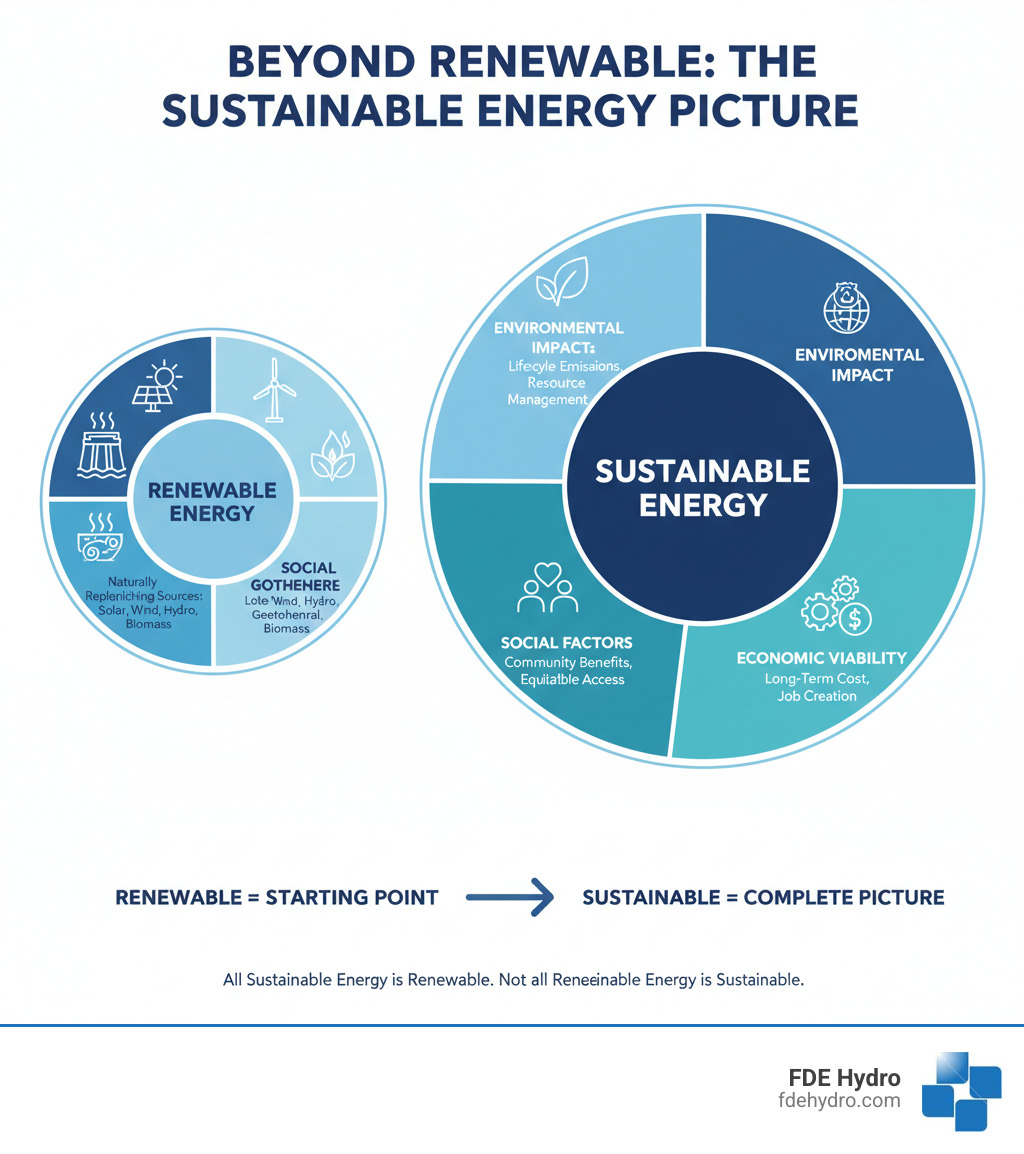
- Renewable Energy refers to energy from naturally replenishing sources like solar, wind, and water.
- Sustainable Energy includes renewable sources but adds criteria like minimal environmental impact, social equity, and long-term economic viability. Essentially, all sustainable energy is renewable, but not all renewable energy is truly sustainable.
The numbers tell a compelling story. Global renewable electricity generation is forecast to climb to over 17,000 terawatt-hours by 2030, an increase of almost 90% from 2023. In 2025, renewables are set to overtake coal-fired generation for the first time in history. This transition is driven by the need to address the climate crisis while ensuring energy security and economic growth.
The challenge is that conventional approaches to power generation often involve high costs and extended timelines. The energy sector needs innovative solutions that can accelerate deployment while reducing capital expenditure.
I’m Bill French Sr., Founder and CEO of FDE Hydro™, where we’ve spent the past decade developing modular solutions for sustainable power generation in the hydropower sector. My five decades in heavy civil construction taught me that the biggest barrier to clean energy isn’t technology—it’s the outdated construction methods that make projects too expensive and time-consuming.
Defining the Terms: Renewable vs. Sustainable Energy
While often used interchangeably, understanding the difference between “renewable” and “sustainable” is key to making smart energy decisions.
Renewable energy is energy derived from natural sources that replenish themselves, like sunlight, wind, and flowing water. These sources are inexhaustible. Our Energy 101 guide breaks down these basics.
Sustainable power generation is a broader concept. It asks if we can produce power today without harming future generations. This requires evaluating the full lifecycle impact across three areas: environmental protection, social equity, and economic viability. A solar panel is renewable, but if its manufacturing involved exploitative labor and created non-recyclable waste, its sustainability is questionable.
What Makes an Energy Source Truly Sustainable?
To be truly sustainable, an energy source must be evaluated on its entire life story. Key factors include:
- Lifecycle emissions: While renewables have far lower emissions than fossil fuels during operation, we must account for emissions from manufacturing, transport, and decommissioning.
- Resource management: Building millions of solar panels or wind turbines requires raw materials. Sustainable practices minimize the environmental cost of extracting and processing these materials.
- Land and water use: Large energy projects can impact habitats, farmland, and water supplies. The environmental impacts of renewable energy sources must be carefully managed, especially in water-scarce regions.
- Social equity: A just transition ensures that projects benefit local communities with jobs and affordable energy, rather than displacing them or concentrating profits elsewhere.
- Economic viability: This includes not just the initial price but also long-term maintenance and grid integration costs. Fortunately, Renewable Power Generation Costs in 2023 show many renewables are now cost-competitive with fossil fuels.
Is All Renewable Energy Sustainable?
Not all renewable energy is automatically sustainable. For example, biomass energy, which burns organic matter, is renewable. However, as the article Up in Smoke: The Biomass Energy Paradox explains, large-scale biomass can lead to deforestation and compete with food crops if not managed carefully.
Large-scale hydropower is another complex case. While it provides clean, reliable power, massive dams can alter ecosystems and displace communities. These impacts can be mitigated with thoughtful design, but they highlight that “renewable” doesn’t mean “problem-free.”
Even solar and wind face challenges. Manufacturing requires materials whose extraction can be damaging, and we need robust recycling programs for panels and turbines at their end-of-life, which is often a lifespan of roughly 30 years for solar panels. The goal is to build a genuinely better energy system, which is the core of sustainable power generation.
The Core Technologies Driving Sustainable Power Generation
The shift to clean energy is powered by a diverse mix of technologies that are becoming more efficient and affordable. Each source brings unique strengths, and understanding how they fit together is key to building a resilient energy future.
Here’s a brief comparison of the main players:
| Energy Source |
LCOE (Levelized Cost of Energy) Range (2020) |
Capacity Factor |
Land Use |
Grid Reliability |
Key Advantages |
Key Challenges |
| Solar PV |
\$0.03 – \$0.06/kWh |
15-25% |
High |
Intermittent |
Low cost, versatile |
Intermittency, storage |
| Wind (Onshore) |
\$0.03 – \$0.05/kWh |
35-50% |
Medium |
Intermittent |
Low cost, clean |
Intermittency, visual impact |
| Hydropower |
\$0.02 – \$0.05/kWh |
40-90% |
High |
Dispatchable |
Reliable, flexible |
Environmental impact, upfront cost |
| Geothermal |
\$0.04 – \$0.07/kWh |
70-90% |
Low |
Dispatchable |
Consistent, low footprint |
Geographic limitations, drilling costs |
| Biomass |
\$0.05 – \$0.10/kWh |
60-80% |
Medium |
Dispatchable |
Waste-to-energy, dispatchable |
Sustainability of feedstock, emissions |
Note: LCOE and capacity factor ranges are approximate and can vary significantly based on project specifics, location, and market conditions.
At FDE Hydro™, we’ve seen how water-based solutions offer unique advantages, which is why we believe The Biggest Untapped Solution to Climate Change is in the Water. Let’s explore each technology.
Solar Power: Using the Sun
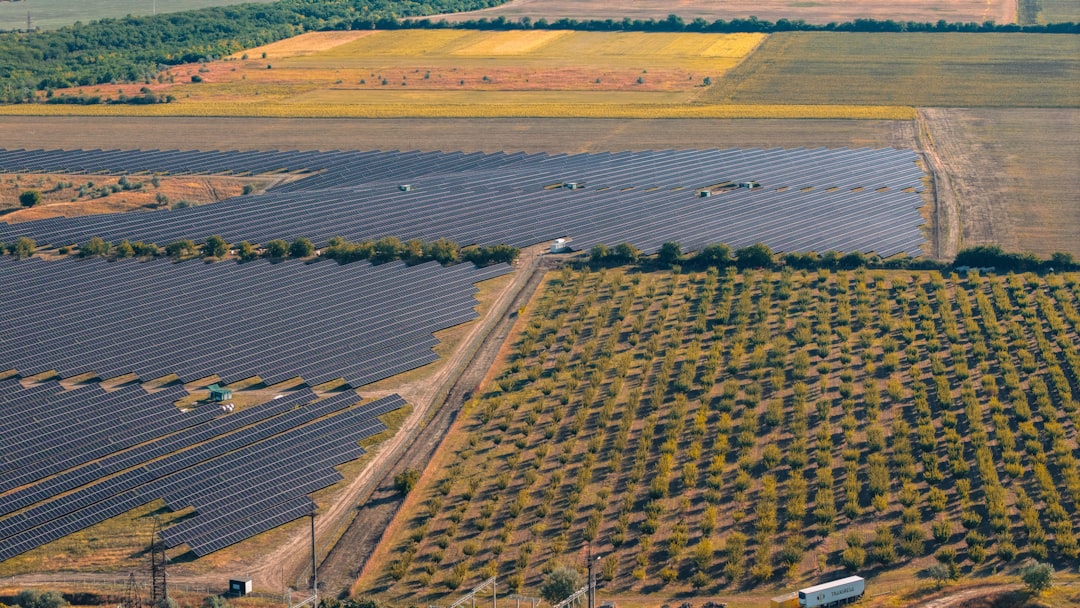
The rate at which solar energy hits the Earth is about 10,000 times greater than all the energy humanity uses. We harness this power mainly through Photovoltaic (PV) panels, which convert sunlight directly to electricity, and Concentrated Solar Power (CSP), which uses mirrors to create heat that drives a turbine. Thanks to plummeting manufacturing costs and a lifespan of roughly 30 years, solar is often the cheapest source of new electricity. Solar PV is projected to become the largest renewable power source globally by 2029.
Wind Power: Capturing the Breeze
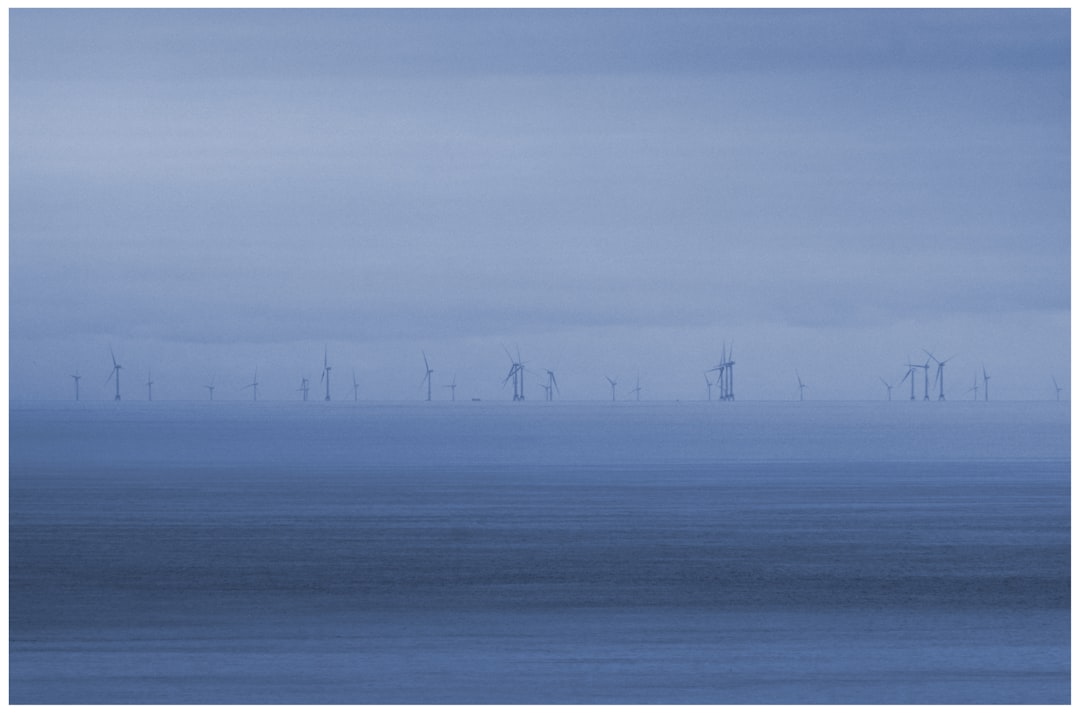
Wind is the fastest-growing source of renewable energy worldwide. Onshore wind farms are cost-effective, while offshore wind farms tap into stronger, more consistent winds. The world’s technical potential for offshore wind power offers tremendous potential, exceeding total global electricity production. While the wind’s intermittency requires grid and storage solutions, it is a cornerstone of our clean energy future, projected to generate 19% of global electricity by 2026.
Hydropower: The Power of Water
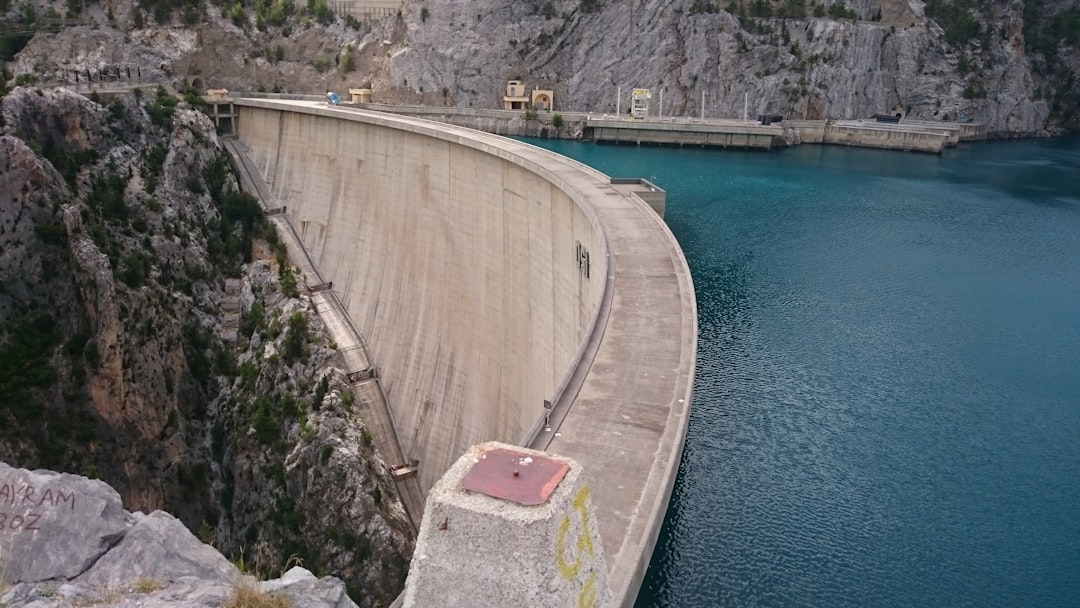
Hydropower is the workhorse of sustainable power generation, converting the energy of flowing water with over 90% efficiency. It is currently the largest single source of renewable electricity globally. Systems include large reservoir dams and smaller run-of-river projects. A key technology is Pumped Storage Hydropower, which acts like a giant battery by pumping water uphill with excess power and releasing it to generate electricity when needed. This makes hydropower a “dispatchable” resource, capable of ramping up or down to match demand, which is why it’s known as the Guardian of the Grid. At FDE Hydro™, our modular “French Dam” technology and Dam Rehabilitation Encapsulation services make hydropower more affordable and faster to deploy.
Geothermal, Biomass, and Ocean Energy
Beyond the big three, other technologies play important roles. Geothermal energy taps the Earth’s internal heat, providing consistent, 24/7 power. It’s a mature technology but is limited to specific geographic locations. Modern biomass systems use organic waste to generate dispatchable power, but sourcing must be managed responsibly to be sustainable. Ocean energy, capturing power from tides and waves, is an emerging frontier with immense theoretical potential that exceeds present human energy needs.
The Global Shift: Benefits, Challenges, and Economics
The global shift toward sustainable power generation is reshaping our world, driven by the need to address climate change and the desire for affordable, reliable energy. Public support is strong, with 82% of Americans favoring more solar and 75% backing more wind power.
Key Benefits of the Clean Energy Transition
The move to sustainable energy offers widespread benefits:
- Environmental: Generating renewable energy creates far lower emissions than fossil fuels, mitigating climate change and improving air and water quality, which leads to better public health.
- Energy Security: Relying on domestic sun, wind, and water reduces vulnerability to geopolitical conflicts and volatile global fuel prices, leading to genuine energy independence.
- Economic: Investment in renewables creates jobs—three times more than fossil fuels—in manufacturing, installation, and maintenance. It also sparks innovation in materials science, grid management, and construction techniques, like our modular approach at FDE Hydro™.
The Economic Case for Sustainable Power Generation
The old narrative of expensive renewables is outdated. Sustainable power generation is now the economical choice. Renewables are cheaper than new fossil fuel plants in most countries, a trend confirmed by the Renewable Power Generation Costs in 2023 report. This has open uped billions in private investment. While Financing Long-Term Hydropower Requires Mitigating Risks Prior to ROI, the favorable economics make it more feasible. Furthermore, clean energy helps avoid the massive hidden costs of fossil fuels, such as healthcare expenses from pollution and economic damage from climate-related disasters.
Overcoming the Problems to Widespread Adoption
This transition is not without its challenges, but they are solvable:
- Grid Modernization: Our existing grid was built for centralized fossil fuel plants. Integrating variable renewables requires significant upgrades, including new transmission lines and smart grid technologies.
- Intermittency: Solar and wind are not always available. This requires advanced energy storage systems like batteries and pumped hydro, along with smart grid management to balance supply and demand.
- Policy and Permitting: Investors need long-term policy stability. Streamlining the permitting process for new projects while maintaining environmental and community protections is a critical bottleneck to address.
- Geography and Community Acceptance: The best renewable resources are often far from cities, requiring new transmission infrastructure. Projects can also face local opposition, making transparent community engagement and benefit-sharing essential for success.
The Future Outlook for Sustainable Power Generation

The future of sustainable power generation is arriving faster than many predicted. The momentum is undeniable, with renewables fundamentally changing how we power our world.
The 2024 Renewables Analysis from the International Energy Agency (IEA) projects that global renewable electricity generation will nearly double by 2030. Key milestones are just around the corner:
- 2025: Renewables-based electricity generation is set to overtake coal-fired generation globally.
- 2026: Both wind and solar will individually generate more electricity than all nuclear power plants combined.
- 2029: Solar PV will surpass hydropower to become the largest single renewable power source.
This shift extends beyond the power sector, as documented in the Global Electricity Review 2025. Clean electricity is displacing fossil fuels in transportation, industry, and heating, becoming the primary energy carrier for the entire economy.
Emerging Technologies and Innovations
Innovation is accelerating, moving next-generation technologies from the lab to the field.
- Advanced battery storage is crucial for balancing intermittent renewables. New technologies like solid-state and flow batteries promise longer duration and safer storage.
- Green hydrogen, created using renewable electricity, offers a way to decarbonize hard-to-electrify sectors like heavy industry and shipping.
- Smart grids and microgrids powered by AI are making our energy system more resilient and efficient, enabling the integration of vast amounts of renewable energy.
Even established technologies like hydropower are seeing a renaissance. At FDE Hydro™, our modular “French Dam” technology was named one of the Top 10 Hydro Innovations and New Technologies because it directly addresses the high costs and long timelines of traditional dam construction. By making hydropower projects faster and more affordable, we make them viable in more places.
The Future of Sustainable Power Generation
The question is no longer if renewables will dominate, but how quickly we can complete the transition. The IEA projects that by 2030, the growth in renewable capacity will be enough to meet the combined electricity demand of China and the United States.
Policy is a major driver. The European Green Deal, along with ambitious programs in the US, India, and other nations, are providing the investment and timelines needed for this massive build-out. However, as the report on Pathways to Sustainable Energy makes clear, we must continue to accelerate. This requires streamlined permitting, grid investment, and continued innovation. The momentum is undeniable, and the clean energy future is being built right now.
Conclusion
We are at a turning point in history, where our energy choices will define the world for generations to come. The shift to sustainable power generation is about more than just technology; it’s a holistic approach that balances environmental, social, and economic factors to build a truly resilient future.
We’ve seen that true sustainability requires looking beyond renewable labels to consider the full lifecycle of our energy sources. The good news is that the transition is well underway. Renewables are set to overtake coal in 2025, costs are plummeting, and the clean energy sector is creating jobs, improving public health, and strengthening energy security.
Challenges like grid modernization and energy storage remain, but these are opportunities for innovation. This is where we at FDE Hydro™ come in. For decades, the energy industry has been held back by construction methods that make clean energy projects too slow and expensive. Our patented “French Dam” technology directly solves this problem, dramatically cutting costs and timelines for building and retrofitting hydroelectric infrastructure.
Hydropower is a cornerstone of a sustainable grid, providing the reliable, flexible power and large-scale storage (through Pumped Storage Hydropower) that intermittent renewables need. Our work in Dam Rehabilitation Encapsulation and modular construction is making this vital resource more accessible than ever.
The path forward requires a diverse portfolio of clean energy sources, supported by smart policy and continued innovation, as outlined in the Pathways to Sustainable Energy. It’s about creating a world with clean air, affordable energy, and stable jobs. At FDE Hydro™, we are proud to be building the solutions that make this future possible.
Ready to dive deeper into how innovative hydropower solutions are reshaping our energy future? Learn more about advanced Hydropower solutions and find how we’re building a sustainable future, one dam at a time.
by Bill French Sr. | Nov 18, 2025 | Case Studies
Understanding the Dual Nature of Massive I/P Portfolios
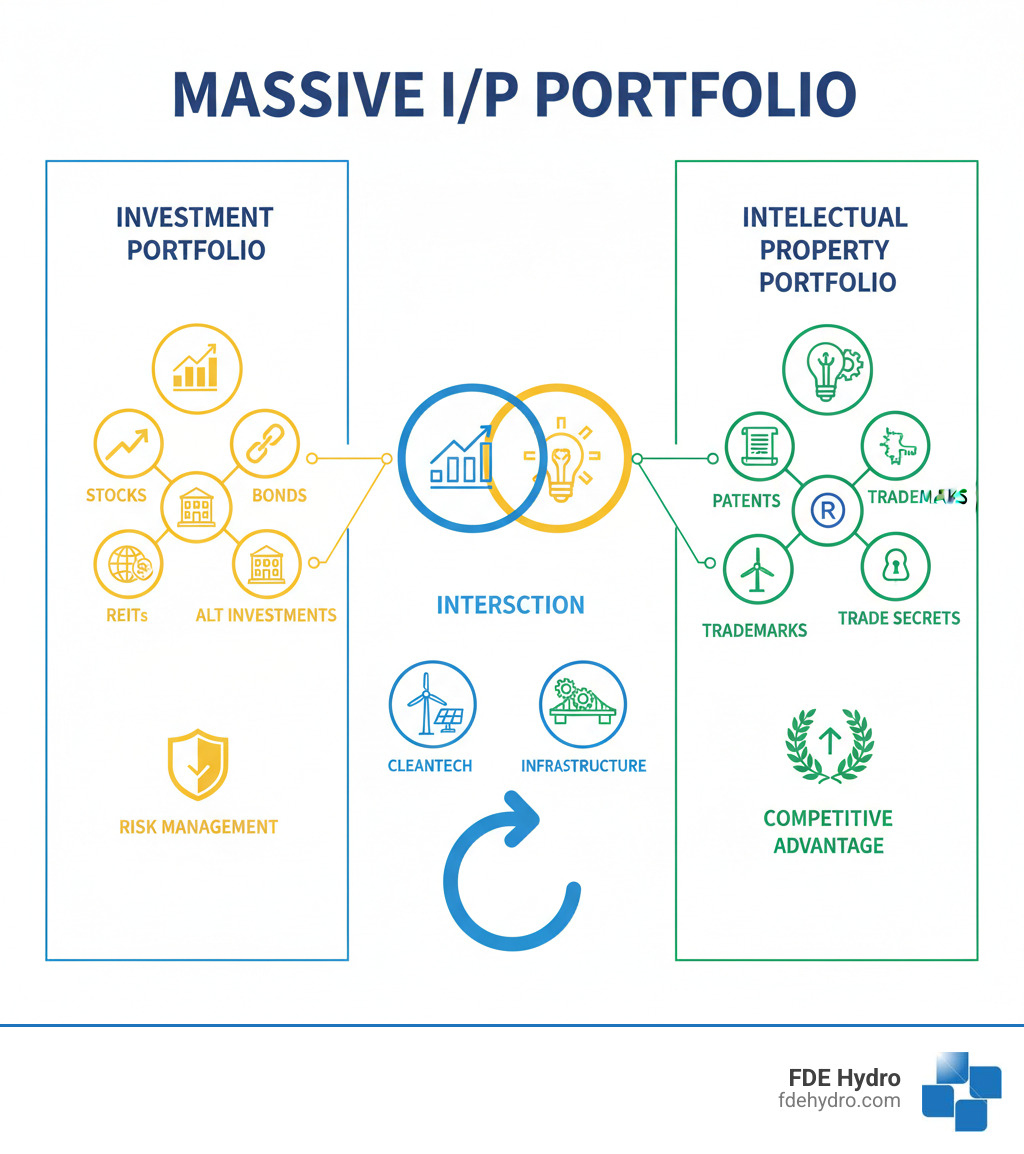
Massive I/P Portfolio can mean two very different things depending on your industry. For investors, it refers to a large-scale collection of financial assets designed to generate wealth through strategic diversification. For innovators and corporations, it means a substantial collection of intellectual property—patents, trademarks, and proprietary technologies—that create competitive advantage and market exclusivity.
Quick Answer: What is a Massive I/P Portfolio?
- Investment Portfolio: A large, diversified collection of stocks, bonds, and alternative assets designed to maximize returns while managing risk.
- Intellectual Property Portfolio: A substantial collection of patents, trademarks, and copyrights that protect innovation and create market barriers.
- Strategic Value: Both serve as foundational assets—one builds financial wealth, the other protects and monetizes innovation.
- Intersection: Companies with strong IP portfolios often attract significant investment, especially in sectors like renewable energy and cleantech.
The confusion between these two meanings is understandable. Both represent massive collections of valuable assets, require strategic management, and have long-term vision. Increasingly, they intersect in the modern economy—particularly in capital-intensive sectors where innovation drives competitive advantage.
For infrastructure projects—especially in renewable energy—both types of I/P portfolios play crucial roles. A well-diversified investment portfolio provides the capital needed for development, while a robust intellectual property portfolio protects the innovations that make projects viable and cost-effective.
I’m Bill French Sr., Founder and CEO of FDE Hydro(TM). We’ve built both types of Massive I/P Portfolios—securing patents for our modular hydropower construction across the US, Canada, Europe, and Brazil, while mastering the investment strategies that fund large-scale infrastructure. My experience in civil construction and hydropower has shown me how these two portfolio types intersect to create lasting value.
What is a Massive I/P Portfolio?
The term Massive I/P Portfolio creates an interesting puzzle. Those two letters—I/P—can open up two completely different meanings, depending on whether you’re sitting in a boardroom reviewing quarterly earnings or in a lab protecting your latest breakthrough. Both interpretations represent substantial collections of valuable assets that require strategic thinking and play essential roles in building competitive advantage.

Understanding the Massive I/P Portfolio as a Financial Strategy
When discussing investment portfolios, “massive” implies more than just owning many different stocks. A Massive I/P Portfolio from the financial side is a large-scale, strategically diversified collection of assets designed to optimize returns while managing risk. It’s like building a financial fortress where each asset class helps protect and grow your wealth.
Conventional wisdom on diversification is often oversimplified. While early research suggested 32 stocks could eliminate most risk, recent studies show even a portfolio of 60 stocks captures only 86% of the diversification available in the market. The reality is stark: 39% of stocks are unprofitable over their lifetimes, 64% underperform their benchmark, and just 25% of stocks are responsible for all market gains. This highlights why a massive portfolio requires genuine strategy, not just quantity.
Your personal risk tolerance is the foundation of any portfolio strategy. The SEC offers helpful guidance on Assessing Your Risk Tolerance, as understanding your emotional comfort with volatility is as crucial as the math behind asset allocation. Without this alignment, you’ll struggle to maintain your strategy during market downturns.
Understanding the Massive I/P Portfolio as an Innovation Asset
On the innovation side, a Massive I/P Portfolio is your company’s arsenal of patents, trademarks, copyrights, and trade secrets. This collection creates a defensive moat—a barrier protecting your innovations from competitors and securing your exclusive market position.
This isn’t just about hoarding patents; it’s about creating freedom to operate. A strong IP portfolio allows you to commercialize and license your technology without fear of infringement claims, giving you control over your innovation destiny.
Take NASA, whose extensive NASA IP Portfolio shows how a massive IP collection can drive development and commercialization across industries. They actively encourage others to build on their work through strategic licensing.
IP Group is another case study, managing IP portfolios across Deeptech, Life Sciences, and Cleantech. Their holdings, from 5G solutions to oncology therapies, show how a well-constructed IP portfolio creates value across multiple cutting-edge industries.
Patent brokerage firms like ICAP Patent Brokerage actively commercialize high-value patent portfolios. These are not dusty documents but actively traded, licensed, and monetized assets that generate real revenue.
The scale of an IP portfolio matters. Just as financial diversification protects against market volatility, a broad IP portfolio protects against technological and competitive threats. Whether in renewable energy or medical devices, your IP portfolio is the foundation of your long-term market position.
Building a Massive Investment Portfolio: Strategies and Components
Building a Massive Investment Portfolio is like constructing a dam—it requires the right materials, solid engineering, and a design that can withstand any storm. We’re not just piling up assets; we’re creating a structure that protects wealth while generating long-term returns.

Core Asset Classes and Diversification
Every strong portfolio starts with fundamentals. Stocks offer ownership and growth potential, though with volatility. Bonds are loans to governments or corporations, providing steadier, regular interest. Alternative assets like real estate, commodities, and private equity often move independently from stocks and bonds, making them valuable for diversification.
True diversification means spreading investments across thousands of stocks, multiple sectors, and different countries. Since even 60 stocks only capture 86% of true market diversification, low-cost index funds and ETFs have become the practical way for most to achieve it.
Within alternatives, Real Estate Investment Trusts (REITs) are popular for income. The SEC’s Investor Bulletin: Publicly Traded REITs explains how they pass earnings to shareholders. Master Limited Partnerships (MLPs), detailed in the Updated Investor Bulletin: Master Limited Partnerships – An Introduction, often focus on energy infrastructure and provide steady income. Understanding the Dividend Yield of holdings helps evaluate returns, while focusing on fundamental Value is key for long-term investments like renewable energy projects.
Comparing Portfolio Types
Portfolios are built around objectives and risk tolerance.
- Aggressive portfolios chase maximum growth with higher risk, focusing on early-stage tech, high-Beta stocks, and emerging markets. This suits investors with a long time horizon.
- Defensive portfolios prioritize capital preservation, favoring consumer staples, utilities, and high-quality bonds. These “Rainy Day Stocks” offer stability during downturns.
- Income portfolios focus on generating cash flow through dividend stocks, REITs, and MLPs, ideal for those needing regular income.
- Speculative portfolios chase outsized returns via IPOs and leveraged ETFs. Most advisors suggest limiting these to 10% or less of a total portfolio.
- Hybrid portfolios blend approaches, mixing stocks, bonds, and real estate to balance growth with stability, like the classic 60/40 portfolio.
The Rise of Alternative and Thematic Strategies
Modern portfolio construction has evolved beyond simple stock-and-bond splits. Sophisticated investors now use alternative strategies that seek uncorrelated bets—investments that don’t all move in the same direction.
For example, “The Fortress Portfolio” uses layered, uncorrelated investments for wealth preservation. It achieved a Sortino ratio of 1.78 (vs. 0.90 for a 40/60 portfolio), indicating better risk-adjusted returns by focusing on downside volatility. The “SPY Hunter Portfolio” aims to beat the S&P 500 with better downside protection by shifting between offensive and defensive modes using managed futures, gold, and other strategies. Understanding topics like Energy 101 is important here, especially for thematic investments in renewables.
These modern approaches show that true portfolio strength comes from combining assets that react differently to market conditions. This principle of diversification for reliability is one we apply at FDE Hydro(TM) when designing hydropower systems. The fundamentals of smart design, diversification, and long-term thinking apply to both financial assets and infrastructure projects.
The Strategic Value of an Intellectual Property Portfolio
Just as a diversified investment portfolio protects financial wealth, a robust intellectual property portfolio protects a company’s innovations. For us at FDE Hydro(TM), our Massive I/P Portfolio isn’t just a collection of legal documents—it’s the foundation of our competitive position in the renewable energy sector.

IP as a Defensive Moat and Competitive Advantage
Think of intellectual property as the castle walls protecting your kingdom of innovation. Patents grant exclusive rights to inventions, preventing others from making, using, or selling them. This exclusivity creates a powerful defensive moat—a barrier that competitors can’t easily cross.
This allows us to secure market share and command premium pricing. As the Innovation Asset Collective demonstrates by acquiring patents to give members a business advantage, a Massive I/P Portfolio functions as both a shield and a sword.
Our patented modular precast concrete technology—the “French Dam”—exemplifies this. We’ve secured patent protection across the US, Canada, Europe, and Brazil, giving us freedom to operate in major markets. This protection extends to innovations like Dam Rehabilitation Encapsulation, ensuring our methods remain unique. Competitors face a wall of patents, forcing them to either license from us or develop entirely different, and likely more expensive, approaches.
Strong IP protection also gives us the confidence to invest heavily in R&D, knowing our innovations won’t be copied. You can learn more About Us and how we’ve built this protective moat around our hydropower innovations.
Commercialization and Attracting Investment
A Massive I/P Portfolio does more than defend—it generates value. Licensing agreements allow us to monetize our patents by granting other companies rights to use our technology in exchange for royalties, creating ongoing revenue while expanding our innovations’ reach.
More importantly, strong IP acts as a magnet for investment capital. Venture capital and private equity firms scrutinize IP portfolios because patents represent tangible, protected value. In capital-intensive sectors like cleantech, a robust patent portfolio often makes the difference in securing funding.
Our patents can also serve as collateral for IP-backed financing, making it easier to secure loans. Investors view protected technology as a real, quantifiable asset, similar to physical property.
We’ve learned that Financing Long-Term Hydropower Requires Mitigating Risks Prior to ROI. Our Massive I/P Portfolio directly addresses this by proving our technology is unique, protected, and defensible. When investors see our patents, they understand we’re an innovation company with protected competitive advantages.
This combination of defense and commercial potential transforms IP from a legal necessity into a strategic business asset. For companies in the renewable energy space, a strong IP portfolio is essential for survival and growth.
The Intersection: Where Investment Meets Innovation
The real magic happens when financial strategy meets technological innovation. This is where smart money finds breakthrough ideas, and where groundbreaking inventions secure the funding they need to change the world. In sectors like Deeptech, Cleantech, and infrastructure, this intersection is essential.

Investing in Companies with Strong IP
When evaluating potential investments, a company’s intellectual property strength reveals much about its future. Companies with robust patent portfolios are building walls that keep competitors at bay, creating market positions that can last for years.
Smart investors look beyond financial statements. In innovation-driven sectors, the key question is about the ownership and defensibility of proprietary technology. A strong Massive I/P Portfolio can be more valuable than current earnings, as it can open up entirely new markets.
IP Group demonstrates this approach, with a portfolio spanning companies in advanced AI, novel therapies, and next-gen battery technology. These are calculated investments in companies where patented technology creates genuine competitive advantages.
In the renewable energy space, this principle is even more critical. We’ve long believed that The Biggest Untapped Solution to Climate Change is in the Water. But belief isn’t enough—you need protected technology that makes your solution viable at scale.
Case Study: Renewable Energy Infrastructure
Hydropower clearly exemplifies how investment and intellectual property portfolios work together. Building sustainable energy infrastructure requires serious capital and cutting-edge technology to reduce costs, accelerate timelines, and mitigate risks.
This is where FDE Hydro(TM)’s work is critical. Our patented modular precast concrete technology, the “French Dam,” changes the economics of hydropower. We manufacture components in a factory and assemble them quickly on-site, replacing months or years of traditional construction. The time savings alone can be transformative for project financing.
The beauty of Modular Powerhouses is that they address multiple investor concerns: risk mitigation through factory-controlled quality, cost reduction as explained in Why Precast Cost Less, and timeline acceleration that completes projects in a fraction of the traditional time.
For investors, these factors directly impact ROI. A project that comes online faster generates revenue sooner. A project with lower risk has more predictable cash flows. A project with proprietary technology has lasting competitive advantages.
Our Massive I/P Portfolio covers the United States, Canada, Brazil, and Europe, allowing our technology to be deployed globally without fear of infringement.
This synergy creates infrastructure projects that are financially viable. Many renewable ventures fail due to unprotected technology, high costs, or long timelines. When innovation is backed by solid patents and capital, investors get returns, innovators can scale, and the world gets cleaner energy. That’s the intersection we’re working at every day.
Frequently Asked Questions about Massive I/P Portfolios
How many assets are needed for a “massive” investment portfolio?
The term “massive” in an investment context refers more to the scale of capital and breadth of diversification than a specific number of holdings. It’s not about hitting a magic number of stocks.
A portfolio of 60 stocks only captures 86% of true market diversification. To achieve genuine diversification across global markets and industries, you need exposure to thousands of securities.
This is why serious investors use low-cost index funds and ETFs for broad market exposure without managing thousands of individual positions. A “massive” portfolio is defined by its strategic allocation across asset classes like stocks, bonds, real estate, and alternatives, aligned with your risk tolerance and goals. A well-built portfolio might use a few select funds to gain exposure to thousands of underlying securities.
What makes an intellectual property portfolio valuable?
For intellectual property, quality trumps quantity. A few strong, defensible patents protecting core technologies are far more valuable than a cabinet full of weak ones. Value comes down to several key factors:
- Strategic Importance: Does the IP protect technologies critical to your competitive advantage? At FDE Hydro(TM), our patented technology is the foundation of our business, allowing us to deliver Modular Powerhouses faster and more cost-effectively.
- Commercial Potential: Can you license the IP for revenue or use it to create products customers want? The best IP opens multiple revenue streams.
- Market Relevance: Valuable IP addresses current or emerging market needs. As the world recognizes that The Biggest Untapped Solution to Climate Change is in the Water, our hydropower innovations are perfectly positioned.
- Defensibility: Can your patents withstand legal challenges? A patent that crumbles under scrutiny is worthless. Strong IP creates a real defensive moat.
Who is the typical investor for these types of portfolios?
The answer depends on which type of Massive I/P Portfolio we’re discussing.
For investment portfolios, investors are diverse. They include affluent individuals and family offices who require sophisticated strategies to preserve and grow wealth, as well as institutional investors like pension funds, endowments, and sovereign wealth funds. These groups have the capital and long-term perspective for large-scale, diversified approaches, focusing on strategic Assessing Your Risk Tolerance.
For intellectual property portfolios, the “investor” is often a corporation developing or acquiring IP to dominate a market, a research institution, or a specialized IP holding company. Private equity and venture capital firms are also major players, investing in the future potential of protected innovation. They know that in capital-intensive sectors like renewable energy, strong patent protection can be the difference between success and failure.
At FDE Hydro(TM), we understand both sides. We have the investment strategies to fund large-scale infrastructure and the patents across the US, Canada, Brazil, and Europe to protect our technology. This dual perspective helps us bridge the gap between groundbreaking ideas and the capital needed to realize them.
Conclusion
We’ve explored the dual meaning of Massive I/P Portfolio, and it’s clear that whether discussing financial assets or intellectual property, both are crucial for building lasting value.
On the financial side, a massive portfolio is built on thoughtful diversification across asset classes and strategic risk management. It’s not about picking hot stocks but achieving broad market exposure, often using alternative strategies to find uncorrelated returns and manage volatility.
On the innovation side, a massive IP portfolio is both armor and sword. It protects what makes you unique, deters competitors, and signals to investors that you have a real, defensible asset. In sectors like renewable energy, strong IP is the difference between leading the market and being a spectator.
At FDE Hydro(TM), we live at this intersection. Our patented modular precast concrete technology (the “French Dam”) is protected across the US, Canada, Europe, and Brazil. This Massive I/P Portfolio allows us to deliver faster, more cost-effective, and reliable hydropower solutions. We also understand the investment side, knowing that Financing Long-Term Hydropower Requires Mitigating Risks Prior to ROI, which our protected technology helps achieve.
This dual perspective—understanding how to protect innovation and how to attract the capital to scale it—is what allows us to create lasting value. We’re not just building dams; we’re building a sustainable future for renewable energy infrastructure.
If you’re curious about our specific technologies, we invite you to Discover the innovative methods and technologies powering the next generation of infrastructure investments. Whether you’re an investor or an innovator, there’s never been a more exciting time to be part of this change.
by Bill French Sr. | Nov 17, 2025 | Case Studies
Why Rivers Need Open Highways for Life
Aquatic Animal and Recreational Passage is the ability of fish, other aquatic species, and people to move freely through waterways. This freedom is essential for wildlife to complete life cycles and for humans to enjoy recreational activities.
Key Elements of Aquatic Passage:
- For Wildlife: Migration routes for spawning, feeding, and survival
- For People: Safe access for kayaking, fishing, and water recreation
- Main Barriers: Dams, culverts, and poorly designed water crossings
- Solutions: Fish ladders, barrier removal, and nature-like fishways
- Impact: Millions of barriers fragment U.S. habitats and block movement
As William L. French, Sr. from the Department of Energy’s Water Power Technology Office stated: “We are developing a natural run-of-river hydropower system solution for the North American rivers and waterways worldwide, that keeps our riverine aquatic animals as our primary environmental customers.”
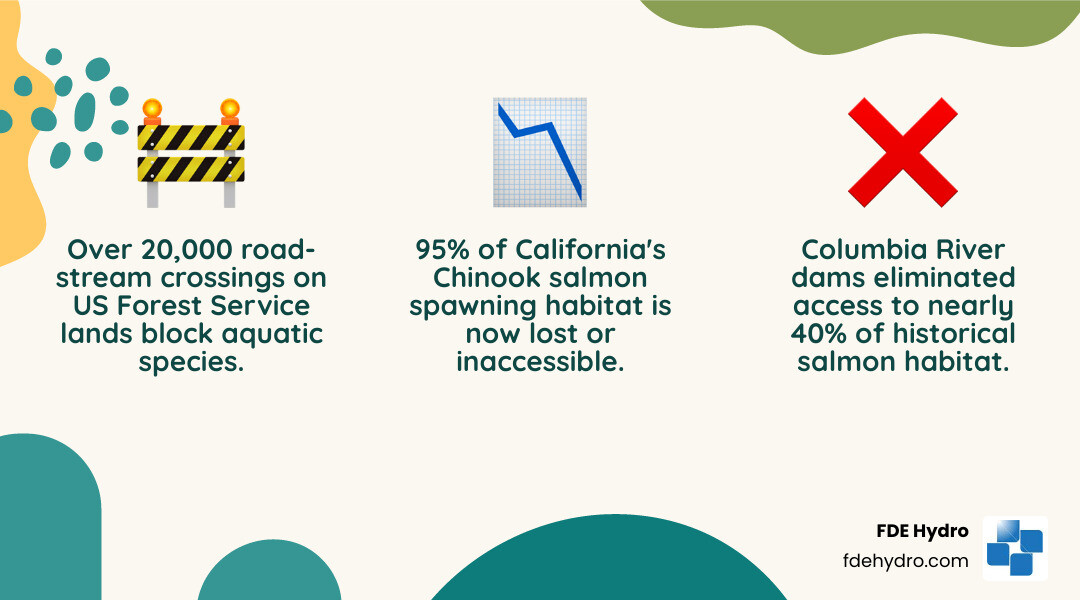
This vision captures today’s challenge. Rivers and streams once supported vast migrations of salmon, sturgeon, and other species. Now, millions of obsolete structures fragment these aquatic highways, blocking fish from spawning grounds and people from recreational areas. The numbers are stark: over 20,000 road-stream crossings on Forest Service lands alone are potential barriers. Columbia River dams have cut off nearly 40% of historical salmon habitat, and in California, 95% of Chinook salmon spawning habitat is lost or inaccessible.
Yet there’s hope. The U.S. Forest Service restores 600 to 1,000 miles of aquatic habitat annually, and the Bipartisan Infrastructure Law added $200 million for fish passage restoration. Aquatic Organism Passage (AOP) expands beyond “fish passage” to include mussels, turtles, and insects—all vital to the ecosystem. Restoring these connections reduces flood risks, improves water quality, and builds climate resilience.
I’m Bill French Sr., founder and CEO of FDE Hydro. I’ve spent decades developing modular construction solutions for the hydropower industry, including innovations in Aquatic Animal and Recreational Passage. Through my work with the Department of Energy’s Water Power Technology Office, I’ve seen how next-generation hydropower can coexist with—and even improve—river connectivity.
The Importance of Aquatic Animal and Recreational Passage
Think of a river as nature’s highway system. Now imagine walls built across every major intersection. That’s what’s happening to aquatic life across North America, and the effects reach far beyond fish.
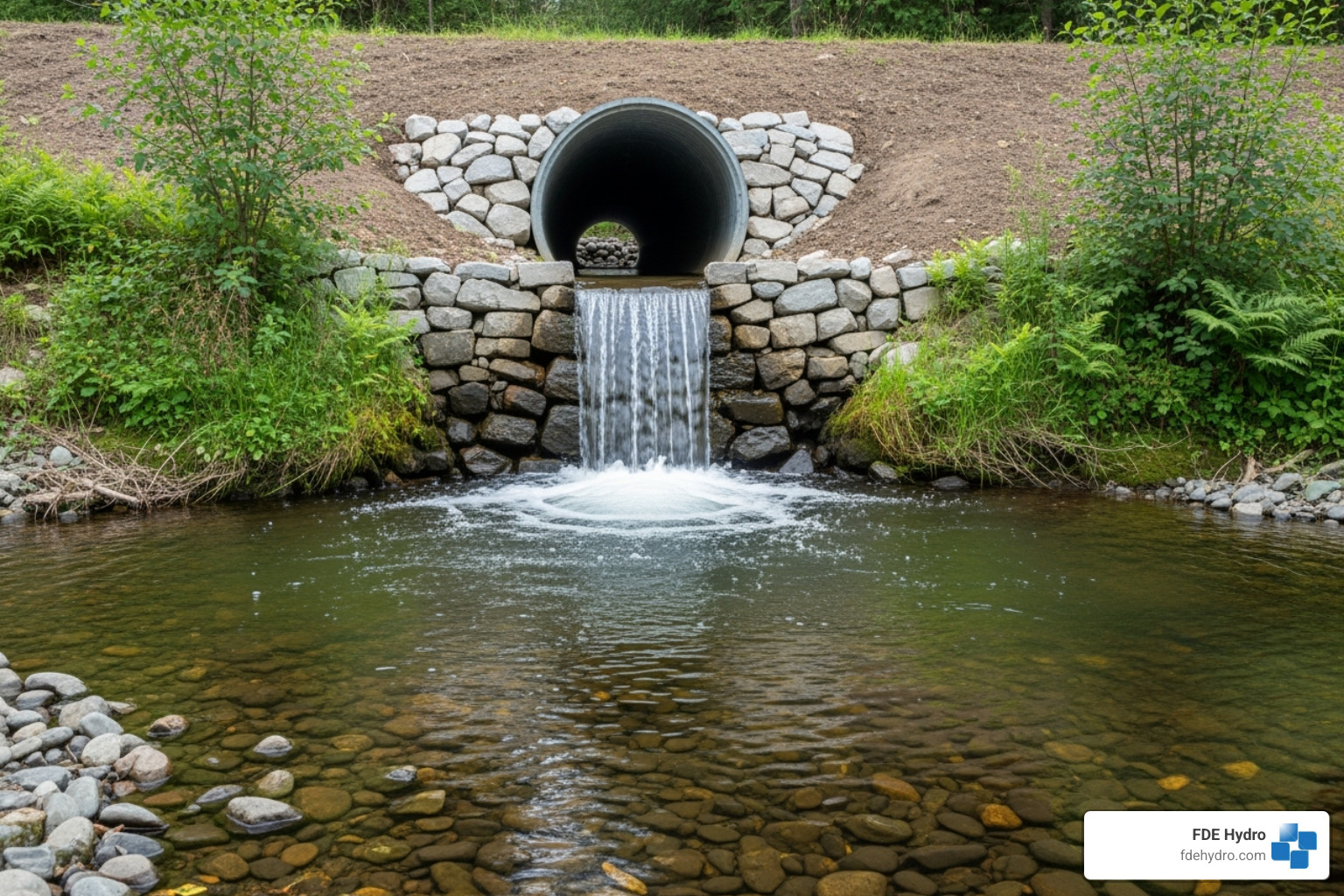
Habitat fragmentation is one of today’s most pressing environmental challenges. Millions of man-made barriers—dams, culverts, roads, and levees—slice through waterways. Many are simply obsolete, designed decades ago without considering the creatures that depend on free movement. The consequences are severe: salmon can no longer travel hundreds of miles to spawn, sturgeon are blocked from ancient breeding grounds, and even mussels suffer. When movement is interrupted, populations become isolated, genetic diversity plummets, and species become vulnerable to disease and environmental shifts.
The ecological ripple effects, or trophic cascades, can reshape entire ecosystems. When fish can’t reach spawning grounds, their populations decline, affecting birds that feed on them and insects that depend on healthy aquatic systems. The Penobscot River, home to 11 migratory fish species (three now endangered), shows how fragile these connections are.
Why Free-Flowing Rivers Matter for Wildlife
For aquatic life, a river isn’t just transportation—it’s survival. Aquatic Organism Passage is critical for:
- Spawning Grounds: Fish need access to specific upstream locations to reproduce. Blocking their path means an entire generation may not be born.
- Foraging Areas: Different life stages require different habitats for food. Young fish need shallow, protected waters, while adults need deeper pools. Free movement is essential for finding adequate food.
- Genetic Diversity: Connectivity is vital for genetic health. Isolated populations suffer from inbreeding, making them less adaptable and more susceptible to disease.
- Climate Change Resilience: Open waterways provide escape routes to cooler water as temperatures rise. Barriers trap populations in conditions that may become lethal.
- Predator Avoidance: A connected river offers countless hiding spots and alternative routes, while a fragmented one can be a dead-end trap.
This isn’t just about fish. Species like Pacific Lamprey, American Eel, and Bull Trout have unique migration needs that are often overlooked. Even mussels, turtles, and crayfish depend on these connections, with some hitching rides on migratory fish to disperse.
How Blocked Waterways Impact Humans
Restoring Aquatic Animal and Recreational Passage isn’t just for fish; it has real impacts on human life, safety, and local economies.
Blocked waterways eliminate recreational opportunities like kayaking and fishing. Restoring passage reopens rivers for boats and improves fishing, which boosts tourism. More seriously, many barriers pose public safety risks. Obsolete culverts and aging infrastructure can fail during floods, causing roads to wash out and properties to flood. Upgrading these structures is essential for community safety.
Barriers also lead to water quality degradation. Stagnant water behind them warms up, holds less oxygen, and can foster harmful algae, affecting drinking water and swimming areas. This harms both commercial and recreational fisheries, leading to economic losses. As we explore in The Biggest Untapped Solution to Climate Change is in the Water, healthy aquatic ecosystems are crucial for climate adaptation. By restoring passage, we invest in resilience for wildlife, recreation, and our shared future.
Seeing a river blocked by an outdated culvert or dam can feel overwhelming, but we have an incredible toolkit of solutions. These range from high-tech engineering to nature-based designs, with the best projects often combining both.

Restoring Aquatic Animal and Recreational Passage isn’t one-size-fits-all. A solution for a mountain stream may not work for a coastal estuary. Each project must start by understanding the specific environment and its species. Modern Water Control Structures can be designed from the ground up with passage in mind, creating solutions that work for all native species and account for climate change.
Technical and Engineered Passage Solutions
When a barrier like a Hydro Electric Dam can’t be removed, engineered solutions provide a way around it.
- Fish ladders are stepped pools that create a staircase effect, allowing fish to swim upward gradually.
- Fish lifts act like elevators, collecting fish, lifting them over a dam, and releasing them upstream.
- Fish screens at water intakes prevent fish from being swept into irrigation channels or turbines.
- Roughened channels (rock ramps) use boulders to mimic natural cascading flows.
- Bypass systems use channels or pipes to route fish safely around barriers.
These solutions require complex engineering to accommodate species with different abilities, from powerful salmon to tiny larval fish. Design software like FishXing helps model how designs will perform for specific species. Following rigorous guidelines from agencies like NOAA Fisheries ensures these structures provide safe and effective passage, blending biology with hydraulic engineering.
Nature-Based and Restoration Approaches
While engineering is valuable, solutions that work with nature are often the most effective. The best answer is frequently removing a barrier, not building something new.
Barrier removal is the gold standard when feasible. Removing an obsolete culvert or undersized crossing eliminates the problem at its source, allowing rivers to heal themselves. For road crossings that must remain, the stream simulation design approach is revolutionary. It replaces restrictive culverts with structures that mimic the natural stream’s width, slope, and substrate, making the crossing virtually invisible to aquatic life.
Beyond individual structures, floodplain reconnection restores natural flow patterns, providing off-channel habitat and reducing flood risks. The Penobscot River project in Maine is a powerful example, where strategic modifications reopened hundreds of miles of habitat for 11 migratory fish species, leading to a remarkable ecological recovery.
Our work in Dam Rehabilitation Encapsulation also plays a role, improving the environmental performance of existing structures by integrating modern passage solutions. We prioritize natural function first, which consistently delivers the most sustainable and cost-effective outcomes for Aquatic Animal and Recreational Passage.
The Ripple Effect: Broader Benefits of Open Passages
When we restore Aquatic Animal and Recreational Passage, the benefits ripple outward, touching our communities and environment far beyond the water’s edge.

These projects deliver tangible improvements for public safety, local economies, and climate resilience. By reconnecting rivers, we’re building Sustainable Infrastructure Development that serves both nature and people.
Ecological and Environmental Advantages
The environmental payoffs of open waterways are profound. They include:
- Improved Water Quality: Removing barriers eliminates stagnant, low-oxygen, and liftd temperature pools. Water circulates, oxygen levels rise, and pollutants are diluted.
- Increased Biodiversity: Reconnecting habitats allows isolated species to recolonize old territories, expand their ranges, and strengthen genetic diversity. This benefits the entire aquatic food web.
- Healthier Riparian Habitats: Recovering fish populations support birds, mammals, and insects along riverbanks, leading to more stable and healthy riverside ecosystems.
- Restored Nutrient Cycles: Free-flowing rivers transport organic matter and nutrients downstream, enriching ecosystems.
- Climate Change Resilience: Open waterways give species escape routes to cooler water and help recharge groundwater during droughts. Natural floodplains absorb excess water from storms, which also reduces flood risk for communities.
Societal and Economic Gains from Aquatic Animal and Recreational Passage
The economic case for restoring passage is just as compelling. Key benefits include:
- Improved Recreational Opportunities: Open rivers create new routes for kayaking and canoeing, and healthier fish populations improve angling. This translates to real tourism dollars.
- Job Creation: Restoration projects create jobs for scientists, engineers, construction crews, and equipment operators.
- Reduced Maintenance Costs: Proactively upgrading failing infrastructure is far cheaper than emergency repairs after a catastrophic failure.
- Economic Boost for Fisheries: Healthy fish stocks support both commercial and recreational fishing, a multi-billion-dollar industry.
- Increased Property Values: Homes near vibrant, free-flowing streams are more desirable than those near stagnant backwaters.
The federal government recognizes this value. The Bipartisan Infrastructure Law included $200 million specifically for restoring fish and wildlife passage, signaling a national understanding of these projects’ ecological, economic, and social returns.
At FDE Hydro, we believe infrastructure can serve multiple purposes. With thoughtful design, we can generate clean energy while contributing to thriving aquatic ecosystems and vibrant communities.
Getting Involved: Agencies, Projects, and Your Role
Restoring Aquatic Animal and Recreational Passage requires collaboration. It takes federal agencies, conservation groups, local communities, and individuals working together toward a common goal.

A vibrant network of organizations is already making tremendous progress. Resources like the Federal Interagency Fish Passage Portal | U.S. Fish & Wildlife Service serve as central hubs for information, funding, and technical experts. This collaborative spirit is key to the future of our waterways.
Key Players in Aquatic Passage Restoration
Many organizations are leading the charge to reconnect our rivers. Key players include:
- The U.S. Forest Service, a leader in road crossing techniques that restores 600 to 1,000 miles of aquatic habitat annually.
- The U.S. Fish and Wildlife Service, which runs the National Fish Passage Program to assist communities, Tribes, and private landowners with restoration projects.
- National Oceanic and Atmospheric Administration (NOAA) Fisheries, which develops gold-standard design guidance for marine and anadromous species like salmon.
- The U.S. Army Corps of Engineers and the Bureau of Land Management, which integrate passage solutions into their large-scale infrastructure and public land management.
- Non-governmental organizations like Trout Unlimited, which lead on-the-ground restoration projects and mobilize volunteers.
This collaborative network shares data and best practices to maximize its collective impact. At FDE Hydro, we are proud to contribute to this effort through our work on Sustainable Infrastructure Development.
How You Can Contribute to Aquatic Animal and Recreational Passage
You don’t need an engineering degree to make a difference. Every action counts, and there are many practical ways to contribute:
- Learn and Share: Participate in events like World Fish Migration Day to raise awareness about free-flowing rivers.
- Support Local Groups: Volunteer with or donate to local watershed groups that are tackling stream restoration in your region.
- Advocate for Change: Contact your elected officials to express support for policies and funding that promote aquatic passage.
- Recreate Responsibly: Follow Leave No Trace principles and be mindful of spawning seasons when you’re on the water.
- Report Barriers: If you see a blocked culvert or other barrier while hiking or paddling, report it to your local conservation authority or the U.S. Fish and Wildlife Service.
- Keep Learning: Attend webinars and explore databases to become a more effective advocate for river connectivity.
By joining this collective effort, you can help create a future where rivers flow freely, aquatic life thrives, and everyone can enjoy our waterways.
Conclusion
The story of Aquatic Animal and Recreational Passage is about connection—linking spawning grounds to the sea, predators to prey, and communities to the water that sustains them.
While millions of barriers fragment our waterways, the solutions are within reach and already working. Every culvert replaced, dam modified, or mile of habitat reconnected creates a positive ripple effect. We’ve seen that technical and nature-based solutions deliver benefits for both wildlife and people: safer infrastructure, cleaner water, better recreation, and stronger local economies. The $200 million from the Bipartisan Infrastructure Law is an investment in resilient communities and a healthier future for all.
At FDE Hydro, we believe in balancing energy needs with ecological health. Our work isn’t about choosing between clean power and healthy rivers—it’s about designing systems where both can thrive. We are developing hydropower solutions where riverine aquatic animals are our primary environmental customers, not an afterthought.
The future of river connectivity depends on all of us. Whether you’re advocating for policy, volunteering, or practicing responsible recreation, you are part of this vital mission.
We invite you to learn more about how we’re approaching these challenges and contributing to a future where rivers flow freely and life flourishes.
Learn more about our approach to Aquatic Animal and Recreational Passage
by Bill French Sr. | Nov 14, 2025 | Case Studies
Why Hydroelectric Dam Efficiency Matters More Than Ever
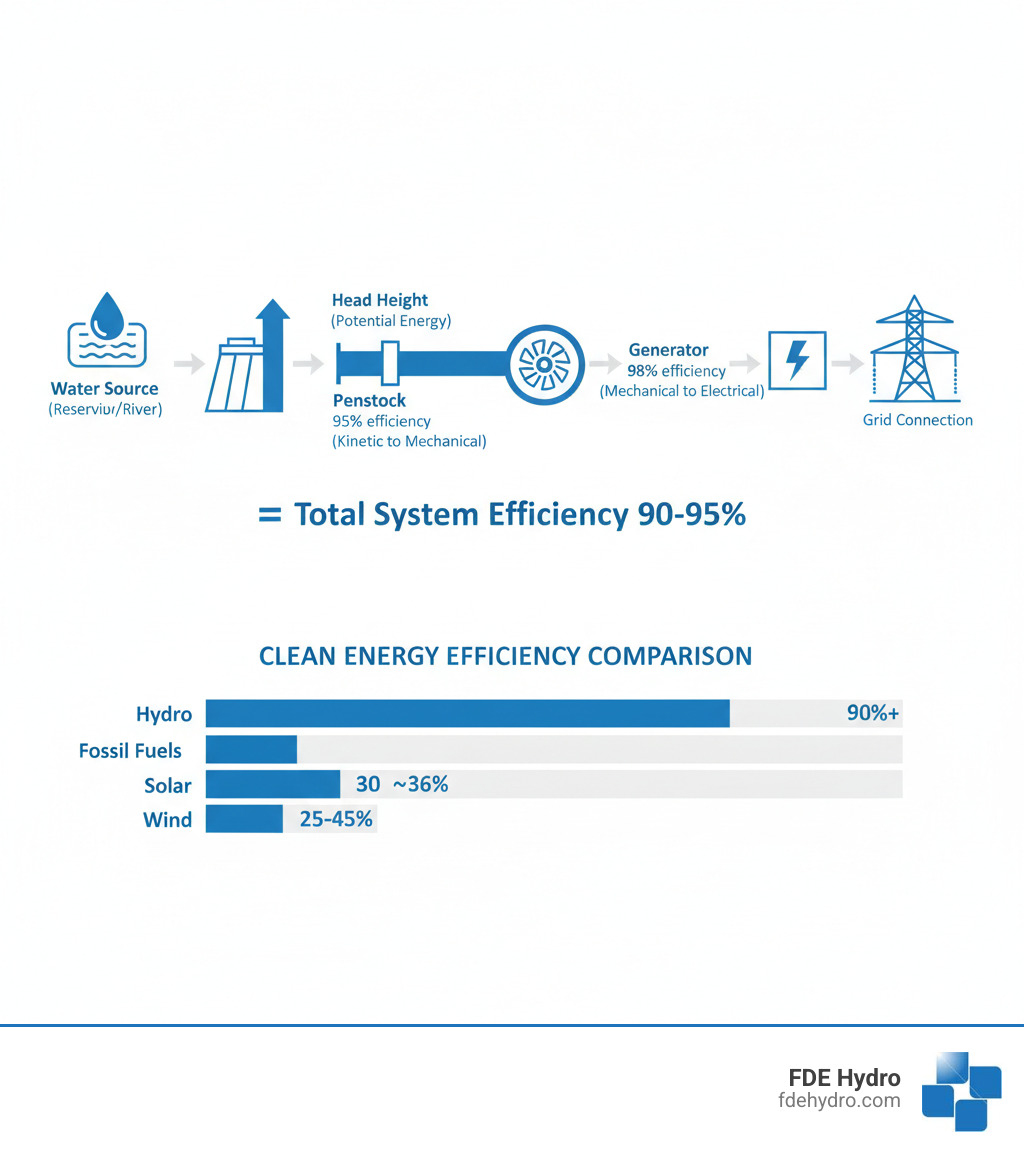
Hydroelectric dam efficiency measures how effectively a facility converts water’s potential energy into electricity, with conversion rates often exceeding 90%. Peak performance depends on factors like turbine design, hydraulic head (water drop), flow rate, system losses, and maintenance. Understanding these is critical because a 5-10% efficiency gain directly increases power output and revenue without building new capacity.
Global hydropower supplies 15-17% of the world’s electricity with efficiency that far surpasses solar (30-36%), wind (25-45%), and fossil fuels (~60%). Optimizing existing infrastructure is one of the most cost-effective paths to clean energy expansion. However, with most plants in North America and Europe averaging 45-50 years old, aging components leave significant performance gains on the table. Much of the world’s 4,100 TWh of realized hydropower operates below its potential.
I’m Bill French Sr., Founder and CEO of FDE Hydro™. After five decades in heavy civil construction, I’ve spent the last ten years revolutionizing the hydropower industry with modular construction. My work with the Department of Energy’s Water Power Technology Office has provided deep insight into maximizing hydroelectric dam efficiency through modernization. Let’s explore how to open up your hydropower assets’ full potential.
Understanding the Fundamentals of Hydroelectric Dam Efficiency
Hydropower harnesses gravity and moving water, converting the potential energy of water at a higher elevation into electricity. The governing formula is P = ηρgQH, which outlines how water becomes watts.
In this equation, η (eta) is the hydroelectric dam efficiency—the percentage of energy converted, typically 90-95% (0.9-0.95). The other variables are largely constant: ρ (rho) is water density (~1000 kg/m³) and g is gravity’s acceleration (9.8 m/s²). The key variables operators can influence are Q, the flow rate in cubic meters per second, and H, the hydraulic head—the vertical distance the water falls. Improving any of these, especially efficiency, directly boosts power output.
This efficiency gives hydropower an incredible energy payback ratio. Facilities can produce 200 to 300 times more energy than is required to build and operate them, the highest of any renewable source. For more on these principles, the Department of Energy offers excellent Hydropower Basics resources.
How Hydropower’s Efficiency Stacks Up
When it comes to energy conversion, hydropower is the undisputed champion, converting over 90% of available energy into electricity. In comparison, other technologies lag significantly. Solar panels reach about 30-36% efficiency, converting photons to electrons while losing most energy as heat. Wind turbines perform at 25-45%, limited by aerodynamics and unpredictable wind. Even modern fossil fuel plants only achieve around 60% efficiency, with nearly half the fuel’s energy lost as waste heat. Hydropower’s 90%+ efficiency means more clean electricity per drop, better economics, and a smaller environmental footprint per kilowatt-hour.
The Physics of Power: The Role of Head and Flow
Water in a reservoir holds potential energy. The higher the water is stored above the turbines, the more potential energy it contains. When released through a penstock, this potential energy converts into kinetic energy—the energy of motion. This forceful, fast-moving water spins the turbine blades, which in turn drives the generator to produce electricity.
The hydraulic head (the vertical drop) is critical; a 300-foot head generates far more power per gallon than a 30-foot head with the same flow. However, head alone is not enough. Flow rate—the volume of water moving through the system—is equally important. The greatest power is achieved by balancing both factors. This is why site selection and design are crucial for maximizing hydroelectric dam efficiency.
At FDE Hydro, our modular construction approach ensures water flows smoothly to minimize energy loss. To see how modern design optimizes this potential, check out More info about Dams.
While the physics are straightforward, a dam’s real-world performance depends on many interconnected factors. The hydroelectric dam efficiency achieved daily is a function of how well every component works together, from turbine design and generator efficiency to penstock friction and operational constraints imposed by grid demand or environmental rules.
The Critical Role of Turbine Design and Selection
The turbine is the heart of a hydro plant, where water’s kinetic energy becomes mechanical power. The right turbine selection is a site-specific design challenge that is critical for maximizing output. There is no one-size-fits-all solution:
- Pelton turbines are ideal for high-head (over 200m), low-flow sites, using powerful jets of water to spin a bucketed wheel.
- Francis turbines are the industry workhorses, versatile enough for moderate heads (30-600m) and a wide range of flow rates. They are reaction turbines where water pressure drops as it passes through the blades.
- Kaplan turbines excel in low-head (up to 30m), high-flow conditions, like those found in rivers. Their adjustable propeller-like blades maintain high efficiency even when flow rates fluctuate.
Modern turbines, benefiting from advanced modeling and materials, can achieve 95% efficiency. Older turbines, while durable, cannot match this performance, creating a significant opportunity for efficiency gains through refurbishment or replacement, which can often boost output by 5-10%.
How Environmental Factors Affect Achievable Efficiency
Environmental realities also impact a facility’s performance. Sedimentation is a primary culprit; as rivers deposit sand and silt, this silt buildup causes reduced reservoir capacity and less water for generation. As noted in scientific research, these abrasive particles also erode turbine components, degrading performance and requiring costly maintenance.
Drought conditions pose another major challenge. Lower rainfall leads to reduced reservoir levels, which decreases the hydraulic head and inflows, causing power output to plummet. Water temperature variations can also subtly influence performance.
Furthermore, modern facilities must balance generation with environmental duties, such as ensuring fish passage and maintaining minimum downstream flows. While fish mortality is a real concern, innovations like fish-friendly turbines and bypass systems help protect aquatic life while maintaining strong generation. It’s about balancing clean energy with environmental stewardship. Learn more about how the industry is addressing these issues at More info about Aquatic Animal and Recreational Passage.
How to Improve and Maximize Dam Efficiency
Fortunately, there are proven strategies to boost hydroelectric dam efficiency in existing plants. Modernization combines physical upgrades with digital tools, allowing us to gain substantial efficiency without the cost and impact of building new dams. This involves everything from replacing worn components to implementing predictive monitoring systems.
Upgrading Core Components for Better Hydroelectric Dam Efficiency
Replacing aging parts with modern equivalents delivers remarkable improvements in hydroelectric dam efficiency.
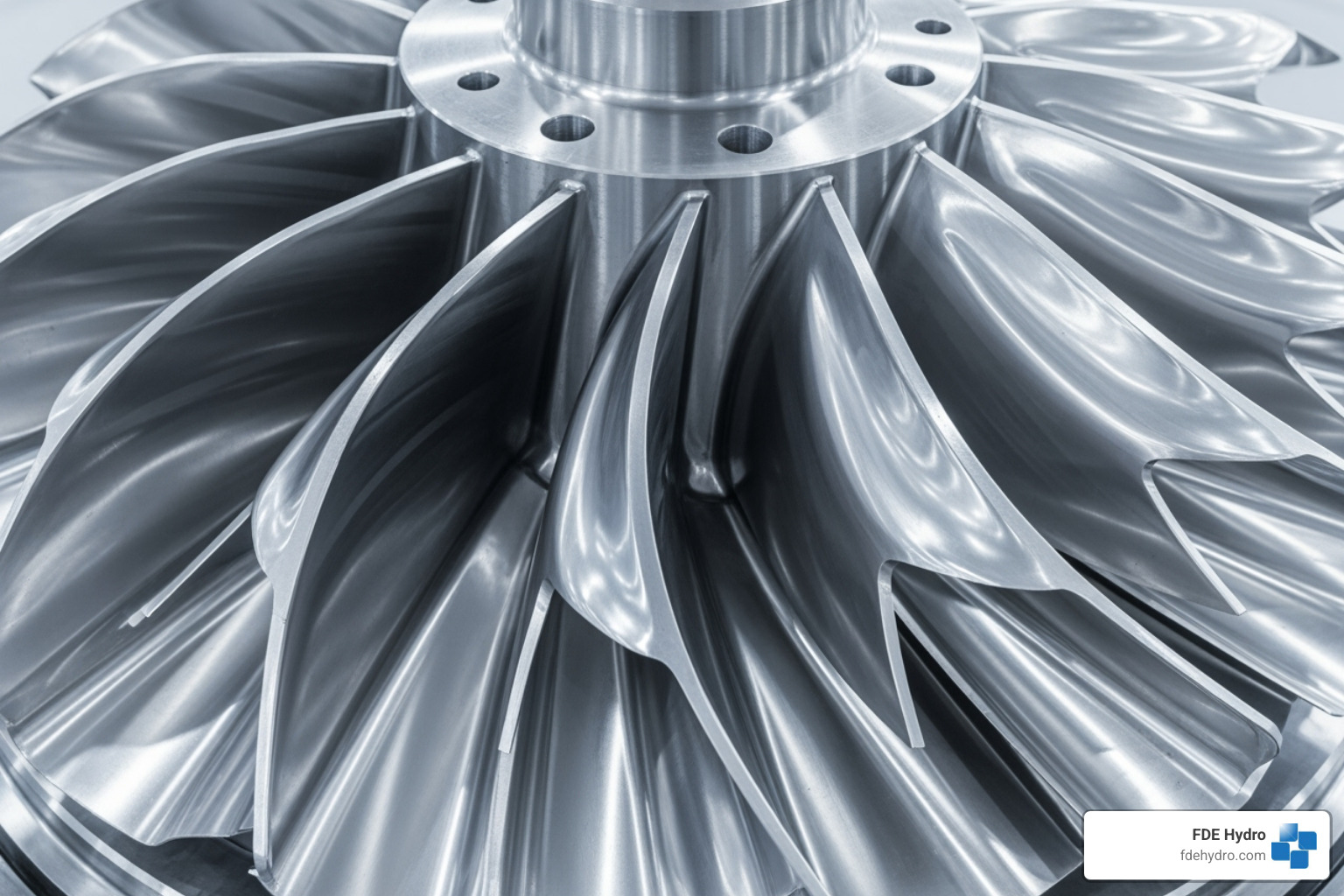
- Turbine runner replacement is often the most impactful upgrade. Modern runners, designed with advanced fluid dynamics, can increase energy production by 5-10%. A 5% gain at a 100 MW plant adds 5 MW of clean power from the same water flow.
- Advanced coatings protect components from abrasion. Nanostructured coatings can withstand sediment-laden water, extending component life and maintaining peak efficiency, a field advanced by scientific research on sediment erosion in turbines.
- Wicket gate refurbishment is also key. These gates control water flow to the turbine. Repairing or replacing worn gates ensures precise water delivery, maximizing energy extraction.
Leveraging Digitalization and Smart Operations
Digitalization is the other half of the modernization equation, bringing 21st-century intelligence to mid-20th-century facilities.
- Digital twins, virtual replicas of a plant fed by real-time sensor data, allow operators to monitor performance, simulate scenarios, and predict failures without risk.
- AI-powered forecasting analyzes weather and hydrological data to predict water availability with high accuracy, enabling smarter decisions on when to generate or store water.
- Real-time optimization uses modern control systems to continuously adjust operations to maximize efficiency based on current conditions and grid prices.
- SCADA systems (Supervisory Control and Data Acquisition) provide centralized remote monitoring and control, forming the nervous system of an intelligent hydropower operation.
This comprehensive approach is central to Reinvigorating Hydropower for a new era, ensuring these facilities deliver clean energy for generations.
The Efficiency Equation: Conventional vs. Pumped-Storage Hydropower
When discussing hydroelectric dam efficiency, it’s important to distinguish between two facility types that serve different grid purposes: conventional and pumped-storage hydropower.
Conventional hydropower harnesses the natural flow of rivers. Run-of-river systems divert a portion of a river through turbines with minimal storage, while impoundment systems use large reservoirs to store water and dispatch power on demand. Both are designed to convert flowing water into electricity with the impressive 90-95% water-to-wire efficiency discussed earlier.
Pumped-storage hydropower (PSH), in contrast, acts as a giant, rechargeable battery for the grid. It uses two reservoirs at different elevations. During times of low electricity demand and cost, excess grid power (often from wind or solar) is used to pump water from the lower reservoir to the upper one. When demand peaks, the water is released back down through turbines to generate electricity.
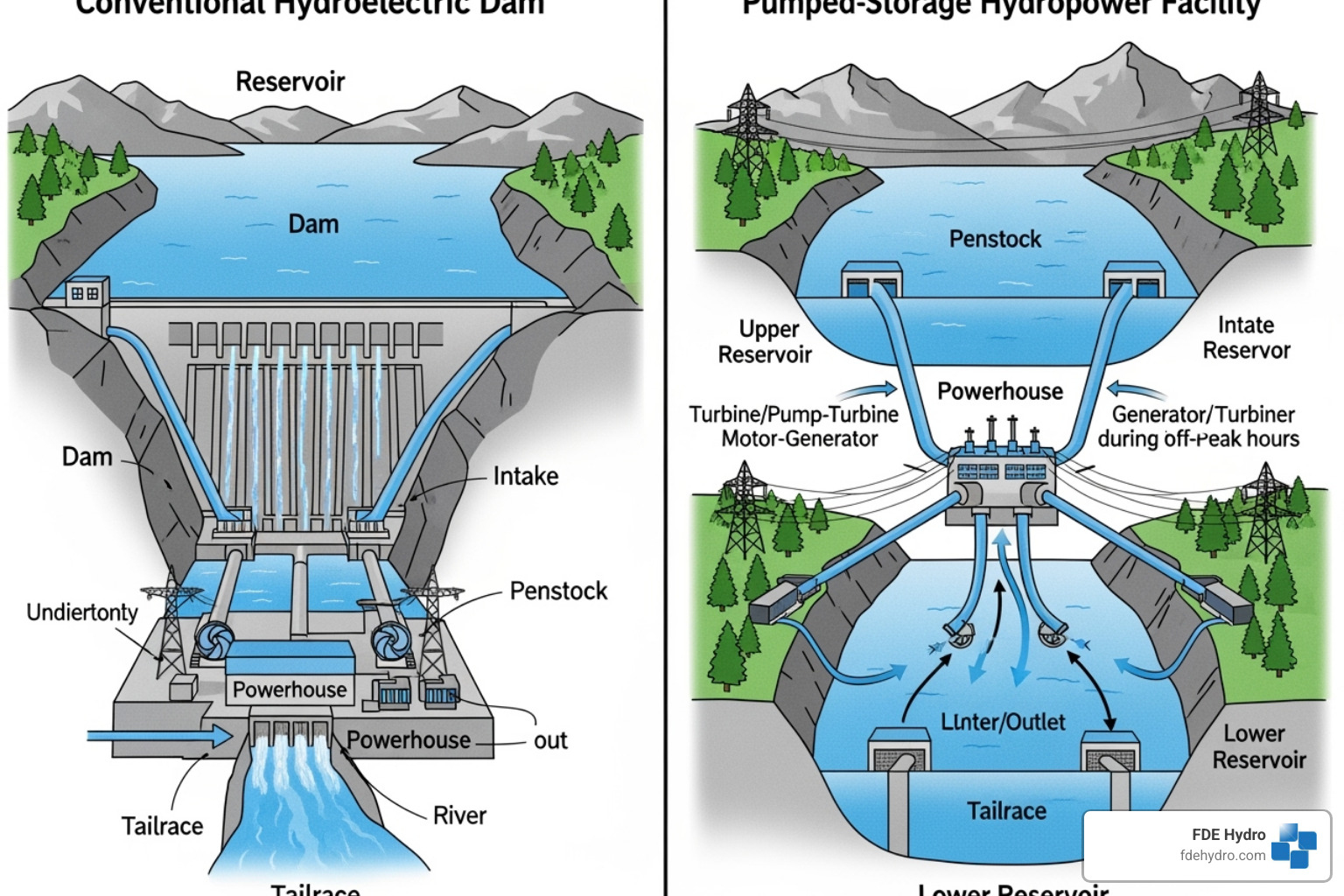
This energy storage and grid balancing capability is crucial for integrating intermittent renewables like solar and wind. PSH accounts for over 95% of global grid-based energy storage, making it a workhorse technology. For more details, see More info about Pumped Storage Hydropower.
Understanding Pumped Storage Round-Trip Efficiency
Since PSH is an energy storage system, its performance is measured by round-trip efficiency—how much energy is returned compared to what was used to store it. The process involves two phases:
- Pumping phase: Electricity from the grid powers pumps to move water uphill. Energy is lost to friction and mechanical inefficiencies.
- Generation phase: Stored water flows downhill through turbines to generate electricity, with further energy losses from turbine and generator friction.
Modern PSH facilities achieve a round-trip efficiency of 70-85%. While lower than conventional hydro’s 90%+, this is exceptional for large-scale storage. The 15-30% energy loss is the cost of having gigawatt-scale power available on demand.
Beyond storage, PSH provides vital ancillary services like frequency regulation and voltage support, acting as a shock absorber that ensures grid stability. As renewables grow, these services become priceless for maintaining a reliable grid.
The Economic and Future Outlook of High-Efficiency Hydropower
Higher hydroelectric dam efficiency is an economic powerhouse. Hydropower’s Levelized Cost of Energy (LCOE) of 2-10 US cents per kWh makes it one of the most affordable energy sources. With lifespans of 65-85 years or more and low operation and maintenance (O&M) costs, these facilities provide reliable, dispatchable power that is a cornerstone of a stable energy grid. For the latest advancements, the National Renewable Energy Laboratory Hydropower Research is an excellent resource.
Economic Implications of Improving Hydroelectric Dam Efficiency
Even modest efficiency improvements create substantial economic benefits. A 5-10% gain in hydroelectric dam efficiency leads to:
- Increased revenue: More electricity is generated and sold from the same amount of water, directly boosting the bottom line.
- Lower electricity costs: Higher efficiency at the source can lead to lower costs per kWh for consumers.
- Extended asset life: Smoother, more efficient operations reduce strain on equipment, deferring major capital expenditures.
- Stronger return on investment: The combination of higher revenue, lower costs, and longer asset life makes hydropower projects more attractive to investors.
Innovations Shaping the Future of Hydropower
The future of hydropower is being shaped by innovations that push hydroelectric dam efficiency higher while addressing environmental concerns.
- Variable-speed turbines adjust their rotational speed to match changing water flows, maintaining peak efficiency across a wider range of conditions.
- Fish-friendly designs use features like wider blade spacing and slower speeds to allow fish to pass through turbines with significantly reduced injury rates.
- Modular construction, an area where FDE Hydro™ is a leader, is revolutionizing how facilities are built and retrofitted. Our patented “French Dam” technology uses pre-fabricated concrete modules that drastically cut construction time and costs. This U.S. Department of Energy-endorsed approach makes new projects more viable and accelerates upgrades. This modularity also extends to our Modular Powerhouses, streamlining the entire construction process.
Conclusion: Powering the Future with Optimized Hydropower
Our journey through hydroelectric dam efficiency reveals a clear truth: this is about using one of nature’s most reliable forces to power our world with clean, affordable energy. Hydropower’s remarkable 90%+ efficiency far outpaces other renewables, making it an irreplaceable cornerstone of a clean energy strategy.
The challenges of aging infrastructure are not roadblocks but opportunities. Every efficiency improvement, from a turbine upgrade to AI-powered forecasting, open ups more clean energy from existing assets. Pumped-storage hydro further demonstrates this versatility, providing the large-scale energy storage needed to support the growth of wind and solar with 70-85% round-trip efficiency.
Innovations like variable-speed turbines and fish-friendly designs are pushing the industry forward. At FDE Hydro™, we are revolutionizing the field with our patented modular construction technology. By slashing construction time and costs, we make hydropower projects more viable and accelerate the modernization of existing facilities.
With a low levelized cost, long lifespan, and an incredible energy payback ratio, improving hydroelectric dam efficiency is one of the smartest investments we can make. It boosts revenue, extends asset life, and strengthens our grid. The global potential for hydropower is vast, and optimizing our current fleet is the first step to realizing it.
We invite you to learn more about our advanced Dam technology and see how we’re building the future of hydropower. Together, we can open up the full potential of this remarkable resource for generations to come.
by Bill French Sr. | Nov 13, 2025 | Case Studies
Understanding the True Cost of Clean, Reliable Power
Hydropower project costs are among the most complex in the renewable energy sector, with investment expenses ranging from $1,050 to $8,000 per kilowatt depending on project size and type. Key costs include Capital Expenditures (CAPEX), Operations & Maintenance (O&M), and financing, which combine to determine the Levelized Cost of Electricity (LCOE). Costs vary significantly, from as low as $500/kW for retrofits to over $7,900/kW for new developments.
When you’re considering a hydropower investment, you’re looking at a capital-intensive technology that can operate for 50 to 100+ years with relatively low ongoing costs. However, projects regularly run millions over budget, with timelines stretching years beyond original plans. In 2022, the global weighted average total installed cost of new hydropower projects jumped 25% to $2,881/kW.
This cost volatility raises electricity prices for consumers, makes private investors nervous, and can hinder environmental goals if projects become too expensive. Yet hydropower remains essential. It generates 16% of the world’s electricity and provides grid stability that intermittent renewables like solar and wind cannot match. Understanding what drives these costs—and how to control them—is critical for anyone involved in hydropower projects.
I’m Bill French Sr., Founder and CEO of FDE Hydro™, and I’ve spent over five decades in heavy civil construction before focusing on reducing hydropower project costs through modular precast technology. My experience includes managing $200M annual construction operations and participating in the Department of Energy’s Hydro Power Vision Technology Task Force, where we defined next-generation solutions for clean energy infrastructure.
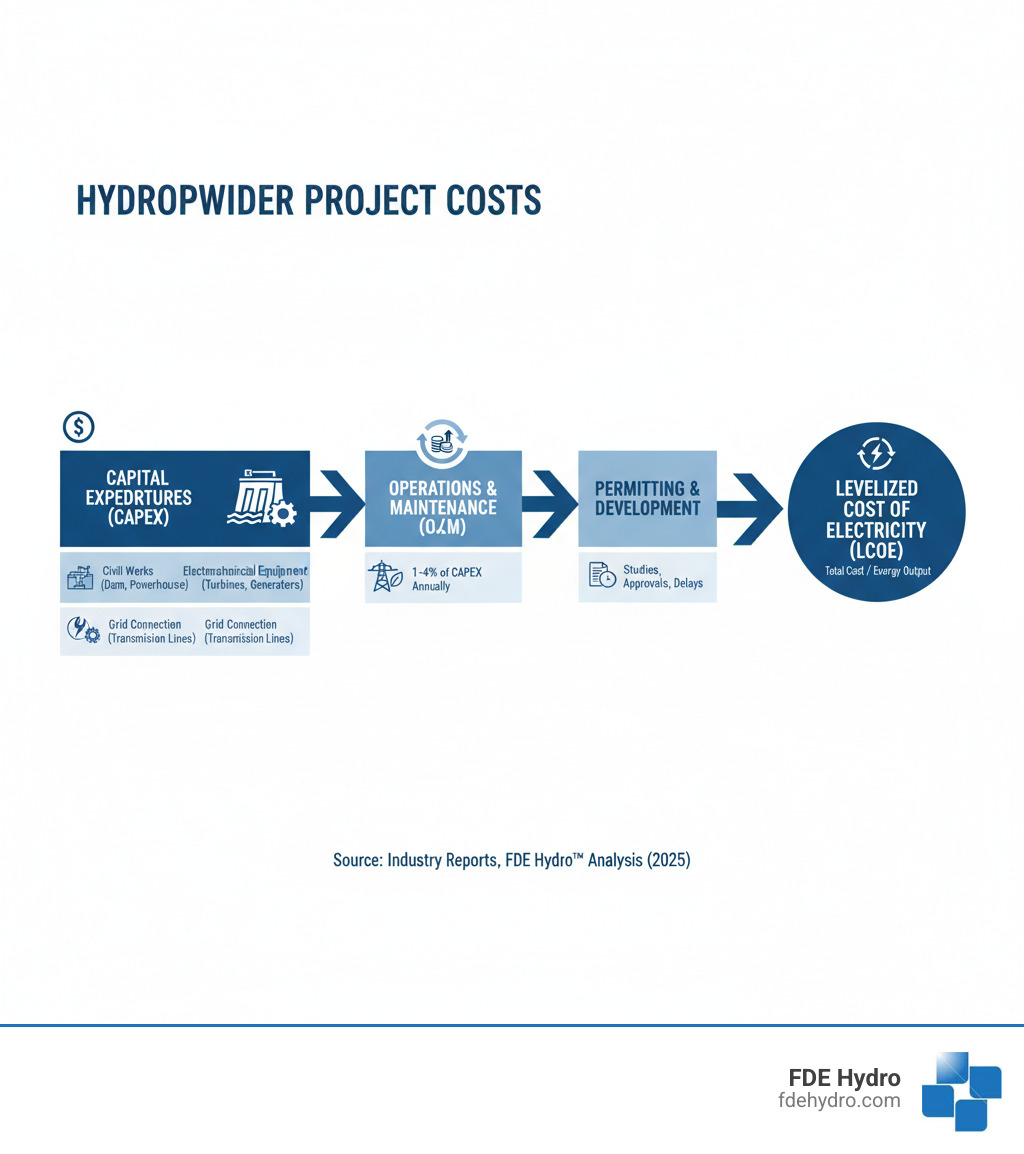
Deconstructing Hydropower Costs: From Initial Investment to Long-Term Operation
Understanding hydropower project costs means looking at the entire financial journey, from the initial investment through decades of operation. Let’s break down the core financial metrics that define the true cost of using water power.
Breaking Down Capital Expenditures (CAPEX) in hydropower project costs

Capital Expenditures (CAPEX) represent the upfront spending to get a hydropower plant from blueprint to operation. This is the largest portion of hydropower project costs.
The numbers vary wildly. Large hydropower plants typically cost between $1,050 and $7,650 per kilowatt, while small projects can run from $1,300 to $8,000 per kilowatt. Building on an existing, non-powered dam can be much cheaper—as low as $500 per kilowatt—because the primary dam structure is already in place.
The 2024 Annual Technology Baseline shows U.S. costs for retrofitting Non-Powered Dams range from $3,045 to $20,043 per kilowatt, while building from scratch (New Stream-Reach Development) runs higher at $6,574 to $8,611 per kilowatt.
CAPEX is driven by two main categories: civil works (dams, tunnels, powerhouses) and electro-mechanical components (turbines, generators, transformers). For large projects, civil works are the biggest expense. For smaller projects, the sophisticated machinery can cost more per kilowatt.
Cost trends are concerning. IRENA’s 2022 report showed the global weighted average installed cost jumped 25% in a single year, driven by cost overruns, supply chain disruptions, and inflation.
This is why we developed our modular precast concrete technology at FDE Hydro™. The “French Dam” approach tackles rising CAPEX by manufacturing standardized components in a factory. This cuts construction time, reduces on-site labor, and eliminates many of the surprises that send traditional projects over budget.
For a closer look at one of the more complex types of hydropower projects with unique capital considerations, check out More info about Pumped Storage Hydropower.
Understanding Operations & Maintenance (O&M) in hydropower project costs
After construction, ongoing Operations and Maintenance (O&M) costs begin. O&M covers everything needed to keep the facility running, including inspections, repairs, and staffing.
O&M costs are typically 1% to 4% of the initial installed cost annually. For a $500 million plant, that’s $5 to $20 million per year.
Size matters. Large projects benefit from economies of scale, with O&M costs around 2% to 2.5% of CAPEX. Small projects lack this luxury, and their O&M costs can range from 1% to 6% because fixed costs like inspections and insurance represent a larger portion of their budget.
Hydropower plants can operate for 50 to 100 years or more, but aging infrastructure requires increasing maintenance. Planning for these long-term needs is essential for a plant’s economic viability.
The Levelized Cost of Electricity (LCOE)
The Levelized Cost of Electricity (LCOE) is the ultimate metric, representing the average cost per kilowatt-hour over a plant’s entire lifetime. It allows for apples-to-apples comparisons between different energy technologies.
For hydropower, the LCOE is very competitive. Refurbishment projects can achieve an LCOE as low as $0.01 to $0.05 per kilowatt-hour. New large projects typically land between $0.02 and $0.19 per kilowatt-hour. The global weighted average LCOE for hydropower in 2022 was $0.061 per kilowatt-hour.
According to IRENA’s 2022 cost report, 86% of all newly commissioned renewable capacity in 2022 had lower costs than fossil fuel-fired electricity. Despite construction cost increases, hydropower’s LCOE remains lower than the cheapest new fossil fuel options. Combined with a 50-to-100-year lifespan and zero fuel costs, hydropower delivers incredible long-term value.
Key Factors Influencing Hydropower Project Costs
There is no “standard” price for a hydropower project. The final hydropower project costs depend on a complex interplay of variables, from plant type and site geology to operational efficiency.
Project Type and Primary Components
While all conventional hydropower facilities share components like dams, turbines, and generators, their configuration dramatically impacts the budget. The three main types are:
- Run-of-river hydropower: Relies on the river’s natural flow with minimal storage. These projects typically have lower civil works costs and environmental impact but produce variable power.
- Reservoir hydropower: The traditional large dam approach, creating significant water storage for controlled, dispatchable electricity generation. This flexibility comes with very high civil works costs and longer construction timelines.
- Pumped storage hydropower: Acts like a giant battery, using two reservoirs to store energy by pumping water uphill when electricity is cheap and releasing it to generate power when demand is high. It requires high investment in civil works and equipment.
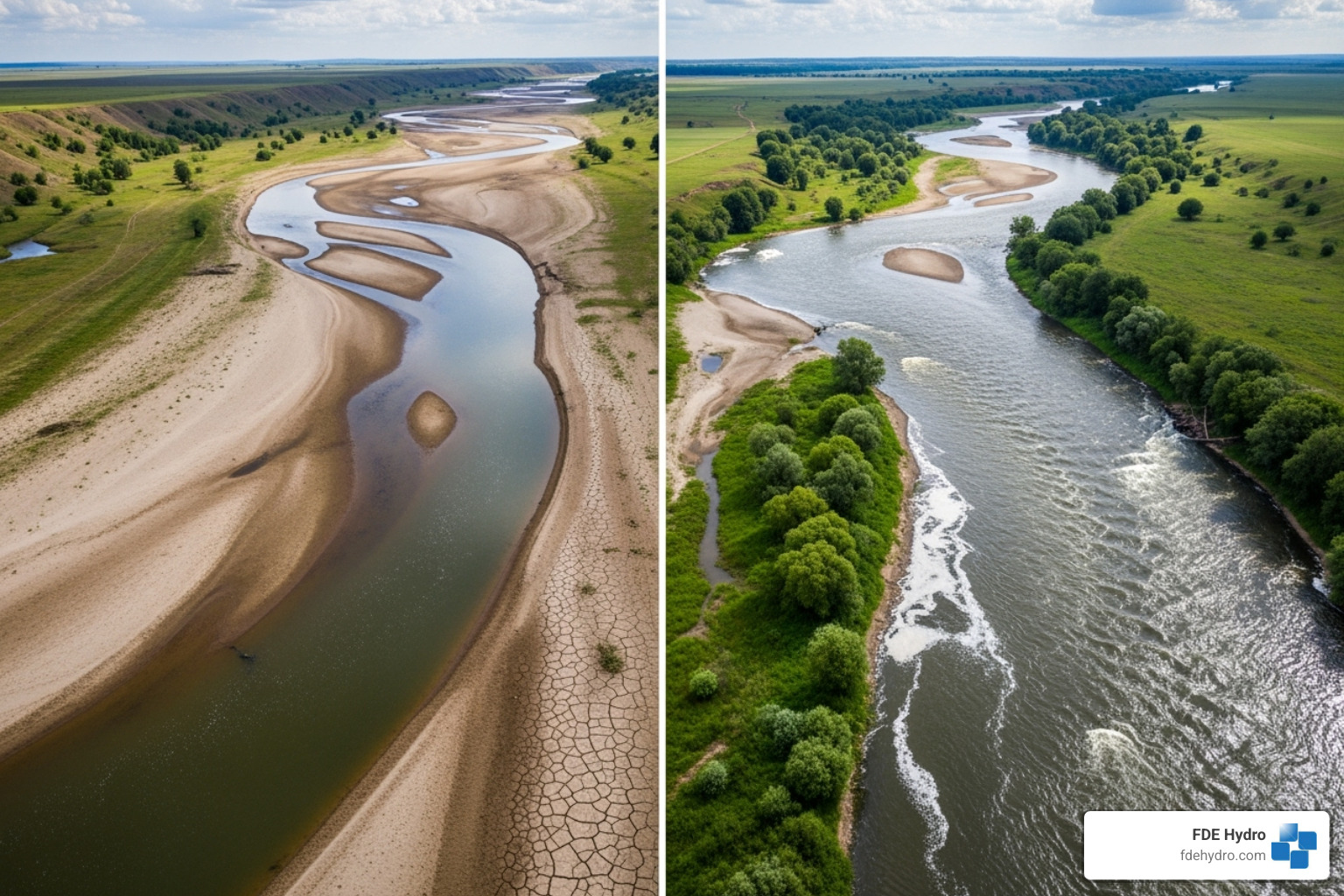
The site-specific nature of hydropower project costs cannot be overstated. A plant on stable bedrock near grid connections will cost far less than one in a remote area requiring extensive tunneling. At FDE Hydro™, our modular precast technology brings predictability to construction, helping to control costs regardless of site conditions.
Capacity Factor and Site Hydrology
The capacity factor—the ratio of actual energy output compared to the maximum possible output—is a crucial metric. A higher capacity factor means more electricity is generated, which lowers the Levelized Cost of Electricity (LCOE) and improves financial returns.
Site hydrology is the biggest influence on capacity factor. The river’s natural flow, including seasonal variations, dictates how much power can be generated. Climate change is adding complexity through more frequent droughts and extreme weather. The U.S. Hydropower Market Report (2023) noted that median capacity factors ranged from 33% to 45% between 2005 and 2022, varying significantly by region and year.
Design choices, such as selecting the right turbine type and sizing the plant appropriately for the site’s water availability, also play a key role. Finally, operational characteristics matter; plants with large reservoirs can store water and dispatch power strategically, often achieving higher and more consistent capacity factors than run-of-river plants.
Recent Market Trends and Cost Drivers
In recent years, hydropower costs have been climbing. According to IRENA, hydropower experienced an 18% cost increase in 2022, contributing to a 25% jump in the global weighted average installed cost to US$2,881/kW. From 2010 to 2022, total installed costs for hydropower more than doubled.
Several factors are behind this trend:
- Supply chain challenges: Global disruptions have increased the cost and lead times for critical components like steel, concrete, and turbines.
- Inflationary pressures: Rising costs for raw materials, labor, and transportation have eroded project budgets.
- Cost overruns in large projects: IRENA highlighted that overruns in numerous large projects contributed significantly to the overall cost increase.
Unlike solar and wind, which benefit from mass-produced, modular components, large hydropower projects are typically custom-built, site-specific endeavors. This makes them more susceptible to cost escalation and delays. This is the problem we’re tackling at FDE Hydro™. Our modular precast concrete technology brings the advantages of factory production and rapid assembly to hydropower, reducing construction time and the risk of cost overruns.
The Hidden Costs: Navigating Risks and Financial Problems
When evaluating hydropower project costs, the initial budget is only part of the story. A complex web of financial risks and “hidden costs” can determine a project’s viability and its attractiveness to private investors.
The Challenge of Cost Overruns and Permitting
Cost overruns are a systemic problem in the hydropower industry. Projects routinely exceed their budgets and timelines, threatening the sector’s competitiveness.
The primary causes include:
- Long project timelines: A decade-long project is exposed to years of potential economic shifts, policy changes, and inflation.
- Complex civil engineering: Building massive structures in challenging geological sites often leads to unexpected complications, each adding time and money.
- Lengthy permitting: The regulatory process is notoriously slow. In the U.S., the median duration for hydropower relicensing from 2010 to 2022 was 5.8 years, with some cases exceeding 12 years. Each month of delay adds financing costs and uncertainty.
When hydropower project costs spiral, consumers may pay higher electricity prices. Research shows this can push consumers toward cheaper fossil fuel alternatives, undermining the project’s environmental goals. For more on this, Research on cost overrun impacts offers valuable insights.
The Critical Role of the Cost of Capital
Hydropower is a capital-intensive technology with nearly all costs paid upfront, followed by decades of zero fuel costs. This makes the cost of capital a critical component of hydropower project costs.
The Weighted Average Cost of Capital (WACC) has an outsized impact on the final price of electricity. Research shows that a one percent increase in WACC can raise generation costs by seven to 14 percent. This sensitivity is a major challenge in emerging and developing economies, where higher perceived investment risks lead to higher capital costs, slowing the energy transition.
At FDE Hydro™, we understand that reducing construction time and uncertainty with our modular technology directly addresses this financing challenge. Shorter construction periods mean less risk exposure, making projects more attractive to investors and lowering overall capital costs.
For more on this topic, explore our article on Financing Long-Term Hydropower Requires Mitigating Risks Prior to ROI.
Revenue, Offtake, and Policy Risks
Even after construction, a project faces ongoing financial uncertainties. These revenue and policy risks are critical to long-term viability.
- Unremunerated Services: Hydropower provides valuable grid stability, flexibility, and flood control, but these services are often undervalued or not compensated at all.
- Climate Uncertainty: Erratic rainfall patterns and droughts make future revenue streams harder to predict, which makes investors nervous.
- Offtake Risk: Securing a long-term power purchase agreement (PPA) with a creditworthy buyer is essential for obtaining project financing.
- Policy Gaps: Fewer than 30 countries have policies that directly support hydropower development, creating an uncertain regulatory environment for long-term investments.
Until more countries adopt comprehensive policy frameworks that recognize hydropower’s full value, this lack of targeted support will continue to discourage private investment. To learn more about efforts to address these challenges, read our article on Reinvigorating Hydropower.
The Future of Hydropower: Innovation, Potential, and Grid Stability
Despite cost challenges, hydropower’s future is bright, shaped by technological innovation, vast untapped potential, and its essential role in a stable, renewable-powered grid.
Global Potential and Grid Integration
The estimated worldwide technical potential for hydropower is 15,955 TWh per year—nearly five times what we generate today. Much of this potential lies in developing regions like sub-Saharan Africa, Southeast Asia, and Latin America, where new projects could transform energy access and economic development.

Beyond generation, hydropower is critical for grid stability. It provides the flexibility and storage needed to integrate variable renewables like wind and solar. While solar and wind are intermittent, hydropower—especially reservoir and pumped storage schemes—can respond to demand fluctuations in minutes.
Pumped storage hydropower is currently the only large-scale, cost-efficient energy storage technology available, acting as a giant battery for the grid. This ability to store and rapidly dispatch energy makes hydropower an indispensable partner for wind and solar, ensuring grid reliability as we transition away from fossil fuels.
Effectively managing hydropower project costs is key to enabling this broader renewable energy transition. For more on this, see 4 Reasons Why Hydropower is the Guardian of the Grid.
Technology Innovation Scenarios
The future of hydropower project costs will be shaped by innovation. The 2024 Annual Technology Baseline (ATB) outlines three scenarios:
- Conservative Scenario: Assumes no significant technological changes, with costs remaining static.
- Moderate Scenario: Envisions incremental improvements and best practices becoming widespread, leading to modest cost reductions (e.g., a 4% CAPEX reduction for Non-Powered Dams by 2040).
- Advanced Scenario: Projects significant gains from cutting-edge technologies like modularity, advanced manufacturing, and automation. This could lower CAPEX by an additional 10% by 2040 and reduce O&M costs by up to 45% by 2050.
At FDE Hydro™, our modular precast concrete technology—the “French Dam”—aligns perfectly with this Advanced Scenario. By manufacturing standardized components in a factory, we streamline construction, reduce project timelines, and cut costs, directly addressing the largest components of CAPEX. We have successfully deployed this technology on projects in North America, Brazil, and Europe, proving that innovation can make hydropower more affordable and quicker to build, a vision endorsed in The U.S. Department of Energy Hydropower Vision Report Endorses FDE Technology.
The ATB projects base year overnight capital costs for Nonpowered Dams (NPD) from $3,045/kW to $20,043/kW, and for New Stream-Reach Development (NSD) from $6,574/kW to $8,611/kW. Targeted innovation, like ours, can push costs toward the lower end of these ranges and beyond.
Frequently Asked Questions about Hydropower Costs
What is the average investment cost for a new hydropower plant?
There’s no single average cost, as projects are highly site-specific. However, typical ranges provide a good starting point. Large hydropower plants generally cost between USD 1,050/kW and USD 7,650/kW. Small hydropower projects fall in a similar but slightly higher range, from USD 1,300/kW to USD 8,000/kW.
Retrofitting existing dams is often the most cost-effective option, with costs as low as USD 500/kW. This is because the expensive civil infrastructure is already in place, dramatically reducing overall hydropower project costs.
Why do hydropower projects often experience cost overruns?
Cost overruns are a persistent challenge in the hydropower industry, driven by a few key factors:
- Long Timelines: Projects can take over a decade from planning to operation, exposing them to inflation, economic shifts, and policy changes.
- Complex Construction: Building large dams and tunnels in challenging geological conditions often leads to unforeseen issues that cause delays and increase costs.
- Lengthy Permitting: The regulatory approval process is notoriously slow and unpredictable. In the U.S., the median time for relicensing was nearly six years between 2010 and 2022.
At FDE Hydro™, our modular precast technology helps combat these issues by standardizing components and accelerating construction, leading to more predictable hydropower project costs.
How does hydropower’s cost compare to solar and wind?
While hydropower often has a higher upfront capital cost per kilowatt, it’s a fundamentally different type of investment. A hydropower plant can operate for 50 to 100 years or more, two to four times longer than a typical solar or wind farm. This longevity significantly lowers its lifetime cost.
Hydropower also has a higher capacity factor (the percentage of time it generates power) and provides essential grid stability and storage that intermittent renewables like solar and wind cannot offer on their own. Hydropower can ramp up in minutes to balance the grid when solar or wind output drops.
When you consider its long lifespan, reliability, and grid services, hydropower’s Levelized Cost of Electricity (LCOE) is highly competitive. In 2022, its global weighted average LCOE of $0.061/kWh was lower than the cheapest new fossil fuel options. Hydropower and solar/wind are not competitors but complementary partners in the clean energy transition.
Conclusion
We’ve seen that hydropower project costs are complex, encompassing massive upfront Capital Expenditures from $1,050 to $8,000 per kilowatt, ongoing O&M, and a competitive Levelized Cost of Electricity. The final price tag is shaped by project type—whether run-of-river, reservoir, or pumped storage—and the unique characteristics of each site.
However, hidden costs and risks often pose the greatest challenges. Cost overruns, driven by long timelines and complex permitting, are a systemic issue. The cost of capital has an outsized impact, as a mere 1% increase in financing rates can raise generation costs by 7% to 14%. Furthermore, projects face revenue uncertainty, as invaluable services like grid stability, flood control, and irrigation often go uncompensated.
Despite these problems, hydropower’s future is essential. With a global technical potential nearly five times greater than current generation, it is the backbone of a stable renewable energy grid. As solar and wind capacity grows, hydropower’s ability to provide storage and flexibility becomes more critical than ever.
Technology innovation is the key to open uping this potential. At FDE Hydro™, our modular precast concrete technology directly tackles the construction delays and cost overruns that have long plagued the industry. By standardizing components and shortening timelines, we are making hydropower more predictable, affordable, and faster to deploy.
The path forward requires addressing financial and regulatory barriers through supportive policies and innovative financing. Managing hydropower project costs is not just an economic exercise; it’s essential for building the clean, reliable energy future our world needs.
If you’re exploring hydropower development and want to understand how to steer these financial challenges, we invite you to learn more about Financing Long-Term Hydropower Requires Mitigating Risks Prior to ROI.

