

Why Renewable Energy Projects Are Changing Canada’s Power Grid
Renewable energy projects across Canada are experiencing unprecedented growth, fundamentally reshaping how the nation generates electricity. Here’s what you need to know:
Key Facts About Canada’s Renewable Energy Projects:
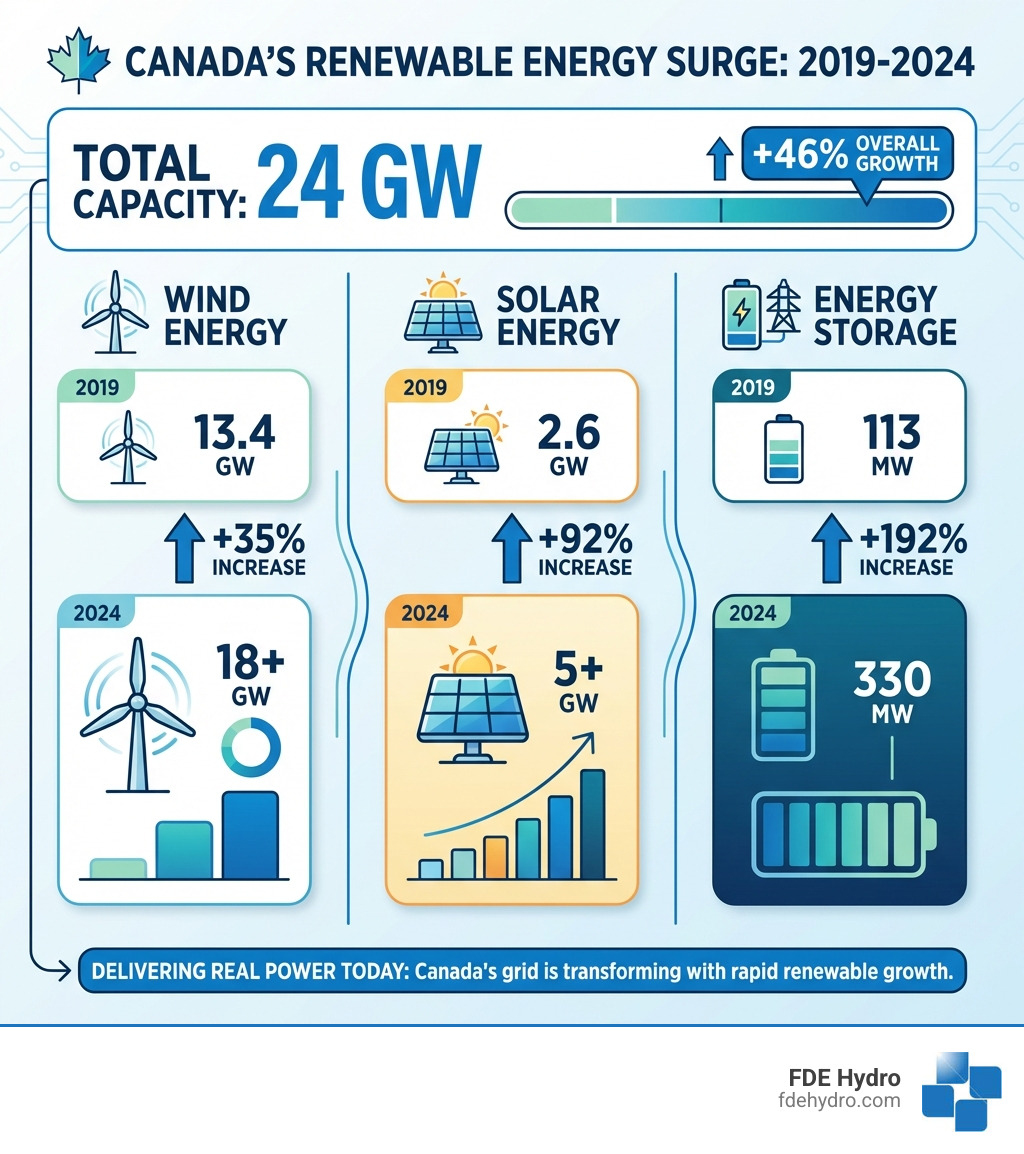
- Total Capacity: 24 GW of wind, solar, and energy storage installed by end of 2024
- Growth Rate: 46% increase in total renewable capacity over the past 5 years (2019-2024)
- Project Count: 341 wind energy projects and 217 major solar projects currently producing power
- Energy Storage: 330 MW capacity with 192% growth since 2019
- Home Power: Operating projects can meet electricity needs of approximately 1.9 million homes
- Global Standing: Canada ranks 9th worldwide for wind capacity and 24th for solar capacity
Canada’s renewable energy sector is no longer just a promise for tomorrow—it’s delivering real power today. The numbers tell a compelling story: wind and solar now meet more than 8% of Canada’s total electricity demand, and major players like Enbridge have committed over US$8 billion to projects either operating or under construction. With solar costs dropping 83% globally since 2009 and wind costs down 65%, the economic case for renewables has never been stronger.
The change spans coast to coast, from massive offshore wind farms to nearly 96,000 on-site solar installations powering homes and businesses. Energy storage capacity is growing even faster than generation, tripling in just five years to help balance the grid and maximize renewable output.
I’m Bill French Sr., Founder and CEO of FDE Hydro, and I’ve spent decades working on renewable energy projects through my participation in the Department of Energy’s Hydro Power Vision Technology Task Force and developing innovative modular solutions for the hydropower industry. This expertise gives me a front-row seat to the innovations reshaping how we build and deploy clean energy infrastructure.
Related content about renewable energy projects:
- clean energy infrastructure
- sustainable power generation
- what renewable energy resource is the most efficient
Canada’s Renewable Energy Boom: A Statistical Snapshot
Canada is truly experiencing a green energy renaissance, with renewable energy projects rapidly expanding across the nation. By the end of 2024, our total installed capacity for wind, solar, and energy storage hit an impressive 24 GW. This isn’t just a slight bump; it represents a remarkable 46% growth over the past five years alone, from 2019 to 2024. These clean energy sources are no longer niche players, with wind and solar collectively meeting more than 8% of Canada’s electricity demand in 2023. Globally, Canada stands proudly, ranking 9th for installed wind energy capacity and 24th for installed solar energy capacity.
A Diverse Energy Mix
Our journey towards a sustainable future is powered by a diverse portfolio of renewable energy projects. While hydropower has long been the backbone of Canada’s electricity grid, wind and solar are rapidly closing the gap, complemented by crucial energy storage solutions.
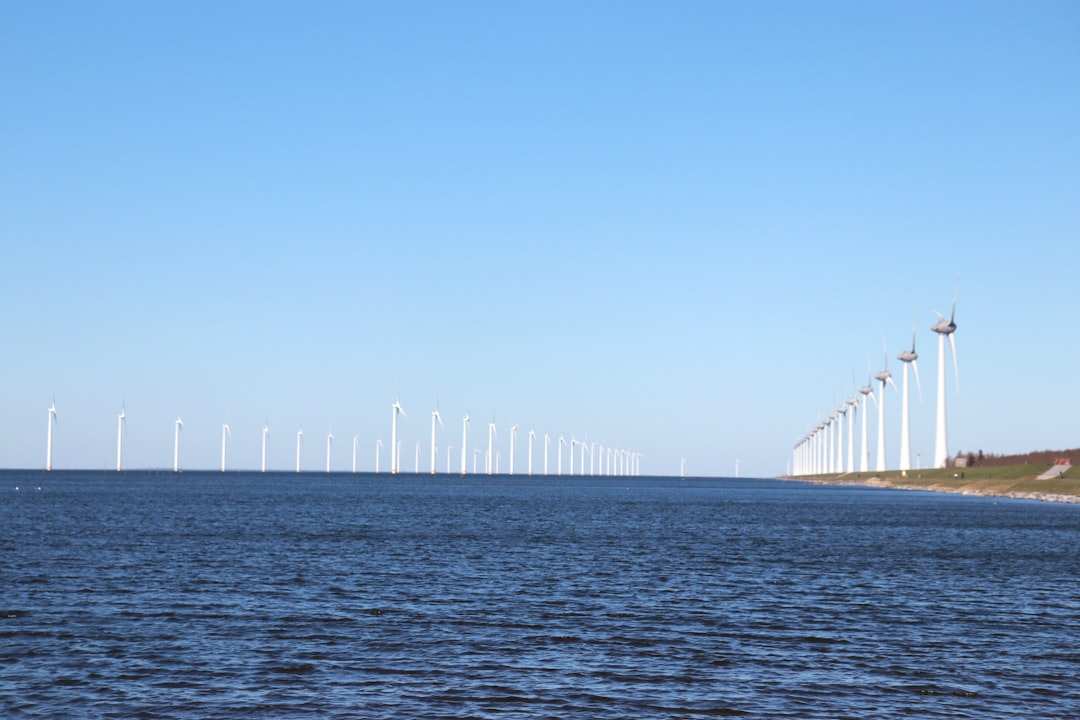
- Wind Energy: Wind power is a dominant force in Canada’s renewable landscape. We now boast over 18 GW of wind energy capacity, an increase of 35% in the last five years. Across the country, 341 wind energy projects are actively producing power. This significant capacity places Canada 9th in the world for installed wind energy, demonstrating our commitment to Sustainable Power Generation.
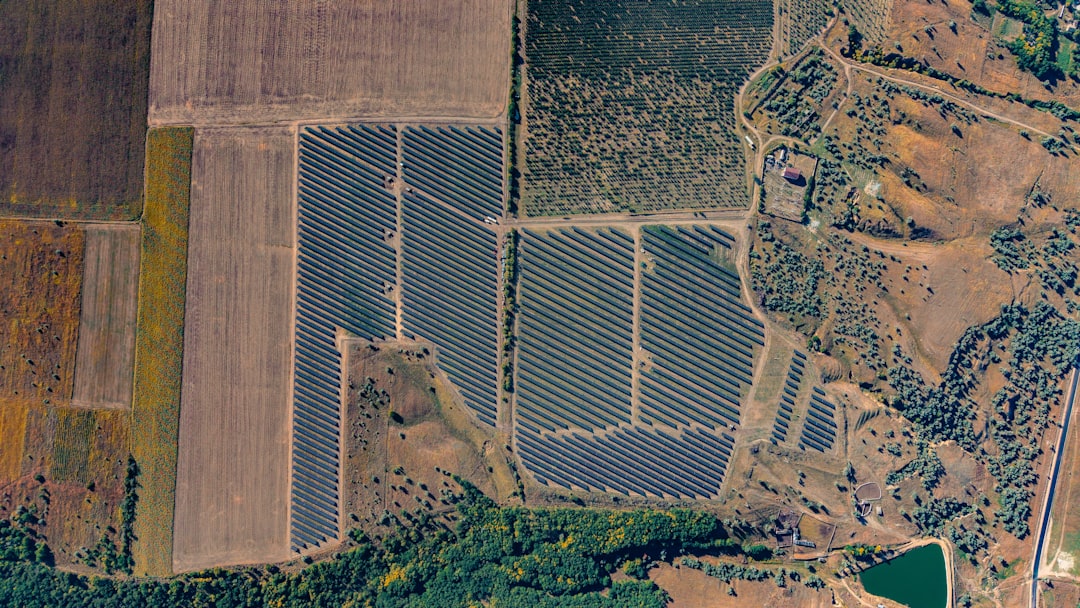
- Solar Energy: Solar power is shining brighter than ever in Canada. Our total solar energy capacity (including both utility-scale and on-site installations) now exceeds 5 GW. This sector has seen an astounding 92% growth in the past five years, making it one of the fastest-growing segments. We have 217 major solar energy projects producing power, alongside nearly 96,000 on-site solar energy installations across the country, from New York to California and across Canada.
- Hydropower: While wind and solar are expanding rapidly, we must never forget the long-standing champion of Canada’s renewable energy mix: hydropower. It remains Canada’s primary electricity source, providing a stable and reliable foundation for our grid. Our expertise at FDE Hydro, especially in innovative modular dam construction, plays a vital role in enhancing this critical sector. For a deeper dive into this robust resource, explore our Hydroelectric Power Solutions Guide.
- Energy Storage: Crucial for grid stability and integrating intermittent renewables, energy storage is also experiencing explosive growth. Canada’s energy storage capacity has reached 330 MW, representing an incredible 192% growth in just the past five years. This rapid expansion highlights the essential role storage plays in making our grid more resilient and efficient.
Mapping Canada’s Green Power
Understanding the geographical distribution of renewable energy projects is key to appreciating Canada’s green energy transition. These projects are not concentrated in one area but are spread across the country, leveraging regional strengths. For instance, wind farms often thrive in the vast plains, while solar installations are increasingly prevalent in sunnier regions like parts of Alberta and Ontario.
Data tracking and reporting are vital for monitoring this progress. Organizations like the Canadian Renewable Energy Association (CanREA) play a crucial role in compiling and disseminating statistics on installed capacity, growth trends, and project locations. This data helps us identify patterns, understand regional contributions, and plan for future development.
A powerful tool for visualizing this landscape is interactive mapping. These maps often highlight not only the location and type of renewable energy projects but also important details like Indigenous-owned projects, which are a significant and growing part of Canada’s renewable energy story. To truly grasp the scale and spread of these initiatives, we encourage you to explore the Canadian Renewable Energy Project Map. Click here to view the original map on the ArcGIS webapp map.
The Driving Forces: Key Players and Landmark Renewable Energy Projects
The rapid expansion of renewable energy projects in Canada is largely fueled by significant corporate investment and the successful execution of landmark initiatives. These players and projects are not just building infrastructure; they are building the future of our energy system.
Leading the charge are companies like Enbridge, a major North American energy infrastructure company that has made substantial commitments to clean energy. They have invested more than US$8 billion (about C$12 billion) in capital towards renewable energy projects that are currently either in operation or under construction. Their diversified portfolio boasts a gross capacity of 7,212 MW of zero-emission energy (4,082 MW net). This includes 23 wind farms (4,871 MW gross capacity), 17 solar energy operations (2,345 MW gross capacity), and even one geothermal project (22 MW gross capacity). These operating projects alone, with their 2,595 MW net generation capacity, are enough to meet the electricity needs of about 1.9 million homes. To understand how this compares to typical energy use, you can refer to Energy Consumption – Canadian homes.
Another key player is Kruger Energy, which owns a diversified portfolio of renewable energy production sites with a combined installed capacity of 650 MW. These companies, alongside many others, are demonstrating the viability and profitability of large-scale renewable energy development.
Notable Canadian renewable energy projects
Canada is home to numerous impressive renewable energy projects that showcase our innovative spirit and commitment to sustainability. While specific project details are vast, a few examples highlight the diversity and scale of these efforts:
- Travers Solar Project (Alberta): As one of the largest solar farms in Canada, this project is a testament to the potential of utility-scale solar in the country’s sunniest province. Projects like this contribute significantly to the national solar capacity and demonstrate the effectiveness of large-scale Green Energy Construction Complete Guide.
- Henvey Inlet Wind Project (Ontario): Located on the traditional territory of the Henvey Inlet First Nation, this project exemplifies successful community partnerships and Indigenous involvement in major renewable energy development. It’s a powerful example of how wind power can benefit local economies and communities.
- Oneida Energy Storage Project (Ontario): This significant battery energy storage facility is a critical step towards integrating more intermittent renewables into Ontario’s grid, providing flexibility and reliability.
These projects, among others, often involve intricate planning, advanced engineering, and strong collaboration between developers, communities, and governments.
The Growing Role of Energy Storage
The integration of renewable energy projects, particularly wind and solar, necessitates robust energy storage solutions. Why? Because the sun doesn’t always shine, and the wind doesn’t always blow. Energy storage technologies are vital for achieving grid stability, ensuring that electricity supply consistently meets demand.
In Canada, energy storage plays an increasingly critical role in making our grid more flexible and reliable. Battery technology, like that used in the Oneida project, allows us to store excess renewable energy generated during peak production times and release it when needed, smoothing out fluctuations and preventing waste. This capability is paramount for a modern, resilient grid. We are also seeing advancements in Pumped Storage Hydropower, which offers large-scale, long-duration storage capabilities, perfectly complementing other renewable sources.
Beyond large-scale grid applications, energy storage also underpins the development of microgrids. These localized energy systems can operate independently or connected to the main grid, providing improved reliability and energy security, especially for remote communities or critical infrastructure. To learn more about these fascinating systems, check out What is a Microgrid and How Does it Work?.
Trends Shaping the Future of Clean Energy
The landscape of renewable energy projects is constantly evolving, driven by global investment trends and relentless technological advancements. We are witnessing a monumental shift in how the world powers itself, and Canada is at the forefront of many of these exciting developments.
Global investment in clean energy is on an unprecedented trajectory, projected to rise to more than $3 trillion (U.S.) in 2025. This surge in capital is a clear indicator of the world’s commitment to decarbonization and the growing confidence in renewable technologies. In fact, solar energy is expected to eclipse oil production for the first time in terms of investment, a truly historic milestone.
The Compelling Economics of Renewables
One of the most significant trends driving the proliferation of renewable energy projects is the dramatic plummeting of costs for key technologies. This isn’t just a minor reduction; it’s a game-changer that has made renewables highly competitive with, and often cheaper than, traditional fossil fuels.
- Solar Power: Globally, the cost of solar energy has declined by an astonishing 83% since 2009. This massive reduction has made solar power accessible and affordable for a vast range of applications, from massive utility-scale farms to individual rooftop installations.
- Wind Power: Similarly, wind energy costs have fallen by 65% globally since 2009. This makes wind farms an incredibly attractive investment for generating clean, large-scale electricity.
These cost trends are not just global phenomena; they directly impact the economic viability and rapid deployment of renewable energy projects in Canada, the United States, Brazil, and Europe. Lower costs mean more projects can be built, more clean energy can be generated, and the transition away from fossil fuels can accelerate. This economic advantage is further solidified by ongoing innovation, often protected by Renewable Energy Patents, which continue to drive efficiencies and cost reductions.
Key technological advancements for renewable energy projects
Beyond cost reductions, continuous technological advancements are refining and expanding the capabilities of renewable energy projects. These innovations touch every aspect, from generation to storage and grid integration.
- Hydropower Innovation: While an older technology, hydropower is far from stagnant. Innovations in turbine design, operational efficiency, and environmental mitigation are constantly improving its performance. At FDE Hydro, we are pioneering advanced modular precast concrete technology for dams, known as the “French Dam.” This innovation drastically reduces construction time and costs for new hydroelectric facilities and retrofits, making hydropower projects more agile and economically attractive. These advancements are critical for maximizing the potential of existing and new hydro resources. Learn more about these exciting developments in Hydropower Advancements & Innovations 2025.
- Grid Modernization: The influx of intermittent renewable energy necessitates a smarter, more flexible grid. Smart grids, enabled by advanced sensors, communication technologies, and artificial intelligence, are designed to manage the dynamic flow of renewable power, optimize energy distribution, and improve reliability.
- AI in Energy Management: Artificial intelligence (AI) is rapidly becoming an indispensable tool for optimizing renewable energy projects. AI can forecast renewable energy generation more accurately, predict energy demand, manage energy storage systems efficiently, and even optimize the maintenance schedules of wind turbines and solar panels. This intelligent management improves the overall efficiency and reliability of renewable energy systems. For a comprehensive look at how AI is changing the sector, refer to our AI Energy Resource Complete Guide and how it contributes to AI for Sustainability.
The Broader Impact: Benefits Beyond the Grid
The benefits of renewable energy projects extend far beyond simply generating clean electricity. They are powerful engines for economic growth, job creation, and environmental stewardship, fundamentally contributing to a more sustainable and prosperous future.
One of the most tangible impacts is job creation. The development, construction, operation, and maintenance of wind farms, solar arrays, and hydropower facilities require a skilled workforce across numerous sectors. From engineers and construction workers to technicians and project managers, these projects create thousands of direct and indirect jobs. This includes specialized roles in manufacturing components, installing systems, and maintaining complex equipment over the lifespan of the projects. Investing in Clean Energy Infrastructure is a clear path to economic development and resilient local economies.
Equally important are the significant emissions reduction benefits. By displacing fossil fuel-based electricity generation, renewable energy projects drastically cut greenhouse gas emissions, playing a critical role in combating climate change. Canada, like many nations, has ambitious net-zero goals, and the expansion of renewables is central to achieving these targets. Every megawatt-hour generated by wind, solar, or hydro means less reliance on polluting sources, leading to cleaner air and a healthier environment. This shift towards Sustainable Energy Production is an essential component of fostering Eco-Friendly Living: Your Guide to a Low Environmental Footprint.
Furthermore, these projects often bring additional community benefits, such as local tax revenues, land lease payments, and opportunities for local businesses. They improve energy independence and security by reducing reliance on imported fuels and volatile global energy markets. The overall impact is a greener, more robust energy system that supports both environmental health and economic vitality.
Frequently Asked Questions about Renewable Energy in Canada
As renewable energy projects continue to gain prominence, many questions arise about their role and impact. Let’s address some of the most common inquiries regarding Canada’s clean energy landscape.
What is the largest source of renewable energy in Canada?
Without a doubt, hydropower remains the largest source of renewable energy in Canada. It has historically provided, and continues to provide, over 60% of our electricity generation. Hydropower facilities, ranging from massive dams to smaller run-of-river plants, have been a long-standing backbone of the Canadian grid, offering reliable, dispatchable power. Its ability to store large amounts of energy (especially with pumped hydro) and respond quickly to demand fluctuations makes it an invaluable asset for grid stability. Indeed, there are 4 Reasons Why Hydropower is the Guardian of the Grid, highlighting its crucial role.
Which province is leading in new wind and solar projects?
While many provinces are actively developing renewable energy projects, Alberta has emerged as a significant leader in new wind and solar projects in recent years. This surge is driven by a combination of favorable policies, abundant wind and solar resources, and a deregulated electricity market that encourages private investment. Ontario has also historically been a leader in installed capacity, particularly for wind, but Alberta’s recent growth trajectory for new projects is particularly noteworthy.
How do costs for solar and wind compare to a decade ago?
The cost comparison for solar and wind energy over the past decade is nothing short of revolutionary. We’ve seen a significant decline that has fundamentally reshaped the energy market. Globally, solar energy costs have plummeted by an astounding 83% since 2009. Similarly, wind energy costs have seen a substantial reduction of 65% since 2009. These dramatic cost reductions have made both solar and wind power highly competitive, and often the cheapest option, for new electricity generation in many regions, including Canada. This economic shift is a primary driver behind the rapid expansion of renewable energy projects across the country and around the world.
Conclusion: Powering Canada’s Sustainable Future
The journey of Canada’s renewable energy projects is a compelling narrative of growth, innovation, and unwavering commitment to a sustainable future. We have seen how installed capacity for wind, solar, and energy storage has surged by 46% in just five years, reaching an impressive 24 GW. This expansion is changing our power grid, with wind and solar now meeting more than 8% of Canada’s electricity demand.
The economic landscape has dramatically shifted, with plummeting costs for solar (down 83% globally since 2009) and wind (down 65% globally since 2009) making these technologies increasingly attractive. This, coupled with significant corporate investments from major players like Enbridge and Kruger Energy, paints a picture of robust and accelerating development.
Looking ahead, the future outlook for renewable energy projects in Canada is exceptionally strong. Technological advancements, including sophisticated grid modernization and the integration of AI for optimized energy management, will continue to improve the efficiency and reliability of our clean energy systems. Canada’s vast and largely untapped renewable resources, from the abundant sun and wind to the immense potential of our waterways, promise even greater growth.
At FDE Hydro, we are proud to contribute to this vital energy transition through our innovative hydropower technology, including our patented modular precast concrete solutions. By significantly reducing the cost and time associated with building and retrofitting dams, we are making hydropower more accessible and efficient, ensuring it remains a cornerstone of Canada’s clean energy mix.
Canada’s energy transition is not just about meeting environmental targets; it’s about building a resilient, prosperous, and sustainable future for generations to come. We are excited to be a part of this journey.
