

The Ticking Clock on America’s Water
Water infrastructure solutions are innovations designed to modernize aging systems. They include advanced treatment, green infrastructure, digital monitoring, modular construction, and integrated management to address leaks, climate impacts, and funding gaps while improving resilience and equitable access to clean water.
Key Water Infrastructure Solutions:
- Green Infrastructure – Bioretention systems, permeable pavements, and green roofs that naturally manage stormwater
- Digital Technologies – AI-powered leak detection, digital twins, and real-time monitoring systems
- Modular Construction – Faster, cost-effective approaches to building and retrofitting dams and treatment facilities
- Integrated Water Management – Treating drinking water, wastewater, and stormwater as interconnected systems
- Public-Private Partnerships – Leveraging federal funding (State Revolving Funds, infrastructure grants) with private sector innovation
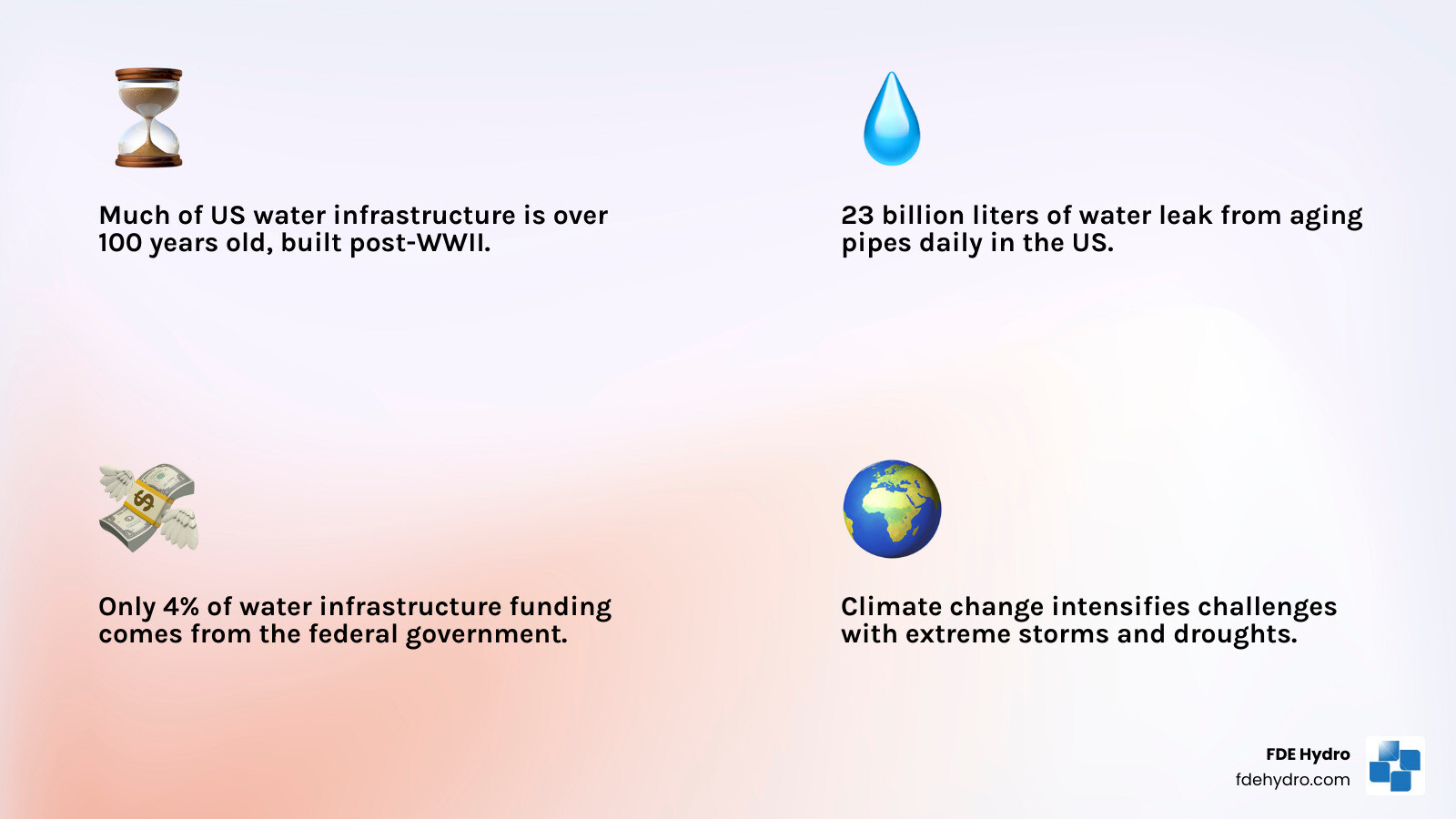
Much of America’s water network was built after World War II. Some of that infrastructure is now over 100 years old.
The numbers tell a sobering story: In the US alone, 23 billion liters of water leak from aging pipes every day. That’s enough to fill over 9,000 Olympic-sized swimming pools—lost every single day.
But this crisis isn’t just about old pipes. The water sector receives only 4% of its funding from the federal government—far less than highways (25%), mass transit (23%), or aviation (45%). Meanwhile, more than 80% of the nation’s 52,000 community water systems serve fewer than 3,330 people, leaving small communities struggling to maintain essential services.
Climate change intensifies these challenges. Extreme storms overwhelm drainage systems. Prolonged droughts stress already-strained supplies. Flooding contaminates treatment facilities. The very systems we built for yesterday’s climate must now handle tomorrow’s uncertainty.
Yet within this crisis lies opportunity. The shift from reactive repairs to proactive innovation is already underway. Cities are deploying smart sensors that detect leaks before they become catastrophes. Engineers are designing modular systems that can be built in months, not years. Communities are reimagining stormwater as a resource, not a nuisance.
I’m Bill French, Founder and CEO of FDE Hydro™, where we’ve pioneered modular civil construction methods that dramatically reduce costs and timelines for water infrastructure solutions in hydropower and water control systems. After five decades leading major civil construction projects across New England, I’ve seen how innovation can transform what’s possible in water infrastructure.
The Crossroads of Crisis: Why Our Water Infrastructure is Failing
Those post-World War II systems, once modern, are now creaking under the strain of age. Many of our water treatment plants, distribution lines, and storage facilities are operating well beyond their intended lifespan—some for over 100 years. We rely on these century-old pipes for our daily water.
The result is frequent pipe breaks, contamination risks, and a staggering 23 billion liters of water lost daily through leaks—precious resources disappearing into the ground.
But here’s what really frustrates me after five decades in this industry: this didn’t have to happen.
The real culprit is chronic underinvestment. For years, maintenance and upgrades were deferred. The EPA calls this a critical “crossroads,” stating in its guidance on Building Effective Water Infrastructure | US EPA that the time for decisive action is now.
The funding disparity tells the story. While highways receive 25% of their funding from federal sources, and aviation gets 45%, water infrastructure scrapes by with just 4%. That’s not a typo. Four percent.
This leaves local communities—especially the more than 80% of US water systems serving small populations under 3,330 people—struggling to finance critical repairs. These rural towns and small cities lack the deep pockets of metropolitan areas. Without robust federal support, they fight an uphill battle to provide safe, reliable water.
How Climate Change Exacerbates the Problem
If aging infrastructure wasn’t enough of a challenge, we now face a new threat: a climate that’s changing faster than our systems can adapt.
Our water systems were built for a past climate with predictable weather, not the world we live in today.
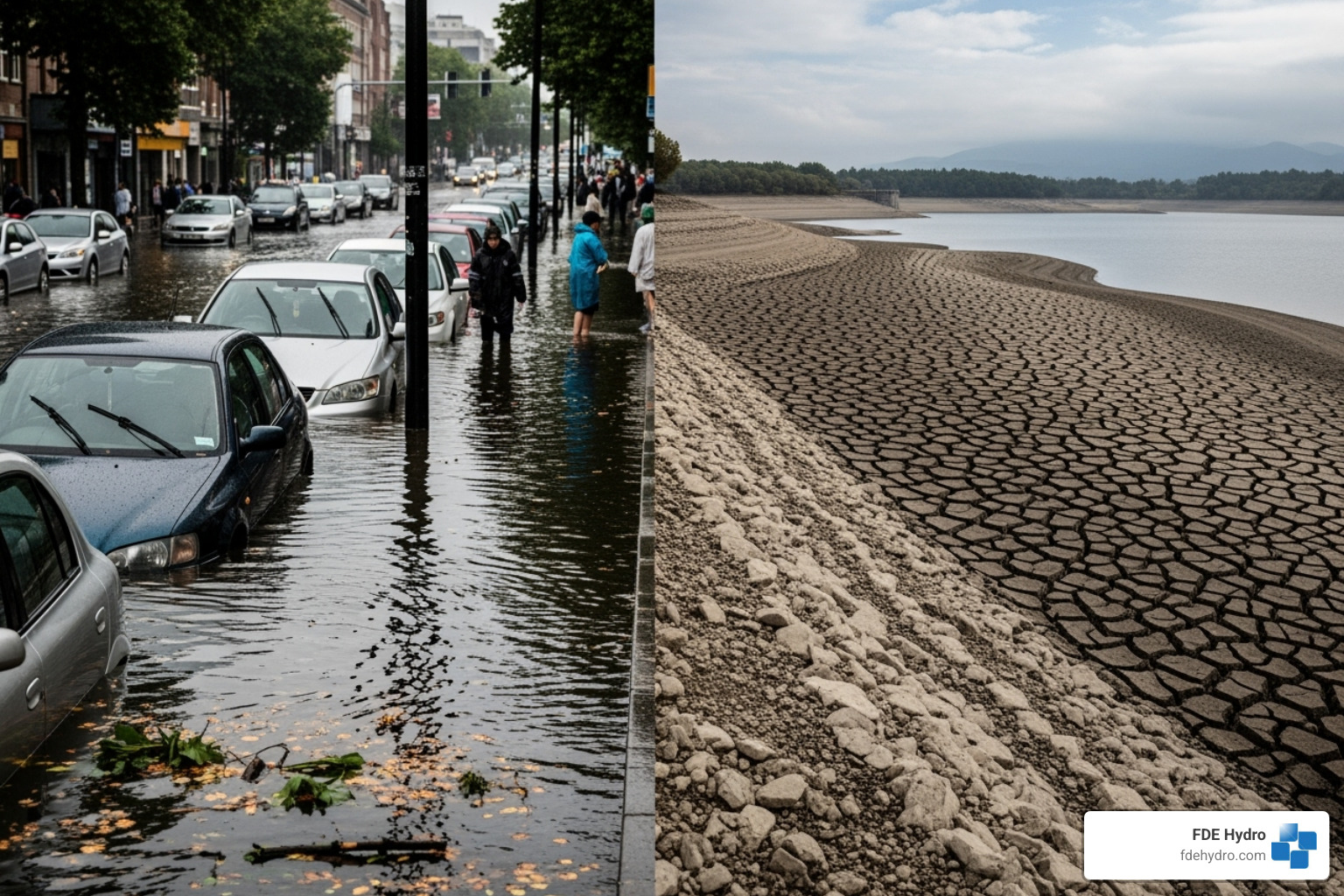
Today, intensified storms overwhelm stormwater systems, causing floods and sewage overflows. On the other end of the spectrum, prolonged droughts drain reservoirs, leaving 4 billion people globally facing severe water scarcity for at least part of each year.
Coastal communities face another challenge entirely. Sea-level rise threatens to inundate wastewater treatment plants and push saltwater into freshwater aquifers, contaminating drinking water sources.
Warmer temperatures also fuel harmful algae blooms, while extreme weather causes power outages and damages pipelines, increasing the financial burden with each disaster.
The public health implications are severe. Contaminated water can trigger disease outbreaks, while service disruptions leave vulnerable populations without clean water and cause economic impacts that ripple through entire regions.
Here’s the fundamental problem: climate change has transformed water from a predictable resource into an unpredictable challenge. Our infrastructure, built for yesterday’s climate, was never designed for this variability. We’re living in tomorrow’s chaos.
That’s why we believe The Biggest Untapped Solution to Climate Change is in the Water. The path forward requires water infrastructure solutions that don’t just repair what’s broken—they build resilience for whatever comes next.
A Wave of Change: Innovative Water Infrastructure Solutions
While the challenges are overwhelming, innovators are reimagining water management. This shift from reactive fixes to proactive planning is changing our approach to water infrastructure solutions. Instead of just patching crumbling pipes, we’re creating resilient, sustainable systems that work with nature, adapt to climate change, and turn waste into resources.
Reinventing Stormwater and Wastewater Management
For decades, we treated stormwater and wastewater as problems to be removed. Innovative water infrastructure solutions are flipping that thinking on its head.
Green infrastructure leads this revolution by letting nature manage stormwater. Permeable pavements let rainwater soak into the ground. Green roofs absorb rainfall. Bioretention systems filter pollutants naturally while beautifying neighborhoods.
The benefits are numerous: these green approaches reduce flooding, improve water quality, cool down urban heat islands, and recharge groundwater—all while using less energy than traditional systems. You can explore more of these approaches at Solutions — Shape Our Water.
The wastewater side is equally exciting. With thousands of treatment plants worldwide, the potential is enormous. Modern facilities are becoming resource recovery centers, not just cleaning water.
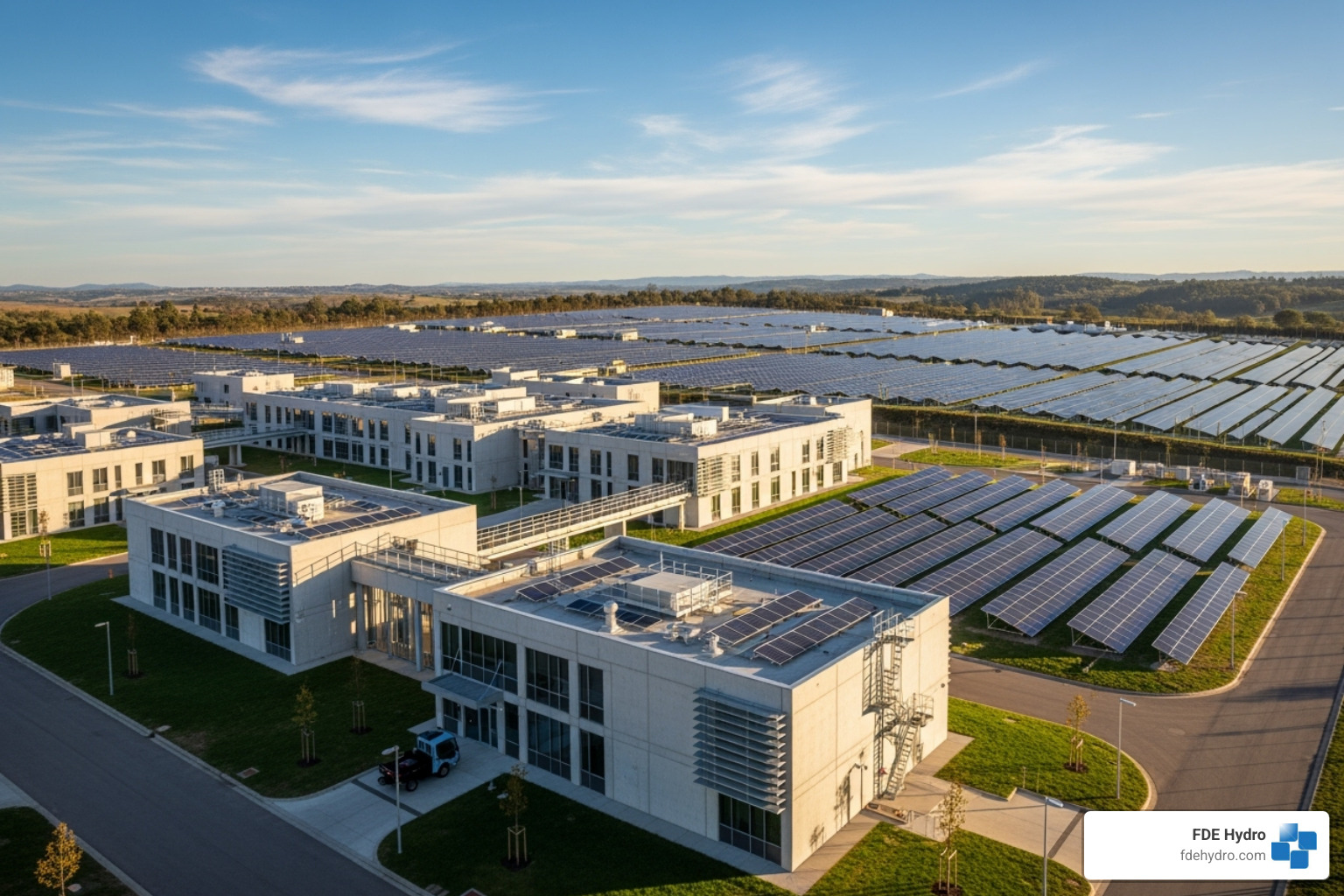
Advanced plants convert biosolids to biogas for electricity and add solar panels to cut energy costs. They extract nutrients like phosphorus for fertilizer and treat wastewater for reuse in irrigation, industry, or even as drinking water—a game-changer for drought-prone regions.
This shift from “waste” to “resource” isn’t just smart environmentally. It makes economic sense too.
Modernizing Dams, Hydropower, and Water Control
Dams and water control structures might not be glamorous, but they’re absolutely essential. They control floods, store drinking water, irrigate crops, and generate clean renewable energy. The problem? Many of these critical structures were built generations ago and desperately need upgrades.
This is where modern construction innovation really shines. At FDE Hydro™, we’ve pioneered a modular precast concrete approach that’s changing how these structures get built and retrofitted. Our patented technology—the “French Dam”—turns what used to be years-long construction marathons into projects measured in months.
It’s like building with high-tech LEGOs. Components are fabricated off-site, then quickly assembled. The result: projects finish in months, not years. Costs drop, community disruption is minimized, and the environmental impact shrinks.
This approach works beautifully for both new construction and retrofitting existing structures. Dam Rehabilitation Encapsulation allows us to strengthen and extend the life of aging dams without tearing them down and starting over. That’s crucial for dam safety—keeping these structures secure and functional for future generations.
We’re also focused on maximizing renewable energy potential. Advanced Water Control Structures and modern Hydropower systems are making clean energy generation more efficient and environmentally friendly. Our French Dam – One of Top 10 Hydro Innovations and New Technologies has been recognized as a breakthrough in making hydropower more accessible and sustainable.
The modular approach has advantages beyond speed: factory work is safer and more controlled, on-site waste is reduced, the carbon footprint is smaller, and local communities and ecosystems recover faster from shorter construction times.
We’re actively deploying these solutions across North America, Brazil, and Europe—regions where aging infrastructure meets growing energy needs. The goal is simple: build better, build faster, and build sustainably. Because when it comes to critical water infrastructure, we can’t afford to keep doing things the old, slow way.
The Digital Deluge: Technology’s Role in a Smarter Water Future
Imagine a utility that knows about a leak before it’s a geyser, or a plant that adjusts to demand automatically. This isn’t the future; it’s happening now. Smart water systems are turning aging infrastructure into intelligent networks that can think, learn, and adapt.
At the core of this change are digital twins—virtual replicas of water networks, dams, or treatment plants. Fed by real-time sensor data, they let engineers run “what if” scenarios—like how a dam would respond to a flood—without risk to the actual system. Digital twins modernize planning and operations, improve collaboration, and identify risks before they become crises.
Then there’s AI-powered leak detection. Unlike traditional methods that rely on visible signs, AI systems analyze sensor data to pinpoint leaks with remarkable accuracy, often catching them at their inception. Considering that 23 billion liters of water leak from US pipes daily, the potential impact is clear.
Predictive analytics goes further, using data to forecast equipment failure, identify pipes needing attention, and anticipate demand. This allows for scheduled maintenance instead of 2 AM emergencies, preventing disruptions.
SCADA systems (Supervisory Control and Data Acquisition) tie everything together, giving operators a centralized view of the entire network. From pumping stations to treatment facilities, they can monitor performance, adjust operations, and respond quickly to changes—all from a single control room.
Underlying all of this is real-time monitoring via sensor networks, which provides a constant stream of data on water quality, flow, and pressure. This gives operators immediate insights, which is crucial for effective Water Resource Management❯.
How Data Improves Efficiency and Resilience
These technologies deliver real results that make our water systems work better and last longer.
Optimized operations allow utilities to fine-tune pumping and chemical use based on predicted demand. This saves energy, cuts costs, and reduces the carbon footprint of water treatment and distribution.
Reduced non-revenue water is another major win. This is treated water lost to leaks. By fixing leaks faster, utilities cut losses, ensuring more water reaches customers and less energy is wasted.
Proactive maintenance changes the game. Instead of waiting for a pipe to burst, utilities can use predictive models to schedule replacements based on actual condition data. This extends infrastructure life while preventing the costly disruptions that come with unexpected failures.
During disasters, emergency response planning with real-time data makes all the difference. Smart systems enable utilities to respond faster by isolating areas, rerouting water, and implementing backup plans. This swift response prevents service disruptions and protects public health.
This enables true data-driven decision making. Major investment and operational decisions can be backed by evidence, not guesswork, leading to more efficient spending and safer, more reliable water services.
Technology is breaking down the old data silos that kept different parts of water systems isolated. Now, drinking water, wastewater, and stormwater systems can share information and coordinate responses. This integrated approach to water infrastructure solutions makes our systems not just smarter, but genuinely resilient.
For us at FDE Hydro, Using Technology to Minimize the Duration of Impacts isn’t just a goal—it’s a core principle that guides everything we do.
The Financial Flow: Funding a Resilient and Equitable Future
Let’s be honest: none of these brilliant innovations matter if we can’t pay for them. And right now, we’re facing a massive funding gap.
The numbers are stark: the water sector gets just 4% of its funding from the federal government. The needed investment runs into the hundreds of billions. After decades of underinvestment, we are now paying the price.
The good news is that things are changing. The Bipartisan Infrastructure Law is a historic investment, with funds flowing through channels like State Revolving Funds (SRFs). These EPA programs offer low-interest loans, providing a lifeline for communities to fund upgrades. Direct grants also target urgent needs like lead pipe replacement.
Yet public funding alone won’t close the gap. That’s where Public-Private Partnerships (PPPs) come in. These collaborations mobilize private capital, share project risks, and bring in specialized expertise and innovative technologies. PPPs create the long-term stability needed for ambitious upgrades designed to last for decades and withstand climate uncertainties.
The Resilient Water Infrastructure Design Brief offers valuable insights on embedding climate resilience into these frameworks. The US Water Alliance’s Five Interlocking Solutions also emphasizes how diverse funding mechanisms and strategic partnerships are essential for creating a resilient, sustainable, and equitable water sector.
Equitable and Affordable Water Infrastructure Solutions
The communities needing improvements most are often least able to afford them. Low-income and minority communities have historically borne the brunt of aging infrastructure and contaminated water. This is both unfair and unsustainable.
Making water infrastructure solutions equitable and affordable isn’t optional. It’s fundamental to building systems that actually work for everyone.
Customer assistance programs (CAPs) are powerful tools. Programs in Philadelphia and Cook County show what’s possible, offering utility debt forgiveness and income-based bill reductions. These programs recognize that access to clean water is a basic human right.
We need fair and transparent rate structures that reflect service costs and encourage conservation while protecting low-income households. Thoughtfully designed cost-based pricing can reduce bills for most low-income households while ensuring utilities have the revenue to maintain the system.
The lead pipe crisis demands urgent attention. Millions of lead service lines remain in the US, disproportionately poisoning disadvantaged communities. Aggressive replacement programs like Kenosha’s Live Lead Safe grant program are literally saving lives. Every community deserves water that won’t harm their children.
Over 80% of US community water systems serve fewer than 3,330 people, with 55% serving fewer than 500. These small and rural communities often lack the resources and technical expertise for major upgrades. Utility partnerships and consolidations can help by sharing resources, expertise, and costs across multiple systems.
Finally, community engagement is essential. When residents help plan projects and allocate funding, the outcomes meet community needs and prevent the historical pattern of placing hazardous facilities in underserved areas. We need to listen to what communities say they need.
By prioritizing affordability and equity alongside innovation, we build water infrastructure solutions that truly serve everyone. That’s how we create not just better water systems, but stronger, more just communities.
The “One Water” Approach: Integrated and Sustainable Management
For decades, we’ve managed drinking water, wastewater, and stormwater in separate silos. But water doesn’t recognize these artificial boundaries.
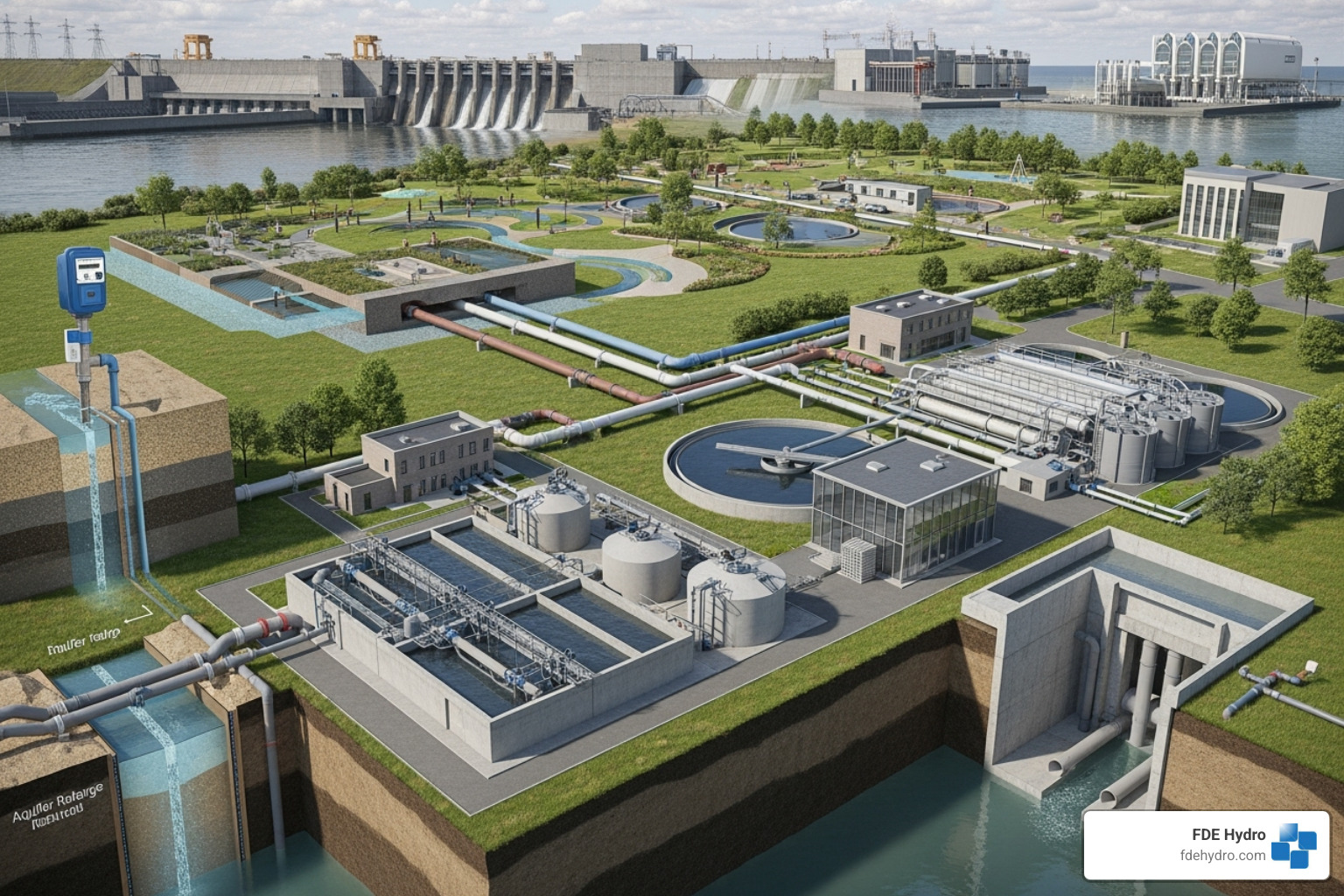
The “One Water” approach recognizes that all water is connected and valuable, managing it as a single resource. This means rethinking water infrastructure solutions so that decisions in one area account for impacts on others. At its heart, One Water is about treating every drop as a resource, not waste. Wastewater contains energy and nutrients, while stormwater can recharge aquifers instead of causing floods.
This approach accepts circular economy principles, moving away from a “take, use, throw away” model to one that keeps water in use and extracts maximum value.
One Water also extends to protecting entire watersheds—the forests, wetlands, and natural landscapes that filter and store water. A healthy watershed means cleaner source water and less expensive treatment.
Making this work requires collaboration between utilities, governments, businesses, and communities. Working together on comprehensive solutions allows us to accomplish what no single entity could do alone.
Sustainable Water Infrastructure Solutions for Climate Adaptation
Building sustainable infrastructure means preparing for the future climate, not just the one we’ve known. Sustainable water infrastructure solutions are essential for both climate mitigation and adaptation.
Designing for tomorrow’s climate scenarios is now standard practice. Engineers use climate models to anticipate future storms, droughts, and sea-level rise, ensuring infrastructure built today can withstand the conditions of the next 50-100 years.
Nature-based solutions are powerful tools. Green infrastructure, restored wetlands, and protected forests are practical, cost-effective solutions that often outperform traditional “gray” infrastructure while providing co-benefits like wildlife habitat.
Water reuse and recycling transform what we once called waste into a reliable water source. Advanced wastewater reclamation systems can produce water clean enough for irrigation, industrial processes, or even drinking water. Capturing rainwater and reusing greywater reduces the strain on our freshwater sources, which is critical in drought-prone regions.
The water sector is also tackling its own carbon footprint. By optimizing pump operations, upgrading to energy-efficient equipment, and installing solar panels on treatment facilities, utilities are dramatically cutting both emissions and operating costs.
We’re particularly excited about the role of hydropower in this sustainable future. Solutions like Pumped Storage Hydropower act like giant batteries—storing excess renewable energy when the sun is shining or wind is blowing, then generating power when it’s needed most. This helps stabilize the electrical grid while providing clean, renewable energy.
By weaving these sustainable practices into every aspect of our water infrastructure solutions, we’re building systems that don’t just survive the challenges ahead—they actively contribute to solving them. These aren’t just resilient systems; they’re regenerative ones, giving back to the environment while serving our communities.
Conclusion: Building the Water Systems of Tomorrow, Today
We’ve reviewed the story of America’s water infrastructure: century-old pipes, massive daily leaks, chronic underfunding, and unprecedented climate pressures. The challenges are real and urgent.
But here’s what gives me hope after five decades in this industry: we’re not just patching problems anymore. We’re reimagining what’s possible.
The innovative water infrastructure solutions we’ve explored—from green infrastructure and digital twins to resource recovery—are not distant dreams. They are happening now. We are embracing the “One Water” approach, recognizing every drop is precious and interconnected.
Money matters, of course. Strategic investments through federal funding, state revolving funds, and public-private partnerships are essential. But equally important is our commitment to equity—ensuring that small rural communities and underserved urban neighborhoods aren’t left behind. Safe, affordable water isn’t a luxury. It’s a fundamental right.
At FDE Hydro™, we’ve built our entire approach around making modernization faster, more affordable, and more sustainable. Our patented modular precast concrete technology transforms what used to be years-long construction projects into work that can be completed in months. When we retrofit dams or build new Water Control Structures, we’re not just saving time and money—we’re reducing environmental impact and helping communities get the infrastructure they need without the disruption they dread.
From North America to Brazil to Europe, we’re seeing the same pattern: communities that accept innovation, invest strategically, and prioritize both resilience and equity are building water systems that will serve their great-grandchildren well.
The water systems of tomorrow need to be integrated, resilient, and fair. They need to handle whatever climate throws at them while using every drop wisely. They need to serve everyone, not just those who can afford it.
And they need to be built today.
The technology exists. The funding mechanisms are in place. The knowledge is here. What we need now is the collective will to act—to invest not just in pipes and pumps, but in the future we want for our communities.
Ready to explore what modular construction can do for your water infrastructure project? Find our advanced solutions for Dams and see how FDE Hydro™ is helping communities build smarter, faster, and more sustainably.
