

Why Construction Renewable Energy Matters More Than Ever
Construction renewable energy encompasses both the use of clean energy sources to power construction sites and equipment, and the specialized construction of renewable energy infrastructure such as solar farms, wind turbines, hydroelectric facilities, and energy storage systems.
Quick Overview: Key Aspects of Construction Renewable Energy
- Powering Construction Sites: Using solar panels, wind power, and hydrogen fuel cells to run equipment and reduce fossil fuel dependency
- Building Renewable Infrastructure: Constructing solar farms, wind turbines, hydropower facilities, and energy storage systems
- Cost Savings: Solar construction costs fell 8% in 2020 while delivering long-term operational savings
- Environmental Impact: Reducing the 55 tons of CO2 emissions typically generated when building a new house
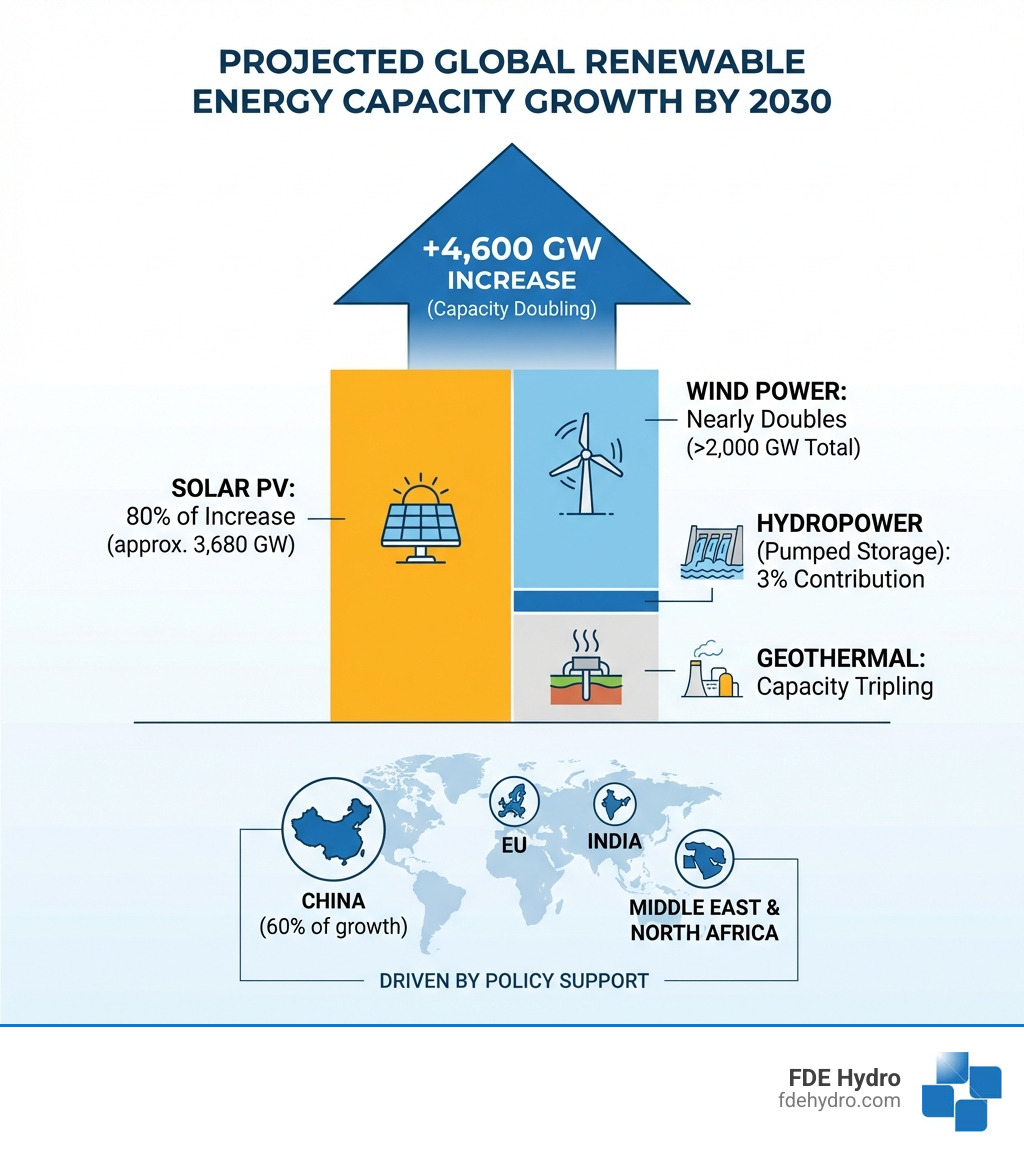
- Market Growth: Global renewable power capacity is expected to double by 2030, adding 4,600 gigawatts
The construction industry stands at a critical crossroads. Building a single new house generates approximately 55 tons of carbon dioxide into the atmosphere. Construction equipment in regions like the UAE alone consumes about 6 billion gallons of non-renewable fuel annually. Yet the same industry is also building the solution—constructing the solar farms, wind turbines, and hydroelectric facilities that will power our clean energy future.
This dual role makes construction renewable energy both a challenge and an opportunity. Companies that master it can slash their operational costs, meet increasingly strict environmental regulations, and tap into a market that’s projected to add capacity equivalent to China, the European Union, and Japan’s power generation combined by 2030.
The economics are compelling. While average construction costs for solar photovoltaic systems fell 8% to $1,655 per kilowatt in 2020, renewable energy installations have already reduced global coal imports by 700 million tonnes and saved an estimated $1.3 trillion since 2010. Solar panels pay for themselves over their lifetime, and technologies like photovoltaic windows can reduce greenhouse gas emissions by 80% compared to fossil fuel use during construction.
The momentum is undeniable. Solar PV accounts for almost 80% of the global increase in renewable power capacity over the next five years. Corporate power purchase agreements and merchant plants now drive 30% of global renewable capacity expansion. Countries like India are on track to become the second-largest renewables growth market globally, while innovations in hydrogen-powered construction equipment and modular infrastructure are solving long-standing challenges around cost, speed, and flexibility.
I’m Bill French Sr., Founder and CEO of FDE Hydro, where I’ve spent decades pioneering modular civil construction solutions for the hydropower industry after building W.L. French Excavating Corporation into a top-tier site contractor with $200M in annual revenues. My work in construction renewable energy has focused on developing innovations like the “French Dam” that dramatically reduce construction costs and timelines while benefiting present and future environments.
The Spectrum of Renewable Energy in Construction
When we talk about construction renewable energy, we’re discussing a dynamic field that leverages nature’s power for both temporary construction needs and permanent energy infrastructure. The primary renewable energy sources being used in construction projects today are solar, wind, hydropower, geothermal, and biomass. Each offers unique advantages and applications, changing how we build and how we power our world. For a deeper dive into how these projects come to life, we invite you to explore our Renewable Energy Projects Complete Guide.
Solar Power: From Rooftops to Utility-Scale Farms
Solar power is undeniably the shining star of the renewable energy revolution. It’s versatile, scalable, and increasingly affordable. In construction renewable energy, solar is applied in numerous ways:
- Utility-scale solar farms: These vast installations, like the Hillsboro Solar project in Lawrence County, Alabama, or the Travertine Solar project, harness solar energy to feed into the grid. Their construction involves significant civil planning, mechanical and electrical work, substations, and interconnection. We see these projects frequently across the United States.
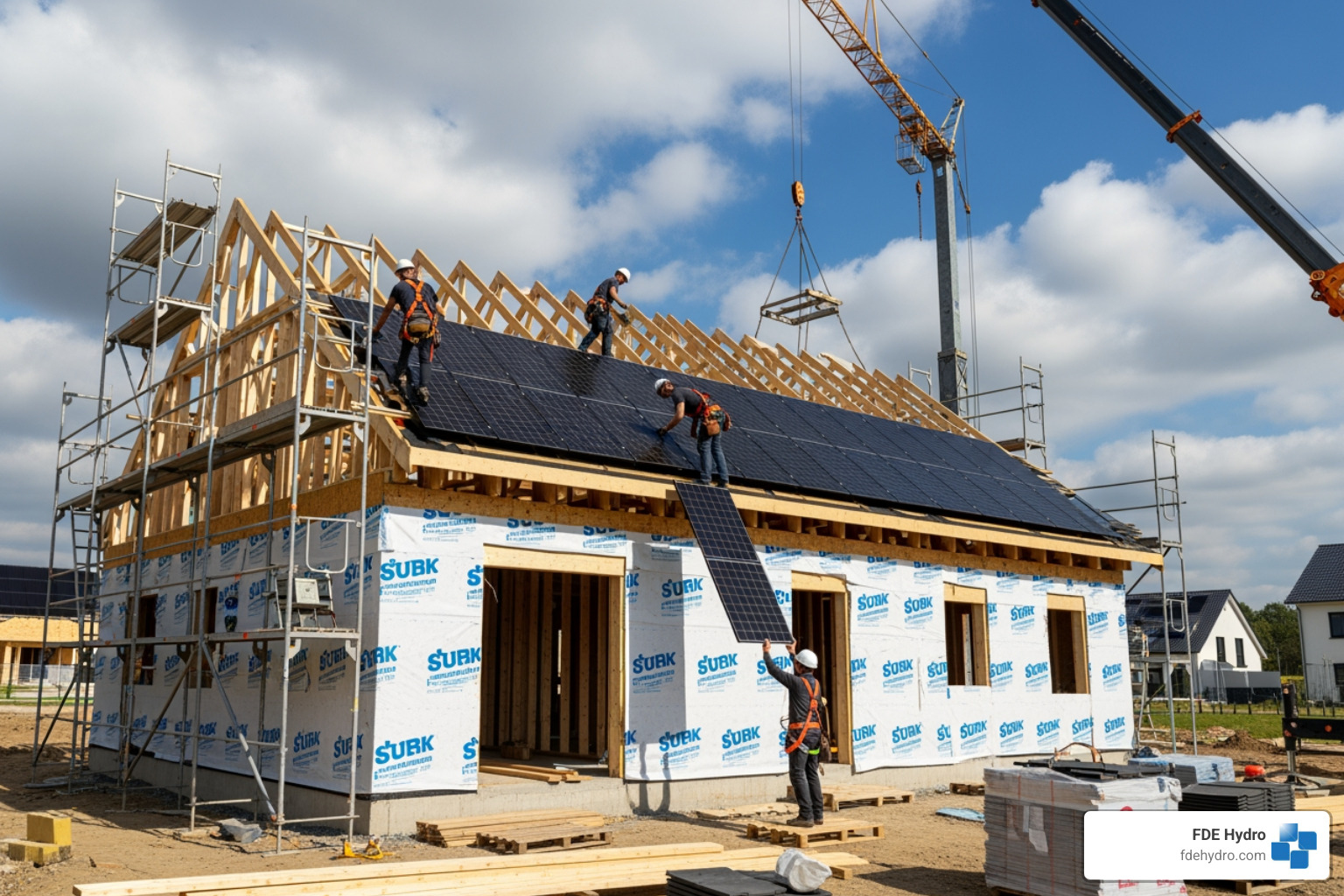
- Photovoltaic windows: Imagine a building that generates its own power! These innovative windows absorb sunlight, reducing a building’s greenhouse gas emissions by up to 80% compared to fossil fuel use during construction and operation.
- Solar-powered equipment: Manufacturers like Volvo are introducing construction equipment, such as loaders and excavators, that can be powered by renewable energy. This reduces reliance on diesel and cuts down on emissions directly at the job site.
- Solar site lighting: A simple yet effective application, solar lights provide an economical and convenient alternative to traditional fossil fuel-powered lighting for construction sites.
- Panel Technology: The choice of solar panel technology impacts efficiency and cost. Crystalline silicon panels are the most common in the United States, often using solar tracking systems that move to follow the sun, maximizing electricity production. Cadmium telluride tracking panels have seen significant cost reductions, making them an attractive option.
This widespread adoption underscores the importance of Clean Energy Solutions in the built environment.
Wind Energy: Using Power on a Grand Scale
Wind power, a formidable force in the renewable landscape, involves the construction of towering turbines designed to capture kinetic energy. Its application in construction renewable energy primarily revolves around creating the infrastructure for wind farms:
- Onshore wind farms: These are built across vast landscapes, often requiring extensive logistical planning and resource distribution. Installing more than 1,000 wind turbines, as some companies have done, showcases the scale of these operations. The construction involves significant mechanical and electrical expertise.
- Offshore wind projects: While facing challenges like policy changes, supply chain bottlenecks, and rising costs, offshore wind development continues, particularly in Europe and parts of the United States. These projects demand highly specialized marine construction techniques.
- Turbine installation: This complex process requires not only mechanical and electrical prowess but also substantial financial strength from the construction companies involved.
- Site power: For construction sites located near existing wind farms or in areas without grid access, tapping into wind-generated electricity can be a viable alternative to gas generators.
Although average construction costs for wind turbines increased by 8% in 2020, the long-term benefits of clean energy generation continue to drive investment in this sector.
Hydropower: The Foundation of Renewable Energy Construction
Hydropower, the using of flowing water, remains a cornerstone of clean energy, accounting for about 71% of green energy globally. In construction renewable energy, our focus at FDE Hydro is often on:
- Dam structures: From traditional concrete dams to innovative modular solutions, the construction of these structures is fundamental to hydropower generation.
- Powerhouse construction: This involves building the facilities that house turbines and generators, converting water’s energy into electricity.
- Pumped storage: A crucial aspect for grid stability, pumped storage hydropower facilities store energy by pumping water to a higher reservoir, then releasing it to generate power when demand is high. This technology is seeing faster growth due to its role in grid integration.
- Civil infrastructure: Hydropower projects are inherently civil engineering marvels, requiring expertise in tunneling, reservoirs, and transmission/delivery systems.
At FDE Hydro, we’re particularly excited about our innovative, patented modular precast concrete technology, often referred to as the “French Dam.” This approach significantly reduces construction costs and time for building and retrofitting hydroelectric dams and water control systems in North America, Brazil, and Europe. We believe this innovation is a game-changer for Hydroelectric Dam Construction and represents The Biggest Untapped Solution to Climate Change is in the Water.
Emerging Sources: Geothermal, Biomass, and Hydrogen
Beyond the big three, other renewable sources are playing an increasing role in construction renewable energy:
- Geothermal: Using Earth’s internal heat, geothermal capacity additions are expected to triple by 2030, with the United States being a key market for this growth.
- Biomass: Biomass power plants convert organic matter into energy. These facilities can be fueled by municipal solid waste or wood byproducts, offering a sustainable way to manage waste while generating power.
- Hydrogen fuel cells: These offer scalable and portable solutions for mobile construction sites, potentially replacing gas generators. Hydrogen-powered construction equipment, such as excavators, is also emerging, promising significant emission reductions.
These sources, alongside the more established ones, contribute to a diverse portfolio of Sustainable Energy Production methods for the construction sector.
The Business Case: Economic and Environmental Benefits
The transition to construction renewable energy isn’t just an environmental imperative; it’s a smart business decision. Adopting renewable energy in construction has a profound impact on CO2 emissions and environmental sustainability, while simultaneously improving productivity and operational efficiency for construction companies. This dual benefit makes the business case incredibly compelling, driving a shift towards Green Energy Construction.
Driving Down Costs and Boosting ROI
For construction companies, the bottom line is always crucial. Integrating renewable energy solutions can lead to substantial economic benefits:
- Construction cost trends: While average construction costs for wind turbines and natural gas-fired generators saw increases in 2020, solar photovoltaic systems continued their downward trend, falling 8%. This makes solar an increasingly attractive investment for both temporary site power and permanent installations.
- Fuel cost savings: Replacing diesel generators and other fossil fuel-dependent equipment with renewable alternatives significantly reduces ongoing fuel expenses. This predictability in energy costs helps long-term financial planning.
- Long-term profitability: Although some renewable energy installations may have higher upfront costs, they often pay for themselves over time through reduced operational expenses and potential revenue generation. For instance, a 6-kilowatt solar PV system for a single-family home can cost around $12,700 after federal tax incentives, but it offsets significant energy use, leading to long-term savings.
Understanding the full financial picture, including upfront investment versus long-term savings, is key to realizing the true value. For more insights into project financing, especially for large-scale infrastructure, consider our guide on Hydropower Project Costs.
Enhancing Energy Efficiency in Residential Construction
In new home construction and remodels, renewable energy solutions contribute significantly to energy efficiency and cost savings, which is a major draw for prospective homebuyers.
- Whole-house systems approach: We advocate for a whole-house systems approach, which views the house as an energy system with interdependent parts. This ensures that renewable energy integration, like solar panels, works synergistically with insulation, efficient windows, and HVAC systems for optimal performance.
- ENERGY STAR ratings: Homebuyers prioritize ENERGY STAR-rated features, and integrating renewables helps achieve these certifications, boosting property value and appeal.
- Solar panel costs for homes: A single-family home typically needs between 15 and 34 solar panels to offset most of its energy use. Panels cost anywhere between $2.40 and $3.60 per watt (including installation). On average, a 6-kilowatt PV system for a single-family home can cost around $12,700 after federal tax incentives, making it a sound long-term investment.
- Financing options: Various options exist for homeowners, including loans, system leases, a power purchase agreement (PPA), or enrolling in a Property Assessed Clean Energy (PACE) program.
Reducing the Carbon Footprint of Construction Sites
The most impactful environmental benefit of construction renewable energy is the significant reduction in carbon emissions.
- Fossil fuel reliance: Construction sites are notoriously reliant on fossil fuels for powering equipment, heating, lighting, and air conditioning. This dependence is a primary reason for the industry’s substantial carbon footprint.
- Greenhouse gas reduction: By switching to renewable sources, we directly cut down on greenhouse gas emissions. For example, using solar energy for site power or hydrogen fuel cells can dramatically lower the environmental impact of operations.
- Material production emissions: Even the production of building materials themselves contributes to emissions. By building more efficiently and integrating renewable energy into the construction process, we can mitigate these impacts.
- Electrification of equipment: As more heavy machinery becomes electric or hydrogen-powered, the potential for a truly zero-emission construction site becomes a reality. This shift not only reduces emissions but also often improves operational efficiency by reducing noise and maintenance.
Using tools like AI Energy Management can further optimize energy consumption on construction sites, ensuring that every watt of renewable power is used as efficiently as possible.
Navigating the Landscape of Construction Renewable Energy
The journey towards widespread construction renewable energy is filled with both challenges and opportunities. Understanding these dynamics is crucial for any company looking to build renewable energy projects or integrate clean energy into their operations. For a comprehensive overview of the sector, we recommend our Energy Infrastructure Development Complete Guide.
Overcoming Key Industry Challenges
Despite the clear benefits, the transition to renewable energy in the construction industry faces several problems:
- Supply chain bottlenecks: The rapid growth in renewable energy demand has strained supply chains, particularly for solar PV components and rare earth elements used in wind turbines. This can lead to delays and increased costs.
- Rising material costs: While solar costs have generally decreased, certain components, especially for wind power, have seen cost increases. This impacts project budgets and timelines.
- Permitting delays: Lengthy and complex permitting processes can significantly slow down renewable energy projects. In the United States, policy changes affecting federal tax credits and permitting of onshore wind and solar PV projects on federal land have caused significant revisions in growth forecasts.
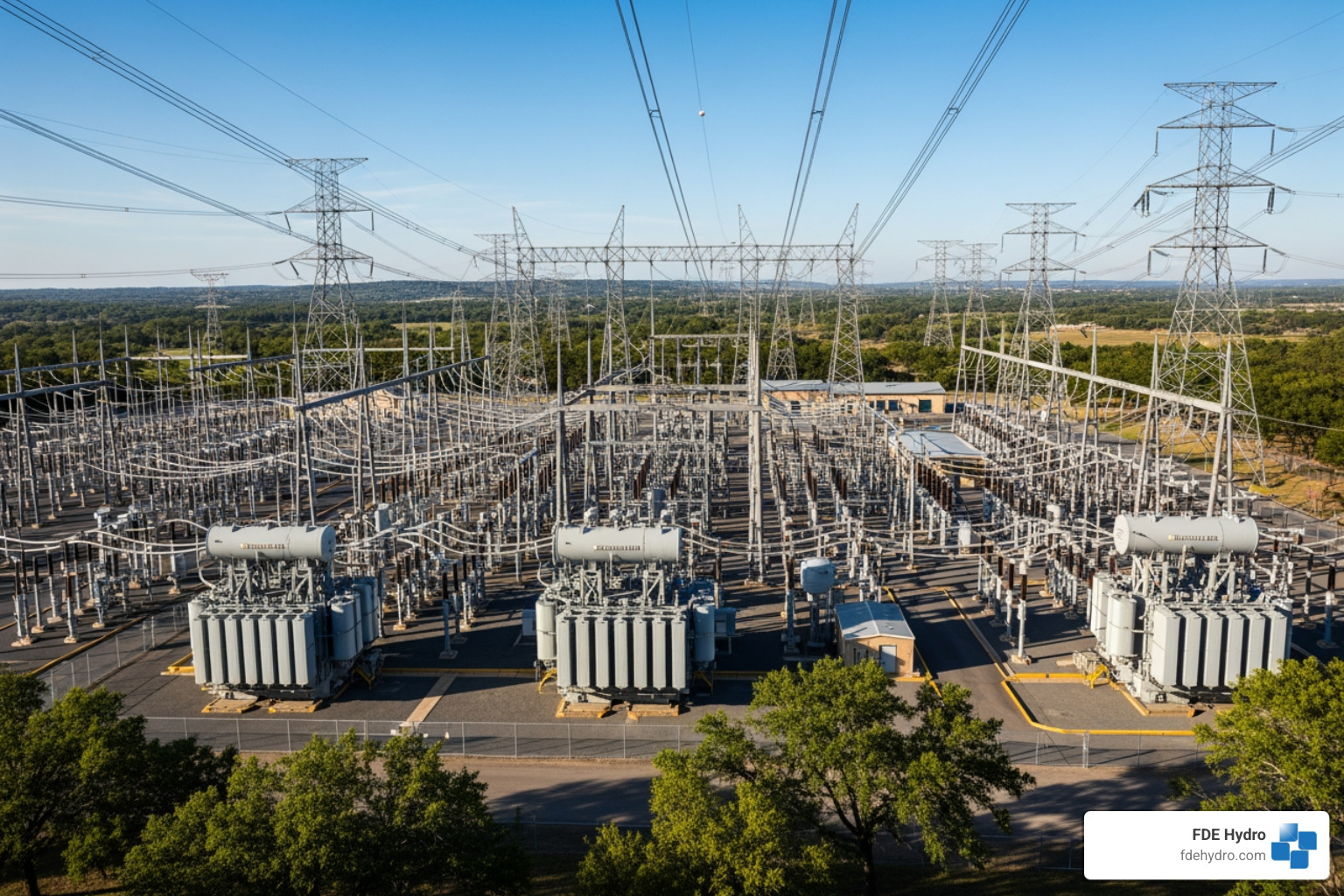
- Grid integration: As more variable renewable energy (like solar and wind) comes online, integrating it into existing electricity grids becomes more complex. This can lead to issues like curtailment, where renewable energy generation is deliberately reduced due to grid constraints or low demand. We’ve seen this challenge in parts of the United States and Brazil.
- Curtailment risks: This issue is a growing concern for utility-scale projects, impacting profitability and leading to project cancellations in some regions.
These challenges highlight the need for smart solutions, including sophisticated grid management and potentially decentralized energy systems like a Microgrid.
The Role of Government Policy and Incentives
Government policies and incentives play a pivotal role in driving the adoption of renewable energy in construction. They can accelerate growth or, conversely, slow it down through policy shifts.
- Federal tax credits: Historically, federal tax credits in the United States have been major drivers of renewable energy deployment. However, policy changes, including the earlier phase-out of some federal tax credits, have led to significant downward revisions in the US renewable growth forecast—almost 50% lower than previously expected.
- Auction systems: Many governments are moving towards competitive auction systems for new renewable energy capacity, which can drive down costs but also impact investor profitability.
- Property Assessed Clean Energy (PACE): Programs like Property Assessed Clean Energy (PACE) offer innovative financing mechanisms for energy efficiency and renewable energy improvements, often repaid through property taxes. These are available in various US states, including California and New York.
- Permitting reform: Streamlining environmental assessments and digitalizing application processes are crucial steps governments can take to accelerate project development. In the European Union, for example, utility-scale solar PV capacity in Germany, Spain, Italy, and Poland has seen an upward revision due to more favorable conditions.
- Regional policies: Specific regional initiatives, such as those discussed in New York’s Green Surge: Unpacking Renewable Energy in the City, are vital for fostering local growth and addressing unique regional needs.
These policies create the framework within which construction renewable energy projects thrive or face headwinds.
Seizing Growth Opportunities in a Changing Market
Despite the challenges, the opportunities in construction renewable energy are immense, fueled by global demand and innovative financing.
- Corporate PPAs: Corporate Power Purchase Agreements (PPAs) are a major driver of renewable capacity expansion, accounting for 30% of global growth. Companies are increasingly committing to sourcing clean energy, creating a robust market for new renewable energy projects.
- Investor interest: The long-term stability and environmental benefits of renewable energy continue to attract significant investor interest, providing capital for new developments.
- New project development: With global renewable power capacity expected to double by 2030, there’s an unprecedented need for new project development, from large-scale solar and wind farms to new hydropower facilities and energy storage solutions.
This dynamic environment means that companies engaged in Renewable Energy Construction are at the forefront of a global change.
Innovations Shaping the Future of Green Energy Construction
The future of construction renewable energy is being actively shaped by remarkable technological advancements and forward-looking trends. These innovations are not only making clean energy more efficient and affordable but also changing the very methods we use to build. We’re on the cusp of an exciting era, as detailed in our Hydropower Advancements Innovations 2025 guide.
The Next Wave of Construction Renewable Energy Technology
Technological advancements are enabling the seamless integration of renewable energy into construction equipment and sites, improving productivity and efficiency.
- Modular Precast Concrete: This is where FDE Hydro truly shines. Our innovative Modular Precast Concrete technology, including the “French Dam” system, revolutionizes the construction and retrofitting of hydroelectric dams. By manufacturing components off-site, we drastically reduce on-site construction time, costs, and environmental impact. This approach is being successfully applied across North America, Brazil, and Europe.
- Hydrogen-powered excavators: Prototypes and early models of hydrogen-powered construction equipment, such as excavators, are emerging. These machines offer zero-emission operation, particularly beneficial for urban construction sites and projects sensitive to air quality.
- Photovoltaic windows: As mentioned earlier, these integrated building components generate electricity while providing natural light, becoming an active part of a building’s energy system rather than just a passive envelope.
- AI for Sustainability: Artificial intelligence and machine learning are being deployed to optimize energy generation, manage grid integration, and predict energy demand. AI for Sustainability can analyze vast datasets to improve efficiency and reduce waste across construction and energy operations.
- Digital solutions: Beyond AI, a range of digital tools, from advanced project management software to real-time monitoring systems for renewable assets, is enhancing productivity and decision-making in the sector.
These innovations are propelling Hydropower Innovation and the broader renewable construction industry forward.
Global Forecasts and Future Trends
The future trends for renewable energy adoption in the global construction sector are overwhelmingly positive, albeit with some regional nuances.
- Global capacity doubling by 2030: Global renewable power capacity is expected to double between now and 2030, increasing by 4,600 gigawatts (GW). This is a monumental expansion, showcasing the commitment to a green future.
- Solar PV dominance: Solar PV is projected to account for almost 80% of this global increase in renewable power capacity over the next five years. Its low cost, faster permitting times, and broad social acceptance continue to drive its rapid expansion.
- Wind capacity growth: Wind power capacity is still expected to nearly double to over 2,000 GW by 2030, despite facing challenges in supply chains and rising costs.
- Pumped-storage interest: With rising grid integration challenges, there’s renewed interest in pumped-storage hydropower, which is expected to grow almost 80% faster over the next five years compared to the previous five. This highlights its critical role in providing grid flexibility.
While global renewable capacity is set to grow strongly, driven primarily by solar PV, as detailed by the IEA in Global renewable capacity is set to grow strongly, driven by solar PV, we must acknowledge regional variations. For instance, the forecast for the United States was revised down by almost 50% due to policy changes affecting tax credits and import restrictions. Conversely, the EU forecast saw a slight upward revision, particularly for utility-scale solar PV in Germany, Spain, Italy, and Poland.
The Future of Hydropower remains bright, especially with advancements in pumped storage and modular construction techniques, ensuring its continued relevance in the evolving energy landscape.
Frequently Asked Questions about Renewable Energy in Construction
We often get asked common questions about integrating renewable energy into construction. Here are some answers to help clarify the path forward.
What is the most cost-effective renewable energy source for a construction project?
The “most cost-effective” source for a construction project largely depends on site-specific factors and the application.
- Solar for site power: For temporary site power and lighting, solar panels are often highly cost-effective due to decreasing construction costs (down 8% in 2020) and the elimination of fuel expenses. They’re easy to deploy and scale.
- Sourcing from grid-scale renewables: For larger, longer-term projects, directly sourcing power from nearby grid-scale renewable facilities (like wind or hydropower plants) can be highly cost-effective, especially if the local grid infrastructure is robust.
- Decreasing solar construction costs: The continued reduction in solar construction costs makes it an increasingly attractive option for both temporary and permanent installations.
A detailed energy audit and consultation with renewable energy experts can determine the optimal solution for your specific project.
How can construction companies finance the transition to renewable energy?
Financing options for renewable energy solutions in construction are diverse and growing:
- Power Purchase Agreements (PPAs): A power purchase agreement (PPA) allows a company to buy electricity generated by a renewable energy system installed on their property or nearby, without owning the system itself. This can eliminate upfront capital costs.
- System leases: Similar to PPAs, leasing allows companies to pay a fixed monthly rate for a renewable energy system, benefiting from the generated power without the burden of ownership.
- Property Assessed Clean Energy (PACE): Property Assessed Clean Energy (PACE) programs, available in several US states, offer financing for energy efficiency and renewable energy improvements, repaid through property taxes.
- Government incentives: Various federal, state, and local incentives, including tax credits, grants, and rebates, can significantly reduce the net cost of renewable energy installations.
- Loans: Traditional loans from banks and other financial institutions are also available for companies looking to invest in their own renewable energy infrastructure.
What are the first steps to integrating renewables into a construction business?
Integrating renewables can start small and scale up:
- Energy audits: Begin by conducting a thorough energy audit of your operations to understand current energy consumption, identify key areas for reduction, and pinpoint opportunities for renewable integration.
- Solar for site lighting: A simple and immediate step is to replace traditional lighting with solar-powered alternatives, which are economical and convenient.
- Electrifying small equipment: Transitioning smaller, frequently used equipment (power tools, compact machinery) to electric models powered by portable renewable sources or grid connections.
- Evaluating fleet transition: For larger equipment, begin evaluating the feasibility and ROI of transitioning to electric or hydrogen-powered vehicles as they become more available and cost-effective.
- Partnering with experts: Collaborate with renewable energy specialists and construction renewable energy companies to develop a comprehensive strategy for integrating clean energy into your projects and operations.
Conclusion
The construction industry is undergoing a profound green shift, driven by both compelling economic advantages and an urgent environmental imperative. Construction renewable energy is no longer a niche concept but a mainstream necessity, offering solutions to reduce CO2 emissions, improve energy efficiency, and improve operational productivity.
While challenges such as supply chain issues, permitting delays, and grid integration complexities persist, innovations and supportive policies are paving the way forward. From the decreasing costs of solar PV to the exciting potential of hydrogen-powered equipment and advanced modular construction techniques for hydropower, the future of green energy construction is bright.
At FDE Hydro, we are proud to be at the forefront of this change. Our innovative modular precast concrete technology is pioneering solutions that make Hydroelectric Power Solutions Guide more efficient and cost-effective, helping to build a sustainable future. To learn more about the future of sustainable energy infrastructure, explore our comprehensive guide to hydropower.
