

Why the World is Rushing to Identify the Best Renewable Energy Solutions
Best renewable energy options are no longer a distant dream—they’re powering homes, businesses, and entire nations right now. Here’s what you need to know:
Quick Answer: Which Renewable Energy is Best?
| Energy Source | Best For | Key Advantage |
|---|---|---|
| Wind Power | Overall efficiency | 1,164% energy return on input |
| Hydroelectricity | Grid stability | 90% conversion efficiency, reliable baseload |
| Solar PV | Distributed generation | 41% cheaper than fossil fuels, fastest job growth |
| Geothermal | Continuous power | 24/7 availability, minimal land use |
| Biomass | Energy storage | Dispatchable power on demand |
The reality? There’s no single “best” option. The ideal choice depends on your location, resources, and specific energy needs.
Energy is at the heart of both our climate challenge and its solution. For decades, we’ve relied on fossil fuels that release carbon dioxide and pollutants, contributing to nearly 75% of global emissions over the past 20 years. Meanwhile, renewable energy sources—derived from sunlight, wind, moving water, and earth’s heat—are replenished faster than we can use them.
The shift is already happening. In 2024, renewables accounted for over 30% of global electricity generation and are projected to reach 45% by 2030. More impressive: over 90% of new renewable projects now cost less than fossil fuel alternatives. Solar and offshore wind have become 41% and 53% cheaper than fossil fuels respectively.
But efficiency matters as much as cost. Wind energy provides an astounding 1,164% return on its original energy input, while hydroelectricity converts energy at a 90% rate—the highest conversion efficiency among all renewable sources. Even solar thermal, the least efficient renewable option, still outperforms coal’s meager 29% efficiency.
Countries are proving this transition works. Denmark sources 88% of its power from renewables, with wind alone providing 58%. Several nations including Iceland, Costa Rica, and Norway have reached or come close to 100% renewable electricity. Canada stands as the world’s third-largest hydroelectricity producer, with moving water providing 61.7% of the nation’s electricity generation.
The benefits extend beyond environmental protection. For every dollar invested, renewable energy creates three times as many jobs as fossil fuels. Solar power alone supported 4.9 million jobs in 2022—more than a third of all renewable energy employment worldwide. In Ireland, wind and solar farms have saved homes and businesses €840 million since 2000.
Yet challenges remain. Solar and wind face intermittency—they don’t generate power when the sun doesn’t shine or wind doesn’t blow. Storage solutions, smart grids, and diversified energy portfolios are addressing these limitations. Innovations like agrivoltaics (combining solar panels with agriculture), enhanced geothermal systems, and modular hydropower construction are making renewables more practical and efficient.
For large-scale infrastructure projects, the stakes are even higher. Traditional renewable energy construction often involves extended timelines, massive capital expenditure, and significant risk. That’s where innovation becomes critical—not just in the energy source itself, but in how we build and deploy it.
I’m Bill French Sr., founder and CEO of FDE Hydro, where we’ve spent nearly a decade developing modular construction solutions that make deploying the best renewable energy infrastructure faster, more cost-effective, and less risky for major water and power projects. Having participated in the Department of Energy’s Hydro Power Vision Technology Task Force and led construction innovations across New England, I’ve seen how the right approach can transform renewable energy from concept to reality.
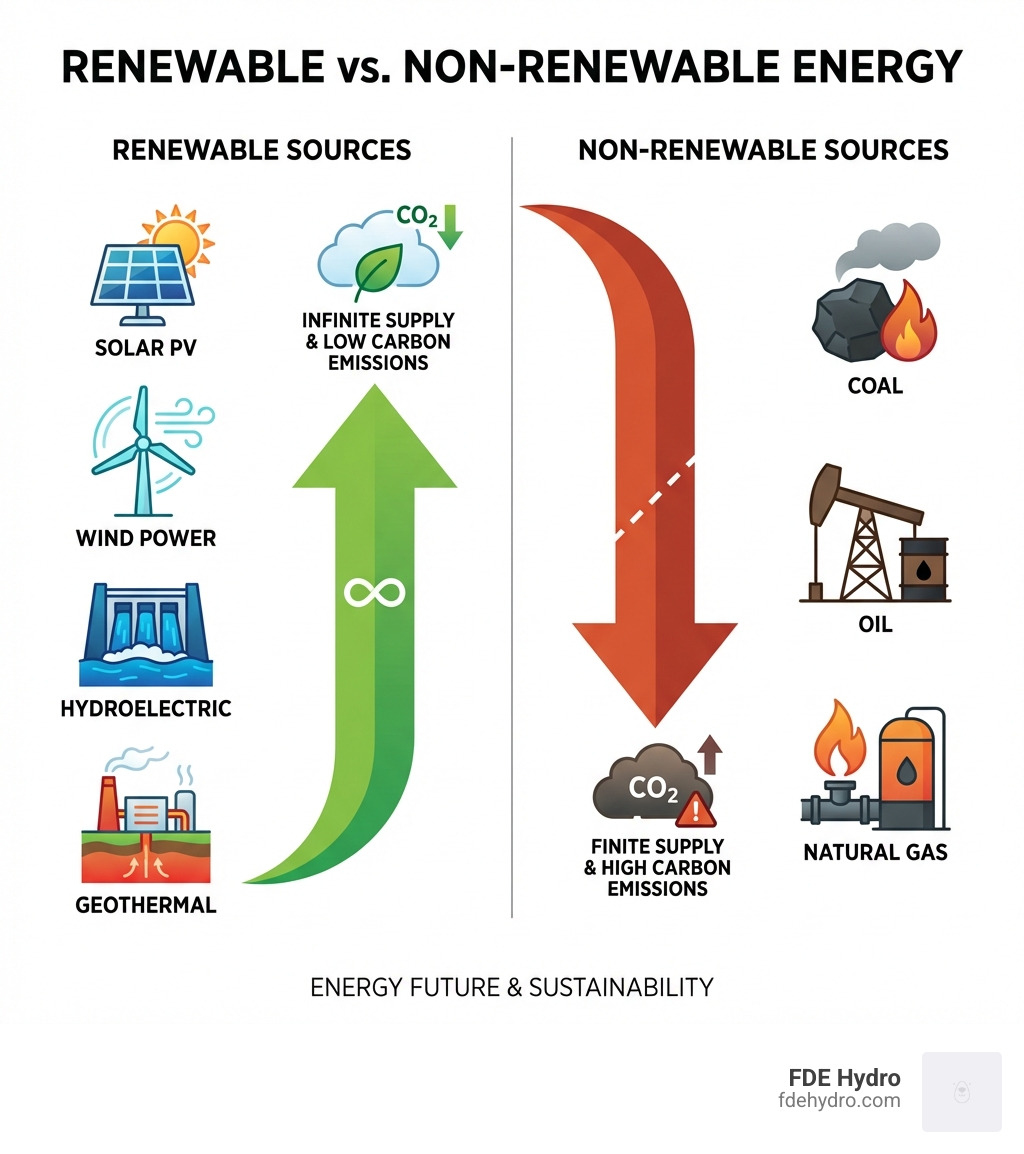
Best renewable energy terms to know:
What is the Best Renewable Energy Source for Efficiency?
When we talk about the best renewable energy for efficiency, we have to look at how much energy we get out compared to what we put in. This is often measured as the “energy return on investment.”
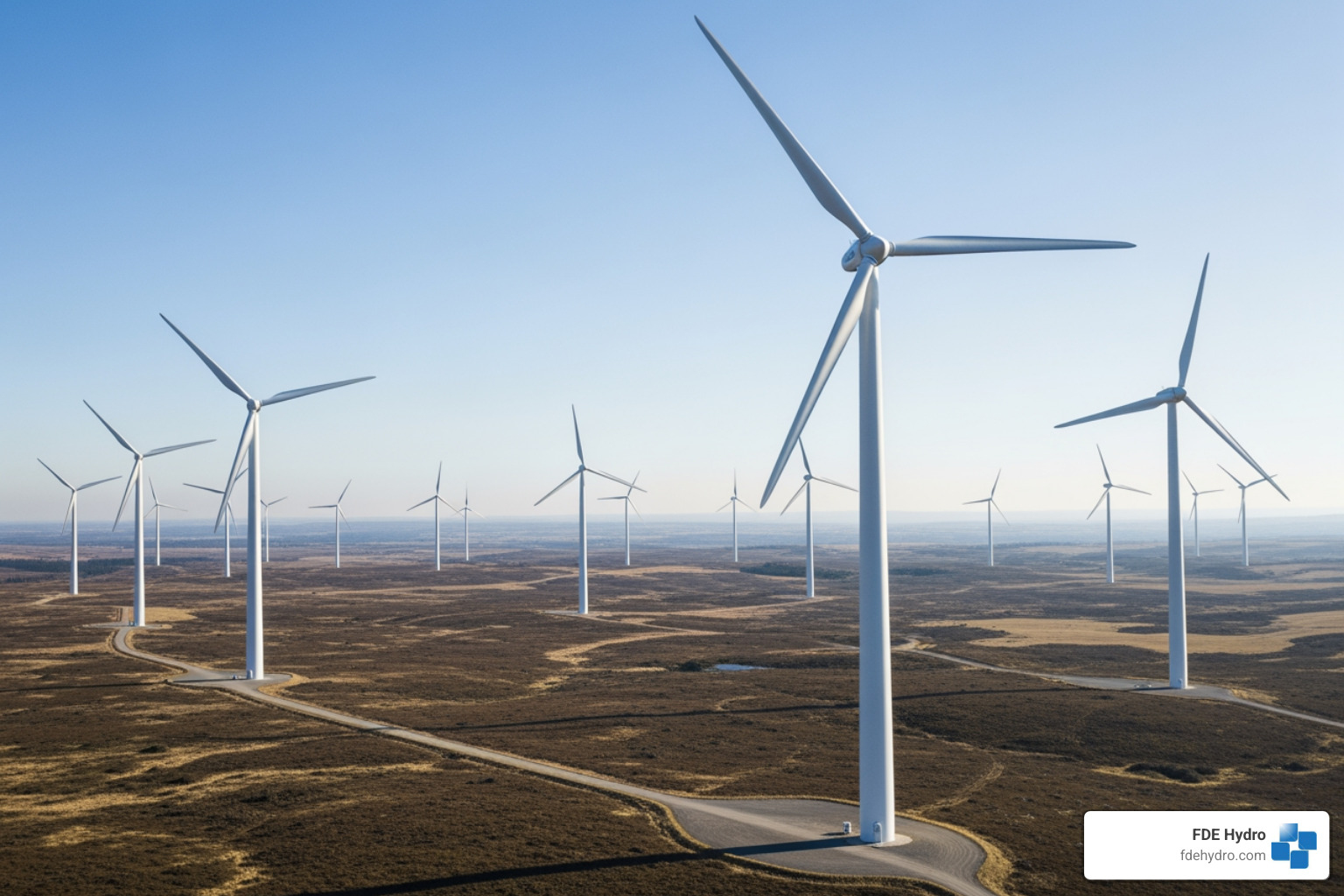
Wind power currently holds the crown for the highest energy return. It provides an impressive 1,164% of its original input of energy. This means for every bit of energy spent manufacturing, installing, and maintaining a turbine, it gives back over eleven times that amount in clean electricity. Because wind turbines require no fuel and are independent of water for cooling, they are incredibly “drought-proof” and efficient.
However, if we look at “conversion efficiency”—how much of the raw natural force is turned into electricity—hydroelectricity is the undisputed leader. Water can generate electricity with a conversion efficiency of about 90%. To put that in perspective, even the most advanced solar panels usually hover between 15% and 22% efficiency.
In contrast, non-renewable sources are surprisingly wasteful. According to the U.S. Department of Energy, fossil fuels like coal are finite resources formed over millions of years that must be mined or drilled and then burned. This process is inherently inefficient; coal only provides about 29% of its original energy value as usable power.
Efficiency Comparison Table
| Energy Source | Efficiency Metric | Performance |
|---|---|---|
| Wind | Energy Return on Input | 1,164% |
| Hydroelectricity | Conversion Efficiency | 90% |
| Geothermal | Availability (Capacity Factor) | ~74-90% |
| Solar PV | Conversion Efficiency | 15-22% |
| Coal | Energy Value Retained | 29% |
| Solar Thermal | Efficiency Rank | Lowest (Water dependent) |
Comparing the Top 5 Renewable Energy Sources
To find the best renewable energy for a specific project, we must weigh the pros and cons of each mainstream technology. Whether you are in New York, California, or Brazil, the geography dictates which of these five will perform best.
- Solar Energy: Captures sunlight using photovoltaic (PV) cells. It is the fastest-growing sector for jobs and is becoming incredibly affordable.
- Wind Energy: Uses large blades to capture kinetic energy. Offshore wind is particularly powerful because sea winds are often 90% faster than those over land.
- Hydropower: Relies on the flow of water to generate energy. According to the U.S. Office of Energy Efficiency and Renewable Energy (EERE), it is one of the oldest and largest sources of renewable energy.
- Geothermal Energy: Taps into the heat from the earth’s core. It is one of the few renewables that can provide “baseload” power—meaning it runs 24/7 regardless of the weather.
- Biomass: Uses organic materials (like wood or agricultural waste) to create fuel or electricity. While renewable, it is often debated because it involves combustion, which can release emissions if not managed carefully.
Why Solar is Often Called the Best Renewable Energy for Homes
Solar power has become the people’s choice for renewable energy. It is uniquely suited for “distributed generation,” where power is made right on the roof where it’s used.
One of the biggest reasons solar is winning the popularity contest is cost. Solar power is now 41% cheaper than fossil fuel alternatives. This massive price drop has fueled a boom in rooftop solar. In Australia, for instance, one in three households now has panels.
Beyond the bills, solar is a massive economic engine. According to a 2023 report from the World Economic Forum (WEF), there were nearly 4.9 million solar energy jobs in 2022, accounting for more than a third of all renewable energy jobs worldwide. This growth is reflected in the IRENA PDF Source, which notes that total renewable jobs grew from 7.3 million in 2012 to over 13 million in a decade.
Hydroelectricity: The Best Renewable Energy for Grid Stability
While solar and wind are great, they are variable. We need a “battery” for the grid, and that is where hydropower shines. As we often discuss at FDE Hydro, hydropower is the guardian of the grid because it is dispatchable—you can turn it on or off as needed.
Canada is a global superstar in this field. It is the third-largest producer of hydroelectricity in the world. In 2022, moving water provided a staggering 61.7% of Canada’s electricity generation. You can explore the Open Maps Energy Factbook to see how this resource is distributed across the provinces.
The benefits of a hydropower plant go beyond just power. Dams provide water storage for irrigation and flood control. Furthermore, pumped-storage hydropower acts as a giant natural battery, storing excess solar or wind energy by pumping water uphill to be released when the grid needs it most.
Global Leaders in the Clean Energy Transition
Looking at the world stage, we see that the transition to the best renewable energy is not just possible—it’s already happening.
- Denmark: A true wind pioneer. In 2024, Denmark sourced 88% of its power from renewables. Wind alone provides 58% of their power, thanks to more than 50 years of community-led projects where 20% are community owned.
- Iceland: The “land of fire and ice” has built a 100% renewable power system. They use their unique geography—glaciers covering 11% of the country and volcanic activity—to pay “almost nothing” for electricity.
- Portugal: Portugal has been coal-free since 2021. Their solar generation increased by a massive 440% between 2017 and 2024, with 45% coming from wind and solar today.
- Lithuania: Driven by a need for energy independence, Lithuania ended its reliance on imported Russian fossil fuels in 2022. They have more than doubled their renewable generation and are now 60% renewable.
- The Netherlands: By locating wind farms in the North Sea, they have halved their power sector emissions since 2018. They plan to completely phase out coal by 2029.
Other honorable mentions include Spain, which generates 43% of its electricity from wind and solar, and Ireland, which used impressive growth in wind to end coal generation in 2025. Even Germany, an industrial heavyweight, is installing more than 100,000 solar panels every day to reach its 80% renewable target.
Overcoming Challenges with Modern Innovation
The biggest critique of the best renewable energy options like wind and solar is intermittency—the “what if the sun doesn’t shine?” problem. However, the 2023 report by Deloitte suggests the industry is evolving rapidly to solve this.
Energy Storage and Smart Grids
Batteries are the most famous solution, but they aren’t the only ones. We are seeing a boom in large-scale storage, including “sand batteries” in Finland and traditional pumped hydro. Smart grids use AI to balance demand, ensuring that when a cloud passes over a solar farm in California, a hydro plant or a battery bank automatically kicks in to fill the gap.
Agrivoltaics
One challenge for solar is land use. Agrivoltaics solves this by raising solar panels high enough to allow crops to grow or livestock to graze underneath. This dual-use strategy protects farmland while generating clean power, making solar the best renewable energy choice for rural areas in places like Kansas or New York.
Modular Hydropower
At FDE Hydro, we believe the future of hydropower lies in hydropower innovation. Traditional dams take a decade to build. Our “French Dam” technology uses modular precast concrete to build or retrofit systems in a fraction of the time. This makes it easier for communities in North America and Brazil to harness their existing water resources without the massive overhead of traditional construction.
Frequently Asked Questions about Renewable Energy
Which renewable energy is the most reliable?
Geothermal and hydroelectricity are generally considered the most reliable because they provide “baseload” power. Unlike solar or wind, they can run 24 hours a day, 7 days a week, regardless of weather conditions. This makes them the most-cost-effective-renewable-energy options for maintaining a steady grid.
How does renewable energy help the economy?
It’s a job-creating machine! For every dollar invested, renewable energy creates three times as many jobs as the fossil fuel industry. Furthermore, it saves money. In the UK, wind power saved homes and businesses £104.3 billion between 2010 and 2023. In Spain, electricity prices dropped by nearly 20% as their renewable share grew.
Is there a single “best” energy source for every country?
No. The best renewable energy is always the one that fits the local environment. Iceland uses geothermal because it sits on a volcanic ridge. Canada uses hydro because of its vast river systems. The best strategy is a “portfolio approach”—using a mix of sources to ensure the lights stay on no matter what.
Conclusion
Finding the best renewable energy for your needs is about matching technology to geography. From the 90% conversion efficiency of water to the staggering 1,164% energy return of wind, the options available today are more powerful and affordable than ever before.
At FDE Hydro, we are proud to be part of this transition. Our French Dam technology is designed to make renewable energy projects more accessible by cutting down the time and cost of construction. Whether we are retrofitting an old dam in New England or building new capacity in Brazil, our goal is to help the world find its spark through sustainable, reliable power.
The transition away from fossil fuels is no longer just an environmental necessity—it’s an economic “no-brainer.” With solar and wind now cheaper than coal, and innovative construction methods making hydro more viable, the path to a 100% renewable future is clear.
Ready to learn more about how water can power your future? Explore our guide to what renewable energy resource is the most efficient or contact us to see how we can help with your next hydropower project.
