

Why the Future of Hydropower Technology Matters Now
Future of hydropower technology is being reshaped by urgent demands for grid flexibility, climate adaptation, and renewable energy integration. Here’s what’s driving this change:
Key Innovations Shaping Hydropower’s Future:
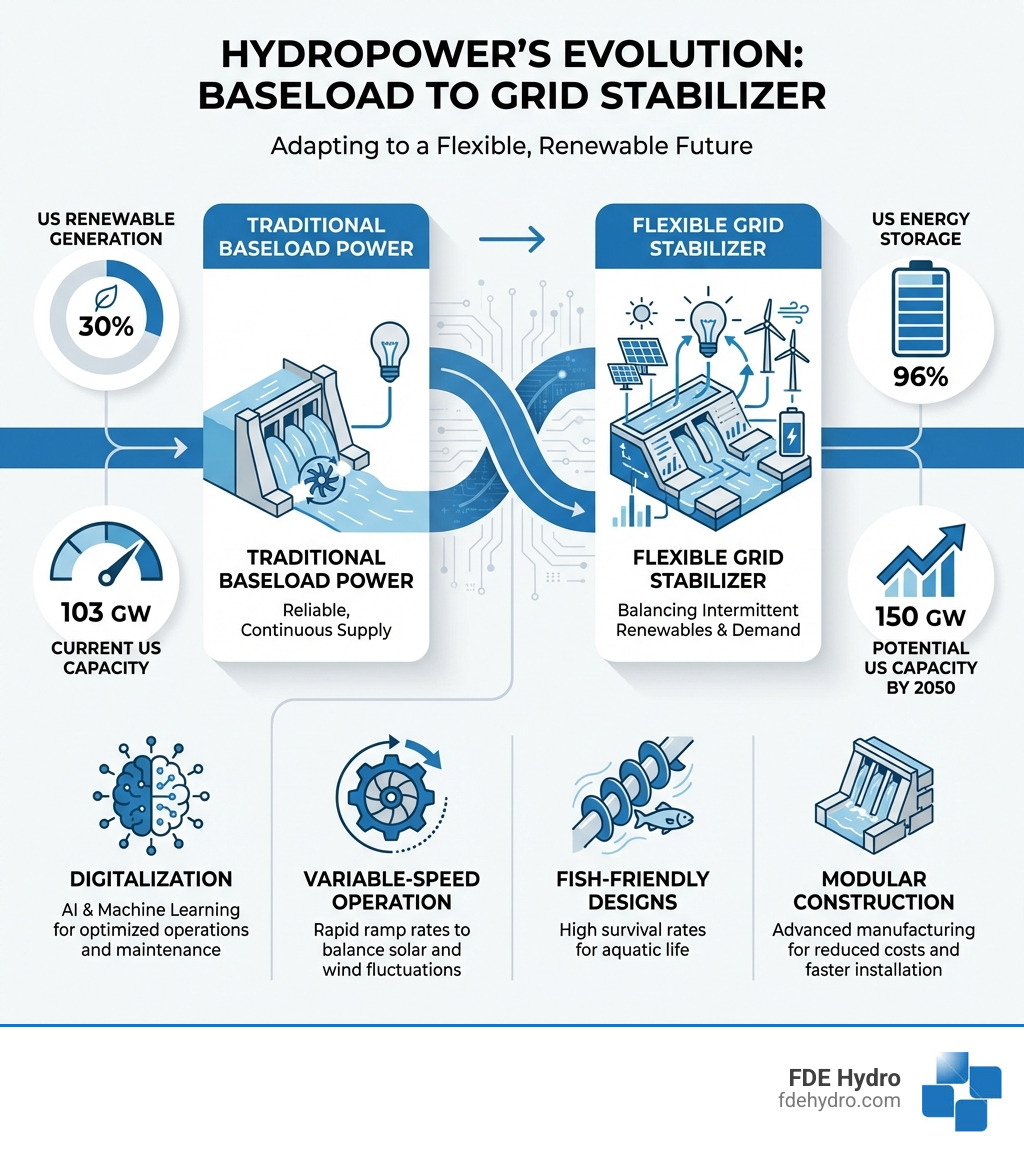
- Digital Operations – AI and machine learning are cutting maintenance costs by 90% and boosting productivity by 80%
- Variable-Speed Turbines – New designs allow hydropower to ramp up and down quickly, balancing solar and wind
- Pumped Storage Growth – Accounts for 96% of U.S. energy storage capacity, with significant expansion potential
- Fish-Friendly Technology – Turbines like the Archimedes Screw achieve 100% fish survival rates
- Modular Construction – Advanced manufacturing and precast systems reduce costs and installation time
Hydropower has been America’s renewable energy workhorse for over a century. Today, it accounts for nearly 30% of U.S. renewable electricity generation despite an aging fleet averaging more than 60 years old. With more than 2,000 hydropower dams generating 103,000 MW of combined capacity, the infrastructure is substantial—but it faces critical pressures.
Climate change is altering water availability through persistent droughts. Grid operators need flexible power sources to balance the rise of variable solar and wind energy. And the sheer age of existing facilities demands modernization. These challenges are pushing the industry toward breakthrough innovations that could nearly double U.S. hydropower capacity to 150 GW by 2050.
The good news? Technology is catching up to the challenge. Digitalization could add 42 TWh to global hydropower production annually—equivalent to $5 billion in operational savings. New turbine designs are improving efficiency while protecting fish populations. And modular construction techniques are slashing the time and cost of new installations.
As Bill French Sr., Founder and CEO of FDE Hydro™, I’ve spent decades in heavy civil construction before focusing on the future of hydropower technology through modular, environmentally-conscious solutions. After participating in the Department of Energy’s Hydropower Vision Task Force, I’ve seen how next-generation innovations can transform this essential renewable resource.
Future of hydropower technology terms to know:
Drivers of Change: Why Hydropower Innovation is Accelerating
The world is undergoing a profound energy transition, moving rapidly towards renewable sources to combat climate change. In this dynamic landscape, hydropower, our oldest renewable energy source, is experiencing a renaissance driven by a confluence of factors. These primary drivers are not just pushing for incremental improvements but are catalyzing a fundamental reshaping of the future of hydropower technology.
One of the most significant drivers is the urgent need to balance the grid as more intermittent renewable energy sources, such as solar and wind, come online. Hydropower’s inherent flexibility—its ability to quickly ramp up or down power generation—makes it an invaluable partner for these variable sources. It provides critical ancillary services, like frequency regulation and voltage support, which are essential for maintaining grid stability and reliability. Without flexible resources like hydropower, integrating large amounts of solar and wind would be far more challenging, risking grid instability and blackouts. This is why significant potential exists for new pumped storage hydropower (PSH) to meet grid flexibility, reliability, and security needs, as noted by the U.S. Department of Energy.
Climate change itself is another powerful catalyst for innovation. We are witnessing changing water availability patterns, including persistent droughts in regions like California and parts of Canada and Brazil. This unpredictability necessitates hydropower technologies that can adapt to lower or more volatile water flows. Cloud seeding operations, while not directly hydropower technology, offer a glimpse into innovative approaches to water management that could indirectly benefit hydropower by increasing snowpack and precipitation in key watersheds. For instance, cloud seeding in Australia has shown to increase precipitation by 14% in seeded areas. Such strategies, combined with advanced forecasting, are becoming crucial for optimizing operations in a climate-altered world.
Our existing hydropower infrastructure also presents both a challenge and an opportunity. The average age of hydropower facilities in the U.S. is over 60 years, with many exceeding a century. This aging fleet requires modernization to improve efficiency, extend operational life, and incorporate new technologies. This is where innovation steps in, enabling us to optimize the value and power generation of our existing fleet, rather than solely focusing on new construction.
Finally, supportive policy and regulatory frameworks are crucial in accelerating the adoption of new hydropower technologies. In the U.S., the Inflation Reduction Act (IRA), signed into law in 2022, includes provisions to drive hydropower growth, offering tax credits for new facilities and retrofits. Furthermore, legislative efforts like the proposed Hydropower Clean Energy Future Act aim to streamline the Federal Energy Regulatory Commission’s (FERC) licensing process, which has historically been a significant hurdle for new projects and upgrades. These policies, coupled with a growing emphasis on environmental stewardship, are creating an environment ripe for innovation, ensuring that hydropower remains a cornerstone of our clean energy future.
The Digital Dam: How Data and AI are Changing Operations
The digital revolution is sweeping across industries, and hydropower is no exception. The future of hydropower technology is inextricably linked to advancements in digitalization, Artificial Intelligence (AI), and machine learning. These technologies are changing how we operate, maintain, and even design hydropower facilities, promising unprecedented levels of efficiency, reliability, and safety.
The Power of Predictive Maintenance
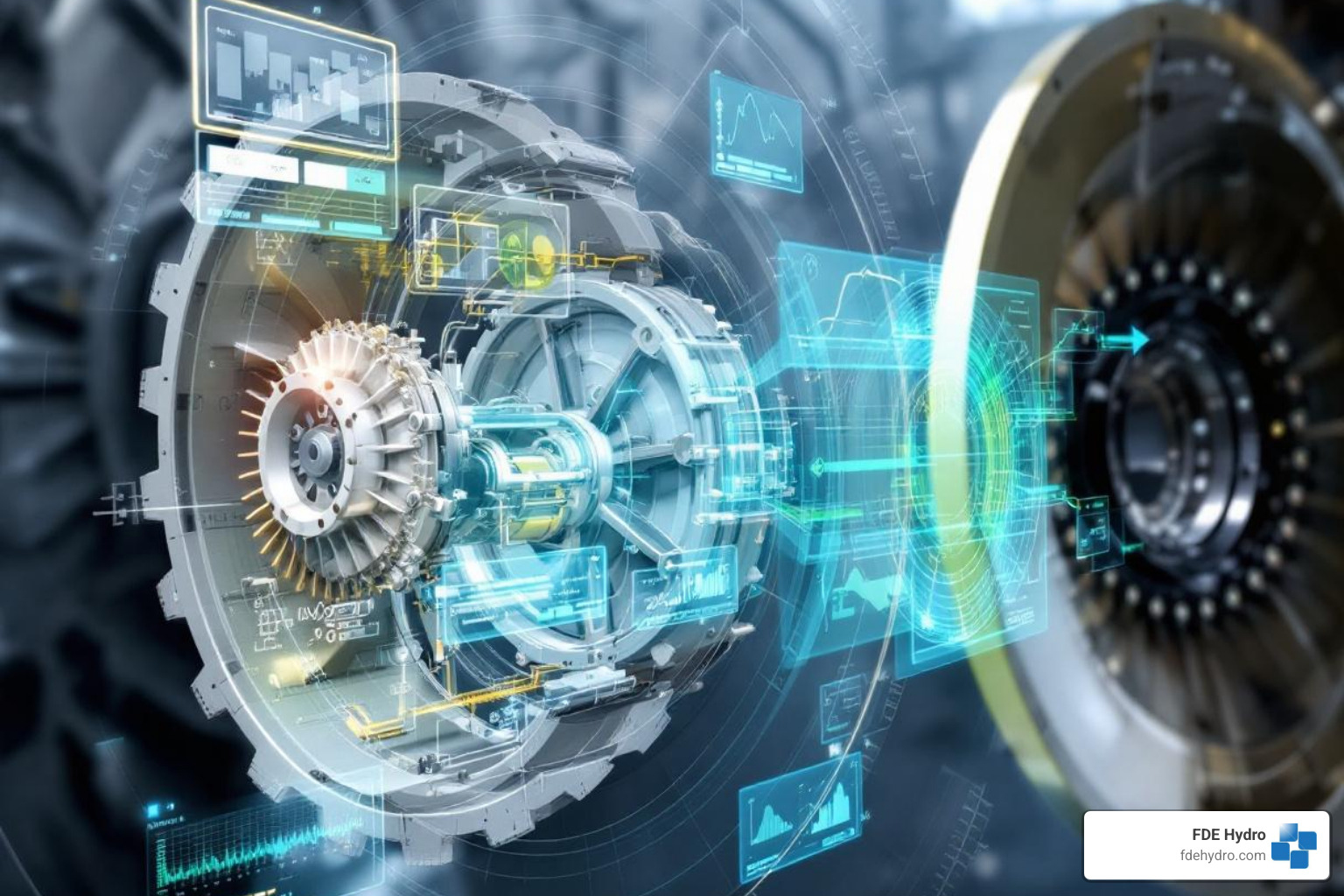
Imagine knowing exactly when a piece of equipment needs servicing before it breaks down. That’s the promise of predictive maintenance, powered by digitalization. By collecting and processing real-world data, we can adjust the actual working conditions of hydropower turbines, providing advanced grid supporting services without compromising reliability and safety.
The impact of this is profound. It’s estimated that implementing hydropower digitalization could add a total of 42 TWh to present global hydropower energy production annually. This isn’t just about more power; it’s about significant operational savings, potentially reaching $5 billion annually. A compelling study found that plants implementing advanced analytics and continuous monitoring for predictive maintenance experienced a remarkable 90% decrease in corrective maintenance costs and an 80% increase in labor productivity. This means fewer unexpected shutdowns, optimized resource allocation, and a more efficient workforce.
AI, Machine Learning, and Smart Control
Beyond predictive maintenance, AI and machine learning are enabling a new era of smart hydropower. This includes the development of “digital twins”—virtual replicas of physical hydropower plants that use real-time data to simulate operations, predict performance, and identify potential issues. These digital avatars allow operators to test scenarios, optimize settings, and make data-driven decisions without impacting the actual plant.
AI is also being leveraged in the design phase, with “AI dam designers” exploring new configurations and optimizing hydraulic performance. Smart monitoring systems, including dam condition tracking by satellite radar, help operators identify problems and implement solutions early on. This cuts machine downtime and streamlines processes, leading to increased plant safety, compliance, and agility. Our own work at FDE Hydro™ in AI for Sustainability, AI Energy Management, and Water Management AI demonstrates our commitment to using these powerful tools to improve hydropower’s efficiency and environmental footprint.
Core Component Innovations: The Heart of Modern Hydropower
At the core of any hydropower plant are its turbines and generators, the workhorses that convert the energy of flowing water into electricity. The future of hydropower technology is seeing significant innovation in these components, driven by the need for greater efficiency, flexibility, and environmental compatibility.
Advanced Turbines and Generators for a Flexible Grid
For hydropower to truly shine in a grid dominated by variable renewables, it needs to be more agile. This means turbines and generators that can operate efficiently across a wider range of flows and rapidly adjust their output. Here’s how we’re seeing advancements:
- Improved Efficiency: Continuous advancements in turbine design, often aided by advanced computational fluid dynamics (CFD) modeling, are squeezing every last drop of energy from the water.
- Variable-Speed Turbines: These are game-changers, particularly for pumped storage hydropower (PSH). Enabled by power electronic converters, variable-speed turbines can operate at different rotational speeds, significantly improving efficiency and operational flexibility. This allows them to better adapt to fluctuating hydrological regimes and provide superior grid ancillary services. For example, the Goldisthal PHS plant in Germany and the Frades II plant in Portugal use variable-speed technology to improve grid stability.
- Wider Operating Ranges: Modern turbines are designed to perform optimally not just at peak flow, but also at partial loads, reducing wear and tear and extending the operational life of the unit.
- Segmented Generator Rotors: Innovations in generators include segmented rotors with individually controlled magnetization currents. This technology offers the potential for active rotordynamic control and vibration reduction, leading to more reliable and longer-lasting equipment.
Environmentally-Smarter and Fish-Friendly Designs
The environmental impact of hydropower has always been a key consideration. The future of hydropower technology emphasizes designs that minimize ecological disruption, particularly concerning fish migration. We are seeing exciting breakthroughs in this area:
- Fish-Friendly Turbines: These designs are engineered to allow fish to pass through with minimal injury or mortality. The Hanover Pond Dam Project in Meriden, Connecticut, is a pioneering example, utilizing an Archimedes Screw Turbine that achieved a 100% survival rate for migrating fish.
- Restoration-Focused Turbines: Projects like the Freedom Falls Project in Maine use advanced runner blade designs, such as Restoration Hydro turbines, which have resulted in an estimated 100% 48-hour survival rate for juvenile alewives with less than 3% injury.
- Aerating Turbines: Some designs incorporate aeration capabilities to improve water quality downstream, addressing concerns about dissolved oxygen levels.
- Oil-Free Components: To prevent water contamination, there’s a growing trend towards oil-free turbine and generator components.
These innovations demonstrate a clear commitment to sustainable hydropower, ensuring that our energy generation harmonizes with river ecosystems.
New Materials and Manufacturing for the Future of Hydropower Technology
The durability and cost-effectiveness of hydropower infrastructure are heavily influenced by the materials and manufacturing techniques used. Advances here are crucial for modernization and new development.
- Advanced Composites and Coatings: New materials are being explored for tunnel linings, penstocks, and turbine components. These offer improved durability, corrosion resistance, and reduced maintenance needs, even in harsh environments.
- Additive Manufacturing (3D Printing): While still emerging, 3D printing holds promise for producing complex turbine parts more efficiently, potentially reducing lead times and customization costs.
- Modular Precast Concrete Construction: This is where FDE Hydro™ truly shines. Our patented modular precast concrete technology, often referred to as “French Dam” technology, revolutionizes the construction and retrofitting of hydroelectric dams and water control systems. This approach significantly reduces construction costs and time in key regions like North America (including New York, California, Kansas), Brazil, and Europe. Our modular construction techniques and precast concrete technology offer substantial project cost reduction compared to traditional methods, addressing the challenges of aging infrastructure and making new projects more economically viable. The U.S. Department of Energy has highlighted the opportunities for hydropower to capitalize on advanced manufacturing, and our modular systems are a prime example of this.
The Future of Hydropower Technology: Storage, Stability, and Scale
As we look ahead, the future of hydropower technology is increasingly defined by its role as a flexible energy storage solution, a cornerstone of grid stability, and a scalable contributor to our clean energy goals.
Flexible Hydropower Storage Solutions
Hydropower is already the undisputed leader in large-scale energy storage. Pumped storage hydropower (PSH) facilities account for approximately 96% of commercial energy storage capacity in the U.S. These “giant batteries” store excess electricity from variable renewables like solar and wind by pumping water uphill to a reservoir. When demand is high, the water is released, flowing downhill through turbines to generate electricity.
Innovations are making these storage solutions even more effective:
- Variable-Speed Pump-Turbines: As discussed, these improve efficiency and flexibility, allowing PSH plants to respond to grid signals with greater precision.
- Modular and Closed-Loop Systems: These designs can reduce the environmental footprint and construction complexity of PSH, potentially opening up new development sites.
- Underwater Pumped-Hydro Energy Storage (UPHES): A truly novel concept, UPHES proposes using the sea as the upper reservoir and hollow deposits on the seabed as the lower. While still in early stages, projects like the StEnSea (Stored Energy in the Sea) initiative in Germany and studies in Spain are exploring its technical feasibility, potentially expanding PSH opportunities in coastal regions of Europe.
The Department of Energy Hydropower Program recognizes the immense potential of PSH to support grid reliability and the integration of variable renewable energy.
Integrating Advanced Hydropower into the Modern Grid
Integrating advanced hydropower technologies into our existing grid infrastructure presents both challenges and unparalleled opportunities. The challenge lies in modernizing an aging fleet and connecting new, often smaller-scale, projects efficiently. The opportunity, however, is immense:
- Ancillary Services: Hydropower’s fast response times make it ideal for providing critical ancillary services, such as frequency regulation, voltage support, and black-start capability (the ability to restart a grid after a blackout).
- Grid Infrastructure Support: By providing reliable, dispatchable power, hydropower reduces the strain on transmission lines and improves overall grid resilience. Our modular construction systems, such as those we develop at FDE Hydro™, can be rapidly deployed to support clean energy infrastructure projects and strengthen water infrastructure projects in North America, Brazil, and Europe.
- Optimized Operations: Digitalization and AI, as discussed earlier, allow for real-time optimization of hydropower operations, ensuring they provide maximum value to the grid. NREL’s vision emphasizes hydropower’s evolving role, open uping its full potential as a flexible, reliable, and sustainable energy source.
Adapting for the Future of Hydropower Technology
Climate change resilience is paramount. Hydropower technologies must adapt to impacts such as droughts and changing water availability. This involves:
- Improved Forecasting: More accurate hydrological forecasting, often improved by AI and machine learning, allows for better water management and optimized power generation schedules.
- Low-Head and Variable Flow Sites: Emerging technologies, including advanced designs for pumps as turbines (PATs) and gravity hydraulic machines like water wheels and Archimedes screws, are making it feasible to generate power from sites with very low heads or variable flows. This opens up vast potential in existing non-powered dams and water conveyance systems across the U.S., Canada, Brazil, and Europe.
- Growth Projections: The potential for hydropower growth is significant. The U.S. hydropower capacity could grow from its current ~80 GW to nearly 150 GW by 2050. Globally, hydropower could double its contribution by 2050, reaching 2,000 GW of capacity and over 7,000 TWh. Achieving this will require an average annual generation growth of 3.5% between 2023 and 2030, necessitating over 40 GW of new hydropower plants connected to the grid annually—almost double the average of the last five years. The IEA Hydropower Technology Roadmap outlines this ambitious, yet achievable, path towards a cleaner energy future.
Frequently Asked Questions about Hydropower’s Future
What is the biggest challenge facing hydropower?
The biggest challenge facing hydropower is a multifaceted one, encompassing aging infrastructure, the impacts of climate change on water availability, lengthy regulatory processes, and the need for improved environmental mitigation. Many existing hydropower plants in the U.S. and parts of Europe are over 60 years old, requiring significant modernization and investment to remain efficient and reliable. Climate change introduces unpredictable water flows, with droughts impacting generation in hydropower-rich regions like California and Canada. Additionally, complex and time-consuming licensing and permitting processes can delay crucial upgrades and new developments. The industry must also continue to innovate to minimize environmental impacts and ensure harmonious coexistence with aquatic ecosystems.
How is hydropower becoming more environmentally friendly?
Hydropower is making significant strides in environmental friendliness through several key innovations. The development and adoption of fish-friendly turbines, such as the Archimedes Screw Turbine, are achieving high survival rates for migrating fish. Advanced fish passage solutions, including nature-like fishways, are being implemented to ensure safe upstream and downstream movement. Technologies that aerate water to improve dissolved oxygen levels are enhancing water quality downstream of facilities. Furthermore, there’s a focus on smaller footprint designs and the powering of non-powered dams, which leverages existing infrastructure without creating new environmental disturbances. These efforts reflect a growing commitment to sustainable hydropower development.
Can hydropower work with solar and wind power?
Absolutely, hydropower is not just compatible with solar and wind power; it’s a key enabler for their widespread integration into the grid. Hydropower’s unique ability to act as a large-scale energy storage solution, particularly through pumped storage hydropower (PSH), allows it to store excess electricity generated by intermittent solar and wind when production outstrips demand. This stored energy can then be released back into the grid when solar and wind output drops or demand increases. Beyond storage, conventional hydropower provides essential fast-ramping power, quickly adjusting its output to balance the grid fluctuations inherent with variable renewables. This complementary relationship ensures a stable, reliable, and increasingly clean energy supply.
Conclusion: Powering a Sustainable Tomorrow
The future of hydropower technology is bright, dynamic, and essential for a sustainable energy future. We’ve explored how a blend of urgent drivers—the need for grid flexibility, climate change adaptation, and renewable energy integration—is accelerating innovation across the sector.
Digitalization, with its promise of AI-driven predictive maintenance and smart operational control, is revolutionizing how we manage our hydropower assets, leading to increased efficiency and significant cost savings. Innovations in core components, from advanced variable-speed turbines that offer unparalleled flexibility to fish-friendly designs ensuring ecological harmony, are reshaping the very heart of hydropower generation. Furthermore, advancements in materials and manufacturing, including our own modular precast concrete technology at FDE Hydro™, are making new construction and modernization projects faster, more cost-effective, and more sustainable.
Hydropower’s evolving role is shifting from a traditional baseload power source to a critical flexible grid stabilizer and the backbone of large-scale energy storage. Its ability to integrate seamlessly with intermittent renewables like solar and wind, provide vital ancillary services, and adapt to changing environmental conditions positions it as an indispensable component of the clean energy future.
At FDE Hydro™, we are proud to be at the forefront of this change. Our modular precast concrete technology is designed to facilitate the rapid, cost-effective, and environmentally responsible construction and retrofitting of hydroelectric dams and water control systems in North America, Brazil, and Europe. By embracing these cutting-edge innovations, we are not just building infrastructure; we are building the next generation of hydropower facilities that will power a sustainable tomorrow for generations to come.
