

Understanding Energy Resource Development
Energy resource development is the process of finding, extracting, and using natural energy sources to power our world. It includes everything from drilling for oil to using the sun’s rays. Understanding where our energy comes from is key to our daily lives and our future.
Here’s a quick breakdown of the world’s primary energy sources:
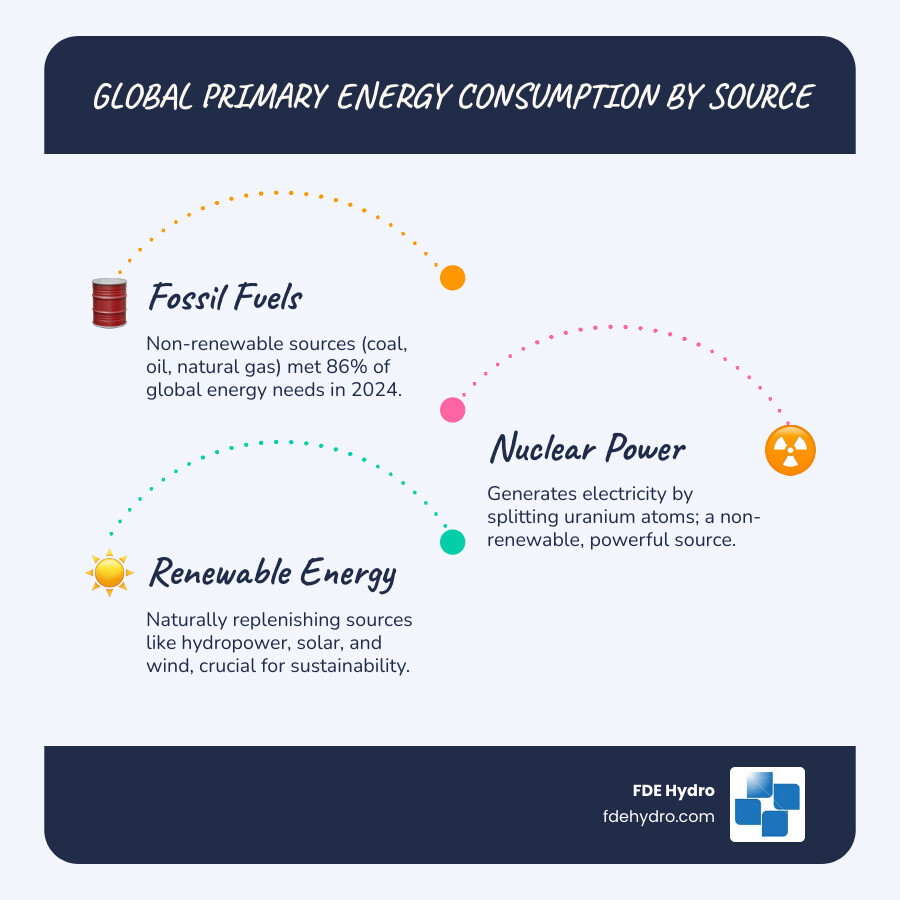
- Fossil Fuels: These are non-renewable sources like coal, oil, and natural gas. They currently make up the largest part of our energy supply.
- Nuclear Power: This comes from splitting atoms, usually uranium, to create heat and electricity. It’s also non-renewable.
- Renewable Energy: These sources naturally replenish. They include hydropower, solar, wind, geothermal, and biofuels.
Our modern world deeply relies on energy. It powers our homes, transportation, and industries. In 2024, a significant 86% of global energy needs were met by fossil fuels. This shows how crucial energy resource development is, but also highlights the ongoing challenge of shifting towards more sustainable options. This guide will explore this vital field.
I’m Bill French Sr., Founder and CEO of FDE Hydro™. My five decades in heavy civil construction and my participation in the Department of Energy’s Hydro Power Vision Task Force have deeply shaped my understanding of energy resource development, particularly in advancing modular hydropower solutions for clean energy.
Relevant articles related to Energy resource development:
The Spectrum of Energy Resources
When we talk about energy resource development, we’re diving into a fascinating world of different sources that power our lives. Each one has its own special qualities, its upsides, and its unique challenges. We often sort these sources into two big groups: primary, which are found in nature, and secondary, which are converted from primary sources. But perhaps even more importantly, we classify them as renewable or non-renewable. Here at FDE Hydro™, our hearts and efforts are firmly rooted in the renewable side of things, with a special focus on hydropower.
Primary energy sources are just as they sound — they’re raw energy from nature, like crude oil bubbling up from the ground or sunlight warming your face. Secondary sources, on the other hand, are what we get after we transform that raw energy, think of electricity made from coal or power generated by solar panels. If you’re curious to learn more about the very basics of energy, our Energy 101 guide is a great place to start!
There are many amazing renewable energy sources leading the charge toward a cleaner future. These include hydropower, which uses the natural flow of water; solar power, converting sunlight into electricity or heat; wind power, using the breeze with turbines; geothermal energy, tapping into the Earth’s internal warmth; biofuels, created from organic matter; and even oceanic energy, capturing power from tides, waves, and ocean currents.
Classifying Renewable Resources
Renewable resources are truly special because they naturally replenish themselves within a human timeframe. Unlike fossil fuels, which take millions of years to form and are quickly used up, renewables offer us a sustainable path forward. They’re like nature’s endless battery pack!
Hydropower, our area of expertise, truly shines in this lineup. It’s a proven technology that puts the powerful force of water to work, spinning turbines to generate clean electricity. Now, the environmental footprint of hydropower can certainly vary depending on the project. While large traditional dams might change local ecosystems, modern approaches – especially those using modular technology like ours – are designed to minimize disruption and actually improve existing infrastructure. In fact, the 2023 Statistical Review of World Energy confirms that hydropower remains a vital cornerstone of global electricity generation, providing a significant chunk of our planet’s renewable power.
The Central Role of Hydropower in Clean Energy
Here at FDE Hydro™, we truly believe hydropower holds a unique and incredibly important spot in the clean energy world. It’s more than just making electricity; it’s about delivering steady, reliable power that can beautifully balance the natural ups and downs of other renewables like solar and wind. This makes it a crucial player in achieving truly Sustainable Power Generation. To dive deeper into its capabilities, check out our main page on Hydropower.
Hydropower offers so many compelling advantages:
- It provides reliability and baseload power. Unlike solar or wind, which depend on sunshine or breeze, hydropower can deliver a consistent supply of electricity, often on demand. This makes it perfect for providing the foundational power we rely on every day.
- It boosts grid stability. Hydropower plants can quickly adjust their output, offering essential services like frequency regulation and voltage support to keep our electrical grid running smoothly. This is why we often say hydropower is the guardian of the grid!
- It’s fantastic for water management. Many hydropower facilities serve multiple purposes, helping with flood control, providing water for irrigation, and ensuring a stable water supply for communities. They’re truly multi-talented!
- And once they’re built, these plants have low operating costs. This means they provide long-term, affordable electricity.
Back in 2015, hydropower generated an impressive 16.6% of the world’s total electricity, and a remarkable 70% of all renewable electricity. That’s a huge contribution! Our innovative, patented modular precast concrete technology, affectionately known as the “French Dam,” is designed to build and retrofit hydroelectric dams and water control systems across North America, Brazil, and Europe. This smart approach drastically cuts down construction costs and time, making clean hydropower more accessible and efficient for everyone. To learn more about how we bring these exciting projects to life, be sure to explore our Renewable Energy Projects Complete Guide.
The Evolution and Technology of Energy Resource Development
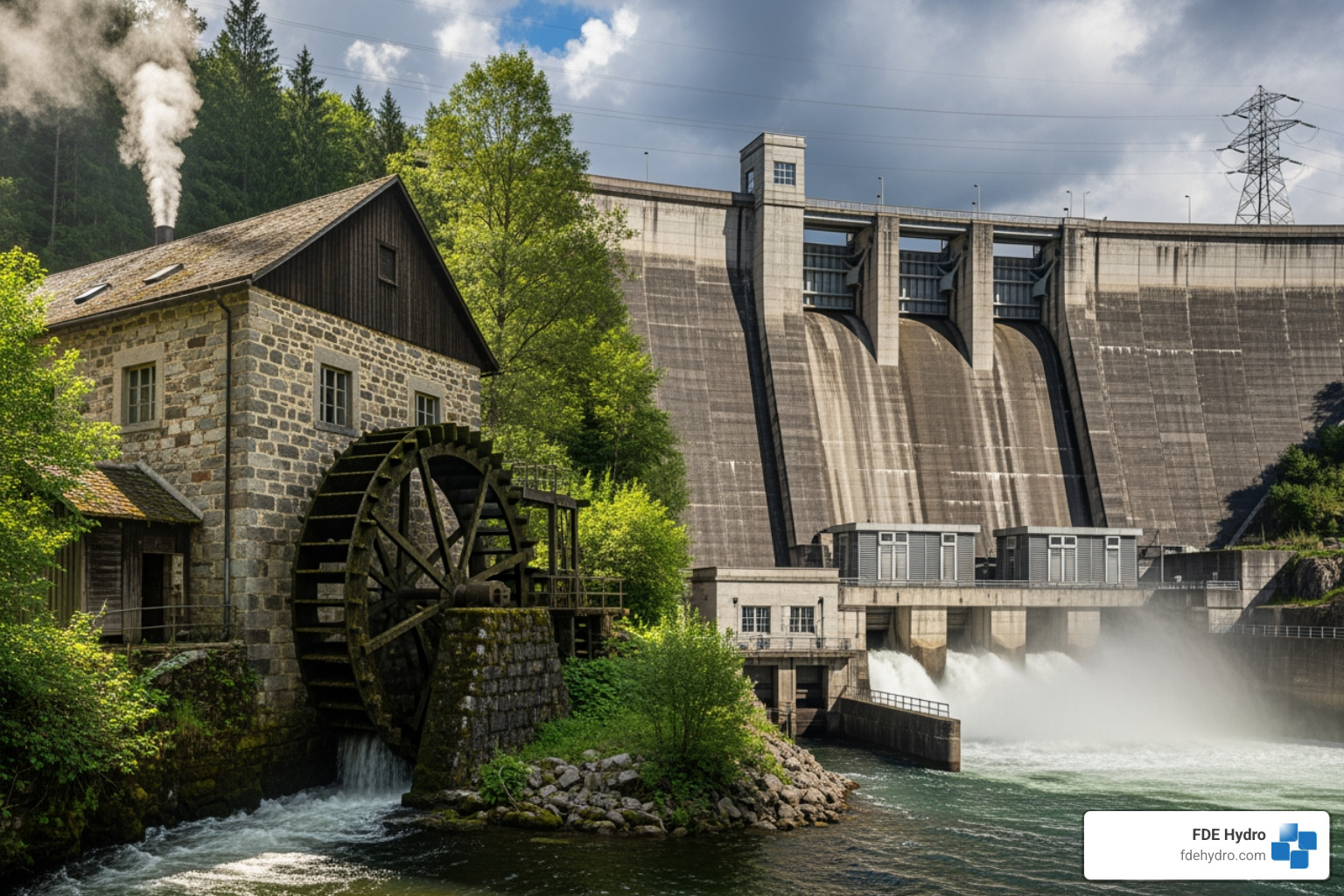
The story of energy resource development is one of human ingenuity and constant adaptation. From the first controlled fires to today’s sophisticated power grids, our relationship with energy has defined how we live, work, and build our societies.
A Historical Perspective on Energy Development
Think back to our earliest ancestors. Their energy toolkit was pretty simple: wood for warmth and cooking, animals to help with heavy work, and their own muscle power. But even then, humans recognized the power of flowing water. Those first watermills, grinding grain and powering early workshops, were the humble beginnings of what we now call hydropower.
The real game-changer came with the Industrial Revolution in the 18th century. Coal became king, and suddenly we could power massive factories and light up entire cities. Steam engines transformed everything from manufacturing to transportation. This era laid the foundation for the modern energy systems we rely on today, particularly in Europe and North America.
Then came electrification in the 20th century. This wasn’t just about turning on lights—it fundamentally changed how we lived. Factories became more efficient, homes more comfortable, and entire new industries became possible. Large-scale hydropower projects joined fossil fuels in powering this change, and they’ve been working reliably ever since.
Today, we’re in the midst of what many call the renewable revolution. Concerns about climate change and dwindling fossil fuel reserves have pushed us to rethink how we generate power. This shift toward cleaner, more sustainable sources isn’t just good environmental policy—it’s smart business. You can explore more info about the evolution of energy and see how far we’ve come.
Key Technologies in Modern Hydropower Resource Development
Modern hydropower looks nothing like those old watermills. Today’s technology maximizes efficiency while minimizing environmental impact—a balance that’s become increasingly important.
Advanced hydropower turbines are engineering marvels. From traditional Francis and Kaplan designs to newer fish-friendly models, these machines convert water’s kinetic energy into electricity with remarkable efficiency. Each type is optimized for different water flow conditions and head heights.
Pumped storage hydroelectricity deserves special mention because it’s essentially a giant battery for the grid. Here’s how it works: when electricity demand is low (like at night), excess power pumps water uphill to a reservoir. When demand spikes, that water rushes back down through turbines, generating electricity exactly when it’s needed. This technology is already proving crucial for grid stability in the US and Europe, especially as more intermittent renewables come online.
Advanced control systems bring hydropower into the digital age. Automated monitoring and precise flow management mean these plants can respond instantly to grid needs, optimizing performance and integrating seamlessly with other energy sources.
At FDE Hydro™, we’re proud to be pushing this technology even further. Our patented modular precast concrete technology—the “French Dam”—represents a genuine breakthrough in hydropower development. Instead of years-long construction projects, our approach dramatically cuts both time and costs. We’re building and retrofitting hydroelectric dams and water control systems across North America, Brazil, and Europe, making clean hydropower more accessible than ever. We’re also embracing AI-Driven Development to optimize everything from design to daily operations.
From Source to Socket: Energy Transmission and Infrastructure
Generating electricity is only half the challenge. Getting that power to your home or business requires an incredibly complex network—what we call the electrical grid. This massive interconnected system includes power plants, high-voltage transmission lines, substations, and the local distribution lines that finally bring electricity to your door.
High-voltage transmission lines are the workhorses of this system, carrying massive amounts of electricity across hundreds of miles with minimal loss. The higher the voltage, the more efficiently power travels long distances. These lines connect generating stations to the population centers where that power is needed.
Substations act as the grid’s translators. They step voltage up for efficient long-distance transmission, then step it back down for safe local distribution. Think of them as the crucial connection points that keep electricity flowing smoothly throughout the system.
The future of energy resource development increasingly depends on smart grids. These digitally improved networks can detect and respond to local changes in real time, improving reliability and making it much easier to integrate renewable sources. When a cloud passes over a solar farm or the wind dies down, smart grids can instantly adjust, pulling power from other sources—often hydropower—to maintain stability.
Microgrids represent another exciting development. These smaller, localized grids can operate independently or stay connected to the main grid, providing improved reliability for critical infrastructure or remote communities. At FDE Hydro™, we often design our hydropower solutions to work within a Microgrid framework, offering communities greater energy independence.
The electrical grids in the US, Canada, and Europe are among the world’s most sophisticated, but they require constant investment and upgrading. As we integrate more renewable sources and face increasing demand, this infrastructure becomes even more critical. Our Energy Infrastructure Development Complete Guide goes deeper into the planning and execution of these essential systems.
Impacts, Efficiency, and the Path Forward

Every form of energy resource development carries its own set of consequences, both environmental and economic. The question isn’t whether there’s an impact—there always is. The real question is how we can maximize the benefits while minimizing the harm as we move toward a cleaner, more sustainable future.
Environmental and Economic Impacts of Hydropower Development
Let’s be honest: no energy source is perfect. Even hydropower, one of the cleanest options available, comes with considerations. But when you compare it to fossil fuels, which met 86% of the world’s energy needs in 2024, the advantages become crystal clear.
On the environmental side, hydropower’s biggest win is greenhouse gas reduction. During operation, hydropower produces zero direct greenhouse gas emissions. That’s a huge difference from coal or natural gas plants that continuously pump carbon dioxide into our atmosphere.
The challenges with hydropower typically involve water and land use. Large conventional dams can alter river ecosystems, affect fish migration patterns, and sometimes displace communities when reservoirs are created. But here’s where modern innovation makes a real difference. Our modular, precast concrete technology at FDE Hydro™ focuses on retrofitting existing dams and water control systems. Instead of building massive new structures, we’re maximizing what’s already there. This approach dramatically reduces environmental disturbances while developing new hydropower capacity with a much smaller footprint.
The economic story is equally compelling. Hydropower projects create economic growth through job creation—from engineers and construction workers during the building phase to operations and maintenance staff for decades after. These aren’t temporary jobs, either. They’re skilled positions that support families and communities.
Once a hydropower facility is up and running, it provides stable, affordable electricity for generations. Unlike fossil fuels, where prices swing wildly with global markets, hydropower offers predictable, low-cost energy that shields consumers from volatility. Meanwhile, fossil-fuel subsidies continue hurting the global environment and security, propping up an industry with significant environmental and health costs.
The Critical Role of Energy Efficiency
Here’s something many people don’t realize: the cheapest, cleanest energy is the energy we never use in the first place. That’s why energy efficiency is often called the “first fuel” in energy resource development strategies.
Think about it this way—reducing energy demand means we need less new power generation capacity. Every kilowatt-hour we save through efficiency is a kilowatt-hour we don’t need to produce. It’s that simple.
The beauty of energy conservation measures is that many are surprisingly straightforward. Better building insulation in homes and offices across North America and Europe can slash heating and cooling demands. Upgrading to efficient technologies like LED lighting makes a real difference—compact fluorescent lights use two-thirds less energy and last 6 to 10 times longer than old incandescent bulbs. Modern appliances, smart thermostats, and improved industrial processes all add up to massive savings.
Energy efficiency and renewable energy are often called “the twin pillars of sustainable energy.” They work hand-in-hand, supporting each other in building a truly sustainable future. At FDE Hydro™, we’re even exploring how AI Energy Management can optimize energy use across different sectors, making our systems smarter and more responsive.
The path forward isn’t just about building more clean energy—it’s about using less energy overall while making what we do use as clean as possible. That’s the combination that will get us where we need to go.
Navigating the Global Energy Landscape
When we talk about energy resource development, it’s so much more than just power plants and dams. It’s a huge, interconnected puzzle that touches on global politics, international agreements, and even the safety of our nations. Every choice we make about energy sends ripples across the world.
Major Global Players and Policies
The way we get and use energy isn’t just decided in one place. Big international groups and governments all play a role in shaping our energy future. Think of organizations like the International Energy Agency (IEA). They give us important insights and advice, like in their detailed World Energy Outlook. These reports help guide decisions everywhere.
Then there are global agreements, like the Paris Agreement. These set goals for cutting down harmful emissions, which in turn encourages everyone to invest more in clean energy. Here in the United States, the Department of Energy (DOE) and its Office of Energy Efficiency and Renewable Energy (EERE) are big drivers of new ideas. They help fund new energy innovations through programs on the EERE Funding Opportunity eXCHANGE. You’ll find similar efforts in places like Canada, Brazil, and Europe, all working towards a cleaner energy future.
How Hydropower Development Contributes to National Security
Energy isn’t just about keeping the lights on; it’s a huge part of a nation’s security. A country needs reliable energy to protect itself, keep its economy strong, and ensure its people are safe. This is where energy resource development, especially hydropower, truly shines.
First, there’s energy independence. When a country can produce its own energy, it doesn’t have to rely on other nations, especially for fuels that can be unstable. Hydropower is a domestic resource in many places, including North America, Brazil, and Europe. This means it helps countries stand on their own two feet, making them less open to global troubles.
Then, there’s supply chain security. Having different ways to get energy, and producing it at home, helps protect us from problems in global supply chains. Hydropower plants are also incredibly strong and last a long time. They’re a vital part of a nation’s key infrastructure, providing steady power even when things get tough, like during bad weather. We often talk about “energy resilience” now, which means being able to bounce back from power outages, rather than just “energy independence.” It’s about having a strong, diverse energy system, much like what’s discussed in “Brittle Power: Energy Plan for National Security.”
Challenges and Opportunities in the Clean Energy Transition
Moving to a truly sustainable energy future is a huge journey. Back in 2024, a big chunk of our energy—86%—still came from fossil fuels. Switching away from that means facing some big challenges, but it also brings amazing opportunities.
Hydropower plays a vital role here. Think about solar and wind power; they’re wonderful, but they don’t always produce electricity when we need it. That’s called intermittency. Hydropower, with its ability to quickly adjust how much power it makes, steps in as a flexible partner. It helps keep the grid steady and reliable.
Beyond pumped hydro, new energy storage solutions are always being developed to help manage these ups and downs. We also need to modernize our electrical grids. This means big upgrades to our existing systems, which opens the door for lots of new Clean Energy Infrastructure projects. This shift isn’t just good for the planet; it’s a powerful engine for our economy. It creates millions of green jobs in making, installing, and researching new technologies. Innovation, like FDE Hydro’s modular hydropower solutions, is key to speeding up this change.
At FDE Hydro™, we’re proud to be a big part of this solution. Our special modular precast concrete technology helps us build hydropower projects faster, more affordably, and in a way that’s kind to the environment. We’re working hard in North America, Brazil, and Europe to build a stronger, cleaner, and more secure energy future for everyone.
Frequently Asked Questions about Energy Resource Development
What are the main classifications of energy resources?
When people talk about energy resource development, they’re usually dividing resources into two main camps: renewable and non-renewable.
Non-renewable resources are the ones we’re trying to move away from. These include fossil fuels like coal, oil, and natural gas, plus nuclear fuels like uranium. The problem? They’re finite. Once they’re gone, they’re gone. They took millions of years to form, and we’re burning through them in mere centuries.
Renewable resources are the future. These naturally replenish on a human timescale, meaning they’re essentially inexhaustible when managed properly. This category includes hydropower (our specialty at FDE Hydro™), solar, wind, geothermal, biofuels, and oceanic energy from tides and waves.
At FDE Hydro™, our focus is squarely on renewable resources, with hydropower as the leading example of sustainable energy resource development. We believe hydropower isn’t just renewable—it’s also reliable, flexible, and proven over more than a century of use.
Why is energy efficiency important for energy development?
Energy efficiency is crucial because it tackles the problem from the demand side rather than just the supply side. Think of it this way: the cleanest, cheapest energy is the energy you never had to produce in the first place.
When we use less energy to achieve the same results—whether that’s lighting a room, heating a home, or running a factory—we reduce the overall strain on our resources. This matters for both renewable and non-renewable sources. Lower demand means we need fewer new energy resource development projects, which translates to less environmental impact, lower greenhouse gas emissions, and reduced costs for consumers.
Energy efficiency is often called one of the “twin pillars” of sustainable energy policy, working hand-in-hand with renewable energy development. By reducing how much energy we need, we make the transition to a clean energy system more manageable and cost-effective. It’s a win-win: better for the planet and better for our wallets.
What is the biggest challenge in transitioning to 100% renewable energy?
The biggest challenge, especially in large interconnected grids across North America, Brazil, and Europe, is dealing with the intermittency and variability of certain renewable sources. Solar panels don’t generate power at night. Wind turbines sit idle when the air is calm. These aren’t minor inconveniences—they’re fundamental characteristics that affect grid reliability.
This creates a real need for reliable, on-demand power and robust energy storage solutions to keep the lights on 24/7. You can’t just tell a hospital or a manufacturing plant to shut down when the sun goes behind a cloud.
This is where hydropower shines. It provides flexible, dispatchable power that can ramp up or down quickly to balance the grid. Pumped storage hydropower acts like a giant battery, storing energy when there’s excess and releasing it when demand peaks. Hydropower and energy storage technologies play a key role in maintaining a reliable power supply and supporting grid stability as we integrate more variable renewables.
At FDE Hydro™, we see this as an opportunity. Our modular technology makes it faster and more affordable to build and retrofit hydropower facilities, helping to solve one of the biggest challenges in the clean energy transition.
Conclusion
Wow, what a journey we’ve been on! We’ve traveled through the amazing story of energy resource development, right from our ancestors huddling around a fire to the super-smart power grids that light up our world today. It’s been a wild ride, and our constant search for energy has truly shaped human history. But now, it’s clear we’re at a turning point, looking at a huge shift towards a more sustainable future.
Here’s the undeniable truth: clean energy is our future. While fossil fuels have powered us for a long time, the push for change is stronger than ever. This big shift means we don’t just need new ways to make energy; we also need clever new infrastructure and smart technologies. These tools will help us capture and deliver clean power in the most efficient and reliable ways possible.
At FDE Hydro™, we’re thrilled to be leading the charge in this exciting new era. Our unique, patented modular precast concrete technology, often called the “French Dam,” is truly changing how we build and upgrade hydropower plants. It makes these projects faster, more affordable, and much kinder to our environment. By modernizing hydropower, we’re doing more than just building dams; we’re creating the strong backbone for a resilient, clean energy network across North America, Brazil, and Europe. We’re helping to build a future where clean, dependable energy lights up our homes, protects our planet, and keeps our nations secure.
The future of energy isn’t just coming; it’s already here, and it’s flowing with power. To dive deeper into advanced hydropower solutions and see how we’re making this future a reality, please learn more about FDE Hydro’s innovative approaches.
