

Why Dam Construction Companies Are Essential to Modern Infrastructure
Dam construction companies are the backbone of critical water infrastructure worldwide, responsible for building and maintaining the structures that provide hydropower, control floods, supply water, and protect communities. These specialized firms combine heavy-civil engineering expertise with advanced construction capabilities to deliver projects ranging from modest $4.5 million structures to massive $450 million facilities. The most experienced firms have portfolios with hundreds of water storage projects and decades of experience across all dam types, from levees to major hydropower facilities.
The dam construction industry faces unprecedented challenges today. Over 60% of existing dams in the United States are over 60 years old and require significant upgrades, while climate change, environmental regulations, and growing hydropower demands push companies to innovate. Modern dam construction firms must balance traditional heavy-civil construction methods with cutting-edge technologies like Roller-Compacted Concrete (RCC), underwater robotics, and modular construction approaches that reduce costs and accelerate timelines.
The scope of services these companies provide extends far beyond simply pouring concrete. Leading firms offer comprehensive capabilities including underwater inspections using ROV technology, specialized diving operations, scour and erosion protection, gate maintenance, cofferdam installation, and complete rehabilitation of aging structures. They work across all dam types—from earthfill and rockfill to concrete gravity, arch, and buttress designs—serving both government agencies and private clients through various contract formats like Construction Management (CM) and Design-Build arrangements.
I’m Bill French Sr., Founder and CEO of FDE Hydro™, and over five decades I’ve witnessed how dam construction companies have evolved from my experience founding and leading W.L. French Excavating Corporation through major infrastructure projects and now pioneering modular solutions for the hydropower industry. Understanding which companies lead this specialized field and what capabilities distinguish them is essential for anyone planning water infrastructure investments.
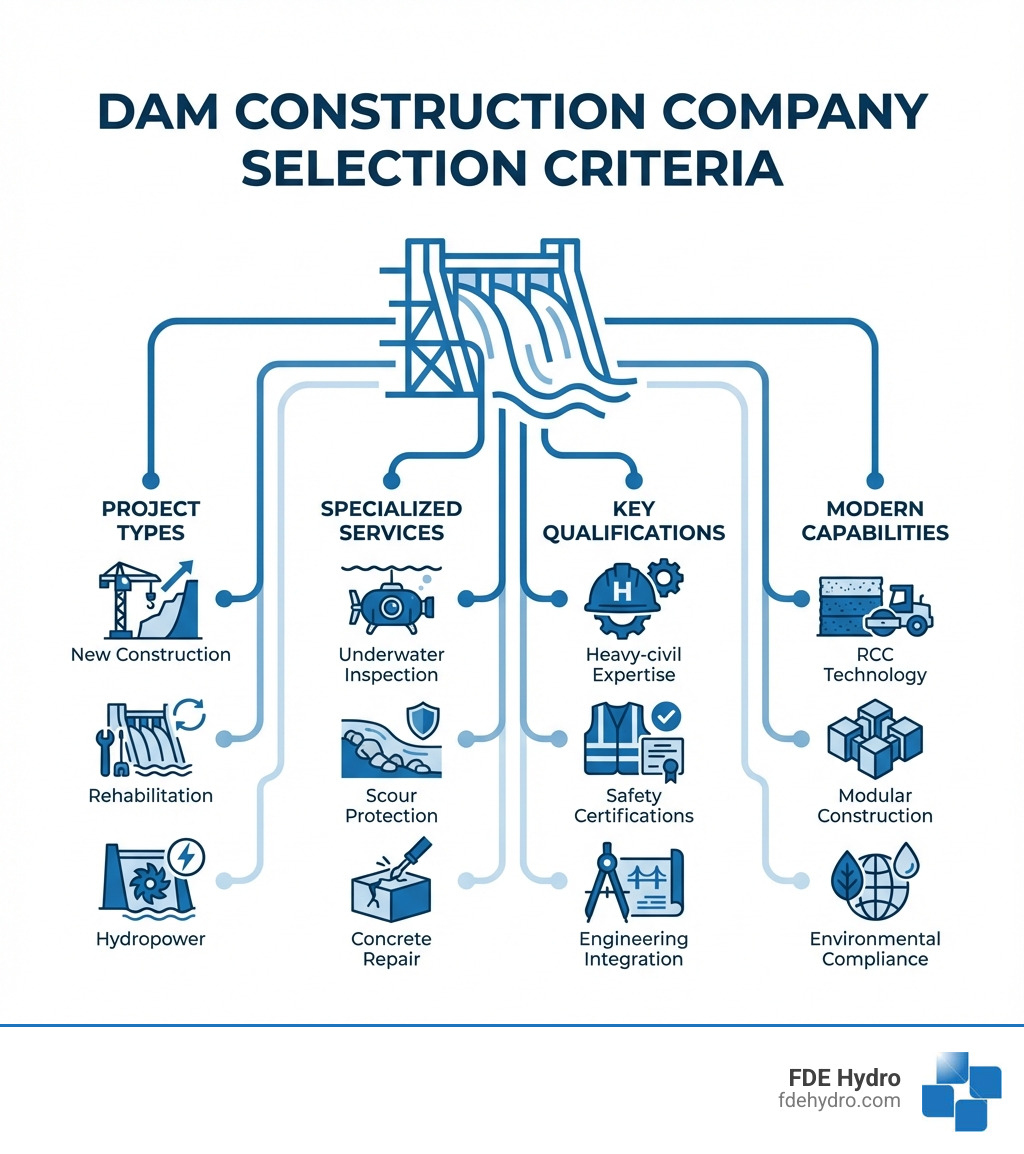
Scope of Work: Projects and Specialized Services
When we talk about dam construction companies, we’re discussing firms that undertake an incredibly diverse range of projects. From creating new structures that harness the power of water to carefully rehabilitating aging infrastructure, their work is fundamental to modern society. These companies are not just builders; they are problem-solvers, engineers, and innovators, constantly adapting to environmental needs and technological advancements.
Project Types Undertaken by Dam Construction Companies
The types of dam construction projects are as varied as the landscapes they inhabit. We see companies working on:
- New Dam Construction: This involves planning, designing, and building entirely new structures, often for purposes like hydroelectric power generation, water supply, or flood control. Some firms, for example, have constructed over 40 new dams, ranging from $4.5 million to $450 million projects. Industry leaders have completed more than 500 surface water storage projects across North America.
- Dam Rehabilitation and Upgrades: With many dams in the United States being over 60 years old, rehabilitation is a critical area. This includes structural repairs, upgrades to improve safety and efficiency, and retrofitting for new functions. Many firms specialize in repairs on navigational, hydroelectric, diversion, storage, detention, and earthen structures of all sizes, often working both above and below the waterline.
- Hydroelectric Dams: These are designed to generate electricity. Our work at FDE Hydro™ focuses specifically on this vital renewable energy sector. More info about Hydroelectric Dam Construction
- Diversion Dams: Used to divert water from a river or stream into a canal, pipeline, or other channel for irrigation, water supply, or power generation.
- Storage and Detention Dams: Creating reservoirs for water supply, irrigation, flood control, and recreation. There are over 92,000 reservoirs in the United States serving these wide-ranging purposes.
- Earthfill and Rockfill Dams: These are embankment dams constructed primarily of compacted earth or rock. Some global leaders have held the record for designing the world’s highest rockfill dam three separate times, showcasing their expertise in this area.
- Concrete Dams: These include various designs such as gravity, arch, buttress, arch-gravity, and Roller-Compacted Concrete (RCC) dams. Leading companies have designed more than 25 new concrete dams of differing types, with heights ranging from 46 to 984 feet. The industry covers a full spectrum of concrete dams, including mass concrete, concrete buttress, and concrete arch designs. More info about Hydroelectric Dam Components Ultimate Guide
Specialized and Support Services
Beyond the core construction, dam construction companies offer a suite of specialized services essential for the longevity and safety of these structures.
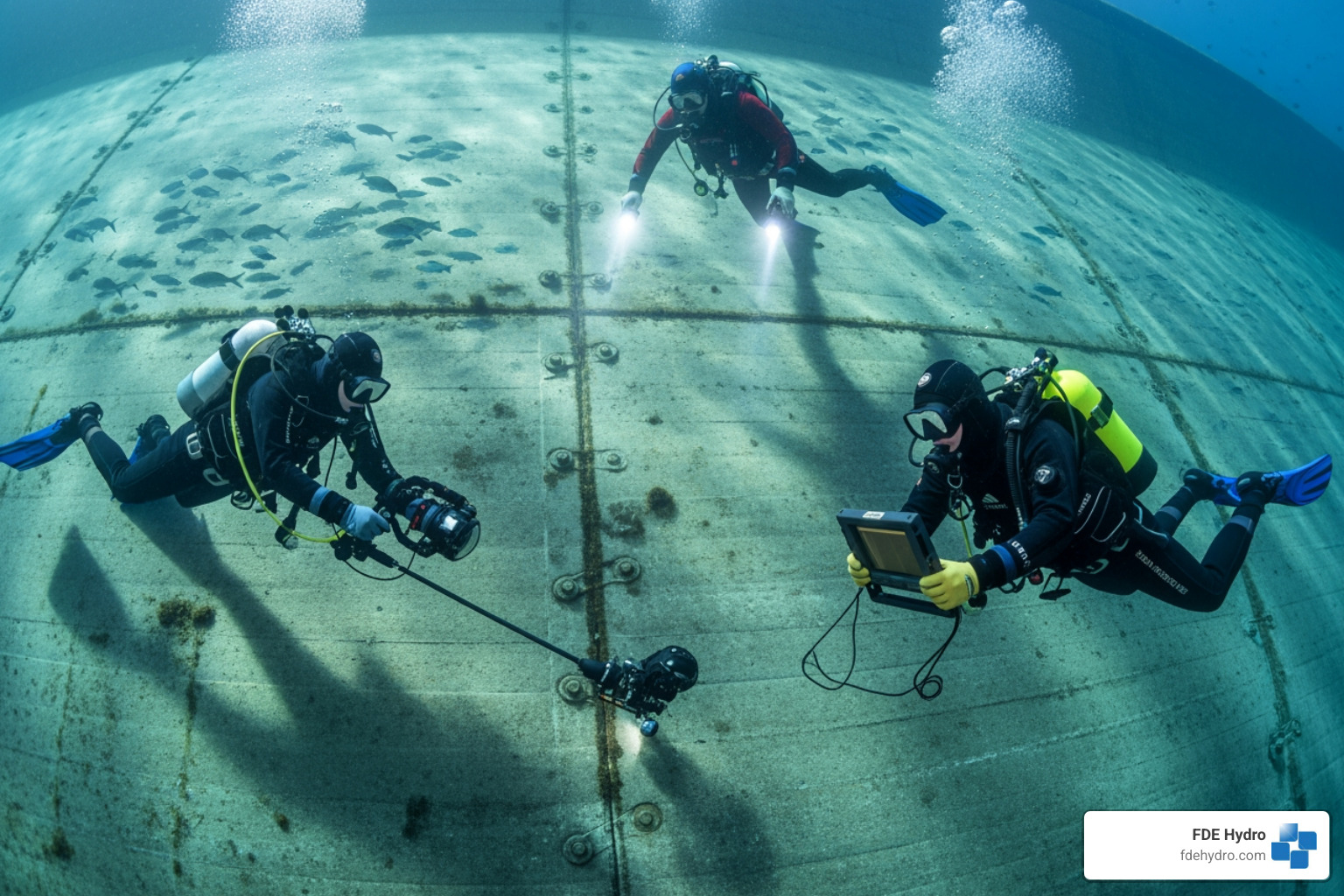
- Underwater Inspections and Survey: Critical for assessing the condition of submerged dam components. Specialized companies use divers and advanced technology like ROVs, underwater acoustic imaging, and high-resolution multi-beam hydrographic surveys for thorough inspections, often for regulatory requirements like FERC Part 12 inspections in the US.
- Deep Water Diving: For complex underwater tasks like concrete repair, gate maintenance, and scour protection in challenging environments. Specialized equipment, including mixed gas systems and recompression chambers, may be used.
- Scour and Erosion Protection: Scour and erosion pose significant threats to dam stability. Companies install measures like articulated block mattresses, rip rap, and concrete armor units to protect foundations and embankments.
- Concrete Repair: This can range from small surface repairs to mass pours, both above and below the waterline, using traditional methods or precast attachments.
- Gate Maintenance and Replacement: Rehabilitation or replacement of mechanical water control components such as roller gates, sluice gates, and actuators. Precision manufacturing, alignment, and installation are crucial.
- Cofferdam Installation: Temporary watertight enclosures used to dewater an area, allowing construction or repair work to proceed in dry conditions. Experienced firms have been installing all types of cofferdams since the early 1930s. More info about Water Control Structures
What Defines Leading Dam Construction Companies?
Leading dam construction companies distinguish themselves through a combination of robust engineering capabilities, meticulous project management, and an unwavering commitment to safety and compliance. They leverage decades of experience and continually invest in innovation to tackle the most complex water infrastructure challenges.
The Crucial Role of Engineering and Project Management
The successful execution of dam projects hinges on exceptional engineering and project management.
- Feasibility Studies and Design: Before any ground is broken, extensive studies are conducted to determine the viability and optimal design of a dam. Leading companies provide full-service support, including planning, analysis, and design, drawing on teams of engineers, scientists, planners, economists, and risk analysts. This includes services like civil layout, geotechnical programs, and stability analyses.
- Project Planning and Execution: Managing large-scale dam projects, from initial planning to completion, is a monumental task. It involves coordinating vast resources, specialized equipment, and skilled personnel. The Base Mine Dam project, for example, involved a contract value of $408 million CAD, with total excavation of 2,344,370 m3 and over 9 million m3 of common fill, showcasing the sheer scale of these endeavors in Canada.
- Contract Formats and Owner Types: Dam construction projects typically involve various contract formats, such as Construction Management (CM) or Design-Build. Project owners are diverse, ranging from government entities (federal, state, provincial, municipal) to private companies (e.g., mining companies for tailings dams, utilities for hydropower). Firms in this sector support both government and private owners, reflecting the broad client base.
Ensuring Safety and Regulatory Compliance
Safety and regulatory compliance are paramount in dam construction, particularly given the critical nature of these structures.
- Industry Certifications: Leading dam construction companies often hold numerous industry certifications, which demonstrate their commitment to high standards. Examples include ISNetworld, Avetta, Cognibox, and Alcumus SafeContractor, which signify adherence to stringent health, safety, environmental, and quality regulations. For instance, certifications like BCCSA COR® in Canada and other globally recognized approvals demonstrate this commitment.
- Risk Management and Safety Programs: Comprehensive risk management strategies and robust safety programs are essential. Leading firms cultivate a “genuine culture of safety and quality management” as a core foundation.
- Regulatory Compliance: Dams are heavily regulated. Companies must comply with standards such as FERC Part 12 dam safety evaluations and potential failure mode analyses (PFMAs) in the United States. Services can also include FEMA levee certification and compliance assessments, crucial in regions like New York. More info about Water Control Systems
Navigating Modern Challenges with Innovative Solutions
The dam construction industry faces a complex array of modern challenges, from aging infrastructure to the undeniable impacts of climate change. Yet, dam construction companies are rising to meet these problems with innovative solutions and forward-thinking approaches.
Key Challenges in Modern Dam Construction
- Aging Infrastructure: A significant challenge is the sheer age of existing dams. Industry data shows that structures in the US operate for over 60 years on average before requiring significant upgrades. This necessitates a shift in focus from new construction to extensive rehabilitation and modernization projects.
- Climate Change Adaptation: Changing weather patterns, including increased flood risks and altered water availability, demand more resilient and adaptable dam designs. Companies must consider climate change impacts in their planning, design, and construction, as noted by industry leaders.
- Environmental Regulations and Sustainability: Strict environmental regulations require careful planning to mitigate the ecological impact of dam projects. This involves comprehensive environmental impact assessments and incorporating sustainability considerations into every phase.
- Sedimentation: The accumulation of sediment in reservoirs reduces storage capacity and affects dam operations. Addressing sedimentation is a continuous challenge for maintaining dam efficiency and longevity.
- Meeting Increased Hydropower Demands: As the world seeks more renewable energy sources, the demand for hydropower is growing. Dam construction companies are challenged to upgrade existing facilities and build new, advanced hydroelectric plants to meet these needs, balancing power generation with environmental protection. View our Case Studies
Innovative Technologies Used by Leading Dam Construction Companies
Innovation is key to overcoming these challenges, and dam construction companies are at the forefront of adopting new technologies.
- Roller-Compacted Concrete (RCC): This method of concrete placement offers significant advantages. Leading firms have prepared designs for over 25 RCC dams and rehabilitation structures, emphasizing its benefits: faster construction, simpler constructability, and reduced costs compared to conventional concrete. The Olivenhain Dam in the United States, at 308 feet, stands as a testament to RCC’s capabilities. More info about Precast Concrete Technology
- Advanced Survey Technology: For both above and below-water applications, high-tech survey methods are crucial. This includes underwater acoustic imaging and high-resolution multi-beam hydrographic surveys, which provide detailed insights into existing conditions for more precise planning and execution, as used by specialized firms.
- Modular Construction Techniques: Our work at FDE Hydro™ is pioneering modular precast concrete technology for building and retrofitting hydroelectric dams. This approach significantly reduces construction costs and time, making projects more efficient and sustainable, particularly in regions like North America, Brazil, and Europe. More info about Modular Construction Techniques
- Microseismic Technology: For specialized applications like mitigating risks in tailings dams, microseismic technology can be employed for advanced monitoring and analysis, as highlighted in the industry.
The Evolution and Future of Dam Construction
The dam construction industry has a long and storied history, with some leading firms boasting over a century of experience in construction and hydraulic engineering. This rich past informs its dynamic present and future.
How the Industry Has Evolved
- Shift from New Construction to Rehabilitation: While new dams are still built, a significant evolution has been the increased focus on rehabilitating, upgrading, and maintaining existing structures. This is a direct response to the aging infrastructure and the need to extend the operational lifespan of dams, which averages over 60 years.
- Development of RCC: The widespread adoption of Roller-Compacted Concrete has transformed concrete dam construction, offering speed and cost efficiencies that were once unimaginable.
- Advances in Underwater Construction: Specialized diving crews and advanced underwater technologies have made it possible to perform complex repairs and inspections below the waterline, often providing cost-effective alternatives to expensive cofferdams, as demonstrated by specialized underwater construction firms.
- Increased Focus on Safety Culture: The industry has matured to place an even greater emphasis on safety and quality management, moving beyond mere compliance to foster a genuine culture of safety across all operations. More info about French Dam Technology Passes the Test
- Environmental and Sustainability Considerations: What was once an afterthought is now integrated into every stage of a project, reflecting a broader societal and regulatory shift towards sustainable development. More info about Dam Construction Methods
Future Trends Shaping the Industry
The future of dam construction is ready for exciting advancements, driven by technology, environmental imperatives, and the need for greater efficiency.
- Increased Use of Modularity: As championed by FDE Hydro™, modular construction techniques, particularly with precast concrete, will become more prevalent. These methods offer faster deployment, reduced on-site labor, and greater quality control, especially beneficial for projects in remote locations or with tight schedules in regions like North America, Brazil, and Europe.
- AI in Project Management: Artificial intelligence and machine learning will play a growing role in optimizing project planning, scheduling, risk assessment, and resource allocation, leading to more efficient and predictable project outcomes.
- Advanced Monitoring and Smart Dams: The integration of advanced sensor technology, including microseismic monitoring for tailings dams, will create “smart dams” that provide real-time data on structural integrity and environmental conditions, enhancing safety and operational efficiency.
- Focus on Resiliency and Community Protection: With increasing climate volatility, future dam projects will place an even stronger emphasis on building community resiliency and robust flood protection systems, as demonstrated by ongoing work in intelligent water management.
- Dam Decommissioning and Removal: As some dams reach the end of their useful life or are deemed environmentally detrimental, the industry will see an increase in dam decommissioning and removal projects, requiring specialized expertise to manage the environmental and logistical challenges.
Frequently Asked Questions about Dam Construction
What are the main types of dam construction projects?
Dam construction companies undertake a wide array of projects, including new dam construction for purposes like hydropower generation, water supply, and flood control. They also specialize in the rehabilitation, repair, and upgrading of existing structures, which often involves working on navigational, hydroelectric, diversion, storage, detention, and earthen dams. Specific dam types include earthfill, rockfill, gravity, arch, buttress, and Roller-Compacted Concrete (RCC) dams.
How do companies ensure safety on such large-scale projects?
Ensuring safety on large-scale dam projects is paramount. Dam construction companies implement robust safety management systems, adhere to strict regulatory standards (such as FERC Part 12 guidelines in the US), and pursue industry certifications like ISNetworld, Avetta, and BCCSA COR® (in Canada). They also conduct comprehensive risk assessments, potential failure mode analyses (PFMAs), and maintain dedicated safety programs with highly trained personnel.
What is Roller-Compacted Concrete (RCC)?
RCC is an innovative method of concrete placement widely used by dam construction companies. Unlike conventional concrete, RCC uses a drier mix that can be compacted by vibratory rollers, similar to how asphalt is laid. This technique offers several advantages, including faster construction times, simpler constructability, and significantly reduced costs. It is particularly popular for gravity dams due to its efficiency and strength.
Conclusion
The world of dam construction companies is one of immense scale, intricate engineering, and profound impact. These firms are not merely builders; they are custodians of critical infrastructure, essential for everything from generating renewable energy to ensuring safe drinking water and protecting communities from floods. From the specialized services of underwater inspection and scour protection to the grand vision of new hydroelectric facilities, their expertise is indispensable.
Choosing the right partner in this specialized field means looking for key capabilities: a deep understanding of heavy-civil engineering, a proven track record of project management excellence, an unyielding commitment to safety and compliance, and a forward-thinking approach to innovation. Companies that accept cutting-edge technologies like Roller-Compacted Concrete (RCC), advanced survey methods, and modular construction are best positioned to address the complex challenges of aging infrastructure, climate change, and growing energy demands.
At FDE Hydro™, we are proud to contribute to this vital industry, driving the future of hydropower with our innovative, patented modular precast concrete technology. Our solutions are designed to significantly reduce construction costs and time, advancing the industry in North America, Brazil, and Europe. We believe that innovation is not just an advantage but a necessity in building a sustainable future.
Learn more about advanced hydropower solutions and how FDE Hydro™ is leading the way in Modular Dam Construction.
Contact Us to discuss your next project and find how our expertise can benefit you.
