

Why Hydropower Innovation Matters Now More Than Ever
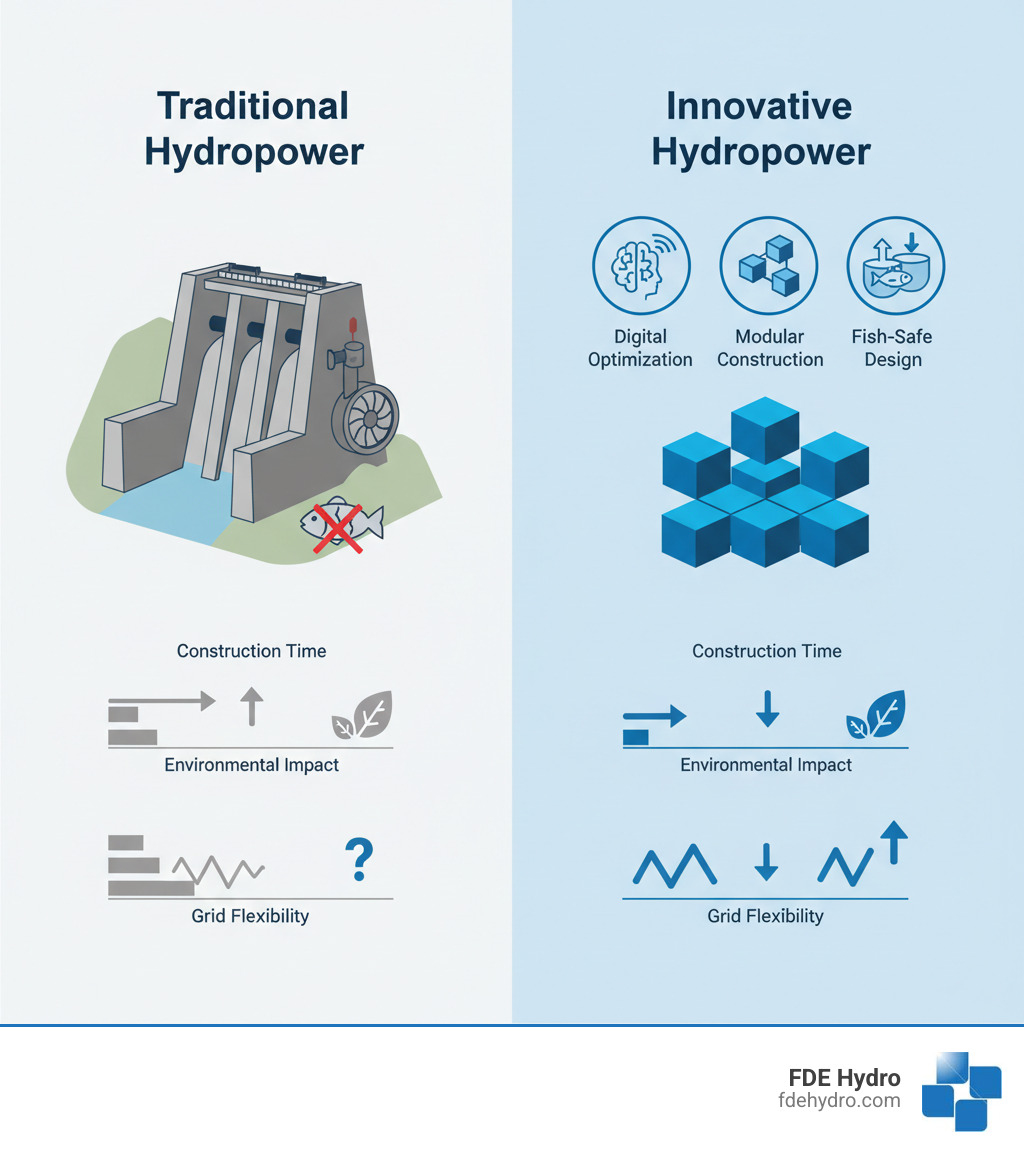
Hydropower innovation is changing the world’s oldest renewable energy source into a cutting-edge solution for 21st-century grid challenges. Here are the key innovations reshaping the industry:
- Digital Technologies: AI and digital twins are optimizing operations and could add 42 TWh to global generation
- Modular Construction: Prefabricated systems reduce construction time and costs dramatically
- Fish-Friendly Designs: New turbines and passage systems cut aquatic life mortality by over 20%
- Pumped Storage: Advanced systems provide 96% of U.S. energy storage capacity
- Marine & Tidal Power: Emerging technologies could capture 120-400 GW from ocean currents
- Smart Grid Integration: Improved flexibility supports intermittent solar and wind power
Hydropower isn’t stuck in the past. Despite being around for nearly 150 years, it’s experiencing what experts call a “renaissance.” The industry is moving beyond massive concrete dams toward smarter, smaller, and more sustainable solutions that work with nature rather than against it.
The numbers tell the story. Hydropower already operates at over 90% efficiency—far better than fossil fuels. It accounts for 24% of U.S. renewable electricity and 60% in Canada. But there’s untapped potential everywhere: adding generation to existing non-powered dams could deliver 4.8 GW of new capacity, enough to power up to 4.8 million homes.
The innovation surge addresses real problems. Traditional hydropower construction is expensive, slow, and site-specific. Environmental concerns about fish migration and ecosystem disruption have limited new development. Grid operators need flexible, fast-responding power sources to balance variable solar and wind generation.
New technologies are solving these challenges. Modular systems slash construction timelines. AI-powered operations squeeze more energy from existing facilities. Fish-friendly turbines let salmon and other species pass safely. Dynamic pumped storage turns hydropower into a massive battery for the grid.
I’m Bill French Sr., Founder and CEO of FDE Hydro, where we’ve pioneered modular precast solutions that are revolutionizing civil construction for the hydropower industry through innovations like the patented “French Dam.” My five decades in heavy civil construction, combined with participation in the DOE’s Hydropower Vision Technology Task Force, have given me unique insight into how hydropower innovation can deliver faster, more sustainable, and more cost-effective projects for the clean energy transition.
The Digital Wave: Smartening Up Hydropower Operations
Digitalization is changing hydropower plants from simple mechanical systems into smart, adaptive assets. This change is about reimagining how we operate, maintain, and optimize hydropower for a cleaner energy future.
The numbers speak for themselves. Researchers estimate that digital upgrades alone could add 42 TWh to global hydropower generation. That’s enough electricity to power millions of homes, squeezed from facilities already running at over 90% efficiency. When you’re already operating near the top of your game, finding that extra edge is remarkable.
Digitalization: A Key Driver of Hydropower Innovation
The heart of this digital revolution is in performance analytics and digital twins. Performance analytics involves collecting real-time data on everything—water flow, turbine efficiency, generator output, and weather patterns—to let operators fine-tune operations minute by minute.
Digital twins take this further, creating a complete virtual replica of a plant. This allows operators to test new strategies and predict maintenance needs months in advance without real-world risk, acting like a crystal ball for the facility.
These virtual models are changing maintenance from reactive to predictive. Instead of waiting for something to break, operators can schedule repairs during planned downtime, dramatically reducing costs and keeping plants running smoothly. One platform uses real-time simulations to optimize operations based on the complex interplay of weather, technical capabilities, market prices, and environmental factors.
Machine learning is making hydropower plants even smarter. Some systems now leverage earth observation data and advanced algorithms to optimize energy generation and trading based on snow and water availability. They can predict how much water will be available weeks in advance, helping operators make better decisions about when to generate and when to store.
Even maintenance inspections are getting a high-tech makeover. Drone-based monitoring now captures detailed 3D models of turbines and infrastructure, allowing engineers to spot potential problems without sending people into dangerous spaces. These drones can access areas that would be risky or impossible for human inspectors, improving both safety and the quality of inspections.
The Clean Energy Technology Observatory report highlights how digitalization is key to mitigating environmental impacts while optimizing generation. By considering weather patterns, market conditions, and ecological factors simultaneously, these systems help plants operate more sustainably. For more insights into how data is changing energy resources, explore our resources on data-driven energy resources.
Enhancing Grid Reliability and Resilience
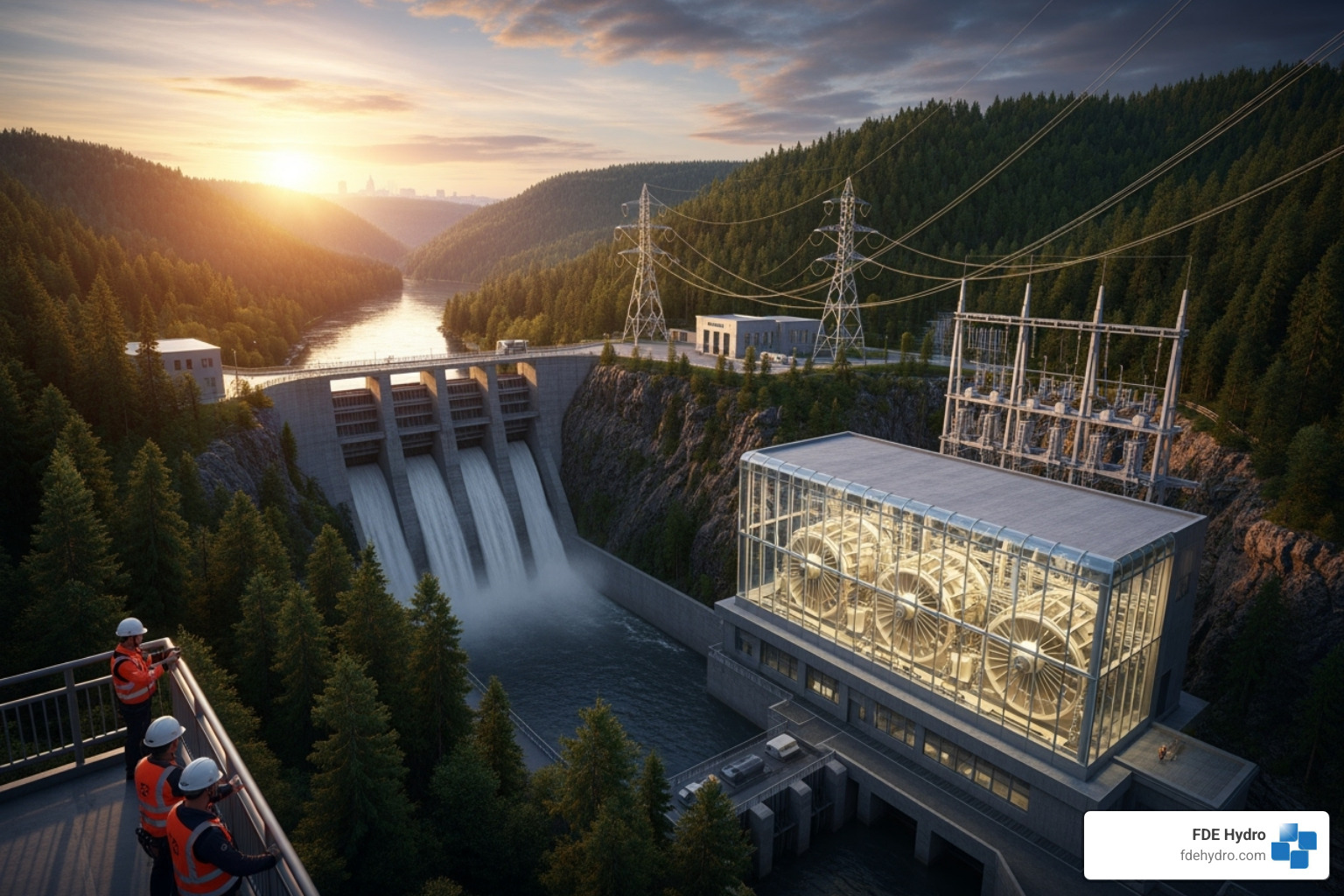
Hydropower’s role in grid stability is crucial, especially with the rise of intermittent renewables like solar and wind. When the sun isn’t shining or the wind isn’t blowing, Pumped Storage Hydropower (PSH) acts as the unsung hero of grid stability.
PSH acts like a massive rechargeable battery. When electricity is abundant and cheap, it pumps water uphill to a reservoir. When demand spikes, the water flows back down through turbines, generating power on demand. It’s a simple and effective system.
The scale is impressive. PSH represents roughly 96% of all commercial storage capacity in the United States. No other technology comes close. Preliminary studies suggest at least 35 GW of new PSH capacity might be feasible, which would be a game-changer for grid reliability.
What makes hydropower truly special is its flexibility. Unlike coal or nuclear plants that take hours to start up, hydropower can respond almost instantly. This rapid response capability is exactly what grid operators need to balance intermittent renewables.
Hydropower also provides “black start” capabilities. If the entire grid goes down, hydropower plants can restart themselves without external power and help bring the rest of the grid back online. It’s like having a backup generator for the entire electrical system. To learn more about this critical role, check out our article on hydropower as the guardian of the grid.
Recent projects are pushing these capabilities even further. The XFLEX HYDRO project in Europe upgraded existing hydropower stations with AI and advanced control systems to improve their energy storage potential and flexibility. One breakthrough is the ‘hydraulic short circuit’ system, which allows a PSH plant to pump and generate electricity simultaneously, with smart software managing the energy flow in real-time. This kind of hydropower innovation is essential for meeting renewable energy goals.
There’s even potential to repurpose old industrial sites. Former coal mine lands, for instance, can be transformed into pumped storage facilities, turning environmental liabilities into clean energy assets. It’s a win-win: providing valuable energy storage while contributing to regional economic revitalization.
As the grid continues its transition to renewable energy, hydropower’s role as a stabilizer and storage solution becomes more valuable every day. The digital tools making this possible aren’t just incremental improvements—they’re fundamental to building a reliable, clean energy future.
Eco-Friendly Engineering: Minimizing Hydropower’s Footprint
While hydropower is a clean energy source, traditional dams have raised valid environmental concerns, particularly regarding aquatic life. Fortunately, a significant wave of hydropower innovation is now dedicated to minimizing these impacts, ensuring our pursuit of renewable energy works with nature, not against it.
Fish-Friendly Turbines and Passages
A primary objection to hydropower has been its impact on fish migration. Statistics show that over 20% of fish can die passing through older plants, a challenge that threatens the industry’s social license. The good news? We’re actively solving this problem through innovative designs that protect aquatic life while still generating clean energy.
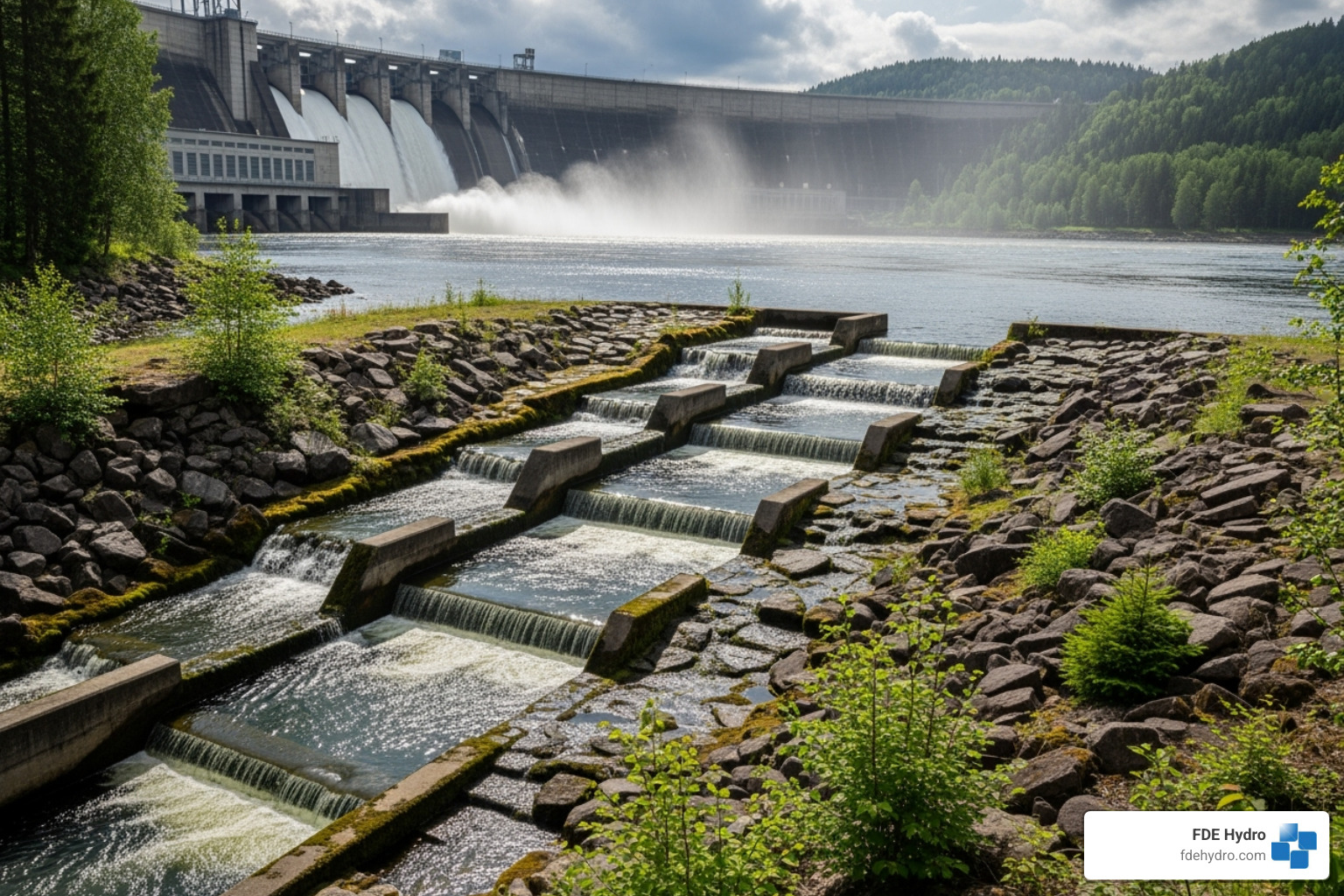
One of the most visible solutions is the fish ladder—a series of stepped pools that allow migrating fish to bypass dams entirely. Think of it as a staircase for fish. The Thompson Falls hydroelectric plant in Montana features the first full-length fish ladder in the state, specifically designed to help bull trout, a threatened species, steer upstream to their spawning grounds. These ladders use carefully manipulated water flows to create a natural pathway that guides fish safely around obstacles. For more information on facilitating safe passage for aquatic life, see our resources on aquatic animal passage.
Beyond ladders, advancements in turbine design are critical. Fish-friendly turbines like the Alden turbine (with wider, slower blades), minimum gap runner turbines, and very-low-head turbines are all engineered to drastically reduce fish mortality while maintaining efficiency. Even pumps as turbines (PATs) in smaller applications can be designed to be much safer for fish.
These innovations represent a fundamental shift in how we think about hydropower design. We’re no longer accepting fish mortality as an unavoidable cost of clean energy. Instead, we’re engineering solutions that achieve both ecological balance and sustainable power generation.
Alternative Infrastructure: Artificial Channeling and Low-Impact Growth
Beyond making turbines safer, hydropower innovation is exploring alternative infrastructure approaches that reduce overall environmental impact. This includes run-of-river systems and artificial channeling—methods that generate power with a much smaller footprint than traditional large-scale dams.
Run-of-river hydropower relies on the natural flow of water, often with no dam at all or only a very small diversion structure. This approach minimizes ecosystem alteration and allows natural sediment flow, which is critical for river health. Smaller-scale hydro installations, often called mini hydro or pico hydro (systems below 5kW), are excellent for supplying reliable renewable energy to rural communities. Some can even power individual homes from a single stream. These systems often use designs like Archimedes screws or vortex turbines, which are inherently gentle on fish because of their slower rotational speeds and larger passages.
Artificial channeling takes a different approach by constructing engineered waterways—canals or tunnels—to direct water flow for energy production in a controlled manner. This can be an alternative to traditional dam infrastructure in ecologically sensitive areas, allowing for power generation while minimizing negative effects on existing river ecosystems. The beauty of this approach is that it can work around critical habitats rather than flooding them.
These low-impact growth strategies are vital for expanding hydropower in locations where large dams simply aren’t feasible or desirable. We’re actively developing innovative water control structures that support these types of environmentally conscious approaches, allowing for efficient energy generation with minimal ecological disruption.
The future of hydropower is about building smarter, smaller, and more environmentally harmonious systems that work with the natural flow of water.
The Future of Hydropower Innovation: Powering the Grid
The future of hydropower isn’t just about maintaining what we have—it’s about reimagining what’s possible. As our energy needs evolve and climate challenges intensify, hydropower innovation is opening doors to vast untapped potential while delivering the energy security and economic benefits our communities need.
Modular Construction: A Game-Changer for Hydropower Innovation
Traditional hydropower projects have long been held back by complexity, custom engineering, lengthy timelines, and high costs. Modular construction is changing all that, representing one of the most exciting developments in the industry.
The concept is simple: prefabricate standardized components in a factory and assemble them on-site. This dramatically cuts construction time, makes costs predictable, and improves quality by moving work into a controlled environment away from weather and site constraints.
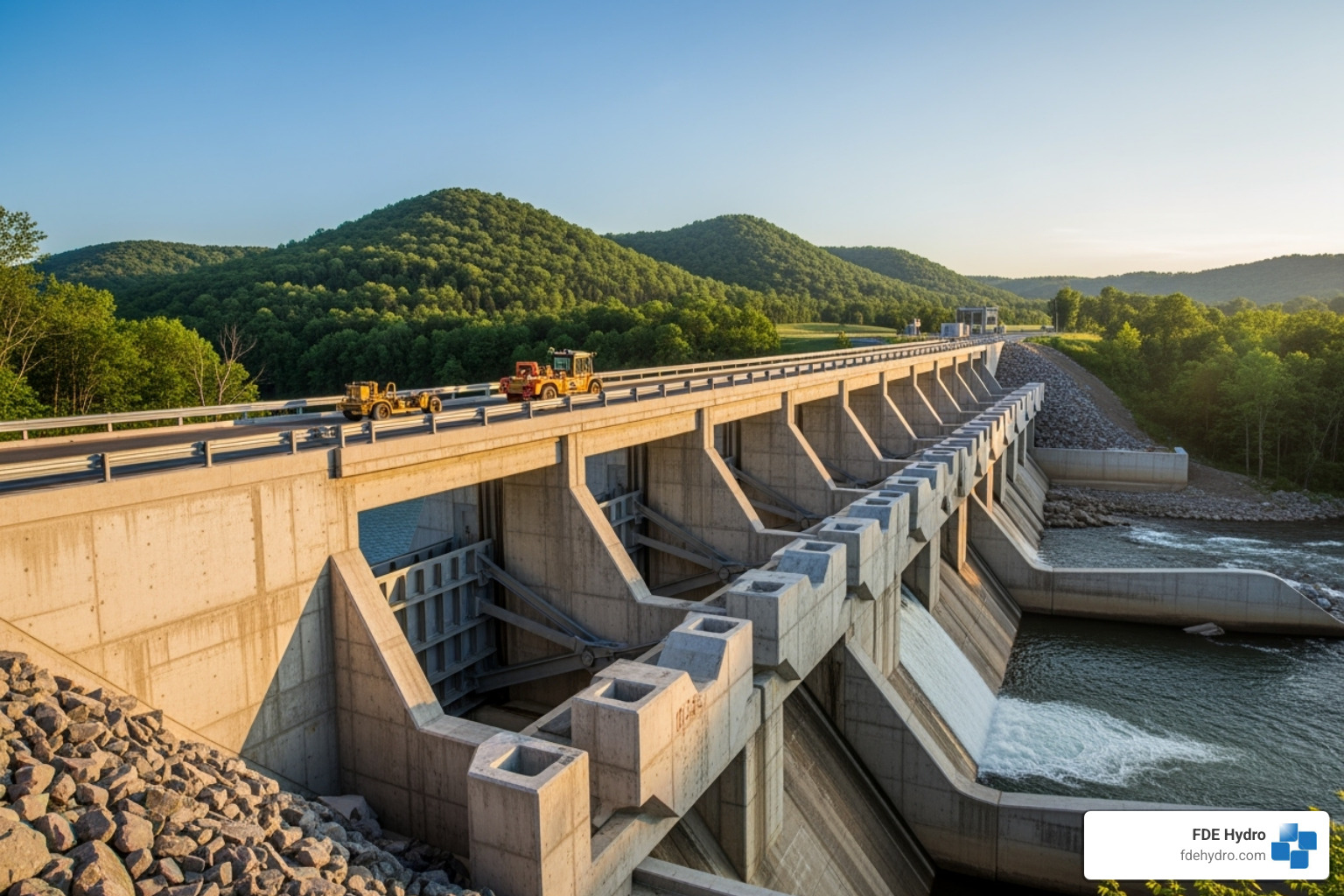
At FDE Hydro, we’ve been pioneering this approach with our patented modular precast concrete technology—the “French Dam.” This innovation is already changing how hydroelectric dams and water control systems are built and retrofitted across North America, Brazil, and Europe. What used to take years can now happen in months. What seemed financially impossible becomes feasible.
The real game-changer is scalability. Modular systems work whether you’re building a small run-of-river project or upgrading a major facility. This flexibility is particularly powerful when it comes to non-powered dams—existing structures that control water but don’t generate electricity. The U.S. Department of Energy estimates that retrofitting these dormant assets could add 4.8 GW of reliable, renewable electricity to the grid. That’s enough to power nearly 5 million homes, all from infrastructure that’s already there.
Beyond speed and cost, modular construction also means less local disruption, consistent quality, and adaptable designs for multiple sites. It’s making hydropower development more efficient, sustainable, and accessible. To see how we’re putting this approach into practice, visit our modular powerhouses page.
Tapping New Waters: Marine and Hydrokinetic (MHK) Technology
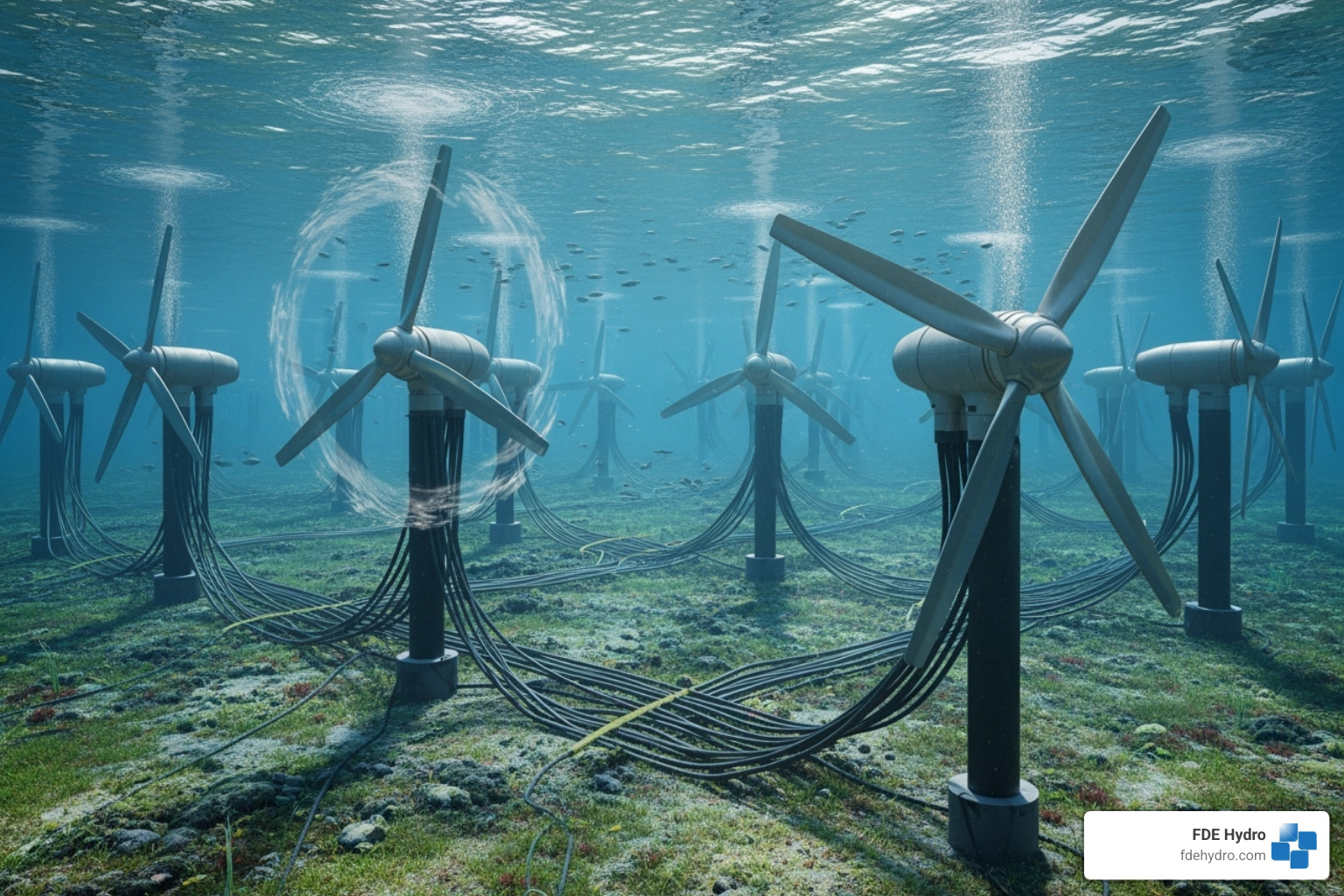
While rivers have long been a power source, oceans are the next frontier for hydropower innovation. The energy in tides, waves, and ocean currents is immense, with estimates suggesting 120 and 400 GW could be captured from tidal power alone—an enormous untapped resource.
Marine and Hydrokinetic (MHK) technologies capture energy from moving water. Tidal stream generators act like underwater wind turbines, wave energy converters harness wave motion, and barrage systems use tidal differences.
These aren’t just theoretical concepts. Right here in the United States, NREL has deployed three 35kW turbines made from resilient composite materials in New York City’s East River. This project has already broken the US record for marine energy production, proving that tidal power can work even in challenging urban environments with heavy boat traffic and variable conditions.
While the technology is young, it’s evolving rapidly with new designs and materials. MHK shows the same potential that pumped storage did decades ago.
Our expertise in modular construction translates well to this emerging field. The same principles that make land-based projects faster and more economical apply to marine infrastructure. In fact, we’re already exploring applications with modular sea wall systems that could support future MHK development. The ocean is vast, and we’re just beginning to tap its clean energy potential.
Advanced Turbines and Dynamic Pumped Storage
Even the turbine, the heart of every hydropower plant, is experiencing a renaissance through hydropower innovation.
Modern turbines are becoming smarter and more adaptable. 3D-printed turbines allow manufacturers to create custom designs quickly and efficiently, perfect for small to medium-scale plants. Variable-speed turbines can adjust their rotation to optimize performance whether water flow is high or low, making them ideal partners for solar and wind power.
The power injector is a clever innovation that uses air-water injection to boost a turbine’s capacity. The XFLEX HYDRO project in Europe has combined these with batteries, creating hybrid plants that respond to grid changes in seconds.
Perhaps the most transformative development is in dynamic pumped hydropower, an evolution of the concept that already provides 96% of commercial storage capacity in the United States. Now, it’s getting even better.
New high-density hydro solutions use specialized fluids 2.5 times denser than water. This change allows operation on sites with less elevation difference, dramatically reducing costs and environmental impact by enabling smaller reservoirs.
Another brilliant innovation is repurposing underground mines for pumped storage. Abandoned mines already have the vertical depth needed for energy storage—why not put them to work? This approach transforms environmental liabilities into clean energy assets.
Hybrid combinations of pumped storage, batteries, and smart turbines create power plants that can do it all: store excess solar and wind energy, respond instantly to demand changes, and provide the black start capabilities that keep our grid resilient. For a deeper look at how pumped storage is evolving, explore our pumped storage hydropower page.
These are fundamental advances that position hydropower as the flexible, reliable backbone of a clean energy future.
Frequently Asked Questions about Hydropower Innovation
How do new technologies make hydropower more environmentally friendly?
New technologies make hydropower more eco-friendly in three key ways. First, fish-safe turbine designs (like Alden and minimum gap runner turbines) use wider passages and slower speeds to let fish pass through with significantly lower injury risk. Second, advanced fish passage systems, such as fish ladders and bypass channels, provide safe alternative routes around dams. For more details on these systems, check out our page on aquatic animal passage. Third, alternative infrastructure approaches like run-of-river systems generate power with minimal disruption to river ecosystems. Our innovative water control structures support this philosophy of working with nature.
Can hydropower be built faster and cheaper?
Yes, primarily through modular construction. Instead of building from scratch on-site, prefabricated components are manufactured in a factory and assembled rapidly at the project location. This approach, which we’ve pioneered at FDE Hydro with our patented “French Dam” technology, dramatically cuts construction time from years to months and reduces costs. The process also improves quality control and minimizes on-site environmental disruption. This efficiency makes it economically feasible to develop new sites and retrofit the 4.8 GW of potential capacity at existing non-powered dams. You can learn more about these designs on our modular powerhouses page.
What is the role of hydropower in a grid dominated by solar and wind?
Hydropower is the essential partner to intermittent renewables like solar and wind, providing reliability when they are unavailable. Its primary role is energy storage through Pumped Storage Hydropower (PSH), which acts as a giant grid-scale battery. PSH uses surplus renewable energy to pump water uphill and releases it to generate power on demand, accounting for roughly 96% of all commercial energy storage capacity in the United States.
Beyond storage, hydropower provides essential grid stability services, including rapid response to demand changes and “black start” capability to restart the grid after a complete blackout. These capabilities make it the guardian of grid reliability. For a deeper understanding of this critical role, read our article on why hydropower is the guardian of the grid.
Conclusion: A New Era for the Oldest Renewable
Hydropower has been with us for nearly 150 years, but as we’ve seen throughout this article, it’s anything but old-fashioned. Hydropower innovation is breathing new life into this cornerstone renewable, changing it into a dynamic, flexible, and increasingly sustainable solution for our energy future.
The numbers tell an inspiring story. We’re looking at 4.8 GW of potential from non-powered dams just waiting to be activated. Another 35 GW could come from new pumped storage facilities. And the oceans? They hold a staggering 120 to 400 GW of untapped marine and hydrokinetic energy. Add to this the 42 TWh we could gain through digital optimization of existing plants, and you start to see the massive opportunity ahead.
What makes hydropower truly special is its ability to work alongside other renewables. While solar and wind are fantastic, they’re unpredictable. Hydropower, especially pumped storage, acts as the grid’s backbone—storing excess energy when the sun is bright and the wind is strong, then releasing it exactly when we need it. It’s this flexibility, combined with efficiency rates above 90%, that makes hydropower irreplaceable in our clean energy mix.
The environmental concerns that once held hydropower back are being addressed head-on. Fish-friendly turbines, sophisticated passage systems, and low-impact designs like run-of-river systems are proving we can generate clean power while respecting aquatic ecosystems. It’s about working with nature, not against it.
At FDE Hydro, we’re proud to contribute to this evolution with our modular precast concrete technology. The “French Dam” approach we’ve pioneered is making hydropower development faster, more affordable, and more accessible across North America, Brazil, and Europe. We’re proving that hydropower innovation isn’t just about new ideas—it’s about practical solutions that work in the real world.
This isn’t just about generating electricity, though that’s certainly important. It’s about reimagining our relationship with water as a resource. It’s about building resilience into our energy systems. It’s about creating economic opportunities while protecting the environment. And it’s about ensuring that communities everywhere have access to reliable, clean power.
The future of hydropower is here, and it’s more exciting than ever. Whether it’s through digital twins optimizing plant operations, modular construction slashing project timelines, or marine turbines capturing the ocean’s energy, innovation is opening doors we never knew existed.
Ready to see how hydropower can power your future? Learn more about the future of hydropower and find how we’re making this ancient renewable resource work for tomorrow’s world.
