

Why Water Control Infrastructure is the Backbone of Modern Society
Water control infrastructure is the vast network of systems designed to manage, store, treat, and deliver water while protecting against floods and ensuring environmental health. It includes physical structures like dams, reservoirs, treatment plants, and levees; extensive drinking water and wastewater systems; and the control mechanisms that regulate water flow for everything from irrigation to hydropower. This infrastructure serves over 80% of the U.S. population with potable water, treats sewage for 75% of Americans, and supports $2 trillion in annual commerce through navigable waterways.
America’s water control infrastructure stands at a critical juncture. Much of this network, built after World War II, is aging rapidly, with some components over 100 years old. The U.S. depends on over 2.2 million miles of pipes to move 39 billion gallons of water daily, yet the EPA estimates a need for over $744 billion in the next two decades for repairs. The consequences of inaction are severe: the 2015 Flint water crisis exposed the dangers of neglect, nearly 10 million lead pipes remain in service, and the American Society of Civil Engineers gives U.S. dams a “D” grade, with over 16,000 posing a “high hazard” of failure.
Climate change compounds these challenges. Prolonged drought has pushed the Colorado River system, a water source for 40 million people, to its limits, with Lake Powell hitting record lows. Meanwhile, the Ogallala Aquifer, vital for U.S. agriculture, is being rapidly depleted.
Yet, there’s reason for optimism. The Bipartisan Infrastructure Law made a historic $50 billion investment in water infrastructure, with funds dedicated to replacing lead pipes. The Inflation Reduction Act added another $4.6 billion for drought-stricken areas. These investments offer a once-in-a-generation opportunity to modernize our systems and build resilience.
I’m Bill French Sr., Founder and CEO of FDE Hydro™. Over five decades, I’ve witnessed the evolution of water control infrastructure firsthand. This guide will walk you through its critical elements, the challenges we face, and the innovative solutions changing how we manage our most precious resource.
What is Water Control Infrastructure and Why is it Vital?
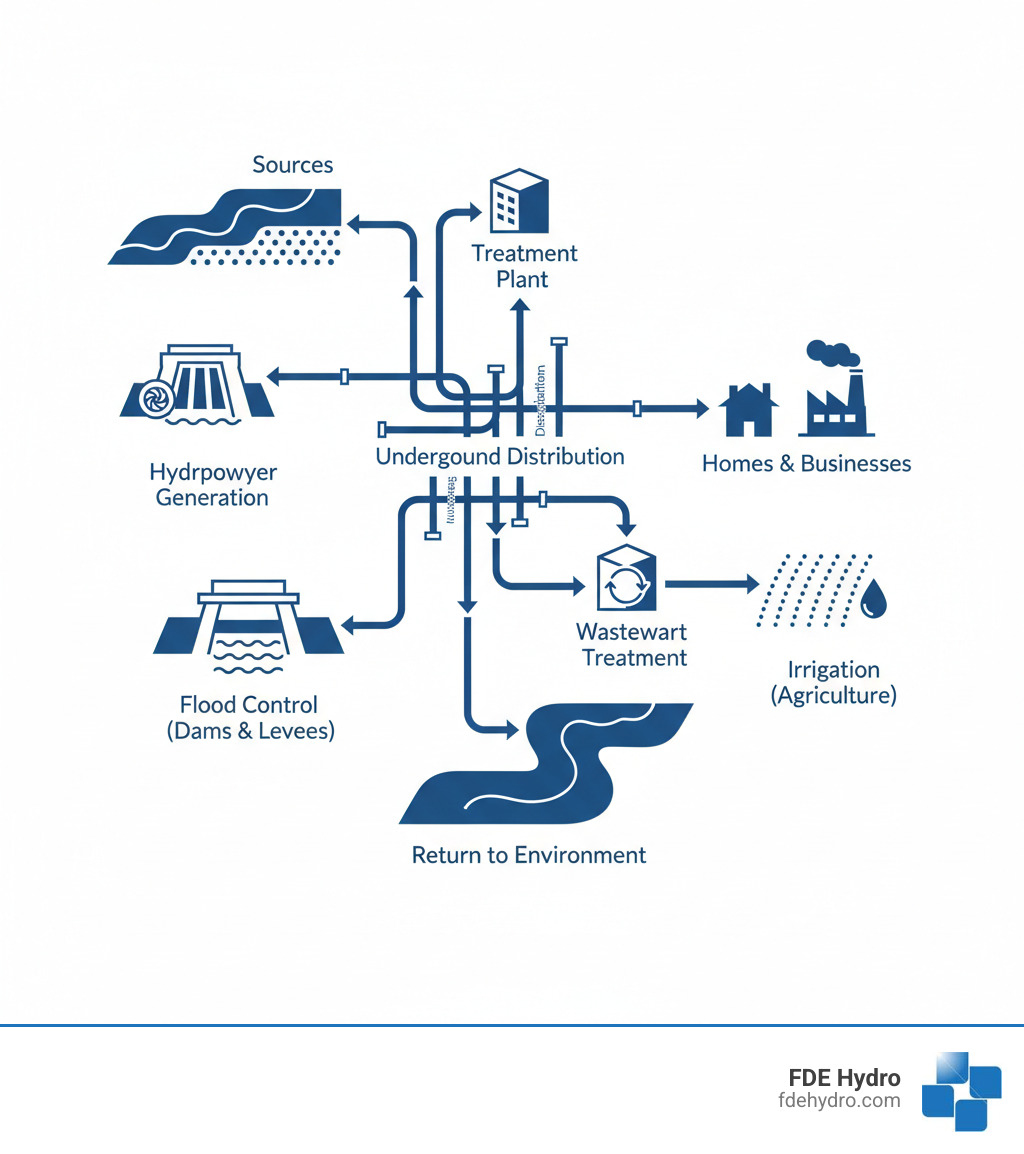
Water control infrastructure comprises the systems that bring clean water to your tap, carry waste away, and protect communities from floods. As defined by the American Society of Civil Engineers, it includes over 2.2 million miles of underground pipes, 16,000+ wastewater treatment plants, and vast networks of storm sewers and flood control reservoirs. This invisible backbone of modern life works 24/7 to control water flow, improve its quality, and ensure it arrives where and when it’s needed—whether for drinking, irrigation, or generating clean energy.
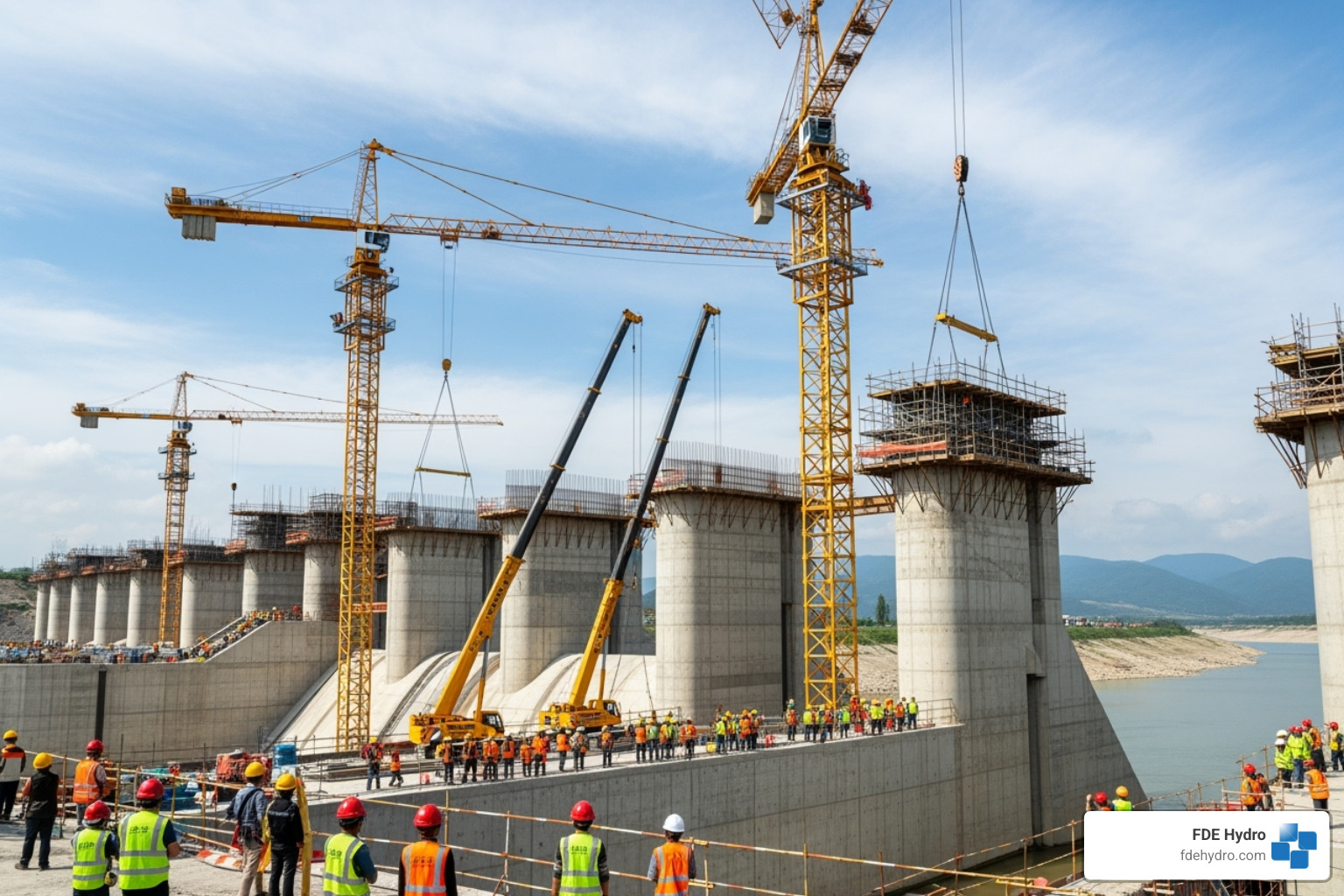
Consider the massive Dams that dot our landscape. These multitasking giants store drinking water, prevent floods, channel water to farms, and generate clean Hydropower, all while helping manage aquatic habitats.
Key Components of Water Control Infrastructure
Water infrastructure combines ‘gray’ (engineered) and ‘green’ (natural) approaches.
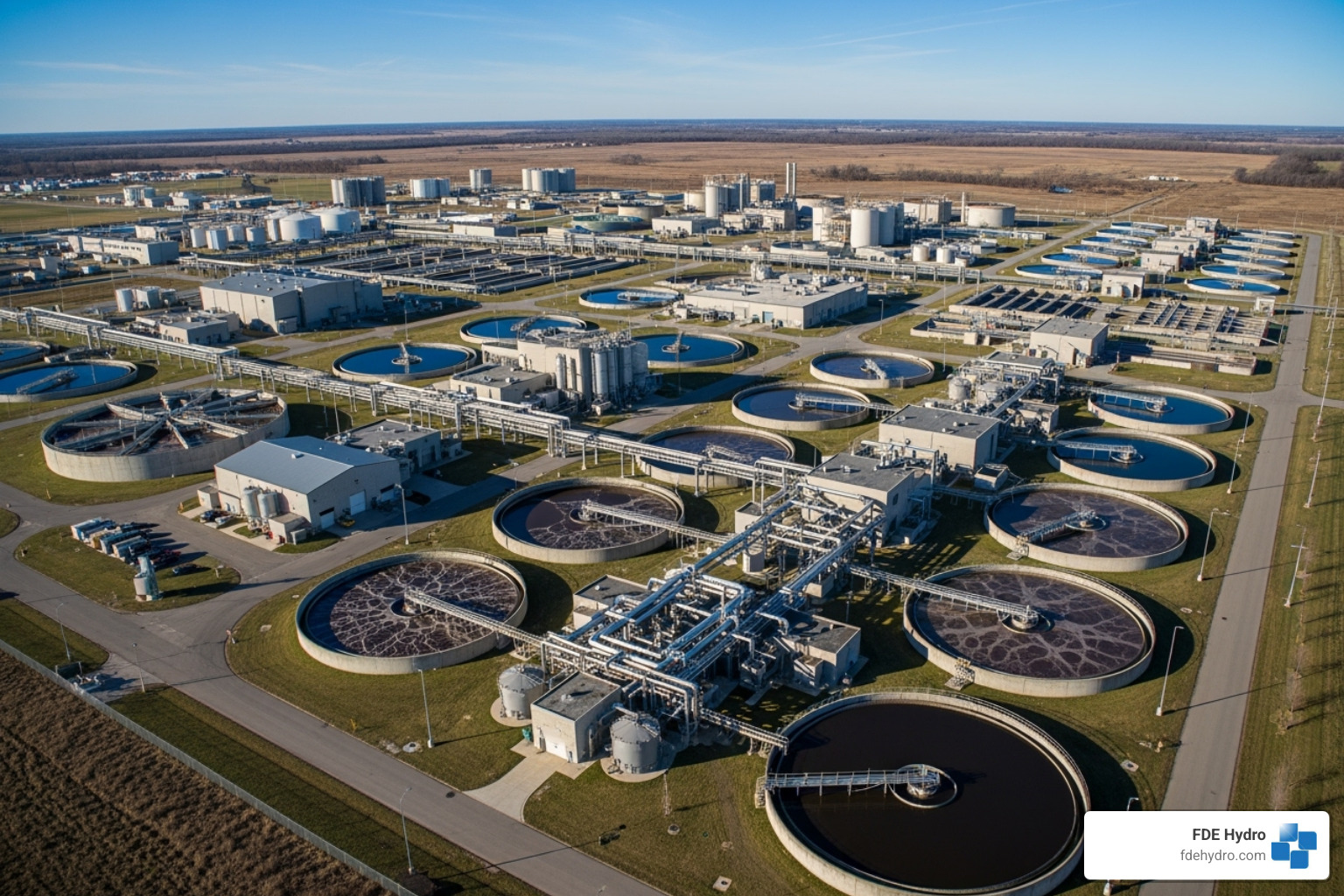
Gray infrastructure refers to the engineered systems. This includes the 2.2 million miles of pipes beneath our streets, many of which are nearing the end of their lifespan. It also includes drinking water treatment facilities that purify raw water and over 16,000 wastewater treatment plants that process sewage. With 15% of these plants already at or exceeding their design capacity, the need for upgrades is urgent. Other key components are Reservoirs for water storage, Spillways for safe flood release, and Pumping stations to keep water moving.
Green infrastructure works with nature. Healthy Watersheds, Ecosystems like forests, and Wetlands act as natural filters and sponges, reducing erosion, purifying water, and absorbing floodwaters. This approach complements engineered systems effectively.
Many specialized structures are also part of this network, including Weirs (low dams), Locks (for boat passage), Culverts (to carry streams under roads), Levees (for flood prevention), and Headgates (to control irrigation flow).
How Water Control Structures Function
Water Control Structures are the valves of water management, allowing for precise control over water movement. They perform several critical functions:
- Managing water levels and directing flow to ensure water reaches farms, communities, or specific habitats.
- Reducing sediment to protect water quality and prevent clogging in channels.
- Regulating temperature, which is vital for sensitive aquatic species like salmon.
- Creating and protecting fish and wildlife habitat, often by incorporating features for Aquatic Animal and Recreational Passage.
These structures are used in projects of all sizes, from large federal dams to local conservation efforts guided by resources like the NRCS guidance on water control structures. Proper engineering, construction, and maintenance are essential for their long-term effectiveness.
The State of U.S. Water Systems: A System at a Crossroads
Our nation’s water control infrastructure is at a critical moment. Built with post-war ambition, this impressive network is now aging beyond its intended lifespan, strained by deferred maintenance and insufficient investment. The ASCE’s 2021 infrastructure report card gives U.S. drinking water a “C-” grade, highlighting a problem with enormous economic stakes. Proper investment could add $4.5 trillion and 800,000 jobs to the economy by 2039, while inaction costs billions annually.
Compounding the issue are modern threats. Climate change is causing severe droughts in the West and overwhelming stormwater systems with intense rainfall elsewhere. At the same time, cyberattacks pose a growing risk to the digital controls of our water systems.
An Aging Network and Growing Threats
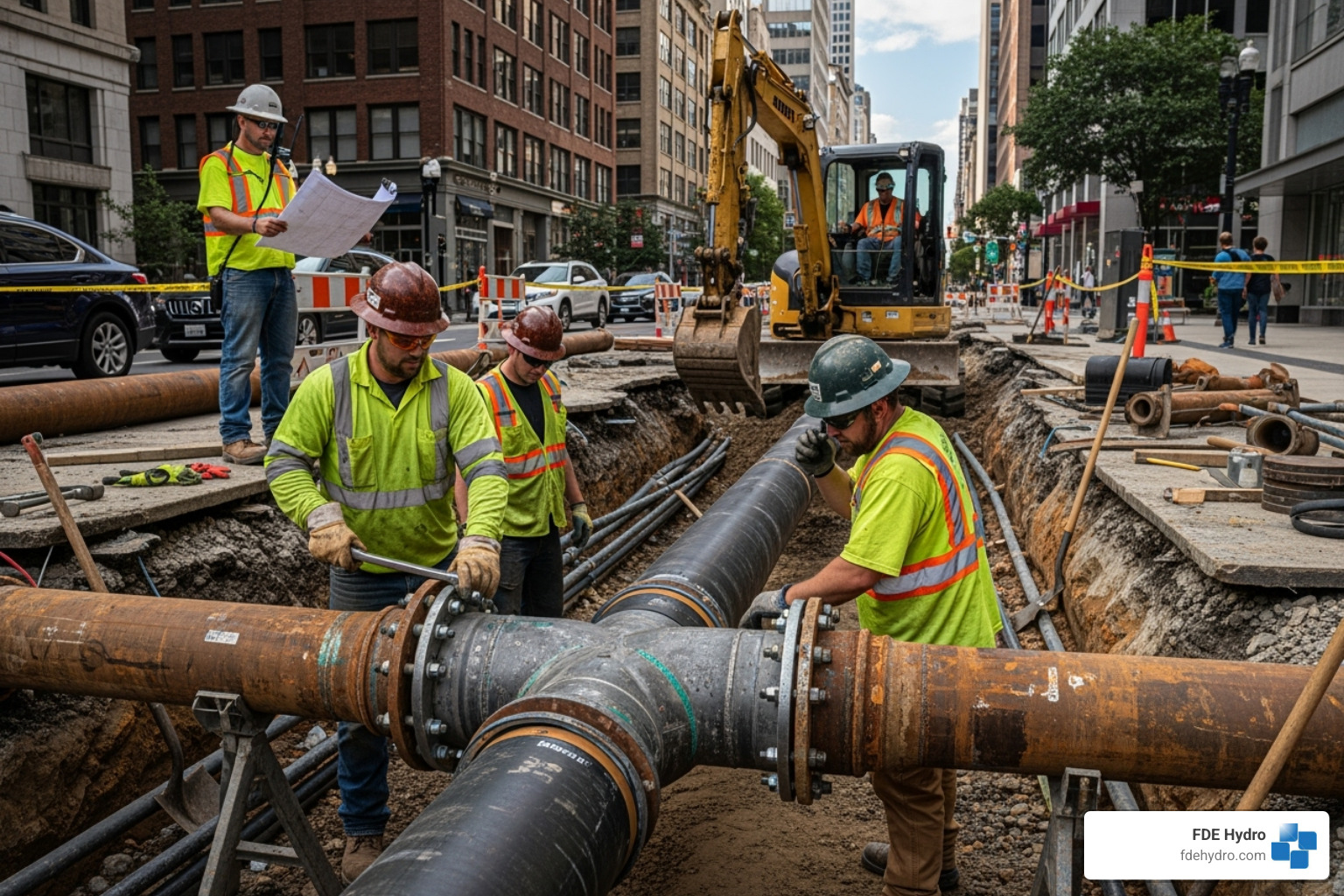
Much of our water infrastructure is now over 100 years old, operating far beyond its design life. The consequences are clear in frequent water main breaks, massive leaks, and, in the worst cases, public health crises. The 2015 disaster in Flint, Michigan, where lead from aging pipes contaminated the water supply, remains a stark reminder of the human cost of neglect. Today, nearly 10 million lead pipes are still in service nationwide.
Dams face similar challenges, earning a “D” grade from the ASCE. Over 16,000 dams are classified as having a “high hazard” of failure, with rehabilitation costs for non-federal dams estimated at over $157 billion. This makes solutions like Dam Rehabilitation Encapsulation increasingly vital. Furthermore, 15% of our 16,000 wastewater treatment plants have reached or exceeded their design capacity. To combat digital threats, the EPA and CISA developed the 2024 Roadmap to a Secure and Resilient Water Sector and provide EPA Cybersecurity Resources for the Water Sector to help utilities bolster their defenses. Fortunately, we are actively developing Aging Infrastructure Being Replaced with Next Generation Civil Solutions.
Regional Flashpoints and Challenges
While problems are nationwide, certain regions face intense pressure. The Colorado River Basin, which two-thirds of people in southwestern states, nearly forty million Americans, rely on for drinking water, is suffering through the most severe drought in over a thousand years. This has forced painful water use reductions across seven states.
To the east, the Ogallala Aquifer, an underground reservoir vital to U.S. agriculture, is being depleted at an alarming rate. An estimated 30% of the aquifer was drained by 2010, threatening national food security.
In California, the State Water Project (SWP), a massive water delivery system built in the 1960s, requires urgent modernization. The proposed Delta Conveyance Project aims to update its aging infrastructure to better handle the impacts of climate change, such as less snowpack and more extreme rain events.
Finally, stormwater management remains a persistent challenge for cities, where aging drainage systems are frequently overwhelmed by intensified rainfall, leading to flooding and pollution.
Governing the Flow: Regulation, Funding, and Modernization
Managing our nation’s water control infrastructure involves a complex web of laws, regulations, and funding. After years of underinvestment, historic levels of funding are finally flowing into our water systems. The challenge is to spend these dollars wisely on resilient, long-term projects.
Landmark Legislation and Federal Oversight
Two federal laws form the bedrock of U.S. water management: the 1972 Clean Water Act (CWA), which regulates pollution in our waterways, and the 1974 Safe Drinking Water Act (SDWA), which ensures tap water is safe. The EPA sets national standards under these laws, while the Cybersecurity and Infrastructure Security Agency (CISA) works with the EPA to protect water systems from digital threats. Utilities can find guidance through EPA Cybersecurity Resources for the Water Sector.
At FDE Hydro, we believe modern infrastructure must be resilient against both physical and digital threats. Our Dam Rehabilitation Encapsulation solutions integrate modern protective measures with robust engineering from the ground up.
Historic Investments and Ongoing Needs
The Bipartisan Infrastructure Law of 2021 represents the largest federal investment in water systems in U.S. history, committing $55 billion to water infrastructure. Of this, $50 billion is channeled through the Clean Water and Drinking Water State Revolving Funds (SRFs), which provide low-interest loans for state-level projects. A key priority is the replacement of lead pipes, with at least $15 billion specifically earmarked for this purpose.
For larger projects, the Water Infrastructure Finance and Innovation Act (WIFIA) program offers federal loans for major upgrades. These programs are crucial for tackling big-ticket items like treatment plants, water recycling, and drought mitigation.
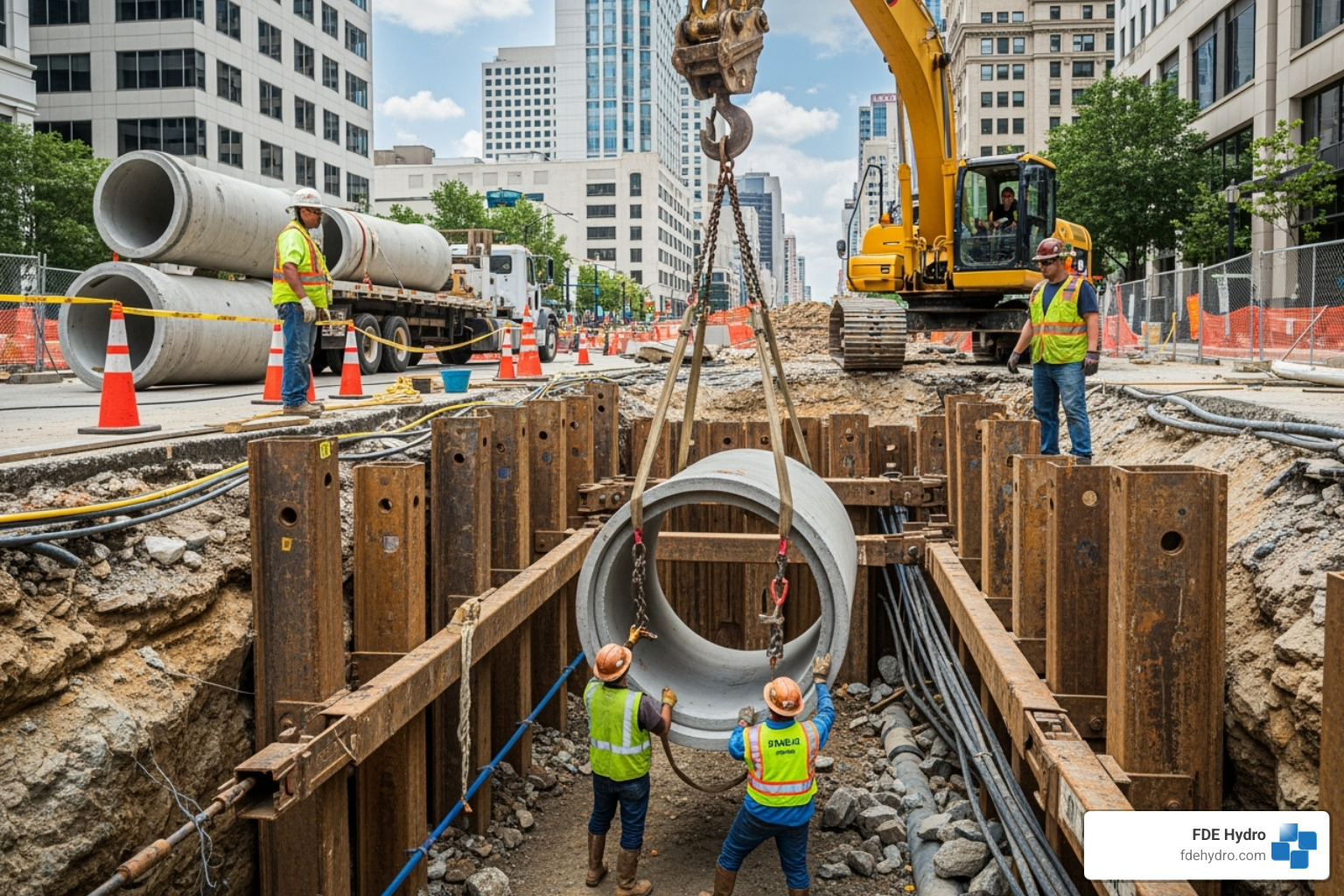
While historic, these investments are just a down payment. The ASCE calculated an $81 billion funding gap in 2019 alone, and the EPA estimates a need for over $744 billion in the next two decades. This highlights the need for cost-effective solutions.
Projects are already underway, such as California’s Delta Conveyance Project, which aims to adapt the State Water Project to climate change. This kind of forward-thinking investment is essential. At FDE Hydro, we believe The Biggest Untapped Solution to Climate Change is in the Water. By understanding Why Precast Cost Less, we can see how innovative construction methods can stretch these historic investments to accomplish even more.
The Future of Water Management: Innovation and Resilience
The future of water control infrastructure is about reimagining how we manage water. We are at a threshold where technology, nature, and innovative construction are converging to create smarter, more resilient systems.
Key trends are revolutionizing water operations. Smart technology and data-driven management, including sensors and AI, enable real-time leak detection and predictive maintenance. Resilience planning is now essential, focusing on diversifying water sources, recycling, and building redundancy into critical systems. The integration of green infrastructure, such as restored wetlands and healthy watersheds, complements traditional gray infrastructure by naturally filtering water and absorbing stormwater. Finally, modular construction is changing how we build, allowing components to be fabricated off-site and assembled rapidly, which speeds up projects, reduces costs, and minimizes environmental disruption. Our work at FDE Hydro shows Why Precast Cost Less and delivers superior results.
The Future of Water Control Infrastructure
Looking ahead, the evolution of water infrastructure will be defined by speed, efficiency, and sustainability. The old model of slow, expensive construction is no longer viable. Rapid Installment of Module Precast Civil Infrastructure offers a compelling alternative, accelerating both new construction and rehabilitation.
Precast concrete solutions provide exceptional durability and quality control, as components are manufactured and tested in a factory setting. This ensures infrastructure is built to last a century or more, with minimal on-site waste and disruption.
This innovation is especially transformative for hydropower. Modernizing facilities with efficient components can revitalize aging plants. Modular Powerhouses can be deployed rapidly, bringing clean energy online faster than ever. Hydropower is a cornerstone of a stable grid, and as explained in 4 Reasons Why Hydropower is the Guardian of the Grid, its reliability is crucial. Advanced systems like Pumped Storage Hydropower act as massive batteries, storing energy to balance intermittent renewables like solar and wind.
The convergence of these technologies paints an optimistic picture. We have the tools and knowledge to build water infrastructure for the next century. The question is whether we will act with the urgency the moment demands.
Conclusion
We’ve explored the complex world of water control infrastructure, the systems that underpin our daily lives. From our taps to our food supply, this network of pipes, plants, and dams makes modern society possible.
The challenges are urgent: aging infrastructure, a massive funding gap, and the escalating impacts of climate change. However, there is reason for hope. The Bipartisan Infrastructure Law’s $50 billion commitment is a historic step, giving communities resources to replace lead pipes, upgrade treatment plants, and improve dam safety. These are real projects that will protect American families.
But money alone is not enough. We must work smarter. Innovation is key, from modern materials like high-performance precast concrete to efficient modular construction methods that slash project timelines and costs. These are proven solutions being deployed today.
At FDE Hydro™, we are dedicated to being part of this solution. Our modular precast technology represents a fundamental shift in how we build and rehabilitate critical water control structures. By enabling communities to build resilience faster and more affordably, we are helping to secure our water future.
The path forward requires a shared commitment from engineers, policymakers, and citizens. We must continue to invest, accept new technologies, and plan for a future that will look different from our past. The water challenges of tomorrow demand the solutions we build today.
If you are involved in infrastructure planning, I encourage you to learn more about innovative means and methods for infrastructure construction. Together, we can build a water future that is resilient and sustainable for generations to come.
