

The Global Energy Change: Why Sustainable Energy Production Matters Now More Than Ever
Sustainable energy production is the generation of power from sources that meet present needs without compromising the ability of future generations to meet theirs. Here’s what you need to know:
- What it includes: Solar, wind, hydropower, geothermal, and bioenergy
- Key benefit: Reduces greenhouse gas emissions by up to 90% compared to fossil fuels
- Current status: Renewables account for 30% of global electricity, up from 20% a decade ago
- Cost advantage: Solar and wind are now 41-53% cheaper than new fossil fuel plants
- Job creation: Clean energy creates 3x more jobs per dollar invested than fossil fuels
- Health impact: Prevents millions of premature deaths annually by reducing air pollution
- Investment need: $4.5 trillion per year until 2030 to reach net-zero emissions by 2050
Energy is at the heart of the climate challenge—and key to the solution. While fossil fuels still provide 80% of global energy, the landscape is changing. Between 2015 and 2024, renewable energy capacity grew by 140%, while fossil fuel capacity increased by just 16%. In 2024 alone, clean energy investment hit $2 trillion, far outpacing the $1.2 trillion that went into fossil fuels.
Despite this progress, we’re not moving fast enough. To meet Paris Agreement goals and limit global warming to 1.5°C, emissions must drop by almost half by 2030 and reach net-zero by 2050. The transition creates a more resilient, equitable energy system, offering energy security, cleaner air, and new jobs in a sector that already employs 35 million people worldwide.
I’m Bill French Sr., Founder and CEO of FDE Hydro™, and I’ve spent decades working on energy infrastructure. After 50 years leading a top site contractor, I founded FDE Hydro™ to bring modular, environmentally beneficial solutions to sustainable energy production through innovative hydropower. Since 2015, I’ve worked with the U.S. Department of Energy to define next-generation hydropower, and we continue to modernize clean energy infrastructure across North America, Brazil, and Europe.
What is Sustainable Energy and Why Does It Matter?
While often used interchangeably, “sustainable energy” and “renewable energy” have a key difference. Renewable energy comes from natural sources that replenish themselves, like sun and wind. Sustainable energy is power that meets our needs today without compromising the future. It must be non-depleting, environmentally sound, and socially equitable.
Most renewables like solar, wind, and hydropower are also sustainable. However, some renewables may not be. For example, bioenergy from crops is renewable, but it isn’t sustainable if it causes deforestation or competes with food production. The concept of sustainable energy production has evolved to encompass environmental, social, and economic viability, recognizing that our planet, communities, and economy are all connected Scientific research on the history and themes of sustainable energy development.
The Environmental Imperative
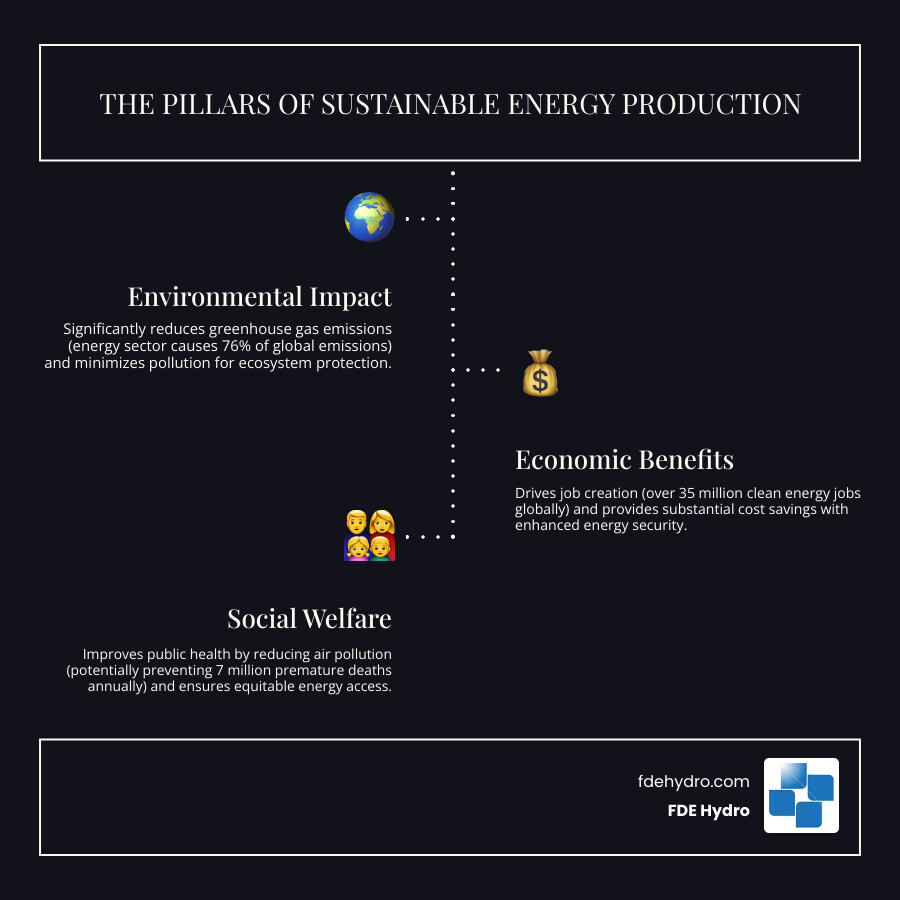
Our reliance on fossil fuels is the primary driver of climate change. Burning coal, oil, and gas releases greenhouse gases that trap heat, warming our planet by 1.5 degrees Celsius since the industrial revolution. This warming triggers severe weather, melting ice caps, and rising seas. The energy sector alone is responsible for about 75% of these emissions The latest data on greenhouse gas emissions from energy.
Beyond climate change, fossil fuels cause immediate harm through air and water pollution, leading to neurological damage, cancer, and heart disease. An alarming 99% of the global population breathes air that fails to meet basic quality standards WHO data on air quality and health. Shifting to sustainable energy production is a direct path to cleaner air, safer water, and healthier communities.
The Economic Case for sustainable energy production
The economic argument for clean energy is now undeniable. Solar power is 41% cheaper than fossil fuel alternatives, and offshore wind is 53% cheaper. Renewables are now the most affordable option for new electricity in most of the world.
The job market reflects this shift. The clean energy sector employs nearly 35 million people, with 14 million new jobs projected by 2030 Data on clean energy job growth. For every dollar invested, renewables create three times more jobs than fossil fuels.
| Sector | Jobs Created per Dollar Invested | Investment Trends (2024) |
|---|---|---|
| Renewable Energy | 3x more than fossil fuels | $2 trillion |
| Fossil Fuels | 1x (baseline) | $1.2 trillion |
This transition creates real jobs in communities across North America, Brazil, and Europe—the very places FDE Hydro™ operates. While the required global investment of $4.5 trillion per year until 2030 seems large, it pales in comparison to the $7 trillion spent on fossil fuels in 2022, including subsidies and unpriced health and environmental costs. Investing in renewables avoids these hidden costs and could save the world up to $4.2 trillion annually by 2030 through reduced pollution and climate impacts.
The Social and Health Benefits
The human impact underscores the urgency of this transition. Air pollution is linked to 7 million premature deaths annually, with an economic cost of $8.1 trillion per year (6.1% of global GDP). These are not just statistics; they represent families and communities suffering from preventable illnesses like asthma, heart disease, and cancer.
Transitioning to clean energy delivers immediate health benefits by cleaning the air we breathe. It also promotes energy equity. Globally, 790 million people lack electricity, and 2.6 billion use polluting cooking fuels. Sustainable energy production offers a path to reliable, affordable, and clean power for all, creating healthier and more prosperous communities.
The Primary Sources of Sustainable Energy Production
Electricity has to come from somewhere, and increasingly, it’s from sources that won’t run out or harm the planet. The U.S. Energy Information Administration tracks several major renewable sources that form the foundation of sustainable energy production: solar, wind, hydropower, geothermal, and bioenergy.
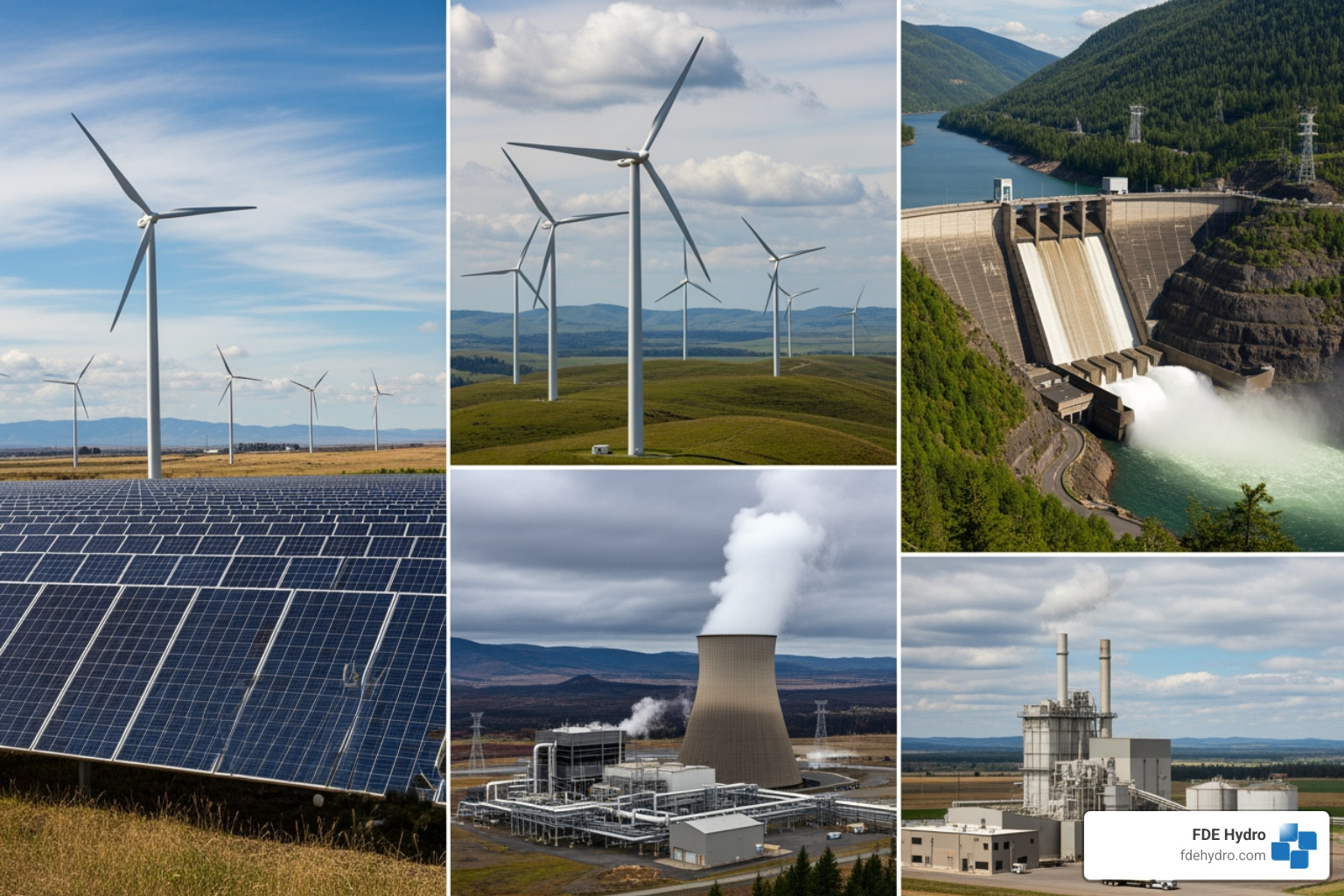
Each source has unique strengths, and a diverse energy mix is key. What works in sunny California differs from what’s ideal for rural Brazil or mountainous Europe.
Solar Power: Using the Sun
The sun provides more energy than humanity uses. Solar power captures this abundance. Photovoltaic (PV) panels convert sunlight directly into electricity, while concentrated solar power (CSP) uses mirrors to create steam that drives a turbine. Thanks to plummeting manufacturing costs, solar is often the cheapest new electricity source. Global solar capacity was projected to expand by up to 50% between 2019 and 2024 IEA report on solar energy’s future. The primary challenge, intermittency, is being solved by advances in battery storage, which makes solar power reliable around the clock.
Wind Power: Capturing the Breeze
Modern wind turbines are a cornerstone of sustainable energy production. Moving air spins large blades connected to a generator, creating electricity. Onshore turbines are common in plains and hills, while offshore turbines tap into stronger, more consistent ocean winds. The world’s technical potential for wind energy exceeds total global electricity production Information on how wind turbines work. Like solar, wind’s intermittency is being addressed by battery storage, making it an increasingly reliable and cost-effective power source.
Hydropower: The Force of Water
Hydropower is the largest renewable energy source in the electricity sector today, generating 4,200 TWh globally in 2018 2019 Hydropower Status Report. It’s one of the oldest and most reliable forms of sustainable energy production.
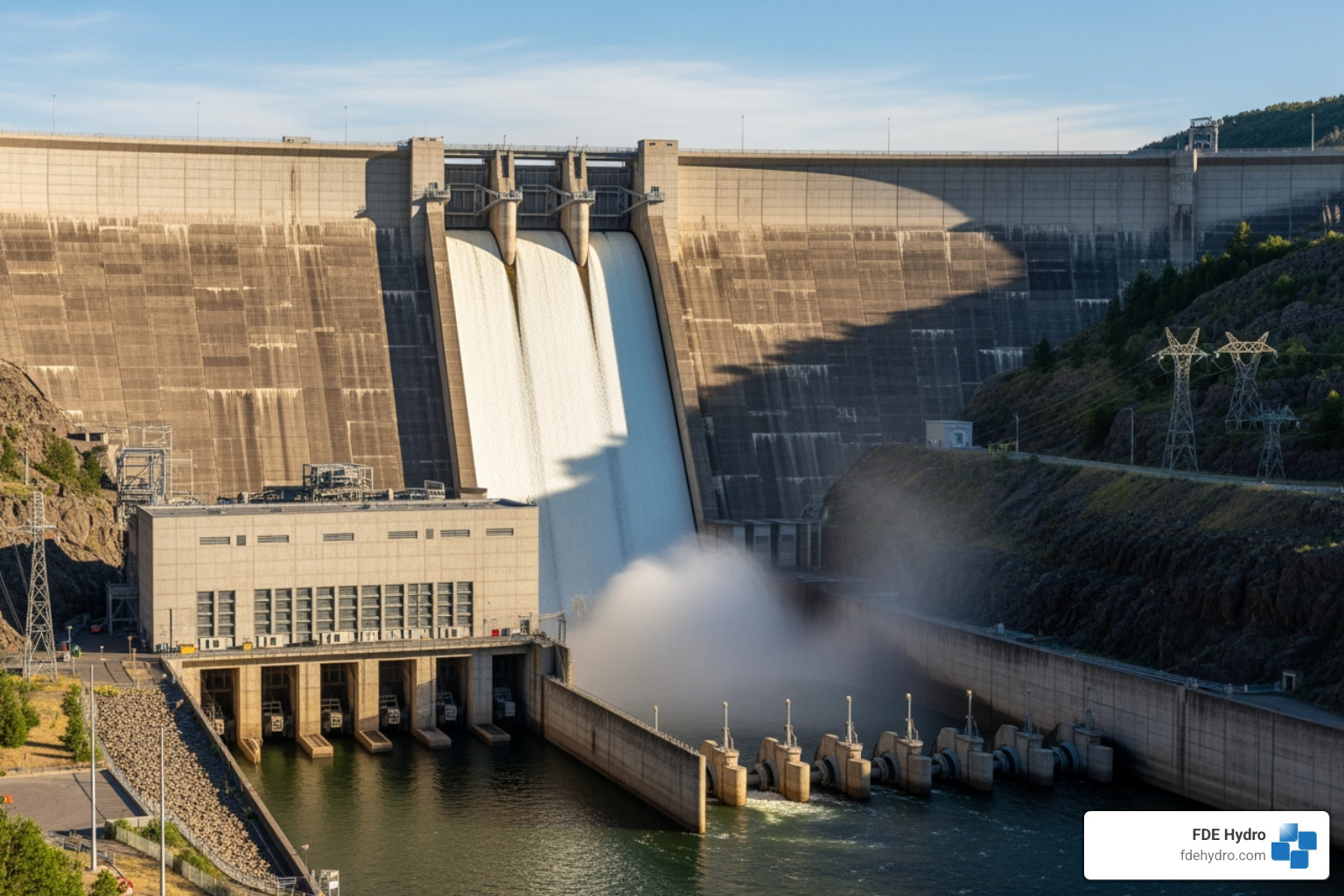
While large dams are the most familiar form, hydropower also includes run-of-river systems, tidal power, and wave power. A key advantage is pumped storage, which acts as a giant battery for the grid. Water is pumped to an upper reservoir during low demand and released to generate power when demand peaks. This makes hydropower essential for balancing intermittent renewables like solar and wind.
This is where FDE Hydro™’s work is critical. Hydropower retrofitting modernizes existing dams to improve power generation without new construction. Our patented modular precast concrete technology, the “French Dam,” dramatically cuts construction costs and timelines for upgrading hydroelectric facilities. We are actively applying this technology on projects across North America, Brazil, and Europe. Learn more about our approach at Reinvigorating Hydropower and Hydroelectric Dam Construction.
Geothermal and Bioenergy: Tapping Earth’s Resources
Two other key sources are geothermal and bioenergy. Geothermal energy taps into heat from Earth’s core, using steam from underground reservoirs to generate steady, reliable power that is not dependent on weather. Bioenergy derives power from organic matter like agricultural waste, forestry residues, and municipal waste. This biomass can be burned for heat and electricity or converted into biofuels. While bioenergy is renewable, its sustainability depends on responsible sourcing that doesn’t deplete forests or compete with food production IRENA overview of bioenergy. Together, these five sources provide a diverse toolkit for a sustainable energy future.
Accelerating the Global Transition: Challenges and Solutions
Shifting the world to sustainable energy production is a massive undertaking. It requires about $4.5 trillion in annual investment until 2030 to reach net-zero emissions by 2050. Beyond funding, we face technical and logistical problems.
Our electrical grids were not designed for the variable output of solar and wind, creating a need for better energy storage and smarter grid management. Supply chains for critical minerals like lithium and cobalt are complex. Furthermore, outdated regulations, slow permitting, and public resistance can delay vital projects. These are significant challenges, but solutions are emerging just as quickly.
The Role of Policy and International Cooperation
Effective government policy is crucial for accelerating the transition. Financial incentives like tax credits and feed-in tariffs give investors the confidence to fund renewable projects. Even more impactful is phasing out fossil fuel subsidies, which totaled a staggering $7 trillion in 2022 when including health and environmental costs. Removing these artificial advantages would level the playing field for renewables, which are already cheaper in most places.
Streamlined regulatory and permitting processes are also essential to attract private investment. International cooperation, guided by frameworks like the Paris Agreement, is driving global progress. At COP28, nations committed to tripling renewable energy capacity by 2030, a goal that is spurring policy changes in North America, Brazil, Europe, and beyond. Climate change is a shared problem, and the solutions must be shared as well.
The Future of sustainable energy production: Projections and Innovations
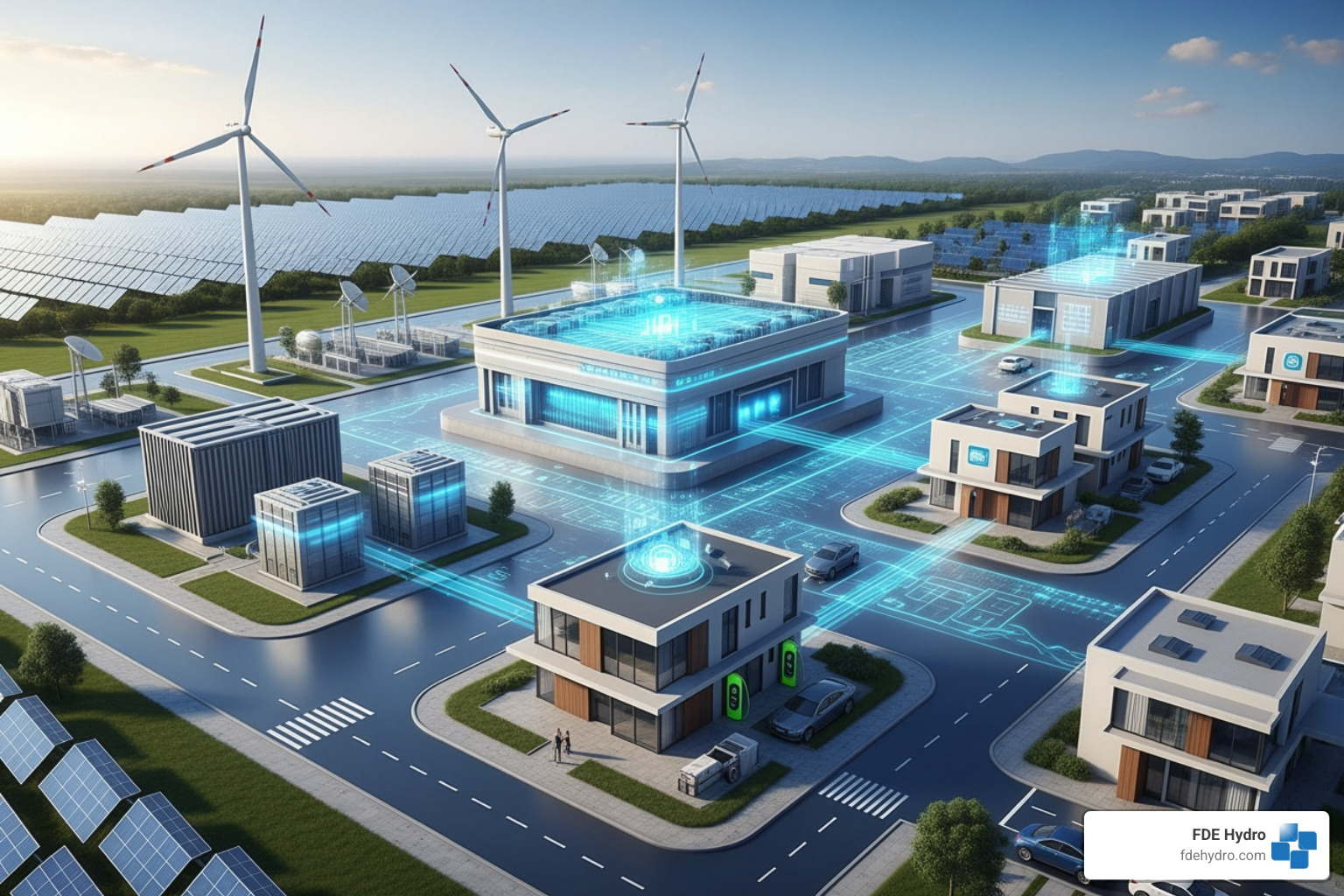
The pace of innovation is exhilarating. Projections suggest renewables could supply 65% of the world’s energy by 2030 and over 90% of its electricity by 2050. Key innovations driving this shift include:
- Advanced Energy Storage: Improved battery technology and cost-effective pumped hydro storage are solving the intermittency puzzle.
- Green Hydrogen: Created using renewable electricity, this zero-emission fuel can decarbonize heavy industry and transport.
- AI and Digitalization: Smart systems optimize grid operations and demand forecasting, potentially reducing emissions by 20% in key sectors.
- Smart Grids: These modernized networks use digital communication to balance supply and demand in real-time, seamlessly integrating diverse energy sources.
How Individuals and Communities Can Contribute
The energy transition is a collective effort. Individual and community actions have a significant impact. The most sustainable energy is the energy we don’t use, so simple efficiency measures like LED lighting and better insulation are a powerful first step.
Homeowners can install rooftop solar, while others can join community solar projects. Choosing electric vehicles, public transit, or cycling reduces transport emissions. Most importantly, advocating for change by engaging with policymakers creates the political will for large-scale investment in sustainable infrastructure. Supporting businesses committed to sustainable energy production also sends a powerful market signal.
At FDE Hydro™, we see this collective action firsthand. Our projects succeed because communities, utilities, and governments work together to modernize clean energy infrastructure, proving that the transition is happening now, and we are all part of it.
Frequently Asked Questions about Sustainable Energy
What is the main difference between sustainable and renewable energy?
Renewable energy comes from sources that naturally replenish, like sun and wind. Sustainable energy is a broader concept: it’s energy that meets current needs without compromising the future. It must be environmentally harmless, socially equitable, and economically viable. While most sustainable energy is renewable, not all renewable energy is automatically sustainable. For example, a biofuel crop might be renewable, but if it causes deforestation, it isn’t sustainable.
Which sustainable energy source is the most efficient?
In terms of reducing demand, energy efficiency itself is the most effective tool—the cleanest energy is the energy you don’t use. When it comes to generating electricity, hydropower is a leader, converting up to 90% of the water’s energy into power. This is why we at FDE Hydro™ focus on modernizing hydropower infrastructure. However, solar and wind are also highly efficient and rapidly improving. The best approach is a diverse mix of sources custom to local conditions, as each has unique strengths, like geothermal’s constant baseload power.
How can developing countries afford to transition to sustainable energy?
This transition is increasingly affordable and advantageous for developing nations. The costs of solar and wind have fallen so dramatically that they are now the cheapest source of new electricity in most of the world. This allows developing countries to leapfrog fossil fuel infrastructure and build cleaner, more resilient systems from the start. International climate finance, development aid, and private investment provide crucial support. For many, decentralized renewables like solar mini-grids are the fastest and cheapest way to achieve energy access, create local jobs, and improve energy security.
Conclusion
We are at a critical turning point. The shift to sustainable energy production is not a distant goal but an immediate necessity. The evidence is clear: clean energy is cheaper, creates more jobs, improves public health, and protects our planet.
We are in a race against time. To meet Paris Agreement goals, global emissions must fall by nearly half by 2030 and reach net-zero by 2050. This is a monumental task, but it is achievable with collective action. Governments must enact smart policies, industries must scale clean technologies, and individuals must contribute through efficiency and advocacy.
At FDE Hydro™, our role is clear. Hydropower is the reliable workhorse of the renewable world, essential for balancing the grid. Much of this infrastructure is aging, and our patented modular precast concrete technology offers a solution. By dramatically reducing the time and cost of building and retrofitting hydroelectric facilities, we help communities in North America, Brazil, and Europe harness this proven form of sustainable energy production.
After decades in infrastructure, I know that the best solutions are often the most practical. The path forward requires sustained commitment. Every project brings us closer to a future with cleaner air, affordable energy, and economic opportunity. That is the future we are building, one project at a time.
If you’re interested in learning how modern hydropower technology can help your community generate clean, reliable electricity, I invite you to explore our hydropower retrofitting services. Together, we can build the sustainable energy infrastructure the future deserves.
