

Why Next Gen Manufacturing Energy Resources Are Critical for Modern Industry
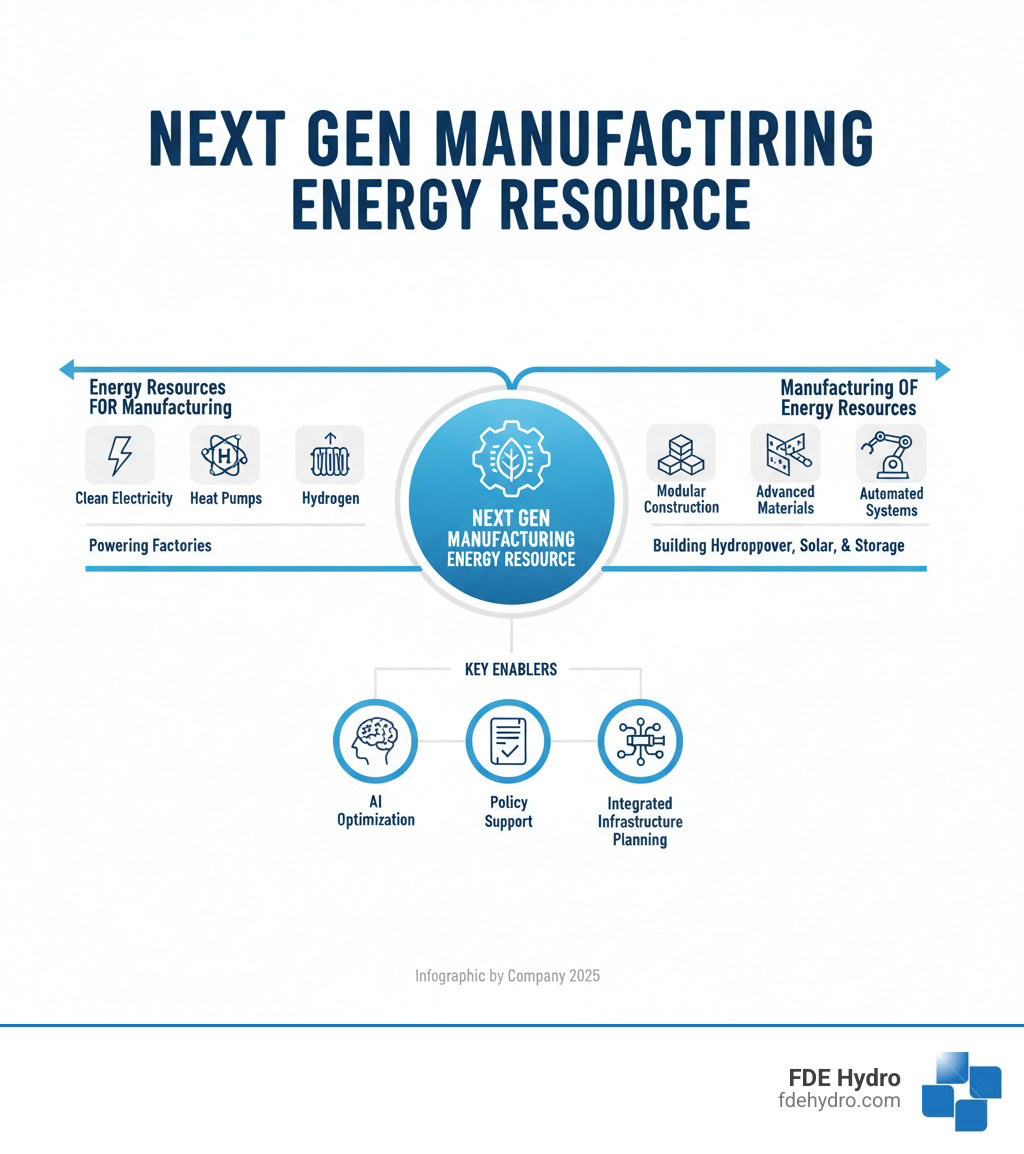
Next gen manufacturing energy resource describes two interconnected concepts: the clean energy sources fueling modern factories, and the cutting-edge manufacturing that produces our energy transition technologies. It spans from AI-optimized grids powering smart factories to the modular construction of new hydropower facilities.
Key Components of Next Gen Manufacturing Energy Resources:
- Clean Baseload Power: Nuclear (including SMRs), hydropower, and geothermal for 24/7 reliable electricity.
- Smart Grid Technologies: AI systems, digital twins, and real-time monitoring for energy optimization.
- Energy Storage Solutions: Batteries, pumped storage hydropower, and thermal storage to balance renewables.
- Advanced Manufacturing Processes: Modular construction, automation, and innovative materials to reduce cost and carbon.
- Integrated Infrastructure: Coordinated planning across electricity, hydrogen, and carbon management networks.
The urgency is clear. Projections show electricity demand surging due to industrial use, data centers, and electrification. Data center demand alone is expected to double by 2030. Meanwhile, the industrial sector accounts for 38% of greenhouse gas emissions, and manufacturing consumes 20% of all U.S. energy.
Why This Matters Now
Legacy energy infrastructure cannot meet these modern demands. Today’s manufacturing requires decentralized, adaptable, zero-emission generation. Companies face pressure to decarbonize and secure reliable, clean power for a competitive edge. This convergence means advanced manufacturing needs abundant clean electricity, while the energy sector needs advanced manufacturing to build its future—from modular hydropower to grid-scale batteries.
I’m Bill French, Sr., Founder and CEO of FDE Hydro. We’ve developed patented modular precast concrete technology that revolutionizes hydropower construction. It’s a cornerstone next gen manufacturing energy resource, delivering both the infrastructure and the clean power modern industry demands. With five decades in heavy civil construction and experience on the DOE’s Hydropower Vision Technology Task Force, I’ve seen how manufacturing innovation enables our energy transition.
The Shifting Energy Paradigm for Advanced Manufacturing
The old energy playbook—massive, centralized fossil-fuel plants—is becoming obsolete. We face a perfect storm of challenges: surging electricity demand from AI and electrification, the urgent need to decarbonize industrial operations, and geopolitical energy insecurity. Developing a comprehensive next gen manufacturing energy resource strategy is no longer optional; it’s essential for survival.
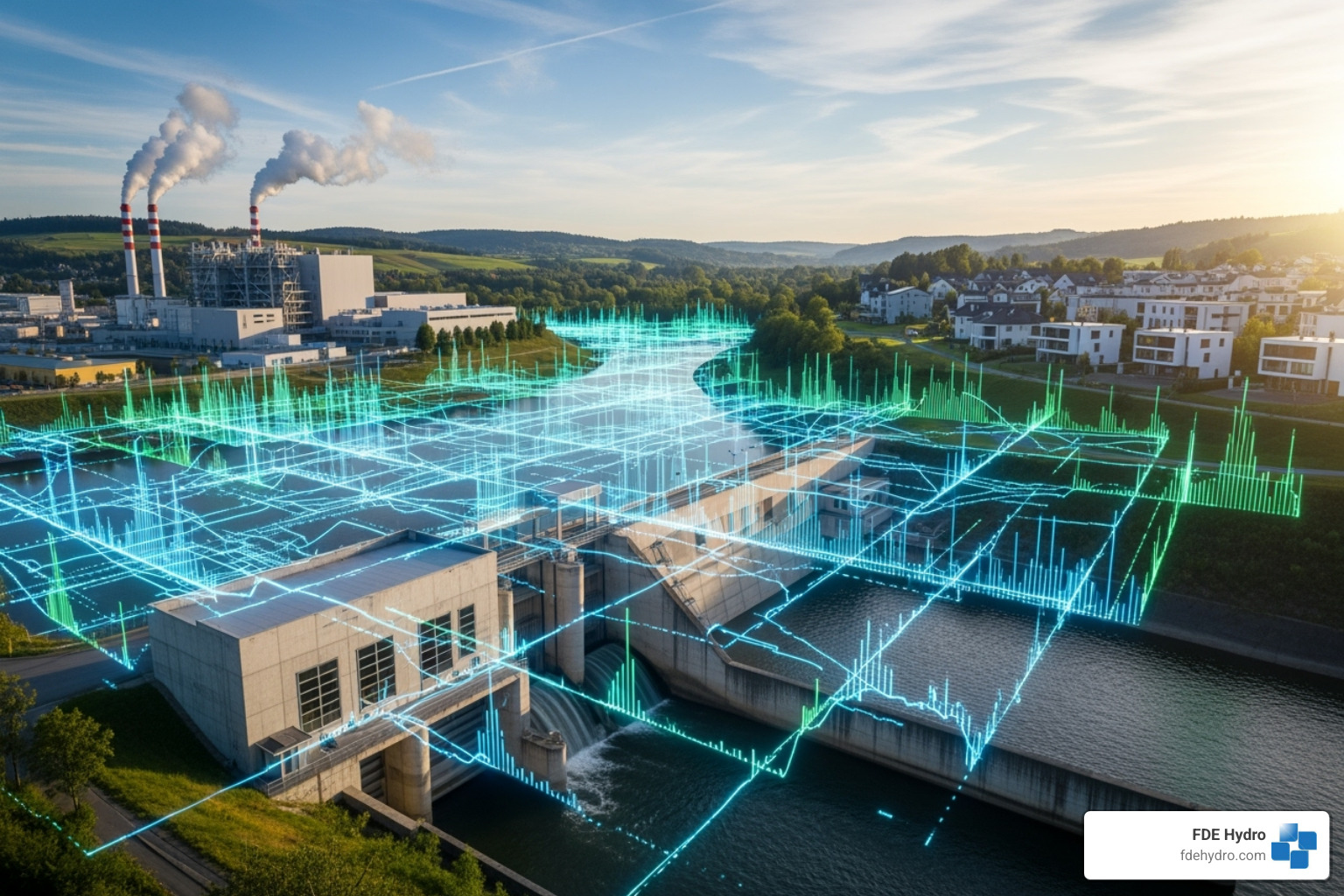
The shift is fundamental. We are moving from a one-way flow of power to a complex, distributed model with millions of energy sources like rooftop solar, wind farms, and battery systems. This introduces complexity our legacy infrastructure was never designed to handle. Without intelligent management, it’s like trying to run a digital economy on dial-up technology. For more on these concepts, we’ve put together more info about the basics of energy.
Why Today’s Grid Wasn’t Built for Tomorrow’s Industry
Our existing grid was engineered for centralized, one-directional power flow from large plants. It lacks the real-time visibility and dynamic control needed to manage thousands of distributed energy resources, from factory solar panels to electric vehicle fleets feeding power back to the grid.
This centralized model also created single points of failure, making it vulnerable to large-scale outages. Climate change exacerbates this with more frequent and severe weather events stressing aging infrastructure. Without fundamental upgrades, this system cannot support modern clean energy. We need grids that can see, think, and respond in real-time.
The Unprecedented Demand from AI and Electrification
Just as we’re trying to clean up our energy system, demand is exploding. Artificial intelligence is a primary driver. Data centers powering AI consumed roughly 500 terawatt-hours globally in 2023, with projections showing this demand could more than double by 2030. As the IEA notes, AI is set to drive surging electricity demand, reshaping energy markets.
Industrial electrification adds to this demand, as factories replace fossil-fuel processes with electric alternatives and EV manufacturing scales up. For example, Ontario expects industrial electricity use to jump 58% by 2035. This surge creates an immediate challenge: where will all this clean, reliable, 24/7 power come from?
You can’t run AI models or automated factories on intermittent power. A robust next gen manufacturing energy resource strategy, combining reliable baseload power like hydropower with smart technologies, is critical for economic competitiveness. The countries and companies that solve this energy equation will lead the next industrial revolution.
The Core Components of a Next Gen Manufacturing Energy Resource Strategy
No single energy source can do it all. A resilient energy future for manufacturing requires a diverse portfolio: a balanced mix of reliable baseload power, flexible renewables, and smart storage solutions. This ecosystem approach ensures grid stability and energy security, allowing factories to keep running even as conditions change.
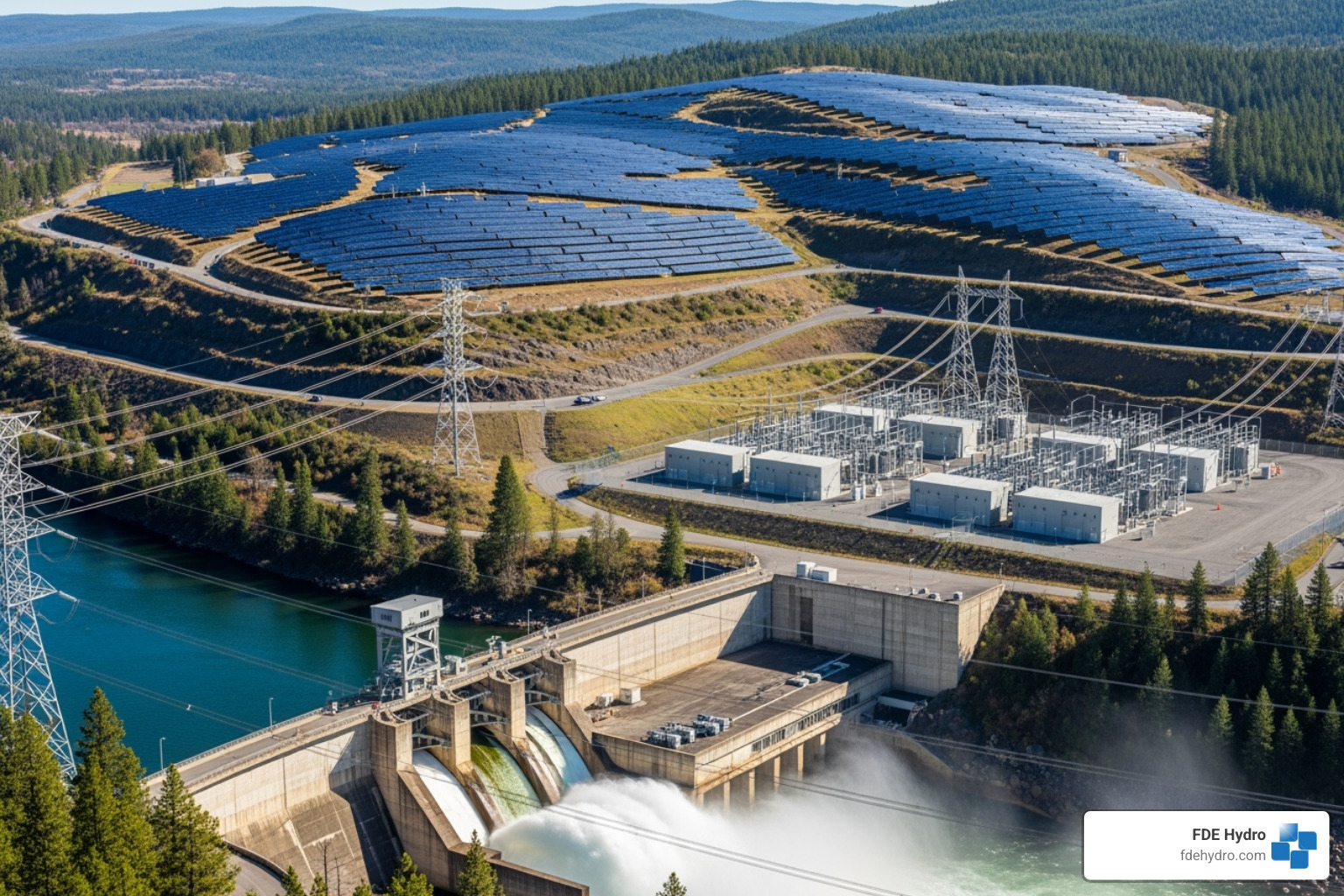
A comprehensive next gen manufacturing energy resource strategy must balance always-on baseload generation with intermittent renewables like solar and wind, all integrated with energy storage and smart grid technologies.
| Energy Source | Power Type | Land Footprint | Grid Services |
|---|---|---|---|
| Hydropower | Baseload/Flexible | Moderate | Frequency Regulation, Black Start, Load Following, Storage |
| Solar | Intermittent | Large | Peak Shaving (with storage), Voltage Support (with inverters) |
| Battery Storage | Flexible/Storage | Small | Arbitrage, Frequency Regulation, Capacity Firming |
Hydropower’s Guardian Role as a Next Gen Manufacturing Energy Resource
Hydropower is a cornerstone next gen manufacturing energy resource that modern grids cannot function without. It provides reliable, 24/7 baseload power, but unlike other sources, it is also incredibly flexible. Production can be ramped up or down in minutes to balance the grid when solar or wind power fluctuates.
Hydropower also delivers critical grid services like frequency regulation, black start capabilities (restarting a grid after a shutdown), and load following (tracking daily demand). At FDE Hydro, our patented modular precast concrete technology revolutionizes how hydropower facilities are built and retrofitted. Our approach dramatically cuts time and costs, making it feasible to upgrade existing dams and develop new low-impact sites. We’re building the infrastructure backbone that makes a renewable-heavy grid viable. Learn more about 4 Reasons Why Hydropower is the Guardian of the Grid.
The Role of Clean Fuels and Energy Storage as a Next Gen Manufacturing Energy Resource
If hydropower is the anchor, energy storage and clean fuels are the agile responders. Battery storage systems capture excess renewable energy and release it when needed, providing services like arbitrage, frequency regulation, and capacity firming to smooth out intermittency.
Pumped storage hydropower offers energy storage on a massive scale. It uses cheap, abundant electricity to pump water to a higher reservoir, then releases it through turbines to generate power during peak demand. It’s a giant, natural battery capable of storing huge amounts of energy for days. You can Learn about Pumped Storage Hydropower and its essential role in grid stability.
Green hydrogen, produced with renewable electricity, is another key component. It can power heavy industry, fuel transportation, and be stored for later conversion back to electricity. Together, these technologies provide the flexibility needed for a renewable-heavy grid, forming a comprehensive next gen manufacturing energy resource strategy.
Smart Systems: Leveraging AI and Digital Twins for Energy Efficiency
For an optimized next gen manufacturing energy resource strategy, artificial intelligence and digital twins are the brains of the operation. These Industry 4.0 technologies turn the massive amounts of data generated by factory floors into a competitive advantage.
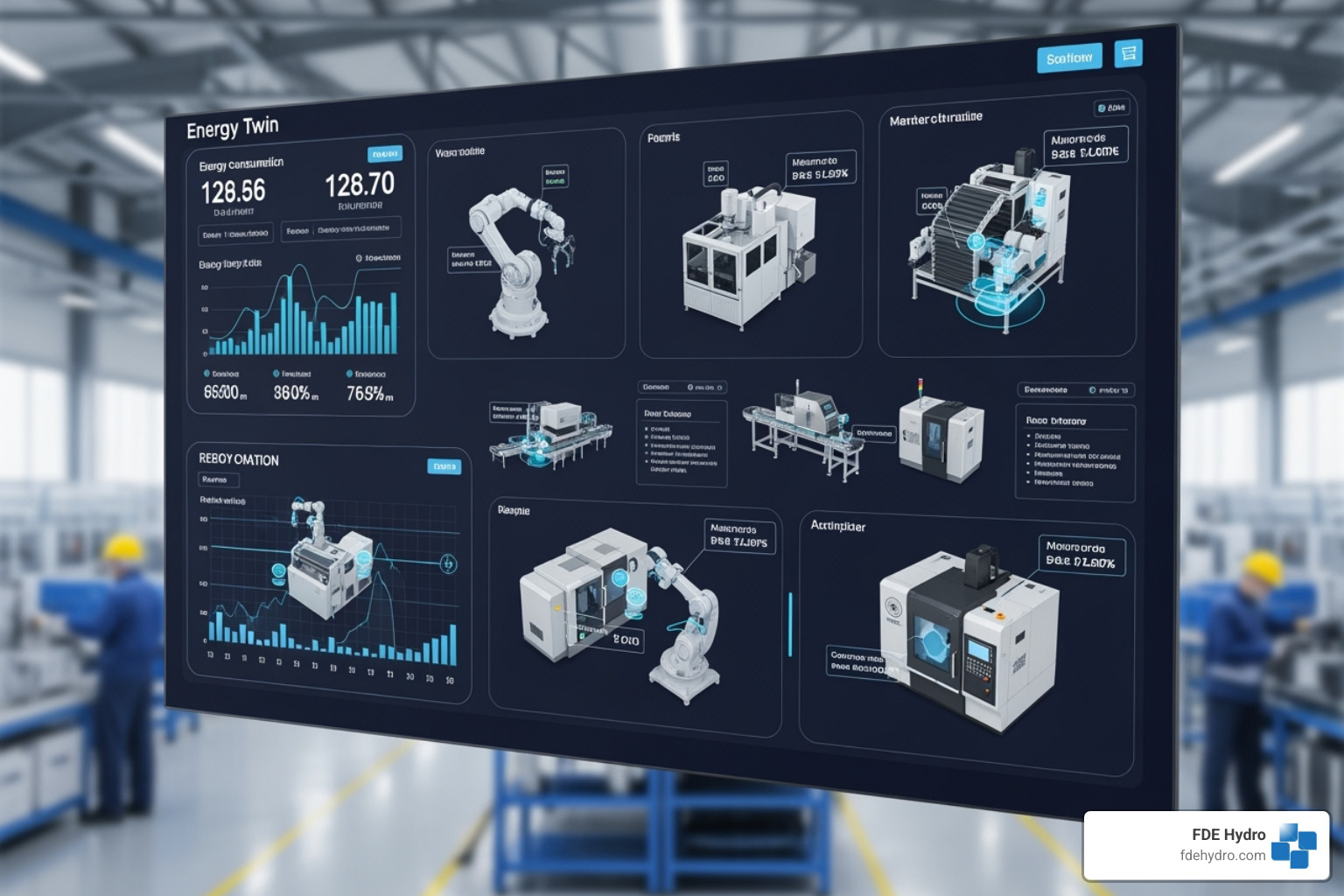
AI and Machine Learning (ML) process information to spot patterns, predict problems, and make real-time adjustments. They can monitor consumption, forecast needs, and optimize production schedules for maximum efficiency. For more detail, see this research on Leveraging AI for energy-efficient manufacturing systems. When combined with digital twins—virtual replicas of physical systems—you can test optimization ideas virtually, eliminating costly mistakes and energy waste before they happen.
AI-Powered Grid and Facility Management
AI is making the electricity grid smarter. Smart grids use AI to analyze data from millions of points, forecasting energy behavior and balancing the system automatically. This intelligence extends to industrial facilities through microgrids—localized energy networks that use AI to coordinate on-site energy sources (like solar, batteries, and hydropower) and optimize for cost and reliability.
Utilities also use platforms like ADMS and DERMS to manage distributed energy resources, ensuring grid stability. This enables demand-side flexibility, where factories can shift energy-intensive processes to times when clean power is abundant and cheaper—a win for both manufacturers and the grid.
The Energy Efficiency-Digital Twin (EE-DT) Framework
An Energy Efficiency-Digital Twin (EE-DT) is a complete virtual copy of your factory, updated in real-time by plant sensors. With AI, it becomes a powerful tool for managing your next gen manufacturing energy resource strategy.
The EE-DT allows you to run “what-if” scenarios without disrupting production. You can test new schedules to cut energy costs, simulate machine adjustments to save electricity, and use AI-powered predictive maintenance to identify potential failures before they waste energy and cause downtime. This virtual simulation lets you optimize every parameter for maximum efficiency and reduce waste before it occurs. This proactive approach, powered by AI and digital twins, is a fundamental shift in energy management for manufacturing.
Policy, Investment, and Building the Future
Changing our energy landscape requires collaboration between governments, industries, and communities. National roadmaps like the U.S. “National Blueprint for a Clean & Competitive Industrial Sector” are crucial because they promote integrated energy planning across electricity, hydrogen, and carbon management systems. A robust next gen manufacturing energy resource strategy depends on this holistic approach.
Public-private partnerships are key to tackling large-scale projects by pooling expertise and sharing risks. “Buy Clean” initiatives also drive change by creating government demand for low-carbon products, incentivizing sustainable manufacturing. Finally, this transition must include workforce development and community engagement, especially when Replacing aging infrastructure with next-gen solutions.
Government’s Role in De-Risking Innovation
Building the future is expensive and risky, especially for cutting-edge clean energy technologies. Government plays a critical role in reducing this risk for private investors. Strategic investments, such as those in the Bipartisan Infrastructure Law and the Inflation Reduction Act, provide funding and tax credits that make bold innovation financially viable.
Beyond funding, governments can remove bureaucratic bottlenecks by streamlining complex permitting processes. They can also create guaranteed demand through “Buy Clean” public procurement programs. These coordinated efforts make next gen manufacturing energy resource development attractive for private industry, accelerating the deployment of new technologies.
The Importance of Integrated Infrastructure
A new power plant is useless without transmission lines. Clean hydrogen is unhelpful without pipelines. This is why integrated infrastructure is fundamental to any next gen manufacturing energy resource strategy.
The electric grid needs expansion and modernization to connect new renewable sources to industrial centers and manage two-way power flow. The rise of clean fuels like hydrogen and the use of carbon capture require new pipeline and storage networks. The U.S. National Blueprint’s emphasis on “geographic industrial clusters” where generation, manufacturing, and carbon management are co-located is a smart approach to maximize efficiency.
At FDE Hydro, our work developing Modular Powerhouses for modern infrastructure directly supports this vision. Our modular technology builds hydropower facilities faster and more affordably, ensuring the physical infrastructure for reliable power generation keeps pace. A smart grid needs dependable power, and hydropower is an essential piece of the puzzle.
Frequently Asked Questions about Next Gen Manufacturing Energy Resources
What is the biggest challenge in transitioning to next-gen energy for manufacturing?
There are three interconnected challenges. First is modernizing the electrical grid to handle distributed, intermittent resources like solar and wind. Second is the high upfront capital cost of new clean energy technologies, which makes government incentives and public-private partnerships crucial. Third is building out the enabling infrastructure, such as new transmission lines, hydrogen pipelines, and carbon storage networks. Solving these requires an integrated approach.
How does AI improve energy efficiency in manufacturing?
AI acts as an efficiency detective for your factory. It analyzes massive datasets to spot energy-saving opportunities. Key functions include predicting energy consumption to adjust operations, optimizing production schedules to run intensive processes during off-peak hours, and controlling equipment in real-time for peak efficiency. AI also enables predictive maintenance, identifying failing equipment before it wastes energy and causes downtime. This makes AI an indispensable tool for any next gen manufacturing energy resource strategy.
What role does hydropower play in the next-gen energy mix?
Hydropower is the “guardian of the grid” because it provides the essential stability that makes a renewables-heavy system work. While solar and wind are intermittent, hydropower delivers reliable, 24/7 renewable energy. It is also dispatchable, meaning it can be ramped up or down instantly to balance fluctuations from other sources and maintain grid stability.
Pumped storage hydropower acts as a massive battery for the grid. It uses excess renewable energy to pump water to a higher reservoir, then releases it to generate power when demand is high. As one of the largest-scale and most proven storage technologies, it is critical for a resilient grid that next gen manufacturing energy resources demand. To learn more, you can Learn about Pumped Storage Hydropower.
Conclusion
The future of manufacturing is sustainable and intelligent. The next gen manufacturing energy resource strategies we’ve explored are the foundation for competitive, resilient industries.
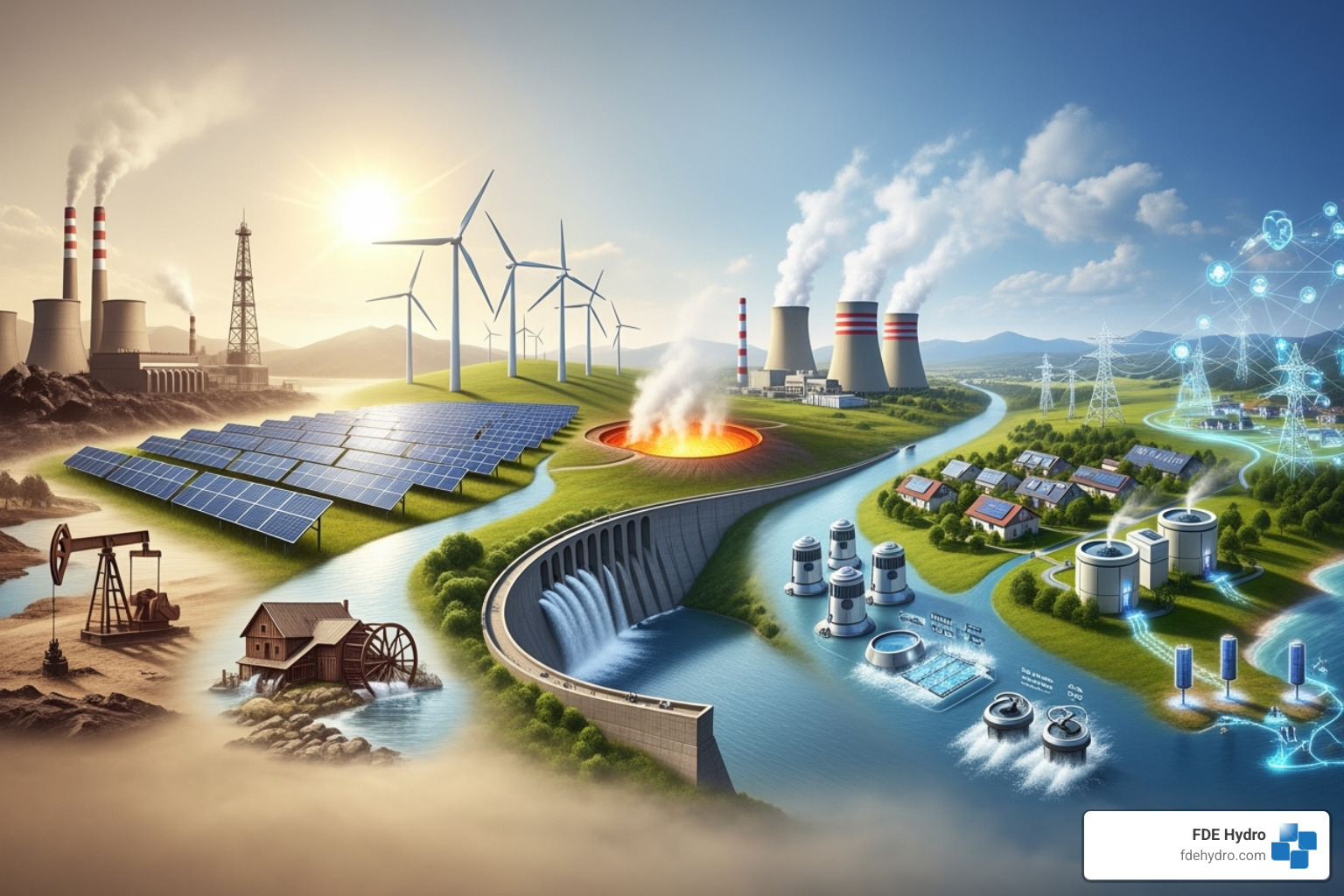
Success requires an integrated approach where technology, policy, and investment align. Smart technologies like AI need reliable baseload power, and government incentives need deployable solutions. None of these pieces work in isolation.
At FDE Hydro, we focus on a crucial piece of this puzzle: making hydropower more accessible. Our patented modular precast concrete technology builds dams faster and more affordably. We ensure that this reliable, flexible, 24/7 renewable energy source—the guardian of the grid—can be built where it’s needed. When intermittent renewables are unavailable, hydropower keeps factories running and data centers humming.
The clean energy transition is our generation’s defining infrastructure challenge. Success depends on innovation in both what we build and how we build it. Advanced manufacturing enables our energy future, and advanced energy powers our manufacturing capabilities. We’re not just building infrastructure; we’re building opportunity for energy independence, good jobs, and a competitive, clean economy.
If you want to see how innovative construction methods are advancing renewable energy, we invite you to Explore the future of Hydropower with us. Let’s build this clean, interconnected future together.
