

Why Reducing Your Environmental Footprint Matters Now More Than Ever

Living with a low environmental impact isn’t just a feel-good measure—it’s about creating measurable change. The average person produces 6.28 tonnes of greenhouse gas emissions annually, though this varies by location and lifestyle. The good news is that research shows adopting key sustainable behaviors could reduce individual emissions enough to completely offset an average person’s footprint.
Here are the fastest ways to achieve low environmental impact:
- Transportation: Live car-free or switch to electric vehicles.
- Diet: Adopt a plant-forward diet.
- Home Energy: Switch to a renewable energy supplier and improve insulation.
- Consumption: Buy less, choose quality over quantity, and support sustainable companies.
- Advocacy: Vote for environmental policies and push for systemic change.
The challenge is both personal and structural. Without supportive systems like public transit and renewable energy access, individual efforts achieve only a fraction of their potential. This highlights the critical intersection of personal action and systemic change.
As Bill French Sr., founder and CEO of FDE Hydro™, I’ve spent decades developing modular hydropower solutions that reduce the environmental impact of clean energy construction. My work with the Department of Energy’s Water Power Technology Office reinforces that achieving low environmental impact requires both individual commitment and innovative infrastructure solutions that make sustainable choices accessible to everyone.
Low environmental impact terms to learn:
The 4 Most Powerful Ways to Reduce Your Footprint
When we talk about achieving a low environmental impact, it’s easy to feel overwhelmed. But some actions pack a much bigger punch than others. Let’s explore the most significant ways we, as individuals, can reduce our environmental footprint, backed by compelling data.
Adopting a Diet with a Low Environmental Impact
Our dietary choices profoundly affect the planet. Eating less meat and more plant-based foods is one of the most powerful changes we can make, as plant-based food production generally has fewer greenhouse gas emissions and requires less energy, land, and water. Shifting to a vegetarian diet can reduce a carbon footprint by up to 500 kilograms of CO2e per year, while a vegan diet can save up to 900 kilograms annually. Beyond what we eat, how we manage food is crucial. Shopping for local, seasonal produce reduces transportation emissions from the average 1,500-mile journey food travels.
Preventing food waste is also key, as the UK’s 9.5 million tonnes of food waste in 2018 generated 25 million tonnes of greenhouse gases. Smart meal planning and proper storage can drastically cut these emissions. You can learn more about how to adopt an Earth-friendly diet and find ways to beat food waste. Even large institutions are making changes, like the Los Angeles Unified School District’s “meatless Monday” initiative, showing how systemic shifts can support individual choices.

Rethinking Your Transportation
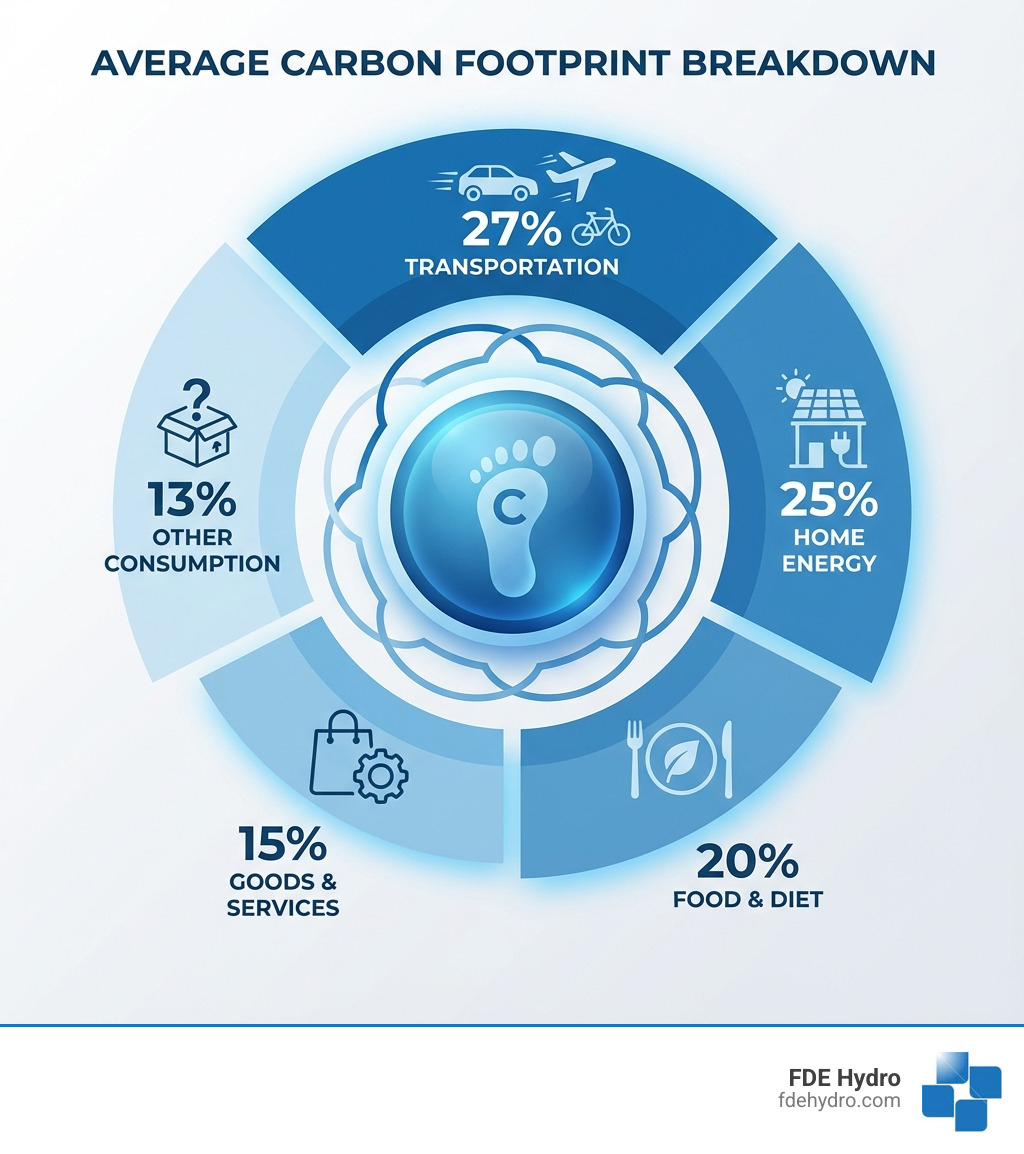
Our transportation choices are another critical factor. Fossil-fueled vehicles are major contributors to greenhouse gases and air pollution, with transport accounting for 27% of the UK’s total emissions in 2019. The most impactful change is reducing reliance on personal vehicles. Living car-free is highly effective, and opting for public transport, cycling, or walking drastically cuts emissions.
Cities like Bogotà, Colombia, have shown success by investing in cycling infrastructure, raising the share of bicycle trips to 9% by 2017. If driving is necessary, electric vehicles (EVs) are a cleaner alternative. For existing cars, simple maintenance like properly inflating tires helps; a tire that is 20% underinflated can increase a vehicle’s fuel consumption by 10%. Air travel also has a substantial environmental cost. Replacing flights with videoconferencing or train travel can significantly reduce your impact. For more on transport emissions, see this data regarding UK’s total emissions.
Creating an Energy-Efficient Home
Reducing energy consumption at home is a cornerstone of low environmental impact living. A key step is improving insulation, as up to 25% of a home’s heating energy is lost through the roof and 40% through gaps in windows and doors. Sealing cracks and adding insulation can dramatically reduce energy use. Smart thermostats can also save an average of 16.5% on energy by optimizing heating and cooling. Upgrading to ENERGY STAR® appliances and switching to LED or CFL bulbs are also effective. Don’t forget to unplug appliances to avoid ‘phantom load,’ which can cost households £50-£86 a year.
Conserving water with Low flow showerheads also saves the energy used to pump and heat it. A home energy audit can identify more opportunities. Policies like the European Green Deal’s Social Climate Fund support these efforts by providing financial aid for investments in home energy efficiency and clean mobility. Our commitment to Sustainable Power Generation is key to powering these efficient homes.
Supporting Clean Energy Solutions
Actively supporting and transitioning to clean energy is another powerful action. One direct way is to choose renewable energy for your home. Many power companies in the United States and Europe offer renewable energy certificates or green energy plans, ensuring your electricity comes from sources like wind, solar, or hydropower. Our financial choices also hold immense power.
In the UK, pension funds hold an estimated £128 billion in fossil fuels. A mass switch from these funds could reduce 19 tonnes of GHG emissions per year per person, showing the ripple effect of our investments. This principle applies across North America and Europe. By choosing banks and pension providers that prioritize sustainability, we can exert significant pressure for change. We can also support Companies committed to sustainability and businesses that use green energy. This collective consumer power sends a strong market signal for cleaner operations.
Conscious Consumerism and Waste Reduction
Our daily purchasing habits and how we manage waste are inextricably linked to our environmental footprint. By making thoughtful choices about what we buy and how we dispose of it, we can significantly contribute to a low environmental impact lifestyle.
The Role of Conscious Consumerism in Achieving a Low Environmental Impact
Conscious consumerism is about making informed decisions that consider the social, environmental, and economic impacts of the products and services we buy. This is particularly vital in industries like fashion.
Fast fashion, characterized by inexpensive, trendy clothing items that are quickly brought to market, comes at a steep environmental cost. It uses more water and energy for manufacturing and shipping, and products typically don’t last long, fueling a culture of over-consumption. The environmental impact is staggering: synthetic materials shed microplastics in washing machines, contributing 500,000 tonnes yearly to microplastic pollution in our oceans, where over 14 million tonnes already reside. Furthermore, the UK alone produces around 1 million tonnes of textile waste per year, much of which ends up in landfills, releasing greenhouse gases as it decomposes.
To counteract this, we can accept product longevity and circularity. Instead of buying cheap, disposable items, we can invest in quality products that are designed to last. When we do need something new, we should consider buying secondhand. The benefits of secondhand shopping are numerous, from reducing demand for new production to extending the life cycle of garments and other goods. Donating old clothes gives them a second life and maximizes the energy used in their creation. This mindset shifts us from a linear “take-make-dispose” economy to a more sustainable, circular one.
Mastering the 3 R’s: Reduce, Reuse, Recycle
The familiar mantra of “Reduce, Reuse, Recycle” remains a cornerstone of waste reduction and achieving a low environmental impact.
Reduce is arguably the most important “R.” The less we consume, the less waste we generate, and the fewer resources are extracted and processed. This involves mindful purchasing—buying only what we need, choosing products with minimal packaging, and avoiding single-use items.
Reuse means finding new purposes for items or using them repeatedly. This could be as simple as bringing reusable shopping bags, water bottles, and coffee cups. It also extends to repairing items instead of replacing them, or creatively repurposing old goods. For example, in office settings, offering employees recyclable food containers for leftovers can greatly reduce food waste, which is a significant issue globally.
Recycle is the last line of defense against landfill waste. Handling waste is a carbon-intensive process, and recycling helps mitigate this by giving materials like plastics a second life. While recycling programs vary by location, we can all make an effort to recycle common items like paper, plastic, glass, and metal. Composting organic waste, especially food scraps, is another powerful strategy. Globally, food waste is a massive contributor to greenhouse gas emissions, and by composting, we divert it from landfills and create nutrient-rich soil.
By mastering these three principles, we actively reduce the environmental implications of waste generation and contribute to a more sustainable consumption model.
Beyond Personal Choice: Driving Systemic Change
While individual actions are vital for a low environmental impact lifestyle, we must also recognize that personal choices alone are not enough to address the climate crisis. Systemic change, driven by governmental policies and corporate actions, plays an equally, if not more, crucial role.
The Power of Collective Action and Advocacy
The narrative that individuals alone can save the planet often distracts from larger, structural issues. The concept of the personal carbon footprint was notably popularized by an oil giant, shifting focus away from corporate responsibility. Research shows that while behavioral shifts could theoretically cut global emissions by up to 70% by 2050, individual efforts without supportive systems achieve only a fraction of this potential. The rest depends on governments and businesses making sustainable choices accessible.
This is where our collective power comes in:
- Voting for Environmental Policies: Support candidates with strong environmental platforms.
- Supporting Advocacy Groups: Donating to organizations fighting the extinction crisis amplifies our voices.
- Pushing for Corporate Responsibility: Collective consumer pressure can shift corporate practices, as seen in viral campaigns that pushed major corporations toward sustainable sourcing.
- Demanding Enabling Infrastructure: Governments can offer financial incentives for renewable energy adoption and energy-efficient renovations, as seen in the Netherlands’ successful transition to a leading renewable energy user. Systemic pressure creates the conditions for us to make sustainable choices.
Understanding Environmental Justice
As we strive for a low environmental impact future, it’s crucial to understand the connections between environmental inequalities and how environmental hazards disproportionately impact vulnerable communities. Not everyone experiences environmental burdens equally.
Communities with lower levels of income and education, as well as the elderly, children, and other vulnerable groups, are often more impacted by air, water, and noise pollution, and the adverse effects of climate change. For instance, within wealthier regions, poorer communities tend to be exposed to higher local levels of nitrogen dioxide (NO2) because they are often located closer to sources of pollution like busy roadways or industrial areas.
Furthermore, cheaper housing is frequently more difficult to keep cool in summer and warm in winter, exacerbating health impacts during extreme weather. Marginalized communities often have less access to green spaces and face higher financial barriers in obtaining flood insurance or implementing flood-proofing strategies.
The concept of a “just transition” aims to address these inequalities. The European Green Deal explicitly strives to transform the EU into a modern, resource-efficient, and competitive economy with “no person and no place left behind.” Tools like the Just Transition Mechanism and the new Social Climate Fund in Europe are designed to provide financial support to help vulnerable citizens and micro-enterprises with investments in energy efficiency and clean mobility, ensuring that the transition to a climate-neutral economy is equitable.
Cities themselves play a crucial role in alleviating environmental and socio-economic inequalities through urban sustainability efforts and Sustainable Infrastructure Development. By recognizing and actively working to mitigate these disparities, we can ensure that a low environmental impact future is also a just future for everyone. We can also Explore European Climate and Health Observatory website for more resources.
Innovations for a Low Environmental Impact Future
Looking ahead, scientific and engineering innovations are critical to building a truly sustainable world. These advancements provide solutions that go beyond individual choices, changing industries and infrastructure to fundamentally reduce our collective environmental footprint.
The Promise of Green Chemistry
Green chemistry is a fascinating and relatively new field that offers a proactive approach to achieving a low environmental impact at the molecular level. Instead of cleaning up pollution after it occurs, green chemistry focuses on designing chemical products and processes that reduce or eliminate the use or generation of hazardous substances from the outset.
The core philosophy of green chemistry is encapsulated in its Twelve Principles, which guide chemists and engineers in developing more sustainable solutions. These principles include designing chemical syntheses to prevent waste, using less hazardous chemical syntheses, designing safer chemicals that are effective but have little to no toxicity, and using renewable feedstocks instead of depletable ones. It also emphasizes increasing energy efficiency in chemical processes, for example, by running reactions at room temperature and pressure whenever possible.
The Basics of Green Chemistry | US EPA highlights that green chemistry is distinct from remediation; it’s about prevention at the source. This approach is aligned with the Pollution Prevention Act of 1990 in the United States, which prioritizes preventing or reducing pollution at its source.
By applying these principles, we can develop everything from safer pharmaceuticals to more eco-friendly plastics, fundamentally altering the environmental profile of countless products and processes. You can learn more about these principles in depth through resources like Green Chemistry: Principles and Practice and TRI Green Chemistry and Green Engineering Reporting.
Building a Sustainable World
Achieving a low environmental impact on a global scale requires robust Clean Energy Infrastructure and a commitment to Sustainable Energy Production. This is where large-scale projects and innovative technologies come into play, fundamentally reshaping how we power our societies.
Renewable energy projects are at the forefront of this change. Solar, wind, geothermal, and hydropower offer clean alternatives to fossil fuels. Hydropower, in particular, plays a critical role. As FDE Hydro™, we are dedicated to developing innovative, patented modular precast concrete technology for building and retrofitting hydroelectric dams and water control systems.
Our “French Dam” technology significantly reduces construction costs and time in North America, Brazil, and Europe, making clean hydropower more accessible and efficient. This approach addresses the Hydropower Environmental Impact while maximizing its benefits.
Beyond individual power plants, the concept of smart grids is revolutionizing energy distribution. These advanced grids use digital technology to monitor and manage the transport of electricity, optimizing energy use and integrating diverse renewable sources more effectively. This allows for greater efficiency and resilience in our energy systems. For a deeper dive into these technologies, our AI Energy Resource Complete Guide provides comprehensive insights.
The broader shift towards a circular economy—where resources are kept in use for as long as possible, extracting the maximum value from them whilst in use, then recovering and regenerating products and materials at the end of each service life—is also essential. This approach minimizes waste and resource depletion, creating a truly sustainable industrial system. Investing in Sustainable Water Infrastructure and exploring Renewable Energy Projects Complete Guide are crucial steps towards this future. Understanding What Renewable Energy Resource Is The Most Efficient? helps guide these large-scale investments.
Frequently Asked Questions about Lowering Your Environmental Impact
We often have questions about the real impact of our actions. Let’s tackle some common ones.
What is the single most effective way to reduce my environmental impact?
Several high-impact choices consistently rise to the top:
- Living Car-Free or Significantly Reducing Driving: This is often cited as one of the most impactful personal changes, as it is 78 times more impactful than composting.
- Adopting a Plant-Forward Diet: Reducing meat and dairy consumption has a massive impact. A vegan diet can save nearly 1 ton of CO2 annually.
- Avoiding Air Travel: For frequent flyers, choosing alternatives like trains or videoconferencing drastically cuts emissions.
- Improving Home Energy Efficiency and Switching to Renewable Energy: Switching to a renewable energy supplier (which can save an average household one tonne of carbon per year) and improving insulation are highly effective.
These four areas are among the most significant changes we can make for a low environmental impact.
Do small, everyday actions like recycling really make a difference?
Yes, small actions make a difference, though perhaps not always in the way we expect. While we may overestimate the impact of recycling compared to going car-free, these habits are still important. They build sustainable thinking, send market signals for eco-friendly products, foster awareness, and demonstrate demand for the systemic changes that governments and industries can provide. So, keep recycling, reducing, and reusing. Every action contributes to the larger movement towards a low environmental impact world.
How can I live more sustainably on a tight budget?
Living sustainably doesn’t have to be expensive; in fact, many eco-friendly practices save money.
- Reduce Consumption: The simplest way to be sustainable is to buy less. Before buying, ask if you truly need it.
- Prevent Food Waste: Plan meals and use leftovers to save money and reduce waste.
- Walk, Bike, or Use Public Transport: Ditching the car saves on gas, insurance, and maintenance. Walking and cycling are free.
- DIY and Repair: Fix items instead of replacing them. Look for local “libraries of things” to borrow tools.
- Buy Secondhand: Find clothing, furniture, and electronics at a fraction of the cost in thrift stores or online.
- Conserve Energy at Home: Turn off lights, unplug unused appliances, and wash clothes in cold water to cut utility bills.
- Grow Your Own: Even a small herb garden can save money on groceries and reduce food miles.
Conclusion
Achieving a low environmental impact is a multifaceted journey that intertwines our individual choices with broader systemic changes. We’ve explored how impactful shifts in our diet, transportation, home energy use, and consumer habits can significantly reduce our personal carbon footprint. From embracing plant-based meals and ditching fast fashion to insulating our homes and advocating for clean energy, every action counts.
However, we also recognize that our individual efforts are amplified when supported by robust governmental policies and responsible corporate actions. The fight for environmental justice, the innovations of green chemistry, and the development of sustainable infrastructure are all critical components of this collective endeavor.
As we continue to innovate in sectors like renewable energy, FDE Hydro™ remains committed to enabling a sustainable future. Our work in modular hydropower technology in North America, Brazil, and Europe exemplifies how innovative solutions can dramatically reduce the environmental footprint of essential infrastructure. By combining personal commitment with a push for systemic solutions, we can build a world where a low environmental impact is not just an aspiration, but a lived reality for all.
We encourage you to take these insights and apply them to your life, your community, and your advocacy. Together, we can create a more sustainable and equitable future. Learn more about sustainable dam technology and our commitment to clean energy.
