

The Power of Flowing Water
Hydropower Electricity is energy generated from moving water—a renewable resource that has powered civilization for centuries. Today, it supplies 15% of the world’s electricity (almost 4,210 TWh in 2023), making it the largest single source of renewable power.
How It Works:
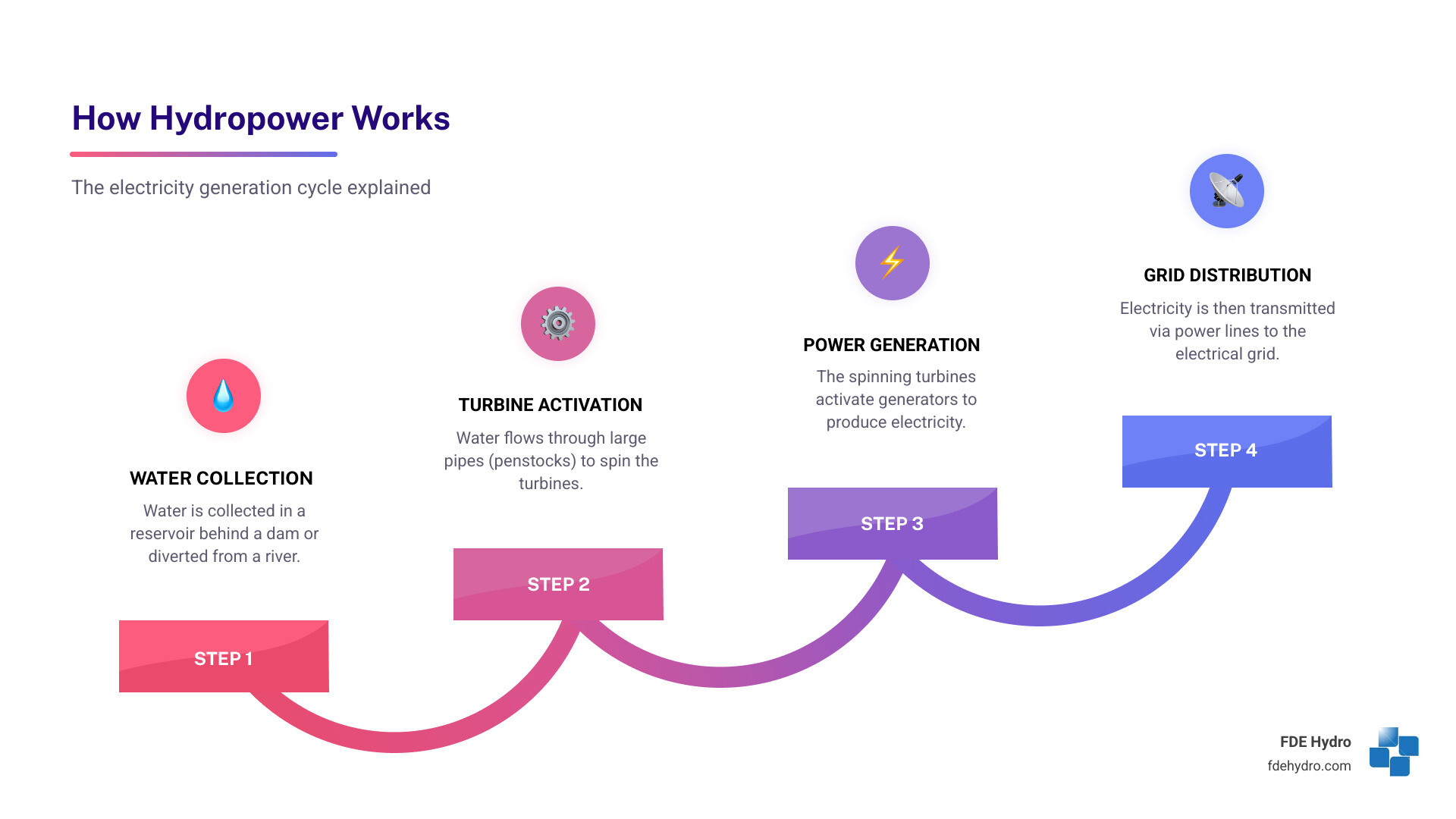
Hydropower facilities convert the energy of flowing or falling water into electricity. Typically, water stored in a reservoir behind a dam flows through a large pipe (penstock), spinning turbines connected to generators. This electricity is then transmitted to the grid.
Key Facts:
- Global installed capacity: ~1,400 GW (2021)
- Top producers: China, Brazil, Canada, USA, and Russia
- Extremely long lifespan, with plants often operating for 50-100 years
- One of the lowest lifecycle greenhouse gas emissions for electricity generation
Despite its long history, from ancient water wheels to modern megadams, hydropower’s full potential remains untapped. Meeting climate goals requires significant new capacity, but conventional construction is often expensive, slow, and fraught with risk.
I’m Bill French Sr., founder and CEO of FDE Hydro™. After five decades in heavy civil construction, I’ve seen these challenges firsthand. That’s why we’re revolutionizing how Hydropower Electricity facilities are built with modular precast construction methods that cut costs, speed up timelines, and reduce environmental impact, open uping hydropower’s vast potential.
Hydropower Electricity further reading:
How Hydropower Electricity is Generated: From River to Grid
At its core, Hydropower Electricity production converts the potential energy of water stored at a height into kinetic energy as it flows, which in turn generates electricity. This process intercepts the Earth’s natural water cycle, making it a truly renewable resource. As water moves from a higher to a lower elevation, it drives turbines connected to generators, producing clean power for the grid.
Understanding the mechanics is key to appreciating its role in our energy future. You can dig deeper with our guide on How Hydropower Works and explore components in our Hydroelectric Dam Components Ultimate Guide.
Conventional Impoundment Dams
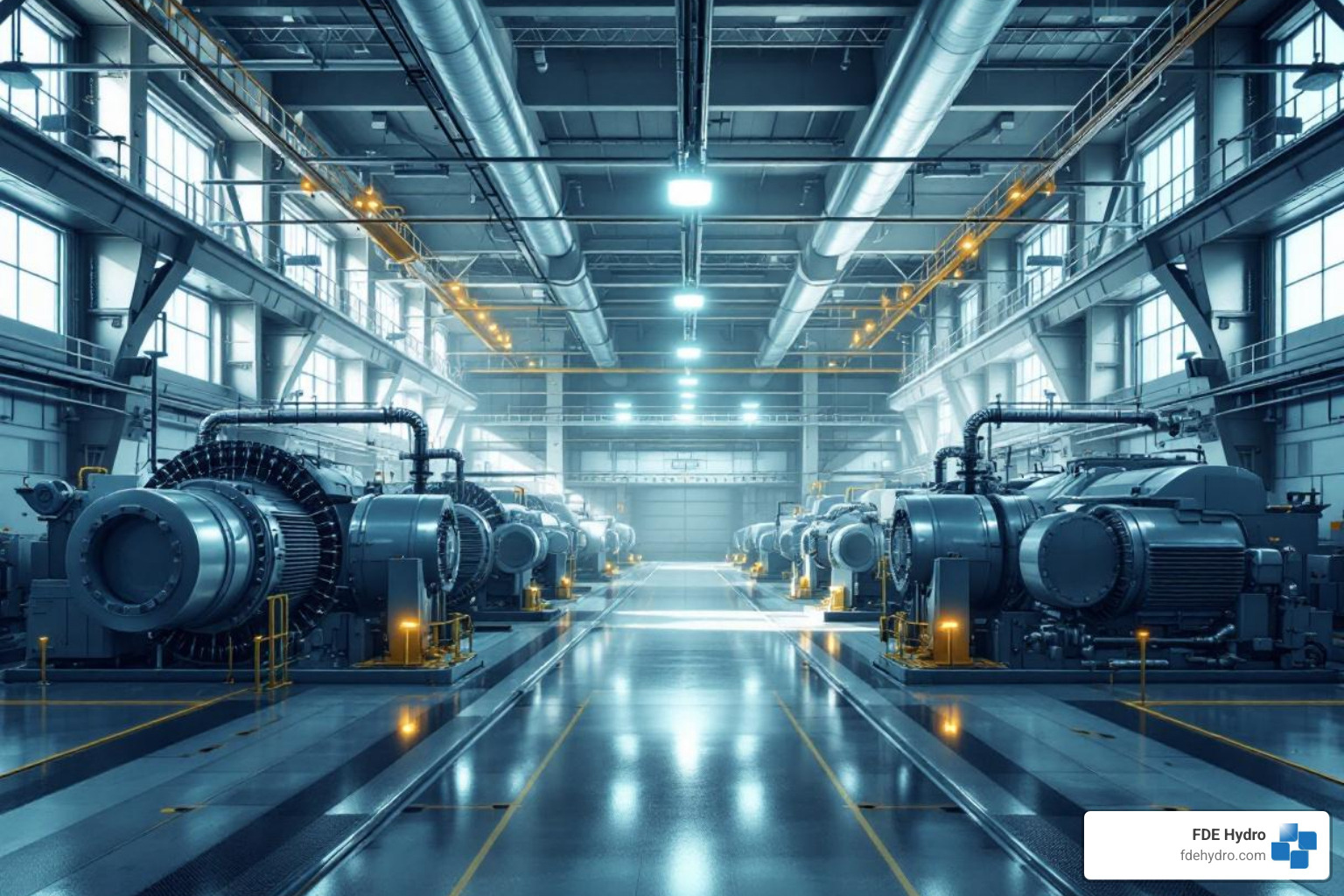
Most people picture a conventional impoundment dam when they think of hydropower. These large structures create reservoirs, storing vast amounts of potential energy. When electricity is needed, water is released from the reservoir through large pipes (penstocks). The high-pressure water strikes and spins a turbine, which is connected to a generator that produces electricity. This power is then sent to the grid. These dams, like the 14,000 MW Itaipu Dam, are the backbone of large-scale Hydropower Electricity generation and often provide secondary benefits like flood control and irrigation. For a comprehensive look at their design, explore our Hydroelectric Dam Design Complete Guide.
Pumped-Storage Hydropower (PSH)
Pumped-storage hydropower (PSH) acts like a giant, water-based battery, essential for grid stability. A PSH facility uses two reservoirs at different elevations. During times of low electricity demand or surplus renewable generation (from wind or solar), water is pumped from the lower reservoir to the upper one, storing energy. When demand is high, the water is released back down through turbines to generate Hydropower Electricity. This ability to store and release energy on demand makes PSH a critical partner for intermittent renewables. In 2021, PSH accounted for almost 85% of the world’s grid energy storage. We believe PSH is vital for a clean energy future, as detailed on our Pumped Storage Hydropower page.
Run-of-the-River and Other Methods
Hydropower Electricity also comes in other forms suited to different environments.
- Run-of-the-River: These systems use a river’s natural flow with minimal water storage. A small structure diverts some water through a turbine and returns it downstream, resulting in a lower environmental footprint but less flexible power output.
- Small, Micro, and Pico Hydro: These are scaled-down versions for local applications, ranging from under 5 kW (pico) to 10 MW (small). They are ideal for powering remote communities or single homes.
- Tidal and Conduit Power: Tidal power harnesses the predictable rise and fall of ocean tides. Conduit hydropower generates electricity from water flowing in existing pipelines, like municipal water systems, by integrating turbines directly into the conduits.
These diverse methods demonstrate our commitment to Sustainable Power Generation by exploring every viable way to harness water’s energy.
The Pros and Cons of Hydropower: A Balanced View
Like any large-scale energy technology, Hydropower Electricity has both advantages and challenges. While celebrated as a clean, renewable source, it’s crucial to examine its environmental and social impacts to ensure responsible development. Balancing the immense benefits with potential trade-offs is key. We explore these considerations on our Hydropower Environmental Impact page.
Major Advantages of Hydropower
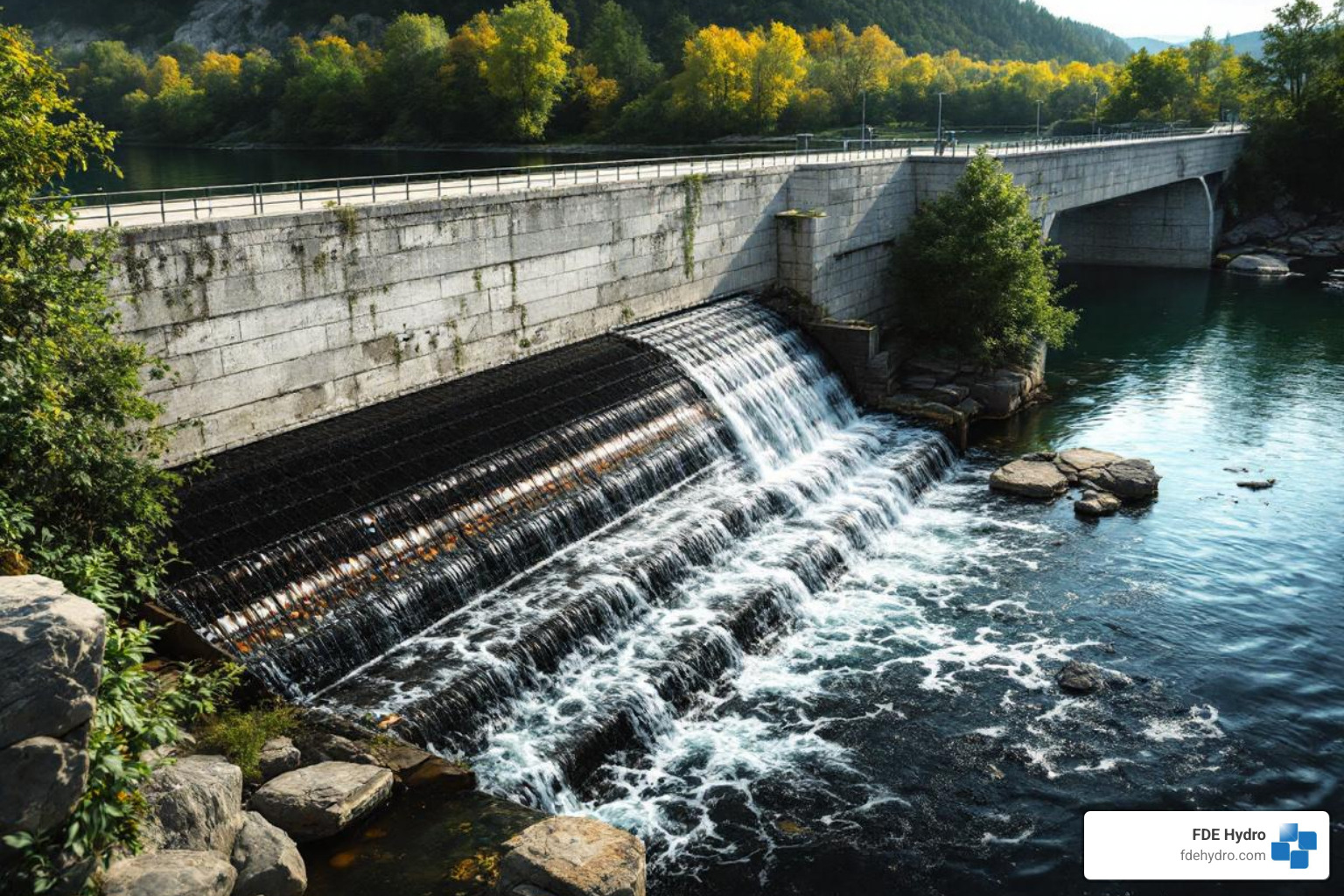
Hydropower Electricity offers compelling benefits that few other energy sources can match.
- Low Operating Costs: Once built, hydro plants have very low running costs as the fuel—water—is free. This leads to stable, predictable electricity prices.
- Long Plant Lifespan: Facilities are built to last, with many operating efficiently for 50 to 100 years, making them excellent long-term infrastructure investments.
- Dispatchable Power: Hydropower is highly flexible. It can be turned on or off almost instantly to meet fluctuating electricity demand, making it vital for balancing the grid with intermittent renewables like solar and wind.
- Black Start Capability: In a widespread power outage, hydropower plants can restart without drawing power from the grid, helping to restore electricity to other power stations and critical infrastructure.
- Water Management Benefits: Reservoirs provide reliable water for irrigation and public supplies, and are crucial for flood control.
These advantages make hydropower a cornerstone of a resilient energy system. Learn more about the Benefits of Hydropower Plant and why it’s the Guardian of the Grid.
Significant Disadvantages and Environmental Impacts
We must also acknowledge and address the potential drawbacks of Hydropower Electricity, especially from large dams.
- Ecosystem Damage: Dams alter river ecosystems and can block fish migration routes, impacting species like salmon. While fish ladders help, they don’t always solve the problem.
- Sedimentation: Dams trap sediment, which can reduce a reservoir’s storage capacity and starve downstream habitats of vital nutrients.
- Land Loss and Inundation: Creating large reservoirs floods vast areas, resulting in the loss of forests, farmland, and natural habitats.
- Methane Emissions: In some tropical regions, submerged vegetation decomposes and releases methane, a potent greenhouse gas. This effect is less significant in temperate climates.
- Human Displacement: Large dam projects can require relocating communities, leading to social and economic disruption.
Addressing these challenges is paramount. At FDE Hydro, we focus on Using Technology to Minimize the Duration of Impacts with innovative construction methods.
Hydropower’s Global Footprint and Economic Impact
Hydropower Electricity is a global powerhouse, driving investment, creating jobs, and offering long-term energy security. Understanding its costs and financial benefits is key to realizing its full potential, a topic we cover on our Hydropower Project Costs page and in our guide to Financing Long-Term Hydropower Requires Mitigating Risks Prior to ROI.
Global Status of Hydropower Electricity
As of 2021, global installed hydropower capacity reached almost 1,400 GW, supplying 15% of the world’s electricity in 2023. While over 150 countries use hydropower, a few key players dominate production.
- Brazil: A major hub, producing 10% of the world’s hydro electricity in 2022, primarily from its vast river systems.
- Canada: A global leader with abundant water resources, contributing 9.2% of global hydropower in 2022.
- United States: Generated 5.8% of the world’s hydropower in 2022, with significant potential remaining in modernizing existing dams, especially in regions like the Pacific Northwest and New York.
- Europe: Countries like Norway (almost 98% hydropower) and France are major players. The region continues to invest, adding 2 GW of capacity in 2022.
We monitor these trends closely in our operating regions. For more detail, see the IEA Hydropower Market Report.
The Economics of Hydropower
The economics of Hydropower Electricity are unique.
- High Upfront Capital Costs: Building a hydropower facility is a major investment, and large projects have historically faced cost overruns.
- Long-Term Profitability: Despite high initial costs, plants have very low operating expenses and lifespans of 50-100+ years. This results in a very low Levelized Cost of Energy (LCOE), often making it the cheapest electricity source over the long term.
- Multi-Purpose Benefits: The economic value extends beyond power to include flood control, irrigation, and recreation, which justify investment.
- Investment Trends: After a lull, global investment is rising, with institutions like the World Bank in hydropower development increasing lending as investors seek stable, renewable energy.
FDE Hydro’s modular technology directly addresses high upfront costs by reducing construction time and expense, improving project viability.
The Evolution and Future of Hydropower
The journey of Hydropower Electricity is a story of human ingenuity, from ancient water wheels to modern power plants. Today, innovation continues to drive its evolution, promising an even more critical role in our energy future. We are at the forefront of these Hydropower Advancements Innovations 2025 and are working on Reinvigorating Hydropower for the next century.
A Brief History: From Ancient Water Wheels to Modern Megawatts
The use of water power dates back thousands of years. The ancient Greeks and Chinese used water wheels to grind grain. During the Industrial Revolution, water powered the first factories. The modern era of Hydropower Electricity began in the late 19th century, with the first plant opening in Appleton, Wisconsin, in 1882. Key inventions like the Francis, Pelton, and Kaplan turbines dramatically improved efficiency. The 20th century became the age of megaprojects, with iconic structures like the Hoover Dam in the United States changing regions and powering industrial growth. This rich history underscores hydropower’s enduring importance. For a more detailed journey, explore A brief history of hydropower.
The Future of Hydropower Electricity: Innovation and Potential
The future of Hydropower Electricity is about smarter, more sustainable, and more efficient development.
- Modernizing Aging Infrastructure: Many plants in North America and Europe are decades old. Upgrading turbines and generators can significantly boost output without building new dams.
- Fish-Friendly Turbines and Advanced Data Analytics: Innovations in turbine design are minimizing harm to aquatic life. Combined with advanced monitoring, we can better mitigate environmental impacts.
- Untapped Potential: Significant opportunities remain. The U.S. alone has an estimated 12 GW of potential at existing non-powered dams, many built for flood control or irrigation in states like Kansas.
- Innovative Construction Methods: This is where FDE Hydro is changing the game. Traditional construction is slow and costly. Our patented modular precast concrete technology (“French Dam”) allows for rapid, cost-effective assembly. By prefabricating components, we dramatically reduce construction timelines and environmental disruption, making more projects viable. We believe this is key to open uping the Future of Hydropower.
Hydropower in Context: Comparisons and Safety
To appreciate Hydropower Electricity, it’s helpful to compare it to other energy sources and understand how we manage its risks. We constantly analyze What Renewable Energy Resource is the Most Efficient? and work to optimize Hydroelectric Dam Efficiency.
How Hydropower Compares to Other Energy Sources
Hydropower offers a unique combination of high reliability, low cost, and low emissions.
| Energy Source | Capacity Factor | LCOE (Relative) | GHG Emissions (Lifecycle) | Flexibility |
|---|---|---|---|---|
| Hydropower | High (30-90%) | Low | Very Low | High |
| Solar PV | Moderate (15-30%) | Moderate | Very Low | Low (Intermittent) |
| Wind | Moderate (25-45%) | Low | Very Low | Low (Intermittent) |
| Nuclear | Very High (90%+) | High | Very Low | Low (Baseload) |
Unlike intermittent solar and wind, hydropower is dispatchable, meaning its output can be adjusted in minutes to balance the grid. This flexibility makes it an ideal partner for variable renewables. While nuclear power provides constant baseload energy, hydropower excels at following load changes. Compared to fossil fuels, it produces no air pollutants and has one of the lowest lifecycle carbon footprints.
Managing the Risks: Dam Safety and Reliability
Dam failures, though rare, can be catastrophic, so safety is our highest priority. Historical events like the Malpasset Dam failure in France serve as reminders of the need for rigorous engineering.
Today, dam safety relies on multiple layers of protection:
- Modern Monitoring Systems: Advanced sensors continuously track structural integrity, water levels, and seismic activity, providing early warnings of potential issues.
- Engineering Standards and Maintenance: Dams are built to strict standards and undergo regular inspections and maintenance to ensure long-term reliability.
- Emergency Action Plans: Detailed plans are in place to coordinate with emergency services and protect downstream communities in the unlikely event of a failure.
At FDE Hydro, our services include Dam Rehabilitation Encapsulation and expert Hydroelectric Dam Construction. Our modular technology also improves structural integrity, contributing to overall dam safety.
Frequently Asked Questions about Hydropower
We understand that Hydropower Electricity can be a complex topic. Here, we address some of the most common inquiries.
Is hydropower a truly “clean” energy source?
This is a nuanced question. Hydropower is clean in that it produces no air pollutants and has very low lifecycle greenhouse gas (GHG) emissions compared to fossil fuels. However, it’s not without environmental impact. Creating reservoirs alters river ecosystems and can disrupt fish migration. In some tropical regions, like parts of Brazil, submerged vegetation can release methane, a potent GHG. This effect is far less pronounced in temperate climates like North America and Europe. Our focus is on mitigating these impacts through careful site selection, fish-friendly turbines, and less disruptive construction methods.
Can hydropower adapt to climate change?
Hydropower’s relationship with climate change is twofold. It’s a key tool for mitigation, but it’s also vulnerable to climate impacts like droughts and altered rainfall patterns, which can affect generation capacity. However, hydropower reservoirs are also vital for climate resilience. They store water to mitigate floods and provide a reliable supply during dry periods for communities and agriculture. Adapting successfully requires accurate hydrological forecasting and modernizing infrastructure to handle new climate realities.
What is the difference between large and small hydropower?
The main difference is generating capacity.
- Large Hydropower: Generally refers to facilities over 10 to 30 megawatts (MW). These projects, often involving large dams like the Itaipu Dam, provide large-scale, baseload power and significant grid stability.
- Small Hydropower: Typically includes facilities below 10 to 30 MW, such as run-of-the-river or micro-hydro systems. They have a smaller environmental footprint and are ideal for decentralizing power to remote communities. Many non-powered dams in the U.S. and Canada could be retrofitted with small hydro units.
Both large and small hydropower play complementary roles in a diverse, clean energy future.
Conclusion: The Enduring Power of Water
Hydropower Electricity is a foundational pillar of renewable energy, essential for our clean energy future. It offers reliable, dispatchable, low-carbon power and vital water management benefits. While we must address its environmental challenges with responsible development, its advantages are undeniable.
The path forward requires innovation—modernizing aging infrastructure and leveraging new technologies. FDE Hydro’s modular precast systems are designed to make hydropower projects in North America, Brazil, and Europe more viable and sustainable. By balancing benefits with diligent management, we can ensure water remains an enduring force in the global clean energy transition.
We invite you to learn more about the incredible potential of Hydropower.
