

Why Hydropower Construction in North America Matters Now More Than Ever
Hydropower construction North America is experiencing a critical moment. With a $20.5 billion project pipeline and growing demand for clean, reliable energy, the sector stands at the intersection of opportunity and challenge. Here’s what you need to know:
Key Facts About Hydropower Construction in North America:
- Market Value: North America accounts for $20.5 billion of the global $474.7 billion hydropower construction pipeline
- Current Capacity: The U.S. operates 2,252 hydropower plants with 80.58 GW of total capacity
- Energy Contribution: Hydropower produces 31.5% of total renewable electricity in the U.S. (6.3% of all U.S. electricity)
- Major Projects: Site C Clean Energy Project (Canada, $12.7B, 1.1GW) and Lower Churchill Plant (Canada, $9.6B, 3.07GW)
- Leading Regions: Columbia River Basin (44% of U.S. hydroelectricity), Quebec, British Columbia
- Project Types: Run-of-river, storage (reservoir), and pumped storage facilities
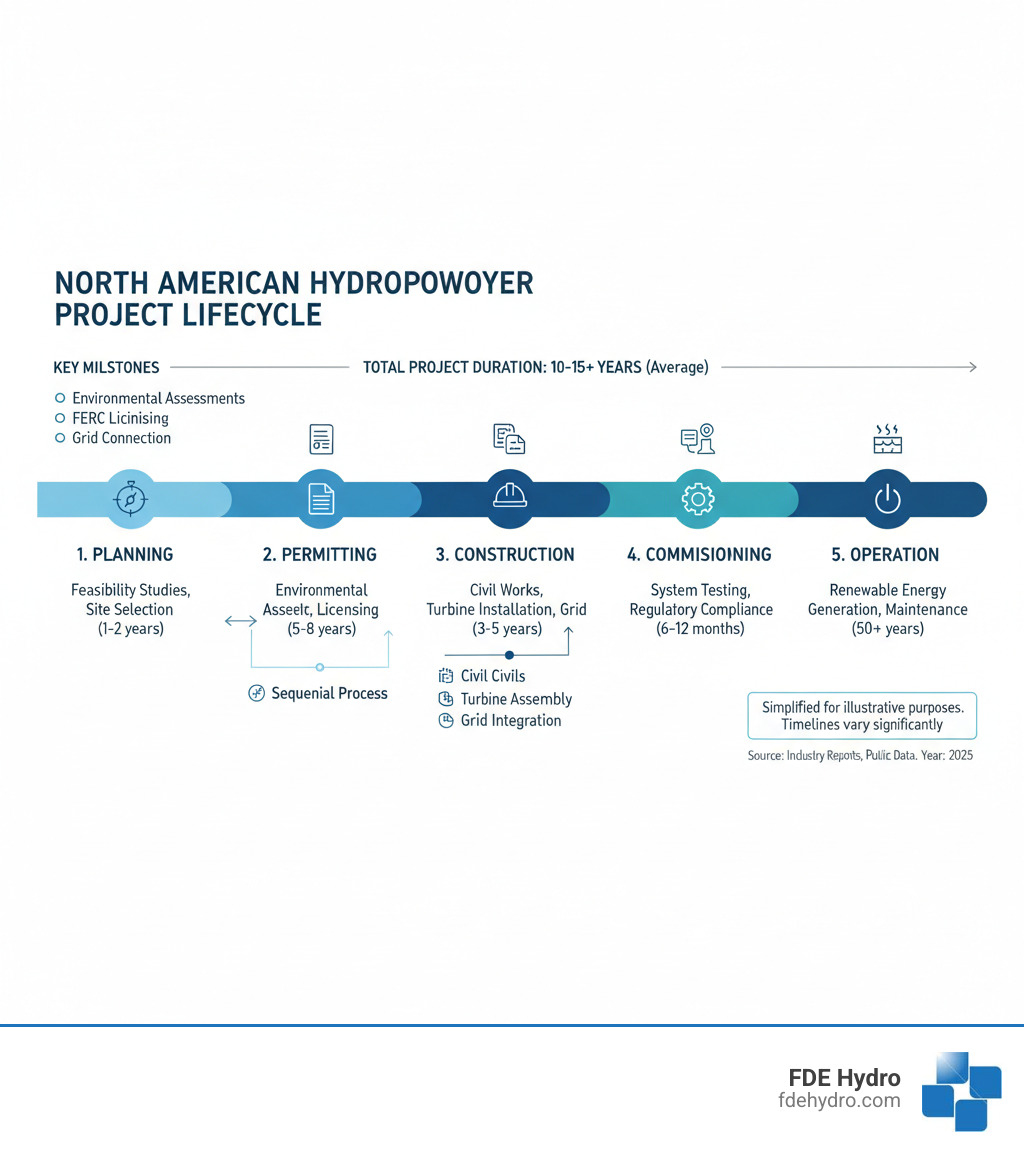
Hydropower has been the backbone of renewable energy in North America for decades. Canada is the second-largest producer of hydroelectricity in the world, while the United States ranks third globally. Yet the sector faces mounting pressures: aging infrastructure averaging over 60 years old, complex permitting processes that can take 5-8 years, and project costs that have doubled in some cases due to COVID-19 impacts and supply chain challenges.
The landscape is changing rapidly. New federal incentives from the Bipartisan Infrastructure Law ($753 million) and Inflation Reduction Act (tax credits up to 30%) are stimulating investment. Meanwhile, the urgent need for grid stability as wind and solar capacity expands makes hydropower’s role as “the guardian of the grid” more critical than ever.
Traditional construction methods—while proven—often mean extended timelines, ballooning budgets, and significant environmental disruption during the building phase. As one industry report noted, “the regulatory environment remains a significant barrier to hydropower investment due to lengthy approval processes.” For decision-makers overseeing these megaprojects, the stakes couldn’t be higher.
I’m Bill French Sr., Founder and CEO of FDE Hydro™, where we’ve pioneered modular precast solutions specifically designed to address the challenges of hydropower construction North America. After five decades leading major civil construction projects—including participating in the Department of Energy’s Hydro Power Vision Task Force—I’ve seen how innovation can transform project delivery in this sector.
The Current State of Hydropower in North America
Let’s talk about where hydropower construction North America stands today—and trust me, it’s more dynamic than you might think.
North America’s hydropower sector represents a $20.5 billion project pipeline, a significant piece of the global hydropower construction market valued at nearly $475 billion. These aren’t just impressive numbers on a spreadsheet. They represent real infrastructure, real jobs, and real progress toward a cleaner energy future.
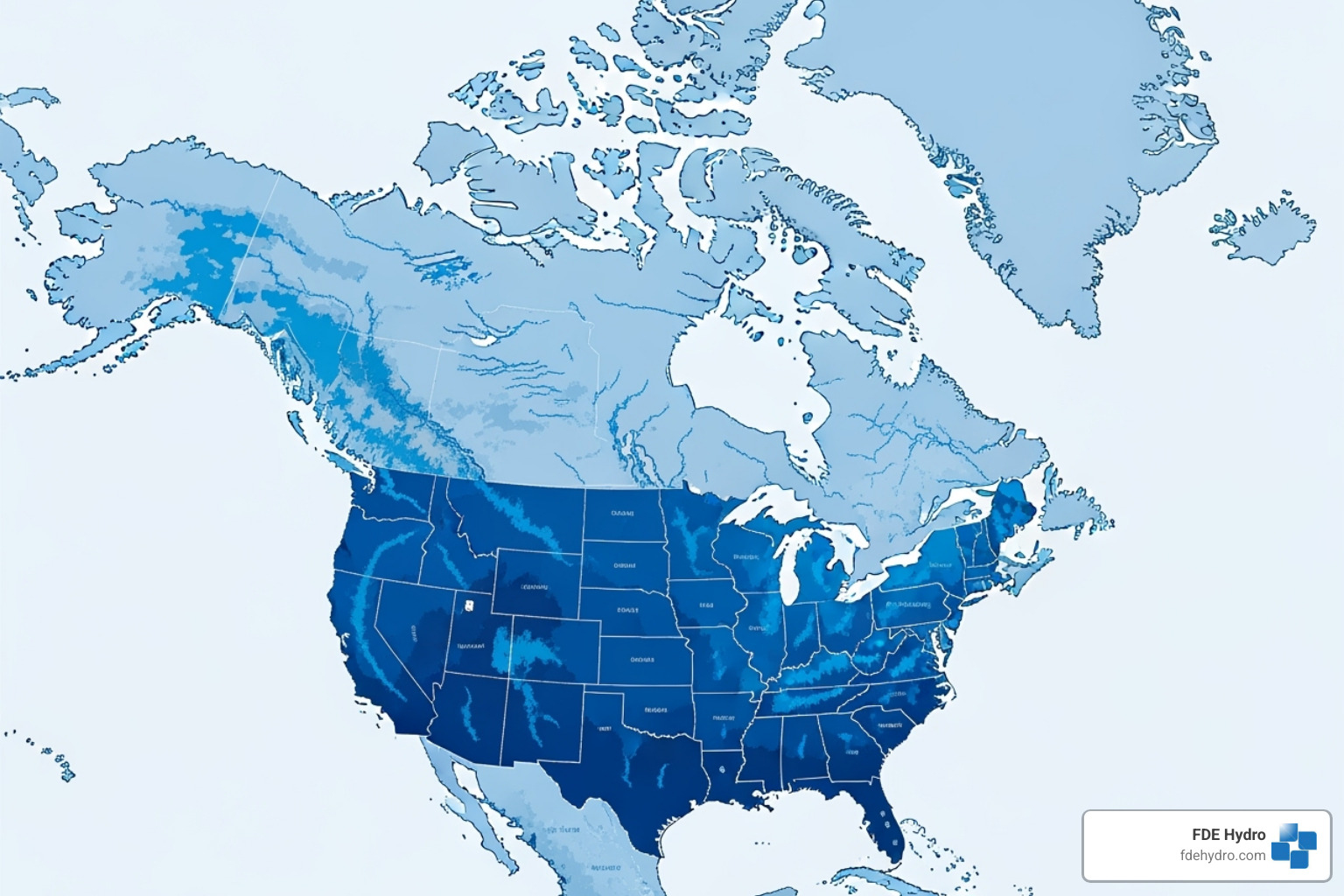
Globally, hydropower remains the largest source of renewable electricity. In North America, it’s not just important—it’s indispensable. Canada stands as the second-largest producer of hydroelectricity in the world, with hydropower generating almost 60% of its total annual electricity. That’s remarkable when you think about it. South of the border, the United States holds the third-largest producer title globally. According to the U.S. Hydropower Market Report 2023 Edition, hydroelectric power accounted for 31.5% of total renewable electricity and 6.3% of all U.S. electricity in 2021.
But here’s what really matters: this isn’t just about generating megawatts. It’s about stability. Unlike solar panels that stop producing at sunset or wind turbines that sit idle on calm days, hydropower delivers dependable, around-the-clock power. As we add more wind and solar to our grids—which we absolutely should—hydropower becomes even more valuable. It fills the gaps, smooths out the fluctuations, and keeps the lights on when other sources can’t.
That’s why hydropower is often called the guardian of the grid. It’s the steady hand that helps us transition to a cleaner energy future without sacrificing reliability.
Leading Countries and Key Regions
When you think about hydropower construction North America, two powerhouses immediately stand out: Canada and the United States.
Canada’s provinces of Quebec and British Columbia are home to some of the most impressive hydroelectric infrastructure on the planet. The Site C Clean Energy Project in British Columbia represents a $12.7 billion investment and will deliver 1.1 GW of clean, reliable power. Up in Newfoundland and Labrador, the Lower Churchill Hydroelectric Plant is an even larger undertaking—$9.6 billion and 3.07 GW of capacity. These aren’t just construction projects; they’re changeal investments in regional energy security. Quebec and Newfoundland & Labrador have even partnered on agreements to add 3,900 MW of new hydropower generation capacity together.
South of the border, the United States boasts its own hydropower giants. The Columbia River Basin alone produces 44% of the nation’s hydroelectricity. Think about that—nearly half of all U.S. hydropower comes from one river system. Washington state leads in installed capacity with 21,311 MW, followed by California at 10,189 MW and Oregon at 8,457 MW.
But hydropower isn’t just a West Coast story. Right here in New York, the New York Power Authority operates major facilities including the iconic Niagara Falls project. Having worked in regions from New York to California, we’ve seen how diverse North America’s hydropower landscape really is—and how each region has its own unique challenges and opportunities.
North America’s Hydropower Pipeline in a Global Context
To really understand where North America fits in the bigger picture, let’s zoom out for a moment.
The worldwide hydropower construction pipeline stands at an astounding $474.7 billion, ready to add 253.8 GW of new capacity. The Asia-Pacific region dominates this global market with $254.9 billion in projects, followed by Sub-Saharan Africa at $106.2 billion and South America at $82.1 billion.
North America’s $20.5 billion might look modest next to those numbers, but context matters. We account for about 1.5% of global hydropower capacity currently under construction—but that doesn’t tell the whole story. North America actually leads the world in proposed pumped storage hydropower (PSH) projects. Many of these are still in planning stages rather than active construction, but they represent enormous potential for grid-scale energy storage as we integrate more intermittent renewables.
Here’s another interesting perspective: globally, hydropower makes up about 14% of the total power generation construction pipeline by value, trailing behind wind at 40% and solar at 16%. Some might see this as hydropower taking a back seat. I see it differently. While wind and solar grab headlines and investment dollars—and rightfully so—hydropower provides something those technologies can’t: consistent, dispatchable power that fills in when the sun doesn’t shine and the wind doesn’t blow.
That complementary role is exactly why hydropower construction North America remains so vital to our clean energy transition. For more detailed global insights, you can explore Project Insight – Global Power Generation Construction Projects.
The bottom line? North America’s hydropower sector may not be the largest in the world, but it’s strategic, sophisticated, and absolutely essential to achieving our renewable energy goals.
The Landscape of Hydropower Construction in North America
The world of hydropower construction North America is evolving rapidly, and honestly, it’s both exciting and challenging. We’re standing at a crossroads where enormous opportunity meets real, practical obstacles that need thoughtful solutions.
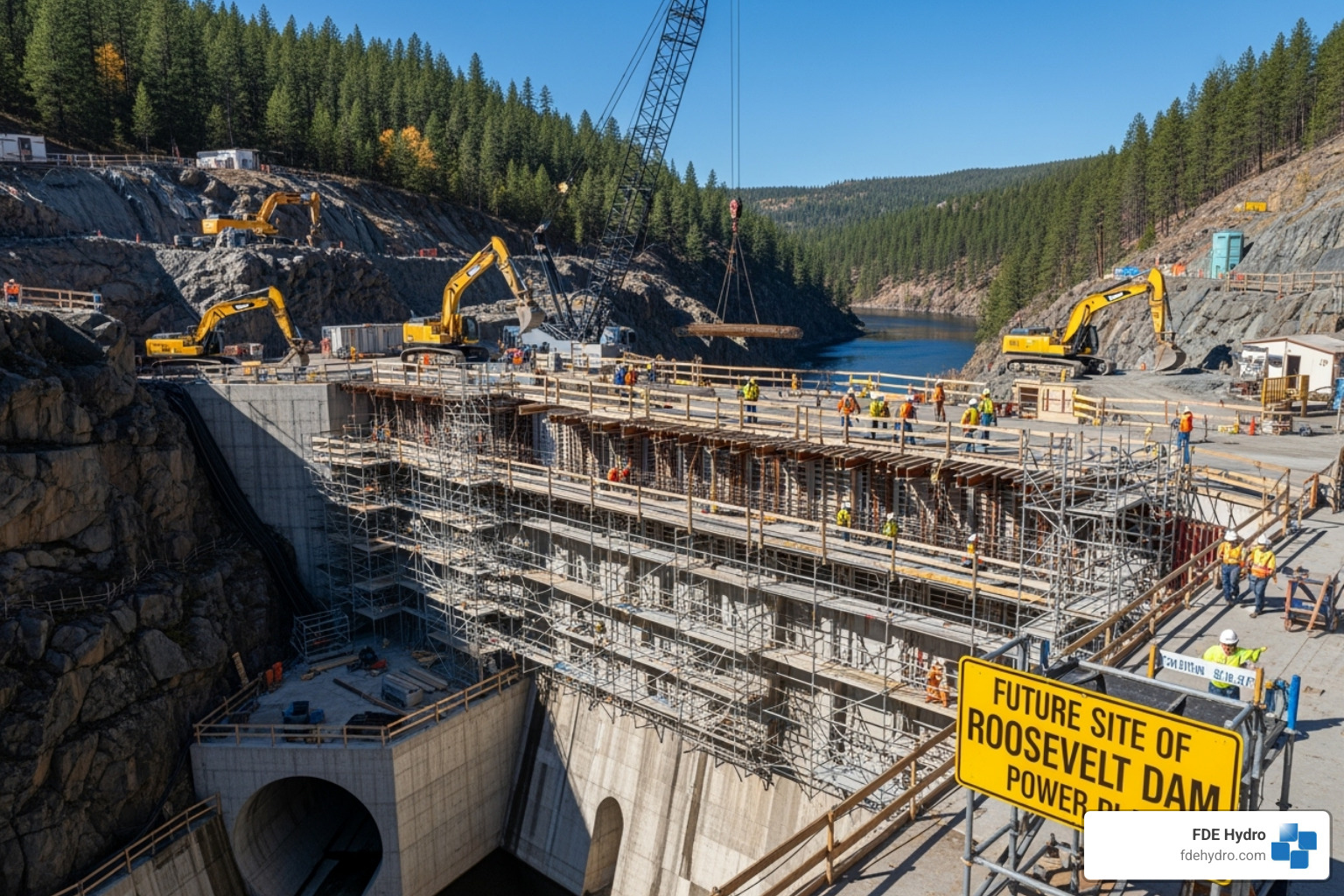
What’s pushing the sector forward is clear: we need clean, reliable energy, and we need it now. Hydropower delivers something that few other renewables can match—dependable, round-the-clock electricity. When the sun sets and the wind stops blowing, hydropower keeps running. That’s why it’s such a vital piece of our transition to a low-carbon economy, working hand-in-hand with wind and solar to create a truly resilient grid.
But let’s be honest about the problems. The permitting process for hydropower projects is notoriously complex. We’re talking about 5 to 8 years just to secure the necessary licenses, and sometimes even longer when you factor in environmental reviews and community consultations. As one industry report bluntly states, “the regulatory environment remains a significant barrier to hydropower investment due to lengthy approval processes.” These delays aren’t just frustrating—they’re expensive. High capital costs combined with potential overruns (the Site C project’s cost doubled since 2014) make financing long-term hydropower a careful balancing act between risk and reward.
Then there’s our aging infrastructure. Many facilities in North America have been operating for over 60 years, and they need serious attention. Upgrading these systems isn’t optional—it’s essential for safety, efficiency, and meeting modern environmental standards. Without streamlining the relicensing process, we risk losing valuable capacity at a time when we can least afford it.
Major Projects and Economic Impact
Despite these challenges, North America continues to invest in transformative hydropower projects. The Site C Clean Energy Project in British Columbia represents a $12.7 billion commitment to 1.1GW of clean power, with first electricity expected by late 2023 or 2025. Yes, costs have doubled since the original estimate, but the project demonstrates Canada’s determination to expand its clean energy capacity.
The Lower Churchill Hydroelectric Plant in Newfoundland and Labrador is another heavyweight, adding 3.07GW through a $9.6 billion investment. Quebec and Newfoundland & Labrador have also partnered on agreements to bring 3,900MW of new hydropower online, strengthening regional energy security.
In the United States, the Champlain Hudson Power Express is breaking new ground—literally. This project involves laying a 339-mile underground and underwater transmission line from Quebec to New York City, bringing Canadian hydropower to millions of urban consumers. Installation work in Lake Champlain is already underway, marking a significant step in cross-border clean energy collaboration.
Smaller projects matter too. The Taylor River Hydro Project in Colorado, with its 500kW capacity generating 3.8GWh annually, shows how even modest facilities contribute to local clean energy goals and community resilience.
The economic ripple effects are substantial. Site C alone employed nearly 6,000 workers at its peak in May, creating jobs that support families and communities. Beyond direct employment, these projects attract billions in investment, stimulate local businesses, and provide affordable, locally generated electricity that helps industries thrive.
Federal support is amplifying this momentum. The Bipartisan Infrastructure Law allocated $753 million specifically for hydropower incentives, while the Inflation Reduction Act offers production and investment tax credits of up to 30% for clean energy projects, including hydropower and pumped storage facilities. These policies recognize hydropower’s essential role in our energy future.
Understanding the Drivers for Hydropower Construction in North America
So what’s really motivating all this construction activity? It goes well beyond just keeping the lights on.
Energy independence is a big factor. Every megawatt we generate from our own rivers and waterways is a megawatt we don’t need to import. That strengthens national security and insulates us from volatile global energy markets.
The low-carbon economy transition makes hydropower indispensable. As we work to meet climate commitments and reduce greenhouse gas emissions, hydropower offers proven, scalable clean energy. Hydroelectric companies are literally on the front lines of climate action.
Grid integration has become critical as wind and solar capacity expands. These sources are fantastic, but they’re intermittent. Hydropower acts as the reliable partner that balances their variability, ramping up when the sun dips behind clouds or wind speeds drop. It’s what keeps our grid stable as we add more renewables.
Water management often gets overlooked in energy conversations, but it’s crucial. Many hydropower facilities with reservoirs serve multiple purposes—supplying drinking water, supporting irrigation, and providing flood control that protects communities and farmland. With over 92,000 reservoirs across the United States, this infrastructure is woven into our water security.
We’ve long believed that the biggest untapped solution to climate change is in the water. Using that potential responsibly—through modern, efficient hydropower systems—is one of the smartest investments we can make for a sustainable future.
Technologies and Types of Hydropower Plants
When we talk about hydropower construction North America, we’re really talking about a diverse family of technologies. Each type of hydropower plant has its own personality, shaped by the landscape it inhabits, the water resources available, and the specific energy challenges it needs to solve. Understanding these differences is essential to appreciating the full scope of what we’re building across the continent.
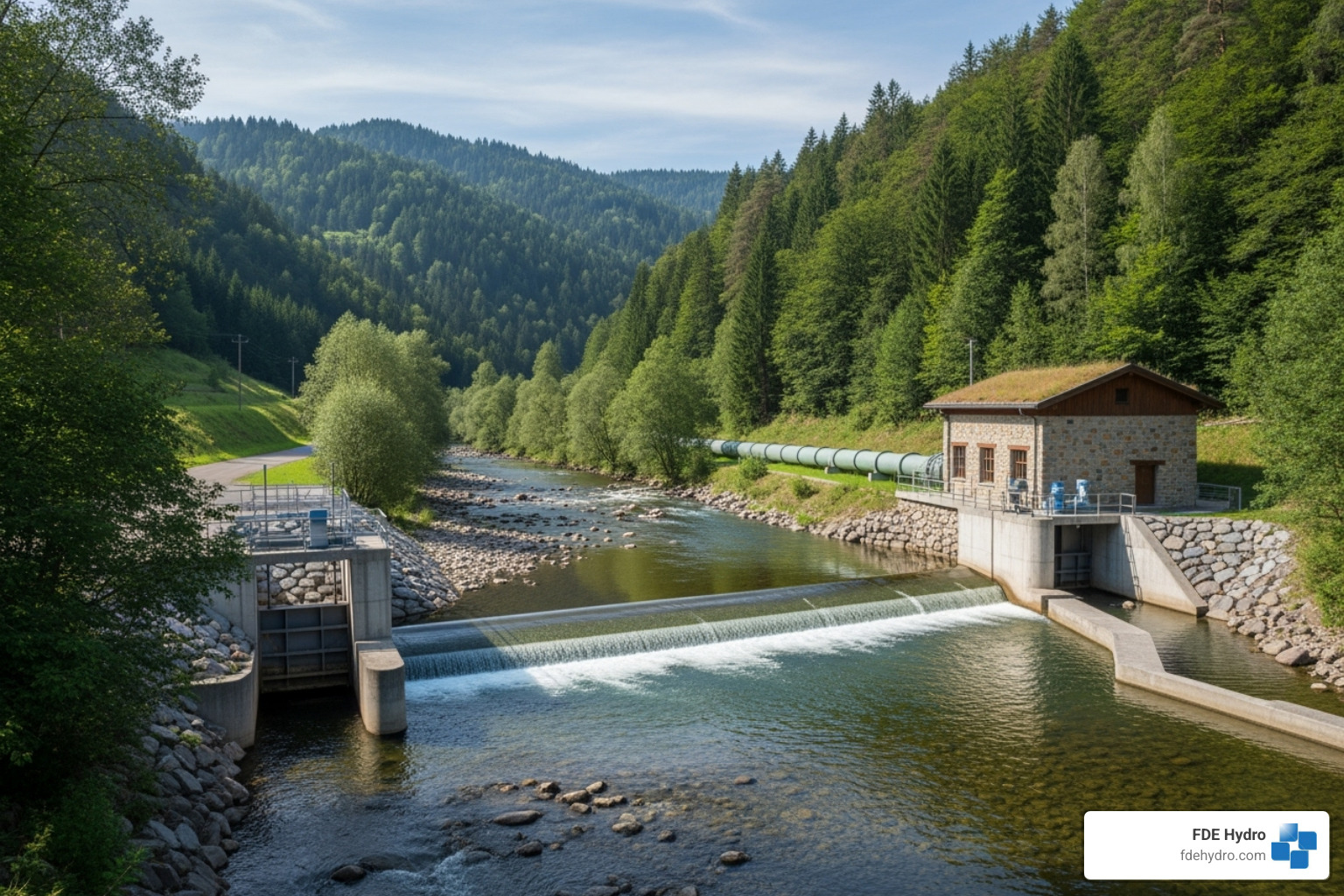
Run-of-river hydropower plants are the minimalist approach to hydropower. They channel a portion of a river’s natural flow through turbines, typically without creating a large storage reservoir behind a massive dam. Think of them as working with the river rather than trying to control it completely. These plants generate continuous electricity, though their output naturally fluctuates with the river’s flow—more power during spring runoff, less during dry summer months. The beauty of run-of-river systems is that they minimize impacts on the natural flow of water, which makes them increasingly popular as we become more environmentally conscious.
Storage (reservoir) hydropower represents the classic image most people have when they think of hydropower—the grand dams creating vast lakes behind them. These facilities use a dam to create a reservoir that stores enormous volumes of water. This stored water becomes potential energy that can be released on demand, allowing operators to generate power precisely when the grid needs it most. These projects involve significant water control structures and offer best flexibility in meeting peak electricity demand.
Pumped storage hydropower (PSH) is the clever innovator of the family. It doesn’t actually create new energy—instead, it acts like a giant rechargeable battery made of water and gravity. These facilities use two reservoirs at different elevations. During periods of low electricity demand (typically at night, when electricity prices are lower), water is pumped uphill from the lower reservoir to the upper one. When demand spikes, that stored water rushes back down through turbines to generate electricity. It’s an neat solution to one of renewable energy’s biggest challenges: storing power for when we need it most.
Here’s how these three types compare across key features:
| Feature | Run-of-River | Storage (Reservoir) | Pumped Storage Hydropower (PSH) |
|---|---|---|---|
| Dam/Reservoir | Small or none; channels river flow | Large dam creating a significant reservoir | Two reservoirs at different elevations |
| Power Output | Variable, dependent on river flow | Dispatchable, can be adjusted to demand | Dispatchable, used for grid balancing and storage |
| Energy Storage | Minimal | Significant (stored water) | Primary function is energy storage (“water battery”) |
| Environmental Impact | Generally lower than storage plants | Can have significant ecosystem impacts | Can have ecosystem impacts, but often closed-loop |
| Prevalence in North America | Growing, especially small hydro | Well-established, many large existing plants | Growing rapidly, seen as future of grid stability |
Innovations Shaping the Future of Hydropower Construction in North America
The future of hydropower construction North America isn’t just about building bigger—it’s about building smarter. We’re seeing technological innovations that are changing hydropower into a more efficient, cost-effective, and environmentally responsible energy source.
Pumped storage hydropower deserves special attention because it’s arguably the most significant innovation for our modern grid. As we add more solar panels and wind turbines to our energy mix, we face a fundamental challenge: the sun doesn’t always shine, and the wind doesn’t always blow. PSH facilities—often called “water batteries”—provide the crucial flexibility we need to balance these intermittent sources.
The numbers tell the story: the U.S. PSH fleet already accounts for 70% of utility-scale power storage capacity and an impressive 96% of energy storage capacity. With a median storage duration of 12 hours (compared to just 2 hours for utility-scale batteries), PSH offers the long-duration storage that’s essential for grid stability. We’re passionate about pumped storage hydropower because we believe it’s key to open uping a truly renewable energy future.
Modular construction and precast technology represent a fundamental shift in how we approach hydropower projects. Traditional construction methods are notoriously slow, expensive, and disruptive to the surrounding environment. At FDE Hydro™, we’ve pioneered a different approach with our patented modular precast concrete technology—what some call “French Dam” technology. By fabricating components off-site in a controlled factory environment, we can dramatically reduce construction time, lower costs, and minimize environmental impact at the project site. It’s like building with high-tech LEGO blocks instead of pouring concrete in place for months on end. This approach is changing projects across North America and beyond, as you can see in our precast models.
Turbine upgrades and digitalization are breathing new life into aging facilities. Modernizing existing plants might not sound as exciting as building new ones, but it’s often more cost-effective and environmentally sensible. This includes upgrading turbine runners, rewinding generators, and replacing cores to boost efficiency and extend operational life by decades. Meanwhile, digitalization—including advanced SCADA systems—allows operators to monitor their facilities in real-time, predict maintenance needs before failures occur, and optimize operations for maximum efficiency. These technologies are crucial for using technology to minimize the duration of impacts while ensuring plants run at peak performance year after year.
The Rise of Pumped Storage and Small Hydro
The energy landscape is evolving rapidly, and with it, the focus of hydropower construction North America is shifting in exciting directions. We’re witnessing a significant rise in two areas that were once considered secondary: pumped storage hydropower and small hydro projects.
Pumped storage hydropower is increasingly recognized as the backbone of grid-scale energy storage. Its ability to balance intermittent renewables—absorbing excess power when generation is high and releasing it precisely when demand peaks—makes it absolutely indispensable. The U.S. PSH development pipeline tells the story clearly: 96 projects totaling a staggering 91 GW of storage capacity are in various stages of planning. Closed-loop PSH configurations are particularly gaining traction because they offer siting flexibility and lower environmental impact compared to traditional open-loop systems that connect to existing rivers or lakes.
Small hydro projects and retrofitting non-powered dams represent a massive, often overlooked opportunity hiding in plain sight. The U.S. has over 80,000 unpowered dams—structures built for flood control, irrigation, or navigation that currently don’t generate any electricity. An Assessment of Energy Potential at Non-Powered Dams in the United States estimates these facilities could add 12,000 MW of hydroelectric capacity, generating 45 TWhr per year. That’s equivalent to 16% of all U.S. hydropower generation in 2008. Even more remarkably, NPD retrofits account for 95% of proposed new hydropower capacity in the U.S. development pipeline.
This approach is neat in its efficiency—we’re leveraging existing infrastructure, minimizing new environmental footprint while tapping into significant untapped energy potential. These smaller, often decentralized projects can also play a vital role in building resilient microgrids, providing localized power generation and enhancing energy security for communities that want more control over their energy future.
Environmental, Social, and Regulatory Considerations
When we talk about hydropower construction North America, we’re not just talking about concrete and turbines. We’re talking about projects that exist within living ecosystems and communities that have called these places home for generations. That’s why environmental, social, and regulatory considerations aren’t afterthoughts—they’re woven into the very fabric of every project from day one.
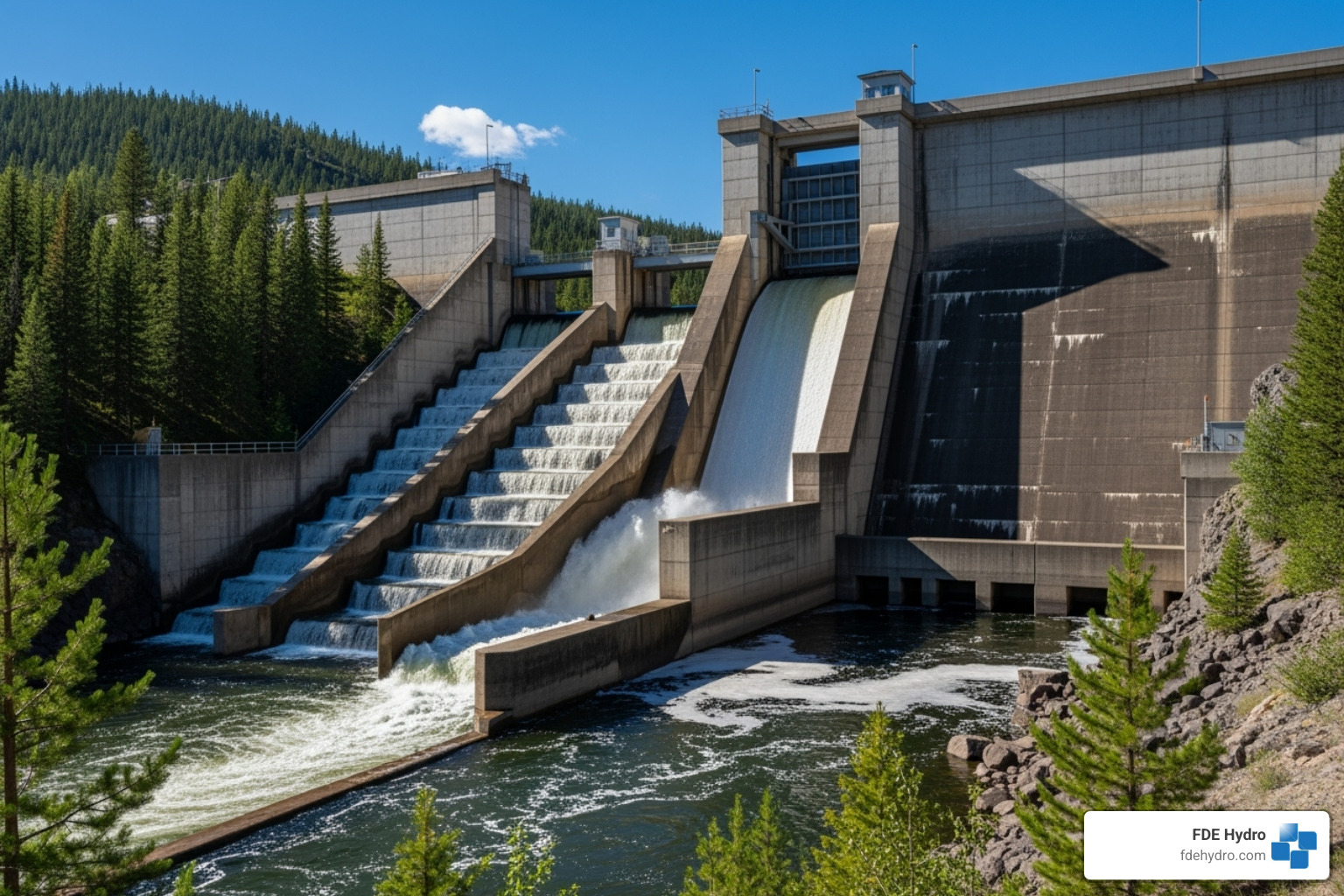
Before a single shovel breaks ground, every major hydropower project undergoes rigorous environmental impact assessments. These aren’t just bureaucratic checkboxes—they’re detailed studies that help us understand how a project might affect local wildlife, water quality, and the broader ecosystem. The goal is simple: identify potential problems early so we can design solutions that work for both energy needs and nature.
But it’s not just about the environment. The social dimension matters just as much. Indigenous communities often have deep historical and cultural connections to the rivers and lands where hydropower projects are built. That’s why meaningful partnerships aren’t optional—they’re essential. Take our own hydroelectric generating facility in Yellow Falls, Ontario, for example. It’s a joint venture with the Taykwa Tagamou Nation and Mattagami First Nation, built on mutual respect and shared benefits. This collaborative approach isn’t just the right thing to do; it leads to better, more sustainable projects.
The regulatory landscape in North America is complex, and for good reason. In the United States, the Federal Energy Regulatory Commission (FERC) oversees the licensing of hydropower projects, requiring comprehensive environmental documents like Environmental Impact Statements and Environmental Assessments. These processes ensure that every potential impact is carefully considered. The FERC Hydropower Environmental Documents (2016-Present) archives show just how thorough these reviews are.
Relicensing existing facilities is equally demanding. The median duration for relicensing is 5.8 years, and here’s something that should grab everyone’s attention: a substantial portion of U.S. hydropower licenses are set to expire between 2023 and 2027. Without reforms to streamline this process, we risk losing valuable generating capacity at a time when we need it most. As one industry report bluntly states, “the regulatory environment remains a significant barrier to hydropower investment due to lengthy approval processes.”
And then there’s dam safety—a non-negotiable priority. Rigorous standards, regular inspections, and continuous monitoring ensure that these structures protect both communities and ecosystems. After all, a hydropower facility that isn’t safe isn’t sustainable.
Balancing Energy Needs with Environmental Stewardship
Here’s the challenge we face every day: how do we generate the clean, reliable energy our society needs while protecting the rivers, fish, and ecosystems that depend on these same water systems? It’s a balancing act, and in hydropower construction North America, we’re constantly innovating to get it right.
Let’s start with fish migration, one of the most visible environmental concerns. Dams can block the natural movement of fish species like salmon and eels, disrupting their life cycles. Modern projects address this head-on with solutions like fish ladders, bypass systems, and even fish-friendly turbine designs. We’ve seen real success stories—like the initiative in Rimouski, Quebec, that significantly increased Atlantic salmon migration rates.
Other facilities have been specifically designed to prevent eels from entering turbines, protecting these vulnerable populations. Our expertise in aquatic animal and recreational passage helps ensure that fish and other aquatic life can steer around our structures safely.
Water quality and sediment management are equally critical. Rivers naturally carry sediment downstream, nourishing ecosystems and maintaining river channels. Dams can alter these patterns, sometimes trapping sediment in reservoirs or changing downstream water temperatures. Careful operational planning—including regulated seasonal drawdowns—helps mitigate these effects and maintain healthier river systems.
There’s also the matter of habitat preservation. Protecting riparian zones, wetlands, and other critical habitats around hydropower facilities ensures that local wildlife populations remain healthy and resilient.
And yes, we need to talk about methane emissions. While hydropower is a low-carbon energy source, some large reservoirs can produce methane from decaying organic matter, particularly in tropical regions but also in some temperate zones. This is an area of active research, and newer projects are designed with this factor in mind, often clearing vegetation before flooding or choosing sites with lower methane potential.
The bottom line? We’re committed to designing solutions that don’t just generate clean energy but actively contribute to healthier ecosystems. It’s not always easy, but it’s always worth it.
The Role of Modernization and Dam Rehabilitation
Here’s something many people don’t realize: much of North America’s hydropower infrastructure has been running strong for over 60 years. That’s a testament to the engineering excellence of earlier generations, but it also means we’re now facing a critical moment. These aging facilities need attention, and that’s where modernization and dam rehabilitation come into the picture for hydropower construction North America.
Upgrading existing facilities isn’t just about keeping the lights on—it’s often the smartest, most sustainable path forward. When we increase the efficiency of a plant that’s already there, we boost clean energy output without the environmental footprint of building something entirely new. The U.S. currently has 23 active upgrade projects designed to increase existing fleet capacity by 254 MW. That’s substantial new clean energy from infrastructure that’s already in place.
Our work focuses on bringing aging infrastructure being replaced with next-generation civil solutions into the modern era. Through specialized techniques like dam rehabilitation encapsulation, we can restore structural integrity, improve performance, and extend the operational life of facilities that have served their communities for decades.
The federal government recognizes how critical this work is. The Bipartisan Infrastructure Law allocated $753 million specifically for hydropower incentives, including capital investments, production at new facilities, and efficiency improvements for existing plants. This isn’t just about maintaining the status quo—it’s about ensuring that our hydropower infrastructure remains a reliable, increasingly efficient source of clean energy for the next generation and beyond.
Modernization also means incorporating new technologies: upgraded turbine runners that squeeze more power from every drop of water, rewound generators that run more efficiently, and advanced monitoring systems that catch potential problems before they become serious. When we invest in these upgrades, we’re not just fixing old infrastructure—we’re building the foundation for a cleaner energy future.
Frequently Asked Questions about Hydropower Construction
Throughout our years working in hydropower construction North America, we’ve heard the same questions come up time and again. Based on our experience and the latest industry data, here are straightforward answers to what people really want to know.
What is the largest hydropower project under construction in North America?
When people ask about the “largest” project, they usually mean either the most expensive or the highest capacity. Either way, the answer takes us north of the border to Canada, where two massive projects dominate the landscape.
The Site C Clean Energy Project in British Columbia stands out as Canada’s most expensive infrastructure project ever, with a price tag of $12.7 billion and a capacity of 1.1 GW. After nearly a decade of construction and some significant cost overruns (the price has doubled since the 2014 estimate), it’s expected to start producing power by late 2023 or 2025. When you’re on-site, the scale of this undertaking is truly breathtaking—the kind of project that reminds you why we got into this business in the first place.
The Lower Churchill Hydroelectric Plant in Newfoundland and Labrador is equally impressive, with a capacity of 3.07 GW and a value of $9.6 billion. These Canadian megaprojects showcase the continued importance of large-scale hydropower in our energy future.
Now, you might have heard about the massive pumped storage hydropower (PSH) pipeline in the United States—96 projects totaling 91 GW of storage capacity. That’s enormous potential. However, most of these projects are still in the planning and proposal stages rather than active construction. The regulatory problems and permitting processes we discussed earlier mean many of these projects face long timelines before breaking ground.
How long does it take to build a hydropower dam?
If you’re hoping for a simple answer, I wish I could give you one. The truth is, building a hydropower facility is a marathon, not a sprint, and the timeline varies dramatically based on size, location, and—perhaps most significantly—the regulatory environment.
Permitting and licensing often take longer than people expect. In the U.S., the median duration for the hydropower relicensing process was 5.8 years between 2010 and 2022, according to recent data. For new construction, you’re looking at similar or even longer timelines to secure initial permits and complete environmental assessments. The Federal Energy Regulatory Commission (FERC) licensing process is thorough—necessarily so, given the environmental and social considerations involved—but it can be a significant barrier to getting projects off the ground.
Construction itself for large-scale projects can span many years. The Site C project has been under construction for nearly a decade. When you factor in building transmission lines to connect the facility to the grid, you can add another 8-10 years to the overall timeline. That’s a long time to wait for clean energy we need today.
This is exactly why we developed our modular precast concrete technology at FDE Hydro™. By fabricating components off-site in a controlled environment, we can dramatically reduce on-site construction time. Instead of pouring concrete and waiting for it to cure while dealing with weather delays and site constraints, we arrive with precision-engineered modules ready for rapid assembly. This approach doesn’t just save time—it reduces costs, minimizes environmental disruption during construction, and gets clean energy flowing to communities faster. Innovation like this is essential when we’re racing against climate change and aging infrastructure.
Is hydropower a completely clean source of energy?
This is an important question, and it deserves an honest answer. Hydropower is absolutely a low-carbon, renewable energy source that’s crucial to our clean energy future. During operation, hydropower plants don’t produce air pollutants or greenhouse gases the way fossil fuel plants do. That’s a massive advantage.
However, saying something is “completely clean” sets an impossibly high bar that no energy source—including hydropower—can meet. Every form of energy production interacts with the environment in some way, and hydropower is no exception.
Large dams and reservoirs can alter natural river flows, change aquatic habitats, and affect fish migration patterns. This is why modern projects incorporate solutions like fish ladders and carefully managed seasonal flows to help aquatic animal and recreational passage. We’ve seen successful examples, like the fish passage improvements in Rimouski, Quebec, that increased Atlantic salmon migration.
Sedimentation is another consideration. Reservoirs naturally trap sediment that would otherwise flow downstream, which can affect both the reservoir’s capacity over time and the downstream ecosystem that depends on that sediment.
Water quality can be impacted by changes in flow, depth, and temperature. And in some cases—particularly in tropical regions or reservoirs with large amounts of decaying vegetation—reservoirs can emit methane, a potent greenhouse gas. This is less common in North America’s temperate climate, but it’s a factor that environmental assessments consider.
Because of these environmental considerations, some jurisdictions take a nuanced view. California, for instance, doesn’t consider power from large hydroelectric facilities (over 30 megawatts) as meeting their strictest definition of “renewable” for certain standards, though it’s still recognized as clean energy.
The key is that our industry takes these impacts seriously. Every major project undergoes rigorous environmental impact assessments. We work closely with communities, including Indigenous partnerships, to ensure projects balance energy needs with environmental stewardship. At FDE Hydro™, we’re committed to advancing construction methods that minimize disruption and maximize the benefits of this vital renewable resource.
Hydropower isn’t perfect, but it’s one of the most reliable, cost-effective, and low-carbon energy sources we have. As we modernize existing facilities and build new ones with better environmental safeguards, we’re constantly improving. That’s the future of responsible hydropower construction North America—meeting our energy needs while protecting the ecosystems that sustain us all.
Conclusion
After decades in this industry, I can tell you that hydropower construction North America stands at a pivotal moment. We’re not just talking about maintaining the status quo—we’re talking about reimagining what’s possible.
Throughout this article, we’ve explored how hydropower remains the backbone of renewable energy across our continent. With its $20.5 billion project pipeline and best ability to provide steady, reliable power, it’s clear this isn’t a technology of the past. It’s a cornerstone of our clean energy future. As wind and solar capacity continues to expand, hydropower’s role becomes even more critical—balancing the grid, storing energy, and ensuring the lights stay on when we need them most.
But let’s be honest about the challenges. We’re dealing with infrastructure that’s often over 60 years old. We’re navigating permitting processes that can drag on for years. We’re managing costs that can balloon unexpectedly. These aren’t small problems, and they won’t solve themselves.
The answer lies in innovation and a willingness to do things differently. The technological advancements we’ve discussed—from pumped storage hydropower acting as massive “water batteries” to the retrofitting of non-powered dams—show us the path forward. We need to build smarter, faster, and with greater respect for the environment and communities around us.
This is exactly why we developed our modular precast concrete technology at FDE Hydro™. After participating in the Department of Energy’s Hydro Power Vision Task Force and watching project after project struggle with the same issues, I knew there had to be a better way. Our approach reduces construction time, cuts costs, and minimizes on-site environmental disruption. It’s not about replacing traditional methods entirely—it’s about giving project managers and decision-makers more tools to work with.
The future of hydropower isn’t just about generating megawatts. It’s about sustainable development that respects our rivers, supports local communities, and delivers the clean, reliable energy North America needs. Every project we take on is an opportunity to prove that we can meet our energy goals without compromising on environmental stewardship or breaking the bank.
We’re excited about what’s ahead. With federal support from initiatives like the Bipartisan Infrastructure Law and the Inflation Reduction Act, combined with growing recognition of hydropower’s essential role in grid stability, the conditions are right for a renaissance in this sector.
If you’re involved in planning, financing, or building hydropower projects, I invite you to learn more about the future of Hydropower and find how modular construction technology is changing what’s possible. Together, we can build infrastructure that serves not just this generation, but the ones to come.
