

Why Green Energy Construction is Critical for Our Future
Green energy construction is the foundation of our clean energy transition. It encompasses the design, planning, and building of infrastructure that generates power from renewable sources—solar, wind, hydropower, and biomass. If you’re searching for green energy construction services, you need partners who can deliver:
- Solar installations (utility-scale farms and rooftop systems)
- Wind energy projects (onshore and offshore turbine construction)
- Hydropower facilities (dams, run-of-river systems, and pumped storage)
- Biomass and geothermal plants (sustainable heating and power generation)
The urgency couldn’t be clearer. Buildings alone account for 18% of Canada’s greenhouse gas emissions, with construction materials adding another 28 million tonnes annually. Traditional construction methods—relying on fossil fuels and carbon-intensive materials—are incompatible with our climate goals.
Yet this challenge represents an unprecedented economic opportunity. Canada’s green buildings industry already employs 460,000 workers, with projections showing growth to 2 million job years by 2050. The construction sector is changing from a major emissions contributor into a driver of sustainable prosperity.
The transition isn’t just about replacing energy sources. It’s about reimagining how we build—from modular construction techniques that reduce waste and timelines, to innovative materials that slash embodied carbon, to smart systems that optimize energy use throughout a building’s lifecycle.
For project managers and infrastructure leaders, the stakes are high. Conventional construction approaches bring escalating costs, extended timelines, and mounting financial risk. The solution lies in proven, innovative construction methodologies that deliver renewable energy projects faster, more affordably, and with greater certainty.
I’m Bill French Sr., Founder and CEO of FDE Hydro™, where we’ve spent decades advancing green energy construction through patented modular solutions for hydropower and water infrastructure. My experience leading major civil construction projects—from airport taxiways to innovative bridge systems—has shown me that the path forward requires both proven expertise and bold innovation.
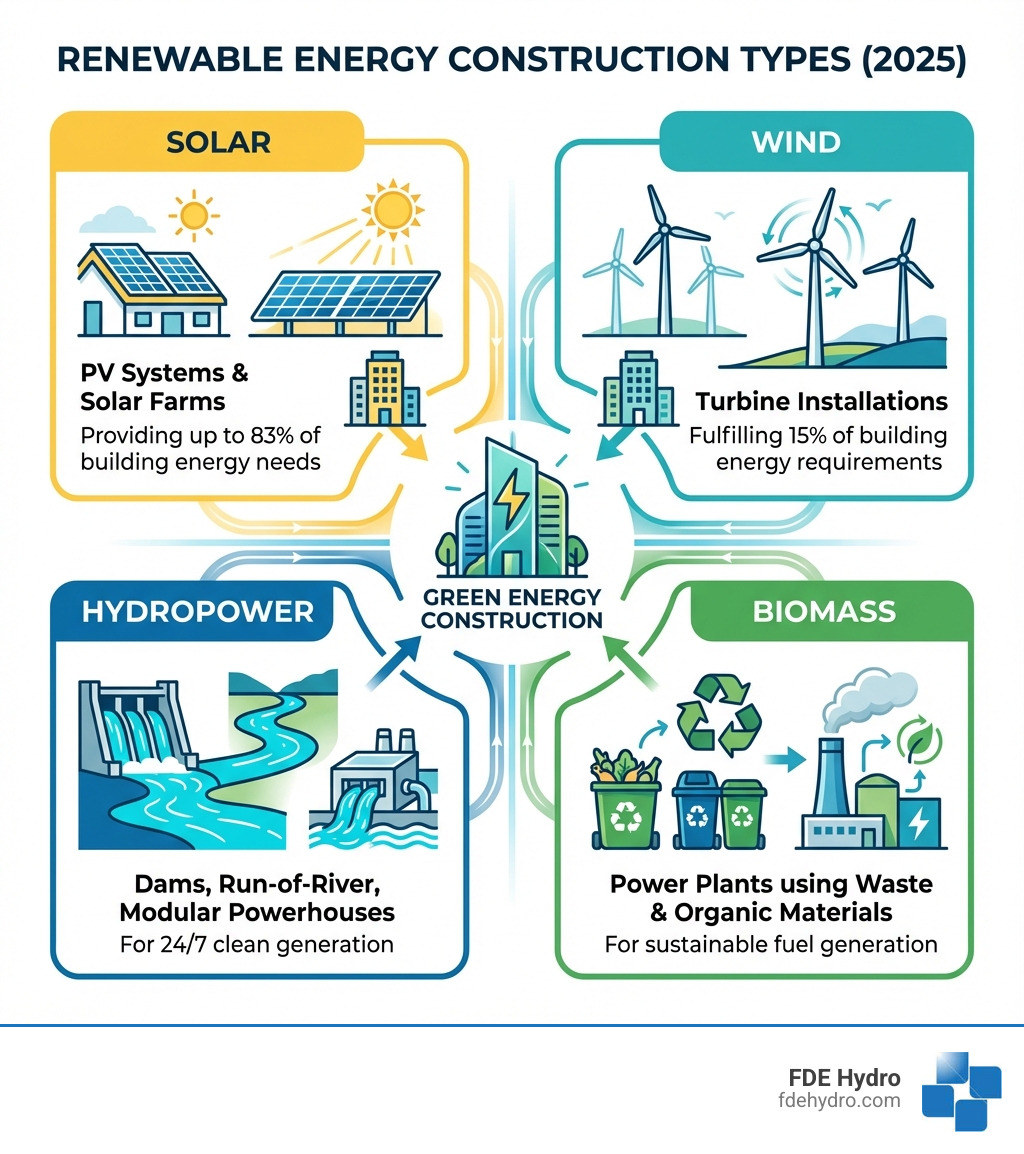
Green energy construction vocab explained:
The Spectrum of Renewable Energy Construction Projects
When we talk about green energy construction, we’re discussing a diverse landscape of projects, each with unique requirements and benefits. Our expertise spans various renewable energy types, focusing on sustainable and efficient development.
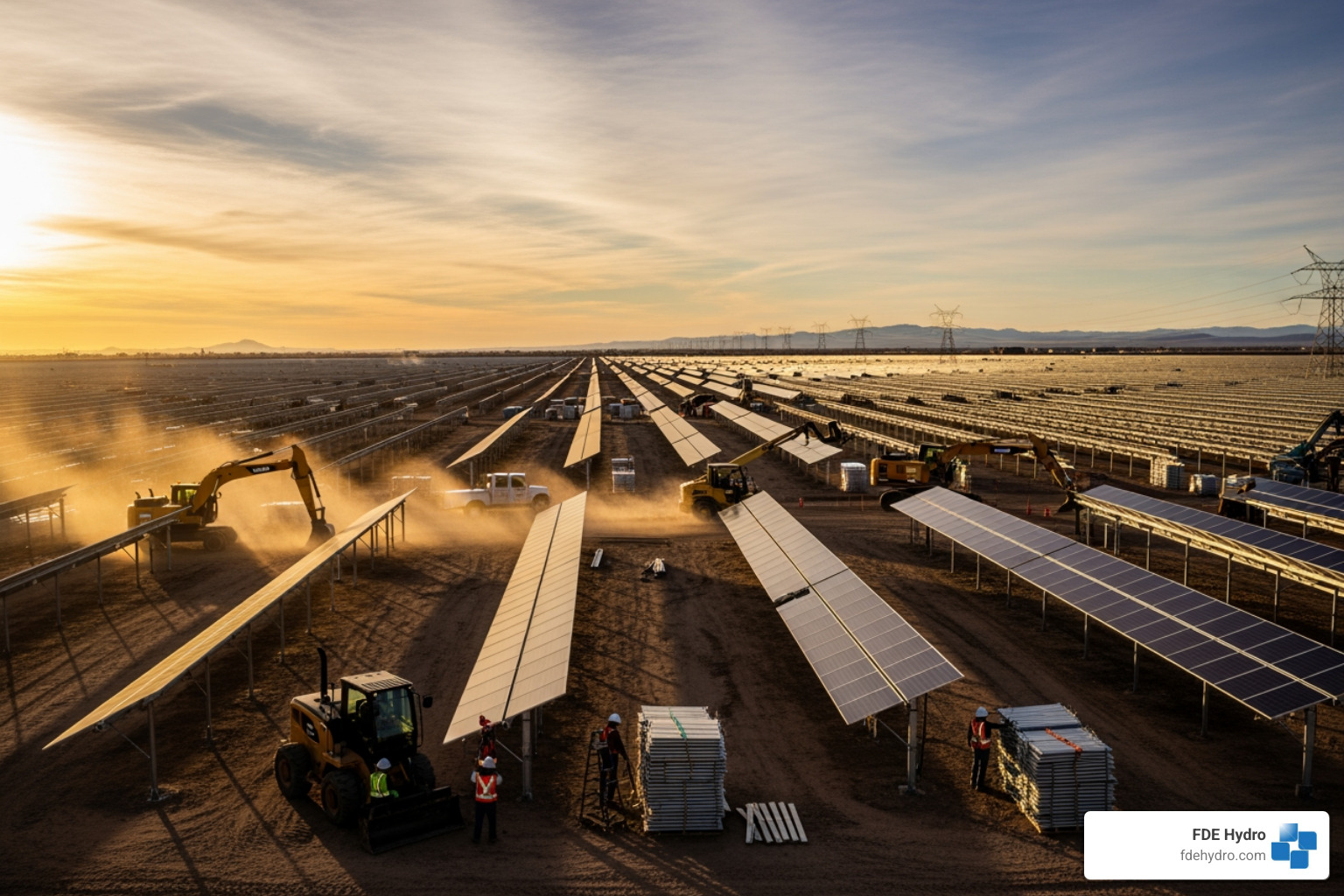
Solar Power Construction
Solar energy is a leading force in the clean energy transition, and its construction varies significantly depending on scale.
- Utility-scale solar farms involve vast arrays of photovoltaic (PV) panels spread across large areas, often requiring extensive civil planning, site preparation, and grid interconnection. These projects are designed to feed electricity directly into the power grid, serving thousands of homes and businesses.
- Rooftop solar installations are smaller, localized systems typically mounted on residential, commercial, or agricultural buildings. These systems offer immediate energy cost savings and can contribute to a building’s energy independence.
The integration of solar energy into buildings can significantly lift their renewable contribution, with some studies showing solar energy can fulfill up to 83% of a building’s energy requirements. For businesses and homeowners, these systems not only reduce operational costs but also lock in electricity rates, providing predictability in energy budgeting. Our team, along with partners like Green Energy Construction & Consulting (GECC), has over 15 years of expertise in solar energy solutions, having installed over 100 MW of solar systems. We understand the intricacies of these projects, from design to commissioning. To learn more about how these projects fit into the broader energy landscape, explore our insights on Clean Energy Infrastructure.
Wind Energy Construction
Wind energy harnesses the kinetic power of wind to generate electricity, making it another cornerstone of green energy construction.
- Onshore wind farms consist of multiple wind turbines erected on land, typically in areas with consistent high winds. These projects involve complex logistics for transporting massive turbine components and constructing robust foundations.
- Offshore wind turbines are built in coastal waters, where winds are often stronger and more consistent. While more challenging to construct, they offer significant power generation potential and less visual impact on populated areas.
Constructing wind energy projects demands meticulous logistical planning, resource distribution, and specialized mechanical and electrical expertise. Companies with deep experience in this field have completed thousands of wind turbine installations. For instance, some leading construction firms have more than 1,000 wind turbine installations under their belt. Integrating wind energy into buildings can fulfill about 15% of a building’s energy requirements. The scale of these projects requires robust construction capabilities and an unwavering commitment to safety and efficiency. Find more about how these projects contribute to a sustainable future by visiting our page on Sustainable Power Generation.
Hydropower Construction
As FDE Hydro’s core expertise, hydropower represents a reliable and continuous source of renewable energy. Our innovative approach to green energy construction in this sector sets us apart.
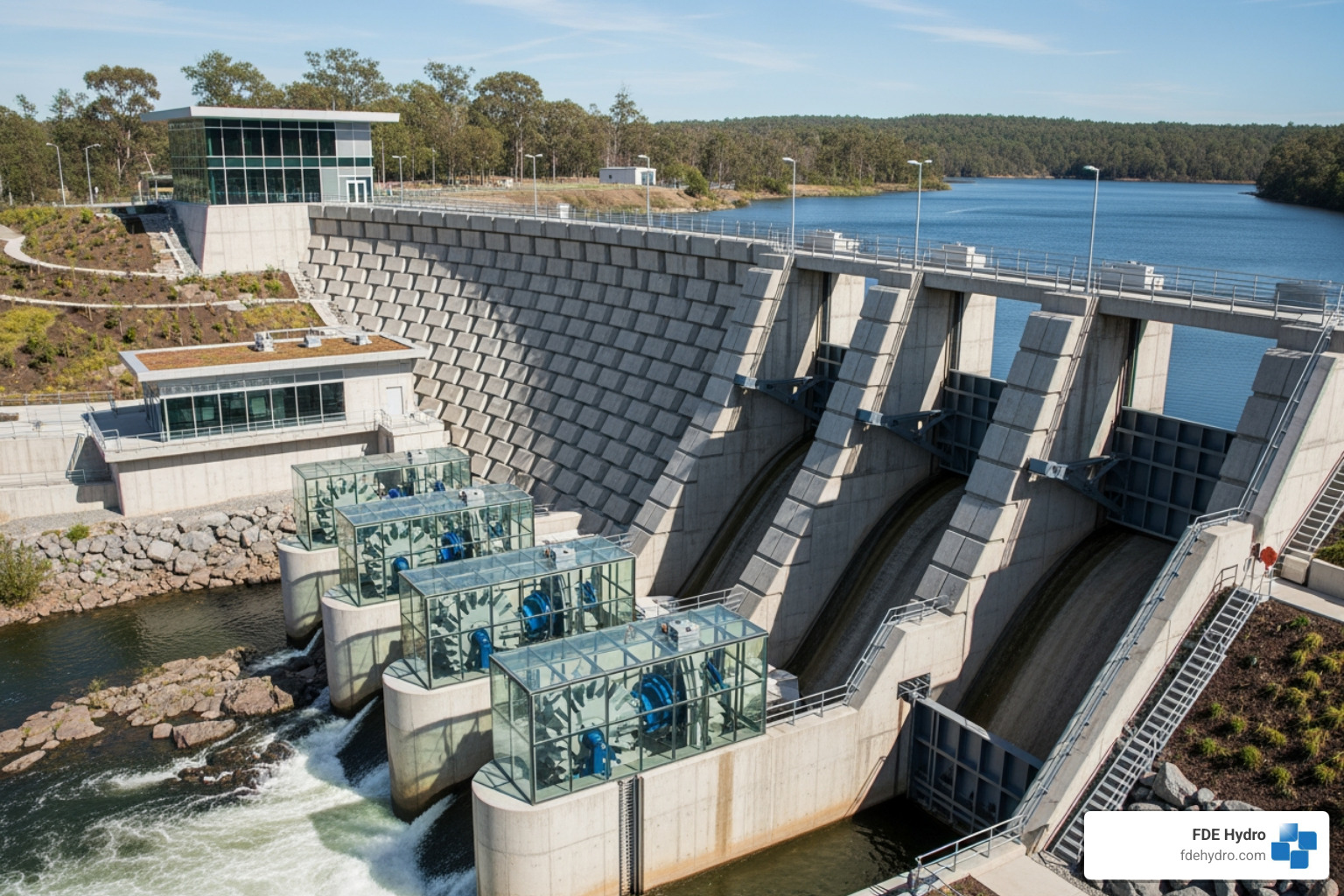
- Hydroelectric dams are large-scale projects that create reservoirs to control water flow and generate electricity. This involves significant civil engineering, often in challenging terrains.
- Run-of-river projects divert a portion of a river’s flow through a powerhouse and return it downstream, minimizing environmental impact compared to large dams.
- Pumped storage hydropower facilities store energy by pumping water uphill to a reservoir when electricity is cheap and releasing it to generate power when demand is high, acting as a giant battery for the grid.
Our patented modular precast concrete technology, often referred to as the “French Dam,” revolutionizes hydropower construction. This approach significantly reduces construction costs and time for building and retrofitting hydroelectric dams and water control systems across North America, Brazil, and Europe. This innovation allows for rapid installment of module precast civil infrastructure, akin to the efficiency seen in rapid bridge replacement systems.
We specialize in enhancing Modular Construction Techniques to deliver projects that are not only more efficient but also more resilient. Our work extends to dam rehabilitation, ensuring existing infrastructure can continue to serve its purpose sustainably. We focus on upgrading dams, spillways, and gates, and maintaining powerhouses and turbines. Explore our commitment to advancing Hydropower Innovation and how we’re building the future of water control structures.
Biomass and Geothermal Construction
Beyond solar, wind, and hydro, biomass and geothermal also play crucial roles in diversified green energy construction.
- Biomass power plants generate electricity or heat by burning organic materials like municipal solid waste, agricultural residues, or wood byproducts from timber operations. This sustainable fuel generation helps manage waste while producing energy. The production, transport, and demolition of construction materials used in public infrastructure account for approximately 8 million tonnes of greenhouse gas emissions annually. Utilizing biomass can help offset this.
- Geothermal heating systems tap into the Earth’s internal heat to provide heating and cooling for buildings. These systems are highly efficient and offer a constant, non-intermittent energy source, independent of climate or time of day. They operate quietly, enhancing building comfort and health.
The construction of these facilities involves specialized process equipment installation and careful consideration of resource availability and environmental impact. For biomass, this includes managing the supply chain for organic fuels, and for geothermal, it involves drilling and installing ground-source heat pumps.
Why Invest in Green Energy Construction? A Multifaceted Approach
Investing in green energy construction isn’t just an environmental choice; it’s a strategic decision with profound economic, environmental, and security benefits for businesses, homeowners, and entire nations.
Economic and Financial Advantages
The economic ripple effects of green energy construction are substantial.
- Job Creation: The sector is a powerful engine for employment. Canada’s green buildings industry already employs about 460,000 workers. The green retrofit sector alone can expect to see job growth of 777,000 to 2 million direct job years between now and 2050. This means hundreds of thousands of new jobs in engineering, manufacturing, installation, and maintenance across our target regions of North America, Brazil, and Europe.
- Long-term Savings: For businesses and homeowners, transitioning to green energy means taking control of escalating energy costs. The average annual increase of electricity pricing has been between 3-4% over the last 20 years, with recent spikes as much as 10%. Investing in renewable energy systems, such as solar, offers a hedge against this volatility, leading to predictable and often lower utility bills over the system’s lifespan.
- Increased Property Value: Homes with solar panels sell for 4.1% more, which translates to a significant additional value for homeowners. This makes green energy installations not just an operational saving but also a tangible asset.
- Financial Incentives: Governments actively promote green energy adoption through various programs. In the U.S., businesses can benefit from Federal Investment Tax Credits for Businesses and Accelerated Depreciation. Residential installations also qualify for Federal Investment Tax Credits for Residential, and agricultural operations can leverage Federal REAP Grants. These incentives significantly offset initial investment costs, making green energy more accessible and appealing.
These financial benefits underscore the growing importance of Sustainable Energy Production in our economies.
Environmental Superiority
The environmental advantages of choosing green energy construction over traditional methods are profound and urgent.
- Greenhouse Gas Reduction: Buildings are a major contributor to climate change. In Canada, buildings account for 18% of the country’s emissions, including electricity-related emissions. Over 96% of direct operational building emissions come from space and water heating, largely from fossil fuels. Furthermore, the production, transport, and demolition of construction materials for private construction generate approximately 28 million tonnes of greenhouse gas emissions annually. Green energy construction directly counters this by utilizing renewable sources that produce zero or minimal operational emissions.
- Reduced Air Pollution: The burning of fossil fuels for energy is a significant source of air pollution, contributing to millions of deaths globally each year. By shifting to clean energy, we drastically reduce the release of harmful pollutants, leading to healthier communities and ecosystems.
- Water Resource Preservation: Many traditional energy production methods are water-intensive. Green energy solutions, particularly well-designed hydropower and solar, can often minimize water usage or integrate water management practices that preserve this vital resource.
- Addressing Embodied Carbon vs. Operational Carbon: It’s crucial to consider both “operational carbon” (emissions from heating, cooling, and electricity during a building’s use) and “embodied carbon” (emissions generated during the manufacture, transport, and construction of building materials, along with end-of-life emissions). Green energy construction aims to reduce both. Our work with modular precast concrete, for example, can contribute to lower embodied carbon by optimizing material use and reducing waste.
Our commitment to Sustainable Infrastructure Development is driven by these critical environmental imperatives.
Bolstering Energy Independence and Security
Investing in green energy construction is a powerful step towards greater energy independence and security for nations and communities.
- Resilient Grid: Decentralized renewable energy sources, like solar arrays and small hydropower plants, can make the grid more resilient to disruptions. If one part of the system goes down, others can continue to operate. Hydropower, in particular, is a guardian of the grid, offering flexibility and rapid response to demand fluctuations.
- Reduced Fossil Fuel Reliance: By using abundant domestic renewable resources, countries can lessen their dependence on volatile global fossil fuel markets, protecting economies from price shocks and supply chain disruptions. This shift also improves national security by reducing reliance on foreign energy sources.
- Stable Energy Costs: Once constructed, renewable energy projects have minimal ongoing fuel costs, unlike fossil fuel plants that are subject to fluctuating commodity prices. This leads to more stable and predictable energy costs for consumers and industries.
We believe that a diversified portfolio of renewable energy sources, including the robust and reliable power of hydro, is essential for a secure energy future. Learn more about why hydropower is a cornerstone of energy stability in our article, 4 Reasons Why Hydropower is the Guardian of the Grid.
Navigating the Landscape: Innovations, Challenges, and Policy
The landscape of green energy construction is dynamic, shaped by continuous innovation, persistent challenges, and evolving government policies. Understanding these elements is key to successful project development.
The Role of Innovation in Construction Practices
Innovation is at the heart of advancing green energy construction, allowing us to build more efficiently, sustainably, and affordably.
- Modular Precast Technology: Our patented modular precast concrete technology, “French Dam,” is a prime example of how innovation transforms construction. By manufacturing dam components off-site in controlled environments, we significantly reduce on-site construction time, labor costs, and environmental impact. This approach boosts quality control and accelerates project delivery, critical for the rapid deployment of hydropower infrastructure in North America, Brazil, and Europe.
- Advanced Materials: The industry is increasingly adopting low-carbon construction materials, such as low-carbon concrete and sustainable wood products. These materials reduce the “embodied carbon” of buildings—the greenhouse gas emissions associated with their production, transport, and assembly. Canada, for instance, is uniquely positioned to supply the world with such materials.
- Energy Storage Systems: As renewable energy sources like solar and wind are intermittent, advanced energy storage systems (e.g., large-scale batteries, pumped hydro storage) are crucial for ensuring a stable and reliable power supply. The integration of these systems into construction projects is becoming standard practice.
- Smart Grids: Innovations in digital technology are leading to the development of smart grids, which use AI-Driven Development and AI Energy Management to optimize energy distribution, manage demand, and integrate diverse renewable sources seamlessly. This includes utilizing machine learning models to predict energy consumption with high accuracy and optimizing renewable energy system design and performance.
These technological advancements are not just theoretical; they are actively impacting construction practices, making projects faster, smarter, and more sustainable.
Overcoming Challenges in Green Energy Construction
While the opportunities in green energy construction are vast, we also face significant challenges that require strategic solutions.
- High Initial Costs: Renewable energy projects often have higher upfront capital costs compared to traditional fossil fuel projects. This can be a barrier for some investors and developers. However, long-term operational savings and government incentives often make these investments highly attractive over the project’s lifespan.
- Skilled Labor Demand: The rapid growth of the green energy sector creates a substantial demand for a skilled workforce. For example, RBC estimates that by 2030, Canada will need 45% more HVAC tradespeople and 55% more electricians to meet the demands of green building and electrification. This necessitates robust workforce development programs. The U.S. Department of Energy (DOE) is actively Supporting a Green Buildings Workforce to address this gap, focusing on training and career pathways.
- Intermittency Solutions: Solar and wind power are intermittent, meaning their output fluctuates with weather conditions. Overcoming this requires advanced energy storage solutions, hybrid renewable energy systems, and intelligent grid management to ensure a consistent power supply.
- Grid Integration: Connecting new, often decentralized, renewable energy projects to existing grid infrastructure can be complex, involving technical challenges and regulatory problems. Effective project management is crucial to steer these complexities, ensuring smooth interconnection and reliable operation.
- Retrofit Pace: For existing buildings, the pace of retrofits is a major concern. Historical data shows it could take 140 years to retrofit all residential buildings and 70 years for all commercial floor area at the current rate. This highlights the need for accelerated, efficient retrofit strategies.
We are committed to developing innovative solutions that help overcome these challenges, ensuring that green energy construction projects are not only technically feasible but also economically viable and seamlessly integrated into our communities.
Government Policies and Incentives as Catalysts
Government policies and incentives play a pivotal role in accelerating the growth and adoption of green energy construction. These frameworks create a supportive environment for investment and innovation.
- Investment Tax Credits (ITC): In the U.S., the Investment Tax Credit (ITC) offers significant financial incentives for solar and other renewable energy projects, reducing the upfront cost for developers and homeowners. Businesses can learn more about Federal Investment Tax Credits for Businesses.
- Carbon Pricing and Standards: Implementing carbon pricing mechanisms and renewable portfolio standards (RPS) creates market demand for clean energy. These policies incentivize developers to choose renewable sources and encourage utilities to incorporate more green energy into their portfolios.
- Comprehensive Strategies: Countries like Canada have launched ambitious initiatives like the Canada Green Buildings Strategy. This strategy aims to accelerate retrofits, build green and affordable from the start, and shape the buildings sector of the future. It includes programs like the Canada Greener Homes Grant, the Deep Retrofit Accelerator Initiative, and the Green and Inclusive Community Buildings Program, all designed to support the transition to net-zero and resilient buildings.
- “Buy Clean” Policies: Governments are increasingly implementing “Buy Clean” policies, leveraging procurement power to promote the use of low or net-zero-carbon construction materials. This stimulates demand for sustainable products and supports domestic manufacturing.
These policies, coupled with significant investments, are crucial for driving the necessary change in the construction sector. They provide the financial impetus and regulatory clarity needed for green energy construction to thrive.
Frequently Asked Questions about Green Energy Construction
We often encounter common questions about green energy construction. Here are some clear answers to help you steer this exciting field.
What are the primary types of renewable energy construction?
The main types of renewable energy construction we engage in, and that are changing the energy landscape, include:
- Solar Energy Construction: This involves building utility-scale solar farms, installing rooftop solar panels on residential, commercial, and agricultural properties, and integrating photovoltaic (PV) systems into building designs.
- Wind Energy Construction: This encompasses the development of onshore and offshore wind farms, including the complex process of turbine installation and the necessary logistical planning.
- Hydropower Construction: Our specialty, this includes the construction and modernization of hydroelectric dams, run-of-river projects, and pumped storage facilities, along with essential water control structures. We also focus on dam rehabilitation and retrofitting.
- Biomass and Geothermal Construction: This involves building biomass power plants that use organic waste for energy generation, and installing geothermal heating and cooling systems that tap into the Earth’s natural heat.
How does renewable energy construction contribute to economic growth?
Renewable energy construction is a powerful driver of economic growth in several ways:
- Job Creation: It generates hundreds of thousands of jobs across various sectors, including manufacturing, engineering, project management, and on-site construction. In Canada alone, the green buildings industry already employs about 460,000 workers, with projections indicating potential growth to 2 million direct job years by 2050.
- Long-term Savings: For businesses and homeowners, investing in renewable energy leads to significant long-term savings on energy bills, freeing up capital for other investments or expenditures.
- Increased Property Value: Properties with green energy installations, such as solar panels, often see an increase in market value, providing a tangible return on investment.
- Local Investment: Projects often involve local suppliers and services, stimulating regional economies and fostering innovation within the supply chain.
What makes a construction partner good for a green energy project?
Selecting the right partner for a green energy construction project is crucial for its success. A good partner will possess several key qualities:
- Proven Expertise: They should have deep, demonstrated experience in the specific renewable technology relevant to your project (e.g., solar, wind, or, in our case, hydropower). This includes technical knowledge and a track record of successful installations.
- Robust Safety Record: Given the complexity and scale of these projects, an unwavering commitment to safety and a zero-injury culture is paramount.
- Experience with Complex Logistics: Green energy construction often involves transporting oversized components, managing remote sites, and coordinating intricate schedules. A partner with strong logistical planning and resource distribution capabilities is essential.
- Grid Interconnection Expertise: Understanding the technical and regulatory requirements for connecting renewable energy systems to the existing power grid is vital for smooth project commissioning.
- Transparent Project Management: Look for a partner who offers clear communication, transparent reporting, and a collaborative approach from preconstruction through commissioning.
- Innovative Solutions: A partner who accepts innovation, such as our modular precast concrete technology for hydropower, can offer cost-effective, time-saving, and more sustainable construction methods.
At FDE Hydro, we pride ourselves on embodying these qualities, offering expert solutions built on decades of experience and a commitment to advancing the field of green energy construction.
Conclusion: Building a Sustainable Tomorrow
The journey towards a sustainable future is undeniably paved with green energy construction. From the vast solar farms basking under the sun in California to the towering wind turbines capturing gusts across the plains of Kansas, and the resilient hydropower facilities using the flow of rivers in New York and Brazil, we are actively reshaping our energy landscape.
The future outlook for the green energy construction sector is not just optimistic; it’s essential. With global commitments to net-zero emissions by 2050, the demand for renewable energy infrastructure will only accelerate. This transition requires significant investment—the Pembina Institute estimates that decarbonizing Canada’s buildings sector alone will require more than $400 billion over the next 30 years in capital investment.
This isn’t merely about building; it’s about innovating, collaborating, and deploying smart, efficient, and sustainable solutions at an unprecedented scale. The integration of advanced technologies, the development of low-carbon materials, and the cultivation of a skilled workforce are all critical components of this future.
At FDE Hydro, we are proud to be at the forefront of this change, particularly in advancing hydropower through our patented modular solutions. We believe that reliable, clean energy is not a luxury but a fundamental right and a necessity for a thriving planet.
As we look ahead, the importance of expertise, a commitment to innovation, and a collaborative spirit in green energy construction cannot be overstated. We are building not just power plants and infrastructure, but a more resilient, prosperous, and sustainable tomorrow for everyone.
To learn more about our innovative hydropower solutions and how we can partner with you on your next green energy construction project, please Contact us to learn more about our innovative hydropower solutions. We are ready to help you contribute to The Future of Hydropower.
