

Hydropower’s Pivotal Role in Tomorrow’s Energy Grid
The future of hydropower is undergoing a remarkable change from America’s oldest renewable energy source into a critical enabler of the modern clean energy grid. Here’s what’s next:
Key Developments Shaping Hydropower’s Future:
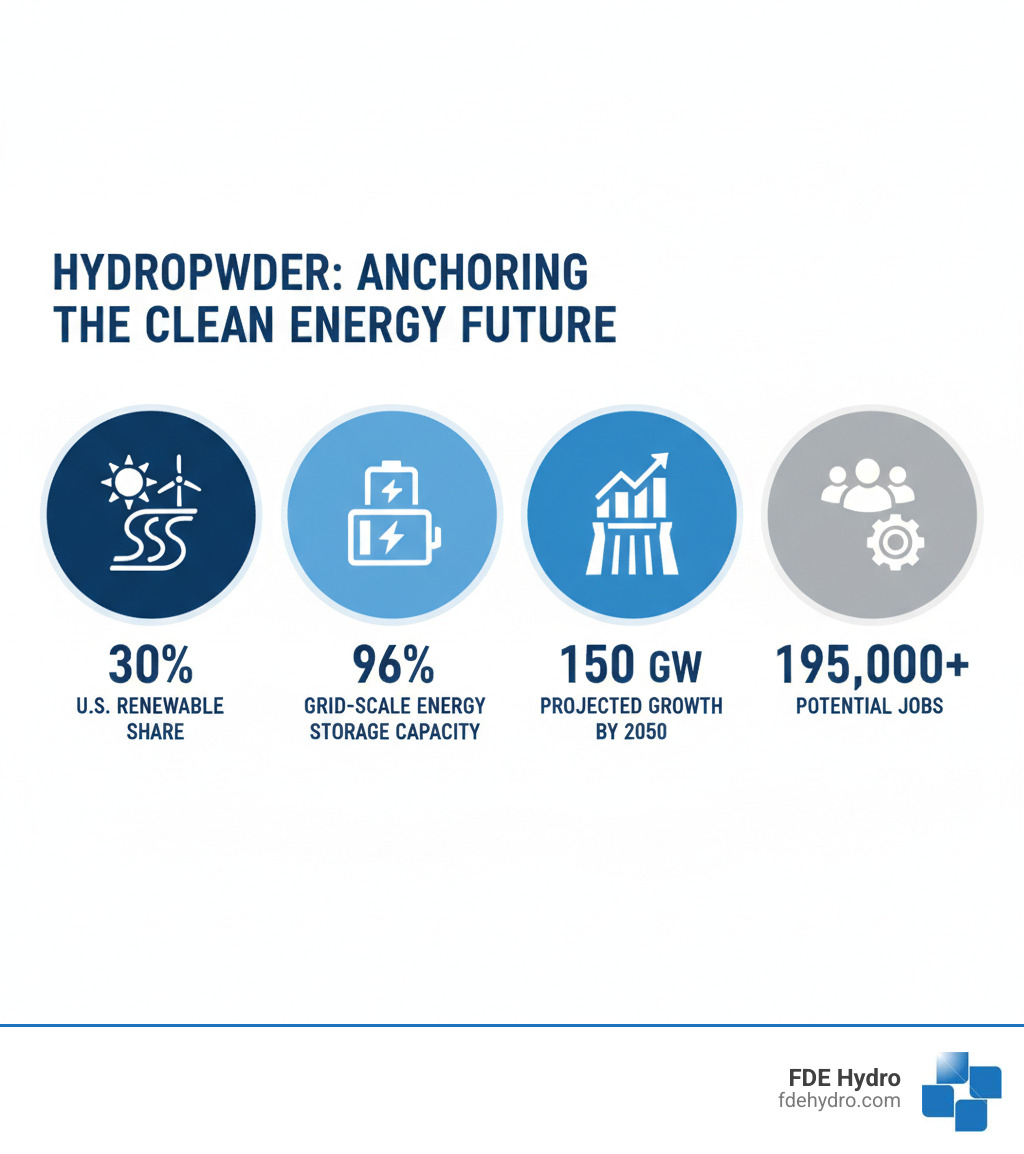
- Capacity Growth – U.S. hydropower could expand from 80 GW today to nearly 150 GW by 2050, supporting over 195,000 jobs
- Grid Stability – Pumped storage provides 96% of all U.S. energy storage capacity, essential for balancing solar and wind
- Modernization Focus – Upgrading existing infrastructure and powering 90,000+ non-powered dams offers massive potential
- Climate Adaptation – New technologies and flexible operations help hydropower adapt to changing rainfall patterns and droughts
- Environmental Innovation – Fish-friendly turbines and sustainable designs minimize ecological impacts while maintaining performance
Hydropower isn’t just surviving the energy transition—it’s anchoring it. While solar panels and wind turbines generate headlines, hydropower quietly provides the flexible, dispatchable power that keeps the lights on when the sun sets and the wind stops. As journalist Ezra Klein noted in 2022, hydropower has “slipped into obscurity” despite remaining the world’s largest source of renewable electricity generation.
The numbers tell a compelling story. Hydropower currently generates more electricity than all other renewable technologies combined and accounts for nearly 30% of U.S. renewable electricity generation. By 2050, it could reduce cumulative greenhouse gas emissions by 5.6 gigatonnes—equivalent to taking 1.2 billion cars off the road for a year—while saving $209 billion from avoided climate damages.
But this future requires action. Global hydropower must grow by just over 26 GW per year through 2030 to meet net-zero targets, requiring approximately $130 billion in annual investment—more than double current funding levels.
I’m Bill French, founder and CEO of FDE Hydro, and I’ve spent five decades in heavy civil construction before dedicating the last decade to revolutionizing the future of hydropower through modular construction solutions. In 2015, I was selected by the Department of Energy to help define next-generation hydropower strategies for the United States Congress.
Hydropower’s Enduring Legacy and Evolving Role
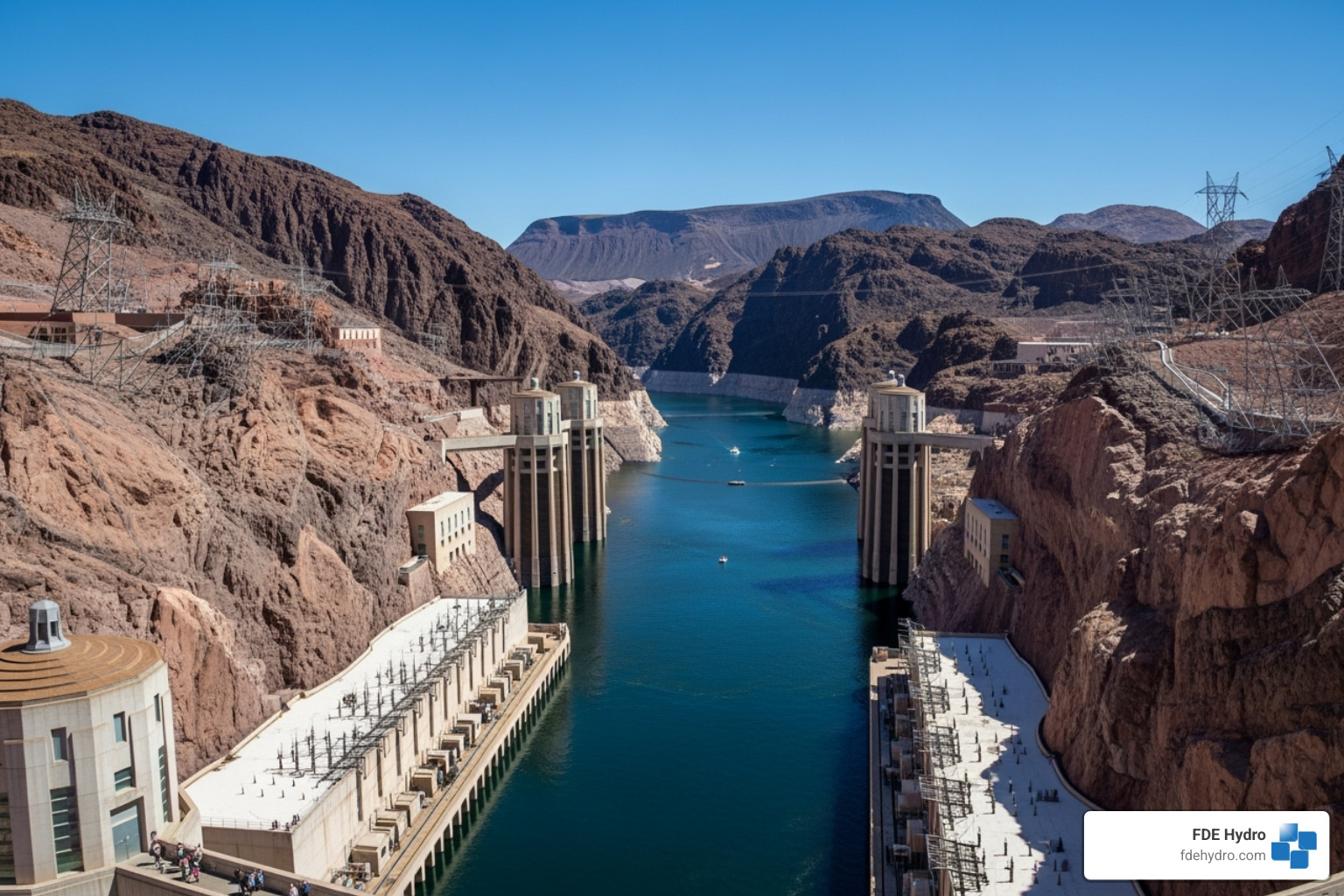
Hydropower has been the quiet workhorse of clean electricity for over a century. While solar and wind often take the spotlight, hydropower provides reliable power across the United States and around the world.
What makes hydropower different from its renewable cousins? Reliability. Solar panels need sunshine and wind turbines need wind, but hydropower plants deliver electricity on demand. They can ramp up or down in minutes, which is essential for grid stability as we add more weather-dependent renewables. This makes hydropower a “guardian of the grid”—an increasingly vital role as we build out the future of hydropower alongside solar and wind. You can learn more about this critical function in our article on 4 Reasons Why Hydropower is the Guardian of the Grid.
Hydropower by the Numbers: A Current Snapshot
The numbers are impressive. In 2022, hydropower generated nearly 30% of all renewable electricity in the United States. Globally, it produces more renewable electricity than any other source and is expected to hold that top spot well into the 2030s.
When it comes to energy storage, its dominance is even more striking. Pumped storage hydropower accounts for a staggering 96% of commercial energy storage capacity in the U.S. Nearly all our grid-scale energy storage comes from water flowing between reservoirs, acting as a massive natural battery. This fundamental advantage makes hydropower an irreplaceable part of our energy infrastructure. For more statistics, see the Department of Energy’s hydropower program.
Why It Remains a Cornerstone of Clean Energy
Hydropower’s continued importance stems from a combination of unique benefits that other technologies can’t match.
First, there’s grid flexibility. Hydropower delivers what engineers call “dispatchable power”—electricity you can turn on exactly when and where you need it. As we add more solar and wind to the grid, this flexibility becomes absolutely critical. Someone needs to fill in when the sun sets and the wind calms down. Hydropower does this job beautifully.
Second, the economics make sense over the long haul. Yes, building a hydropower facility requires significant upfront investment. But once it’s running, the fuel is free. Water keeps flowing, and operating costs stay low for decades. Many facilities built in the early 1900s are still generating clean electricity today. That’s a century of service—something few other technologies can claim.
Third, hydropower facilities serve multiple purposes beyond electricity generation. The same reservoirs that power turbines also manage water supplies, control flooding, and help communities survive droughts. According to the International Hydropower Association, hydropower’s water storage function prevents over $130 billion in annual economic losses from drought incidents worldwide.
This combination of baseload power, operational flexibility, economic efficiency, and water management makes hydropower an irreplaceable cornerstone of clean energy—not just today, but for the future we’re building.
The Bright Future of Hydropower: Growth, Grids, and Goals
When we talk about the future of hydropower, we’re not just imagining incremental improvements. We’re looking at a change that will redefine how our entire electrical grid operates. Picture hydropower as the steady hand that keeps everything balanced—when solar panels go dark at night and wind turbines sit idle on calm days, hydropower steps in without hesitation.
This isn’t theoretical. Hydropower already provides what engineers call “black start capability”—the ability to restart the entire grid after a complete blackout, all without needing power from the grid itself. That’s like being able to jumpstart a car without another vehicle. As we add more solar panels and wind farms to our energy mix, this stabilizing force becomes absolutely essential.
The numbers from the U.S. Department of Energy’s Hydropower Vision tell an exciting story. We’re not just maintaining what we have; we’re planning for significant expansion that could support more than 195,000 jobs by 2050. These aren’t just numbers on a page—they represent real careers in engineering, construction, operations, and maintenance across the country. The economic ripple effects extend far beyond the dam sites themselves.
The Critical Role of Pumped Storage Hydropower
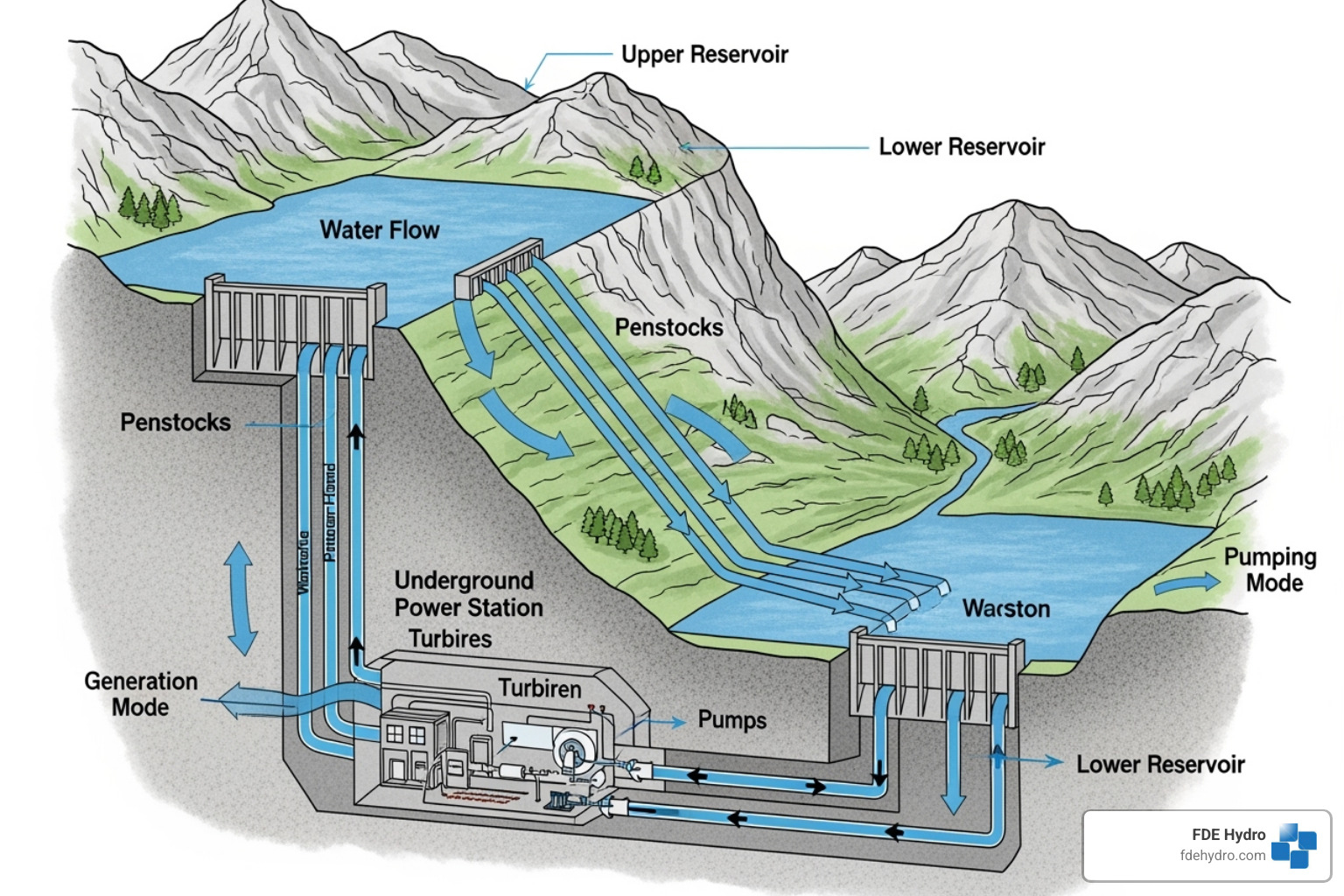
Here’s where things get really interesting. If traditional hydropower is impressive, pumped storage hydropower (PSH) is downright brilliant. Think of it as nature’s battery—but instead of lithium and cobalt, it uses something we have in abundance: water and gravity.
The concept is neatly simple. During times when we have excess electricity—say, when it’s windy at night and demand is low—PSH facilities pump water uphill to a higher reservoir. When we need that power back, usually during peak afternoon hours, the water flows back down through turbines, generating electricity on demand. It’s like having a massive savings account for energy.
Right now, PSH accounts for about 96% of all grid-scale energy storage in the United States. Let that sink in for a moment. While battery technology gets most of the attention in the news, pumped storage has been quietly doing the heavy lifting for decades. And it’s only going to become more critical as we add more variable renewable sources to the grid.
The beauty of PSH lies in its ability to enable high penetrations of solar and wind power. Without adequate storage, adding too much intermittent renewable energy can actually destabilize the grid. PSH solves this problem by storing surplus energy when renewables are producing more than we need and releasing it precisely when demand peaks. To understand this technology better, visit our page on Pumped Storage Hydropower.
The International Energy Agency makes it clear: a clean energy future requires dramatically more energy storage than we have today. According to IEA data on grid-scale storage, we’ll need to expand our storage capacity significantly to meet our climate goals. PSH is uniquely positioned to meet this challenge at the scale required.
Projecting the Future of Hydropower Capacity
The growth potential is staggering. In the United States alone, we could expand from our current 80 gigawatts (GW) of hydropower capacity to nearly 150 GW by 2050. That’s nearly doubling what we have now—adding enough capacity to power tens of millions of homes.
This isn’t just ambitious dreaming. The Update of the Hydropower Vision Roadmap lays out a clear, achievable path forward. It identifies specific opportunities, from upgrading existing facilities to adding power generation to non-powered dams that already exist.
The global picture is even more striking. To stay on track with net-zero emissions targets, the world needs to add just over 26 GW of hydropower capacity every year through 2030. By 2050, we need to double global hydropower capacity, which requires a cumulative investment of approximately $3.7 trillion—about $130 billion annually. That sounds like a lot, and it is. But consider what we get in return.
By 2050, this expanded hydropower capacity can reduce cumulative greenhouse gas emissions by 5.6 gigatonnes. To put that in perspective, that’s equivalent to taking nearly 1.2 billion passenger vehicles off the road for an entire year. The avoided climate damages alone are valued at $209 billion. When you factor in the jobs created, the grid stability provided, and the water management benefits, the investment makes perfect sense.
The future of hydropower isn’t just bright—it’s essential. We can’t reach our clean energy goals without it. Every solar panel and wind turbine we add to the grid makes hydropower’s balancing act more valuable, not less. Hydropower will continue evolving from America’s oldest renewable energy source into the backbone of our modern clean energy grid.
Innovating for a Sustainable Future: New Hydropower Technologies
The future of hydropower isn’t just about building more of what we’ve always built. It’s about rethinking everything—from how we construct facilities to how we design turbines that protect the very ecosystems they operate in. We’re witnessing a remarkable wave of innovation that’s modernizing aging infrastructure and pioneering entirely new ways to harvest energy from water. This includes advanced turbines, marine and hydrokinetic energy systems that capture the power of tides and waves, and construction methods that slash both costs and timelines. The mission is clear: make hydropower even more efficient, sustainable, and compatible with our modern grid. You can explore more about these exciting developments in Reinvigorating Hydropower.
Upgrading the Old and Building Smarter
Here’s a staggering fact: the United States has over 90,000 dams that don’t generate a single kilowatt of electricity. These “non-powered dams” represent one of the most significant untapped renewable energy resources on the planet. By adding generation capabilities to existing structures, we avoid the environmental impact of new construction while open uping massive clean energy potential. It’s the low-hanging fruit of the energy transition, and we’d be foolish not to pick it.
This is exactly where FDE Hydro’s modular precast concrete technology—what we call “French Dam” technology—changes the game. Our patented system transforms how hydroelectric dams and water control systems are built and retrofitted. Instead of years of on-site construction, we manufacture modular components off-site and assemble them quickly in the field. The result? We can reduce construction time by up to 75% and cut costs dramatically, making previously uneconomical projects suddenly viable. This approach is perfect for breathing new life into aging infrastructure, converting those thousands of non-powered dams into clean energy producers, and strengthening older structures to meet modern standards. We genuinely believe that The Biggest Untapped Solution to Climate Change is in the Water.
But innovation isn’t just about concrete and steel. Digitalization and AI-powered optimization are revolutionizing how hydropower facilities operate. Modern software can predict water inflows with remarkable accuracy, optimize generation schedules based on real-time grid demand and environmental conditions, and manage maintenance proactively before problems arise. These digital tools squeeze every possible kilowatt-hour from existing facilities while extending their operational lifespans and minimizing downtime.
Fish-Friendly and Environmentally-Conscious Designs
Let’s be honest: hydropower’s environmental reputation hasn’t always been stellar, particularly when it comes to fish and aquatic ecosystems. Dams historically blocked migration routes and turbines posed serious hazards to fish populations. But the future of hydropower is writing a very different story—one where clean energy and healthy rivers coexist.
Today’s hydropower plants incorporate sophisticated fish passage devices like fish ladders, lifts, and bypass systems that help fish safely steer around dams to reach their spawning grounds. These aren’t afterthoughts—they’re integral to modern facility design.
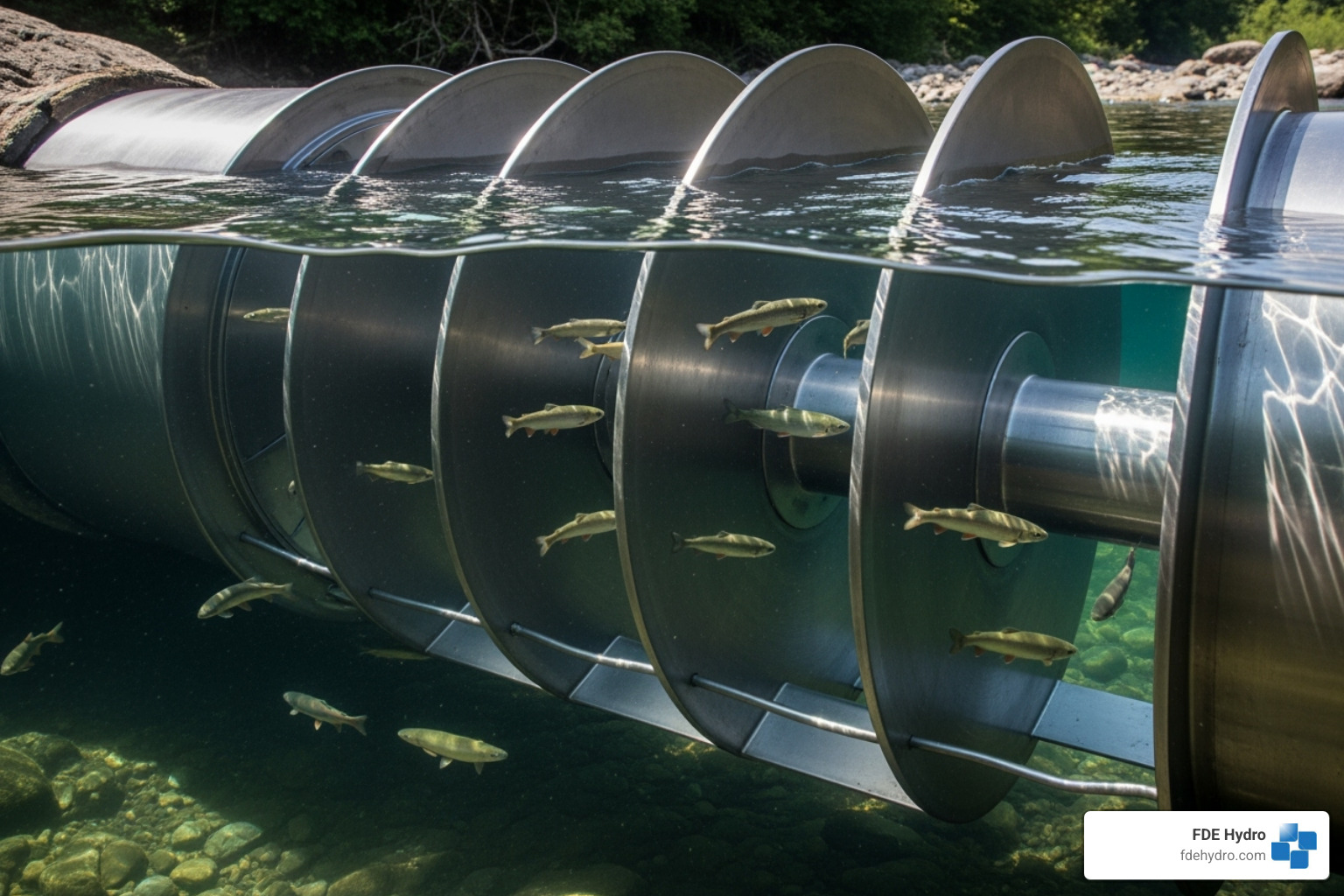
Even more exciting are the breakthroughs in fish-friendly turbine technology. Engineers have developed minimum gap runner turbines and innovative low-head turbines that dramatically reduce harm to aquatic life passing through them. One preliminary study showed a 100% survival rate for American eels passing through a novel turbine design—a result that would have seemed impossible just a decade ago. You can read more about these remarkable findings in this Study on fish survival rates.
Aerating turbines represent another thoughtful innovation, introducing oxygen into downstream water to improve water quality and support healthier aquatic ecosystems. Meanwhile, run-of-river systems generate electricity using natural river flow, often without large reservoirs, minimizing ecological disruption while still producing reliable power.
Advanced sediment management techniques are helping maintain natural river processes that are essential for healthy habitats. By allowing sediment to flow through or around dams in controlled ways, we’re preserving the natural dynamics that aquatic life depends on.
These innovations prove that we don’t have to choose between clean energy and environmental protection. The future of hydropower accepts both, demonstrating that with smart design and genuine commitment, we can generate the power our society needs while safeguarding the rivers and ecosystems we all treasure.
Navigating the Challenges: Environment, Society, and Climate
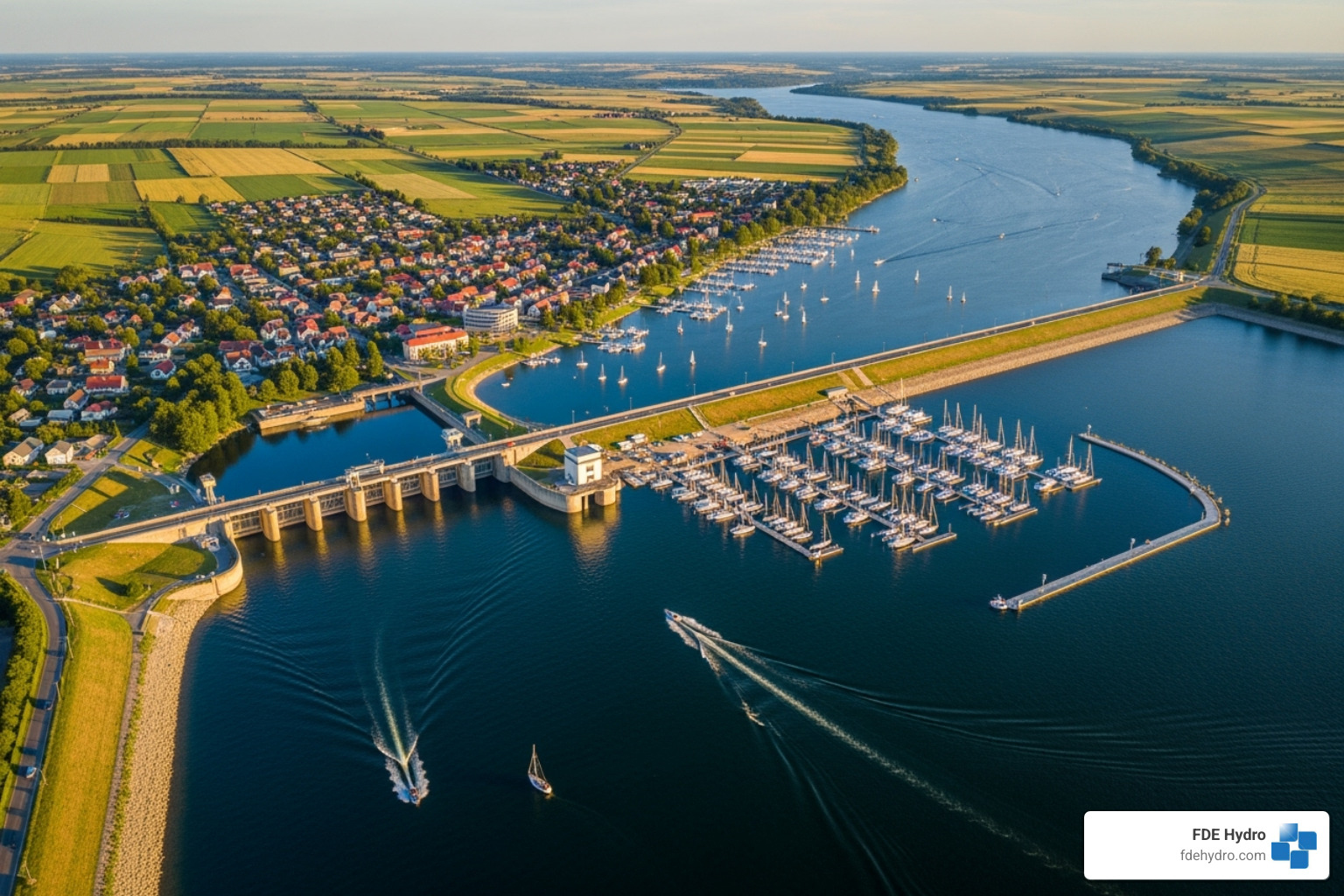
Let’s be honest: the future of hydropower isn’t all smooth sailing. While we’re passionate about hydropower’s potential, we also need to talk openly about the real challenges. These include environmental impacts, social considerations, and the pressing reality of climate change. Meeting these challenges head-on requires thoughtful policy, smart regulation, and people working together across borders and communities.
Balancing Energy Needs with Environmental Stewardship
Here’s the thing about hydropower and the environment: it’s complicated, but in ways we can address. Yes, hydropower produces zero emissions when generating electricity. But dams can affect aquatic ecosystems, change fish migration patterns, and impact water quality. Rivers aren’t just water moving downhill—they’re living systems that countless species depend on.
This is especially true for Tribal communities, who have lived alongside these rivers for thousands of years. The Columbia River Inter-Tribal Fish Commission’s perspective on salmon puts it powerfully: “Without salmon returning to our rivers and streams, we would cease to be Indian people.” When you read words like that, you understand why getting hydropower right isn’t just about engineering—it’s about respecting cultures, traditions, and ways of life that are irreplaceable.
That’s why meaningful stakeholder engagement isn’t optional. It’s essential. We need to sit down with Tribal leaders, environmental scientists, local communities, and regulators to find solutions that work for everyone. This means following sustainable development standards, conducting thorough environmental assessments, and being willing to adapt our plans based on what we learn.
The good news? It’s possible to generate clean energy while protecting ecosystems. Modern fish passage devices help salmon and other species steer around dams. Advanced monitoring ensures water quality stays healthy downstream. And when we retrofit existing dams instead of building new ones, we avoid many environmental impacts altogether. The future of hydropower depends on our commitment to doing this work thoughtfully and respectfully.
Adapting to a Changing Climate and Policy Landscape
Climate change creates an interesting paradox for hydropower. We need hydropower to fight climate change by replacing fossil fuels. But hydropower itself is vulnerable to climate impacts like droughts and changing rainfall patterns. It’s a challenge we can’t ignore.
The western U.S. has shown us what’s at stake. Recent megadroughts have significantly reduced hydropower generation in some areas. Summer flows are dropping in many rivers, even as overall annual rainfall might stay roughly the same. This means we need smarter reservoir management—storing water strategically, coordinating across multiple facilities, and planning for both wet and dry years.
Fortunately, policy is starting to catch up with reality. The Inflation Reduction Act (IRA), passed in 2022, includes important support for hydropower. Tax credits now help fund new facilities and crucial upgrades to existing ones. Given that the average U.S. hydropower plant is over 60 years old, these modernization incentives couldn’t come at a better time.
FERC licensing reform is another piece of the puzzle. The licensing process has historically been lengthy and complex. Proposed legislation like The Hydropower Clean Energy Future Act aims to streamline approvals while maintaining strong environmental protections. It encourages innovative turbine designs and removes unnecessary barriers, helping us build the clean energy infrastructure we need faster.
These policy changes, combined with technological innovation and adaptive management, give us the tools to steer climate uncertainty. International collaboration also matters—countries around the world are facing similar challenges, and sharing knowledge about what works (and what doesn’t) helps everyone move forward faster.
The path ahead requires balancing competing needs, listening to diverse voices, and staying flexible as conditions change. But that’s exactly what makes the future of hydropower so important—and so achievable.
Frequently Asked Questions about the Future of Hydropower
The future of hydropower often sparks questions, especially when people compare it to solar and wind or wonder about its environmental credentials. Let’s address the most common questions I hear.
How does hydropower compare to solar and wind?
Here’s the honest truth: we need all three. But they each bring different strengths to the table.
Hydropower’s superpower is reliability. When you flip a light switch at 8 PM on a cloudy, windless evening, hydropower is what keeps your lights on. We can dispatch it instantly—ramping generation up or down in seconds—something solar and wind simply can’t do. They’re brilliant technologies, but they’re at the mercy of weather patterns.
Think of it this way: hydropower acts like a massive battery for the grid, storing energy when we have surplus (often from solar and wind) and releasing it precisely when demand peaks. That’s why pumped storage hydropower provides 96% of the U.S.’s commercial energy storage capacity. Solar panels and wind turbines can’t store energy on their own.
The cost picture is nuanced. Yes, hydropower typically requires higher upfront investment and a larger physical footprint than individual solar or wind farms. But here’s what matters: once built, the “fuel” is free, operating costs are minimal, and these facilities run for 50 to 100 years or more. Over that lifespan, hydropower becomes incredibly cost-effective.
The future of hydropower isn’t about competition—it’s about collaboration. Hydropower provides the stable backbone that allows massive integration of variable renewables. They’re teammates, not rivals.
Is hydropower a “clean” energy source?
Absolutely. Hydropower produces zero greenhouse gas emissions at the point of generation. That’s why it’s been a cornerstone of clean energy strategies for decades.
Now, let’s be transparent about the full picture. Some reservoirs, particularly in tropical regions, can release methane from decaying organic matter. And as we’ve discussed, there are localized impacts on river ecosystems that we take seriously and work hard to mitigate.
But here’s the crucial context: when you compare hydropower’s lifecycle emissions to fossil fuels, there’s simply no contest. Modern hydropower practices are continually evolving to minimize environmental impacts through fish-friendly turbines, careful water management, and smart operational strategies.
The bottom line? Hydropower is clean energy that’s getting even cleaner as technology advances and we learn more about sustainable operations.
What is the biggest opportunity for hydropower growth?
This one’s exciting because the answer is hiding in plain sight: upgrading and powering existing infrastructure.
Right now, there are over 90,000 dams in the United States. The vast majority were built for irrigation, flood control, or navigation—and they don’t generate a single watt of electricity. Imagine that: thousands of structures already sitting in our rivers, doing important work, but missing out on their clean energy potential.
Retrofitting these non-powered dams represents the single most significant near-term opportunity for hydropower growth. Why? Because it sidesteps the biggest challenges of new dam construction. You’re not acquiring new land, you’re not disrupting pristine ecosystems, and you’re not navigating the complex social and environmental considerations that come with building in untouched areas.
The economics make perfect sense too. Using existing civil infrastructure is far more cost-effective than starting from scratch. And with modern modular construction techniques—like the technology we’ve developed at FDE Hydro—we can bring these projects online faster and more affordably than ever before.
This isn’t just about generating more clean energy. It’s about being smart with the resources we already have, improving the structural integrity of aging dams, and enhancing their multi-purpose functionality for communities. It’s a pragmatic, powerful path forward that makes sense from every angle: environmental, economic, and social.
Conclusion: Powering Forward with Water
As we’ve explored throughout this article, the future of hydropower is anything but stagnant. This century-old technology is experiencing a renaissance, evolving from America’s original renewable energy source into the sophisticated backbone of our modern clean energy grid. It’s not just surviving the energy transition—it’s making it possible.
Think about what we’ve covered: hydropower’s best ability to store energy through pumped storage facilities, its flexibility to balance the intermittent nature of solar and wind, and its capacity to restart the entire grid after a blackout. These aren’t just technical specifications; they’re the essential capabilities that will carry us toward a carbon-free future. While other renewables capture headlines with their rapid growth, hydropower quietly does the heavy lifting, providing the stability and reliability that keeps our lights on every single day.
The path forward is clear, and it’s filled with opportunity. We have over 90,000 non-powered dams in the United States alone, each one representing a chance to generate clean electricity without building new infrastructure or disrupting pristine ecosystems. We have aging facilities ready for modernization, equipped with fish-friendly turbines and AI-powered optimization that can make them more efficient and environmentally responsible than ever before. And we have the potential to grow U.S. hydropower capacity from 80 GW today to nearly 150 GW by 2050, supporting hundreds of thousands of jobs while avoiding billions of tons of greenhouse gas emissions.
But potential means nothing without action and innovation. That’s where companies like FDE Hydro come in. Our patented modular precast concrete technology is specifically designed to tackle one of hydropower’s biggest challenges: the time and cost of construction. By using prefabricated components, we can retrofit existing dams and build new facilities faster and more affordably than traditional methods. This isn’t just about saving money—it’s about accelerating our transition to clean energy when every year counts.
The future of hydropower requires us to balance multiple priorities. We must generate the clean, reliable electricity our society needs while respecting the rivers, fish, and communities that depend on healthy aquatic ecosystems. We must adapt to a changing climate while providing the very tool that helps us fight it. And we must move quickly while building thoughtfully, with an eye toward sustainability that extends for generations.
This is the work ahead of us, and it’s work worth doing. Water has powered human civilization for thousands of years, from ancient waterwheels to today’s massive turbines. Now, as we face the defining challenge of climate change, it’s time to harness that power in smarter, cleaner, and more innovative ways than ever before.
We invite you to join us on this journey. Whether you’re an energy professional, a policy maker, or simply someone who cares about our planet’s future, there’s a role for you in the story of modern hydropower. Learn more about the power of modern Hydropower and find how this foundational renewable energy source is powering us forward into a cleaner, more resilient tomorrow.
