

Why Hydro Dam Efficiency Matters for Your Next Project
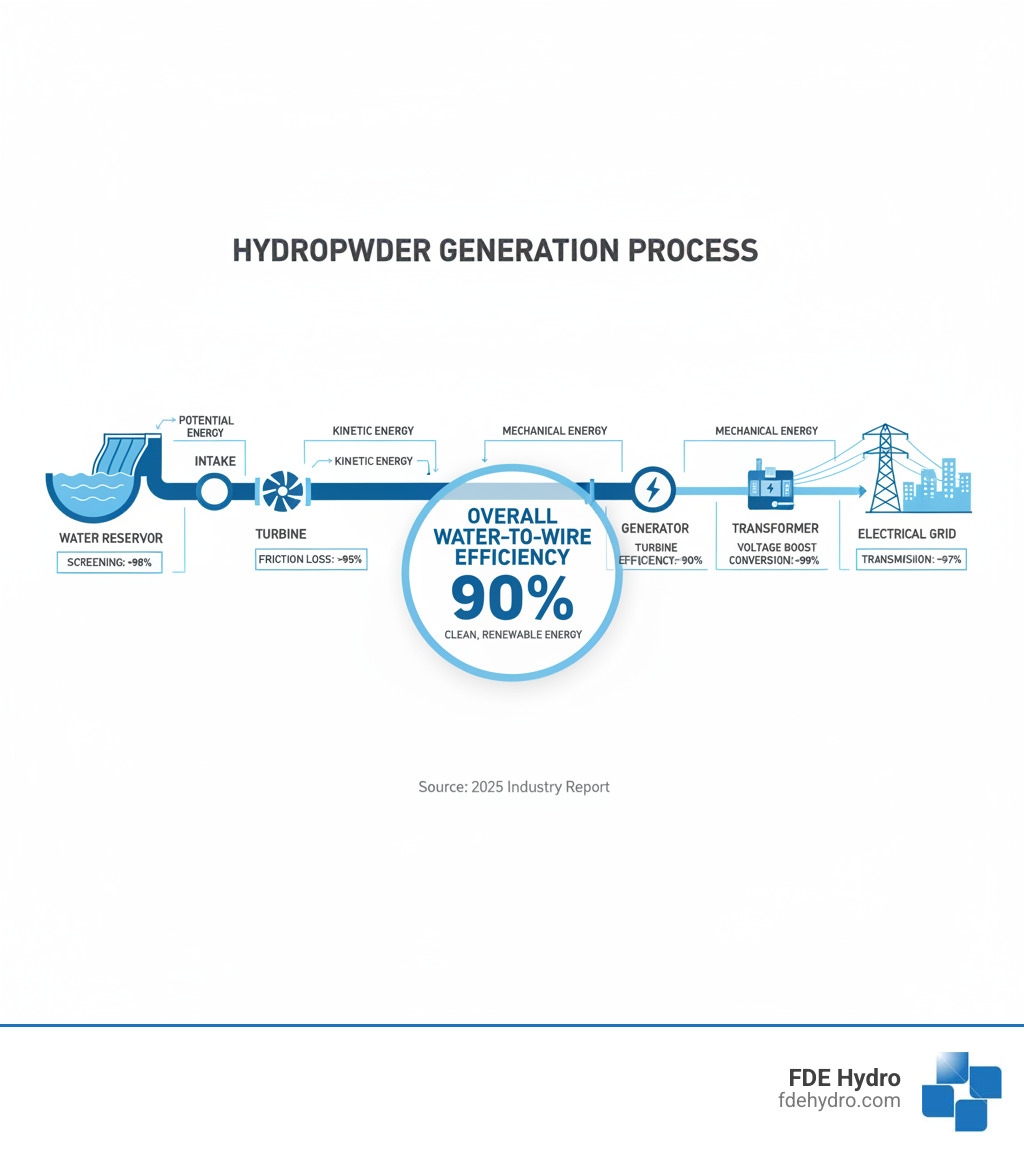
Hydro dam efficiency stands at the forefront of renewable energy generation, converting up to 90% of water’s potential energy into electricity—significantly outperforming solar (30-36%), wind (25-45%), and even coal (33-40%). This remarkable water-to-wire conversion makes hydropower one of the most efficient energy sources available today.
Key efficiency factors at a glance:
- Conversion efficiency: 90% from water to electrical power
- Capacity factor: Typically 40% in the U.S., varying by season and water availability
- Core metrics: Water consumption rate (RC), hydropower utilization rate (RU), and power generation rate
- Primary influences: Hydraulic head, water flow rate, turbine type, and dam design
- Lifespan advantage: 65-85 years with low operational costs despite high upfront investment
But here’s what most project managers miss: Efficiency isn’t just about the turbine. It’s about the entire system—from reservoir management and penstock design to modernization strategies and environmental considerations. A dam with the best turbine can still underperform due to sedimentation, outdated infrastructure, or inefficient operational practices.
The hydropower industry faces a critical juncture. By 2030, more than 20% of global hydropower units will exceed 55 years old and require refurbishment. Meanwhile, only 25% of the world’s 45,000 large dams currently generate electricity, representing enormous untapped potential. The challenge isn’t just building new facilities—it’s maximizing what we already have while reducing construction timelines, capital expenditure, and environmental impact.
As Bill French Sr., Founder and CEO of FDE Hydro™, I’ve spent five decades in civil construction and the last decade specifically focused on hydro dam efficiency through modular construction innovations. Our work with the Department of Energy’s Hydropower Vision Task Force has shown that next-generation solutions can dramatically improve both economic and environmental performance.
Understanding and Measuring Hydro Dam Efficiency
When we talk about hydro dam efficiency, we’re really asking: how well does this massive structure convert falling water into electricity? The answer is impressive. Modern hydroelectric plants achieve water-to-wire efficiency of up to 90%—meaning nearly every drop of potential energy becomes usable power.
This isn’t just good. It’s exceptional. Solar panels convert sunlight at 30-36% efficiency. Wind turbines operate at 25-45%. Even coal-fired power plants, which have been optimized for over a century, typically max out at 33-40%. Hydropower’s superior conversion rate is precisely why it remains a leading renewable source in the U.S., accounting for a substantial portion of utility-scale renewable electricity generation.
But here’s the thing: that 90% figure is an average. Real-world performance varies dramatically based on dozens of factors—from how the water flows through the penstock to whether sediment has accumulated in the reservoir. That’s why understanding the right metrics matters so much.
Core Metrics for Hydro Dam Efficiency
Theoretical calculations can tell you what should happen. But actual measurements tell you what is happening—and that’s where the real story unfolds.
Three core metrics reveal the truth about any hydropower plant’s performance. The water consumption rate (RC) shows how much water you’re using per unit of electricity generated. If this number creeps too high, you’re essentially wasting water—using more than necessary to produce the same amount of power.
The hydropower utilization rate (RU) measures how much of your available water potential actually becomes electricity. A low RU means you’re leaving energy on the table, like having money in your pocket but never spending it. Finally, the power generation rate tracks your actual electrical output over time—the bottom line that determines whether your plant is meeting expectations.
A fascinating case study on power station evaluation examined China’s Longyangxia power station and found something surprising. The theoretical calculations suggested the plant should perform well, but actual measurements revealed “unreasonable” economic operation. The water consumption rate exceeded 1 (too much water used), the utilization rate fell below 1 (underperforming potential), and the improvement index stayed negative (declining efficiency). The lesson? Site-specific data from real-time observations beats theoretical models every time.
This is why we emphasize practical, measurable performance at FDE Hydro. Understanding these fundamentals helps project managers make informed decisions. For those new to these concepts, our Energy 101 resource breaks down the basics of energy conversion and efficiency in plain language.
Why Capacity Factor Matters
Here’s where things get interesting. Even with 90% conversion efficiency, most U.S. hydroelectric plants operate at a capacity factor of around 40%. That means they generate 40% of what they could produce if running at full capacity 24/7.
Why such a gap? Because hydro dam efficiency isn’t just about machinery—it’s about water availability, and water doesn’t arrive on a predictable schedule.
Spring snow-melt can flood reservoirs with water, driving generation skyward. Summer droughts can reduce flows to a trickle, forcing plants to dial back output or shut down entirely. California’s prolonged drought conditions have repeatedly forced adjustments in hydropower generation. Brazil faces similar challenges as river basins dry up, directly impacting capacity factors across its hydropower-dependent grid.
These seasonal variations might sound like a weakness, but they actually reveal hydropower’s hidden strength: reliability and dispatchability. Unlike solar panels that go dark at sunset or wind turbines that stop when the breeze dies, hydropower responds to demand changes almost instantly. When the grid needs more power—right now—hydropower can deliver.
This flexibility makes hydropower the backup dancer that keeps the whole show running smoothly. It’s why we call it the guardian of the grid, stepping in precisely when intermittent renewables like solar and wind can’t produce. The capacity factor may be 40%, but that 40% shows up exactly when you need it most. Learn more about this critical role in our article on 4 Reasons Why Hydropower is the Guardian of the Grid.
Key Factors Influencing Hydropower Plant Performance
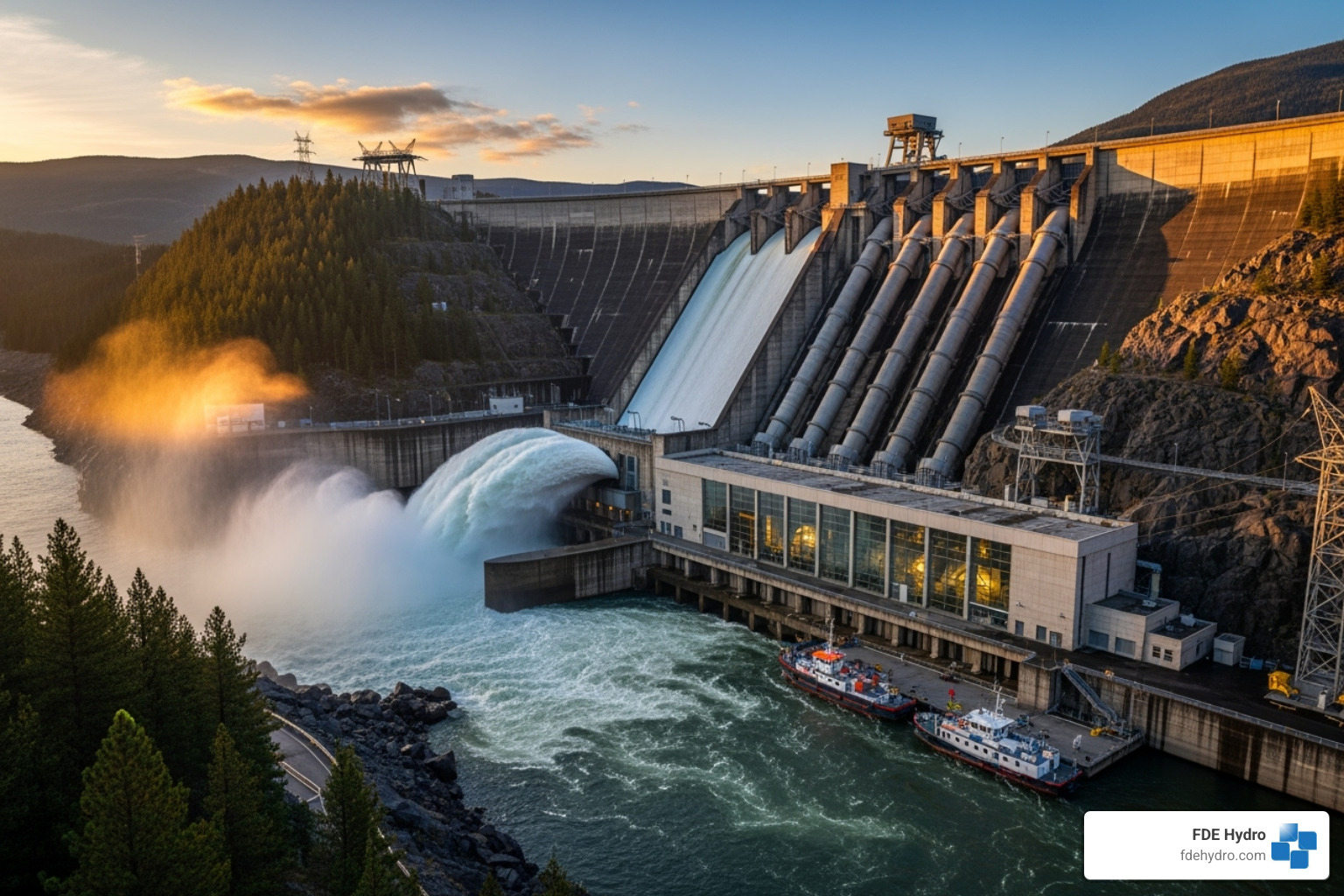
Understanding hydro dam efficiency means recognizing that it’s not just about one component working well—it’s about how all the pieces work together. Think of it like an orchestra: every instrument matters, and when one is out of tune, the whole performance suffers.
The most critical factor is hydraulic head, which is simply the vertical distance water falls from the reservoir surface down to the turbine. The higher the head, the more potential energy you’re working with. It’s like dropping a ball from a ten-story building versus dropping it from your hand—more height means more power.
Then there’s water flow rate, or discharge. This measures how much water passes through your turbines over time. More water flowing means more energy to capture, but only if your system can handle it efficiently.
The penstock—that large pipe carrying water from the reservoir to the turbine—plays a bigger role than most people realize. Its length, diameter, material, and internal smoothness all create friction that robs energy from the water before it even reaches the turbine. Every bend, every rough surface, every unnecessary length reduces the water’s velocity and pressure, directly cutting into your efficiency.
Finally, there’s an invisible enemy working against every hydropower facility: sedimentation. Rivers naturally carry sediment downstream, and over time, this silt, sand, and gravel settles in reservoirs. This reduces storage capacity, affects water availability, and can clog intake structures. Even worse, sediment can erode turbine blades, particularly in Francis turbines, gradually degrading performance and increasing maintenance costs.
The Role of Turbine and Generator Design
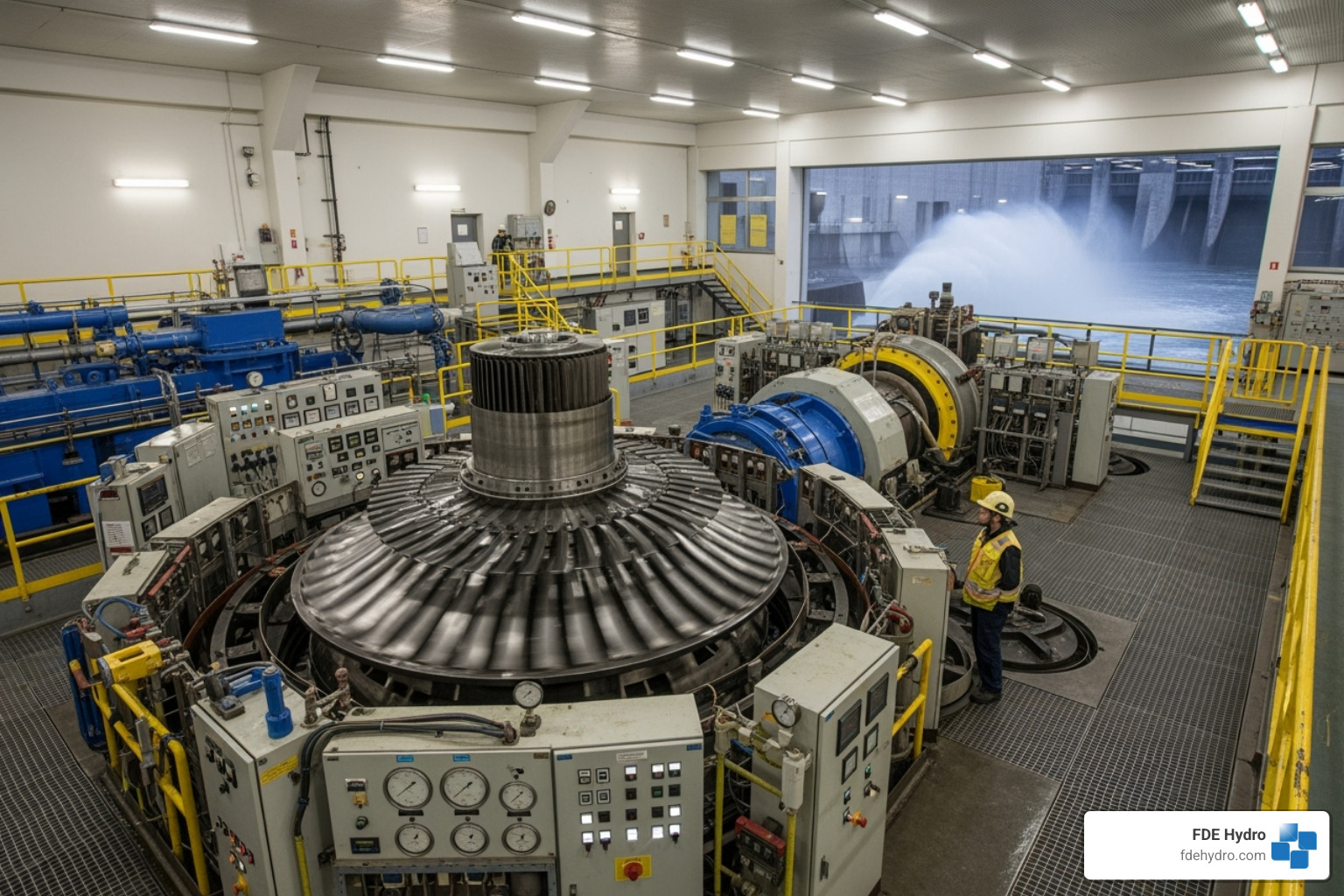
The turbine is where the magic happens—where falling water becomes spinning motion. But not all turbines are created equal, and choosing the wrong one for your site is like putting snow tires on a race car.
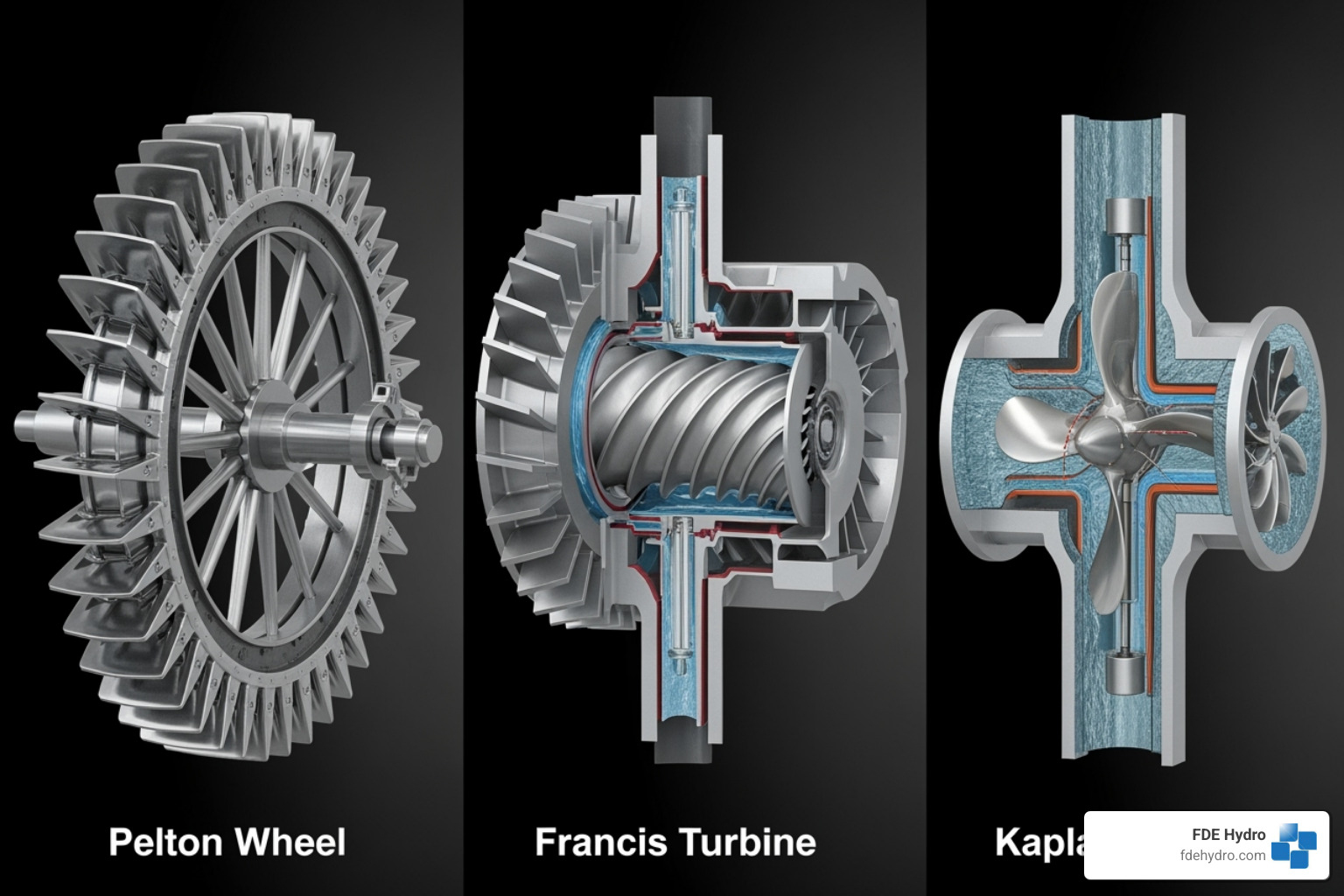
Pelton turbines work best with high head and low flow situations, making them perfect for mountainous areas where water drops from great heights but in smaller volumes. Francis turbines are the Swiss Army knives of hydropower—versatile enough to handle medium head and medium flow conditions. Kaplan turbines shine in low head, high flow environments, like the wide, flat rivers common in many parts of the world.
Matching the turbine type to your specific site conditions isn’t optional—it’s fundamental to achieving good hydro dam efficiency. But even the perfect turbine won’t stay perfect forever. Wear and tear take their toll through cavitation (where air bubbles collapse against metal surfaces, creating tiny pits) and sediment erosion. Regular refurbishment and advanced protective coatings can extend turbine life and maintain performance.
Modern variable-speed turbines represent a significant advancement. Unlike traditional fixed-speed turbines, they can adjust to varying water flows, operating efficiently across a wider range of conditions. This flexibility translates directly into better overall efficiency.
And let’s not forget the generator—the turbine’s partner in the conversion process. While the turbine transforms water energy into mechanical rotation, the generator converts that rotation into electrical energy. Its efficiency matters too, and keeping it well-maintained ensures you’re getting the most out of every drop of water.
Dam Design and Type
The fundamental design of your hydropower facility shapes everything about its performance, environmental impact, and operational flexibility. Three main types dominate the landscape, each with distinct characteristics that affect hydro dam efficiency.
Impoundment dams are what most people picture when they think of hydropower—large structures creating substantial reservoirs. These offer tremendous advantages: high storage capacity, flexible power generation on demand, flood control capabilities, and reliable water supply. They’re the workhorses of dispatchable renewable energy. However, creating large reservoirs comes with environmental and social considerations that can’t be ignored.
Run-of-the-river facilities take a different approach entirely. Rather than storing water, they harness the natural flow of a river with minimal or no storage. Water passes through the powerhouse and rejoins the river downstream, often within hours. These facilities typically have lower environmental impacts since they don’t flood large areas. The trade-off? Their power output depends entirely on river flow, making them less flexible and more vulnerable to seasonal variations.
Diversion structures operate similarly to run-of-the-river plants, channeling water from a river through a canal or penstock to a powerhouse before returning it downstream. They also rely on natural flow patterns rather than storage.
Each design represents different priorities. Impoundment dams excel at grid stability and dispatchable power but require careful environmental planning. Run-of-the-river and diversion facilities minimize ecological disruption but sacrifice controllability. Understanding these trade-offs is essential for any project manager evaluating options. For more details on various dam structures and their applications, visit our More info about Dams page. The Department of Energy also provides excellent resources on Types of hydropower plants explained.
Balancing Efficiency with Economic and Environmental Realities
Here’s the truth about hydro dam efficiency: achieving it isn’t just about engineering brilliance. It’s about navigating a complex landscape where economics, environmental stewardship, and long-term planning all intersect.
Let’s talk money first. Building a hydroelectric dam requires serious upfront investment. We’re talking about projects that can stretch into the billions of dollars and take years—sometimes decades—to complete. The Itaipu Dam in Brazil and Paraguay? Eighteen years and $18 billion. Since the 1950s, the world has invested an estimated $2,000 billion in dam construction. That’s not pocket change.
But here’s where hydropower shines: once you build it, it keeps delivering. These structures last 65-85 years with remarkably low operational and maintenance costs. Think of it as buying quality boots that last a lifetime versus cheap ones you replace every year. The math works out beautifully over time—if you can manage the initial problems.
And those problems are real. Construction delays average around 44%, while cost overruns can hit a staggering 96%. These aren’t just statistics—they represent real financial risks that can sink a project or burden communities for generations. Smart planning, innovative construction methods, and creative financing strategies become absolutely critical. Financing Long-Term Hydropower Requires Mitigating Risks Prior to ROI explores how to steer these challenges effectively.
Now, let’s address the environmental side—because this is where conversations get nuanced. Yes, hydropower generates clean electricity without burning fossil fuels. But creating a massive reservoir isn’t without ecological consequences.
Fish migration presents one of the most visible challenges. Salmon fighting their way upstream to spawn don’t care about our energy needs—they just need to get home. Dams can block these ancient migratory routes, disrupting entire life cycles. We’ve developed solutions like fish ladders and elevators, but they’re not perfect. And even when fish successfully steer these passages, turbines themselves can cause mortality.
Water quality changes too. Reservoirs alter natural temperature patterns and oxygen levels, creating different conditions than the free-flowing river that existed before. Aquatic species adapted to cold, oxygen-rich rushing water suddenly find themselves in warmer, slower environments.
Here’s something that surprises many people: reservoirs can actually produce greenhouse gases. In tropical regions especially, vegetation flooded during reservoir creation decomposes underwater, releasing methane—a greenhouse gas far more potent than carbon dioxide. While these emissions typically remain much lower than fossil fuel alternatives, they remind us that “renewable” doesn’t automatically mean “impact-free.”
The human dimension matters too. Creating large reservoirs means flooding terrestrial habitats and sometimes displacing entire communities. The social consequences can be severe and long-lasting, as history has shown us in projects from Guatemala to China and beyond.
None of this means hydropower isn’t worthwhile—it absolutely is. But maximizing hydro dam efficiency means acknowledging these trade-offs honestly and designing projects that minimize harm while delivering clean, reliable energy. It’s about being smart, responsible, and innovative all at once.
The Role of Pumped-Storage Hydropower
Want to see hydropower’s future? Look at pumped-storage hydropower (PSH). This technology transforms the entire concept of hydro dam efficiency by turning hydroelectric facilities into massive renewable batteries.
The concept is beautifully simple. During periods of low electricity demand—say, the middle of the night—PSH facilities pump water from a lower reservoir uphill to an upper reservoir. When demand spikes during the day, that stored water rushes back down through turbines, generating electricity exactly when we need it most. The round-trip efficiency typically ranges from 70-85%, which is remarkably good for energy storage.
But here’s where it gets really exciting: PSH solves one of renewable energy’s biggest headaches. Imagine a gorgeous sunny afternoon when solar panels are cranking out more electricity than anyone needs. Or a windy night when turbines are spinning furiously while everyone’s asleep. Without storage, that excess energy goes to waste. PSH captures it, stores it as potential energy in liftd water, and releases it precisely when the grid needs help.
This flexibility makes hydropower the ultimate team player in our energy system. Solar and wind provide the star power, but PSH ensures the show goes on even when clouds roll in or winds calm down. It’s why we call hydropower “the guardian of the grid”—it’s always there, ready to step in and balance the system. 4 Reasons Why Hydropower is the Guardian of the Grid explains this critical role in detail.
PSH systems come in two main configurations. Open-loop systems maintain a continuous connection to natural water bodies like rivers or lakes, while closed-loop systems operate as self-contained units without outside water connections. Closed-loop designs often minimize aquatic impacts since they don’t interfere with natural waterways.
Here’s a perspective worth considering: pumped storage hydropower currently provides the largest share of global energy storage capacity—far more than all battery technologies combined. As we push toward grids powered primarily by variable renewables, PSH becomes not just helpful but essential. It’s the bridge technology that makes a renewable energy future actually achievable.
For anyone serious about understanding modern hydropower’s role in grid stability and renewable integration, More info about Pumped Storage Hydropower offers comprehensive insights into this game-changing technology.
Enhancing Hydropower: Modernization and Future Innovations
Here’s something that might surprise you: the biggest opportunity for improving hydro dam efficiency isn’t about building massive new dams. It’s about making smarter use of what we already have.
Think about this for a moment—nearly two-thirds of the world’s 45,000 large dams don’t generate any electricity at all. They’re just sitting there, holding back water for flood control, irrigation, or water supply. That’s an enormous untapped resource. The Biggest Untapped Solution to Climate Change is in the Water, and we believe retrofitting these non-powered dams could open up clean energy without the environmental headaches of new construction.
The numbers back this up. In Europe, modernizing the existing hydropower fleet could boost generation by 8.4% across the EU and 9.4% for the entire continent. Here in the United States, refurbishment and upgrades could increase conventional hydropower output by roughly 8.8%. That’s a lot of clean electricity from structures that are already built.
But modernization isn’t just about bolting on new turbines. We’re entering an era where digitalization and artificial intelligence are changing how hydropower plants operate. Advanced analytics can predict water inflows and electricity demand with remarkable accuracy, helping operators fine-tune generation schedules. Machine learning algorithms monitor equipment health around the clock, catching potential problems before they become expensive failures. Some systems can even adjust turbine operations in real-time to squeeze out every last kilowatt. The National Renewable Energy Laboratory Hydropower Research is leading the charge in developing these smart technologies.
Strategies for Improving Hydro Dam Efficiency
When it comes to boosting hydro dam efficiency, we’ve learned that the details matter. Small improvements across multiple areas can add up to significant gains.
Turbine and generator refurbishment is often the first place to start. Many hydropower plants are decades old, running on equipment designed when your grandparents were young. Upgrading or replacing these aging workhorses with modern designs typically increases power output by 5-10%. In some cases, renewing electromechanical parts can push improvements up to 20%. It’s like trading in your old sedan for a hybrid—same basic function, but far better performance.
Erosion is the silent efficiency killer. Sediment-laden water and cavitation gradually wear away turbine blades, reducing their efficiency and shortening their lifespan. Advanced coatings create a protective shield on these critical components, maintaining peak performance and cutting down on costly repairs. It’s preventive medicine for your power plant.
Sediment management deserves special attention. Over time, rivers deposit silt, sand, and gravel in reservoirs, slowly stealing storage capacity and potentially damaging machinery. Techniques like strategic flushing, targeted dredging, or installing sediment bypass systems keep reservoirs healthy and turbines safe. Our work in More info about Dam Rehabilitation Encapsulation directly addresses these challenges, helping existing infrastructure stay productive for decades longer.
Smart operational changes can also make a real difference. During flood seasons, bringing idle units online and managing water releases carefully prevents wasting valuable water that could be generating power. In dry seasons, coordinating reservoir levels and generation schedules across multiple facilities maximizes output when water is scarce. The Longyangxia power station case study showed exactly how important these operational refinements can be.
The Future of Dam Construction
Traditional dam construction is expensive, slow, and disruptive. A single large project can take decades and cost billions. We knew there had to be a better approach.
That’s why we developed our modular construction method using patented precast concrete technology—what we call “French Dam” technology. Instead of pouring concrete on-site for months or years, we manufacture precision components in a controlled factory environment, then ship them to the project site for rapid assembly.
The advantages are transformative. Construction time drops dramatically because we’re not waiting for concrete to cure in the field or dealing with weather delays. Costs come down through efficient factory production and reduced labor requirements. Quality improves because every component is built to exact specifications in a controlled setting.
Our modular approach also brings flexibility. The same basic components can be adapted to different site conditions and dam sizes, whether you’re building a small run-of-the-river facility or a larger impoundment structure. It’s like having building blocks that work for whatever you need.
Perhaps most importantly, this method supports environmental-by-design principles. Less on-site disruption means less impact on local ecosystems. The precision of factory manufacturing makes it easier to integrate features like fish-friendly designs and optimized water release mechanisms right from the start. You can explore more about our innovative approach on our More info about Means and Methods page.
The U.S. Department of Energy recognized the potential of this approach in their Hydropower Vision Report, specifically endorsing technologies like ours as essential for open uping hydropower’s full potential. The U.S. Department of Energy Hydropower Vision Report Endorses FDE Technology. We’re proud to be helping reshape how the industry thinks about hydro dam efficiency and construction.
The future of hydropower isn’t just about generating more electricity—it’s about generating it smarter, faster, and with less impact on the communities and ecosystems we all depend on.
Conclusion
Throughout this journey into hydro dam efficiency, we’ve finded something remarkable: hydropower isn’t just efficient—it’s the heavyweight champion of renewable energy conversion, changing up to 90% of water’s potential energy into electricity. That’s a performance level that solar, wind, and even coal-fired plants can only dream about.
But here’s what really matters: efficiency isn’t just a number on a technical spec sheet. It’s the result of countless decisions—from selecting the right turbine type for your site’s specific hydraulic head to managing sediment buildup in reservoirs. It’s about understanding that a plant’s capacity factor tells a story of seasonal variations, drought impacts, and the delicate dance between installed capacity and actual generation. It’s recognizing that the penstock design matters just as much as the turbine itself.
We’ve also learned that hydro dam efficiency exists within a larger context. Yes, those high upfront construction costs can be daunting—sometimes taking decades to recoup. Yet hydropower facilities last 65 to 85 years with remarkably low operational costs, making them sound long-term investments. Meanwhile, we must carefully balance these economic benefits against environmental realities: fish migration, water quality, habitat changes, and yes, even greenhouse gas emissions from certain reservoirs.
The real excitement lies in what’s ahead. Pumped-storage hydropower is revolutionizing grid stability, acting as a massive battery that stores surplus renewable energy and releases it when needed. Digitalization and AI are optimizing operations in ways we couldn’t have imagined a decade ago. And perhaps most promising: nearly two-thirds of the world’s large dams don’t generate electricity yet—representing an enormous untapped opportunity to expand clean energy without building new structures from scratch.
At FDE Hydro™, we’re passionate about making this future real through modular, precast concrete construction that slashes both construction time and costs. Our “French Dam” technology embodies what we believe hydropower should be: efficient, sustainable, and economically viable. The U.S. Department of Energy agrees—they’ve endorsed our approach in their Hydropower Vision Report as exactly the kind of innovation the industry needs.
The path forward is clear. By upgrading existing infrastructure, embracing smart technology, and building smarter when we do build, we can open up hydropower’s full potential. This isn’t just about generating more electricity—it’s about powering our communities with clean, reliable energy for generations to come.
Ready to be part of this change? Discover the future of Hydropower with us.
