

Why Hydropower Plants Remain Essential for Modern Energy Systems
The benefits of hydropower plant infrastructure extend far beyond electricity generation. As one of the world’s oldest renewable energy sources, hydropower has evolved to meet modern energy demands while providing best reliability, economic value, and environmental advantages.
Quick Overview: Top Benefits of Hydropower Plants
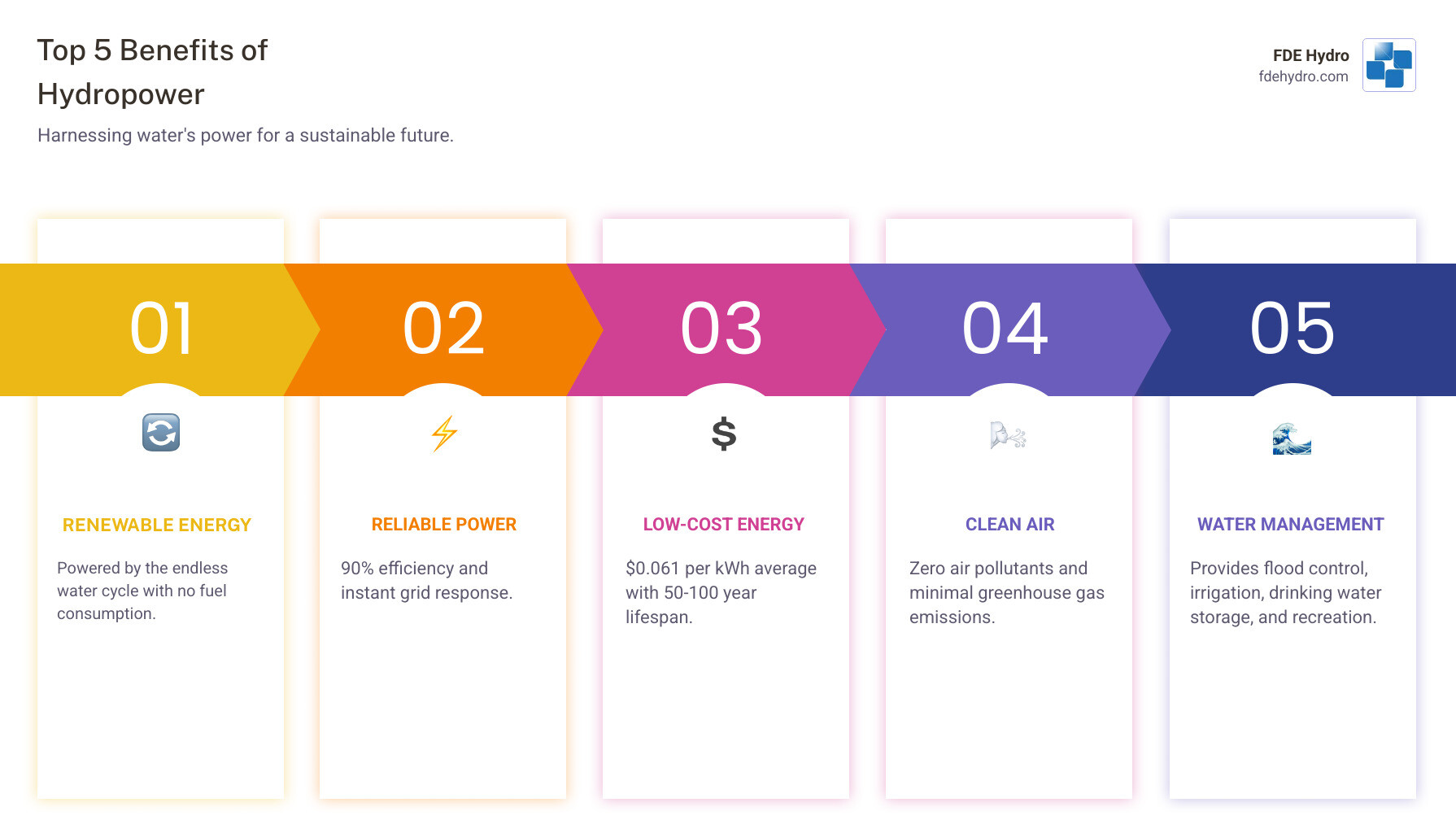
- Clean & Renewable – Zero air pollutants and ultra-low greenhouse gas emissions
- Highly Efficient – Converts up to 90% of water’s energy into electricity
- Grid Stability – Provides instant backup power and energy storage (95% of U.S. utility-scale storage)
- Economic Impact – Creates 66,500+ U.S. jobs with growth projected to 158,000 by 2050
- Multiple Services – Delivers flood control, irrigation, drinking water, and recreation
- Long-Term Value – 50-100+ year lifespan with low operating costs
- Energy Independence – Domestic resource not subject to fuel price volatility
Hydropower produces over 50% of global renewable electricity and 14.3% of total worldwide generation. Unlike intermittent renewables, it can ramp up within minutes to meet peak demand, making it the backbone of grid stability. The technology harnesses the natural water cycle—driven by the sun—to generate power without consuming water. Modern facilities range from massive dams to small run-of-river systems and pumped storage systems that act as giant rechargeable batteries.
I’m Bill French, Sr., Founder and CEO of FDE Hydro™, where we’ve pioneered modular construction solutions that maximize the benefits of hydropower plant development while reducing construction timelines and environmental impact. With five decades in heavy civil construction and as a participant in the Department of Energy’s Hydropower Vision Task Force, I’ve seen how innovation can open up hydropower’s full potential.
1. A Clean and Green Powerhouse: Environmental Advantages
Among the primary benefits of hydropower plant operations are the environmental advantages. Hydropower taps into the natural flow of water to create electricity without combustion, meaning no smoke, fumes, or toxic gases are released into the air.
Unlike fossil fuel plants, hydroelectric facilities produce zero air pollutants during operation and have ultra-low greenhouse gas emissions across their lifecycle. This makes hydropower a powerful ally in the fight against climate change.
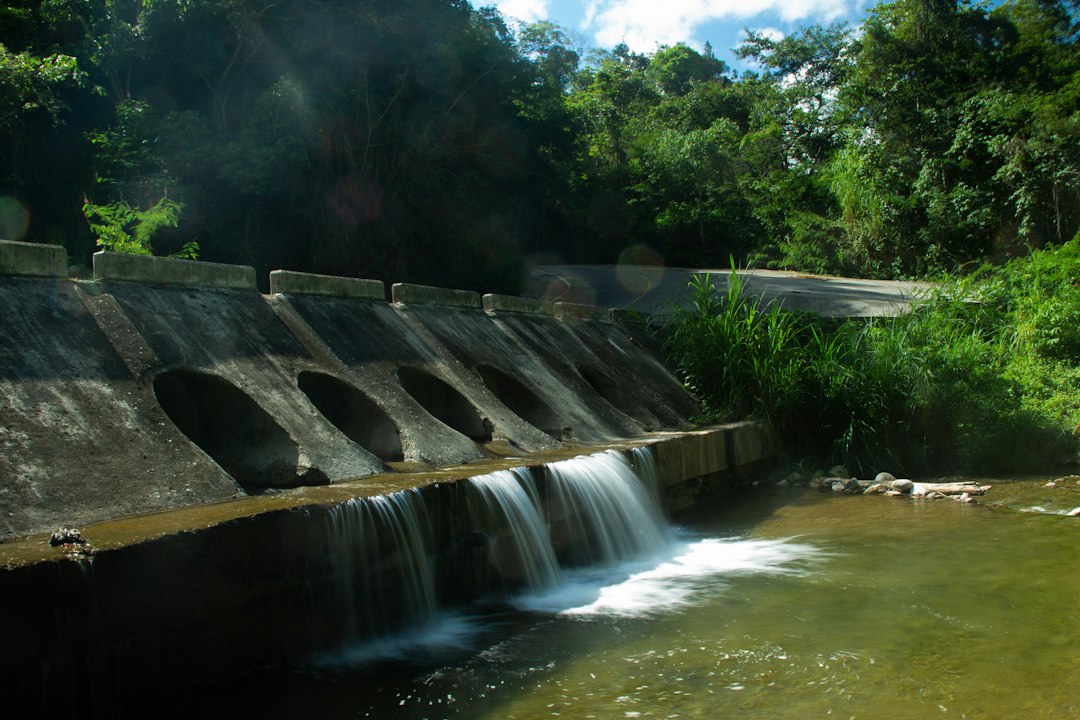
Every kilowatt-hour from hydropower displaces fossil fuel generation, reducing harmful air particulates, acid rain, and smog. The impact is significant: research shows that hydropower has helped avoid over 100 billion tonnes of carbon dioxide in the past 50 years—roughly equal to the U.S. carbon footprint for two decades.
This is why hydropower represents The Biggest Untapped Solution to Climate Change is in the Water. It uses the power of the sun-driven water cycle to generate clean energy without depleting water resources.
How Hydropower Fights Climate Change
Hydropower’s life cycle emissions are incredibly low, often matching or beating wind power. Replacing today’s hydropower with coal would add 4 billion tonnes of greenhouse gases to the atmosphere annually, increasing global emissions from fossil fuels by 10%. It would also add 150 million tonnes of air pollutants that cause respiratory illnesses and damage ecosystems.
Because hydropower involves no combustion, it releases no sulfur dioxide, nitrogen oxides, or particulate matter. This means cleaner air, healthier ecosystems, and a more stable climate. The positive environmental change is one of the most compelling benefits of hydropower plant development, happening automatically just by working with the natural force of water.
2. Powering Economies: The Economic Benefits of Hydropower Plant
The benefits of hydropower plant development extend to building thriving economies, creating careers, and delivering affordable electricity. While the initial construction requires significant investment, the long-term economics are highly favorable, providing some of the most affordable electricity in the world.
In 2022, the global weighted average cost of electricity from hydropower was just $0.061 per kilowatt-hour. In the U.S., states with abundant hydropower like Washington, Oregon, and Idaho consistently have some of the lowest electricity rates in the country. This affordability attracts businesses and provides financial relief for families. The infrastructure around Dams becomes a catalyst for regional development and lasting value.
Long-Term Affordability and Investment
While the upfront investment for a hydropower facility is substantial, the asset is built to last for 50 to 100 years—and often much longer with modern upgrades. Many plants have operated for over a century.
Once running, hydropower facilities have very low operations and maintenance costs. The “fuel”—water—is free and domestic, insulating consumers from the price volatility of international fossil fuel markets. This stability leads to predictable electricity prices, making hydropower a sound investment for energy independence and economic resilience.
Fueling Job Growth
The hydropower industry is a significant job creator. Currently, the U.S. hydropower sector employs 66,500 people in roles spanning manufacturing, construction, engineering, and operations. Hydropower creates jobs across the economic spectrum.
The future looks even brighter, with projections showing the industry expanding to 120,000 jobs by 2030 and 158,000 by 2050. More on the U.S. hydropower workforce details this growth. Many of these high-wage jobs are in rural areas, bringing sustained economic development, tax revenue, and stable employment that allows communities to flourish.
3. The Guardian of the Grid: Reliability and Flexibility
Among the most critical benefits of hydropower plant operations is reliability. Hydropower is the “guardian of the grid” because it delivers dependable power essential for our electric world.
Hydropower is highly efficient, converting up to 90% of water’s kinetic energy into electricity. More importantly, it is highly responsive. While thermal plants take hours to ramp up, hydropower facilities can go from zero to full power in minutes, providing an invaluable backup during outages or demand spikes. The firm capacity of U.S. hydropower exceeds 24 gigawatts—enough to power up to 24 million homes. This dispatchable power is why 4 Reasons Why Hydropower is the Guardian of the Grid include its best flexibility.
Furthermore, hydropower improves energy independence. By relying on domestic water resources, it insulates our energy supply from volatile international fuel markets and supply disruptions.
The Ultimate Renewable Battery: Hydropower Storage Solutions
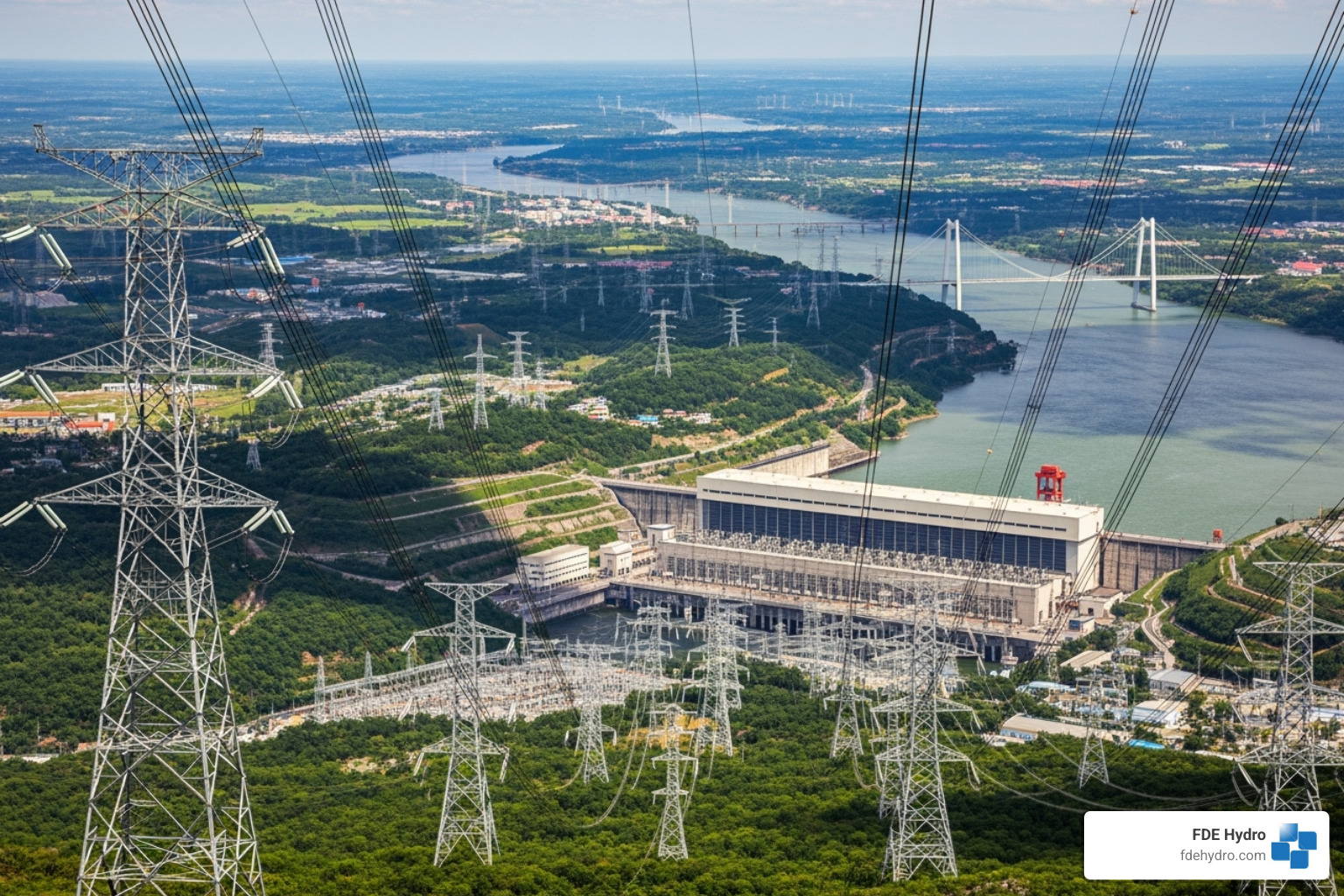
One of hydropower’s most underappreciated benefits is energy storage. Pumped storage hydropower allows the grid to function like a massive renewable battery, providing the flexibility needed to integrate variable renewables like wind and solar.
Incredibly, pumped storage provides roughly 95% of all utility-scale energy storage in the United States. Without it, our grid would struggle to handle the intermittency of other renewables. The concept is simple: use excess electricity (from wind or solar) to pump water to a higher reservoir, storing it as potential energy. When demand peaks, the water is released back down through turbines to generate electricity.
This capability makes hydropower the perfect partner for other renewables. Hydropower Storage Solutions fill the gaps when the sun isn’t shining or the wind isn’t blowing, ensuring a steady, reliable power supply. This grid flexibility is critical for transitioning to a clean energy future, enabling us to maximize renewable use while minimizing reliance on fossil fuel backups.
4. More Than Megawatts: The Societal Benefits of Hydropower Plant
The benefits of hydropower plant infrastructure go far beyond electricity. These facilities are multipurpose assets that provide water management, community development, and regional prosperity.
Many hydropower installations are comprehensive water management systems. They capture and store water, releasing it strategically to prevent floods, supply irrigation for crops, and provide clean drinking water. Modern Water Control Structures allow for effective management of these competing needs, making a single facility a valuable asset for an entire region.

Water Management and Food Security
Hydropower is critical for food security. Reservoirs store water during wet periods and release it during droughts, providing a lifeline for agriculture. According to the National Database of Dams, at least 276 U.S. dams provide both hydropower and irrigation, directly supporting farmers and ensuring stable food supplies.
Additionally, controlled water releases can improve downstream water quality by diluting pollutants and maintaining oxygen levels for aquatic life, protecting ecosystems and drinking water supplies.
Recreation and Community Development
Hydropower reservoirs often become public playgrounds for fishing, swimming, and boating, enhancing quality of life. The tourism impact can be significant; the Hoover Dam, for example, draws nearly 7 million visitors annually, boosting local commerce. Research on the Socioeconomic Benefits of Hydropower confirms that these projects generate long-term revenue and jobs for communities.
Development also brings infrastructure improvements like roads and power lines to rural and underserved areas. For local and indigenous populations, responsible hydropower development can mean improved access to electricity, transportation, and economic opportunities.
5. The Future is Fluid: Innovations in Hydropower Technology
Hydropower is not a technology of the past; it is rapidly evolving. A key benefit of hydropower plant technology today is its continuous innovation, from construction methods to smarter turbines. The focus is on building better, more efficient facilities and upgrading existing ones.
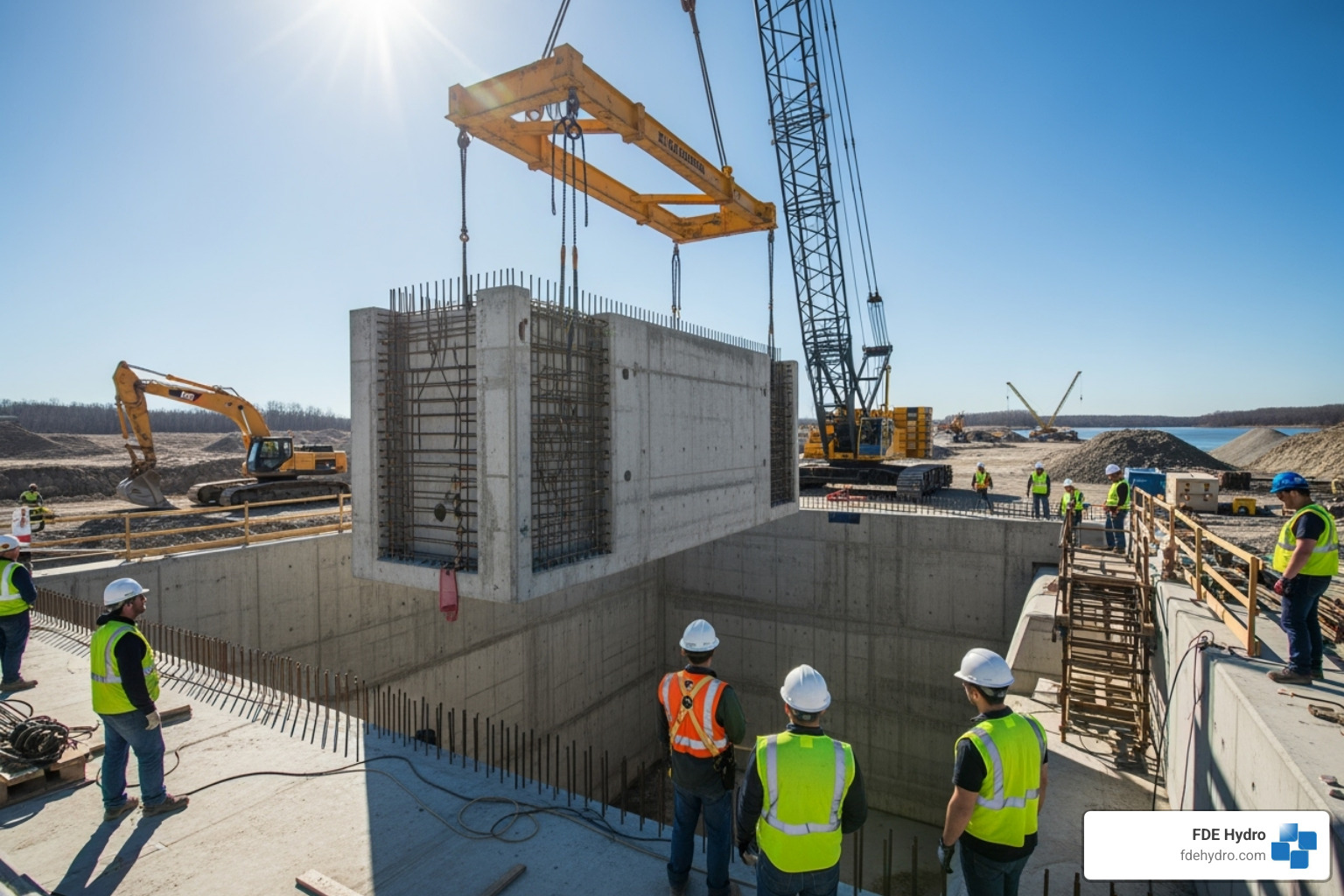
At FDE Hydro™, we are reimagining how hydropower infrastructure is built. Our patented modular precast concrete technology, the “French Dam,” is changing the economics of projects in North America, Brazil, and Europe. By using precision-manufactured components, we dramatically reduce construction costs and timelines. This makes hydropower more accessible and practical, and we’ve proven that French Dam Technology Passes the Test with reliable, modern performance.
The industry is also embracing digitalization. Sophisticated sensors and control systems optimize operations, from water flow to predictive maintenance, squeezing more energy from every drop. Our Modular Powerhouses integrate these advanced systems, creating a new generation of smarter, faster, and more adaptable hydropower facilities.
What are the ongoing innovations in hydropower?
The innovation pipeline for hydropower is diverse. Key areas include:
- Upgrading existing dams: Modernizing older facilities with new, more efficient turbines and digital controls open ups additional capacity from existing infrastructure.
- Environmental performance: Innovations like aerating turbines improve water oxygen levels, while fish-friendly turbine designs and advanced fish passage systems (ladders and elevators) help protect aquatic ecosystems.
- New frontiers: Researchers are pioneering in-stream hydropower systems that generate power from river currents with minimal environmental footprint, alongside maturing ocean wave and tidal energy technologies.
- Modular construction: Approaches like ours at FDE Hydro™ use off-site manufacturing for higher quality, faster installation, and reduced environmental disruption. This method is key to Reinvigorating Hydropower for a new era by making development feasible in more locations.
Frequently Asked Questions about Hydropower Benefits
How does hydropower compare to other renewable sources?
Hydropower stands out for its efficiency and reliability. It converts up to 90% of water’s potential energy into electricity, far surpassing the typical efficiency of solar (30-36%) and wind (25-45%). More importantly, hydropower provides “dispatchable power,” meaning it can be ramped up or down in minutes to meet grid demand. This flexibility makes it the perfect partner for intermittent renewables like solar and wind, as it can instantly fill power gaps and stabilize the grid, especially through pumped storage.
What is the typical lifespan of a hydropower plant?
Hydropower facilities are built for longevity, with a typical lifespan of 50 to 100 years. Many plants have operated for over a century. With regular maintenance and modernization, their service life can be extended indefinitely. This long-term durability is one of the key economic benefits of hydropower plant investments, as the initial cost provides value for generations.
Is hydropower completely environmentally friendly?
While hydropower is a clean energy source with zero air pollutants and very low greenhouse gas emissions, no energy source is without an environmental footprint. Large dams can alter local ecosystems and fish migration. However, the modern hydropower industry mitigates these issues through rigorous environmental assessments, fish-friendly turbines, and fish passage systems like ladders and elevators. Technologies like aerating turbines also improve water quality downstream. The goal is to balance energy needs with environmental responsibility, and when done right, hydropower’s climate benefits far outweigh its manageable, site-specific impacts.
Conclusion: A Lasting Legacy of Clean Power
The benefits of hydropower plant infrastructure are foundational to a cleaner, more prosperous, and resilient future. Hydropower is a proven clean energy source, an economic engine, and the guardian of grid stability.
We’ve seen its impressive credentials:
- Environmental: Zero air pollutants and ultra-low emissions, avoiding over 100 billion tonnes of CO2.
- Economic: Supporting over 66,500 U.S. jobs (projected to hit 158,000 by 2050) and providing affordable electricity.
- Reliability: Offering 90% efficiency, rapid response times, and 95% of U.S. utility-scale energy storage.
Beyond the grid, these facilities manage water for flood control and irrigation, create recreational opportunities, and bring development to rural areas.
Hydropower continues to evolve. At FDE Hydro™, we’re pioneering modular construction to make projects more economical and accessible. Industry-wide innovations in turbine design and digital systems ensure this technology improves with age.
In the transition to a net-zero future, hydropower’s role is more critical than ever. It is the reliable partner that enables other renewables, the long-term investment that delivers value for generations, and the domestic resource that ensures energy independence. Securing this future requires smart planning, and understanding how Financing Long-Term Hydropower Requires Mitigating Risks Prior to ROI is key to open uping its full potential.
Building or modernizing a hydropower facility creates a legacy of clean power for generations to come. It’s an investment in our shared prosperity and the health of our planet.
