

Why Hydro Electric Dams Matter for Modern Energy Infrastructure
Hydro electric dams are a significant renewable energy asset, converting river flow into clean electricity. Here’s what you need to know:
What are hydro electric dams?
- Large structures built across rivers that use falling water to generate electricity
- Convert water’s potential and kinetic energy into electrical power through turbines and generators
- Supply 15% of the world’s electricity (4,210 TWh in 2023)
- Account for 6.2% of total U.S. utility-scale electricity generation
Key Benefits:
- Reliable power – Generate electricity 24/7, unlike solar or wind
- Long lifespan – Operate for 65-85 years with minimal maintenance
- Grid stability – Provide backup power and balance intermittent renewables
- Multiple uses – Offer flood control, water supply, and recreation
Main Types:
- Impoundment – Traditional dams with large reservoirs
- Run-of-river – Diversion systems with minimal storage
- Pumped storage – Act as massive batteries for the grid
From the massive Three Gorges Dam to small micro-hydro installations, hydro electric dams represent a spectrum of clean energy solutions. Yet fewer than 3% of the 90,000+ dams in the United States produce power, revealing significant untapped potential.
I’m Bill French, founder and CEO of FDE Hydro™. With five decades in heavy civil construction and participation in the DOE’s Hydropower Vision task force, we’ve pioneered modular construction solutions for hydro electric dams. We focus on reducing costs and timelines while improving environmental outcomes across North America, Brazil, and Europe.
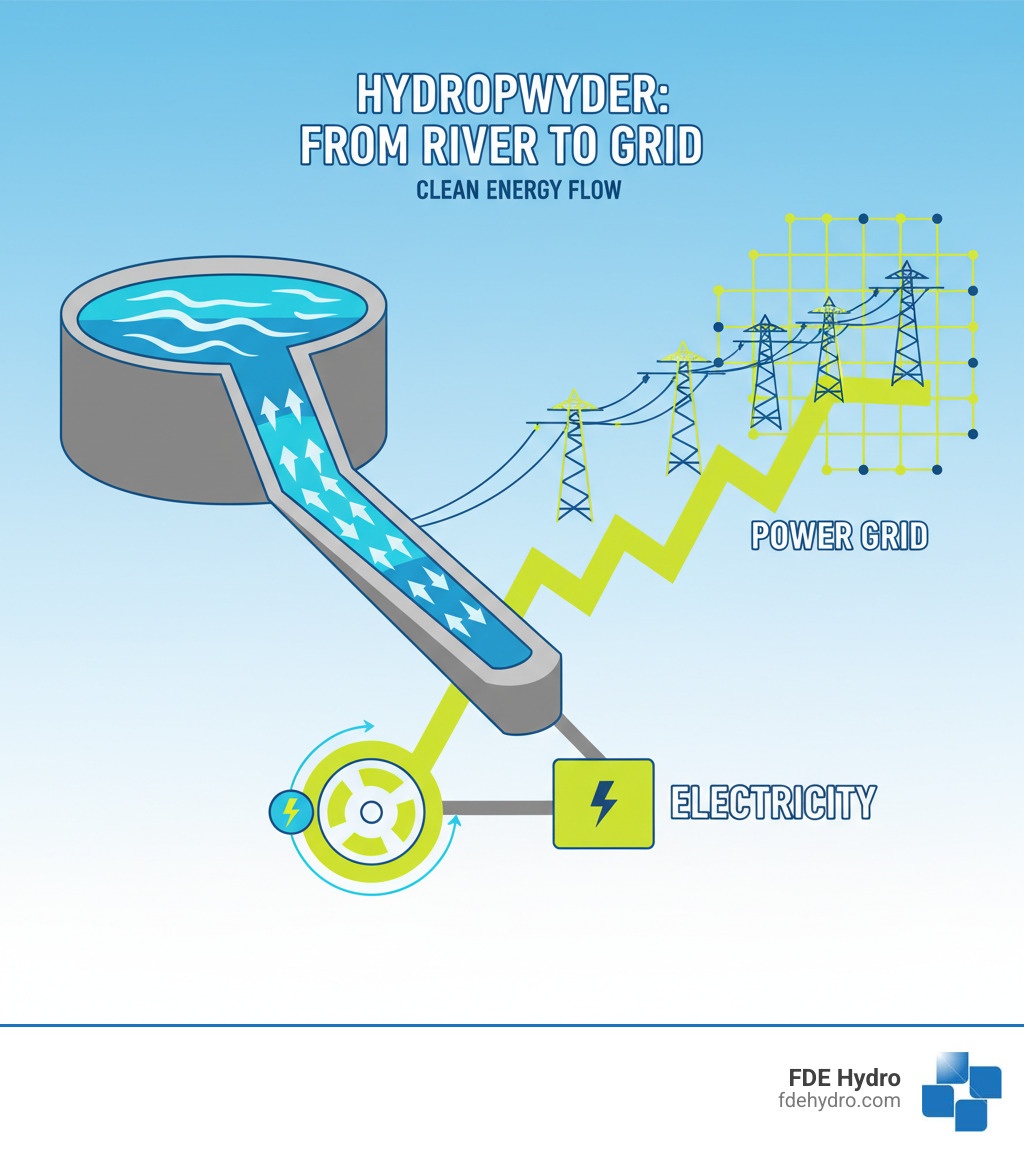
How Hydropower Works: From Water Flow to Electrical Flow
Hydropower is powered by the water cycle. Solar energy evaporates water, which falls as rain or snow and flows through rivers. This cycle, driven by the sun and gravity, is what we tap into for clean electricity.
Water at a height has potential energy. As it falls, this becomes kinetic energy—the energy of motion. Hydro electric dams are designed to capture and control this energy conversion, concentrating the power of flowing water.
A dam creates a controlled drop in elevation, concentrating a river’s energy. Hydropower facilities harness this focused power to generate electricity. The Department of Energy has a great resource explaining How Hydropower Works if you want to dig deeper.
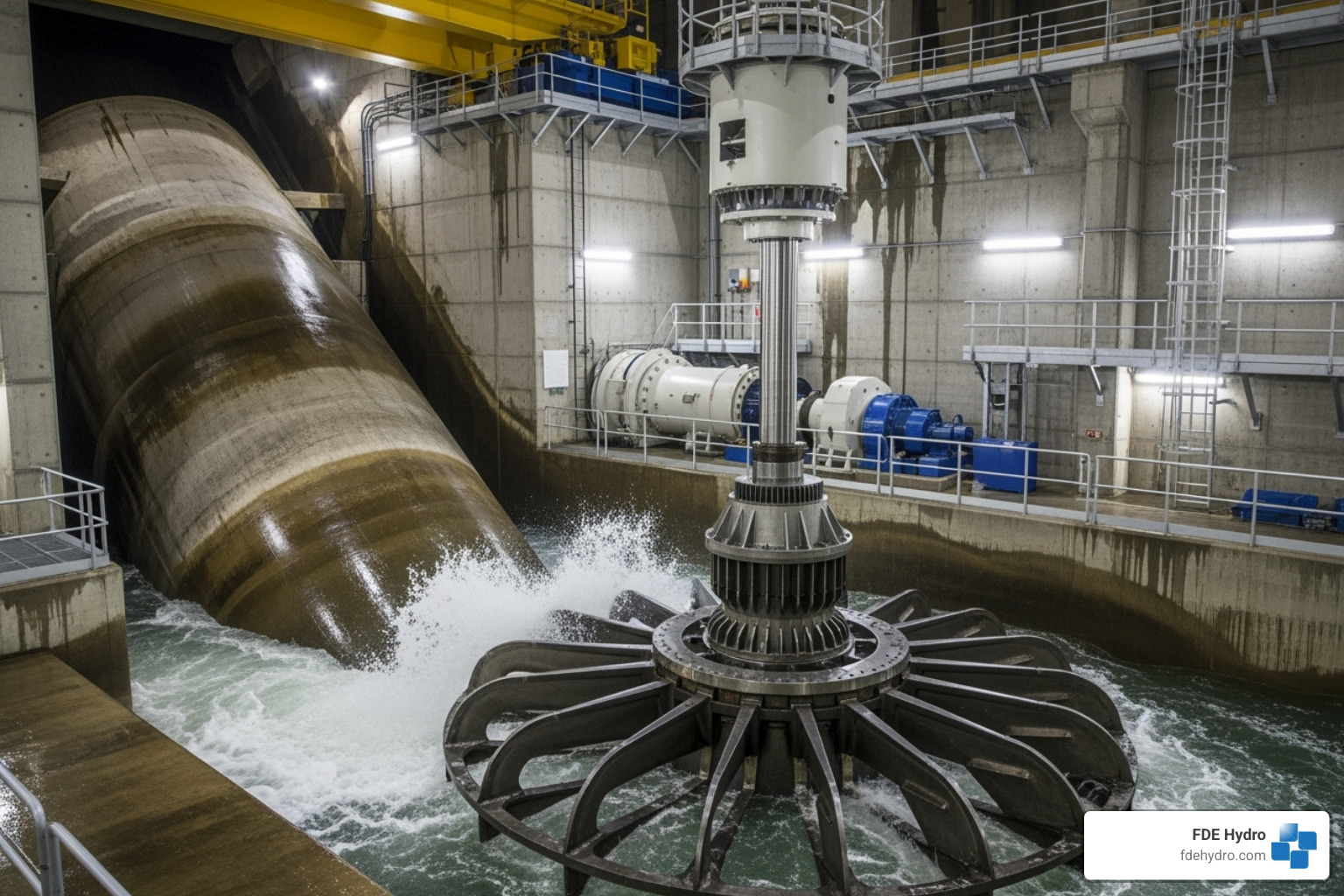
Key Components of a Hydropower Facility
Every hydropower facility has key components working together:
- The dam is a structure built across a river to create a reservoir. It controls water flow and creates the “head”—the vertical distance water falls to generate power.
- The reservoir is an artificial lake that stores water, allowing for consistent power generation despite seasonal changes in river flow.
- Water enters through the intake gate and flows down the penstock, a large pipe that guides it to the turbine.
- The turbine has blades that spin rapidly when hit by high-pressure water. Different designs (Francis, Kaplan, Pelton) are used for different water head and flow conditions.
- The turbine is connected to a generator, which converts mechanical energy into electricity. This equipment is housed in the powerhouse.
- After passing through the turbine, water exits via the tailrace back to the river. Power lines then transmit the electricity to the grid.
The Department of Energy maintains a helpful Glossary of Hydropower Terms if you want to explore more terminology.
The Electricity Generation Process
When dam gates open, gravity pulls water from the reservoir down the penstock, building speed and pressure. This high-pressure water spins the turbine, transferring its kinetic energy. More speed and pressure mean more power.
The spinning turbine turns a shaft connected to the generator. Inside, a rotor (electromagnet) spins within a stator (coils of wire), creating an electric current based on Faraday’s principle of electromagnetic induction. The electricity is then stepped up by transformers for long-distance transmission. The U.S. Geological Survey offers an excellent visual explanation of Hydroelectric Power: How it Works.
Construction and Operational Considerations
Building hydro electric dams requires careful site selection. A suitable river needs both sufficient head (vertical drop) and consistent flow (water volume). The foundation must be solid rock to support the dam’s weight and immense water pressure. At FDE Hydro, our innovative Means and Methods using modular precast concrete technology improve integrity while cutting construction time. Our approach demonstrates Why Precast Cost Less while delivering better results.
Operational dams serve multiple purposes. Operators balance power generation with flood control, water supply, and ecosystem protection. Sediment management is another ongoing challenge, as sediment can fill reservoirs and reduce efficiency. Proper design and maintenance are crucial for the long lifespan of hydropower facilities, which can operate for 65 to 85 years or more.
A Spectrum of Power: Types and Sizes of Hydropower Plants
Hydropower is more diverse than just massive dams. It includes a wide range of sizes, from huge structures to small systems that can power a single farmhouse. This flexibility is a key strength, with solutions available for everything from mighty rivers to small streams. The Department of Energy provides an excellent overview of the various Types of Hydropower Plants available today.
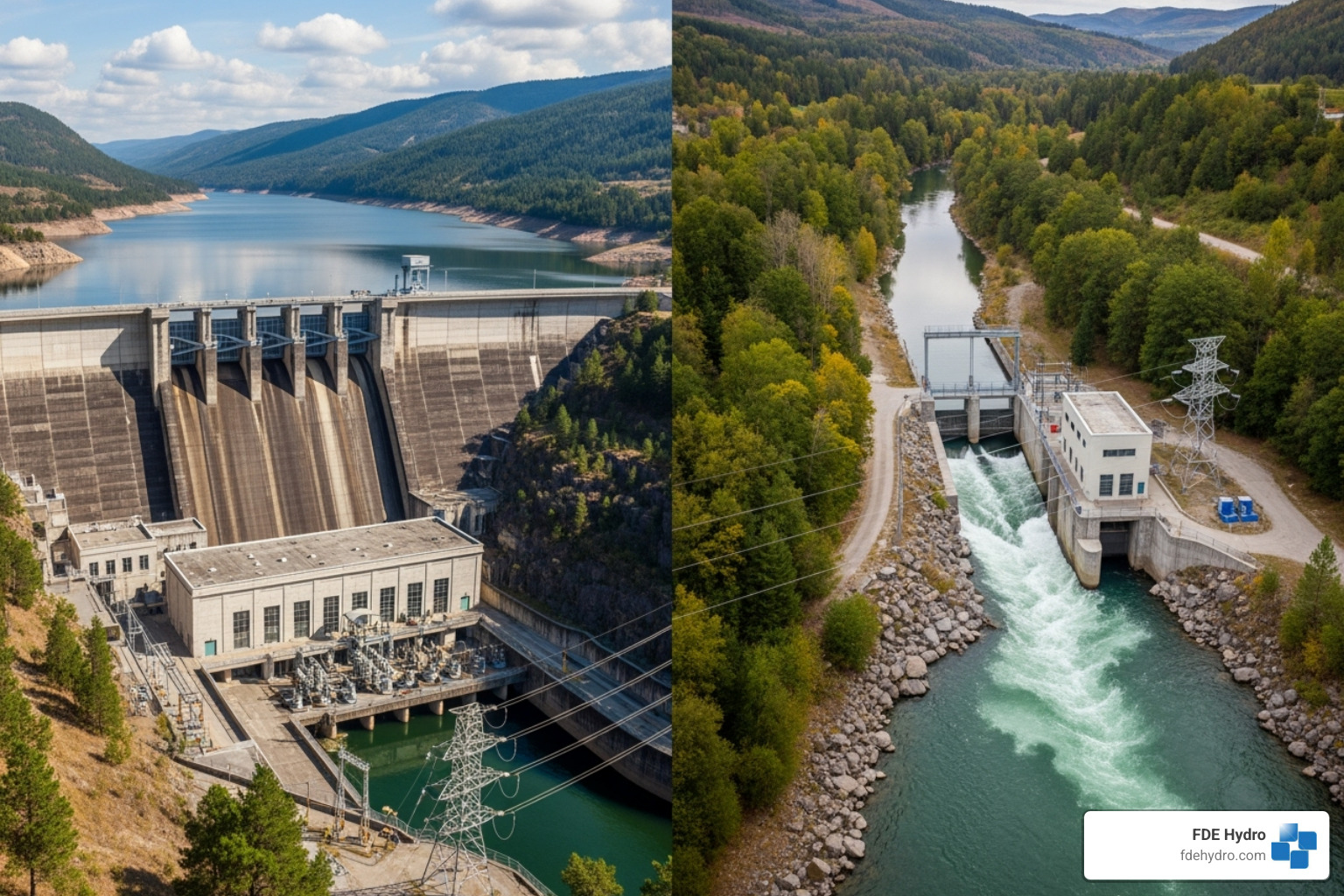
Main Types of Hydropower Facilities
Impoundment facilities are the classic hydro electric dams. They use a dam to create a large reservoir, allowing operators to store water and release it as needed for power generation, grid balancing, flood control, and irrigation support.
Diversion facilities, or run-of-the-river systems, channel a portion of a river through a canal or penstock to generate electricity without a large dam. This approach has a smaller environmental footprint as it relies on the river’s natural flow.
Pumped storage hydropower acts like a giant battery. It uses cheap, excess electricity to pump water from a lower reservoir to an upper one. When demand is high, the water is released back down through turbines to generate power. Pumped storage provides nearly 85% of the world’s grid energy storage and is essential for balancing intermittent renewables like solar and wind. At FDE Hydro, we see these Pumped Storage Hydropower “water batteries” as vital for a renewable energy future. The Department of Energy has also recognized this potential in their research on pumped storage technology.
Sizing Up Hydropower: From Large-Scale to Micro
Hydropower can be categorized by its generating capacity:
- Large hydropower (>30 MW) facilities are the giants that can power entire cities, providing reliable baseload power.
- Small hydropower (SHP) (100 kW – 10 MW) can power thousands of homes and are ideal for regional grids or smaller communities.
- Micro hydropower (<100 kW) is ideal for remote communities, farms, or small villages.
- Pico hydropower (<5 kW) is perfect for off-grid applications like a single home or research station. They can be integrated into Microgrid systems for local energy independence.
This adaptability makes hydropower a versatile solution, scalable from national grids to individual homes. Flowing water offers a powerful renewable energy source at any scale.
The Giants of Hydropower: Notable Hydro Electric Dams
Massive dams are awe-inspiring feats of engineering. Humans have long harnessed water’s power, evolving from ancient water wheels to the giant dams that power modern cities. The Department of Energy’s “History of Hydropower” traces this remarkable journey.
The largest hydro electric dams are ambitious engineering achievements that generate electricity, reshape landscapes, control floods, and power economic development.
Major U.S. Hydro Electric Dams
The United States is home to some of the world’s most impressive hydro electric dams.
- The Grand Coulee Dam in Washington is America’s largest, generating 6,765 MW. Built in the 1930s, it can spill 1 million cubic feet of water per second and is the backbone of the Pacific Northwest’s energy supply.
- The Hoover Dam, an art deco icon on the Nevada-Arizona border, was built during the Great Depression. It generates 2,080 MW, weighs 6.6 million tons, and remains a major tourist attraction.
- New York’s Robert Moses Niagara Power Plant (1961) harnesses the power of Niagara Falls. Once the world’s largest hydropower facility, its 13 turbines generate significant power for the region.
- Other giants on the Columbia River include the Chief Joseph Dam, the second-largest in the U.S., and the John Day Dam, which generates 2,400 MW of clean power.
Global Hydroelectric Leaders
While U.S. dams are impressive, some international projects are even larger.
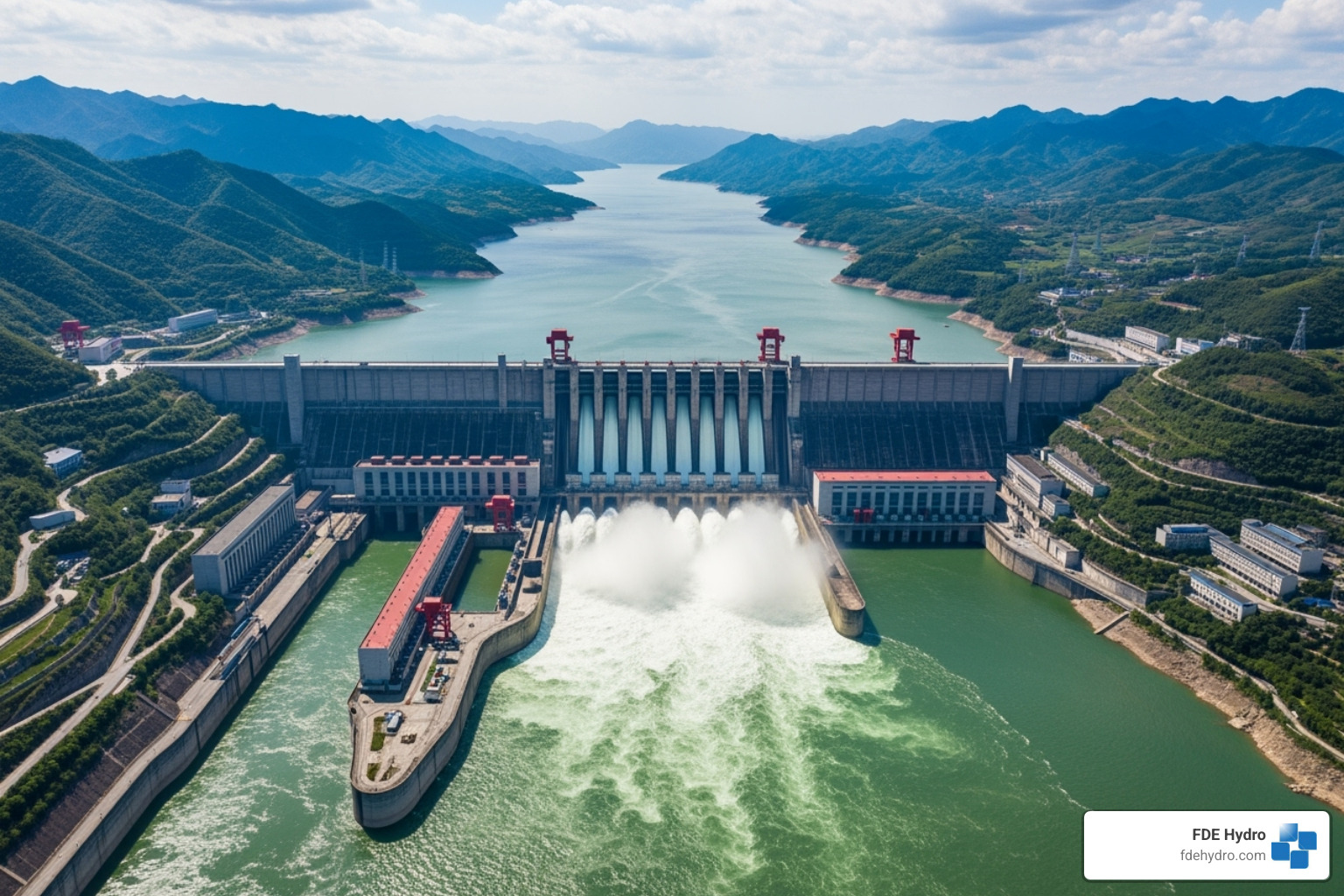
- China’s Three Gorges Dam is the world’s largest power station of any kind, with a capacity of 22,500 MW. Located at 30°49’15″N 111°00’08″E, its construction created a massive reservoir and had significant social impacts.
- The Itaipu Dam, a joint Brazil-Paraguay project, has a 14,000 MW capacity. It supplies about 90% of Paraguay’s electricity and 15% of Brazil’s.
- China’s Baihetan Dam is another titan, generating 16,000 MW. These mega-projects show the massive scale at which hydropower can meet global energy demands.
The Hydropower Debate: Balancing Benefits and Environmental Impacts
Every energy source involves trade-offs, and hydro electric dams are no exception. It’s essential to have an honest conversation about both the benefits and challenges of hydropower.
| Factor | Hydropower | Solar | Wind | Fossil Fuels |
|---|---|---|---|---|
| Operating Cost | Very Low | Low | Low | High (fuel dependent) |
| Efficiency | 85-90% | 15-20% | 35-45% | 30-60% |
| Land Use | High (reservoir) | Moderate | Low | Moderate |
| Emissions | Very Low (operational) | None (operational) | None (operational) | High |
| Grid Stability | Excellent | Poor (intermittent) | Poor (intermittent) | Excellent |
Advantages of Hydropower
Hydropower has powered communities for over a century because once a dam is built, operating costs are very low. These structures are also long-lasting, operating for 65 to 85 years or more. With up to 90% efficiency, hydropower is one of our most efficient energy sources.
Hydropower’s greatest strength is grid flexibility. Unlike intermittent solar and wind, hydro electric dams can adjust power output in seconds. This “load following” capability makes it the “Guardian of the Grid” and crucial for balancing other renewables.
Hydropower also offers black start capability to restart a grid after a blackout. Beyond power, reservoirs provide flood control, water supply for irrigation and drinking, and recreational opportunities.
Environmental and Social Concerns
Building dams transforms river ecosystems. Blocking a river disrupts natural flow, fish migration, and water temperature, while trapping sediment vital for downstream habitats. At FDE Hydro, we address these challenges with improved Aquatic Animal and Recreational Passage systems.
Sedimentation is a major issue. When sediment builds up in reservoirs, it reduces storage capacity and harms downstream ecosystems.
Reservoirs can also produce methane, a potent greenhouse gas, when submerged vegetation decomposes. This phenomenon is sometimes called hydropower’s “dirty secret.” Emissions vary by location, but it’s a factor to consider.
Large reservoirs also inundate land, which can displace communities and cause significant social disruption. Though rare, dam failures are catastrophic, a sobering reminder that rigorous engineering and safety standards are essential.
The path forward requires balancing hydropower’s strengths with efforts to minimize its impacts. At FDE Hydro, this balance guides our work, from modular designs to retrofitting existing dams, as we pursue continuous improvement in sustainable hydropower.
The Future of Hydropower: Innovation and Modernization
The future of hydropower isn’t just about building new hydro electric dams. It’s about modernizing existing infrastructure and embracing technology to make hydropower smarter, faster, and more sustainable.
Surprisingly, less than 3% of the 90,000+ dams in the U.S. generate electricity. These non-powered dams represent an enormous untapped opportunity. At FDE Hydro, we believe that “The Biggest Untapped Solution to Climate Change is in the Water” by retrofitting these existing structures.
Modernizing Aging Infrastructure
Most hydro electric dams in America were built before the mid-1970s. While resilient, this aging infrastructure needs modernization. Rehabilitating old dams is a golden opportunity to upgrade turbines, install modern controls, and improve environmental performance.
At FDE Hydro, we provide “Aging Infrastructure Being Replaced With Next Generation Civil Solutions.” Our rehabilitation approach extends lifespans, increases output, and reduces environmental impacts with shorter timelines and reasonable costs. We are “Reinvigorating Hydropower” by modernizing these valuable assets.
Technological Advancements in hydro electric dams
Hydropower innovation today is focused on being smarter, faster, and more harmonious with nature.
Our patented modular precast concrete technology, the “French Dam,” revolutionizes how hydro electric dams are built. We manufacture components off-site and assemble them quickly, reducing project timelines from years to months with less environmental disruption and lower costs. This “Rapid Installment of Module Precast Civil Infrastructure” has been recognized as one of the “French Dam: One of Top 10 Hydro Innovations and New Technologies.”
Other key innovations include fish-friendly turbines that allow aquatic life to pass through safely and advanced control systems for precise management of water flow. These systems make hydropower even more valuable for balancing renewables.
The most exciting potential lies in retrofitting non-powered dams. With modern modular construction and turbine technology, adding power to existing dams is more economically viable than ever. These innovations align with the “Update of the Hydropower Vision Roadmap,” ensuring hydropower remains a competitive and essential part of our clean energy future.
Frequently Asked Questions about Hydroelectric Dams
Here are answers to some common questions about hydro electric dams and their role in our energy future.
How much of the world’s electricity comes from hydropower?
Hydropower supplies approximately 15% of the world’s electricity (nearly 4,210 TWh in 2023), making it the largest single source of renewable energy globally. Millions of people depend on hydro electric dams for reliable power, and for many nations, it is the backbone of their energy independence.
Are all dams used to generate electricity?
No, not all dams generate electricity. In fact, less than 3% of the 90,000+ dams in the U.S. produce power. The vast majority are used for other purposes like flood control, water supply for irrigation and drinking, river navigation, and recreation. This highlights the enormous untapped potential for retrofitting non-powered dams to generate electricity.
Is hydropower a completely clean energy source?
While operating hydro electric dams produce virtually no CO2 emissions, they are not completely impact-free. Construction creates emissions, and reservoirs can release methane (a potent greenhouse gas) from decomposing organic matter, a phenomenon sometimes called hydropower’s “dirty secret.”
However, these emissions vary greatly by location, and hydropower’s overall lifecycle carbon footprint is still much lower than fossil fuels. At FDE Hydro, our modular construction methods reduce the environmental impact of building and rehabilitating hydro electric dams, reflecting our commitment to continuous improvement.
Conclusion: The Enduring Power of Water
Hydro electric dams are more than just concrete and steel; they represent a partnership with nature, converting the flow of water into clean electricity. Hydropower is a mature yet evolving technology that has proven its value as a reliable source of clean energy.
We’ve seen that hydro electric dams offer significant advantages, including low operating costs, grid stability, and benefits like flood control. We’ve also acknowledged the real environmental and social challenges they can present.
The future of hydropower lies in working smarter. The fact that fewer than 3% of U.S. dams generate power is a massive opportunity. Modern technology, like modular construction, allows us to tap into this potential efficiently and responsibly.
At FDE Hydro, we are committed to this vision. Our modular precast concrete technology makes hydropower more accessible and sustainable across North America, Brazil, and Europe by extending infrastructure life, reducing environmental impacts, and improving economic viability.
Our challenge is to harness the enduring power of water thoughtfully, balancing energy needs with environmental stewardship. If you’re interested in modernizing hydropower infrastructure, learn more about our Dam Rehabilitation Encapsulation services. Together, we can build a cleaner energy future.
