

Why Understanding Renewable Energy Efficiency Matters
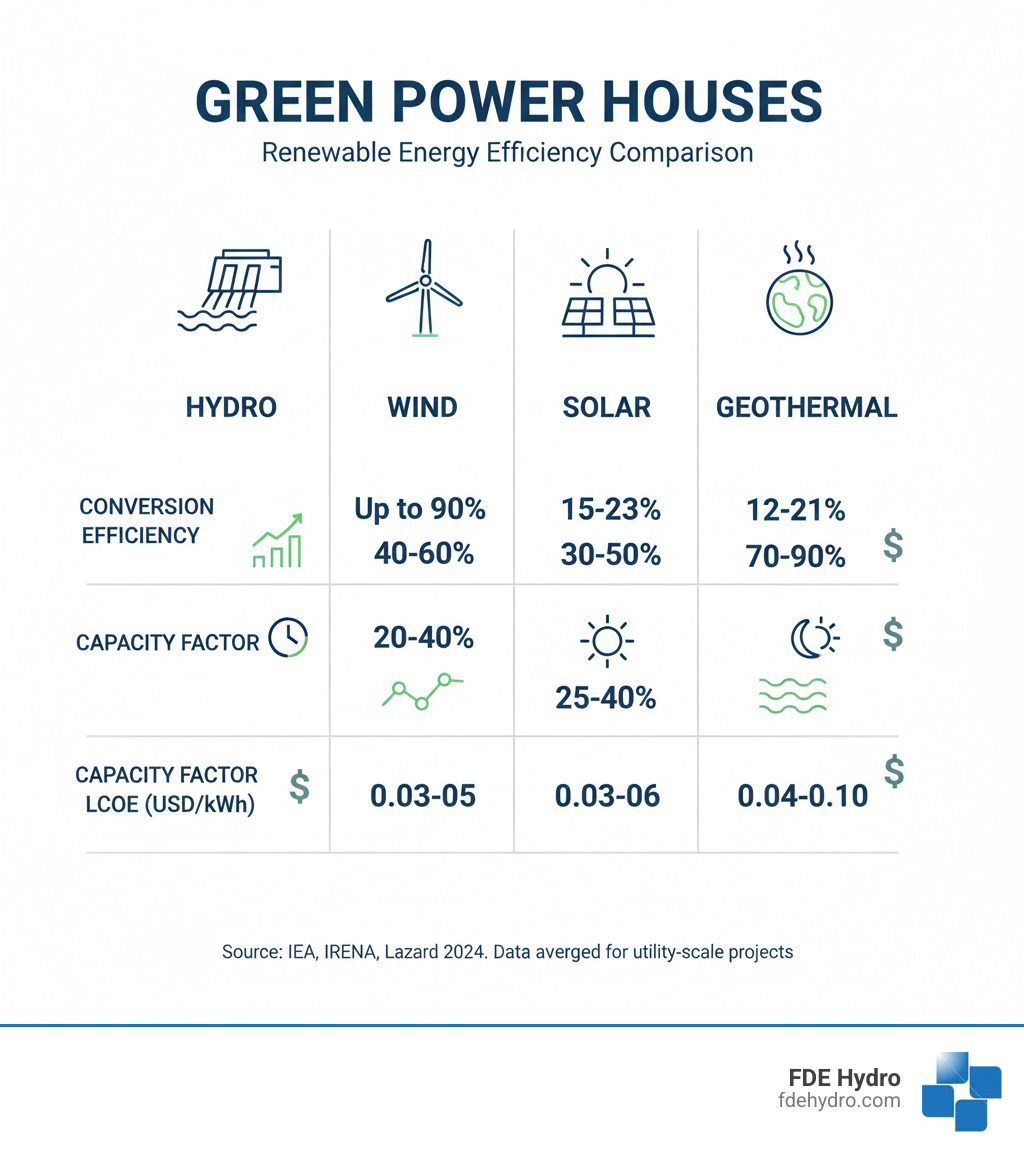
What renewable energy resource is the most efficient depends on how you measure efficiency. Hydropower leads in conversion efficiency at up to 90%, wind offers the highest energy return on investment (EROI) at 1,164%, and geothermal provides the most consistent output. Here’s a quick comparison:
| Energy Source | Conversion Efficiency | Key Advantage | Primary Limitation |
|---|---|---|---|
| Hydropower | Up to 90% | Highest conversion rate, reliable baseload power | High upfront construction costs |
| Wind | 20-40% capacity factor | Exceptional energy return (1,164% EROI), low operating costs | Intermittent, location-dependent |
| Geothermal | 12-21% | Consistent 24/7 generation, stable output | Limited to specific geographic regions |
| Solar PV | 15-23% | Rapidly declining costs, highly accessible | Weather-dependent, requires storage |
The global energy landscape is changing, with renewables now generating over 20% of all U.S. electricity. As we move away from fossil fuels, understanding which resources deliver the most energy for the least input is critical.
But “efficiency” isn’t one simple number. Conversion efficiency measures how much incoming energy becomes electricity. Capacity factor reveals how often a plant runs at full potential. Levelized Cost of Energy (LCOE) calculates the true cost per kilowatt-hour over a project’s life. And Energy Return on Investment (EROI) shows how much energy you get back compared to what you put in.
I’m Bill French Sr., Founder and CEO of FDE Hydro. We’ve spent years developing modular solutions to answer the question of what renewable energy resource is the most efficient by reducing the construction barriers that have historically limited hydropower. Our work with the Department of Energy’s Hydro Power Vision Task Force has shown us that efficiency is about both technology and smart implementation.
Understanding Efficiency: How Are Renewables Measured?
When asking what renewable energy resource is the most efficient, it’s important to know that the energy world uses multiple yardsticks to measure performance. Each one tells a different part of the story.
At FDE Hydro, we know the smartest approach looks at the complete picture—not just raw power, but also economics, reliability, and environmental footprint.
Here are the key metrics:
- Levelized Cost of Electricity (LCOE): This is the total cost to build and operate a power plant over its lifetime, divided by the electricity it produces. It allows for a fair comparison between different technologies. For example, the global weighted average LCOE for onshore wind was just $0.033 per kilowatt-hour in 2023, showing how competitive renewables have become.
- Capacity Factor: This tells us how much a plant actually produces compared to its maximum potential. A 100-megawatt facility running at full power half the year has a 50% capacity factor. Hydropower often achieves high capacity factors because water can be stored and released when needed, making it a reliable baseload power source.
- Conversion Efficiency: This is the percentage of incoming energy (like sunlight or water flow) that gets converted to electricity. A hydropower turbine can convert 90% of water’s kinetic energy, while a typical coal plant is only about 29% efficient.
Conversion Efficiency vs. Energy Return on Investment (EROI)
These two terms measure different things. Conversion efficiency is about the moment of generation—how much energy is captured right then and there. Energy Return on Investment (EROI) takes the long view, asking how much energy a system produces over its entire life compared to the energy used to build, maintain, and decommission it.
This is where wind energy shines, delivering an incredible 1,164% EROI. For every unit of energy invested, we get back more than eleven units. High conversion efficiency doesn’t guarantee high EROI, and vice versa. Hydropower’s 90% conversion is phenomenal, but the energy invested in construction is substantial. Each metric reveals a different truth about efficiency.
How Renewables Stack Up Against Fossil Fuels
The efficiency gap widens when you consider the entire lifecycle. Fossil fuels require energy-intensive extraction, transportation, and processing, all while producing lifecycle emissions. Renewables, once built, tap into naturally replenishing energy flows with near-zero emissions and no fuel extraction costs. Our work in Clean Energy Infrastructure focuses on maximizing this inherent advantage.
| Energy Source | LCOE (USD/kWh, 2023 Global Avg) | Capacity Factor (2023 Global Avg) | Conversion Efficiency (Typical) |
|---|---|---|---|
| Hydropower | 0.057 | 40-60% (baseload) | Up to 90% |
| Wind (Onshore) | 0.033 | 36% | 20-40% (capacity factor) |
| Solar PV (Utility-scale) | 0.044 | 15-30% | 15-23% |
| Geothermal | 0.069 | 70-90% | 12-21% |
| Coal | Higher than new renewables | 50-70% | ~29% |
Data from IRENA Renewable Power Generation Costs in 2023 and multiple industry sources
What Renewable Energy Resource Is the Most Efficient? A Detailed Comparison
There is no single answer to what renewable energy resource is the most efficient. Like tools in a toolbox, each renewable source has its own superpower, making it the champion in different situations. Most experts point to wind, geothermal, hydroelectricity, and solar power as the efficiency leaders. Understanding their unique strengths is key, a topic we explore in our [Energy 101](https://fdehydro.com/energy-101/) resources.
- Wind energy delivers an extraordinary Energy Return on Investment (EROI) of 1,164%. The energy generated over a turbine’s lifetime dwarfs the energy needed to build and maintain it.
- Geothermal energy is the champion of consistency, with capacity factors reaching 70-90%. It provides reliable 24/7 power, regardless of weather.
- Hydroelectricity takes the crown for pure conversion efficiency, often hitting 90% or higher. Almost all of the water’s kinetic energy becomes electricity.
- Solar power’s efficiency story is about accessibility and economics. Costs have plummeted, making it deployable almost anywhere the sun shines.
What makes hydropower one of the most efficient renewable energy resources?
At FDE Hydro, we focus on hydropower because it excels in metrics that matter for reliable, large-scale energy.

Hydropower plants achieve conversion efficiencies exceeding 90%, far surpassing fossil fuels and even other renewables in this regard. This makes it a standout when people ask what renewable energy resource is the most efficient in terms of pure conversion.
Beyond that, hydropower’s reliability and high capacity factor (often 40-60%) make it a cornerstone of a stable grid. We can control the flow of water, generating electricity precisely when needed. This dispatchability allows hydropower to act as a natural battery, balancing the grid. Once built, a hydro facility can operate for a century or more with low operating costs and free “fuel” from the water cycle.
Furthermore, [Pumped Storage Hydropower](https://fdehydro.com/pumped-storage-hydropower/) turns these facilities into massive energy storage systems, which is increasingly valuable as more intermittent renewables come online. While traditional projects have high costs and environmental impacts, our modular “French Dam” technology was developed to dramatically reduce construction costs and timelines while minimizing disruption. This approach makes this highly efficient resource more accessible and sustainable, aligning with the [Benefits of Hydropower Plant](https://fdehydro.com/benefits-of-hydropower-plant/) development.
What makes wind a contender for the most efficient renewable energy resource?
Wind turbines represent one of the most energy-efficient technologies ever developed.
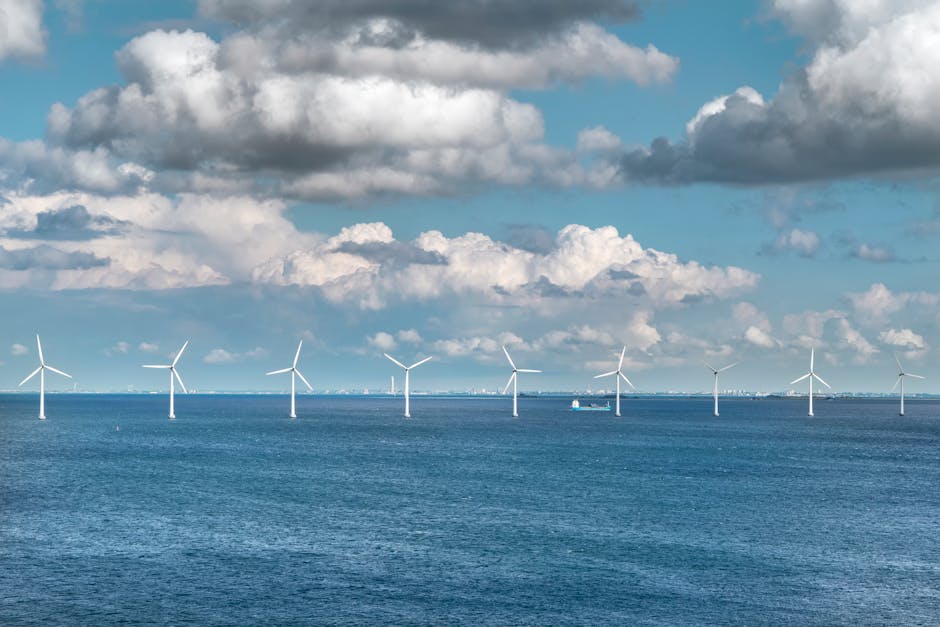
Wind’s superpower is its extraordinary Energy Return on Investment (EROI) of 1,164%. For every unit of energy invested over its lifetime, a turbine produces more than eleven units of clean electricity. Once spinning, operating costs are minimal because the fuel is free. This translates to some of the lowest electricity costs available today.
Modern turbines have capacity factors of 20-40%, and engineers continue to push closer to the theoretical maximum efficiency defined by Betz’s Law (59.3%). In the United States, wind already accounts for [9.2 percent of U.S. electricity generation](https://www.eia.gov/tools/faqs/faq.php?id=427&t=3). The main challenge is intermittency, which requires backup generation or energy storage. Siting can also be a challenge, but modern designs and careful planning are addressing these issues.
Geothermal and Solar: Consistent vs. Accessible Power
Geothermal and solar offer different paths to efficiency. Geothermal provides steady, dependable power, while solar offers widespread accessibility and rapidly improving economics.

Geothermal energy taps into the Earth’s internal heat, boasting capacity factors of 70-90% for reliable, 24/7 baseload power. Its conversion efficiency is a modest 12-21%, but its unwavering output is incredibly valuable. The main limitations are high initial drilling costs and the need for specific geological conditions, though next-generation technologies aim to expand its reach.
Solar energy, on the other hand, is almost universally accessible. Its costs have dropped dramatically, making it the cheapest renewable source in many regions. Panel conversion efficiency is steadily climbing from the typical 15-23% range, with lab records exceeding 40%. Solar’s main challenge is intermittency, which requires energy storage solutions like batteries. As part of our commitment to [Sustainable Infrastructure Development](https://fdehydro.com/sustainable-infrastructure-development/), we see both as essential pieces of a diversified energy future.
Are there any renewable energy sources that are less efficient?
While all renewables are an improvement over fossil fuels, some lag behind the efficiency leaders.
Biomass energy, which involves burning organic matter, has lower conversion efficiency due to its multi-step process. There is also an ongoing debate about its carbon neutrality, as burning wood can release significant carbon that takes decades to be reabsorbed by new tree growth.
Solar thermal energy for electricity generation uses mirrors to create steam to drive a turbine. This process is generally less efficient than direct photovoltaic (PV) conversion and often requires large amounts of water, which is a problem in the arid regions best suited for it. For these reasons, biomass and solar thermal typically fall behind hydropower, wind, geothermal, and solar PV in overall efficiency.
Key Factors That Influence Renewable Energy Efficiency
When evaluating what renewable energy resource is the most efficient, it’s crucial to understand that real-world performance is not static. Efficiency is dynamic, influenced by several interconnected factors that can either boost or hinder a project’s output.
Technology advancements are a primary driver. Solar panel efficiencies are constantly climbing, wind turbines are becoming larger and more aerodynamic, and even established technologies are improving. At FDE Hydro, our work on [Renewable Energy Patents](https://fdehydro.com/renewable-energy-patents/) focuses on making hydroelectric systems more cost-effective and efficient to build.
Geographical location and weather conditions are paramount. A solar farm needs sun, a wind farm needs consistent wind, and a hydropower plant needs reliable water flow and elevation changes. Geothermal is limited to areas with accessible subterranean heat. Daily and seasonal weather patterns directly impact the output of intermittent sources like solar and wind, and long-term patterns like droughts can affect hydropower.
Maintenance and operations also play a significant role. A well-maintained facility will consistently produce more power. Regular inspections and timely repairs can make a substantial difference in energy production and revenue over the life of a plant.
Finally, grid integration is critical. A renewable source is only as efficient as the system that delivers its power. If the grid cannot handle the electricity produced, output may be curtailed, wasting free energy. Modernizing the power grid with smart technologies is vital to maximizing the efficiency of our renewable investments. Optimizing all these factors together is how we build a truly sustainable energy future.
The Future of Efficient Renewables
The quest for what renewable energy resource is the most efficient is an ongoing journey of innovation. The future is being shaped by a convergence of new technologies, smarter policies, and crucial infrastructure upgrades.
Technological breakthroughs are expanding our options. Next-generation geothermal systems (EGS) promise to open up heat from hot, dry rock almost anywhere, potentially changing it from a niche resource into a widespread baseload power option. In solar, perovskite solar cells are generating excitement for their potential to offer higher conversion efficiencies at lower manufacturing costs. Floating solar farms are also gaining traction, as they conserve land space and can be more efficient due to the cooling effect of the water.
Technology alone isn’t enough. Policy plays a crucial role by creating stable markets and incentivizing research. Initiatives like the EU’s REPowerEU Plan and the U.S. Inflation Reduction Act are releasing unprecedented funding for clean energy, streamlining development and fostering innovation.
Grid modernization is the unsung hero of this transition. A smarter grid, like the one the U.S. Department of Energy is working to build by modernizing the power grid, means less wasted energy and better integration of variable sources like wind and solar.
This brings us to energy storage solutions, the key to open uping the full potential of renewables. While battery technology is advancing rapidly, large-scale solutions like [Pumped Storage Hydropower](https://fdehydro.com/pumped-storage-hydropower/) act as giant, grid-scale batteries, ensuring reliability when the sun isn’t shining or the wind isn’t blowing.
At FDE Hydro, we are committed to this evolution through [Hydropower Innovation](https://fdehydro.com/hydropower-innovation/). Our modular approach makes hydropower a more flexible and responsive part of this diverse energy mix. The future isn’t about a single winner; it’s about an integrated system where solar’s accessibility, wind’s energy return, geothermal’s consistency, and hydropower’s reliability work together.
Frequently Asked Questions about Efficient Renewable Energy
What is the cheapest renewable energy source?
In terms of cost, solar power and onshore wind are the champions of affordability. Thanks to plummeting manufacturing costs, they are now the cheapest sources of new electricity in many regions.
The global weighted average Levelized Cost of Electricity (LCOE) in 2023 for utility-scale solar PV was just USD 0.044/kWh. Onshore wind was even cheaper at USD 0.033/kWh. This means building new renewable capacity is often more economical than new fossil fuel options, as confirmed by the [IRENA cost report](https://mc-cd8320d4-36a1-40ac-83cc-3389-cdn-endpoint.azureedge.net/-/media/Files/IRENA/Agency/Publication/2023/Aug/IRENA_Renewable_power_generation_costs_in_2022.pdf). The answer to what renewable energy resource is the most efficient increasingly includes economic efficiency, where solar and wind lead.
Is nuclear power a renewable energy source?
No, nuclear power is not considered a renewable energy source. While it is a low-carbon, zero-emission source of electricity during operation, it relies on uranium, which is a finite resource mined from the ground, much like coal or natural gas.
Renewable energy, by definition, comes from natural sources that are constantly replenished, such as sunlight, wind, water, and geothermal heat. Because its fuel source is not replenishable, nuclear power does not fit this definition. It’s an important distinction when planning for a truly sustainable energy future.
Which renewable energy is the most reliable?
When it comes to reliability—delivering power whenever it’s needed—two sources stand out: hydropower and geothermal energy.
Hydropower is “dispatchable,” meaning operators can control its output. By storing water in reservoirs, we can ramp generation up or down to meet demand, making hydropower a guardian of grid stability. This is why we at FDE Hydro are passionate about making this reliable technology more accessible.
Geothermal energy offers unwavering consistency. It taps into the Earth’s internal heat, allowing plants to operate 24/7 as a source of baseload power, which is the steady foundation of electricity the grid always needs.
In contrast, solar and wind are intermittent, as their output depends on the weather. They are crucial parts of the energy mix but require backup or storage from reliable partners like hydropower and geothermal to ensure a constant supply of power.
Conclusion: Efficiency is Key to a Sustainable Future
So, what renewable energy resource is the most efficient? The answer is a team of performers, each excelling in different ways. Hydropower offers best conversion efficiency and reliability. Wind delivers an incredible energy return on investment. Geothermal provides consistent 24/7 power, and solar leads in accessibility and low cost.
The path to a sustainable future lies in a diverse mix of these sources, creating a resilient system where each technology’s strengths compensate for the others’ limitations. Intermittent sources like solar and wind provide abundant, cheap power, while dispatchable sources like hydropower and geothermal fill the gaps to ensure constant reliability.
At FDE Hydro, we see how hydropower’s unique combination of high efficiency and reliability makes it an irreplaceable part of this energy mix. That’s why we’re focused on [Reinvigorating Hydropower](https://fdehydro.com/reinvigorating-hydropower/) with our innovative modular technology. By reducing the cost and time to build and retrofit facilities, we’re helping ensure this highly efficient resource powers our communities for generations.
The future of energy is diverse, clean, and efficient. To learn more about this cornerstone technology, explore the power and potential of [Hydropower](https://fdehydro.com/hydropower/).
