

Why Water Resource Management Matters More Than Ever
Water resource management is the coordinated control of water to minimize harm, maximize beneficial use, and ensure sustainable access. It involves protecting water sources, managing supply systems, treating wastewater, preventing floods, and ensuring equitable distribution across competing demands like agriculture, industry, and urban needs.
Key Components of Water Resource Management:
- Water Supply Development – Building infrastructure like dams and reservoirs to capture, store, and deliver water.
- Demand Management – Using conservation and efficiency to reduce consumption.
- Quality Protection – Preventing pollution and treating wastewater to match quality with use.
- Disaster Risk Reduction – Managing floods and droughts with early warning systems and resilient infrastructure.
- Governance and Planning – Establishing policies and regulations for equitable allocation.
- Ecosystem Preservation – Maintaining the health of watersheds, rivers, and aquifers.
The stakes have never been higher. The global water crisis isn’t primarily about scarcity—it’s about poor governance. This stems from fragmented institutions, single-objective planning, and top-down decision-making that excludes affected communities. The drying of the Aral Sea is a stark example, caused not by a lack of water, but by a failure to manage competing demands on the system.
This is where Integrated Water Resources Management (IWRM) comes in. IWRM is a paradigm shift toward managing water as part of an interconnected system including land, climate, and human needs, aligning with UN Sustainable Development Goal 6.
Water resource managers must balance economic productivity, social equity, and ecosystem health amid drought and scarcity. They use diverse strategies—from demand management and water reuse to desalination—but these tools only work within a framework of strong governance and cooperation.
For decision-makers in large-scale water infrastructure, conventional approaches are increasingly untenable due to climate change, aging infrastructure, and transboundary conflicts. Communities now demand greater equity and resilience.
The path forward requires integrating technology with policy, economic incentives with environmental protection, and top-down planning with bottom-up participation. Water security is about safeguarding sustainable access for all while preserving the ecosystems that make it possible.
I’m Bill French Sr., Founder and CEO of FDE Hydro. I’ve spent decades developing innovative solutions for water resource management, including modular construction that reduces costs and timelines for hydropower infrastructure. My experience shows that the future lies in combining smart technology with flexible, sustainable systems that can adapt to our changing world.
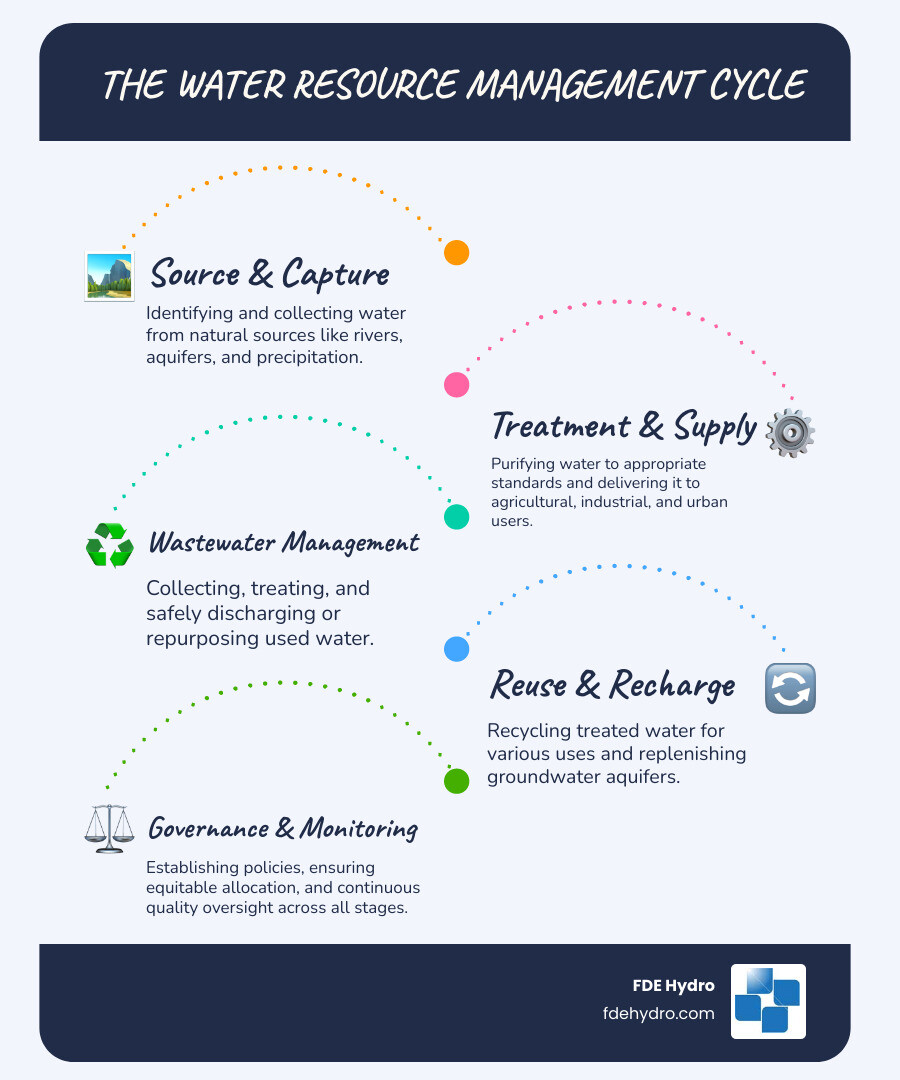
Know your water resource management terms:
The Global Water Challenge and the Rise of IWRM
The global water crisis is a multifaceted challenge of poor governance, not just scarcity. Fragmented institutions manage water without coordination, leading to inefficiencies, while narrow planning ignores the interconnectedness of water systems. Climate change exacerbates these issues by intensifying the water cycle, causing extreme droughts in places like California and Canada and devastating floods across Europe and Brazil. Combined with population growth and rising demand in regions like New York and Kansas, the pressure on finite water resources is immense.
This is precisely why Integrated Water Resources Management (IWRM) has emerged as a critical paradigm. IWRM is a process that champions the coordinated development and management of water, land, and related resources to maximize economic and social welfare equitably, while safeguarding vital ecosystems. The principles of IWRM, originating from the 1992 Dublin-Rio Principles, have evolved to align with global frameworks like the UN’s Sustainable Development Goal 6 (SDG 6), making it a dynamic framework for today’s water challenges.
What is Integrated Water Resources Management (IWRM)?
At its core, IWRM is a holistic approach that recognizes water’s intrinsic connections to land, climate, energy, and human systems. It shifts away from fragmented, sectoral management toward a coordinated strategy to maximize economic and social welfare without compromising ecosystem sustainability.
By fostering coordination, moving beyond single-objective planning, and encouraging bottom-up participation, IWRM aims to create resilient water systems. This approach is fundamental to achieving water security—the capacity of a population to safeguard sustainable access to adequate quantities of acceptable quality water for livelihoods, well-being, and socio-economic development, while protecting against water-related disasters and preserving ecosystems.
For more insights into global strategies, we often look to resources like the World Bank’s initiatives for Water for Planet. This integrated perspective is also what drives us at FDE Hydro, as we contribute to developing sustainable water infrastructure that supports these comprehensive management goals.
IWRM, Governance, and Sustainable Development
The link between IWRM, governance, and sustainable development is clear. The global water crisis is a governance crisis, where fragmented institutions and short-sighted technical fixes have failed. For instance, reports show up to one-third of handpumps in sub-Saharan Africa are dysfunctional, proving that infrastructure alone is insufficient without sustainable management.
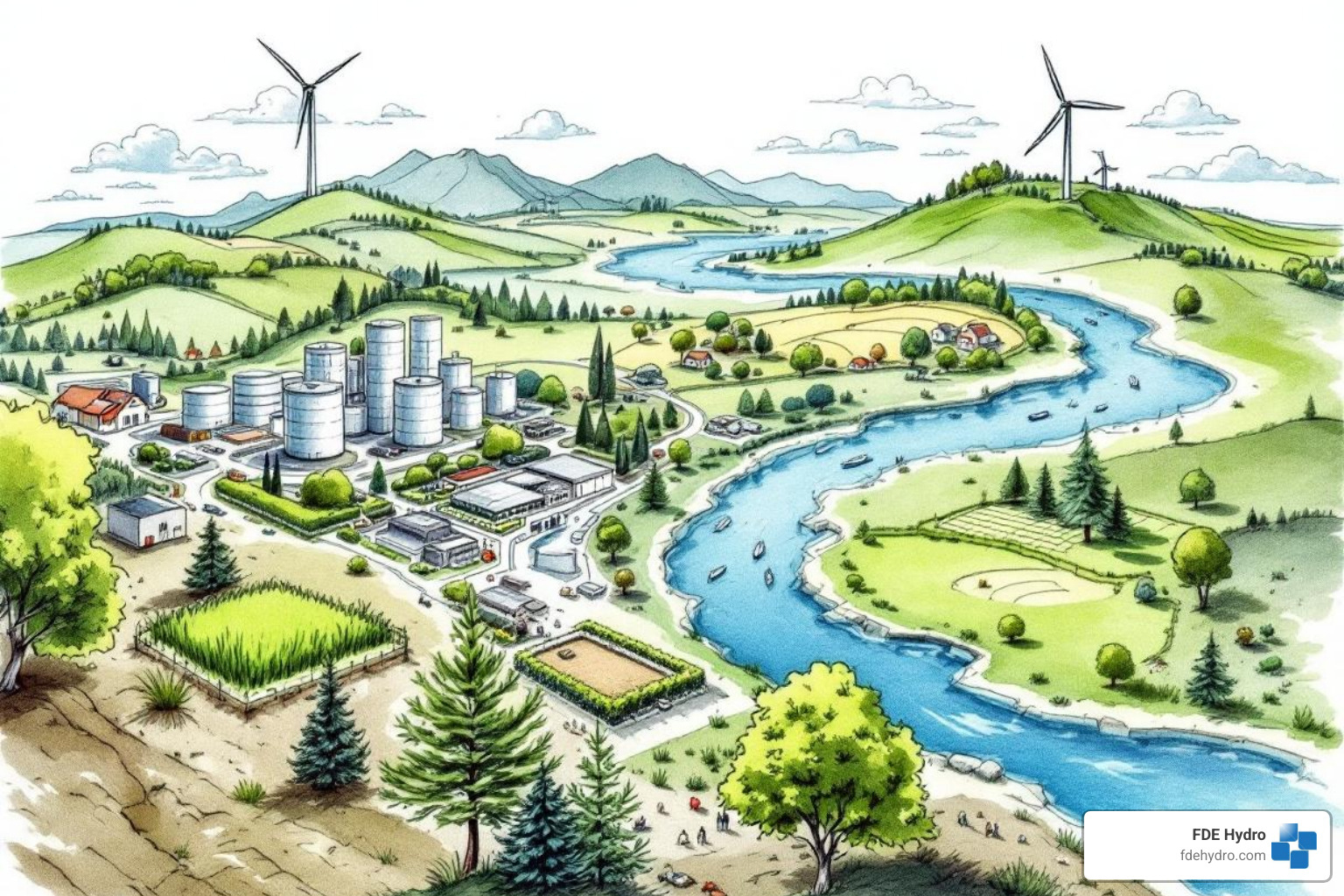
IWRM offers a remedy by shifting from top-down decision-making to one that incorporates bottom-up participation, ensuring diverse values are recognized. Its key principles advocate for a holistic approach, focusing on water as a finite resource, participatory management, and water as an economic good.
IWRM is a cornerstone for achieving the UN’s SDG 6: “ensuring access to water and sanitation for all.” Its principles also resonate with Agenda 2030, the UN Declaration on the Human Right to Water, and the Paris Agreement. Organizations like the United Nations Development Programme (UNDP) are crucial in implementing these principles through their work on UNDP Waters and Ocean Governance. Their projects, such as helping farmers in Somaliland gain water access, show how IWRM directly contributes to human well-being.
An IWRM action framework typically involves strengthening policies, building institutions, providing management tools, and mobilizing financial resources. Integrating these elements helps steer water governance toward a water-secure world.
Key Strategies for Effective Water Resource Management
Facing drought and scarcity in places like California and Kansas, water managers use a blend of supply-side management (increasing available water) and demand-side management (reducing consumption). The most effective water resource management plans integrate both to create a resilient system.
For example, California’s Resource Management Strategies (RMSes) provide a comprehensive framework, updated in 2023 to reflect climate change impacts and a new focus on equity. These strategies are not one-size-fits-all; their success depends on regional factors. At FDE Hydro, we know these regional specifics are vital when designing water infrastructure.
At the heart of these strategies are water efficiency (using technology to reduce water use) and conservation (behavioral changes to reduce consumption). Both are crucial for sustainability.
Here are some key management strategies:
- Demand management (conservation and efficiency)
- Reclamation and reuse of wastewater
- Acquisition of diverse water supplies
- Utilization of renewable surface water
- Development and rehabilitation of reservoirs
- Aquifer replenishment and recharge (Managed Aquifer Recharge – MAR)
- Stormwater capture and green infrastructure
- Crop management and agricultural drainage water management
- Water transfers, leases, and exchanges
- Desalination for brackish groundwater or seawater
- Rehabilitation and replacement of aging water infrastructure
Augmenting Supply: Capture, Reuse, and Desalination
Augmenting our water supply is vital in water-stressed regions. These strategies help us make the most of every drop.
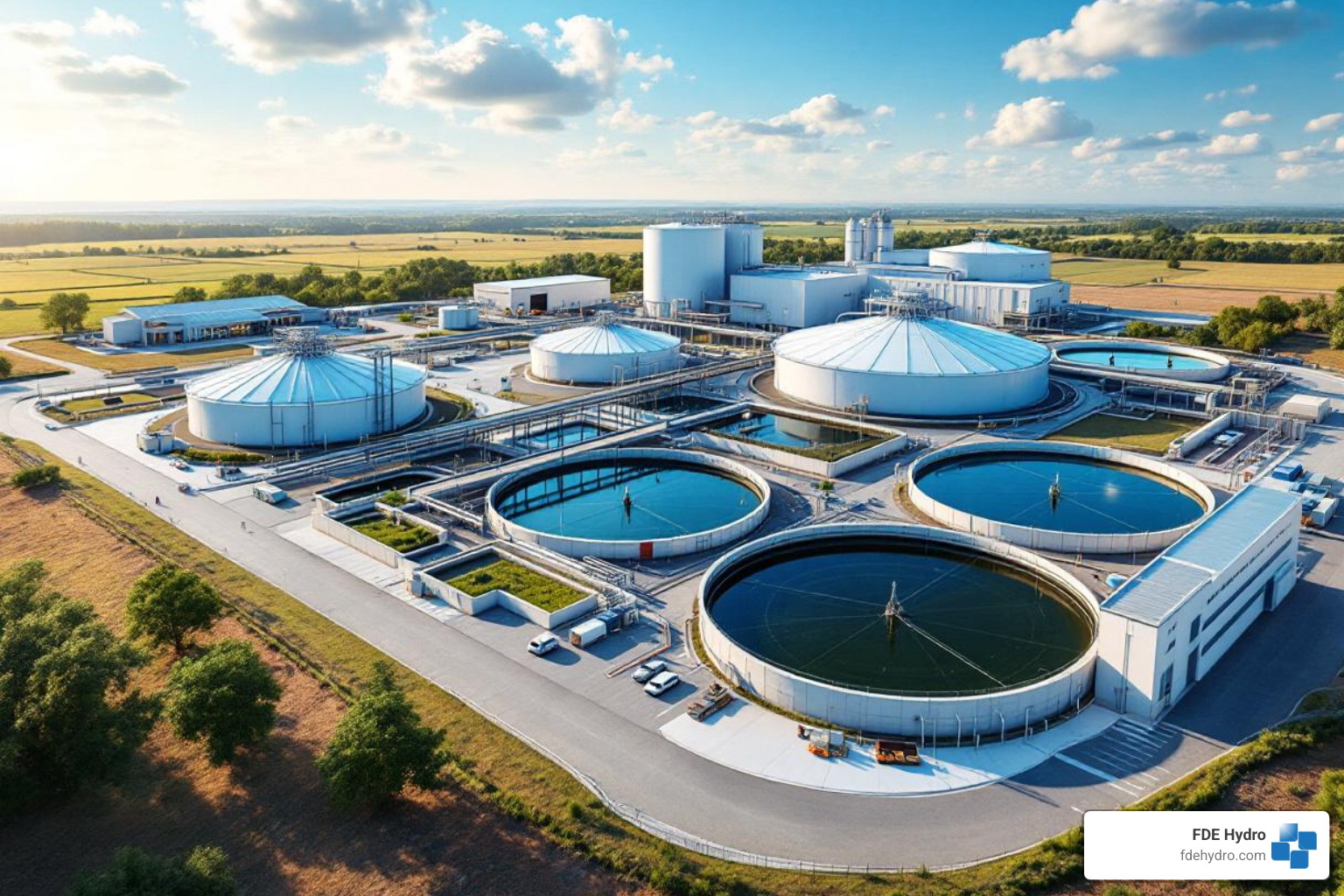
Water capture and stormwater harvesting collect rainwater or urban runoff through green infrastructure like rain gardens and permeable pavements. These systems provide water for use, reduce flood risks, and replenish local groundwater. Our work on water control systems often integrates with these methods for efficient storage.
Managed Aquifer Recharge (MAR) is a set of strategies to replenish aquifers using surface or underground techniques, such as spreading grounds or injection wells. MAR is invaluable for offsetting aquifer depletion in agricultural regions like California and Kansas, but requires careful consideration of source water quality. You can learn more from the American Geosciences Institute’s information on MAR.
Water reuse, or recycling, is a cornerstone of sustainable management. It involves treating wastewater for beneficial uses. Planned reuse takes this further by treating water to be “fit-for-purpose.” Non-potable uses like irrigation may use water from “purple pipe systems,” while indirect potable reuse involves highly treated water being introduced into aquifers or reservoirs before being withdrawn for drinking.
Desalination creates a new water source by removing salt from seawater or brackish groundwater, typically using reverse osmosis. While a game-changer for coastal areas, desalination is energy-intensive and produces a hypersaline brine byproduct that requires careful environmental management. The high upfront capital costs are also a significant factor. Despite these challenges, desalination can be a vital part of a diverse water portfolio for communities in coastal California and other water-stressed regions.
Managing Demand and Improving Quality
Effective water resource management also relies on managing demand and protecting water quality.
In agriculture, a major water user, improving efficiency is key. This includes high-efficiency drip irrigation and selecting low-water crop species. Canadian farmers, for example, are adopting farming practices to protect groundwater and optimize water use. Agricultural drainage water management also protects water quality by reducing nutrient runoff into rivers and lakes, with practices like denitrifying bioreactors promoted by agencies like the NRCS in the US.
In urban areas, water efficiency programs, like the EPA WaterSense program, encourage low-flush toilets and efficient appliances. Public education on fixing leaks and promoting xeriscaping also reduces consumption. The EPA offers guidance on water efficiency for water suppliers.
Pollution prevention is a proactive approach that focuses on reducing waste at the source. This protects water sources and reduces the need for costly downstream treatment. Our expertise in water control structures supports these efforts by enabling precise management of water flows.
California’s updated RMSes highlight key approaches to demand and quality management, including:
- Urban Water Use Efficiency: A permanent strategy, not just a drought response.
- Matching Water Quality to Use: Optimizing treatment and allocation.
- Pollution Prevention: Emphasizing source reduction.
- Salinity Management: Crucial for maintaining usable water supplies.
- Urban Stormwater Runoff Management: Improving water quality and augmenting supply.
- Conjunctive Management: Coordinated use of surface and groundwater to maximize reliability, a practice also vital in regions like Kansas.
These integrated strategies are essential for securing our water future.
The Framework: Governance, Policy, and Global Cooperation
Effective water resource management is rooted in robust governance, clear policies, and international cooperation. The World Bank Group, for instance, focuses on reducing flood and drought impacts, managing and restoring water bodies, and strengthening ecological outcomes. This holistic view recognizes that water challenges are intertwined with climate resilience, economic stability, and environmental health.
Disaster risk reduction involves preparedness, early warning systems, and strategic investments in both green and grey infrastructure—like our modular dam solutions—to buffer against floods and droughts. Protecting and restoring degraded water systems like catchments, rivers, and aquifers is also fundamental for long-term security.
Strong institutions and transparent planning are critical. Basin-level governance enables fair allocation and monitoring, especially in transboundary river basins affecting multiple countries like Canada or Brazil. International cooperation, through bodies like the Global Facility for Transboundary Water Cooperation, helps countries establish legal frameworks for joint management, turning water into a source of stability.
Finally, private sector partnerships and advanced financial tools help drive innovation. The integration of technology, including solutions like AI for Resource Management, is also becoming vital for optimizing these complex systems.
The Role of Institutions in Water Resource Management
Institutions are the backbone of effective water resource management. On the global stage, organizations like the United Nations Development Programme (UNDP) and the World Bank Group play pivotal roles. The UNDP’s work on UNDP Waters and Ocean Governance supports countries in achieving water-related SDGs. The World Bank’s priorities guide significant investments and policy aimed at reducing water risks globally, often leading to robust hydropower asset management frameworks.
Beyond these bodies, academic institutions and specialized associations are crucial. The European Water Resources Association (EWRA) fosters collaboration and knowledge exchange. Academic journals like ‘Water Resources Management,’ published for the EWRA, are vital for disseminating research on water resource assessment, development, and conservation. The journal is an international, multidisciplinary forum for original contributions that support UN Sustainable Development Goals. For those in the field, submitting a manuscript to the Water Resources Management Journal is a way to advance the collective understanding of these critical issues.
These institutions collectively build the global capacity for sustainable water resource management through policy, funding, and scientific research.
Legal and Economic Levers for Sustainable Water Resource Management
Legal and economic frameworks are powerful levers for sustainable water resource management. Without clear water rights and proper economic incentives, even the best technology can fail.
Judicial decisions and the resulting water rights certainty are foundational. Ambiguous rights create uncertainty and hinder long-term investment. For example, a landmark Arizona Supreme Court ruling provided crucial certainty for reusing treated wastewater, enabling significant investment in reclamation projects. In regions like California and Kansas, such clarity is vital for fostering water transfers, leases, and exchanges.
Economic incentives are critical for influencing behavior. These can include financial assistance for adopting efficient technologies, water pricing that reflects its true cost, and market policies that allow for flexible allocation.
Here’s a quick comparison of some economic incentives:
| Economic Incentive | Pros | Cons |
|---|---|---|
| Tiered Water Pricing | Encourages conservation; generates revenue for infrastructure; promotes equity for basic needs. | Can disproportionately affect large families or industries; may be politically unpopular; complex to implement fairly. |
| Subsidies/Grants | Encourages adoption of water-saving tech; supports vulnerable users; stimulates innovation. | Can be costly to administer; may create dependency; risk of market distortion if not carefully targeted. |
| Water Markets | Efficient allocation to highest value uses; flexible in drought; creates clear value for water. | Can lead to speculation; raises equity concerns for small users; requires robust legal and monitoring frameworks. |
| Tax Incentives | Encourages investment in efficient equipment; less direct government intervention. | Benefits may not reach all users; can be complex to administer; less immediate impact on daily consumption. |
Public outreach and engagement are also powerful levers. Educating citizens and industries about water scarcity and conservation fosters a culture of responsible water use. This bottom-up approach, combined with top-down policies, creates a robust framework for sustainable infrastructure development in water.
Frequently Asked Questions about Water Resource Management
What is the main cause of the global water crisis?
The global water crisis is primarily considered a crisis of governance, not just scarcity. It stems from issues like fragmented institutions, poor planning, lack of coordination between sectors (like agriculture, energy, and urban development), and insufficient investment in sustainable infrastructure and management practices.
How does climate change affect water resources?
Climate change intensifies the water cycle, leading to more extreme weather events. This includes more severe droughts, intense rainfall and flooding, and changes in snowfall and snowmelt patterns, all of which disrupt traditional water availability and increase risks to communities and ecosystems.
Can technology alone solve our water problems?
While technology like desalination, advanced water treatment, and smart irrigation are crucial tools, they are not a silver bullet. Sustainable water management requires a holistic approach that combines technology with effective governance, sound policy, economic incentives, and public participation to ensure equitable and long-lasting solutions.
Conclusion: Building a Water-Secure Future
As we’ve explored, water resource management is a complex, dynamic field that requires an integrated and forward-thinking approach. The concept of Integrated Water Resources Management (IWRM) stands as our guiding principle, advocating for the coordinated development and management of water, land, and related resources to achieve economic, social, and environmental sustainability. The global water crisis is a governance challenge, and our collective response must address this fundamental issue.
The future of water resource management relies on building resilient, adaptable, and sustainable water infrastructure. This means embracing innovative solutions that improve our capacity to manage water during periods of drought and scarcity, protect against floods, and ensure equitable access for all. From advanced water capture and reuse techniques to the strategic implementation of Managed Aquifer Recharge and responsible desalination, every tool in our arsenal must be considered.
At FDE Hydro, we are committed to being part of this solution. Our innovative modular dam construction technology, the “French Dam,” exemplifies how we can reduce costs and timelines for building and retrofitting hydroelectric dams and water control systems in North America, Brazil, and Europe. These advancements are not just about efficiency; they are about enabling the rapid deployment of critical infrastructure that can adapt to the intensifying impacts of climate change and support comprehensive water resource management strategies.
The path to water security is a collective effort, demanding collaboration across sectors, robust governance, and continuous innovation. By integrating technology with policy, economic incentives with environmental protection, and top-down planning with bottom-up participation, we can build a water-secure future for generations to come. We invite you to explore how next-generation hydropower and water control solutions are shaping this future.
