

Why Water Infrastructure Projects Matter More Than Ever
Water infrastructure projects are the backbone of safe drinking water in America, but the nation faces a critical juncture. Here’s what you need to know:
Key Facts About U.S. Water Infrastructure Projects:
- $50 billion federal investment through the Infrastructure Investment and Jobs Act – the largest water investment in U.S. history
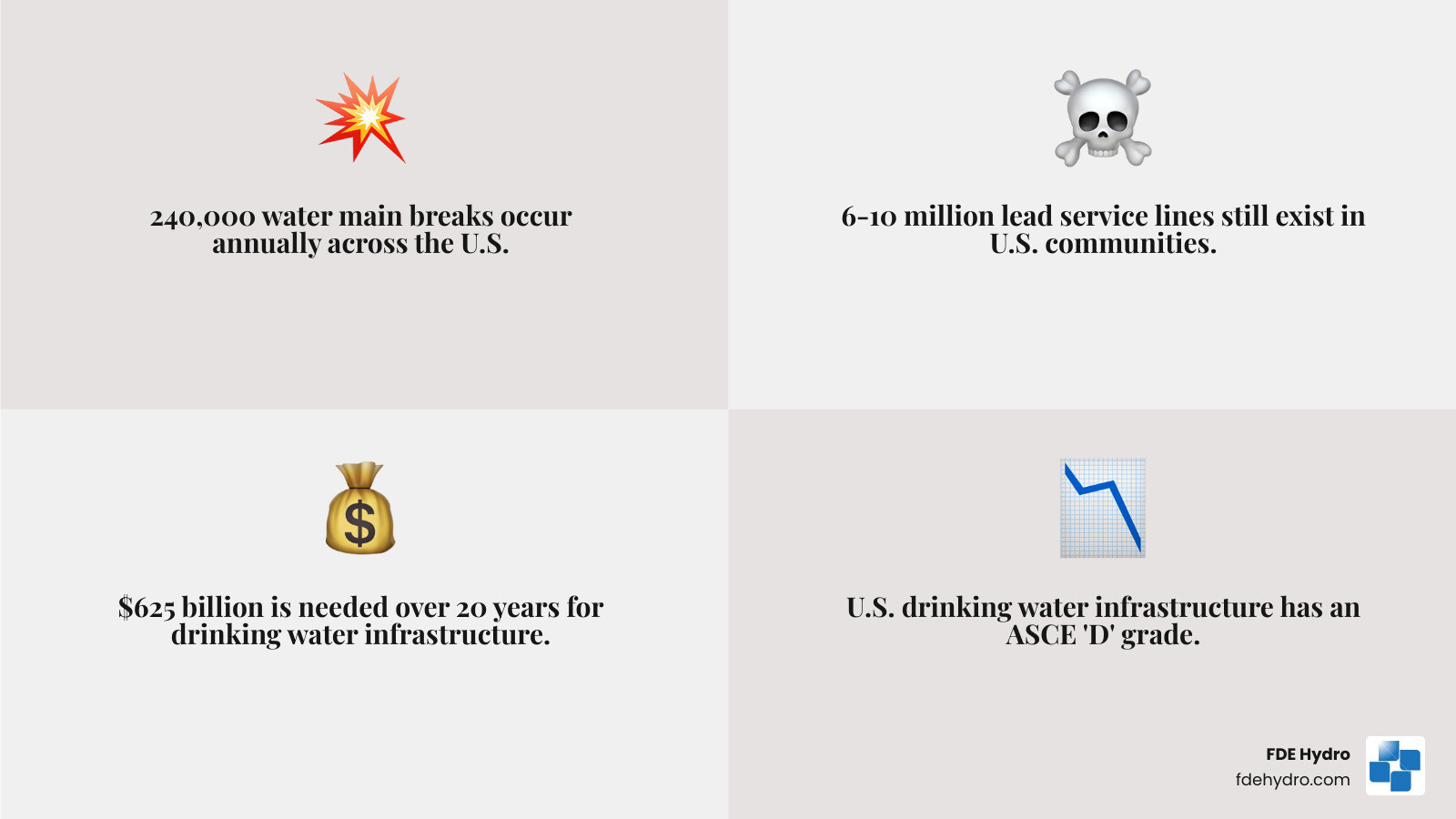
- $625 billion needed over the next 20 years for drinking water infrastructure
- 6-10 million lead service lines still exist across the United States
- Grade D – the ASCE’s rating for U.S. drinking water infrastructure for over a decade
- Major funding sources include State Revolving Funds (SRFs), WIFIA loans, and USDA Rural Development programs
The numbers tell a sobering story. Much of America’s water infrastructure is aging rapidly, with some pipes dating back to the 1800s. These systems are strained by climate change, which brings extreme droughts and floods, and threatened by emerging contaminants like PFAS “forever chemicals” that existing plants weren’t designed to handle.
However, there’s unprecedented opportunity. The Bipartisan Infrastructure Law offers a once-in-a-generation chance to rebuild. Federal programs like WIFIA and SRFs are making large-scale upgrades more affordable, and communities are shifting from crisis response to proactive, technology-enabled management.
The path forward requires smart investment, innovative construction methods, and proven technologies that can deliver results faster and more cost-effectively than traditional approaches.
I’m Bill French Sr., Founder and CEO of FDE Hydro™. For over five decades, I’ve focused on civil construction innovation, from participating in the DOE’s Hydro Power Vision Task Force to developing the modular solutions we use today. I’ve seen how the right technology can dramatically reduce costs, accelerate timelines, and deliver more resilient water systems.
Quick water infrastructure projects definitions:
The State of America’s Water Systems: Challenges and Urgencies
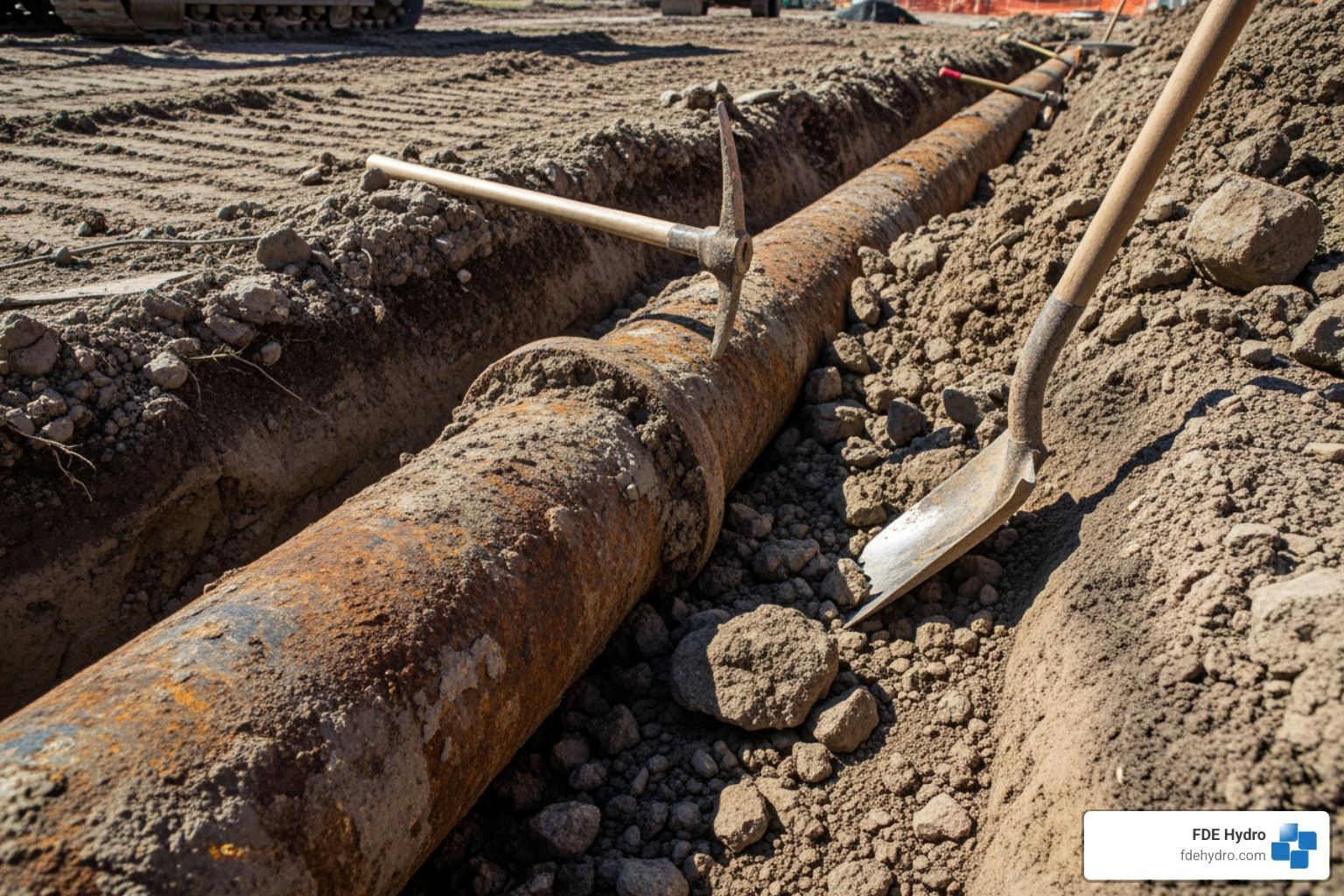
Let’s talk about the reality facing our water infrastructure projects today. The American Society of Civil Engineers has given U.S. drinking water infrastructure a “D” grade for over a decade. We’re dealing with pipes laid generations ago, some dating back to the 1800s. These aging systems lead to frequent water main breaks, wasting millions of gallons of treated water and creating contamination risks.
Age isn’t our only challenge. Climate change is rewriting the rules, with droughts pushing storage to its limits in some regions while intense rainfall overwhelms systems in others. The infrastructure built for yesterday’s climate isn’t ready for tomorrow’s extremes.
Then there are new contaminants our grandparents never worried about. PFAS—”forever chemicals”—are showing up in water supplies nationwide, and our older treatment plants weren’t designed to remove them. The same is true for harmful algal blooms fueled by nutrient runoff. The economic toll of failing infrastructure is immense, including lost productivity, health costs, and environmental damage, as detailed in a joint report on the State of the Infrastructure by the Bureau of Reclamation and the U.S. Army Corps of Engineers.
Addressing Historical Underinvestment and New Threats
For decades, our approach to water infrastructure has been reactive, waiting for crises before acting. This pattern of deferred maintenance has created a massive infrastructure deficit. The good news is that we can now move from patching old systems to modernizing them with smarter designs and better technology, as seen in how Aging Infrastructure Being Replaced with Next Generation Civil Solutions can transform this challenge.
As threats evolve, our water infrastructure projects must evolve too. PFAS contamination is a tough new frontier, affecting about a quarter of the nation. Removing these compounds requires advanced treatment technologies that many facilities lack. Similarly, harmful algal blooms, like the one that made Toledo, Ohio’s water undrinkable in 2014, are becoming more common. Addressing these threats requires comprehensive strategies, from source water protection to advanced Water Control Systems.
Fortunately, the federal government is taking this seriously. The Bipartisan Infrastructure Law dedicates $10 billion to addressing PFAS and other new threats, pushing utilities to test for and treat these contaminants. We are finally shifting from reactive crisis management to proactive defense.
Funding the Flow: Navigating Federal Investment in Water Infrastructure Projects
We’re living through the single largest federal investment in water America has ever seen. The Bipartisan Infrastructure Law delivers more than $50 billion to the EPA alone for water infrastructure projects. This historic funding reaches local communities through key programs.
State Revolving Funds (SRFs) are state-managed loan programs that blend federal and state dollars. They offer low-interest loans for a wide range of projects, and as loans are repaid, the money is recycled to fund future projects, creating a self-sustaining cycle of reinvestment.
The Water Infrastructure Finance and Innovation Act (WIFIA), administered by the EPA, provides long-term, low-interest loans for large, nationally significant projects. WIFIA has already saved utilities over $5 billion in financing costs. For rural America, USDA Rural Development programs provide targeted assistance and financing.
This comprehensive federal approach reflects a commitment to Sustainable Infrastructure Development. For a deeper dive on WIFIA, the American Water Works Association offers an excellent analysis: Fluid Financing of Water Utility Infrastructure With WIFIA.
How Funding Empowers Local Projects
The power of SRFs and WIFIA is how they provide money. By dramatically reducing borrowing costs—WIFIA loans can cut financing costs by 25%—these programs make ambitious water infrastructure projects feasible. Savings can mean lower water bills for families or the ability to tackle additional upgrades. SRFs are particularly vital for smaller systems, with 38% of Drinking Water SRF funds going to systems serving 10,000 people or fewer, leveling the playing field for communities that struggle to access capital markets.
| Feature | WIFIA | SRFs (Drinking Water & Clean Water) |
|---|---|---|
| Loan Terms | Low-interest, long-term (up to 35 years) | Low-interest (often below market), various terms |
| Project Size | Large, nationally/regionally significant ($20M+ or $5M+ for small communities) | Small to large, state-specific thresholds |
| Application Process | Direct to EPA, competitive | Through state agencies, application varies by state |
| Funding Source | Federal appropriations, repaid loans | Federal capitalization grants, state matching funds, repaid loans |
| Key Benefit | Significant cost savings, flexible repayment | Flexible, self-sustaining, supports a broad range of projects |
| Typical Projects | New construction, large upgrades | Lead service line replacement, treatment plant upgrades, collection systems |
Key Funding Allocations Under the IIJA
The Bipartisan Infrastructure Law makes strategic investments in the most critical areas. Key allocations include:
- $15 billion for lead service line replacement, a national commitment to eliminate this preventable health crisis.
- $11.7 billion for wastewater and stormwater systems through the Clean Water SRF to protect our rivers and lakes.
- $9 billion total to address emerging contaminants like PFAS, acknowledging that public health requires staying ahead of new threats.
- $8.3 billion to the Bureau of Reclamation for water infrastructure in the Western U.S., targeting drought resilience and dam safety.
These funds represent real projects in real communities—new treatment plants, replaced pipes, and cleaner water, creating a once-in-a-generation opportunity to transform American water infrastructure.
Blueprint for Resilience: Key Project Categories and Their Impact
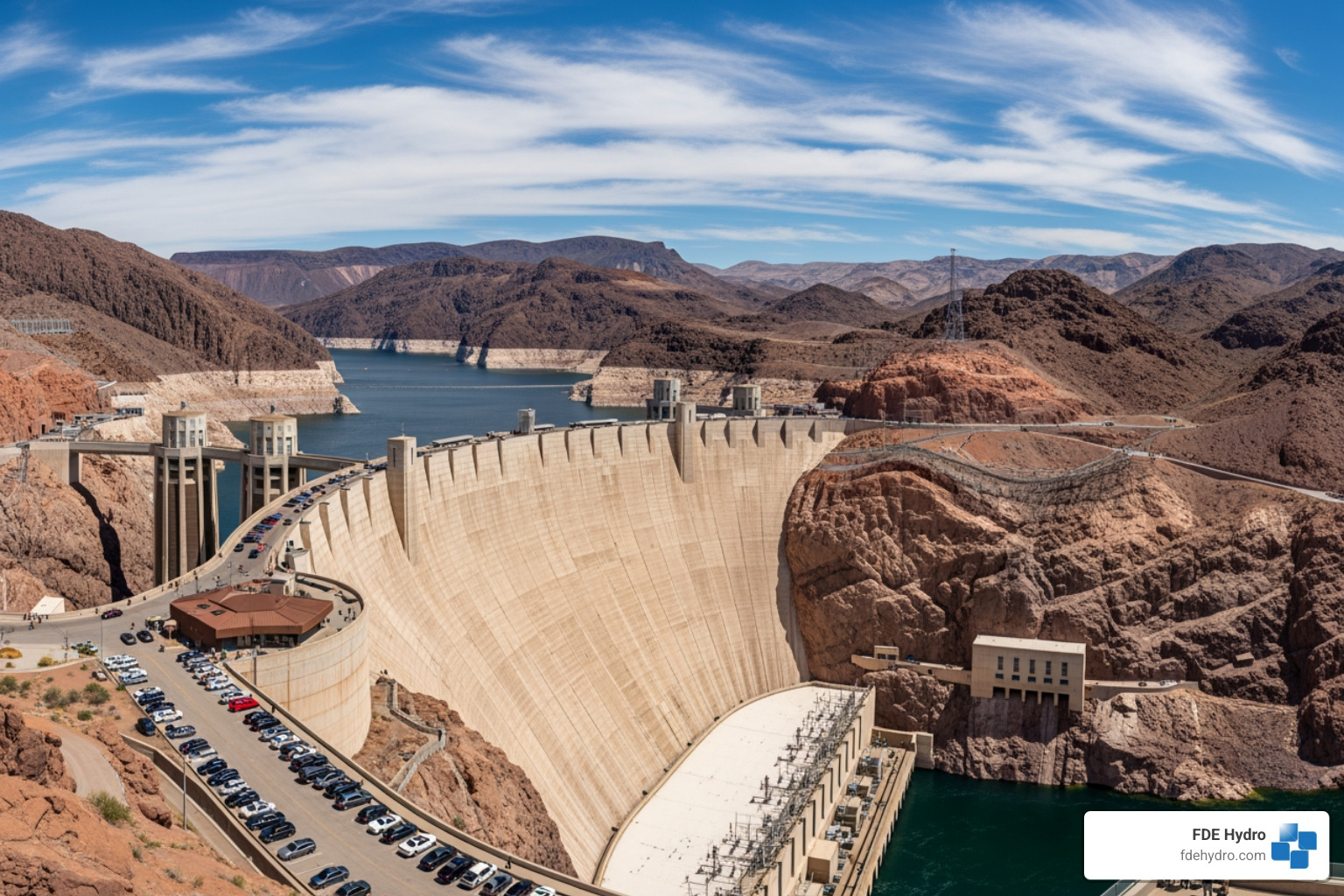
Building a resilient water future requires a comprehensive approach to water infrastructure projects. This blueprint includes everything from purifying drinking water and managing stormwater to replacing lead service lines and building new storage. These projects are interconnected; a new reservoir provides drought resilience and flood control, while an upgraded treatment plant can enable water recycling. Thoughtful design of Water Control Structures can serve multiple purposes, delivering greater value for every dollar invested.
Modernizing Drinking Water and Wastewater Systems
Many water infrastructure projects directly impact your daily life. With 6-10 million lead service lines still in use, federal funding is finally enabling large-scale replacement programs to eliminate this toxic threat. At the same time, treatment plants built mid-century are being upgraded to handle modern demands and emerging contaminants like PFAS. For example, the Kansas River Wastewater Treatment Plant Improvements Project is modernizing facilities to meet current and future needs. Finally, cities are tackling water loss from leaky pipes. San Francisco’s $4.8 billion Water System Improvement Program successfully repaired and seismically upgraded its network, showing what’s possible with sustained commitment.
Building Resilience Against Climate Change
Climate change is reshaping how we approach water infrastructure projects, demanding systems that can handle extremes like droughts and floods. Key strategies include:
- Water Storage: Capturing water during wet periods for use in dry times is fundamental. New reservoirs, like one being built in California, are a key part of this strategy.
- Climate-Adaptive Systems: Large-scale initiatives like California’s Delta Conveyance Project are designed to protect water delivery from climate change and seismic risks.
- Water Recycling and Reuse: Treating wastewater to drinking water standards is a game-changer for drought-prone regions, creating a reliable, local water source.
Federal investment is backing these efforts, with the Inflation Reduction Act providing $4.6 billion for drought response in the West. At FDE Hydro, we see climate resilience as an opportunity. Our work in Hydropower Retrofitting shows how existing infrastructure can be upgraded for water storage, flood control, and clean energy. We believe The Biggest Untapped Solution to Climate Change is in the Water, and we’re committed to developing adaptive solutions.
The Technology Revolution in Water Management
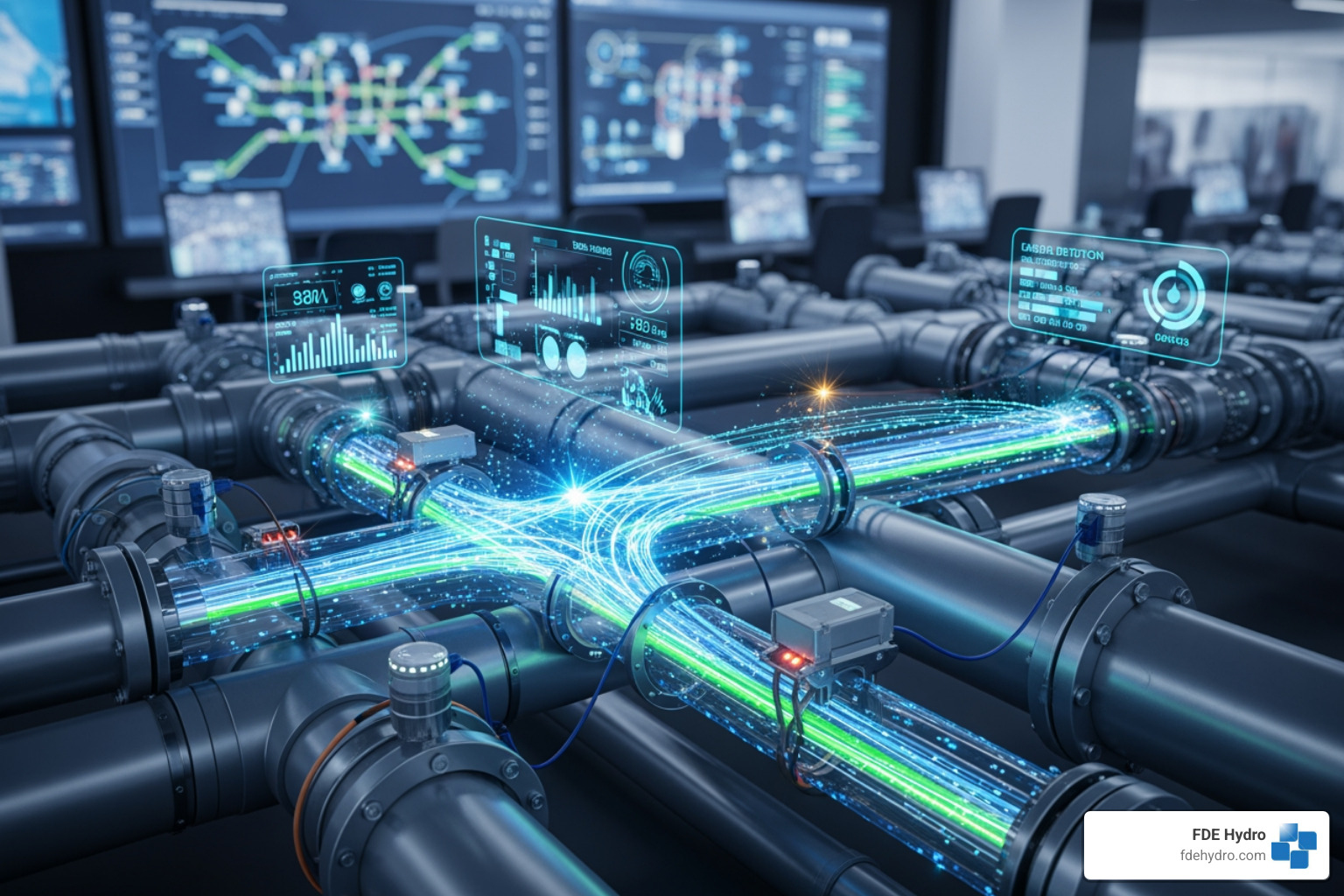
The management of water infrastructure projects is undergoing a technological revolution, shifting from a reactive to a proactive, data-driven approach. Smart water grids use sensors and meters to monitor flow, pressure, and quality in real time, allowing operators to detect leaks and other issues instantly. Predictive analytics takes this a step further, using data to forecast potential equipment failures so maintenance can be scheduled proactively, saving money and preventing disruptions.
On the treatment side, advanced technologies like reverse osmosis are crucial for removing emerging contaminants like PFAS. These innovations are part of a broader move toward Clean Energy Infrastructure that makes water purification more effective and sustainable.
Innovations in Construction for Water Infrastructure Projects
At FDE Hydro, we’ve spent decades rethinking how water infrastructure projects are built. Our patented modular precast concrete technology represents a complete departure from traditional methods. Instead of building everything on-site, we prefabricate major components in a controlled factory environment. These precision-engineered modules are then transported and assembled on-site.
The impact is transformative. Construction time drops from years to months, and costs are significantly reduced by streamlining the process and minimizing on-site labor. Quality and safety both improve, as factory conditions allow for a level of precision impossible in the field. This approach is the essence of our Modular Construction Techniques, delivering more durable and resilient infrastructure faster and for less cost.
The Future of Hydropower and Dam Safety
Hydropower is an integral part of America’s water infrastructure, but many facilities are aging. The opportunity is enormous: thousands of existing non-powered dams can be retrofitted to generate clean energy. Our work in Hydropower Innovation and Hydroelectric Dam Construction makes these upgrades faster and more affordable.
Dam safety is also critical, as older structures face new pressures from extreme weather. Federal investment is flowing into spillway improvements and structural upgrades to ensure these dams can withstand future demands while continuing to provide power, water supply, and flood control. Programs like the Army Corps Water Infrastructure Financing Program are helping to fund these vital non-Federal dam projects.
Frequently Asked Questions about Water Infrastructure Management
What are the first steps for a utility to access federal funding like WIFIA or SRFs?
To access federal funding for your water infrastructure projects, start by developing a clear capital improvement plan that outlines your project’s scope, cost, and community benefits. For State Revolving Funds (SRFs), your first call should be to your state’s SRF program administrators, who can guide you through their specific application process. You can find contacts on the EPA’s website for State DWSRF contacts. For larger projects suited for the Water Infrastructure Finance and Innovation Act (WIFIA), you’ll work directly with the EPA. Review the EPA’s guidance on how to apply for WIFIA assistance and engage with the agency early in your planning process.
How do new technologies help manage aging water infrastructure?
New technologies are shifting the management of aging water infrastructure projects from reactive to proactive. Acoustic sensors and smart meters can detect leaks in real time, reducing water loss and preventing catastrophic breaks. Predictive analytics uses historical data to forecast equipment failures, allowing utilities to schedule maintenance proactively, saving money and avoiding service interruptions. Furthermore, trenchless technologies like pipe lining allow for the replacement of underground pipes with minimal excavation, reducing disruption to communities and speeding up project completion. Together, these innovations extend the life of existing assets and make operations more cost-effective.
What is the role of public-private partnerships (P3s) in water projects?
Public-private partnerships (P3s) are a valuable tool for delivering large, complex water infrastructure projects. In a P3, a public entity partners with a private company that may help design, build, finance, and operate a new facility, like a treatment plant. This model can accelerate project delivery by leveraging private sector capital, efficiency, and innovation—such as advanced construction methods that reduce costs and timelines. The public entity retains ownership and oversight, while both parties share risks and rewards. For communities with significant infrastructure needs but limited upfront capital, P3s offer a path to modernize their water systems effectively.
Conclusion: Building a Sustainable Water Future
Our water infrastructure projects face real challenges, from aging pipes to climate change and new contaminants. Yet, we also have an unprecedented opportunity. The Bipartisan Infrastructure Law provides historic funding, and new technologies offer smarter ways to manage our systems. This is our chance to move beyond the reactive fixes of the past and build for the future.
Success, however, isn’t just about funding. It requires smarter construction. At FDE Hydro, we’ve perfected our modular precast concrete technology because traditional methods are too slow and costly for the scale of the challenge we face. Our approach—fabricating components in a factory and assembling them on-site—dramatically cuts construction time, reduces costs, and delivers higher-quality, more resilient structures. This is true for new hydroelectric dams and critical water control systems.
Proactive management, smart investment, and proven innovation are the keys to a sustainable water future. The opportunity we have now is to rebuild our infrastructure the right way—to be more resilient, efficient, and durable for generations to come. I’ve dedicated my career to this work because every community deserves safe, reliable water.
If you’re ready to move beyond “how we’ve always done it” and explore what next-generation solutions can do for your community, I invite you to learn more about next-generation Dam Rehabilitation and Encapsulation techniques. Together, we can build a better water future.
