

Why Sustainable Water Infrastructure Matters Now More Than Ever
Sustainable water infrastructure involves designing, building, and managing water systems to meet current needs without compromising the future. It balances three key dimensions:
- Operational Sustainability – Reliable service from a skilled workforce and effective utility management.
- Financial Sustainability – Cost-effective lifecycle investments and stable funding.
- Environmental Sustainability – Protection of water quality, ecosystems, and natural resources.
These systems blend traditional engineering with nature-based solutions, renewable energy, and smart technology to create resilient networks that can withstand climate change and serve growing populations.
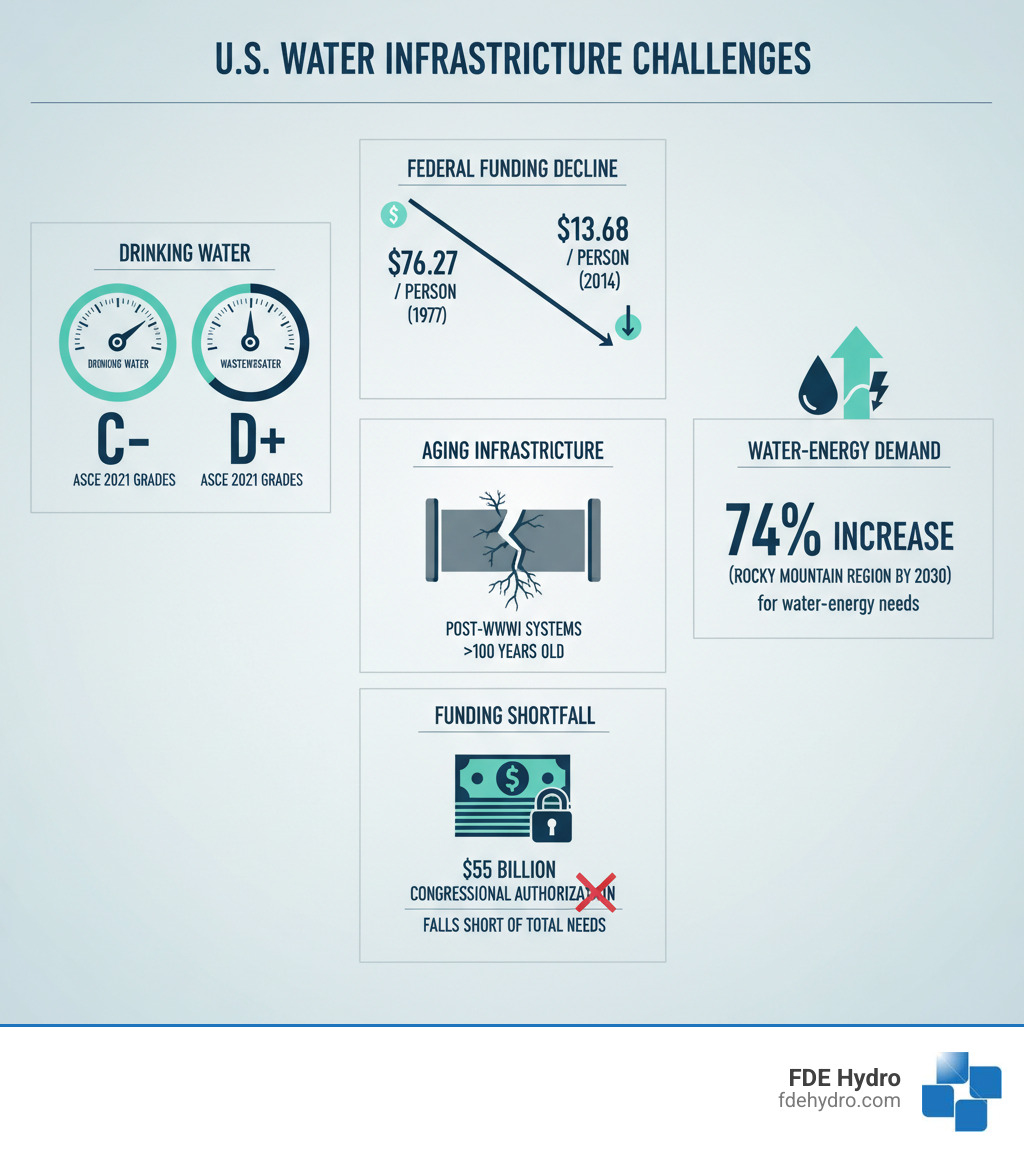
The numbers are stark. The American Society of Civil Engineers’ 2021 report card gave U.S. drinking water infrastructure a C– and wastewater systems a D+. Much of this network, built after WWII, is now over 100 years old. Compounding the issue, federal funding for water infrastructure fell from $76.27 per person in 1977 to just $13.68 in 2014.
Beyond aging pipes, water scarcity and climate change are pushing outdated systems past their breaking point. The demand for water to satisfy energy needs is projected to increase 74% by 2030 in the Rocky Mountain region alone.
Sustainable infrastructure offers a proactive path forward, integrating systems to protect communities and ecosystems. It’s about building smarter, not just bigger.
As Bill French Sr., Founder and CEO of FDE Hydro™, I’ve dedicated my career to this challenge. Our patented modular technologies help communities build resilient water systems faster and more affordably, addressing this urgent national crisis.
The State of Our Water Systems: A Looming Crisis
America’s water systems are facing a crisis decades in the making, as aging pipes and treatment plants struggle under the weight of deferred maintenance. Much of our infrastructure, built during the post-WWII construction boom, is now over 100 years old—far beyond its intended lifespan.
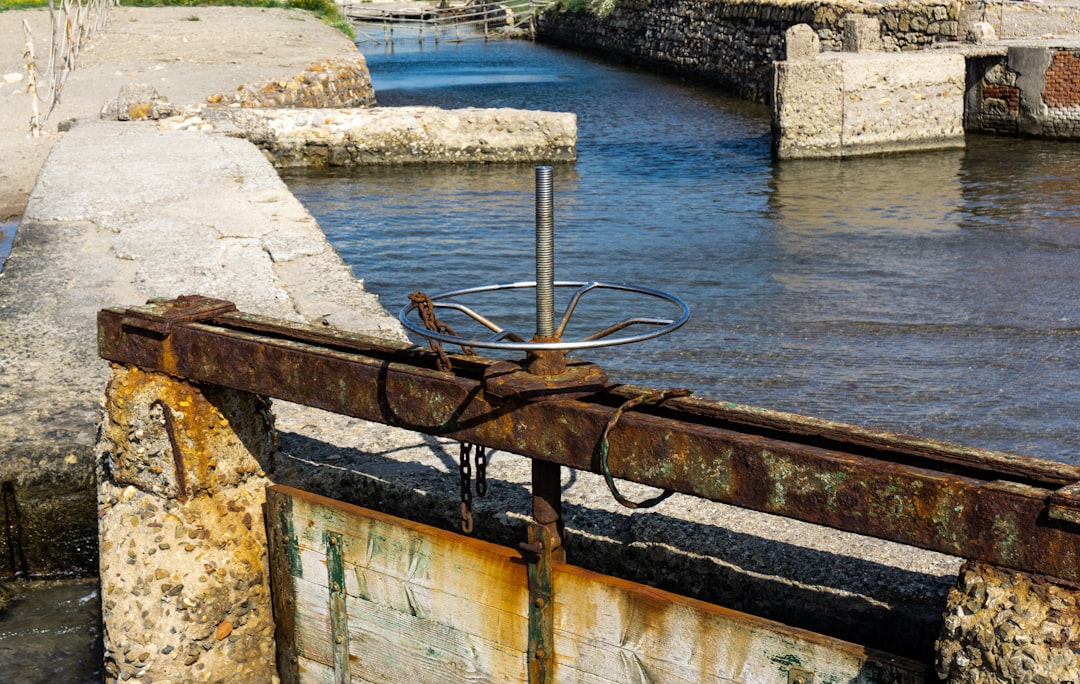
This physical decay is compounded by a financial drought. Federal funding for community water infrastructure plummeted from $76.27 per person in 1977 to just $13.68 in 2014. While the recent $55 billion from the Bipartisan Infrastructure Law is a positive step, it’s not enough to close the enormous repair backlog. Utilities are often stuck in a reactive cycle, fixing emergencies instead of preventing them.
At FDE Hydro™, our modular precast technology helps communities upgrade critical infrastructure faster and more affordably. We believe that Aging Infrastructure Being Replaced with Next Generation Civil Solutions is an urgent necessity.
The Impact of Underinvestment
Chronic underfunding has led to dire consequences. The American Society of Civil Engineers’ 2021 report card gave U.S. drinking water a C– and wastewater a D+. These grades reflect real-world problems: frequent water main breaks, overwhelmed treatment plants, and billions of gallons of treated water lost to leaks.
The growing gap between needs and funding forces utilities into an impossible position, especially in smaller and rural communities that lack the tax base for complex system maintenance. This creates a mounting debt for future generations. Understanding how to fund these projects is critical, which is why Financing Long-Term Hydropower Requires Mitigating Risks Prior to ROI is so important for sustainable development.
Climate Change: The Great Multiplier
Climate change acts as a stress multiplier on our already fragile systems. Increased frequency of droughts and floods pushes infrastructure past its breaking point. Intense rainfall overwhelms stormwater systems, while extended droughts deplete reservoirs. For coastal communities, sea-level rise threatens to contaminate freshwater aquifers and flood treatment plants.
The 2021 Texas power crisis was a stark reminder of system interdependencies; when the power grid failed, so did water treatment facilities. This proves that sustainable water infrastructure must be resilient on multiple fronts. These climate impacts are happening now, revealing new vulnerabilities with every extreme weather event. Investing in modern, adaptable infrastructure is key, because The Biggest Untapped Solution to Climate Change is in the Water.
The Core Principles of Sustainable Water Infrastructure
Sustainable water infrastructure is about creating resilient, efficient, and equitable water networks for the long term. It’s not just about replacing old pipes; it’s a holistic approach built on three pillars:
- Operational Sustainability: Ensuring reliable service through skilled staff and proactive management.
- Financial Sustainability: Securing funding to maintain systems over their entire lifecycle.
- Environmental Sustainability: Protecting water sources and natural ecosystems.
When these align, systems deliver real Value by saving money, ensuring equitable access to water, and protecting natural resources. This “green-gray” approach combines traditional engineering with nature-based solutions, as detailed in research on A green-gray path to global water security and sustainable infrastructure.
The ‘One Water’ Approach: A Holistic Vision
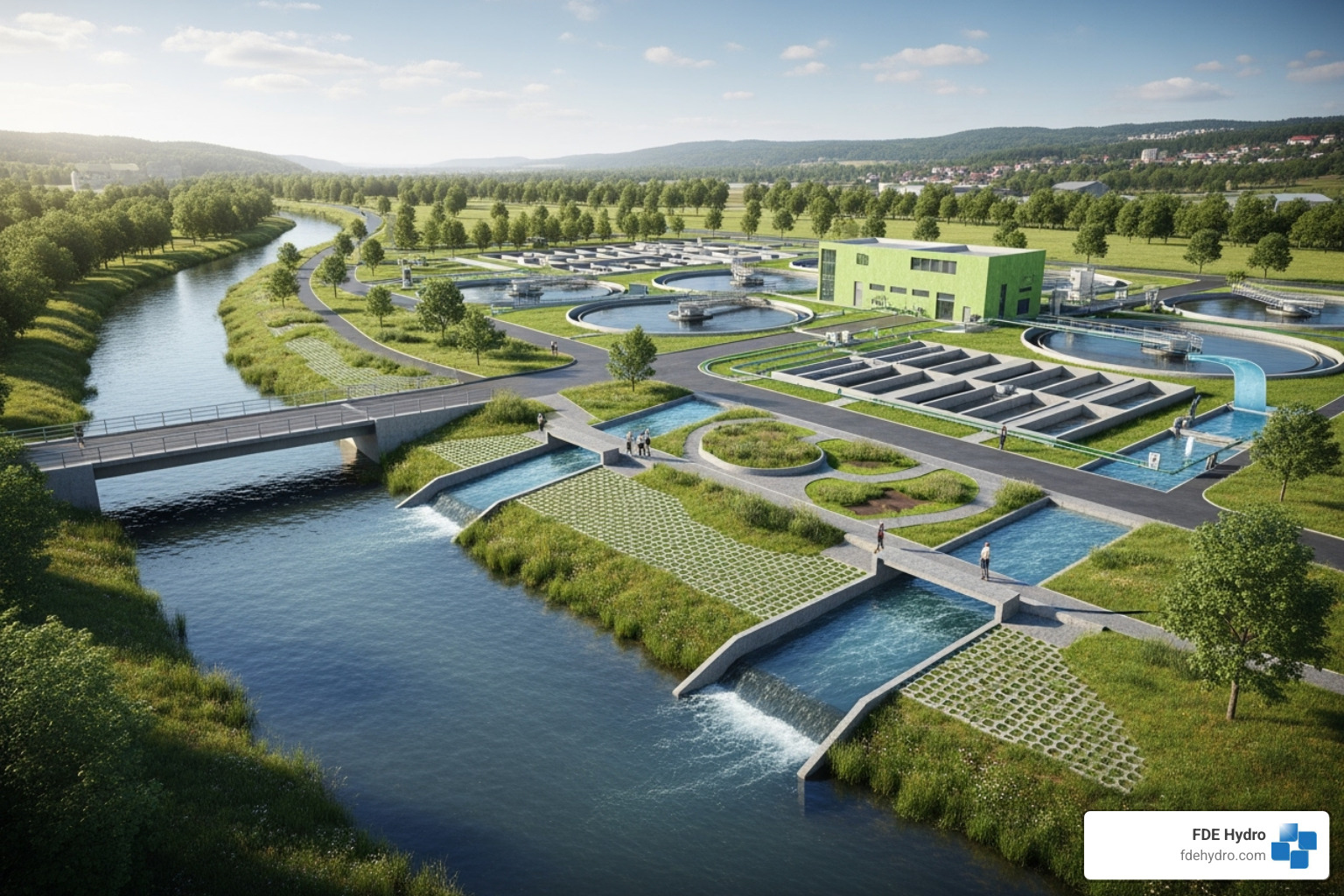
For decades, drinking water, wastewater, and stormwater were managed in silos. The ‘One Water’ approach changes that by treating all water as a single, interconnected resource. Instead of viewing stormwater as a nuisance, it’s captured for reuse. Treated wastewater becomes a valuable resource for irrigation or industry.
This collaborative philosophy, also known as Integrated Water Resource Management, creates more resilient and efficient systems. A stormwater project can double as a park, and a wastewater plant can become an energy producer.
Building a Framework for Sustainable Water Infrastructure
In practice, a sustainable water system integrates several key components:
- Resilient design to withstand shocks like floods and droughts.
- Resource efficiency to minimize water and energy waste.
- Water reuse to turn treated wastewater into a reliable supply.
- Nature-based solutions like wetlands to complement traditional infrastructure.
- Smart technology like sensors and data analytics for real-time optimization.
- Community engagement to ensure projects meet local needs.
Our modular precast solutions for Water Control Structures embody these principles. By reducing construction time and costs, we make sustainable water management more achievable, helping communities build resilient infrastructure faster.
Key Strategies for a Water-Secure Future
Building a water-secure future requires combining smart technologies, thoughtful planning, and proven management practices. It’s about creating systems that can adapt and thrive.
The EPA promotes sustainable water infrastructure by providing tools and resources for modernization, focusing on effective planning, utility management, and clean water technology. Programs like WIFIA and the Clean Water State Revolving Fund help communities finance these upgrades. You can explore more at Sustainable Water Infrastructure | US EPA. These strategies recognize the deep connection between water, energy, infrastructure, and human needs (the WEIHN nexus).
Nature-Based and Green Infrastructure Solutions
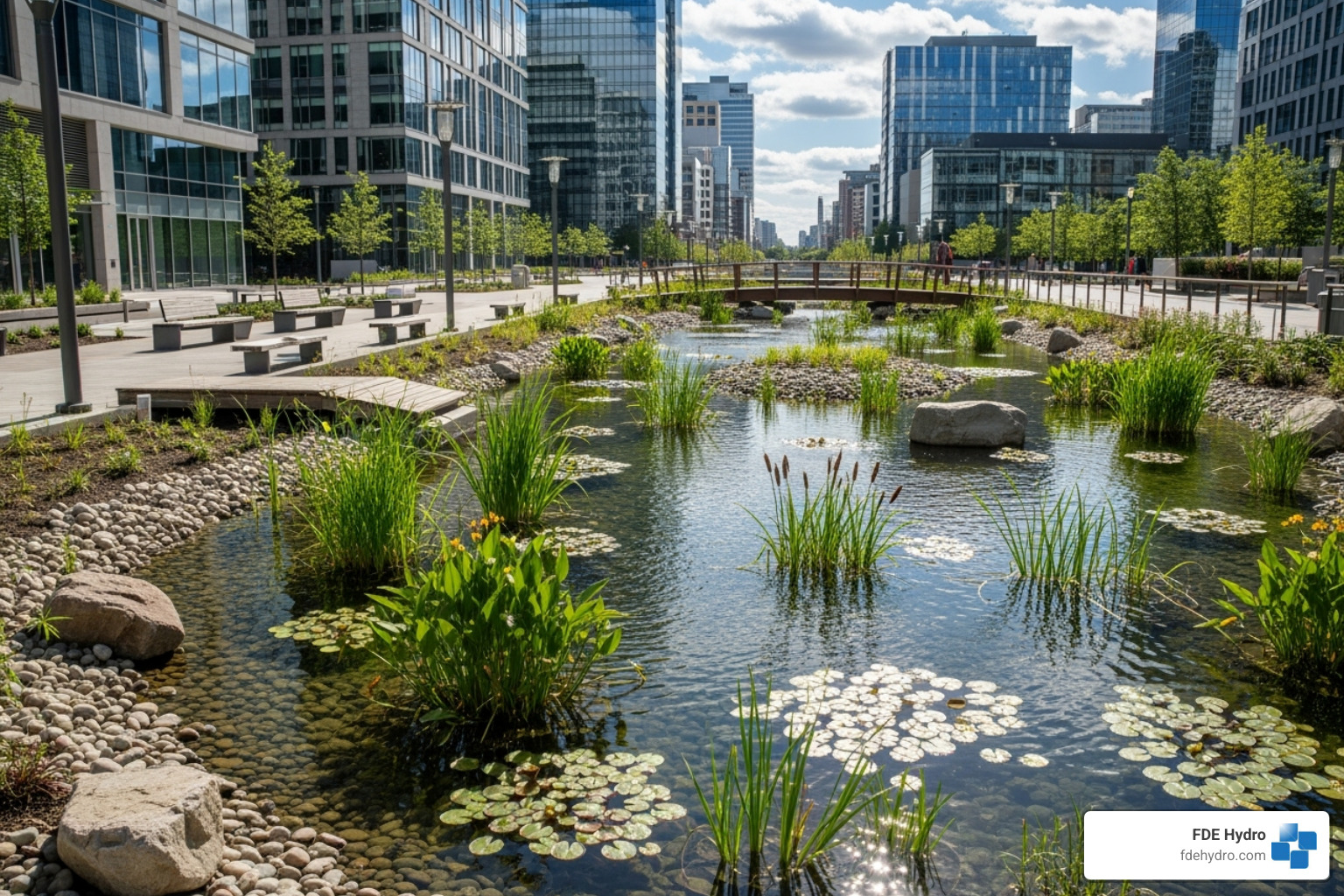
Nature-based solutions use natural systems to manage water, often with significant co-benefits. Examples include:
- Constructed wetlands that filter pollutants and create wildlife habitats.
- Permeable pavements that allow rainwater to soak into the ground, reducing runoff.
- Green roofs that absorb rainfall and cool urban areas.
- Riparian buffers that protect streams from erosion and runoff.
These solutions reduce infrastructure costs, improve air quality, and create community amenities. While traditional infrastructure like Dams remains essential for water storage and hydropower, integrating it with nature-based solutions creates more resilient and cost-effective systems.
Centralized Systems and Regionalization
Centralized systems are the workhorses of water delivery and treatment, offering economies of scale that make advanced treatment financially viable and reliable. For rural and small communities struggling with aging systems and limited resources, regionalization is a game-changer.
By consolidating or forming partnerships, communities can pool resources, share expertise, and spread costs across a larger customer base. This improves operational capacity and provides access to modern technologies. When robust centralized infrastructure, supported by solutions like a local Microgrid, forms the backbone of regional resilience, communities achieve true long-term sustainability.
The Role of Utilities and Effective Management
Local water utilities are critical to community health. To be sustainable, they need robust management practices. The EPA’s Effective Utility Management (EUM) framework helps utilities move from a reactive to a proactive stance. Key practices include asset management planning, water loss control programs, and workforce development.
For a utility, sustainability means reliable and affordable service over the long term through transparent processes and resource-efficient investments. Top utilities act as anchor institutions, supporting local economic development and environmental stewardship. Resources from Sustainable and Effective Water Utility Management offer guidance. Our modular solutions at FDE Hydro™ support these goals by enabling rapid, cost-effective infrastructure renewal.
Global Perspectives and Successful Case Studies
Water challenges are global, and communities worldwide are developing solutions for building sustainable water infrastructure. The UN has recognized “the right to safe and clean drinking water and sanitation” as a human right, yet achieving this requires massive investment and smart management.
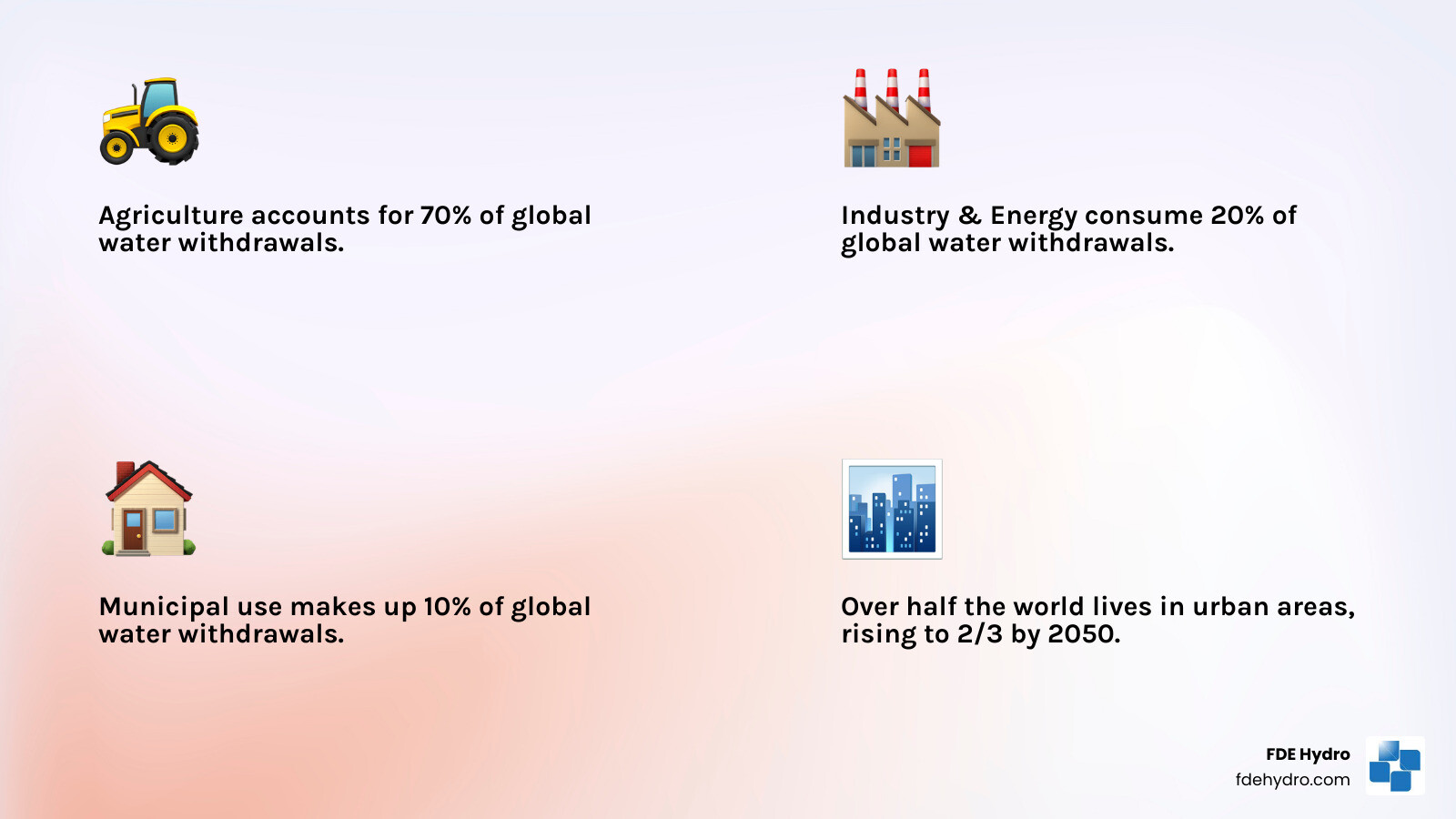
Globally, agriculture consumes 70% of water withdrawals, industry 20%, and municipalities 10%. With over half the world’s population in cities—a figure rising to two-thirds by 2050—urban centers need reliable systems. This requires integrated water resource management (IWRM), which brings all stakeholders together. This is part of the A green-gray path to global water security and sustainable infrastructure that combines different approaches. The universal importance of these efforts is underscored by the United Nations General Assembly recognition of the right to water.
National Strategy: Germany’s Proactive Approach
Despite being a water-rich country, Germany recognized the threats of climate change and developed a comprehensive National Water Strategy. The plan anticipates declining groundwater levels and more frequent extreme weather.
Rather than waiting for a crisis, Germany’s strategy includes 78 measures to secure water quality and quantity for future generations. It emphasizes long-term planning and climate resilience, offering a model for proactive investment. You can read their plan here: Germany’s National Water Strategy.
City-Level Innovation: Rotterdam and Beijing
Cities are also hubs of innovation in sustainable water infrastructure.
Rotterdam, Netherlands, is a world leader in water resilience. The city created “water plazas” that double as public parks and temporary flood retention basins during heavy rain. This approach combines climate-proof urban planning with community amenities.
In Beijing, the Huaifang Underground Water Reclamation Plant (HWRP) is a massive facility that recycles wastewater, improving river quality and easing treatment pressure. Building it underground preserved valuable surface land. The project’s success, recognized when it was awarded Gold in the 12th IWA project innovation awards, shows how cities can use cutting-edge technology to solve water challenges. These examples prove that successful water management requires both long-term planning and bold innovation.
Frequently Asked Questions about Sustainable Water Infrastructure
Here are answers to common questions about building better water systems.
What are the biggest challenges facing US water infrastructure?
The main challenges are a perfect storm of issues:
- Aging Infrastructure: Many pipes and treatment plants are over 70-100 years old, leading to frequent breaks and failures.
- Chronic Underfunding: A massive maintenance backlog exists due to decades of declining investment. Federal funding per person fell from $76.27 in 1977 to $13.68 in 2014, forcing utilities into a reactive “fix-it-when-it-breaks” mode.
- Climate Change: More extreme droughts and floods are stressing already fragile systems, while sea-level rise threatens coastal infrastructure.
- New Contaminants: Older plants were not designed to handle emerging pollutants.
What is the ‘One Water’ approach?
The ‘One Water’ approach is a holistic strategy that treats all water—drinking water, wastewater, stormwater—as a single, valuable resource. Instead of managing them in separate silos, it encourages collaboration to create more resilient and efficient systems. This means capturing stormwater for reuse, treating wastewater to a level where it can be repurposed, and integrating conservation efforts across all sectors. It helps maximize the value of every drop and builds truly sustainable systems.
How can technology improve water infrastructure sustainability?
Technology is a game-changer for sustainable water infrastructure.
- Smart sensors detect leaks in real-time, reducing water loss and preventing catastrophic failures.
- Advanced treatment technologies enable safe water reuse for irrigation, industry, and even drinking water.
- Modular construction, like our patented precast systems at FDE Hydro, dramatically speeds up repairs and new builds, making upgrades faster and more cost-effective.
- Integrating renewable energy, such as Hydropower, with water treatment reduces both carbon footprints and operational costs.
These innovations help build the resilient, efficient systems our communities need for the future.
Conclusion
We have reached a turning point for our nation’s water. The crisis facing our sustainable water infrastructure is clear: the systems of the past cannot meet the demands of a changing climate and growing communities. While challenges like dwindling funding and poor infrastructure grades are sobering, there is reason for optimism. Global examples from Germany, Rotterdam, and Beijing prove that transformative change is possible.
The path forward requires a new mindset: embracing the ‘One Water’ approach, balancing nature-based solutions with robust centralized systems, and adopting effective utility management. Above all, innovation is essential.
At FDE Hydro™, our patented modular precast concrete technology, the “French Dam,” is designed for this future. By dramatically reducing construction time and costs, we make it faster and more affordable for communities to build and retrofit critical water infrastructure. Our technology makes sustainable solutions accessible.
This is about building something better: resilient, efficient, and smart systems. As The U.S. Department of Energy Hydropower Vision Report has endorsed FDE Technology, we are part of a collaborative effort to secure our water future.
The time to act is now. Learn more about how innovative hydropower solutions are creating a sustainable future and find how next-generation technology can help your community. Together, we can turn this challenge into an opportunity for generations to come.
