

Why Sustainable Infrastructure Matters Now More Than Ever
Sustainable infrastructure development is the practice of planning, designing, building, operating, and decommissioning infrastructure—roads, bridges, dams, energy systems, water networks—in ways that ensure long-term economic viability, social equity, and environmental protection. It encompasses:
- Economic/Financial Sustainability: Delivering value for money, fiscal responsibility, and attracting investment
- Environmental Sustainability: Minimizing carbon footprints, protecting ecosystems, and building climate resilience
- Social Sustainability: Ensuring equitable access, community benefits, and stakeholder engagement
- Institutional Sustainability: Establishing transparent governance, robust planning, and effective regulation
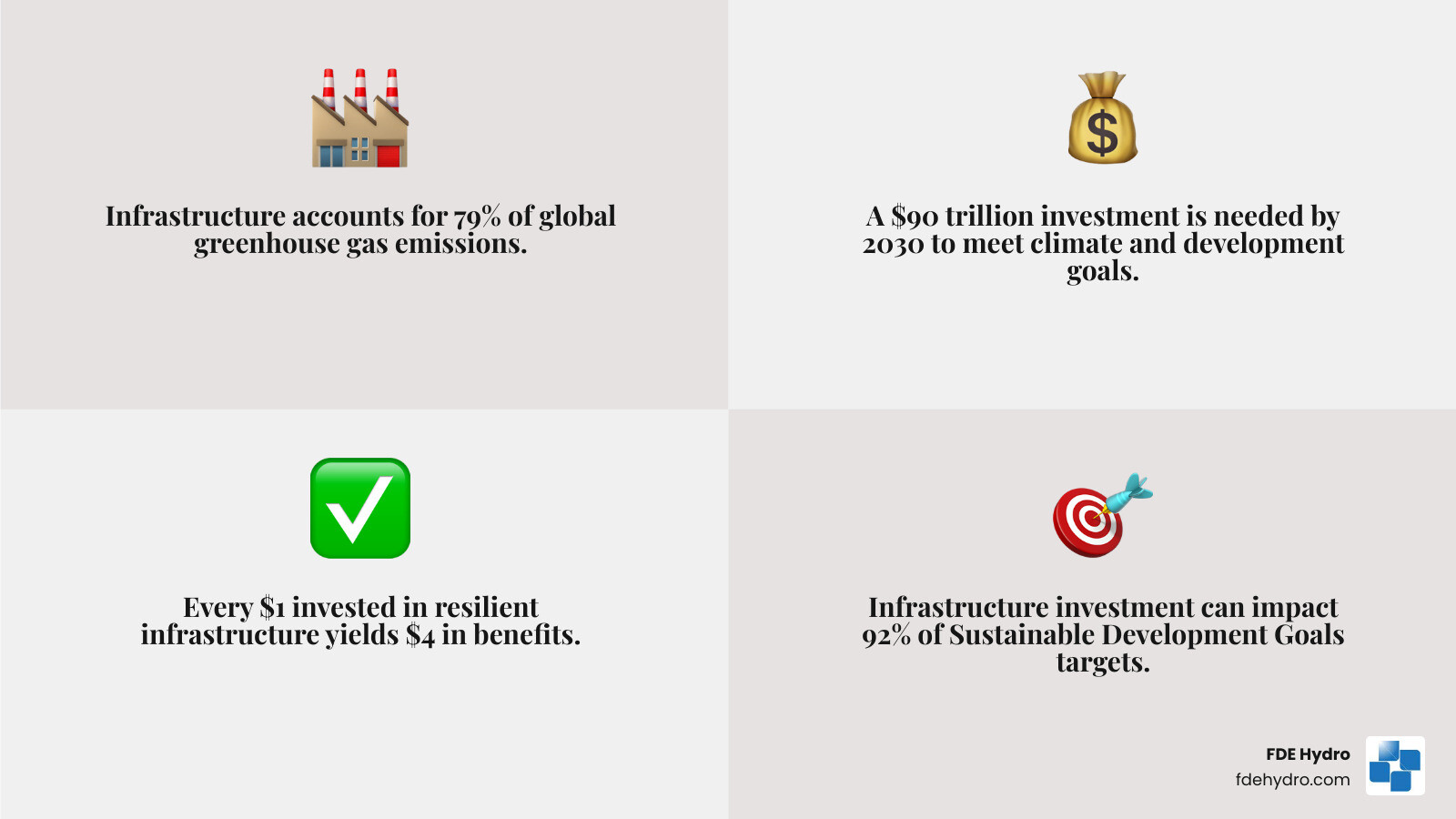
The stakes have never been higher. Infrastructure accounts for 79% of global greenhouse gas emissions, yet the world must invest $90 trillion by 2030 to meet climate targets and development goals. The good news? Every dollar invested in climate-resilient infrastructure yields about four dollars in benefits through reduced maintenance, extended asset lifetimes, and avoided disaster costs.
Traditional infrastructure approaches—marked by long timelines, cost overruns, and environmental damage—simply can’t meet the demands of a rapidly urbanizing, climate-stressed world. Decision-makers overseeing large-scale projects, particularly in water and energy, face mounting pressure to reduce capital expenditure, accelerate delivery, and mitigate financial risks while meeting sustainability commitments.
I’m Bill French Sr., Founder and CEO of FDE Hydro™, where we’ve spent decades developing modular civil construction solutions that make sustainable infrastructure development faster, more affordable, and environmentally sound for hydropower and water projects. Our approach—rooted in precast, modular design—addresses the core challenges facing infrastructure leaders today: reducing costs, shortening timelines, and building resilience into critical systems.
The ‘Why’: The Imperative for a Sustainable Shift
The growing focus on sustainable infrastructure development is driven by a simple reality: our planet and societies depend on it. The choices we make now about building and managing essential systems—like roads, power grids, and water supplies—will echo for generations. We stand at a crossroads: continue with vulnerable systems or build for resilience and long-term well-being.
The Critical Link to Climate and Global Goals
The link between infrastructure and climate is undeniable. A staggering 79% of all greenhouse gas emissions are tied to infrastructure, highlighting both the responsibility and the opportunity for change. By focusing on smart, sustainable infrastructure development and urban planning, we could cut global CO2 emissions by 3.7 gigatons per year over the next 15 years. This is a crucial part of mitigating GHG emissions and achieving Net-Zero.
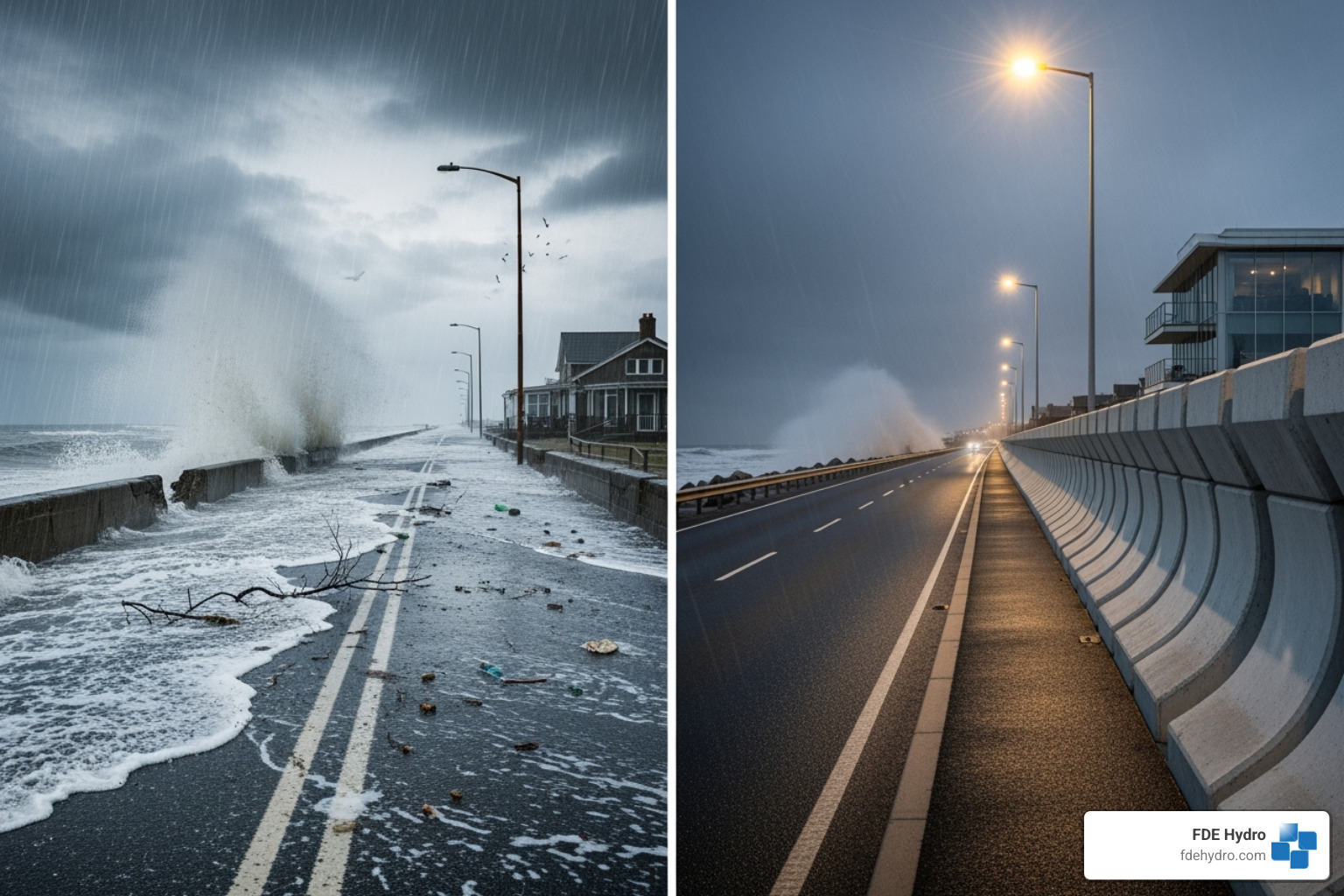
Furthermore, traditional infrastructure is often unprepared for modern climate challenges. Roads buckling in extreme heat, reservoirs drying up, and tunnels flooding are warnings that our systems were not built for today’s extreme weather events. This vulnerability demands climate change adaptation. Building resilience into our infrastructure is vital for our economy and communities.
Beyond climate change, sustainable infrastructure development is essential for achieving the global Sustainable Development Goals (SDGs). These 17 UN goals address major world problems like poverty, hunger, clean water, and affordable energy. An estimated 92% of SDG targets can be achieved through smart infrastructure investment. For instance, providing clean water (SDG 6) or reliable, clean energy (SDG 7) depends on well-planned infrastructure. At FDE Hydro, our work in hydropower directly supports SDG 7 by providing clean, dependable energy solutions.
Opening Up Long-Term Value and Benefits
Investing in sustainable infrastructure development open ups significant long-term value. Compared to “business-as-usual” approaches, it offers a compelling return on investment. The common statistic that every dollar invested in climate-resilient infrastructure yields about four dollars in benefits points to tangible savings through reduced operational costs, less maintenance, and improved service reliability. This is where the true economic advantages shine.
For example, reliable energy sources like hydropower provide stable power, reduce reliance on volatile fossil fuels, and offer long-term efficiency. At FDE Hydro, our modular precast solutions for hydropower projects are built for durability, meaning fewer costly repairs and more consistent, clean energy for communities.
Beyond financial gains, sustainable infrastructure creates numerous jobs in green industries. This means significant job creation in green sectors, with the renewable energy sector alone projected to grow from 2.3 million jobs to 20 million by 2030. These are skilled positions in design, manufacturing, installation, and maintenance that build a strong, green economy. Additionally, cleaner air and water lead to improved public health, while resilient public spaces can lead to increased property values. It’s also about creating social equity by ensuring everyone has access to vital services.
By embracing clean energy and smart sustainable infrastructure development, we can boost global economic growth by up to 4% by 2030. It’s not just an expense; it’s a wise investment in a prosperous, healthy, and resilient future for all.
The ‘What’: Core Principles and Global Frameworks
Understanding sustainable infrastructure development means looking beyond concrete and steel. It’s about creating systems that work for people, the planet, and the economy—not just today, but for generations to come. Think of it as building with intention, where every decision considers the full picture of environmental health, social benefit, and economic sense.
The Core Characteristics of Sustainable Infrastructure Development
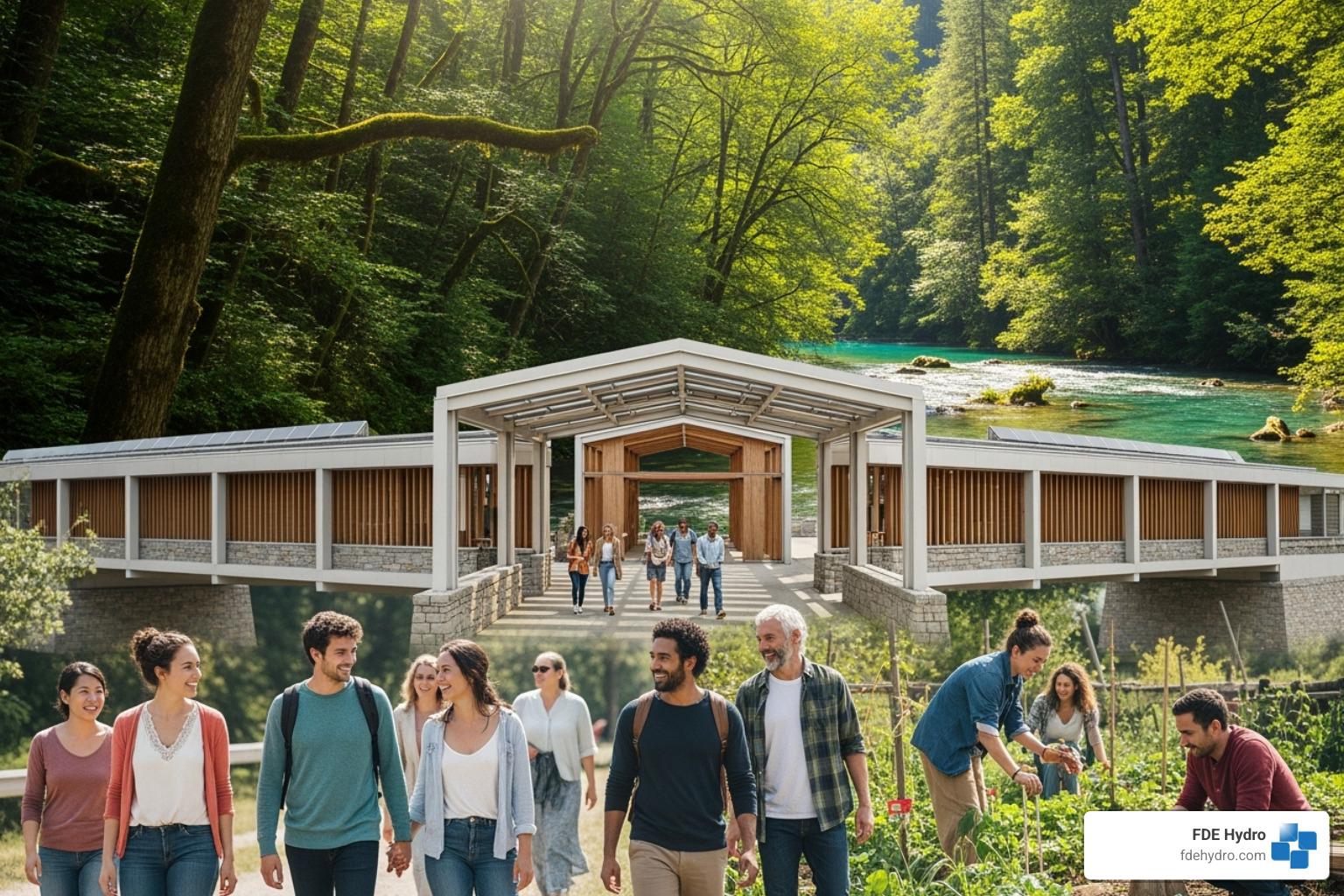
When we talk about what makes infrastructure truly sustainable, we’re describing something that touches every phase of a project’s life—from the first planning meeting to the day it’s eventually decommissioned. The UN Environment Programme defines sustainable infrastructure as systems that are planned, designed, constructed, operated, and decommissioned in ways that ensure economic, social, environmental, and institutional sustainability throughout their entire lifecycle.
That might sound technical, but it boils down to six practical principles that guide real-world decisions.
First, there’s the low environmental footprint. This means minimizing greenhouse gas emissions from day one, reducing waste at every stage, and conserving natural resources. It’s about asking questions like: How much carbon is locked up in our materials? How energy-efficient will operations be? What happens to our ecosystems during construction? At FDE Hydro, our modular precast approach embodies this thinking—we dramatically cut on-site waste and construction emissions because we build precisely what’s needed in controlled factory conditions.
Climate resilience is no longer optional. Infrastructure must stand strong against extreme weather, rising seas, and unpredictable climate patterns. This isn’t about hoping for the best; it’s about engineering for the worst and building systems that adapt and endure. Our modular sea wall systems exemplify this approach, providing robust coastal protection that flexes with changing conditions rather than fighting them.
The best infrastructure doesn’t just avoid harming nature—it actively protects and improves ecosystems. This can mean restoring habitats, using nature-based solutions, or simply being thoughtful about land disturbance. When you minimize your construction footprint, as we do with precast modules, you leave more of the natural world intact.
Social inclusiveness ensures that infrastructure serves everyone, not just the privileged few. Projects should create local jobs, respect human rights, engage communities meaningfully, and provide equitable access to essential services. It’s about lifting people up and genuinely improving quality of life.
None of this matters if a project isn’t economically viable. Sustainable infrastructure must make financial sense, delivering value for money and attracting the investment needed to get built. This is where innovation really shines. Our precast solutions don’t just reduce environmental impact—they significantly lower costs, making critical water and energy projects more affordable and realistic.
Finally, institutional sustainability provides the backbone. Strong governance, transparent policies, effective regulations, and robust planning frameworks ensure that good intentions translate into actual results. Without these structures, even the best projects can falter.
These characteristics aren’t separate boxes to check—they’re interconnected aspects of a holistic approach. They represent a fundamental shift from building things that simply work to creating systems that work well for everyone and everything they touch. For those of us focused on next-generation civil solutions, these principles guide every design choice and construction method.
Key Initiatives and Guiding Principles
The world has recognized that sustainable infrastructure development can’t happen in isolation. It requires coordinated global effort, shared knowledge, and common frameworks that guide countries and companies toward better practices.
The UN Environment Assembly (UNEA) has emerged as a powerful voice in this movement. At its fifth session in 2022, member states adopted a resolution on Sustainable and Resilient Infrastructure, building on earlier commitments from 2019. These resolutions encourage nations to implement the International Good Practice Principles for Sustainable Infrastructure, which provide a practical blueprint for policymakers. These principles emphasize integrated, systems-level thinking—the kind of approach that considers how infrastructure decisions ripple through environmental, social, and economic systems.
The G20 has thrown its considerable weight behind this agenda too. Representing the world’s major economies, the G20 has endorsed frameworks that outline concrete actions to scale up sustainable infrastructure investment. These frameworks focus on practical barriers: improving project preparation, streamlining regulations, and mobilizing private capital to flow toward sustainable projects.
One of the most important collaborative platforms is the Sustainable Infrastructure Partnership (SIP), launched in 2018. SIP brings together diverse stakeholders to promote integrated approaches to infrastructure planning and development. Its mission recognizes that infrastructure sits at the heart of the 2030 Agenda for Sustainable Development. The partnership works to raise awareness, develop practical guidance and tools, and strengthen capacity—especially in developing countries where the need is greatest and resources are often stretched thin.
Organizations like the UN Environment Programme (UNEP) and the Global Infrastructure Hub (GI Hub) are doing the heavy lifting on the ground. UNEP provides technical guidance, runs capacity-building webinars, and offers direct country support in places like Chile, Costa Rica, Ghana, Mongolia, and South Africa. The GI Hub complements this work by focusing on data, investment insights, and practical tools that help governments and investors make smarter decisions.
Even national governments are stepping up with concrete commitments. Canada’s green infrastructure programs, for example, invest heavily in water systems, wastewater treatment, green spaces, and disaster mitigation. Infrastructure Canada’s 2023-2027 Departmental Sustainable Development Strategy explicitly links these investments to specific UN Sustainable Development Goals, demonstrating how national policy can align with global sustainability objectives.
These initiatives, partnerships, and policy frameworks form the foundation for global progress. They provide the guidance, resources, and accountability mechanisms needed to transform how we build. For companies like ours developing innovative construction techniques for hydropower and pumped storage projects, these frameworks validate our approach and connect our work to a larger movement toward a resilient, low-carbon future.
The Investment Landscape of Sustainable Infrastructure Development
The global ambition for sustainable infrastructure development is crystal clear, and the need for it has never been more urgent. But let’s be honest, getting these crucial projects off the ground often comes down to one big question: how do we pay for it all? We’re talking about a massive undertaking, and while the benefits are enormous, finding the funds can be a real head-scratcher.
Bridging the Multi-Trillion-Dollar Gap
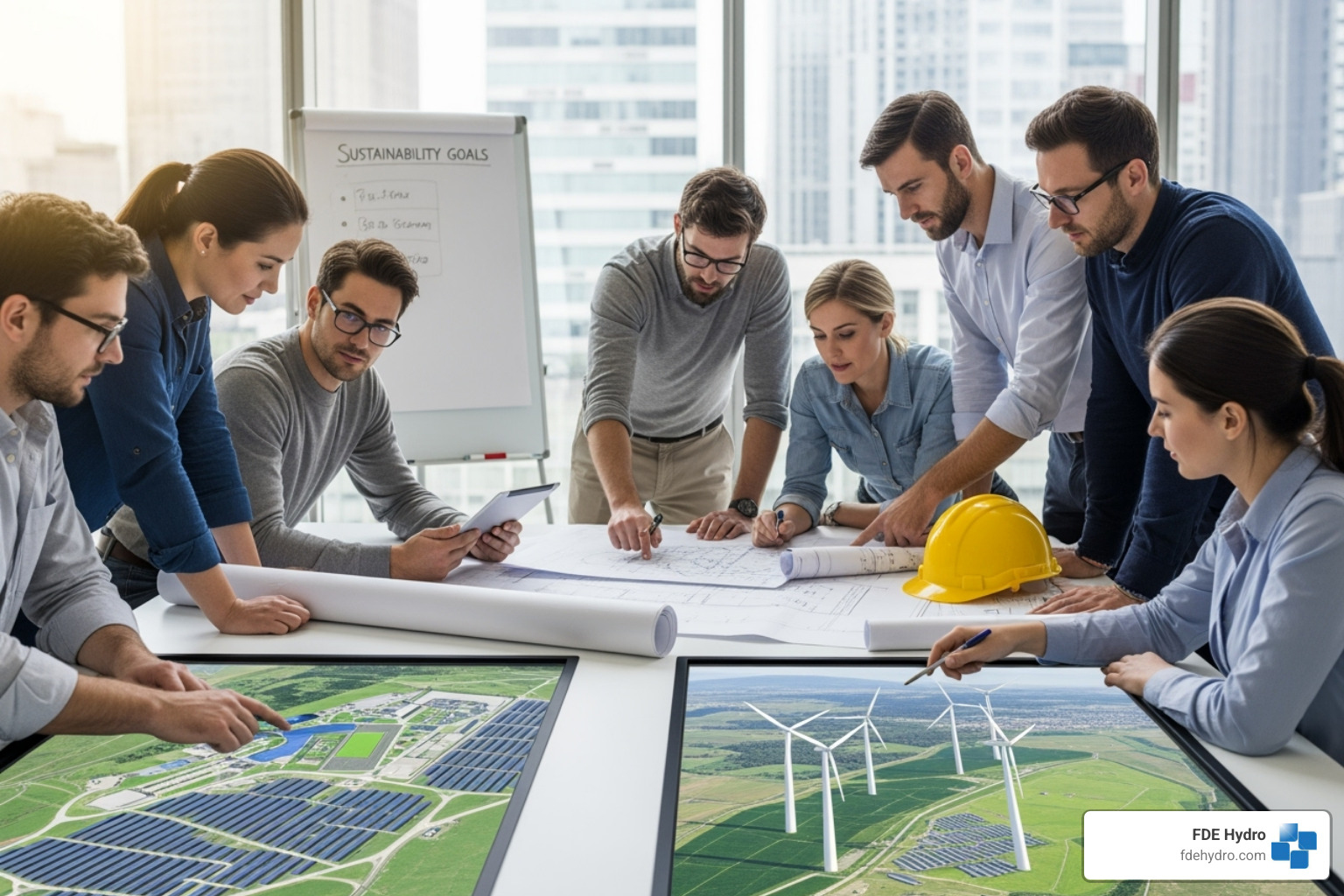
Let’s talk numbers. Experts tell us we need a staggering USD 6.9 trillion every year until 2050 to build the kind of infrastructure that can meet our development goals and lead us to a low-carbon, climate-resilient future. Other estimates suggest about $2.6 trillion annually through 2030 just to hit the Sustainable Development Goals (SDGs) and stay on track for net-zero emissions. That’s a lot of zeros!
The problem is, we’re not quite there yet. There’s a multi-trillion-dollar gap between what’s needed and what’s actually being invested. Much of the money still goes into “business-as-usual” projects that often have a heavy carbon footprint. This shortfall makes it much harder to reduce emissions and reach our global goals.
So, why the gap? A few big problems stand in the way:
First, there’s a lack of “bankable” projects. Many sustainable infrastructure development projects, especially in newer markets, struggle to attract private investors. They might seem too risky or don’t have clear ways to make money. Getting a project ready for investment is a huge step, but often, there isn’t enough help or know-how to prepare them properly. We really need to scale up funding for project preparation facilities (PPFs) to create a steady flow of well-structured projects that investors will feel good about.
Then, we run into legal and regulatory problems. Investors need confidence. They want clear, stable, and predictable rules. When these rules are messy or change often, especially in emerging markets, it makes investors shy away from putting their money down for the long haul.
Another challenge is the sheer number of different data and standards out there for measuring sustainable investments. While we all agree that environmental, social, and governance (ESG) factors are important, having too many different definitions and tools makes it costly and complicated to compare projects. It’s like trying to compare apples and oranges when you just want to know which fruit is best.
Finally, let’s face it, many governments are simply facing fiscal constraints. They don’t have enough public money to cover all the necessary infrastructure work. This means getting private companies involved is absolutely vital. But turning that private capital potential into actual projects requires clever solutions and ways to reduce investment risks. All these challenges make replacing our aging infrastructure with modern, sustainable solutions a truly monumental task.
The Role of Policy and Innovative Finance
To bridge this multi-trillion-dollar gap and tackle these problems, we need a smart, two-pronged approach: strong government policies working hand-in-hand with innovative ways to finance projects.
First, governments and international organizations have a huge role to play in setting the stage. This includes:
- Creating clear regulatory frameworks that are stable and transparent. This helps reduce risk for investors, especially in developing nations. Think of it as creating a solid, trustworthy rulebook.
- Developing strategic, long-term infrastructure plans. When investors see that governments have a clear vision for the future and a pipeline of projects that align with national sustainability goals, it gives them confidence.
- Using tools like carbon pricing and other incentives. This means making it more expensive to pollute, which naturally makes cleaner, more sustainable options more attractive and profitable.
- Leveraging public procurement. Governments can use their massive buying power to demand sustainable materials and services, which then encourages the market to supply them.
Beyond traditional public funding, we need some clever new ideas to get private money flowing into sustainable infrastructure development:
- Blended finance is a fantastic tool. It’s about strategically mixing public or charitable funds with private money. This helps reduce the risk for private investors and brings commercial money into projects that might otherwise struggle to get funded.
- Green bonds and loans are becoming increasingly popular. These are special financial tools designed specifically to fund environmentally friendly projects, attracting investors who want to support sustainability.
- Multilateral Development Banks (MDBs), like the World Bank, are crucial. They offer direct funding, technical advice, and guarantees that help reduce risk for private investors, especially in trickier markets.
- InfraTech solutions are truly game-changers. This is where technology steps in to improve efficiency, cut costs, and make projects more sustainable. Digital tools, advanced materials, and smart systems can make a massive difference, helping to avoid costly overruns.
- And let’s not forget those Project Preparation Facilities (PPFs) again! Scaling up their funding is vital because they do the groundwork to make projects “investor-ready.”
For our part, at FDE Hydro, we’re focused on making essential projects highly investable. Solutions like Pumped Storage Hydropower offer a reliable way to store and release clean energy, providing stability to our grids. By reducing the upfront capital costs and speeding up construction timelines with our modular precast technology, we help make these critical sustainable infrastructure development projects more attractive to a wider range of investors. This is how we contribute to both economic viability and a healthier planet.
Blueprint in Action: From Urban Planning to Circular Economies
The shift to sustainable infrastructure development isn’t just happening in boardrooms and policy papers—it’s changing how we build our cities and manage our resources in practical, measurable ways. Around the world, communities are reimagining infrastructure to be cleaner, more resilient, and fundamentally more sustainable.
The Future of Urban Living: Sustainable Infrastructure Development in Cities
Cities are where the future of sustainability will be won or lost. By 2030, the UN projects that 60% of humanity will call cities home. Right now, urban areas generate about 70% of all greenhouse gas emissions worldwide. That’s a sobering statistic, but it also represents an enormous opportunity. When we get urban infrastructure right, the positive impact ripples outward.
The cities of tomorrow will look different from those of today. They’ll be more compact, more connected, and far more resilient to climate shocks. Sustainable transport systems—think efficient public transit, protected bike lanes, and walkable neighborhoods—will reduce our dependence on cars and dramatically cut emissions. Green buildings will become the norm rather than the exception, incorporating energy-efficient design, renewable energy sources, and materials that minimize environmental harm.
Climate resilience is particularly crucial for coastal cities. Our Modular Sea Wall Systems provide robust protection against rising sea levels and increasingly severe storms, safeguarding both communities and critical infrastructure. These aren’t just barriers—they’re essential adaptations to a changing climate.
Energy systems are evolving too. Microgrids and distributed generation allow cities to become more energy independent, ensuring power stays on even when the main grid faces disruptions. These systems can seamlessly integrate solar, hydropower, and other renewable sources, making urban energy both cleaner and more reliable.
Speed matters when cities need to upgrade aging infrastructure or expand to accommodate growing populations. Traditional construction methods can bring delays, cost overruns, and significant disruption to daily life. That’s where modular precast solutions shine. Our approach allows for rapid installment of module precast civil infrastructure, dramatically reducing on-site construction time and minimizing the headaches for residents and businesses. In dense urban environments where every square foot counts and time is money, this efficiency is invaluable.
By weaving these elements together, cities can become living laboratories for sustainability—places where economic vitality, public health, and environmental stewardship all thrive together.
Applying Circular Economy Principles
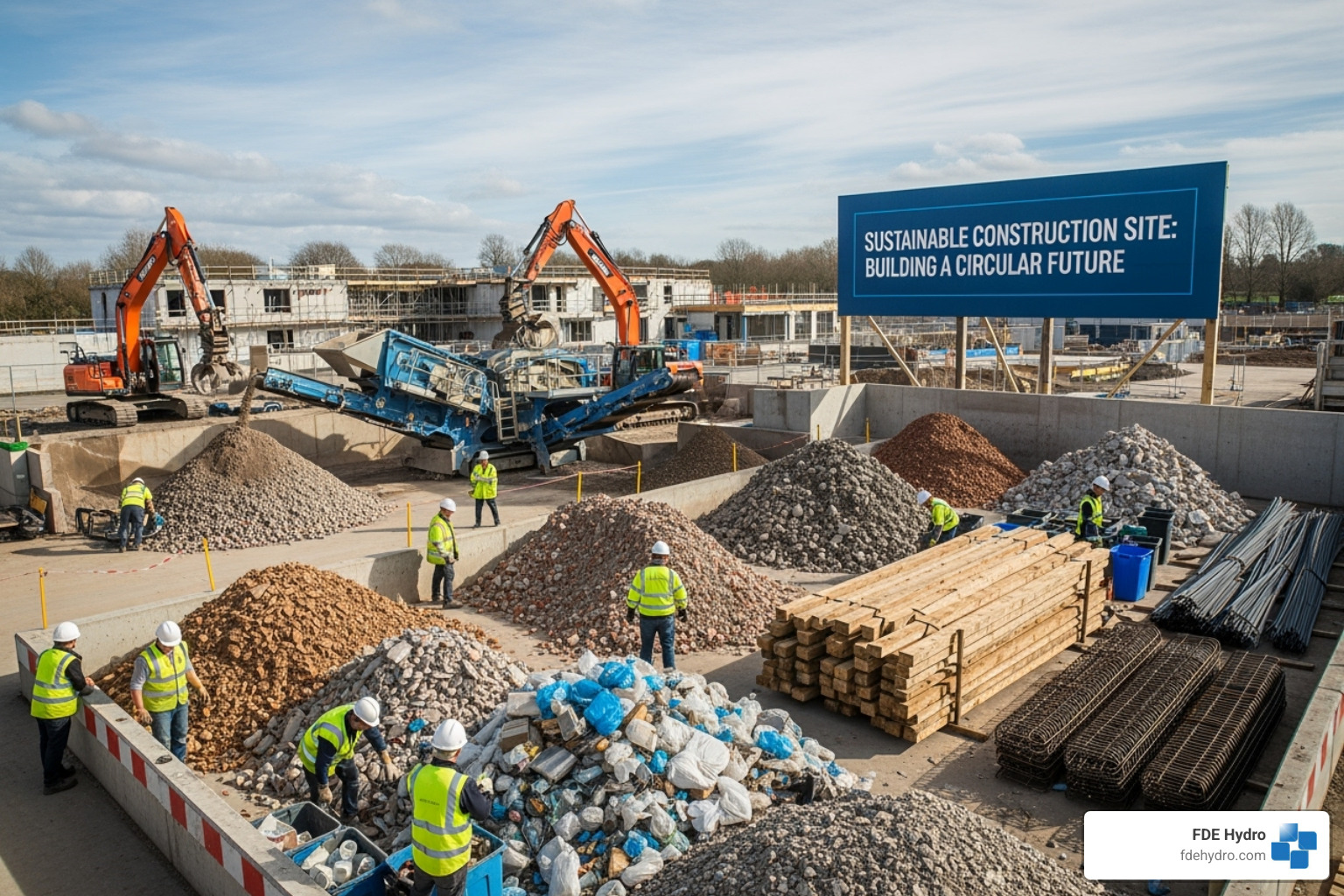
The circular economy represents a fundamental rethinking of how we approach infrastructure. Instead of the old linear model—extract resources, build something, use it, throw it away—we’re moving toward a system that’s regenerative by design. In this model, waste isn’t an inevitable byproduct; it’s a design flaw to be eliminated.
For infrastructure projects, circular thinking starts at the drawing board. When you design out waste from the beginning, you optimize every material choice, prefabricate components in controlled factory settings, and plan for what happens when the infrastructure eventually reaches the end of its useful life. Our precast concrete manufacturing exemplifies this approach. By producing components off-site in a controlled environment, we eliminate the substantial waste typically generated by traditional on-site concrete pouring.
Extending the life of materials and assets is equally important. This means choosing durable, high-quality materials that will last decades, not years. It means designing infrastructure that can be adapted, repaired, and refurbished rather than demolished and rebuilt. Our Dam Rehabilitation Encapsulation technology perfectly illustrates this principle. Instead of tearing down and replacing an aging dam—a process that’s enormously expensive and resource-intensive—we extend its life through innovative encapsulation techniques. This approach demonstrates why precast costs less over the long term: durability and reduced maintenance translate directly into lower lifecycle costs.
Regenerating natural systems takes the concept even further. Rather than simply minimizing harm to the environment, circular infrastructure can actively improve it. This might mean integrating green spaces that improve biodiversity, or designing water systems that improve rather than degrade water quality.
The use of recycled materials closes the loop. When we prioritize recycled content in our construction materials and design infrastructure components that can themselves be recycled or repurposed later, we’re building a truly circular system. Research into scaling circular economies through infrastructure shows how this approach transforms what we once considered waste into valuable resources for future projects.
Embracing circular economy principles in sustainable infrastructure development does more than reduce environmental impact. It creates economic opportunities, improves resource security, and builds systems that are inherently more resilient. Instead of viewing infrastructure as something we build once and replace when it wears out, we’re learning to see it as a long-term asset that can adapt, evolve, and contribute to sustainability for generations.
Conclusion
So, as we wrap up our journey through sustainable infrastructure development, one thing becomes crystal clear: this isn’t just a trendy concept. It’s an absolute must-have for our future, for our planet, and for our well-being. We’ve seen the crucial “why” behind this shift – from tackling climate change head-on and hitting those big global development goals, to open uping incredible long-term economic and social perks. And we’ve dug deep into the “what” – the core traits, guiding rules, and worldwide frameworks that are shaping this exciting new path.
We also looked at the “how,” diving into the investment world. We talked about the huge multi-trillion-dollar gap we need to bridge and the smart policies and creative financial tricks that are helping us get there. It’s all about building a future that’s tough, low-carbon, and works for everyone.
This future, founded on the triple bottom line of people, planet, and profit, calls for a team effort. We need our policymakers, investors, engineers, and local communities to come together. Every step of infrastructure development, from the very first sketch to the final brick, needs to weave in economic smarts, social fairness, and environmental care.
And here at FDE Hydro™, we’re proud to be leading the charge. We’re constantly dreaming up and developing innovative construction techniques that not only cut costs and speed up installation, but also seriously boost the sustainability of vital water and energy projects. Our modular precast solutions are built to last, super-efficient, and wonderfully adaptable. They directly tackle the challenges of our aging infrastructure and the ever-changing demands of our climate. We truly believe in building the right infrastructure, the right way, for generations to come.
We’d love for you to find more about our dedication to sustainable infrastructure development and how our solutions are making a real, tangible difference. Take a moment to explore these advanced means and methods and let’s build a more sustainable world, together.
