

The Environmental Cost of the Crypto Revolution
Energy efficient crypto refers to digital currencies and blockchain networks that minimize electricity consumption and environmental impact through innovative technologies like Proof-of-Stake consensus mechanisms, renewable energy sources, and optimized mining hardware. Here are the most energy-efficient options:
| Cryptocurrency | Energy Per Transaction | Key Technology |
|---|---|---|
| IOTA | 0.00011 kWh | Tangle (no mining required) |
| XRP | 0.0079 kWh | Federated consensus |
| Chia | 0.023 kWh | Proof of Space and Time |
| Cardano | 0.5 kWh | Ouroboros Proof-of-Stake |
| Bitcoin (for comparison) | 707 kWh | Proof-of-Work |
The cryptocurrency revolution has transformed finance, but it’s come with a hidden cost. Bitcoin alone consumes approximately 150 terawatt-hours of electricity annually—more than entire countries like Argentina or Norway. A single crypto transaction can use more energy than powering six American homes for a full day.
The problem isn’t cryptocurrency itself—it’s how we power it.
Traditional Bitcoin mining relies on Proof-of-Work, a process that requires massive computing power to solve complex mathematical problems and secure the network. This energy-intensive approach has put digital currencies at odds with climate goals, generating carbon emissions equivalent to millions of homes and creating mountains of electronic waste from rapidly obsolete mining hardware.
But there’s good news. The crypto industry is evolving rapidly, with innovations ranging from Ethereum’s 99.9% energy reduction after switching to Proof-of-Stake, to mining operations powered entirely by renewable energy sources like hydropower, solar, and wind. Clean energy-powered mining can deliver the same security and transaction processing while dramatically reducing environmental impact.
I’m Bill French Sr., Founder and CEO of FDE Hydro, where we’ve pioneered modular hydropower solutions that can power the next generation of sustainable digital infrastructure, including energy efficient crypto mining operations. After five decades in infrastructure development and participation in the Department of Energy’s Hydro Power Vision task force, I’ve seen how renewable energy can transform energy-intensive industries while benefiting both communities and the environment.
This guide will walk you through the landscape of sustainable cryptocurrency—from understanding why traditional crypto consumes so much energy, to exploring the clean alternatives and innovative solutions making digital assets compatible with a carbon-neutral future.
Easy Energy efficient crypto glossary:
The Problem with Proof-of-Work (PoW)

When we talk about the environmental impact of cryptocurrencies, our attention quickly turns to the Proof-of-Work (PoW) consensus mechanism. This is the engine behind Bitcoin, the first decentralized cryptocurrency, and it’s also the primary reason for its substantial energy footprint.
How PoW Drives Massive Energy Consumption
At its core, blockchain technology, the distributed ledger system underpinning most cryptocurrencies, relies on a method to verify and add new transactions to the chain. For PoW, this method is “mining.” Imagine a global competition where thousands of powerful computers, known as miners, race to solve incredibly complex mathematical puzzles. The first one to find the solution gets to add the next block of transactions to the blockchain and is rewarded with newly minted cryptocurrency. This process is how the network is secured and transactions are validated. It’s also where the energy consumption skyrockets.
The difficulty of these puzzles constantly adjusts to ensure new blocks are found at a consistent rate, regardless of how many miners are participating. This means as more miners join the network, the puzzles become harder, demanding even more computational power and, consequently, more electricity. It’s a continuous arms race for processing power.
Bitcoin’s energy usage is particularly notable. It alone uses an estimated 150 terawatt-hours of electricity annually, a figure that rivals the total energy consumption of some small countries. To put it in perspective, a single crypto transaction can consume more energy than powering six houses for a day in the U.S. This insatiable demand for power is largely due to the specialized hardware, called Application-Specific Integrated Circuits (ASICs), designed solely to mine cryptocurrencies. These machines are incredibly powerful but also incredibly energy-hungry.
The pursuit of this computational power drives miners to seek out the cheapest electricity available, which historically has often come from fossil fuel sources. You can learn more about the specifics of this energy demand in our comprehensive guide on Crypto Mining Power Consumption. The Cambridge Centre for Alternative Finance (CCAF) provides real-time data on Bitcoin’s annual energy use, consistently highlighting its immense scale.
The Staggering Environmental Impact
The environmental consequences of this energy-intensive process are severe. First and foremost is the carbon footprint. When electricity is generated from fossil fuels, it releases greenhouse gases into the atmosphere, contributing to climate change. With a global annual energy consumption for the cryptocurrency market exceeding 68 TWh—the equivalent of more than 19 coal-fired power plants operating continuously—the impact is undeniable. This number is projected to grow to 100 TWh annually, further exacerbating the problem.
Beyond emissions, there’s the issue of electronic waste (e-waste). The specialized mining hardware used in PoW becomes obsolete quickly as newer, more efficient models are developed. This rapid turnover leads to a significant amount of electronic waste, often containing hazardous materials, posing another environmental challenge.
The sheer scale of demand also puts a strain on local electricity grids. In the United States, electricity use from cryptocurrency mining has been estimated to range from 0.6% to 2.3% of the total, which is equivalent to the electricity consumption of three million to six million homes. This can stress grid infrastructure, especially in areas with limited power supply, and potentially drive up energy costs for local residents and businesses. While some mining operations are now looking to use renewable energy, historically, the reliance on fossil fuels has been a major concern, particularly in regions like China, where 60% of Bitcoin mining energy was once derived from coal.
The Solution: Clean Energy-Powered Crypto Mining
The good news is that the crypto world isn’t standing still. We, at FDE Hydro, firmly believe that the industry can—and must—transition towards more sustainable practices. The solution lies in using clean energy and innovating the very infrastructure that supports digital assets.
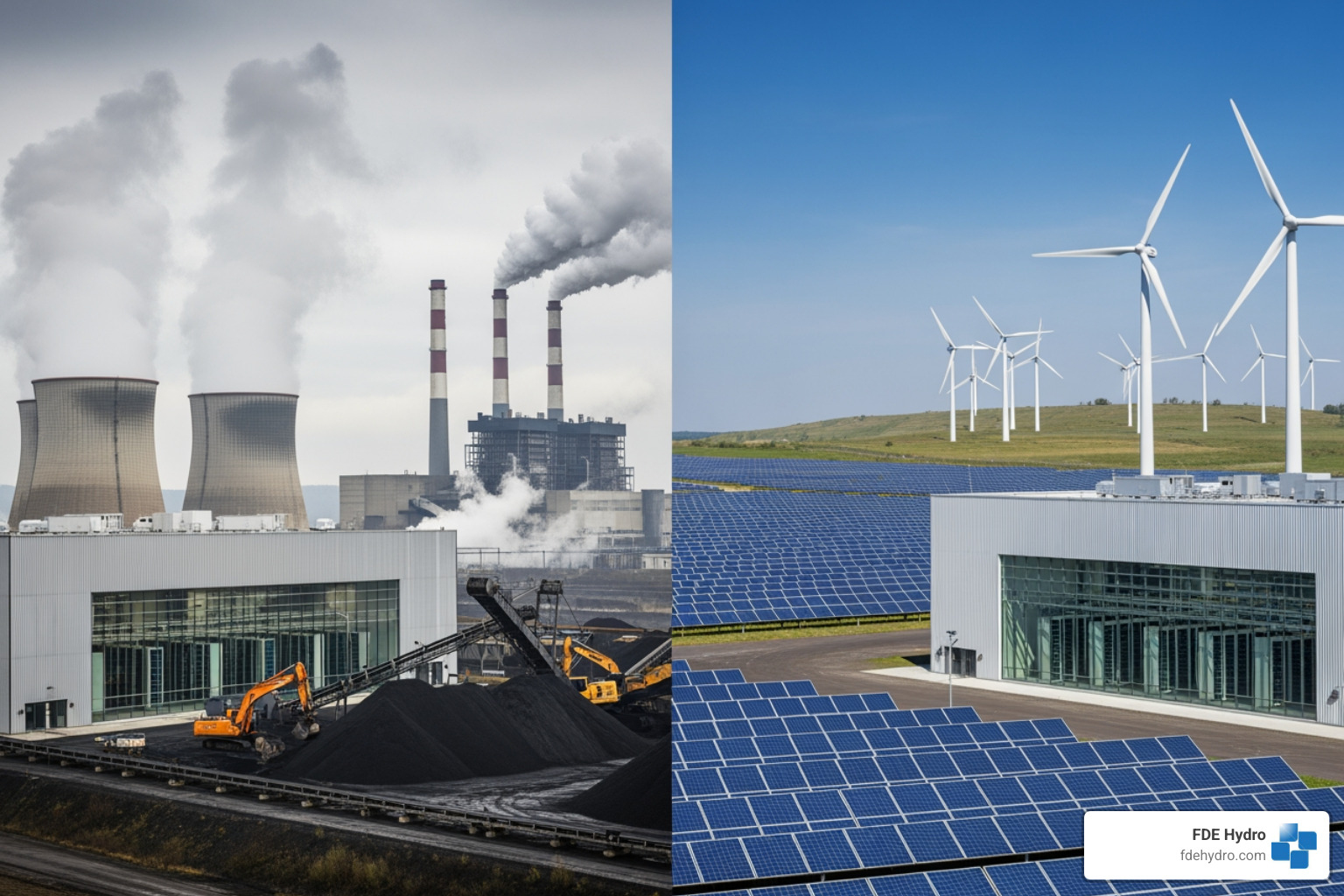
The Role of Renewable Energy in Crypto
The shift to renewable energy sources like hydropower, wind, and solar is paramount for creating truly energy efficient crypto. These sources offer a pathway to drastically reduce the carbon footprint associated with mining and transaction validation. Imagine mining operations powered by the consistent flow of rivers, the steady gust of wind across plains, or the abundant warmth of the sun. This isn’t a pipe dream; it’s a growing reality.
At FDE Hydro, we’re at the forefront of this transition. Our innovative modular precast concrete technology allows for the rapid and cost-effective construction and retrofitting of hydroelectric dams and water control systems across North America, Brazil, and Europe. This means we can provide reliable, clean energy directly to industries that need it, including sustainable digital infrastructure. Hydropower, in particular, offers a stable and predictable energy supply, making it an ideal partner for energy-intensive operations.
By powering digital assets with renewables, we not only minimize environmental harm but also support the growth of a more resilient and decentralized energy grid. This approach is central to building robust Clean Energy Infrastructure for the future. We invite you to Learn how hydropower can power the next generation of digital infrastructure and see how we’re making a difference.
Innovations in Energy-Efficient Crypto Mining
Beyond simply changing the energy source, innovations in hardware and management are also making crypto mining more efficient. We’re seeing the development of more energy-saving mining hardware that can perform computations with less power. This means more hashes per watt, reducing the overall energy demand for securing networks.
Furthermore, AI-driven energy management is playing a transformative role. Artificial intelligence can optimize mining operations in real-time, predicting energy prices, adjusting mining intensity based on grid availability, and even leveraging periods of excess renewable energy generation. This smart management ensures that resources are used as efficiently as possible, turning what was once a rigid, energy-hungry process into a flexible and responsive one. Our work in AI Energy Management focuses on integrating these cutting-edge solutions to improve the sustainability of digital infrastructure.
By combining FDE Hydro’s clean energy solutions with these technological advancements, we’re building a future where digital currencies contribute to a greener planet, rather than detracting from it.
A Closer Look at Energy Efficient Crypto Approaches
As we explore the path to more sustainable cryptocurrency, it’s clear that a multi-faceted approach is needed. It’s not just about one magic bullet, but a combination of strategies that address energy consumption from various angles. Here are the top 5 energy-saving strategies we’re seeing in the crypto space:
- Transitioning to Energy-Efficient Consensus Mechanisms: Moving away from Proof-of-Work (PoW) to methods like Proof-of-Stake (PoS), Proof-of-Space and Time (PoST), or Proof-of-History (PoH) dramatically reduces computational demands. Ethereum’s successful “Merge” to PoS, which cut its energy usage by over 99%, is a prime example of this strategy in action.
- Utilizing Clean Energy-Powered Mining: Sourcing electricity for mining from renewable energy like hydropower, solar, and wind directly reduces the carbon footprint, even for PoW operations.
- Deploying Energy-Efficient Mining Hardware: Investing in the latest generation of ASICs and GPUs that offer higher hash rates per watt significantly lowers power consumption for the same output.
- Implementing AI and Smart Grid Integration: Using AI to optimize mining operations, respond to grid demand, and efficiently consume intermittent renewable energy.
- Engaging in Carbon Offsetting and Credits: Actively purchasing carbon credits or contributing to environmental projects to neutralize unavoidable emissions.
Clean Energy-Powered Mining
This is where we, at FDE Hydro, truly shine. Powering mining operations with renewables like hydropower, solar, and wind drastically reduces their carbon footprint. Instead of contributing to greenhouse gas emissions, these operations can become part of the solution. For instance, imagine a data center in Canada or New York using our modular hydropower solutions to generate its own clean electricity. This not only makes the mining operation sustainable but also contributes to the local grid’s stability. Our clean energy solutions for digital infrastructure are designed to make this a reality, leveraging abundant natural resources in regions like Brazil and the Pacific Northwest of the United States.
Energy-Efficient Mining Hardware
The continuous evolution of mining hardware is another critical component. Modern, efficient ASICs and GPUs are engineered to perform more computations with less power. This translates to a lower power consumption per hash, reducing the overall energy demand of the network. Furthermore, the focus on efficiency can also reduce e-waste over time, as hardware becomes less quickly obsolete if its core efficiency remains competitive.
AI and Smart Grid Integration
Artificial intelligence is not just for predicting market trends; it’s also a powerful tool for optimizing energy use in crypto mining. AI can manage mining rigs to operate more efficiently, adjusting their activity based on real-time energy prices and grid demand. This capability allows mining operations to act as “flexible loads,” consuming power when there’s an abundance of renewable energy (e.g., a windy day for wind farms) and reducing consumption during peak demand periods. This not only makes the mining process more sustainable but also helps stabilize local electricity grids in regions like California or Kansas. Our AI Energy Management solutions are designed precisely for this purpose.
Carbon Offsetting and Carbon Credits
For emissions that cannot yet be eliminated, carbon offsetting and carbon credits provide a mechanism to mitigate environmental impact. Miners can invest in projects that remove carbon from the atmosphere or prevent future emissions. For example, the Solana Foundation has been actively purchasing blockchain-based carbon offsets, supporting initiatives like tree planting. They are even experimenting with biodiversity credits to preserve ecologically sensitive land. While not a substitute for reducing emissions directly, offsets can play a role in a comprehensive sustainability strategy.
Community and Grid Support
Responsible crypto mining, especially when powered by renewables, can offer significant benefits to local communities and electricity grids. Mining operations can provide a consistent demand for renewable energy, making new renewable projects more financially viable. They can also act as a flexible load, helping grid operators balance supply and demand, which is crucial for integrating intermittent renewable sources like solar and wind. In times of grid stress, like a heatwave in Texas, Bitcoin miners have demonstrated the ability to reduce their power consumption, supporting grid stability. This shows how miners, when strategically located and managed, can become valuable partners in energy infrastructure development. We believe in Sustainable Infrastructure Development that benefits everyone.
[TABLE] Comparing Energy Consumption Per Transaction
Let’s look at how various cryptocurrencies stack up in terms of energy efficiency, measured in Kilowatt-hours (KWh) per transaction. This table highlights the stark difference between traditional PoW giants and their more energy efficient crypto counterparts.
| Cryptocurrency | KWh consumed per transaction |
|---|---|
| Bitcoin (BTC) | 707 |
| Ethereum (ETH) (PoW era) | 62.56 |
| Litecoin | 18.522 |
| Bitcoin Cash | 18.957 |
| Dogecoin | 0.12 |
| Cardano | 0.5479 |
| Chia | 0.023 |
| XRP | 0.0079 |
| IOTA | 0.00011 |
| Solana | ~0.000000719 (719 kilojoules) |
Note: Ethereum’s energy consumption per transaction has drastically reduced since its transition to Proof-of-Stake, now comparable to or even less than some of the most efficient cryptos.
As you can see, the difference is astronomical. While a single Bitcoin transaction consumes enough energy to power a home for nearly a month, an IOTA transaction barely sips energy. Even a Solana transaction uses less energy than a single Google search. This data clearly illustrates the potential for energy efficient crypto to revolutionize digital finance without compromising our planet.
The Future of Green Crypto: Benefits, Risks, and Innovations
The journey toward truly energy efficient crypto is dynamic, filled with exciting benefits, inherent risks, and continuous innovation. As we look ahead, we see a future where digital assets are not just powerful financial tools but also forces for environmental good.
Benefits and Market Adoption
The benefits of adopting green cryptocurrencies are manifold, extending beyond just environmental sustainability.
- Environmental Sustainability: This is the most obvious win. By reducing energy consumption and carbon emissions, green crypto aligns with global climate goals, making digital finance a responsible participant in our shared future.
- Lower Transaction Fees and Improved Scalability: Many energy-efficient consensus mechanisms, particularly Proof-of-Stake variants, are inherently more scalable and can process transactions faster and with lower fees than PoW systems. This makes them more practical for everyday use.
- Attracting ESG Investors: As environmental, social, and governance (ESG) factors become increasingly important in investment decisions, green cryptocurrencies are ready to attract a new wave of conscientious investors. Academic research shows that investors evaluate the electricity consumption impact on markets, with a credible commitment to sustainable practices, like Ethereum’s transition to PoS, potentially reducing volatility and increasing adoption. Our AI Energy Management solutions can further improve the appeal to ESG-focused capital. The academic paper “Sustainable energy practices and cryptocurrency market behavior” highlights how such practices can influence market dynamics, with Bitcoin’s returns responding significantly to energy consumption changes, while Ethereum’s response is negligible post-PoS.
Risks and Challenges to Overcome
However, the path to a green crypto future isn’t without its problems.
- Security Vulnerabilities of Newer Mechanisms: While PoS and other alternative consensus mechanisms are generally considered secure, some critics argue they may not have the same battle-tested resilience as Bitcoin’s PoW, leading to potential, albeit rare, security concerns.
- Potential for Centralization: A common criticism of PoS is that it might lead to centralization, where a few large token holders could exert undue influence over the network. This goes against the decentralized ethos of cryptocurrency.
- Regulatory Uncertainty: The regulatory landscape for cryptocurrencies is still evolving. Policy uncertainty, particularly regarding energy consumption and environmental impact, can influence market behavior. Europe’s Markets in Crypto Assets (MiCA) regulation, for example, is pushing for greater transparency in energy reporting.
- Media Influence on Market Perception: Media attention can significantly impact how cryptocurrencies are perceived, sometimes overshadowing fundamental developments. Negative narratives around energy consumption can affect market sentiment, regardless of actual efficiency improvements.
The Future of Energy Efficient Crypto
The future of energy efficient crypto is bright and full of innovation. We anticipate several key trends:
- Continued Innovations in Blockchain: New consensus mechanisms and layer-2 solutions will continue to emerge, pushing the boundaries of efficiency and scalability. Projects exploring quantum blockchain miners, for instance, could offer massive energy savings, potentially reducing annual consumption by 126.7 TWh.
- Deeper Integration with Renewable Energy: We foresee more mining operations, particularly in North America, Brazil, and Europe, strategically locating near abundant renewable energy sources. FDE Hydro is actively working to build the Clean Energy Infrastructure needed to support this integration, making hydropower a cornerstone for sustainable digital assets.
- Role in Carbon Credit Markets: Blockchain technology itself can improve the transparency and efficiency of carbon credit markets, helping to track and verify environmental initiatives.
- Policy Developments: Regulations like MiCA will likely drive greater accountability and transparency regarding the environmental impact of cryptocurrencies, further incentivizing the adoption of energy-efficient practices.
The industry is moving towards a model where sustainability is not an afterthought, but a core design principle.
Conclusion: Building a Sustainable Digital Future
The debate between Proof-of-Work and its greener alternatives has highlighted a critical juncture for the cryptocurrency industry. While PoW has proven robust in securing networks, its environmental footprint is unsustainable in the long run. The emergence and adoption of energy efficient crypto solutions, particularly those leveraging Proof-of-Stake and powered by renewable energy, offer a compelling path forward.
Choosing sustainable options isn’t just an ethical decision; it’s increasingly a smart economic one. These greener cryptocurrencies promise lower operational costs, improved scalability, and greater appeal to a growing segment of environmentally conscious investors.
The role of renewable energy in powering the future of finance cannot be overstated. At FDE Hydro, we are committed to this vision. Our innovative modular hydropower technology provides a scalable, cost-effective way to build Sustainable Energy Production for digital infrastructure. By using the power of water, we are contributing to robust Clean Energy Infrastructure that supports the evolution of energy efficient crypto mining operations across our regions of operation in the United States, Canada, Brazil, and Europe.
We believe that a truly decentralized and inclusive financial system must also be environmentally responsible. Join us in building a sustainable digital future. Learn how hydropower can power the next generation of digital infrastructure and be part of the solution.
