

The Era of Rethinking Water Infrastructure
Building new dams has been humanity’s answer to water management challenges for over a century, but the landscape is shifting dramatically. Here’s what you need to know about new dam construction today:
Key Facts About Building New Dams:
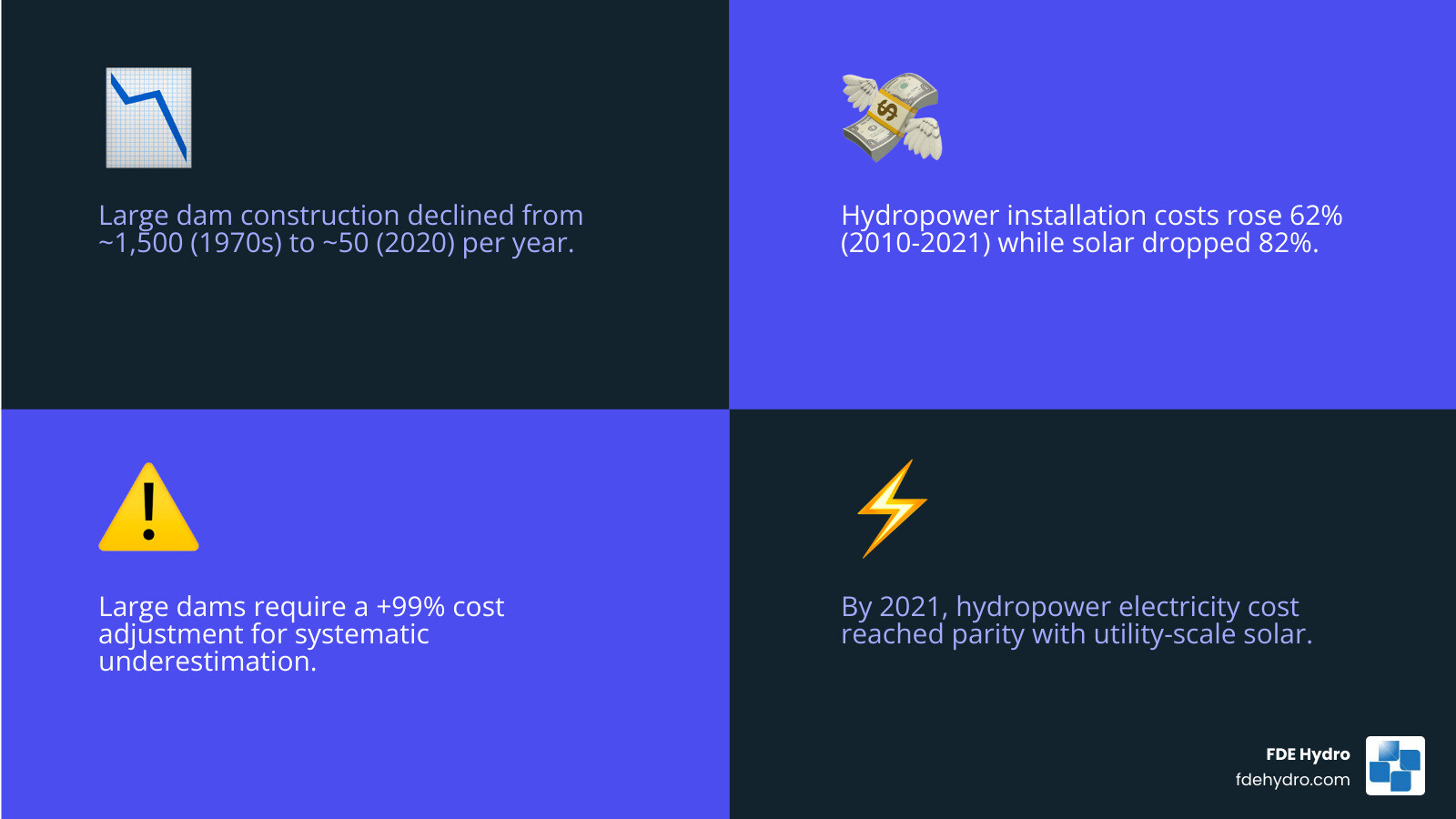
- Construction declined sharply – from ~1,500 large dams built annually in the late 1970s to only ~50 per year by 2020
- Costs have skyrocketed – hydropower installation costs rose 62% between 2010-2021, while solar dropped 82%
- Economic viability questioned – large dams require a +99% cost adjustment to account for systematic underestimation
- Climate uncertainty – droughts and extreme floods threaten dam effectiveness and safety
- Alternatives emerging – closed-loop pumped storage, dam modernization, and distributed renewables offer viable paths forward
When the largest dam removal in U.S. history began on the Klamath River in 2023, it seemed the era of building new dams was over. Yet just a month later, California finalized funding for the Sites Reservoir project—a massive new dam that will be the state’s first major reservoir in half a century. This paradox captures our current moment perfectly.
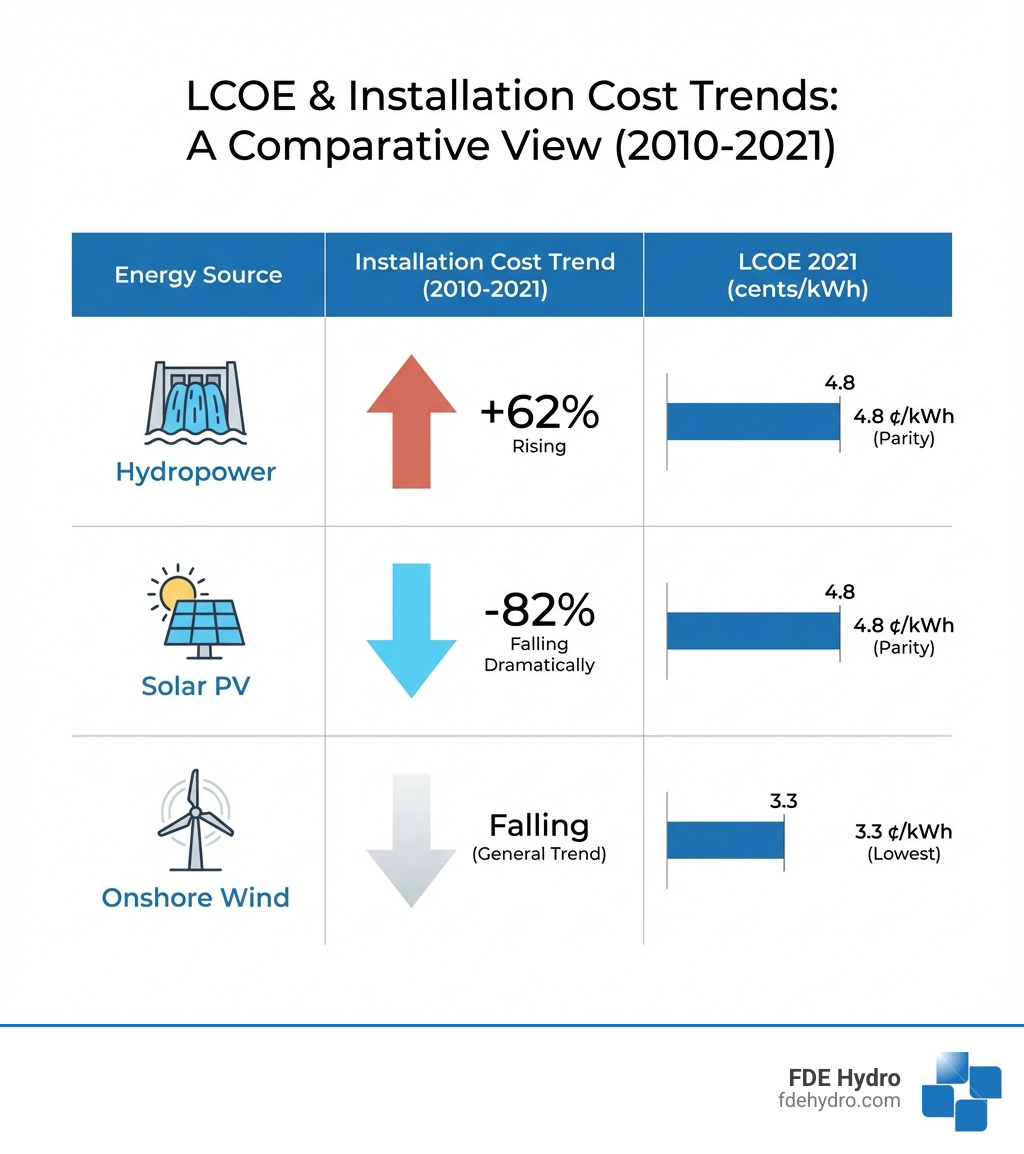
We’re caught between two realities. On one hand, global projections point to an increased demand for hydropower of 400 GW by 2050 and a need for 460 km³/yr more stored water for irrigation—a 70% increase. On the other hand, the economic case for massive concrete structures is crumbling. By 2021, the cost of electricity from hydropower reached parity with utility-scale solar at 4.8 cents per kilowatt-hour, while onshore wind was already cheaper at 3.3 cents.
The question isn’t whether we need water infrastructure solutions—we clearly do. The question is whether building new dams in the traditional sense is the answer, or whether we should be focusing on smarter alternatives: modernizing existing structures, embracing modular construction methods, and investing in distributed solutions that work with nature rather than against it.
As Bill French Sr., Founder and CEO of FDE Hydro, I’ve spent decades in heavy civil construction and have been directly involved in developing next-generation hydropower solutions, including modular approaches to building new dams that dramatically reduce both cost and construction time. This article examines why the traditional mega-dam playbook no longer works—and what we should be doing instead.
Building new dams terms explained:
The Modern Dilemma: Why Are We Still Considering New Dams?
The debate around building new dams is complex, fueled by pressing global needs for energy and water, alongside the undeniable impacts of climate change. While the heyday of massive dam construction might be behind us, the motivations for considering new projects in regions like North America, Brazil, and Europe remain potent.
Energy Needs in a Carbon-Conscious World
One of the primary drivers for considering building new dams is the demand for renewable energy. Hydropower, as a source of low-carbon electricity, has historically been lauded for its contribution to climate mitigation and adaptation. Globally, projections indicate an increased demand for hydropower of around 400 GW by 2050, representing about 60-64% of the identified potential and a 35% increase compared to today.
Hydropower’s ability to provide baseload power—a constant, reliable supply of electricity—is particularly attractive. This makes it a valuable complement to intermittent renewable sources like solar and wind power, which fluctuate with weather conditions. Pumped storage technology, which uses excess power to pump water uphill to a reservoir, then releases it to generate electricity when demand is high, is often highlighted as a flexible solution. We believe that integrating such technologies with existing infrastructure can significantly improve grid stability.
However, we must also acknowledge the critical discussions surrounding hydropower’s environmental impact. While no fuels are burned during operation, the construction of large dams involves significant carbon footprints from concrete. Furthermore, reservoirs themselves can emit greenhouse gases, primarily methane from decaying vegetation, which critics argue can rival fossil fuel emissions. These complexities mean we need to evaluate hydropower’s role with open eyes, ensuring that our pursuit of clean energy doesn’t inadvertently create new environmental burdens. You can learn more about the role of hydroelectricity in our energy future at our Hydroelectric Dams page.
Water Security in an Unpredictable Climate
Beyond energy, the most compelling argument for building new dams often revolves around water management challenges. Climate change is ushering in an era of unpredictable weather patterns, characterized by more intense rainfall events and prolonged, severe droughts. This variability creates a dual challenge: how to store water during periods of abundance and how to ensure supply during scarcity.
In regions like the American Southwest, the reliance on dams for agriculture and urban populations is immense. Upmanu Lall, director of the Columbia Water Center in New York, notes that “The West would look very different if these [dams] were not there.” Similarly, in California, the Sites Reservoir project aims to capture water from increased winter rains, bolstering the state’s resilience against future droughts. This proposed reservoir is designed to store water for various uses, including agriculture, urban utilities, and even environmental flows, despite being a new major construction in an era of dam removals.
For us, the focus is on developing robust Water Infrastructure Solutions that address these needs without repeating past mistakes. This means considering how new storage capacity can be integrated efficiently and sustainably, especially in areas like Brazil and Europe, where water resources are also under increasing pressure.
The Staggering Gamble of Building New Dams
Despite the apparent needs, the decision to proceed with building new dams is increasingly viewed as a staggering gamble. The economic, environmental, and social costs associated with these megaprojects are often underestimated, leading to controversies and long-term challenges. Globally, the trend has seen a dramatic downturn. A 2021 study highlighted that construction of large dams globally fell from a late-1970s peak of about 1,500 a year to around 50 a year in 2020. This decline isn’t just a coincidence; it reflects a growing awareness of the true price of these structures.
The Economic Black Hole: Costs, Overruns, and Smarter Solutions
When we talk about building new dams, we often hear about the immense benefits they promise. However, the economic reality is frequently far less rosy. Large hydropower dams are notorious for cost overruns, ranking among the highest for any type of megaproject. Estimates are systematically and severely biased below actual values, with research suggesting an uplift of +99% is required to de-bias systematic cost underestimation. This means projects often end up costing twice their initial budget!
Let’s look at the numbers. Between 2010 and 2021, the cost of hydropower installation rose by 62%. Over the same period, the cost of solar power installation dropped by a staggering 82%. By 2021, the cost of electricity derived from hydropower and utility-scale solar power had reached parity, at 4.8 cents per kilowatt-hour, while onshore wind was already lower, at 3.3 cents per kilowatt-hour. Investments in new hydropower have also dropped significantly, from a peak of $26 billion in 2017 to an estimated $8 billion in 2022.
This shift in economic viability is undeniable. As a company focused on Hydroelectric Power Generation, we recognize that traditional approaches to building new dams are simply not competitive with other renewable energy sources. This economic reality demands a re-evaluation of our investment priorities.
For a deeper dive into the financial realities, we recommend reading the detailed research on hydropower megaproject costs. It provides a sobering look at how often these projects exceed their budgets, and why agile energy alternatives with shorter construction horizons are often a smarter choice for policymakers.
The Lasting Scars on Ecosystems and Communities
Beyond the financial costs, the environmental and social impacts of building new dams cast long shadows. Dams have stoppered nearly two-thirds of the globe’s major water systems, devastating their ecosystems. This river fragmentation disrupts natural flows, blocks fish migration, and alters aquatic habitats. The construction of the Belo Monte Dam in Brazil, for example, flooded vast rainforest areas and displaced indigenous people, highlighting the severe social costs.
Sediment trapping is another significant issue. As reservoirs age, they collect sediment, which deprives downstream channels of essential nutrients and substrate. This accumulation also reduces a dam’s storage capacity and power generation potential over time, effectively shortening its lifespan. We have seen how this issue affects existing Dams across North America and Europe.
Furthermore, the social consequences are profound. Large dams have historically displaced millions of people, many from Indigenous communities, and adversely affected the livelihoods of billions. The controversies surrounding new dam projects often center on these environmental sustainability concerns and the equitable distribution of benefits, questioning who truly profits and who pays the highest price.
The Future of Water Management: Smarter, Not Just Bigger
The challenges associated with building new dams in the traditional sense don’t negate the need for robust water management. Instead, they push us towards smarter, more innovative solutions that prioritize efficiency, sustainability, and adaptability. This includes emerging trends in construction, exploring alternatives to large-scale projects, and critically addressing our aging infrastructure.
Innovating Construction: New Methods for Building and Modernizing Dams
The modern approach to dam construction is characterized by technological advancements and a focus on efficiency. One such advancement is Roller Compacted Concrete (RCC). RCC is a drier concrete mix that is placed in layers and then compacted by rollers, similar to how asphalt is laid. This method significantly speeds up construction and reduces costs compared to traditional mass concrete pouring. You can find more info on Roller Compacted Concrete and its applications.
A prime example of this innovation is the Gross Dam project in Boulder County, Colorado. Crews are raising the dam by 131 feet using RCC, making it the tallest dam in Colorado and the largest dam raise in the U.S. This project involves building 118 concrete steps, each four feet tall, using mini-dump trucks, bulldozers, and rollers. The dam’s design is also being altered from a curved gravity dam to a more efficient thick arch dam in the center, leveraging the canyon’s natural geometry for support. This strategic use of advanced materials and design showcases how we can improve existing infrastructure rather than always pursuing entirely new structures.
At FDE Hydro, we are at the forefront of these innovations, particularly with our patented modular precast concrete technology, often referred to as “French Dam” technology. This approach allows for the rapid installment of civil infrastructure, significantly reducing both construction time and costs for building new dams or retrofitting existing ones. Our Modular Construction Techniques offer a scalable and sustainable alternative that is well-suited for projects across North America, Brazil, and Europe. This method not only addresses the cost and time overruns inherent in traditional dam projects but also minimizes on-site environmental disruption.
Rethinking the Need for Building New Dams: Viable, Integrated Solutions
Given the complexities, we need to broaden our perspective beyond just building new dams. Viable, integrated solutions offer a more holistic and often more sustainable path forward for water management and energy generation.
Consider these alternatives to large, conventional dams:
- Water conservation programs: Reducing demand through efficiency measures can be far more cost-effective than increasing supply.
- Groundwater recharge: Replenishing underground aquifers can store vast amounts of water naturally, often with fewer environmental impacts.
- Wastewater recycling: Treating and reusing wastewater for non-potable purposes can significantly extend existing water supplies.
- Off-river storage: Building reservoirs away from main river channels, which are filled during high flows, can minimize ecological disruption.
- Closed-loop pumped hydro: These systems, often built off-river, store energy without the extensive environmental footprint of conventional hydropower dams.
- Dam rehabilitation and modernization: Instead of new construction, focusing on repairing, upgrading, and expanding the capacity of existing dams can be a more efficient use of resources. The cost of rehabilitating the nation’s 4,000-plus federally owned dams in the U.S. alone is estimated at $27.6 billion, highlighting the scale of this ongoing need.
- River restoration: In some cases, removing outdated or unsafe dams can restore natural river flows and ecosystem health.
Our expertise in Dam Rehabilitation Encapsulation is a testament to this philosophy. We believe that by improving the performance and safety of existing structures, we can achieve many of the benefits of new construction without the associated environmental and financial risks. This proactive approach ensures our water infrastructure remains resilient and functional for generations to come. You can explore more about various Dam Construction Methods and their applications.
Frequently Asked Questions about New Dam Construction
Here, we address some common questions that arise when considering building new dams in today’s environment.
Are large dams a good investment compared to other renewables?
Historically, hydropower was considered a cheap and reliable energy source. However, this perception has significantly changed. Our research shows that between 2010 and 2021, hydropower installation costs rose 62%, while solar power installation costs dropped an impressive 82%. By 2021, the cost of electricity generated from hydropower reached parity with utility-scale solar at 4.8 cents per kilowatt-hour. Meanwhile, onshore wind power was already more economical at 3.3 cents per kilowatt-hour.
Furthermore, large dams are notorious for cost overruns. Studies indicate that they have the highest average cost overrun (+99%) of any megaproject type, meaning projects frequently end up costing double their initial estimates. This financial uncertainty, coupled with the increasing competitiveness of solar and wind, makes the economic case for building new dams less compelling than it once was.
How does climate change affect a dam’s performance?
Climate change introduces significant uncertainty into a dam’s long-term performance. We are witnessing more frequent and intense extreme weather events, which directly impact water availability.
- Droughts: Intensified droughts can dramatically lower reservoir levels. This directly impacts hydropower production, as seen in Brazil and Europe, where low water levels have led to energy shortages. It also threatens water supply for agriculture and urban areas, as experienced in the American Southwest and São Paulo.
- Floods: Conversely, extreme floods can exceed a dam’s spillway capacity, posing severe safety risks to downstream communities. While dams are often built for flood control, a 2022 study in Nature Communications showed that they can, in some cases, actually raise flood risk by altering the makeup and structure of riverbeds downstream.
- Future Risks: A study by the World Wildlife Fund found that almost two in three planned hydropower dams globally will be in river basins with very high or extreme risks for droughts, floods, or both, by the year 2050. This highlights a critical challenge: the very climate conditions driving the need for water storage also threaten the effectiveness and safety of the dams built to address them.
What happens to a dam at the end of its life?
Dams, like all infrastructure, have a finite lifespan. One of the primary long-term challenges is sediment accumulation in reservoirs. Sediment carried by rivers settles behind the dam, gradually reducing the reservoir’s storage capacity and, consequently, its ability to generate power or supply water. Removing this accumulated sediment is usually too difficult and expensive to consider. Existing large dams have already lost an estimated 13-19% of their storage capacity and are predicted to lose another 10% by 2050.
As dams age, they also require significant maintenance and rehabilitation. Aging infrastructure can pose safety concerns and operational inefficiencies. The cost to rehabilitate the more than 4,000 federally owned dams in the U.S. alone is estimated at $27.6 billion. When a dam reaches the end of its useful life, decisions must be made regarding its decommissioning or removal, which can also be complex and costly. This long-term financial burden is a crucial factor to consider when planning new projects.
Conclusion: A New Framework for Our Rivers
The discussion around building new dams is no longer black and white; it’s a vibrant spectrum of possibilities and challenges. While the traditional era of mega-dam construction is waning, our need for secure water resources and clean energy is more urgent than ever. The paradox we face today — declining new dam construction globally versus targeted new projects in specific regions like California — underscores the necessity for a nuanced and adaptable approach.
We believe the future of water management and hydropower lies not in blindly pursuing larger, more expensive projects, but in a smarter, more integrated framework. This means shifting our focus from sheer scale to strategic solutions that consider true costs, both economic and environmental, and leverage innovative technologies.
For us at FDE Hydro, this translates into pioneering modular precast concrete systems. Our “French Dam” technology offers a compelling solution by significantly reducing construction time and cost overruns, making hydropower projects more viable and sustainable. This approach not only supports the development of new, smaller facilities where appropriate but also plays a crucial role in modernizing and rehabilitating our existing, aging dam infrastructure.
By embracing water conservation, groundwater recharge, wastewater recycling, and advanced construction methods, we can secure our water future and generate clean energy without sacrificing our rivers and communities. It’s about finding the right balance, mitigating risks, and ensuring that our long-term hydropower projects are financially sound and environmentally responsible. We are committed to mitigating risks in long-term hydropower projects and building a sustainable future for our rivers and the generations to come.
