

Why AI for Resource Management is Changing Project Delivery
AI for resource management applies artificial intelligence to optimize how organizations allocate people, equipment, and budgets. By analyzing complex project data, it matches the right resources to tasks, predicts future needs, and automates scheduling to reduce manual planning time by up to 50%. The result is real-time visibility into team capacity and project health.
The numbers are compelling. Organizations using AI-powered tools report utilization rates above 75% (compared to the 40% industry average), a 43% increase in billable time, and 5-10% higher project margins. For large-scale infrastructure projects, these gains provide a significant competitive advantage.
Traditional resource management relies on spreadsheets and gut instinct, which is inefficient and error-prone as projects scale. AI processes vast amounts of data to find patterns humans miss, balancing deadlines, skills, and budgets simultaneously. What once required expensive custom development is now available in user-friendly platforms that forecast workloads, suggest team compositions, and alert managers to bottlenecks before they occur.
I’m Bill French Sr., Founder and CEO of FDE Hydro, where we’ve pioneered modular construction solutions for the hydropower industry. After decades of managing complex civil infrastructure projects, I’ve seen how effective resource allocation separates successful projects from troubled ones. Today’s AI tools offer capabilities we could only dream of in earlier years. Let’s explore how they can transform your project delivery.
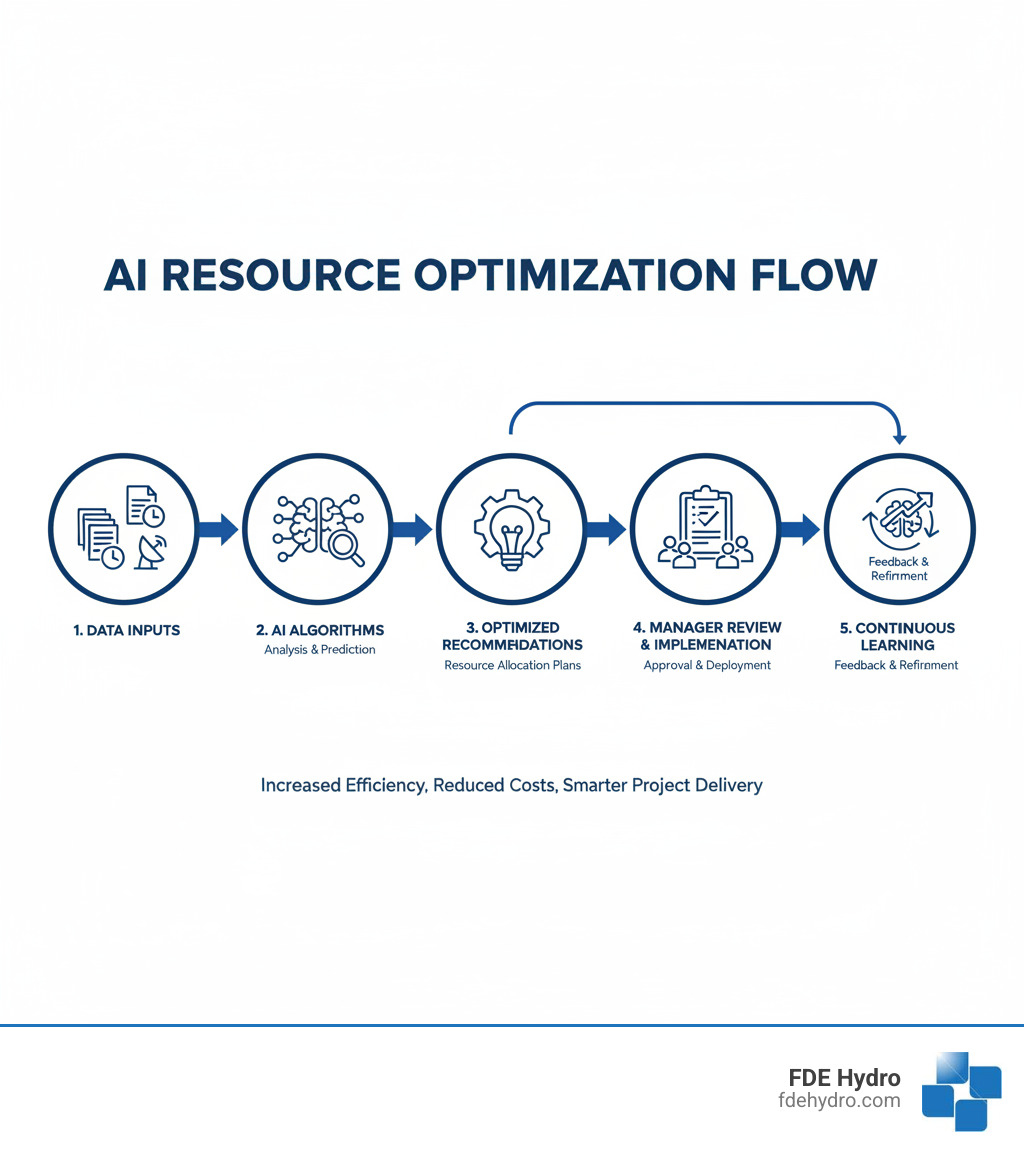
Defining AI in a Resource Context
At its core, AI for resource management uses intelligent systems to make smarter, faster decisions about valuable assets. It moves beyond simple automation by applying predictive analytics and optimization algorithms to uncover deep insights from historical and real-time data. This allows organizations to shift from reactive problem-solving to proactive, data-driven planning, ensuring resource plans are always one step ahead.
What Types of Resources Can AI Manage?
AI is versatile and can manage a wide array of assets beyond just personnel.
- Personnel: AI matches individuals to projects based on skills and availability, helping to predict and prevent burnout.
- Equipment and Machinery: For industries like ours at FDE Hydro, AI optimizes the deployment and maintenance of heavy equipment, minimizing downtime for critical assets used in our modular precast concrete technology.
- Financial Capital: AI tracks budgets, forecasts spending, and identifies potential cost overruns early.
- Inventory and Materials: It can manage stock levels and optimize procurement to ensure materials are available when needed for our hydropower projects.
- Time: As our most precious resource, AI helps optimize project timelines and identify potential delays to maximize project velocity.
If an asset needs to be allocated, scheduled, or tracked, AI can manage it more intelligently. For more on how we use technology to maximize efficiency, explore our approach to innovation: More info about our innovative technology.
The Core Benefits of AI for Resource Management

The real-world impact of AI for resource management is about fundamentally improving project delivery. AI transforms resource management from a reactive scramble into a strategic advantage, leading to increased productivity, better project outcomes, and higher margins. Common results include a 20% boost in utilization, 5-10% higher project margins, and a 12x return on investment.
How AI Transforms Planning and Allocation
AI turns hours of manual planning into decisions made in minutes.
- Demand forecasting: AI accurately predicts resource needs by analyzing historical data, preventing over-staffing or under-staffing.
- Automated scheduling: The system continuously matches resources to tasks based on skills, availability, and deadlines, eliminating spreadsheet nightmares.
- Skill matching: AI goes beyond keywords to evaluate past performance and find the best person for each task, ensuring quality outcomes.
- Workload balancing: By monitoring team capacity, AI flags potential overloads and suggests reallocations to prevent burnout.
These capabilities reduce administrative time on scheduling and reporting by up to 50%, freeing managers for more strategic work. This people-first approach balances business goals with employee well-being, creating an environment where teams thrive.
Driving Financial Performance and Improving Budgeting
AI for resource management provides tight control over project finances. Real-time cost tracking offers instant visibility into spending, alerting you to variances before they become critical. This allows for better margin control, with organizations consistently seeing 5-10% higher project margins through optimized resource allocation.
Revenue forecasting also becomes more reliable as AI analyzes project pipelines and resource availability. The impressive 12x return on investment comes from reduced waste, higher utilization, and faster project delivery. For budgeting, AI offers data-driven forecasting and scenario planning, allowing you to test allocation strategies and understand their financial impact before committing.
At FDE Hydro, financial performance is linked to our commitment to sustainable infrastructure. AI helps optimize resource allocation in our operations, supporting both profitability and sustainability, aligning with principles in resources like Accelerating AI with Sustainability – A Playbook.
Boosting Efficiency and Project Outcomes
AI helps ensure projects finish on time, on budget, and at high quality. Increased utilization rates (often from 40% to over 75%) mean projects move faster. AI also reduces human error in allocation, leading to more reliable planning and better team morale.
Key benefits include:
- Risk prediction: AI analyzes project data to flag risks like budget overruns or delays, allowing for proactive intervention. This is critical for complex infrastructure projects where delays cost millions.
- Improved agility: When project parameters change, AI instantly suggests optimized adjustments, making the organization more responsive.
- Reduced manual reporting: With a 50%+ reduction in reporting time, managers can focus on strategic decisions instead of administrative tasks.
At FDE Hydro, efficiency is core to our mission. Our modular precast concrete technology already cuts construction time, and AI-powered resource management amplifies these gains. Learn more about our approach here: More info about our energy solutions.
Choosing the Right AI Resource Management Software
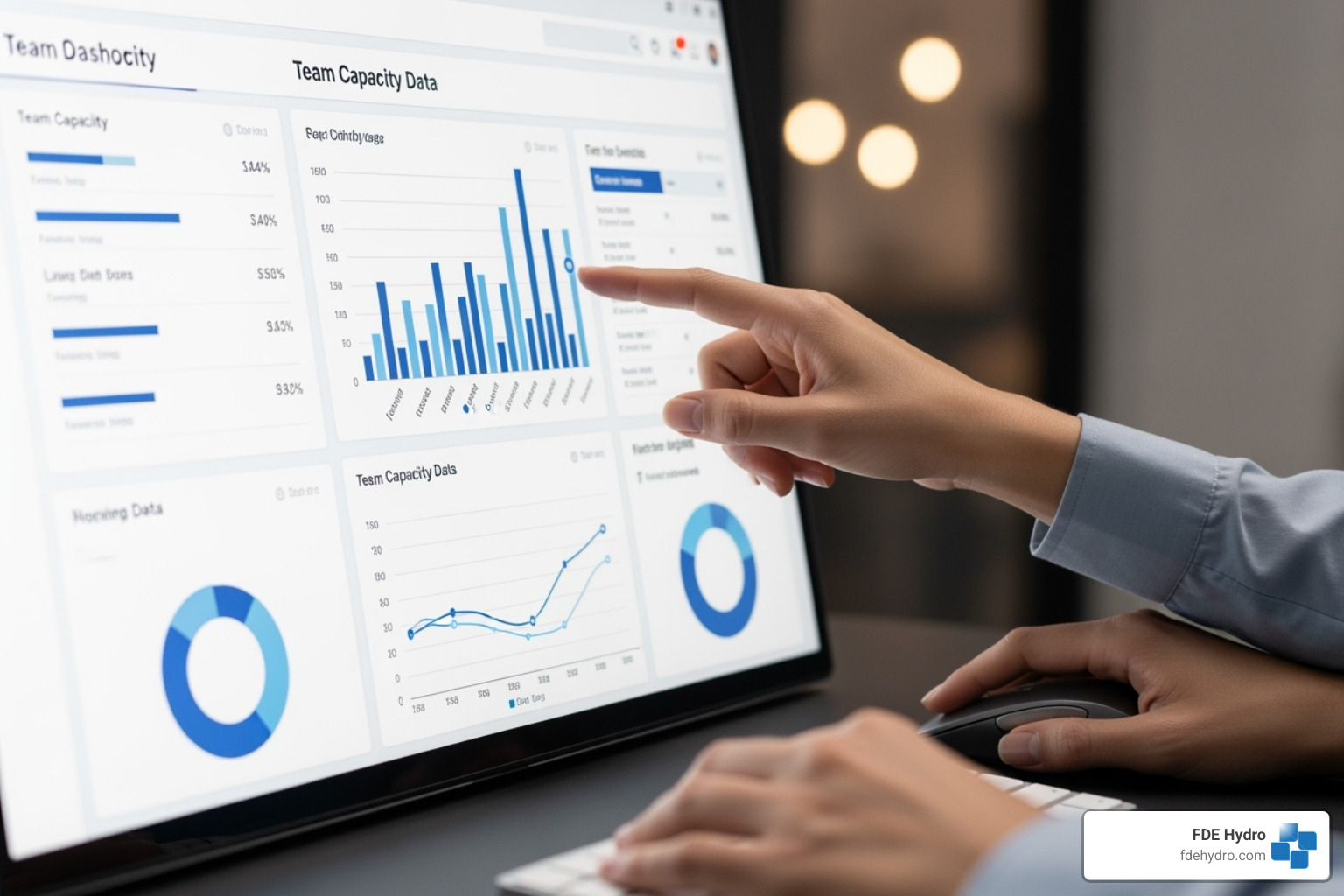
Selecting the right AI for resource management software means finding a tool that aligns with your business needs, scales with your growth, and is easy for your team to use. Key considerations include:
- Scalability: The software should work for your current team size but also support future expansion.
- User Experience: An intuitive interface is crucial for adoption. If the software is too complex, it won’t be used effectively.
- Integration: The platform must connect seamlessly with your existing project management, CRM, and financial tools to avoid data silos.
- Customization: Look for flexibility to adapt to your industry’s unique workflows, such as the long timelines and specialized equipment needs in hydropower.
- Analytics: The software should provide deep, actionable insights, not just surface-level reports.
Core Features to Look for in AI for Resource Management Software
When evaluating platforms, prioritize these transformative features:
- Intelligent Resource Recommendation: The software should analyze skills, availability, and performance to suggest the optimal person or team for each project.
- AI Workload Forecasting: Look for tools that predict when team members will become available, preventing overbooking and helping you make realistic commitments.
- Real-time Reporting Dashboards: Instant, customizable visibility into utilization, project status, and budgets is essential for agile decision-making.
- AI Headcount Planning: This feature analyzes demand and capacity to advise when and what roles to hire, enabling proactive team building.
- Automated Resource Allocation: The platform should continuously optimize assignments based on cost, speed, and skill alignment, handling complex calculations automatically.
Ensuring Seamless Integration with Your Existing Tools
Integration is essential for a unified workflow. Modern platforms are designed to connect with your existing technology stack via robust API access, allowing data to flow automatically between systems.
Look for pre-built connectors for popular tools like Jira, Salesforce, and HubSpot. This ensures your sales pipeline informs resource planning and creates a smooth handoff from sales to project execution. The goal is to achieve unified project intelligence—a single source of truth that pulls data from across your organization. For unique needs, custom API integrations offer even more power, as shown in various Developer API Success Stories.
At FDE Hydro, seamless integration is key to managing our complex hydropower projects. Connecting our resource management system with project tracking and financial tools eliminates friction and keeps everyone aligned.
A Practical Guide to Integrating AI into Your Workflow

Integrating AI for resource management is a journey that requires careful planning and team buy-in. It’s about evolving how your organization makes decisions. Success depends on a solid strategy, change management, and a culture of continuous improvement.
Practical Steps for Successful Integration
- Define Clear Objectives: Before choosing a tool, determine what you want to achieve. Are you aiming to reduce budget overruns, improve work-life balance, or forecast needs more accurately? Your goals will guide the entire process.
- Evaluate Data Quality: AI is only as good as the data it receives. Assess the accuracy and consistency of your project records, time tracking, and resource usage data. Clean up your data first for the best results.
- Choose the Right Tool: Select a solution that solves your specific challenges, integrates with existing systems, and is user-friendly. Involve your team in the selection process.
- Start with a Pilot Program: Test the software with a single team or project. This low-risk approach allows you to gather feedback and make adjustments before a company-wide rollout.
- Train Your Team: Invest in comprehensive training that explains the “why” behind the change, not just the “how.” Empowering your team with knowledge is key to adoption. Learn more about our approach to teamwork here: More info about our team.
- Review and Refine Continuously: AI is not a “set it and forget it” technology. Regularly check in to assess progress against your objectives, identify bottlenecks, and act on team feedback.
Handling Data Security and Measuring ROI
Two critical questions for any implementation are data security and return on investment (ROI).
For data security, choose reputable platforms with robust encryption, access controls, and compliance with regulations like GDPR. Always verify a vendor’s security protocols and data handling practices to ensure they meet your industry’s standards, following guidelines for the Responsible use of artificial intelligence in government.
To measure ROI, track key metrics where AI delivers value. You’ll likely see utilization rates jump by 20% or more, project margins increase by 5-10%, and administrative time drop by 50%. Also, monitor project success rates and team satisfaction. Many organizations see returns as high as 12x their initial investment as efficiency, better decision-making, and reduced waste compound over time.
At FDE Hydro, the principles of precision and continuous improvement that guide our modular construction approach also apply to our adoption of new technologies. It’s about working smarter.
Frequently Asked Questions about AI Resource Management
Is AI resource management software suitable for all business sizes?
Yes. AI for resource management software is highly scalable and benefits businesses of all sizes.
- Small Businesses: AI helps smaller teams optimize limited resources, make smarter hiring decisions, and compete more effectively. Many providers offer flexible, per-user pricing models.
- Large Enterprises: For large organizations, AI is essential for coordinating complex resource allocation across numerous projects and departments, providing a unified view that is impossible to achieve manually.
The key is choosing a solution that fits your budget and scales with your growth.
How does AI resource management software handle unexpected project changes?
AI excels at adapting to unexpected changes, a key advantage over static planning tools.
- Dynamic Rescheduling: When priorities shift or a resource becomes unavailable, the AI can instantly re-evaluate dependencies and suggest a new, optimized schedule.
- Real-time Alerts: The system constantly monitors project health and alerts managers to risks like budget overruns or delays, allowing for proactive intervention.
- Scenario Planning: Many tools let you model the impact of potential changes before committing, helping you choose the best path forward and improving organizational agility.
Can AI eliminate human bias in resource allocation?
AI can significantly reduce, but not completely eliminate, human bias.
- Reduction of Bias: By using objective data like skills and availability, AI minimizes the influence of unconscious biases in allocation decisions.
- Risk of Inherited Bias: However, if the historical data used to train the AI contains biases, the system may perpetuate them.
- Human Oversight is Crucial: For this reason, human oversight is essential. Managers must review AI recommendations to ensure fairness and logic. The goal is to use AI as a powerful assistant that helps us make more objective decisions, not as a fully autonomous replacement.
Conclusion: The Future of Project Delivery is Intelligent
We’ve reached an inflection point where AI for resource management is fundamentally rethinking how projects are delivered. This technology offers tangible benefits, including higher utilization rates, increased billable time, and improved project margins, leading to healthier businesses and more engaged teams.
As we’ve explored, AI transforms tedious planning into a fast, intelligent process. By choosing the right software and following a practical integration plan, organizations can achieve operational excellence. For those of us building critical infrastructure, these capabilities are essential. At FDE Hydro, we know that innovation in how we manage our resources is just as important as the modular construction solutions we pioneer.
Adopting AI is about more than a competitive edge; it’s about creating more agile, efficient, and human-centric organizations. AI acts as a partner, handling complex data analysis so managers can focus on leading, mentoring, and creative problem-solving.
The organizations that accept these intelligent systems will not just survive but thrive. They will deliver projects faster, more profitably, and with greater predictability. They will attract top talent and build the solutions our world needs with unprecedented efficiency. The future of project delivery is intelligent, and it’s here now.
Ready to explore how intelligent systems can transform your project delivery? Learn more about how we’re applying innovation across every aspect of modern hydropower: Learn more about advanced hydropower solutions.
