

Why AI Energy Management Matters Now
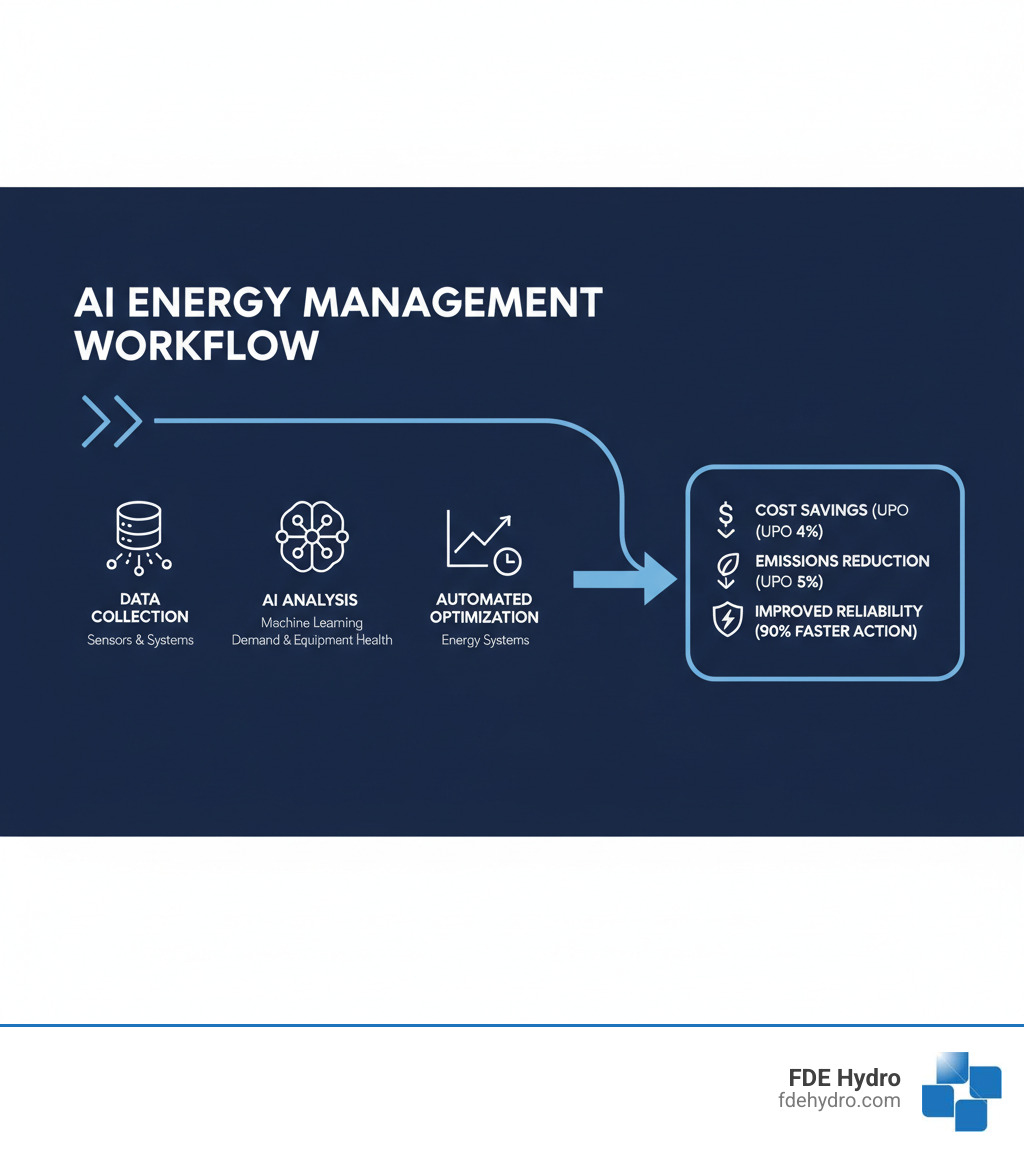
AI energy management is revolutionizing how organizations control energy use, cut costs, and achieve sustainability goals. By unifying data from sensors, weather patterns, and historical performance, AI predicts energy needs, detects inefficiencies, and automates operations. This delivers significant benefits, including up to 4% cost reductions (8% in light industry), up to 5% cuts in greenhouse gas emissions, and a 90% faster time to action through automated analysis.
The energy sector faces immense pressure from surging global demand and the urgent need for carbon neutrality. Traditional energy management—reactive, manual, and siloed—is no longer sufficient, especially when nearly 60% of global energy production is lost to inefficiency. AI changes this equation by enabling predictive control and real-time optimization. For hydropower facilities, this means lower operating costs, reduced environmental impact, and more reliable performance.
The opportunity is substantial. AI could save the power sector up to $110 billion annually by 2035 and open up 175 GW of capacity in existing transmission lines.
I’m Bill French Sr., Founder and CEO of FDE Hydro™, where we deliver modular construction solutions for the hydropower industry. My experience, including participation in the Department of Energy’s Hydro Power Vision Technology Task Force, has shown me how AI energy management can dramatically reduce costs and accelerate clean energy deployment.
From Manual to Automated: What is AI Energy Management?
Traditional energy management often involved manual meter readings, fixed schedules, and reactive maintenance—a system prone to surprises on the utility bill and costly downtime. AI energy management transforms this outdated approach.
At its core, AI energy management uses machine learning and advanced data analytics to monitor, analyze, and optimize energy use. Instead of reacting to problems, it predicts and prevents them. Instead of guesswork, it enables smart, data-driven decisions in real time.
AI systems unify data from disparate sources like smart meters, IoT sensors, building management systems, and weather forecasts. By analyzing this massive stream of information, AI spots patterns humans would miss and automatically adjusts systems to optimize performance. For a hydropower facility, this could mean automatically adjusting operations based on predicted water flow and grid demand.
How AI Differs from Traditional Methods
The shift to AI-powered energy management is a fundamental change. Traditional methods are reactive, relying on manual data entry and siloed systems. Decisions are based on historical averages and intuition. AI energy management is predictive, unifying data automatically from real-time streams. It makes continuous, dynamic adjustments based on sophisticated machine learning models, delivering significant efficiency gains that scale effortlessly across multiple sites.
| Feature | Traditional Energy Management | AI Energy Management |
|---|---|---|
| Approach | Reactive, Rule-based | Predictive, Adaptive, Proactive |
| Data Handling | Manual data entry, Siloed systems | Automated data unification, Real-time data streams |
| Optimization | Scheduled, Static controls | Dynamic, Continuous learning, Autonomous adjustments |
| Decision Making | Human intuition, Historical averages | AI-driven insights, Machine learning models |
| Scalability | Limited, Labor-intensive | Highly scalable across sites and assets |
| Efficiency | Incremental improvements, Missed opportunities | Significant gains, Continuous improvement |
| Adaptability | Slow to respond to changes | Rapid adaptation to dynamic conditions |
| Human Error | Higher potential for errors | Reduced human error through automation |
Key Capabilities of an AI Energy Management System
An effective AI energy management system offers several transformative capabilities:
- Data Aggregation and Unification: AI automatically gathers data from smart meters, IoT sensors, weather services, and production schedules into a single, real-time view of your entire energy ecosystem.
- Anomaly Detection: The system learns your facility’s normal energy patterns and immediately flags unusual activity. A sudden spike in consumption or a pump drawing excess power can signal equipment problems or inefficiencies long before they become costly failures.
- Predictive Analytics and Forecasting: By analyzing historical and real-time data, AI accurately predicts future energy demand, forecasts renewable generation, and even anticipates when equipment is likely to fail, allowing for proactive maintenance.
- Automated Control and Optimization: AI moves beyond insights to action. It dynamically adjusts HVAC setpoints, optimizes lighting, and fine-tunes industrial processes to minimize energy waste without human intervention.
- Reporting and Visualization: Intuitive dashboards transform complex data into clear, actionable insights on energy consumption, emissions, and performance metrics, simplifying decision-making.
These systems also feature continuous learning, becoming smarter and more accurate over time. As noted in scientific research on AI for smart buildings, these capabilities are revolutionizing energy management. For the hydropower industry, this translates directly to better dam operations, reduced maintenance costs, and more reliable power generation.
The Tangible Benefits of AI-Powered Energy Optimization
AI energy management delivers real results that appear on balance sheets and environmental reports. The benefits are clear in two major areas: your operational budget and your environmental impact.

Driving Cost Savings and Efficiency
AI is remarkably effective at plugging the leaks in energy budgets. Organizations are seeing up to 4% reductions in energy costs, with light industry operations achieving savings up to 8%. For a facility spending $1 million annually on energy, that’s $40,000 back in the budget each year.
For hydropower facilities like those we build at FDE Hydro™, AI optimization offers tremendous potential. By predicting water flow and optimizing turbine operations, AI improves generation efficiency, producing more power from the same resources. AI also saves money by reducing peak demand charges, automatically shifting or reducing load during expensive high-demand periods.
Fundamentally, AI tackles waste. With nearly 60% of global energy lost to inefficiencies, AI acts as a tireless detective, identifying and correcting these issues across grids, supply chains, and industrial operations before they drain resources.
Enhancing Sustainability and Reducing Emissions
The environmental benefits of AI energy management are just as compelling. AI helps organizations achieve up to 5% reductions in Scope 1 and 2 greenhouse gas emissions, providing concrete progress toward corporate ESG goals.
AI is also critical for integrating renewable energy. It forecasts generation from intermittent sources like solar and wind, then optimizes how that energy is stored and distributed for grid stability. This intelligent coordination is essential as we transition to cleaner energy. In fact, AI can open up to 175 GW of additional transmission capacity in existing power lines, enabling greater use of renewables without costly new infrastructure.
For companies navigating environmental regulations and stakeholder expectations, AI delivers the measurable results needed to track, report, and genuinely improve environmental performance while boosting operational efficiency.
Using Predictive Power: AI for Forecasting and Maintenance
AI’s predictive power is a cornerstone of effective AI energy management, allowing us to move from reactive fixes to proactive optimizations. It’s the difference between scrambling to fix a burst pipe and knowing weeks in advance that a valve needs attention.
Better Energy Forecasting and Prediction
Accurate forecasting is like having a crystal ball for energy needs. By analyzing weather patterns, historical usage data, and real-time grid performance, AI predicts future demand with remarkable clarity. For hydropower, this means better predictions of water flow for optimized generation schedules. For commercial buildings, it means anticipating heating and cooling loads. This load forecasting works across multiple time horizons, allowing utilities and facilities to allocate resources efficiently and manage energy storage systems effectively.
AI-Driven Predictive Maintenance Strategies
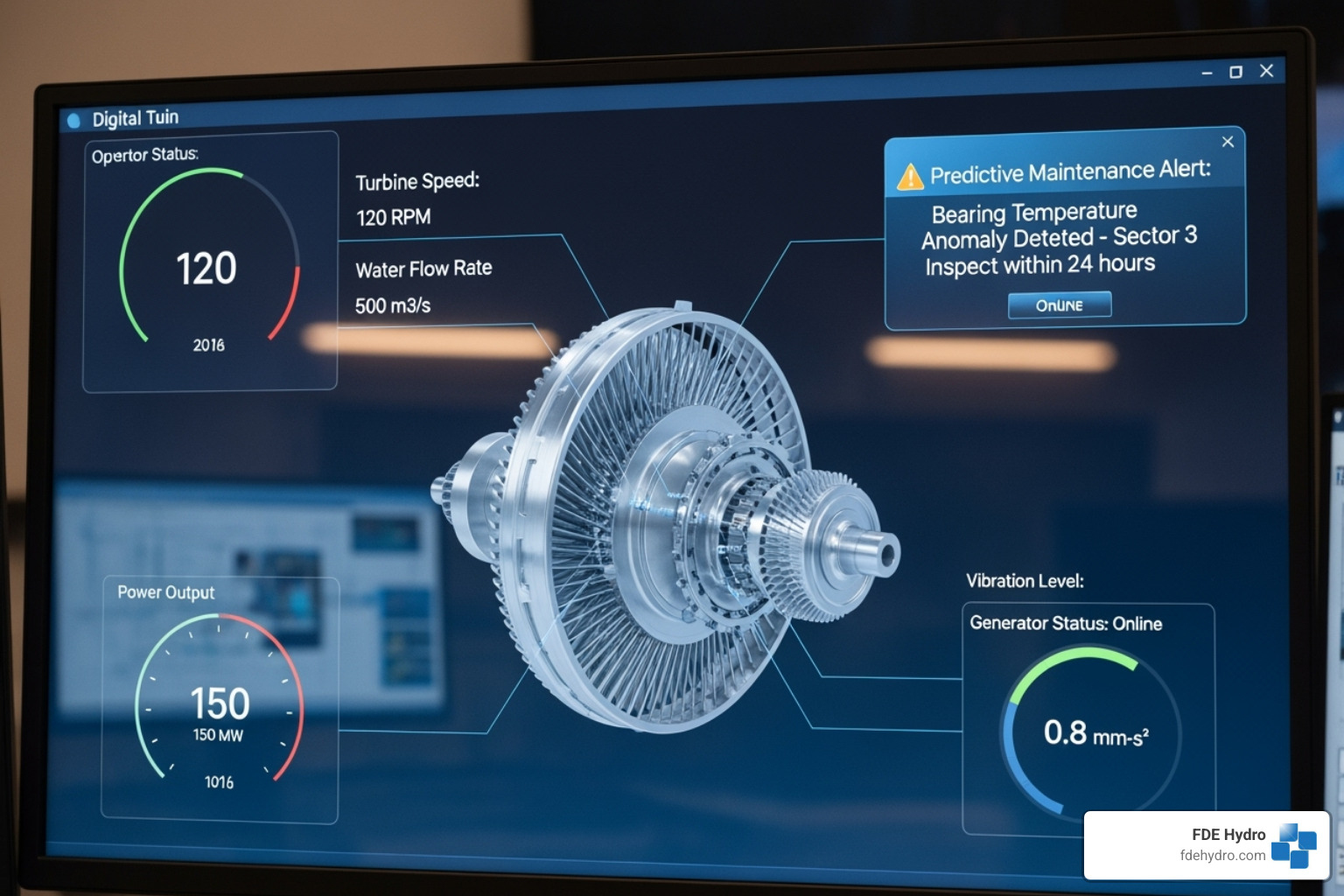
Unexpected breakdowns of critical infrastructure are costly. AI-driven predictive maintenance is a game-changer for preventing them. By monitoring equipment in real-time using sensor data on temperature, vibration, and pressure, AI detects subtle anomalies that signal impending failure. Digital twin technology creates virtual replicas of physical assets, allowing for even more precise monitoring.
Instead of waiting for a part to fail, AI predicts when a component needs attention. At FDE Hydro™, this means we can monitor turbines and control systems with unprecedented precision. The benefits are immediate: avoiding unplanned downtime, reducing maintenance costs through targeted repairs, and extending asset lifespan by addressing minor issues before they escalate.
The Role of Generative AI in Energy Analysis
Generative AI is revolutionizing how we interact with complex energy data. It can process and summarize vast amounts of information in seconds, improving time to action by up to 90%. The key breakthrough is natural language queries. Users can ask questions in plain English—like “What were the peak energy cost hours last month?”—and get instant answers.
This technology also generates actionable insights, suggesting solutions and creating optimal schedules based on grid dynamics. As highlighted by scientific research on AI for smart buildings, these tools simplify complex data analysis, making expert insights accessible to managers without a data science background.
AI in Action: Real-World Applications and Renewable Integration
The promise of AI energy management is being realized today across the energy landscape, from grid management to renewable integration.
Applications in Key Energy Industries
AI adapts to the unique challenges of different industries with compelling results:
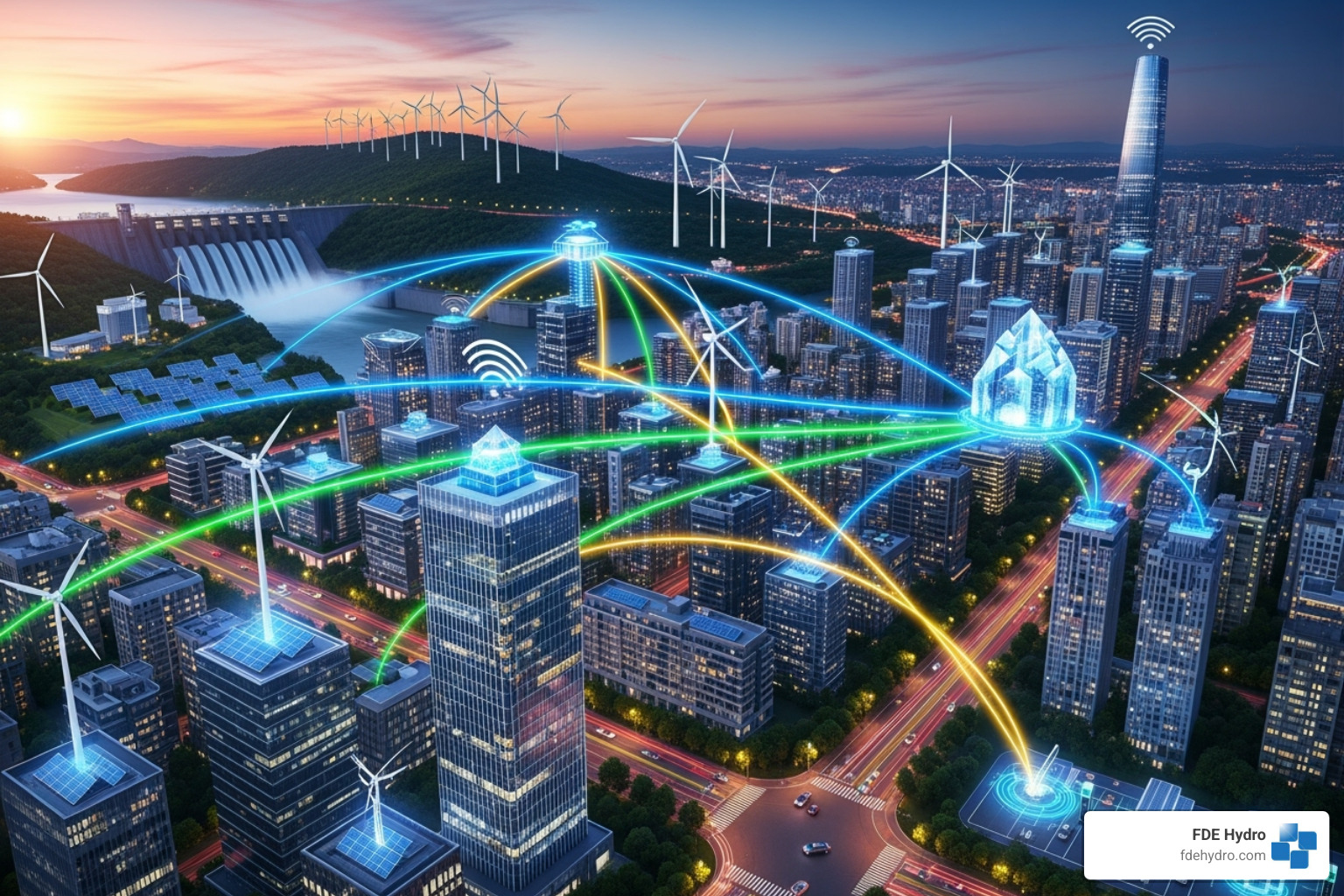
- Utilities: AI-powered smart grids optimize resource allocation, prevent blackouts, and speed up fault detection. AI-improved disaster response models can even predict outages before storms hit, enhancing grid resilience.
- Manufacturing: AI optimizes production processes and slashes energy waste by dynamically controlling machinery, lighting, and HVAC systems based on real-time needs rather than fixed schedules.
- Smart Buildings: AI-driven systems optimize heating, cooling, and lighting based on occupancy and weather, improving efficiency and comfort. These buildings can also participate in demand response programs, saving money while supporting the grid.
- Oil, Gas, and Nuclear: In these sectors, AI optimizes exploration and drilling, provides predictive maintenance, and ensures safety through continuous 24/7 monitoring of critical operations.
Optimizing Renewable Energy and Storage
For the renewable sector, AI is essential for using nature’s power more effectively. The main challenge with renewables is variability, but AI energy management is changing that. AI systems accurately forecast generation from wind and solar, allowing utilities to match supply with demand. For hydropower facilities like those we build at FDE Hydro™, AI forecasts water flow to optimize turbine operations and reservoir management.
Energy storage is where AI truly excels. It intelligently decides when to charge batteries (when power is cheap and plentiful) and when to discharge them (to meet demand or sell at high prices). This level of sophistication is impossible to achieve manually.
Crucially, AI can open up up to 175 GW of additional transmission capacity in existing lines, allowing more clean energy to reach consumers without building costly new infrastructure. By providing accurate forecasts and dynamic control, AI ensures grid stability, making a renewable-powered future a reliable reality.
Overcoming Problems and Looking to the Future
Implementing AI energy management isn’t a simple switch, but the challenges are manageable and the future possibilities make the journey worthwhile.
Primary Challenges to Adopting AI in Energy Management
Adopting AI in energy requires careful planning to overcome several problems:
- Data Integration Complexity: Legacy equipment, modern sensors, and historical records often exist in disparate, incompatible formats. Unifying this data for AI is a significant undertaking.
- Cost of Implementation: The upfront investment in hardware, software, and system integration can be substantial, though the long-term savings are clear.
- Skills Gap: There is a shortage of professionals who understand both AI technology and the nuances of the energy sector.
- Data Privacy and Security: Energy data is sensitive. Robust cybersecurity is essential to protect critical infrastructure and comply with regulations.
- Organizational Resistance: Overcoming resistance to change requires clear communication, training, and patience as employees adapt to new, AI-driven workflows.
- Regulatory Frameworks: Regulations are still catching up to the dynamic, autonomous nature of AI systems, which can create uncertainty and slow adoption.
The Future of AI Energy Management
Despite the challenges, the future of AI energy management is incredibly bright, promising fundamental changes in how we use energy.
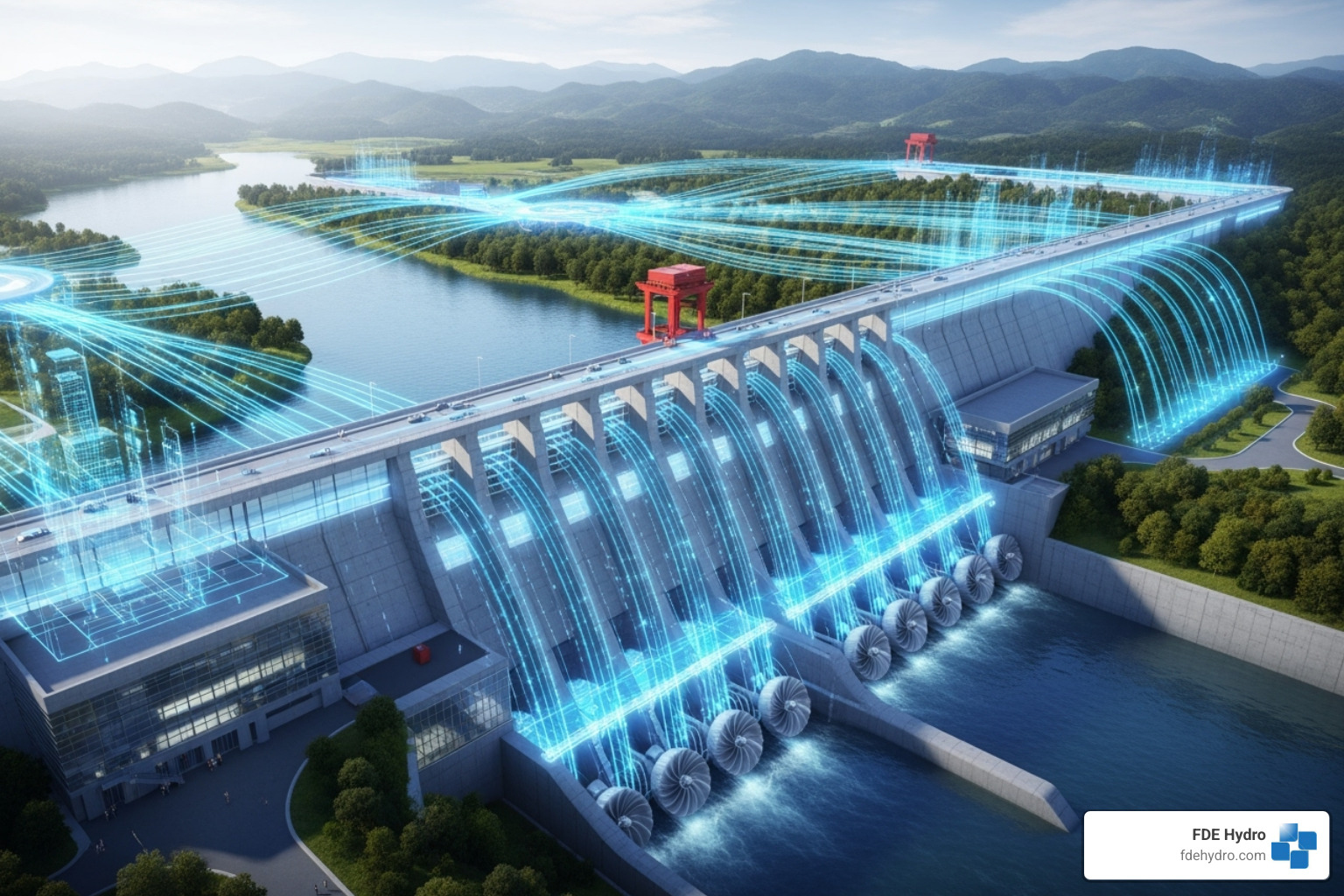
Digital twins are becoming game-changers. These perfect virtual replicas of physical assets—like a hydropower facility—allow us to run simulations and test optimization strategies without real-world risk. For us at FDE Hydro™, this technology offers immense potential for designing and operating our installations.
Edge computing will move AI processing closer to the source—on sensors and turbines—enabling faster, more secure decisions in milliseconds. This is critical for real-time grid management.
Other exciting frontiers include AI for energy equity, which can help distribute power more intelligently to underserved regions, and hyper-personalization, where smart homes learn and anticipate user needs to optimize energy use invisibly.
Generative AI will accelerate innovation further, helping design new energy materials and technologies. As the IEA report on Energy and AI emphasizes, AI is critical for optimizing complex energy systems and can dramatically compress the timeline for bringing new solutions to market.
Conclusion
AI energy management is not a future trend; it’s a practical, powerful tool delivering results today. By unifying data, forecasting needs, and optimizing systems, AI is helping organizations cut costs, reduce emissions, and build more reliable energy infrastructure. The benefits are tangible: up to 4% cost reductions, 5% emission cuts, and 90% faster decision-making.
While challenges like data integration and initial investment exist, the long-term advantages are undeniable. Organizations that accept AI energy management are securing a more sustainable and profitable future.
At FDE Hydro™, we are at the forefront of this transition. Our modular precast concrete technology already makes hydropower faster and more affordable. Combining this with AI’s intelligent optimization—predicting water flow, maximizing turbine efficiency, and preventing downtime—creates infrastructure that is built quickly and operates smartly. This synergy delivers clean, reliable energy with maximum efficiency and minimal environmental impact.
The energy transition is here. With AI, sustainability and profitability go hand-in-hand. The future of energy is intelligent, and we are excited to help build it.
Learn more about our innovative hydropower solutions
