

Why AI Driven Development is Reshaping Software Engineering
AI driven development is fundamentally redesigning the software development lifecycle. It represents a paradigm shift where AI is not just an assistant but a core collaborator that actively creates plans, generates code, runs tests, and manages deployments with human oversight. This approach enables autonomous task execution across the full development lifecycle, from turning business requirements into detailed specs to optimizing CI/CD pipelines. The result is dramatic productivity gains, with organizations reporting 30-50% reductions in manual coding hours and 20-30% cuts in operational costs.
By 2025, more than 80% of development projects will incorporate AI tools, but AI-driven development goes beyond simple code completion. It’s a new methodology where AI systematically transforms business intent into working software, allowing humans to focus on strategic decisions, validation, and creative problem-solving. For example, a logistics firm cut its delivery timeline from 6 to 4 months using AI for automated testing, and a fintech startup launched a mobile app in just 3 months by leveraging AI for prototype testing.
This shift is democratizing software creation through no-code/low-code platforms and redefining the developer’s role from a code implementer to a technology orchestrator. For industries like hydropower, where my work at FDE Hydro has focused on modular construction innovations, AI driven development offers transformative potential. My experience with solutions like the French Dam taught me that true innovation comes from reimagining entire processes—a principle that AI-driven development embodies for software engineering.
What is AI-Driven Development (AI-DD)?
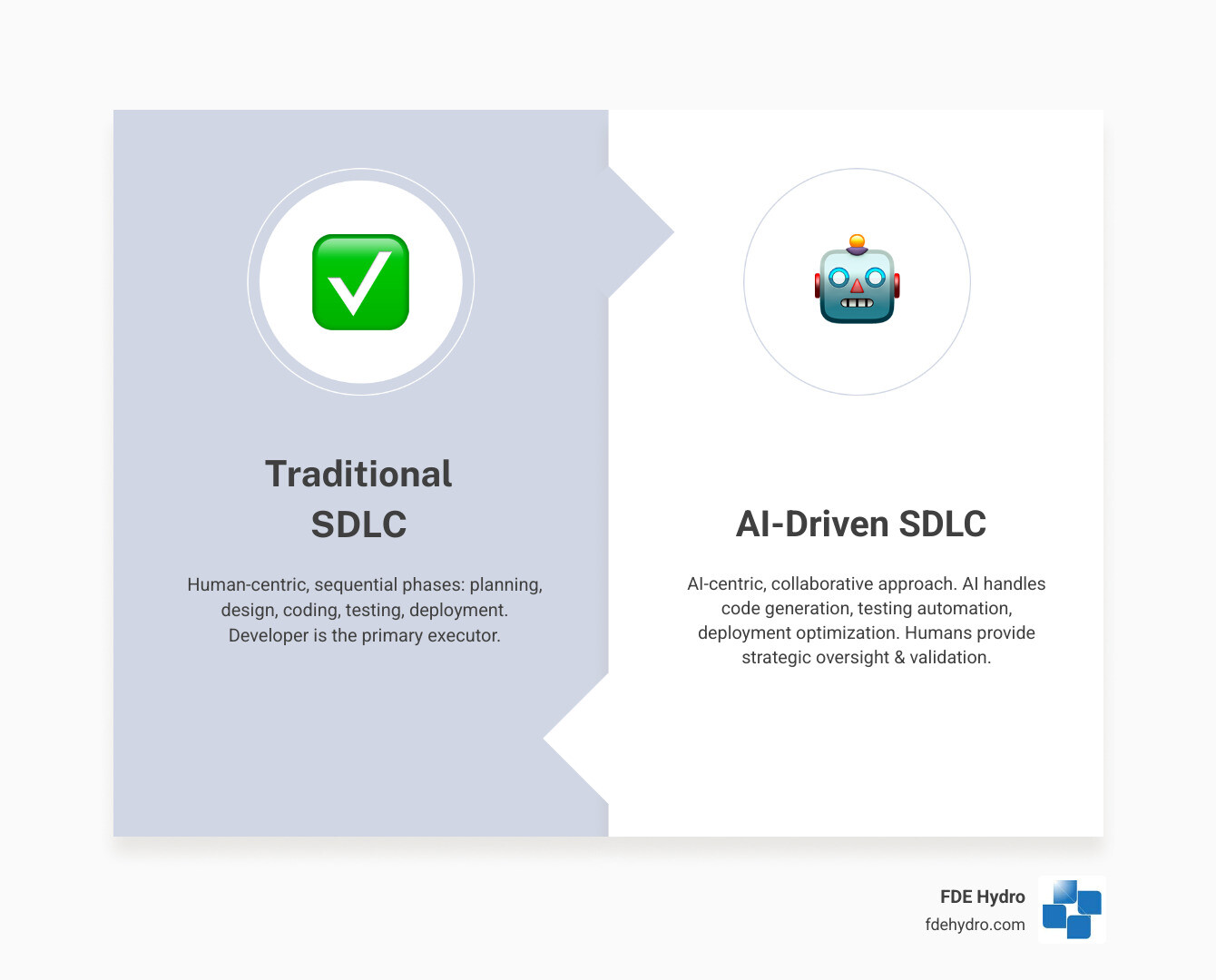
AI-driven development (AI-DD) is an approach where Artificial Intelligence takes primary responsibility for producing software. Unlike traditional methods where AI merely assists, in AI-DD, the AI acts as a core teammate, creating work plans, generating source code, automating testing, and managing deployments. At its heart, AI-DD focuses on autonomous task execution across the full software development lifecycle (SDLC), systematically changing high-level business intent into functional applications. The human role shifts to providing strategic direction, clarifying ambiguities, and validating AI-generated outputs.
This paradigm leverages AI for:
- Code generation: Writing code snippets, functions, or entire modules.
- Automated testing: Generating and executing test cases to find bugs.
- Full lifecycle integration: Embedding AI into every phase, from planning to maintenance.
- Human oversight: Deferring critical decisions to human developers in a collaborative environment.
The goal is to improve productivity, velocity, and quality by letting AI handle the heavy lifting of code production, freeing humans for higher-value strategic tasks.
AI-Driven vs. AI-Assisted Development
Understanding the distinction between AI-Driven Development (AI-DD) and AI-Assisted Development (AIAD) is crucial. In AI-Assisted Development (AIAD), AI is a tool that improves a human developer’s productivity. The human remains the primary executor, using AI for code completion, intelligent suggestions, or Q&A. Tools like GitHub Copilot are prime examples of AIAD—they make developers faster, but the human is still “driving.”
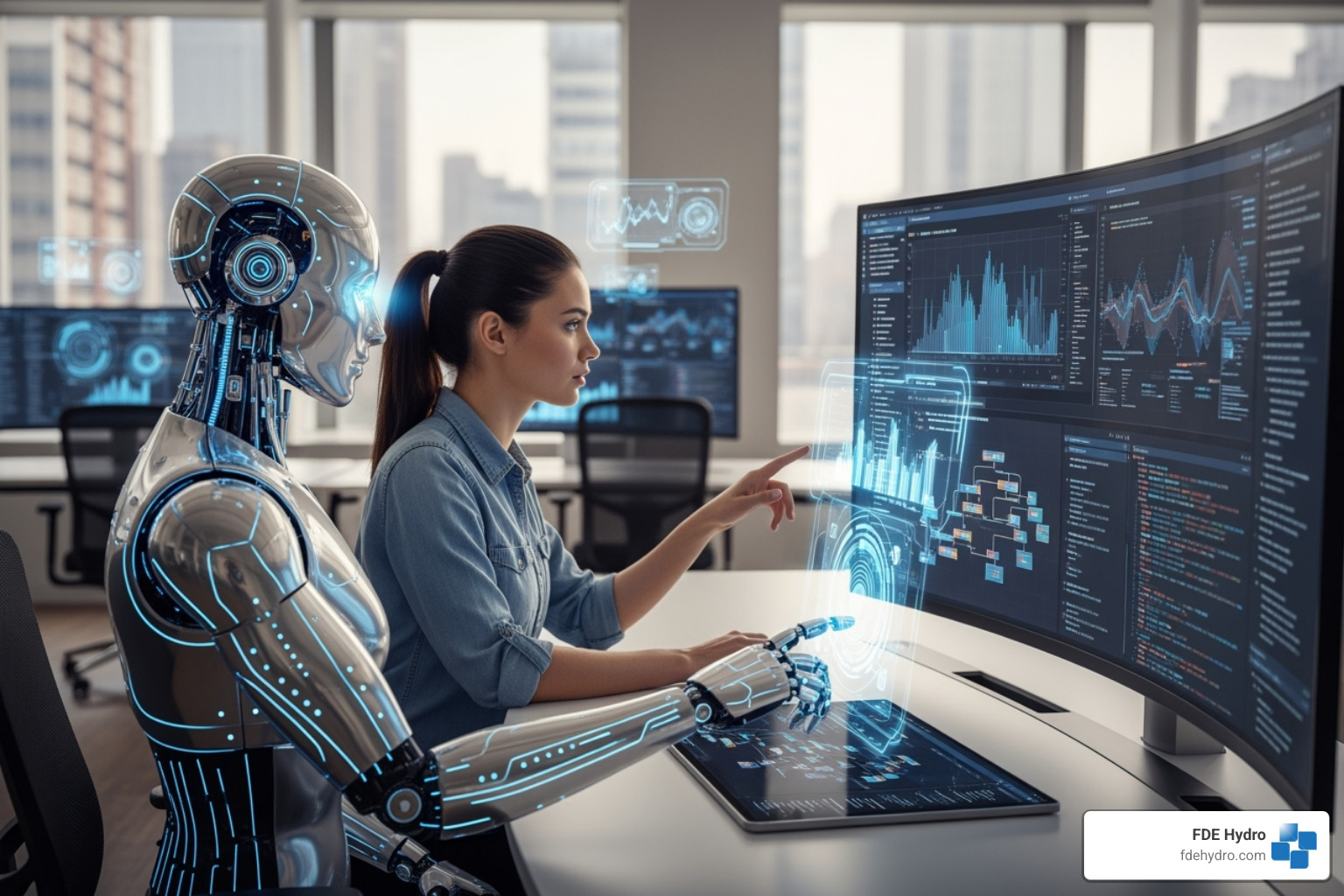
AI-Driven Development (AI-DD) flips this dynamic. AI becomes the primary executor, or the “driver,” while the human acts as the orchestrator and strategic guide. The AI generates code, designs architectures, and manages the development process, with humans providing oversight and making critical decisions.
Here’s a table summarizing the key differences:
| Feature | AI-Assisted Development (AIAD) | AI-Driven Development (AI-DD) |
|---|---|---|
| Developer Role | Primary executor, AI as a supportive tool | Orchestrator, validator, strategic guide |
| AI Autonomy | Low to moderate; AI offers suggestions/completes tasks | High; AI autonomously generates code, tests, deploys |
| Primary Function | Improve human productivity; Speed up routine tasks | Systematically transform intent into software; Automate entire workflows |
| Responsibility | Human holds primary responsibility for code and decisions | AI holds primary responsibility for execution; Human for oversight/validation |
| Examples | Code completion (e.g., GitHub Copilot), smart IDE suggestions, chat Q&A | AI-DLC, spec-driven development, AI agents generating full features |
The shift from AIAD to AI-DD is about reorganizing the development workflow around AI’s ability to execute complex tasks autonomously.
How AI is Revolutionizing the Software Development Lifecycle (SDLC)
AI is actively stepping into every stage of the software development lifecycle, automating tasks and offering smart insights that make the entire process more efficient, innovative, and robust.
Planning and Design
In the planning phase, AI is an invaluable partner. For requirement gathering, generative AI and large language models (LLMs) can convert high-level ideas into detailed user stories and tasks. Tools using Natural Language Processing (NLP), like those from IBM Watson, analyze user feedback and historical data to identify key features and predict user needs.
AI also provides architecture suggestions by analyzing successful software designs to recommend optimal structures for new projects, helping avoid common pitfalls. For prototyping, AI can quickly generate mockups and wireframes from design specs, allowing for rapid testing and iteration. This accelerates the initial phases and helps build scalable systems from the start.
Coding and Implementation
AI’s impact is most visible in the coding phase, where it dramatically accelerates development. AI tools excel at automated code generation, writing everything from snippets to entire application sections from plain-language descriptions. This leads to a 30-50% reduction in manual coding hours, as reported by users of tools like Tabnine. GitHub Copilot similarly suggests code in real-time, speeding up the process.
AI also assists with code refactoring and optimization by scanning existing code to suggest efficiency improvements. For bug detection, platforms like DeepCode and IBM watsonx Code Assistant™ analyze codebases to spot errors and security weaknesses as developers write, ensuring higher quality from the outset. These real-time suggestions help developers write better code faster, freeing them to focus on complex problem-solving within an AI driven development framework.
Testing and Quality Assurance
AI transforms testing from a bottleneck into a continuous, intelligent process. AI-driven systems create automated test cases by analyzing code to determine what needs testing and prioritizing the most critical areas. This significantly improves test coverage and efficiency.
During testing, AI performs real-time bug detection and vulnerability scanning, finding security flaws like SQL injection or cross-site scripting (XSS) that human testers might miss. Using predictive analysis, AI can also identify which parts of an application are most likely to contain errors, allowing teams to focus their efforts where they’re needed most. The result is a dramatic improvement in software quality and security, leading to more reliable solutions and happier customers.
Deployment and Operations (DevOps)
AI’s influence extends to deployment and operations, optimizing workflows and ensuring system stability. Generative AI optimizes CI/CD pipelines by predicting potential failures and suggesting adjustments for smoother, faster releases. This automation improves project management and time estimates.
Post-deployment, AI enables automated rollbacks to a stable version if an issue occurs, minimizing user disruption. With predictive monitoring, AI watches for unusual patterns or potential system failures, allowing for proactive maintenance. AI also manages cloud costs through dynamic resource scaling and helps with Infrastructure as Code (IaC) management by generating configurations, ensuring consistency and reducing manual errors. This automation helps maintain high-performing systems with minimal human effort, embodying the power of AI driven development.
The Core of AI Driven Development
At its heart, AI driven development combines new methodologies with intelligent technologies to create a powerful engine for building software. It’s about orchestrating multiple AI capabilities to work together seamlessly.
Core Principles and Methodologies
To maximize AI’s potential, we must adopt new principles for building software:
- AI-Powered Execution with Human Oversight: In this model, AI creates plans and executes tasks but awaits human approval on critical decisions. The AI does the heavy lifting, while human intelligence guides the overall strategy, ensuring alignment with business goals and values.
- Dynamic Team Collaboration: With AI handling routine tasks, human teams can gather in collaborative online spaces to focus on complex problem-solving, brainstorming, and high-level decision-making, which accelerates innovation.
One key methodology is the AI-Driven Development Lifecycle (AI-DLC), which makes AI a central partner in every phase. AI-DLC introduces new concepts like “bolts”—short, focused work cycles lasting hours or days—to replace traditional multi-week sprints. The process involves AI helping to refine ideas in an Inception phase, build code and tests during Construction, and manage deployment in Operations. The AI maintains a single source of truth for all project artifacts. You can explore this approach in the full AI-DLC white paper.
Another powerful method is spec-driven development, exemplified by tools like GitHub’s Spec Kit. Here, the software specification becomes an executable guide for the entire engineering process. The process follows four steps: Specify (AI expands a high-level idea into a spec), Plan (AI creates a technical plan), Tasks (AI breaks the plan into verifiable tasks), and Implement (AI completes tasks for human review). This method reinforces that your intent is the source of truth and that clear, structured specifications yield the best results from AI. You can learn more on spec-driven patterns to see how this transforms AI collaboration.
Key Supporting Technologies
The world of AI driven development is powered by a suite of key technologies working in concert:
- Large Language Models (LLMs): The brains of the operation, these models understand natural language and generate code. Examples include OpenAI’s GPT (powering tools like Codex for Builders), Anthropic’s Claude, and Google’s Gemini.
- AI Agents: Autonomous helpers that can perceive their environment, make decisions, and take actions to automate workflows, write code, and perform tests.
- Generative AI: A broad category of AI that creates new content, including code, documentation, test data, and UI elements.
- Retrieval-Augmented Generation (RAG): A technique that allows AI models to access and incorporate existing information (like a project’s codebase) to generate contextually relevant and accurate output.
- Machine Learning (ML) algorithms: The engines that power pattern recognition, predictive analysis, and continuous optimization throughout the SDLC.
- Reinforcement Learning from Human Feedback (RLHF): A training method where AI models learn from human feedback, which is crucial for ensuring AI-generated code meets quality and ethical standards.
When combined in frameworks like those discussed in the AutoDev: Automated AI-Driven Development paper, these technologies enable AI to handle complex development tasks with significant autonomy. Companies like IBM also offer a full AI for developers toolkit leveraging these advancements.
Key Benefits and Challenges of Adopting AI-DD
The promise of AI driven development is reshaping how we build software, but like any transformative technology, it brings both substantial advantages and challenges that require careful navigation.
The Advantages of AI-Driven Development
Adopting AI driven development open ups measurable improvements across the software lifecycle.
The most immediate benefit is increased development velocity. By automating tasks like code generation and testing, AI allows teams to move dramatically faster. Tools like Tabnine and GitHub Copilot contribute to a 30–50% reduction in manual coding hours, enabling rapid product launches.
This speed is matched by improved code quality and standardization. AI enforces coding standards, identifies best practices, and catches bugs and vulnerabilities early. AI-driven testing further improves reliability, leading to more confident releases and fewer emergency fixes.
The financial case is also strong, with organizations seeing a 20–30% operational cost reduction. These savings come from reduced manual labor, optimized cloud resource usage, and fewer costly bugs in production. Faster delivery timelines also translate directly to faster revenue realization.
Perhaps most importantly, AI improves the developer experience. By handling tedious work, AI allows teams to focus on creative problem-solving, strategic thinking, and innovation. This shift leads to higher job satisfaction and empowers teams to concentrate on high-level architectural decisions and aligning development with business goals. This mirrors our experience at FDE Hydro, where automating routine engineering tasks created space for breakthrough innovations like our modular French Dam technology.
Challenges and Ethical Considerations
Adopting AI driven development responsibly means confronting several genuine challenges.
Data quality and privacy are foundational. AI models are only as good as their training data; poor or biased data leads to flawed code and inequitable outcomes. Ensuring compliance with regulations like GDPR is essential when training models on sensitive codebases.
Ethical concerns and bias are significant risks. An AI trained on historical data reflecting past discrimination can perpetuate that bias, as seen in a major corporation’s biased AI recruitment tool. In software, this could lead to systems that unfairly treat certain user groups. Continuous monitoring and a commitment to ethical AI principles are necessary.
Security vulnerabilities in AI-generated code present a paradox. While AI can find vulnerabilities, it can also introduce new ones. AI-generated code requires rigorous human review, and adversaries can use the same tools to create sophisticated attacks. Human oversight is critical.
Integration complexity is a practical hurdle. Retrofitting AI tools into existing workflows requires careful planning and a learning curve for teams to ensure seamless interoperability.
There is also a risk of overreliance on AI, which can lead to a degradation of core coding skills. We must use AI as an assistive tool while actively maintaining our own technical expertise.
Finally, the lack of transparency in some “black box” AI models creates trust issues. When possible, we should prioritize interpretable AI models that provide insight into their decision-making processes.
Navigating these challenges requires a proactive strategy of upskilling teams, establishing robust governance, and maintaining continuous human oversight.
The Future of Software Engineering: The Developer’s Evolving Role
AI driven development is not replacing developers; it’s elevating our craft. The focus is shifting from manual coding to strategic orchestration and creative problem-solving. This evolution is democratizing development through low-code/no-code platforms, and it requires a commitment to reskilling and upskilling. The impact on education will be significant, as curricula adapt to this new AI-centric paradigm.
Best Practices for Implementing AI-Driven Development
To successfully adopt AI driven development, organizations should follow several key practices:
- Define clear integration protocols: Create a roadmap for how AI tools will fit into existing workflows, systems, and team structures.
- Start with pilot projects: Test AI on smaller, low-risk projects to build confidence, gather feedback, and refine your strategy before a full-scale rollout.
- Upskill teams for AI collaboration: Invest in training on machine learning basics, prompt engineering, and AI output validation to empower developers as AI orchestrators.
- Fortify data security and privacy: Implement strong data encryption, access controls, and regular security audits to protect the data used for AI training.
- Continuously monitor and refine AI models: Use clear metrics to track AI performance, update models with new data, and retrain them to ensure they remain accurate and unbiased.
- Establish human oversight and validation: Create clear review processes for human experts to check critical decisions and AI-generated code, ensuring quality and ethical compliance.
By following these practices, organizations can harness the power of AI effectively and responsibly.
The Evolving Role of the Human Developer
AI driven development is reshaping the software engineer’s role in several exciting ways:
We are moving from coder to orchestrator, guiding AI systems through the development process rather than writing every line of code. This frees us up for strategic thinking and complex problem-solving, allowing more time for architectural design and innovation.
Think of AI as a teammate that handles the repetitive work, boosting productivity and enabling us to tackle more complex challenges. New skills are becoming essential, including curating datasets for AI training and mastering prompt engineering—the art of crafting precise instructions for AI models.
Humans remain the expert validators. We are responsible for verifying the quality, security, and ethical implications of AI-generated output. This shift requires a significant impact on education and reskilling, with a new focus on AI concepts, critical thinking, and systems architecture. The future isn’t about humans competing with AI; it’s about humans and AI collaborating to build extraordinary things.
Conclusion
We have reached a pivotal moment in software engineering. AI driven development is not just a new tool but a complete reimagining of how we create software. It has evolved AI from a helpful assistant into a core collaborator that transforms business ideas into working code, automates testing, and optimizes deployments.
Methodologies like AI-DLC and spec-driven development, powered by large language models and AI agents, are creating new, faster ways of working. The results are compelling: organizations report 30-50% reductions in manual coding hours and 20-30% drops in operational costs. More importantly, developers are being freed from tedious tasks to focus on creative, strategic work.
While challenges like data quality, bias, and security require our vigilance, they are manageable with clear protocols and continuous human oversight. The developer’s role is evolving into that of an orchestrator and architect—a shift that is more strategic, creative, and fulfilling.
This change resonates deeply with my experience at FDE Hydro. When we developed our patented French Dam technology, we reimagined the construction process using modular precast concrete to dramatically reduce time and cost. That same spirit of radical innovation is what AI driven development brings to software. Just as our modular approach builds infrastructure more efficiently, AI-DD enables teams to build software with unprecedented speed and quality.
The future of software engineering is collaborative and intelligent. The question isn’t whether to adopt this change, but how quickly you can adapt to harness its power. At FDE Hydro, we believe breakthroughs come from reimagining entire workflows, and we are excited to see how AI-driven approaches will shape the future of engineering.
Learn more about innovative hydropower solutions
